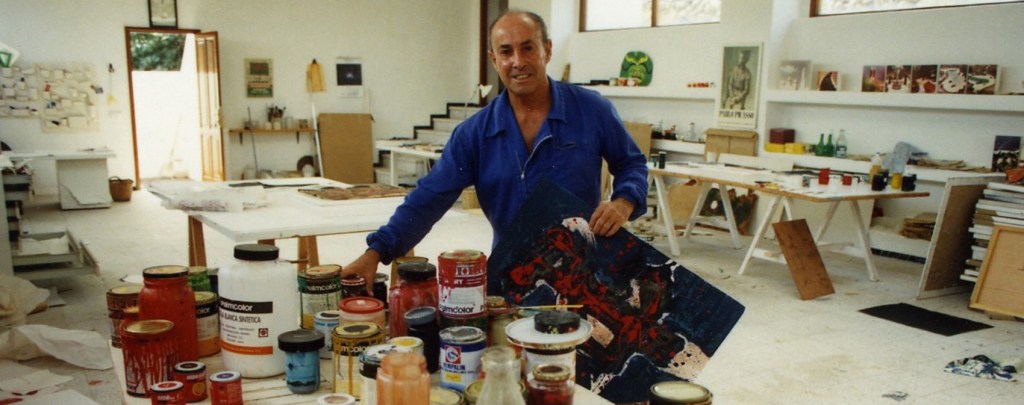
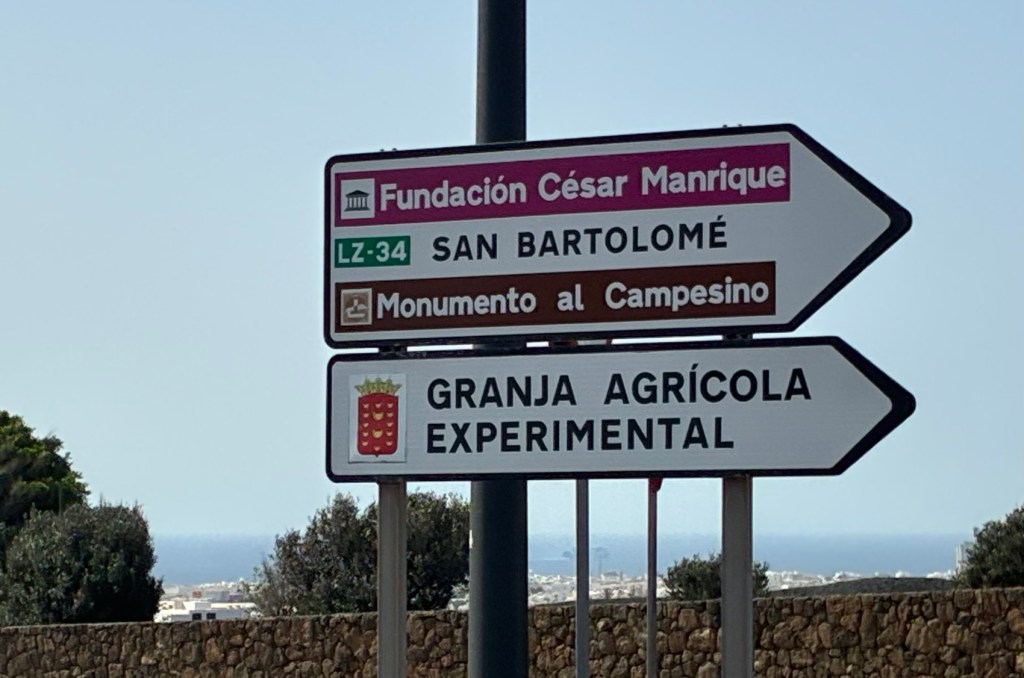
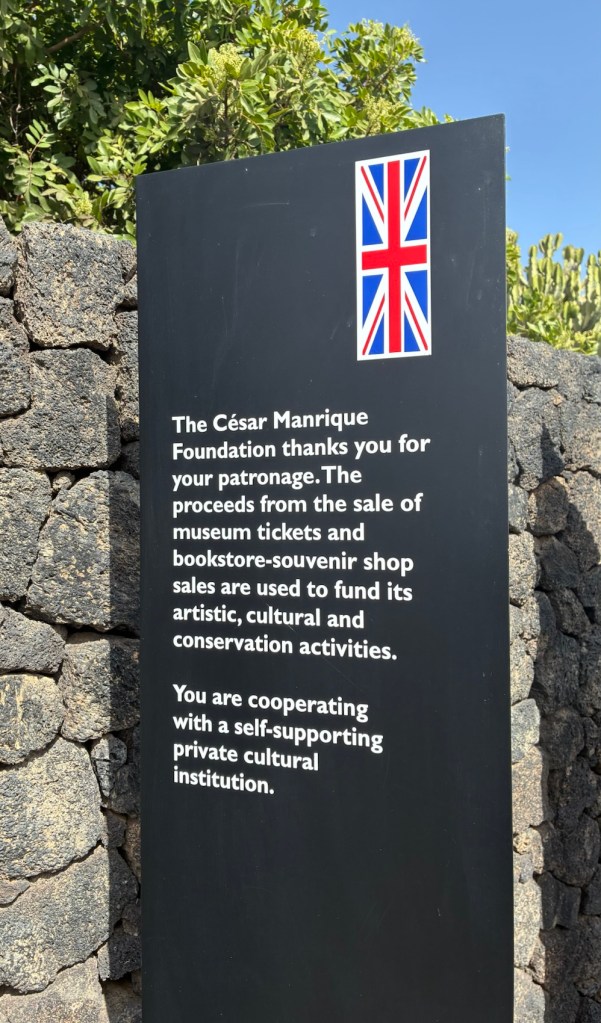
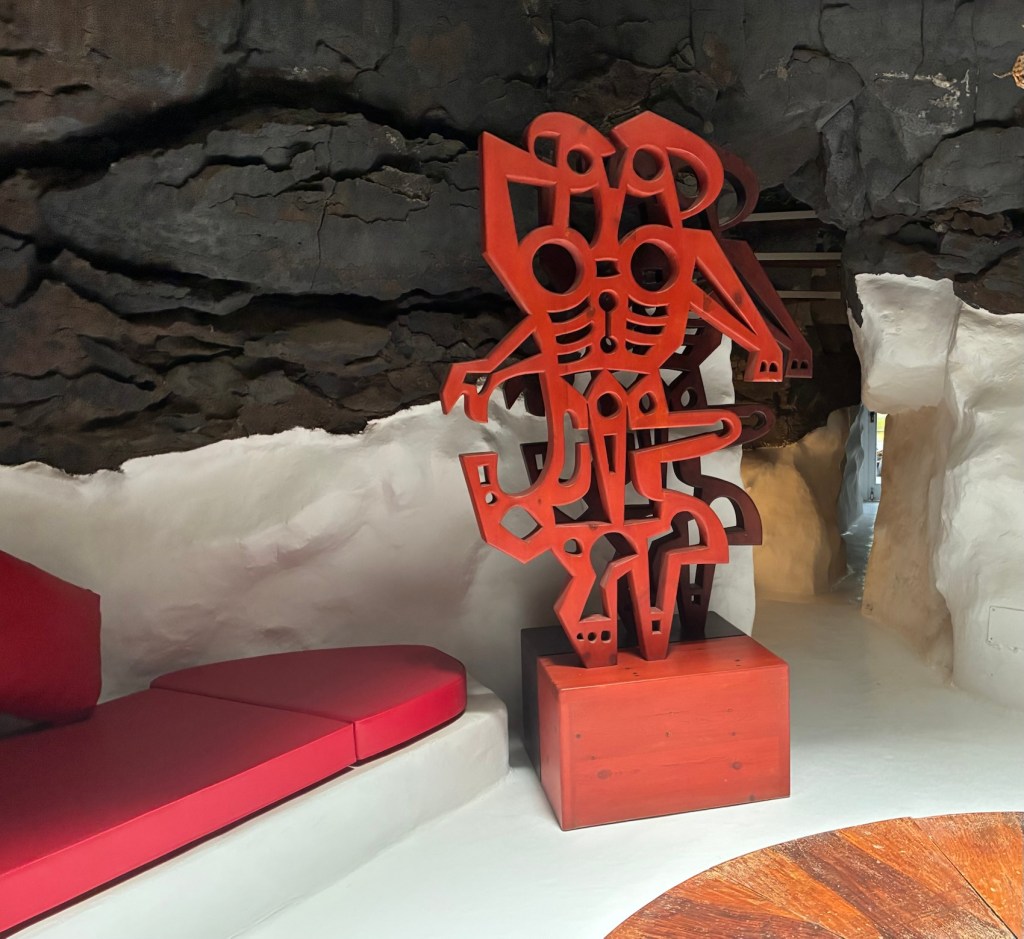
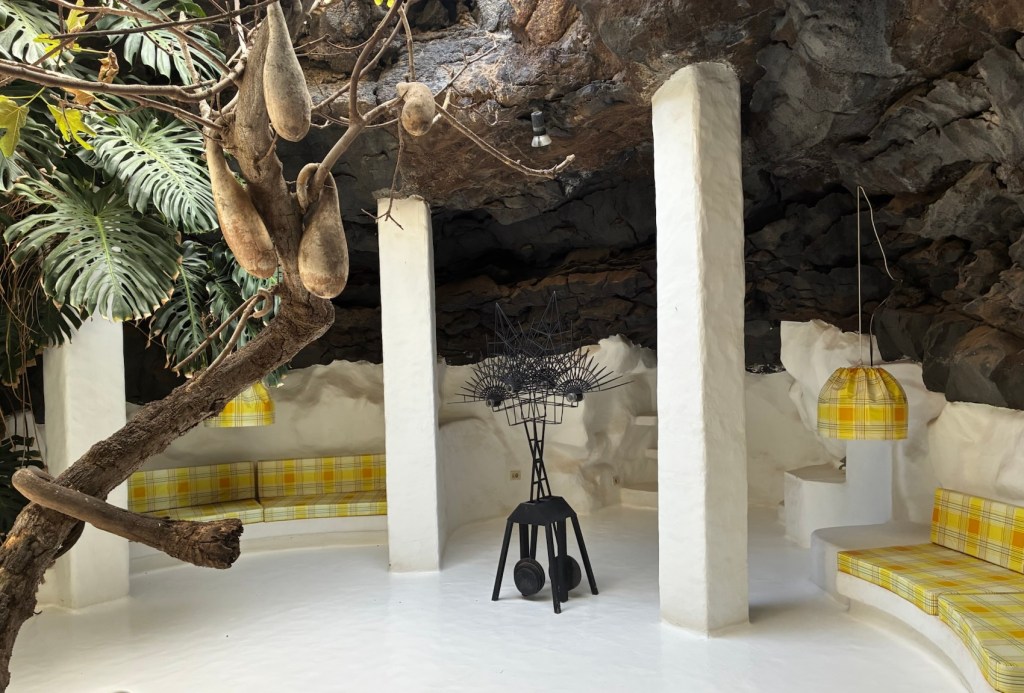
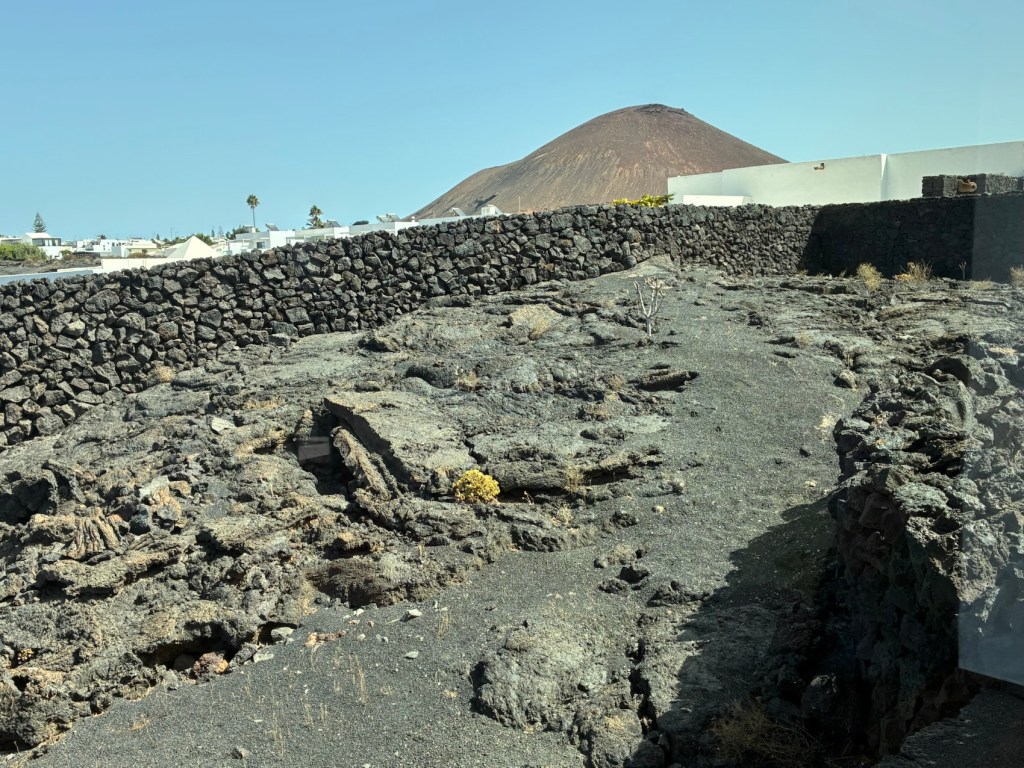
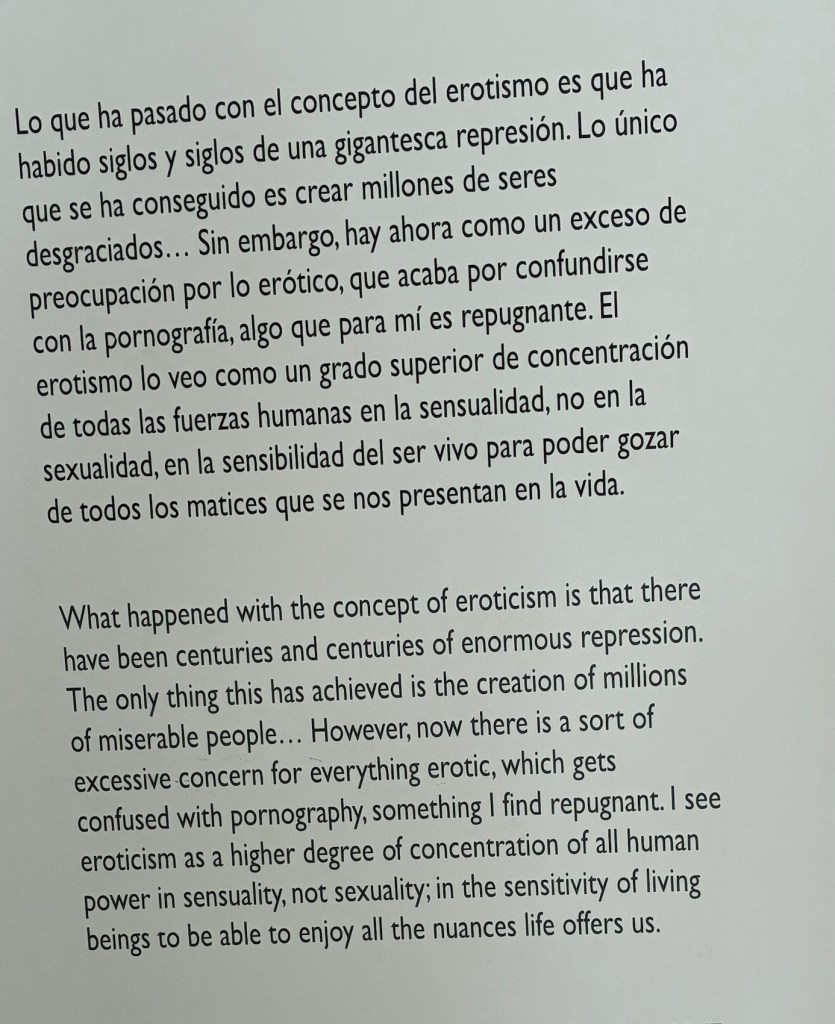
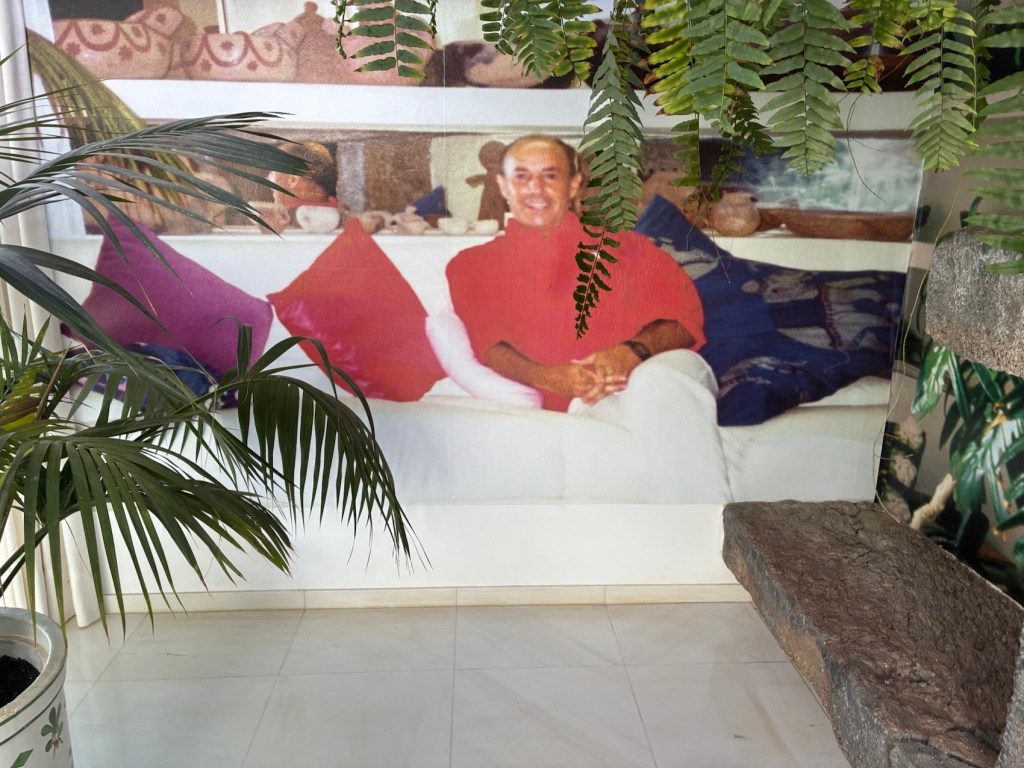
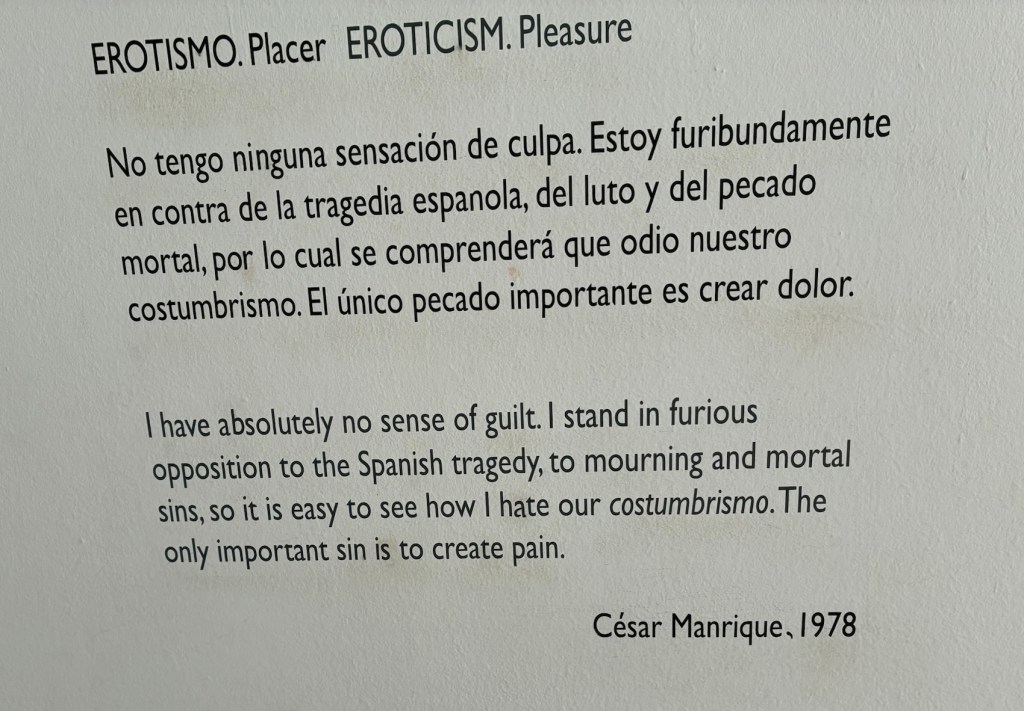
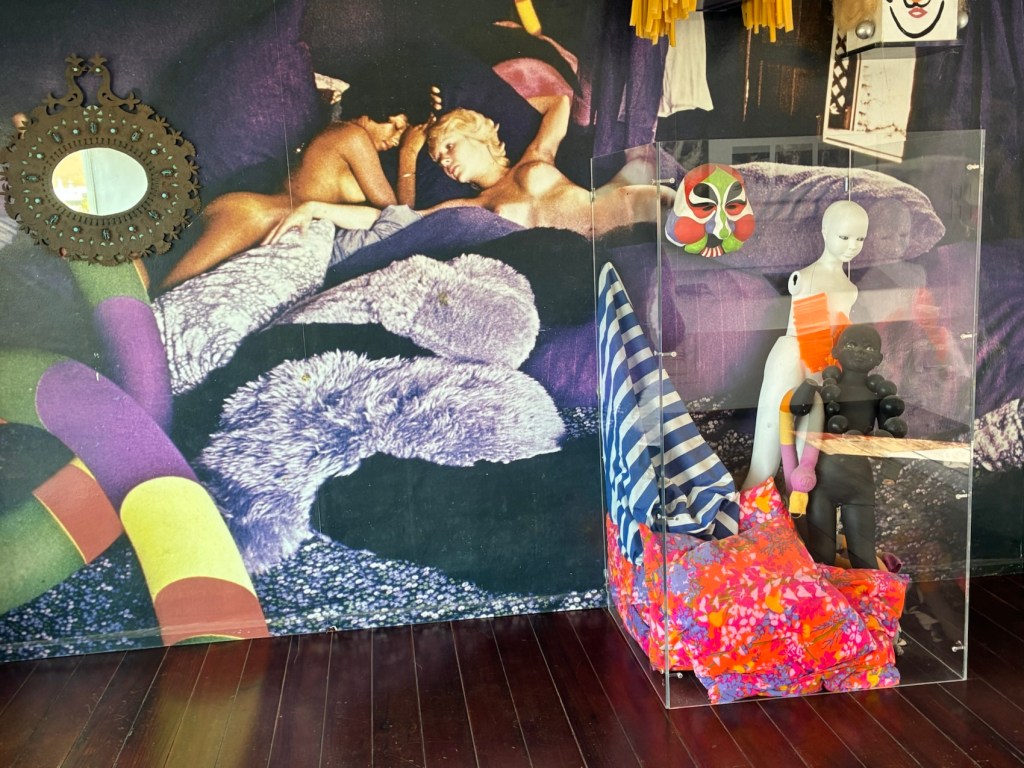
I had never heard of this amazingly gifted artist and architect until I came to Lanzarote this month, but my curiosity about him came directly in landing at the airport which is named after him. I read some bits and pieces about him on the Net and was delighted to discover that his foundation was in nearby Tahiche.
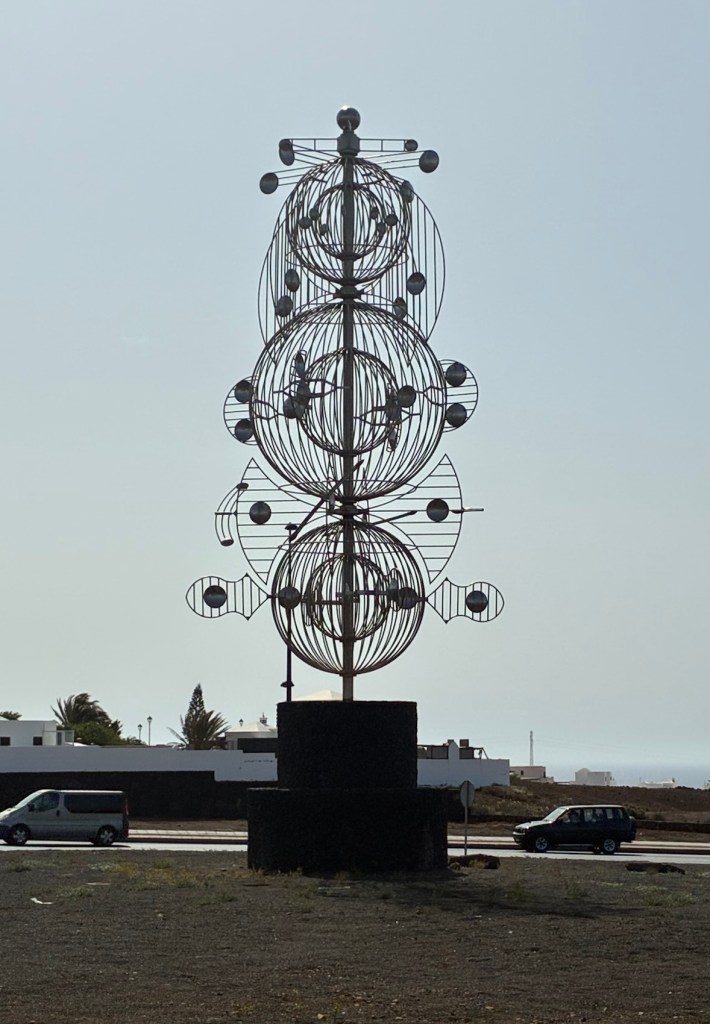
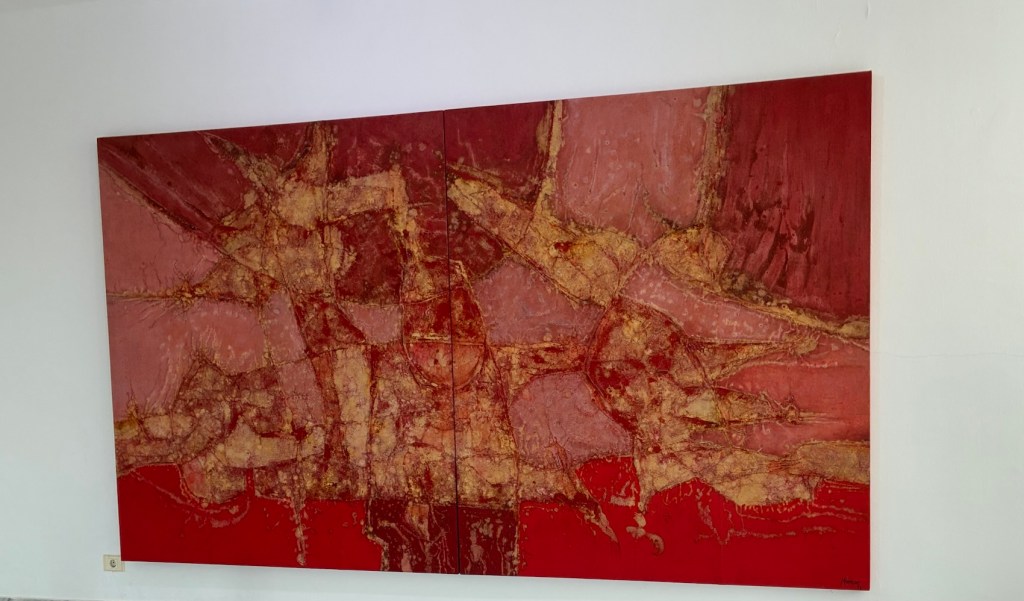
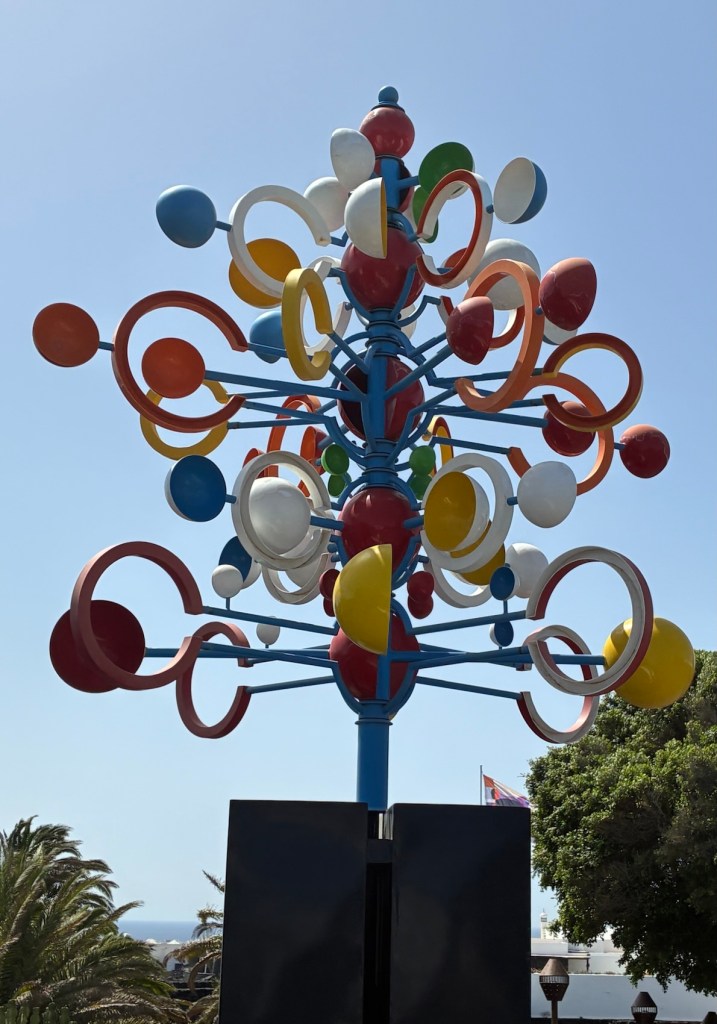
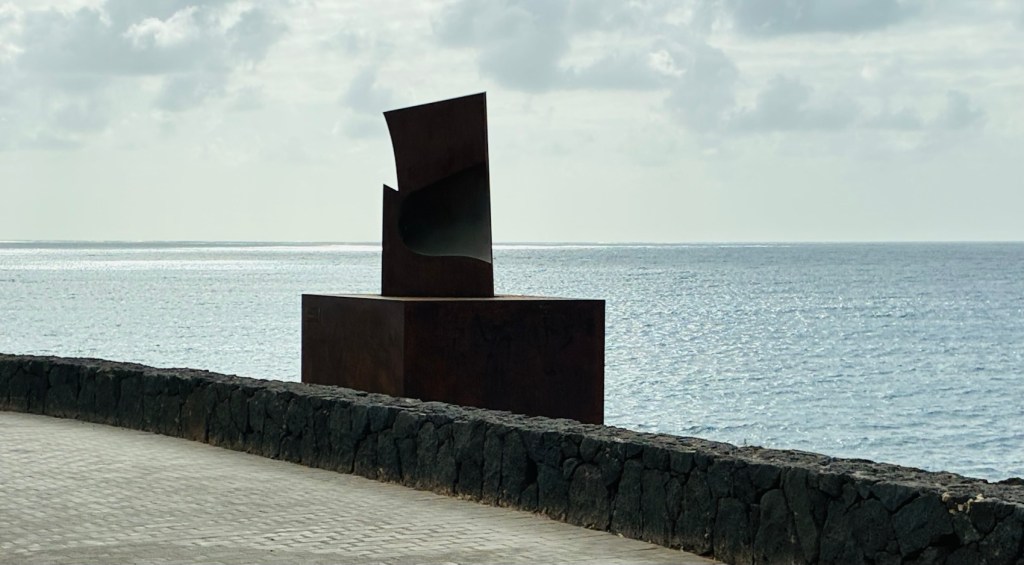
A short bus ride from Costa Teguise brought us close to a crossroads near to the Foundation His Juguete del Viento – “ Wind Toy” in the centre of the crossroads.I could not resist buying a print of one of his more formal paintings at the end of the tour.
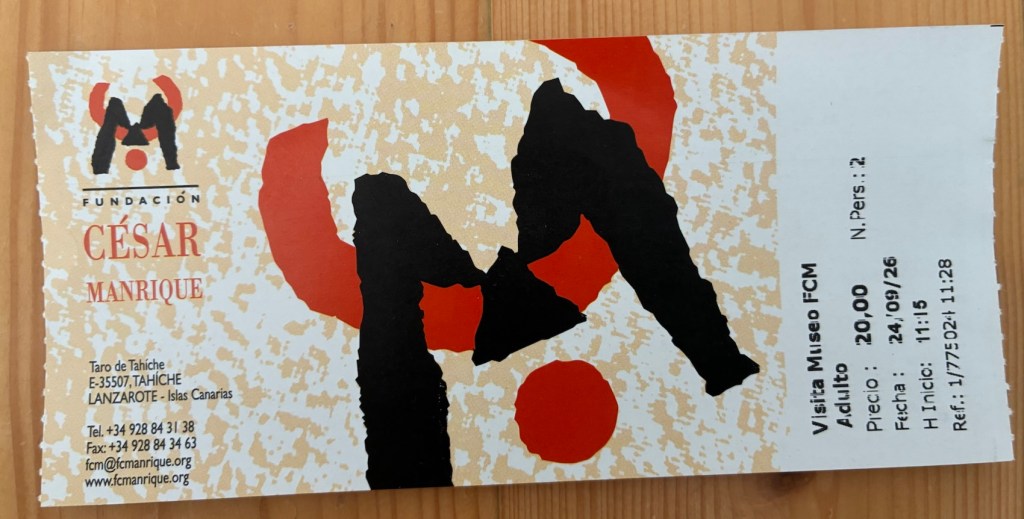
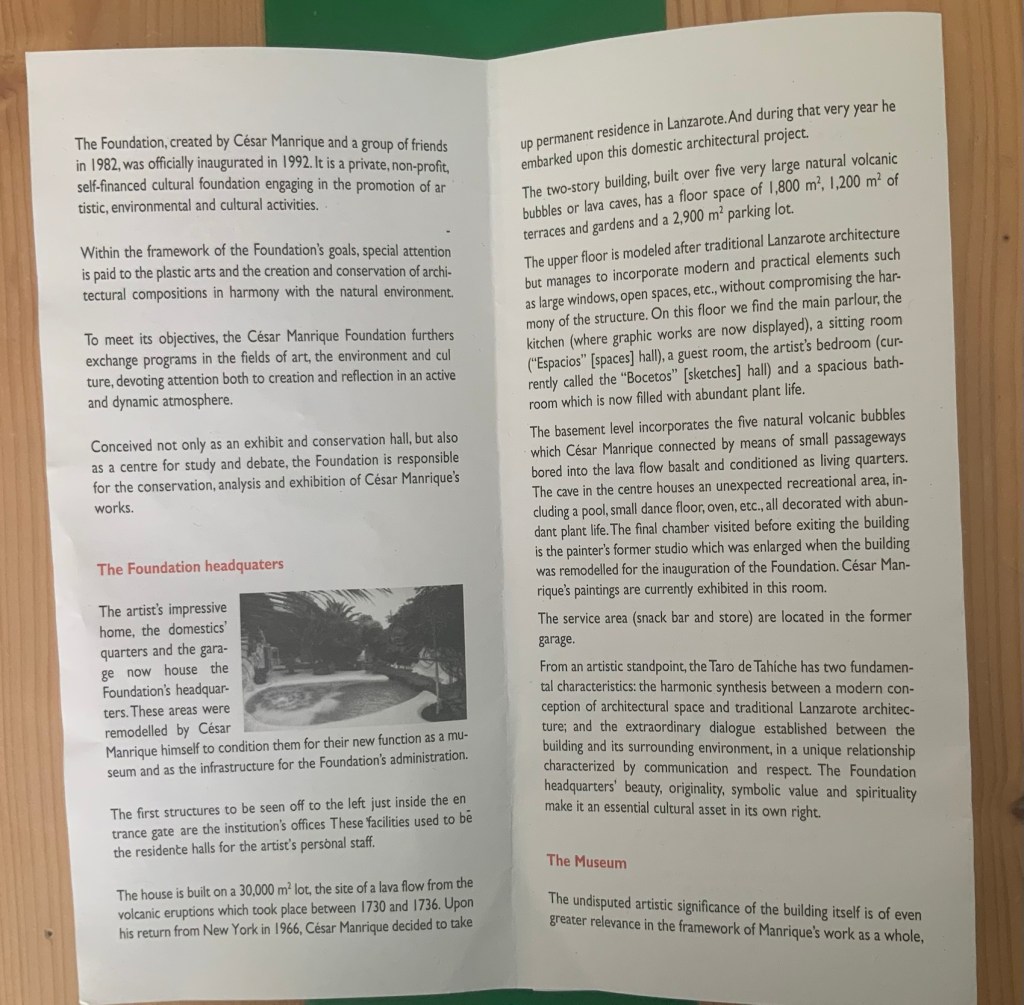
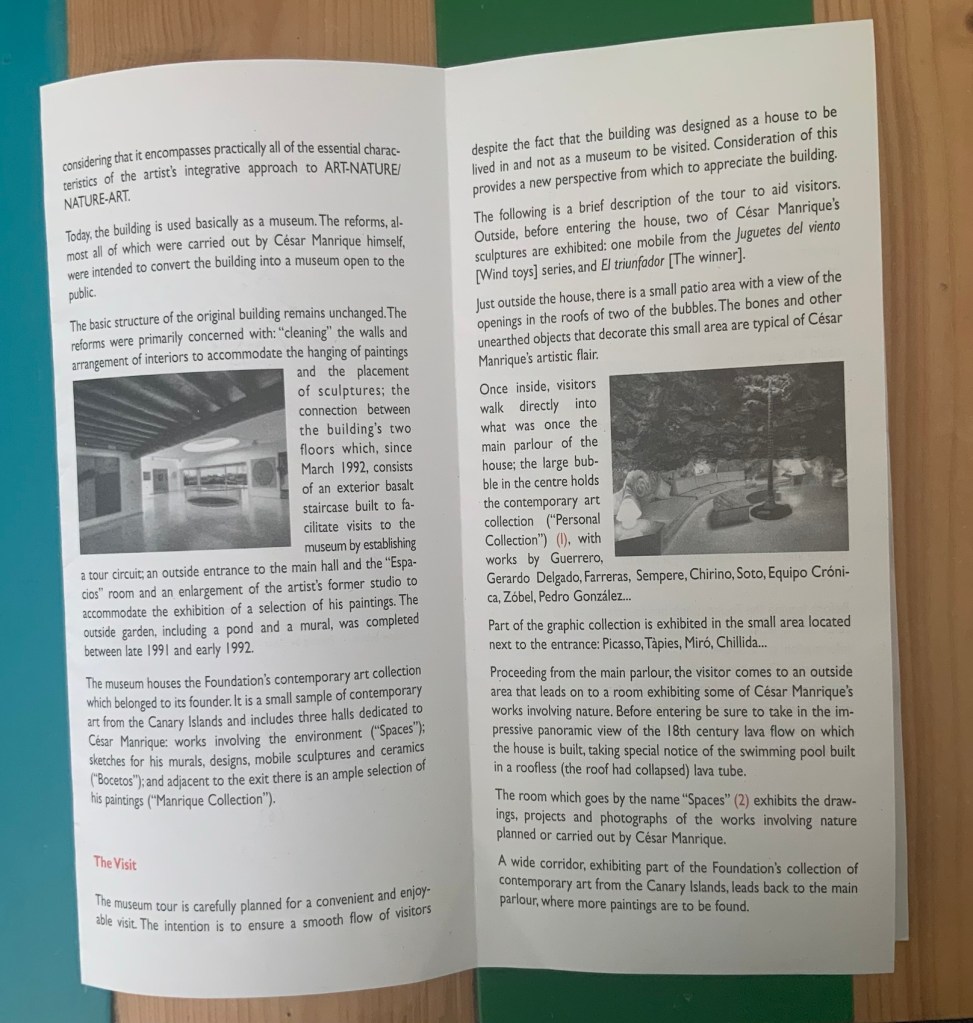
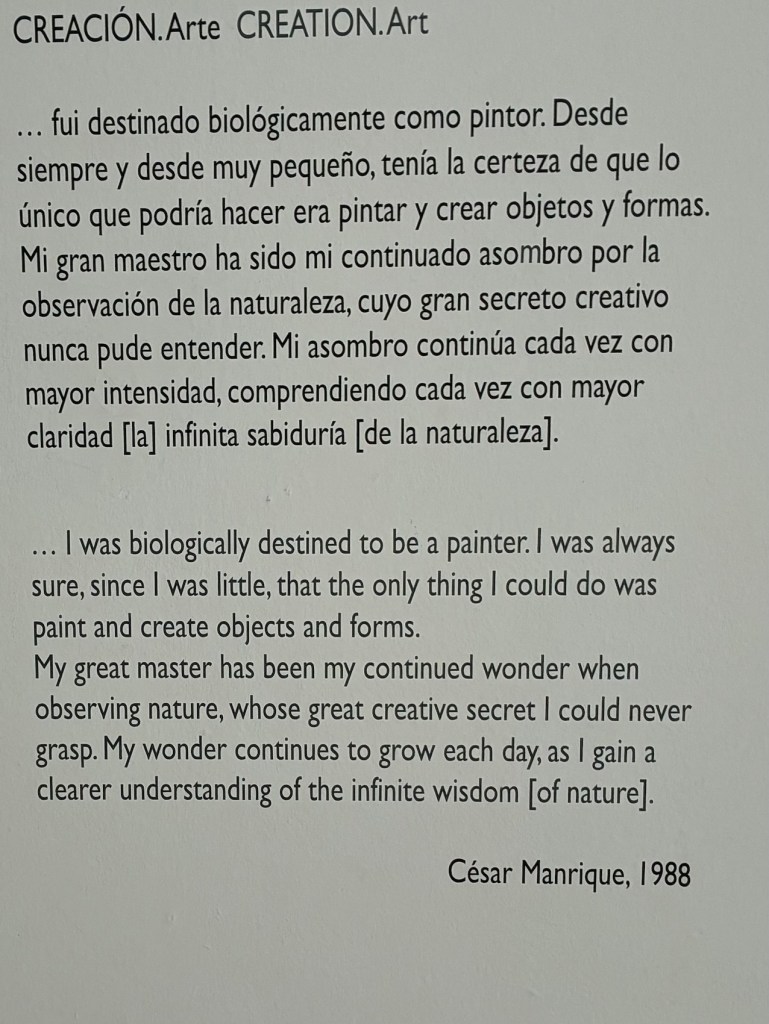
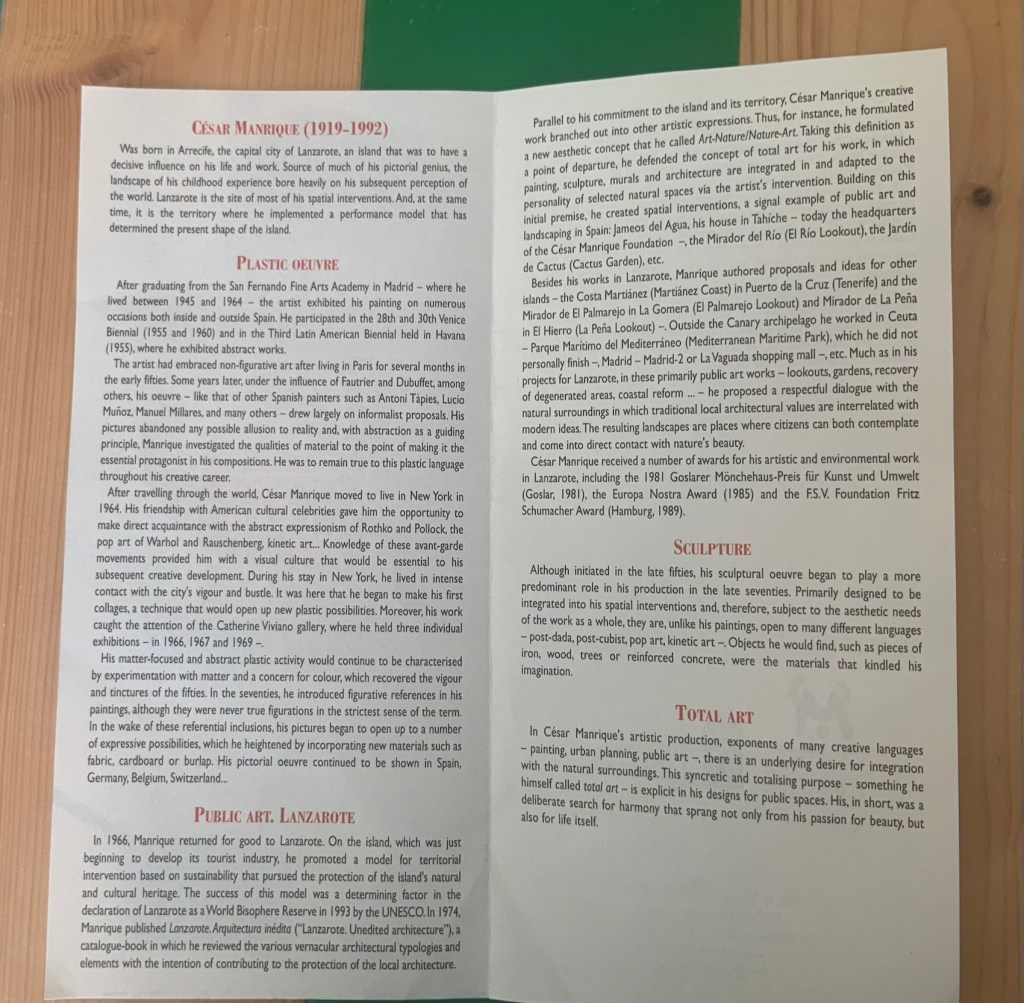
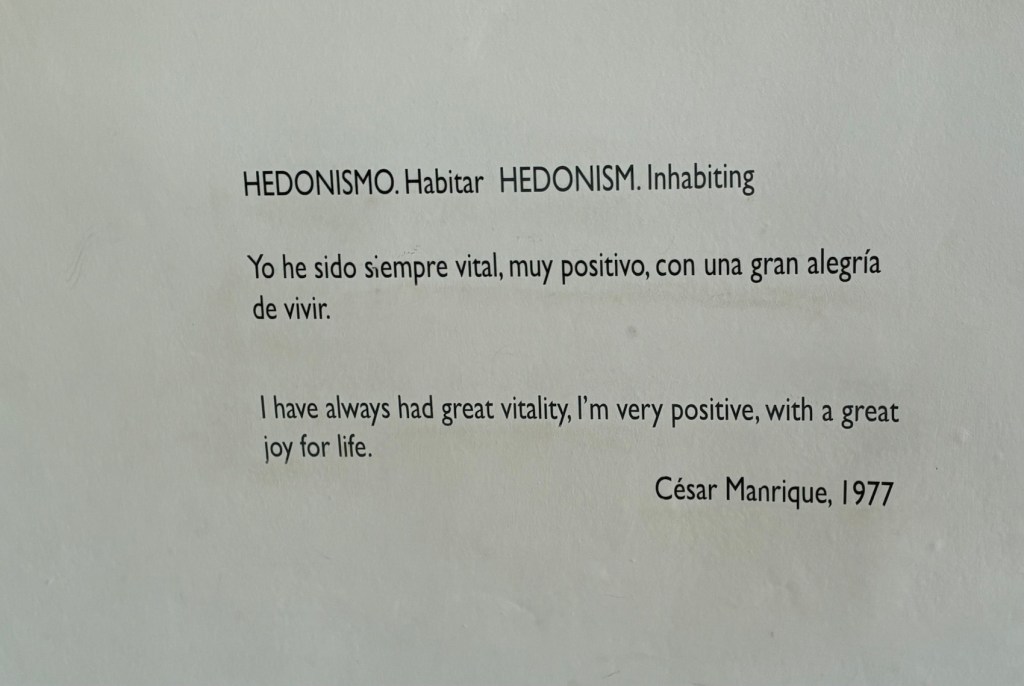
There was a lot of information on the handy leaflets provided with our ticket . I thought it would be far more informative if I included photos of these alongside photos of this unique place.
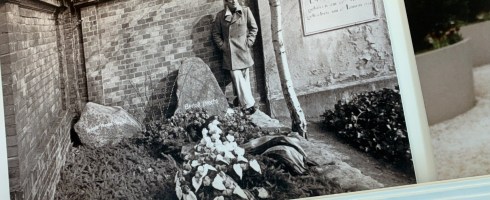
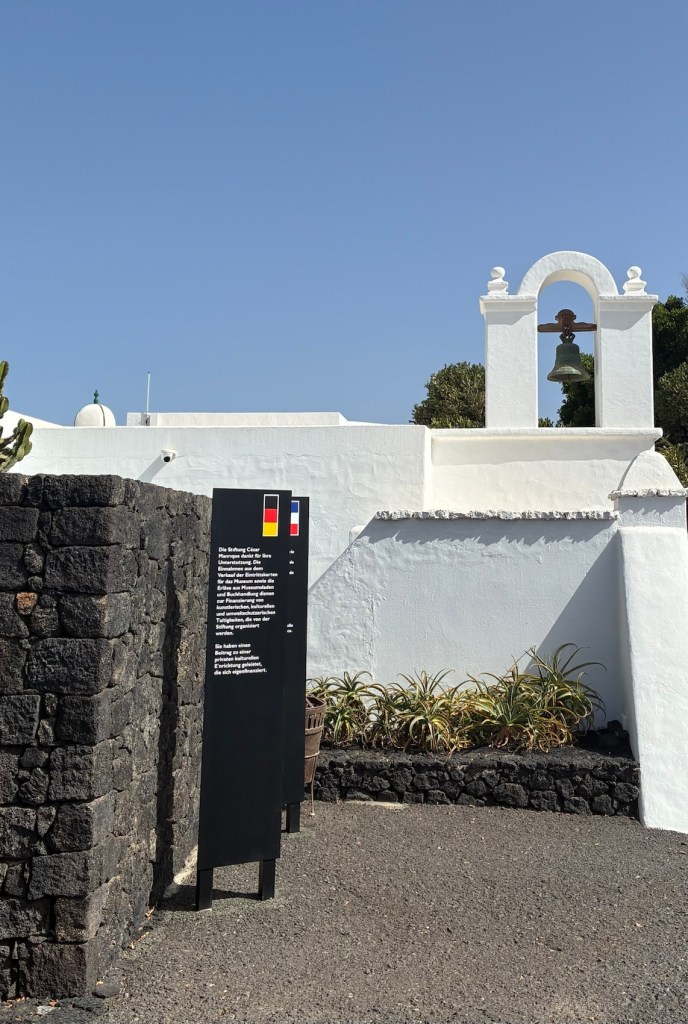
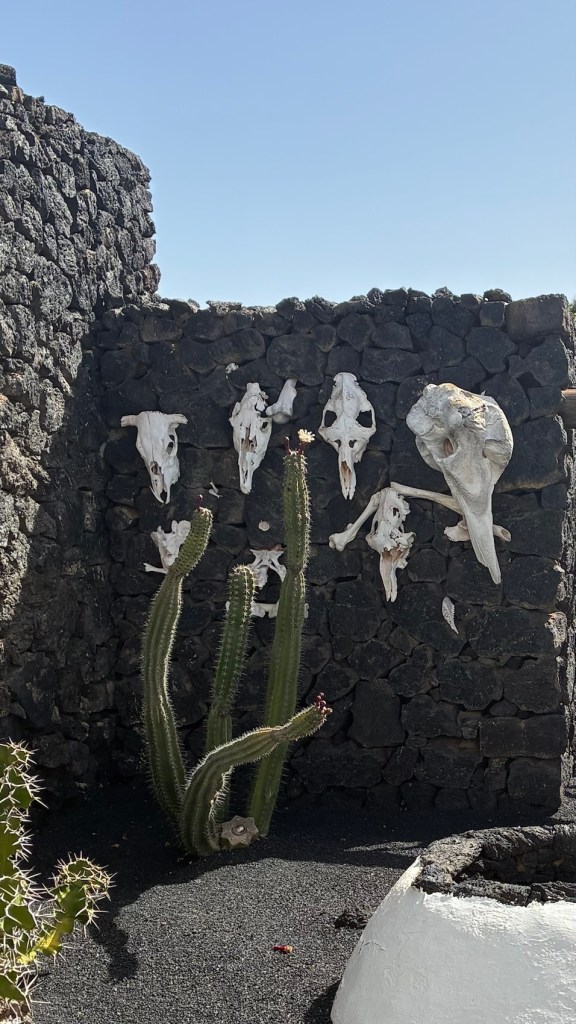
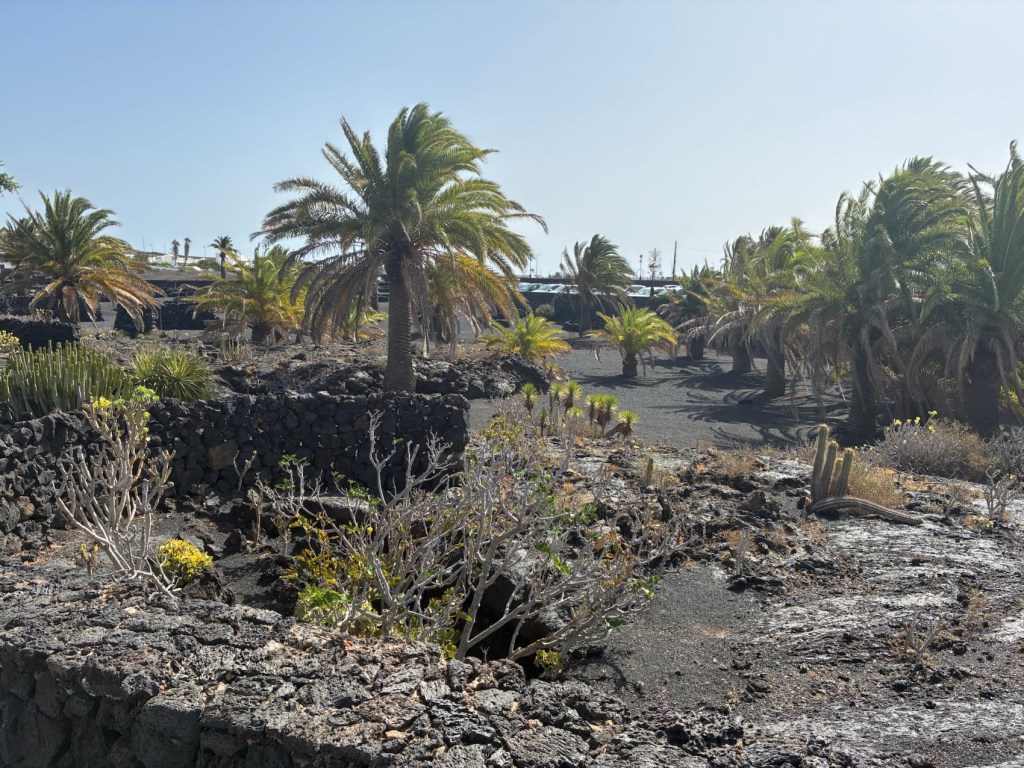
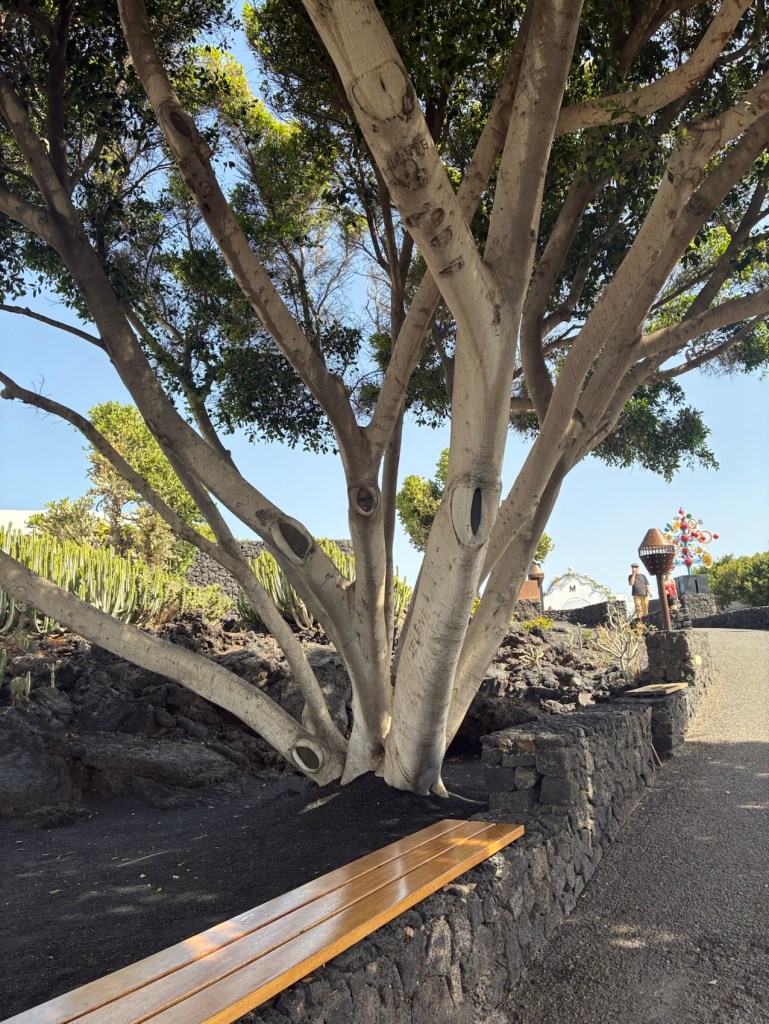
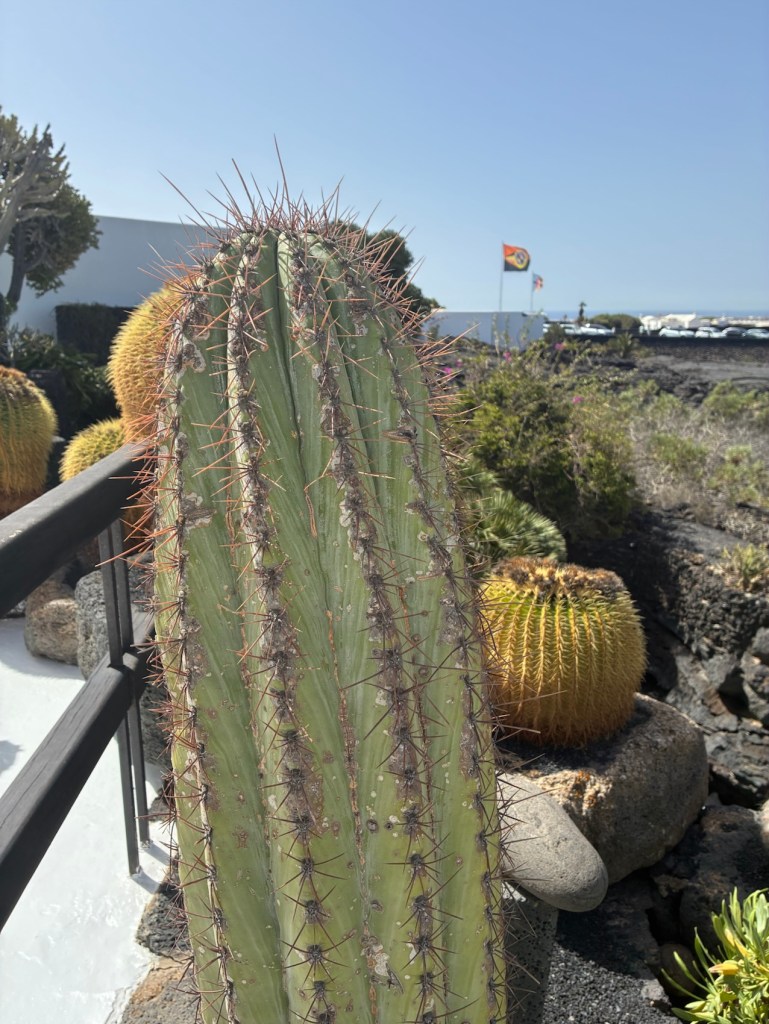
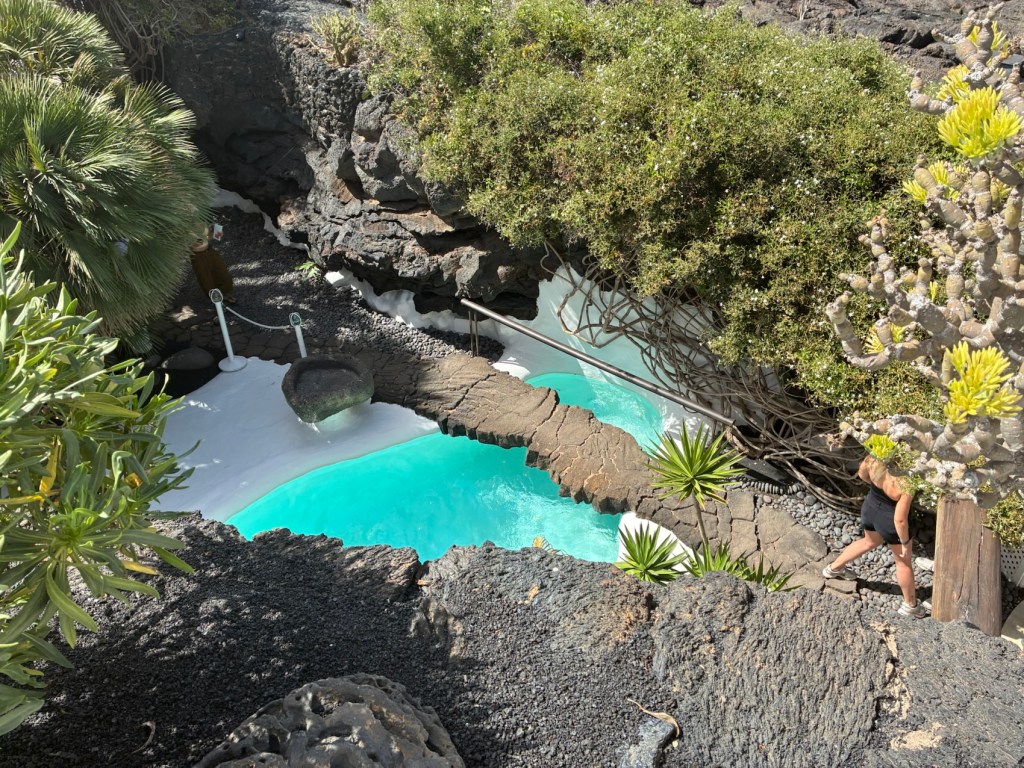
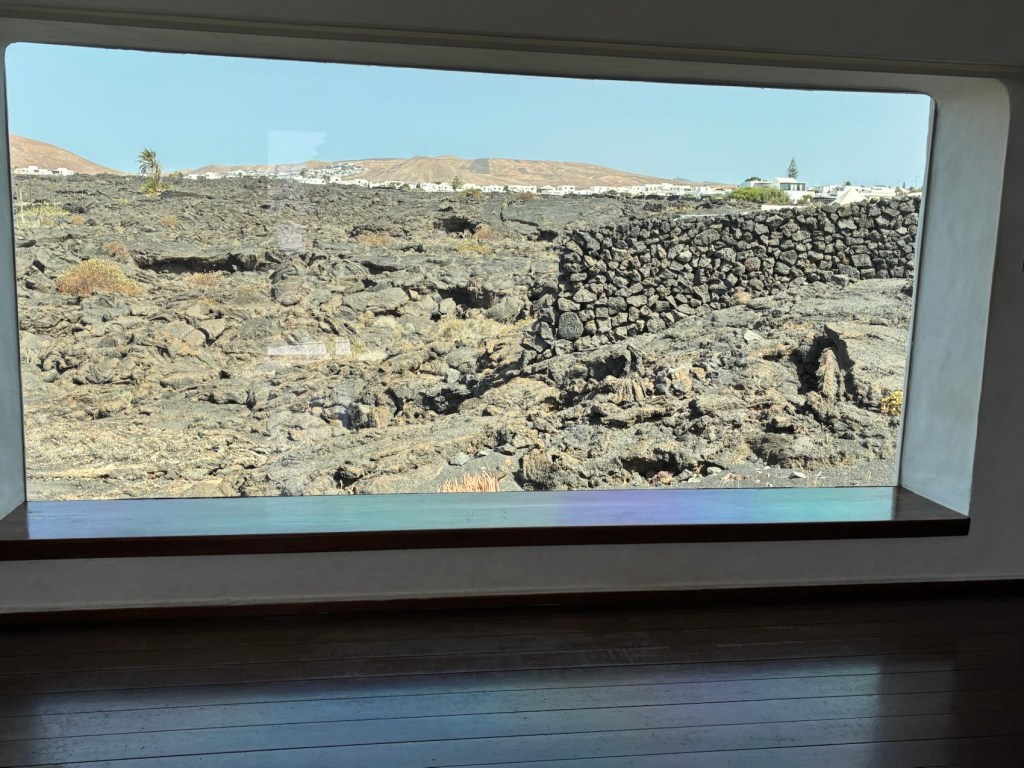
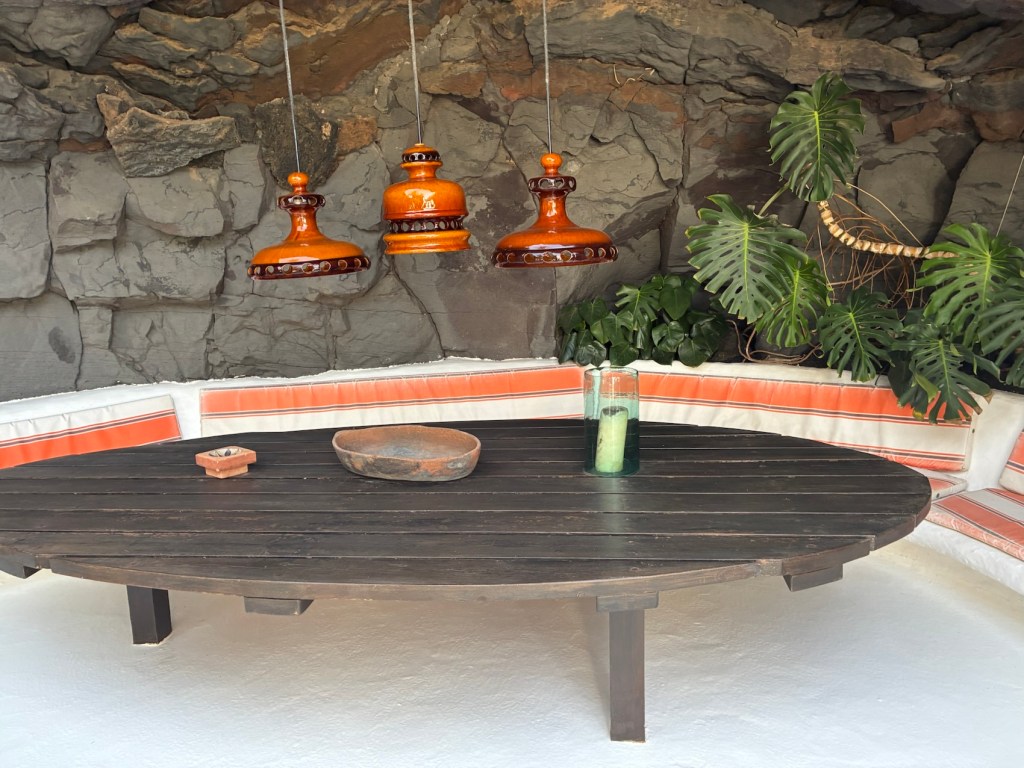
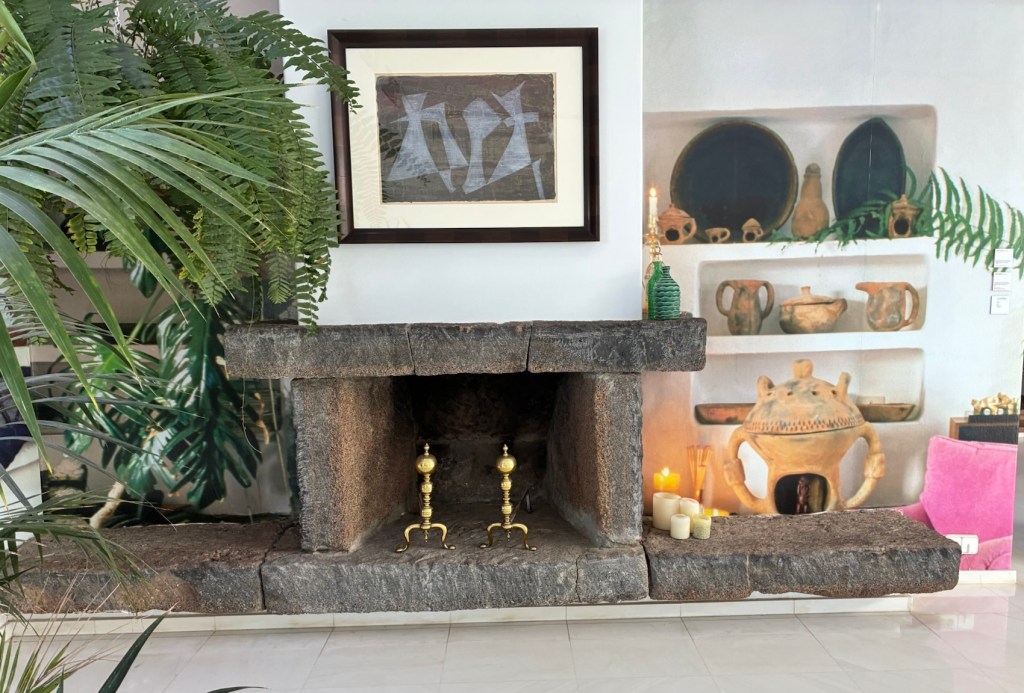
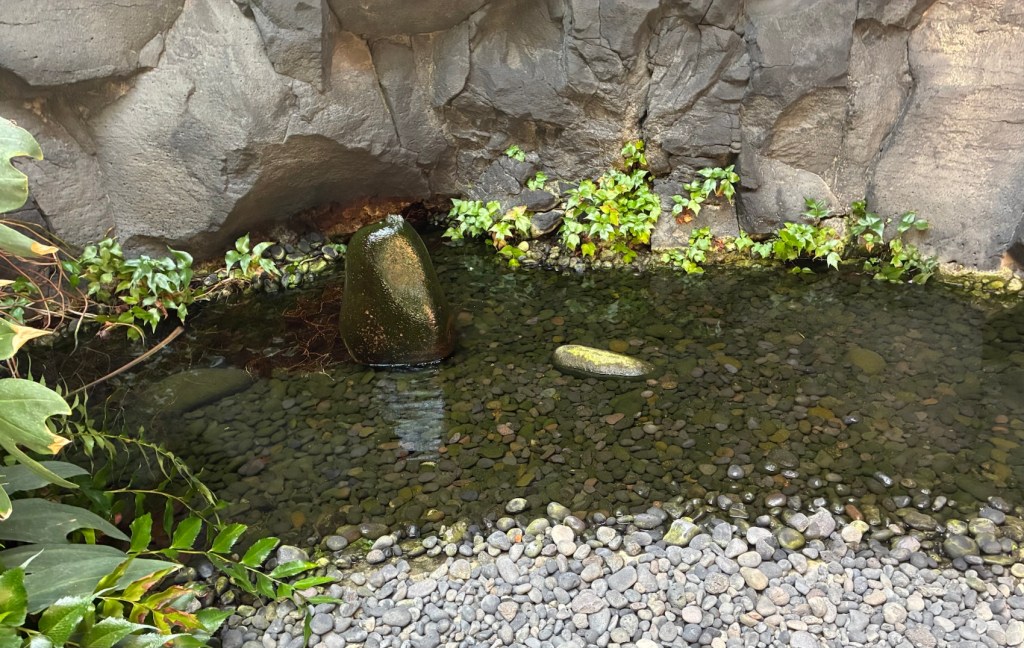
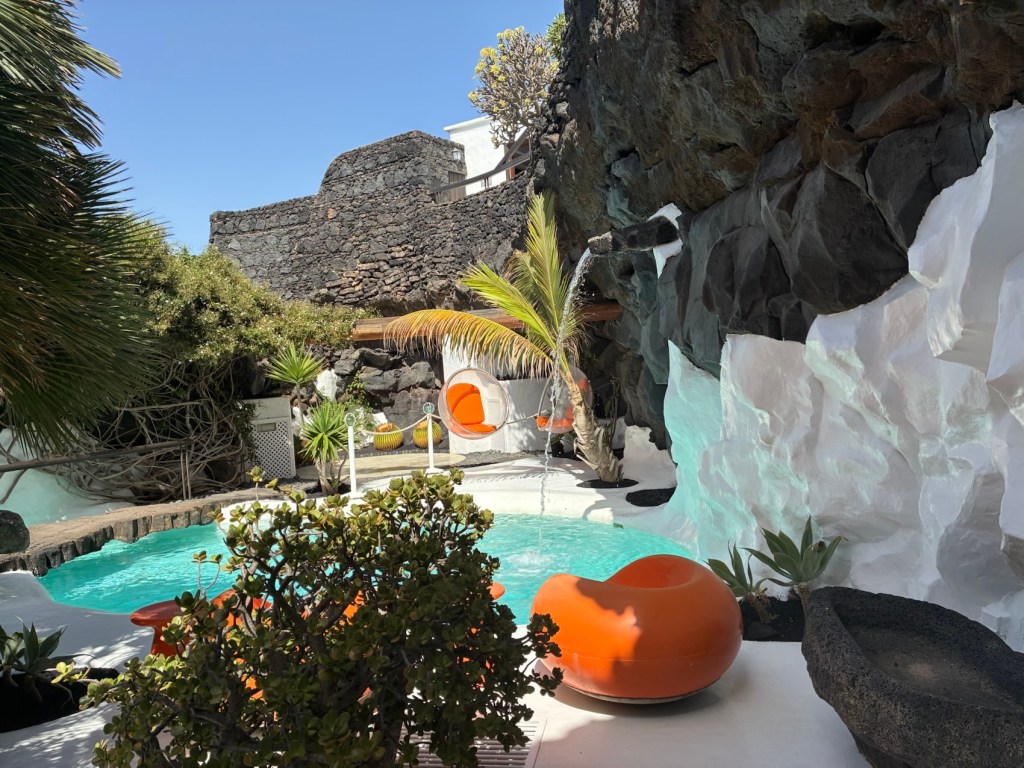
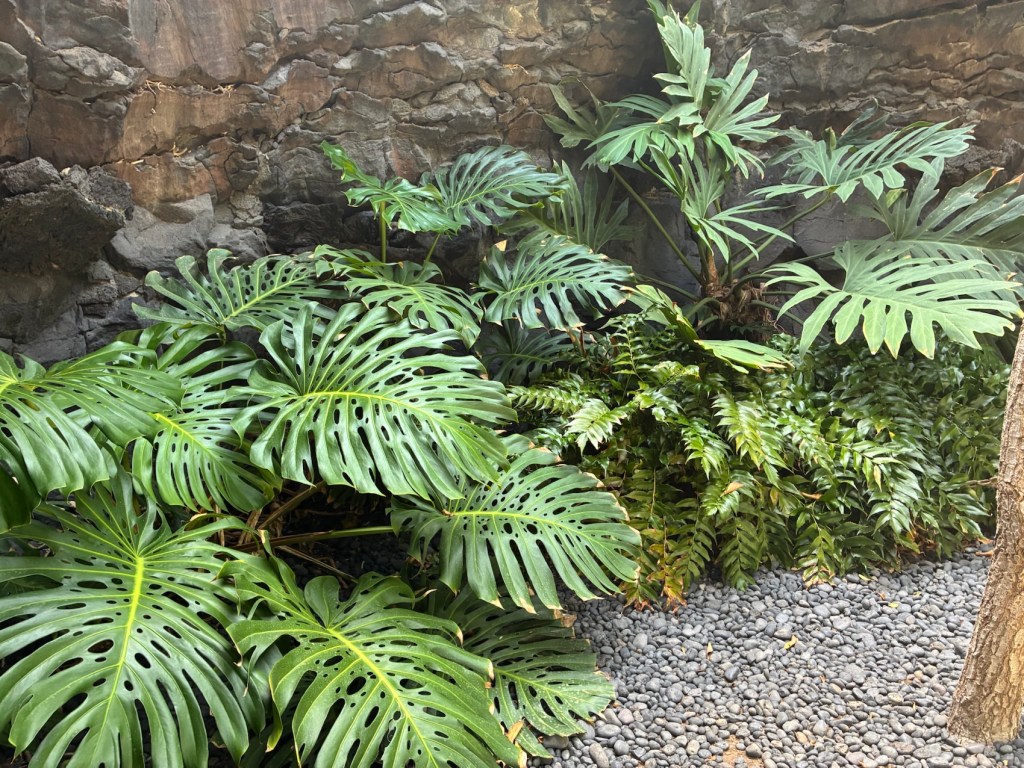
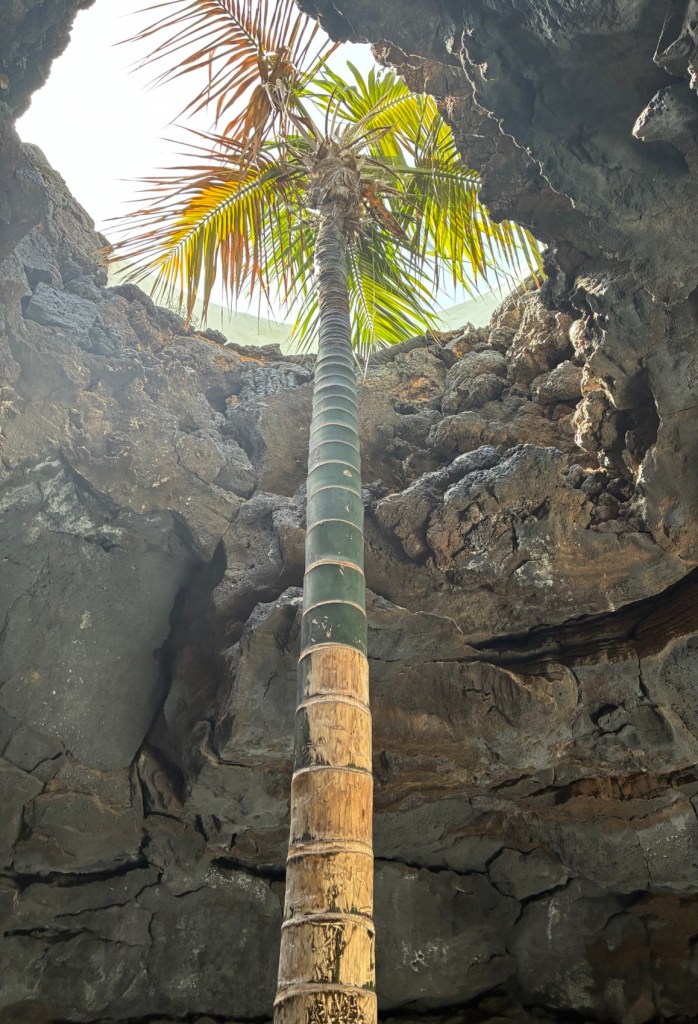
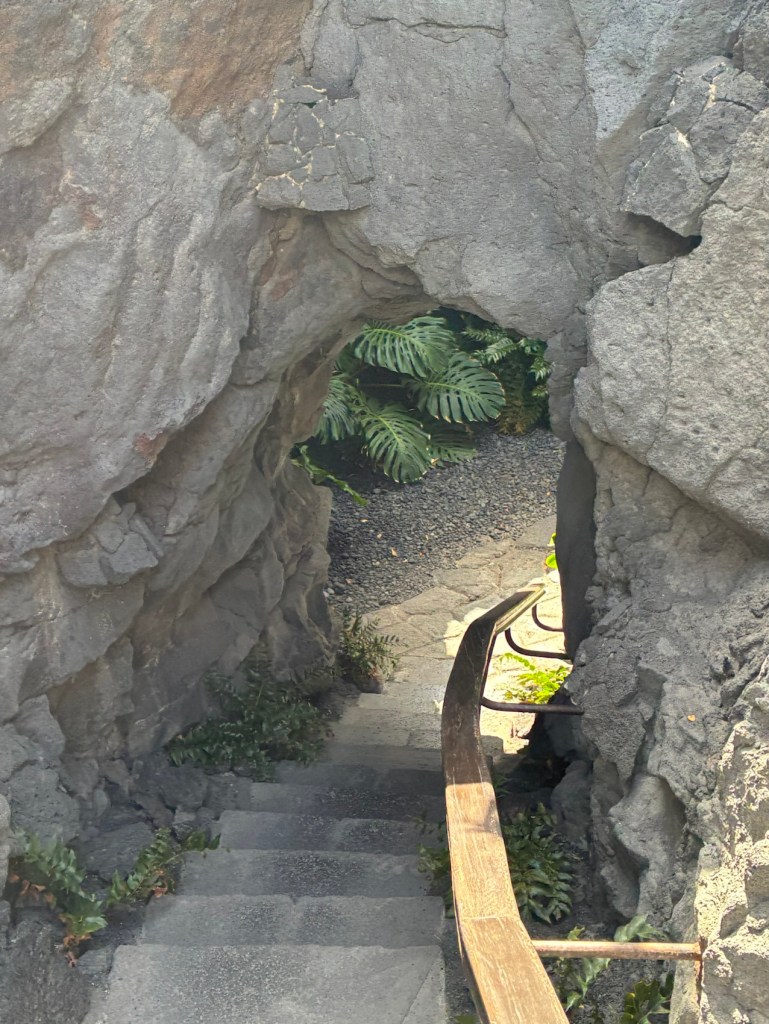
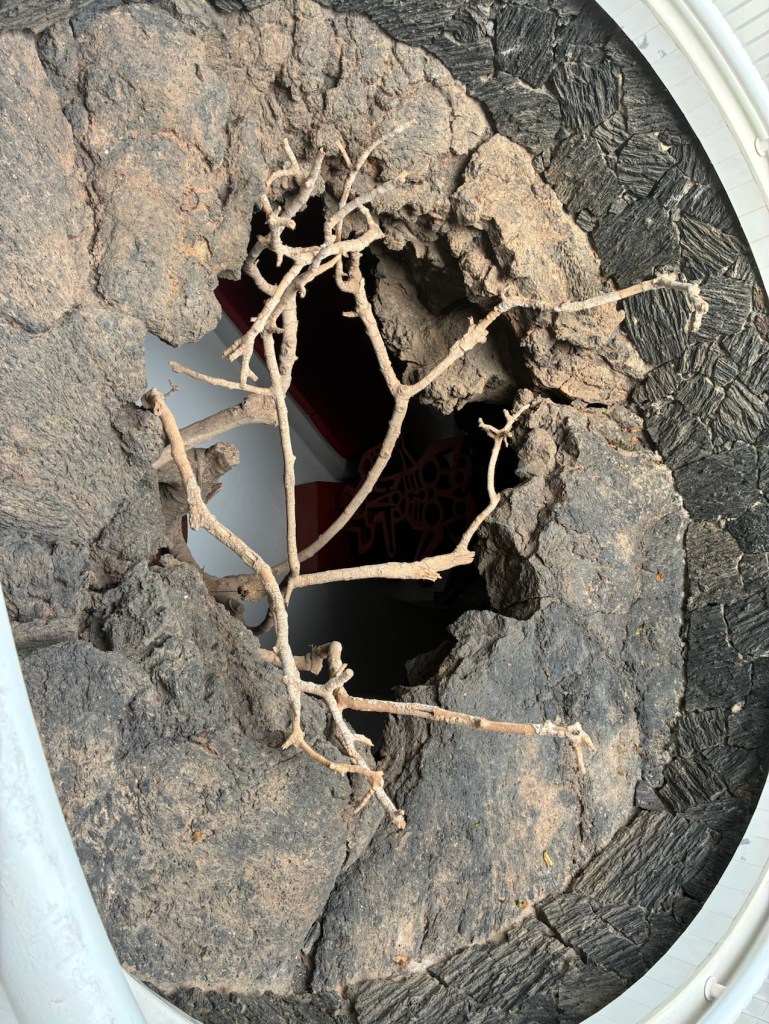
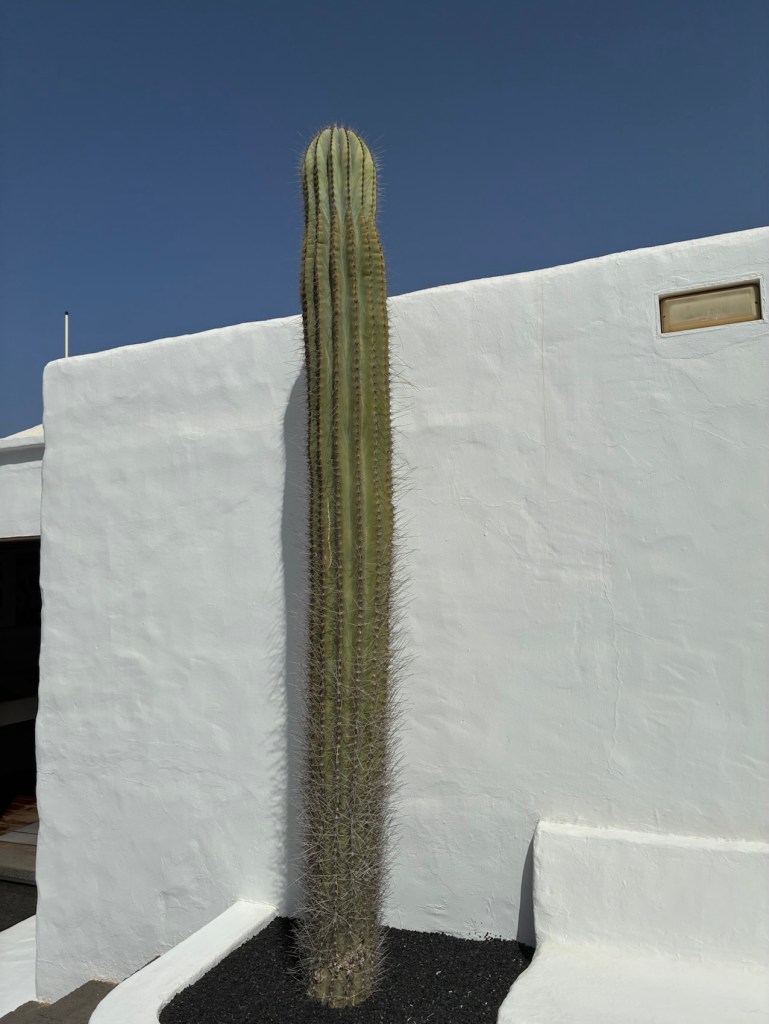
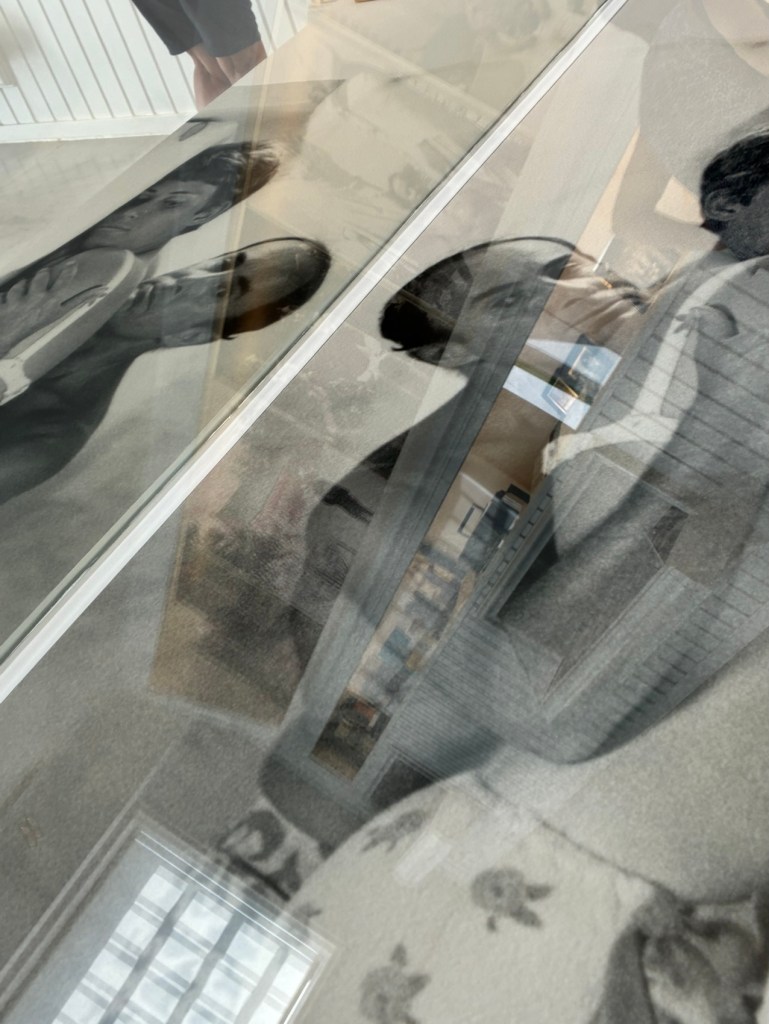
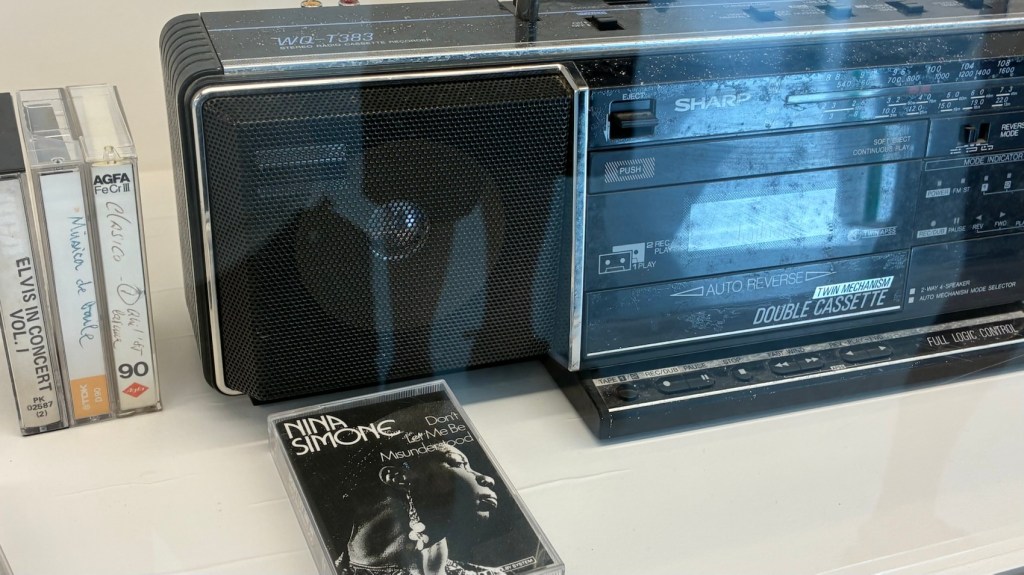
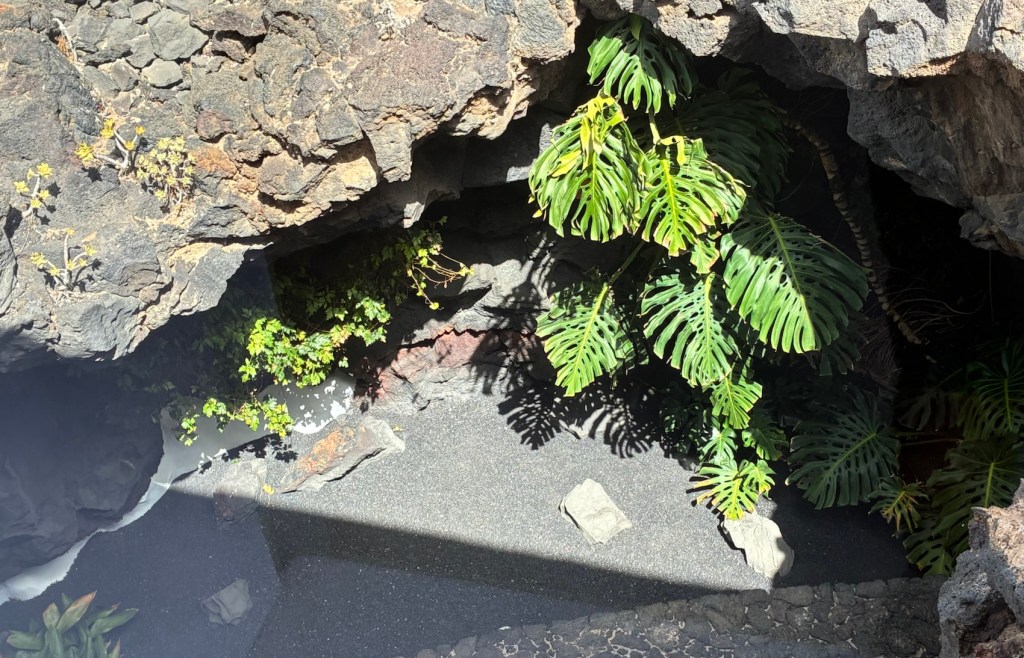
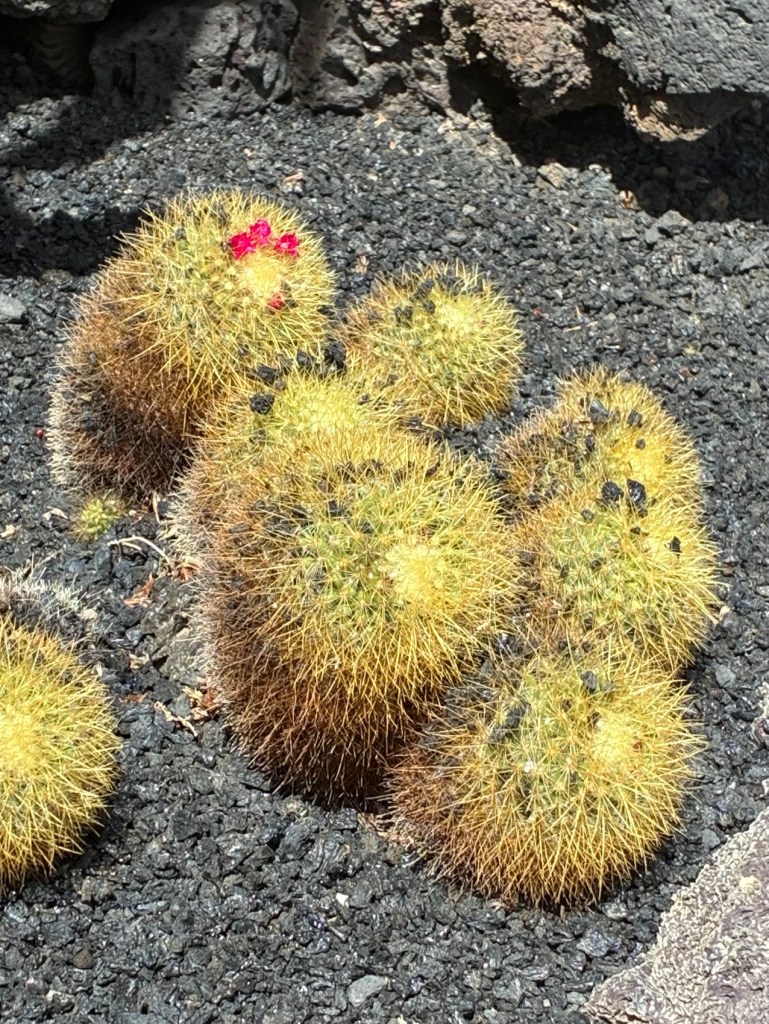
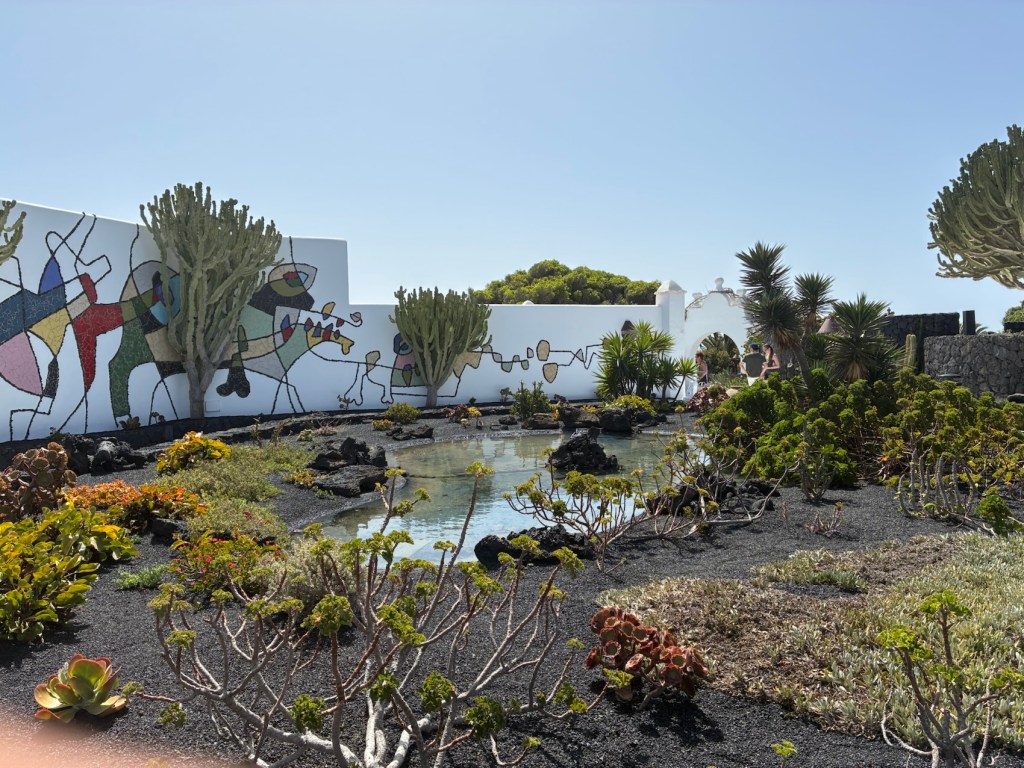
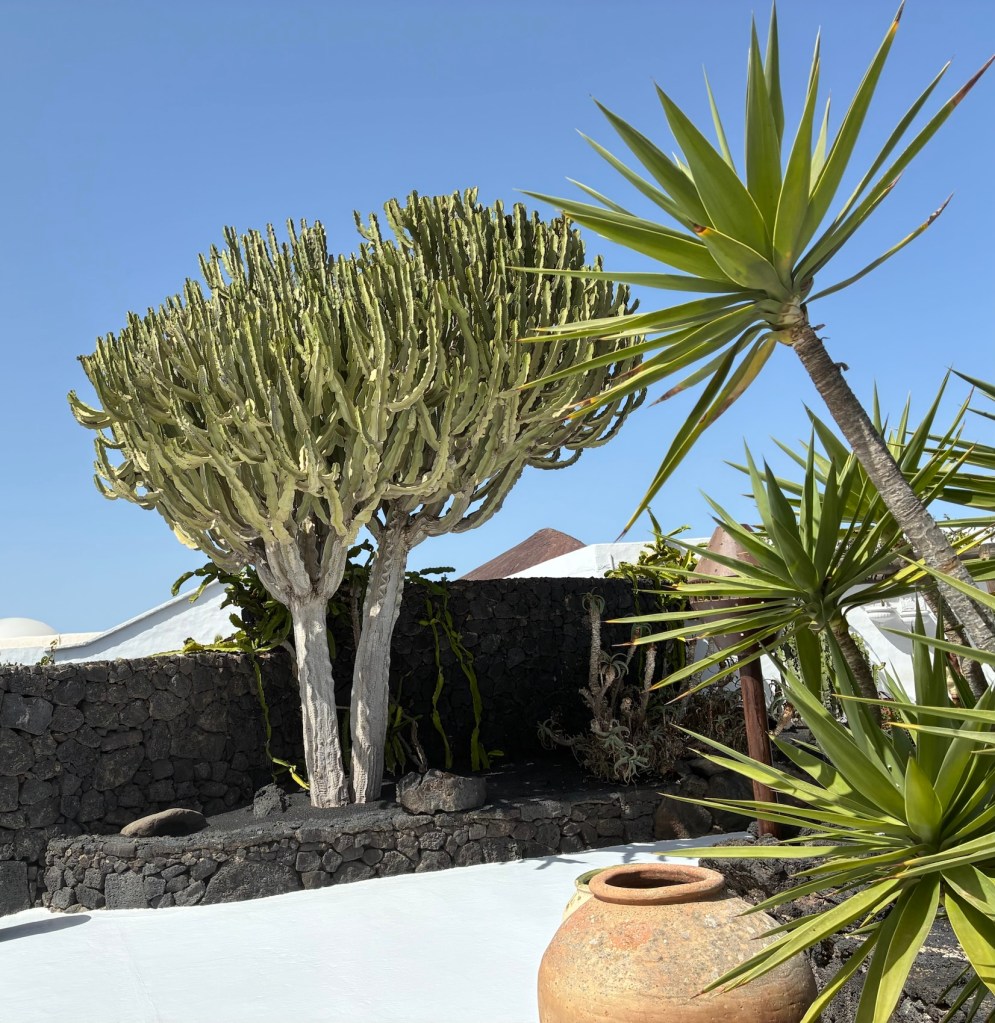
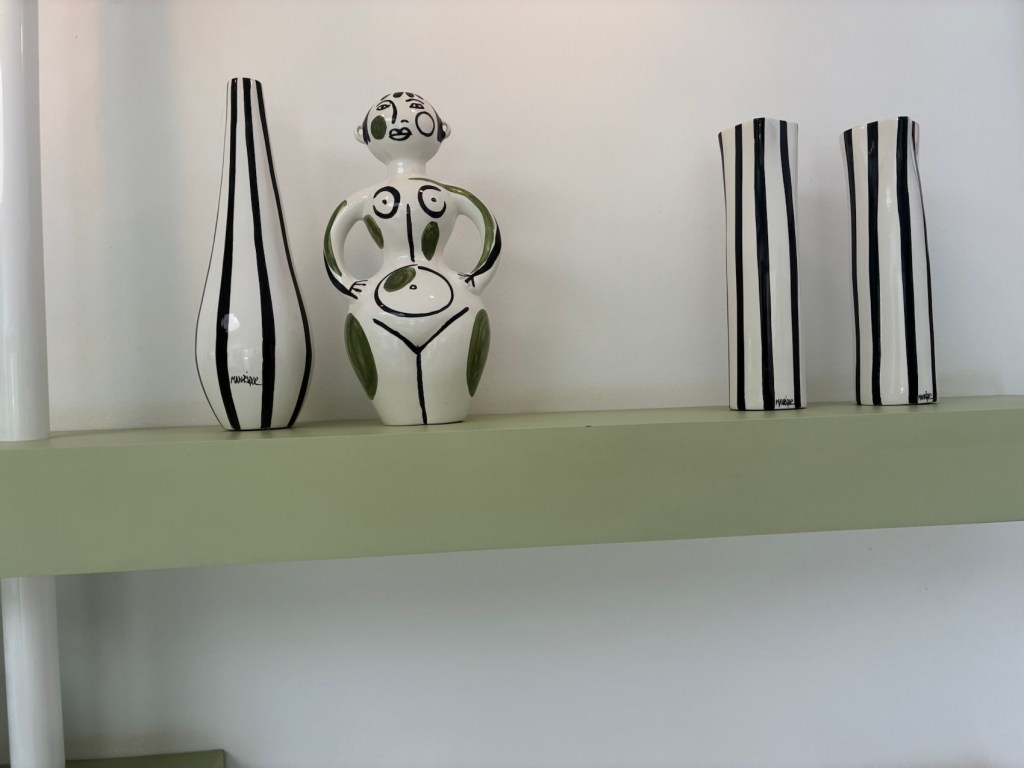
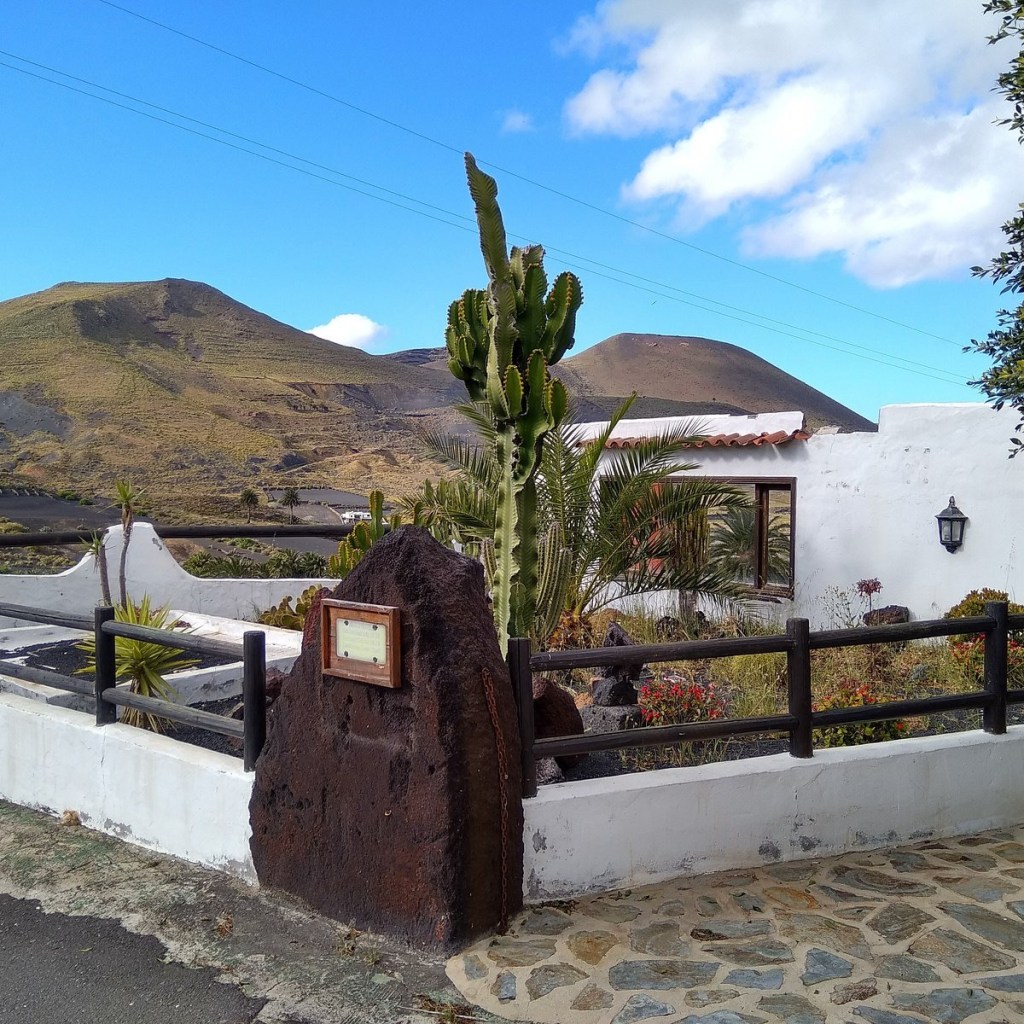
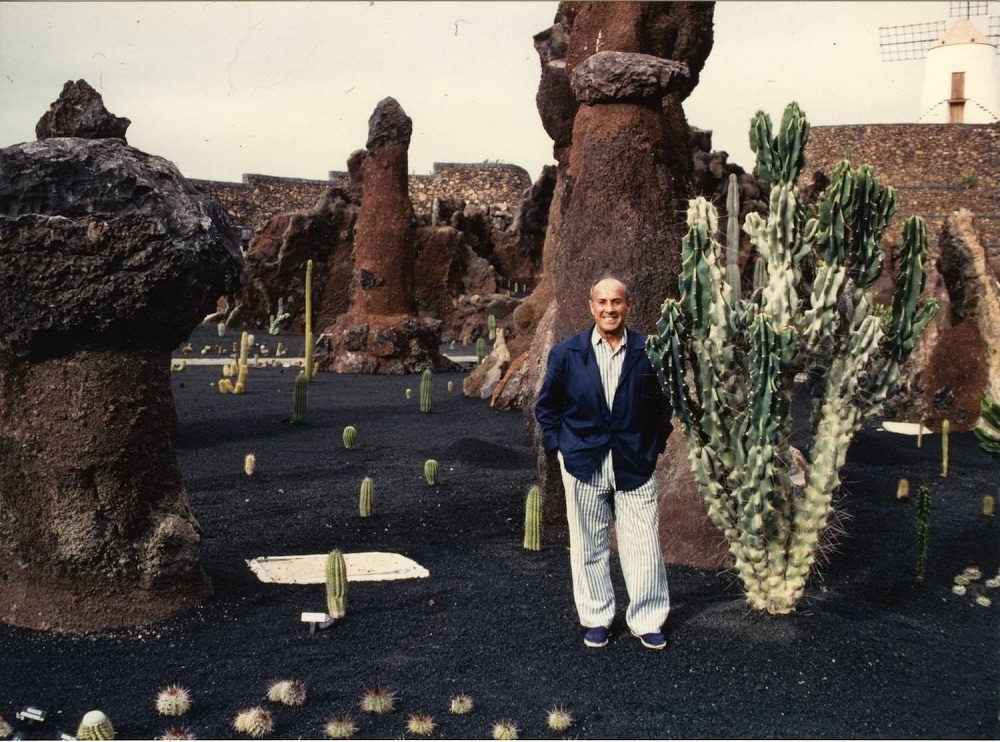
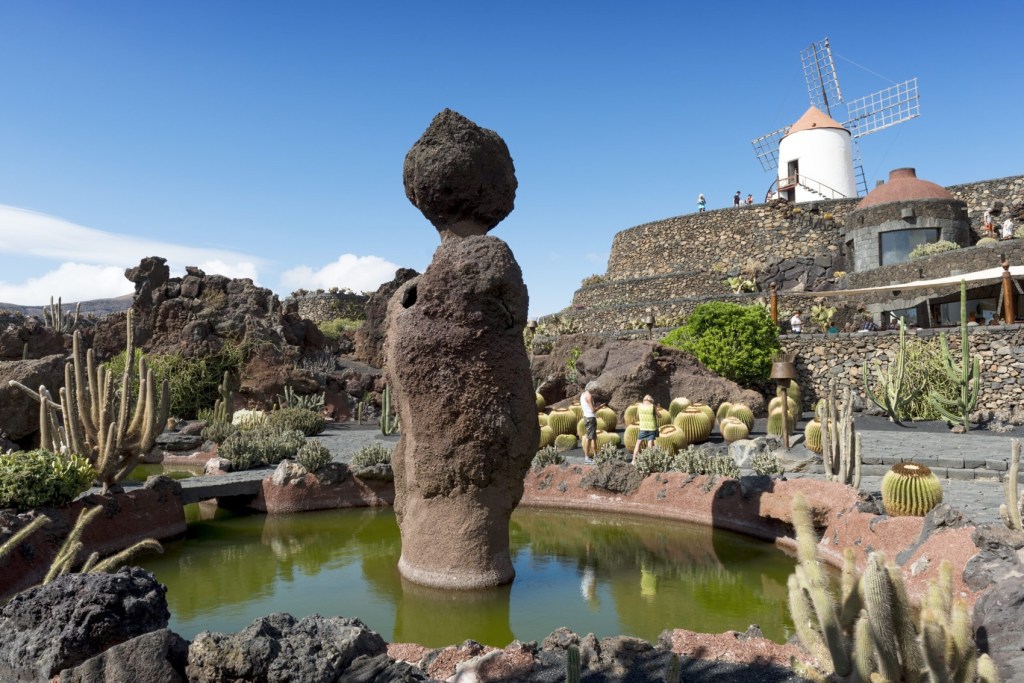
The grounds on entry.Cactii flourish in this arid climate and his inherent reverence for NATURE-ART ~ART -NATURE ie evident throughout the Foundation.A view from above of one of the “ bubbles”. What a feat of imagination to develop and connect lava bubbles below a stream of lava formed in an eruption in the 18th century and develop them in to a home.PanoramaAll below groundAt first glance I thought they were shelves on the right of the fireplace but they are frescoes.Water feature Irresistible Going up…One of the connecting corridors Early New York influences – Nina Simone and ElvisWe enjoyed a short film on entering the foundation featuring interviews with some of his friends and fellow artists . All were united in their admiration of his unbreakable spirit,vision and wonderful companionship. There was one criticism-not of him – but of the “ Canarian governance “ as it was described. Not enough effort by administrations to bring him,his work and his lasting beneficial impact on his beloved Lanzarote to the attention of the world.
As I mentioned at the beginning,I had never heard of him…Might it be that his early persuasion of the Lanzarote administration in the 60s,to limit overdevelopment,eg no billboards on roadsides, no skyscrapers and respect for the sea, the earth and the sky was not totally to the liking of some of the Canary Islands’ thirst for tourism?
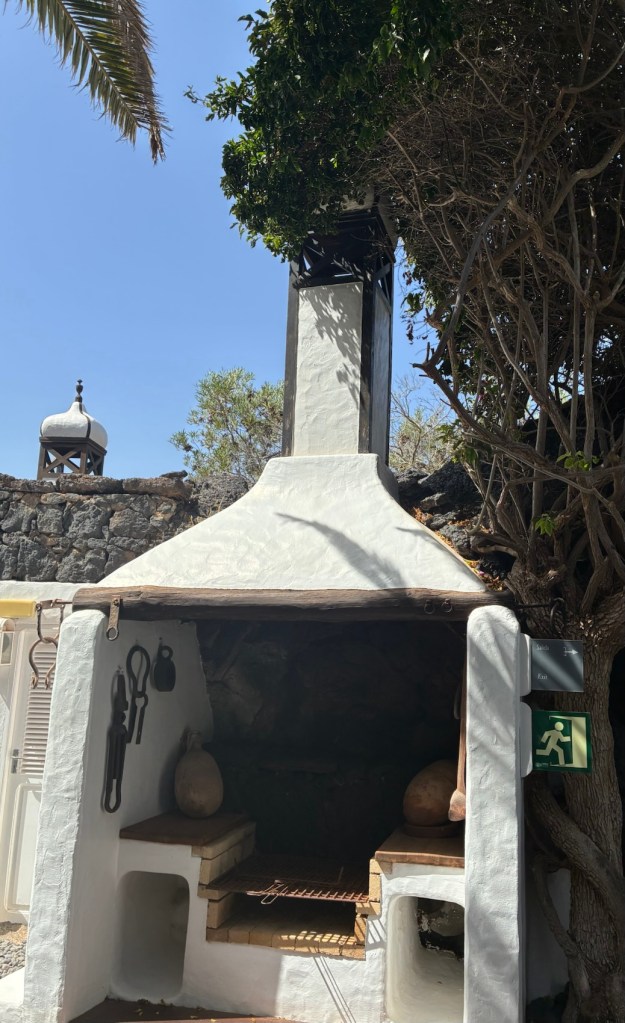
On a lighter note, I was really envious of the BBQ!This was evident from our first impressions of the Foundation; if you are ever in Lanzarote then it is a must…
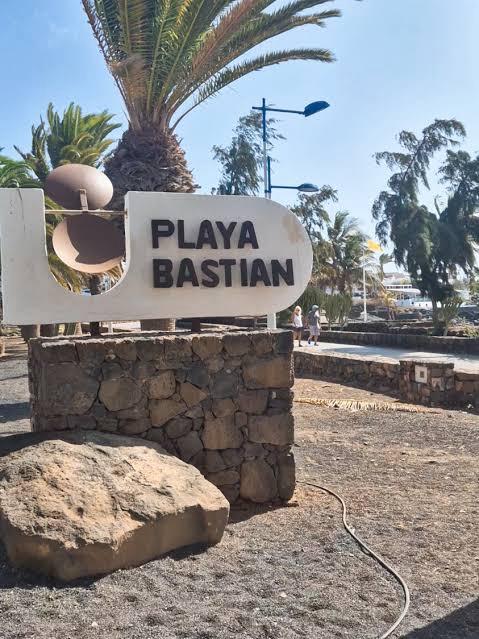
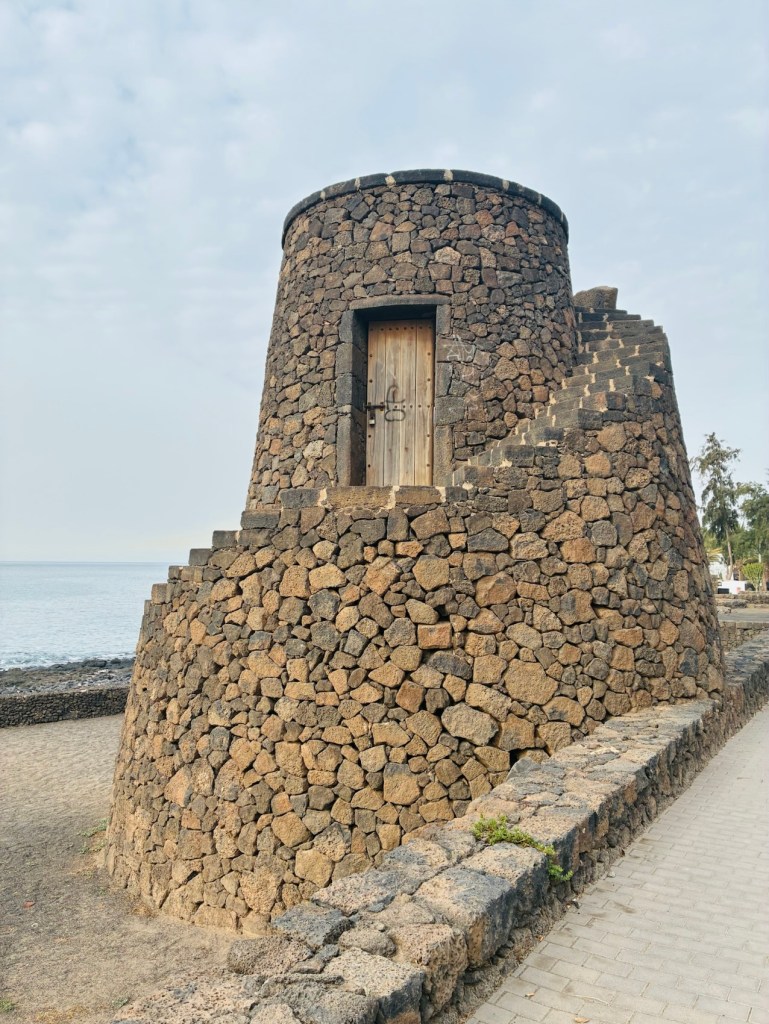
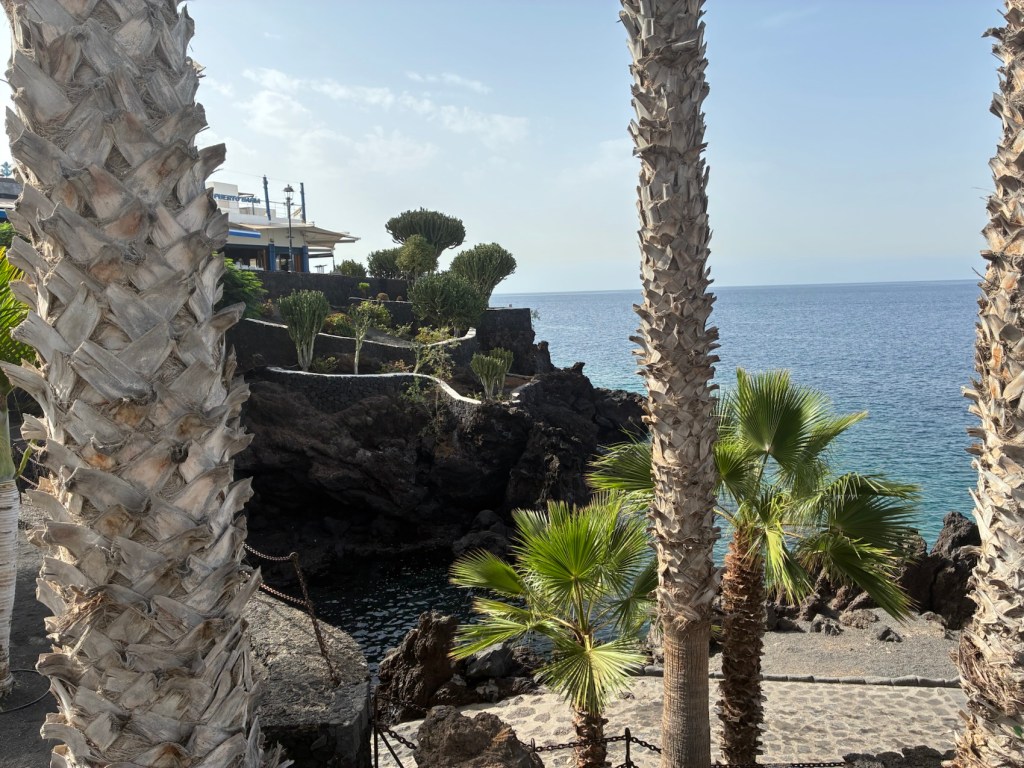
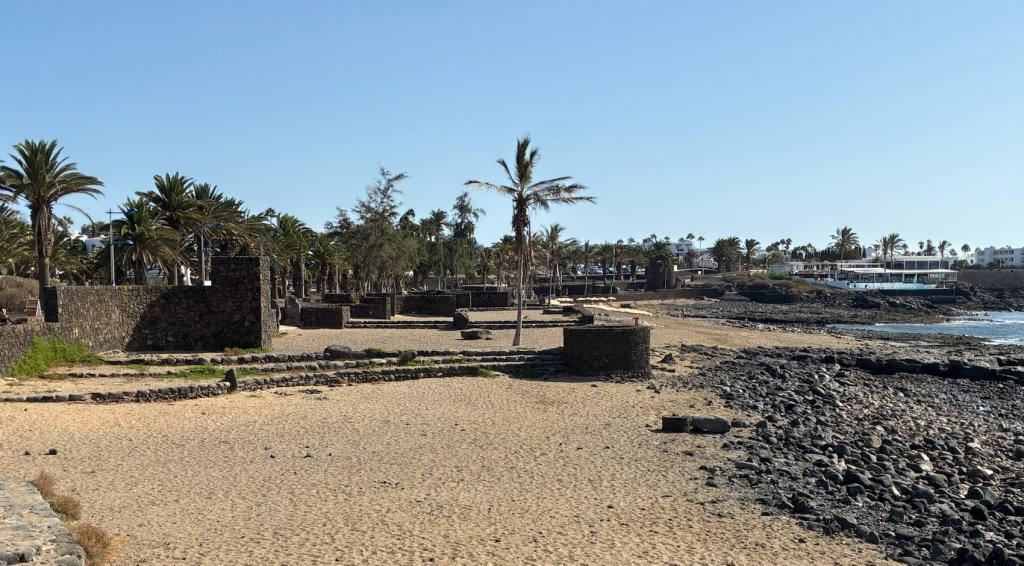
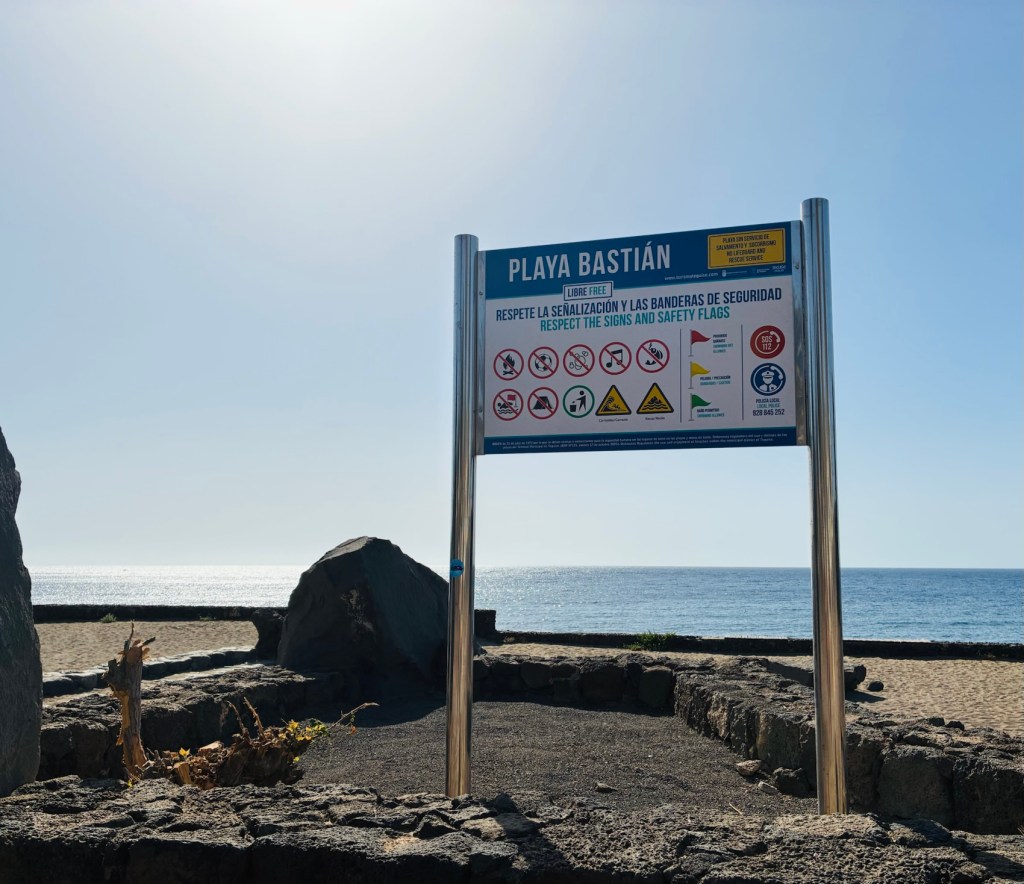
Que?An ancient watchtowerTypical scene between “ playas” Bastian
History and Background
Salt Pans Beginnings: Before the tourism boom of the 1970s, the coastal area around Playa Bastián was used for salt works (salinas) owned by local families like the Toledo group.
First Building: In 1963, the Toledo family built Villa Toledo directly on the beach, which stands as the very first structure constructed in the modern resort area of Costa Teguise.
Resort Development: The surrounding beach area and promenade were further developed in the late 1970s and 1980s, transforming the rugged coastline into an accessible, landscaped leisure spot.
Natural Features: The beach features traditional low stone windbreak walls (picon or volcanic stone enclosures) built into the sand to offer shelter from ocean breezes, alongside a historic watchtower at its southern end.
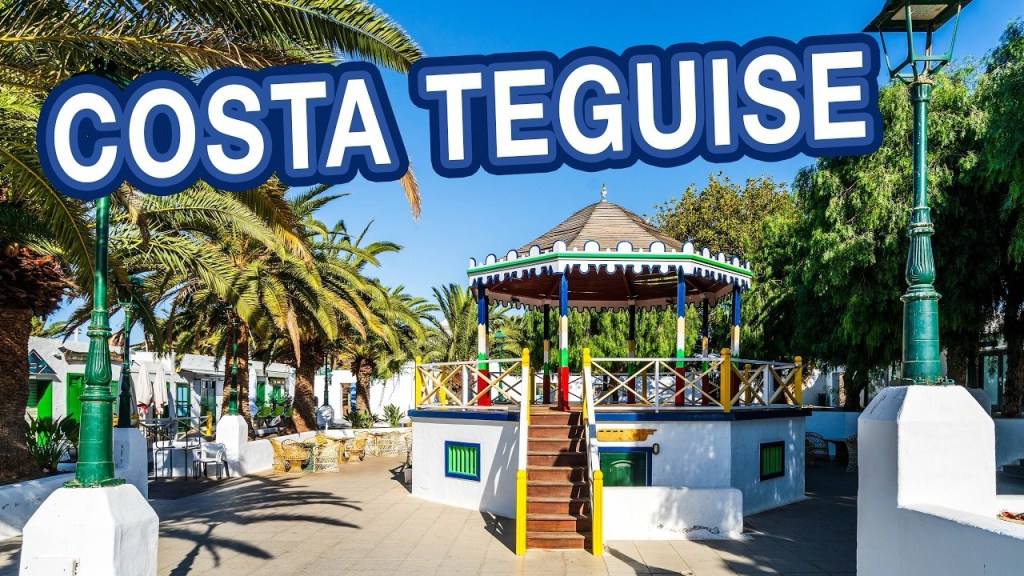
COSTA TEGUISE
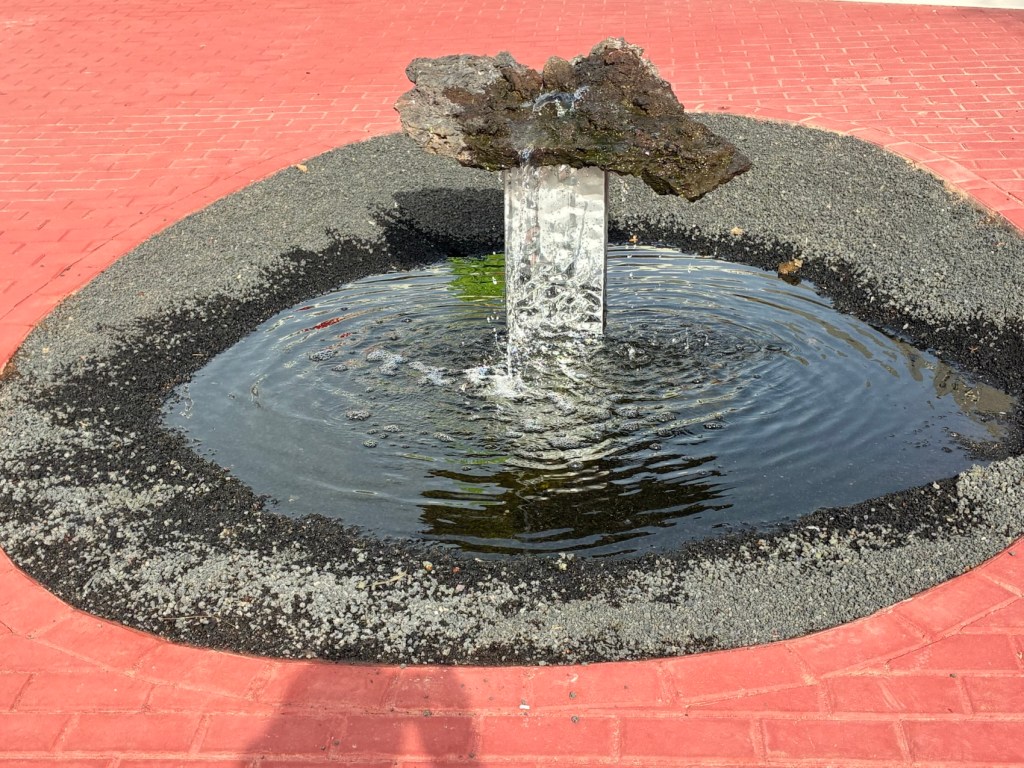
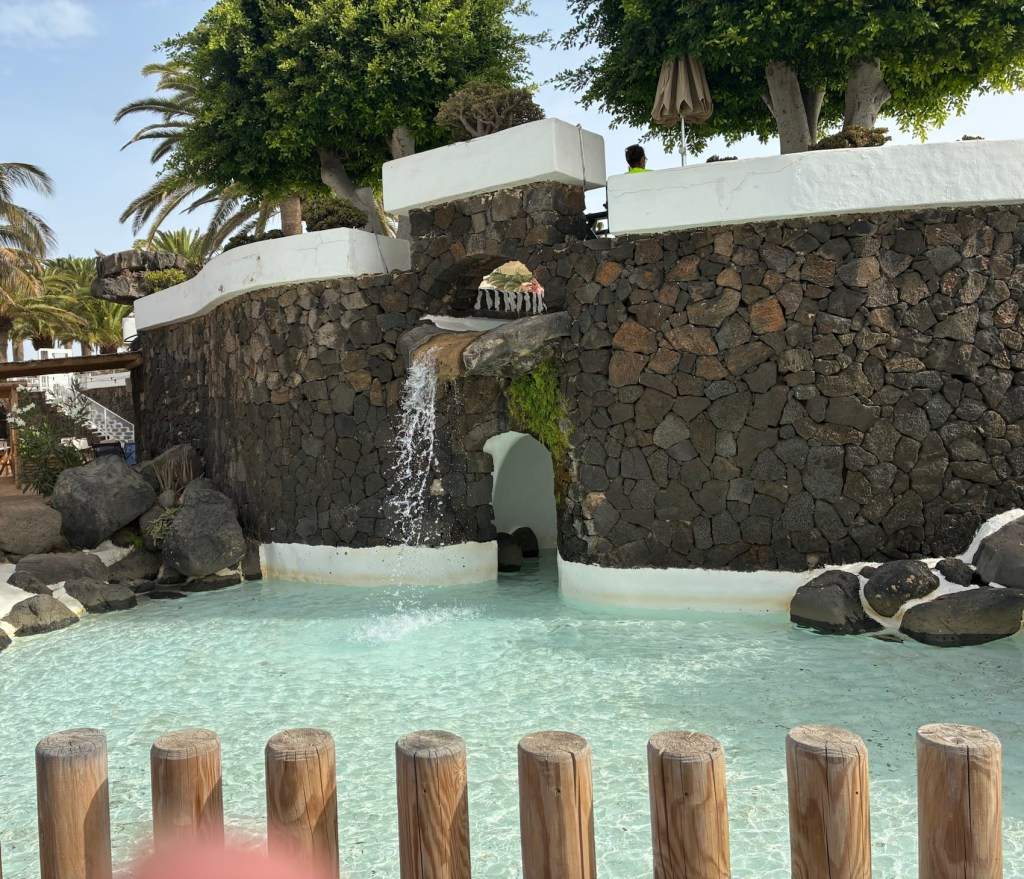
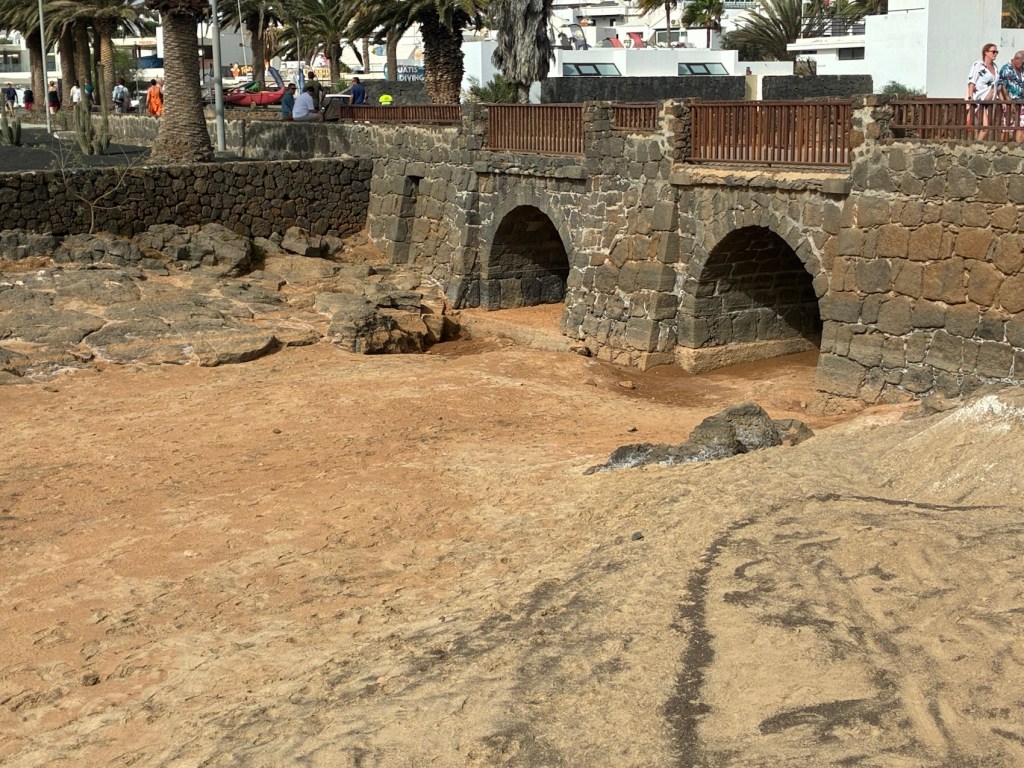
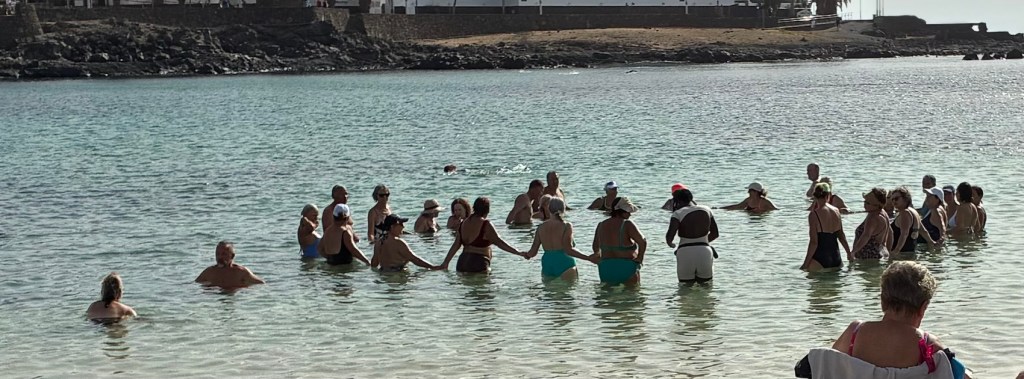
Intermittent stretches of sand Impressive “ live” wallHopeful This is the more “ upmarket” end of the paseoThe lantern looks goodWater features – large and small.A rare sight – a riverbed – with no water featured.An enthusiastic aqua class.
Bus 03 took us to Puerta del Carmen,passing through Arricefe and soon afterwards the airport. There was nothing about the fringes of the capital city that would entice you to visit. That’s not to say it was run- down in anyway…it was industry and shopping malls,mainly. The road system is impressive though and the bus driver pit his foot down at every opportunity!
It does have a port of sorts with an area for cruise ships to dock. But apart from its port and administrative importance there is not a lot to enjoy .
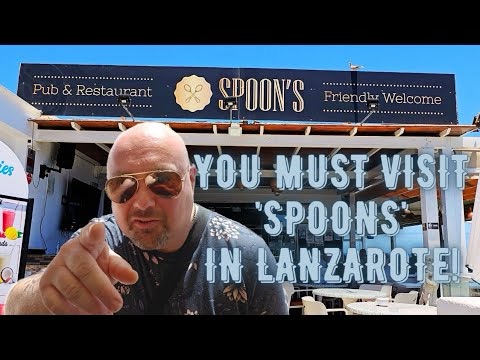
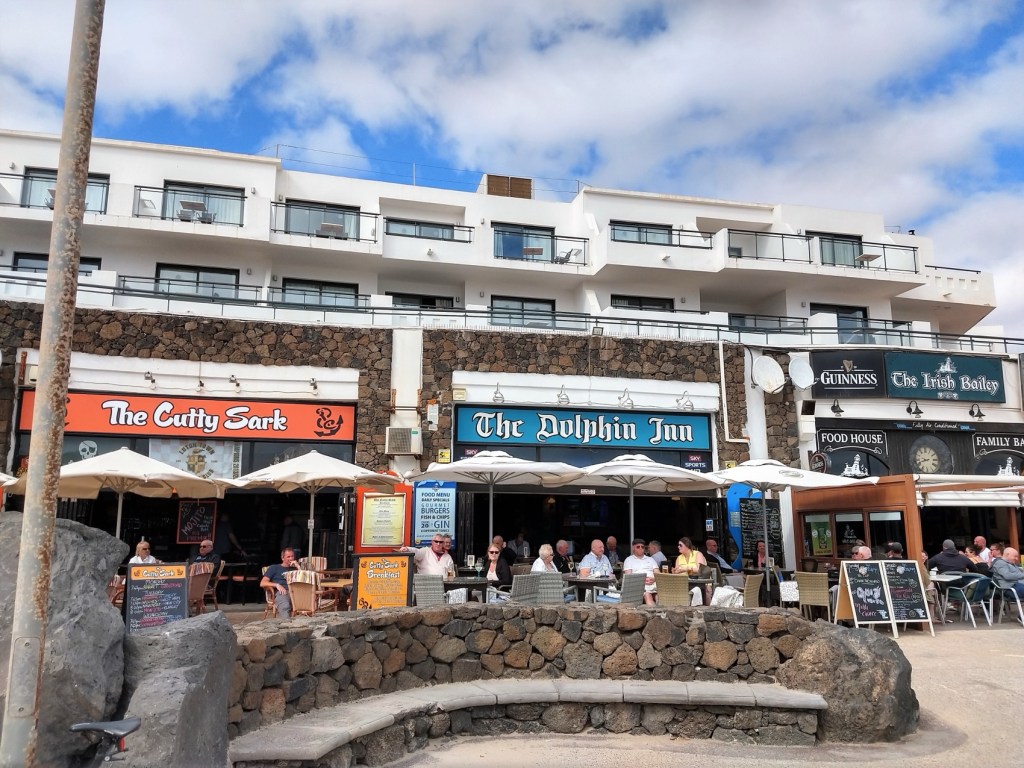
“Puerto del Carmen is the largest and most popular tourist resort on the southeast coast of the island of Lanzarote in the Canary Islands. Originally a small fishing village known as La Tiñosa, it has grown into a major holiday hub renowned for its extensive golden beaches, vibrant nightlife, and family-friendly amenities.” Our initial view of its main streets were dominated by all manner of bars and restaurants -Irish themes were popular,with unoriginal names like “ The Blarney Stone” and even a “ Spoons”…not Wetherspoons but…..
Maybe not.
We had read that its fishing and leisure port was of interes and so we alighted close by.
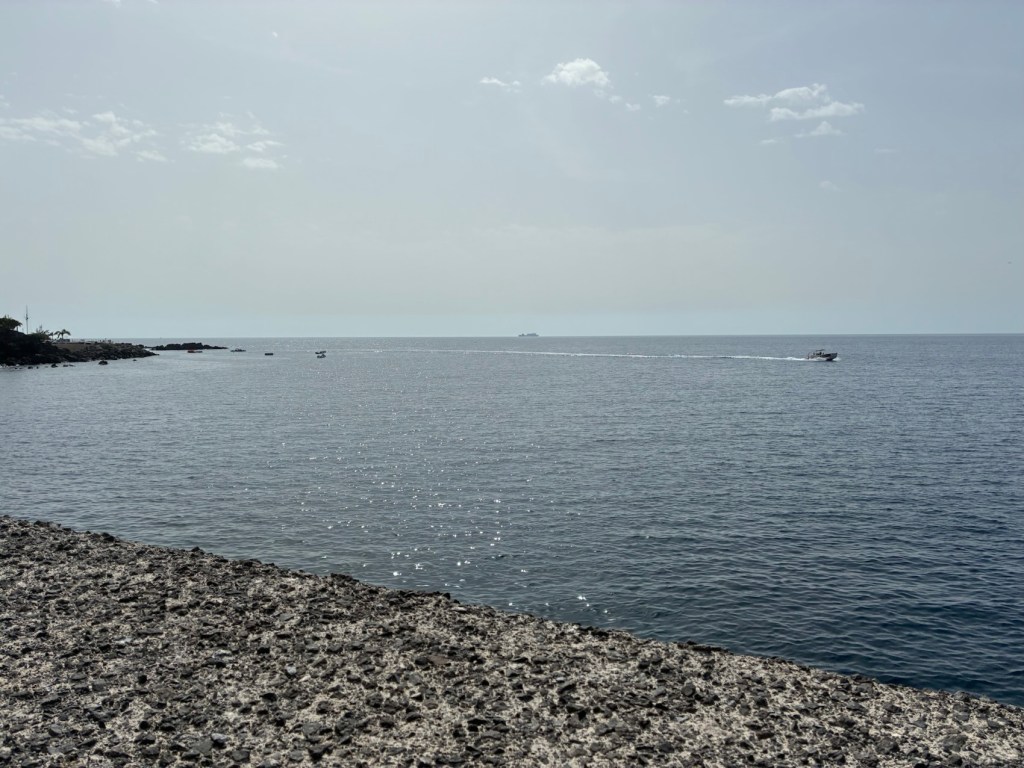
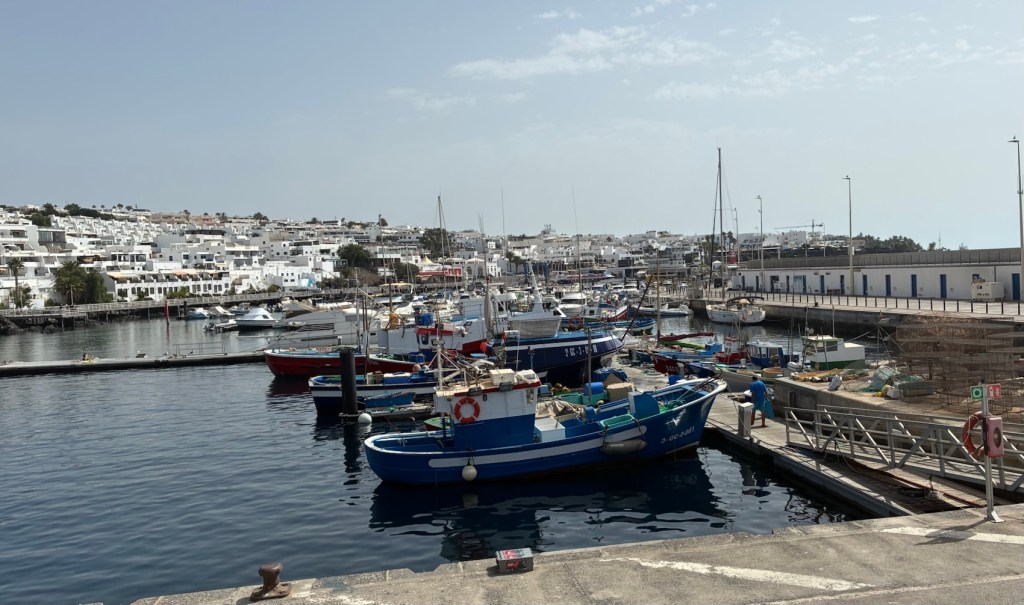
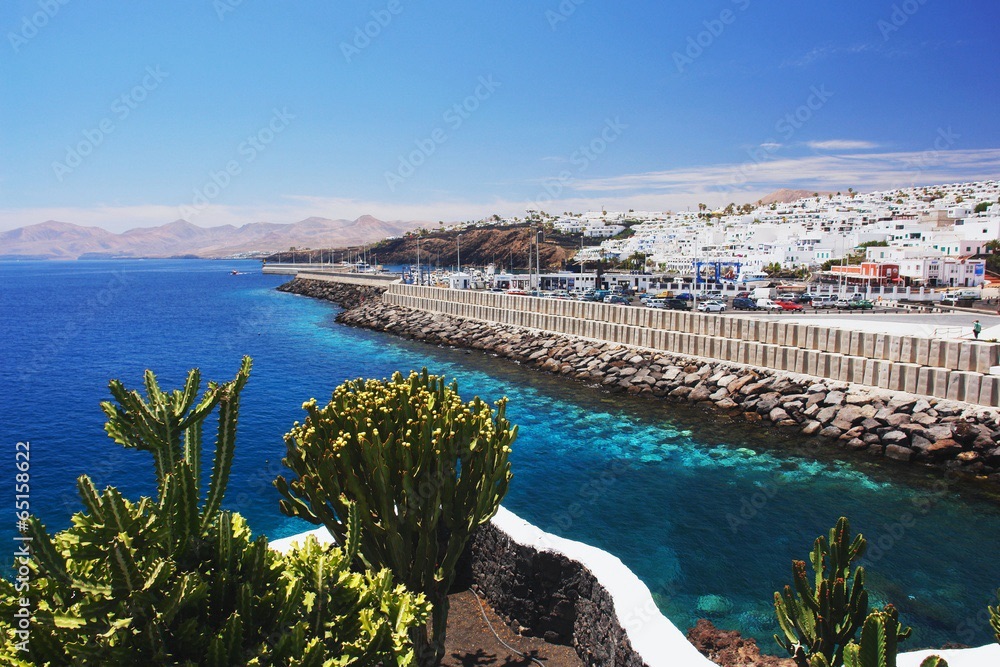
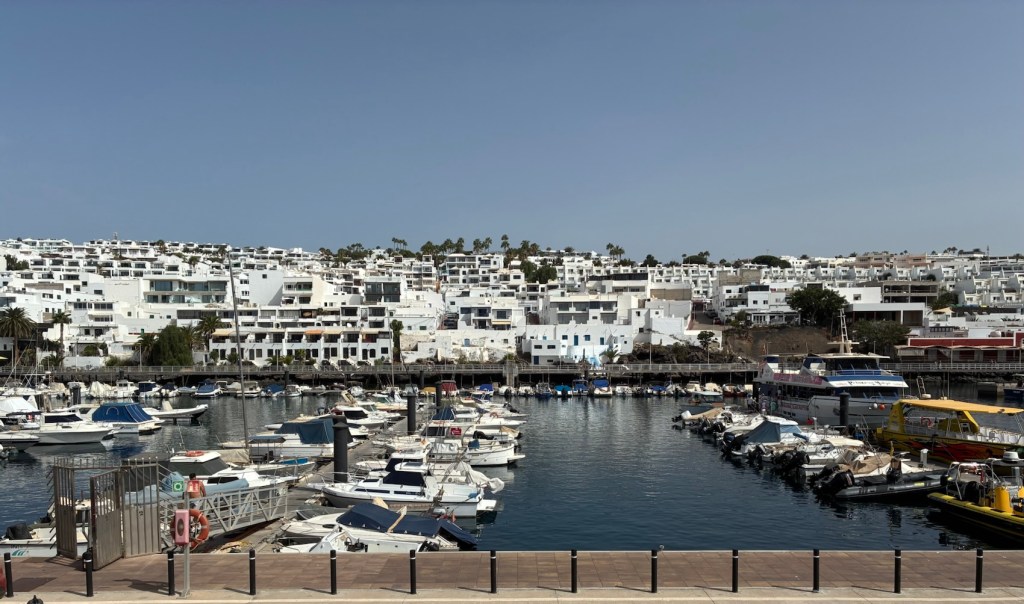
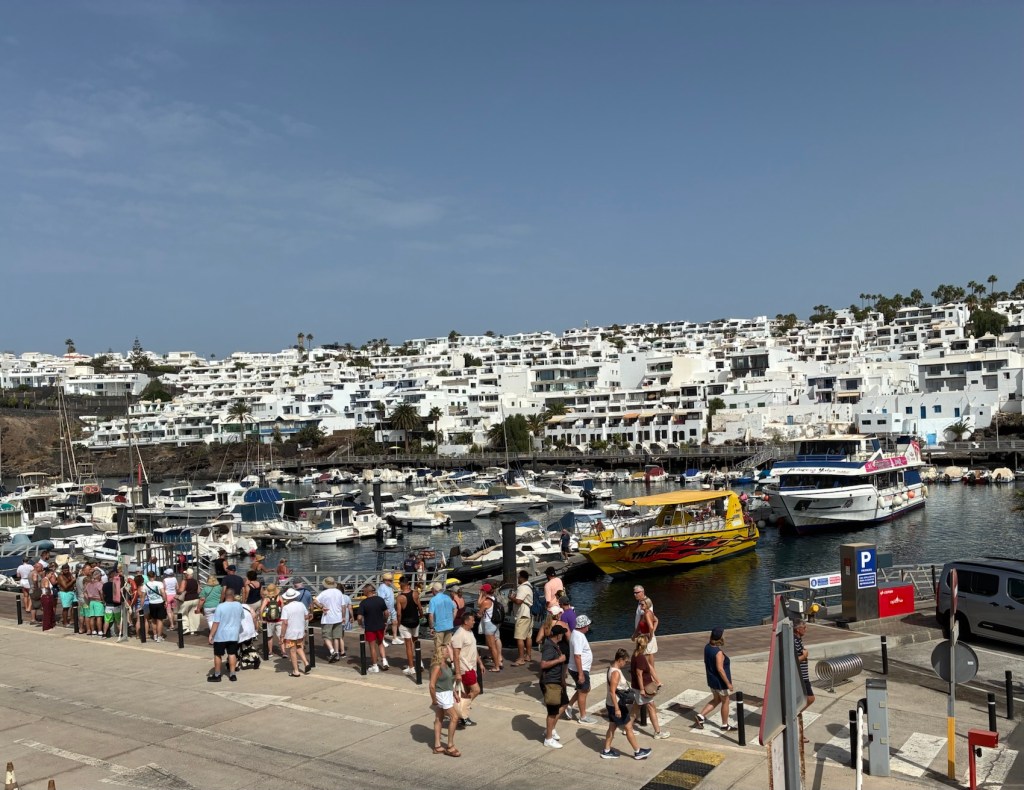
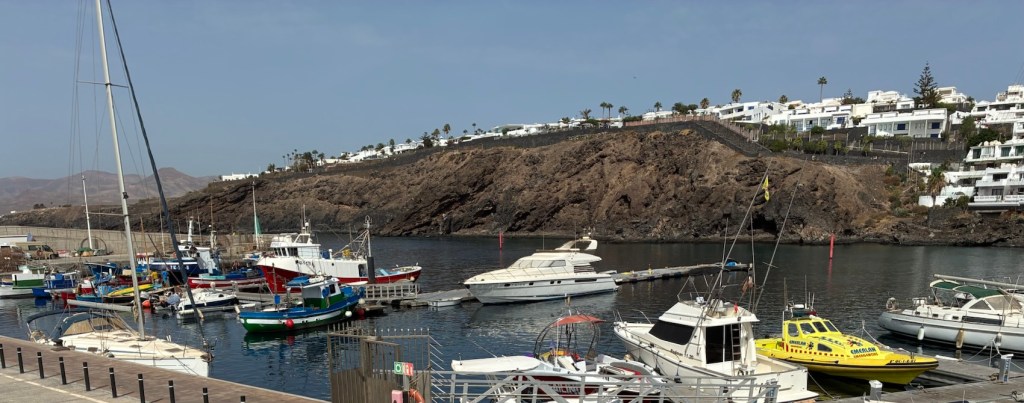
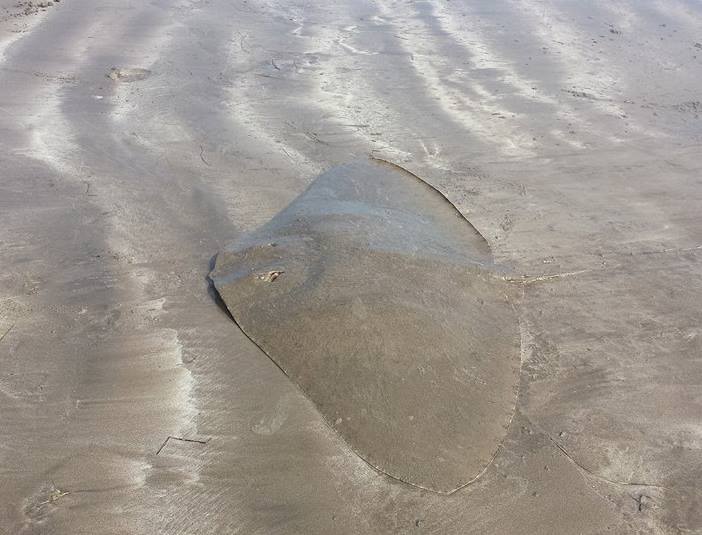
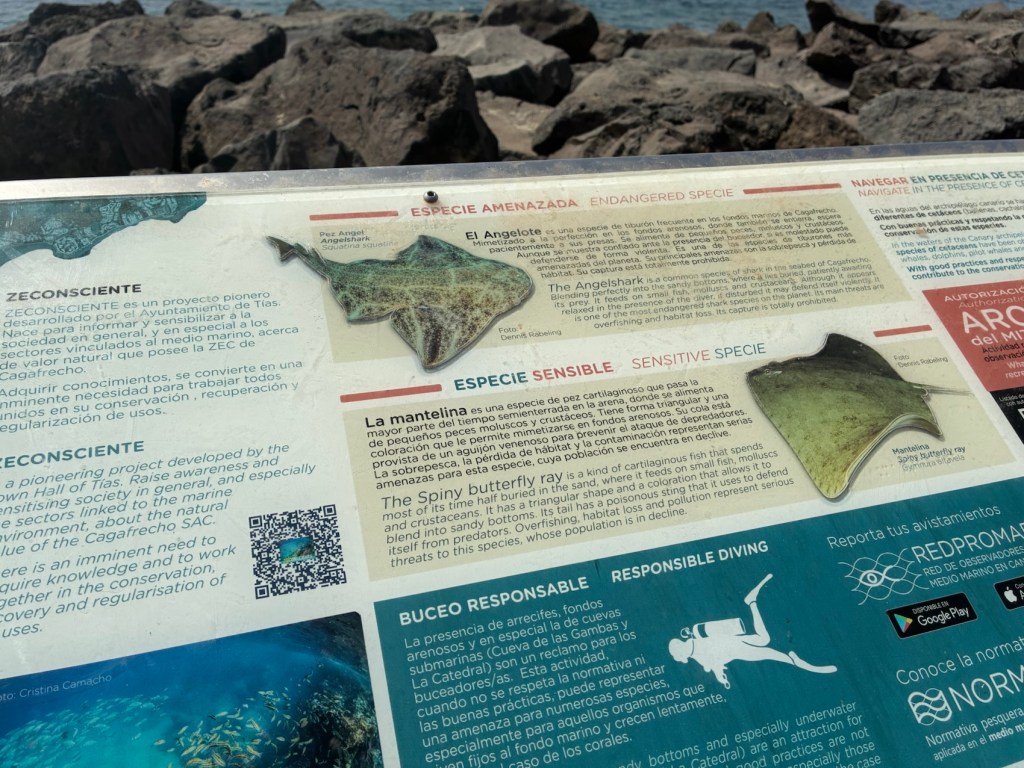
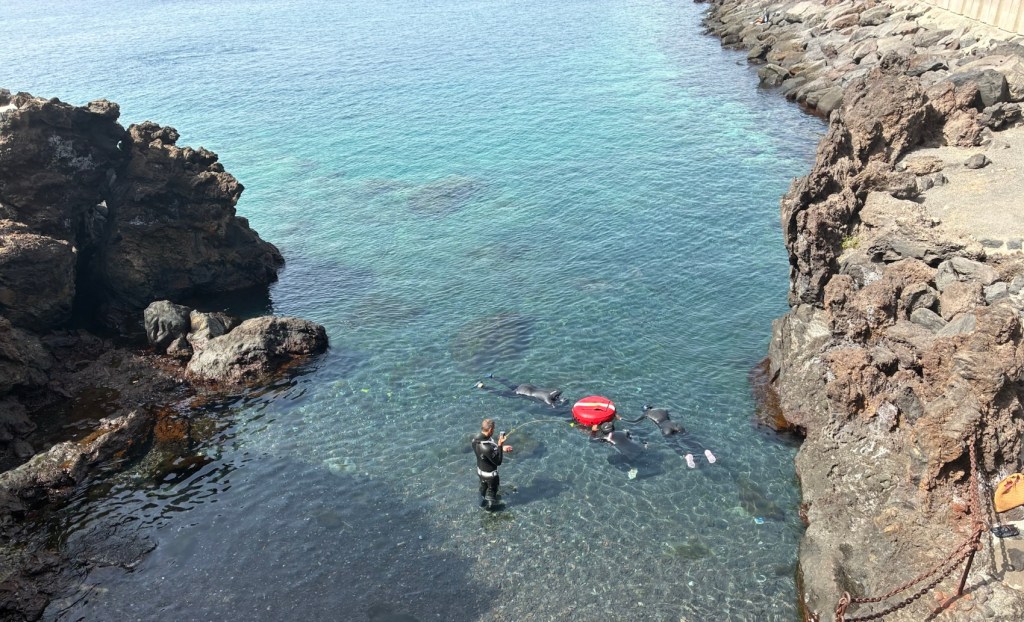
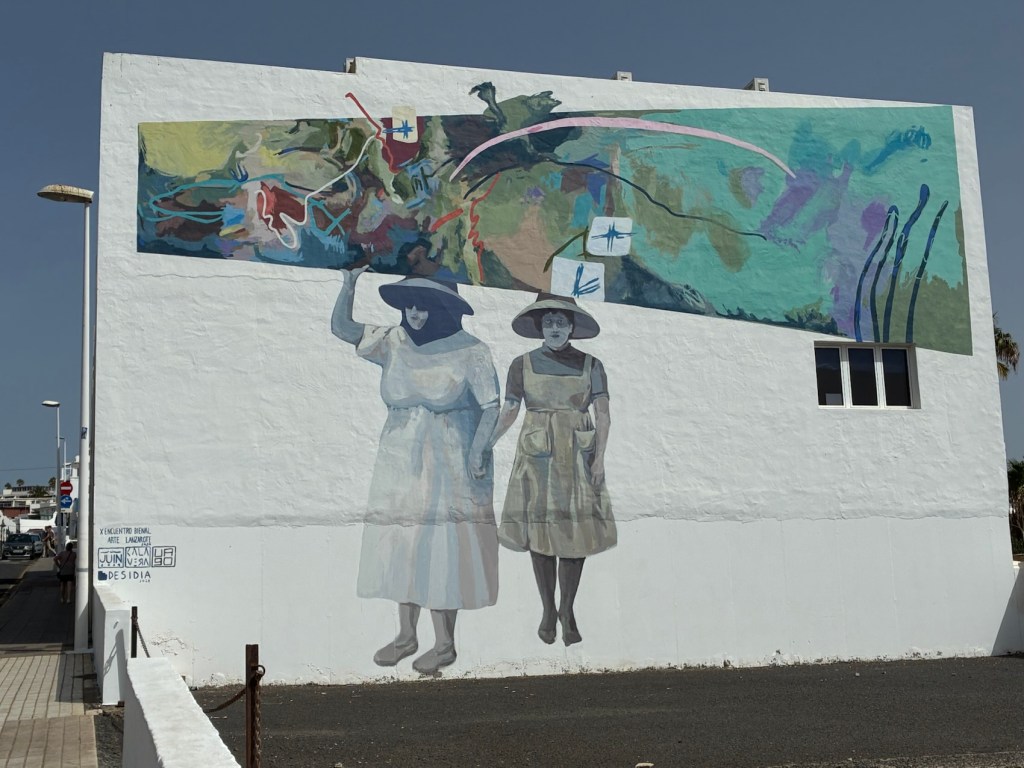
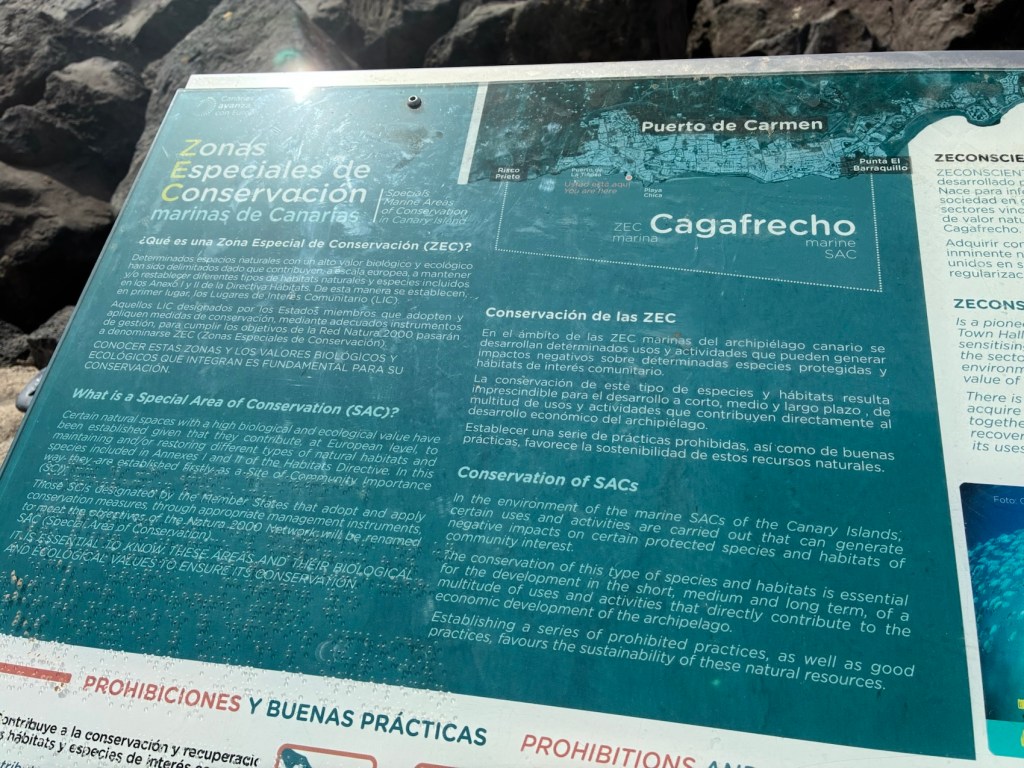
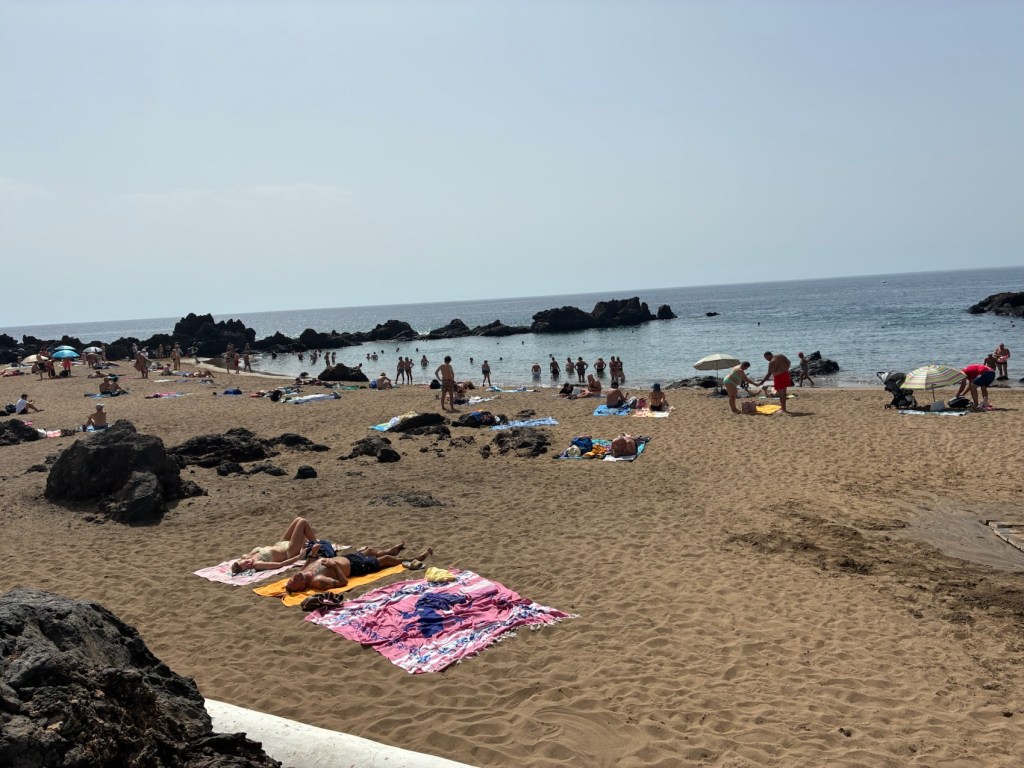
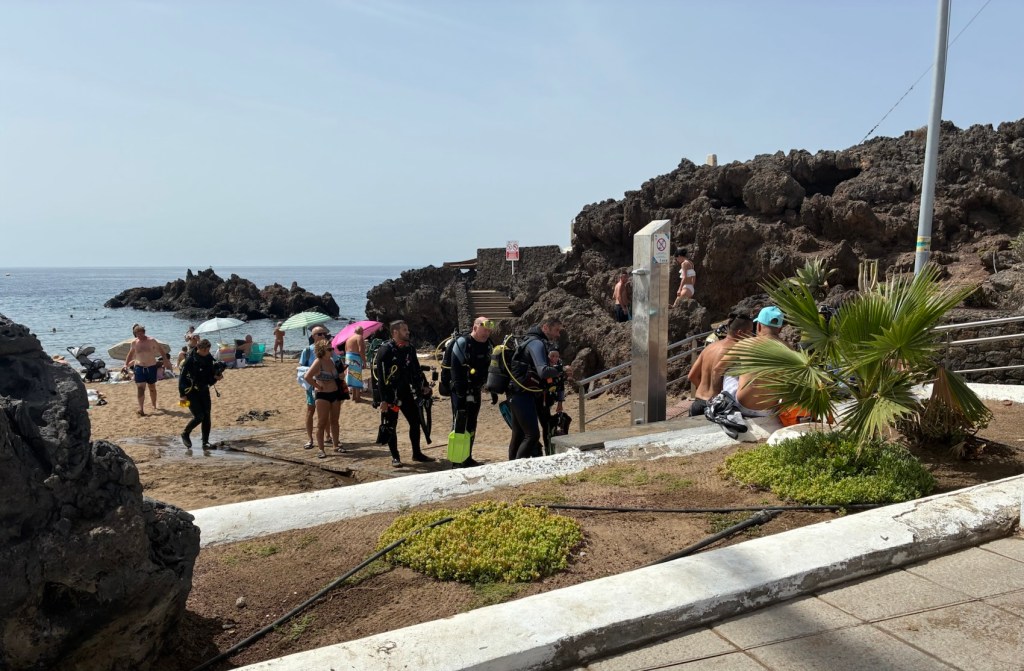
Viewpoint en route to the port Fishing boats. The harbour wall along which we walked. Harbour Promenade Sea Wall: The stone and concrete barrier along the marina in the old town where visitors commonly walk, sit, and look out over the docked yachts and Atlantic waters. The queue for a sail on the high seasQuite a steep climb up to that settlement but I imagine worth it for the views.I spotted this in the dockside watersAn informative notice board near the tiny La Chicla beach to which we were heading.Divers being timedA mural en route Puerto del Carmen’s “sea wall” most famously refers to El Veril de la Tiñosa, a magnificent underwater volcanic sea wall and reef located just off Playa Chica. The Underwater Sea Wall (El Veril) Significance: Recognized by divers globally as one of Europe’s top marine ecosystems, protected within the European Natura 2000 Network. Features: Features dramatic underwater caves, vertical drops, and ledges like the Cueva de las Gambas (Shrimp Cave) and Veril de Fariones. Marine Life: Home to black coral forests, massive dusky groupers, angel sharks, barracudas, and shoals of narval shrimp. Harbour Wall and Coastal Walls Harbour Wall Wrecks: A popular shallow-to-deep dive site (16m to 40m) situated right by the old town’s harbour wall featuring modest wrecks and large swarms of sardines. La Chicla’s tiny beachSome of the many divers having a wash down after their explorations. It does have a beautiful beach but although we enjoyed the harbour and could understand the attraction of the diving possibilities, Puerta del Carmen would not be on our “ must visit” list.The pedestrian area.“ The Strip – “ Back to the bungalow by a very crowded bus,for lunch.
“Softly as in a morning sunrise The light that gave you glory Will take it all away”
“Flaming with all the glow of sunrise”The castle of Santa Barbara overlooks the town .
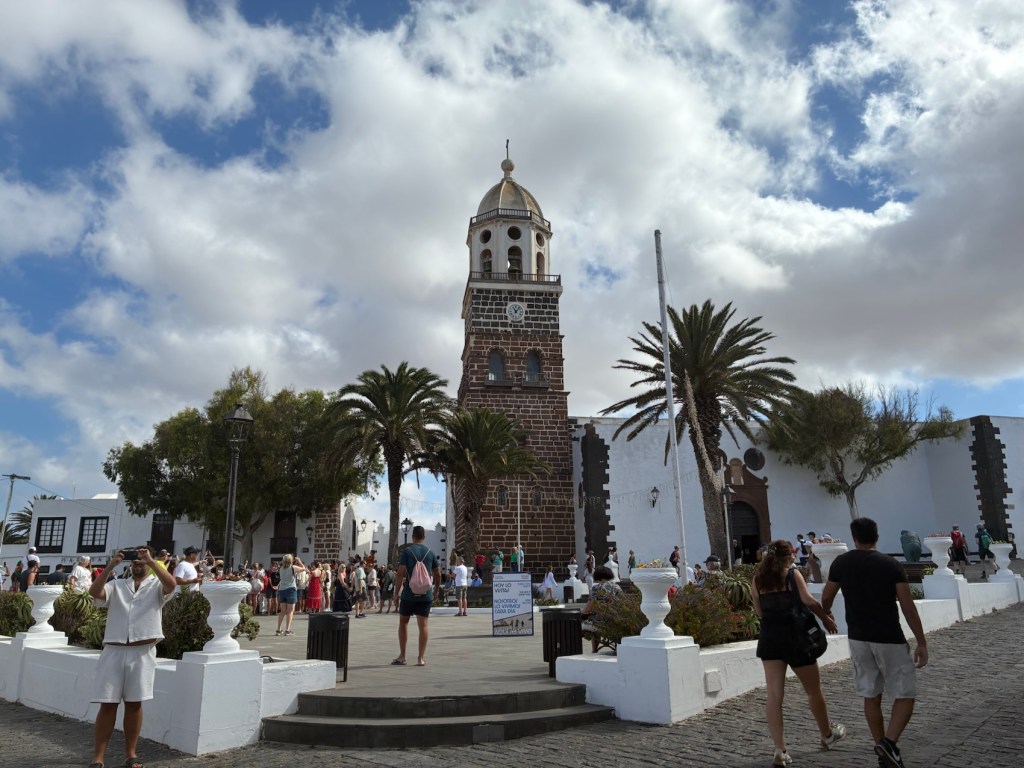
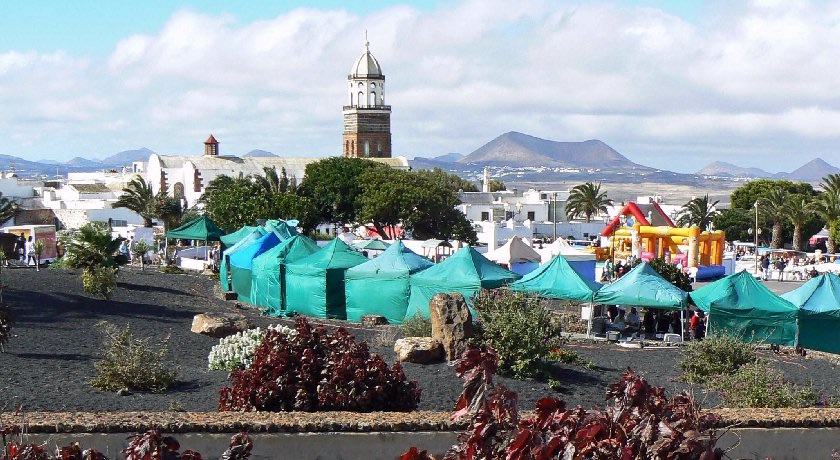
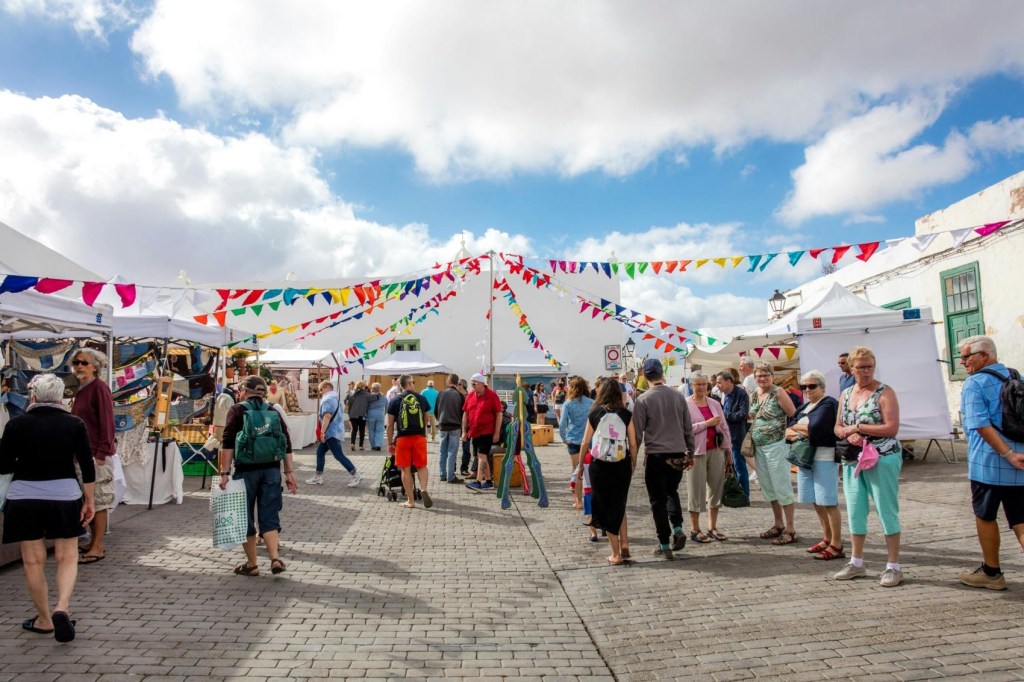
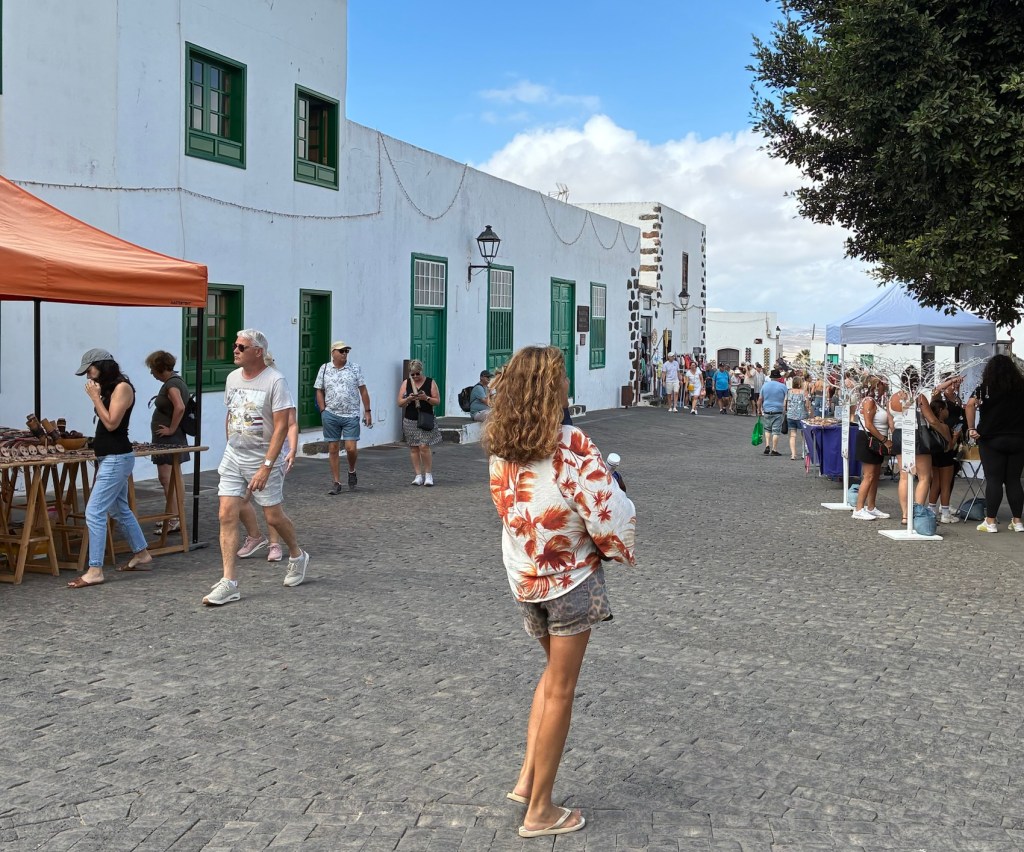
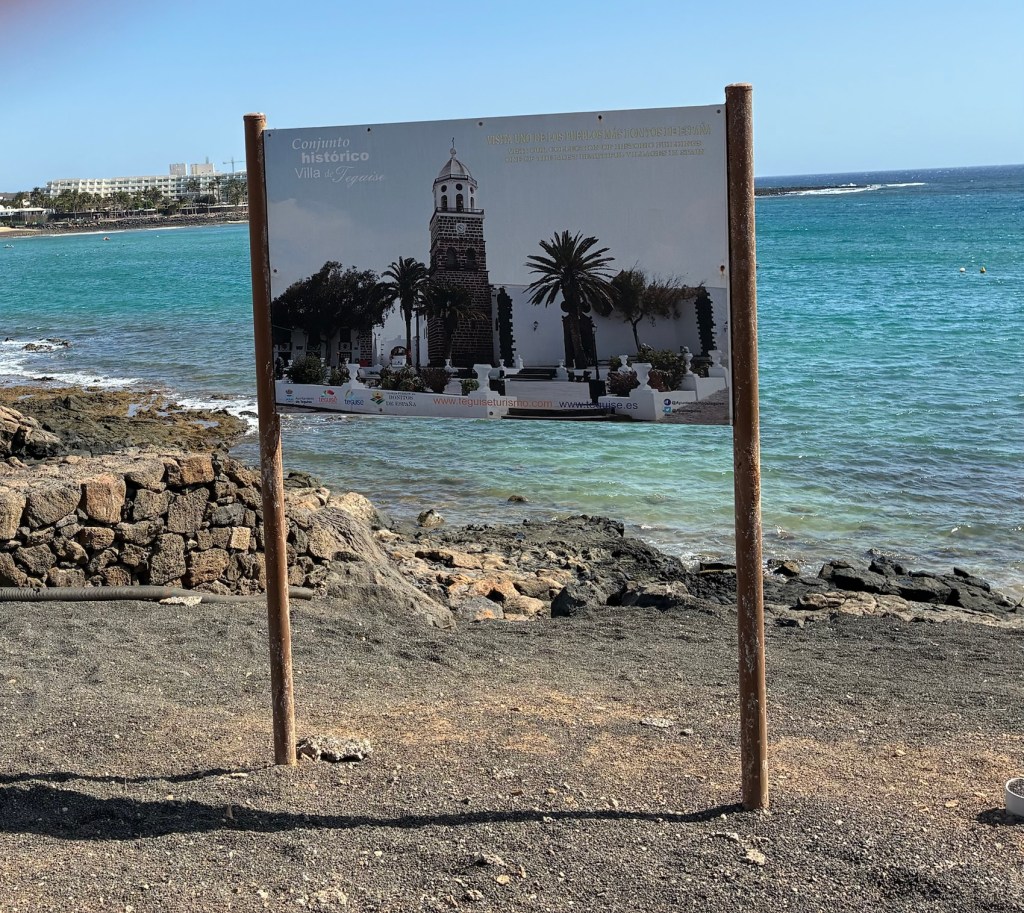
Sunday, and in these parts that means only one thing – to join the multitudes visiting the Canary Islands’ biggest market in Teguise.
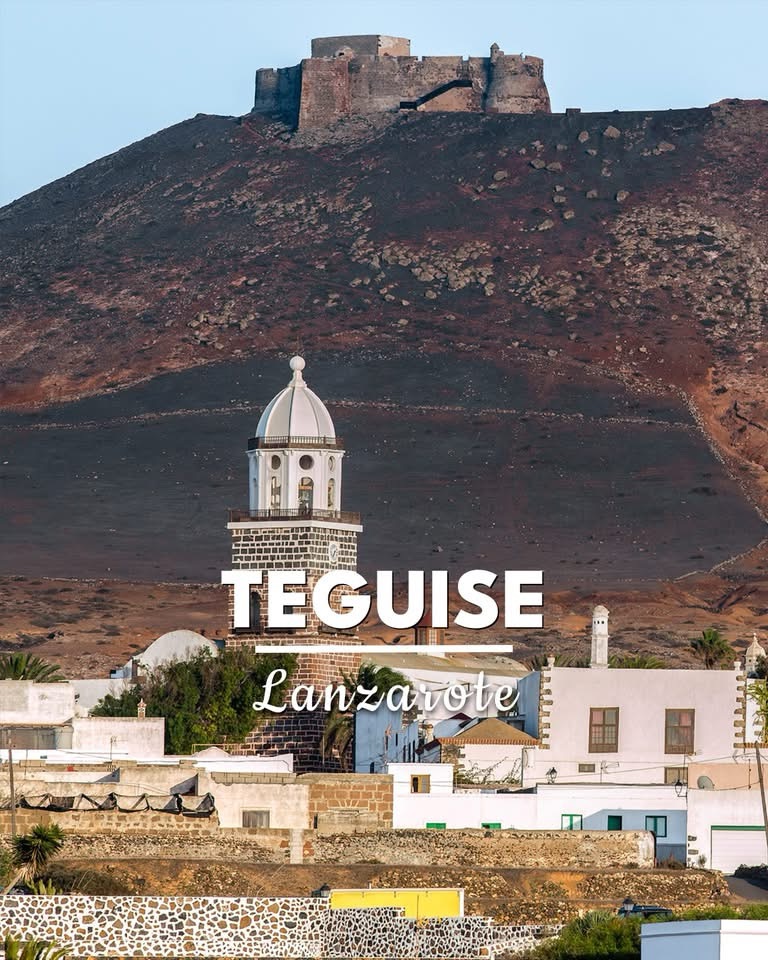
A local bus journey away through fascinating landscapes. Teguise is the largest municipality on the island, reaching both its east and west coasts. Villa de Teguise was the capital of Lanzarote from the first half of the 15th century until the second half of the 19th century (1852) when Arrecife became the new capital . Teguise was the first civil and urban settlement in the Canary Islands.
Villa de Teguise has been a noble and stately town throughout its rich past, thanks to both the Bethencourt and the Herrera dynasties, Teguise´s most majestic eras. Teguise was declared an architectural-historical-artistic town and it is one of the oldest villages that has taken part in significant events in the history of Lanzarote.
VILLA DE TEGUISE – OLD TOWN
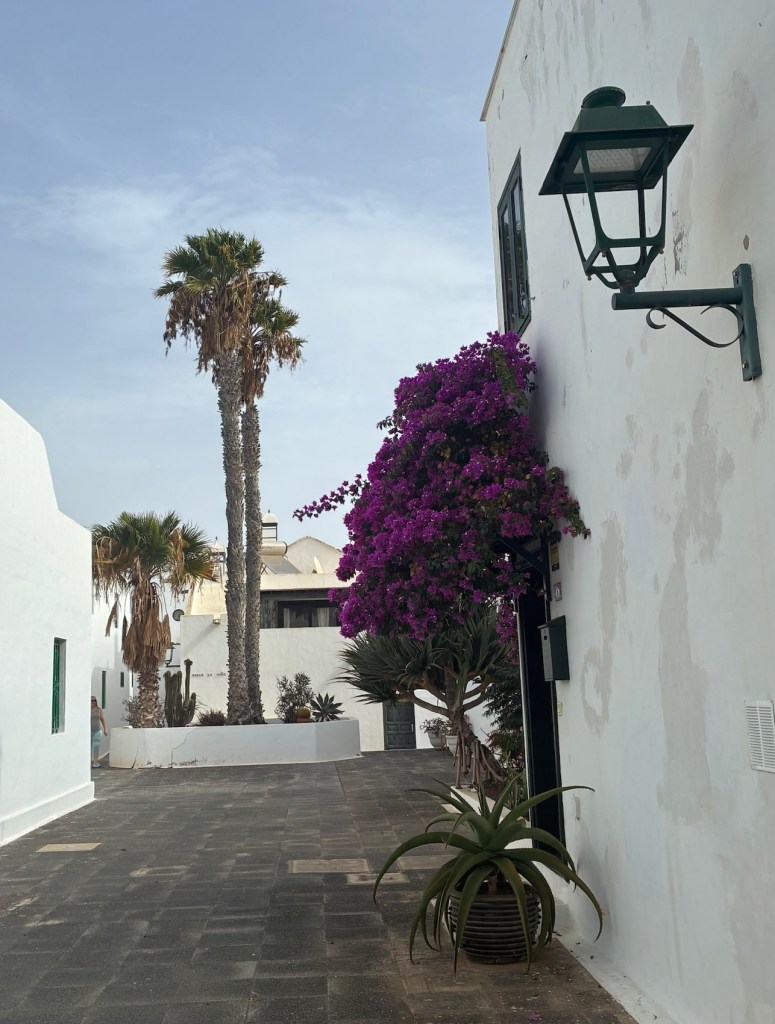
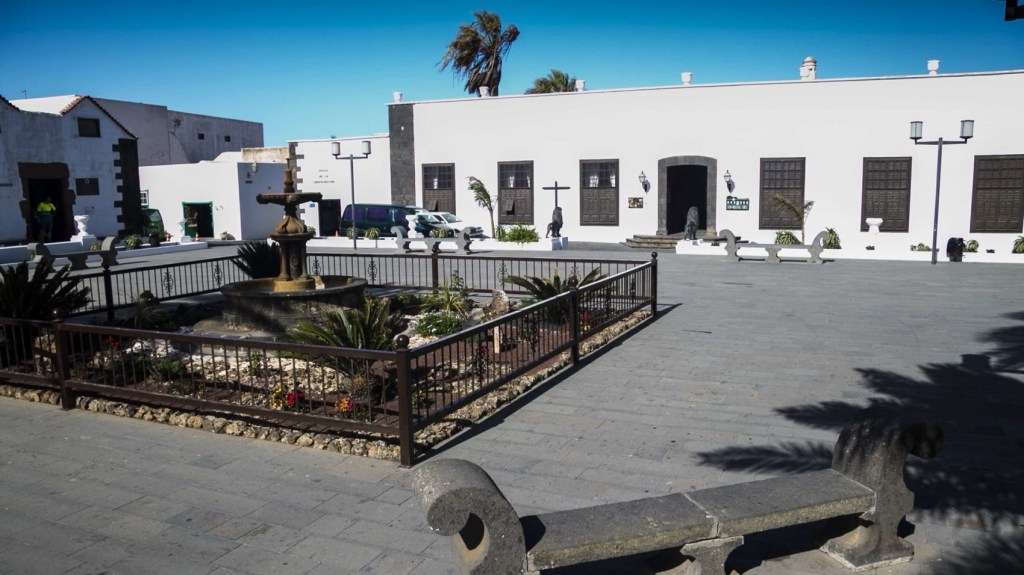
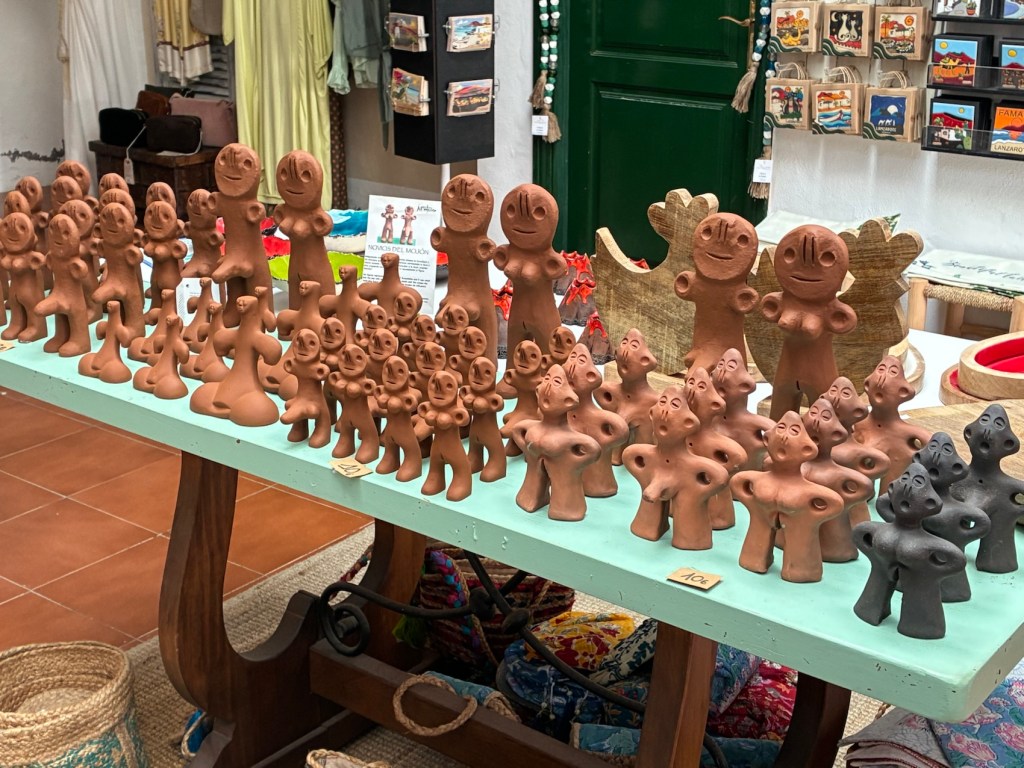
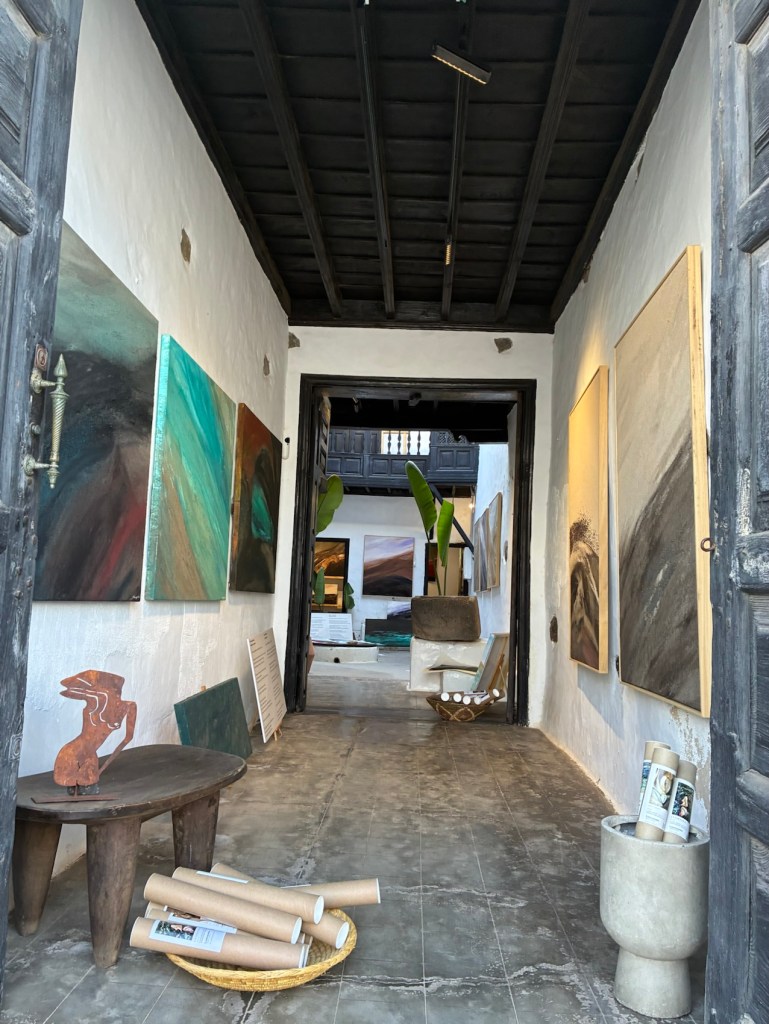
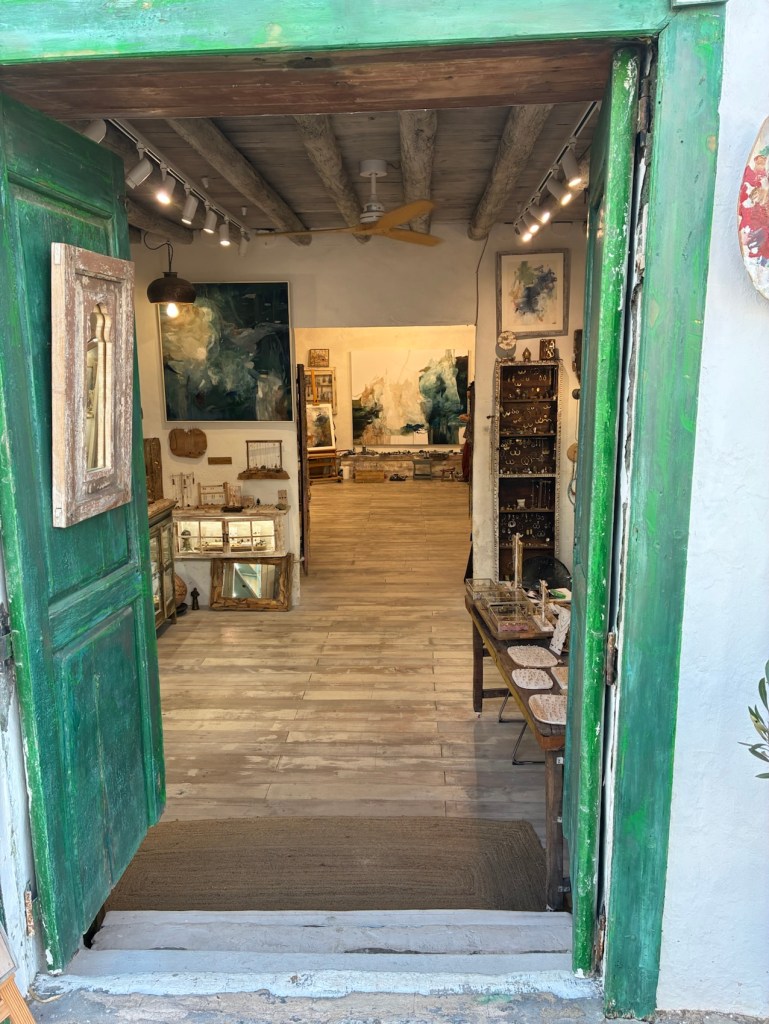
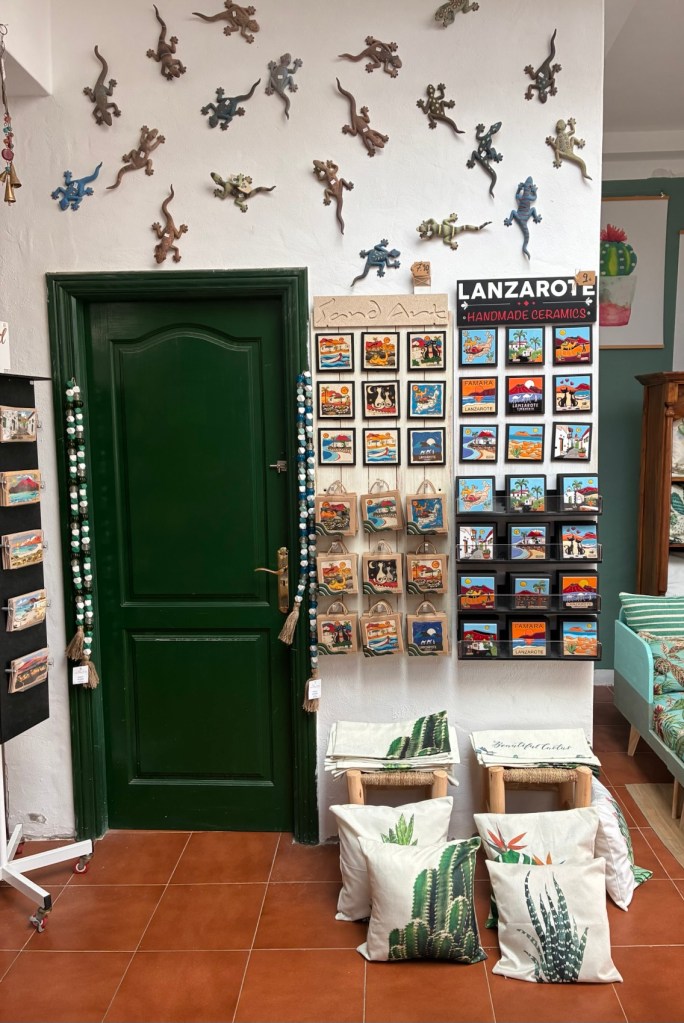
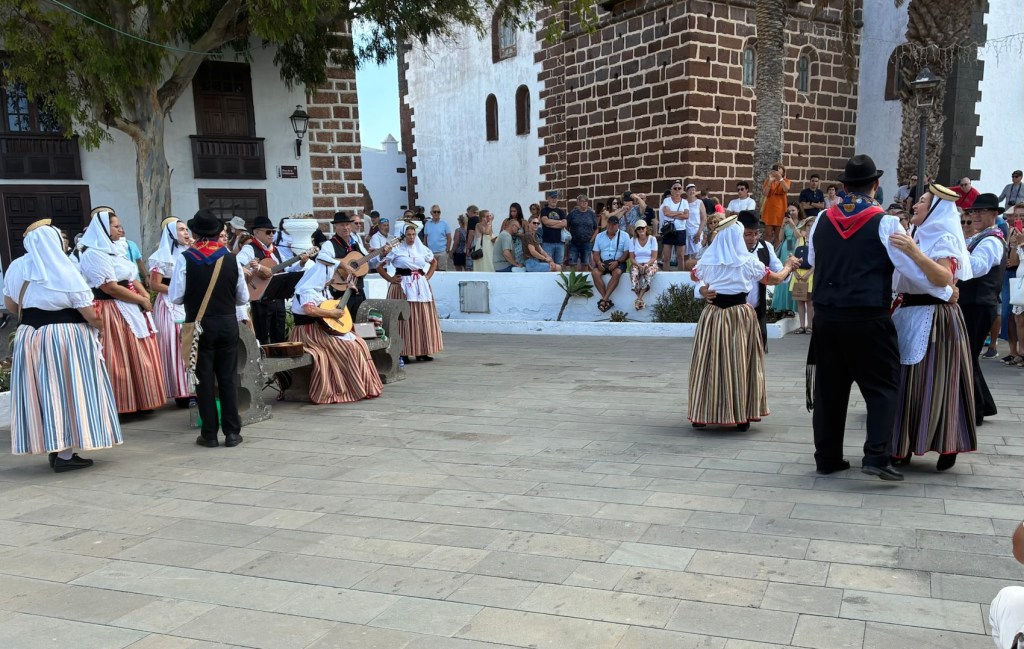
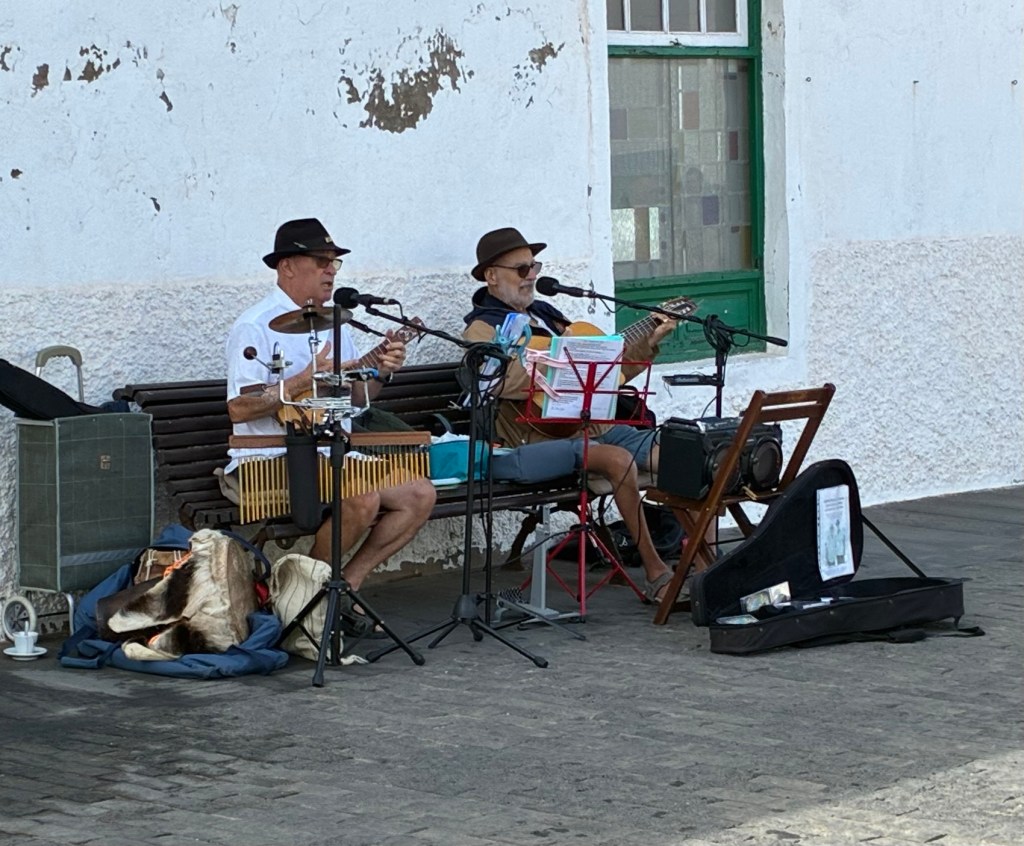
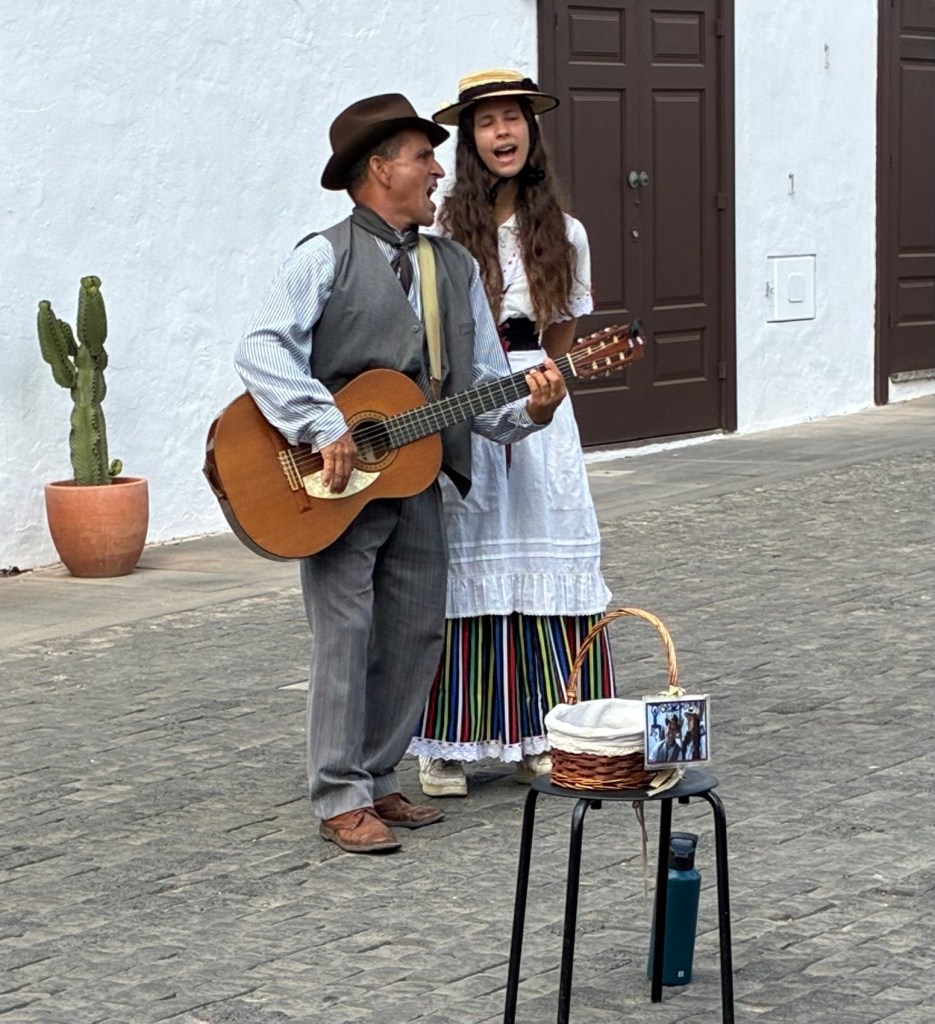
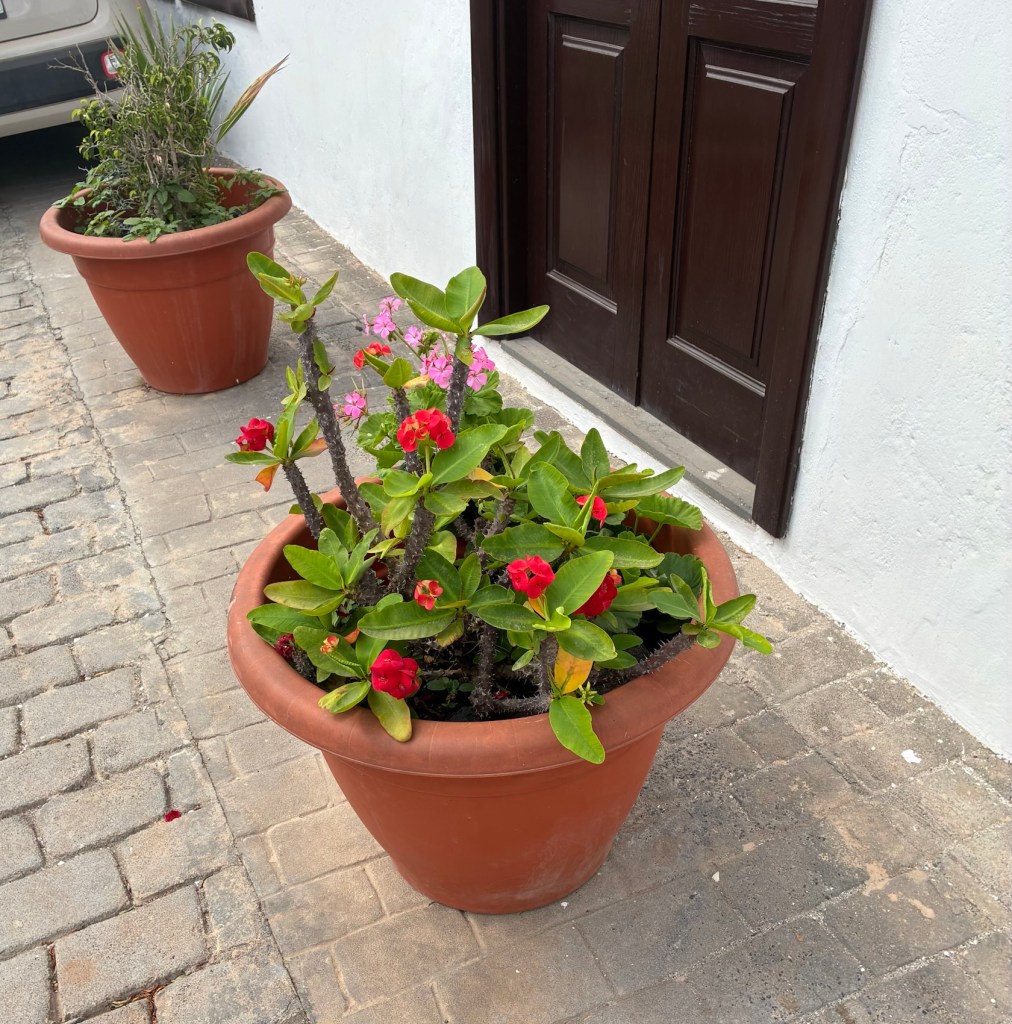
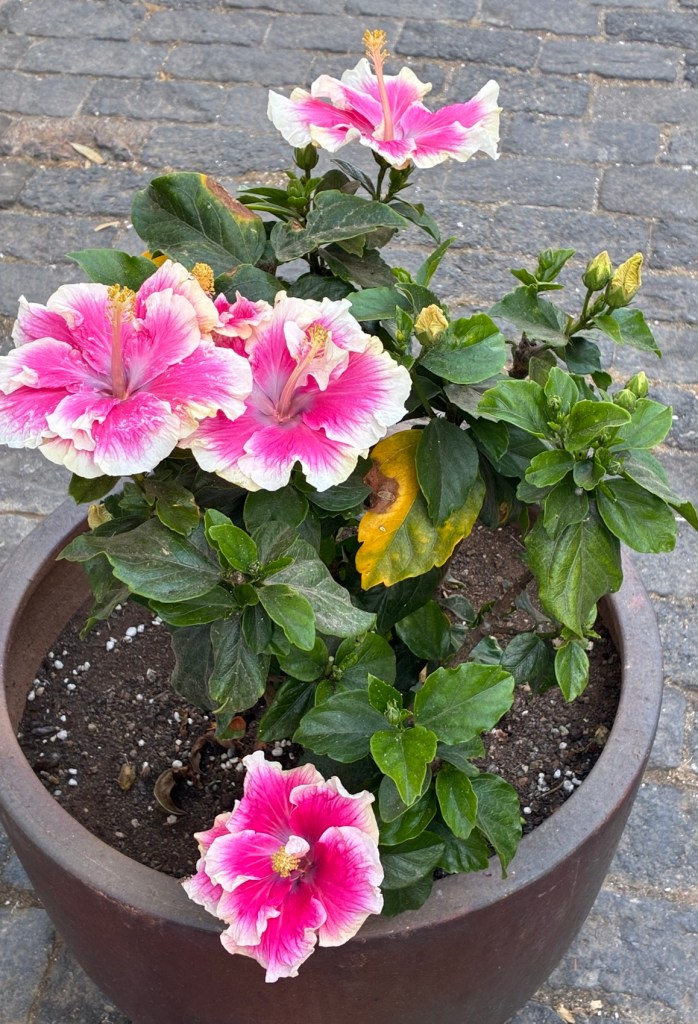
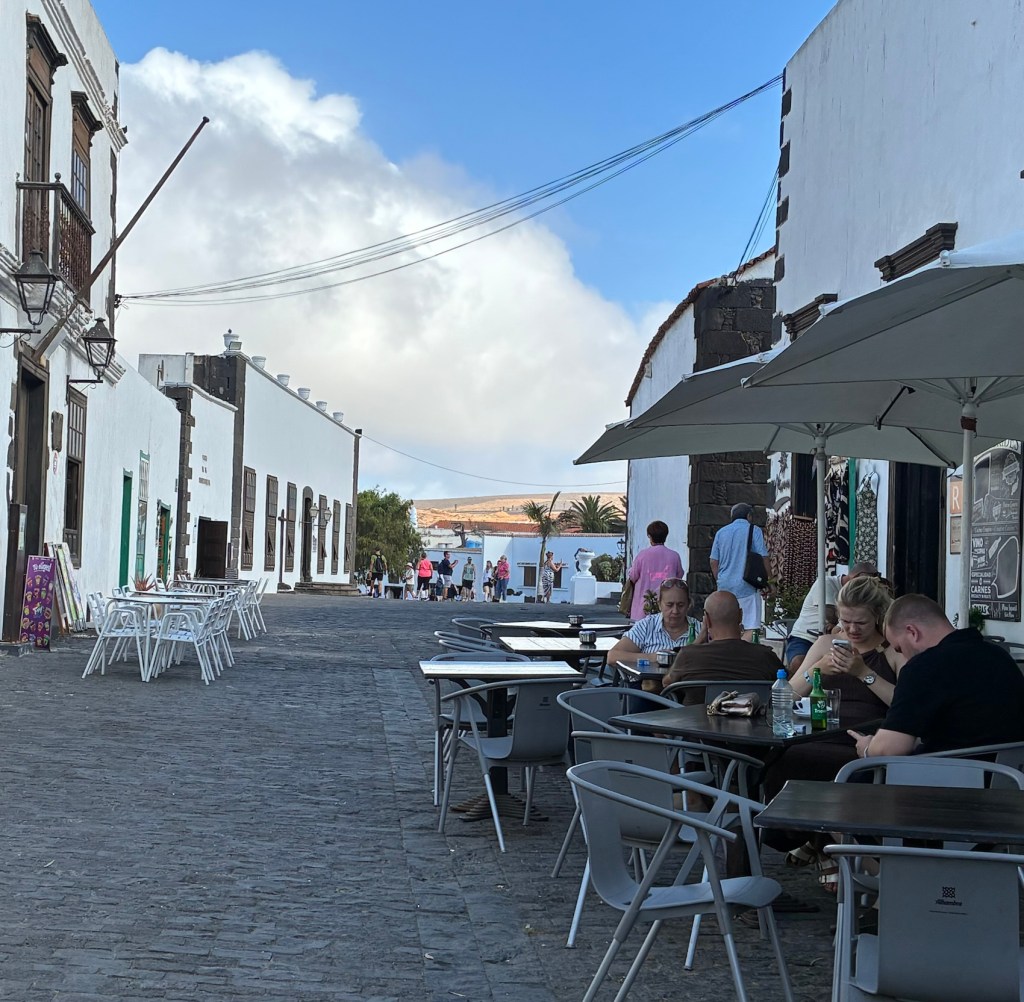
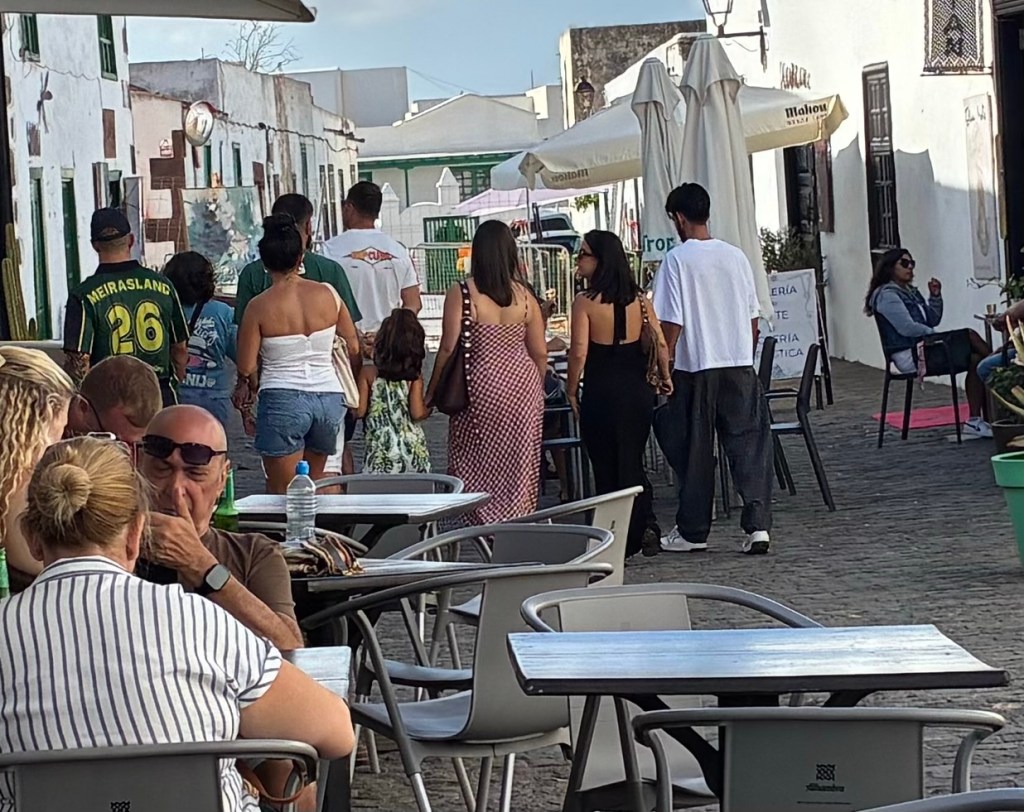
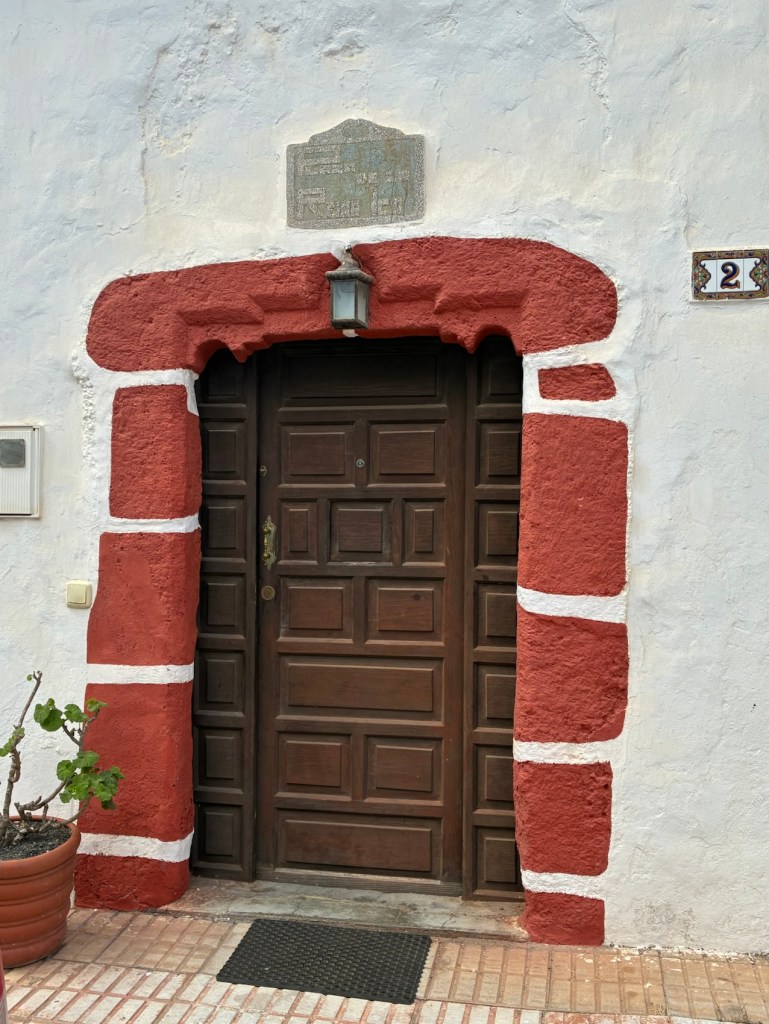
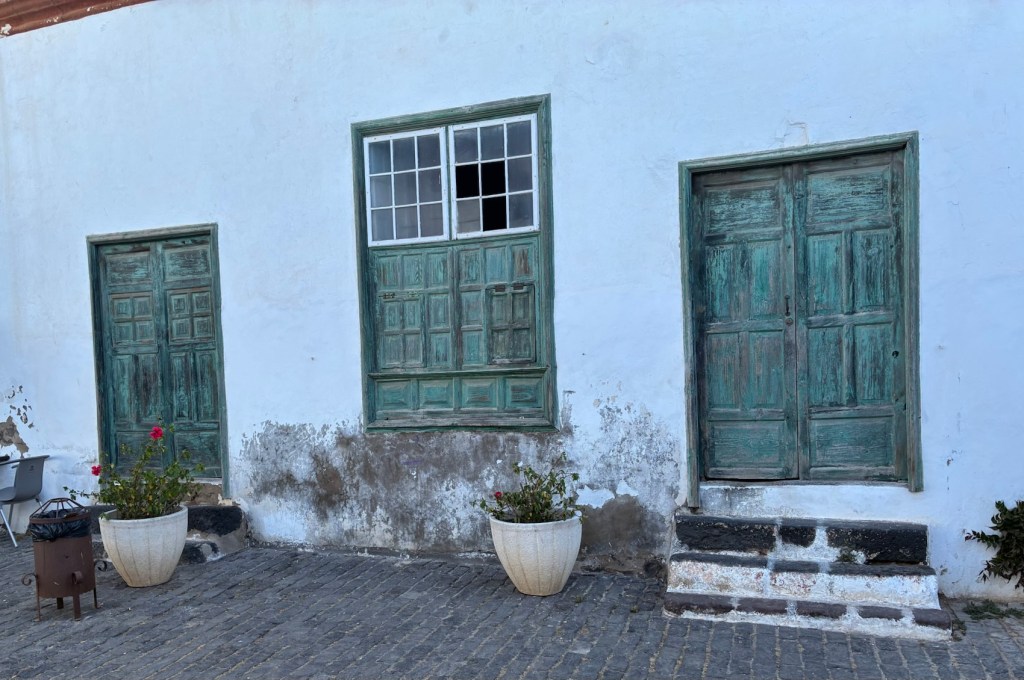
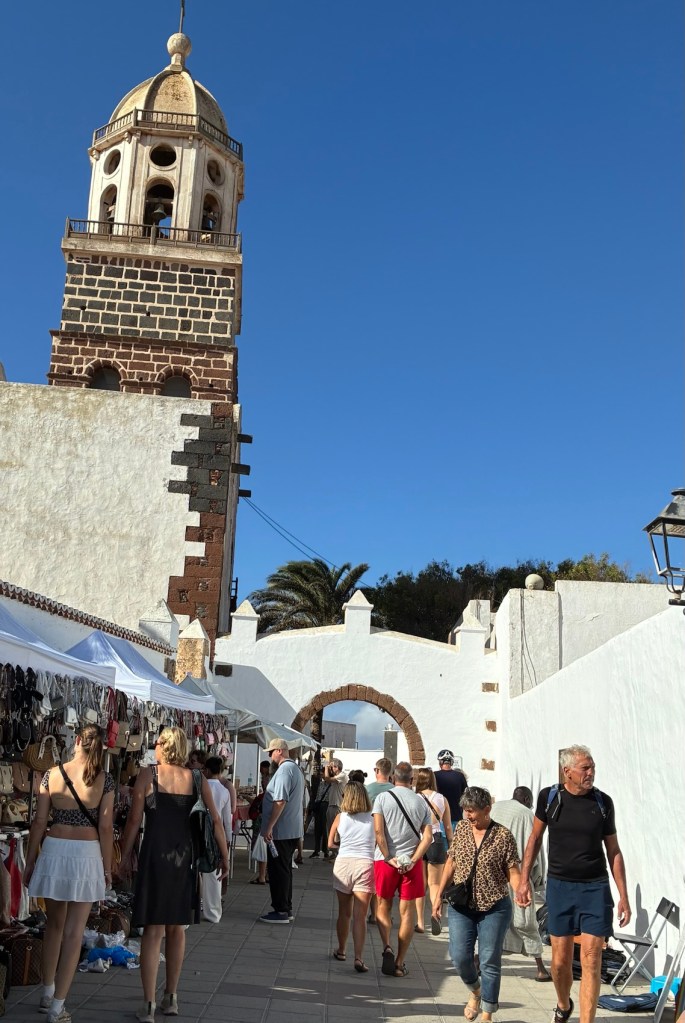
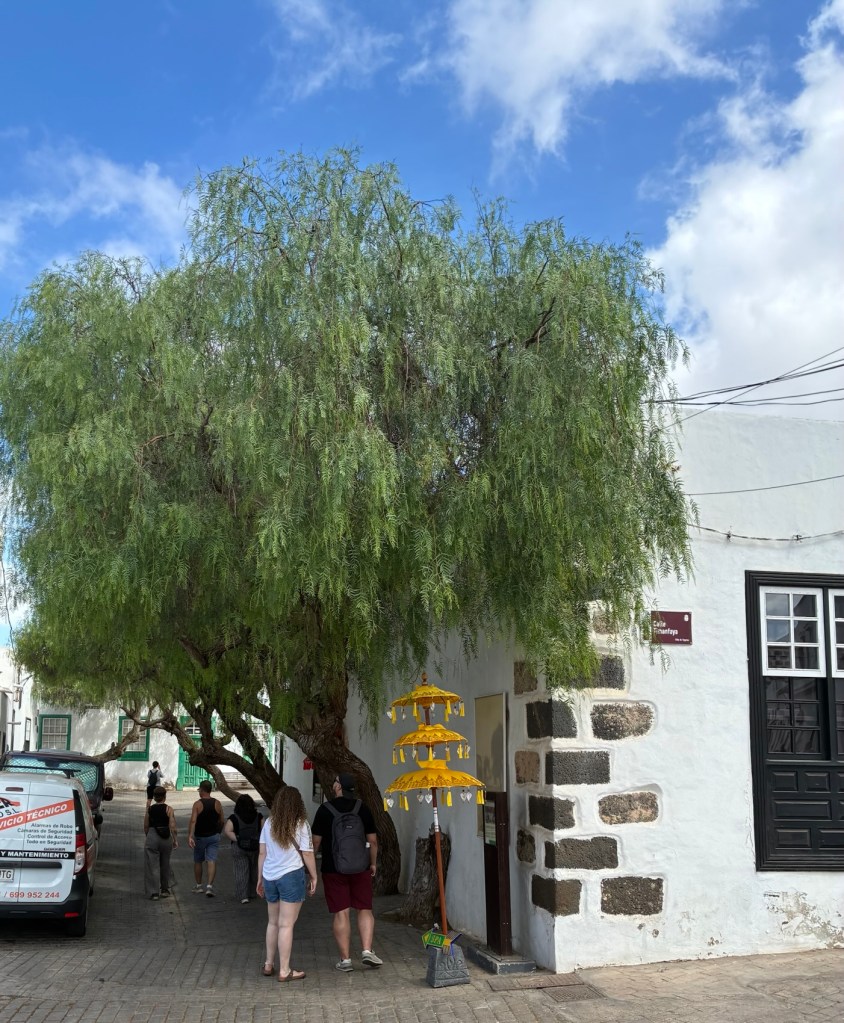
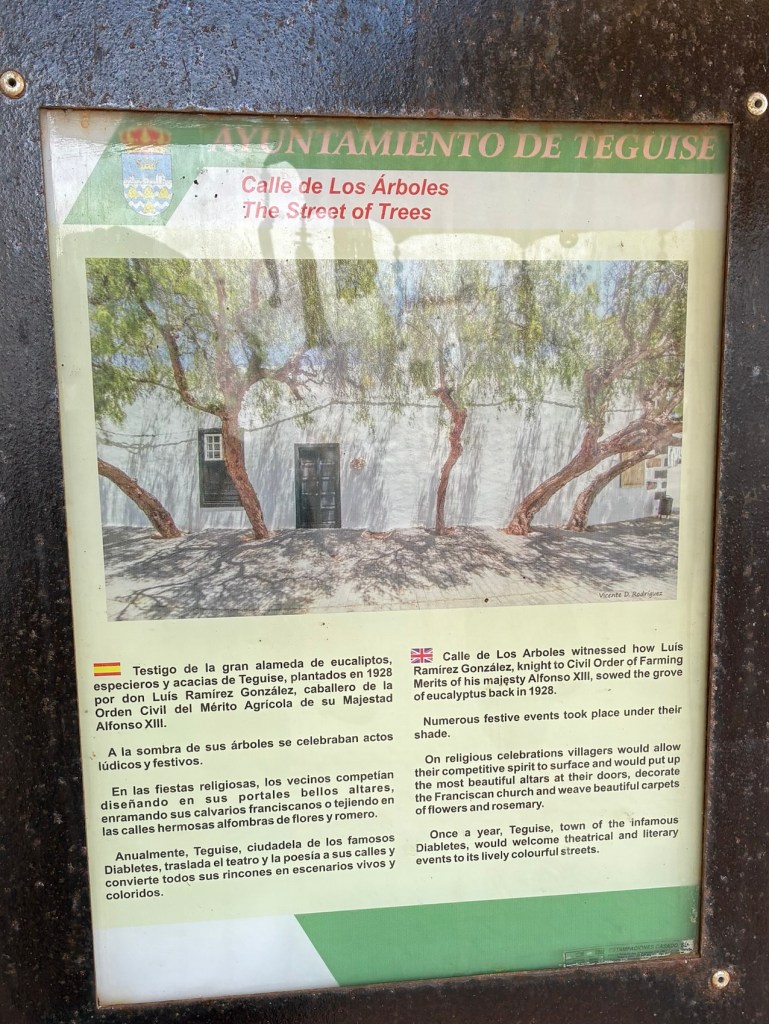
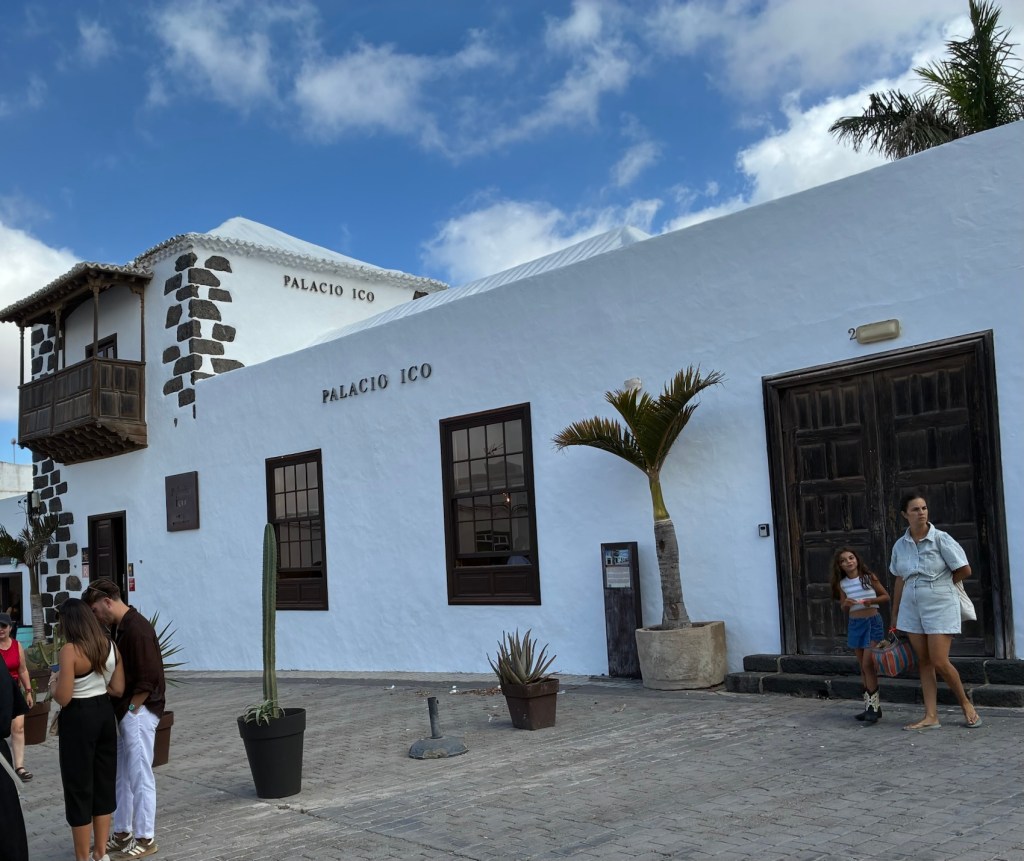
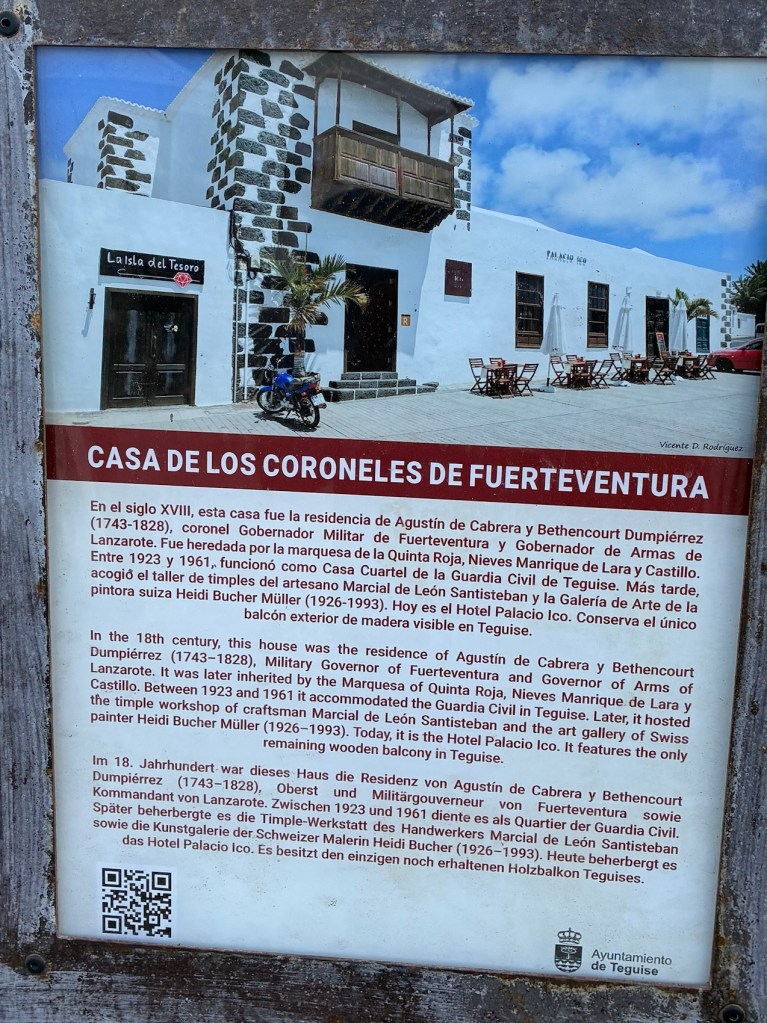
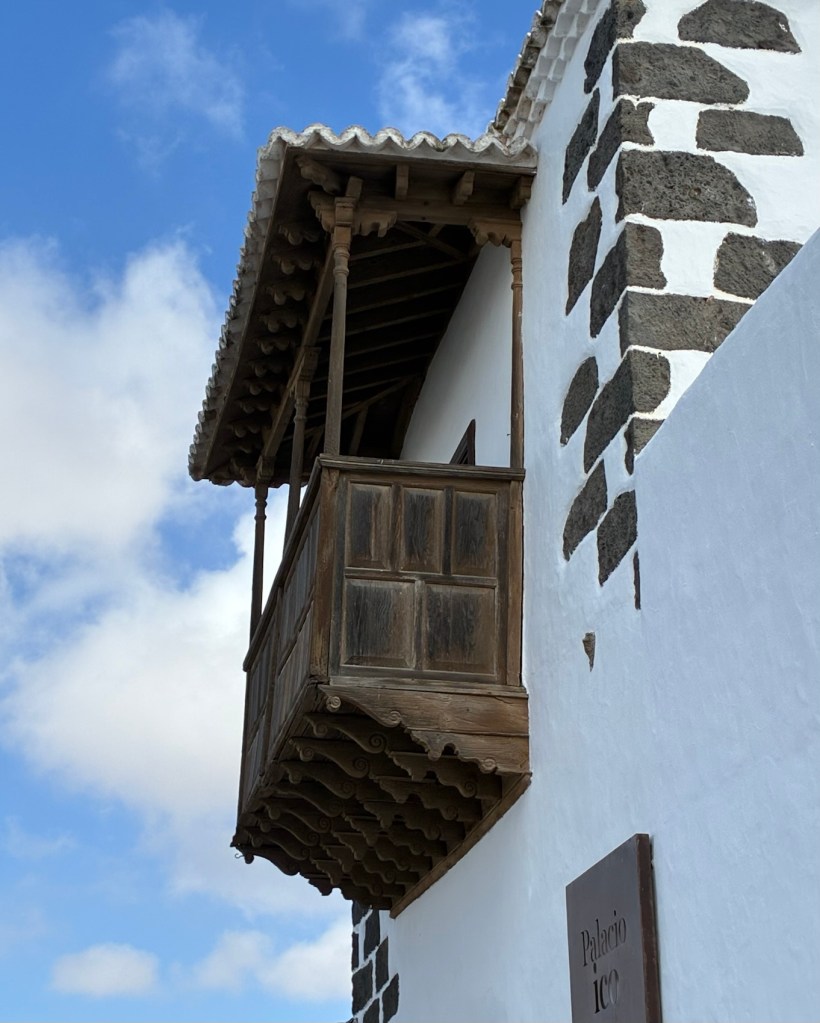
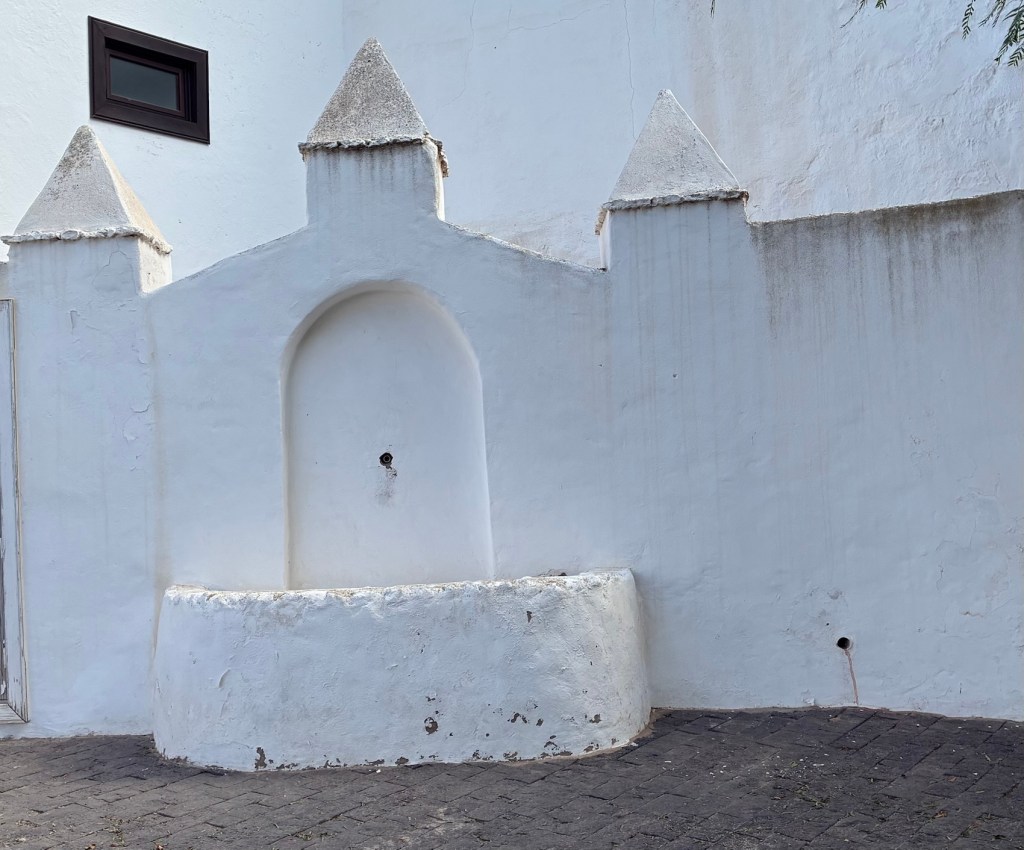
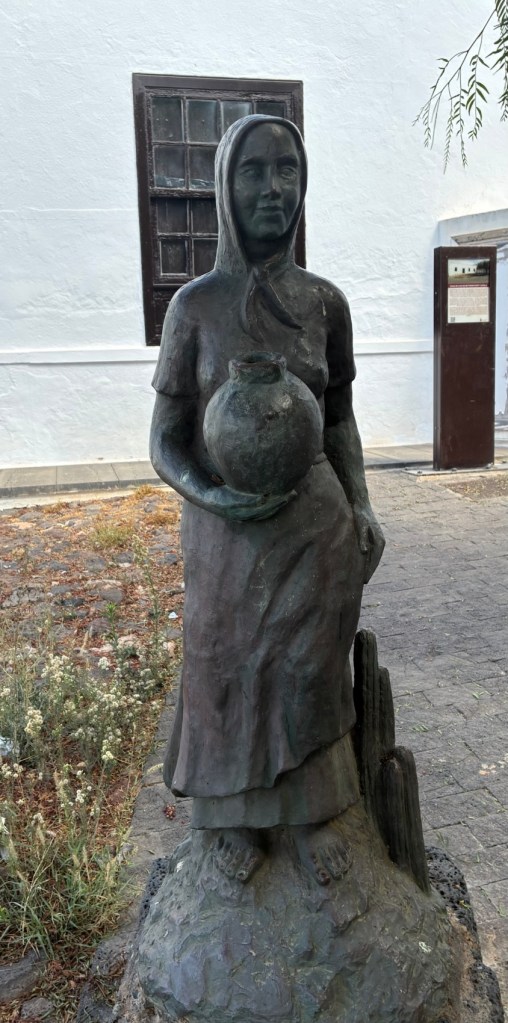
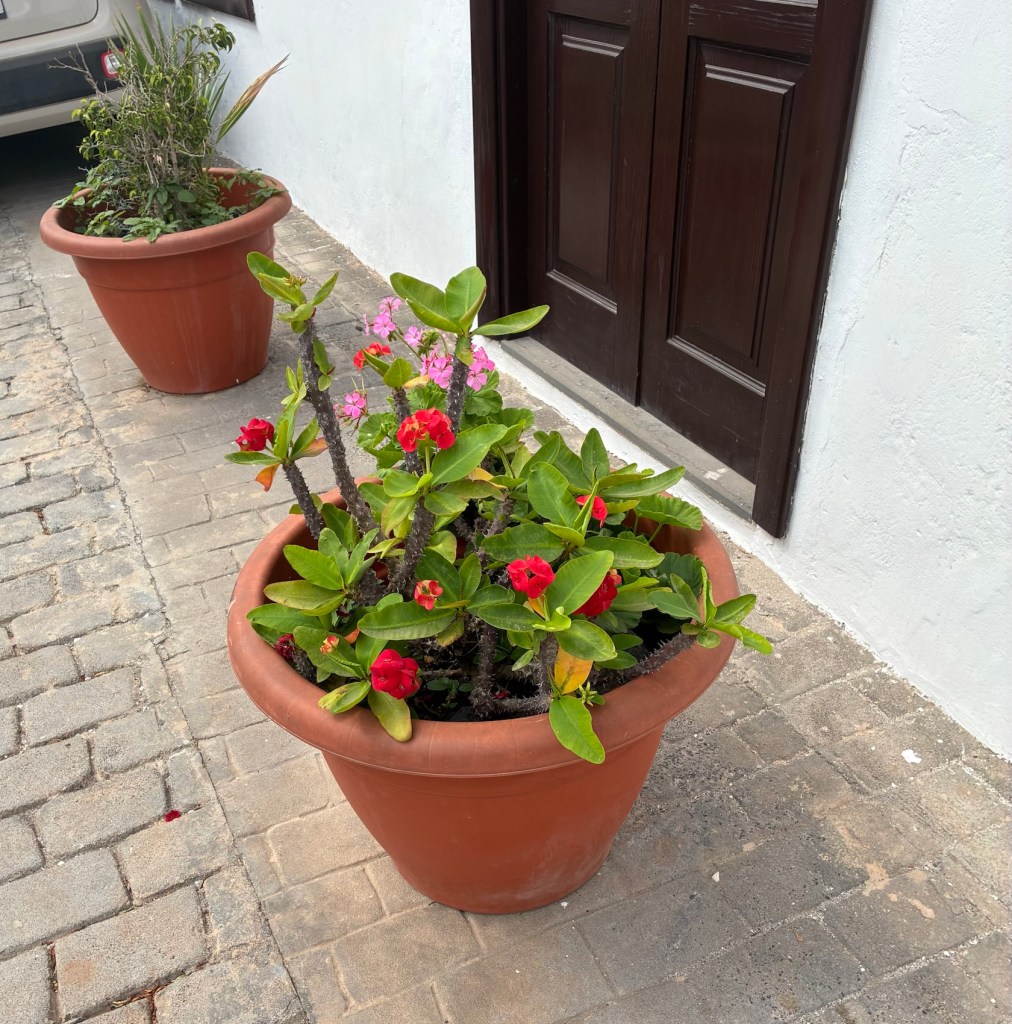
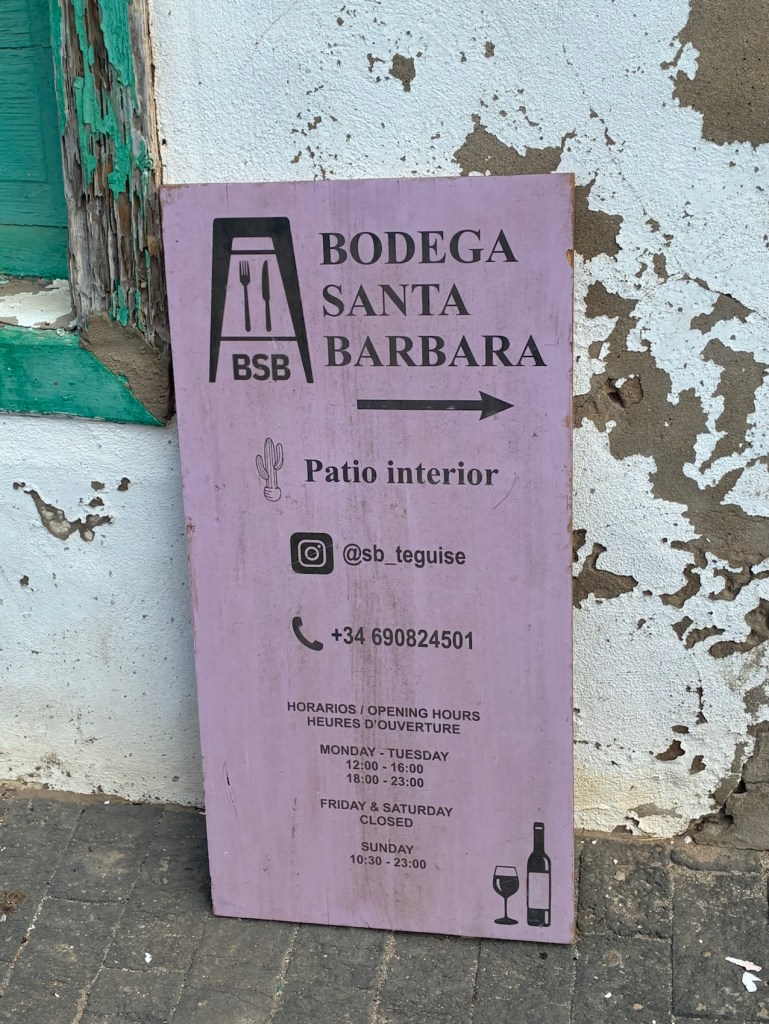
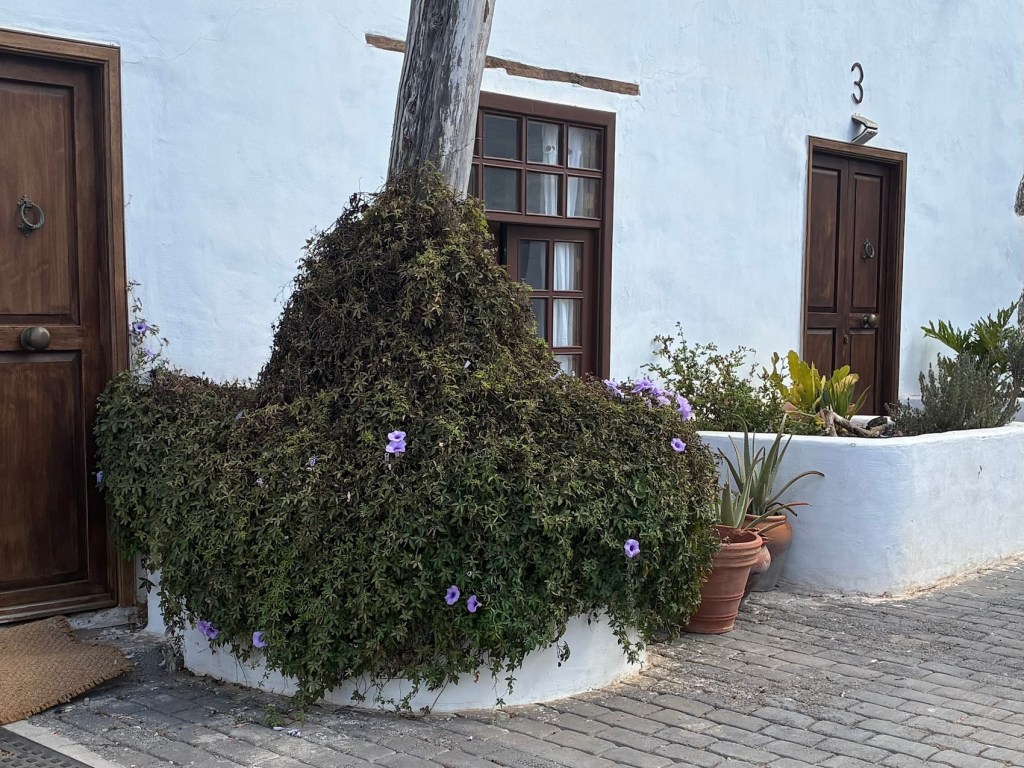
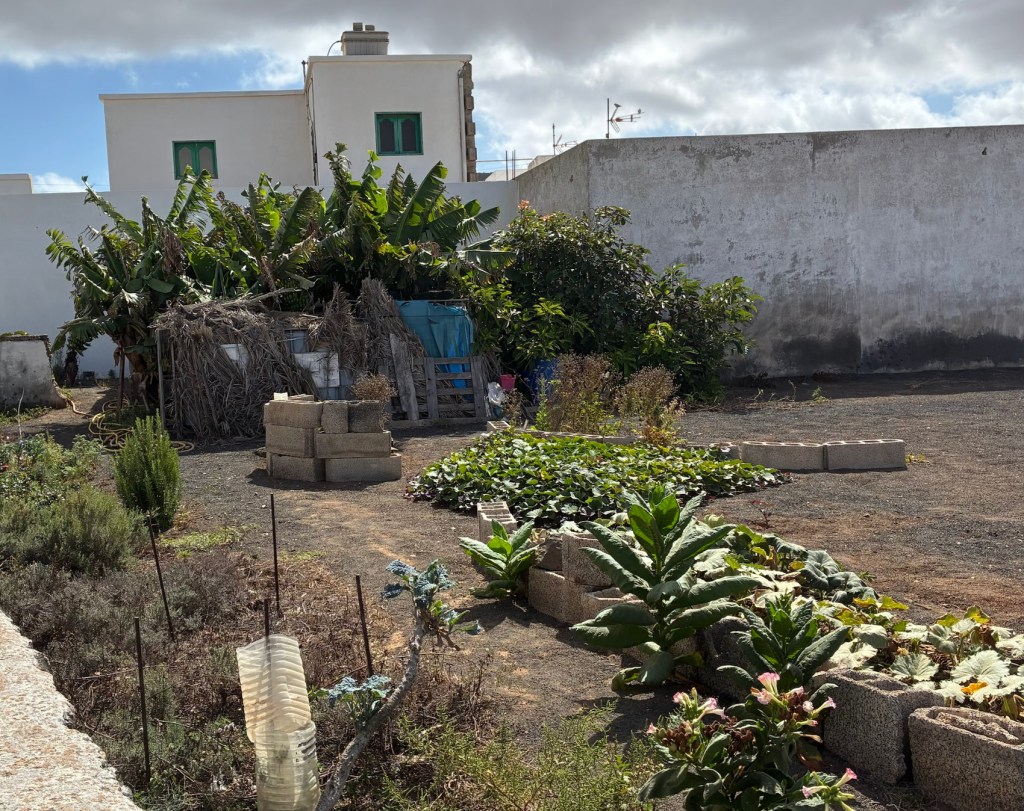
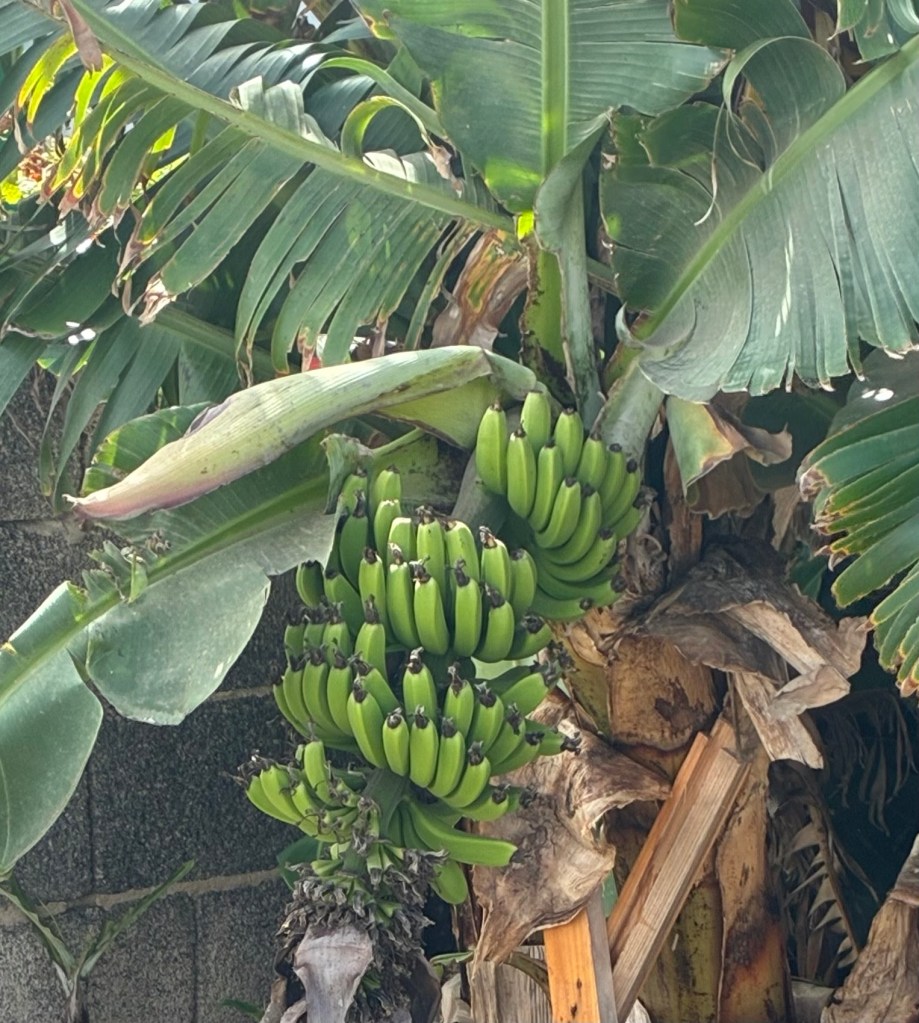
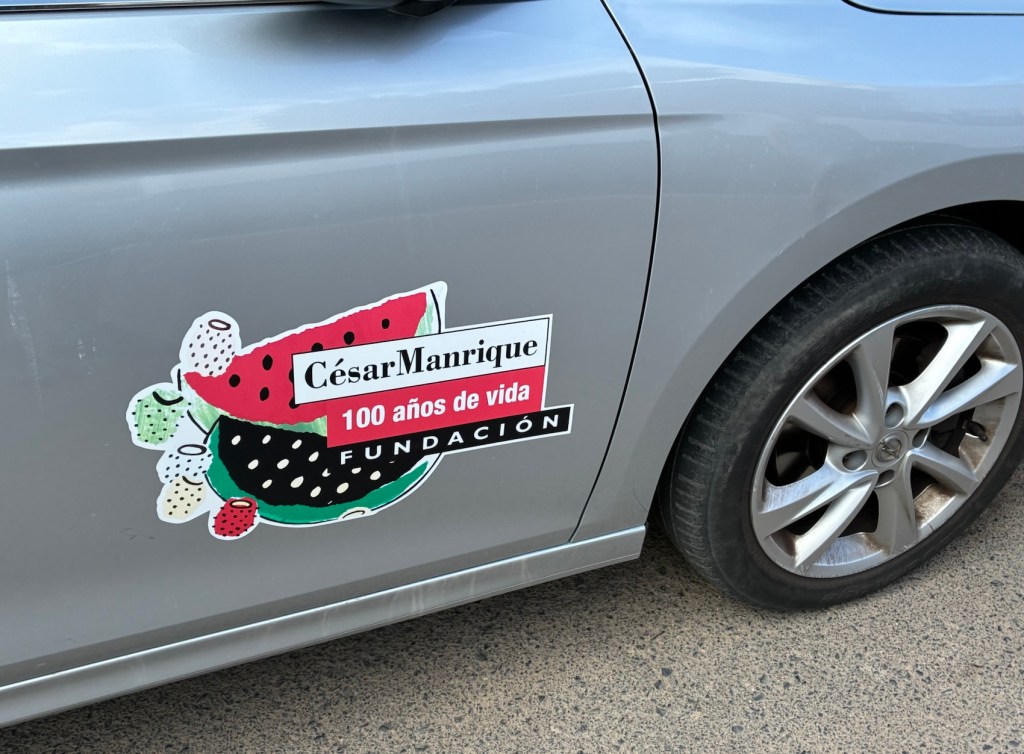
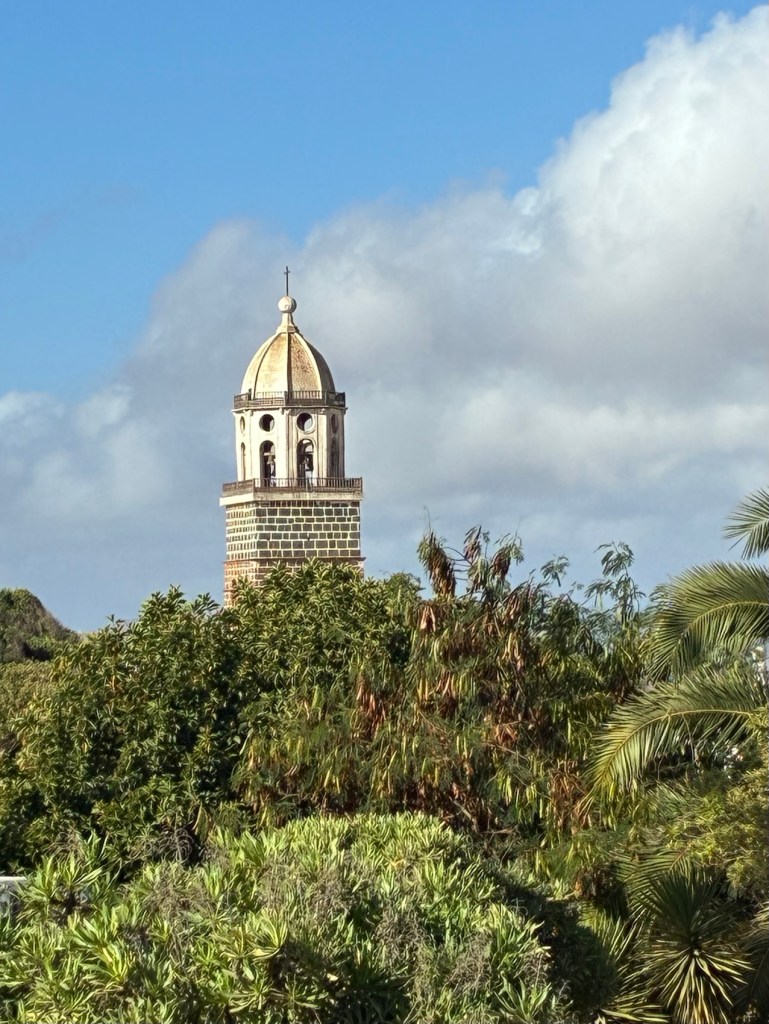
Apparently there can be up to 400 stalls here – a lot of the usual textiles – but in unexpected squares craft and art work,too.I shall just add some photos which don’t really need explanation. Artists’ studios look out on to the cobbled streets I loved this entrance We were quite captivated by the town despite the market’s flow.Musicians and dancers.Some great buskers.Local floraSide streets with a good choice of coffee stops.Some door ways with stories to tell.Landmarks Excellent info.The last wooden balcony in town.Ancient fountain Here’s hoping…It’s amazing how flora are maintained in this arid climate.Not to mention allotments or “ huertas”“ Yes we have no bananas, we have no bananas today”Wear your heart on your car door…This is a very special place which keeps it dignity and history despite the weekly Sunday invasions – we could not compare it to anywhere else we have been – an epitomy of Lanzarote.A memorable visit.
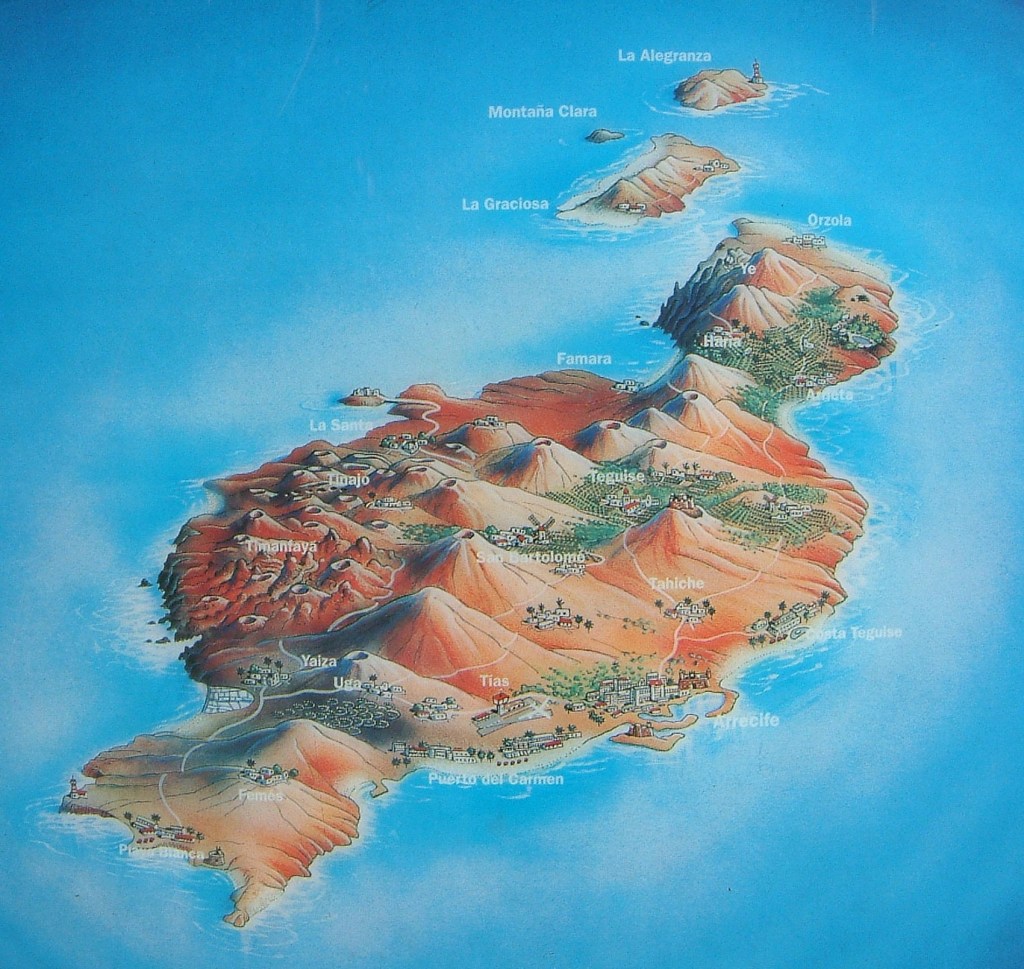
A wonderful map showing some of Lanzarote’s geological features .
“Lanzarote is synonymous with volcanoes, lava fields, rocks of impossible shapes, and black and reddish soils that contrast with the typical white houses, the blue of the sea, and the azure of the sky. The landscape of the easternmost of the Canary Islands is completed by austere, gently rolling mountains, beautiful white and golden sand beaches, lush palm groves… and the silence, which is also part of Lanzarote’s enigmatic landscape.” “Lanzarote was the second Biosphere Reserve in the Canary Islands, and it had a completely new component: for the first time the entire territory was declared a Biosphere Reserve by UNESCO, including all its towns and villages. The perfect symbiosis that Lanzarote has achieved between man and nature is, without doubt, the main reason for this international recognition. Lanzarote brings innovative aspects to the World Network of Biosphere Reserves. The highlight is the integration of artistic creation in the territory, as an element that strengthens the island’s culture, also generating added value as a resource for tourism. This also offers aesthetic enhancements, bringing with them the improvements in income generation associated with the restoration of degraded spaces: cultural values, physical limits and environmental conditions are all reflected in the agricultural landscapes. The island possesses excellent environmental qualities and is home to emblematic ecosystems as well as highly protected enclaves.” The first islanders: the Majos Long before Europe knew these shores, Lanzarote was home to the Majos — a people of North African Berber origin who crossed to the island more than two thousand years ago. They lived in stone villages, grew barley, herded goats and made do on an island with almost no fresh water — a feat of adaptation in itself. They are often loosely called Guanches, though strictly speaking that name belongs to the original people of Tenerife; each Canary Island had its own people, and Lanzarote’s were the Majos. Discovery and conquest The island owes its modern name to a Genoese sailor: Lancelotto Malocello reached it around 1312, and by 1339 “Insula de Lanzarotus” already appears on Angelino Dulcert’s portolan chart — the first map of the Canaries. Through the rest of the 14th century, European ships came mostly for two things: slaves, and orchilla, a lichen prized for its purple dye. The conquest proper began in 1402, when the Norman knight Jean de Béthencourt and the soldier Gadifer de La Salle landed on the small island of La Graciosa. Exhausted by decades of slave raids, the last king of the Majos, Guadarfía, chose negotiation over war: a pact of protection in exchange for submission. Béthencourt received the governance of Lanzarote from King Henry III of Castile — by then, only some 300 Majos remained. The conquerors’ capital, Teguise, would rule the island for four and a half centuries, until Arrecife took over in 1852.The Hunger Fortress
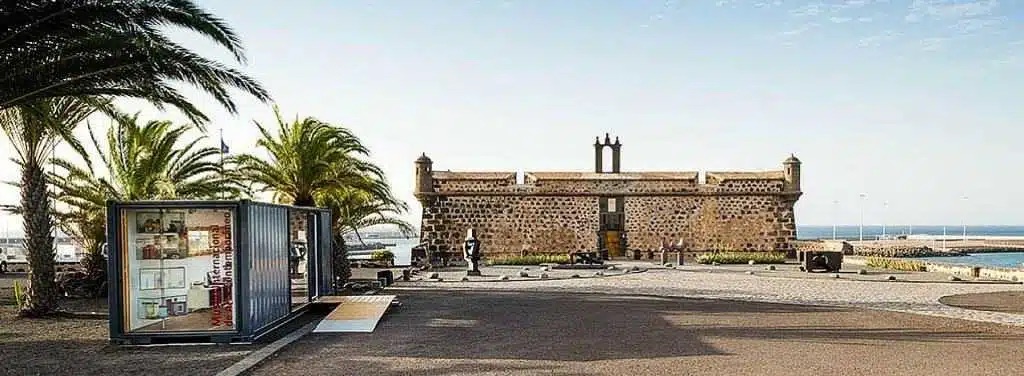
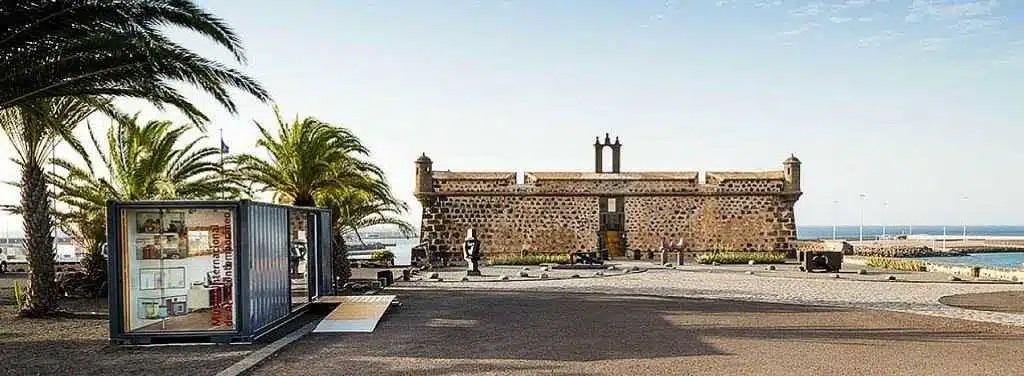
The pirate centuries: raids, castles and a Blood Alley For three hundred years after the conquest, Lanzarote’s greatest enemy came from the sea. Sitting on the shipping lanes between Europe, Africa and the Americas, the island was raided again and again by Barbary corsairs and European privateers alike. In 1586 the corsair Morato Arráez sacked the old capital, Teguise — the massacre is still remembered in the name of one of its lanes, the Callejón de la Sangre, “Blood Alley”. The worst came in 1618, when an Algerian fleet landed thousands of men, burned Teguise and carried off around 900 islanders into slavery; others survived only by hiding deep in the lava tunnels of Cueva de los Verdes. The island answered with stone. The castle of Santa Bárbara rose on the Guanapay volcano above Teguise — today, fittingly, it houses the island’s Piracy Museum. Castillo de San Gabriel guarded the harbour of Arrecife, and Castillo de San José followed in 1776–79, commissioned partly as a relief project to feed a starving island — which earned it the nickname Fortaleza del Hambre, the Hunger Fortress. Manrique later turned it into a museum of contemporary art: a very Lanzarote ending for a pirate fortress. The years the earth burned
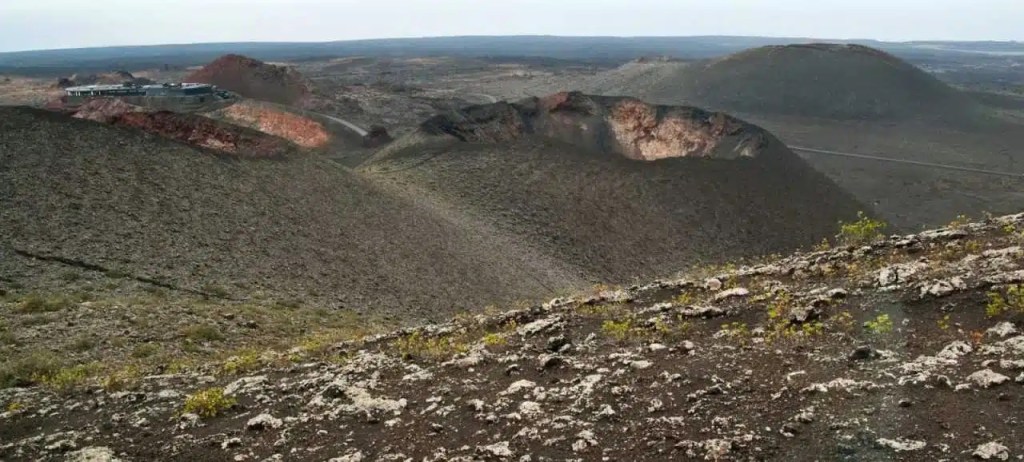
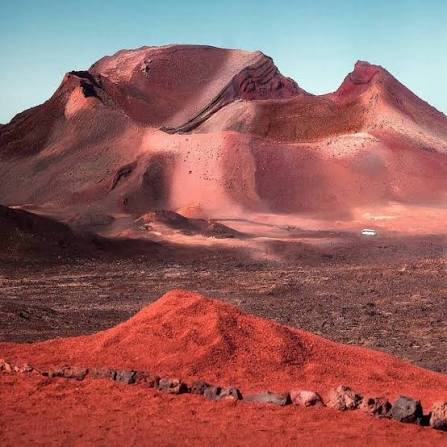
On 1 September 1730, the ground near Yaiza split open — and for six years it barely stopped. The eruptions of 1730–1736 buried roughly a quarter of the island, including some of its best farmland and dozens of villages, under lava and ash, creating the Fire Mountains of today’s Timanfaya. Three smaller eruptions followed in 1824. No lives were lost, but the island that emerged was a different world — the eerie, moon-like landscape Lanzarote is famous for. Out of catastrophe came ingenuity. Farmers learned to dig through the ash to the soil below, planting each vine in its own sheltered crater — the technique that created La Geria, the island’s extraordinary wine region. And the volcanoes themselves became one of the island’s greatest attractions.
Barrilla, cochineal and the emigrant years
“The centuries between the volcanoes and modern tourism belonged to farmers — and to two unlikely export stars. First came barrilla, a salt-tolerant plant burned for soda ash used in glass and soap making. Then, in the mid-19th century, cochineal: a tiny insect raised on prickly-pear cactus whose crushed bodies yield brilliant carmine red. For a few decades, Lanzarote’s cactus fields dyed the fabrics and uniforms of Europe.
Synthetic dyes ended the boom almost overnight, and hard years followed: thousands of islanders emigrated to Cuba, Venezuela and Uruguay. Those who stayed perfected the island’s signature art of waterless farming — enarenado, growing crops under a blanket of volcanic gravel that traps the night’s moisture — and harvested salt at the Salinas de Janubio, opened in 1895 and still working today. That hard-won agriculture is what painted the patchwork landscape you see inland.”
César Manrique: the man who shaped modern Lanzarote. Born in Arrecife in 1919, César Manrique left to paint — Madrid, then New York — and came home in 1966 with a conviction that would change everything: Lanzarote could grow without destroying itself. He persuaded the island’s authorities to ban high-rise buildings and roadside billboards, and set about proving that architecture, art and volcanic nature could be one thing. His works are now the island’s icons: Jameos del Agua, a collapsed lava tube turned concert hall and garden; Mirador del Río, a lookout carved into the cliffs above La Graciosa; his own house, built inside five volcanic bubbles, today the César Manrique Foundation. Together they form the network of Art, Culture and Tourism Centres that still defines how the island presents itself. Even the airport is named after him.
Have to go and see this..
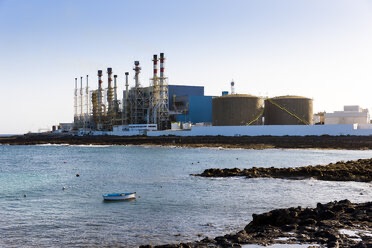
From day one I have been interested in knowing how Lanzarote obtains its water. Lanzarote obtains almost all of its drinking water through the seawater desalination process, which turns ocean water into fresh water using reverse osmosis and older thermal methods.
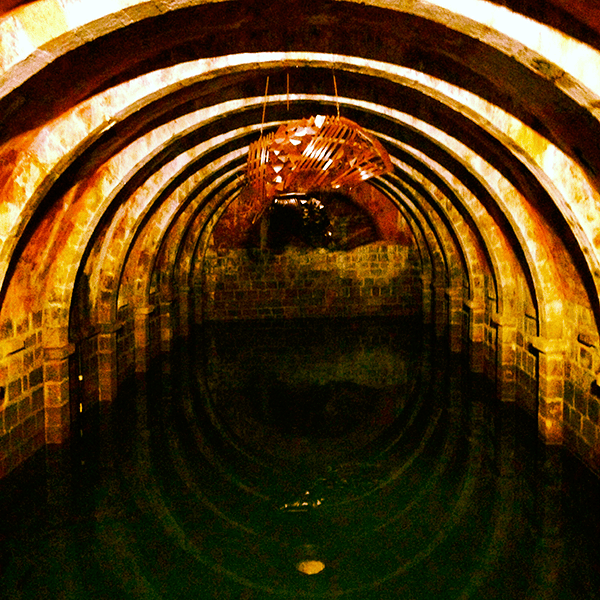
Lanzarote houses the historic site of Europe’s first seawater desalination plant, which was built in Arrecife in 1964 to supply fresh water to the arid island. Today, dozens of plants across the island supply the municipal mains network. Historical Methods: Because Lanzarote has an arid desert climate with very little rainfall, residents historically relied on rooftop rainwater harvesting stored in underground concrete cisterns called aljibes.
Another unexpected fact on arrival – different time zone to Spain.
The time difference between the Canary Islands and the mainland: historical reasons
The historical reasons why the Canary Islands have one hour less go back to the year 1900, when a decree was passed to establish a single official time throughout the country that was aligned with the Greenwich meridian.
That decree, however, left out the Canary Islands, which for two decades maintained its ‘independence’ in this regard. However, due to maritime traffic issues, Great Britain lobbied for the Canary Islands to also have an established time zone.
It was in 1922 when a Royal Decree established that the Canary Islands had the time of its time zone, which, due to its geographical location, was one hour behind the mainland.
Peninsular time remained aligned with the Greenwich Meridian until 1940, when the dictator Franco, due to his sympathy with Nazi Germany, decided that Spain should have the same time zone as the center of Europe, changing from GMT to GMT+1, making the Canary Islands also move forward one hour (from GMT-1 to GMT).
This has been the case since then and the Canary Islands defends maintaining this time difference with the peninsula as a matter of brand identity and tourist promotion.
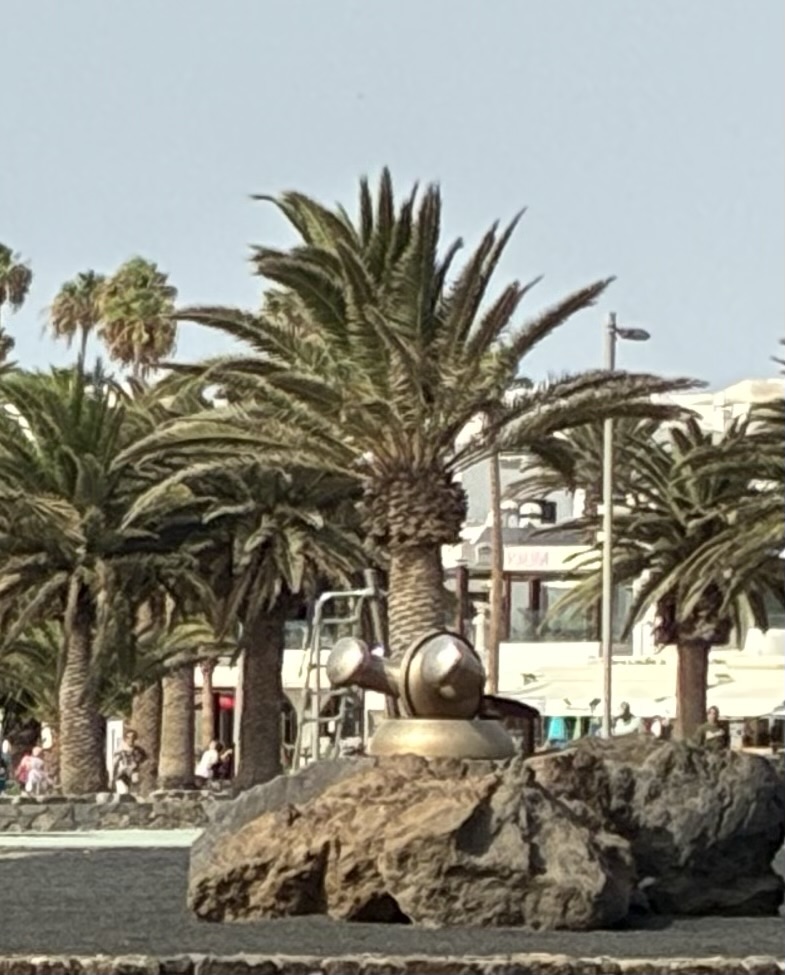
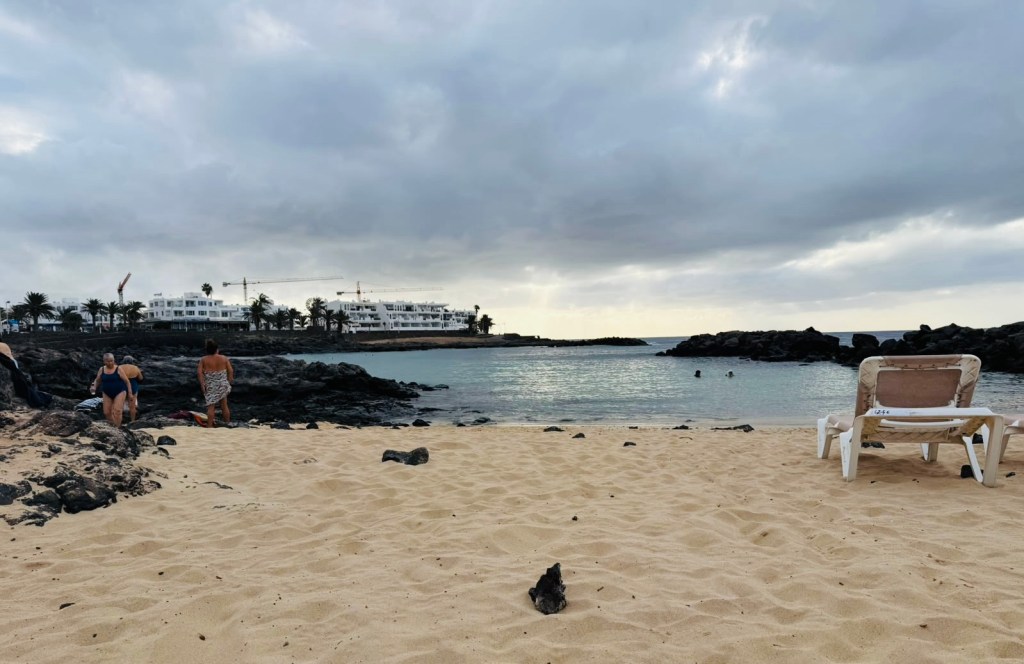
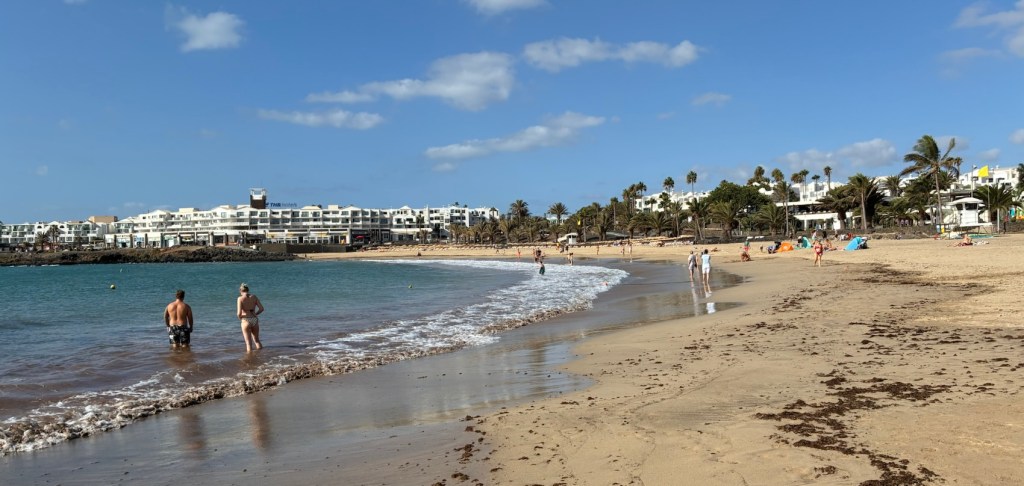
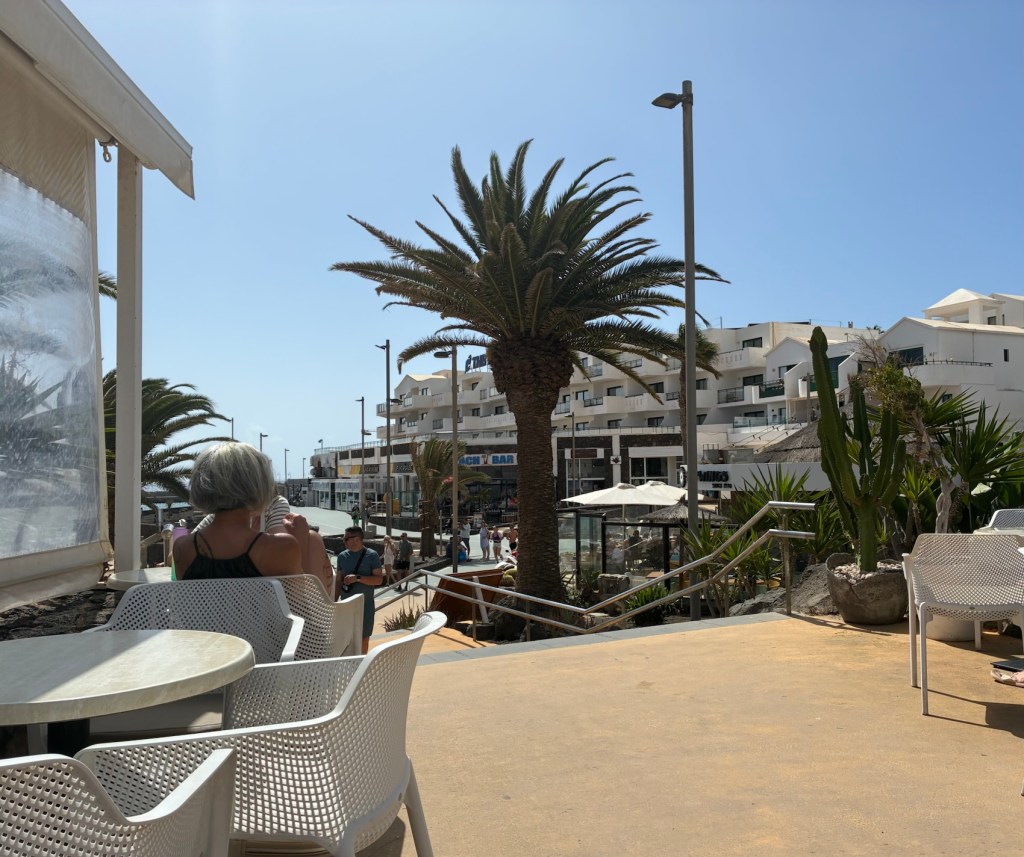
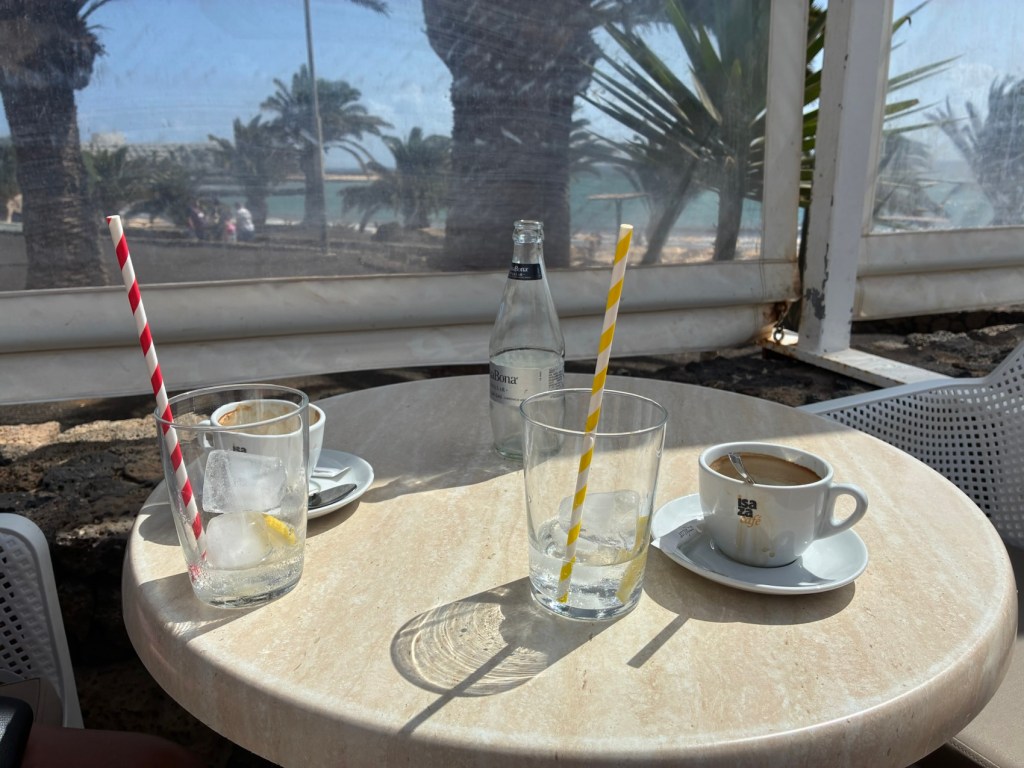
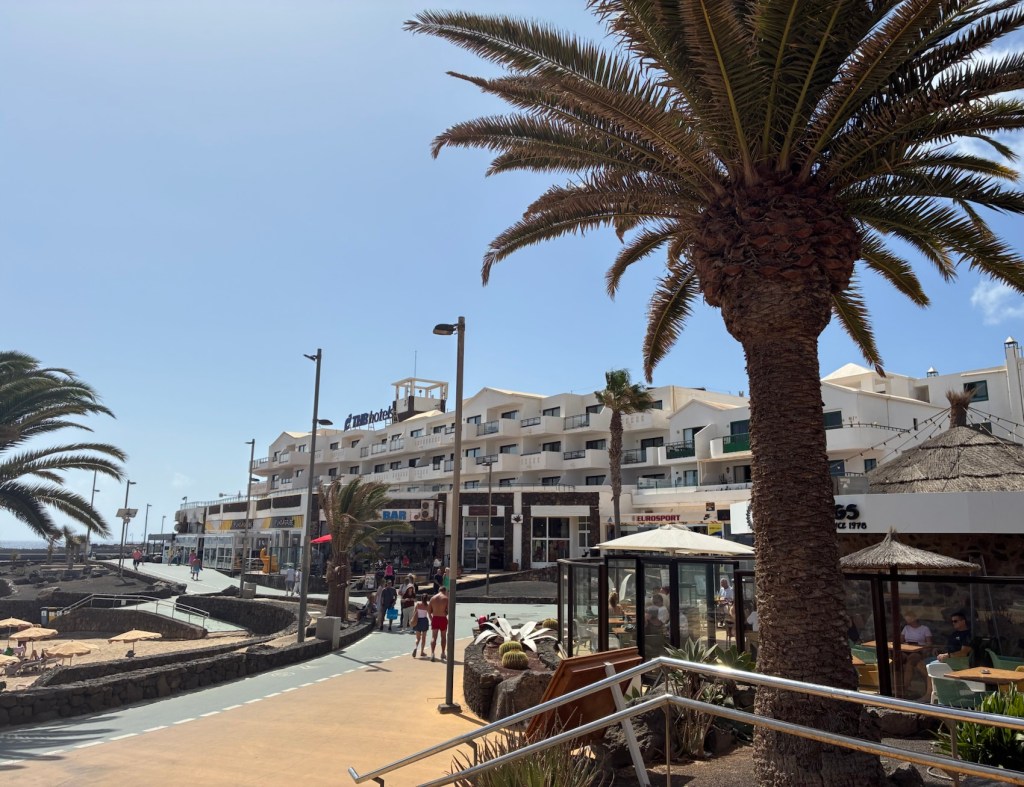
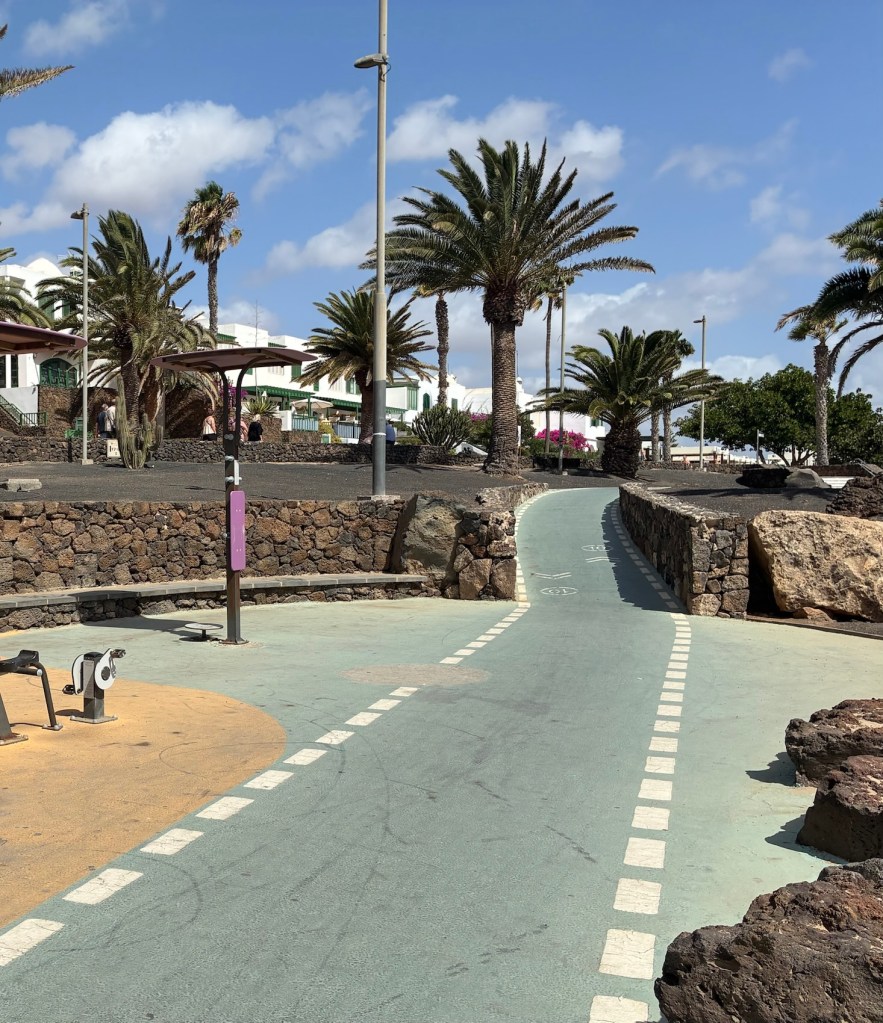
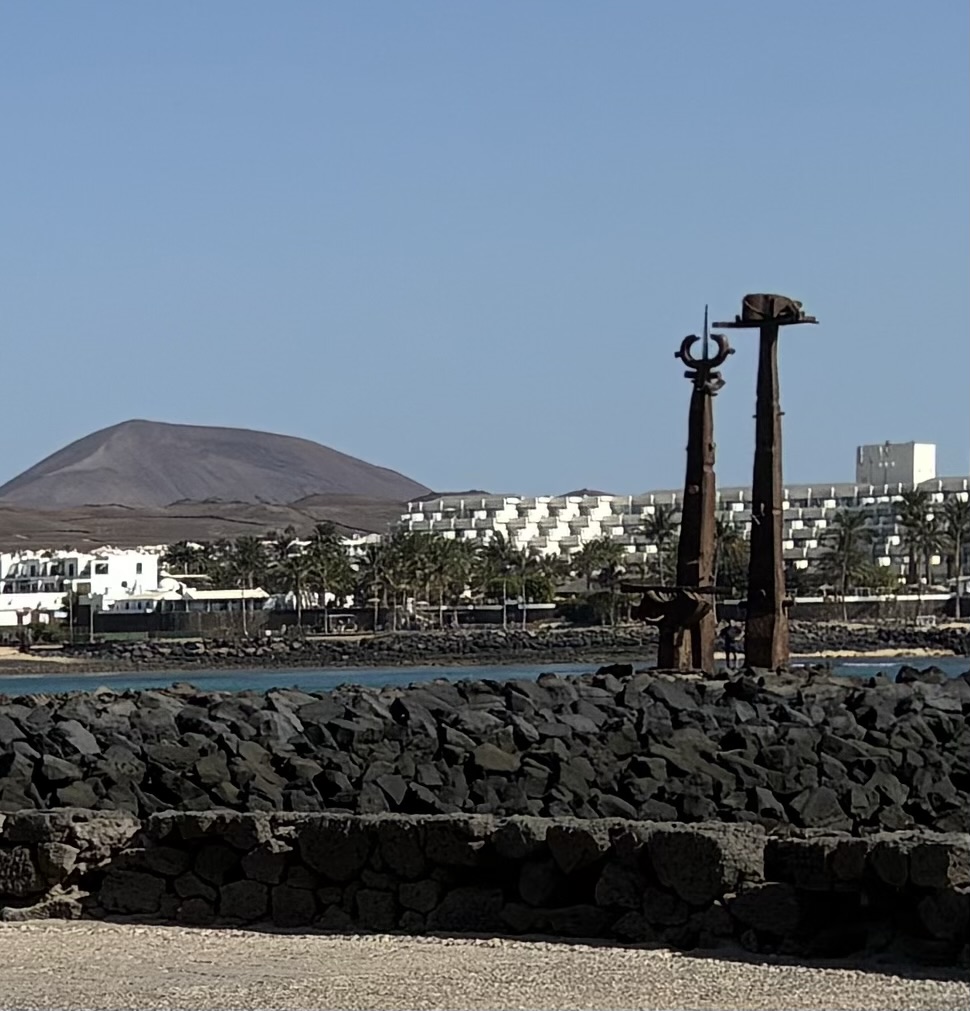
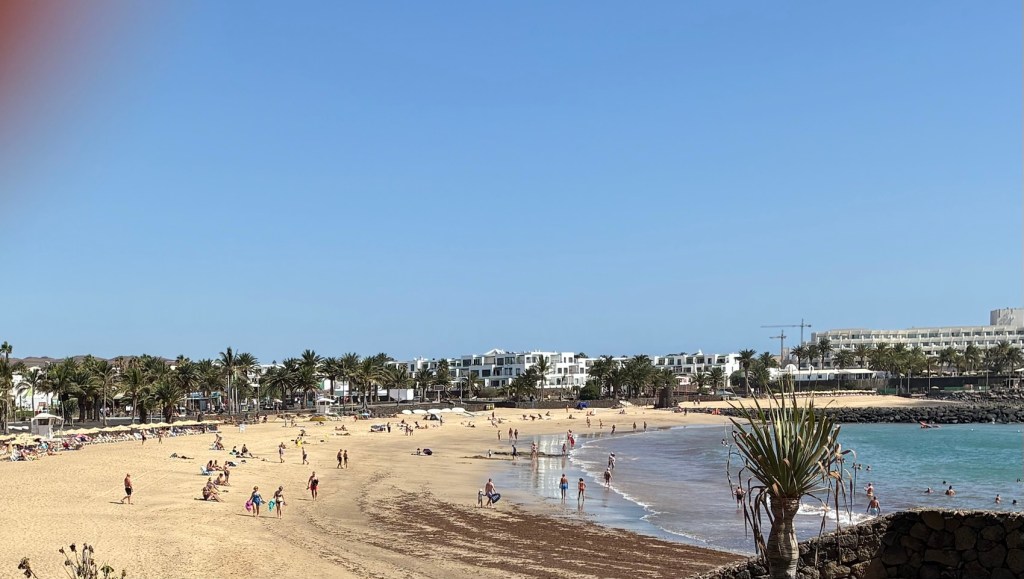
The last couple of days have been very relaxing – mainly walking the Paseo in both directions then returning to relax at the bungalow or pool.Sculpture en routeBarbara resorted to this and found it very acceptable.The second beach along from our place and Hannah loved it.We spent a good part of today ( Saturday) on the town beach which we thought was beautiful- clean soft sand and two loungers. The view from a nearby coffee stop .Coffee and Agua con gaz – perfect at 11.30The paseo narrows at this point – we thought this was the most agreeable part of Costa Teguise.
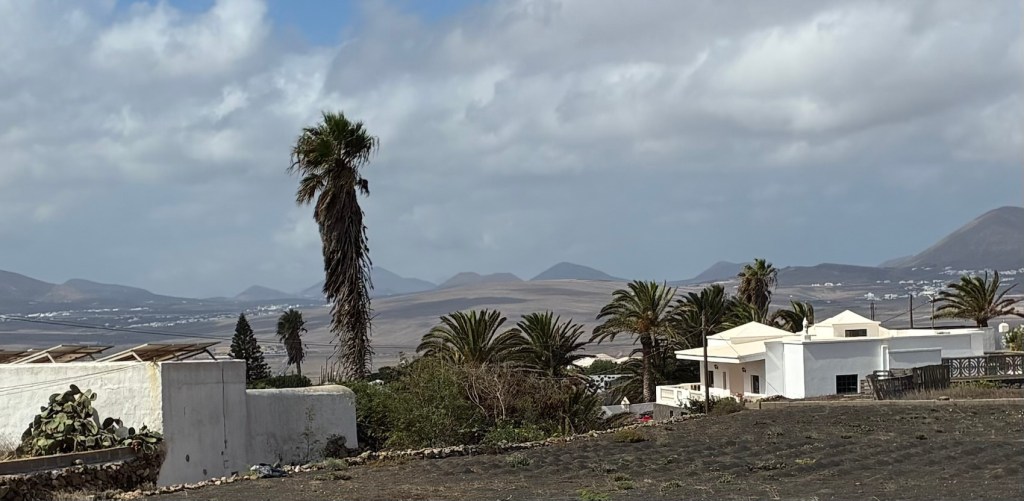
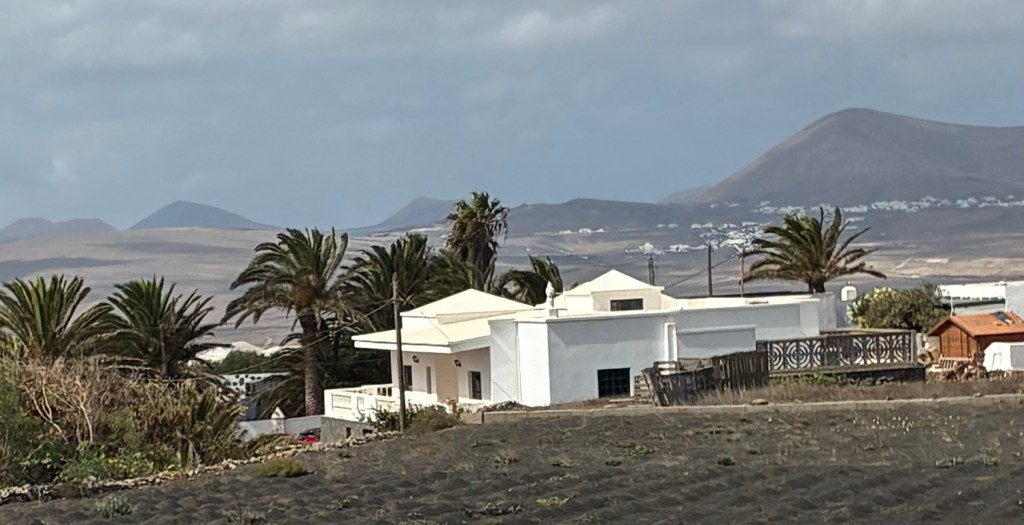
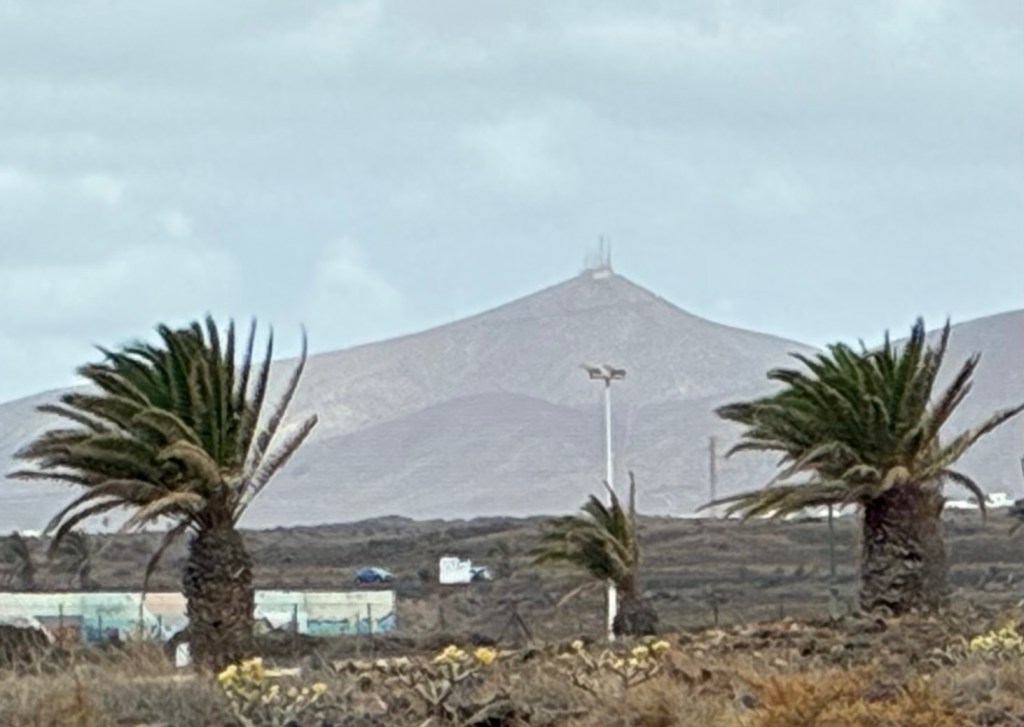
The first thing that struck me about this island was the volcanic earth and barren stretches of land,interspersed with low level white housing developments against a backdrop of volcanic mountains.
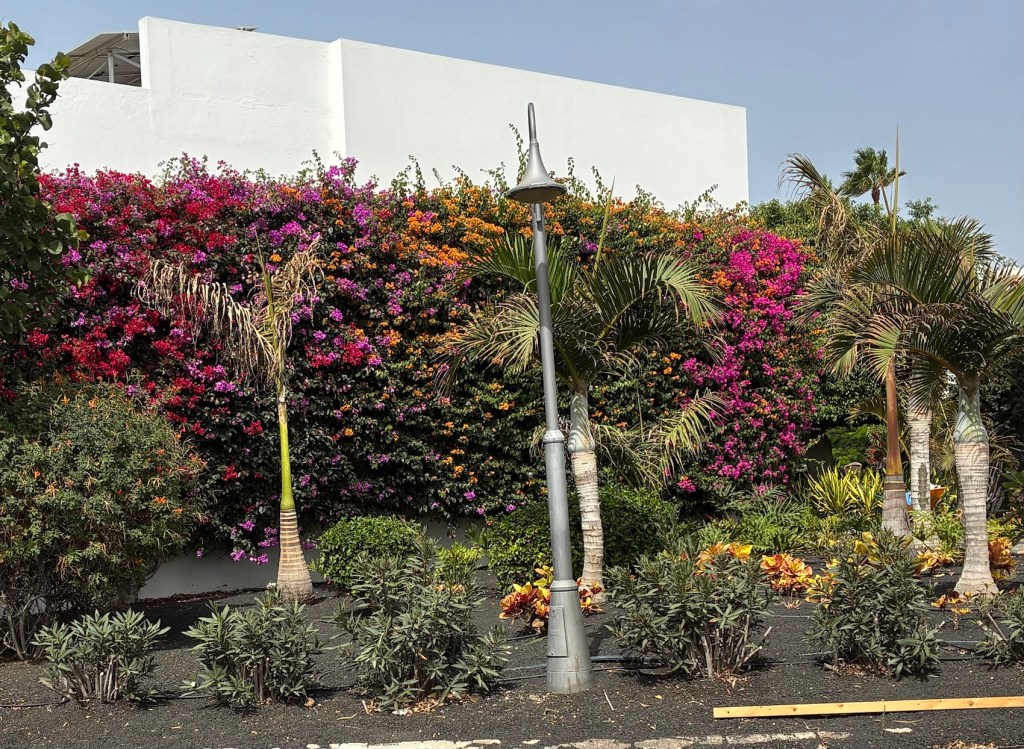
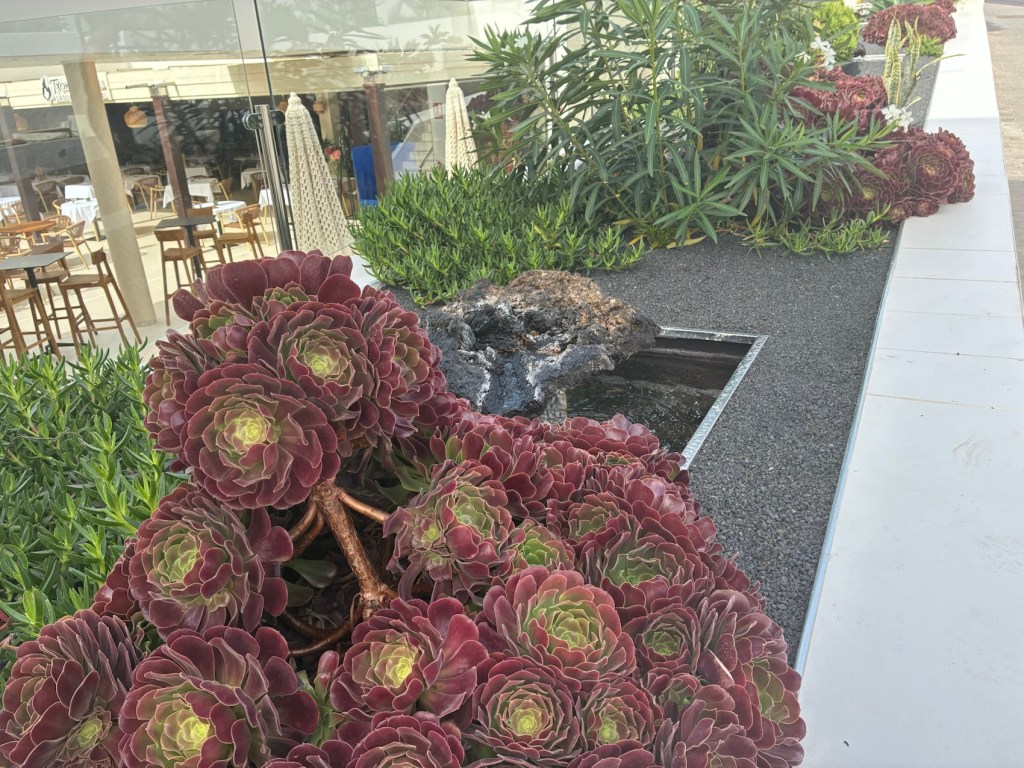
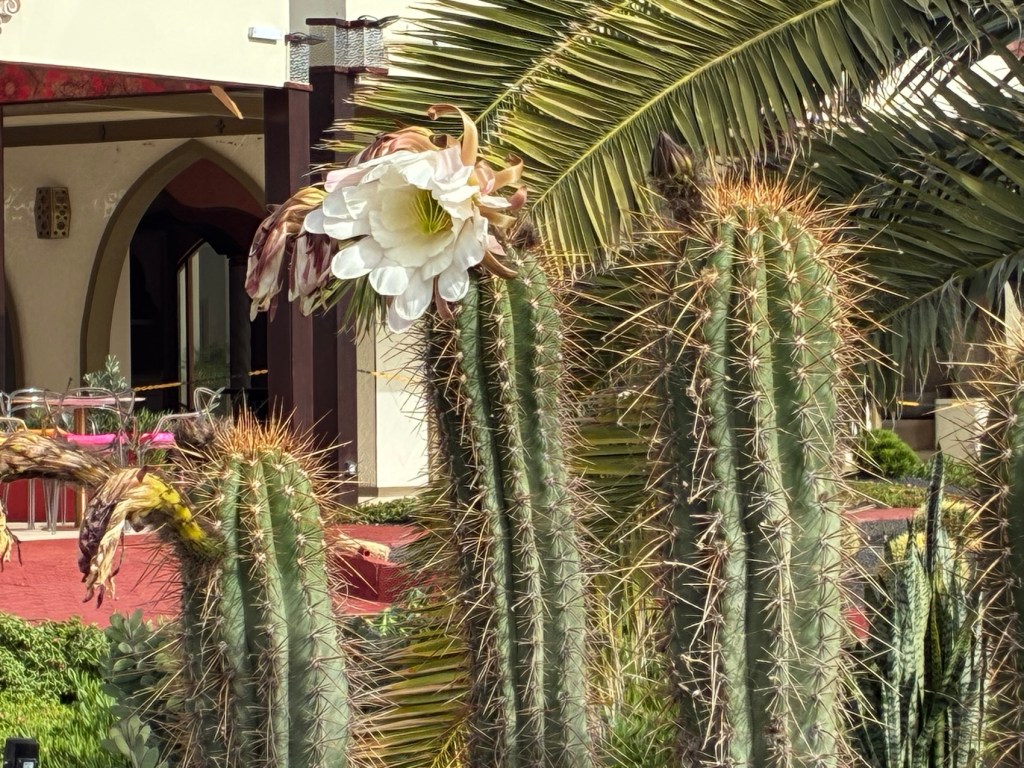
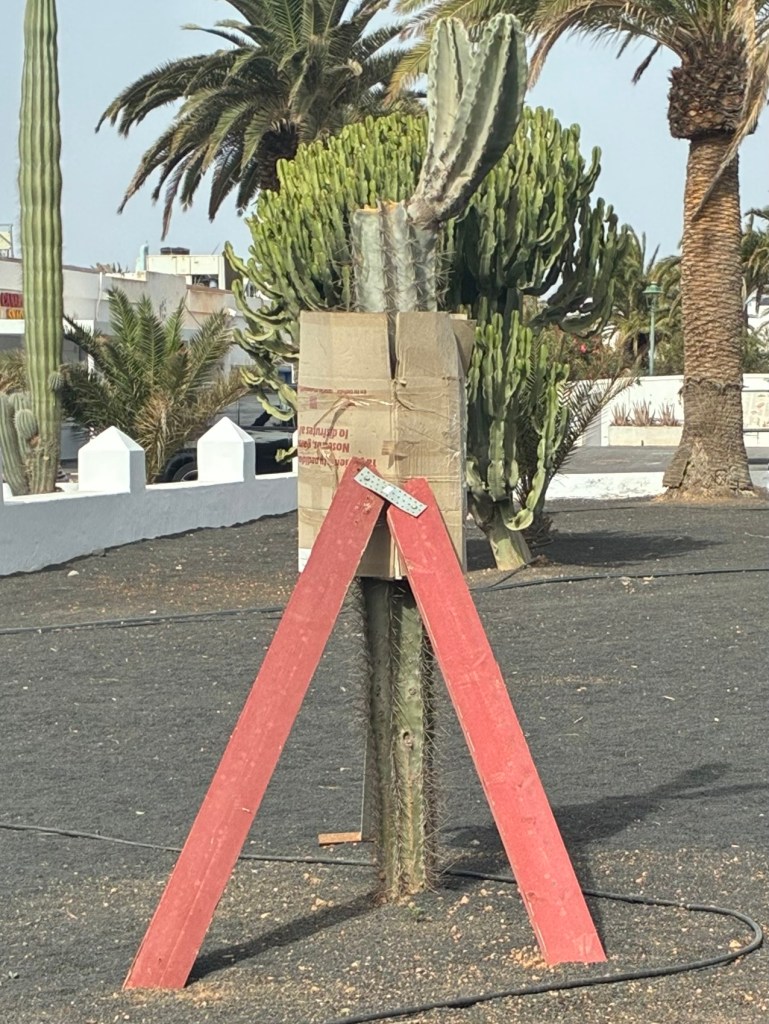
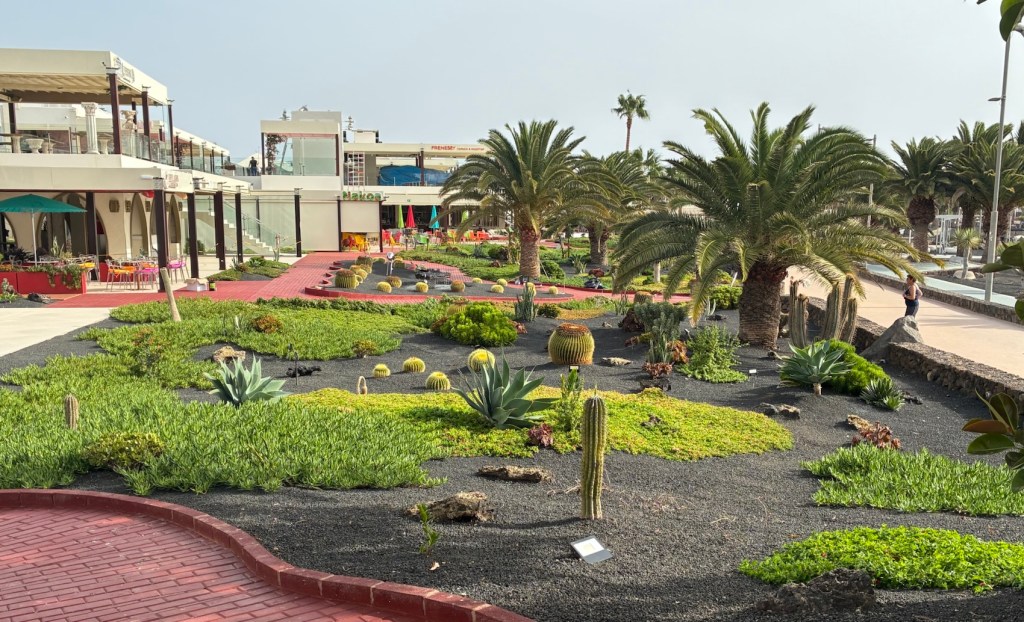
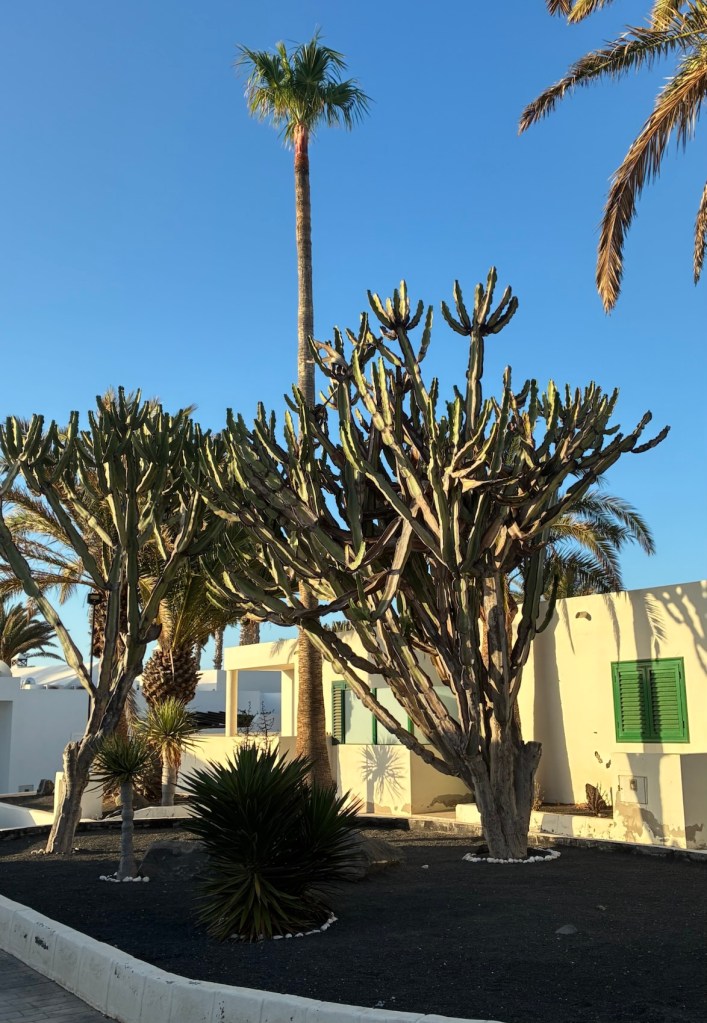
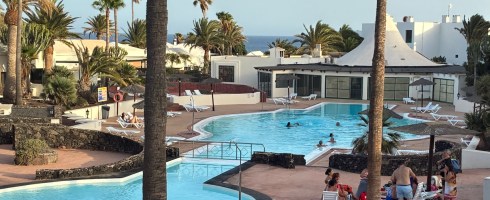
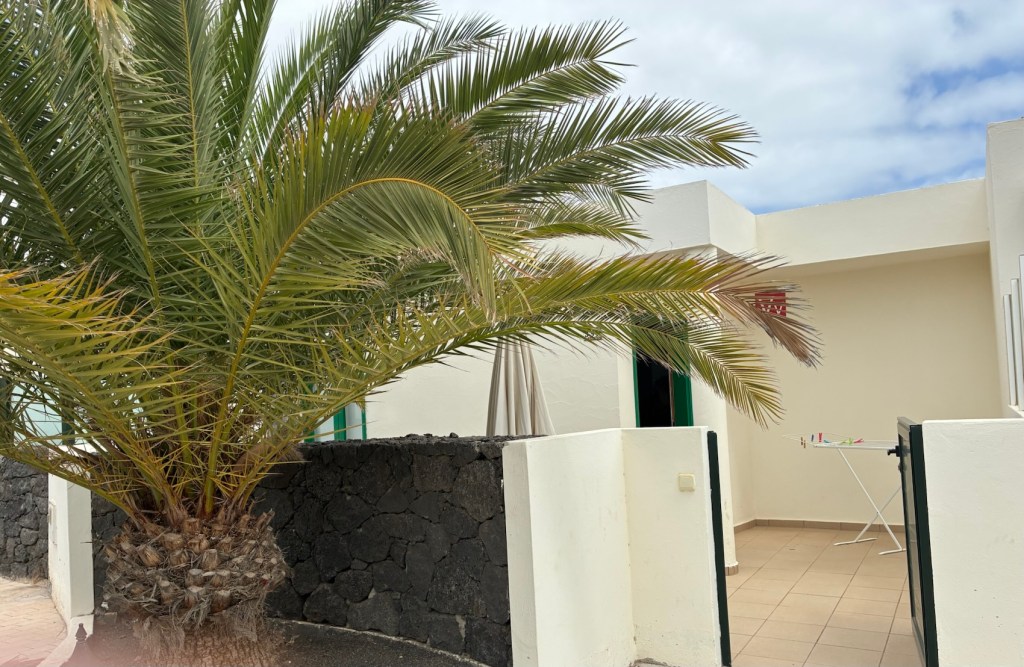
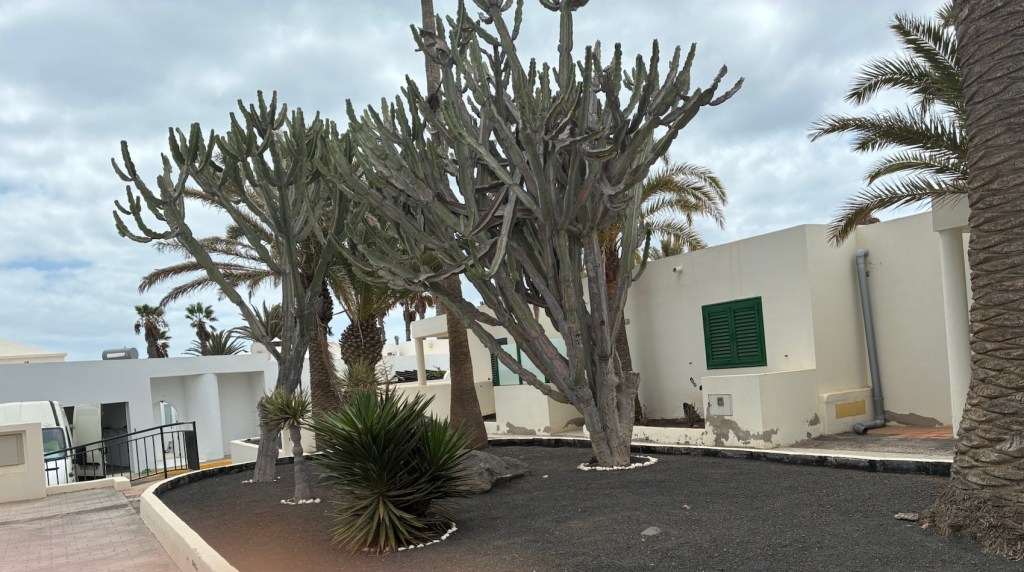
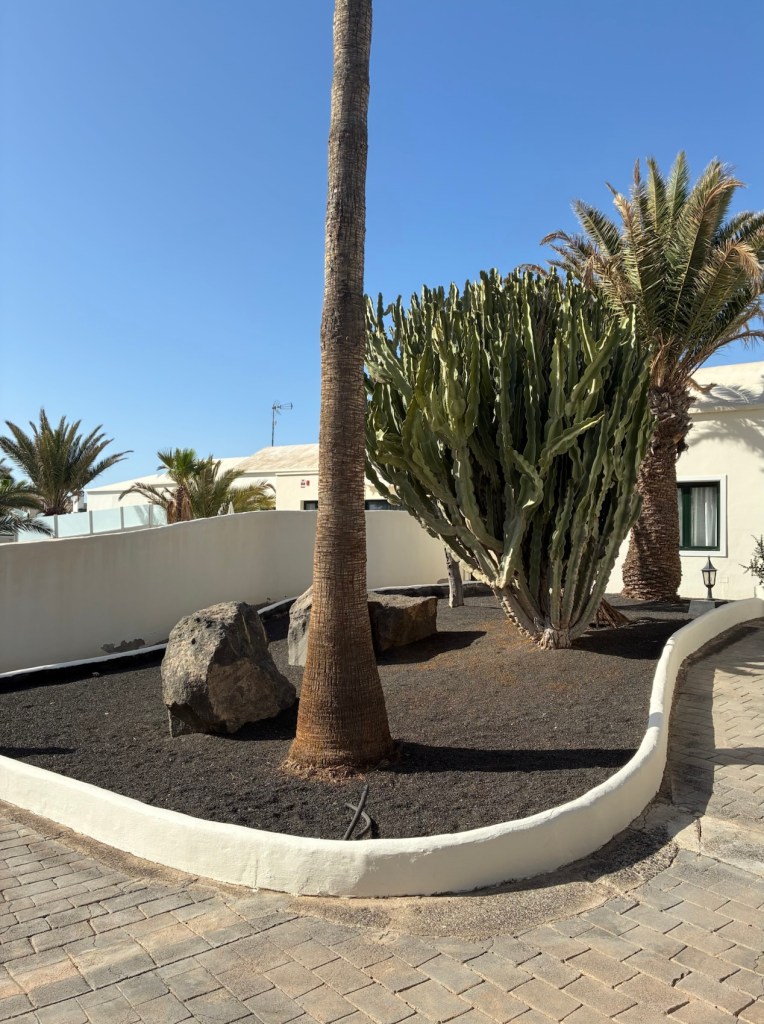
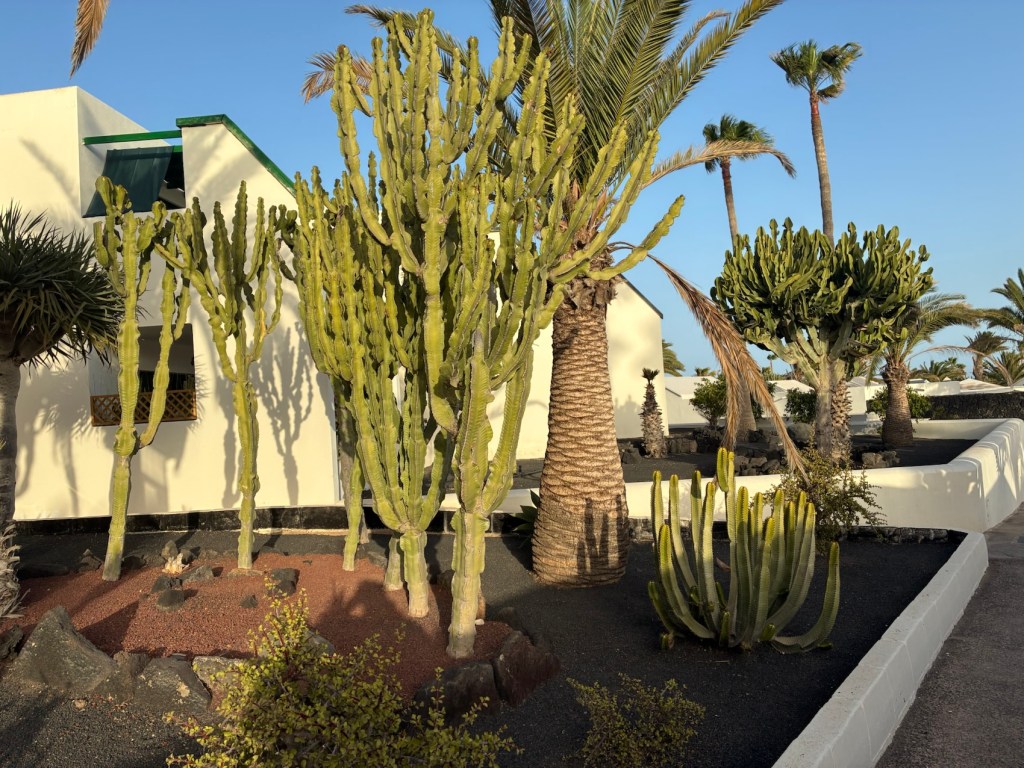
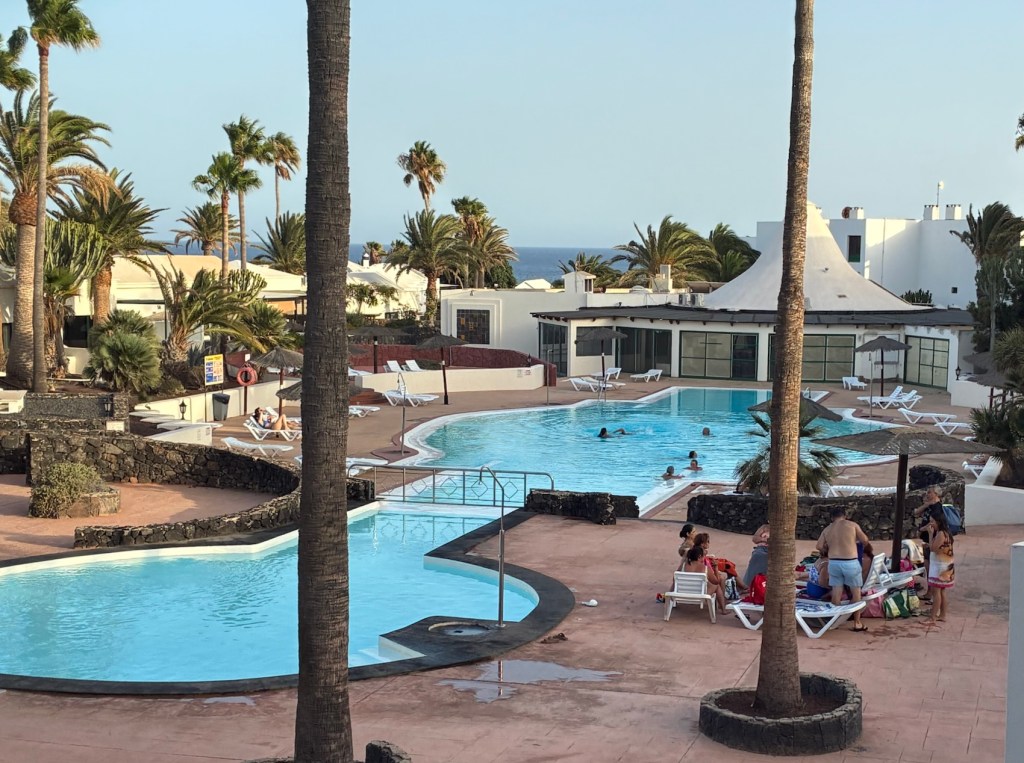
The two bedroom bungalow in which we are staying has VV printed on its frontage- A “VV” is a vivienda vacacionalThe palm tree provides welcome shade over the dining table below.The area immediately outside the bungalow.A lot of thought went into the design of this complex – these trees and cactii are watered by pipes. This method is ubiquitous on the island and I determined to find out where / how water is obtained on such an arid,volcanic place.A very well designed pool area is a three minute walk away.
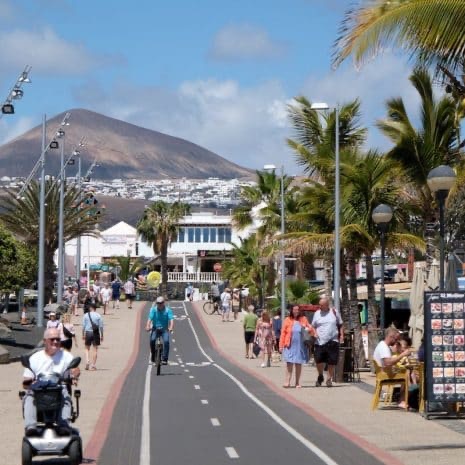
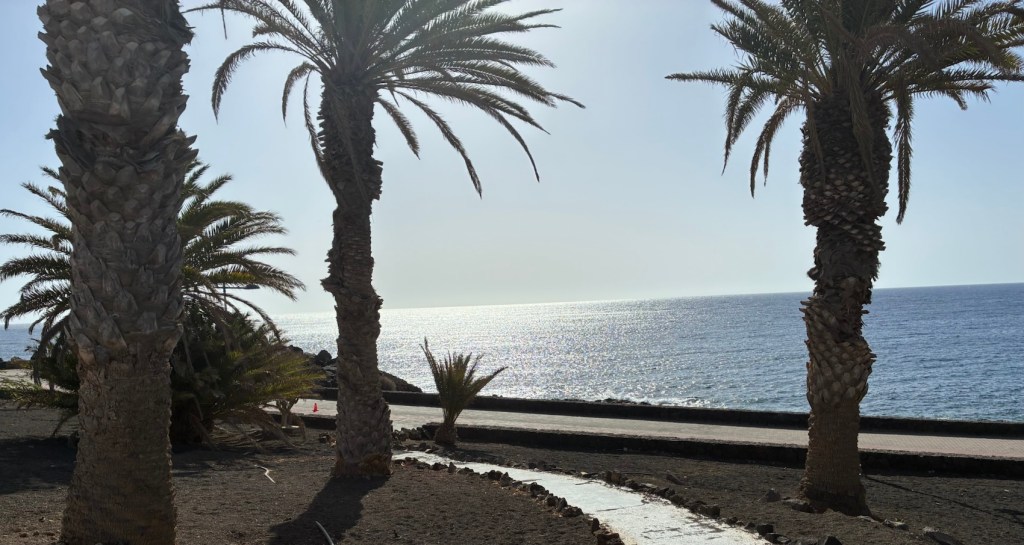
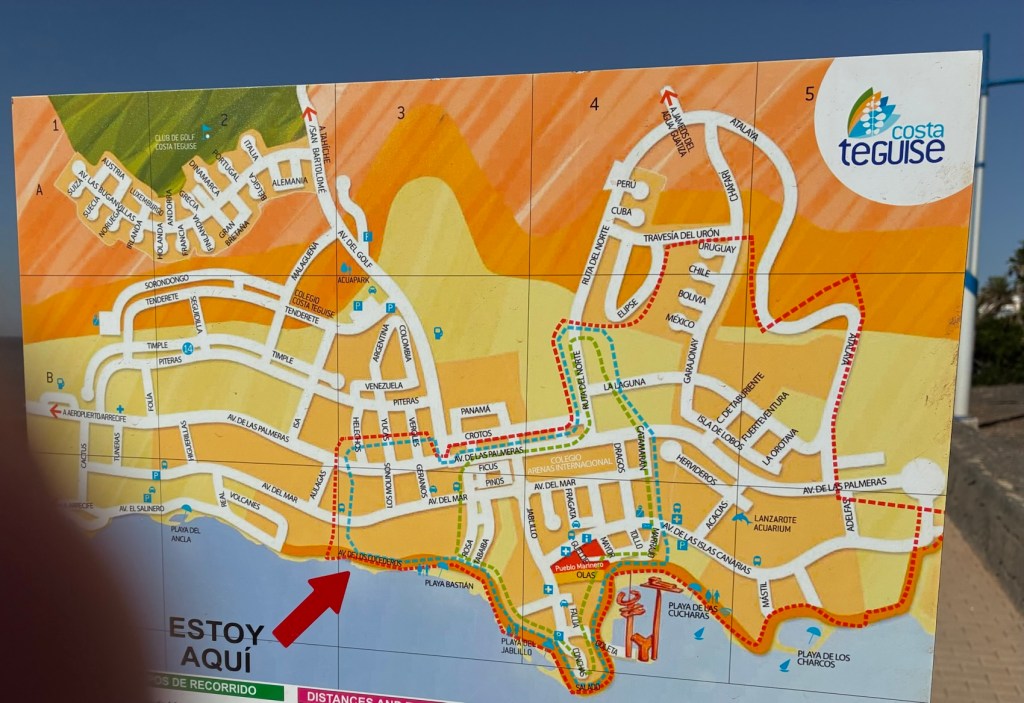
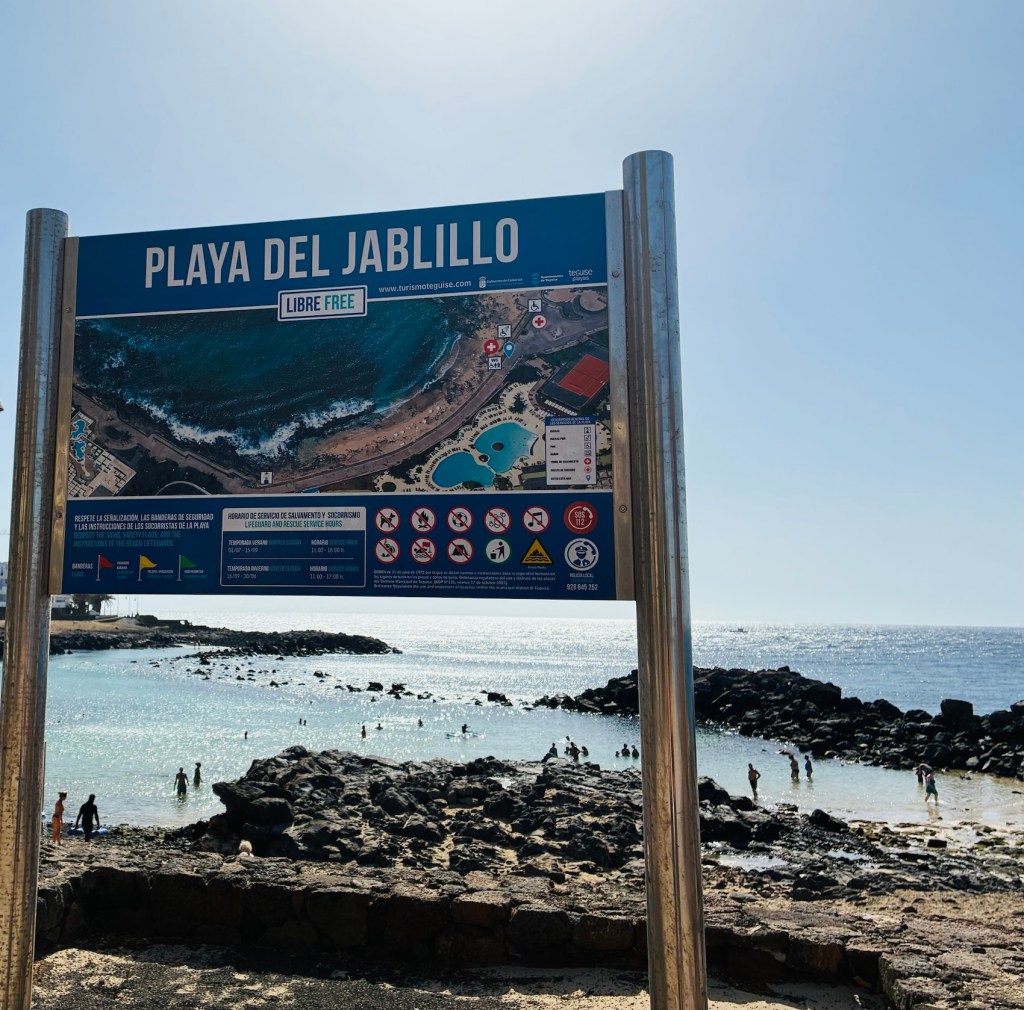
It was decided that we should walk along the adjacent “ paseo” – seaside promenade which are typical of the Canary Islands.
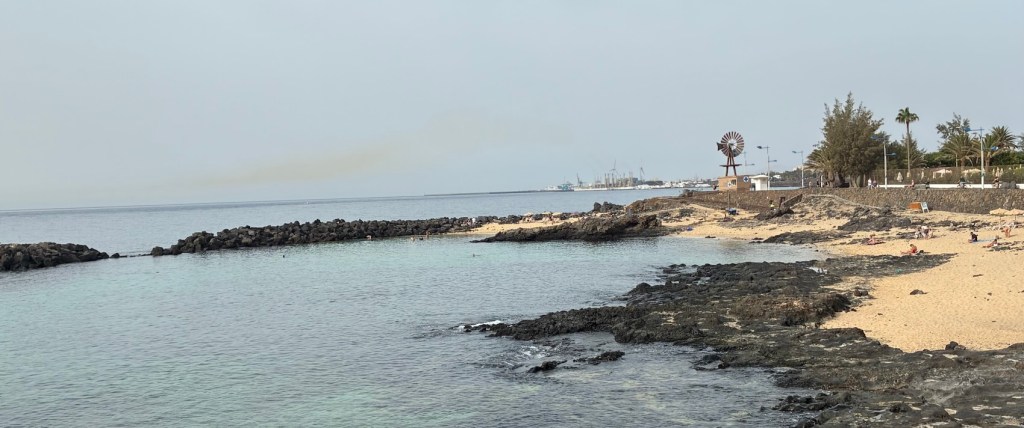
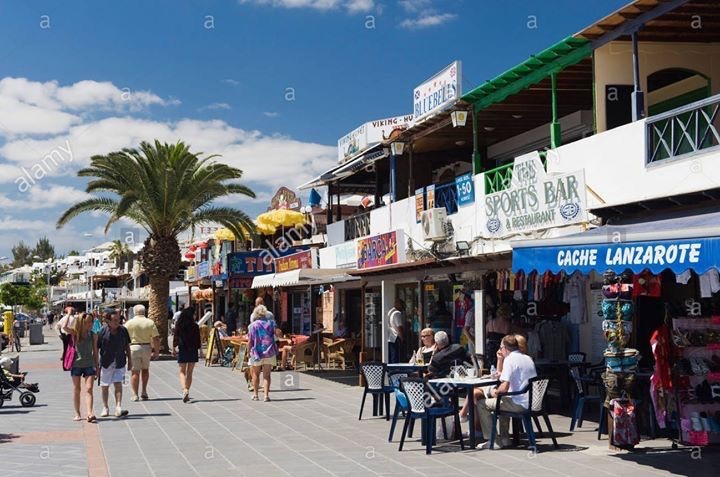
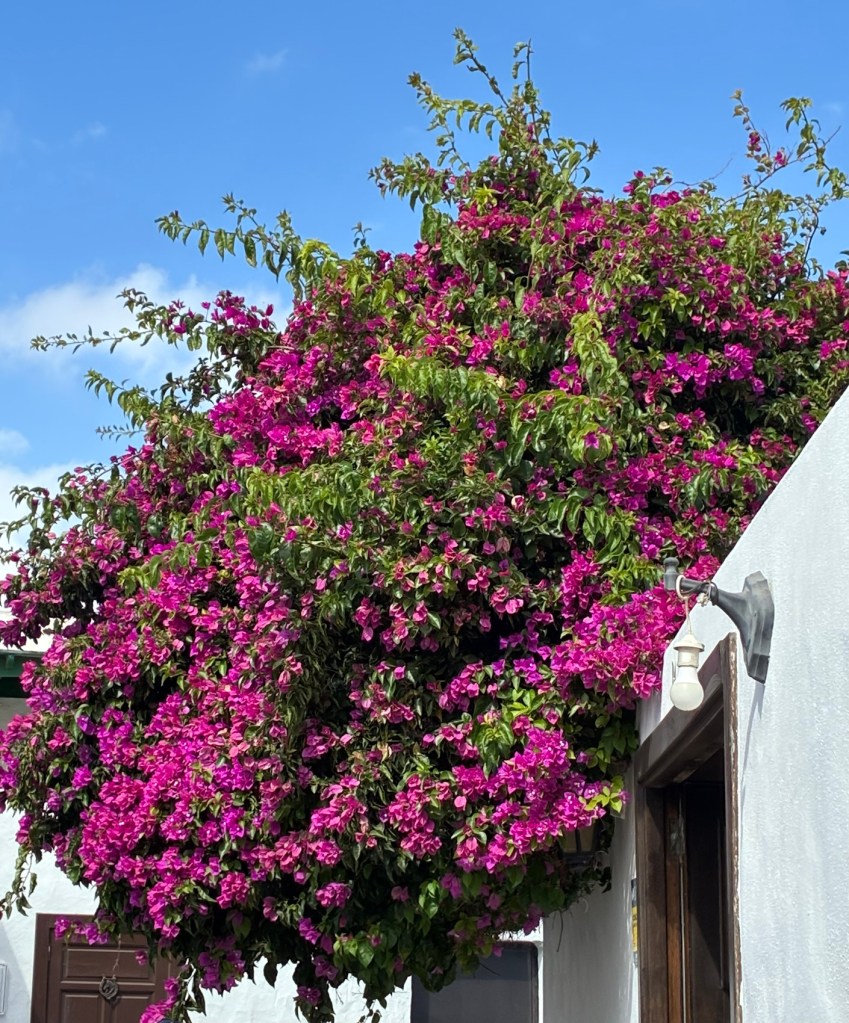
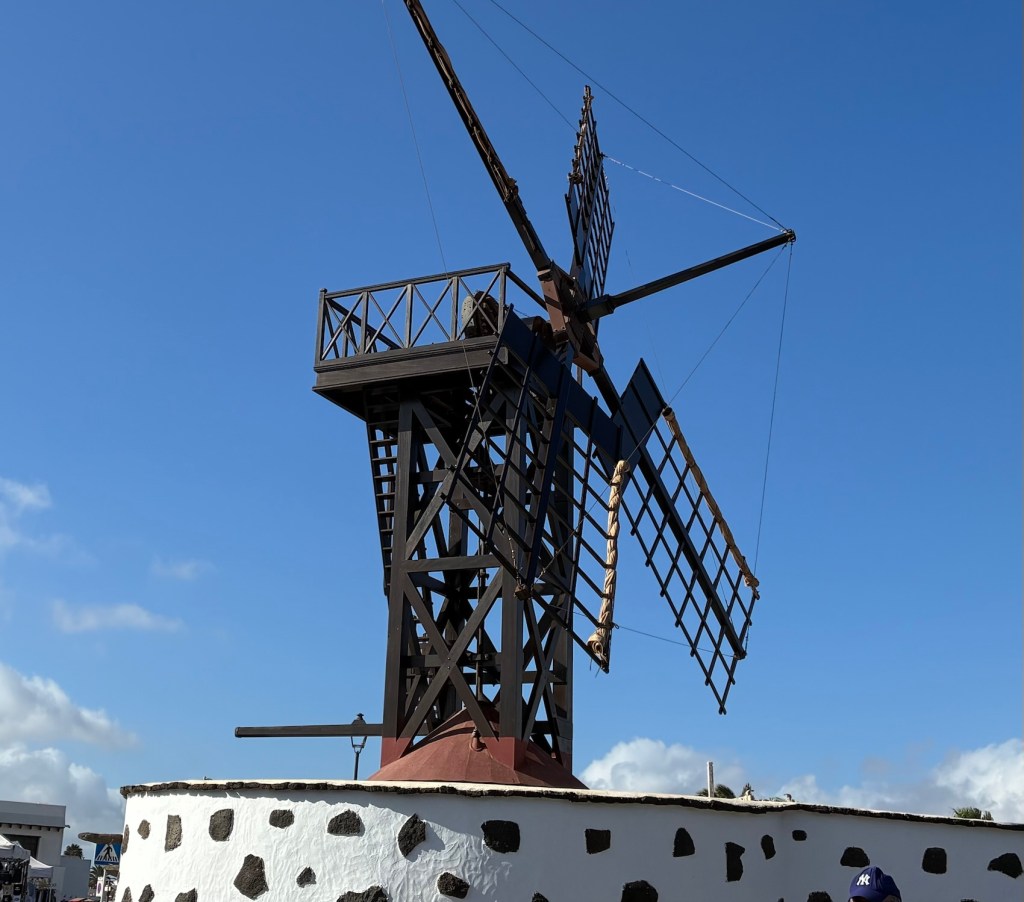
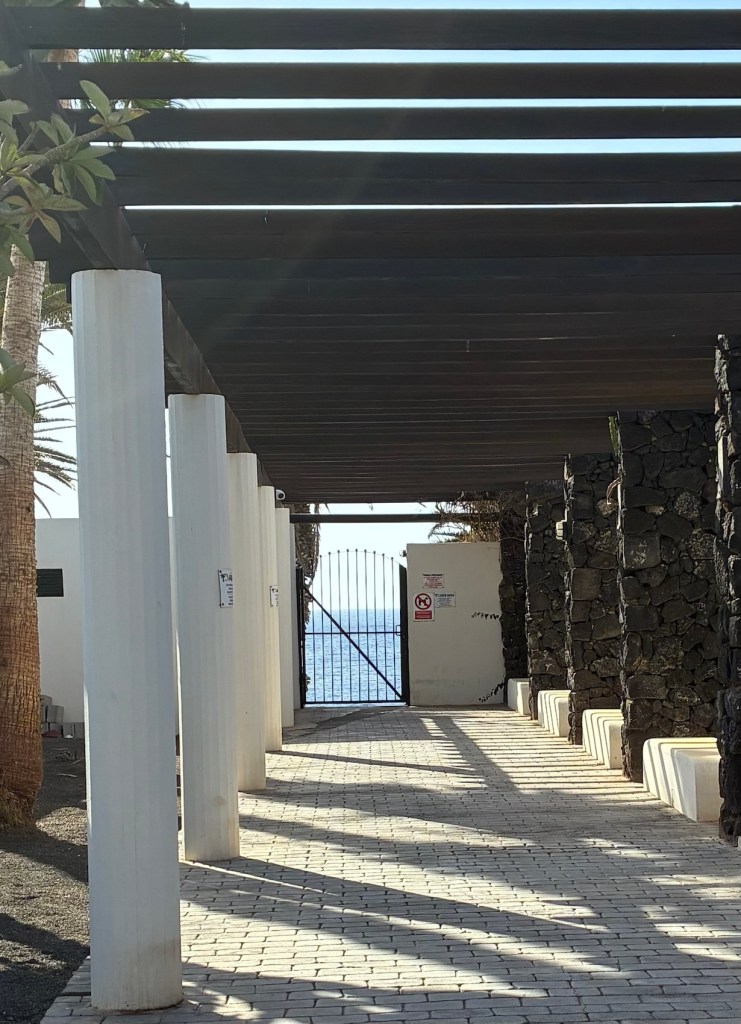
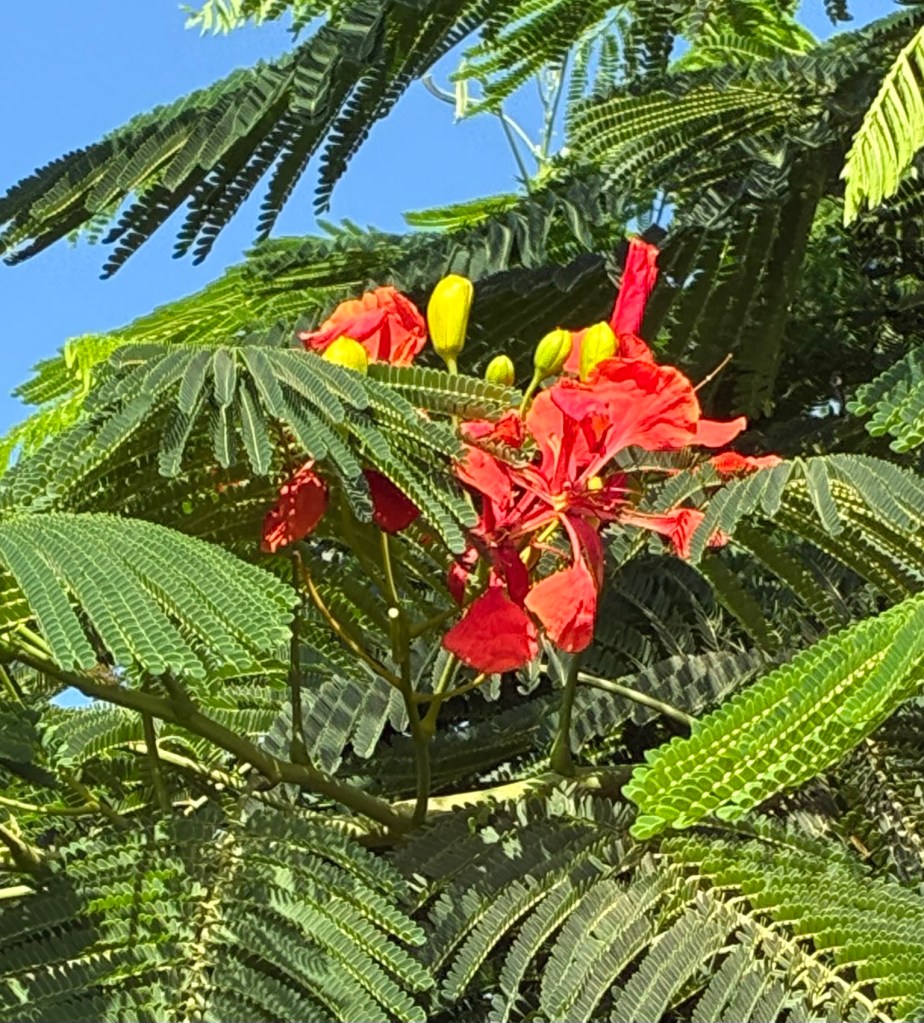
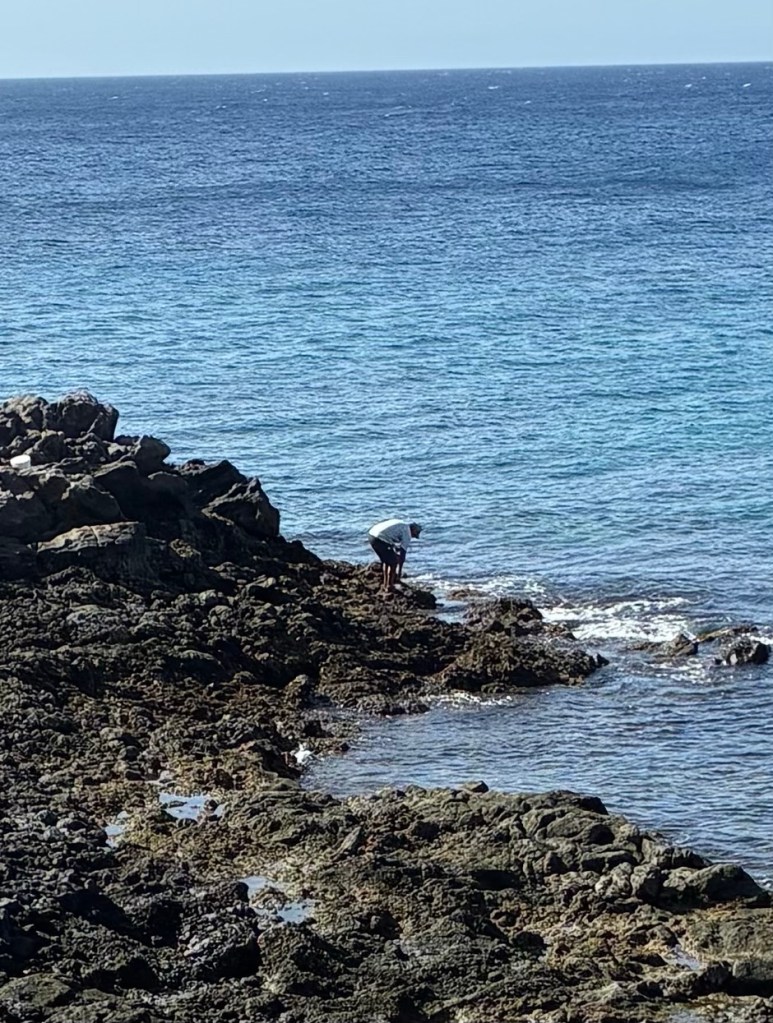
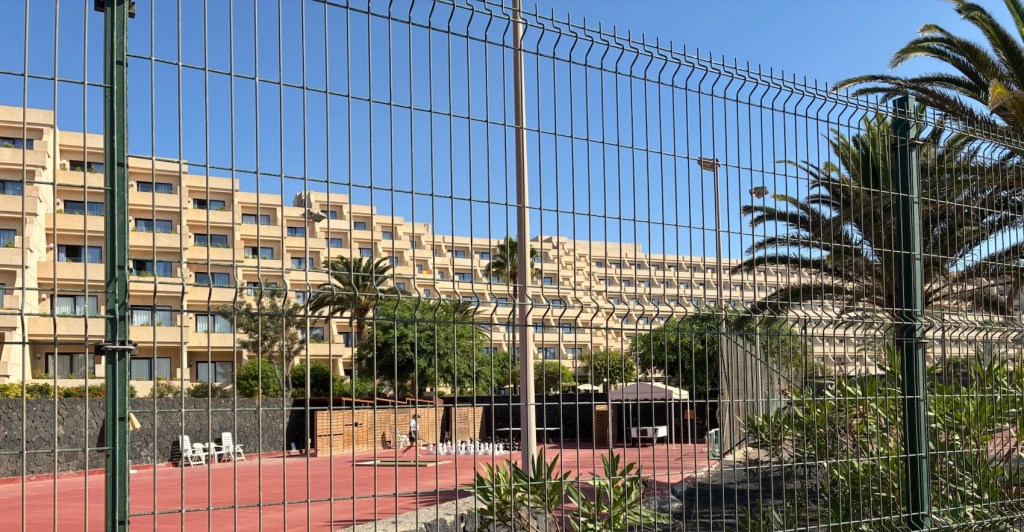
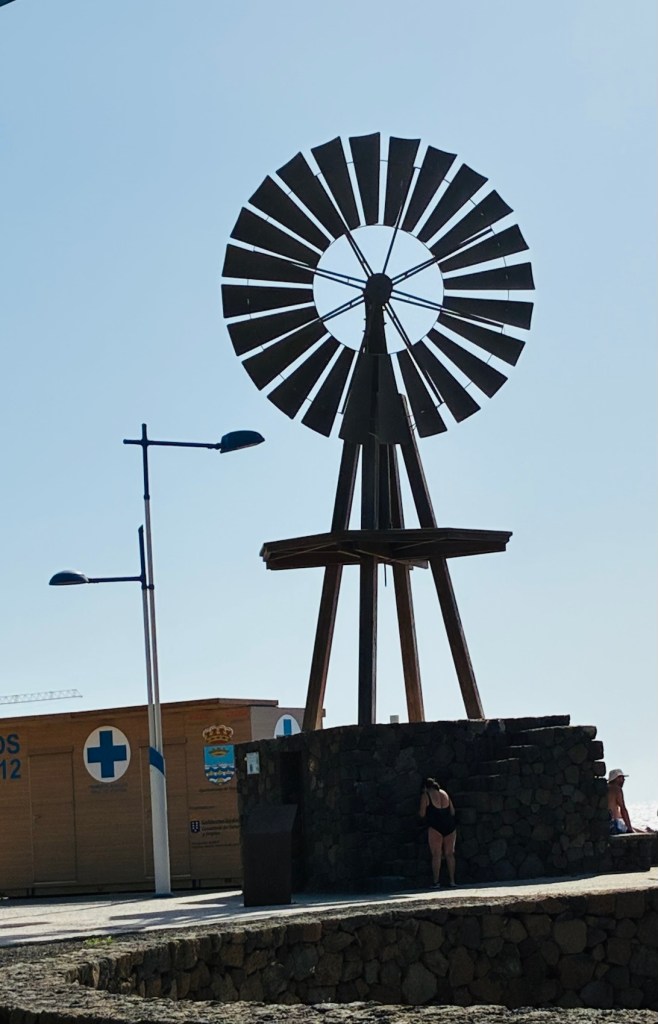
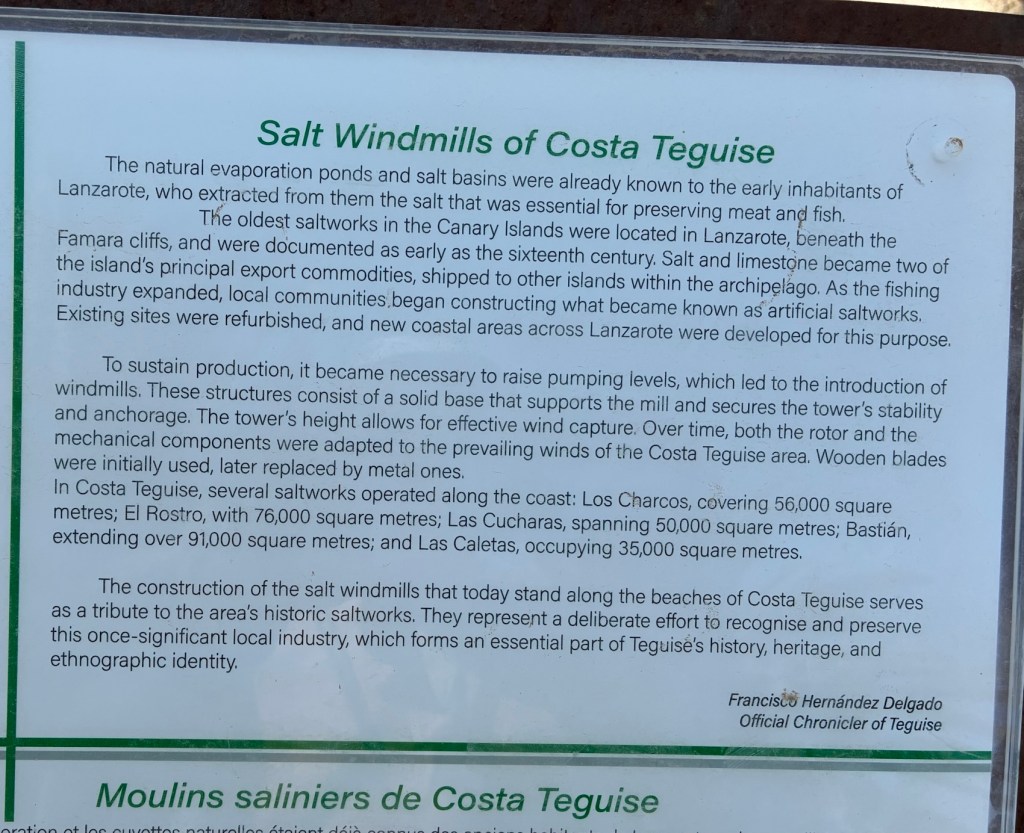
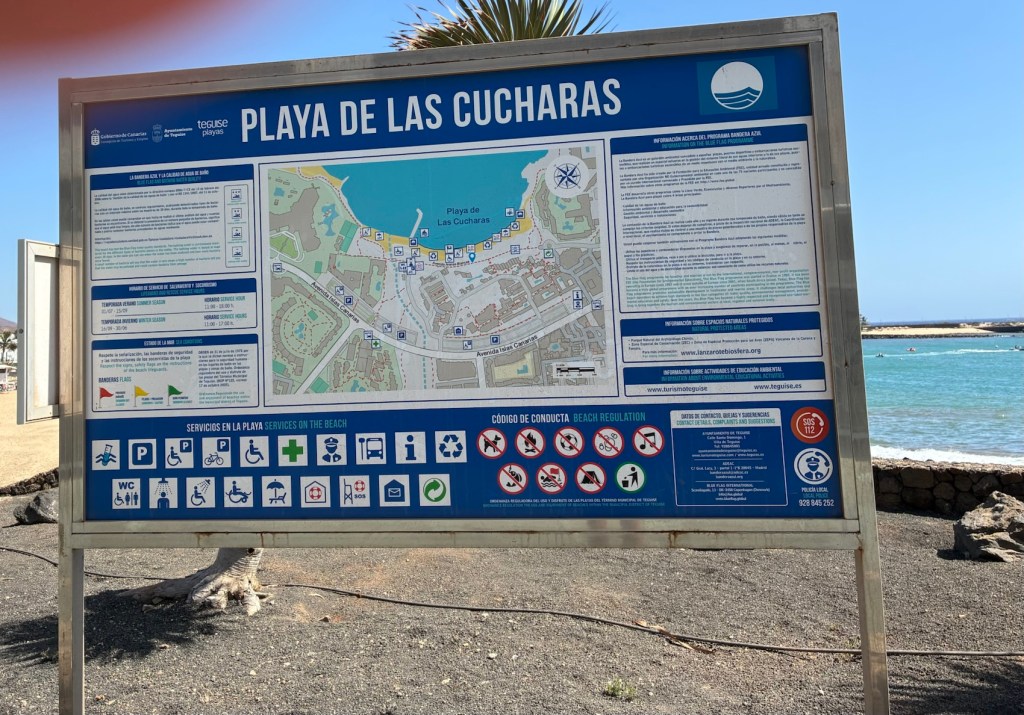
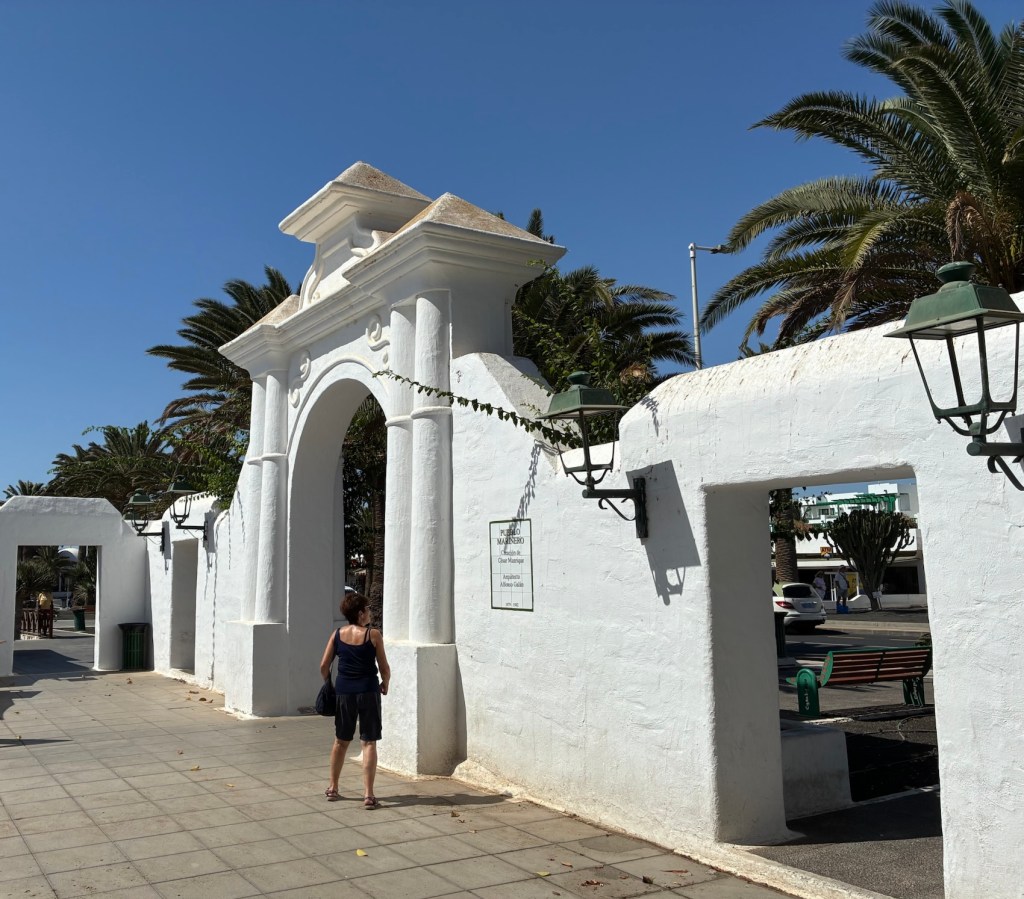
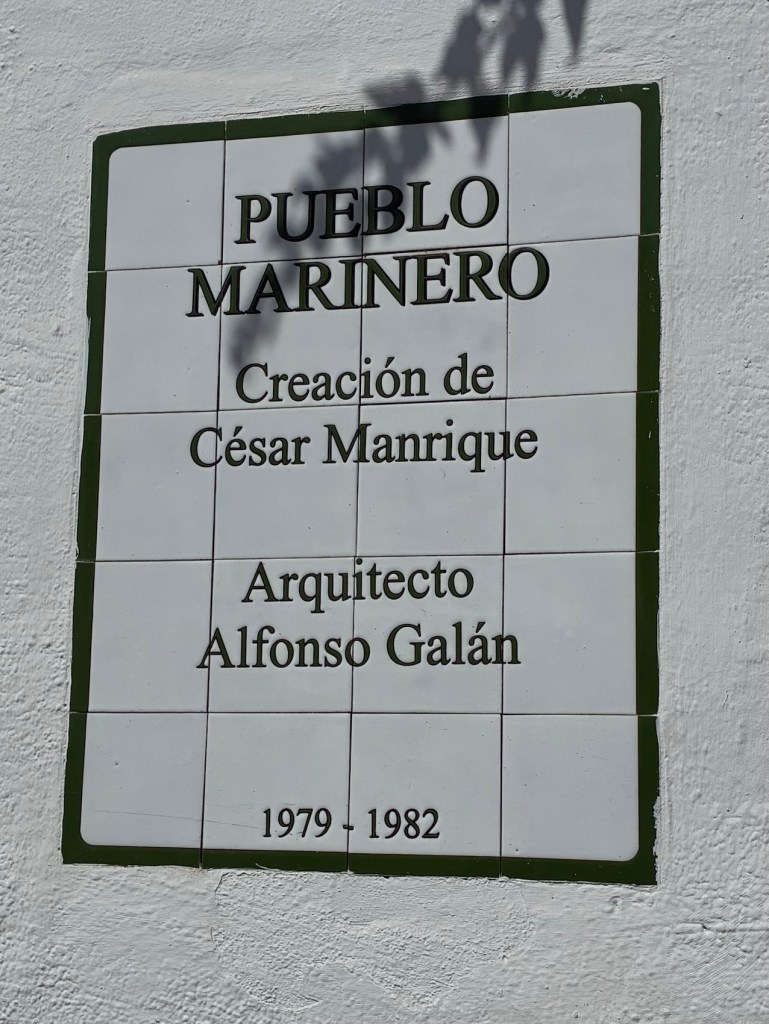
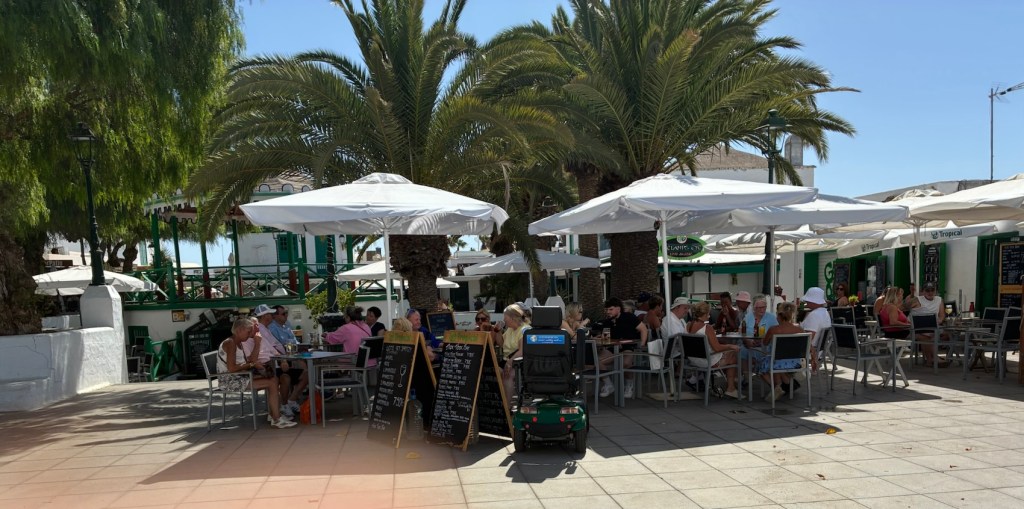
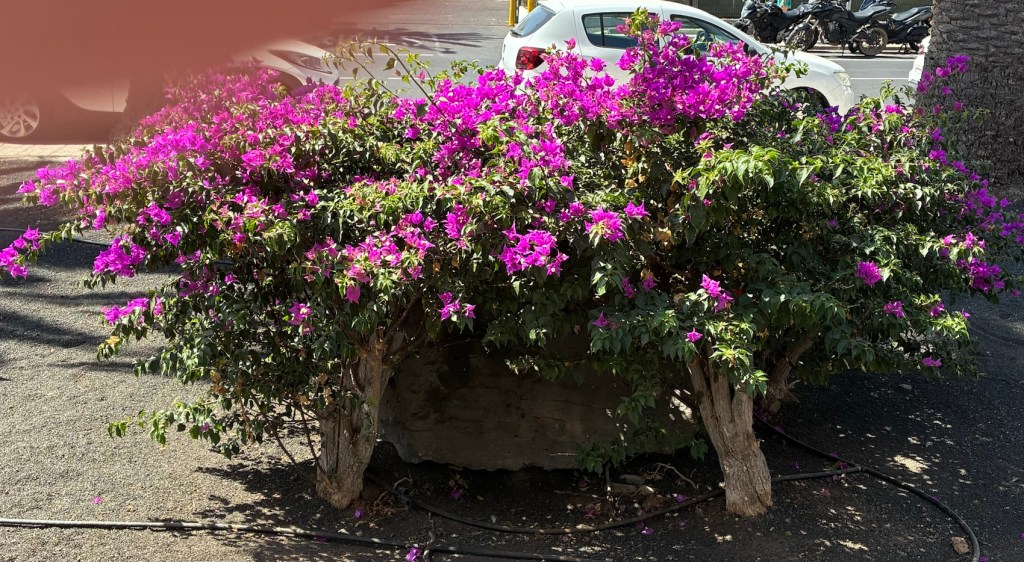
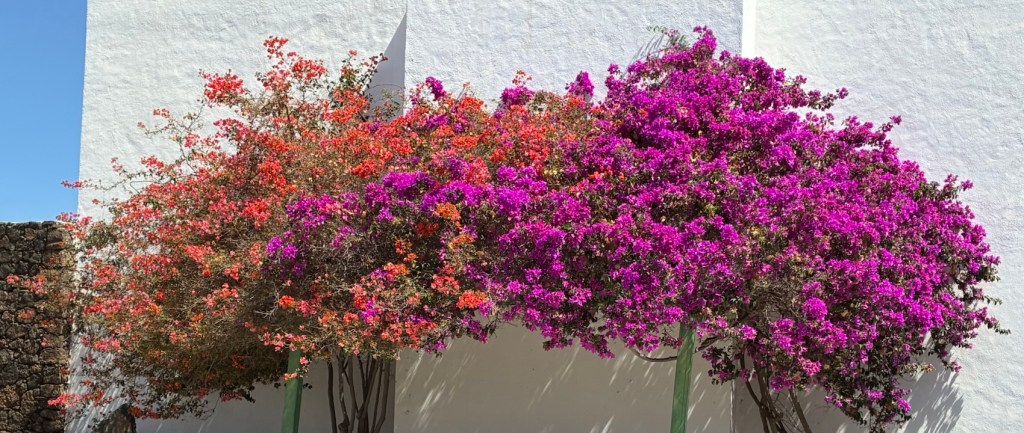
Gateway to the sea – after unlocking the gate!Short pathway to the paseo which was divided into separate lanes for walkers and cyclists,plus another phenomenon which I’ll come to later.The beaches are shown – the best one being the last on the right.We spotted this in a garden en route – spectacular.Hannah said it was tricky underfoot getting into the sea here.An angler on the rocks.This monumental hotel was not really in keeping with the traditional white painted dwellings .A restored windmillSelf explanatory .The second beach we came to looked more inviting.The parish church,apparently.Contrasts.The third and best beachBehind this beach is an area dedicated to tourism with many arcades, shops,bars and restaurants.Barbara reading the inscription to this pueblo.Gathering under the palms – 32* at this point.Welcome bursts of colour.
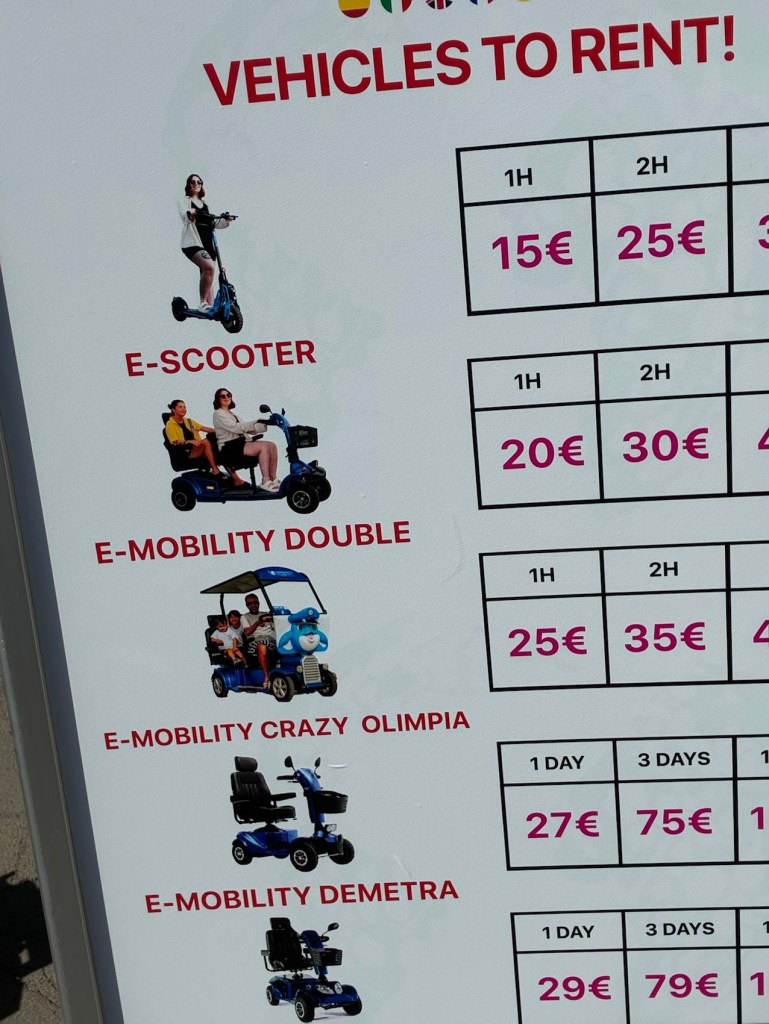
Amongst the many offers available for hire this was a “ first” for me.
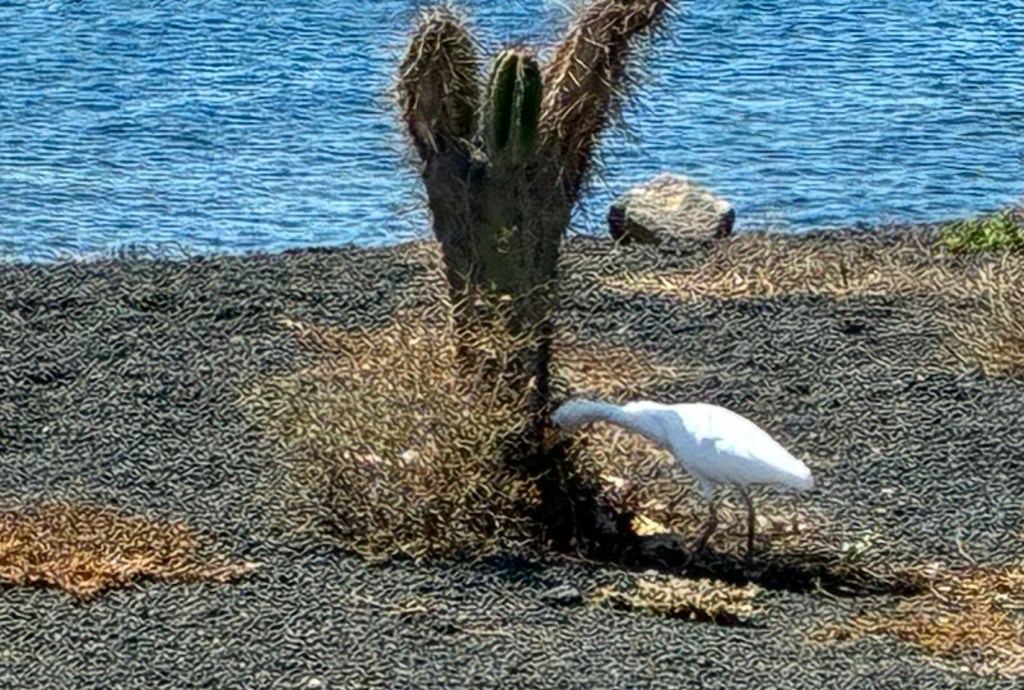
I had always associated these as accessories for the disabled; there were people of all shapes and sizes careering round on the paseo – good job there were three lanes .No bird life to speak of so far, apart from a couple of pigeons. This Egret had found something of interest in the cactus.Any clues as to who are the most likely visitors? We enjoyed the walkabout in Costa Teguise, but I don’t think I would want to be there in July- August. It is obviously a popular place. We covered nearly six miles on this walkabout and so it was encouraging on the walk back to think of an afternoon by the pool .
The first thing I noticed when I got out of bed was my post-it on the window sill – don’t forget blah,blah…Frequent reminders come with ageing, but it is still irritating.
I had dropped off my suitcase at Jet2’s “ Twilight Check In” the previous evening, two train rides to Birmingham International “ and back – the whole venture took the best part of 2 1/2 hours,I resolved to take it by taxi on the day of departure in future, as that had to be shorter and I would be spared the discount of been crammed in on the Maglev and crushed in the lifts at the airport.
Taxi at 3 am and I was impressed by Hannah’s choice of the “ speedy check-in”, until I entered the section where you stand on two painted footsteps and do an impression of Harry Worth waving your arms akimbo. I was called through and passed on to another security guy who after frisking me, ( and me explaining to him that I had a Urostomy ) I was then stroked by two electronic tracer devices , after which he spoke to someone on a walkie-talkie ….” follow me” he suggested and I waved to Barbara and Hannah and mouthed “ get my stuff” – a shoulder bag and a shirt from the tray, etc. I was then handed over to a sour faced individual, whose arms were covered in indelible ink and shepherded in to a room where, after I lowered my shorts sufficiently for them to see the aforementioned bag, which was attached to my abdomen.I did not exchange a word with either of them as I realised the only likely response would be “ only doing our job” and I left the room unhappily – Silly O’Clock is bad enough without that rigmarole – not a great start to the holiday. My daughter,Hannah,later made a formal complaint. I just now glanced at my watch, 08.30 – airborne for two hours now, catching up with “ The Observer” Sunday supplements, crossword and Suduko,had been a painless and even informative pastime . Strange to say that it feels more like two o’clock in the afternoon! Now, where’s that novel I want to finish….reading it,not writing it.
Well, if that was not enough excitement for the day . We got through Security at the airport in about 30 Mins. Taxis readily available. Pleasant young man took us to our AirBnb, not too far from the airport. Some slight confusion as his drop off didn’t seem to correlate with where we were to be….but near enough.
As we waved him goodbye I soon realised that that I had left my shoulder bag in the well of the front seat… OMG!
We found our bungalow in the complex and ,feeling stupid, tired and confused we deliberated about how could we retrieve the bag?
My only hope was to return to the airport- not that far away – Babs and I walked towards a small row of cafes/ shops looking for a taxi. We came across GREENS and they were happy to ring for a taxi for us. Back to the airport and in complete contrast to our arrival,there were lines of taxis. I spoke to a lady who was a taxi driver in waiting and in Spanglais she got the gist. She alerted all the airport taxis about the missing shoulder bag. The help and sympathy I got from the staff was really reassuring. We were waiting and observing incoming taxis. Would you believe, Taxi number 32 appeared at the end of a line and I was ushered by some other taxi drivers towards taxi number 32, from which our original driver appeared, holding my shoulder bag, like a trophy! Lovely guy. A really positive experience- the helpfulness and reassurance of the airport staff was commendable.
Initially, I had been quite havocked….the bag contained my I pad, hearing aid charger, sunglasses and various odds and sods .
Everything came good .
Sam Levenson: “As you grow older, you will discover that you have two hands, one for helping yourself and the other for helping others.”Taxi rank at the airportLoved this in Birmingham Airport.