We set off quite early after a Continental breakfast and the waiter insisted on giving each one of us an ice cold bottle of water for the journey – sums up what a good place Hotel A Santiago is for Pelegrinos.
We passed the ruddy coloured remains of the castle lurking above us.
We then crossed the River Tiron via wooden footbridge and then off left towards Tosantos,some 3Km away.
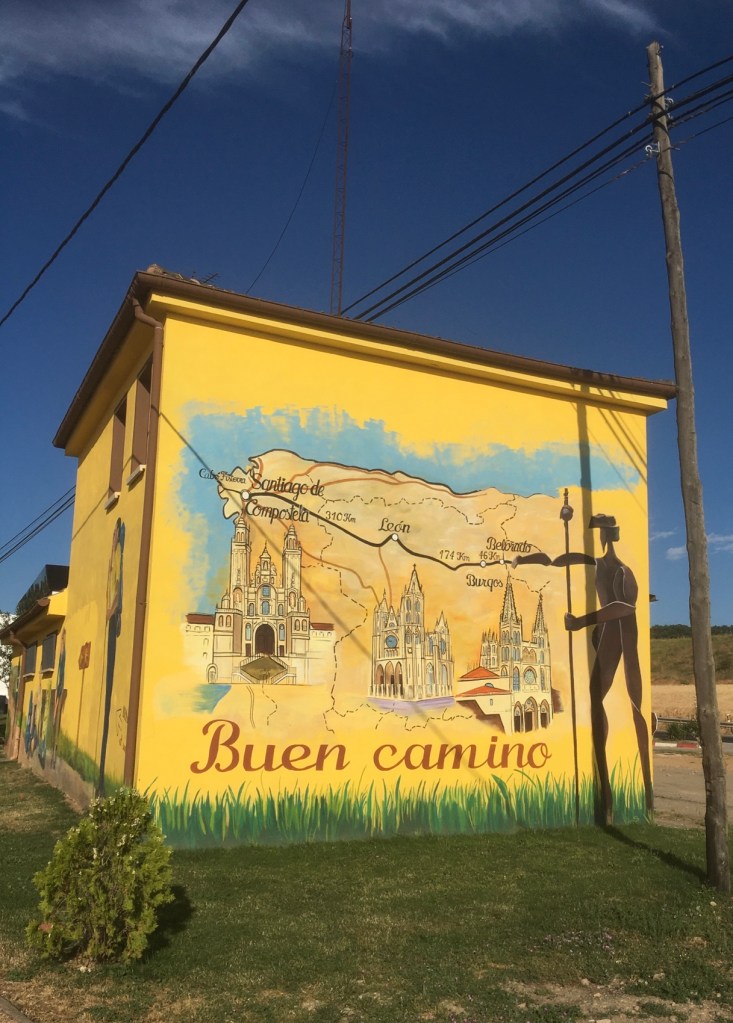
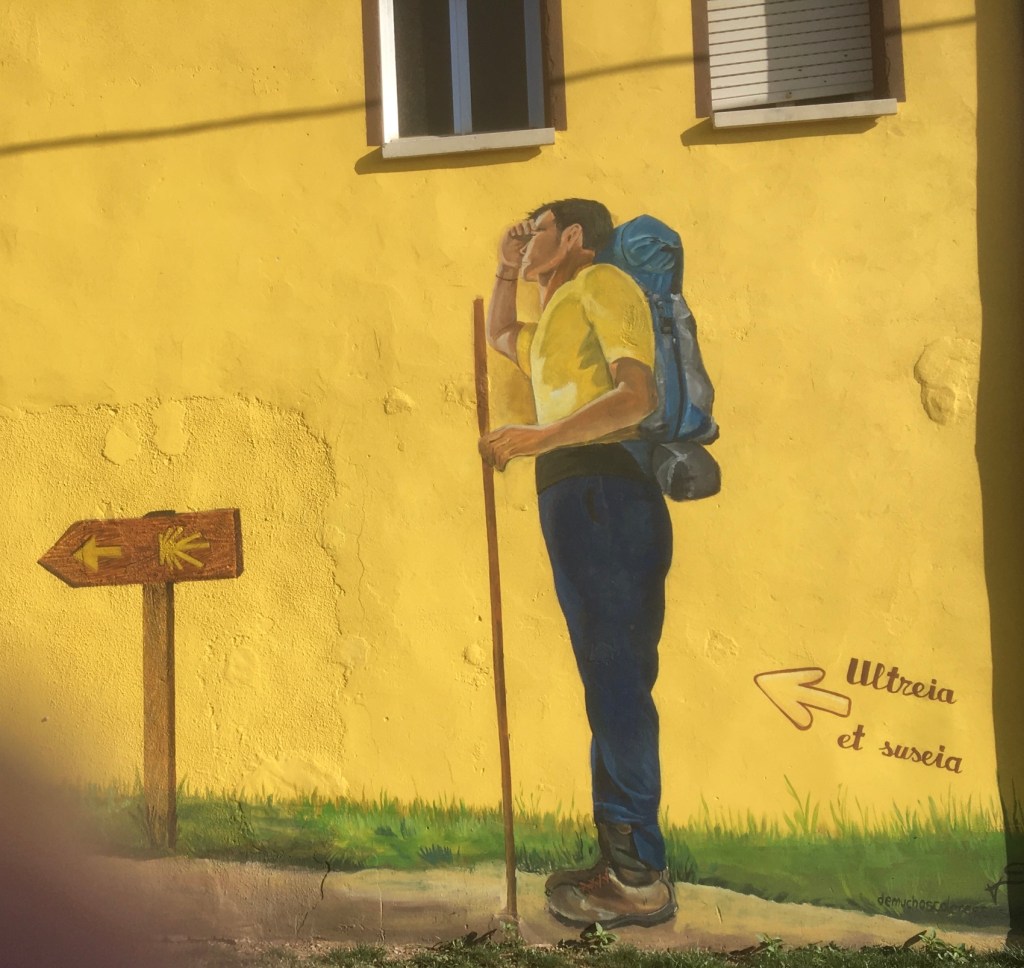
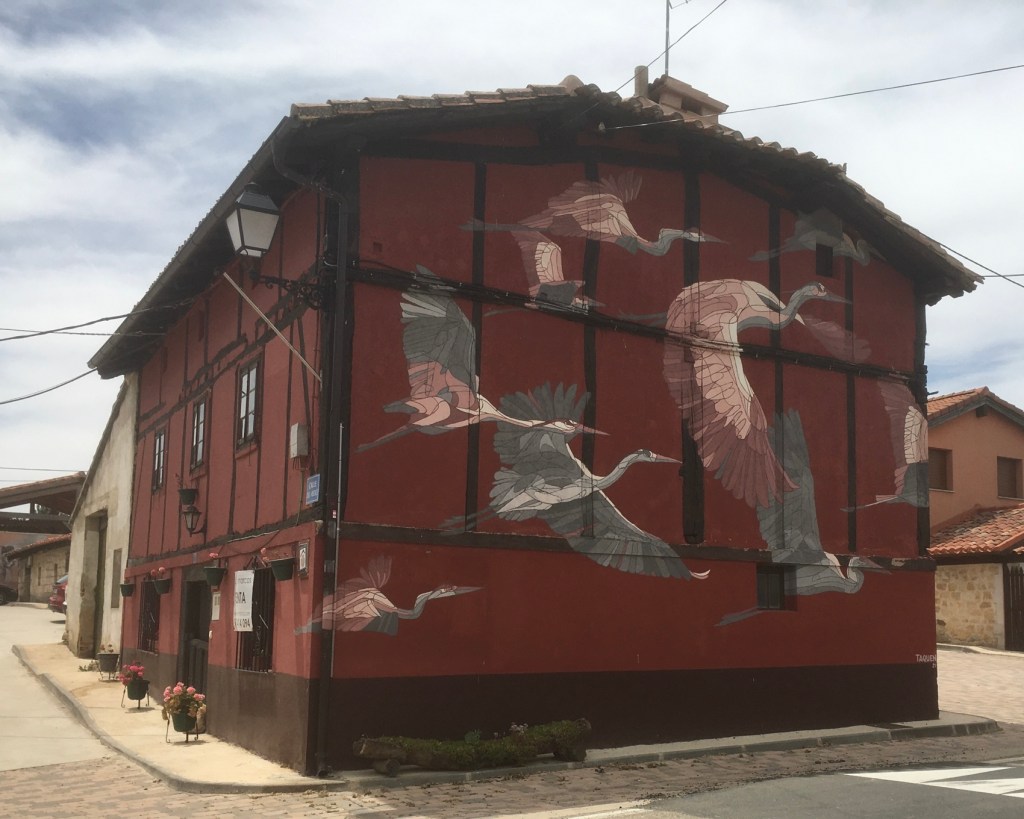
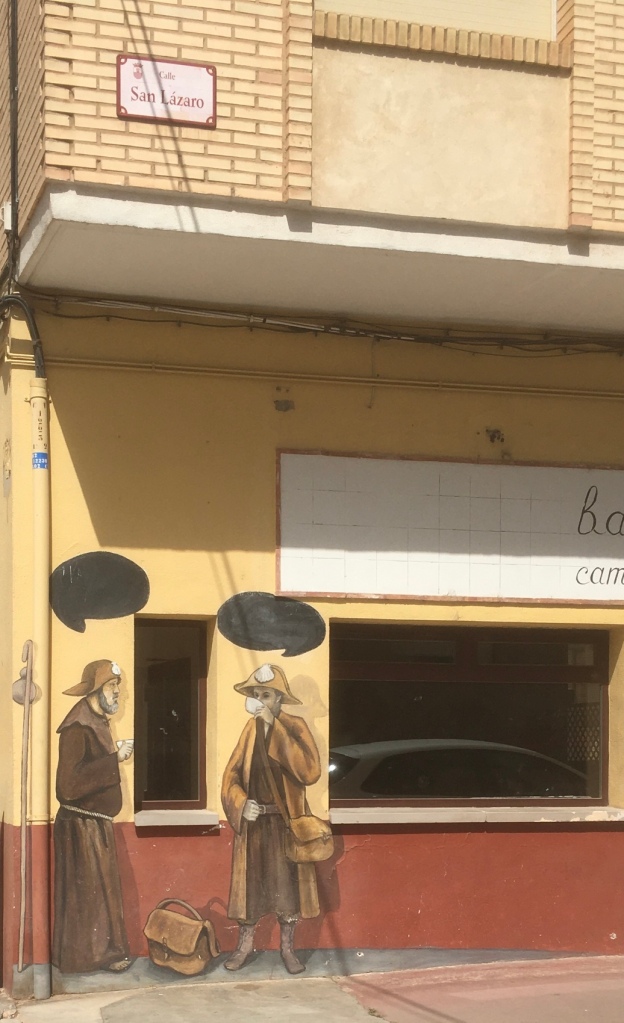
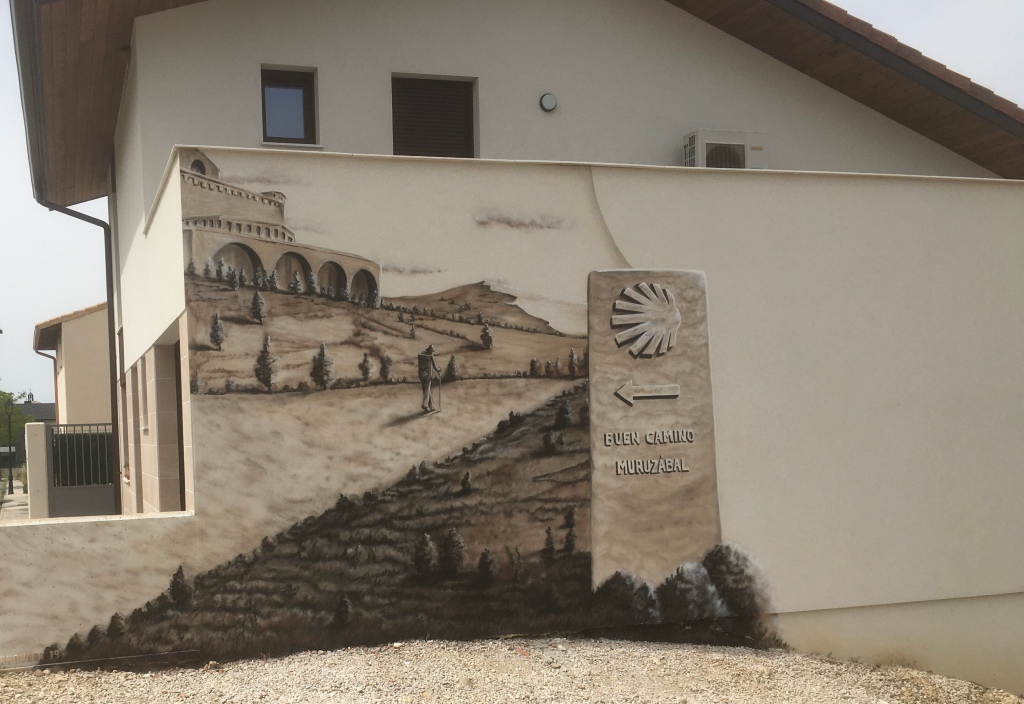
The outlying houses were adorned by colourful Camino related murals.
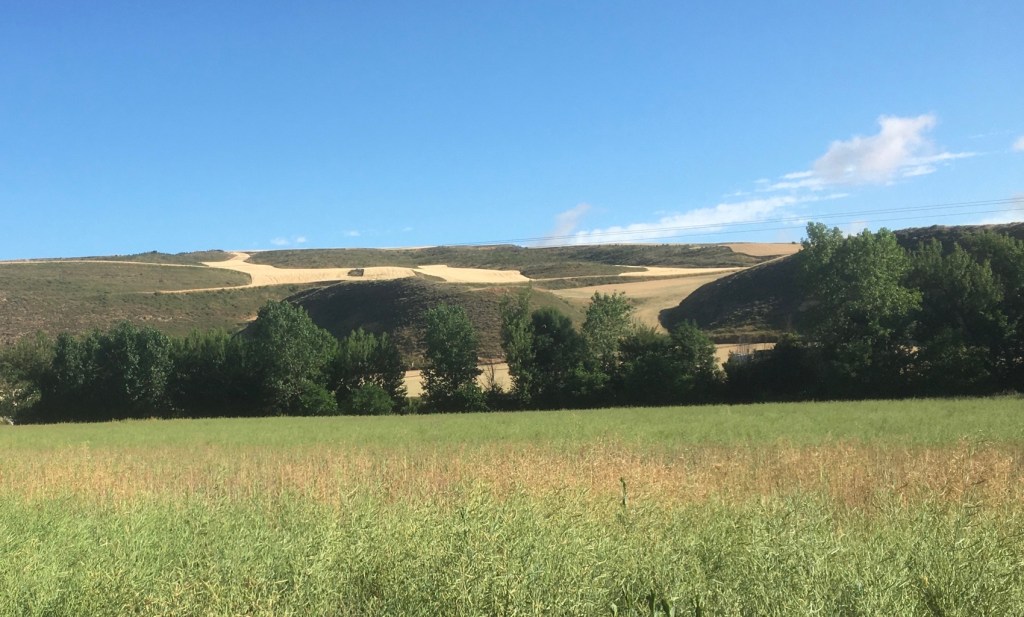
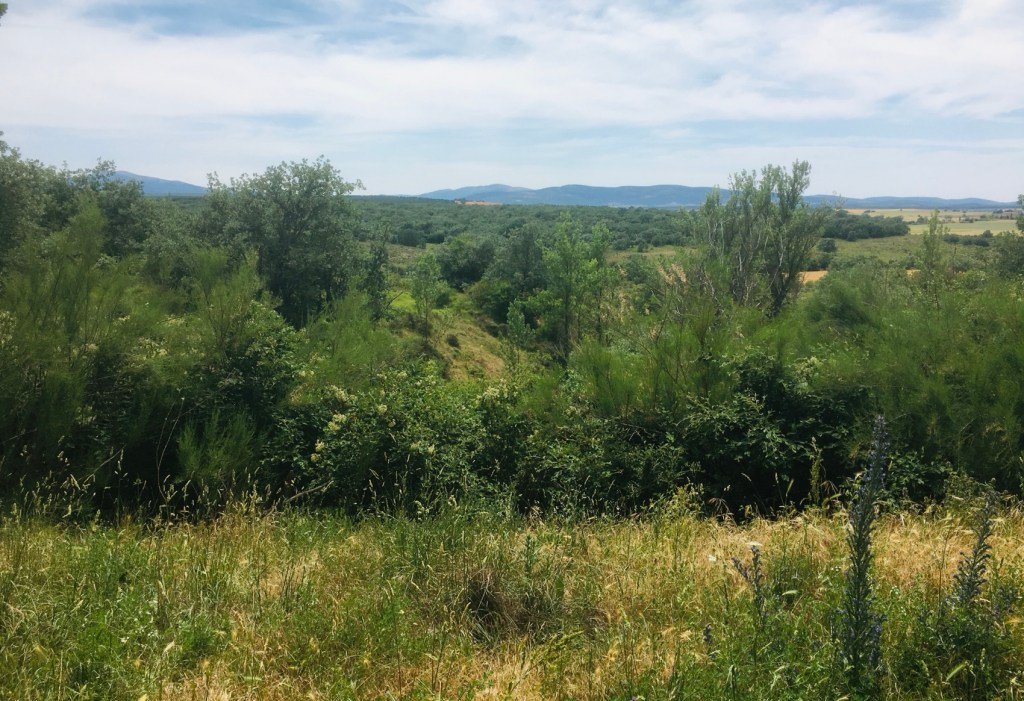
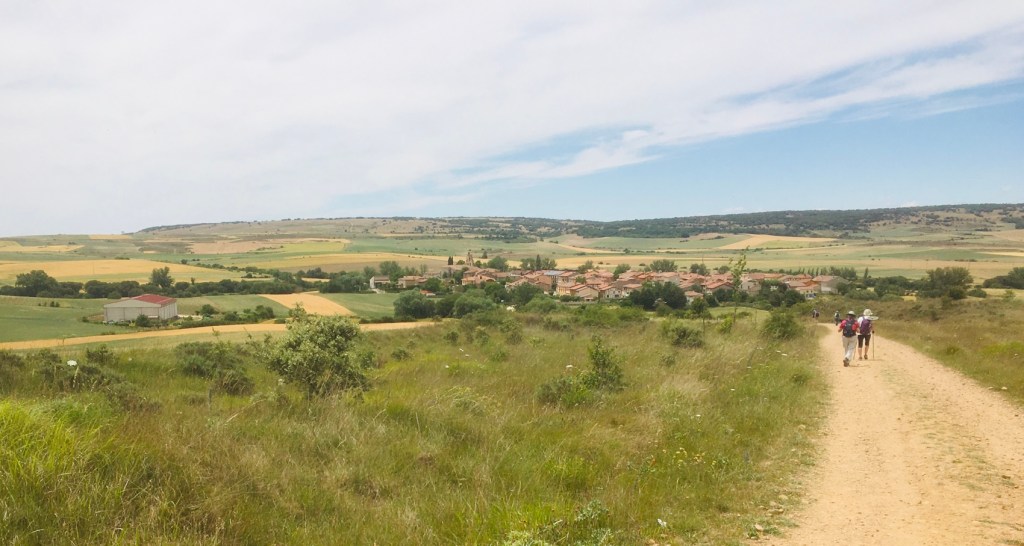
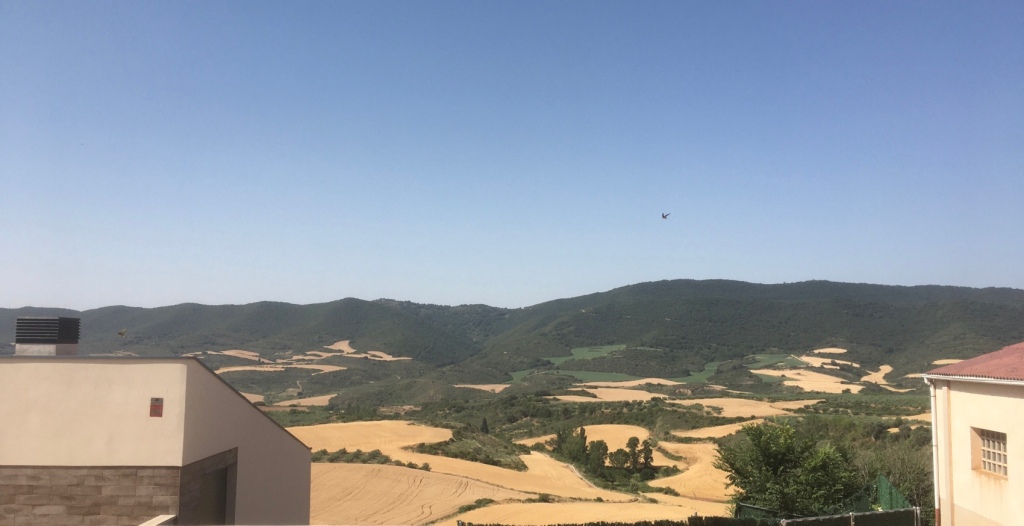
Then a slight climb to a plateau with views of rolling pastures
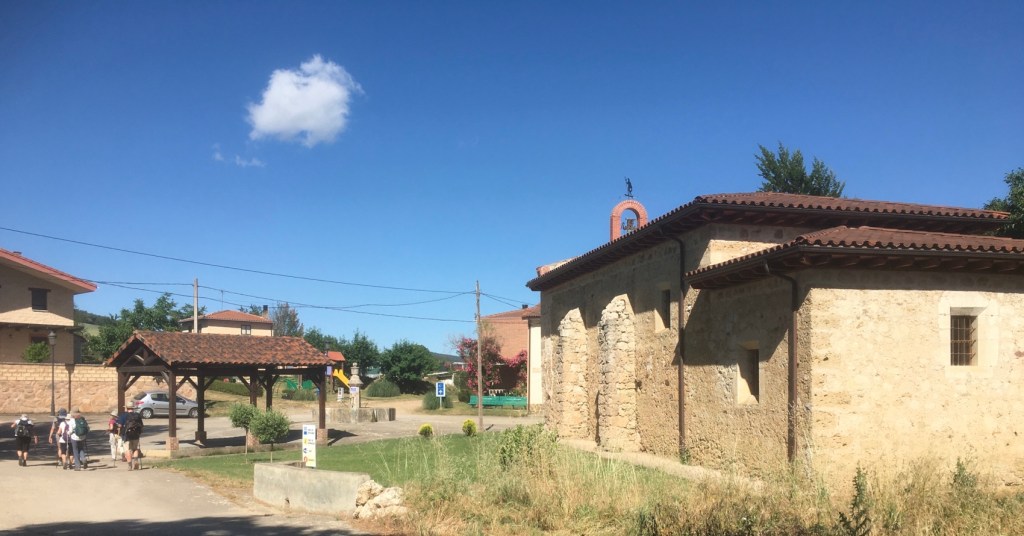
Through the tiny hamlet of Vilambistia.
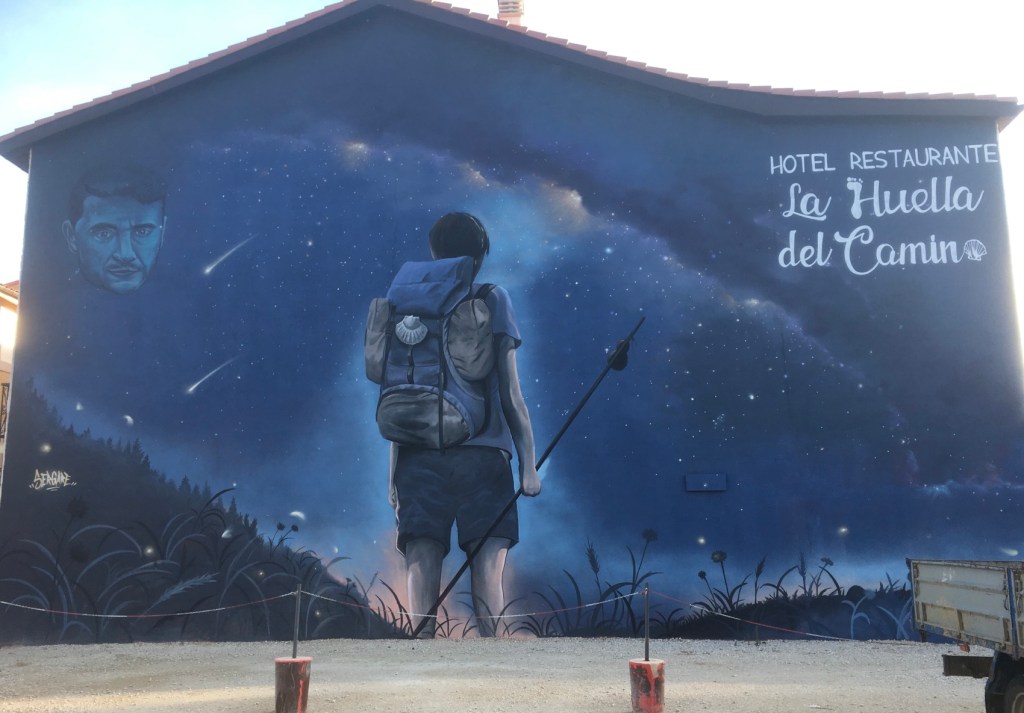
And then a coffee/drinks break at a cafe you could not miss.
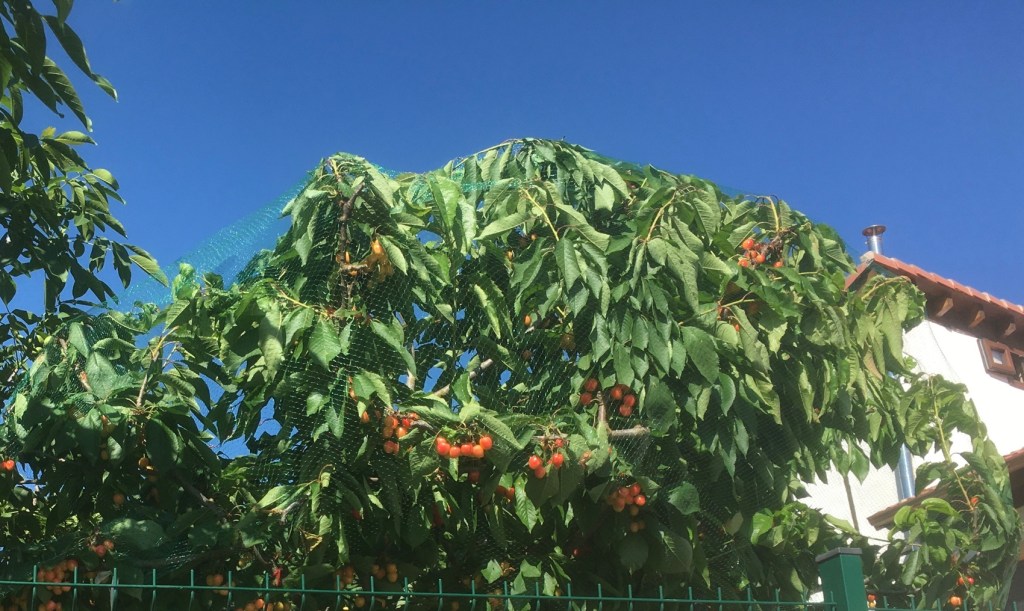
Not it’s not “ the hell of a Camino “ but the “ footprint!”A netting protected Cherry tree overhanging the cafe terrace.By road that is.SAN JUAN DE LA ORTEGA – a student of San Domingo who joined him in his road,bridge and hospice building.
The saint that shares its name, the disciple of Saint Domingo de la Calzada, builder and protector of the ancient route, managed to erect a small church and an important refuge for pilgrims which gave them shelter after the difficult climb up the inhospitable Montes de Oca. Today this quiet place is revived with the presence of pilgrims.
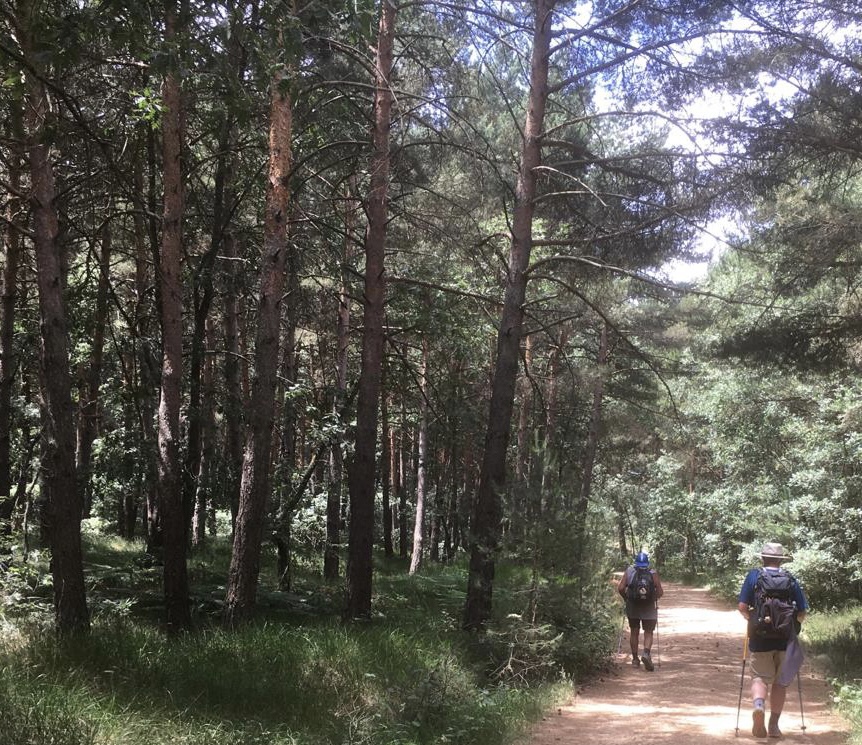
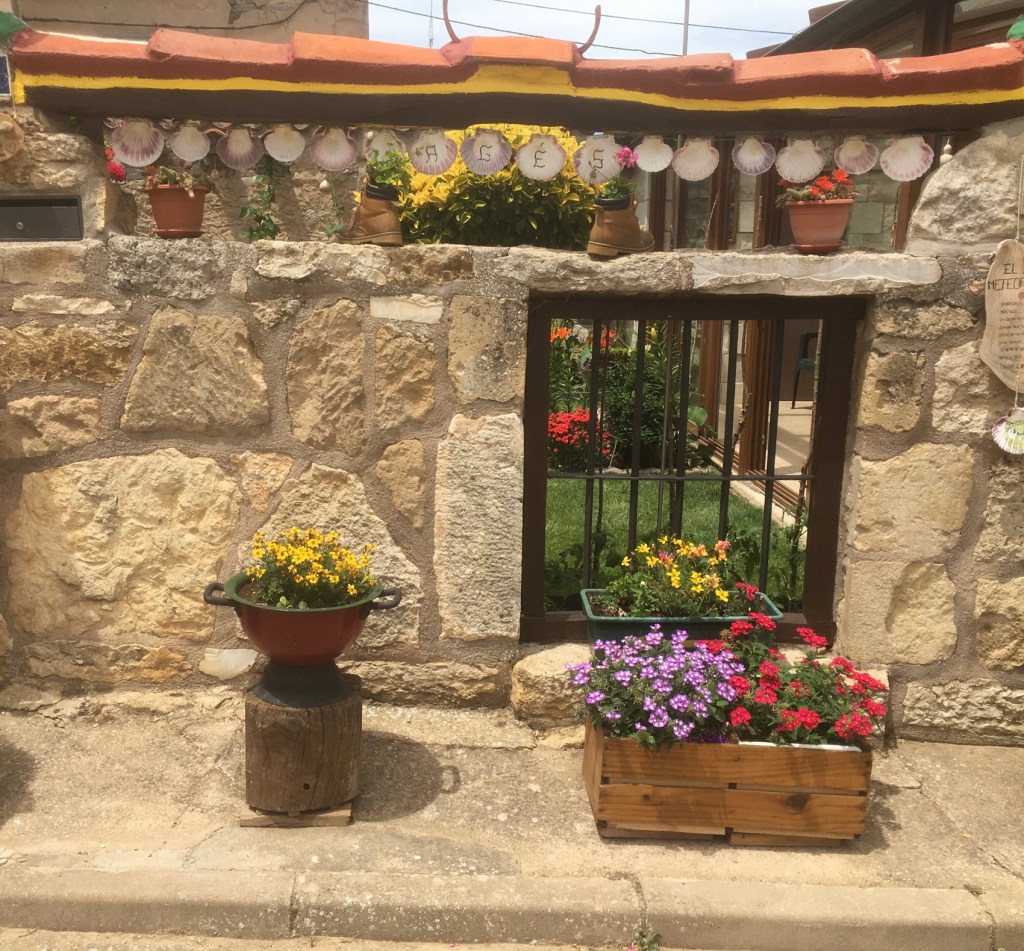
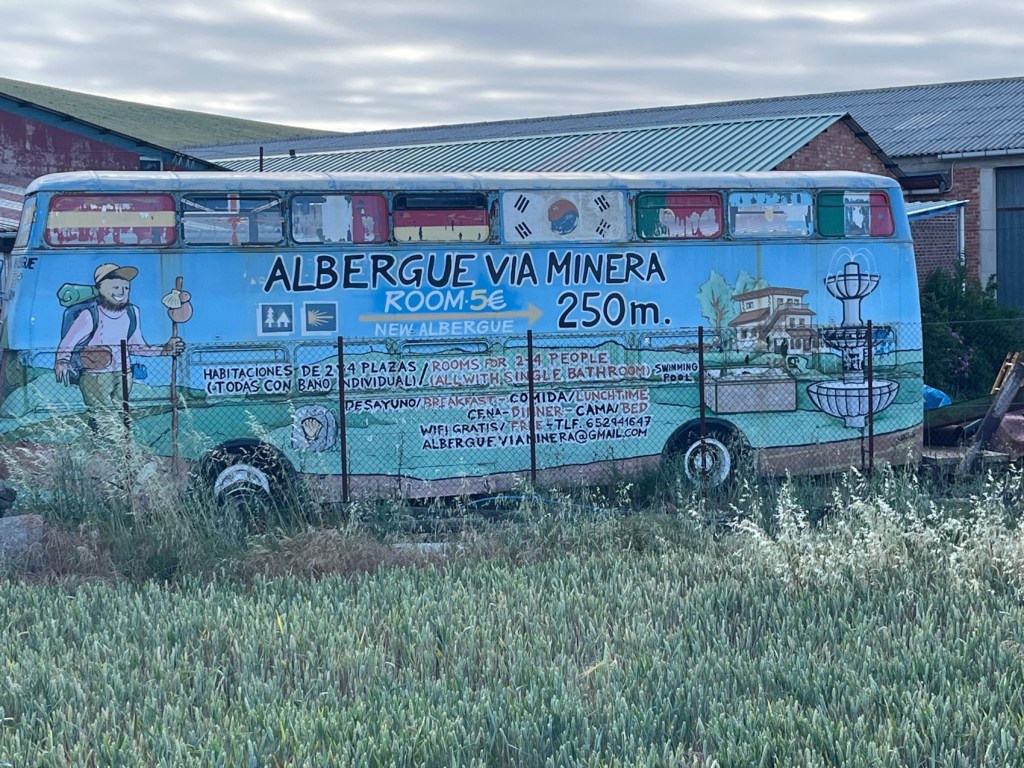
Leaving hill views behind as we entered a pine forest.And a very good path.Welcome shade.Arlanzon with the village of Ages in the distance.A tiny hamlet of about 60 people with some keen garden designers amongst them.And a handy craftworker .Not to mention the mural painter!Moving towards the world famous Sierra de Atapuerca and the oldest site of humanity in Europe. It has a Museum of Human Evolution and there are ongoing works in the archeological site.Unmissable.As was this advert for an Albergue on an abandoned double decker bus on the outskirts of the village.
From Atapuerca we were collected by our host from “ Boomerang Cottage” in Quintanapalla – we would be dropped off the following morning for our last Etape .
Another facet of the Guardia Civil’s new image – we had noticed them occasionally patrolling the Camino – the 21st Century version of the Knights Templar?
Leaving Santo Domingo by way of the Santo Domingo y Ermita bridge.
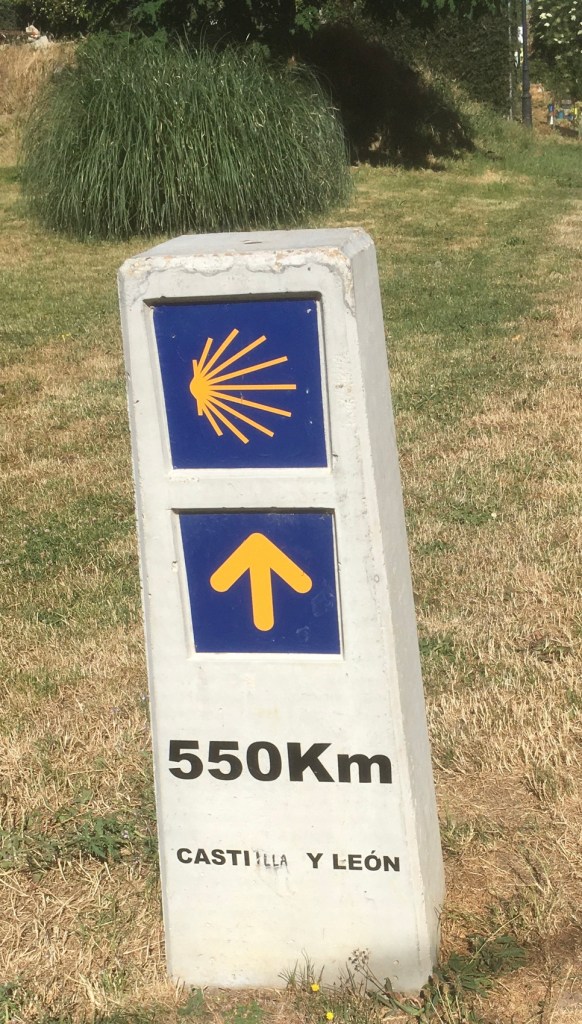
After crossing the bridge, we noticed a block on what appeared to be a simple country road and it was being patrolled by the Guardia Civil. Any trepidation we may have felt was soon dispelled as a smiling officer approached, wishing us good morning and asking how we were! Then he and his colleague indicated the Way which was now off the road – “ Buen Camino”.One of the original Camino waymarks with scallop shell intact.
After six KM or thereabouts we reached Granon and another memorable coffee stop. The first sights to arrest the attention – Camino murals – which drew us up to an imaginatively and conveniently situated cafe.
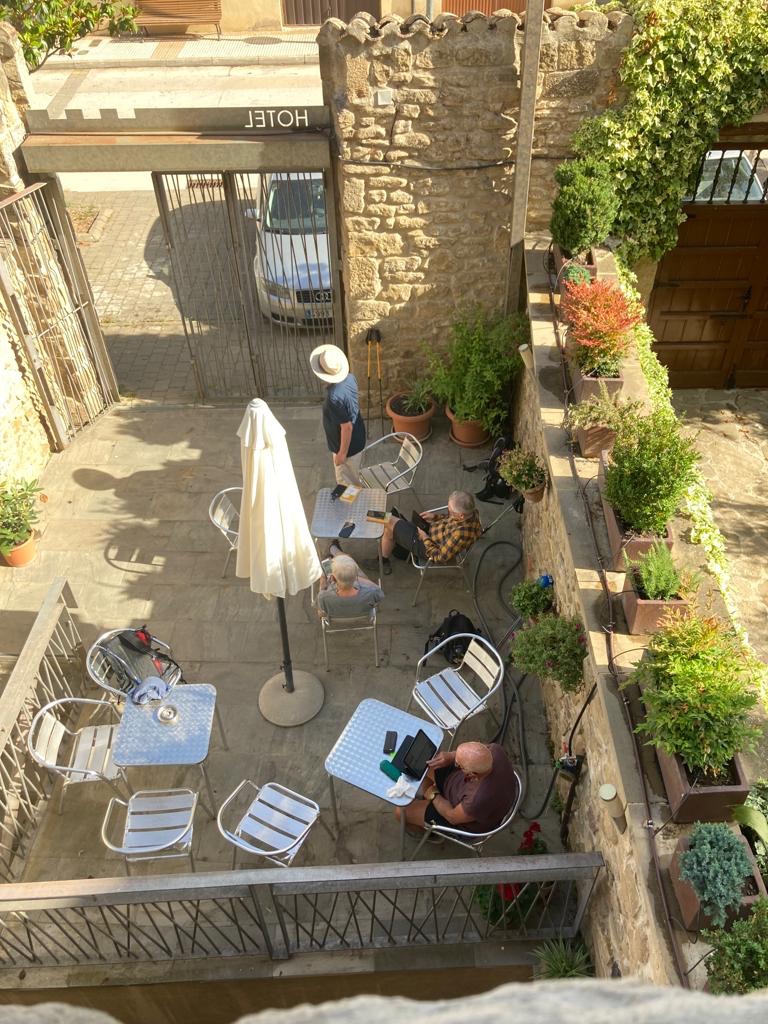
A population of about 250 persons but inhabited since Celtiberian times – remains from 2000 years ago have been discovered here. We discovered this permanently placed van doubling up as a well stocked cafe.Granon struck us as a friendly,peaceful place set as it is amongst rolling hills and arable land.The only “high” point for miles…An ingenious way to transfer your Mochilla.Inside the Iglesia de San Juan Batista there was a florally decorated tableau to mark the feast of Corpus Christi.Panoramica Entering the Province of Burgos and a reminder that our camino’s end was approaching.What moronic impulses drove some dork to deface a signboard?We entered the small hamlet of Viloria de Rioja,birthplace of Santo Domingo de la Calzada in 1019.The Iglesia de Nuestra Senora de la Asuncion – much and randomly rebuilt- originally a Romanesque church.Inside is the allegedly, original Baptismal font used to baptise Santo Domingo. The village tradition is to return here,no matter where a person is living,to baptise one’s children from the same font as Santo Domingo’s. Sadly the church was closed.Leaving Viloria de Rioja.“ How much further!? “ Asks June. Not far now.Slightly further on and an advertisement for our accommodation. Cocina Communitaria sounds promising.And what welcoming venue it was.This way to Reception.Mary took the plunge.A shady terraceWe dived into these!
HOTEL A SANTIAGO – probably one of the best stops on the Camino. And the community evening meal was as good as advertised.
An early start as sections of this stage have little in the way of shade
Walking towards AzofraTaken by Tom.Enjoyed by Tom – welcome break on Azofra’s Main Street. Just over 200 inhabitants but Bar Sevilla was welcoming to Pelegrinos.Another sign of delapidation on an otherwise well kept calle.A more cheerful sight outside a work yard.
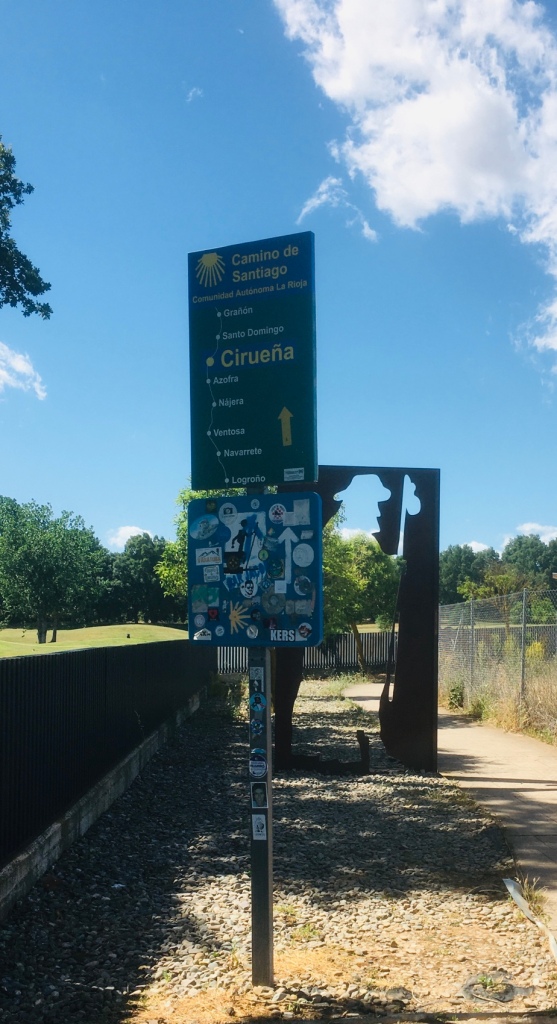
There are ten kilometres to walk before the next chance of refreshments in Ciruena – plenty of water needed.
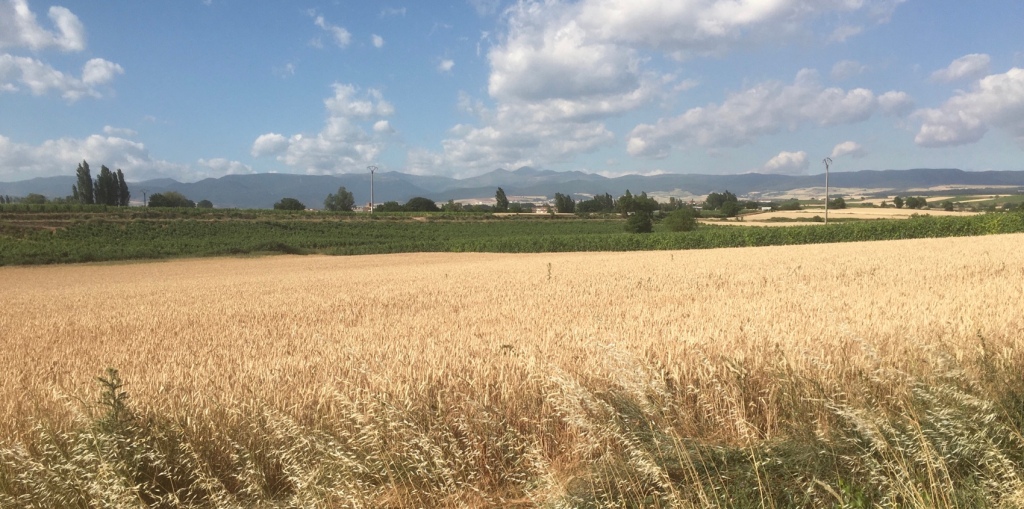
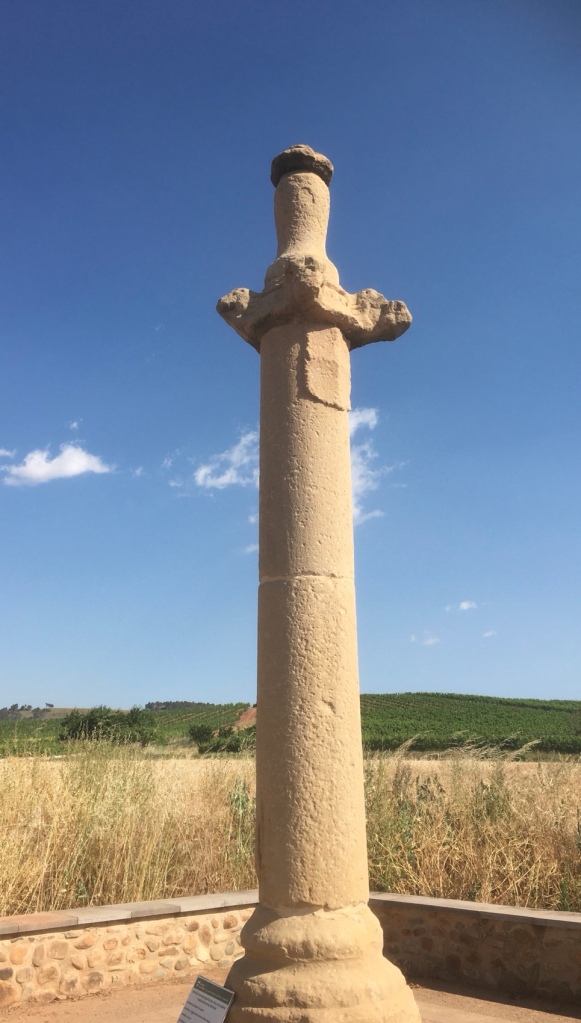
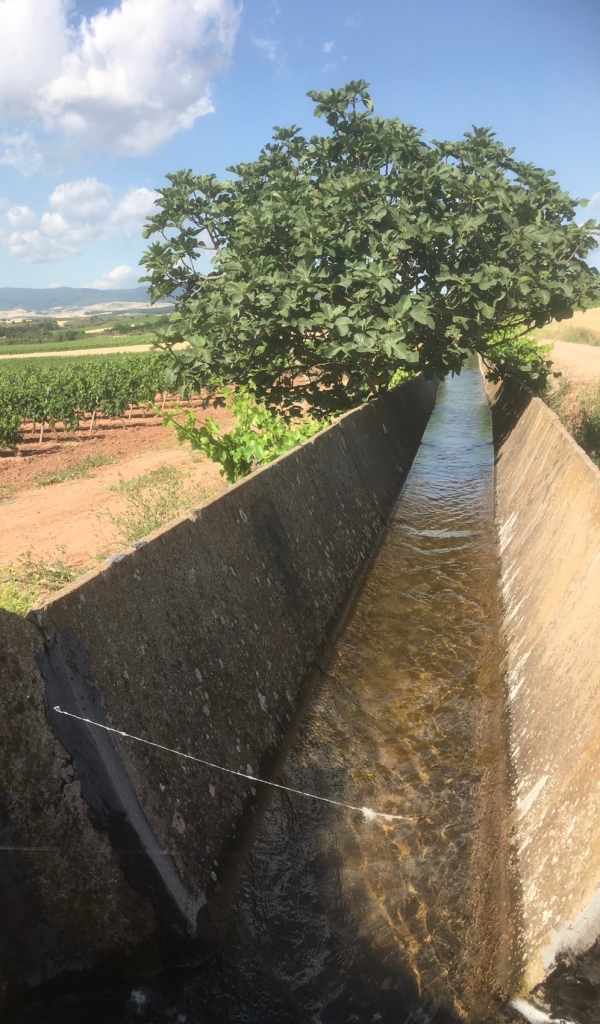
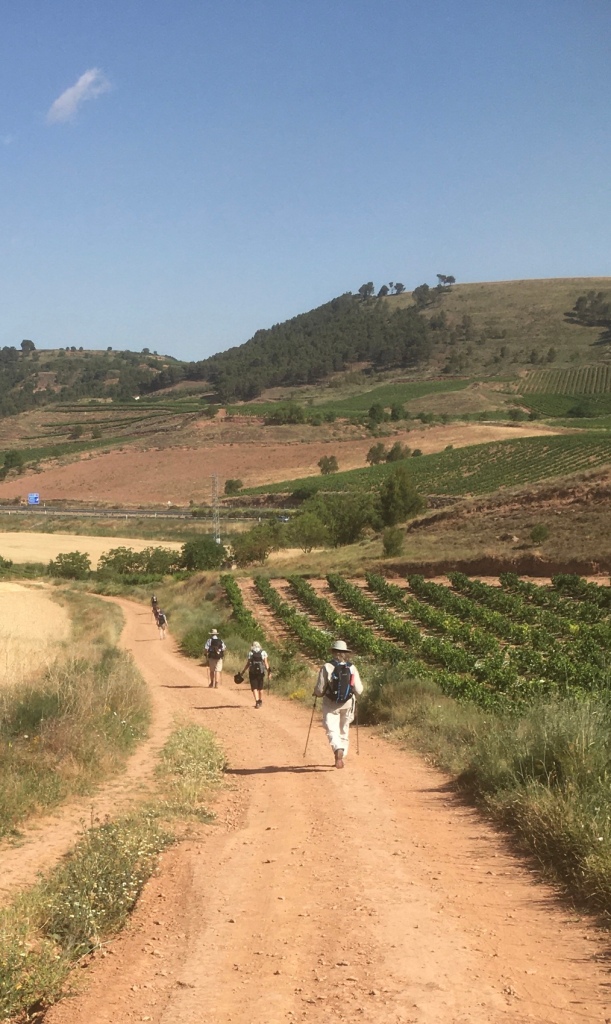
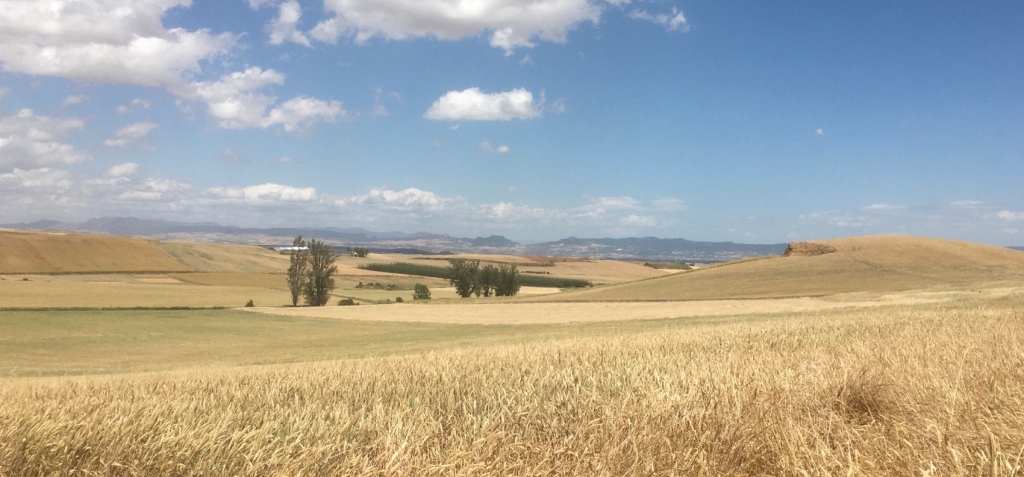
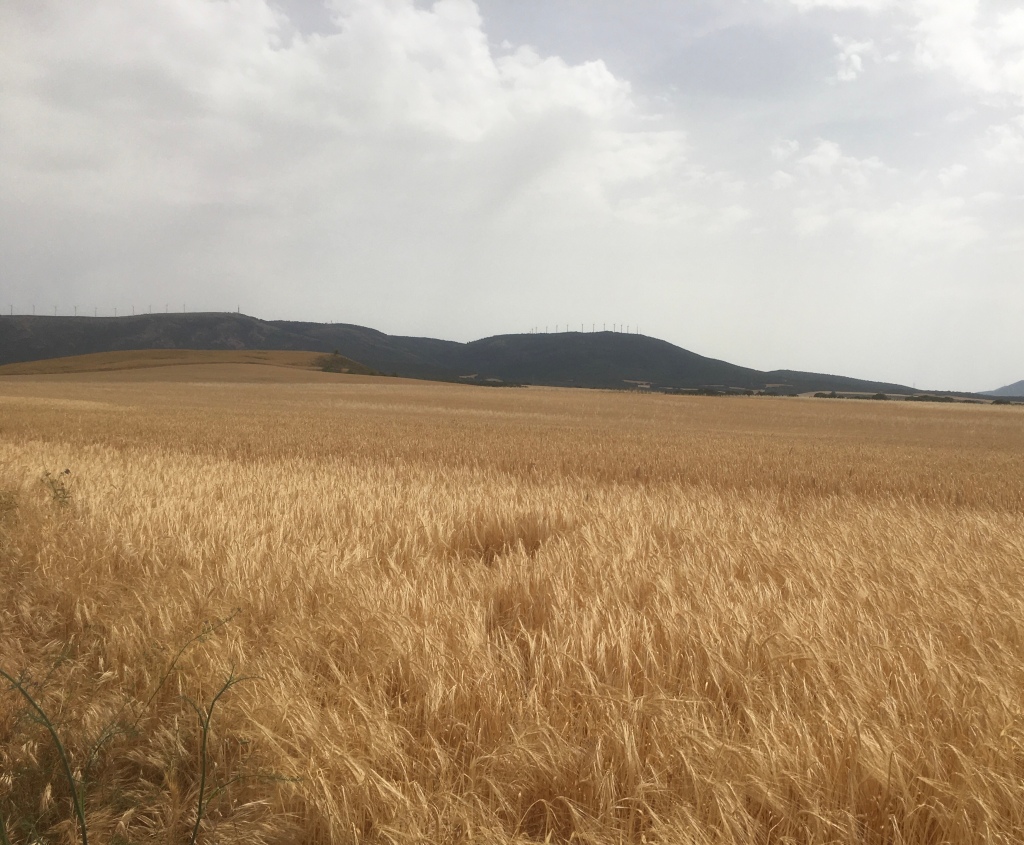
The scenery was as distracting as ever – fields of grain,with mountain ranges in the background At Alesanco this “ post” for want of a more concise description stood on the edge of the fields – a whipping post perhaps? Only guessing.Speaking of water this is an irrigation “canal” for the vineyards Downhill sections welcome in this heat.A refreshing cascade adjacent to the Autovia.On the approach to Ciruena, another walk through opportunity.
Ciruena is a village of two halves. As we approached, we walk past a golf course which felt incongruous given the size of the place,but beyond it was a kind of “ new town” developing.
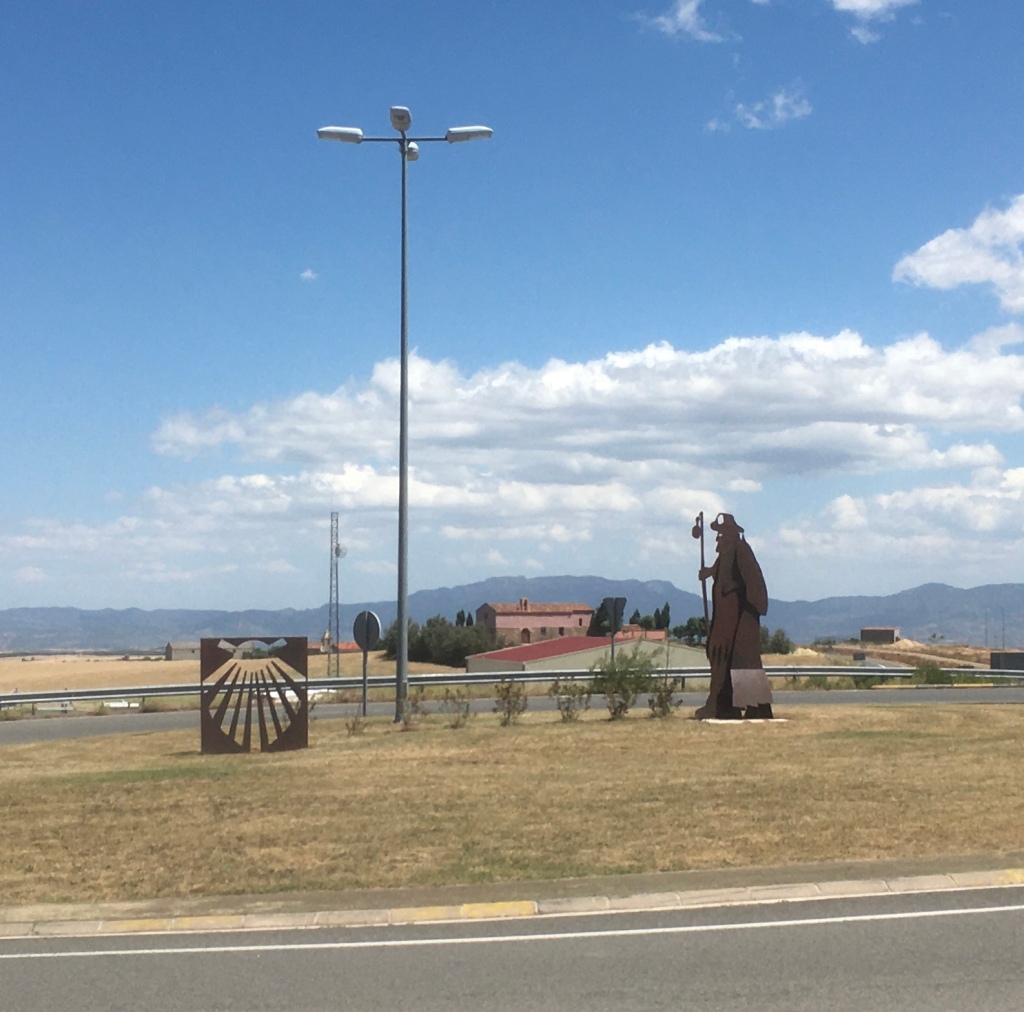
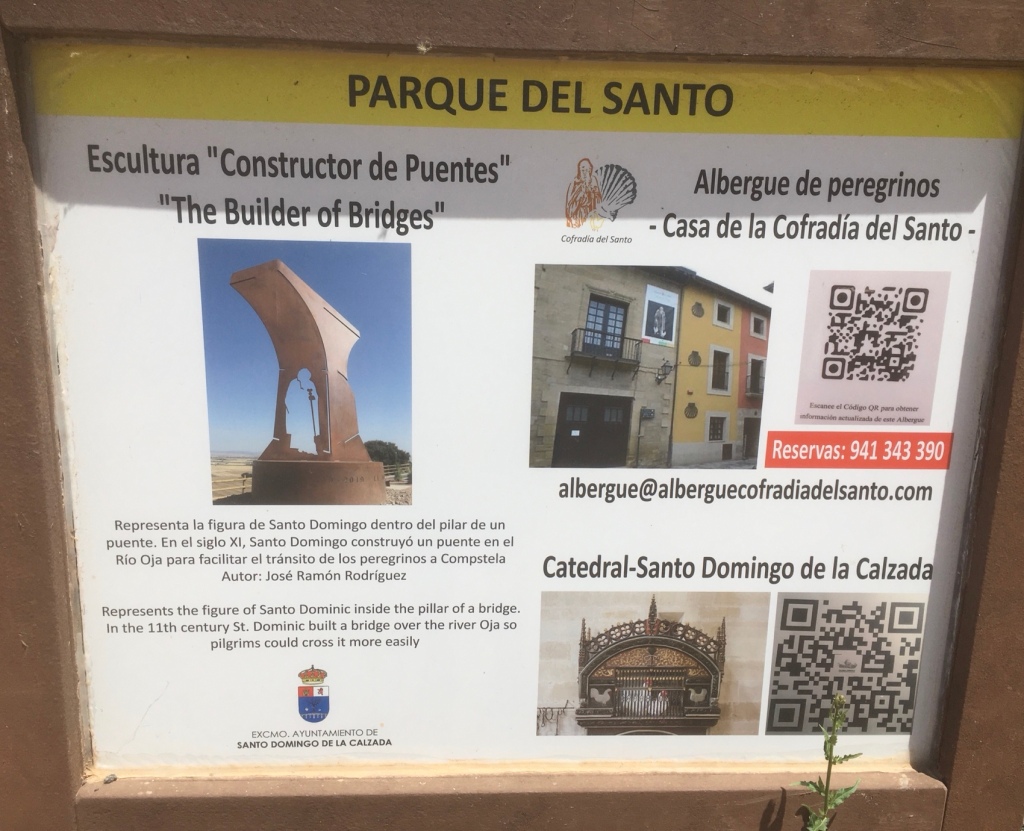
But there is still a welcome for Pelegrinos as sited on this nearby roundabout.Less than three miles to go…It’s a long road that has no Estrella Galicia🍺Then, in an “ area de descanso “ there was this beautifully placed sculpture dedicated to Santo Domingo, who built roads,bridges,hospices in the 11th century and the town over which this memorial looks.
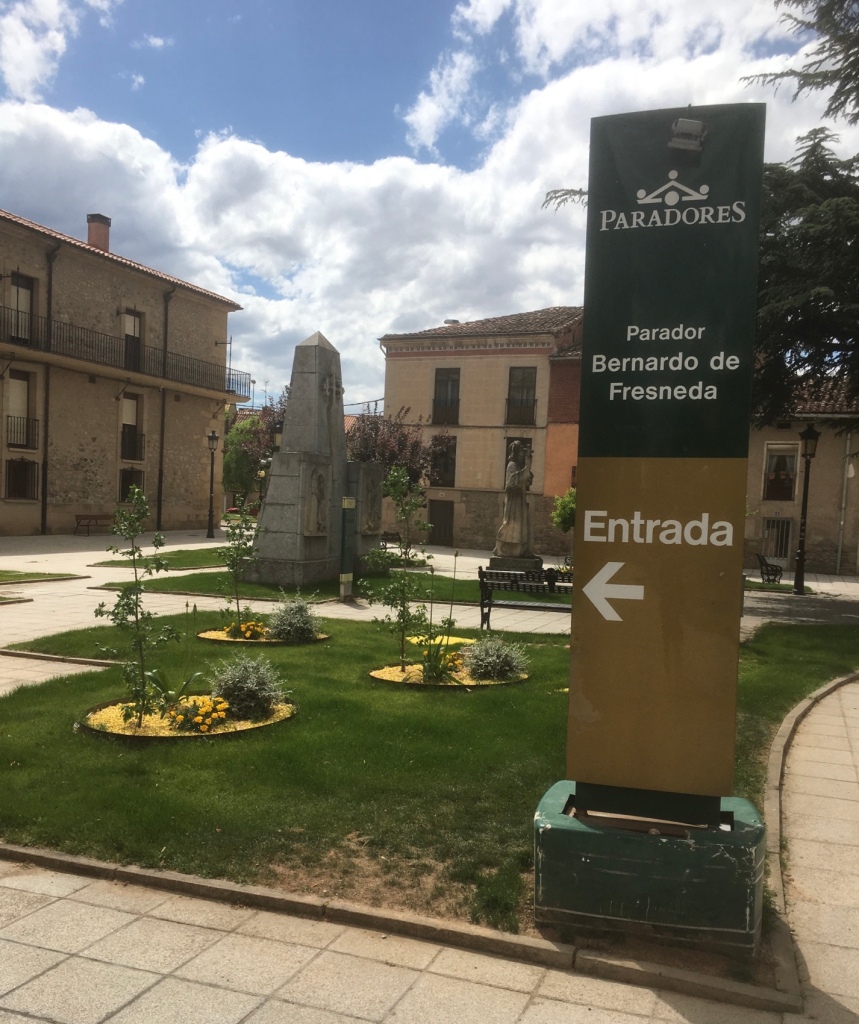
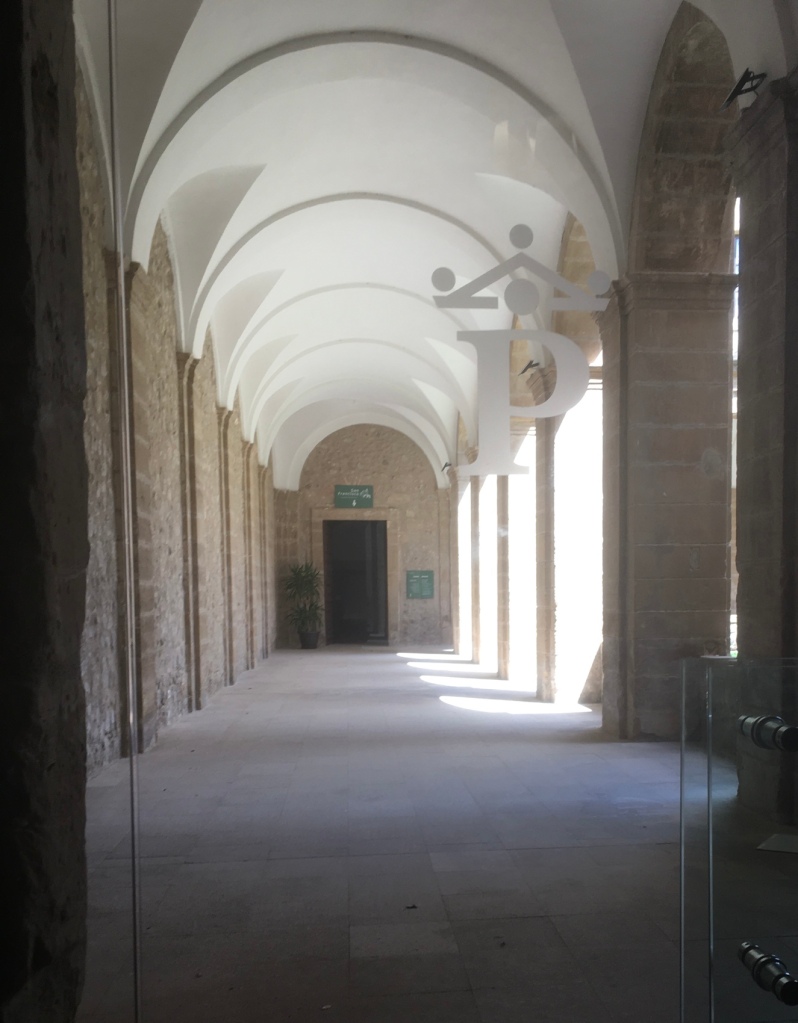
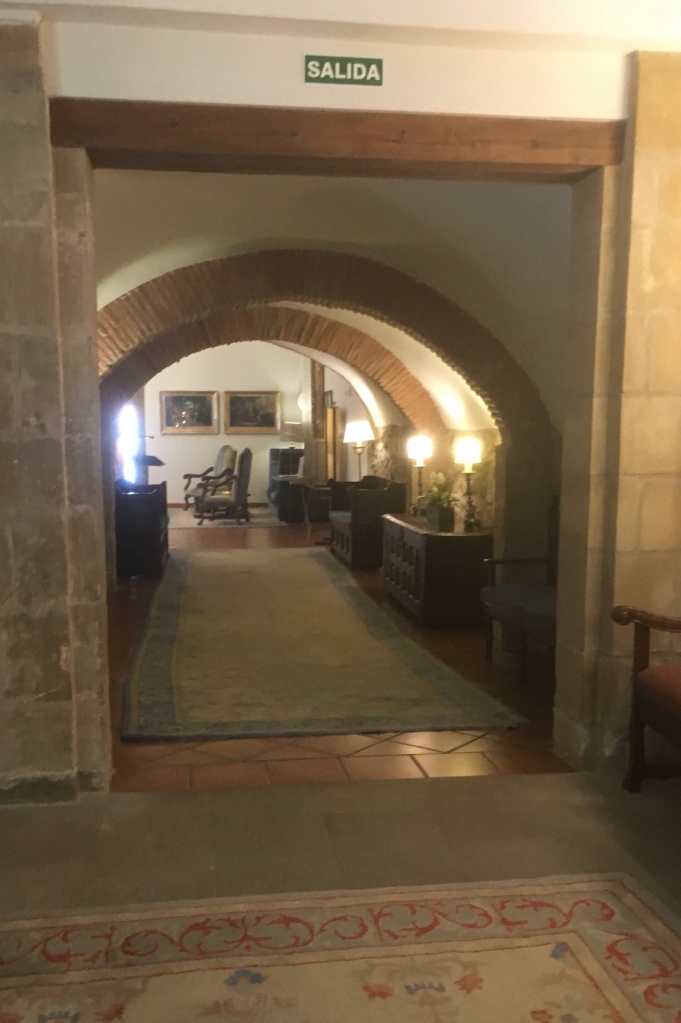
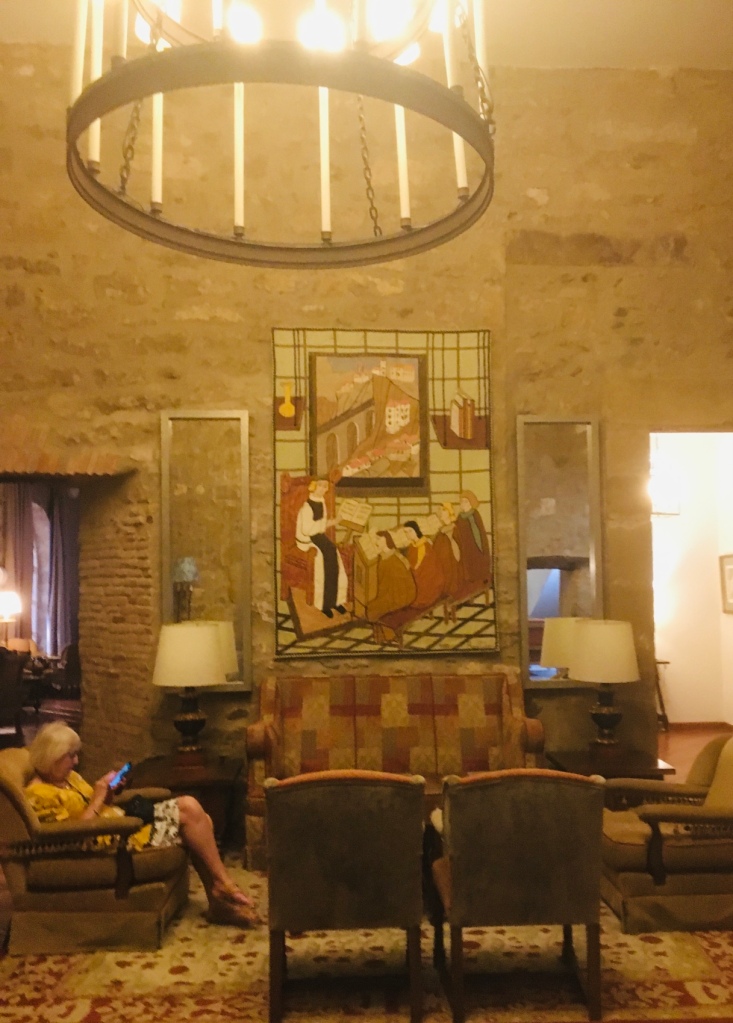
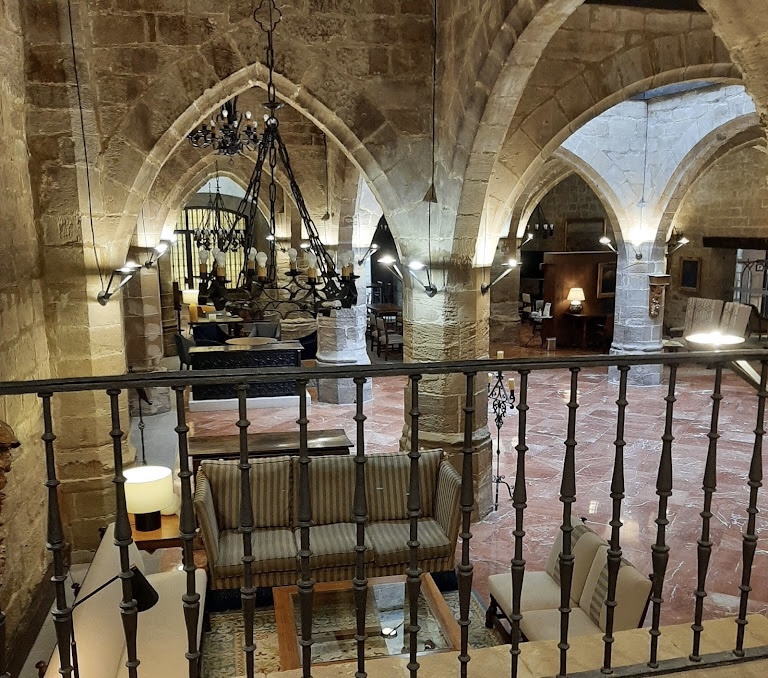
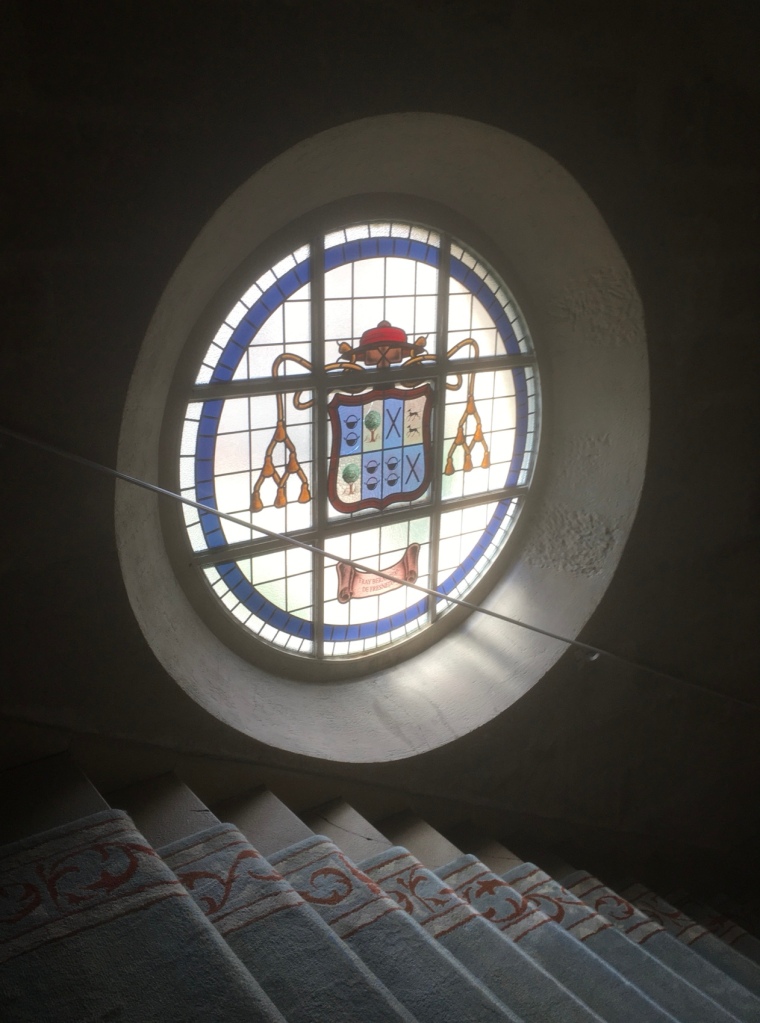
Accomodation – surprisingly for a small town, Santo Domingo housed two Paradors,both with a similar name. As a treat, we were booked into Parador de San Domingo Bernardo de Fresneda. Paradors are usually situated in old,venerable / historic buildings and our Parador was no exception as the following photos show.
Anita relaxing in one of the lounges.
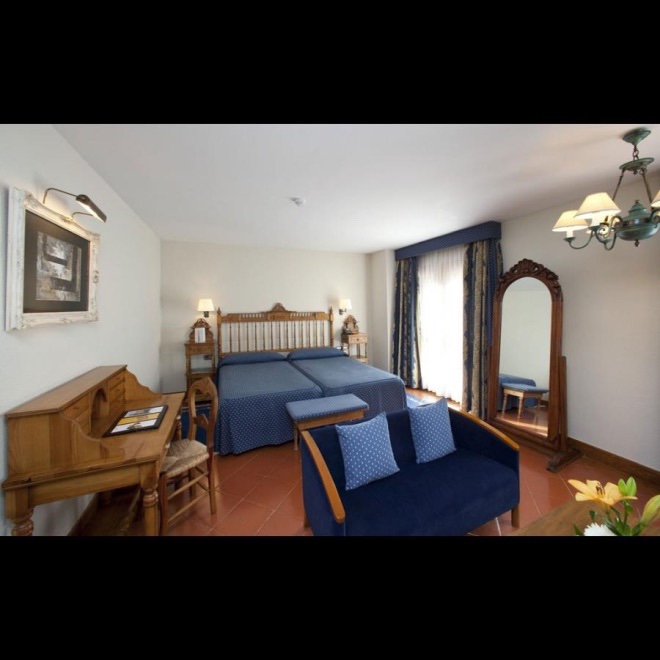
“The hotel occupies a former 12th-century hospital near the cathedral, erected by St. Dominic to take in pilgrims traveling on the Way of St. James. It has a regal, elegant style, with majestic function rooms and a lobby filled with Gothic arches and wood coffered ceilings. Fine materials and eye-catching colors—whites and blues—give way to comfortable guest rooms decorated with exquisite taste. You will find a warm, harmonious environment which is also highly suited to social events and meetings.” EXTRACT FROM THE PARADOR WEBSITE
Whites and blues rule in this bedroom.
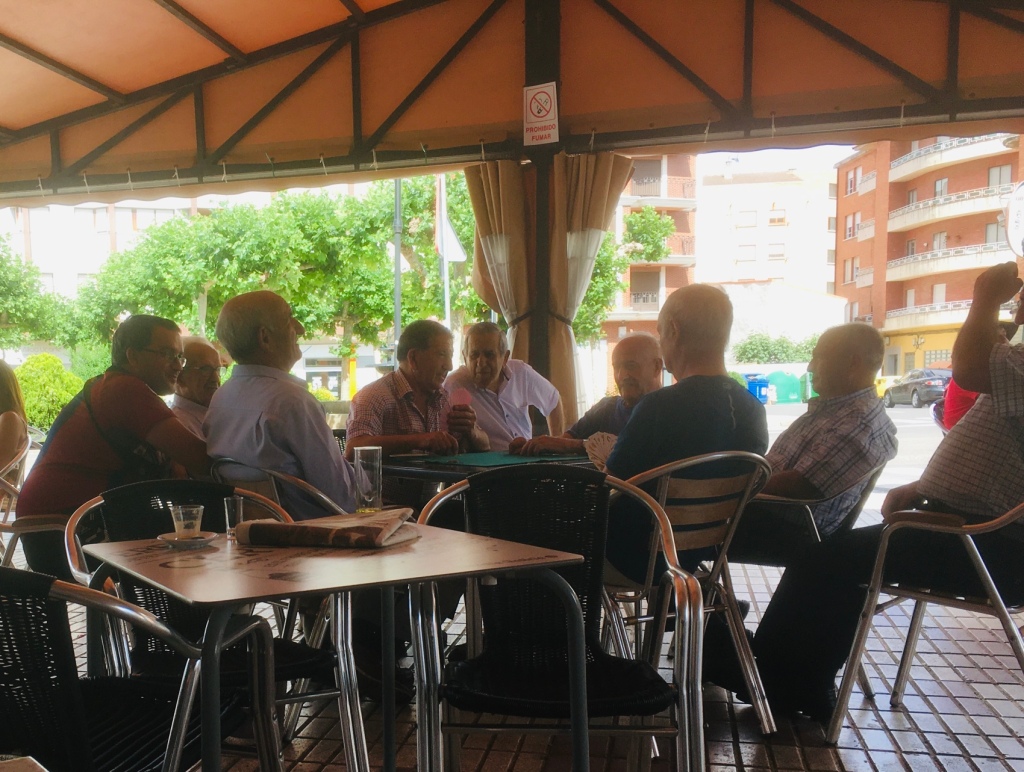
Mike and I had a walkabout in what was now a relatively deserted town,however we found that much sought after refreshment – Estella Galicia” in a locals’ bar,where the menfolk were deeply engaged in the afternoon ritual of a game of cards…which baffled both of us.
Una Jarra
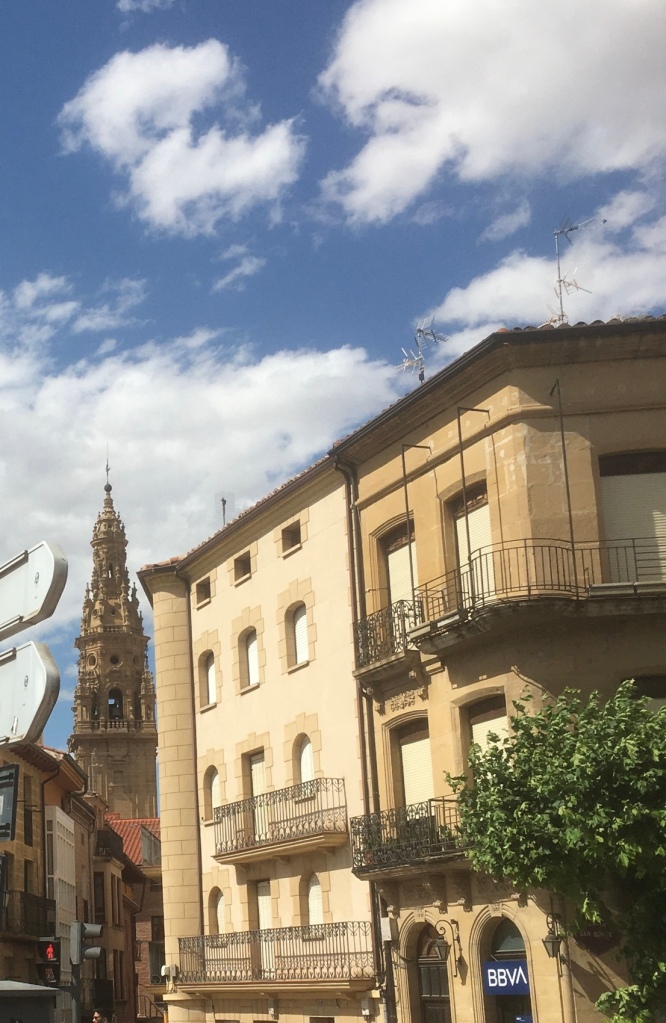
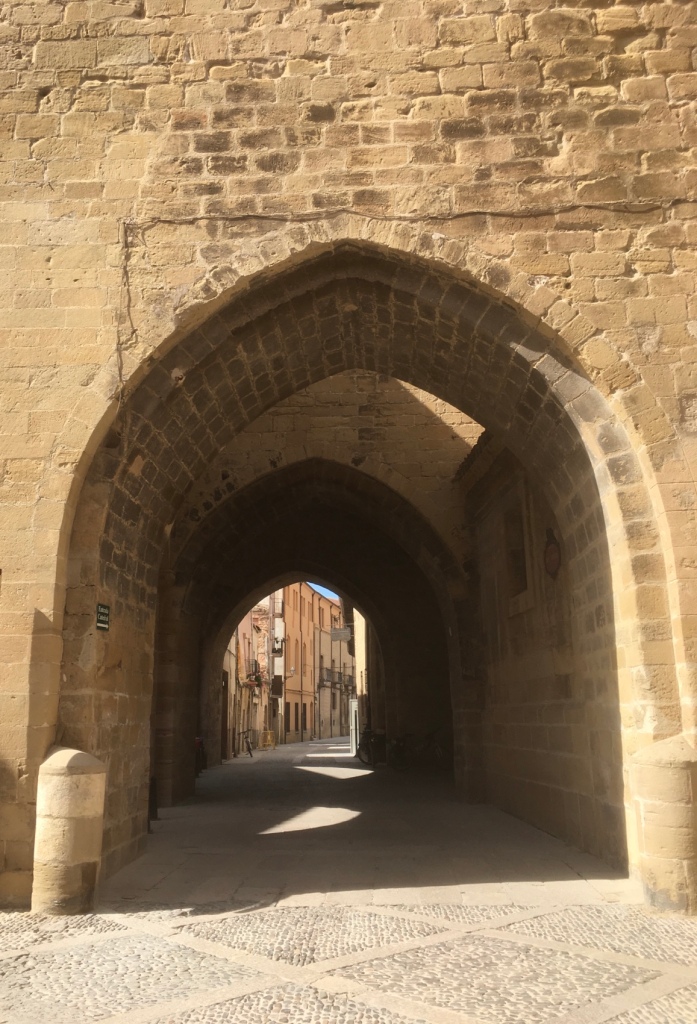
Then back through the still quiet streets of the Casa Antigua- designated as a historic place of interest – then so many of the places we have been fortunate enough to traverse have held our interest.
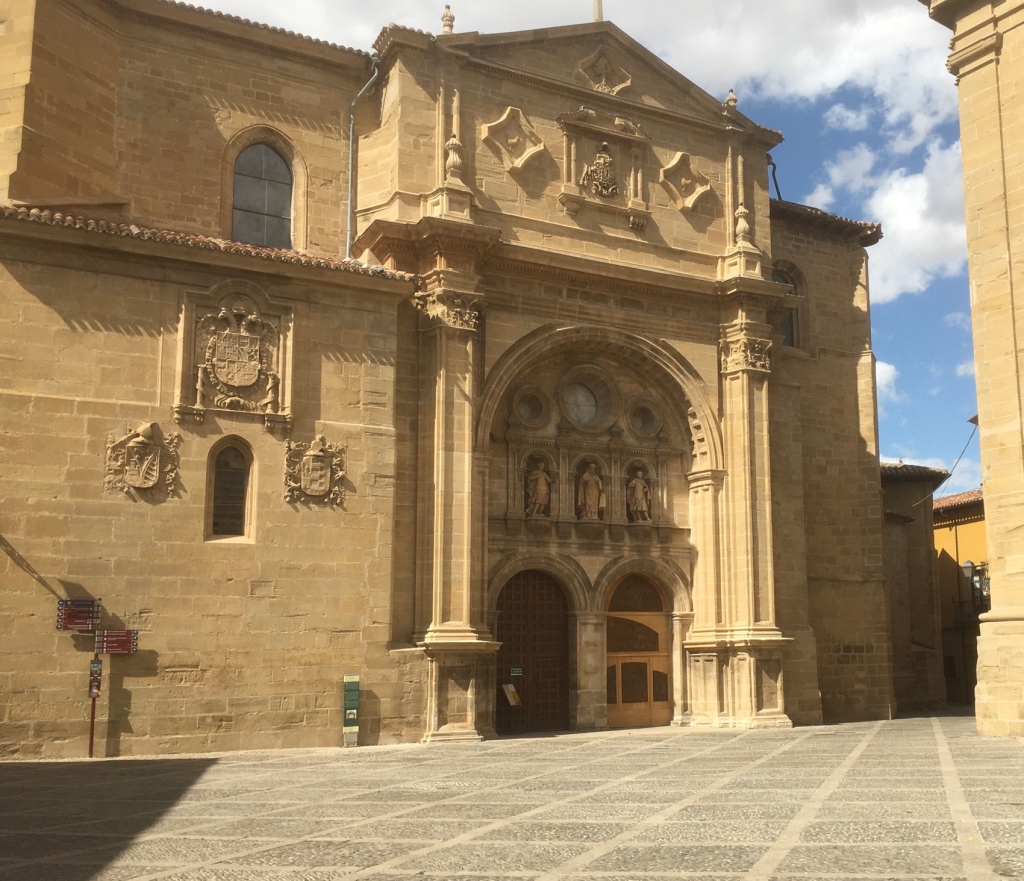
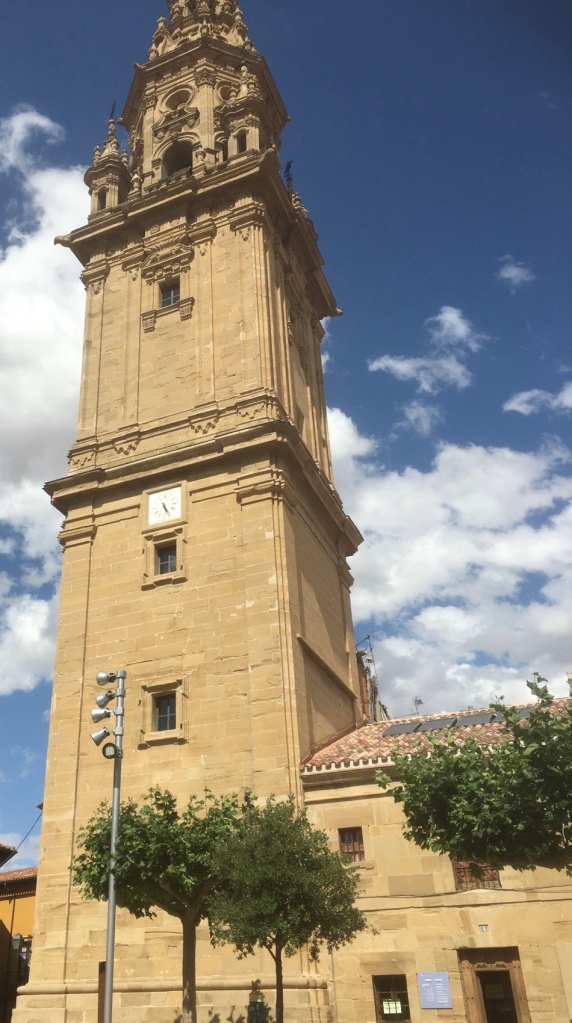
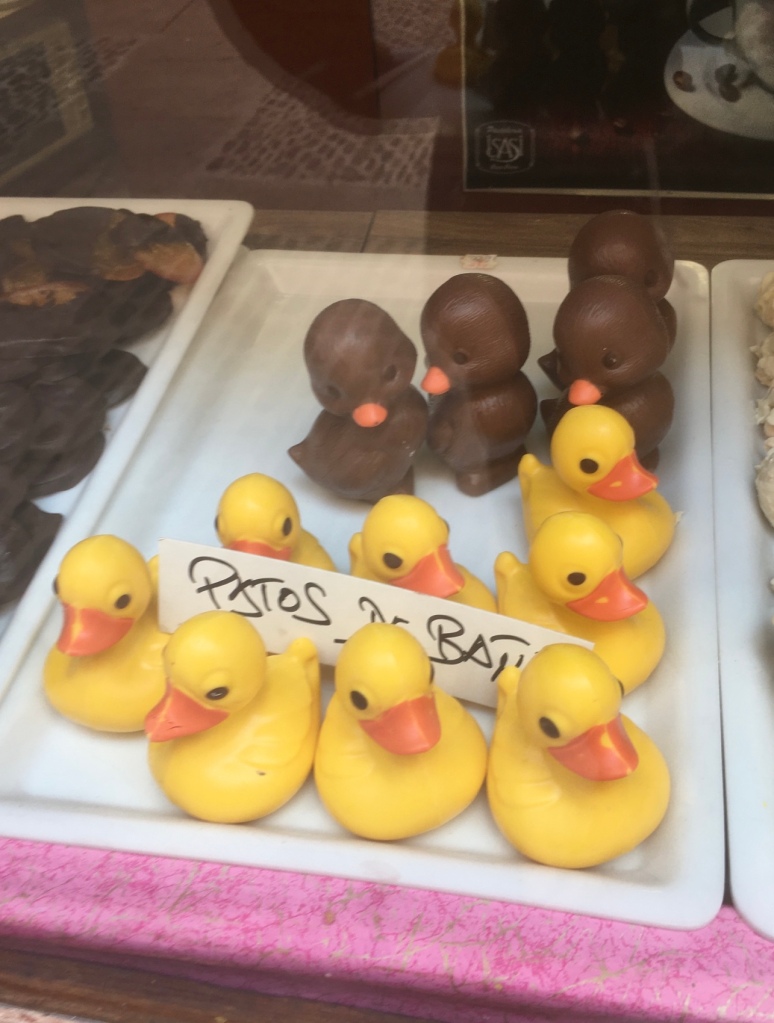
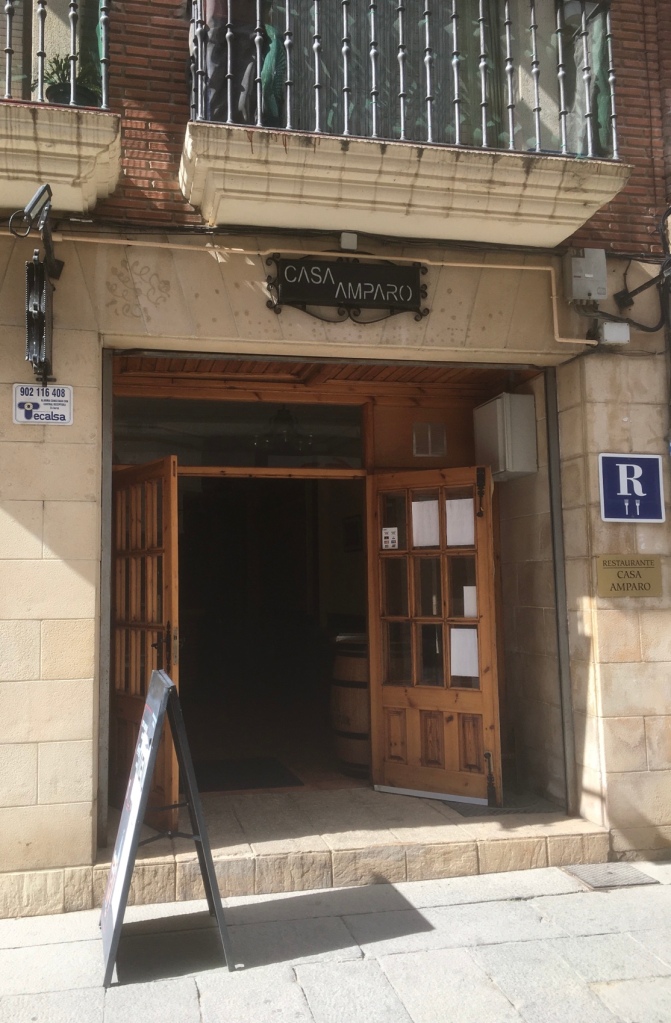
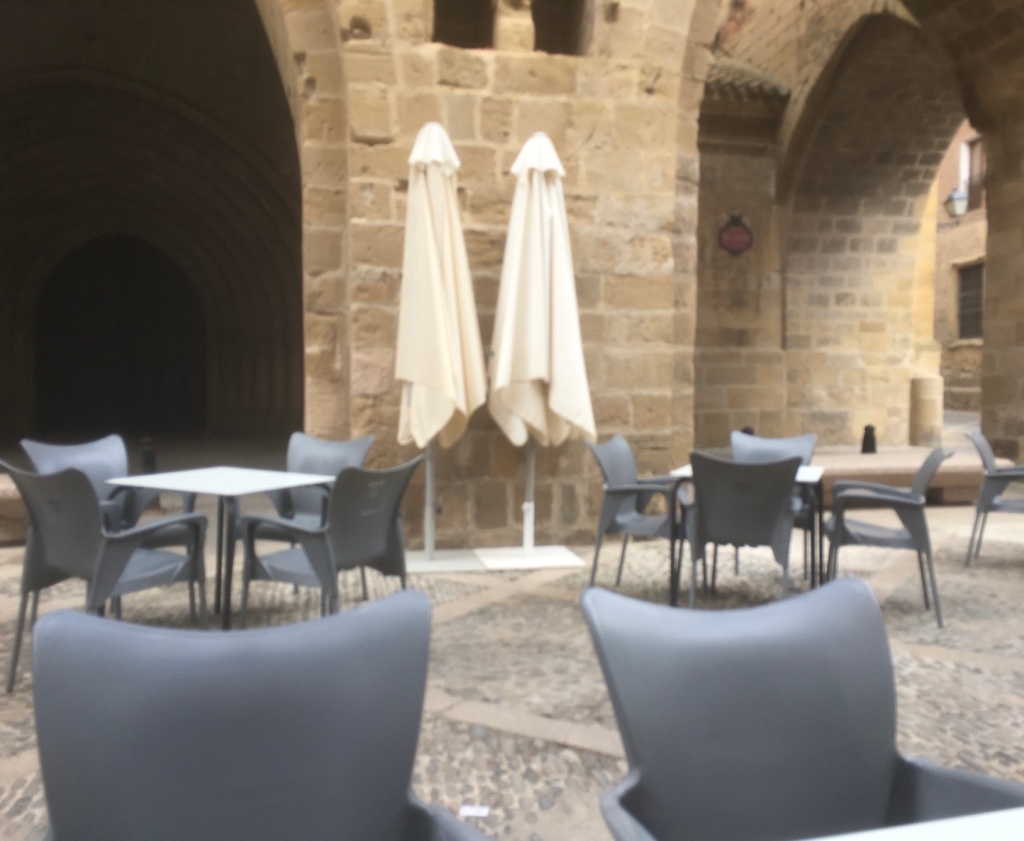
On to the Cathedral which has so much history and entertaining legend thst you can avail yourself of this website for more info.https://lariojaturismo.com/en/lugar-de-interes/catedral-de-santo-domingo-de-la-calzada/3c9a5769-d32d-412d-af5d-fdaa6ef4dbb2It was still no weather for ducks and so we were looking for a restaurant where we could eat dinner outside.It’s a locals” traditional eatery and I was reassured that we could eat in the tiny square adjacent.€16.00 Menu del Dia – 3 courses, coffee,water and wine. Most popular dish was a main course of pigs’ trotters consumed with gusto…mainly by the men! As ever in Spain, the pig rules 🇪🇸.
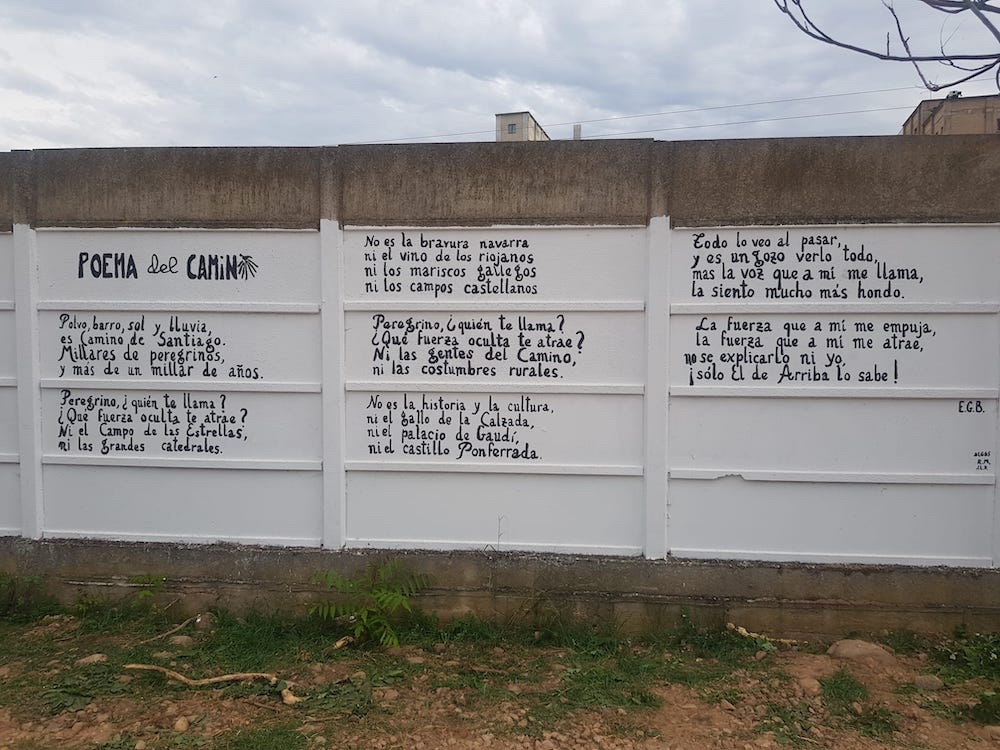
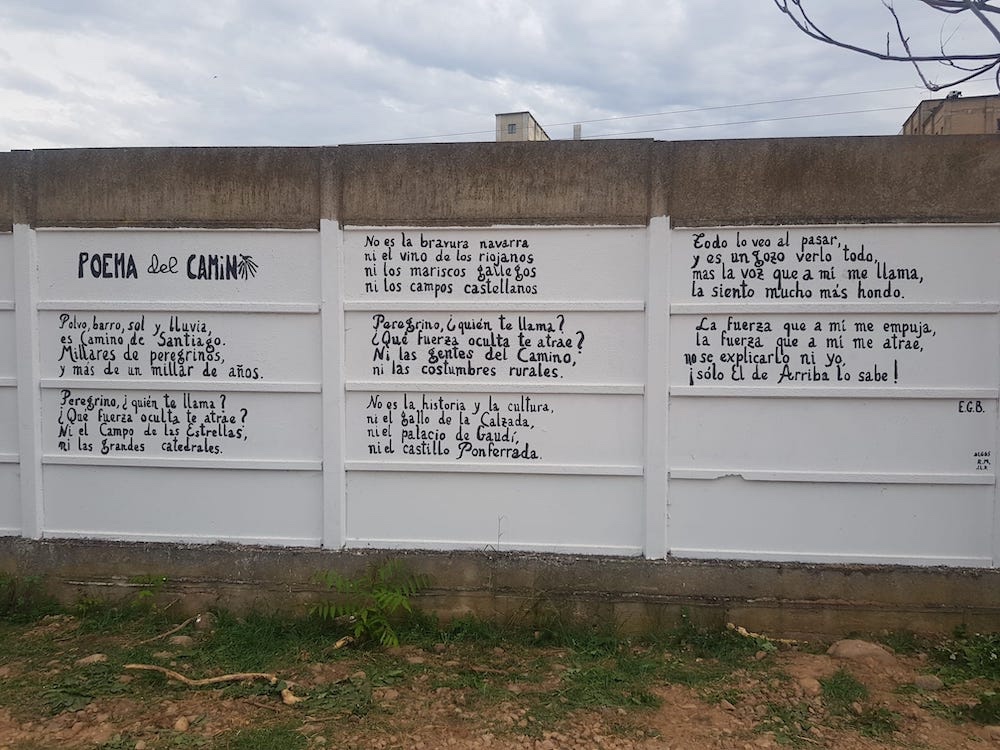
This is a questioning romantic poem we found along this Etape “ What hidden force draws you?” It asks. I still don’t have an answer !
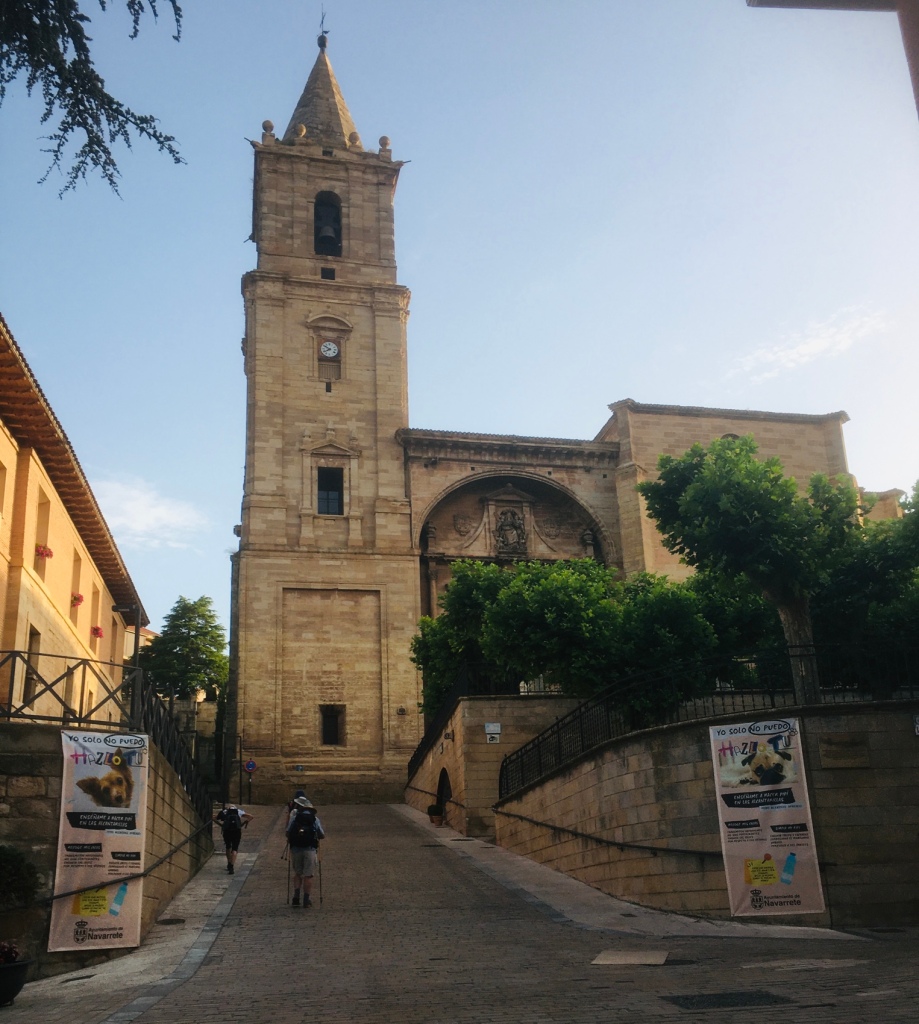
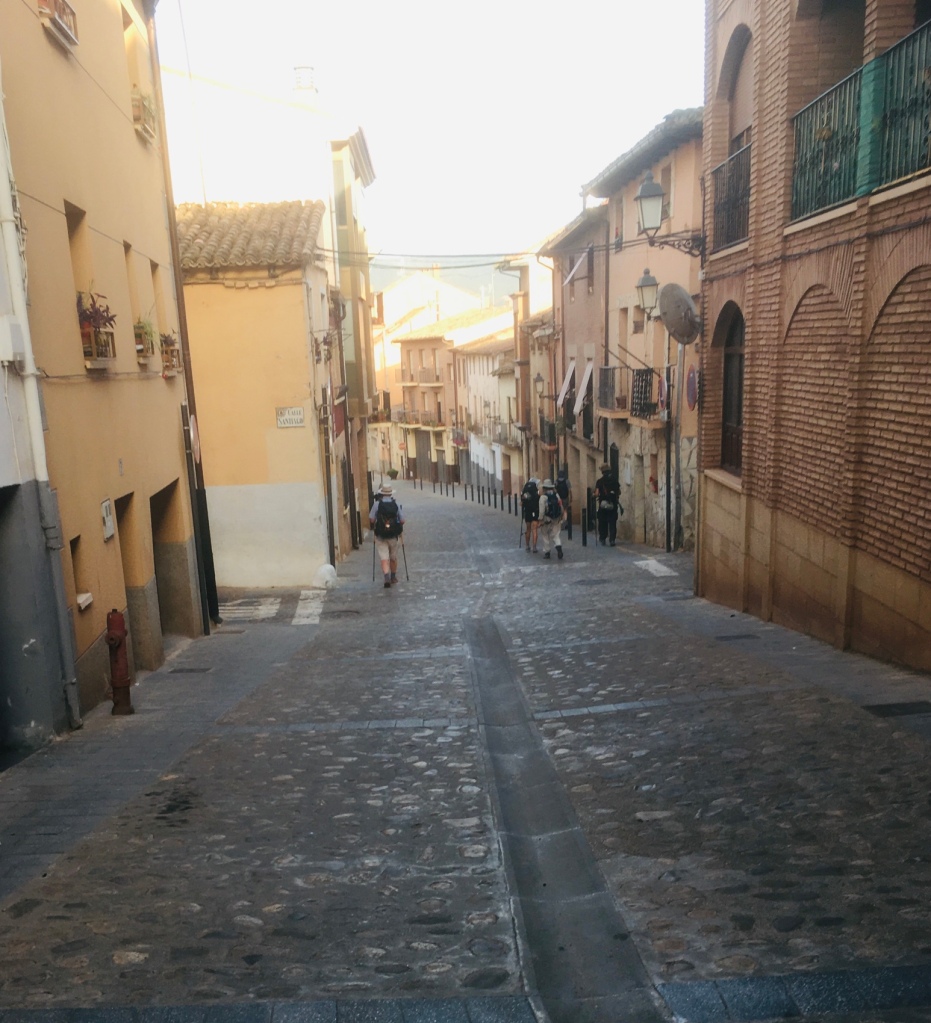
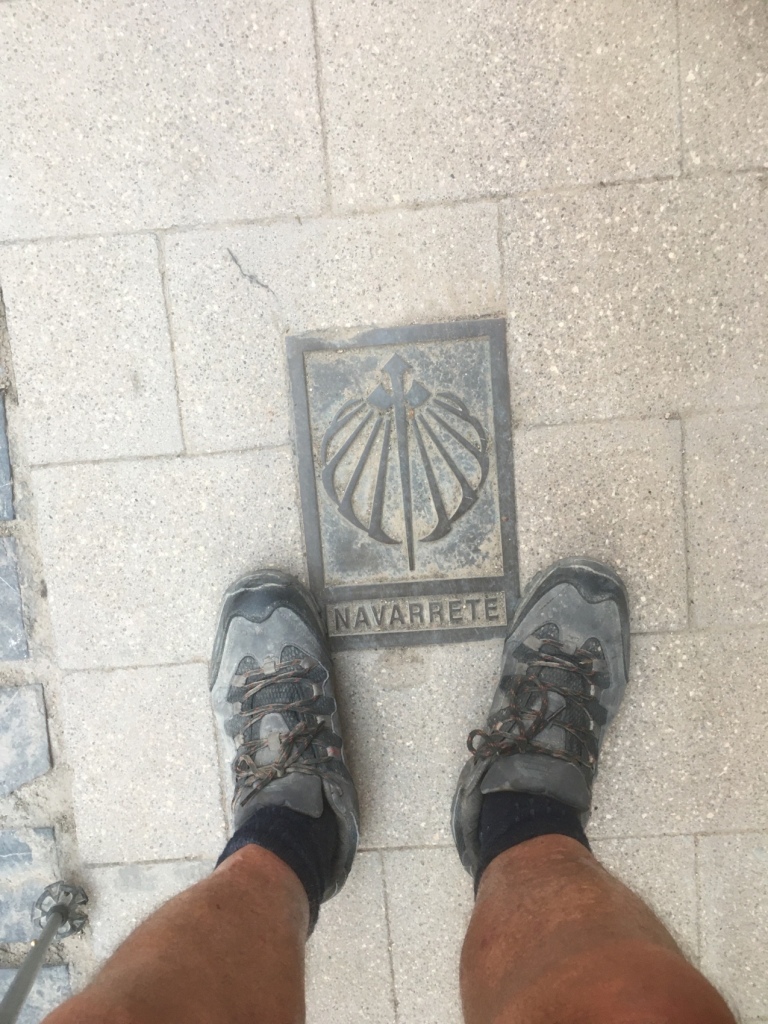
Another very hot day is forecast and so taxis were taken out of the city towards Navarette, in time for breakfast.
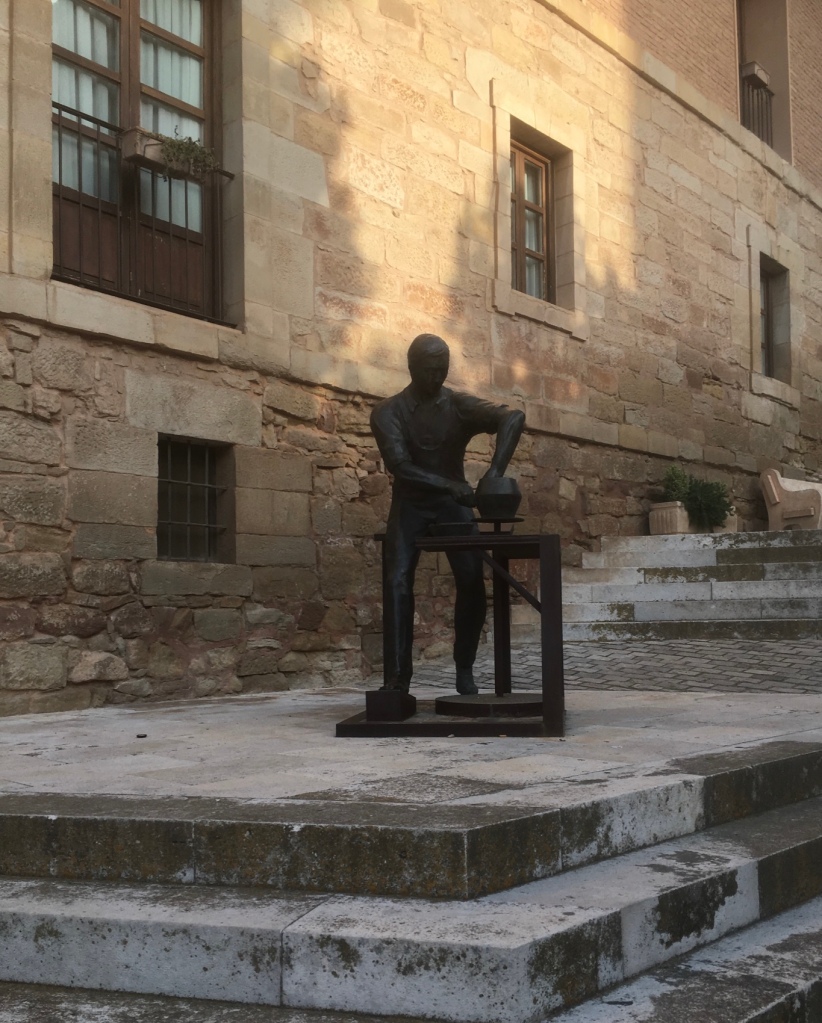
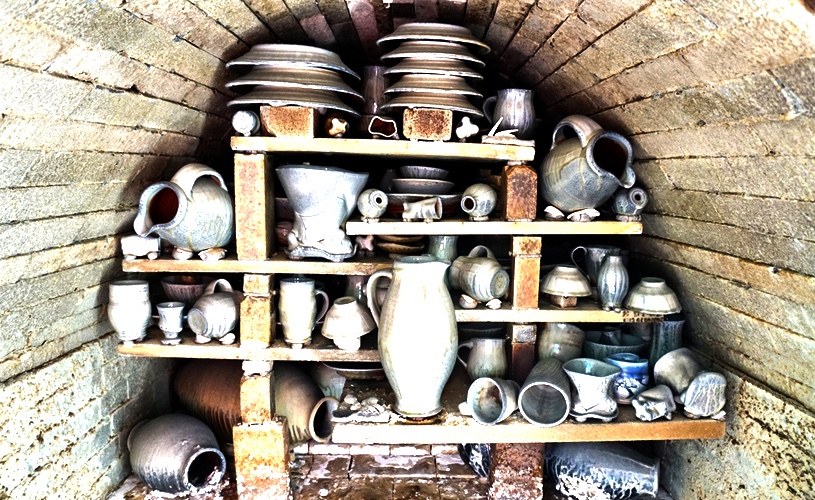
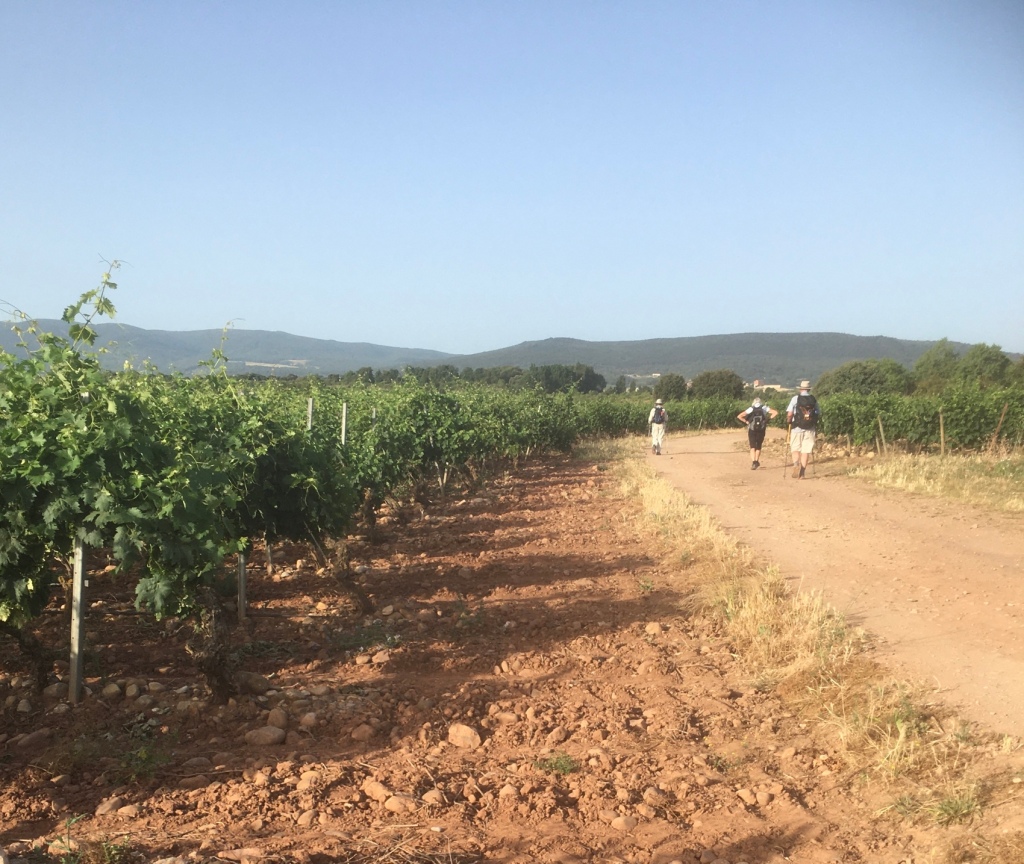
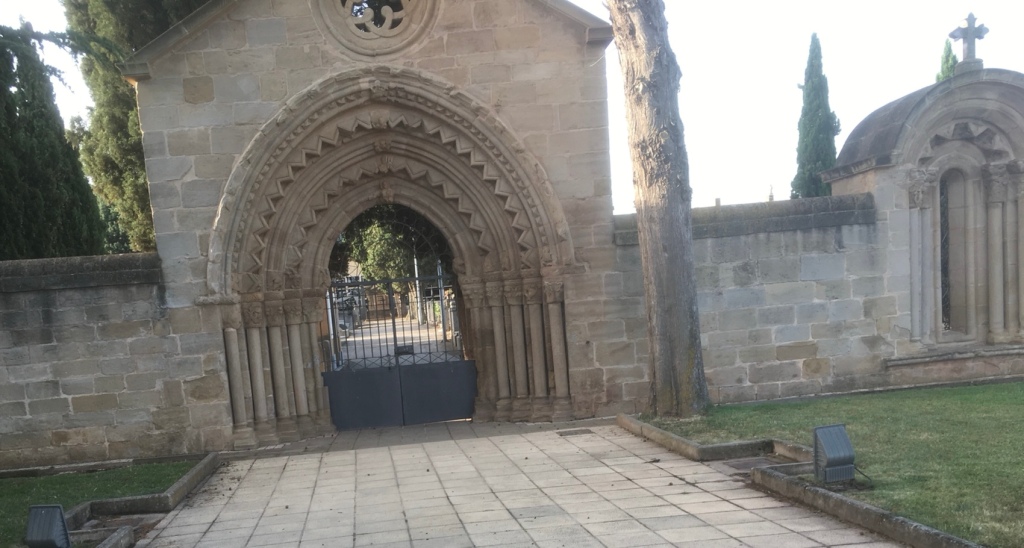
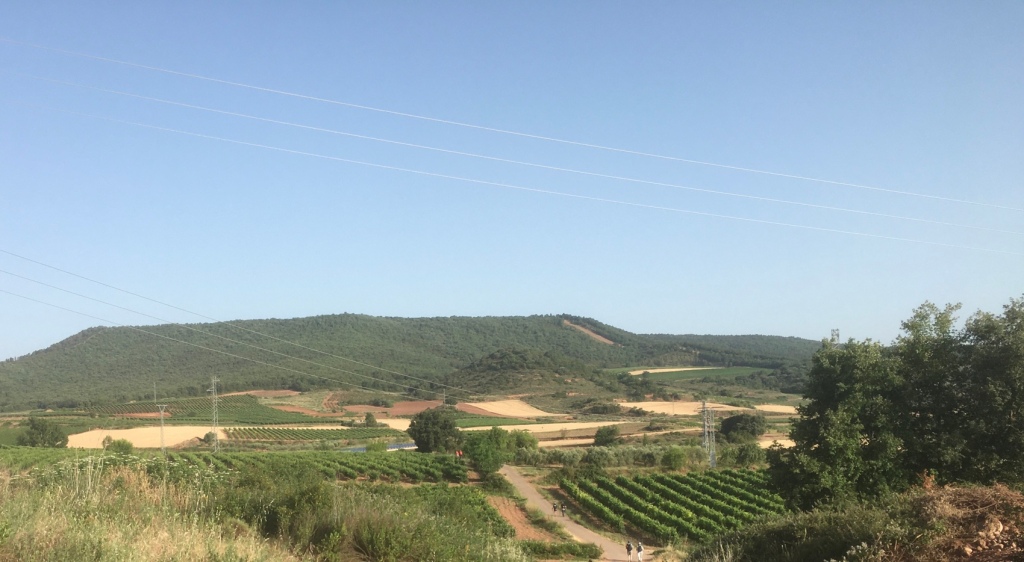
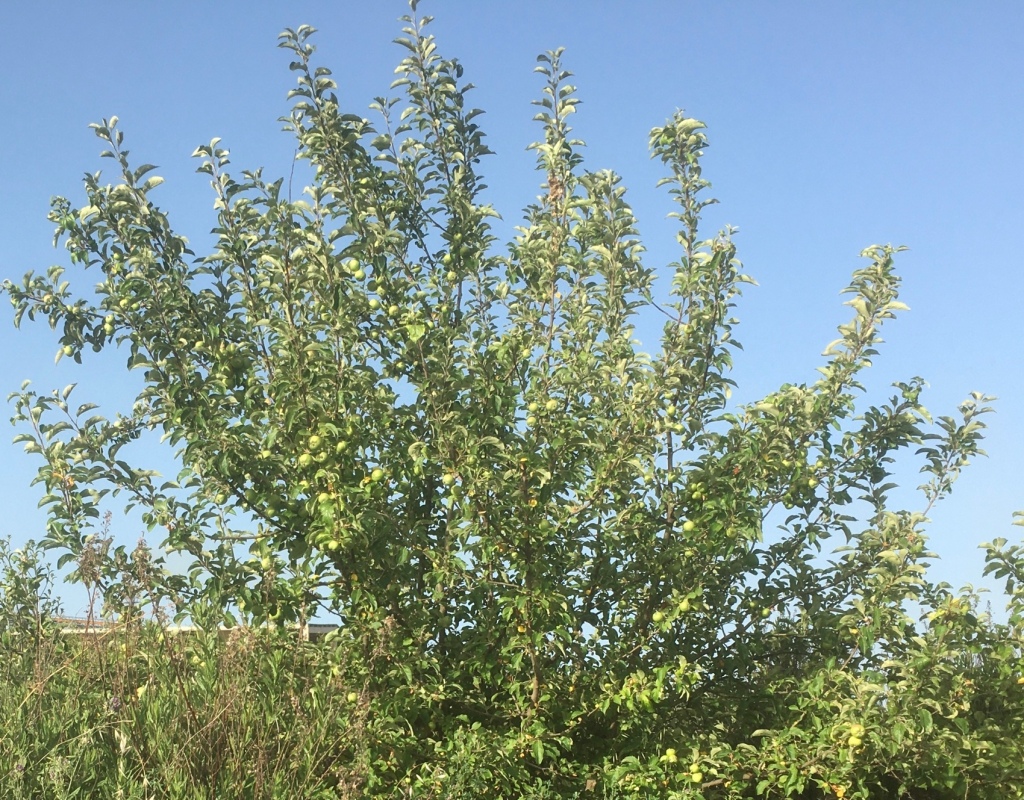
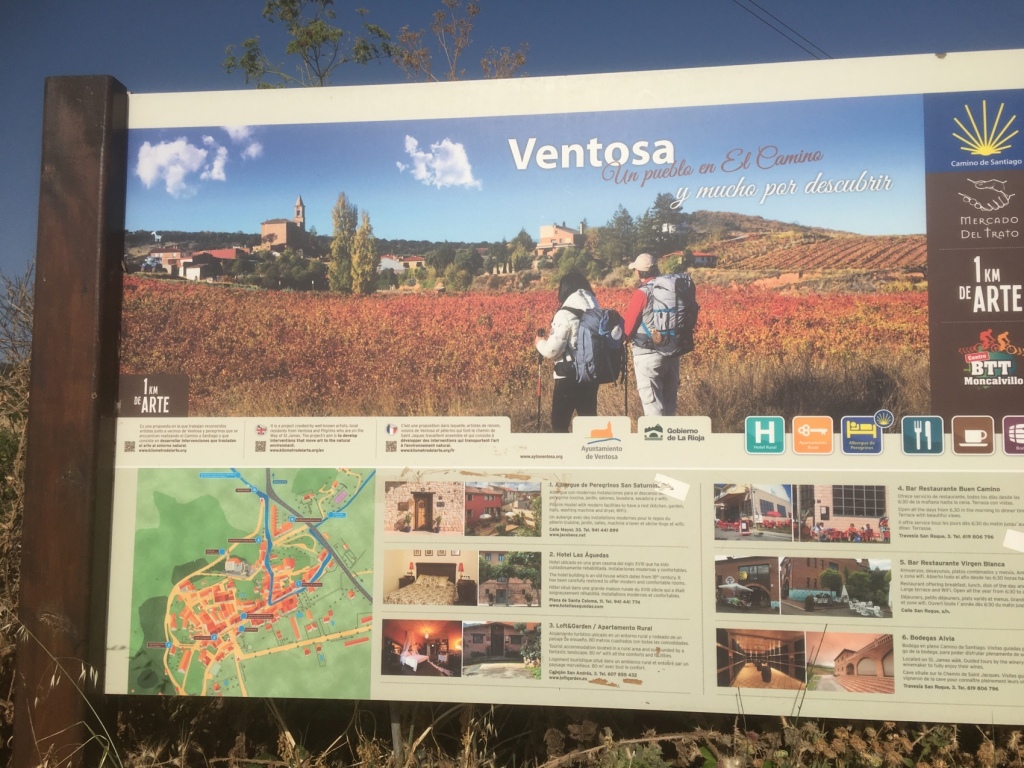
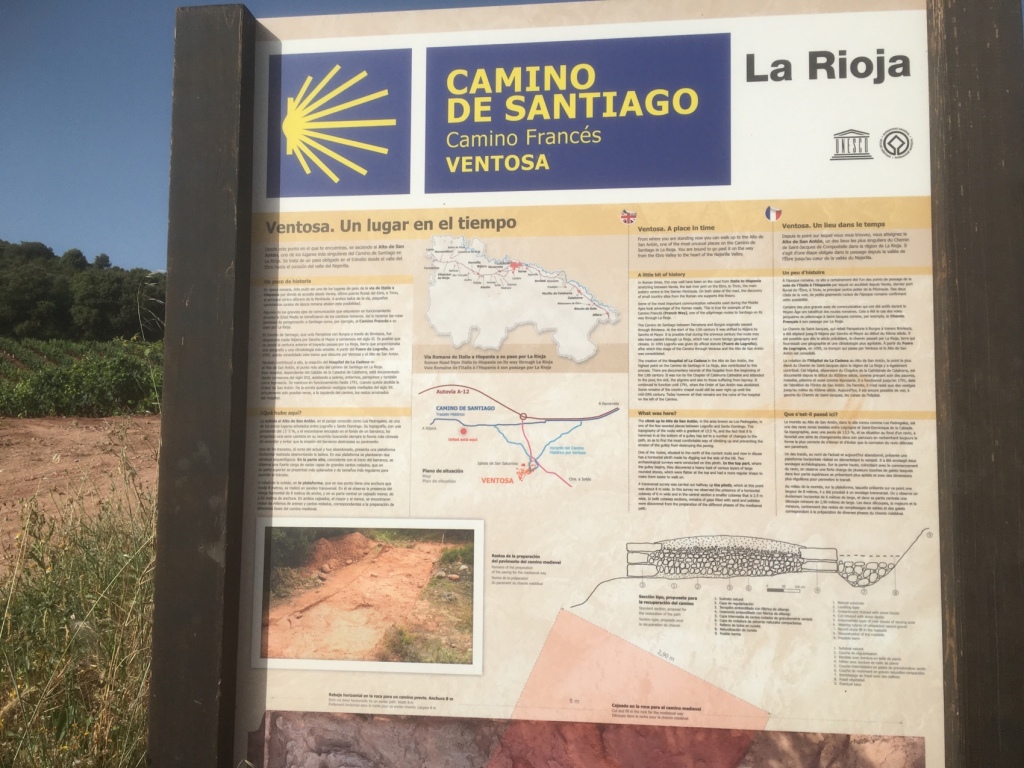
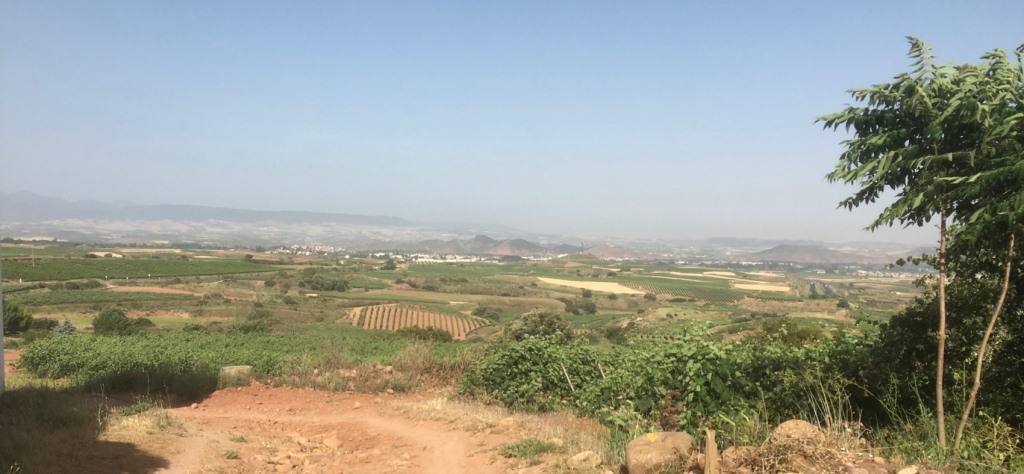
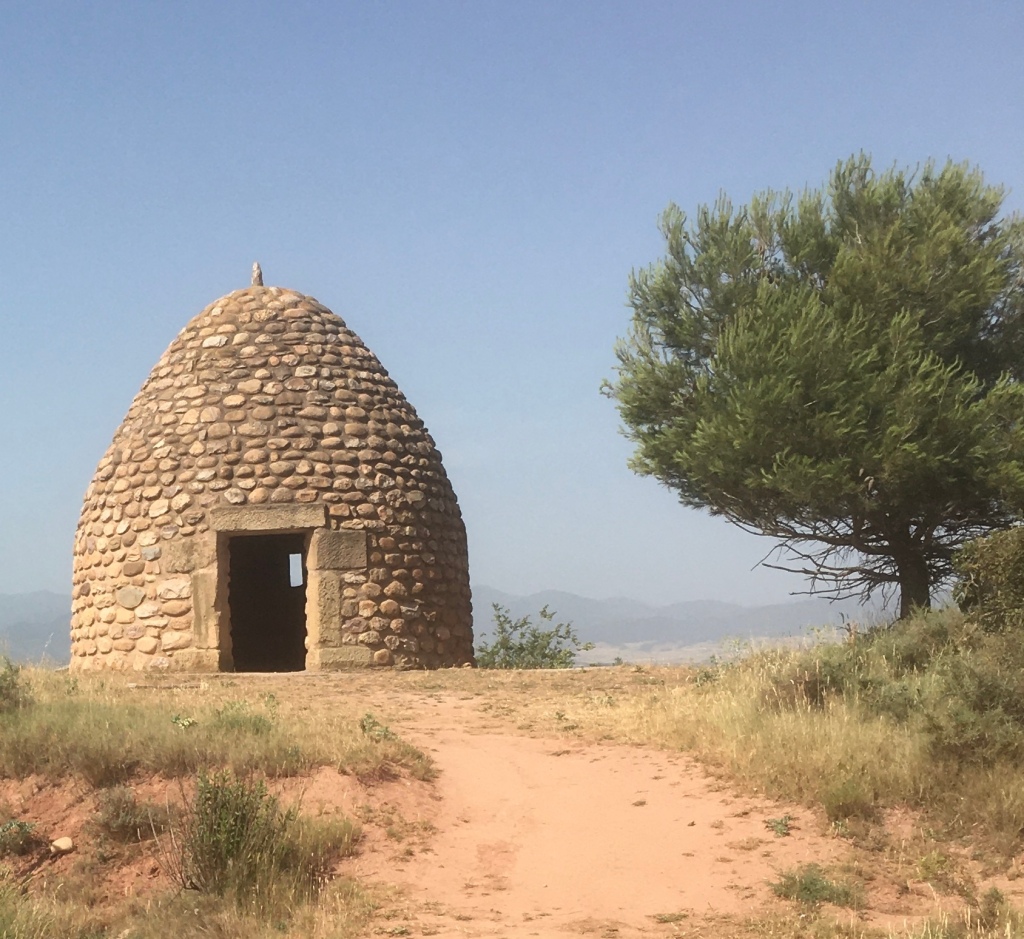
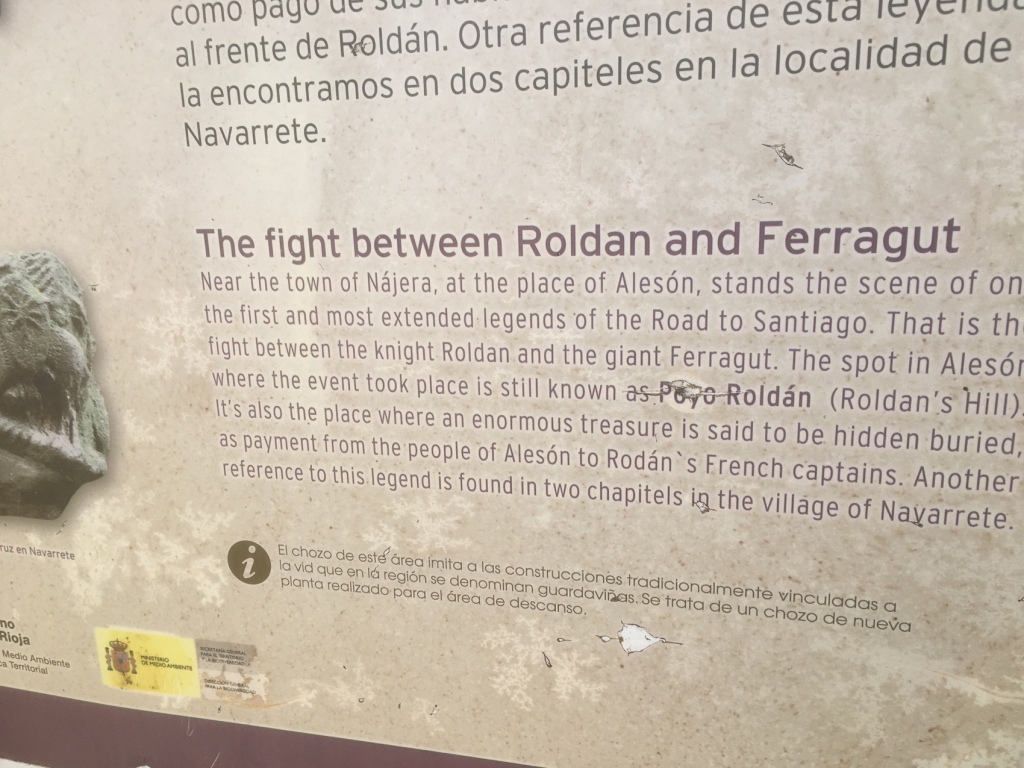
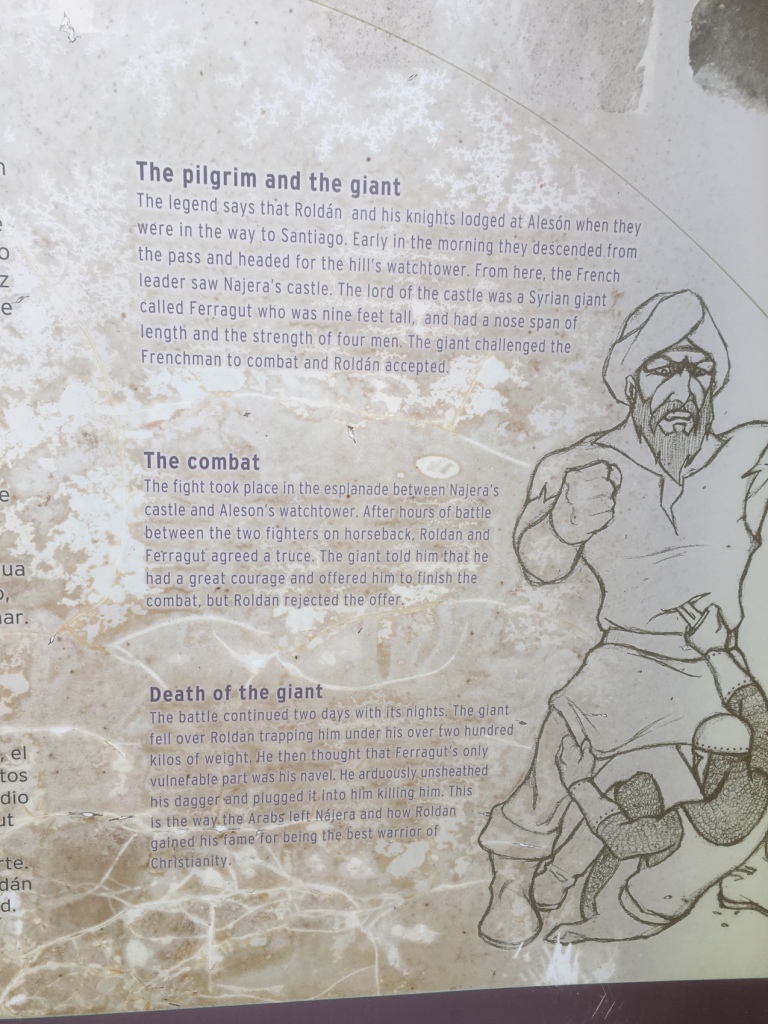
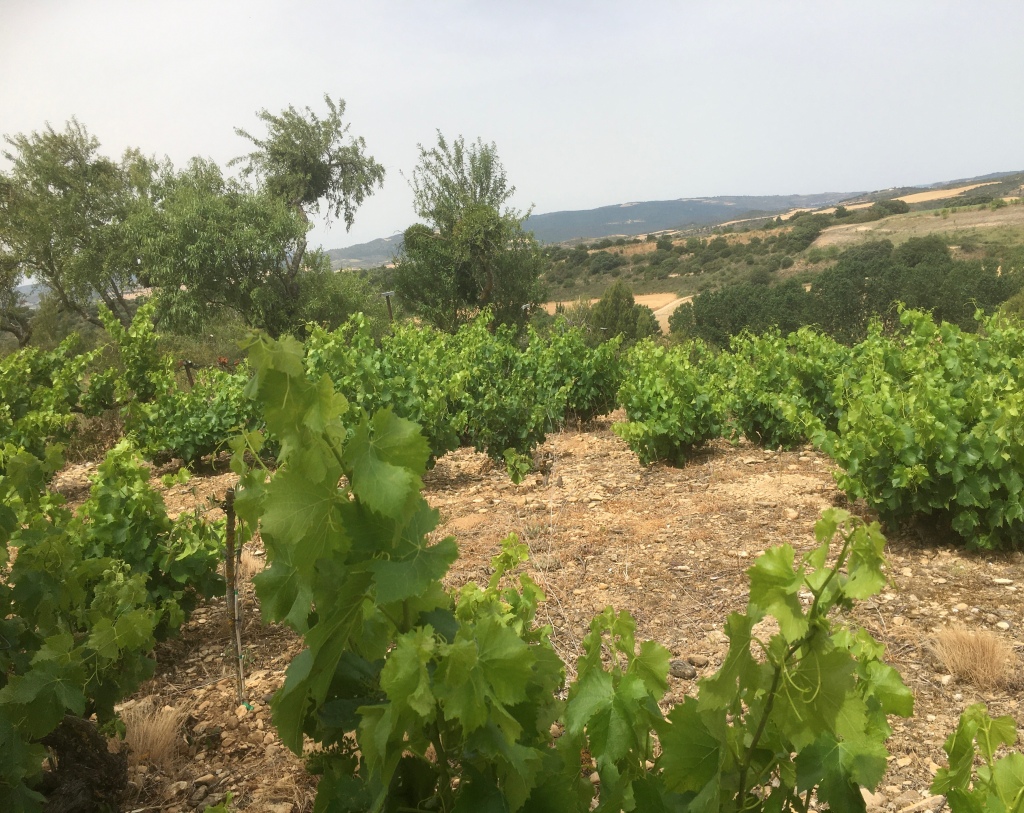
This town is famous for its red clay pottery.“Inspiration exists but it has to find you working” Pablo Picasso08.00 and getting warm as we climbed towards the Iglesia de Nuestra de la Asuncion.Downhill and out into the countryside I knew we were on the right path !Vineyards all the way Entrance to the cemetery- this gate was rescued recycled from the Romanesque-Gothic facade of the 12 th century Hospital de San Juan de Acre.A close look revealed St George spearing a dragon.Rolling hills and a tree whose fruit we could not identify.We came upon an inviting detour to Ventosa which was on the original Camino.Another of those “ if only we had the time” scenarios – I have not walked a Camino with so many inviting distractions.Ventosa “ a place in time”.One of several Bodegas en route.Is that our destination in the distant haze?A stone house typical of shepherds and farmers in Rioja.Here in Aleson are two boards with a Camino tale.An updated version of David and GoliathOn the outskirts of Najera – my favourite” English Cottage Garden” flower.Then this heartfelt poem written by a local priest in the 1980s.
The translation is as follows:
Dust , mud, sun and rain
It is Camino de Santiago.
thousands of pilgrims
and more than a thousand years.
Pilgrim Who calls you?
What hidden force draws you?
– Not even the field of stars
nor the great cathedrals.
It is not the bravery Navarra,
nor the wine of the Rioja
nor the Galician shellfish,
nor the Castilian fields.
Pilgrim Who calls you?
What hidden force draws you?
– Neither the people of the Way
nor rural customs.
It is not history and culture,
nor the rooster of the Calzada
nor Gaudí’s palace,
nor the Ponferrada castle.
I see everything as I pass,
and it’s a joy to see it all,
but the voice that calls me
I feel it much deeper.
The force that pushes me
the force that attracts me,
I don’t even know how to explain it.
Only He above knows!
This romance-poem won the second prize in the literary contest organized by the cultural recreational society “PEÑA EL SALERO”, from Santo Domingo de la Calzada, on September 19, 1987.
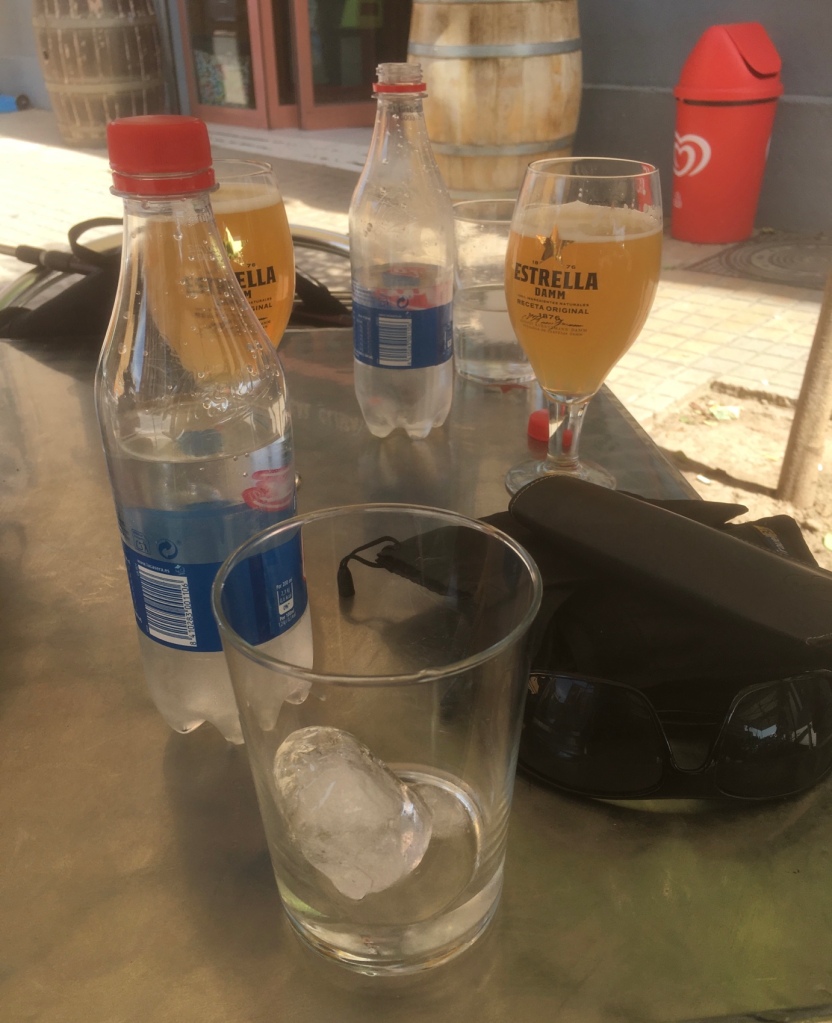
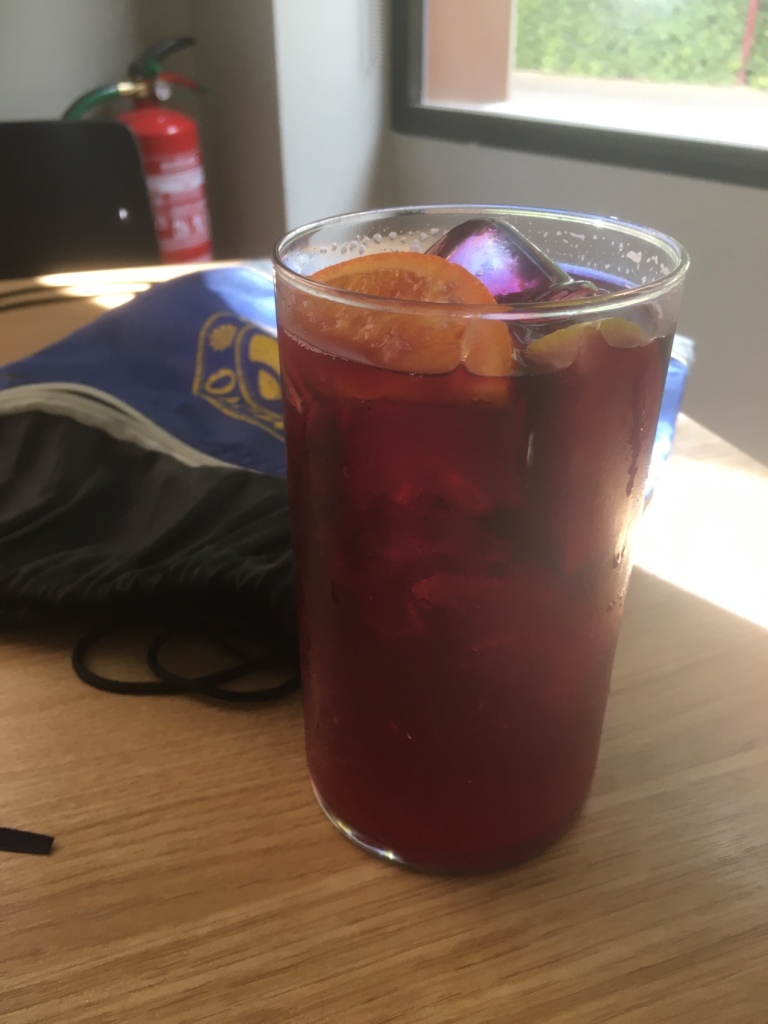
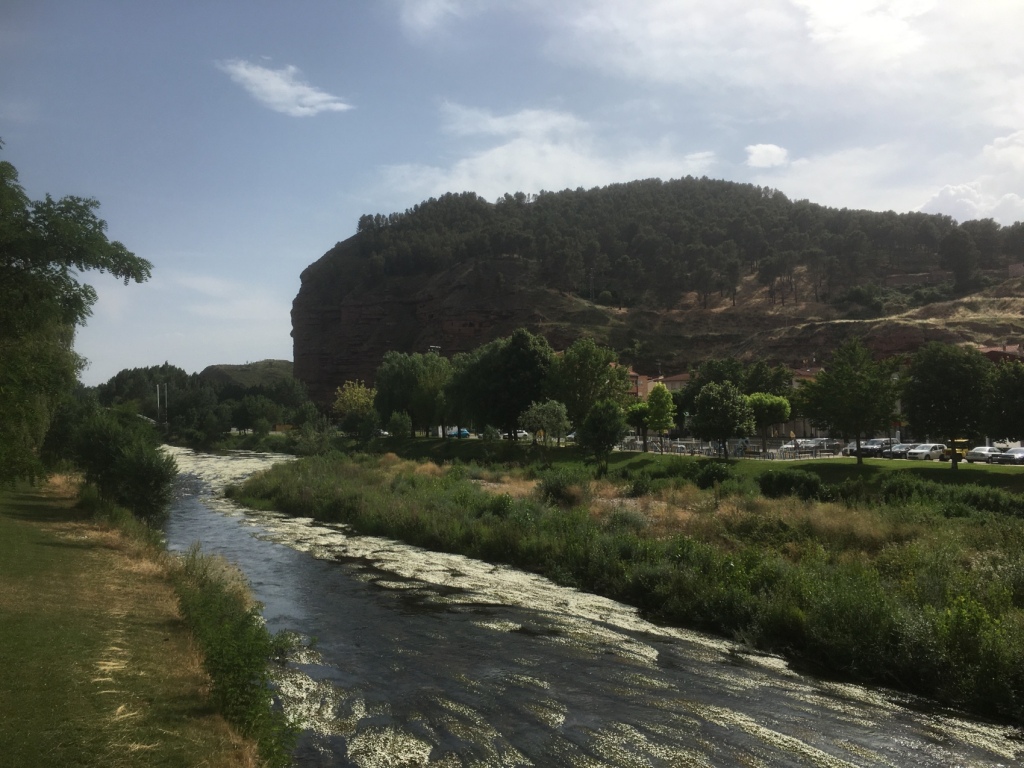
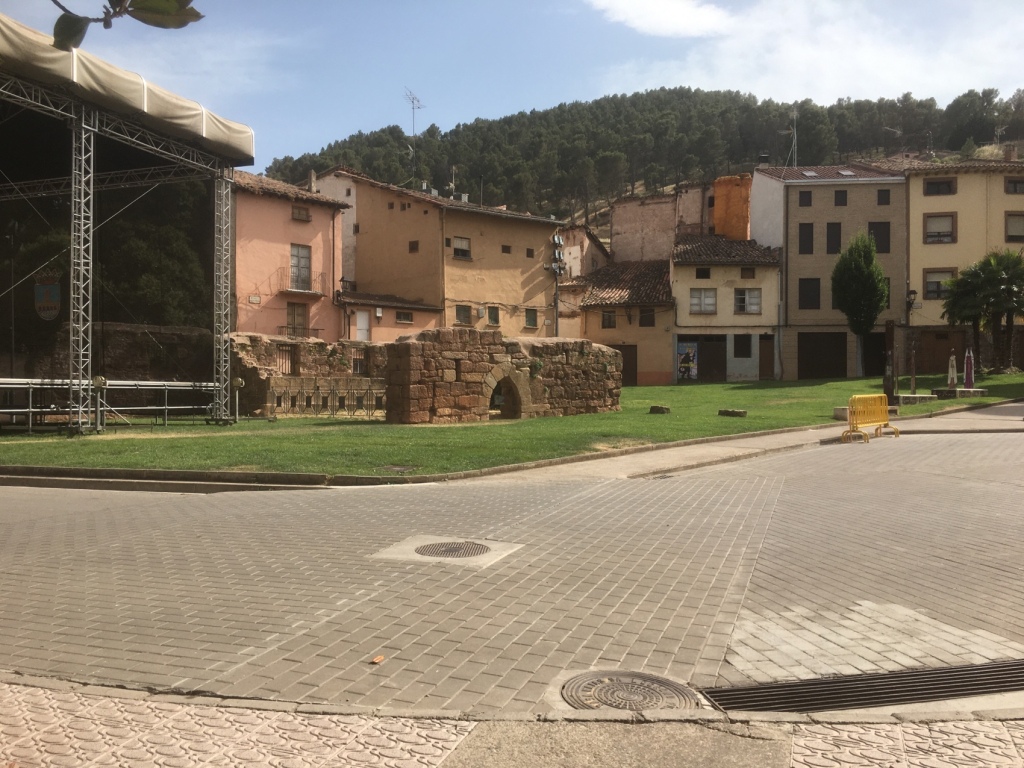
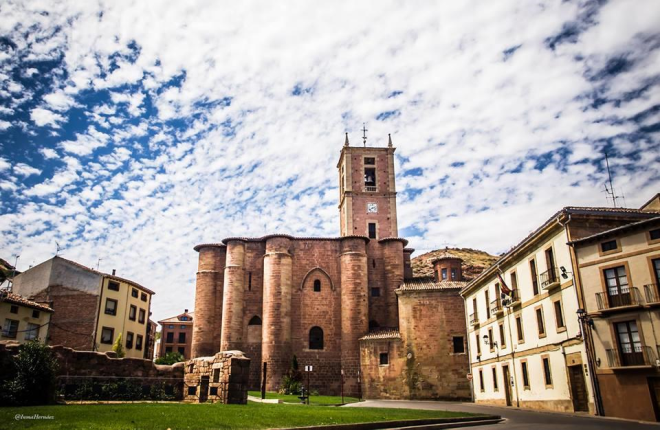
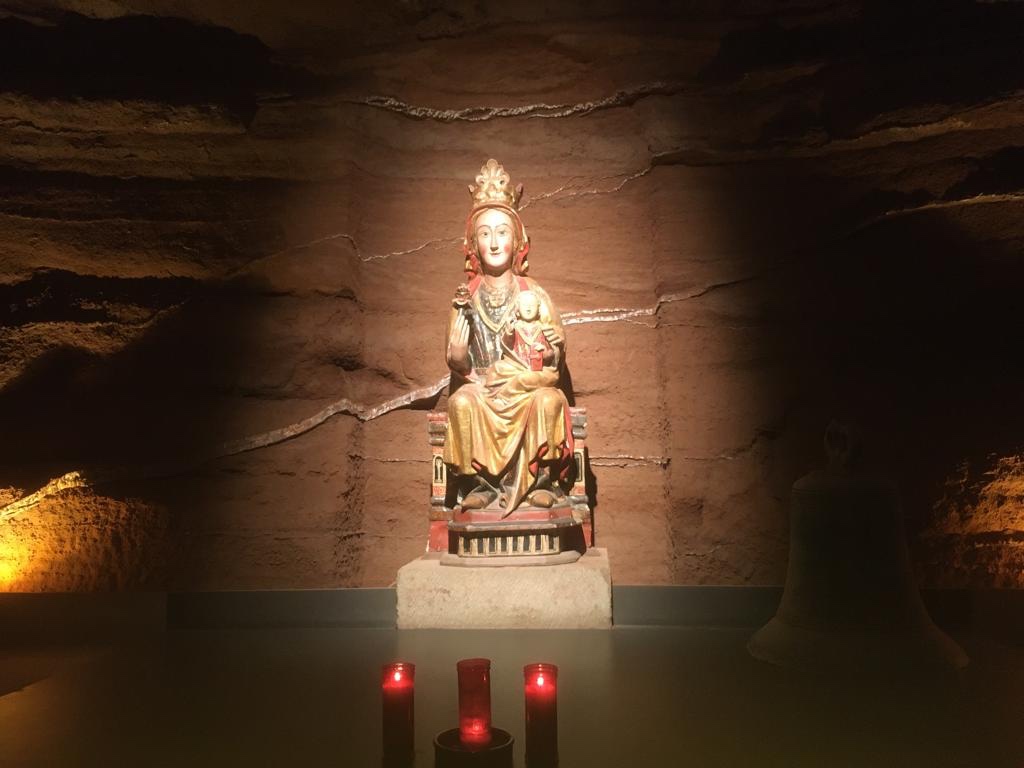
Entering Najera is not the most memorable of ways but the possibility of a cold drink overcame our disinterest.This was a warm welcome.No, coffee was not what was requiredBut some shade was…Gaseosa and Claras were downed gratefully. It was only a ten minute walk to Hostel Hispano, our digs for tonight and sited just across from the park and River Najerilla.Wall in the Reception area of Hostal HispanoLater, I took this Tinto Verano across from the Hispano Bar to their tables under the trees in the park- the heat was like entering the environs of a furnace.I crossed the river Najerilla to explore the town By way of a convenient pedestrian bridge.The town is dominated by the red cliffs.And the imposing Monasterio de Santa Maria Real.The origin of its foundation are misted in the legend which tells how the king was out hunting and chased his prey into a cave where he found a mysterious image of the Virgin and a jar of lilies, a bell and a lantern. He was hunting with his falcon when the bird flew off after a dove . When Garcia went to investigate he found a cave emitting light . Inside he found his falcon and the dove sitting peacefully, perched either side of an ancient wooden statue of Mary and the infant Jesus. Garcia then a chapel to be built which soon became a church and a monastery.
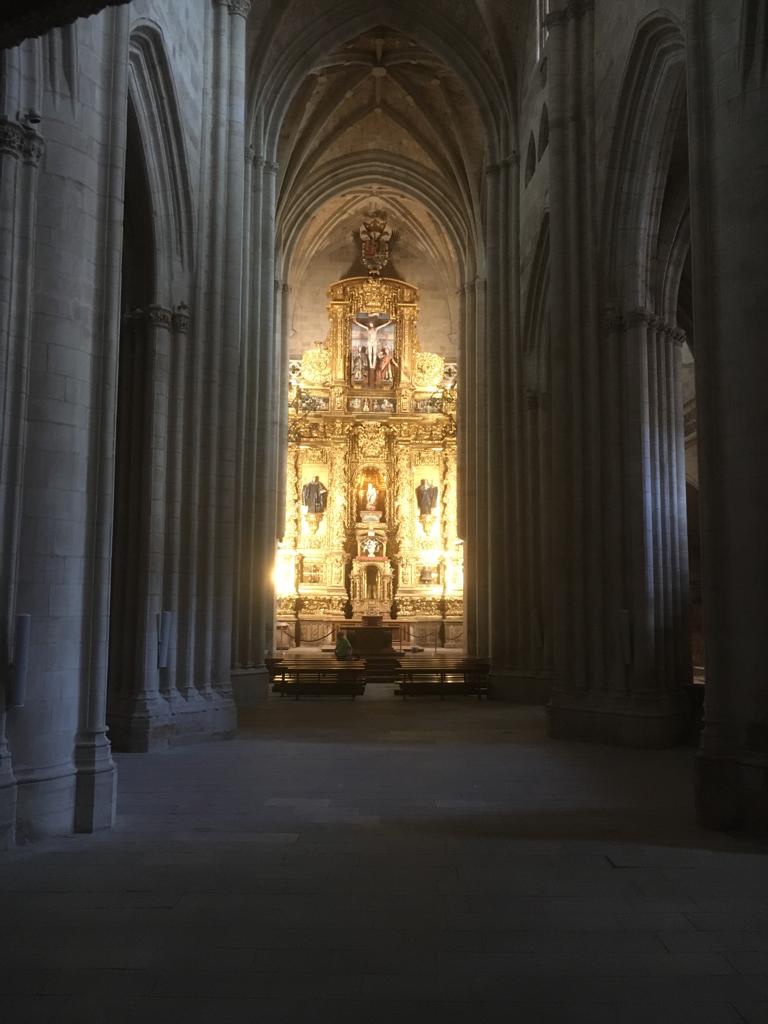
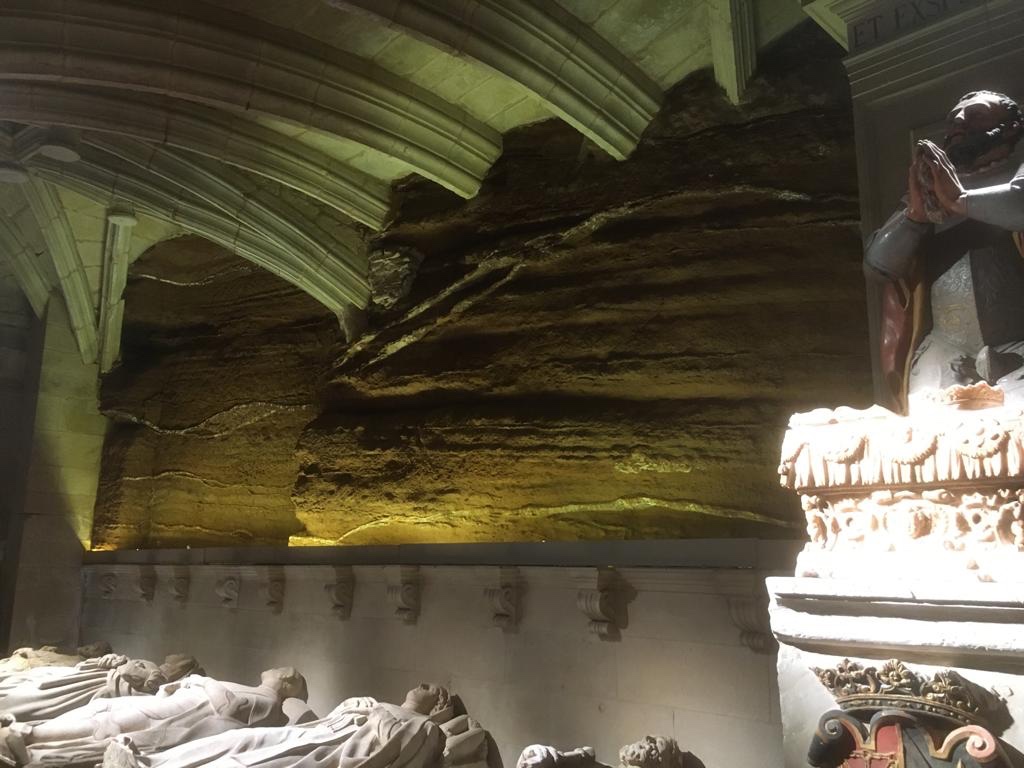
We have Tom to thank for the following photos of the Monasterio.
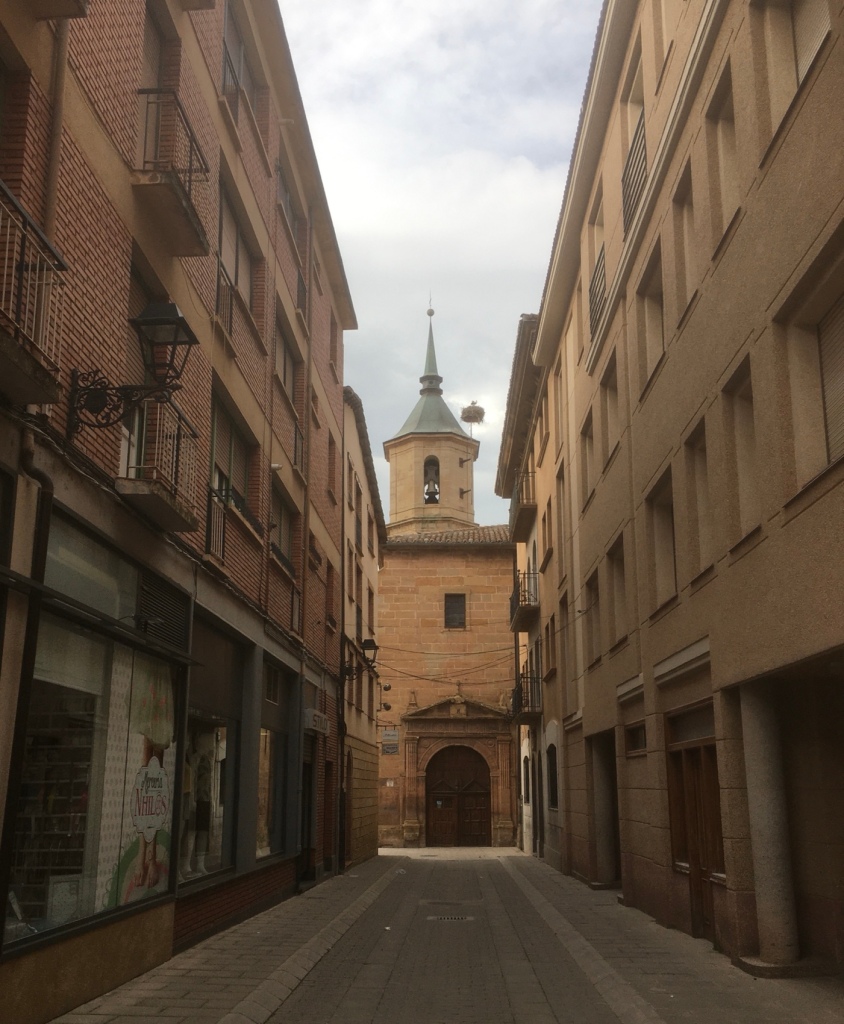
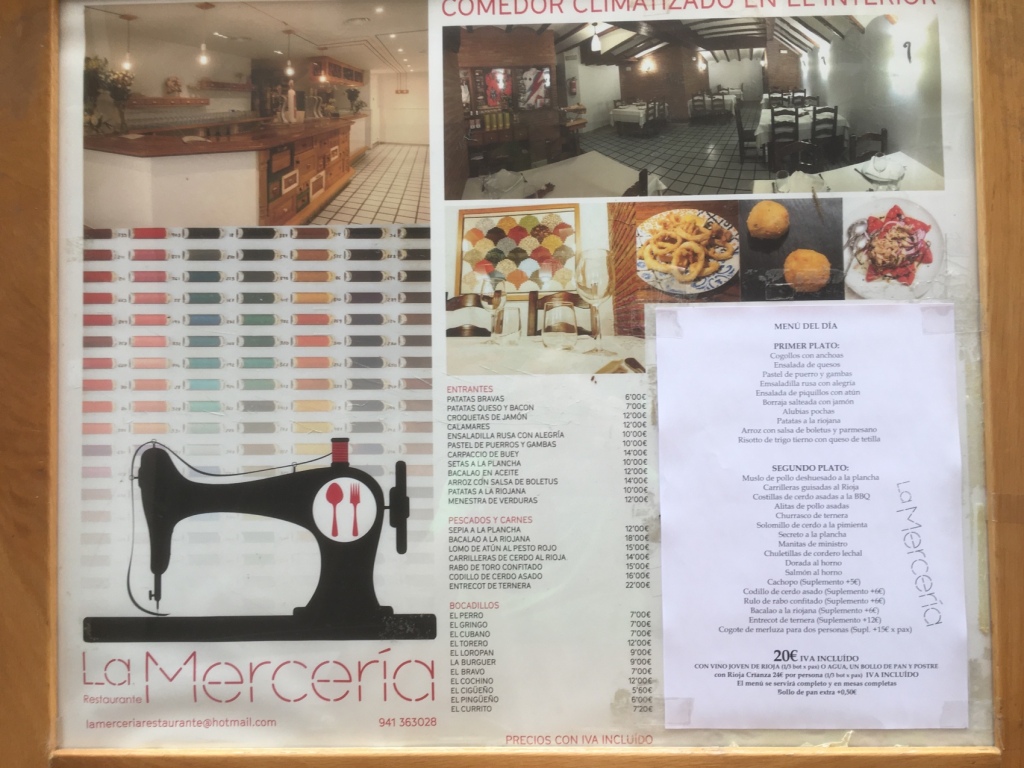
Here you can see how the building is set into the walls of the cliff.A simple statue illuminated by candles and the warm glow of rust red rock.Can you make out the stork’s nest ? Seeking sanctuary on the church tower?A walk back to seek somewhere to have dinner.This menu looked a good bet.Najera is hidden gem.
This is a questioning romantic poem we found along this Etape “ What hidden force draws you?” It asks. I still don’t have an answer !
Another very hot day is forecast and so taxis were taken out of the city towards Navarette, in time for breakfast.
This town is famous for its red clay pottery.“Inspiration exists but it has to find you working” Pablo Picasso08.00 and getting warm as we climbed towards the Iglesia de Nuestra de la Asuncion.Downhill and out into the countryside I knew we were on the right path !Vineyards all the way Entrance to the cemetery- this gate was rescued recycled from the Romanesque-Gothic facade of the 12 th century Hospital de San Juan de Acre.A close look revealed St George spearing a dragon.Rolling hills and a tree whose fruit we could not identify.We came upon an inviting detour to Ventosa which was on the original Camino.Another of those “ if only we had the time” scenarios – I have not walked a Camino with so many inviting distractions.Ventosa “ a place in time”.One of several Bodegas en route.Is that our destination in the distant haze?A stone house typical of shepherds and farmers in Rioja.Here in Aleson are two boards with a Camino tale.An updated version of David and GoliathOn the outskirts of Najera – my favourite” English Cottage Garden” flower.Then this heartfelt poem written by a local priest in the 1980s.
The translation is as follows:
Dust , mud, sun and rain
It is Camino de Santiago.
thousands of pilgrims
and more than a thousand years.
Pilgrim Who calls you?
What hidden force draws you?
– Not even the field of stars
nor the great cathedrals.
It is not the bravery Navarra,
nor the wine of the Rioja
nor the Galician shellfish,
nor the Castilian fields.
Pilgrim Who calls you?
What hidden force draws you?
– Neither the people of the Way
nor rural customs.
It is not history and culture,
nor the rooster of the Calzada
nor Gaudí’s palace,
nor the Ponferrada castle.
I see everything as I pass,
and it’s a joy to see it all,
but the voice that calls me
I feel it much deeper.
The force that pushes me
the force that attracts me,
I don’t even know how to explain it.
Only He above knows!
This romance-poem won the second prize in the literary contest organized by the cultural recreational society “PEÑA EL SALERO”, from Santo Domingo de la Calzada, on September 19, 1987.
Entering Najera is not the most memorable of ways but the possibility of a cold drink overcame our disinterest.This was a warm welcome.No, coffee was not what was requiredAnd some shade was…Gaseosa and Claras were downed gratefully. It was only a ten minute walk to Hostel Hispano, our digs for tonight and sited just across from the park and River Najerilla.Wall in the Reception area of Hostal Hispano
28 miles would make this the longest Etape of our Camino and again, given an even hotter weather forecast than the previous day, it was decided to shorten the walk by taking taxis some way along.
07.30 and ready to go.
We alighted at a hilltop by a small sanctuary in Borgota.
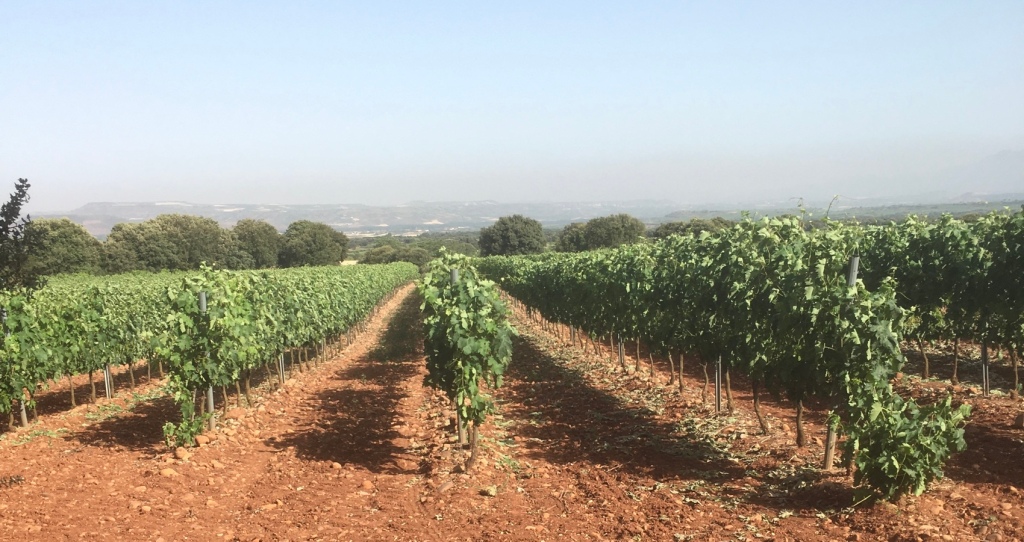
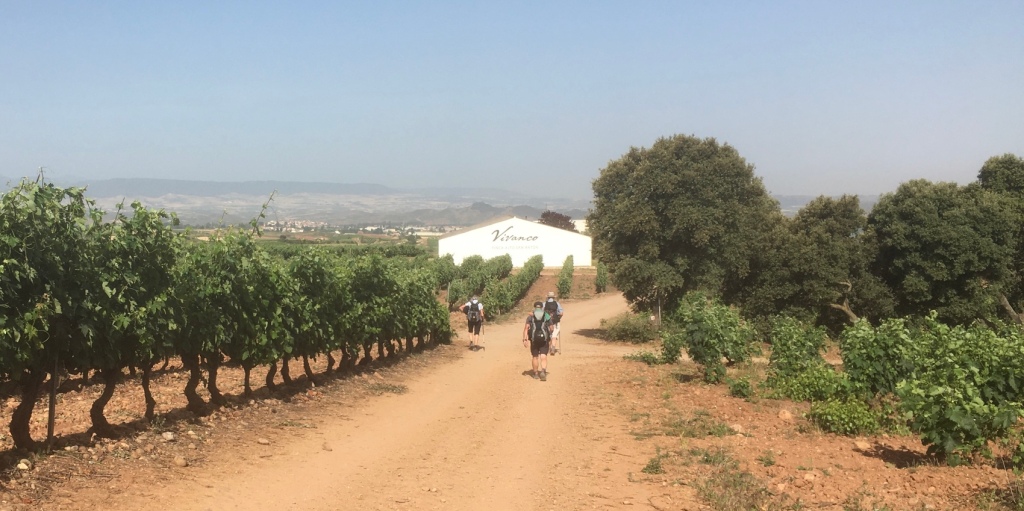
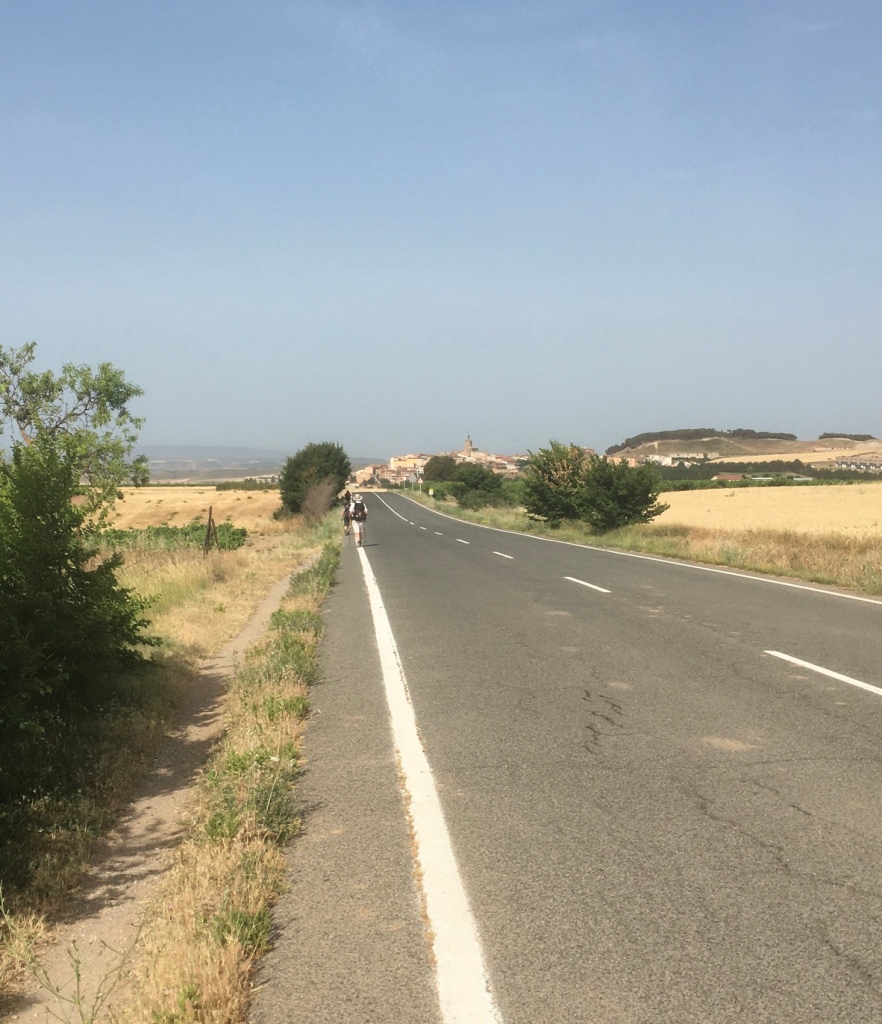
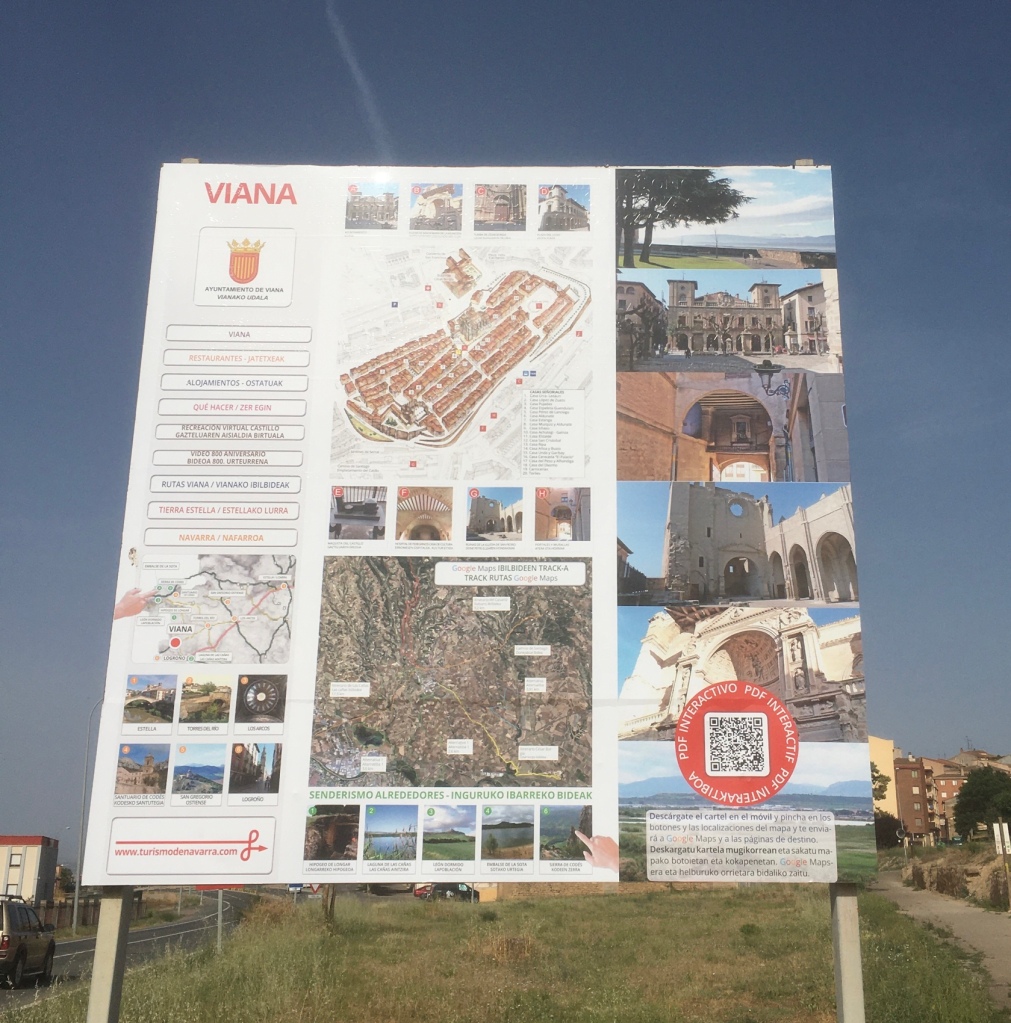
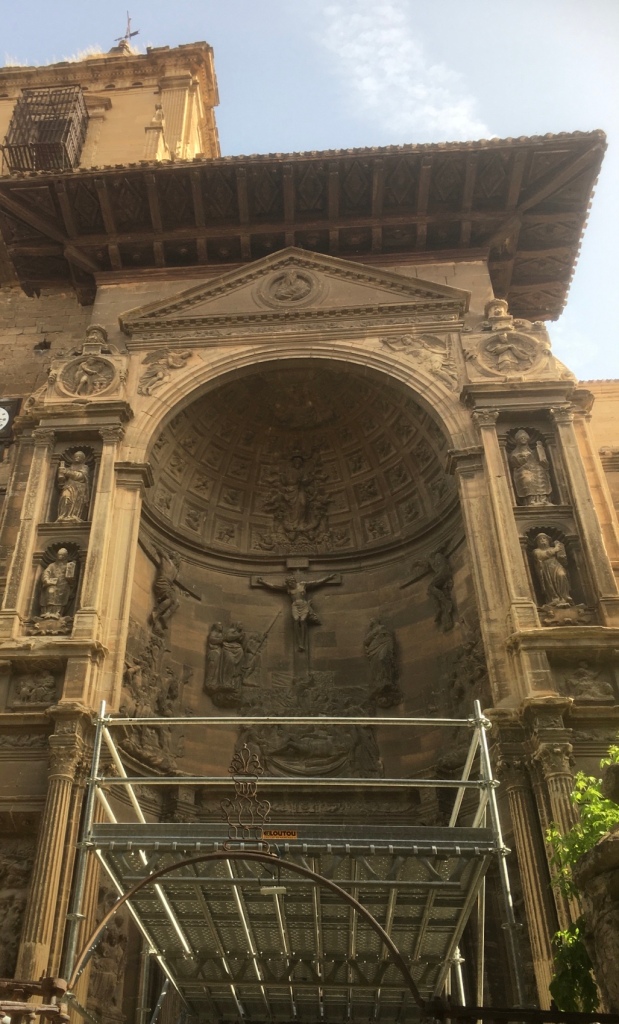
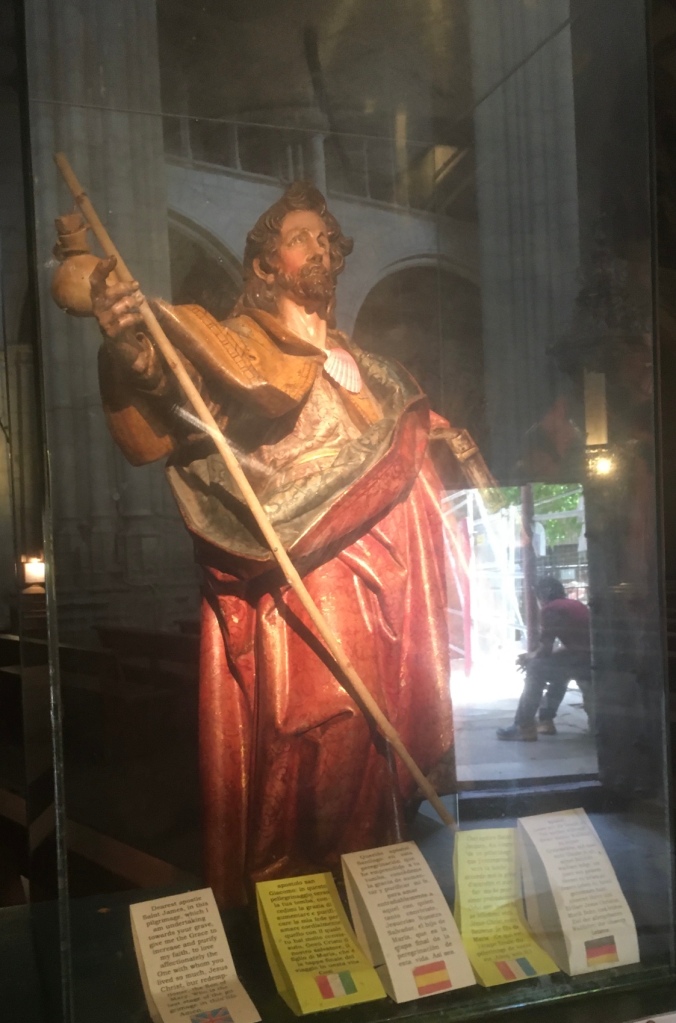
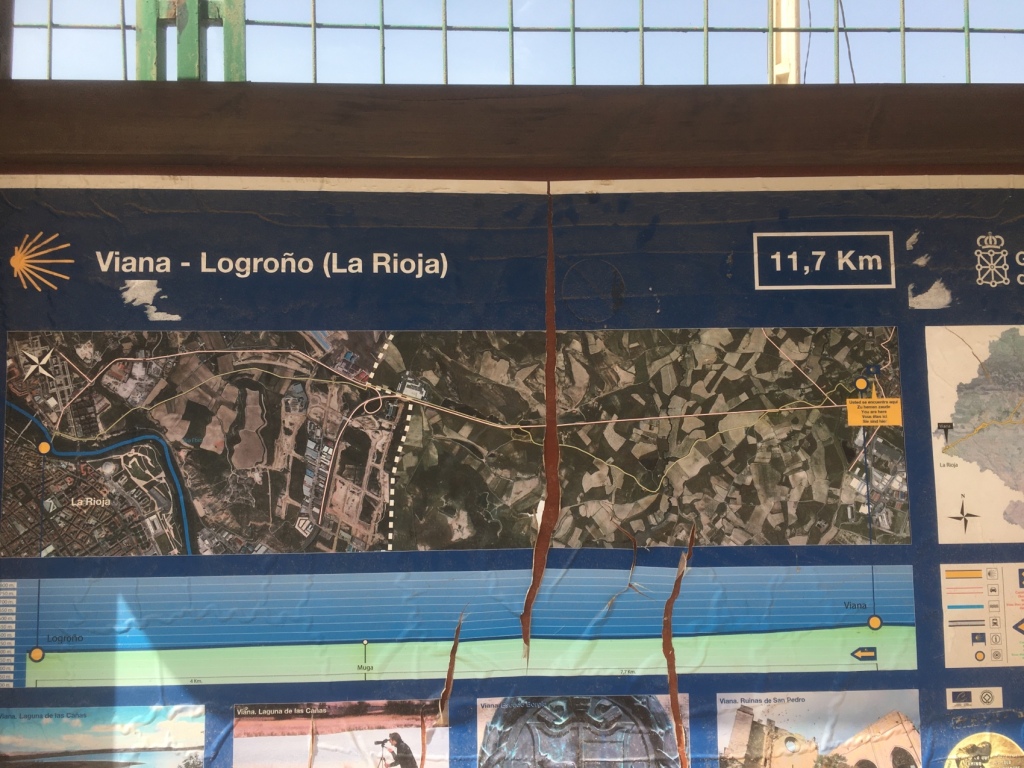
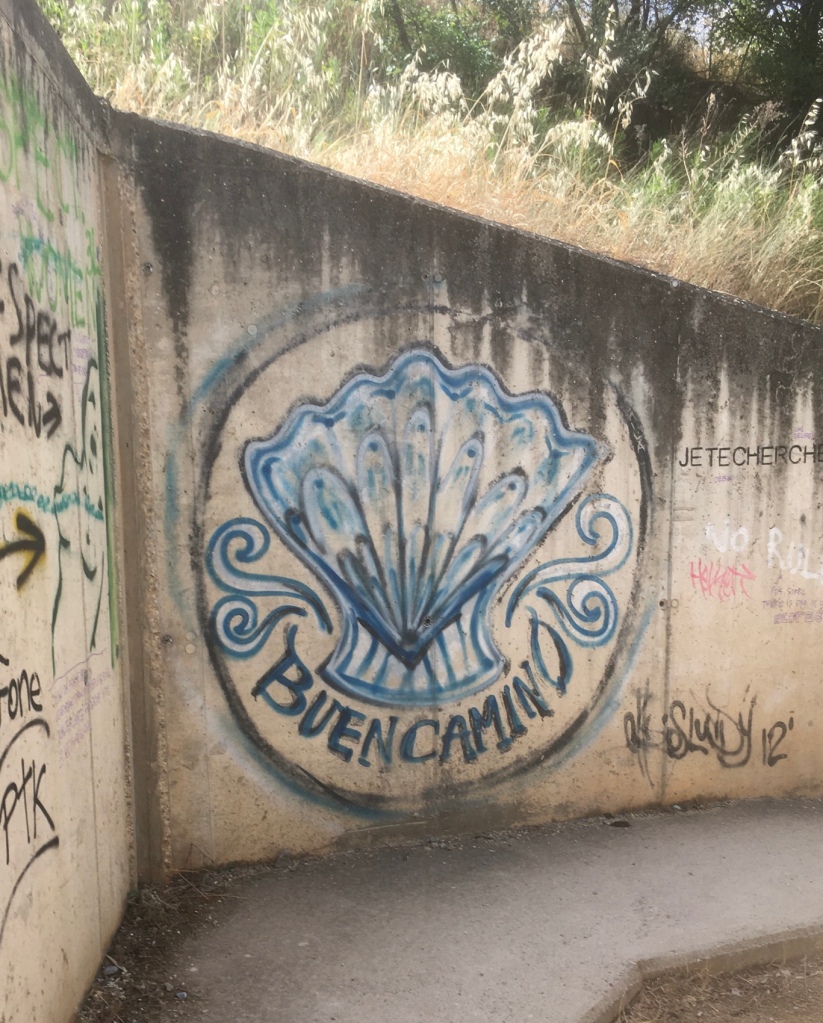
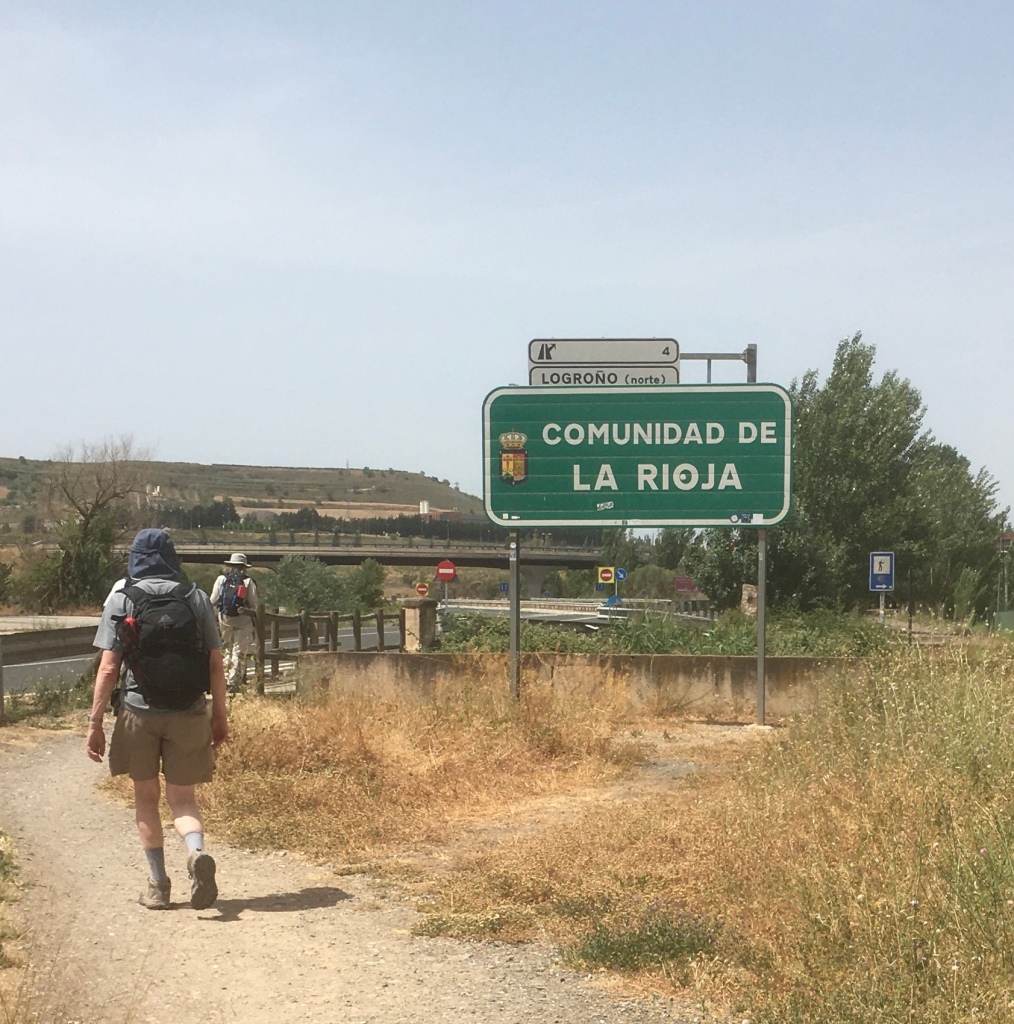
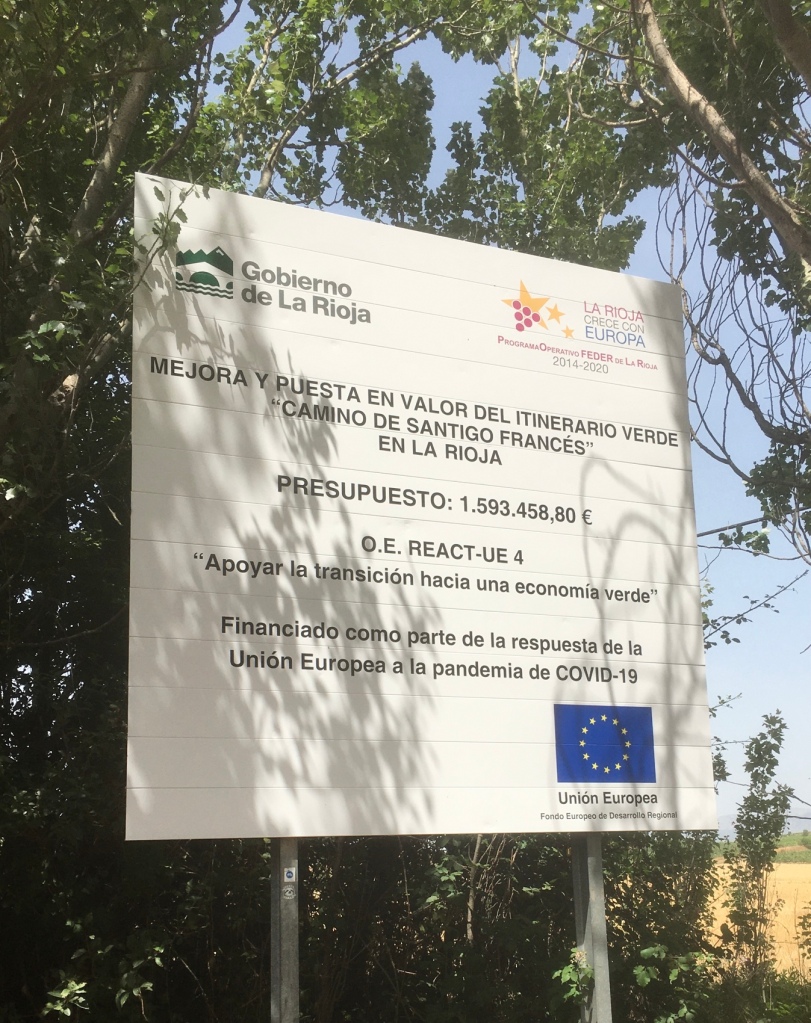
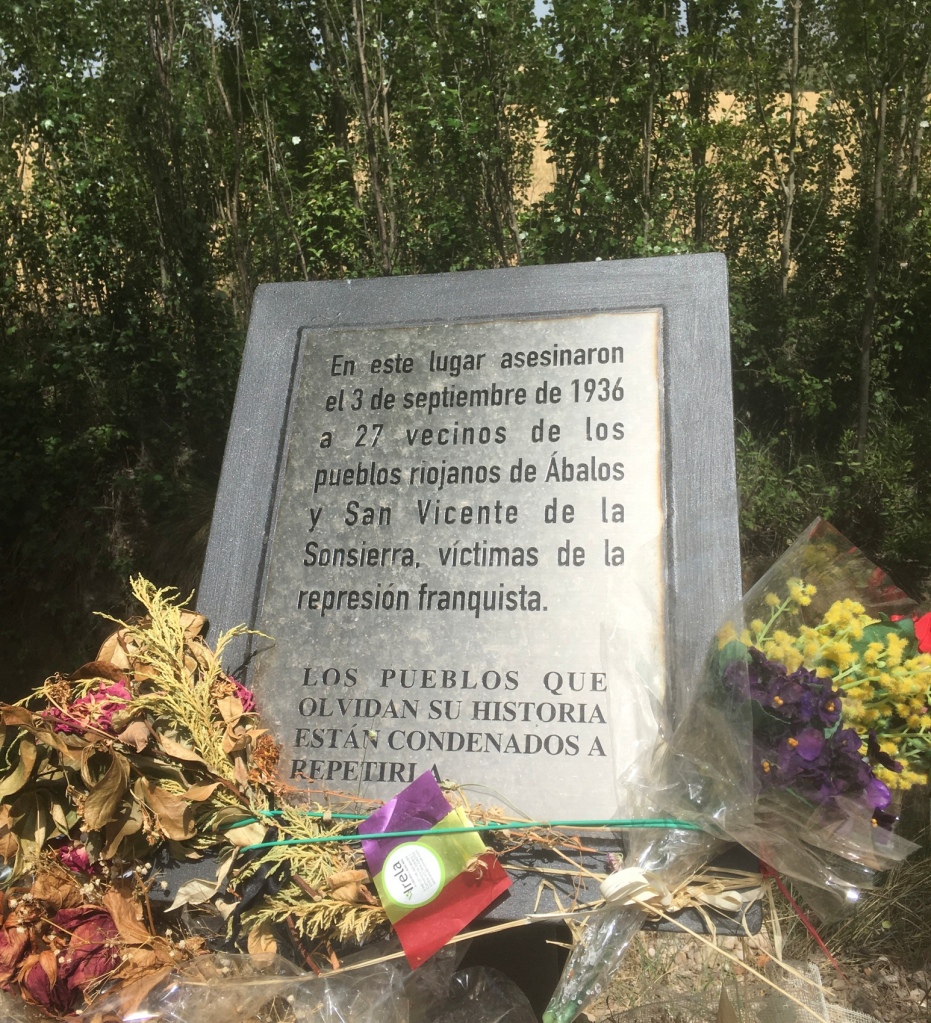
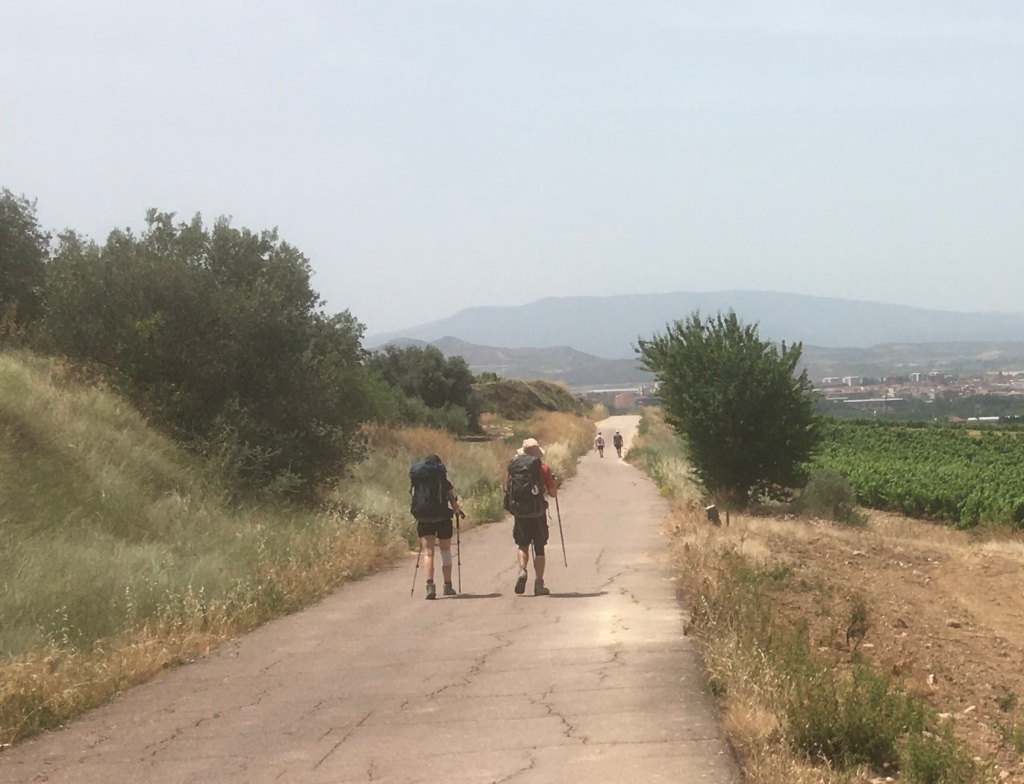
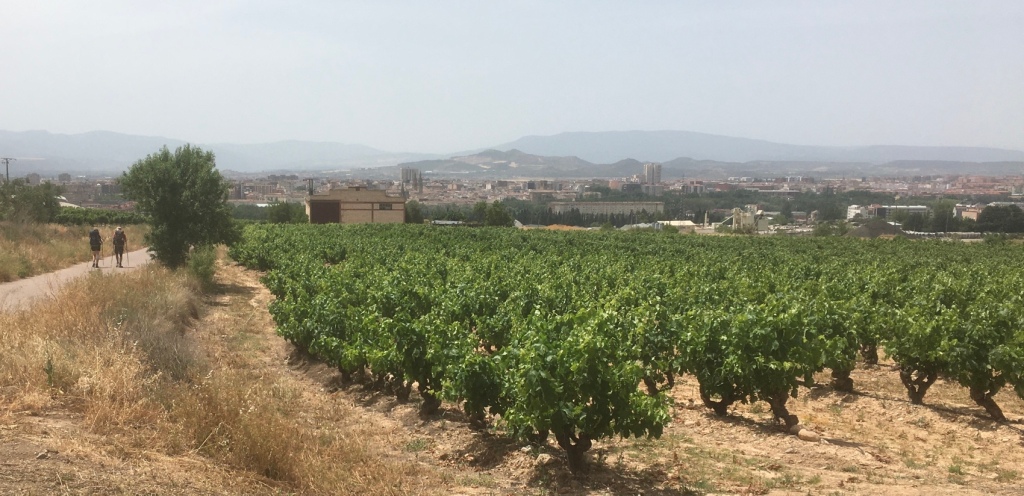
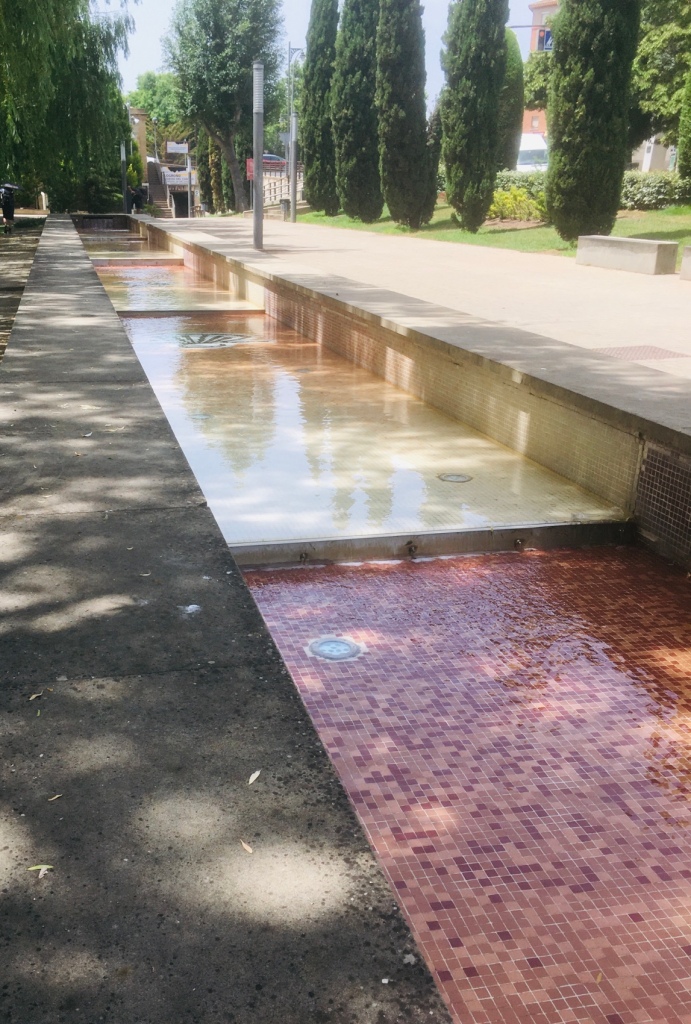
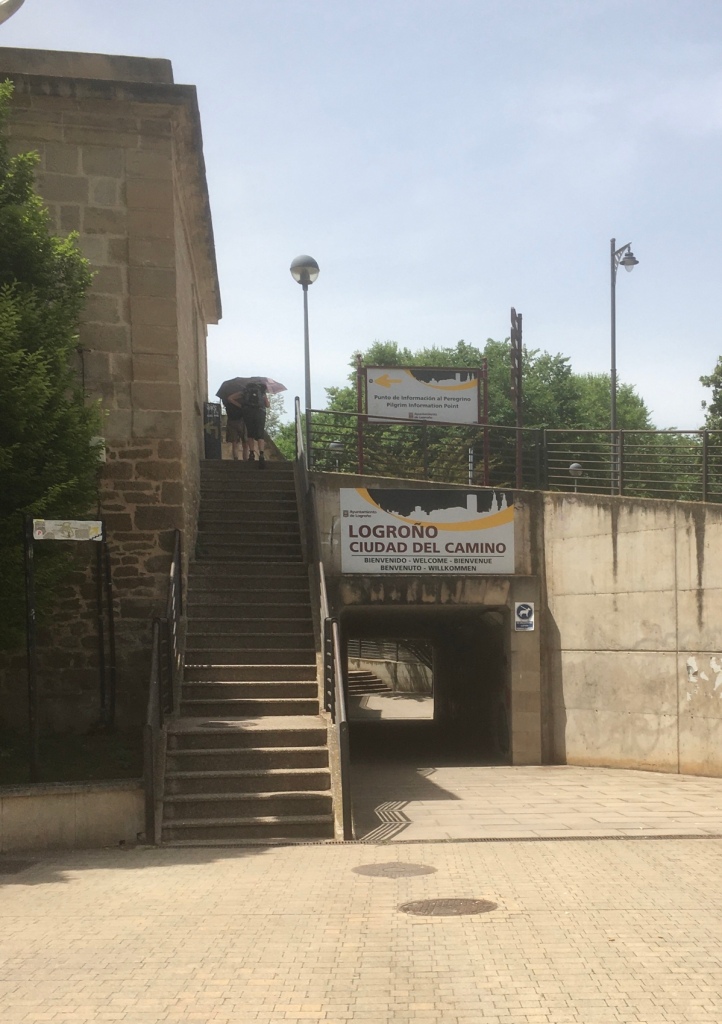
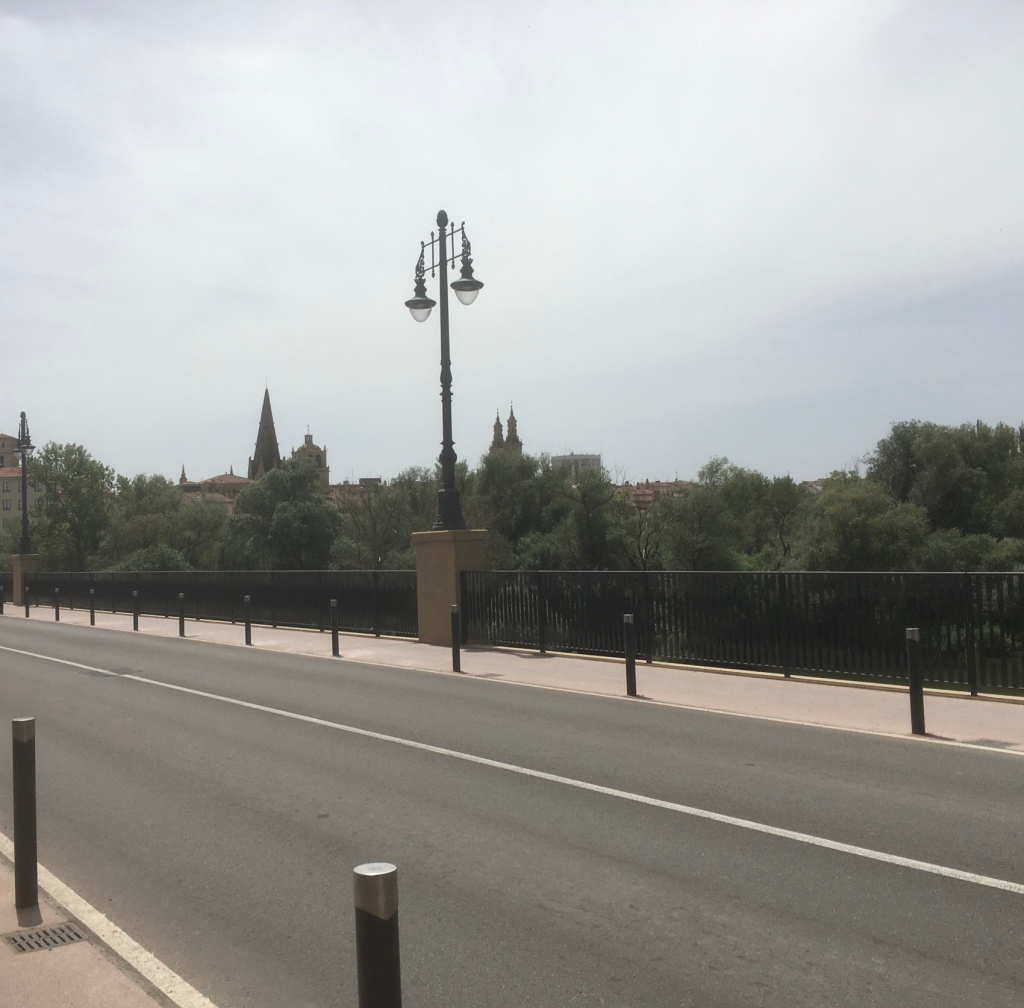
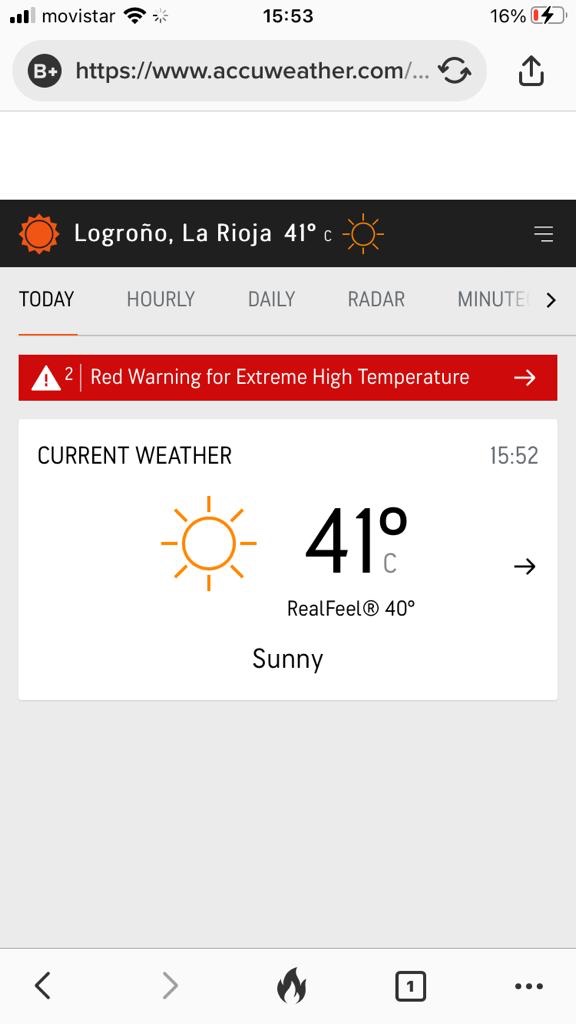
Blessings and protection needed especially from the sun.It’s an open road for some distance .A rare and welcome spot of shade.On the way now to Viana with views of neatly laid vines.On some of the vineyards there are roses,not planted for any aesthetic reason. Pale yellow for white grapes,and red or pink for red grapes – if the roses decline before the vines it’s a signal to the winemaker to intervene.The welcome sight of Viana in the distance and the certainty of refreshments after a long stretch.Created in the 13th Century,enclosing several settlements within a fortified wall. Despite its strategic position in various wars between Castile and Navarre throughout its history , it has always been an important pilgrim town and at one point had four pilgrim hospices. The Camino goes right through the centre of the old town. We took a seat opposite the Iglesia de Santa MariaGold painted Baroque Retabla which focuses on Mary’s life,especially her ascension into heaven.The man himself and we got a sello here – not always available in churches as they are often closed.We took a longish break here and enjoyed the people spotting in this lively atmospheric street.We exited by an ancient gate and made our way out of Viana,downwards thankfully.Still seven miles to Logrono.The map reminds that we are heading into La Rioja.I’m quite indifferent to graffiti but this one I was quite taken by.There are no services between Viana and Logrono but this made a pleasant bag break and an opportunity to take on more water.It would take some time to figure out all the imagery in this attractive mural.Logrono in the distance.Making good progress despite the heat.Up and over the Autovia.An interesting grass plant .On the outskirts of the city.The EU as so often has been the case, supported the improvement of the Camino into Logrono. However,during the works a mass grave was discovered of victims of Franco’s oppression.Closer and closer…La Rioja You pass through some welcome shady gardens with a pleasant water feature to remind you that the Ebro is not far away now.Up and over the river Ebro, the widest we have encountered so far.A very elegant bridge with the spires of Logrono’s churches emerging.My first ever selfie,taken by mistake as we waited for Pelegrinos to arrive – a look that says what is needed most…Salud.Another fascinating saunter on the Camino Frances.
I’ll finish this Blog with a few photos from our afternoon and evening in Logrono.
The streets in the Old Town
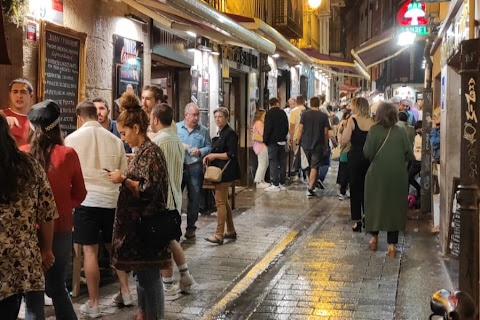
Friday evening and the tapas trail in and around Calle del Laurel gets really busy.
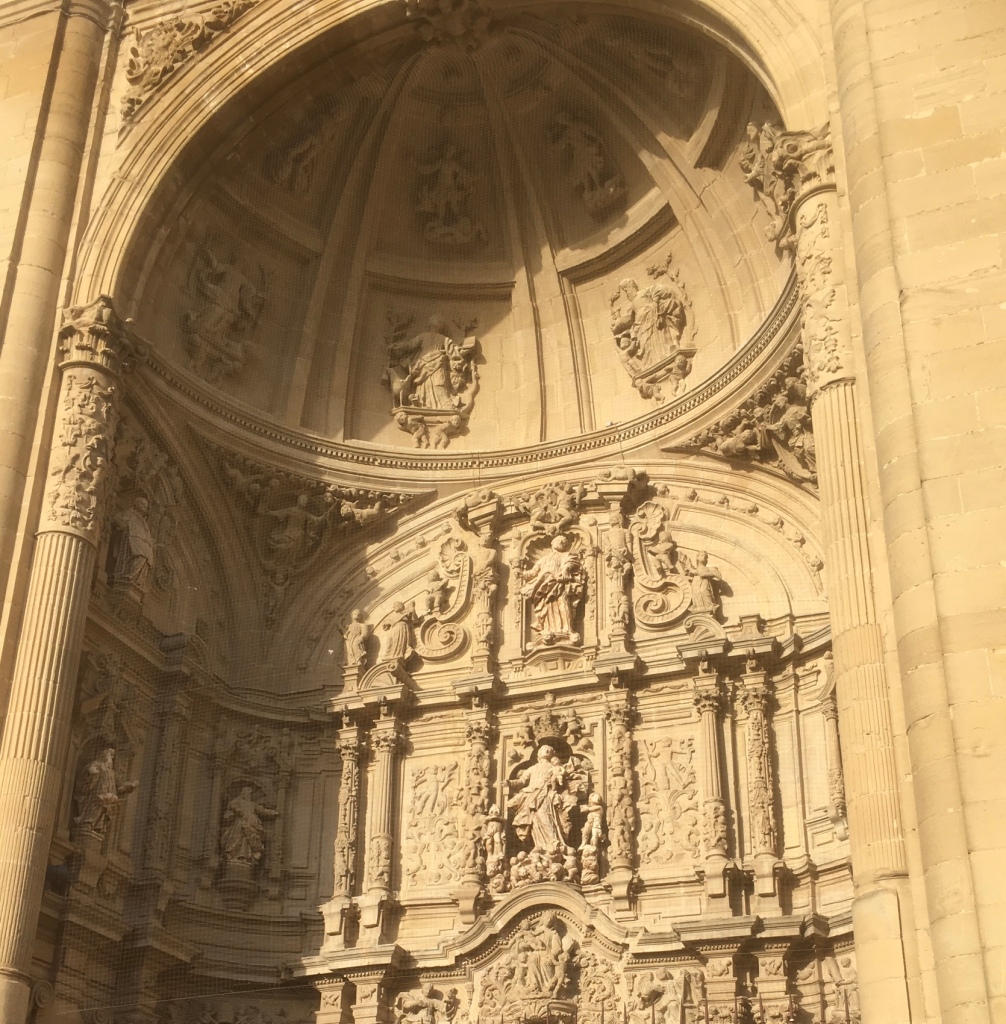
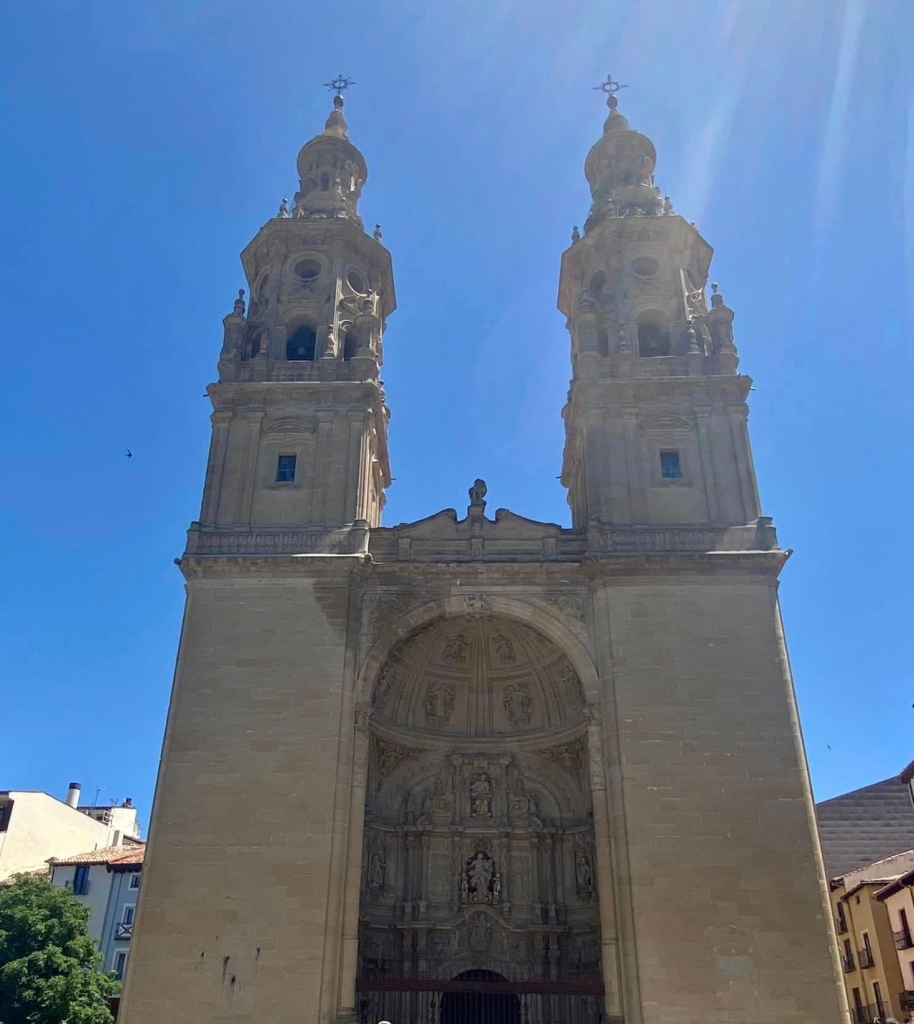
The Cathedral,squares and churches are in abundance.
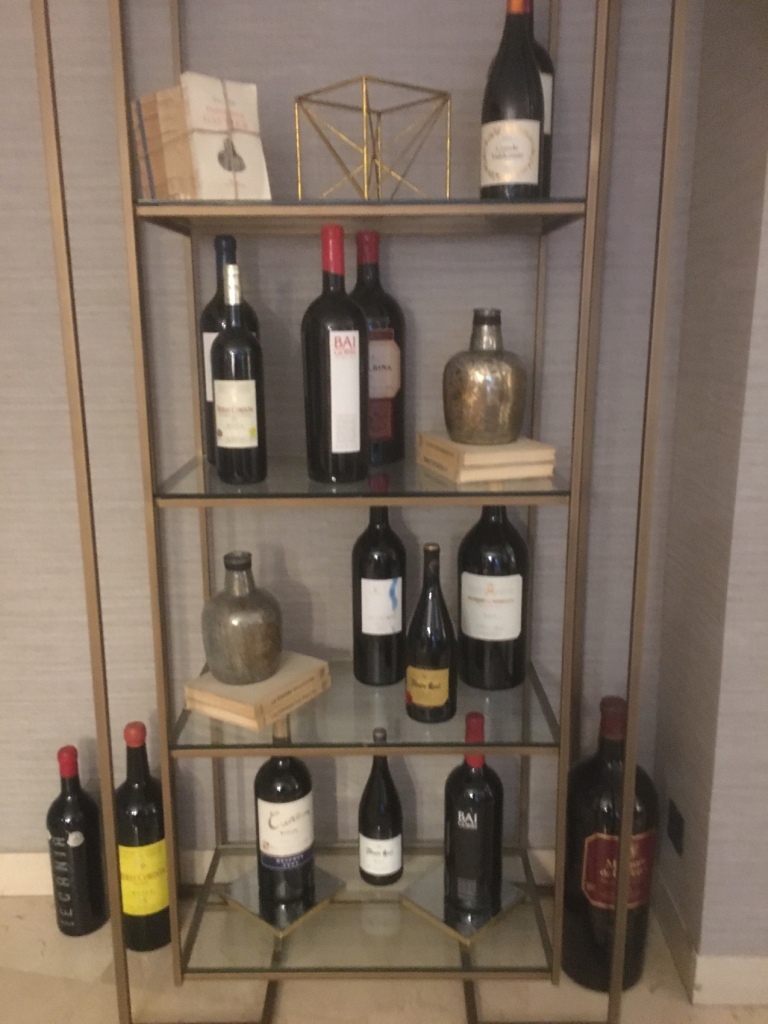
We had a meal in the square opposite the cathedral,sampling both white and red Rioja wine. Logrono is worth a longer stay but as is the way on the Camino it was time to walk on to Najera.The Hotel Los Bracos Breton de Los Herreros lobby.
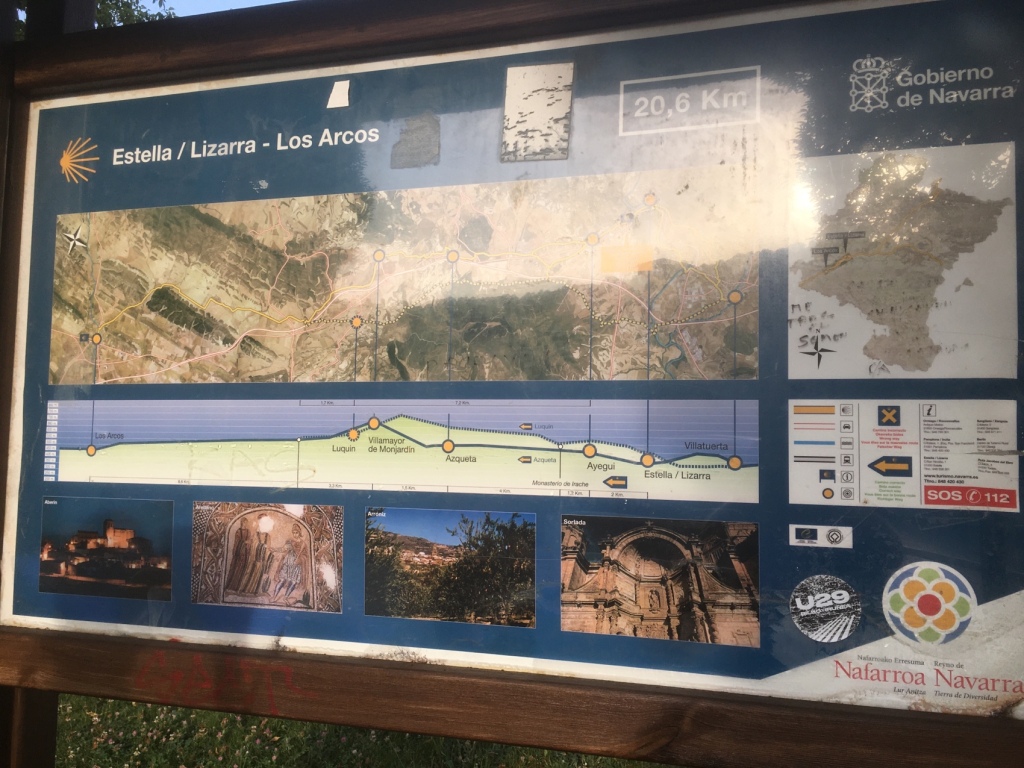
The gradients look kind today but looks can be deceptive.
We climbed a small hill along an agreeable path towards the Monasterio de Irache,passing small huertas and scallop shells a plenty.
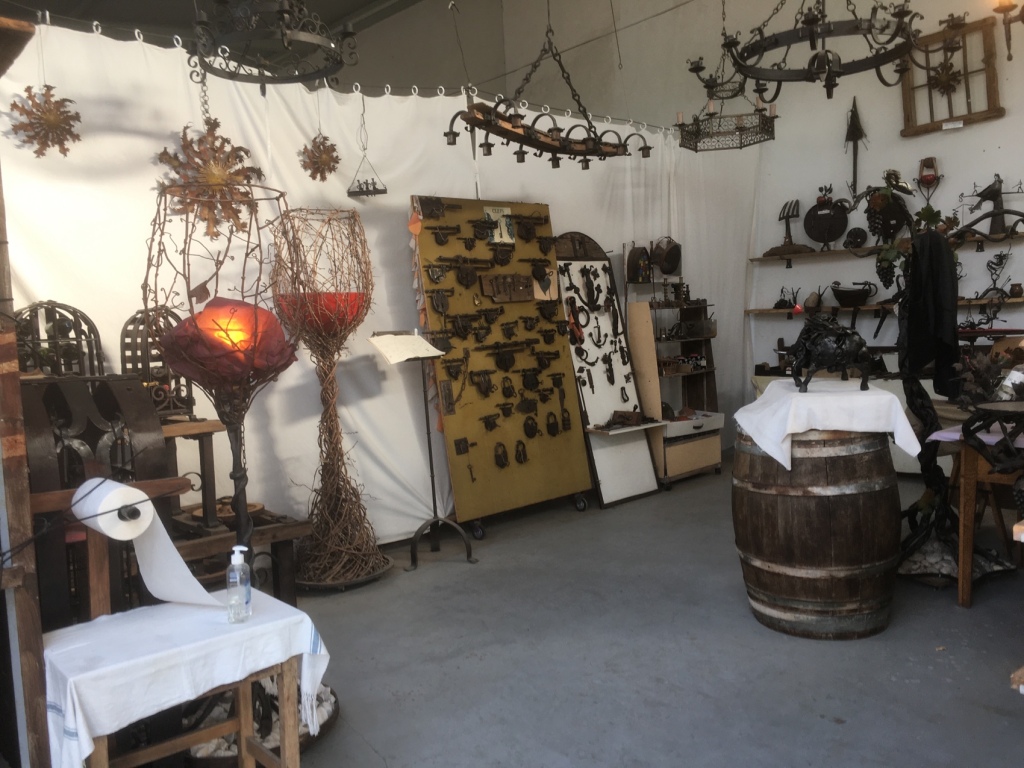
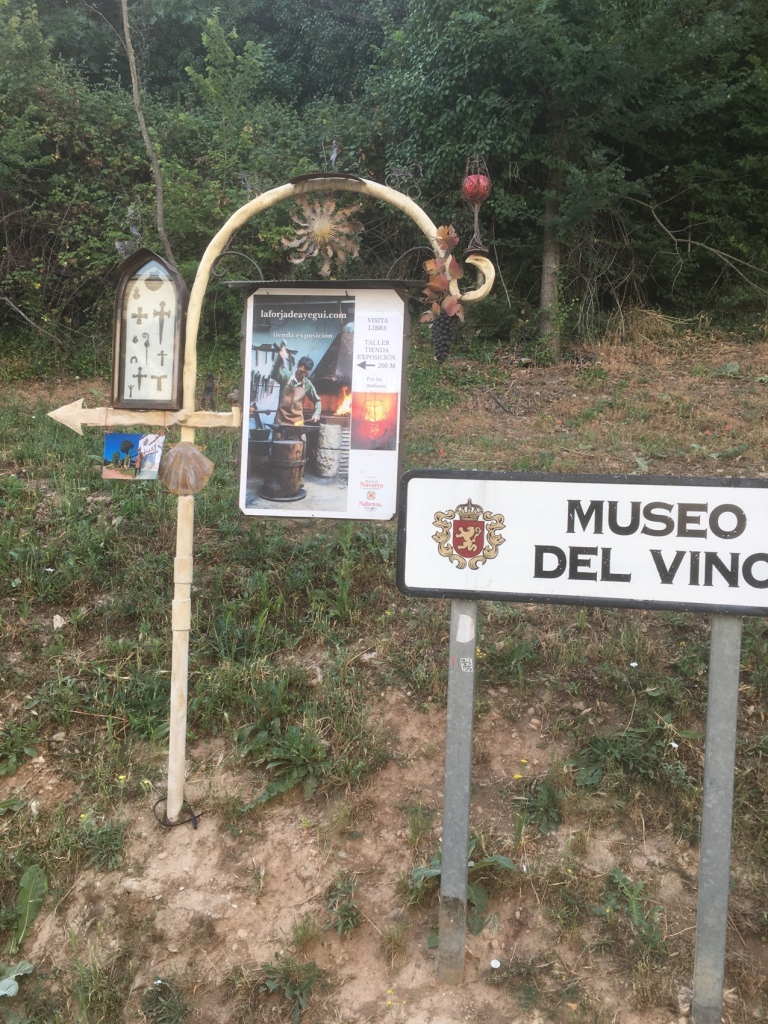
We stopped at a small foundry where there was an impressive array of hand made artefacts on display – a small fire was burning and the craftsman stamped our Credencials.
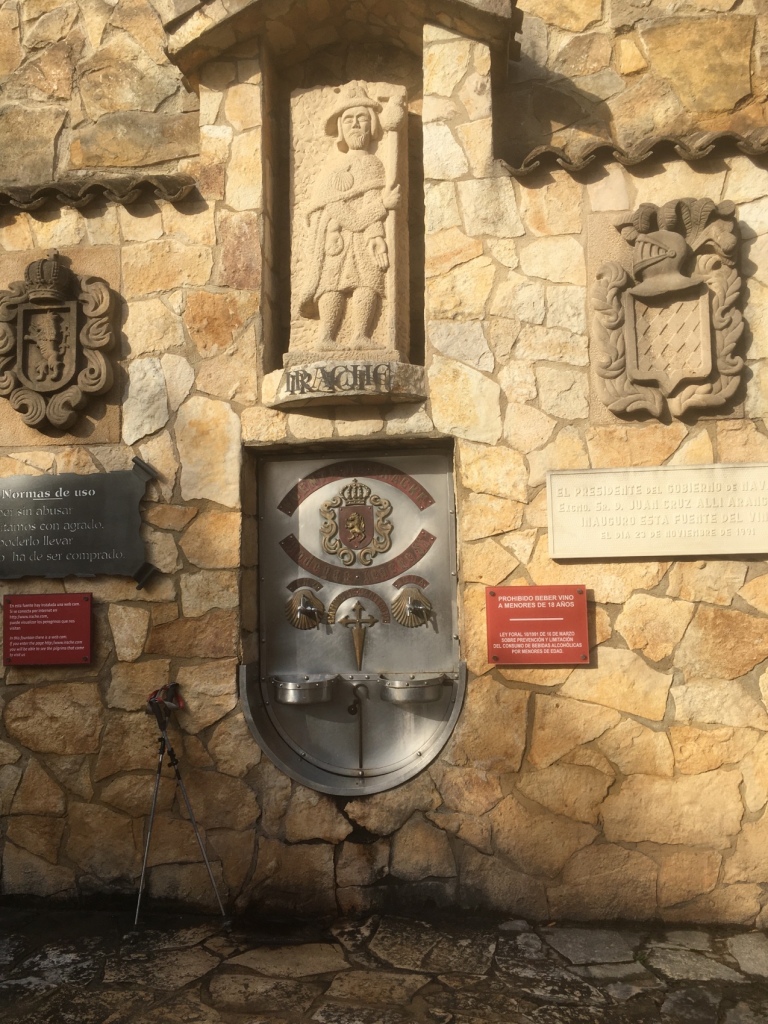
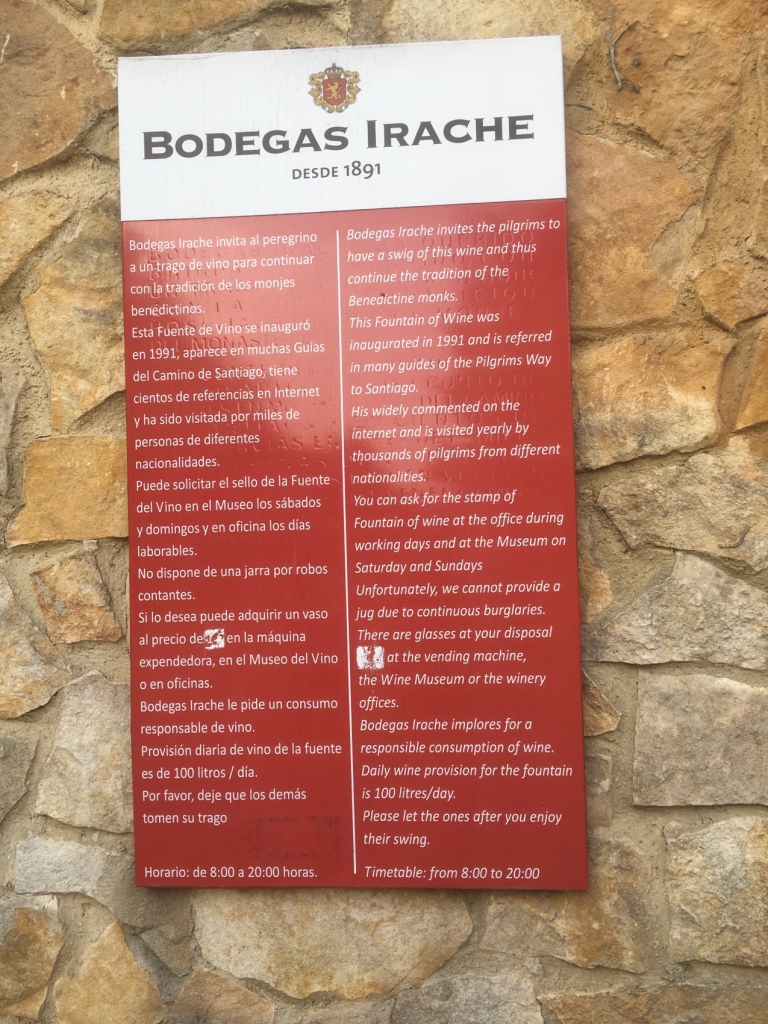
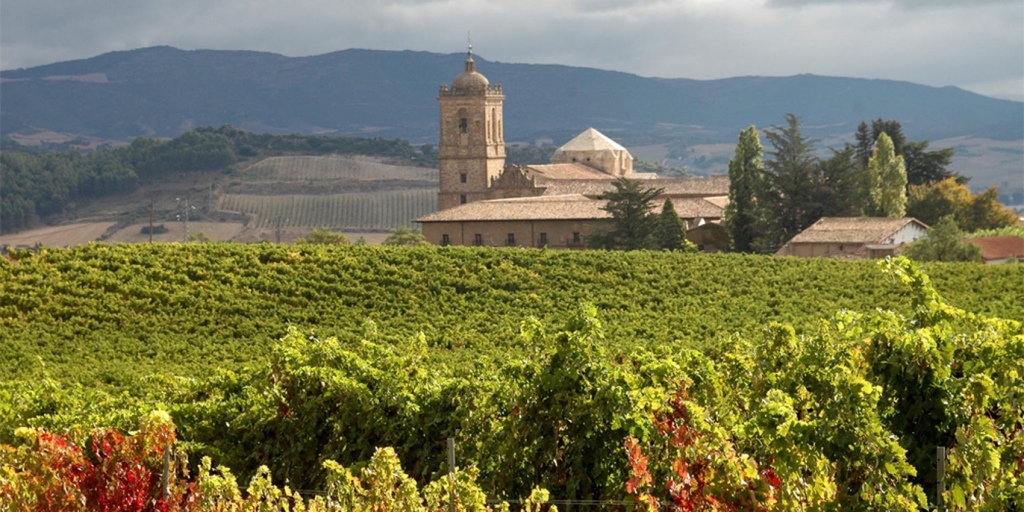
Before reaching the Monasterio we came to the famous Bodegas Irache vineyards – http://www.Irache.com – founded in 1891. The vines surrounding us round here have been cultivated since the 12 th century. In 1991,100 years after it was founded,a wine and water fountain was put in place. The symbolism represents Jesus’s first miracle at the Wedding of Cana.There are 100 litres of wine available each day after the fountain is switched on at 09.00. Traditionally pilgrims would fill their scallop shell with wine before walking on. We timed it to perfection, but wine just after 09.00 is more of a sobering experience!
If only we had the time .“Please let the ones after you enjoy their swing” Que? Lost in translation I think,but I did learn the Spanish for “ swig”- trago.Just after the Bodega is the Monasterio- by the 7th century there was a religious foundation here and the Benedictines founded the Monasterio in the 10 th century. It has also served as a university teaching medicine,law,philosophy and theology well into the 19 th century.
We walked on in glorious surroundings along a dirt track – fields and forests abound.
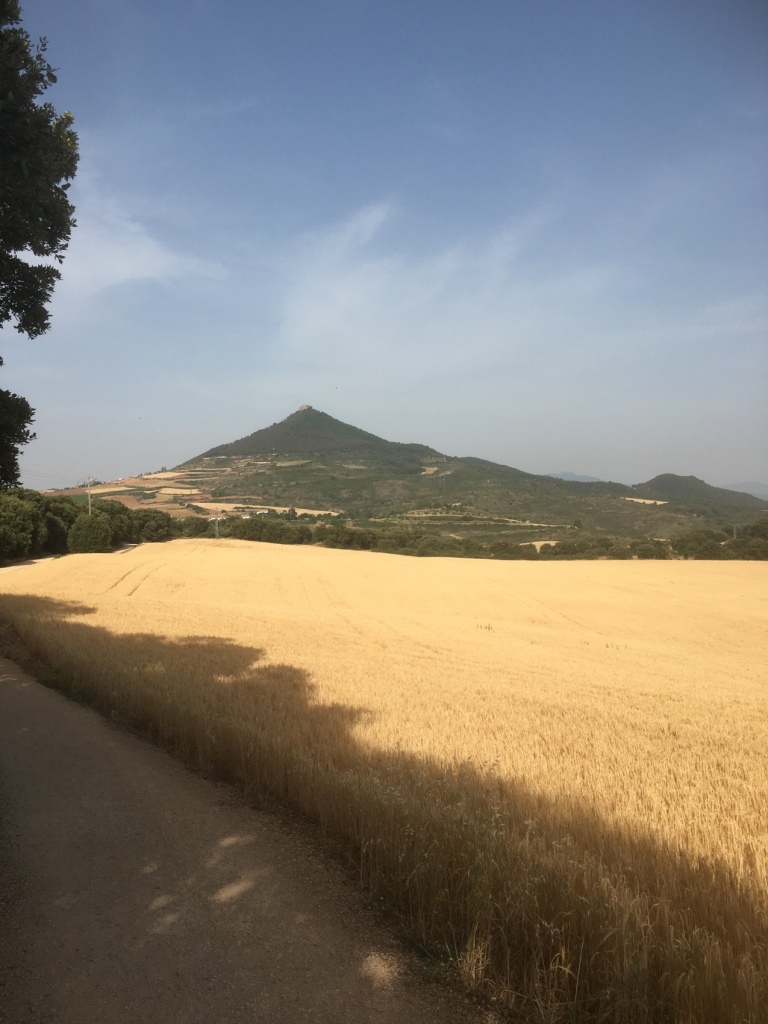
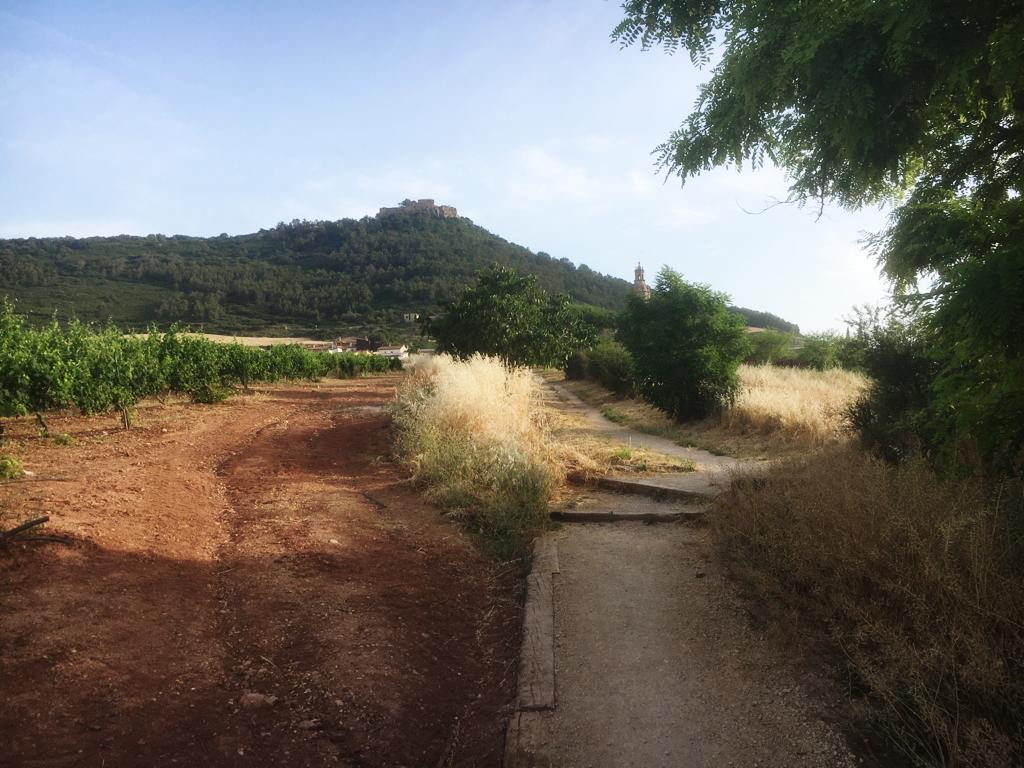
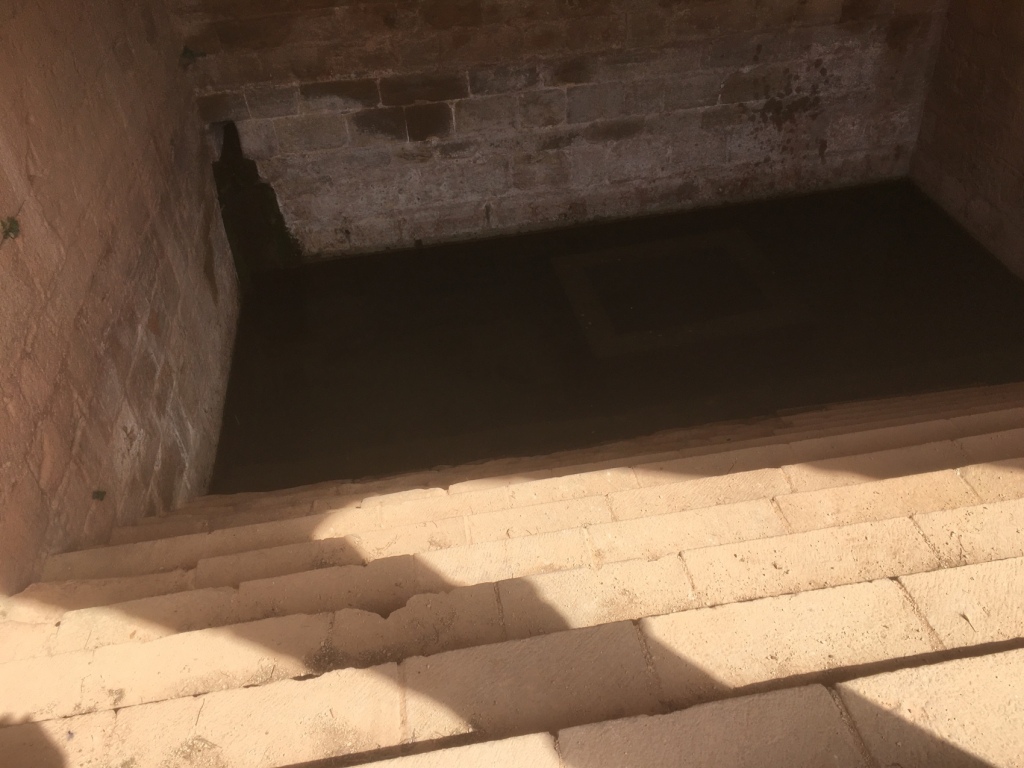
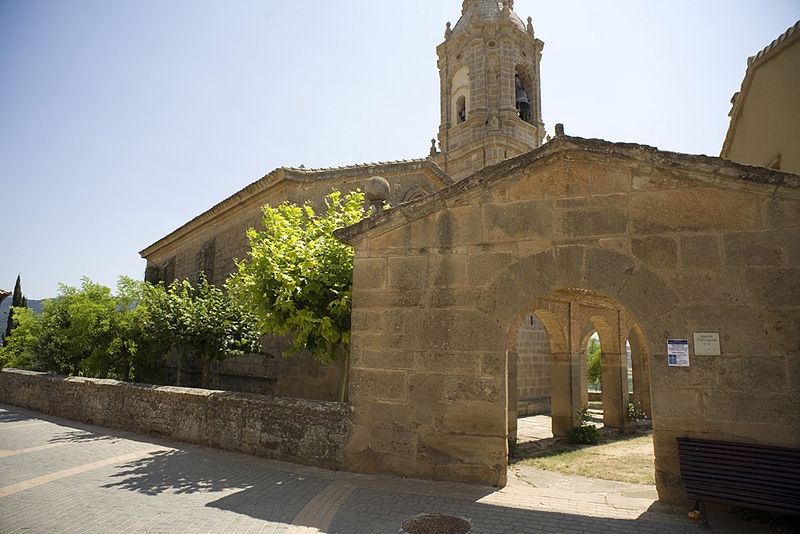
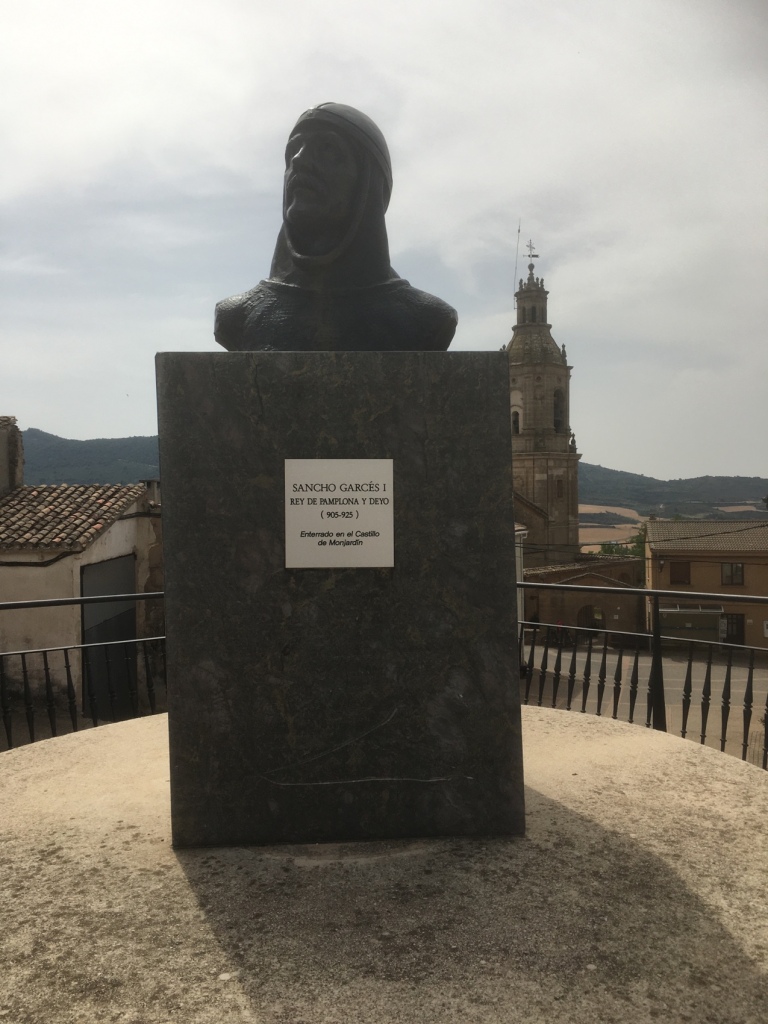
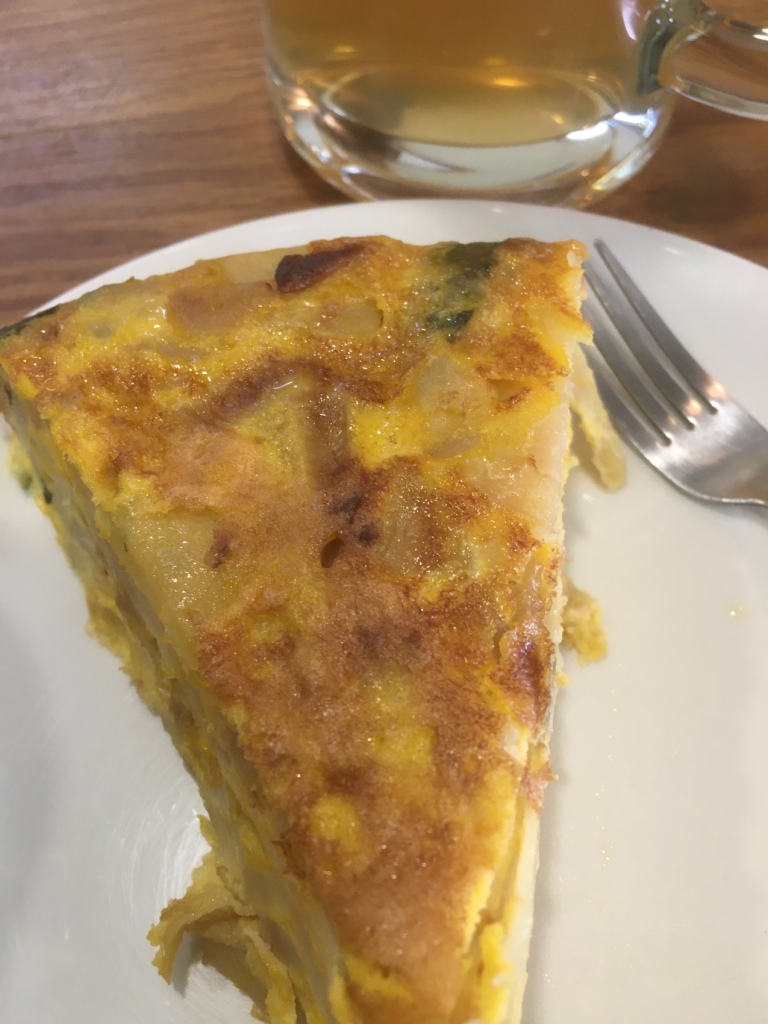
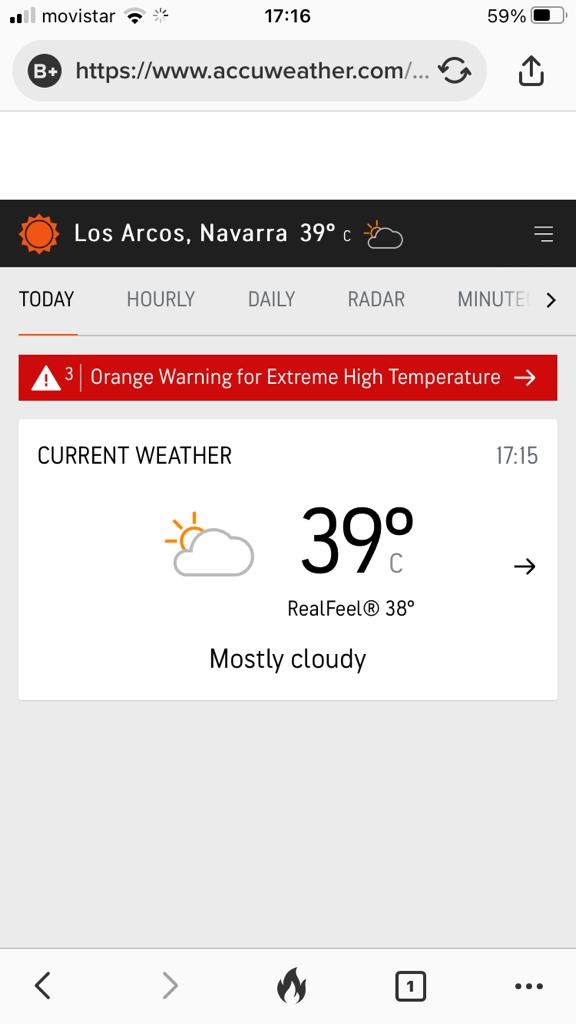
We were soon approaching the tiny village of Azqueta and in the distance a view of a distinctive hill that’s topped by the castle ruins of Villamayor de Monjardin.Understandably none fancied the idea of a two hour detour up the hill despite the promise of views of the Cantabrican mountains- this site has been fortified by different tribes since Roman times.It’s a long stretch from here to Los Arcos with no services.A Moorish Baths We stopped for refreshments at Bar Illaria Iglesia de San AndresA look at the temperature made us decide to take a taxi for the few remaining kilometres to Los Arcos.Tortilla the Pelegrinos’ “go to” snack.
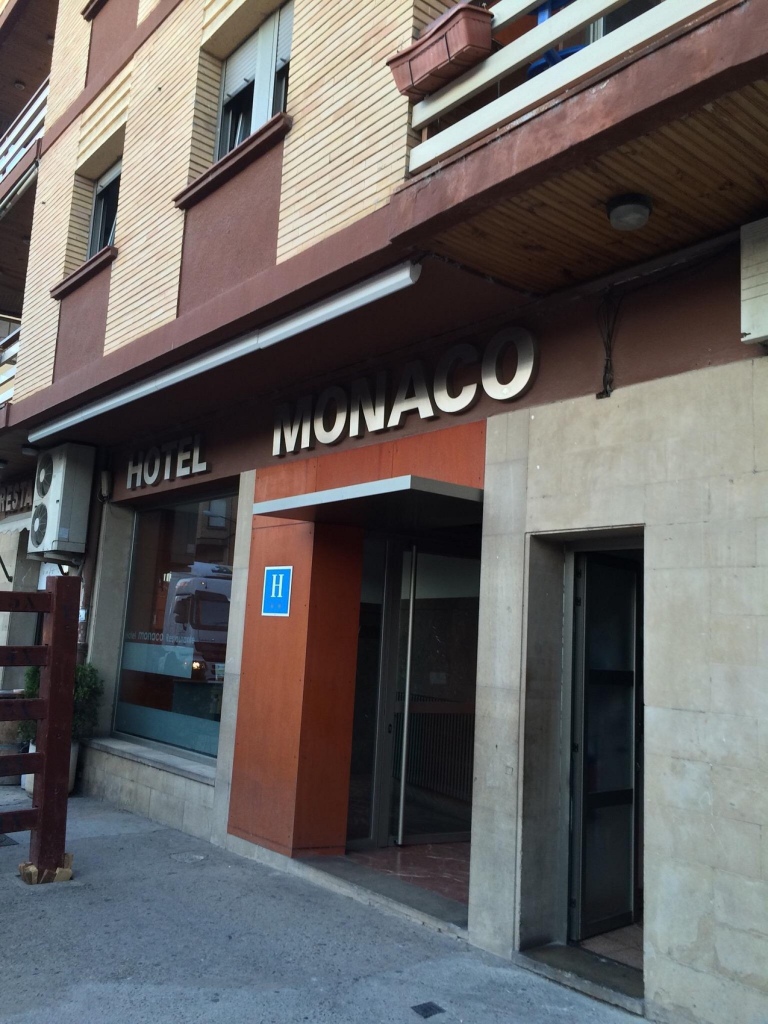
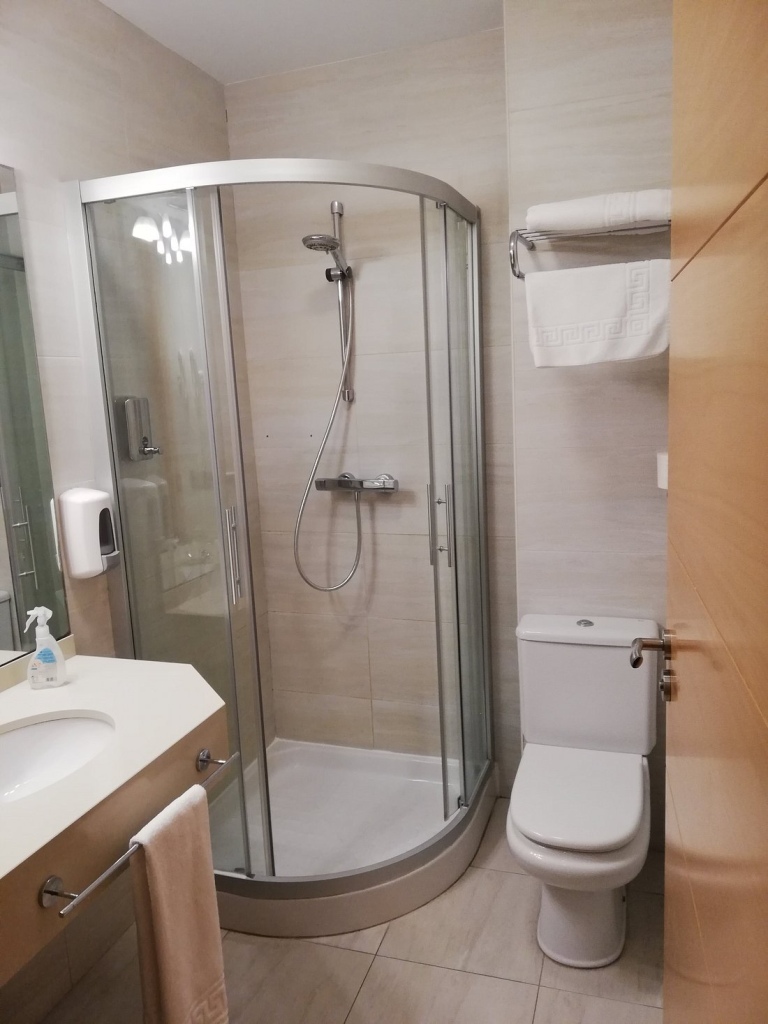
We received a warm welcome from Jaime the owner of Hosta Monaco ,with whom I had exchanged several correspondences over the last few months. It is a really good set up – spacious rooms with wrap around balconies and walk in showers.
Good views.
As the heat subsided Tom,Rob and I went in search of somewhere to eat.Although there appeared to be several choices,according to Google Maps, at least four were no longer open for business- the toll taken by the pandemic and the absence of thousands of pilgrims as another consequence. Rob said when he was here six years ago the place was heaving.
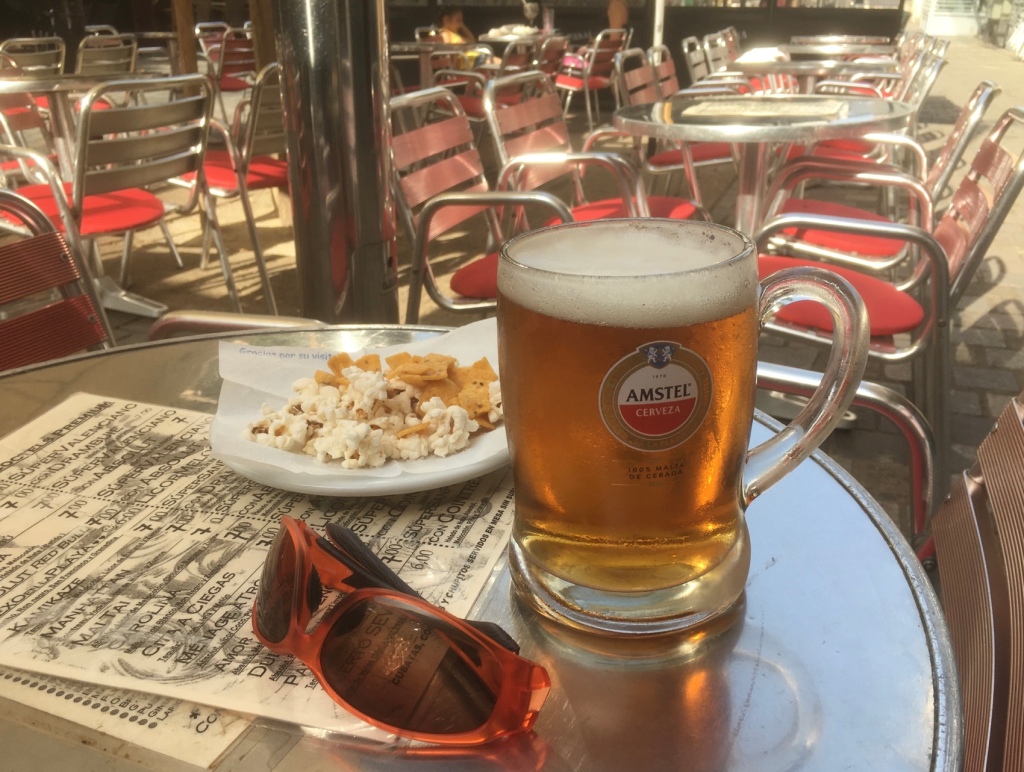
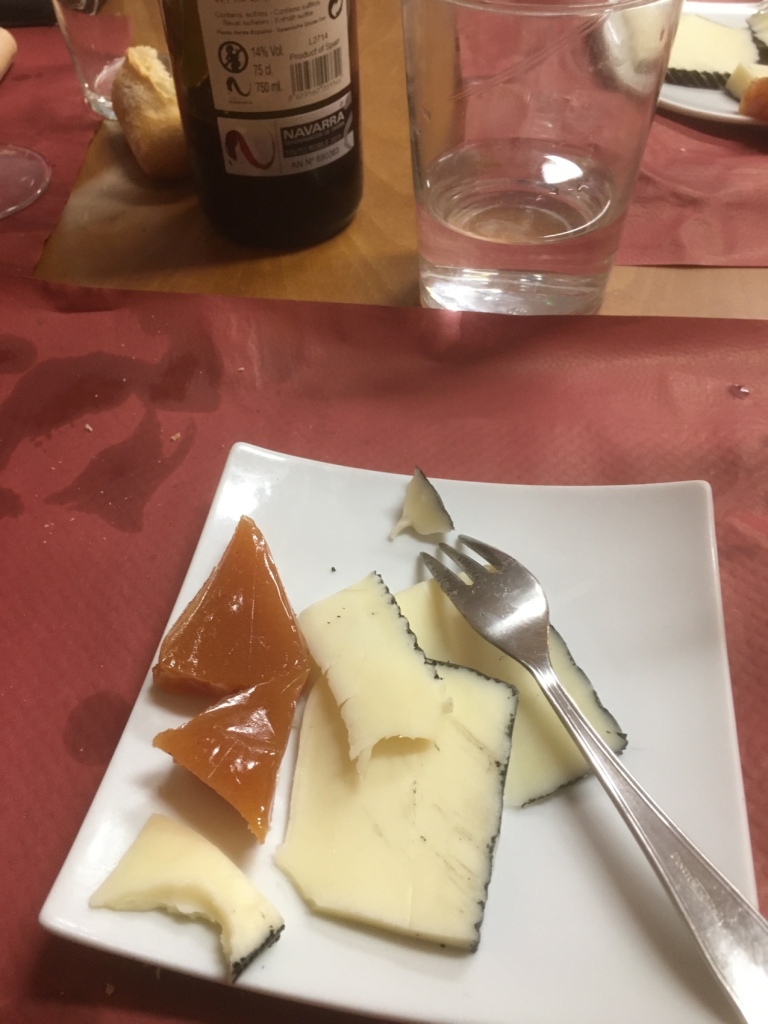
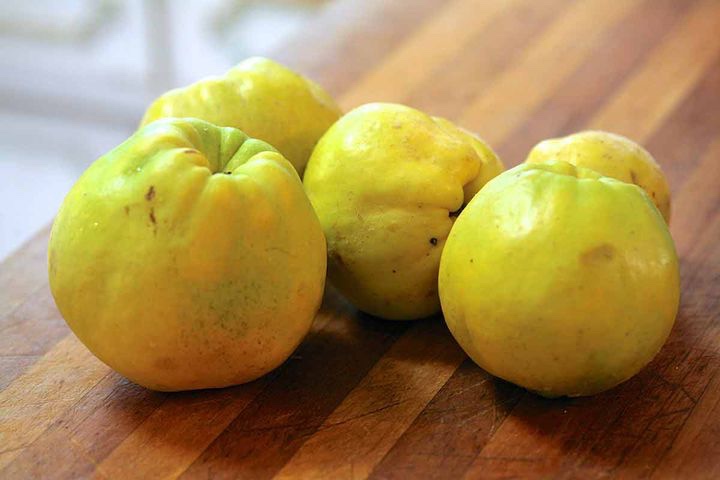
Tinto Verano – summer wine – became another “go to” for us Camigos.Whether it was the effect of the Tinto Verano or desperation, we made what seemed to be an unlikely choice for dinner.Jubilados is the Spanish word for “ retired” so we were made very welcome and felt quite at home with an excellent Menu del Dia featuring anchovies as an appetiser and concluding with Cheese and Membrillo.Local cheese and The Membrillo is a kind of firm jelly made from these beauties.They dined on mince, and slices of quince, Which they ate with a runcible spoon. And hand in hand, on the edge of the sand. They danced by the light of the moon, the moon, the moon, They danced by the light of the moon. Last lines from “ The Owl and the Pussy Cat”
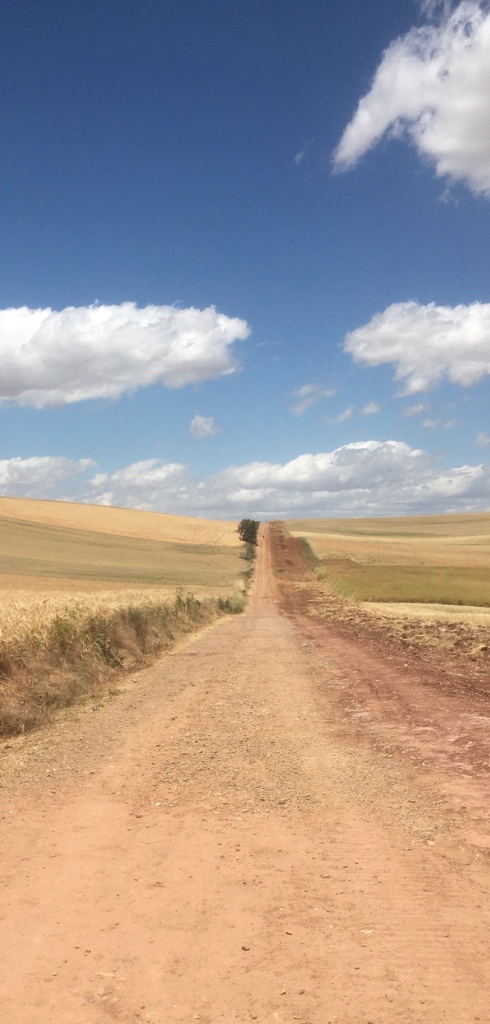
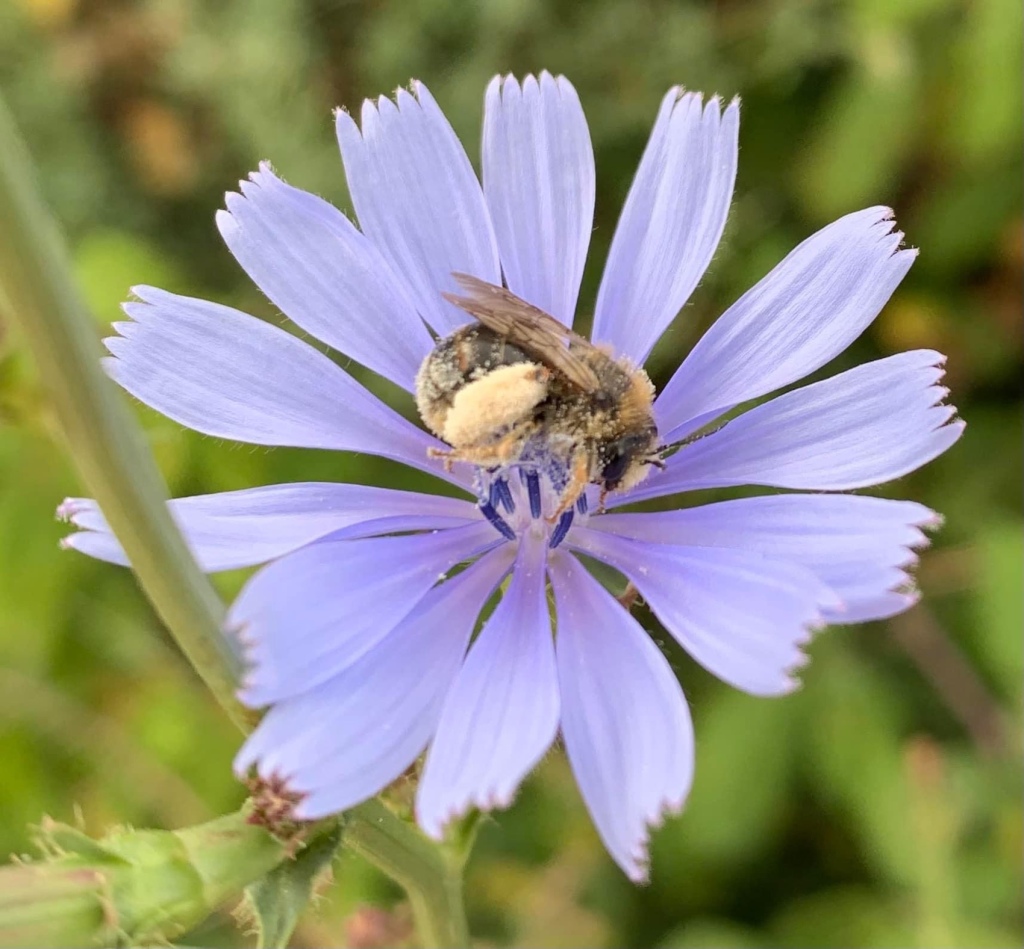
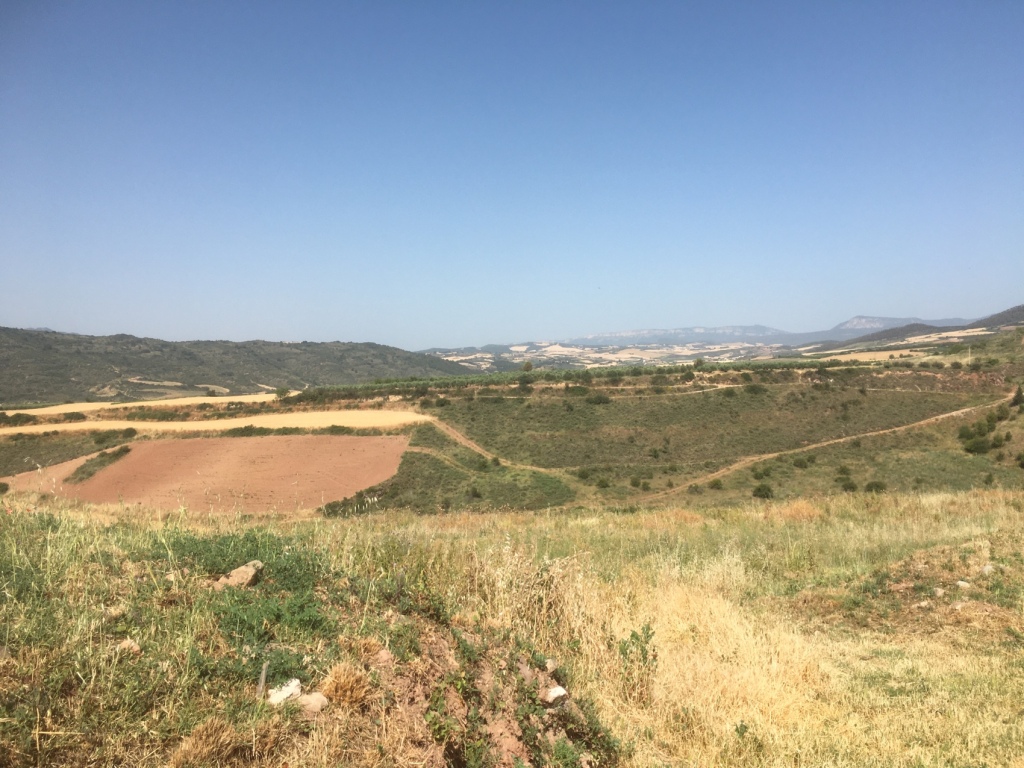
Another hot day forecasted meant an early start by narrow dirt paths and roads,surrounded by hills with occasional vines,plentiful wild flowers and wheat fields; butterflies a plenty,too.
Cloudless scenery on our way.
It was a climb up to Cirauqui, spelled Zirauki in Basque which means “ nest of vipers”- a reference to the belief that serpents lurked in nearby crevices,or possibly hideouts for bandits preying on pilgrims. In the Codex Calixtinus,the 12 th century guide to the Camino there are warnings not to drink the water as it was toxic!
Today it’s a pleasant village of about 500 people.With plenty to hold your interest.
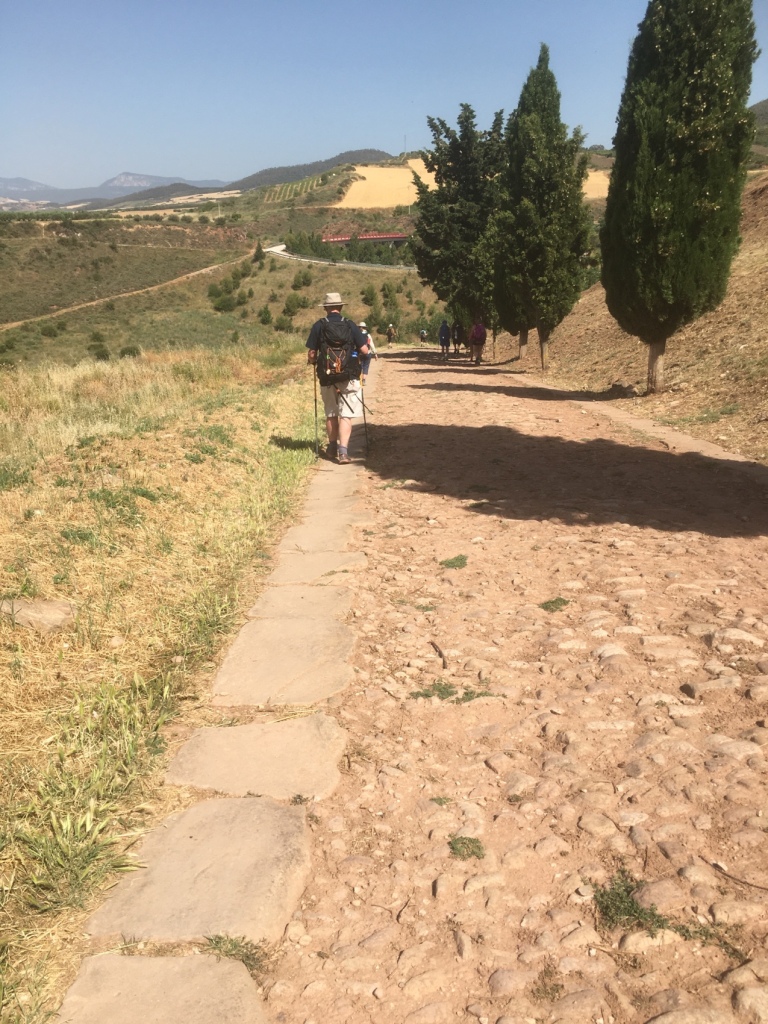
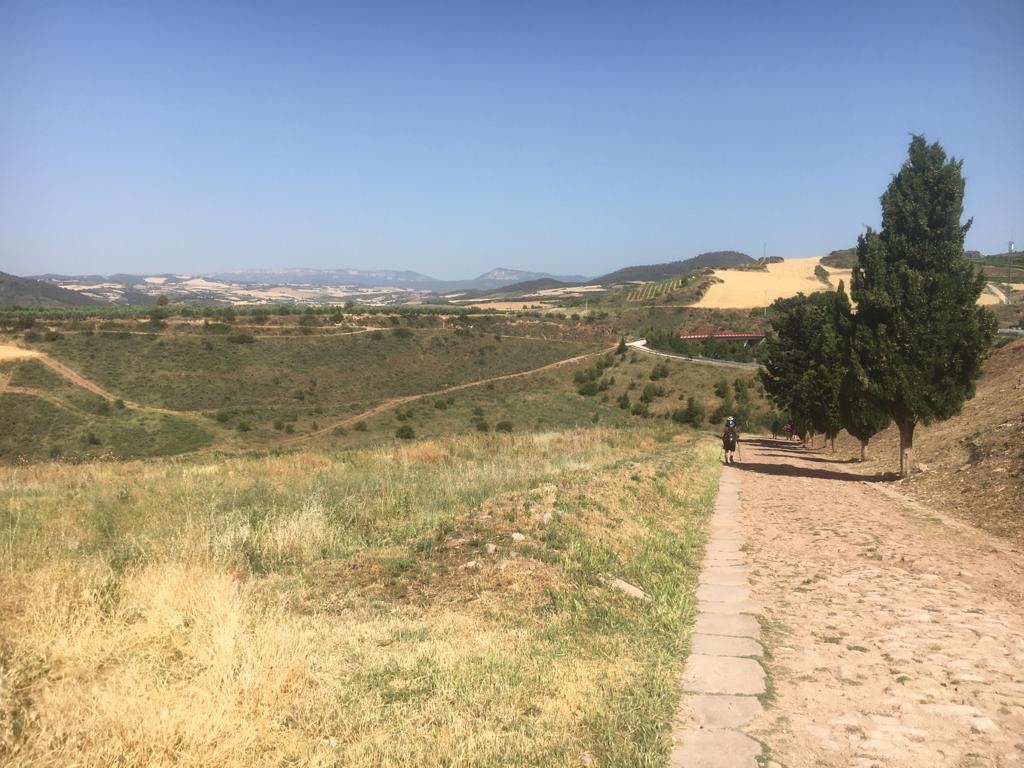
For the next 3.3 KM we walked on a well preserved Roman Road.
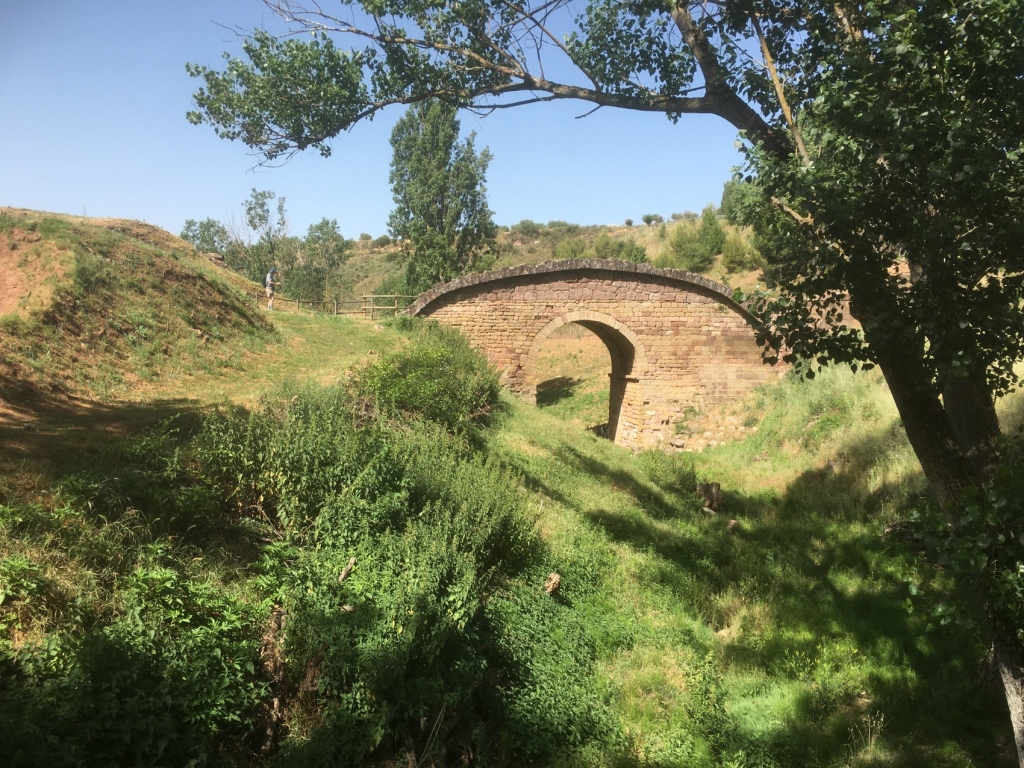
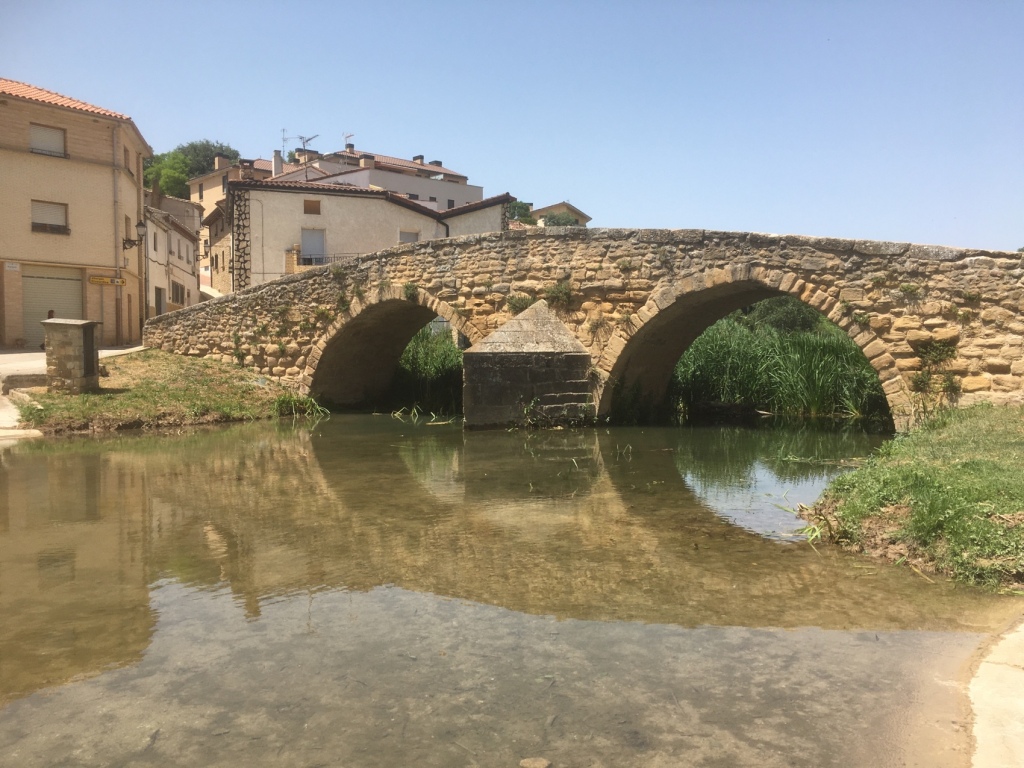
The road is still being excavated in places .The stones have been buffed by 2000 years of feet and hooves.A rare Roman bridge.
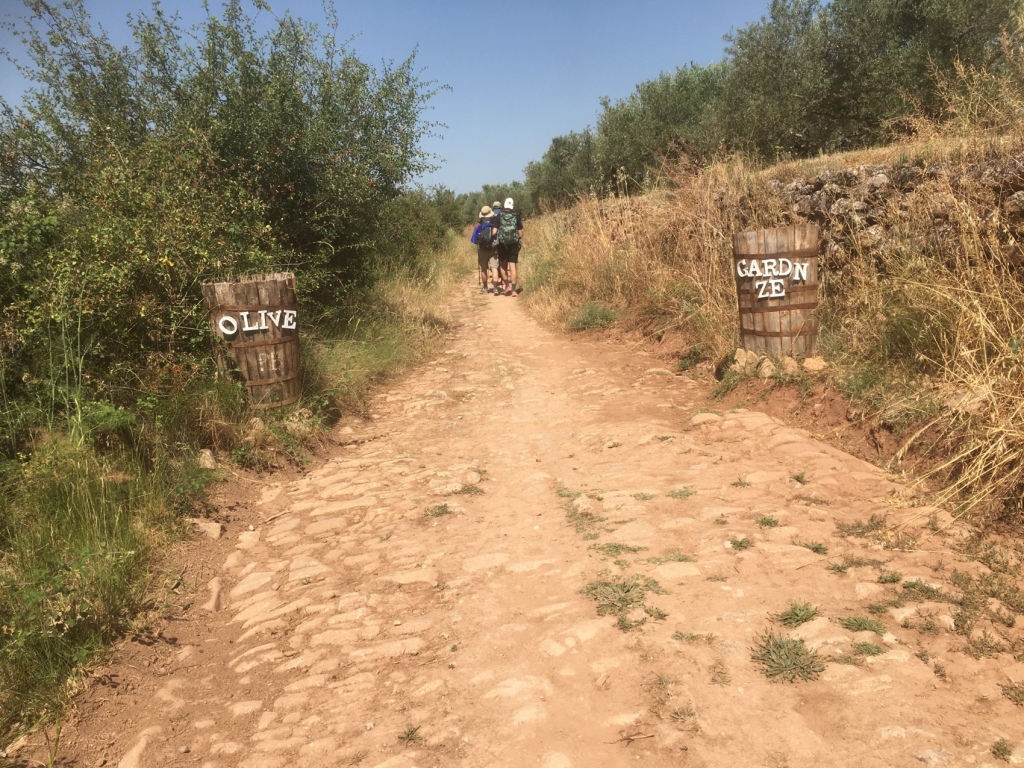
We came across an olive grove that is being restored by volunteers. The name was well chosen.
With the Road bisecting it.
We were now heading towards Lorca, with ups and downs – little habitation – a wilderness almost.
JUNE and Tom take a break in the doorway of a church.
The last village before Estella is Villatuerta – the name means “ curved or sinuous village”.
Iglesia de la Asuncion- looks like a fortress Brilliant blossomA Huerta
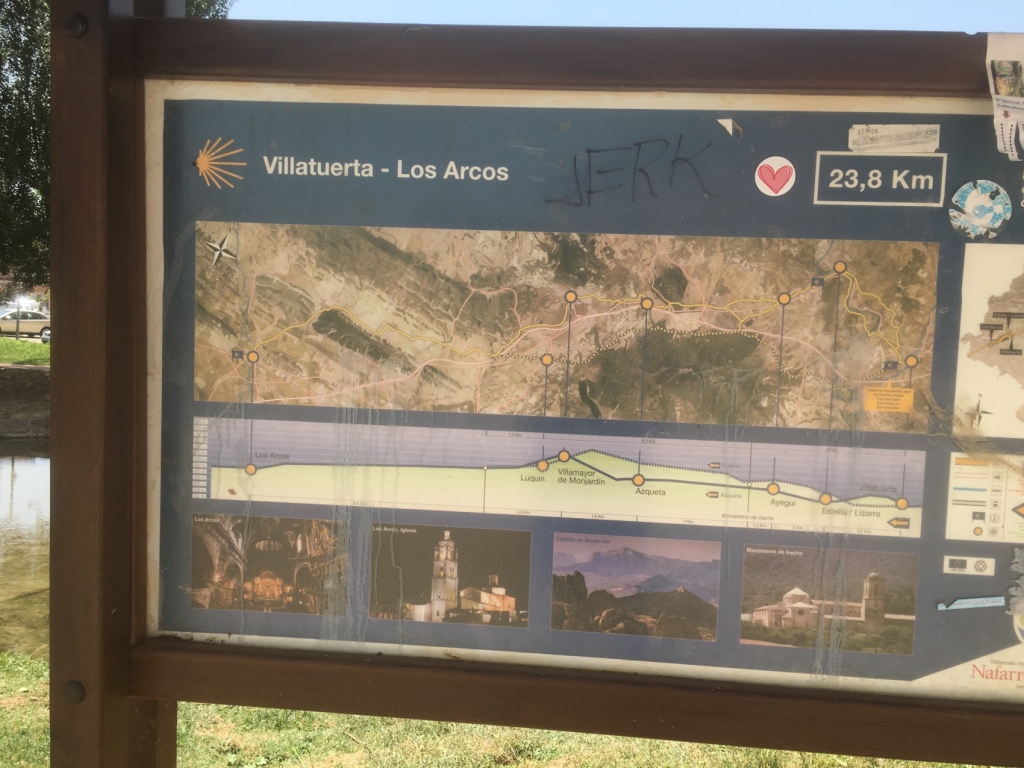
Another useful Signboard showing tomorrow’s destination,Los Arcos
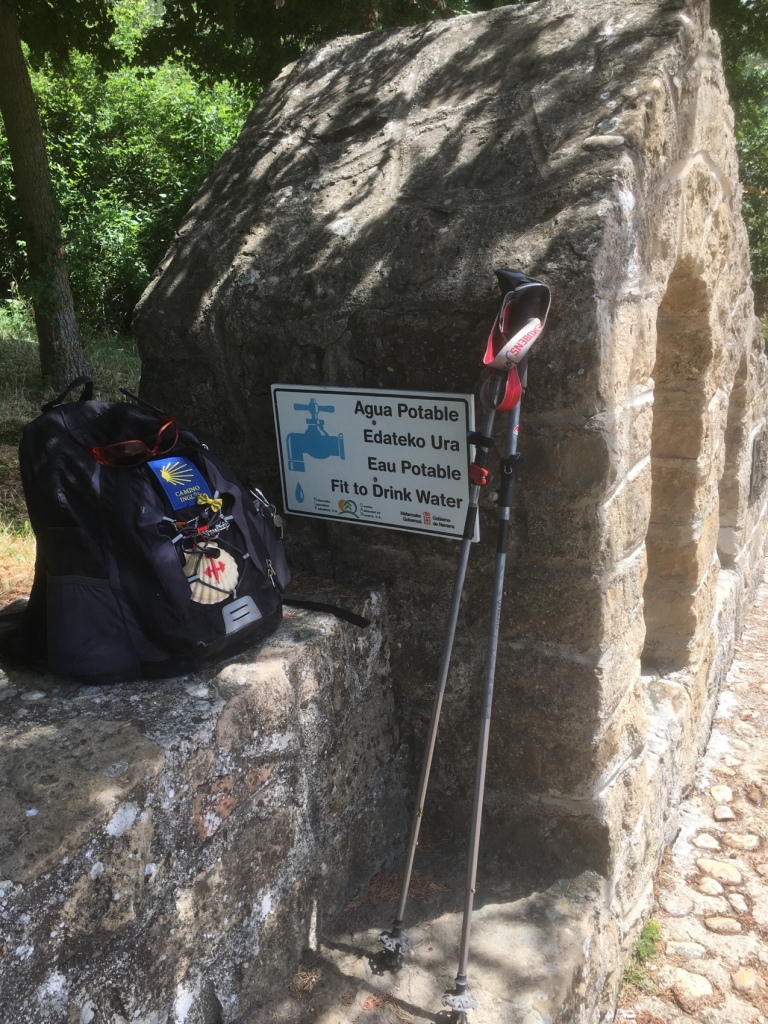
The Fuentes – water fountains- are always a welcome site and a chance to enjoy some shady respite from the sun.Nearly there .Entering Estella
Our accommodation for this evening is Casa Daniella,just off the appropriately named Plaza de Santiago – a triangular square with a fountain to boot.
At the end of a long,hot walk, what could be better?
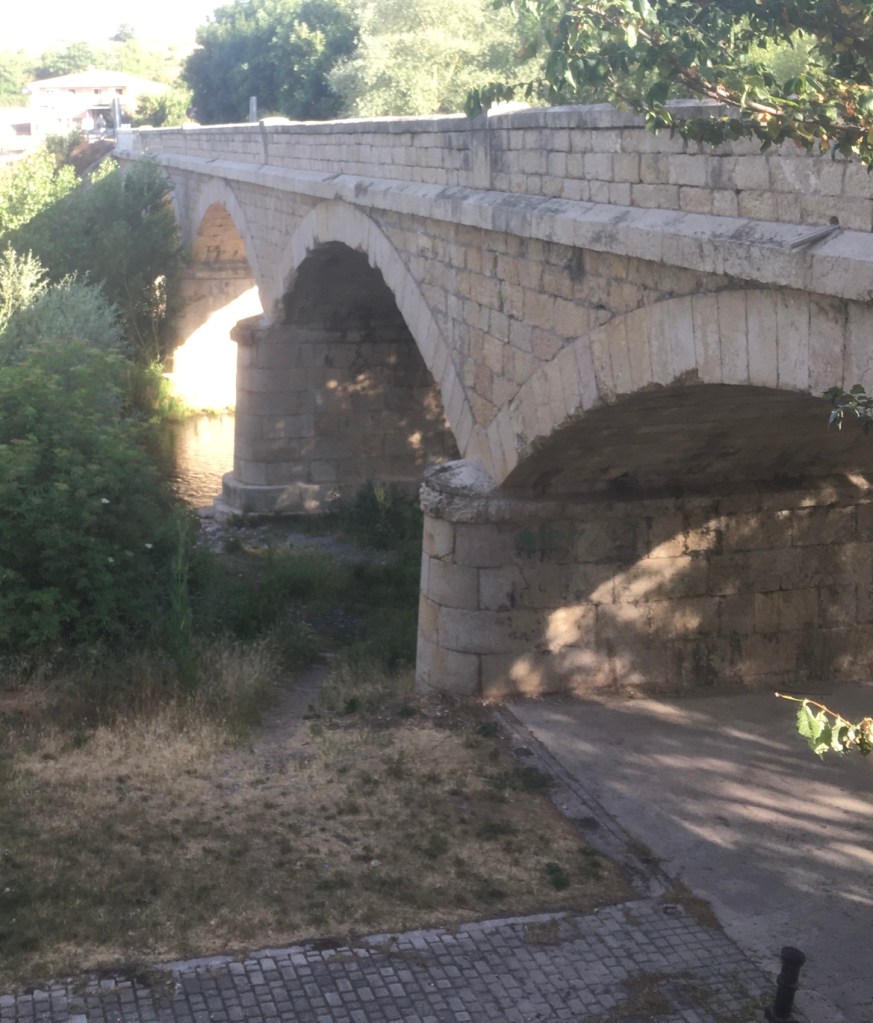
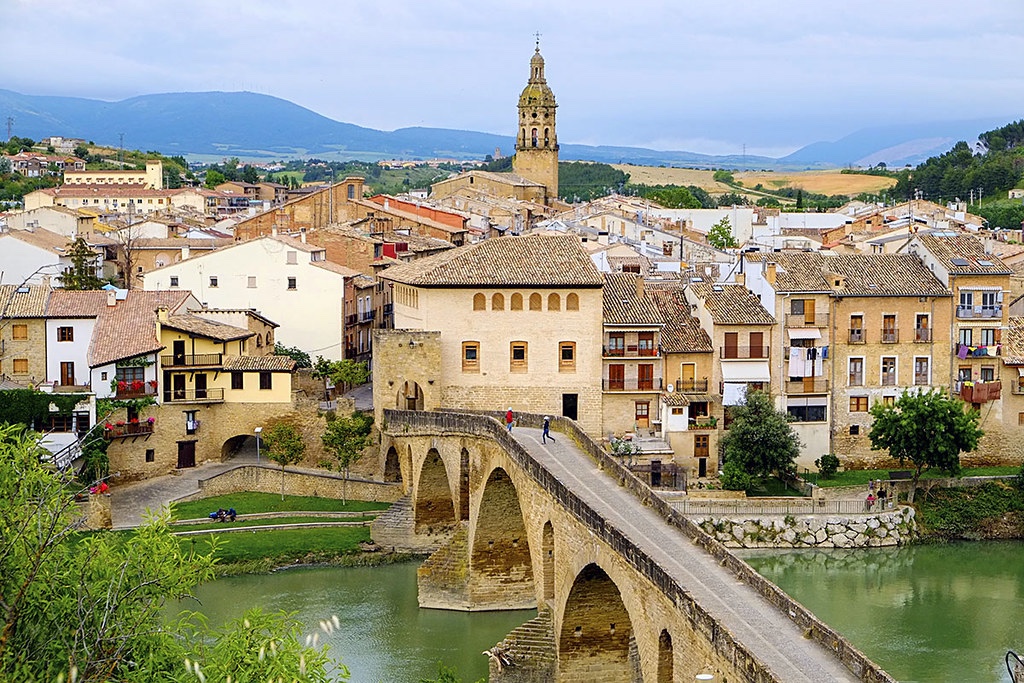
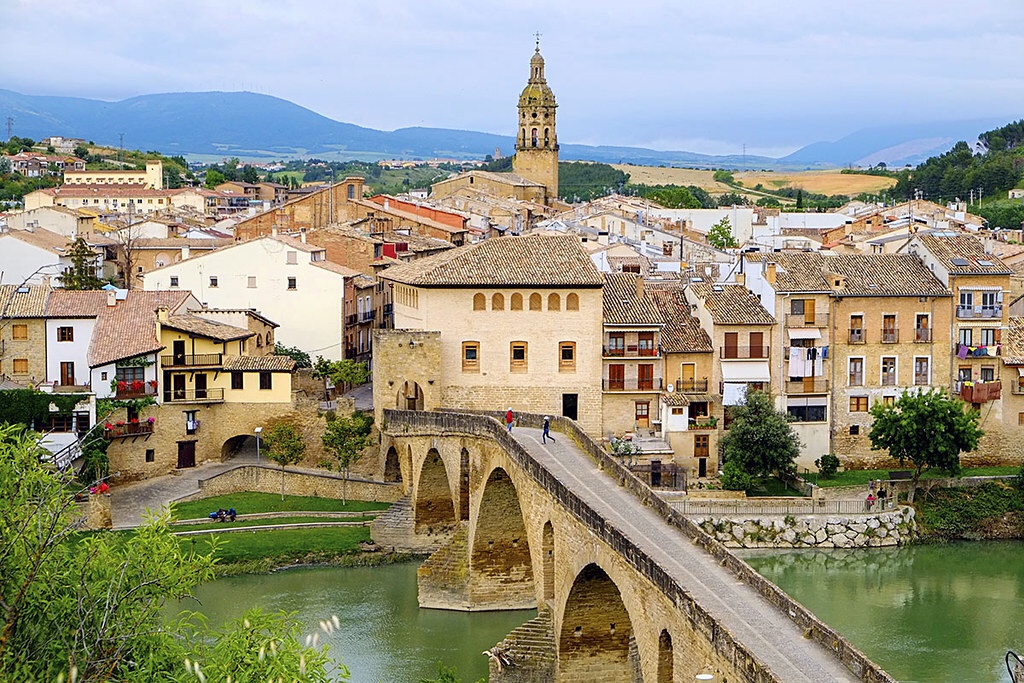
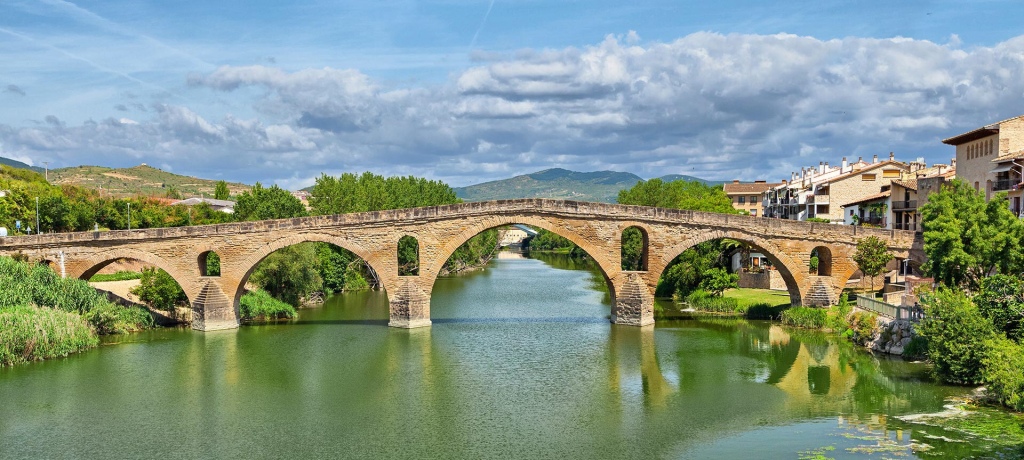
The town is built around the Calle Mayor, it’s Main Street along which millions of pilgrims have made their way through and put over the six arched Romanesque bridge.
The doorway into the Iglesia de Santiago,an example of remaining Mudejar architecture. The archway has a variety of demons, professions, saints and people engaged in dubious temptation.
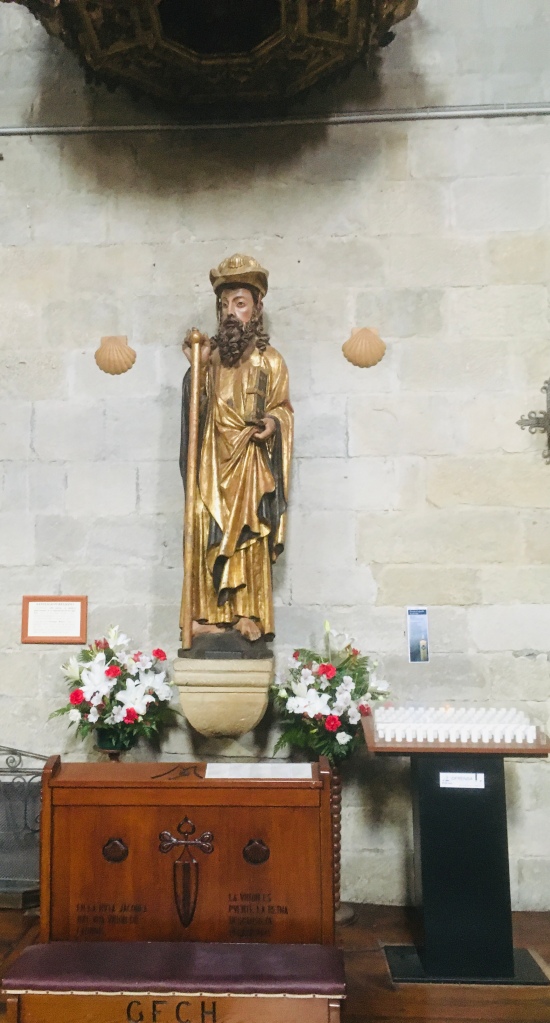
Santiago Beltza, the “ Black St James” black symbolising fertility and the sacredness of the earth. A male equivalent of the many Black Madonnas?
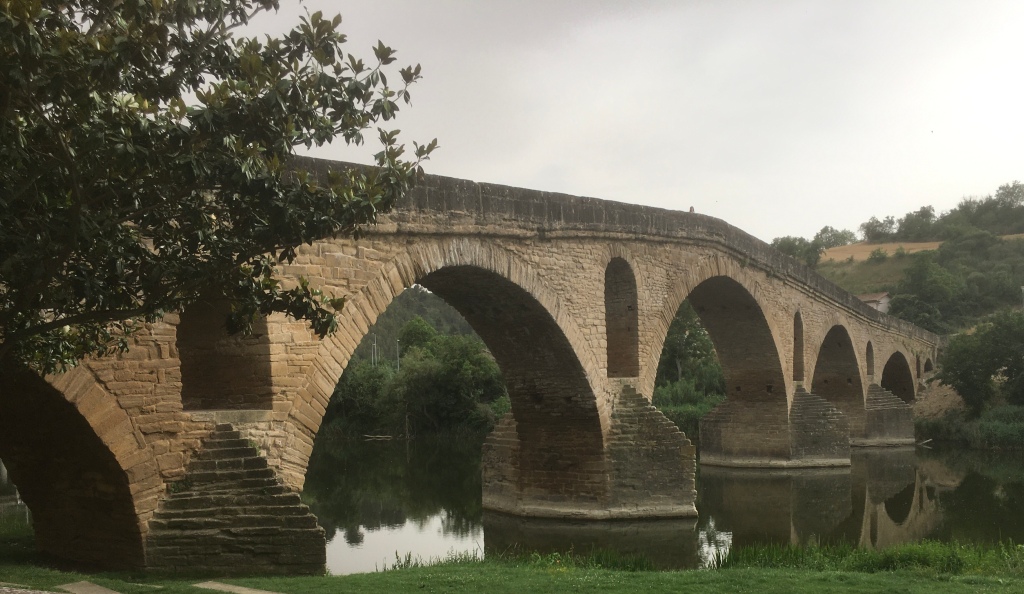
Walking on you come to the Rio Arga spanned by the Queen’s Bridge, built in the 11 th century either by Queen Dona Mayor or by her successor Estefania.
An excellent tourist office is housed on the left .It’s a very picturesque area here.Everything you need to know.Calle MayorCraft beer after the tour of the town.Pilgrims only!Great place for la cena.Keeping the Serrano cool.A classic Spanish salad topped with Elvers.Area de Descanso at the hotel.
A bit of time for contemplation about the Camino Frances .
For years I had rejected the idea of walking the Frances – information gained from forums and blogs reinforced the impression of crowds, commercialisation, litter – it seemed to be over hyped. It was only after a conversation with fellow camigo Rob about our need to plan a past Covid Camino – Rob had walked the Frances six years previously – that I came to accept the possibility. That, a reading of the MOON guidebook convinced me that I should enjoy the experience. It would only be two weeks worth – St Jean Pied de Port to Burgos – but the reading clinched it. And, after planning that began in November ‘21 it came to fruition now in June 2022.8 Sutton Coldfield Ramblers, including myself are joyfully on our way.
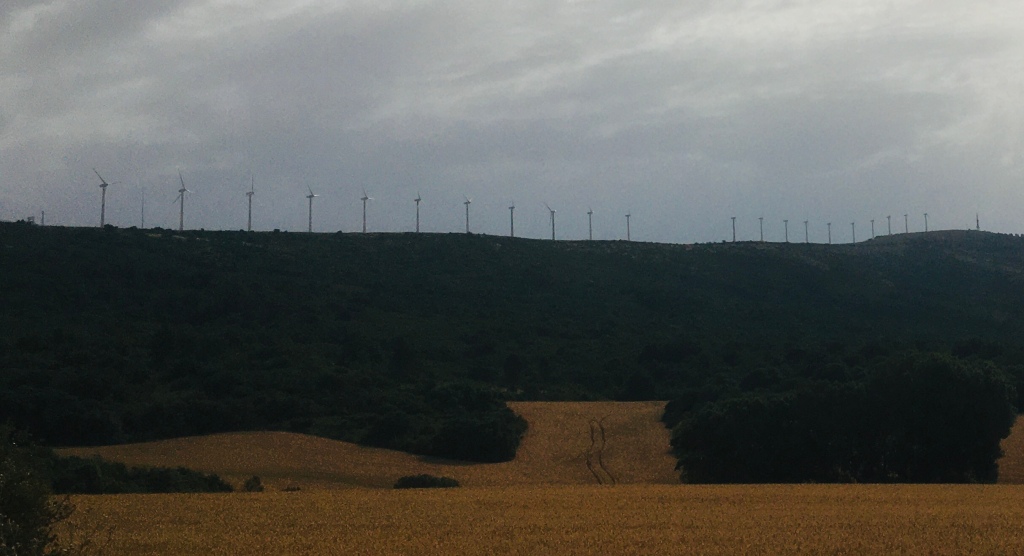
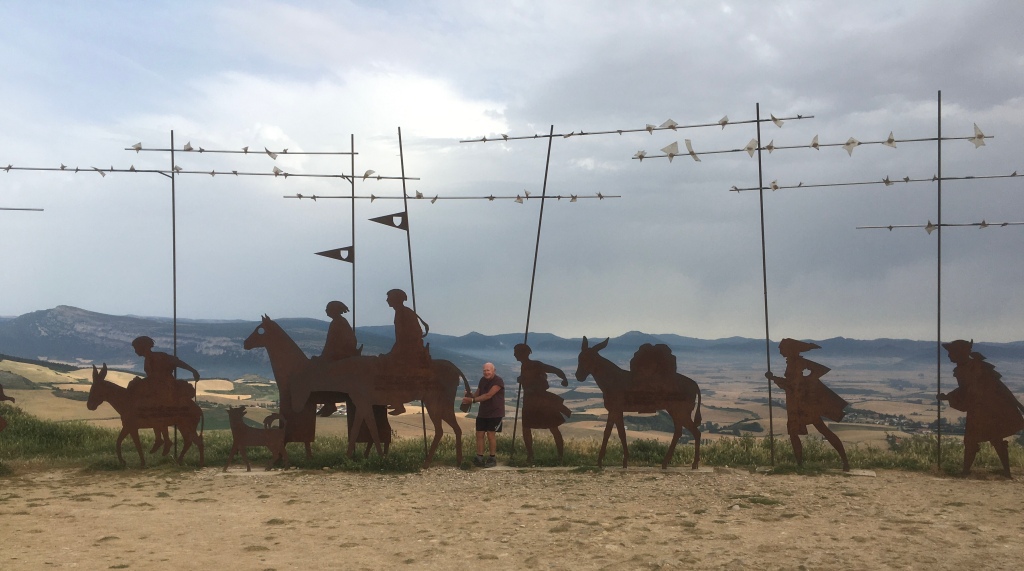
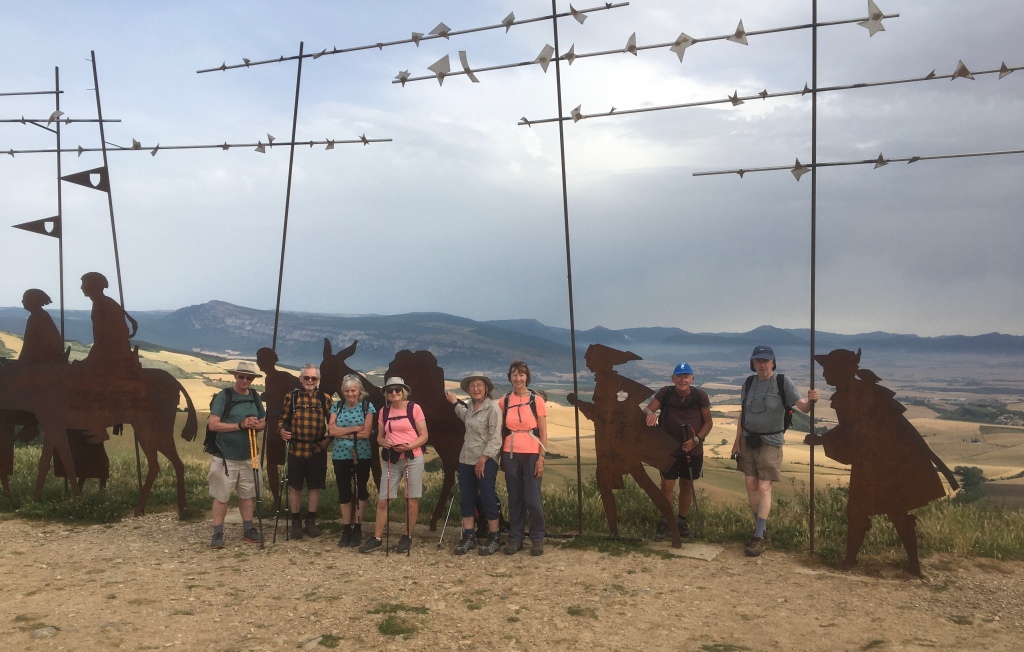
This saying is engraved into the famous life sized sculpture on the Alto de Perdon – “ where the way of the wind meets the way of the stars “
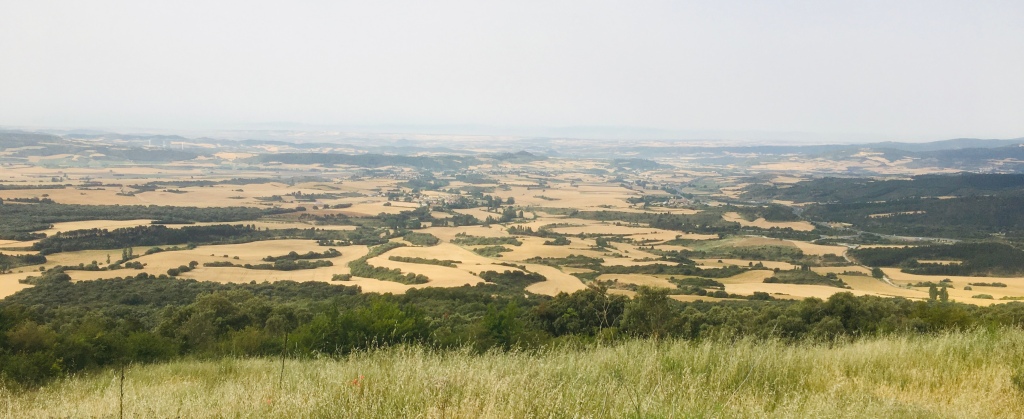
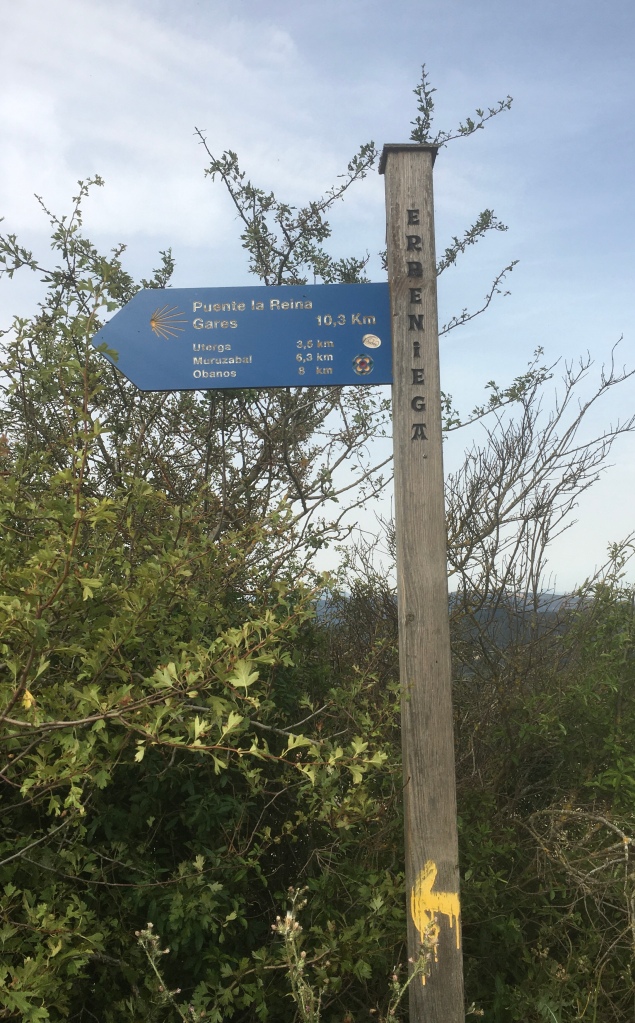
The turbines align along the ridge of the hill where the region’s strongest winds blow. This wind is supposed to carry away your remorse and bestow forgiveness . Alto de Perdon means “ the height of forgiveness”.The Camigos are always forgiving😇At 770 metres you get a sweeping view
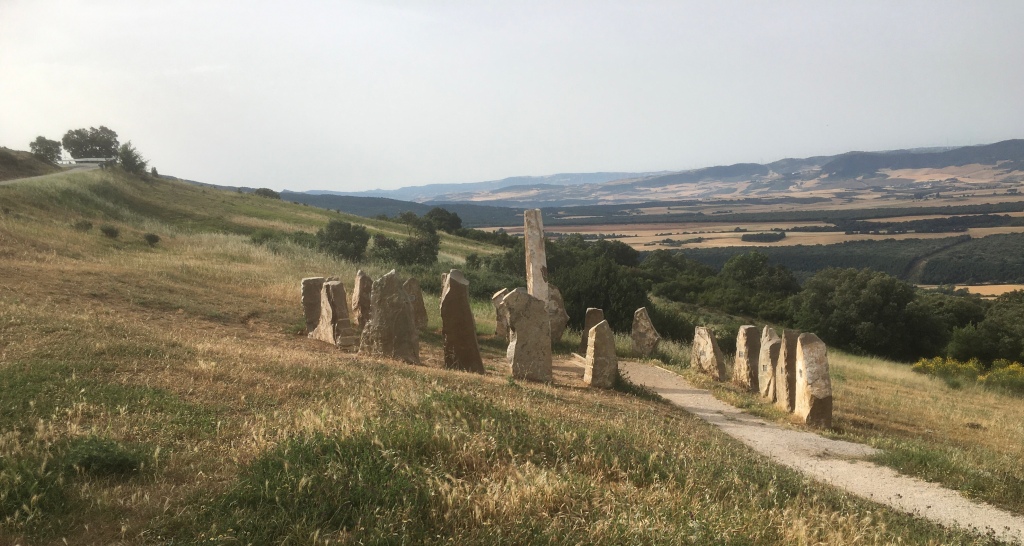
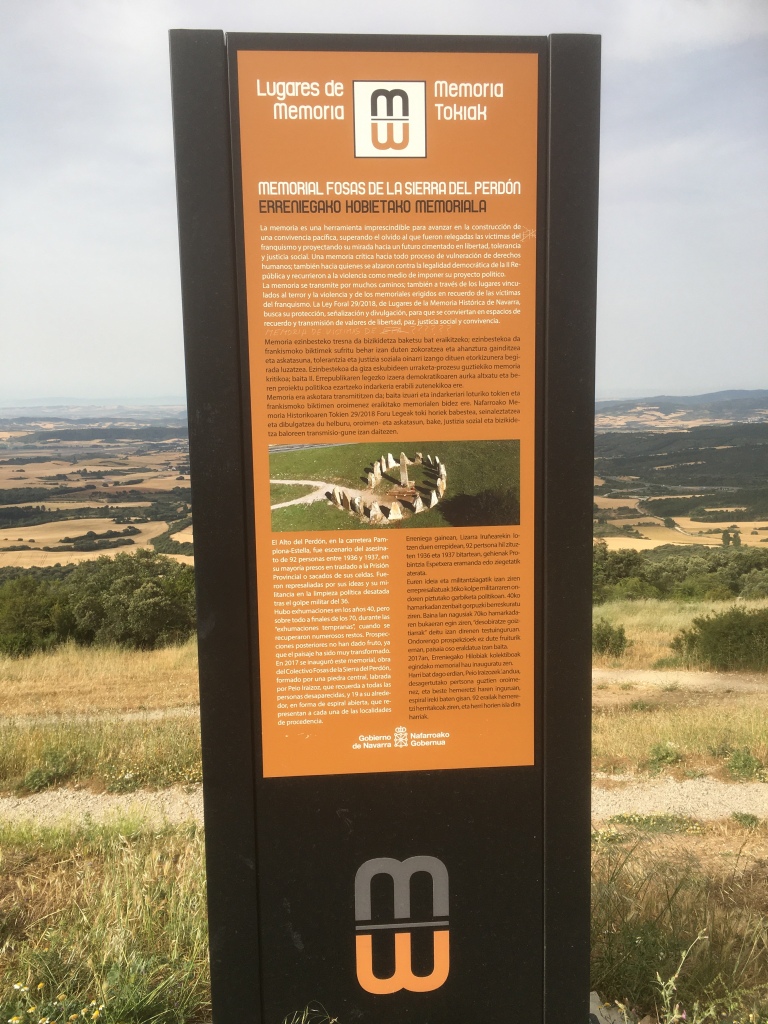
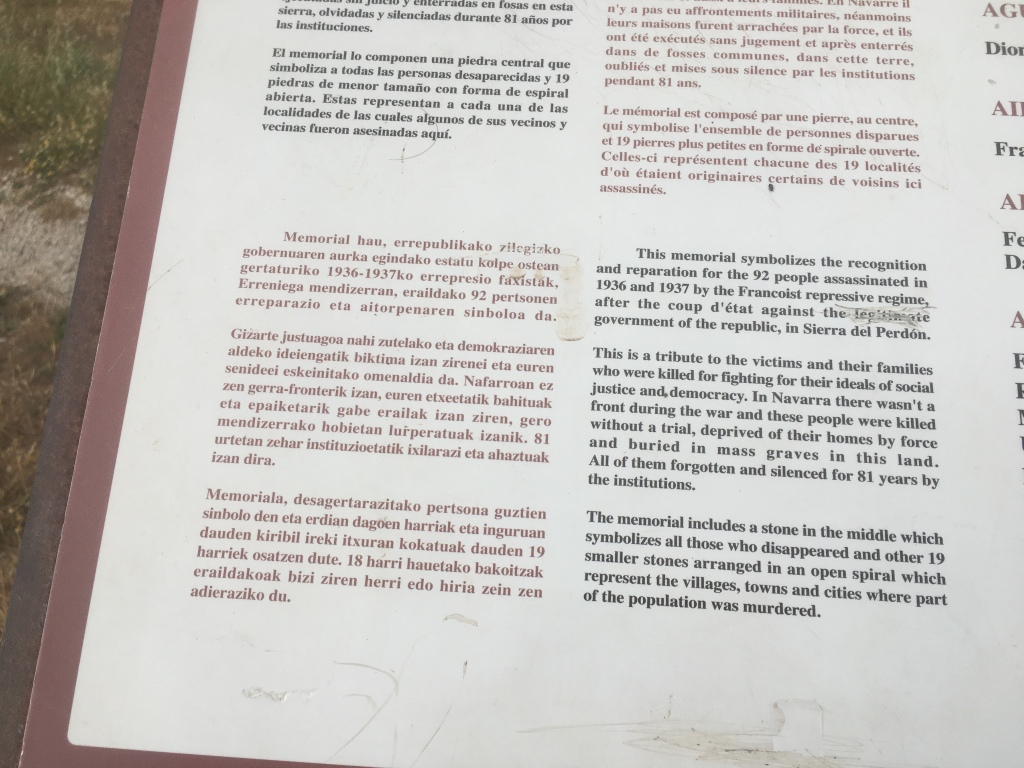
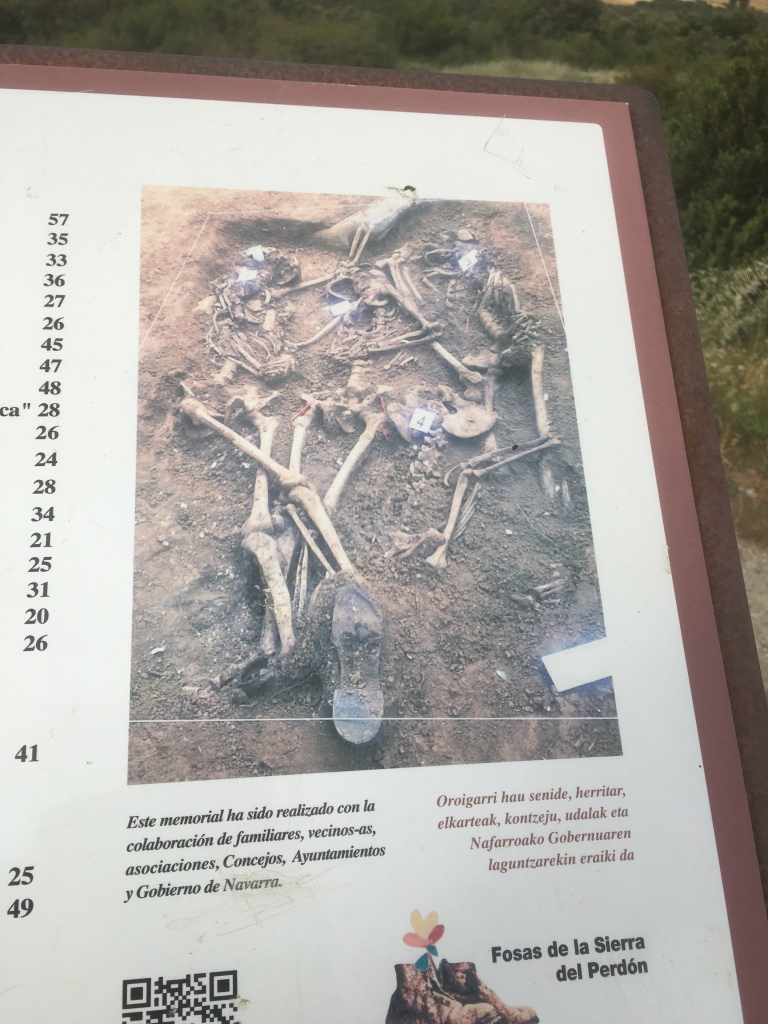
There used to be a pilgrims’ hospital here but nothing remains now. However, there is a Civil War memorial commemorating the assassination of 97 victims of Francoist repression.
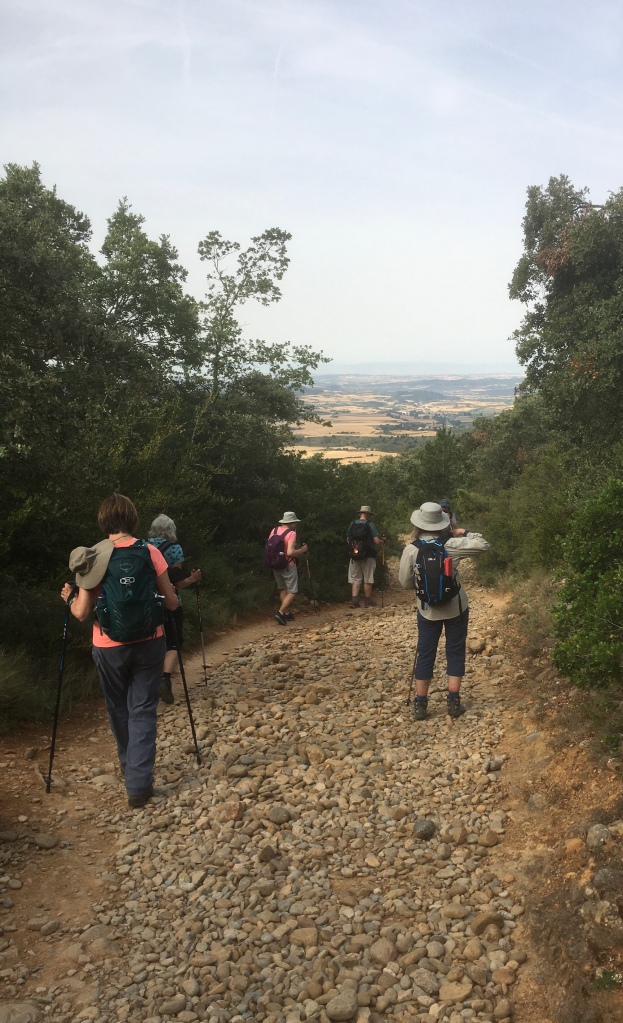
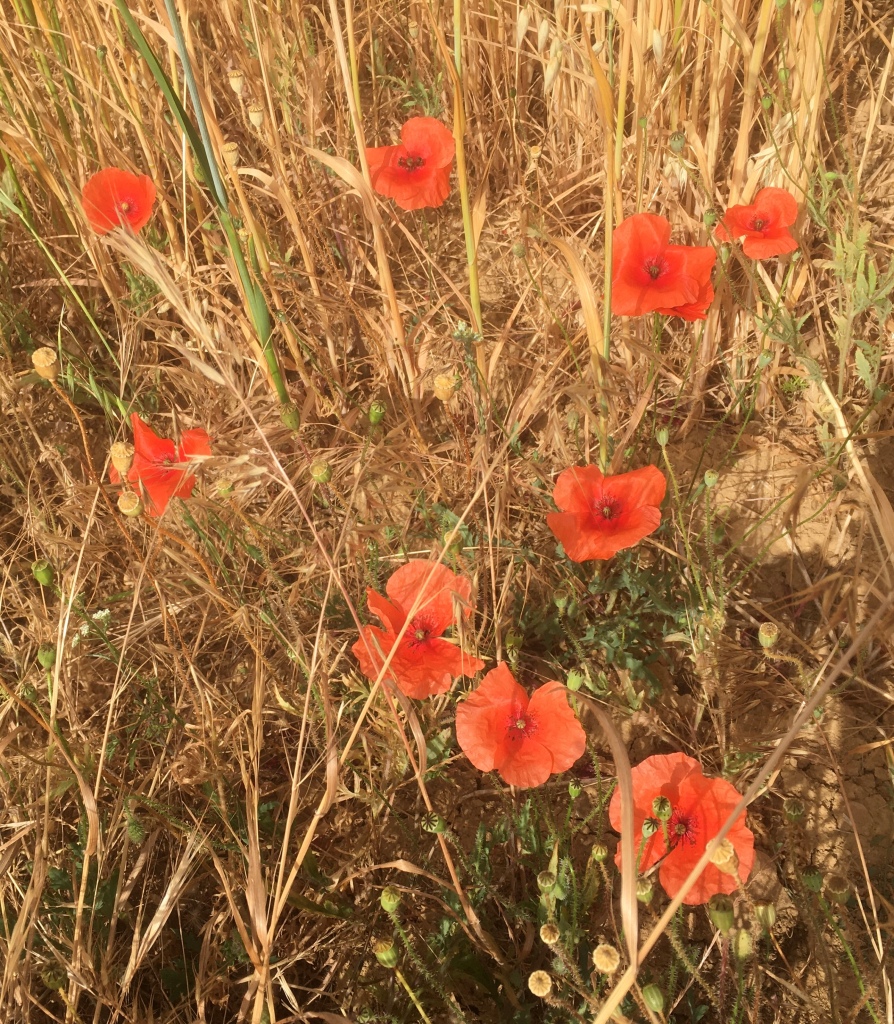
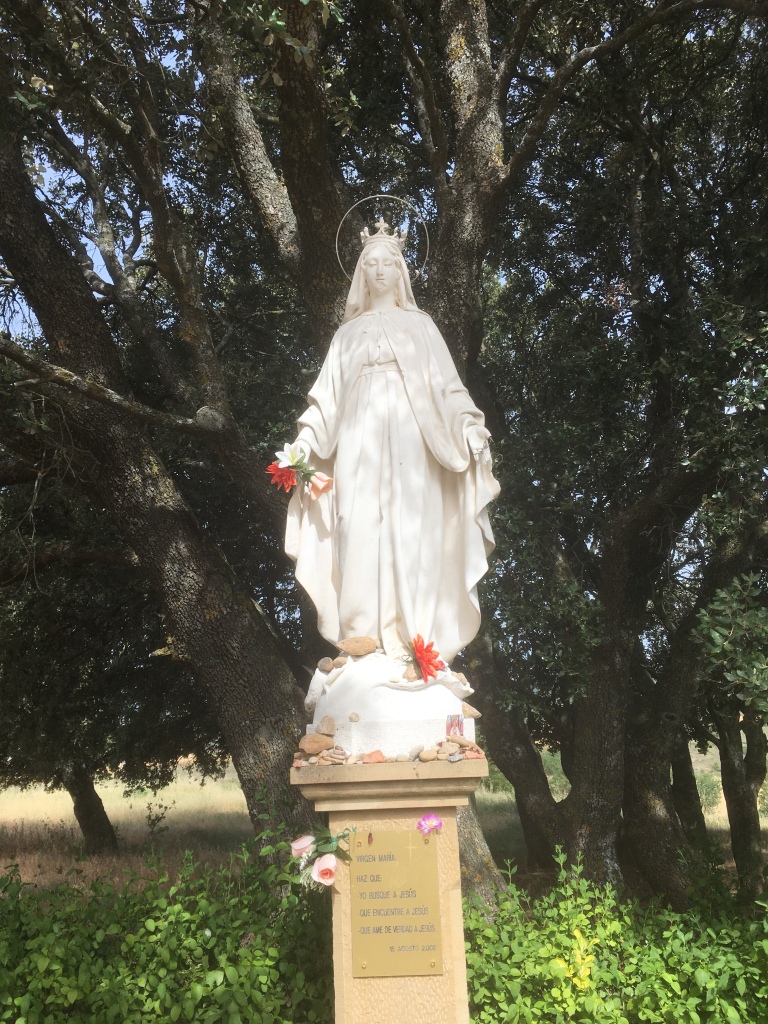
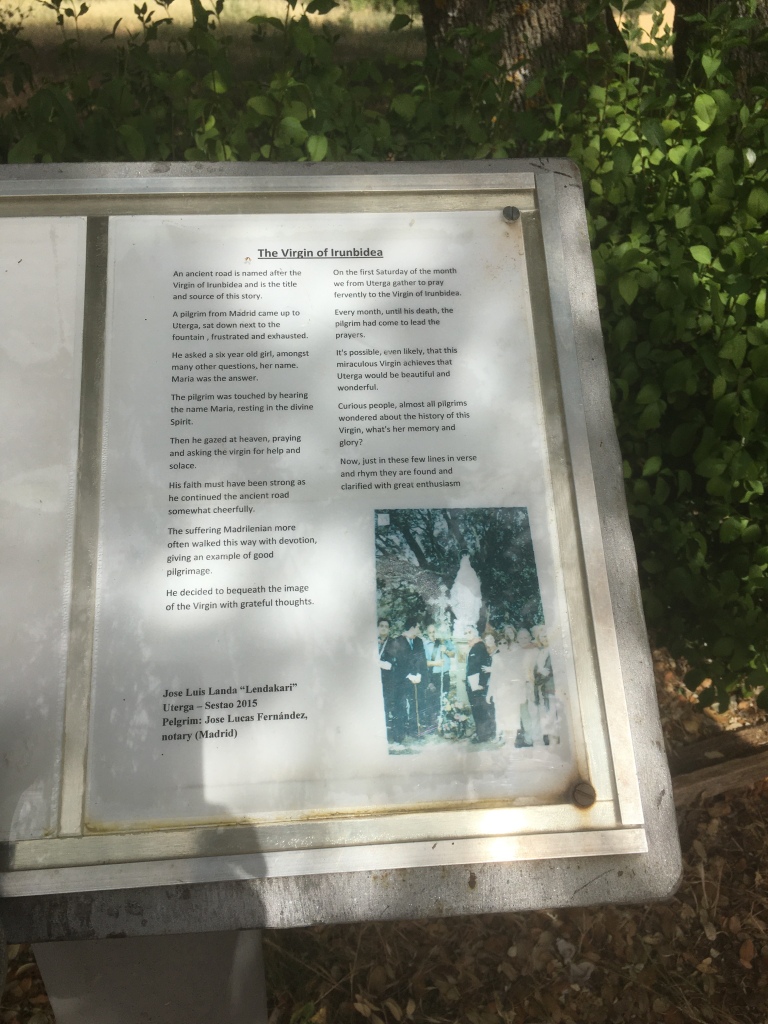
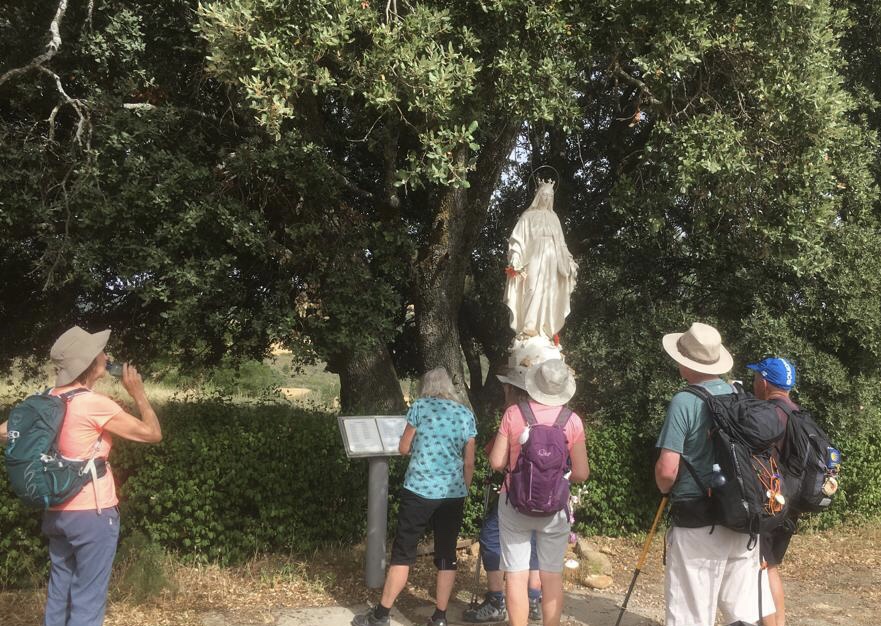
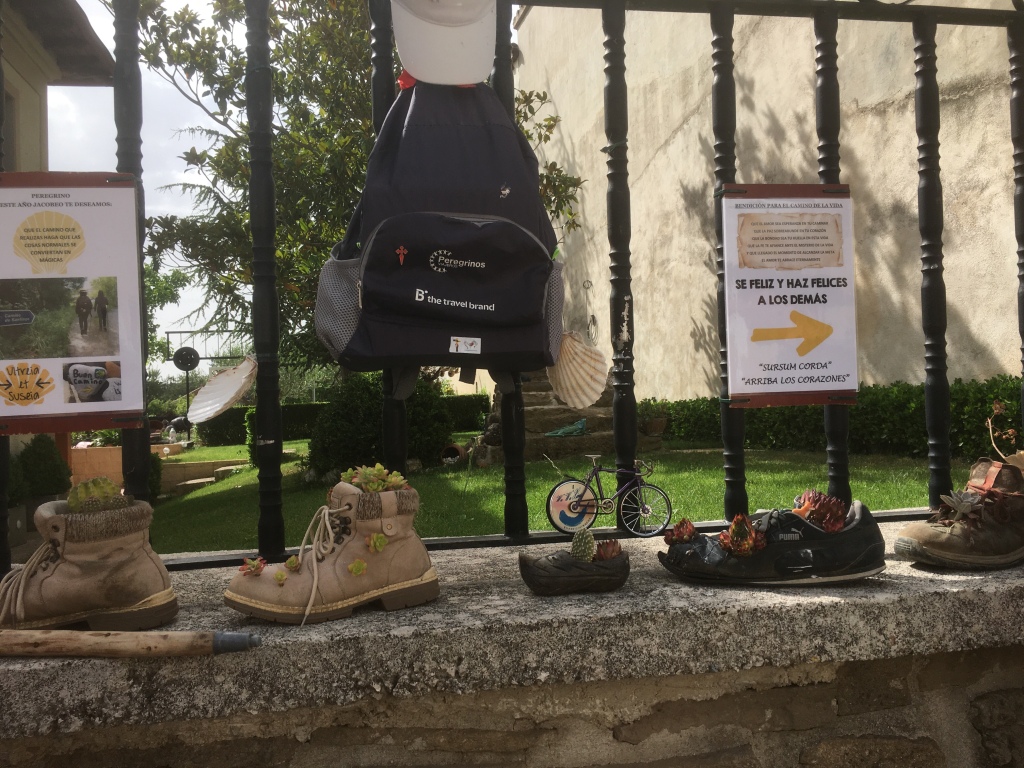
The stone in the middle symbolises all who disappeared and the other stones the towns and villages where some of the population were murdered.Walking poles always help.The path downwards winds through almond groves, Holm Oaks and wheat fields – we took our time on the trickier sections.Poppies on the roadside into the tiny village of Uterga.Outdoor sanctuary dedicated to Mary.On the outskirts of Uterga.An intriguing display on a garden wall.
We visited the church and obtained another sello
Onwards towards Obanos.Another engaging camino mural
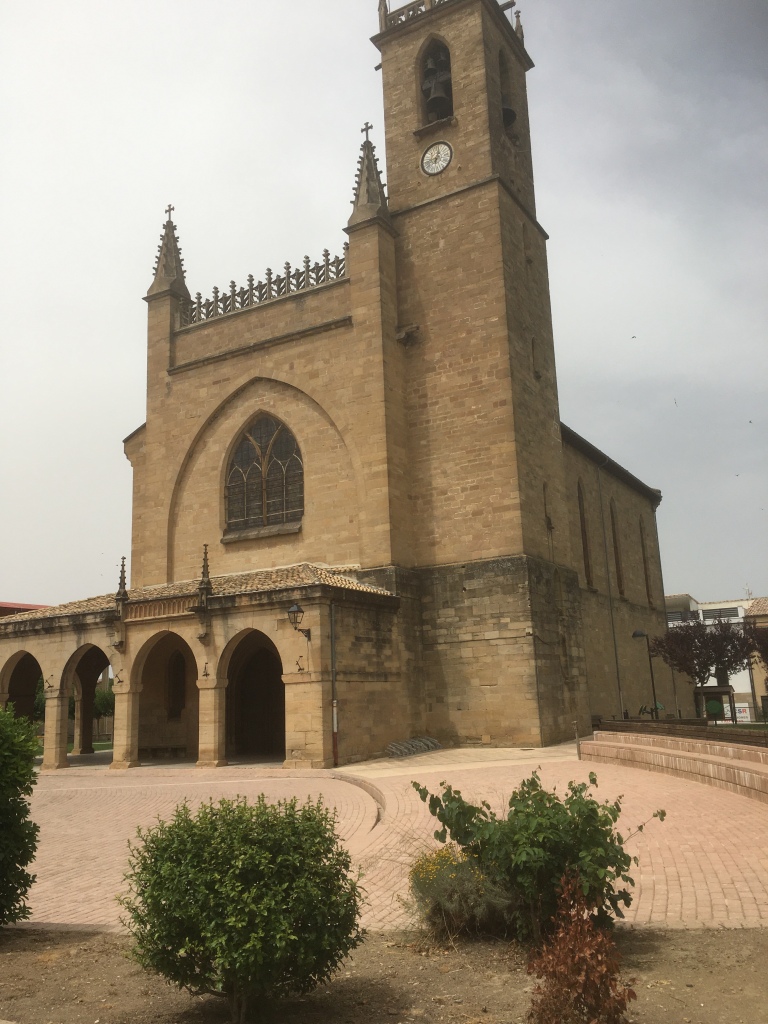
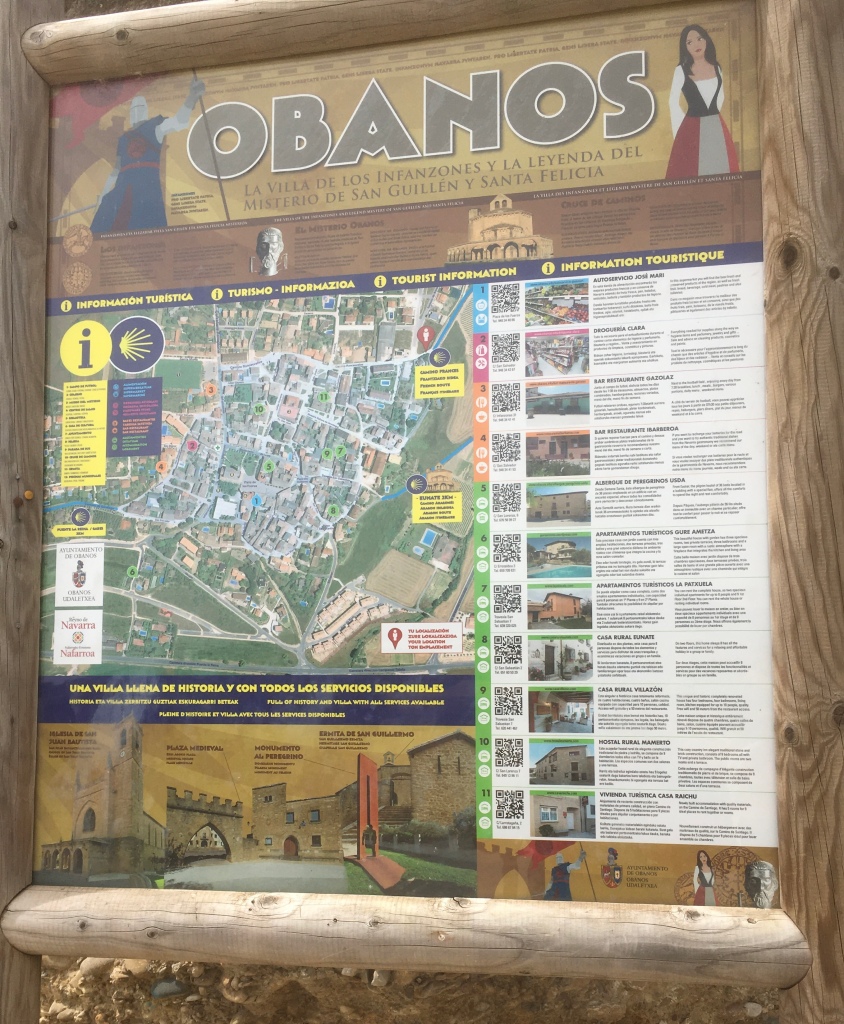
Obanos has a large central square and the impressive Iglesia de San Juan Bautista.
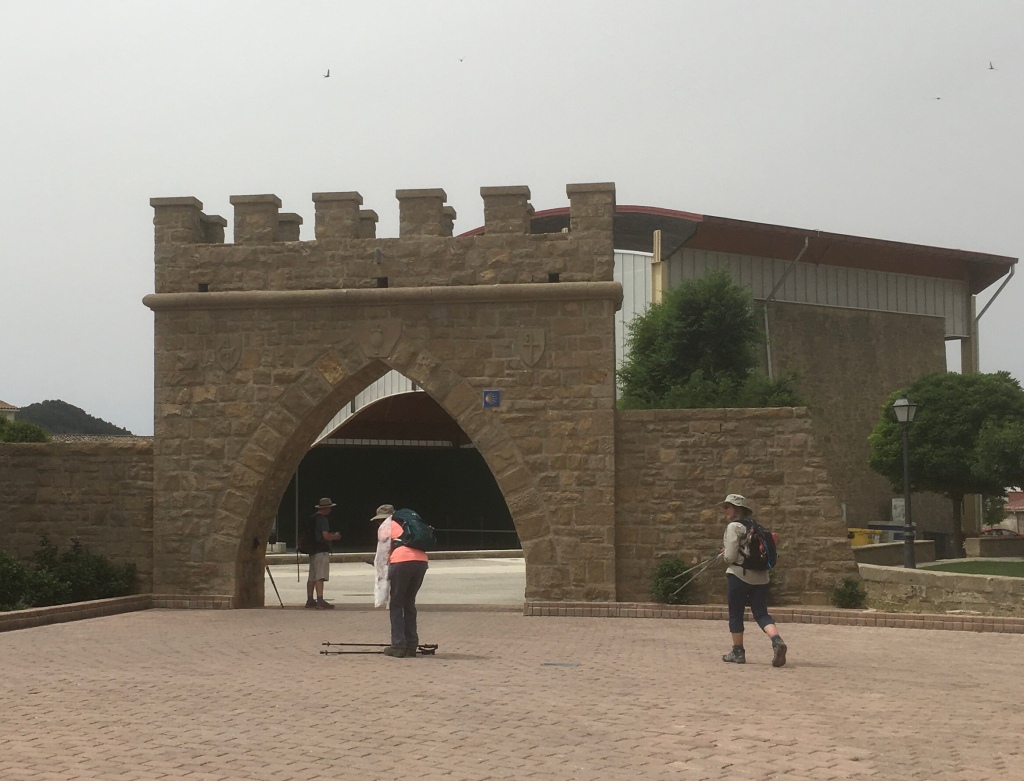
The Camino goes through the square and we exited by way of a pointed Gothic gate.
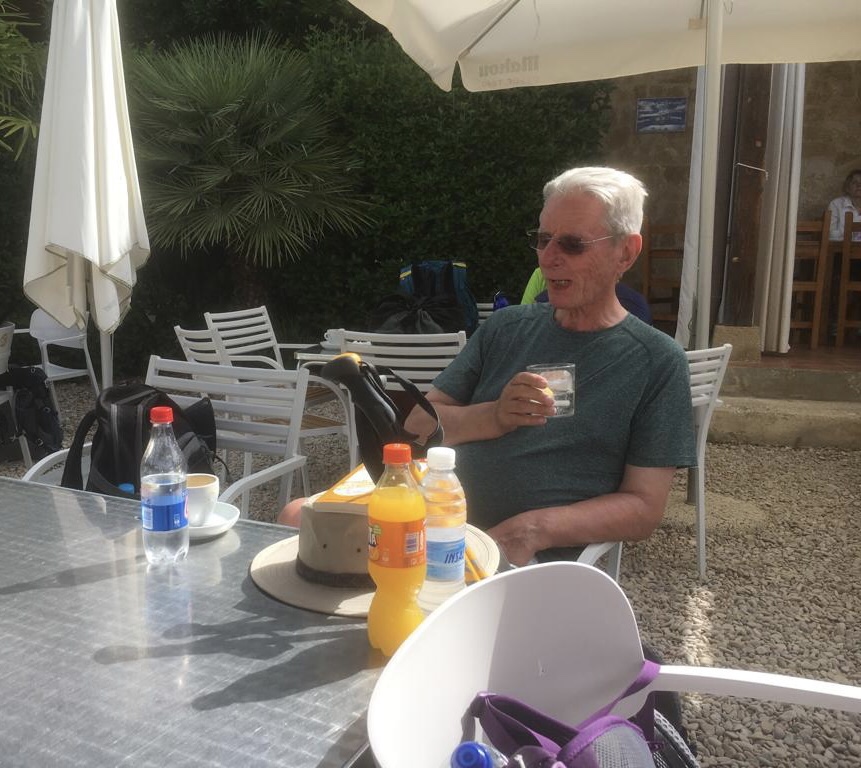
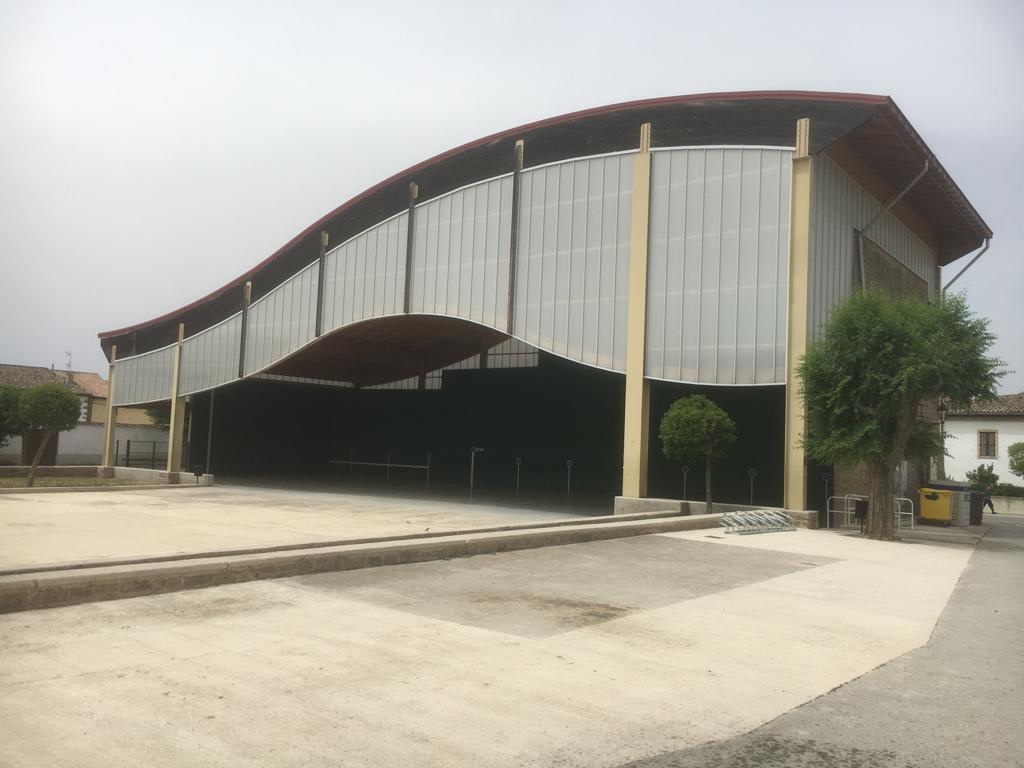
Rehydration stop – Rob shows how.Now that’s what you call pork crackling .Pelota is a very popular sport here.
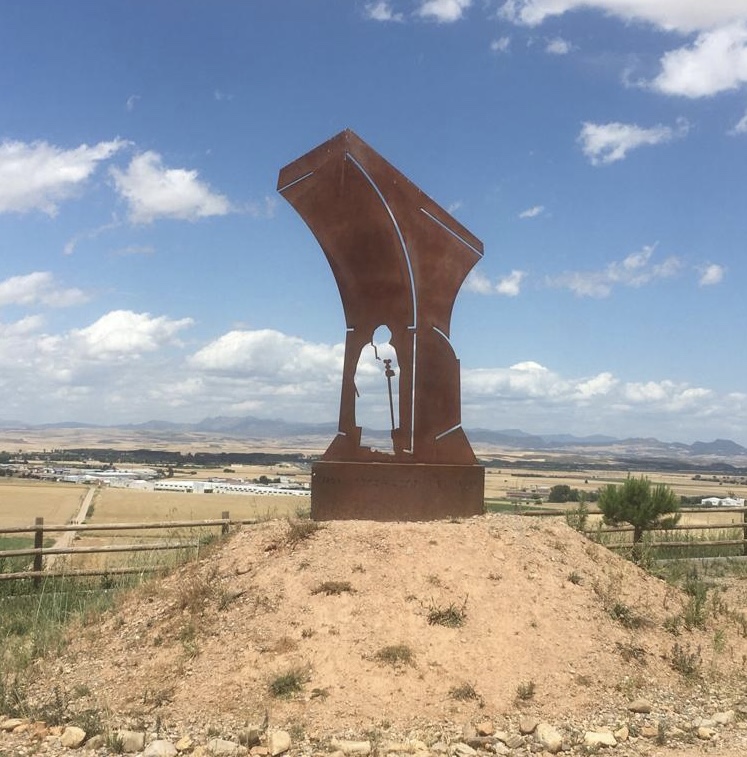
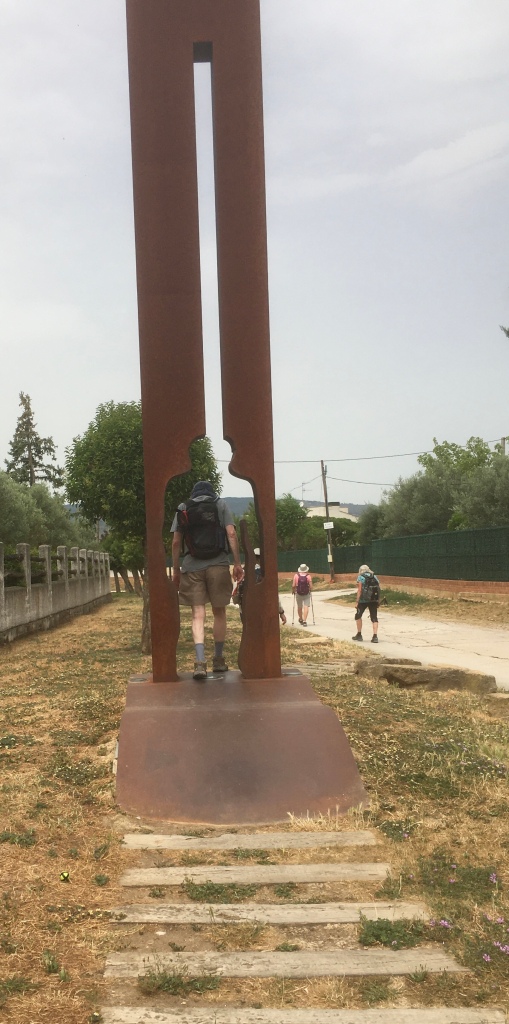
Leaving the village you can walk through a modern metal sculpture with a cut out figure of a pelegrino – this marks the area where the Camino Aragonese meets the Frances.
Tom marches through
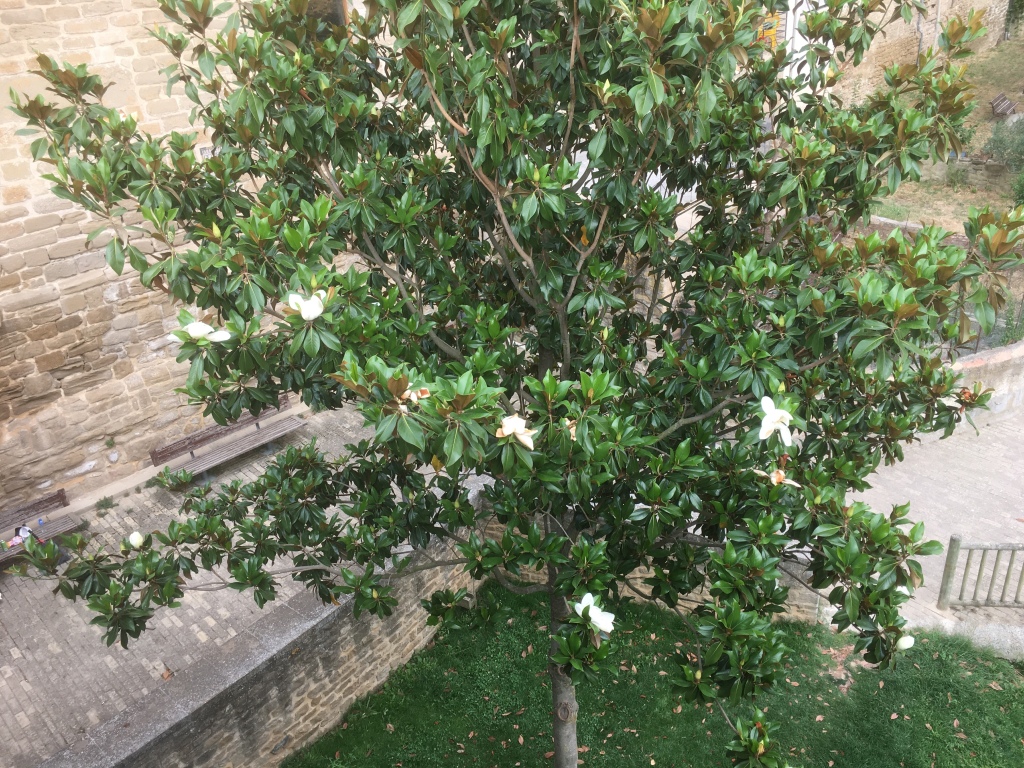
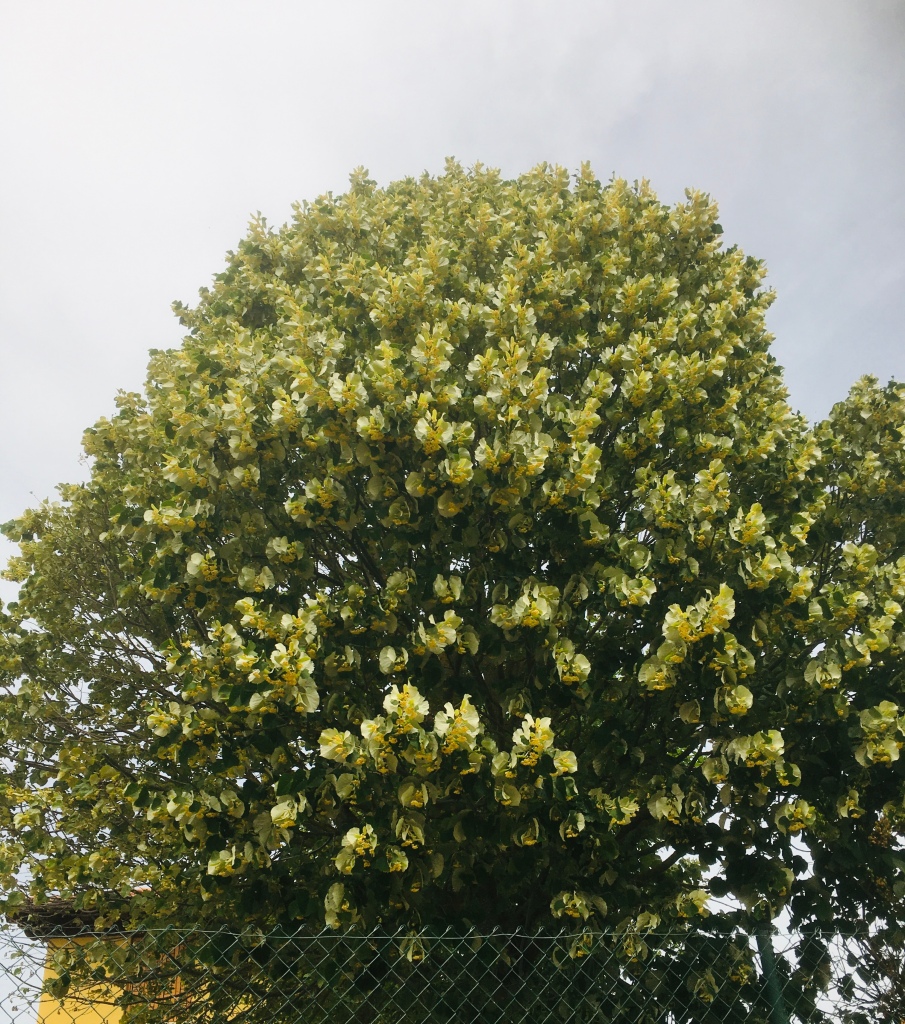
On the path to Puente la Reina we walked past “ huertas” and smaller gardens with plentiful vegetables and overhanging a wall the foliage of a beautiful tree.
Finally following a fertile valley with vines a plenty we reach Puente la Reina .
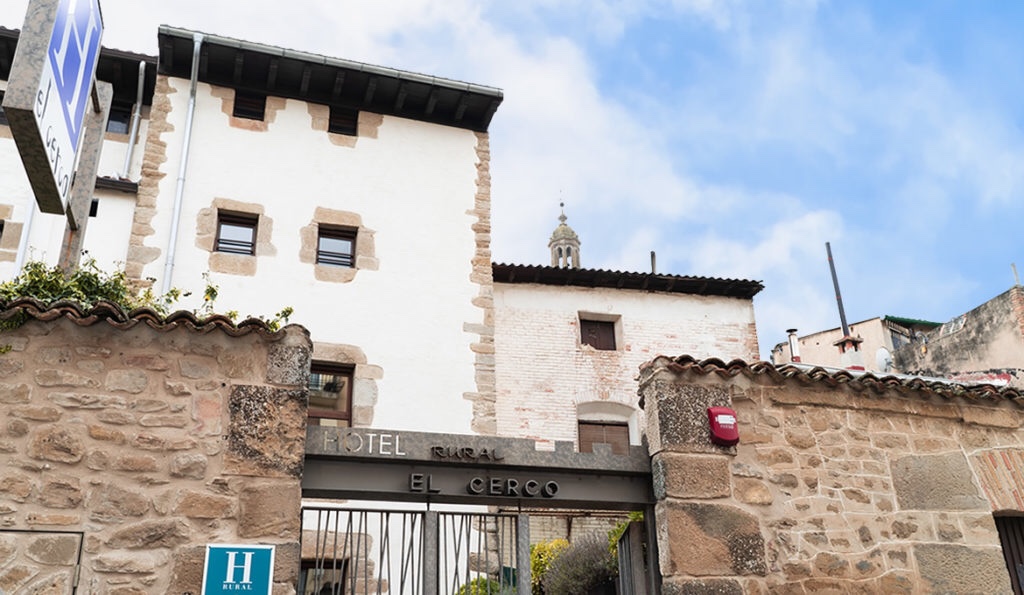
Our accommodation is Hotel El Serco Rural where we were greeted with a welcome glass of home made lemonade by our host.
Another rewarding and pleasing etape accomplished on the Camino Frances.















































 ensuitepilgrim's Blog