Adelante.. people along the way, from the USA.

15 Sep

At Hotel Suiza, Arzua, we rested up after another, great walk in the sunshine. We met Mac, an Irish-American, from Boston. He had a colourful history, emigrating in hie early 20s and working as an “illegal “, for six years until he bought a 1000 28 cent stamps and made the same number of applications for a Green Card; he got one and joined the armed forces, ending up as a Marine, doing tours in places like Iraq. After that he took on the role of providing armed protection for VIPS, over there . At 50, he is now retired and was at a loose end, until he watched the movie, ” The Way”, which so affected him, that he decided to walk the Camino, in the hope it would give his life some focus.  He was hooked, like so many Americans, by the film. He was good company, though outrageously Republican in his views. He resembled a ” roamer”, a name given to the early pilgrims to Jerusalem, Rome and Santiago.

We also met a lady, over dinner, there, from Nashville, who was walking her first Camino, organised by a firm called Caminoways”. She got off to a bad start , as the airline “lost” her luggage , during a flight transfer, between Nashville and New York, which meant she had to walk her first day , in sweltering heat, in her civvies. However, with the help of her daughters on the phone, back home, she was reunited with her luggage, the next day. She was a formidable lady and I should have loved to have been a fly on the wall, during her conversation with travel company, who she described as……. After a bottle of Ribeiro, she had cheered up and gave Penny, Matt & I , a parting present of a pin each, tiny brooches, she had bought in Sarria. In that inimitable twang, she wished us good night, with ” Been good talking to y’all”.

Our  forecast for the next day’s walk to O Pedrouzo, was steady rain. So ponchos to the fore.

THIS IS FOR MAC, BUEN CAMINO

6 months, 2 weeks, 4 days,
and I still don’t know which month it was then
or what day it is now.
Blurred out lines
from hangovers
to coffee
Another vagabond
lost to love.

4am alone and on my way.
These are my finest moments.
I scrub my skin
to rid me from
you
and I still don’t know why I cried.
It was just something in the way you took my heart and rearranged my insides and I couldn’t recognise the emptiness you left me with when you were done. Maybe you thought my insides would fit better this way, look better this way, to you and us and all the rest.
But then you must have changed your mind
or made a wrong
because why did you
leave?

6 months, 2 weeks, 4 days,
and I still don’t know which month it was then
or what day it is now.
I replace cafés with crowded bars and empty roads with broken bottles
and this town is healing me slowly but still not slow or fast enough because there’s no right way to do this.
There is no right way to do this.

There is no right way to do this.”
― Charlotte Eriksson

Camino Primitivo – Lugo to Melide.

13 Sep


After a complicated, but extremely smooth journey, from Bham to Gatwick, by coach overnight, dawn flight to Santiago de Compostela, then transfer by coach to Lugo, my sister, Penny and brother Matthew found time enough to explore Lugo, before setting off on our mini Camino to Santiago de Compostela, of about 115 KM.


image

We enjoyed a great night in the city, after exploring the historic centre and amazing Cathedral.


Saturday morning was misty , as we set off along the river, having crossed the Roman Bridge, en route.


OLYMPUS DIGITAL CAMERA

OLYMPUS DIGITAL CAMERA

The sun soon burned off the mist and we walked  through glorious Galician landscapes of valleys and forests; pausing at the gateway to this Finca, with its commemorative ,Camino decorations. The good looking one is Penny!


OLYMPUS DIGITAL CAMERA

OLYMPUS DIGITAL CAMERA

After a couple of hours walking we were glad to find a place for coffee and a takeaway bocadillo for lunch, in a tiny hamlet.


Penny was intrigued by the Horreos, granaries, that were installed near farmhouses and soon built up quite a collection of pictures. They are used to store maize and because of their design, impervious to rodents. Albergue Ponte a Nave was our first night’s stop and we thought it was an excellent place , overjoyed on arrival, after 31 KM,  and relieved that our rucksacks had arrived by the Mochilla transfer service,run by the Correos ( Spanish Post Office ). This amazingly cheap service was booked for our entire Camino, by telephone in Lugo. We imbibed a couple of local, Craft beers then partook of the communal dinner , which was very tasty, too.


The next morning was again misty, but after breakfast, we strode out , directly on to the Camino and for the rest of the day, we enjoyed brilliant sunshine and I absorbed a great deal of hitherto, unrealised knowledge of Galician birdlife, both Matt and Penny being keen on ornithology. Now ,I know what a Black Redstart looks like and that there are Honey Buzzards. Well, by now I was looking for lunch, which we ate in the courtyard of a little Parillada, stopping afterwards to refresh ourselves at a drink stop, provided for Pelegrinos, by the locals.


We arrived in Melide to find a wine festival taking place, with throngs of mainly young people in themed T-shirts , having a great time and drinking a mixture of local Red and CocaCola…..yes, exactly. Despite the numbers , the noise and the music, the most intoxicating thing was the fun filled atmosphere,with no signs of boorish behaviour . At this point, the Primitivo , in effect ends, as the Camino joins the Frances, the best known and most walked of all the Caminos. As this a first Camino for Penny and Matt, with time constraints of a week, I wanted them to experience a quiet Camino, as well as the “Frances”, where the numbers increased greatly. What was of interest, was the high number of female pelegrinos, both solo and accompanied.


From Melide , we were bound for Arzua, and both Penny and Matt continued to express their interest in the scenery, flora and fauna, along the Way.


Earlier in the walk we encountered a unique stop- off, on the Primitivo, where a lady offered handmade jewellery for sale and cold drinks for a donation. She also impressed us with her excellent English, as she explained the main use to which the ubiquitous Eucalyptus trees were put….not for menthol extract, but for pulping into toilet paper . She expressed her concern at the over planting that was taking place in parts of Galicia, as Eucalyptus are fast growing trees and exploited as a quick, cash crop. She said that they were also, a potential fire hazard, as they expelled gases at their height.


She has no problems with mice, however, as a number of kittens frolicked on the lane, alongside. Arzua to come, then, and meeting a character called Mac….no not that one, he is walking  the last lap of The Via Francigena, to Rome, as I write.

“The traveler sees what he sees; the tourist sees what he has come to see”. – Gilbert K. Chesterton

Caminos Primitivo and Frances and the art of Pilgrimage

5 Sep

imageWhat matters most, in fact, is getting from one stage to the next !

That’s by way of an explanation for my next , short Camino, beginning this W/end , from Lugo, on the Primitivo, joining the Frances at Melide. The anticipation is all the greater because I am walking this Camino in the company of my sister,Penny and my brother, Matt. Their first CAMINO ….and I hope they enjoy it. They both have physical factors to take into account and so we are hoping to get our packs transported every day, by the Correos – Spanish Post Office. Therefore , a confession that for the purpose of family solidarity, I have changed from the ensuitepilgrim, to the Turigrino, so I found Cousineau’s quotation , both apt and justifying…as if I was really bothered about self- justification, after all, I carry a bag, 24 hours a day. But, seriously, look away now if it’s too much detail, on my last Camino, the Via de la Plata, I experienced problems with either the rucksack or bum – bag straps pressing on my Stoma, causing abrasion and bleeding. That was quite disconcerting, because blood in the urine is extremely worrying. So, to Lugo we go ; the logistics are as usual complex. Penny and I take a National  Express coach down to Gatwick, leaving Birmingham coach station at midnight , arriving at the airport by 4 am. Our flight to Santiago de Compostela is at 6 am. On arrival,we should make our way to Lugo, by coach.


imageI say “should “because Spanish bus websites are like Alice in Wonderland and it is very difficult to make your way through them. The good news is that the weather forecast is good and we should be able to enjoy walking the walls , for which the city is famous, not forgetting to collect our two ” sellos” – stamps in our Pilgrim Passports. In Galicia, to obtain a Credencial on completing your Camino, you must have two stamps per day, en route.


Penny and Matt have been training very seriously and I hope I shall be able to keep up with them, especially as I am far more advanced in years than them!🚶🏽 Our first stage is the longest and one of only two days we shall be on the Camino Primitivo, for at Melide we join the Camino Frances, which will be akin to leaving a country lane and changing to a motorway; I anticipate it will be a good deal busier than the Primitivo, but for Penny and Matt, it will still be novel.


image

We actually walk a little beyond Retorta to Ferreira,  to the Albergue, which has an excellent reputation and had to be booked by E- Mail direct, rather than through Bookings.com., which I used for all our other accommodation along the way. Again Albergues are an essential feature of all the Caminos and though I usually avoid them, on this section of the Primitivo, it was a good opportunity for Penny and Matt to sample . A communal dinner and breakfast is included.


Matt is flying to S de C, from Amsterdam and we shall meet up with him in Lugo.

Now I shall make the final pack, including a ” daypack”, big enough for IPad and all items of value and especially, the confectionery that Hannah has made, for our coffee break sugar rush.
” …the rewards of the Camino are uncertain, but the effort and pain and fatigue are for sure.” So, here’s to our first, refreshing Tinto Verano.


image


House – Sitting in Herts.

20 Aug


Loved the  sunny patio. Looking after Mimi the cat and bbqs were enjoyable chores, during our week’s stay in Berkhamsted ; residing at our daughter-in-law’s sister’s house. Normally, stays in Berko are taken up with looking after Tom and Jake. But this time we had three days to explore Herts and nearby Bucks and Beds.


imageLunch in Marlow, at the invitation of very old friends. In the evening, we had aperitifs at Porters, a trendy bar on Berko High St. Then back for a somewhat gargantuan BBQ, some of which made for lunch, the next day.


imageTuesday was taken up with a ten mile circular walk, along the Grand Union Canal to Tring Station, then on into the quintessential , English village of Aldbury – Post Office and two pubs, not too chocolate boxy. We loved its old cottsges and duck pond. Not to mention the Victorian Stocks.


Returned by way of Ashridge in ever glorious sunshine, rejoining the canal at  Northchurch, which has a first class, cricket ground. Next day, by car to Ascott House, via College Lakes, with a brief stop at Aylesbury. Our second visit to the Lakes and we circled the former quarries, finishing with coffee in the Information Centre.


A slight detour to Aylesbury, whose unprepossessing outer areas gave way to the Old Town and a flourishing Market Square, over which presided a statue of Benjamin Disraeli. Aylesbury takes great pride in the fact it is the birthplace of the ParaOlympics, which is nicely topical.


Ascott House, a Rothschild residence, was in a jewel of a setting, with interestingly landscaped features. The collections in the house, were mainly made up of collections of Chinese ceramics and portraits by Gainsborough and Hogarth.


Thursday and Friday were spent enjoyably with Tom and Jake, including walks to the park and a train ride to Watford. The boys loved the Lego shop in Watford’ s state of the art shopping mall ( it was raining! ). And we enjoyed two very pleasant dinners with Dan & Nellie. Many thanks to Ali and Jon, having a great time in Majorca. Loved our temporary residence and the artworks.


Anyone in need of House-Sitters? Please get in touch, distance no object.

Algarve to Navarre

29 Jul

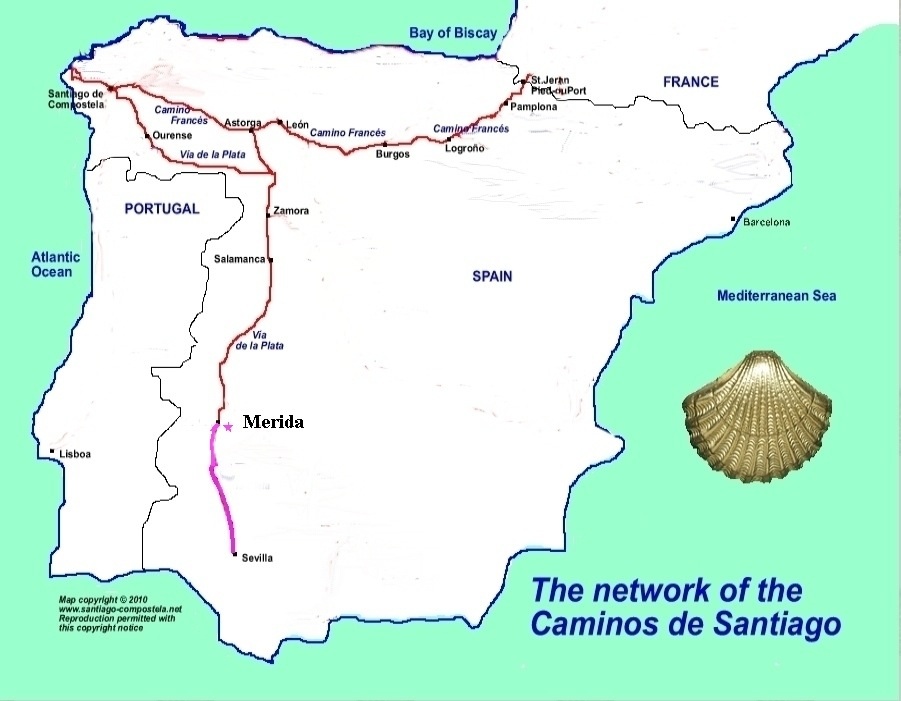
Leaving Portugal, by the motorway to Seville, where we joined the Via de Plata Autovia. All the driving so far, from Santander, down to the Algarve and back up here in the Basque Mountains, has been such a pleasure , compared with driving in the UK, albeit at times, it has been very hot; uncrowded roads,good driving standards and plenty  of services. Should also mention our surprise about how uncrowded places have been, considering it is peak holiday time. The campsites have all been of good quality, and, as campsites tend to be, very different. Eg Arbizu, here in the mountains , contrasted with the Algarve, also, thankfully a little cooler!😓 So, back to the Via de Plata, and driving along, spotting places I stayed, with Mac, on our first leg of the Camino, Via de la Plata. Covering Seville to  Caceres in three hours , in the bus, which took us two weeks on foot.


Caceres campsite was different in that each place had its own Ensuite shower, loo and water – quite appropriate for the Ensuitepilgrim, I thought. Wonderful swimming facilities , surrounded by palm trees, really welcome in temperatures around 38*.


Caceres was chosen because we wanted to visit Trujillo,nearby, city of the Conquistadors.

Trujillo, located between the bottoms of the Tojo and Guadiana rivers, contains an important group of churches, castles and manor houses that are centred around the Plaza Mayor square and which are declared Property of Cultural Interest. Also, this Cáceres city has left an important mark on history: since in the 16th century it was the cradle of illustrious characters linked to the discovery of America. For this reason, Trujillo falls fully within the Route of the Conquistadors.

The origins of Trujillo are found in the primitive settlement called Turgalium. After being occupied by Romans and Visigoths, Trujillo remained under Arabic dominion for over 500 years, during which time it underwent notable development. It then passed into Christian hands after being conquered in 1232 by King Fernando III, and it was monarch Juan II that gave Trujillo the title of city in 1430.

In the 16th century, Trujillo experienced an age of great splendour due to its important role in the discovery of America. The city was the home of two great conquerors: Francisco de Pizarro, discoverer of Peru, and Francisco de Orellana. Other illustrious characters were also born in Trujillo, such as Fray Jerónimo de Loaísa, the first Bishop of Cartagena de Indias, and Nuflo de Chaves, discoverer of Bolivia. The city of Trujillo preserves its old flavour in its two areas: the medieval “village,” of Arabic origin, and the “city” from the 15th and 16th centuries.

city is structured around the monumental Plaza Mayor square, which is presided over by a bronze-cast statue of Pizarro on horseback. Over the centuries it has been the centre of social and commercial life of the city, hosting markets, festivals, and all kinds of shows. In the 16th century it became a noble plaza, since the conquistadors and diverse families from the nobility began to build houses and palaces in it.

http://www.spain.info › en_GB › otros-destinos


After a fascinating, self directed tour, courtesy of the Turismo’ s helpful guide, we made our way to Madrigal de la Vera, an area we had never visited before; river swimming below a Roman Bridge.


imageNext morning we were bound for Navarre and Abrizu, where the weather forecasts were optimistic and the air a little cooler. Great drive, over 1545 metres at some point! I was told the views were fantastic; couldn’t say that of the hairpins! Abrizu was a pretty village, festooned with all shades of Perlagoniums, from balconies and window boxes. The campsite proved to be another gem and was ensconced within a horseshoe of hills and mountains.


There were some huge birds floating on the thermals above us and they were marvelled at alongside the local, cloudy sidra.


Another surprise, on a walkabout around the site, was the discovery that a lot of the bungalow dwellers had little allotments, on the periphery. Eco-minded, a bug hotel,too.


Adios Espana, bound for  France, tomorrow; ideally making it as far as Touraine, en route for a Eurotunnel crossing on Monday morning and hopefully a Bonne Route.


image

Algarve Five Days & The Feast of Santiago.

25 Jul

Quarteria ‘s ORBITUR campsite was the base for a five day stop by the sea. Situated at the edge of the town, easy access to beach and supermarkets, this is a very good site, which despite its size, was tranquil , well ran and highly recommended; ( except for its over lengthy checking-in procedures )like the town the majority of holiday makers were Portuguese families, staying in tents, caravans, bungalows and mobile homes. The terrace overlooking the pool was my favourite spot and the staff soon became accustomed to my request for a white port and tonic, with ice, only after 6 pm, I might add! 🍹

From a simple fishing village, Quarteira has become one of the major tourist centres in the Algarve, famous for its golden beaches, its high quality fish and for its woods of stone pine.
Quarteira has seen a lot of development in recent years, leaving it characteristically high-rise in and around the town. Quarteira has still, however, managed to retain its Portuguese character and is particularly popular with Portuguese holidaymakers. The best part is the lovely palm-lined promenade, Avenida Infante de Sagres, known as the “Marginal”, where you can spend time relaxing with lovely walks along the seafront and on the outdoor terraces of cafés and bars all around.
Quarteira Beach is beautiful and rock-free and there are plenty of eating places with the Avenida Infante de Sagres running along behind it, which you can call on for refreshments. Quarteira still boasts a local fishing community and the fishermen can be seen at work at the western end of the beach. The catches are sold at the nearby fish market early in the morning and will end up on your plate for lunch or dinner the same day.

There is little of historic or cultural interest in the town – very good fish market. It is dominated by apartment blocks, typical of the Algarve as a whole. We enjoyed a great  fish dinner in the extensive garden of a restaurant on the beach and the quality and range of bars, cafes, etc, was extensive. Morning coffee is not complete without sampling Pastel de Nata,usually somewhere on Quarteria’ extensive promenade.


We went by local bus to Loule, to visit the castle  museum and the markets,for which it is famous , coaches from all the resorts make their way here, on Saturdays and the big difference to where we were staying was the number of Brits. I used to be able to get a take on the ambience of a place by observing the number of earrings and tattoos on the men; it’ changed now ,though , to the women. Sipping coffee, outside Loule’s Moorish style market, was a vantage point for people observation. One memorable top carried the message” MADE YOU LOOK”; it should have been followed below by ” Bet You  Wish You Hadn’t'”. But  Loule retained  its own, unspoilt atmosphere. The beginnings of Loulé are uncertain, some historians putting it as far back as 400BC, but others say it’s origins are Roman. It is a fact that when the Arabs invaded the Algarve in 715, Loulé was already an important town. It has been a part of Portugal since 1249 after the Algarve was recaptured from the Moors and in 1291 King Dom Dinis established the Algarve’s only medieval fair in Loulé, a sign of the wealth of the region.

Loulé castle (13th/14th century) built on an area previously settled by the Romans, is just a short distance down the road from the market on the left hand side. From this approach it isn’t very obvious that it is the castle as, through the arched gateway, you see the whitewashed walls of the ‘alcaidaria’ ( which was the living quarters for the castle commander and his garrison) surrounding a small courtyard and no visible signs of the castle walls. Across the courtyard lies the municipal museum, next door to which are some steps leading up to the remaining section of the castle walls.

The three remaining grey stone towers and short walkway between them are well preserved and apart from getting a great view of Loulé does also give a taste of the historical heritage of the Algarve. (There is a small charge for visiting the castle)
A little further along the street from the castle is the Convent of Espírito Santo which also houses the municipal art gallery.


The bus station in Quarteira had some eye catching murals; you wouldn’t find anything like these at Digbeth Coach Station.


Feast day of St James ( Santiago ) , today, 25 th July. Hope it is a good one for all fellow caminoists and friends. By coincidence, we set off, tomorrow for Caceres, wonderful city on the Camino, Via de la Plata.


image

Tomar, the Templars’ Town

20 Jul

Good drive to here,yesterday. Left some misty weather behind as we got South of Porto. 35* ,but breezy. Tomar is on the Camino from Lisbon and is a lovely town, easily walked and enjoyed. There was a film set in the Praca de Republica, but it had gone by this morning, revealing what a gem it is ,with the beautiful church, dedicated to St John the Baptist.


imageStaying on the  Municipal Parque de Campismo, by the river Nabao; good place , only spoilt occasionally by the unsupervised screaming of bare- arsed infants, whose capacity to swear, from the age of 18 months, was most impressive. These ” itinerant es” , claim to come from Essex, though the accent is not one ever deployed by Ian Dury! I suppose there is an Essex link with the preferred evening wear of black dress, revealing pink bra straps . They all have the most impressive caravans and vehicles on the site. The men disappear early and were overheard this morning ” 1100 Euros.. Fatima ” – I don’t think they were selling rosary beads. Still, leaving such distractions aside, an informative and impressive morning was spent climbing up to the Castelo de Tomar and the adjoining Convento de Christo, a UNESCO World Heritage Site.

The  Castle is a fine example of Templar architecture of great historic and cultural significance.

The castle was part of the defence system created by the Templar Knights to secure the border of the Christian Kingdom against the Moors and remained a major stronghold for nearly two centuries during the Middle Ages. Later it played a significant part in the New World explorations of the 15th Century, led by one of the Order’s most famous grand masters, Henry the Navigator.

The Convento de Cristo Tomar is one of the key points of interest within the castle walls and boasts a unique mix of architecture spanning some five centuries. This is a place where gothic, renaissance and Moorish architecture sit side by side and combine with breath-taking results. The famous round church, located behind the keep, also dates back to the late 12th Century and was modelled after the Dome of the Rock in Jerusalem. It is characterised by its domed roof and bell tower and is a major feature of the castle skyline. The views are breathtaking,too.


And….Henry the Navigator was one of the order’s most famous grand masters. The Prince devoted much of the Order’s finances to fund his 15th Century explorations, securing the Order’s place in the history books. It was also the location of the formation of the Iberian Union in 1581, when Philip II of Spain was also recognised as Philip I of Portugal. The Union lasted until 1640 and it was during this time that the aqueduct was built.


Also…Key sights of interest at the Convent include its majestic entrance; the beautiful murals and sculptures of the charola; the 16th Century Manueline nave; the eight cloisters; the ornate janela, or window; the cross of the Order of Christ; and the armillary sphere, emblem of King Manuel I and of Portugal itself.


Tomar is home to the oldest Synagogue in Portugal, restored from its use as a store, when the Jews were expelled from Tomar; there are now only two Jewish families, one of which runs the synagogue as a museum, supported by donations of artefacts, from around the world .


image

The river is a feature of the town and is a natural division between the old town in the west and newer development to the east.


imageIt has been a very enjoyable two days in this, one of Portugal’s most historic cities. Final Super Bock in the Plaza de Republica, the back to grill some Chicken Piri Piri. Tomorrow, a 229 mile drive to the Algarve, aiming to arrive at  Quarteria by lunchtime.

Viana ….or is it Diana do Castelo?

18 Jul

Originally Diana do…dedicated by the Romans, this understated city has been a joy to visit; whether wandering through narrow lanes, or enjoying the Squares and monuments. I love ports, and V do C still has an important role, though not as great as its heyday. No tourist tat and appropriate , commercial development, means it retains its charm and attractiveness.


Human settlement in the region of Viana began during the Mesolithic era, from discoveries and archaeological excavations. Even around the Roman occupation the area was settled along the Mount of Santa Luzia.
The settlement of Viana da Foz do Lima, which it was called when King Afonso III of Portugal issued a foral (charter) on 18 July 1258, was a formalization of the 1253 Viana that the area was named.
In the 16th century, its port gained great importance as one of the entry-points for Portuguese explorers and traders, involved in the Portuguese discoveries. Many of the historical buildings originated during this period.
The prosperity that continued developed from the town’s role as a port, protected by defensive structures (such as the Tower of Roqueta) to repel pirates from Galicia and north Africa. The port’s ties to northern Europe came primarily from exports of wine, fruits and salt, and imports of tile, textiles and glass.
After the maritime discoveries and trade, the commercial life of Viana reached its greatest proportions during the reign of Queen Maria II of Portugal, when the monarch established the Associação Comercial de Viana do Castelo in 1852 (the fourth oldest public company of its type). The queen, in order to reward the loyalty of its citizens, who did not surrender to the Count of Antas, elevated the town to the status of city on 20 January 1848, renaming the settlement with its current name.
During the dictatorial regime, Viana do Castelo was one of the most important ports of the Portuguese cod fisheries.

An example of the latter, O Navio Gil Eannes, a hospital ship ,is preserved on the quayside. Built in Viana , in 1955, with what must have been at the time, state of the art equipment, this ship serviced the fishing fleets , harvesting Cod , as far away as Newfoundland; acting as a hospital, supplier and occasional ice- breaker. It was fascinating to be able to visit , below decks, the surgeries, X-ray theatre and wards. The wine store, bakery and kitchen, plus the sailors’ quarters have been preserved. In the bowels of the ship, the engine room was fascinating, with parts from Chicago and Middlesex! A unique experience and to think it almost perished in the breakers’ yards in the Port of Lisbon.


High on my list , was a ride on the funicular that takes you up to Santa Luzia; a landmark that towers over the city.


The church is of recent construction , in the revivalist style, completed in the 20 th century, at the behest of a wealthy soldier, grateful for a cure from near destructive illness. The views from the top are panoramic, described as the third greatest viewpoint in the world by National Geographic Magazine.


This Sunday morning , the Avenida ( Main Street ) was given over to a line of Classic Cars, nearly all Portuguese owned and featuring a car I should love to drive, aTriumph TR 3.


However, I just had to settle for my earlier navigation stance , on the hospital ship.

Viana was one of my stops, when I walked solo, along the coast, from Porto to Santiago de Compostela, three years ago and it was interesting to find some of the way marks and sights of this long established , but little walked Camino. Of especial interest was the 15 th century Pilgrim Hospital.


There are a number of well preserved civic buildings, palaces and churches. The Turismo provided an English guide to most of them.


We enjoyed a great sample of Portuguese cooking at the campsite restaurant and the pulpo salad went down agreeably with a bottle of Vinho Verde. Bottoms Up!


So, farewell Viana, tomorrow a 300 mile drive South to the majestic and historic city of Evora ( last visited 40 years ago ) , en route for the Algarve.


The weather necessitates a change of direction….

14 Jul


imagePicos it was not meant to be. On arriving st Santander, the weather was misty and damp, so we headed south.But before that a word or two on the Crossing from Plymouth to Santander. The crossing was smooth and arrival was punctual. However, we were not prepared for the ” entertainment”, on board, which ranged from Music  quiz and a magician to a Supremes lookalike act! We did manage to watch the Mens’ Final and later, the European Championship Final. A good value breakfast was enjoyable and by  midday, the coast of Northern Spain was visible, as we celebrated Han’s birthday; she was very pleased with her watch and enjoyed an impromptu burst of ” Happy Birthday”, from a jolly group on the next table.


image

Tordesillas was reached easily enough, along mainly deserted motorways.


Because of its important highway connections Tordesillas has become a major transit hub. The economy is based on services — especially connected to tourism — and the agricultural production of the surrounding area. Wheat has long been the traditional agricultural product

Fourth visit to this campsite, over the years and it never fails to feel welcome , well organised and…..sunny! The Plaza ayor is a treat, and traditional in its design; three corners given to cafes and little traffic. There was the unlikely shadow of controversy over shadowing the town, this year. The town is known for its Toro de la Vega festival during which a bull was slaughtered by people on horseback and on foot. Animal rights groups repeatedly tried to stop this from taking place. The bull is at least 5 years old when he’s killed and is allow to live in a large property to keep him territorial, unlike other animals who are killed for the butcher at 1 year of age. Finally, in May 2016 the Regional government issued a decree prohibiting to slaughter the bull in public; animal rights activists regarded it as a victory after years denouncing publicly the cruelty with great national and worldwide coverage. The mayor of the town, backed unanimously by the opposition, made a statement of outrage the same day of the prohibition. The bull slaughter had came to be inextricably associated with the name of the town, overshadowing the rich monumental and historical heritage.


Now, for the next stage of the holiday; on to Viana do Castelo, Portugal.

Brittany Ferry to Santander, then….

8 Jul

R

The weeks building up to departure, on Sunday 10 th July , have been a mixture of Looking after grandchildren, working on the allotment and back garden. Mixed in with visit from old college friends, two friends’ birthday celebrations  and receiving positive news  of a recent blood test. A purchase of an up to date Map of Spain and Portugal, together with a new camping guide, thereto. At different times, weather forecasts have been sought and a range of itineraries devised, depending on the weather, when we disembark at Santander. Hopefully as pictured.


It has become a tradition that I burn a cd for friends’ birthdays and I was pleased to be able to compile, Case, Lang and Viers , with Jeff Lynne – an unlikely amalgam.


Nothing I enjoy more than rhymes, stories and poems shared with the grandchildren , on the I-pad, or ” real books”,whether it’s Michael Rosen or The Runaway Train!


There have been practical matters to attend to,like taking out the portable bike from the ” bus” and reminding myself how it folds out…..and back.


imageA pleasant surprise, just the other day, when I received a donation of a£100.00 to the Cancer Relief Fund, from a former colleague; glad I hadn’t closed down the Just Giving account.

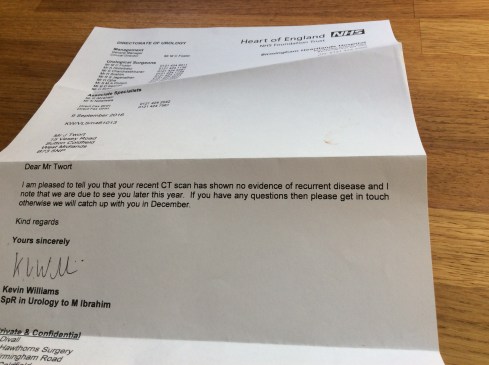
Health wise, I was pleased that a recent blood test was all clear, two years on and have never felt more that growing older is both a privilege and a bonus. Impetus given then to possible destinations in Spain; will it be Potes in the Picos de Europa , or the coast near A Coruna and most importantly that wherever we reach on Monday 11 th July, there is a good restaurant to celebrate Hannah’s birthday.


I have been enjoying two diaries of an ex-pat in Spain.” Spanish Journals, The Posthumous Diaries of an ExPat”, by A R Lowe . A genuine curmudgeon , often politically incorrect…but , at times, unknowingly funny and I mean laugh aloud funny! Especially, his attempts to give English lessons to the locals. His star pupil insists on learning the language through translations of his favourite, Country & Western Standards. A Bientot.


image