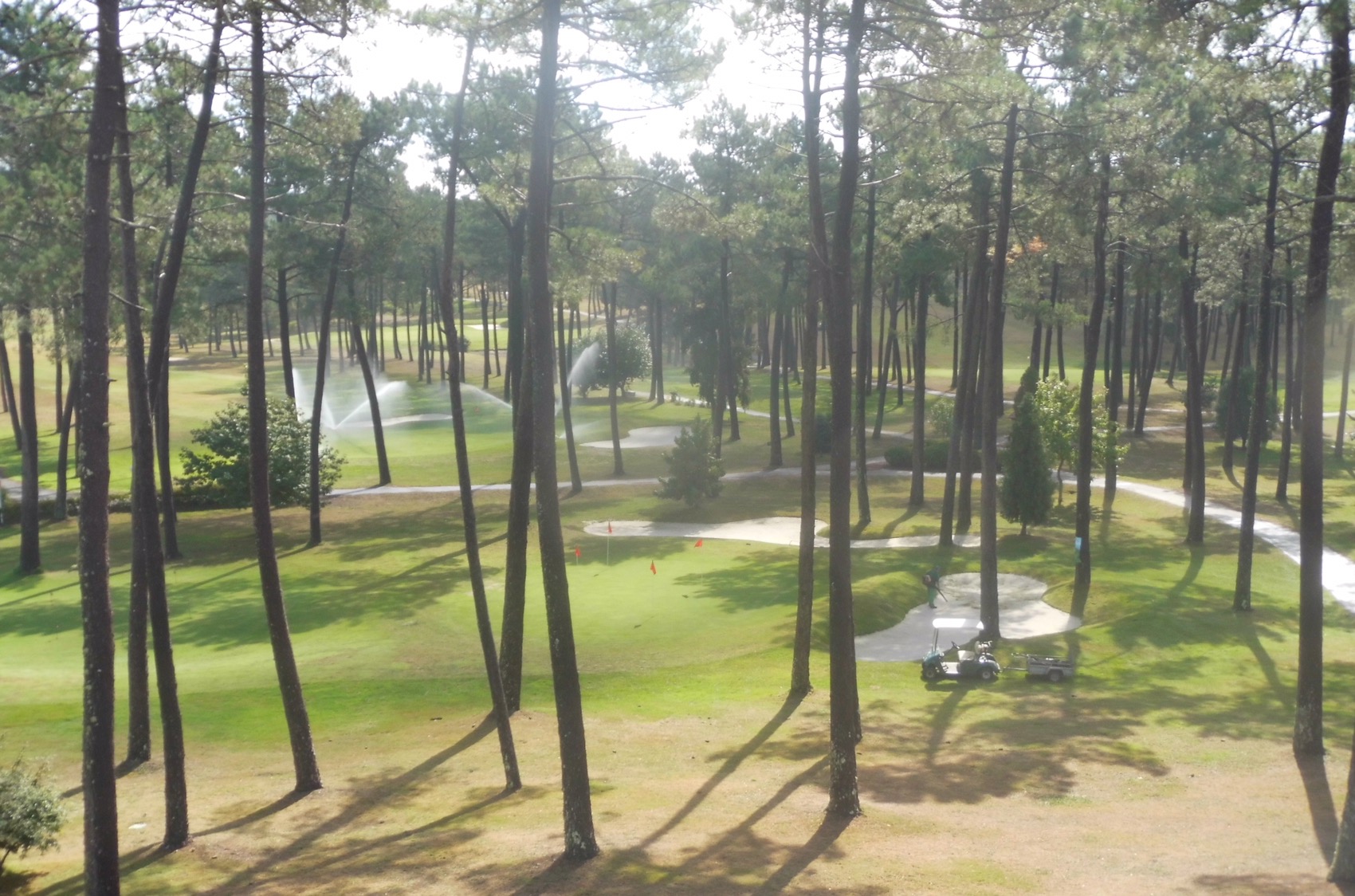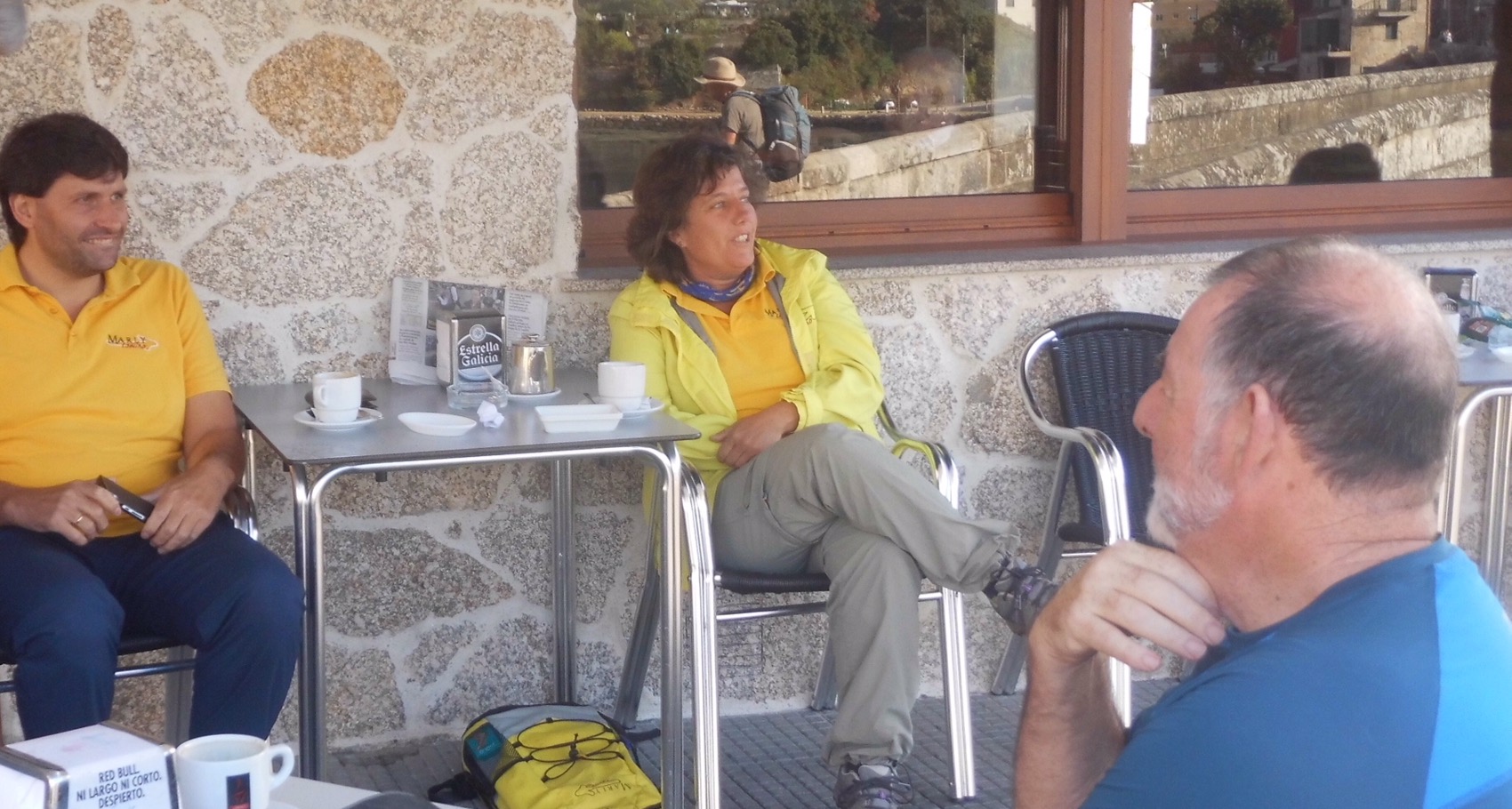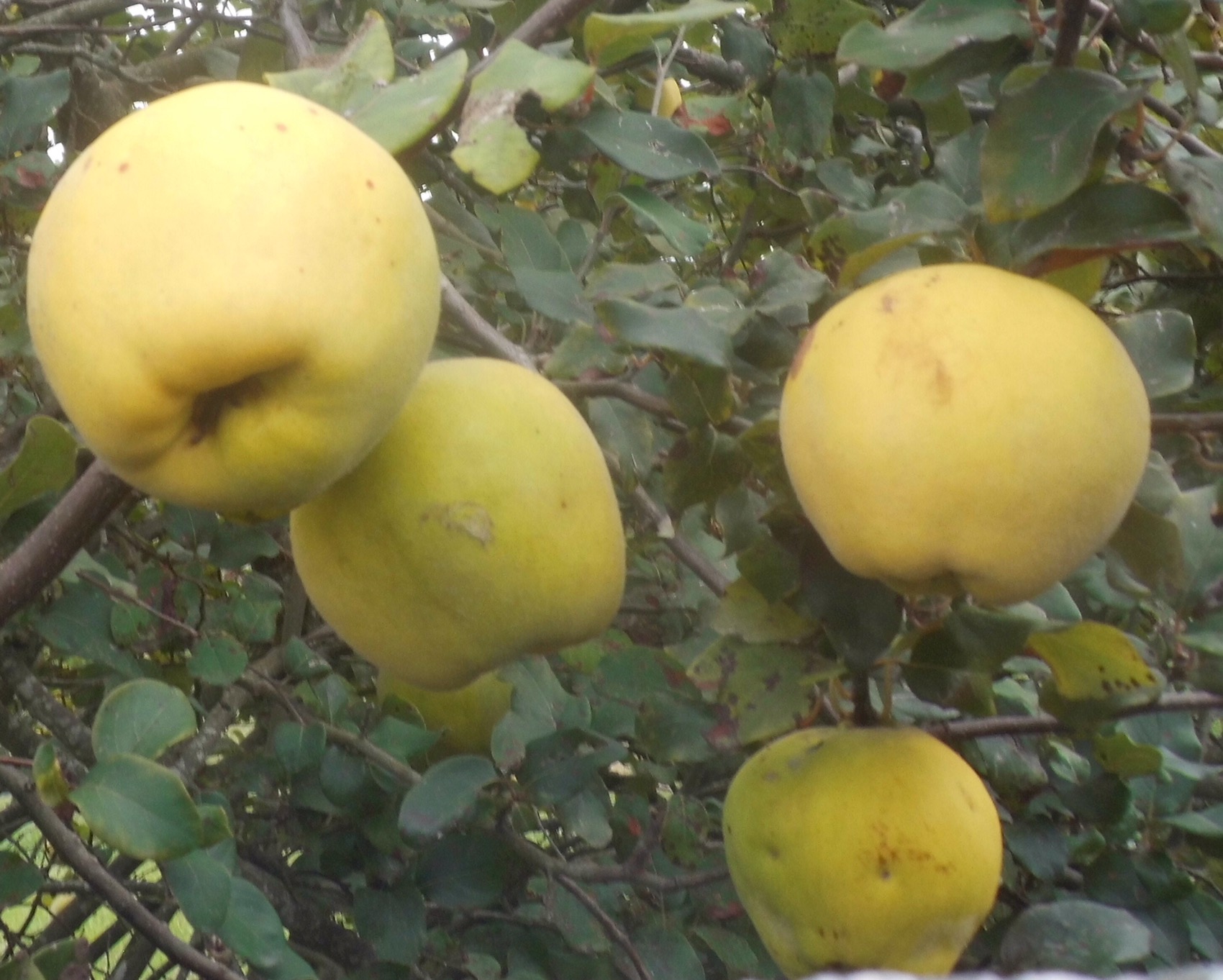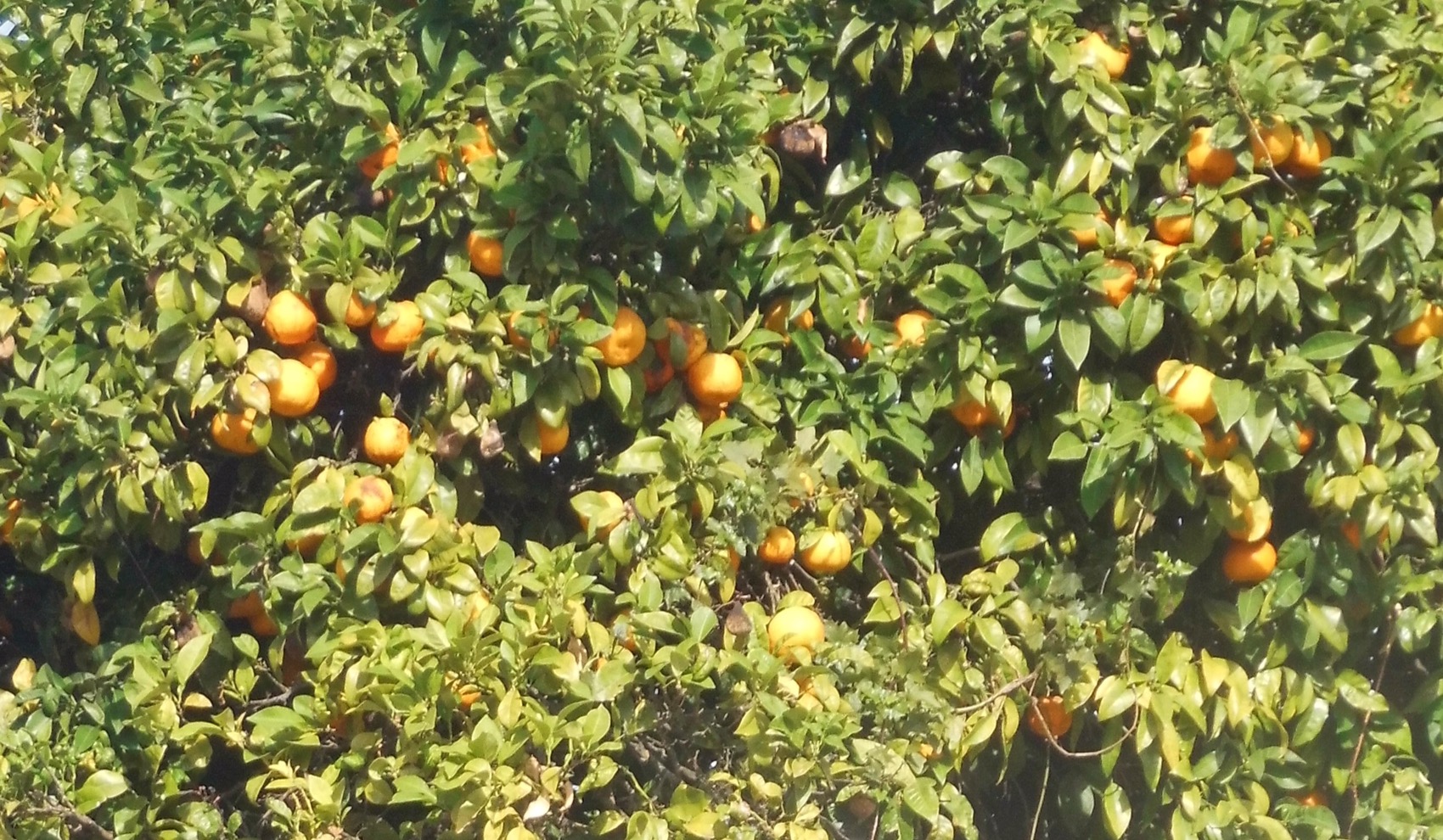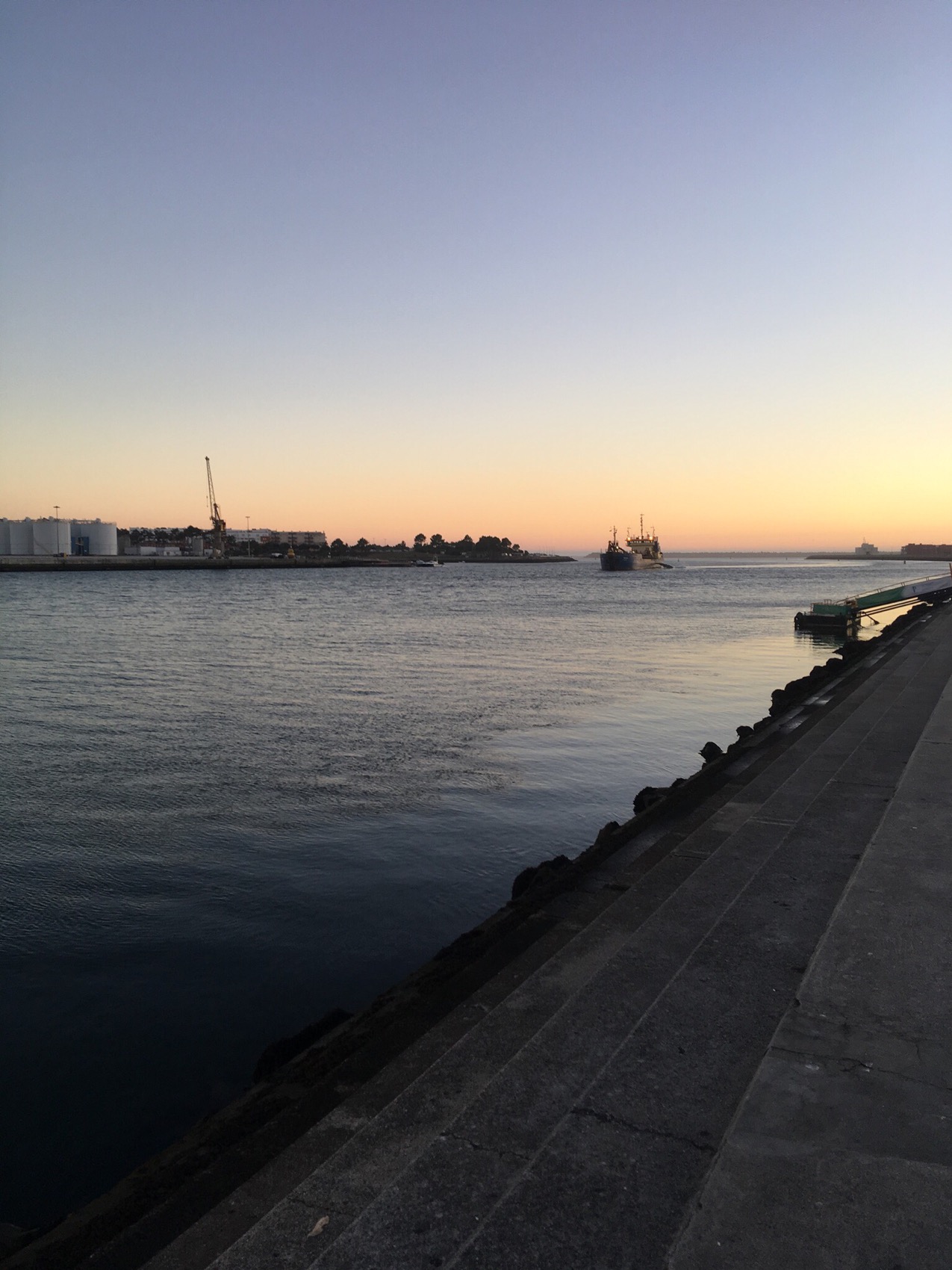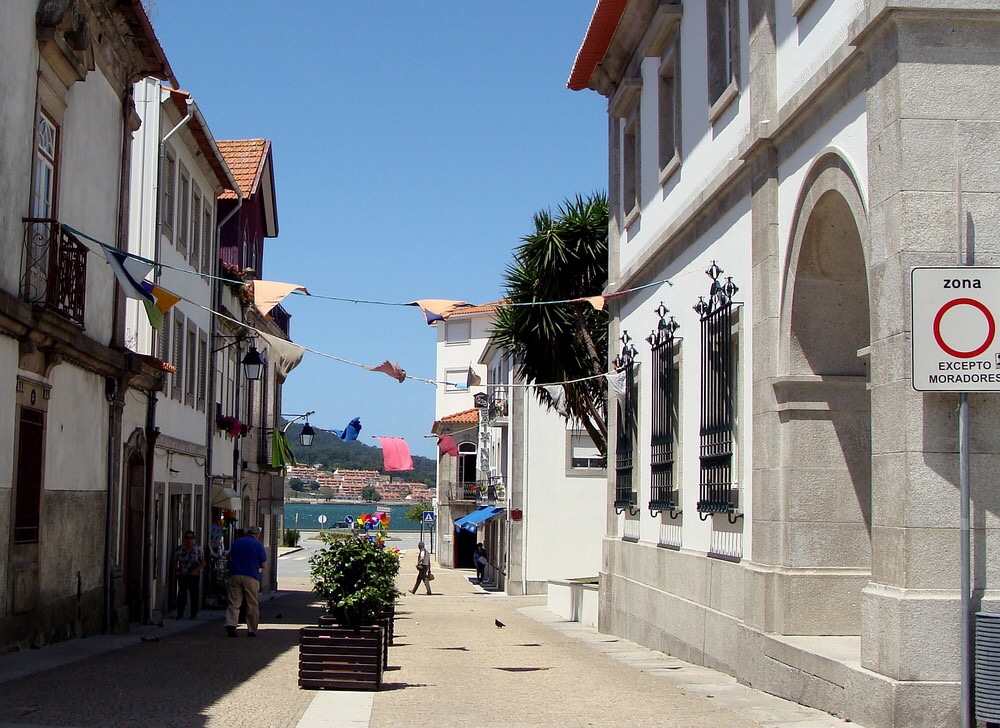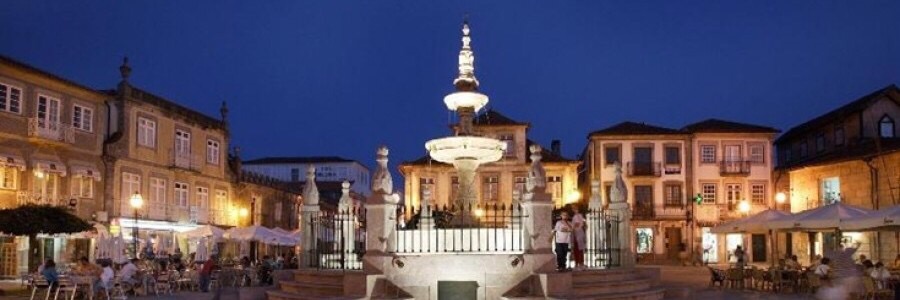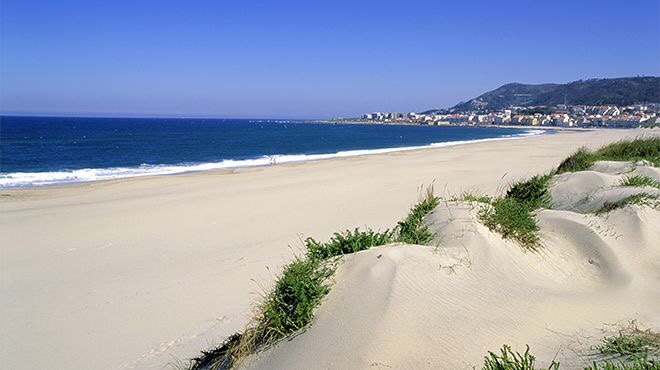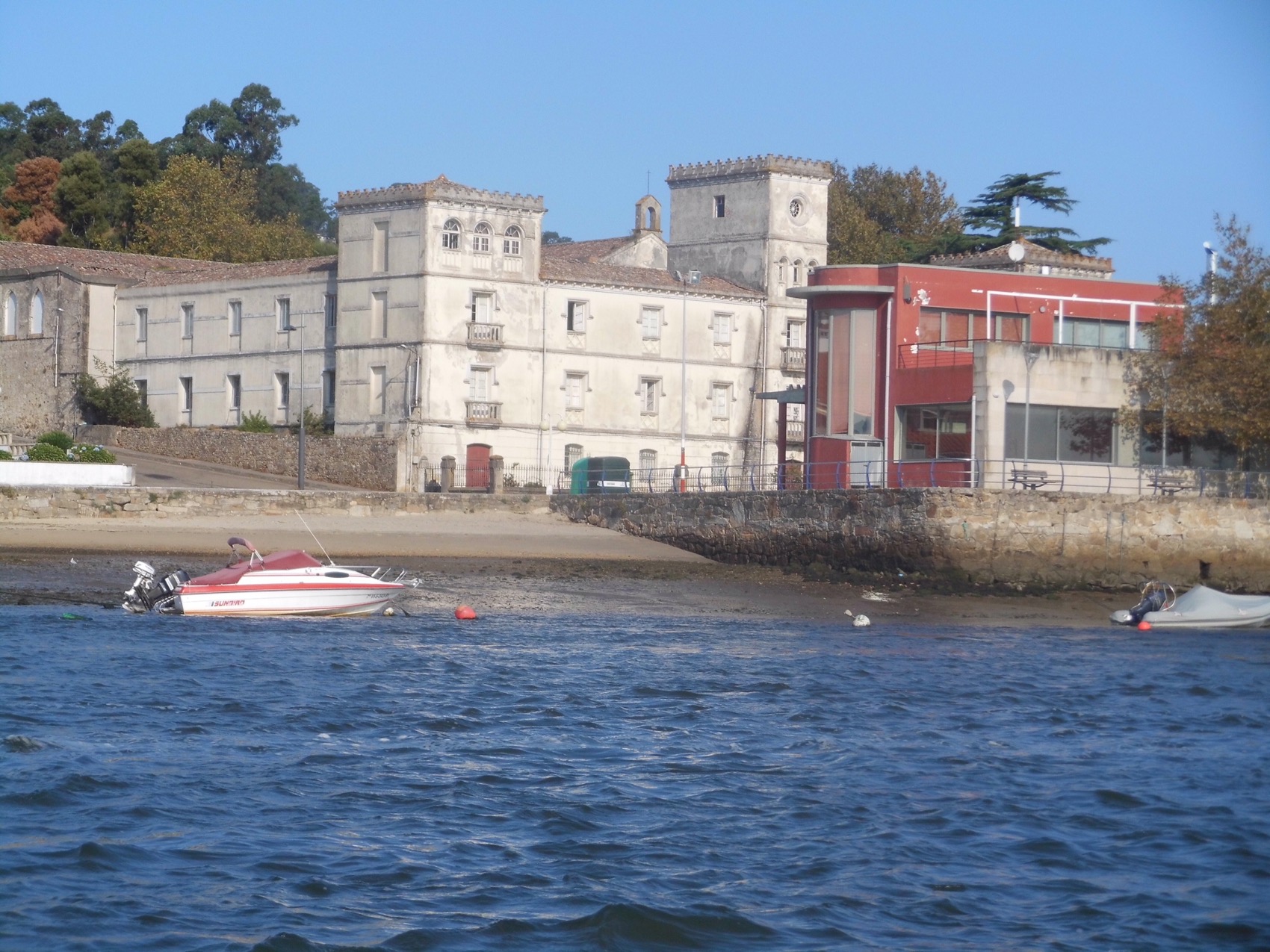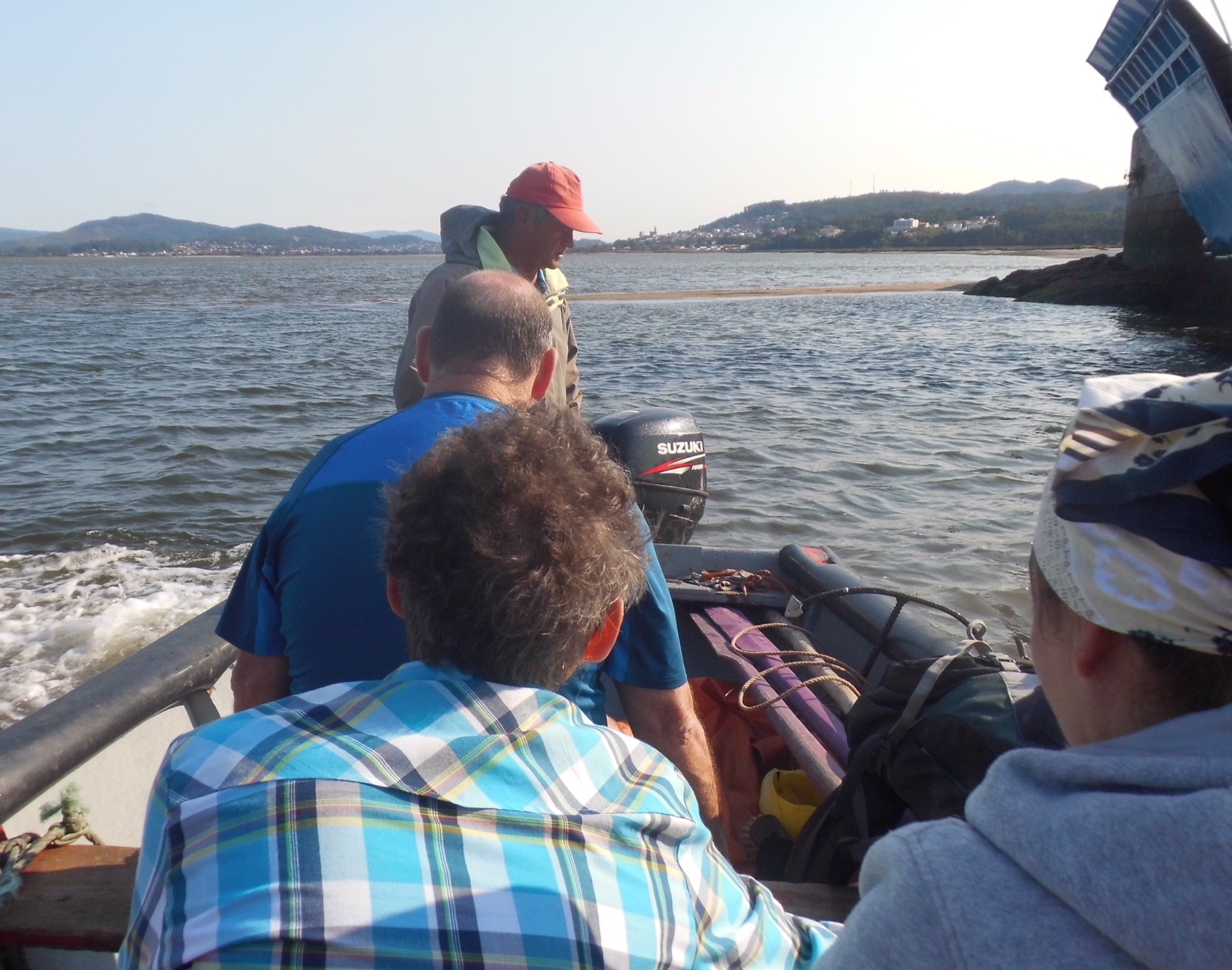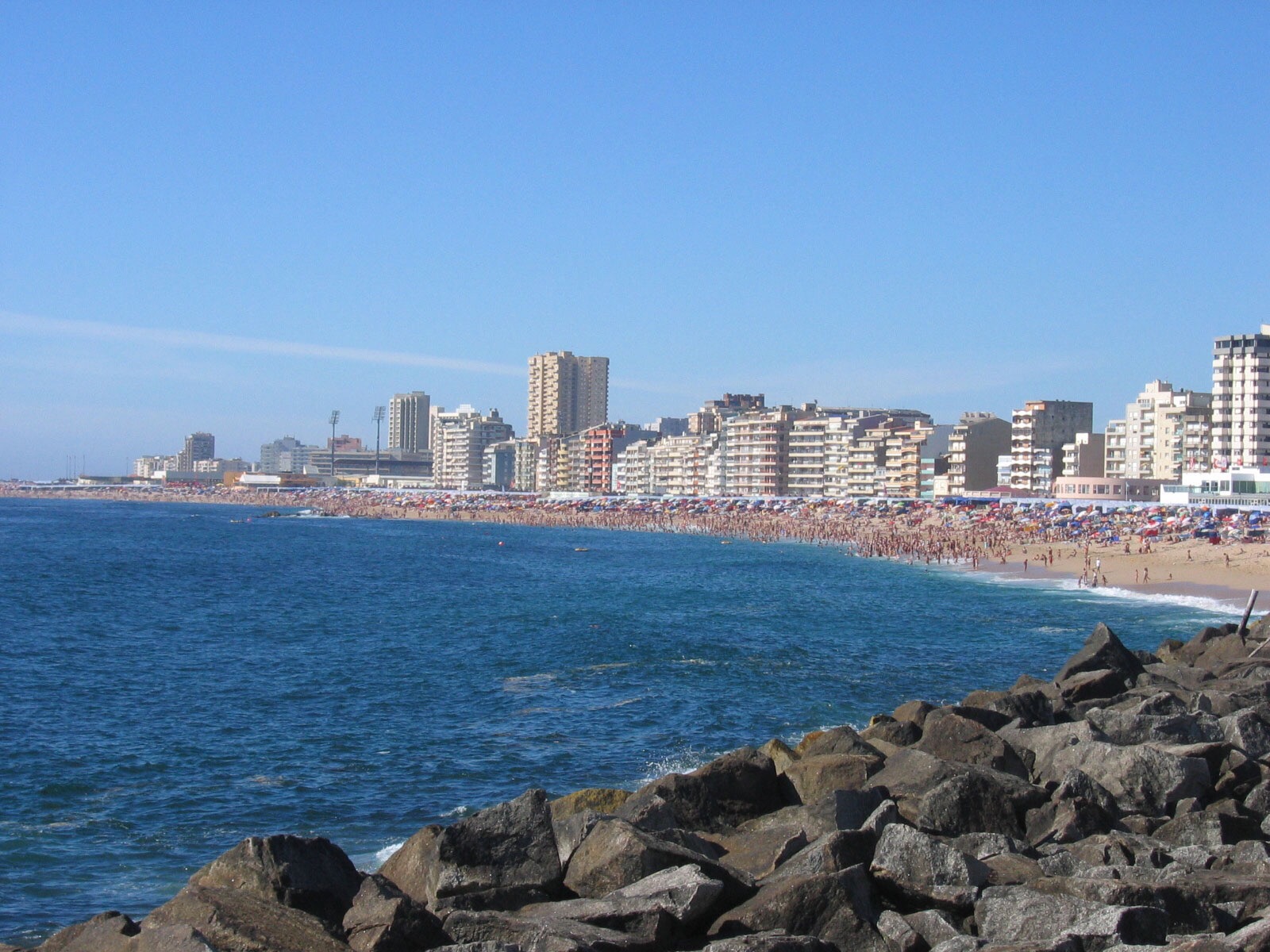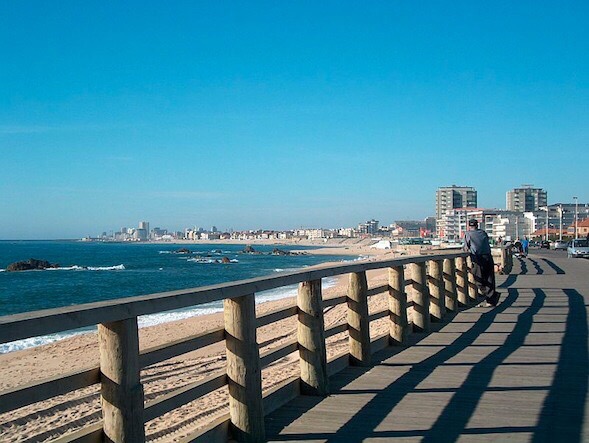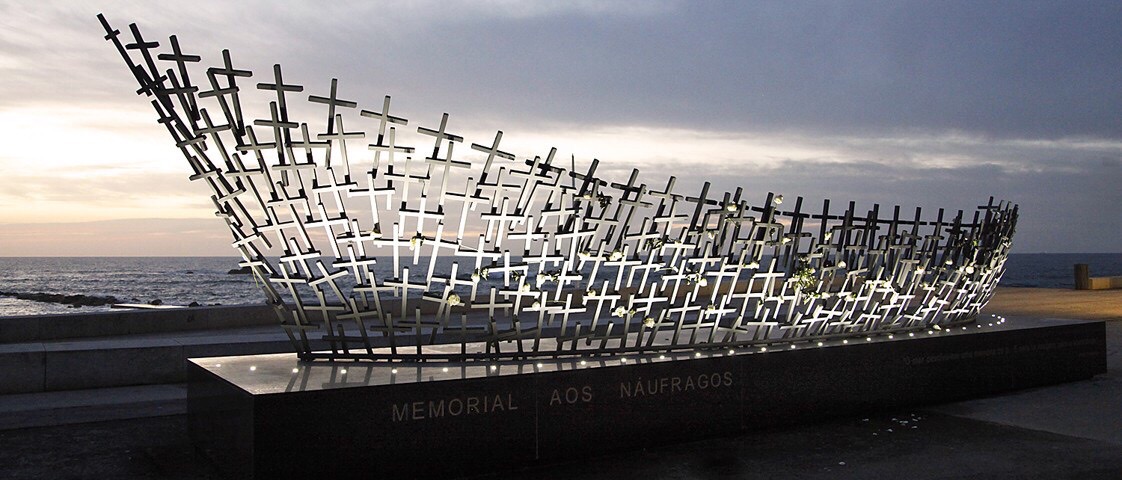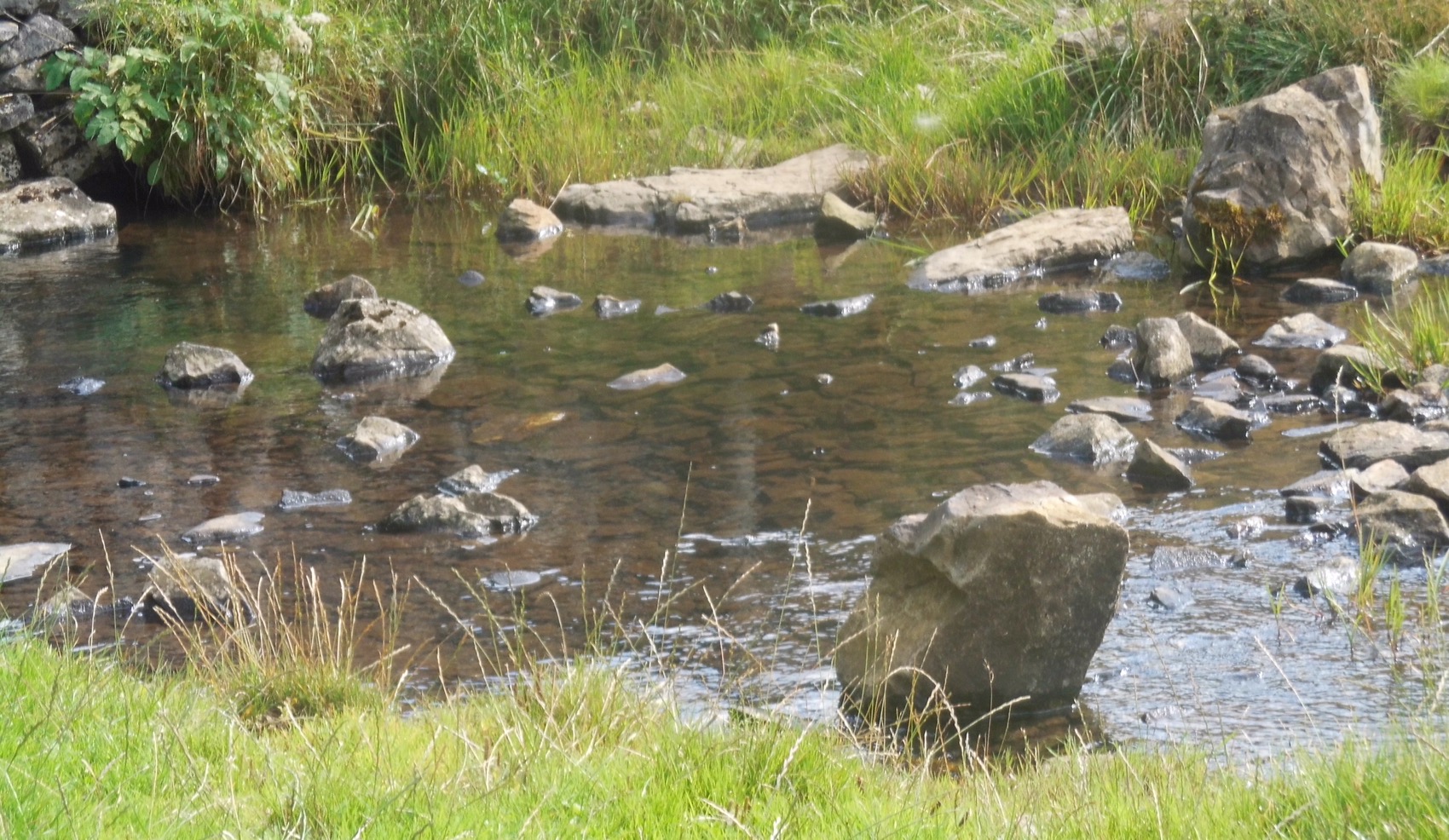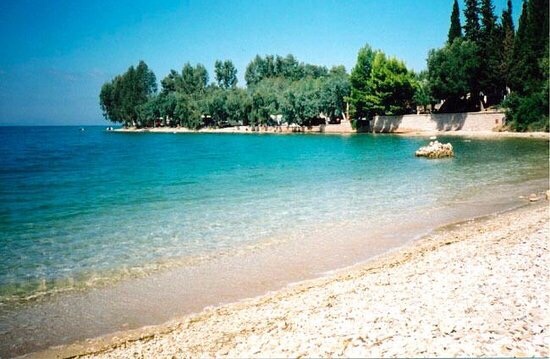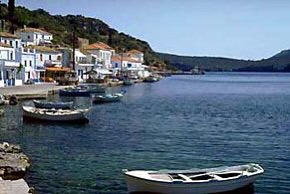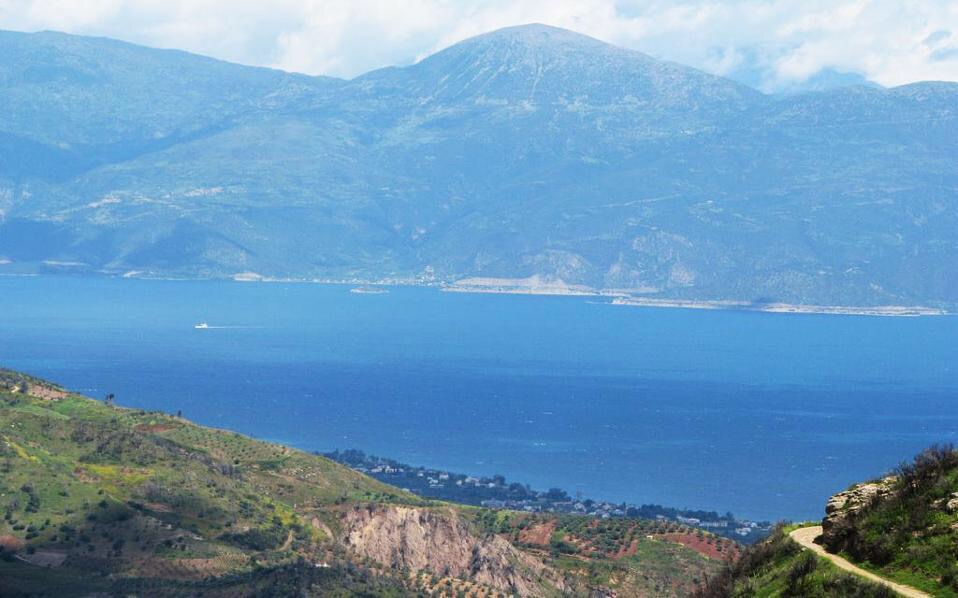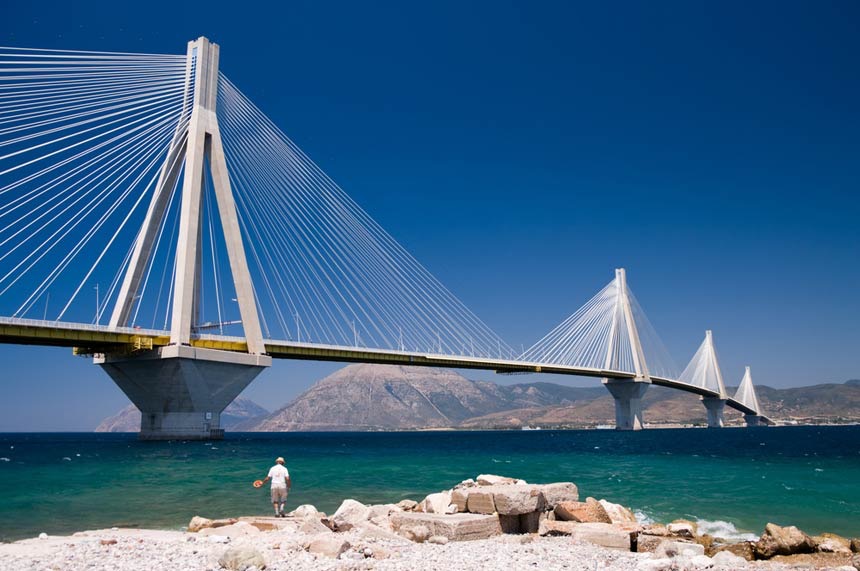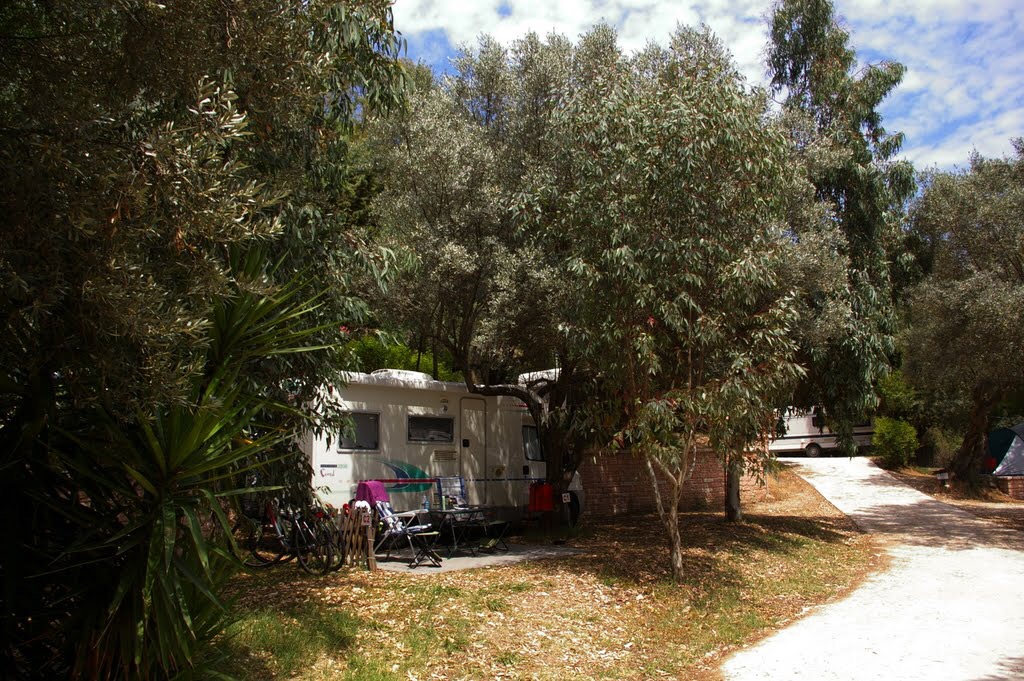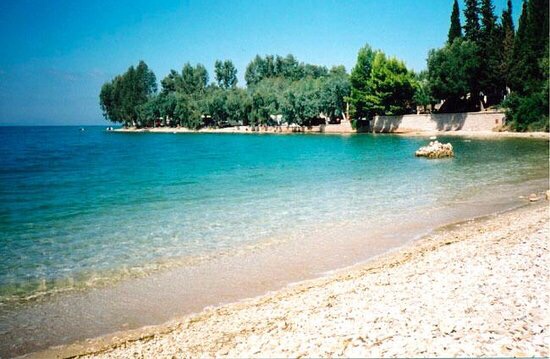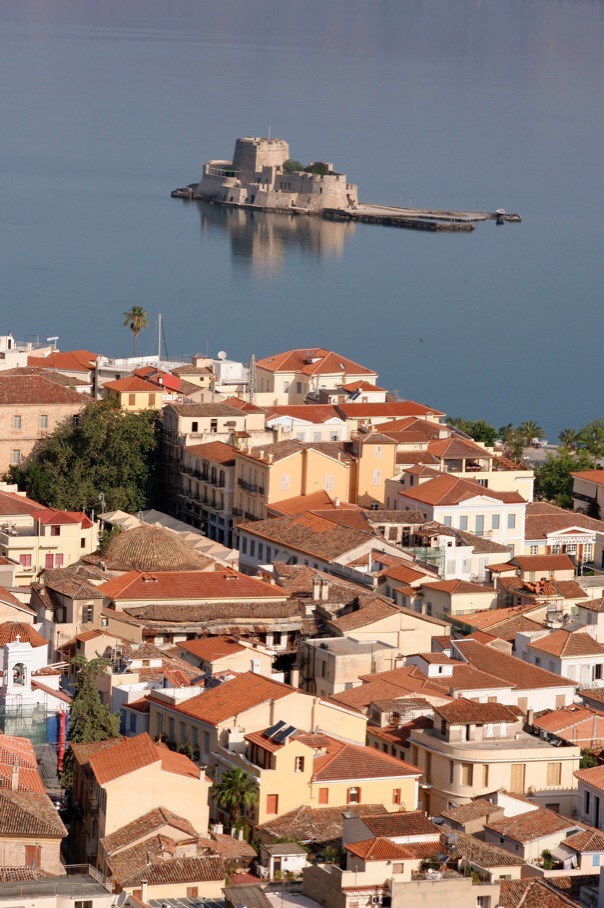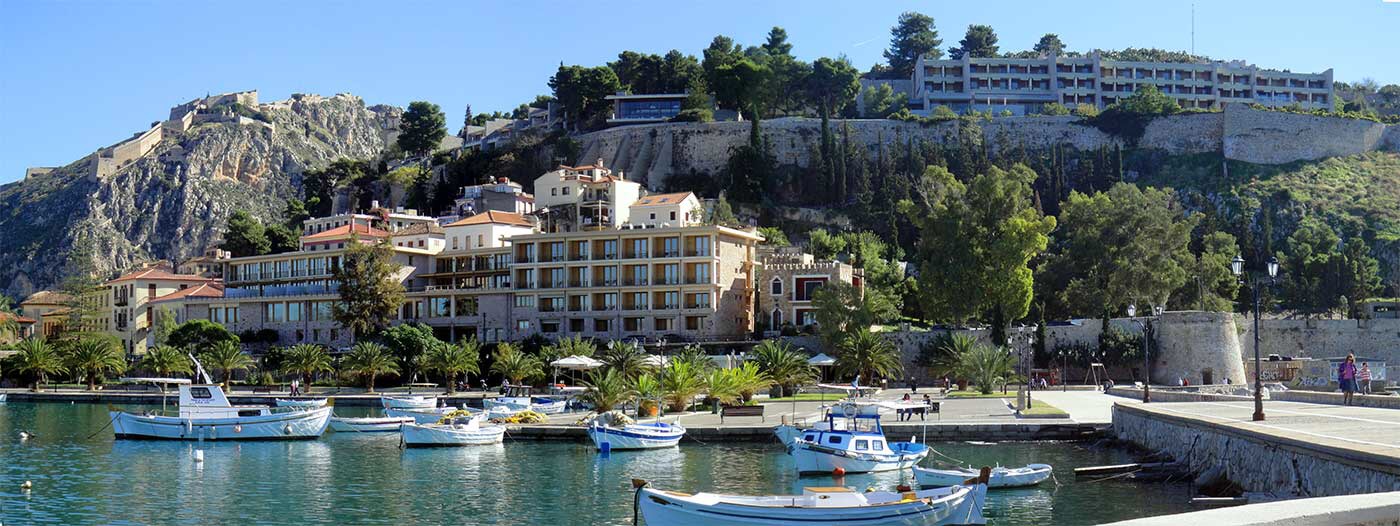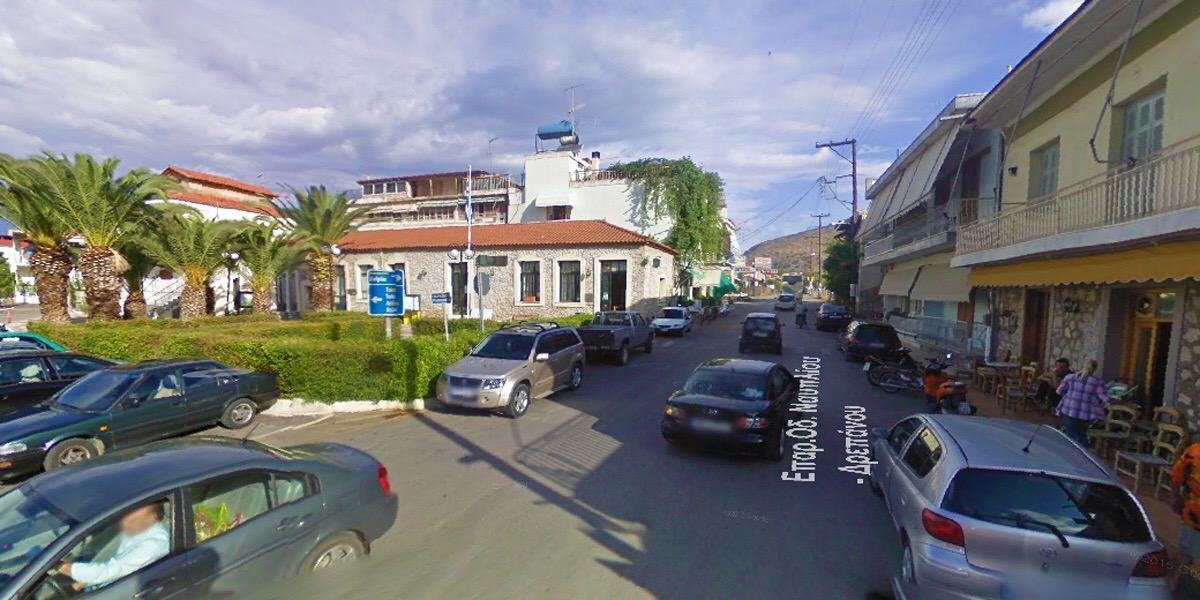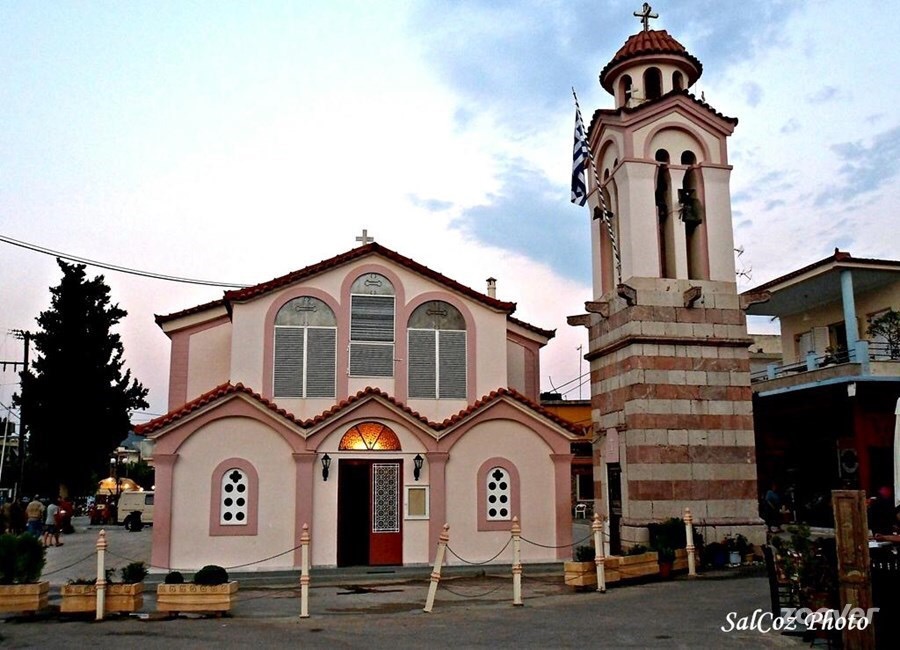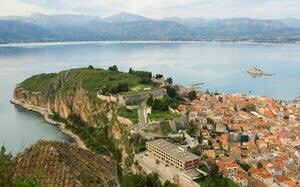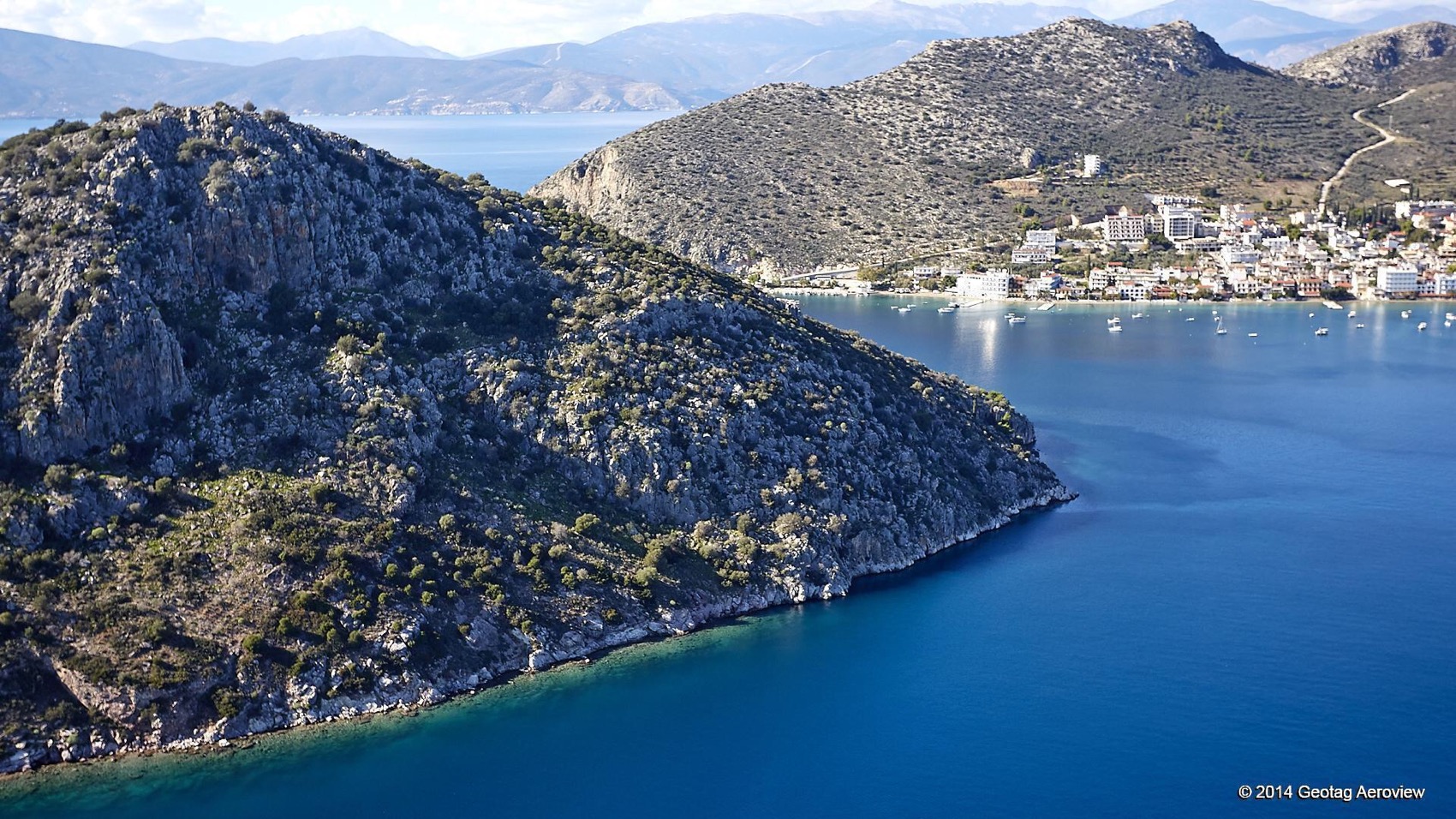
Modern Pylos is located in the west end of Messenia, opposite a long island called Sphacteria, and the protected coast of the natural harbor of Navarino Bay. This beautiful town was a short coach ride from the Campsite, over some narrow stretches and hairpin bends – glad I wasn’t driving! En route, was the incongruous sight / site,of a golf course, squeezed in – nobody playing – a total waste of space. It didn’t detract from the Town, though and coffee was enjoyed on the waterfront, after salivating over the best display of fruit and vegetables,on offer nearby, seen, this holiday.
Pylos is a prosperous region bearing a long history and remarkable cultural heritage. Having even been quoted in the Homeric poems, Pylos has all the credentials to be characterized as a “Eutopia” (εὖ- τόπος > good place). The warm Mediterranean sun and clear waters, the long history and stunning habitat make Pylos the centre of the northwest part of Messenia! Given the natural assets of this land, what more could anyone possibly ask for? The entire site of Navarino, from Egaleo Mountain, Korifasio and St. Nicholas to Sphacteria, is shielded by the abundance of light, the memories of the past, the olive trees and their the fruits along with the natural springs.
Pylos is stepping on a thin line between the new tendency of the tourist industry, which is characterized by massive investments, like golf courses,and the preservation and safeguarding of the historical, cultural and natural heritage of the region, and the fact that none of the latter should ever be “sold out”. The municipality Pylos-Nestoras, the heart of western Messenia, manages to keep the balance in these tough times, allowing the region to progress and keep developing without losing its regional, historic and cultural identity. Much of the latter can be found in Neokastro Pylos Castle and its Archaeological Museum, together with the Ephorate of underwater antiquities – a national body, dedicated to underwater archaeological exploration and safeguarding.
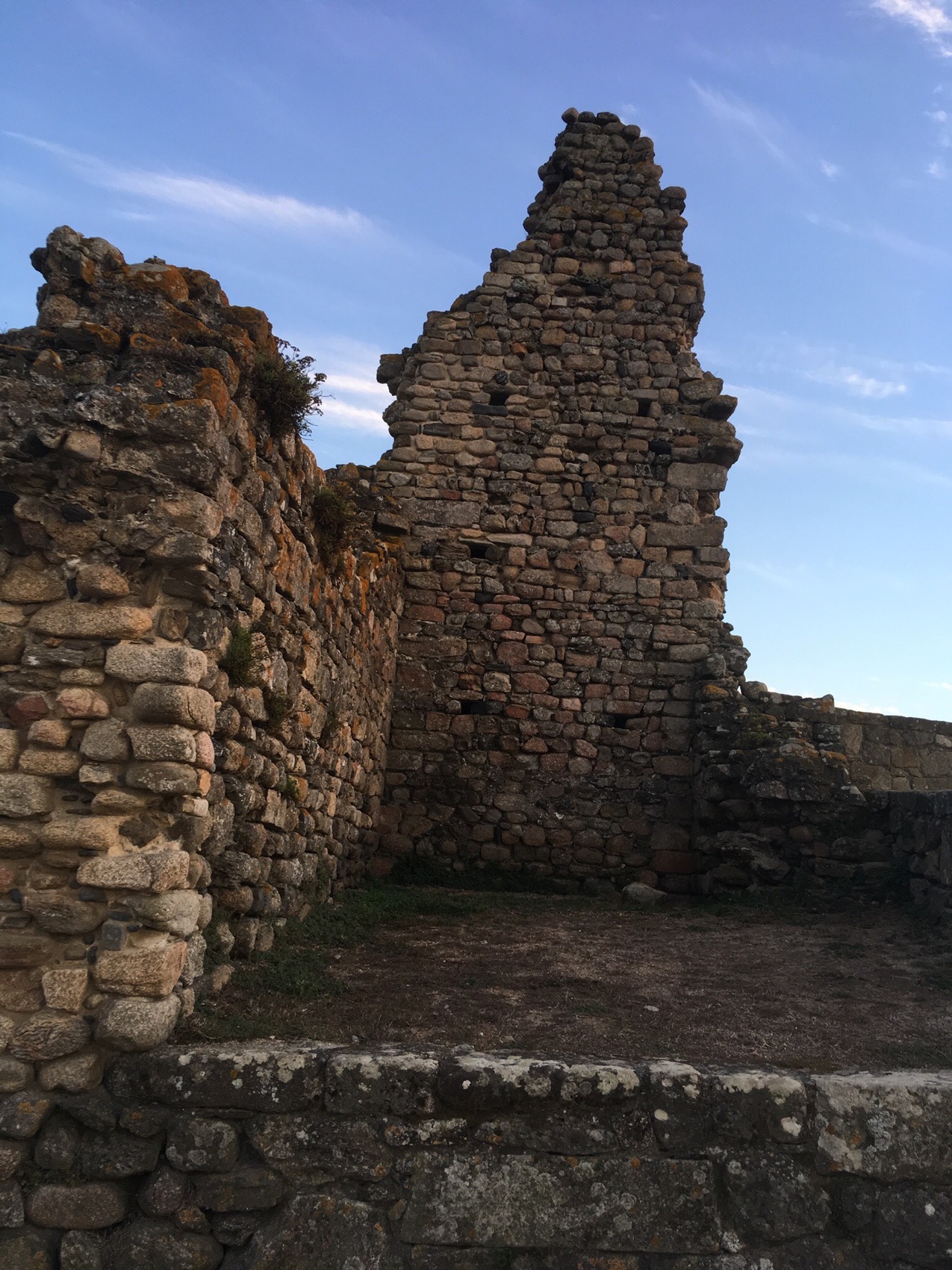
Apparently, of the best preserved castles of Greece is that of the New Navarino or Niokastro built during the Turkish occupation in 1573, to control the western coast of the Peloponnese.The name of the bay Navarino probably comes from the Avars who settled the region in 585-587 during the reign of Emperor Maurikius.In 1573 after the Naval Battle of Lepanto (1571) to secure more the natural port of pylos the Turks built a castle in the south entrance of the bay.
The Ephorate of Underwater Antquities contains some of the aretefacts rescued from shipwrecks, dating back centuries. It is of a modern design, with video sequences on show at the entrance.
Their expressed belief is that most of the above ground history of Greece has been found and that any future, significant revelations will have to be rescued from the sea, lakes and rivers.
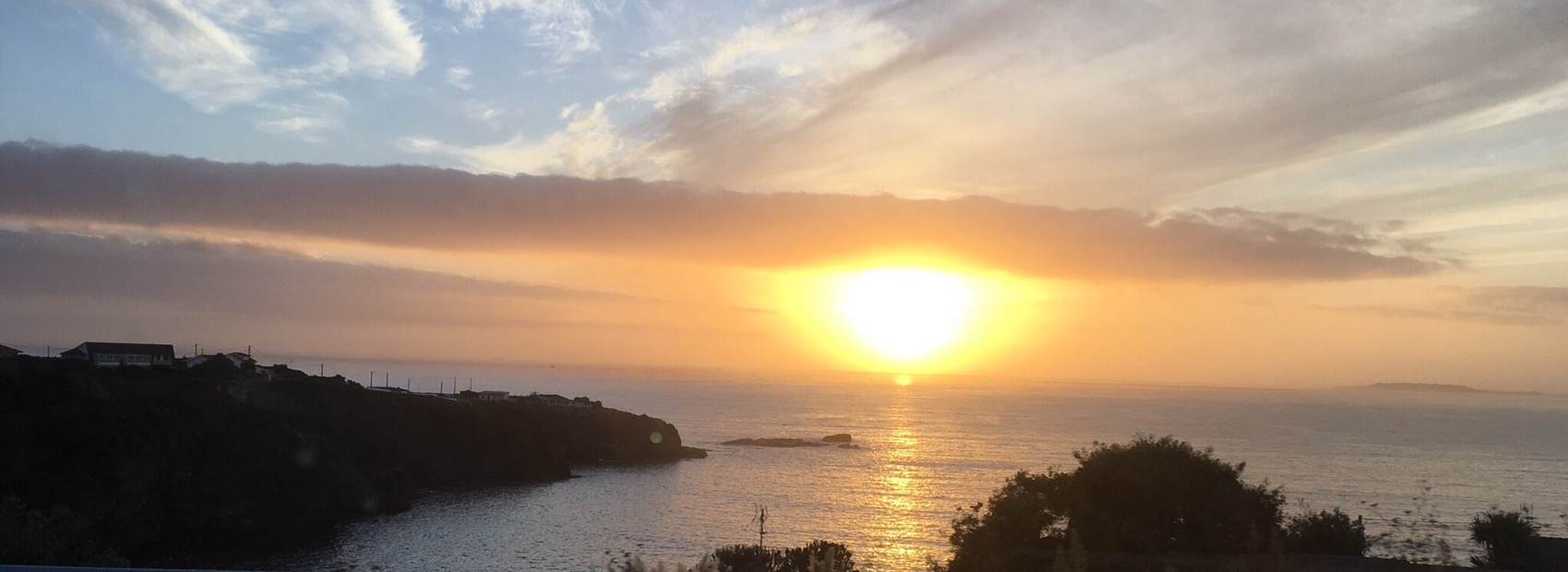
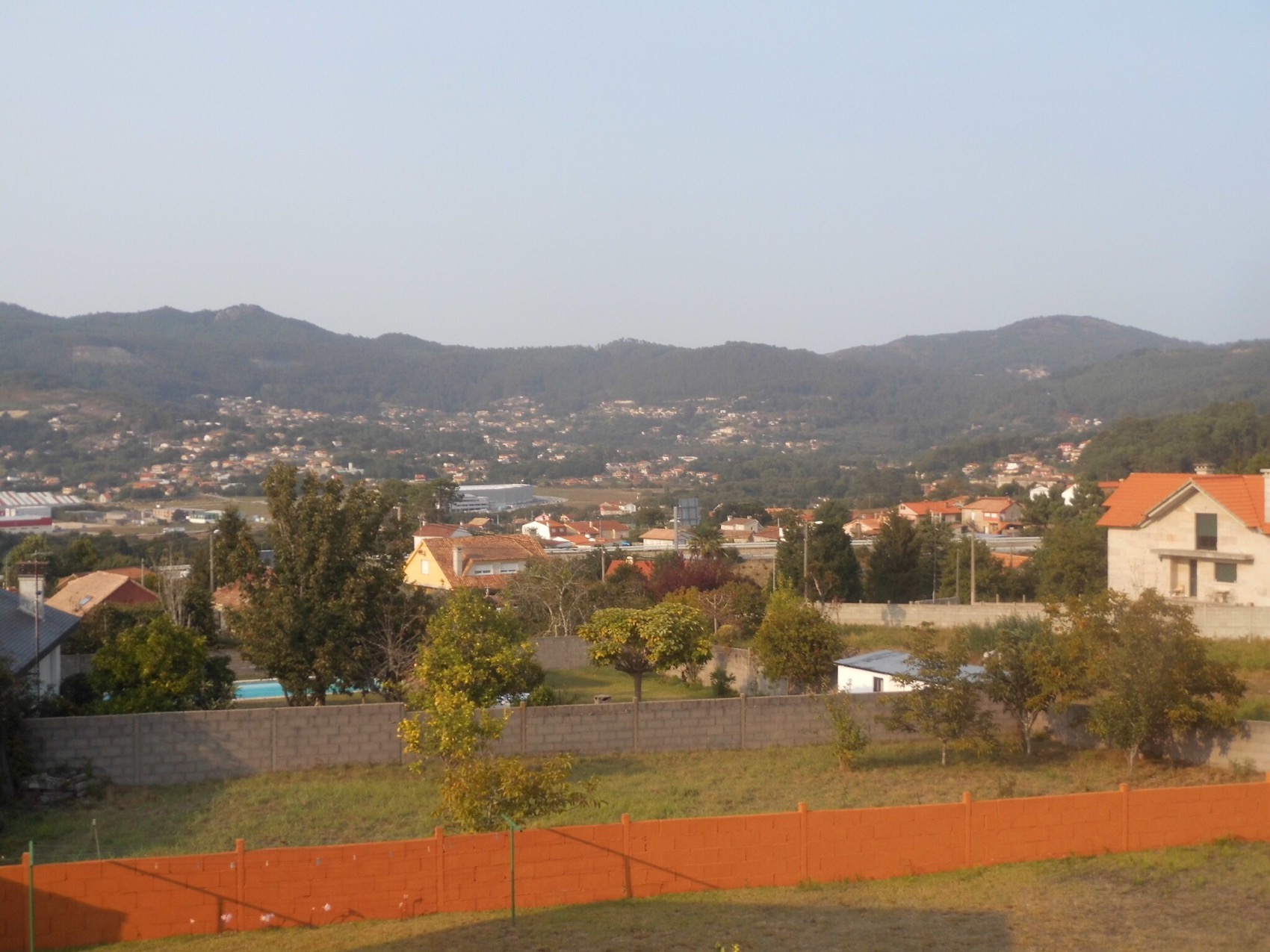
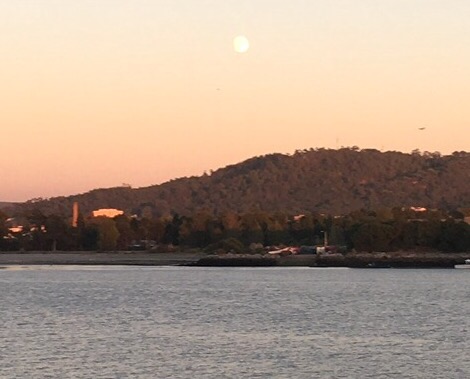
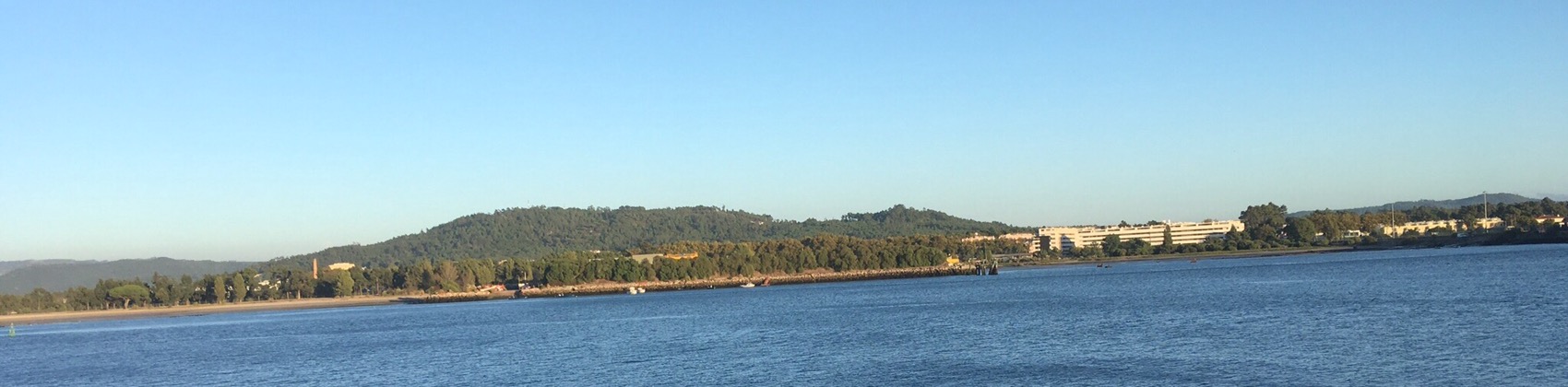
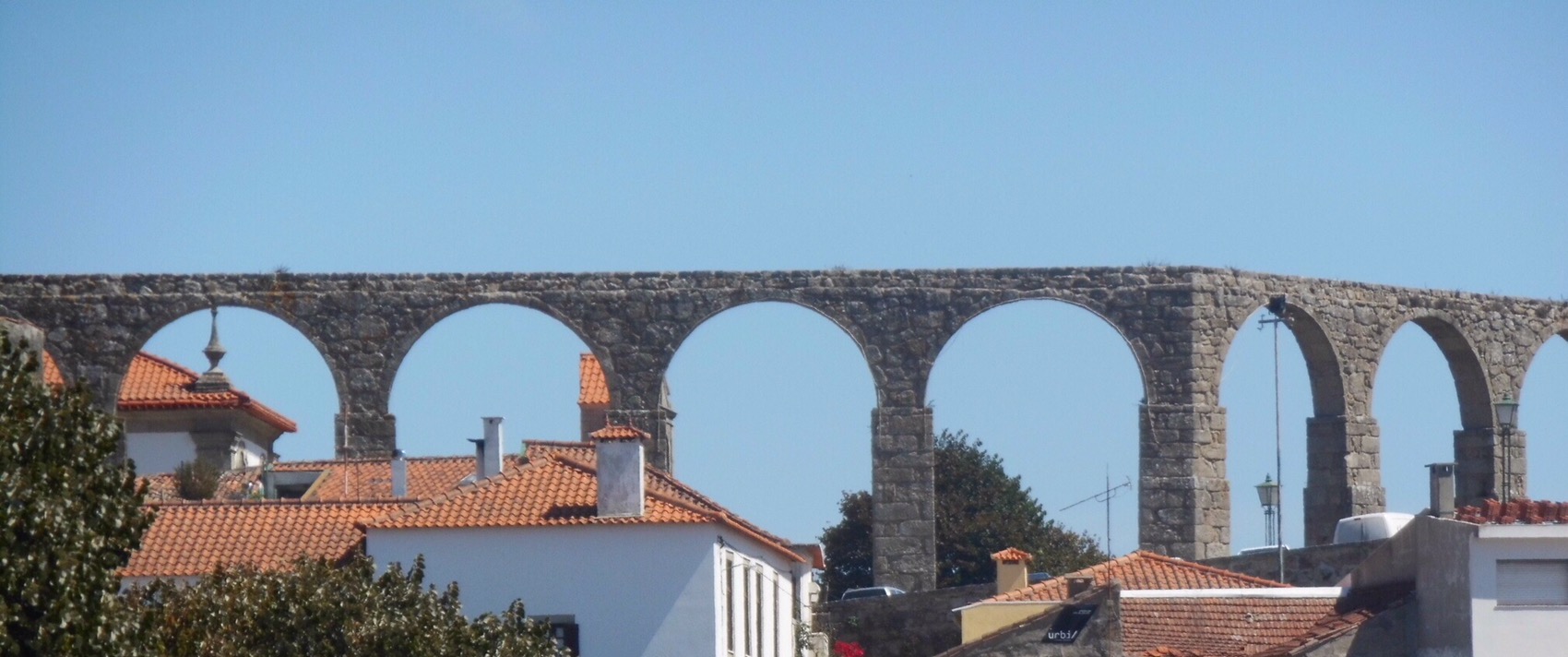
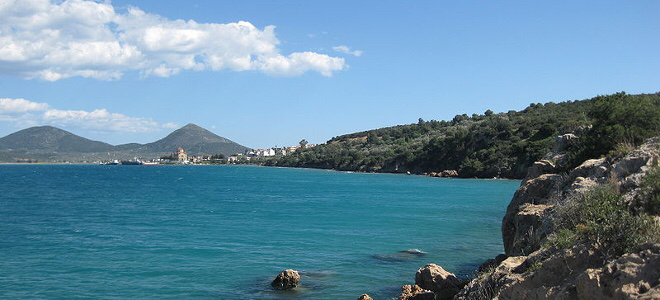
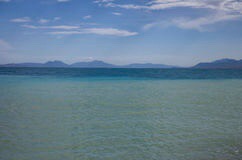
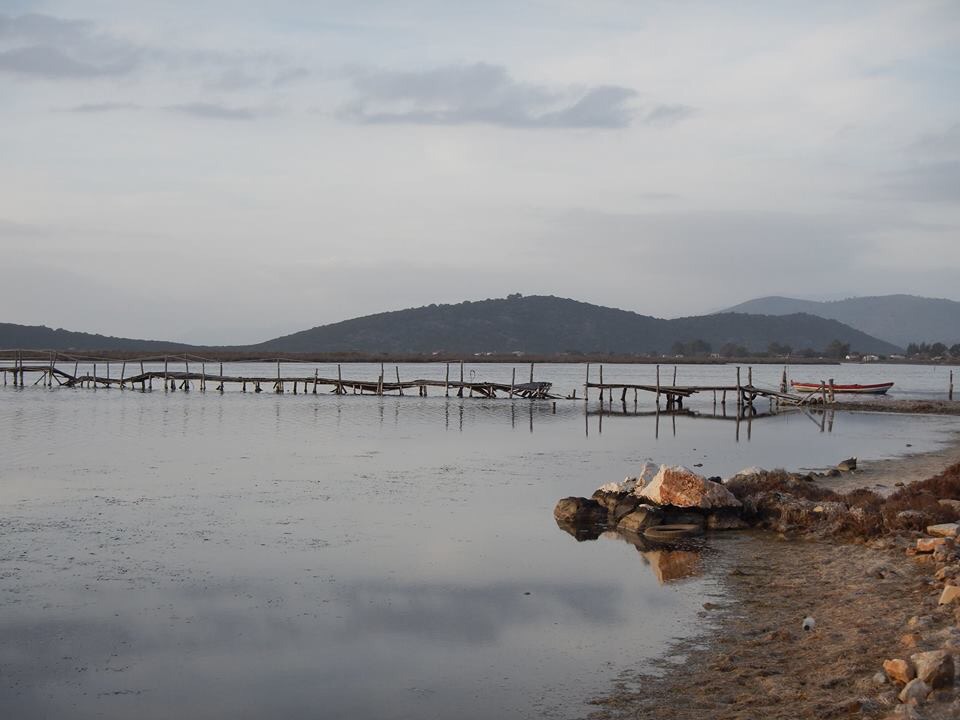
Bargain trip, really; €3.00 for the castle and both the museum and the Ephorate, plus €3.60 coach ride return to the Campsite entrance. The photo, below shows Pylos in the distance,from the Campsite shore.
Olympia Greece is the site of the ancient Olympic Games, which were celebrated every four years by the Greeks. Olympia is situated in a valley in Elis, in western Peloponnisos (Peloponnesus), through which runs the Alpheus River. It was not a town, but only a sanctuary with buildings associated with games and the worship of the gods. Olympia is a national shrine of the Greeks and contained many treasures of Greek art, such as temples, monuments, altars, theaters, statues, and votive offerings of brass and marble. The Altis, or sacred precinct, enclosed a level space about 200 m (about 660 ft) long by nearly 177 m (nearly 580 ft) broad. In this were the chief centres of religious worship, the votive buildings, and buildings associated with the administration of the games.
There is very little in the way if restoration; much of what is on view, was the result of archeological digs, in recent times. But the natural beauty of its setting alone, enhances that awareness of being in a special place.
The French began excavations here in 1829. German explorations of 1875-81 threw much light upon the plans of the buildings; they were resumed in 1936, 1952, and 1960-61. Many valuable objects were discovered, the most important of which was a statue of Hermes, the messenger of the gods, by Praxiteles.
The most celebrated temple was the Temple of Zeus, dedicated to the father of the gods. In this temple was a statue of Zeus made of ivory and gold, the masterpiece of the Athenian sculptor Phidias. Next to the Temple of Zeus ranked the Heraeum, dedicated to Hera, the wife of Zeus. In this temple, probably the oldest Doric building known, stood the table on which were placed the garlands prepared for the victors in the games. The votive buildings included a row of 12 treasure houses and the Philippeum, a circular Ionic building dedicated by Philip II, king of Macedonia, to himself. Outside the Altis, to the east, were the Stadium and the Hippodrome, where the contests took place; on the west were the Palaestra, or wrestling school, and the Gymnasium, where all competitors were obliged to train for at least one month.
Being a sports fan, a dedicated watcher of the Olympic Games, I got a real thrill walking through the archway the athletes took en route, to the stadium, where the “Start” and ” Finish ” lines of stones, are still intact.
The Museum of the history of the Ancient Games, was very informative – women were not allowed even to watch, let alone participate. Any discovered were thrown off the top of a nearby mountain. Athletes had to be ” pure” Greek and take a pledge not to cheat. There was a line of statues dedicated to Zeus, with the names of ” cheats” displayed.
But the biggest chest of all, was the emperor Nero, who rigged the chariot race, despite falling off his chariot.
Prizes originally were no richer than a crown of Olives, but as the Games grew in fame and popularity, there were rewards a plenty for victors – plus la meme chose- freedom of the city, exemption from taxes.
There are still some beautiful mosaics, in place.
And one item, that did not have a helpful explanation board…Stil none the wiser.
The ” Truce” was respected for centuries – a unique aspect – can sport transcend politics?
Nobody sells the sports-as-diplomacy theme better than the Olympics, which aims “to build a peaceful and better world thanks to sport.” Most everything about the Games echoes these ideals: the interlocking Olympic rings that symbolize the coming together of the five continents, the determinedly harmonious atmosphere at Olympic village, and the very existence of the IOC’s Olympic Truce Foundation and its stated goal of finding “peaceful and diplomatic solutions to the conflicts around the world.”
The Olympic Truce is a tradition originating from Ancient Greece that dates back to 776 BC in the 8th century BC. A “truce” (Ancient Greek: ékécheiria, meaning “laying down of arms”) was announced before and during the Olympic Games to ensure the host city state (Elis) was not attacked and athletes and spectators could travel safely to the Games and peacefully return to their respective countries.
In 1998, the International Olympic Committee renewed this tradition by calling upon all nations to observe the Truce during the modern Games. The Truce was revived by United Nations Resolution 48/11 of 25 October 1993,as well by the United Nations Millennium Declaration relating to the world peace and security.
A memorable day at Ancient Olympia – get there before the coachloads, at 08.00 .
The word Meteora means literally ‘hovering in the air’ and of course brings to mind the word meteor. What created this rare geological phenomenon is one of the mysteries of nature and there are many theories though they remain theories and none have been proven. But as amazing a marvel of nature as these giant rocks are, the buildings on the top of these ,seem just as miraculous and make Meteora one of the most spectacular places I have ever visited.
Serene, spiritual, magical, mystical, extraordinary, breathtaking, immense, inspiring, impressive. These are only some of the adjectives that come to mind, in an attempt to describe the Meteora phenomenon.
“It is a unique experience of nature’s grandeur in conjunction with history, architecture and man’s everlasting desire to connect with the Divine. From the early Christian times, the Meteora vertical cliffs were regarded as the perfect place to achieve absolute isolation, to discover peace and harmony and, thus, to support man’s eternal struggle for spiritual elevation.” Unquote.
Meteora is a truly inspiring and sensational setting of overwhelming rock formations and an exquisite landscape. It is a pilgrimage to a holy place for all Christians around the world. Meteora has become a preservation ark for the 2000-year-old Christian Orthodox creed.
The gigantic rocks of Meteora are perched above the town of Kalambaka, at a maximum height of 400 m (1200 ft). The most interesting summits are decorated with historical monasteries, included in the World Heritage List of Unesco. Only 6 of them have made it through the centuries, from an initial estimated number of 24. Mostly dating to the 14th and until the 16th century, these monasteries were built by monks who were previously hermits in the area, living in individual caves. Once united, these monks took months and years to carry the construction material to the top of rocks, using ropes, folding ladders, nets and baskets, and with much determination.
They then proceeded to build monasteries in awesome positions.The monasteries had no access to electricity and water until recently and the monks and nuns have been long trained in obtaining efficiency.
For the purposes of brevity, this blog will focus on The Great Meteoro Monastery.
It was founded by Saint Athanasios the Meteorite who was the first founder of the monastery and the organizer of the systematic koenovion. For this reason, the foundation of this monastery is considered to be a turning point, or even better, the beginning of the organized monastisicm in Holy Meteora. Hosios Athanasios was born around 1302 in the medieval town of New Patras, today’s Hypati and his lay name was Andronikos.
The main cathedral in the central courtyard is embellished with beautiful 16th century frescoes.
It is beautiful and amongst other sights, the Ossuary and Carpenters’ workshop astonish you…an obvious sense of place and history.
Tastefully kept gardens and balcony viewpoints are some of the other highlights, not to mention the bells, of which there are many.
The area of Meteora was originally settled by monks who lived in caves within the rocks during the 11th Century. But as the times became more unsure during an age of Turkish occupation, brigandry and lawlessness, they climbed higher and higher up the rock face until they were living on the inaccessable peaks where they were able to build by bringing material and people up with ladders and baskets and build the first monasteries. This was also how the monasteries were reached until the nineteen twenties and now there are roads, pathways and steps to the top. There are still examples of these baskets which are used for bringing up provisions. Back in the days when these baskets were the only way to get to the monasteries a nervous pilgrim asked his monk host if they ever replace the rope. “Of course we do” he replied.”Whenever it breaks”, which I am sure put the guy at ease. But now you don’t have to worry about ropes breaking since the monasteries are all connected by a series of pathworks and a winding road.
During the Turkish occupation it was the monasteries which kept alive the Hellenic culture and traditions and were not only relgious centres but academic and artistic as well. It is believed that were it not for the monasteries, Hellenic culture would have disappeared and modern Greece would be a reflection of the Ottoman empire with little knowledge of its roots and history. The monasteries attracted not only the deeply religious, but the philosophers, poets, painters and the deep thinkers of Greece. Today only six of the monasteries are active.
The Greek Orthodox Church is fiercely patriotic, this is really apparent in the Monastery museum, where, in a section displaying original lithographs and posters , the descriptions of battles against various foes, become somewhat jingoistic!
On a practical note, ” Meteora Tours”, offer 1/2 day trips for € 25.00, but we used the local bus, ( an air conditioned coach )which stopped outside the Campsite – € 3.20, return and €3.00 to visit any of the individual monasteries. Given the heat, a visit to 3 monasteries, in a day, would save the soul of any pilgrim!
After the 1250 mile drive and overnight ferry to Igoumenitsa, three days’ respite, here in Camping Valtos, has been ideal. Although it has a 100 space capacity, it is far from full and very peaceful, set in a mixture of Olive and Orange trees. Some of the Olive trees are 350 years plus.
Valtos has a 2 km long, mainly sandy beach. The promenade eventually take you up a steep hill, past the Castle, into better known Varga, with its old, shady lanes and countless shops, tabernas and cafes.
Being almost mid- July, it is very busy, yet on a morning’s walkabout, never felt ” crowded”. This region, Epirus, has close proximity to the former Communist bloc and there were cars from Serbia, Romania, Hungary and Albania. There were one or two plates,I couldn’t place, as well. Everyone is very welcoming and this picturesque,seaside setting, on the Ionian Sea has been a time of tranquility, hot sun and memorable views.
I enjoyed my first bottle of Retsina, last night, even Hannah liked it, together with a fish BBQ – I think it was Hake, but whatever it was, it cooked beautifully, alongside grilled peppers and courgettes. Tonight, it’s ” locally sourced” kebabs and sausage
Tomorrow, Friday 14th July, we set off North Eastwards to the World Heritage of Meteora. It might be Bastille Day, but we won’t be storming the Monasteries. Hopefully, we shall have the energy to make a respectful visit.
To Bari , Monday 10 th July.
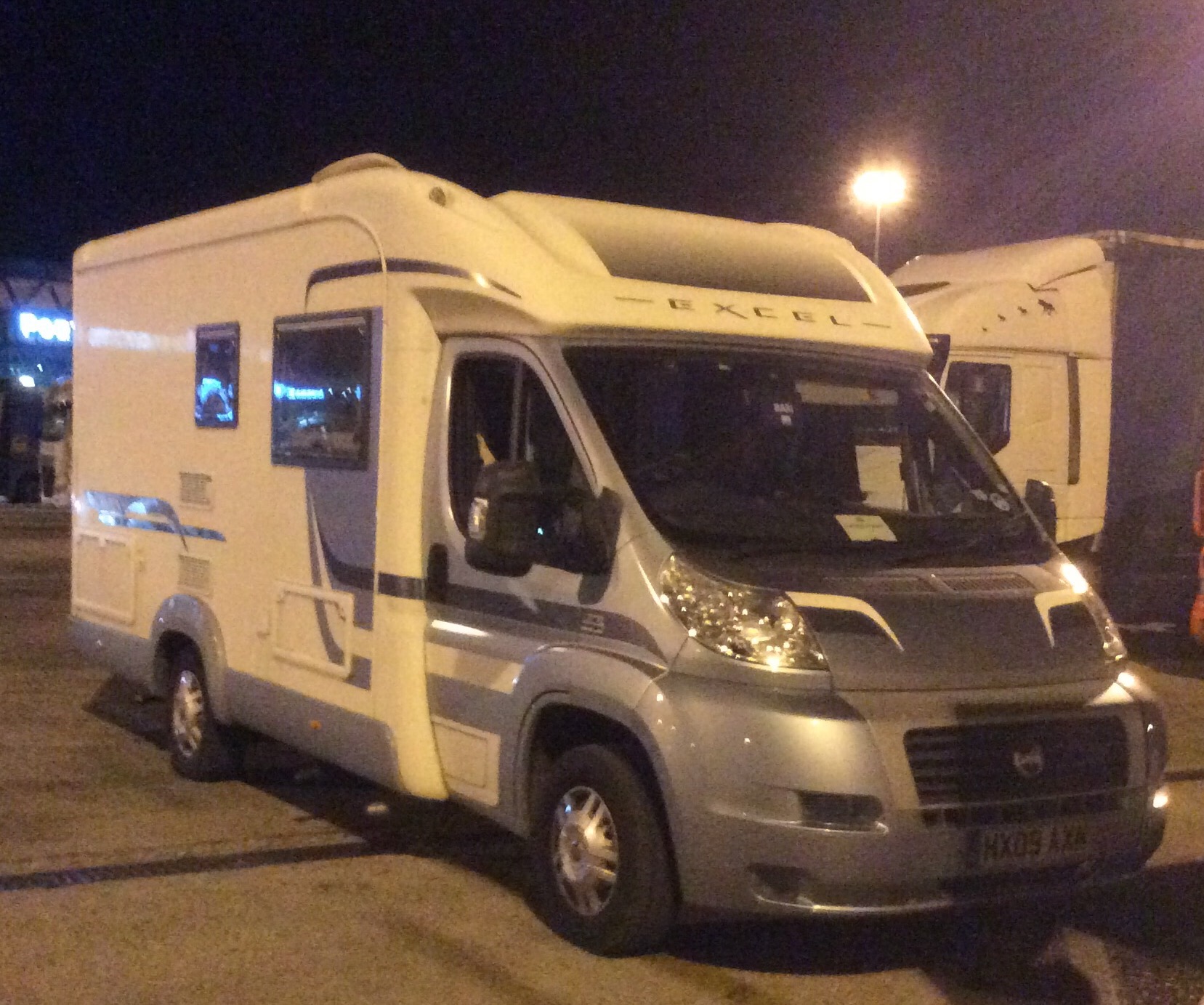
Earlier start than usual, as 525 km to Bari, with check in at the Ferry port by 16.30. Exited the Campsite at 07.30, following the Satnav, onwards, towards the A14.
But, what is this? A white van blocking the narrow road and a guy gesturing, turn left….Why? The Monday street market, of course. This threw the Tomtom into some confusion, not to mention us! This unexpected change of direction took us back to the Campsite. Try again, as the Satnav rerouted, only to lead us to the other end of the street market . Now what?
Ask a local, in fact, ask two. Eventually, by going around the back of some flats on a narrow street, which was reserved for emergency services,we came to a proper road and that rare sight, signposts. So, early start, notwithstanding, access to the A14 was eventually gained, after getting stuck in the “Telepass” Lane, for another few minutes, until the barrier lifted and a ticket obtained, manually. It had to get better and it did.
The A14, which on Saturday, was a trial, became a joy… light traffic, enjoyable views of the sea and hills and no madness. The route went close to the Adriatic and went through Emilia Romagna, Marche and even after diminishing to a two lane highway, comfortably driveable.
Principal crops of wheat ,fruit and vines, eventually changed to groves of Olives, as the winding bends took us towards Puglia, through numerous tunnels ( none longer than 1km ) and over brilliantly designed viaducts.
After a picnic lunch break, the outskirts of Bari were approaching and so now, the Snooper Satnav was programmed with the Port address , as given in the Superfast Ferry brochure. All seemed well, until ” you have reached your destination’ did not seem to be near anything with a name on it that might pertain to the ferry access. So, U-turn on the coastal road ( good lock on the Fiat ), looking for anything that might resemble the entrance to the Port.
Having found a gate, with large boats moored beyond, an enquiry was met with a shaken head and the advice to go 2km, further on and turn in, there.
Now, looking for second gate, that might be a port entrance. Passing a gap, from which lorries were making an exit, another u- turn was called for.
Fortuitous that enough time was allowed for that game called ” Find the Superfast Ferry in Bari.”
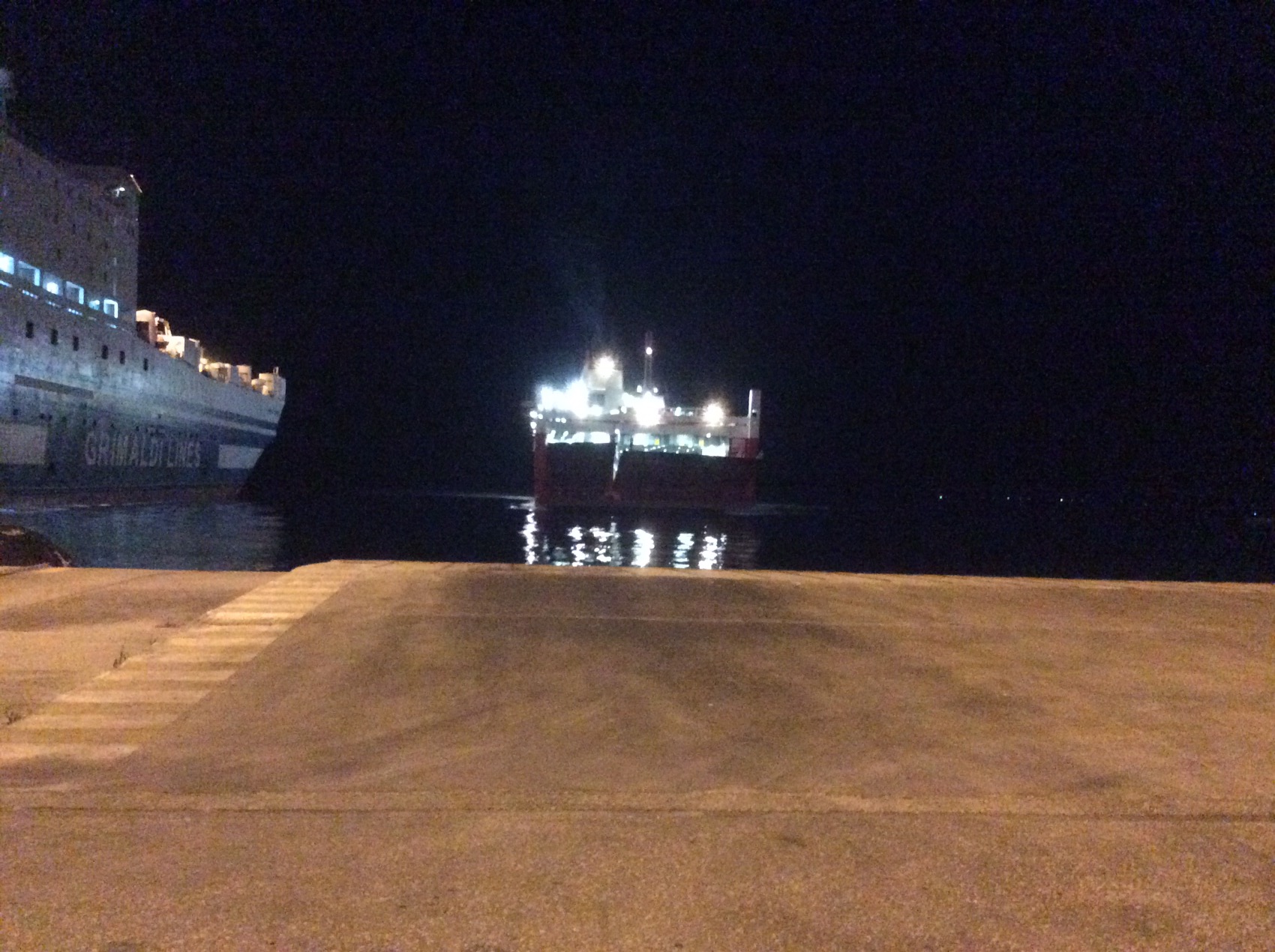
You need to bear in mind that having turned into this entrance, we found our first clue – a signpost, with “Greekferry” , a km later, there was another sign, just after the first gate through which we tried to enter the port. So, 4 km from there, a Superfast boat was espied and further progress was made towards it. A ramshackle collection of cars , motorhomes and lorries had been directed to ” park”, whilst booking in took place in a hall, 200 metres away. It was now 16.00, and the port hands, having taken note of the blue sign, with Igoumenitsa , displayed in the windscreen, along with ” camping on board”, shouted ” boarding at five o’ clock!”
It was around this time, that I began to ask myself why I hadn’t taken that Saga coach trip of the Lake District !
But no, after threading the bus between seemingly abandoned trailers, and after a further ticket check, embarkation took place.
This meant driving onto the motorhome deck and performing my third u- turn of the afternoon, before being assiduously directed by a crew-member, whose disgruntled , facial expression at having to align us, only brightened as he crossed himself twice!
Electric hook-ups were pulled down from the ceiling and boarding was complete. There was relief at making it to the air-conditioned lounge, with its efficient and friendly waiters; a complete contrast to the hot, chaotic scenes on the quayside. The boat departed on time, 7.30 pm. Now, for the onboard buffet.
Although the car deck had windowless sections, it was still very warm. The portable fan came into its own, again. Waking early enough to enjoy the outlines of Corfu Island as we sailed into Igoumenitsa and take an early snap of the birthday girl.
After the quickest disembarkation I have ever known, progress was soon being made along a two lane, county road towards Parga and Camping Voltos.
Breakfast was taken at Cafe Kaliss, en route, very friendly welcome, even at 7 am .We were joined by an interesting guest.
Entering the Campsite was made after driving very slowly along the narrow beachfront, still thankfully quiet at 8 am. Unlike campsites elsewhere, we were allowed, almost immediately to choose a pitch amongst giant, ancient Olive Trees…..Perfect.
Pauses were taken on the walk up to the village and the remains of its castle, clinging on to the edge of a cliff, to enjoy the views.
The village was car free and signs for tabernas and rooms for rent were a plenty. It was still very quiet and time was taken to look at possible venues for meal, this evening, to celebrate Hannah’s 🎉 birthday.
Han enjoyed opening some of her cards and presents, from Höme, after lunch, having spent her morning, on the beach – a very happy daughter!
Anybody can become angry – that is easy, but to be angry with the right person and to the right degree and at the right time and for the right purpose, and in the right way – that is not within everybody’s power and is not easy.”
You would think that arranging a ferry from Dover, for an 02.00 departure, would be trouble free affair ; the M 1 would be quiet and also the dreaded M25. Leaving Wylde Green, shortly after 21.00 hours, gave the best part of 5 hours to make a journey that normally takes 3 1/2 hours. It was dry, too, which is always beneficial to night time driving. However, the M 1 was very busy and the M 25 seemed quieter , though, until 3 miles before the Dartford Crossing, when a sight, heartening back to the days when there were toll booths. …Flashing, warning signs.And so, at just before midnight, a slow crawl ensued. Eventually, a sign indicated that there was only once lane open, over the Queen Elizabeth Bridge. There were no workmen and save for one highways vehicle, no sign either of activity , nor obstruction.This made the final 62 miles, a dash, from there to Dover an imperative.
No sooner was the M 20 entered , when a warning sign indicated a closure of two exits!
Panic? No, wending along Kentish country lanes , in the dark , via a stretch on the M 2, is really relaxing way to begin one’s holiday.
Happy ending? Yes, even the pointless speed restrictions, before Doveri, were not enough to prevent us from boarding the DFDS ferry,with 15 minutes to spare. A calm crossing and disembarkment ensured leaving Dunquerque by 05.30, local time, with the sun already rising in the East,towards which the journey lay.
By-passing Bruges and Ghent, the good progress made was halted, every now and then on Brussels Ring Road, by an unanticipated early rush hour.
A traditional breakfast of cold, grilled sausages and hard boiled eggs was enjoyed on a service area , well out of Brussels and after a quick in and out of the Netherlands,by passing Aachen entrance was gained, into Germany.
Recent journeys in and through Germany , had been fairly smooth and uneventful, except for one year, en route to the Czech Republic, when a deer leapt over a barrier, separating traffic from some roadworks and demolished my driver’s side mirror – not even the compensation of roadkill, as it was impossible to stop.
The Autobahns are very democratic , toll free motorways and usually make for high speed transition, from all parts of the country. Driving for the best part of two days, to the Austrian border, proved to be quite arduous, in places – HGVs,an unusual number of road works – an unrelated, but nevertheless annoying feature of the Service areas, was a ” toilet toll” of 0.5 Euro ! Given the cost of their coffee, this was rip off Ryanair would be proud of.
Unusually, today ,saw two minor confrontations with ” Jobsworths”. The first on a Belgian service station, where I had to park the ” Bus”across two places; not a problem, I thought, as there were a good number of empty spaces. As we were about to pull out, a BMW parked in the place, immediately in front of me, despite there being five empty spaces adjacent. The driver got out and I caught his eye. He then approached my open cab window and began to reproach me for parking where , presumably only BMW drivers were allowed. I didn’t dignify his remarks with a reply, but closed the cab window, automatically, nearly nipping his nose. Reminded me of that old joke:- ” What’s the difference between a BMW and a hedgehog? On a hedgehog, the pricks are on the outside”.
The next confrontation occurred at the entrance barrier to the German Campsite , where I was waiting for the entrance barrier to be raised. The Campsite didn’t permit entry between 1 – 3 pm. I was there five minutes before this siesta ended. A German camper approached and in very self righteous tones, complained that if an ambulance wanted get in, we would be in the way….Refusing provocation and the urge to tell him where to stick his bicycle pump, we explained that if that was to happen in the next five minutes, we should expect the barrier to be raised, allowing us to move through and out of the way……or, we could reverse. I name BREXSHIT for this uncustomary hassle, from our fellow Europeans.
The first night’s camping was a lakeside sight, near Bad Durkheim – a pretty place, bordering the lake and vineyards. There was an overnight thunderstorm, but by morning it had cleared and a fine day was again, in prospect. 600 Km, all told, today.
Friday 7 th , the second day of the trip, was spent exclusively on the Autobahns, by passing Ulm, Stuttgart; crossing both the Rhine and the Danube,within a couple of hours and then entering Austria, after buying a compulsory ” Flèche”, for € 8.00, to be displayed on the windscreen – a toll, which allows upto 10 days’ driving, on motorways.
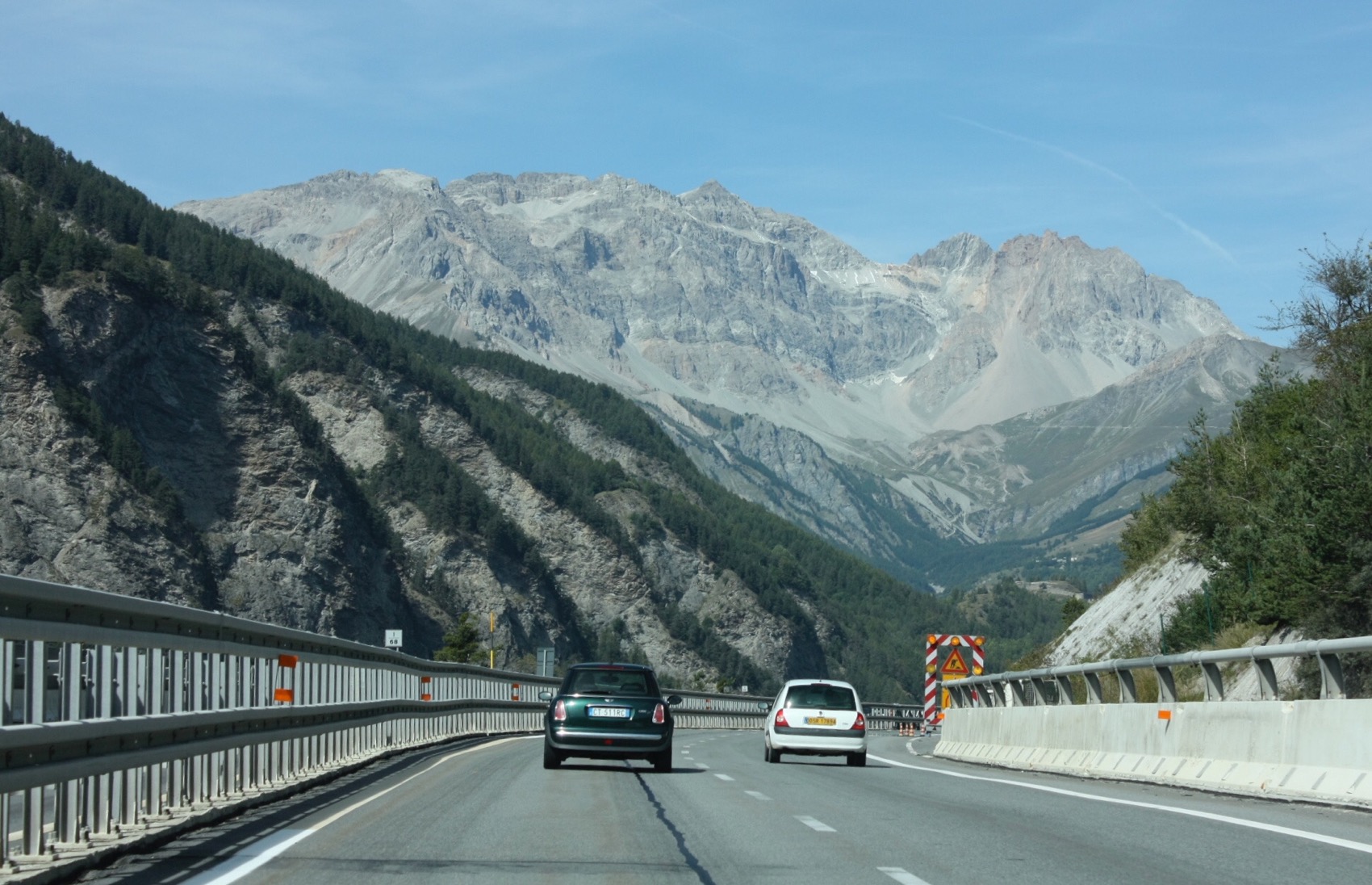
The sight of the Mountajns, in the Austrian Tyrol, was quite momentous and it was not too long before the road changed to two, narrow lanes, with hairpin bends, as Innsbruck was approached – the destination for the day.
There were mountains, everywhere you looked from the Campsite pitch and the weather continued to be glorious . 380 km
For the second night running, there was a hefty thunderstorm and in the morning the landscape was dramatised by layers of clouds around the mountains.
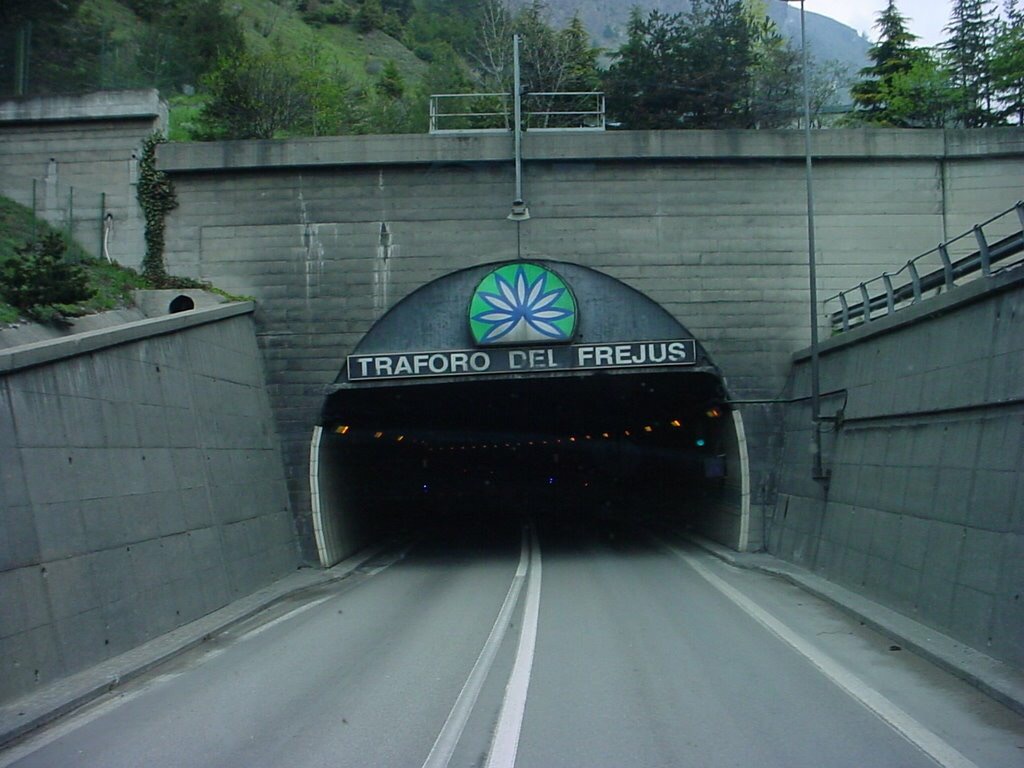
Saturday’s destination was the Adriatic Coast of Italy. The route wending through the Austrian Tyrol, over the Brenner Pass and by tunnel emerging in the Italian Dolomites, now a World Heritage area of unique beauty. Fruit growing was the main crop in the Trento region, together with vines, sometimes growing alongside the motorway ! This was along a motorway, for the most part, after driving up and around a few ” S ” bends. It was very busy, on both the North and Southbound carriageways, despite the lack of HGVs, it being the weekend. The route was via Verona, Bologna and on to the A14, Adriatic highway. All motorways in Italy are subject to a toll and we were prepared for this as we were for the inevitable deterioration in driving standards and inexplicable delays, where traffic came almost to a halt and then started up again, within seconds. This prolonged the journey across the rather featureless, flat lands of Emilia Romagna. It quietened down, South of Bologna, as a lot of the traffic had gone Eastwards. What was surprising, in the incidents of careless driving, was a coach driver changing lanes, at 65mph, without indicating . After lorry drivers, the ” Kings of the Road”, in my experience for safe driving,I ranked coach drivers, as the ” Princes” – not so here, though. There were several near misses, as Italian car drivers weaved across lanes – given the choice between a vanity mirror and and indicators, the former would always be chosen as the optional extra.
Just above Rimini, it was a relief to get off the motorway to take a quite 10 km or so, to the Camping Village Rubicone, on the Adriatic. This was to be a two night stay, allowing a day’s respite from driving. Initial impressions were that we had chosen a beautifully landscaped site, with exceptional facilities.
Great to be back to cooking on the BBQ , with an excellent range of meat, in the site supermarket, not to mention the local wines!
I had been at St Mary’s College of Education,Strawberry Hill, for one year, by the summer of 1967. A part of which is the most celebrated house, built by Horace Walpole; most of which was then, a Catholic teacher training college.
During an eventful and hugely enjoyable, first year, I had formed a relationship with ” Ariadne” and we had decided to spend part of the summer, hitch- hiking in Europe, together with her best friend “A” and her boy friend “D”, who was also, a close friend of mine.
This was to be after both D and I had earned some money, working 14 days back to back, during the summer shutdown, at the Lucas battery factory, in Sparkhill, Birmingham. We were employed as part of the maintenance team, sub-contracted to Whittalls, a building company. Great money for 1967, but seriously dirty work, including the drilling up and replacing of the acid soaked floors of the ” battery shop”, as it was called. I shall always remember the cry of the foreman, Mick, at the end of breaks:-
” Come On Me Lucky Lads!”
Moving on to our meeting place, Victoria Station, for the train to Dover and subsequent ferry to Ostend. D and I arrived rather early in London and spent the time in a pub, followed by a Chinese meal. This did nothing to calm the trepidations I had about this reunion, as I had felt my relationship with Ariadne,was heading for the rocks….Still, keeping up appearances, we boarded the ferry and set out on very rough crosssing. After agreeing our European destination would be Trieste, I made for the decks, as I felt nauseous. You can imagine what an impression that made. Having disembarked, we made our way to a junction, on foot, from where we hoped to get a lift, Eastwards. After what seemed a short time, a white van stopped and we were welcomed in to the cab. I positioned myself by the passenger window and not long after moving on,I wound down the window to expedite what was left of Chinescrackers and six pints of Watney’s Red Barrel. ( never touched it again ! ) This was much to the bemusement of the driver and embarrassment of Ariadne.
We had no camera, so there are no authentic snaps of this summer of not love, road trip. We must have hitched through Belgium, Luxembourg, Germany, where we had to run out of a car, after the obviously drunk driver, had stopped for a pee, in a layby.
Our relationship was unravelling and, feeling peeved, to say the least, I used to sing snatches of Bob Dylan songs,whilst waiting for a lift, at the roadside . My favourite song ( still is ) was, ” It’s Alright Ma ( I’m Only Bleeding ). A topical snippet, below :-
So don’t fear if you hear
A foreign sound to your ear
It’s alright ma, I’m only sighing”
Then via Austria, into Italy. I do have vivid memories of the last lift because the driver , who described himself as an architect, had taken a shine to Ariadne. He went to extraordinary lengths to somehow get next to her. He took us for a meal ,in what seemed like a farmyard, even pointing out the chicken he wanted for dinner. Then into a bar, where he plied me with Stock Brandy….now this was a boy who could drink six pints of Watneys…so Brandy, my first, was not going to work! Finallly, he insisted we we went to a cinema,I placed myself between him and Ariadne, much to his chagrin. There were rows of benches in front, upon which the Italian audience roared with laughter at Laurel and Hardy. Exasperated, but still accommodating, our frustrated driver eventuallly dropped us off at the gates of the Campsite, in Trieste. Bats were swarming about the Campsite,in the twilight and Ariadne was most fearful of them.
The next day, it was decided to go by coach, down the Jadranska Magistrala, the Adriatic highway, to Dubrovnik. We bought the tickets, a day in advance to travel the length of Tito’s Yugoslavia.
We boarded the coach , in the evening, it was to be an overnight journey, so missed out on the amazing scenery, but I have driven it since. There were a number of tourists standing in the aisle, mostly Germans,I recall and so we were pleased with ourselves for having boarded the coach, early. That superior feeling was not to last, however. At some point, an official began shouldering his way down the coach, checking tickets. A was in charge of the tickets…..but, as she looked in her handbag, her searching became frenetic, as she couldn’t find them! Two things happened at the same time.The Germans began remonstrating with us for wrongfullly taking seats, when we didn’t even have tickets and I had to restrain D from trying to take them out. Simultaneously, the guard took out a revolver and insisted we handed over our passports. An early and contemporary Bee Gees sing, comes to mind.
“Oh you’re a holiday, such a holiday
Oh you’re a holiday, such a holiday
It’s something I thinks worthwhil e If the puppet makes you smile If not then you’re throwing stones, Throwing stones, throwing stones
Ooh it’s a funny game, Don’t believe that it’s all the same ,Can’t think what I’ve just said ,Put the soft pillow on my head
Millions of eyes can see, Yet why am I so blind ,When the someone else is me ,It’s unkind, it’s unkind
Yet millions of eyes can see Yet why am I so blind When the someone else is me It’s unkind, it’s unkind. ”
Arriving in Split, as dawn rose over the Roman remains, we were ejected from the coach and shown to a cafe, where we were to wait, until an interpreter could be found and hopefully prevent us from being locked up in some Communist Gulag. In the meantime, “A” emptied the considerable contents of her bag on to the table….there were the tickets, after all ! Don’t ask me…
We were soon put aboard another, ironically more luxurious, coach to Dubrovnik and arrived there in a tumultuous,thunder storm. This did nothing to mollify a collective mood of disenchantment with all things Yuogoslavian and so, tickets were immediately obtained, not by “A”, for a ferry back across the Adriatic, to Bari.
Things took a turn for the worse, in Bari, as I suffered the most awful sunburn to my legs, after lounging on some rocks in the bay, for far,too long and Ariadne discovered that someone had stolen her sundress from the communal washing line.
I only got some relief to my legs, when a friendly Campsite worker, having espied my plight, arrived with a tin of some soothing potion, which he gently applied to my legs. Elsewise, Bari was enjoyable enough despite the worsening relationship.
I recall two incidents on the way back. Walking around Florence, with skeins of dead skin decorating my legs ; ghastly. And a really good lift from a Parisien, who took us from the Italian/French border to the Gare du Nord, from where we had just enough funds to buy a ticket to Ostend, for a calmer crosssing to Dover.
I had a return ticket to Birmingham, which was just as well, as I was flat out of money, by this time. As for Ariadne, Farewells ? None. Best captured in this Steve Earle and Emmylou Harris duet ” I Can’t Remember if We Said Goodbye”
I have bumped into Ariadne since then and things are cordial, but best summed up by Dylan, again:-
“So long honey babe
Where I’m bound, I cannot tell
But goodbye’s too good a word, gal
So I’ll just kinda say ‘Fare thee well’
Now I’m not saying that you treated me unkind
You could have done a lot better but I don’t mind
You just kinda wasted my precious time
But don’t think twice, it’s all right” .
Coincidences?
Well, next week, fifty years on from the Summer of NOT Love, we travel much of the same route, in the motorhome, not toTrieste, but to Bari, to take a ferry to Igoumenitsa and a tour mainly around the Peloppones.
Furthermore, D and A, celebrate fifty years of marriage, later this year !
I wish everyone a happy summmer, if not of love, then pure and simple enjoyment.
Fifty years on and our relationship with Europe under a titanic threat, I am ore than ever a Europhile.
I once saw a very beautiful picture. It was a landscape at evening. Through the landscape a road leads to a high mountain far far away. On the road walks a pilgrim. He has been walking for a good long while already and is very tired. And now he meets a woman, or a figure in black.
And the pilgrim asks her: Does the road go on then uphill all the way?
And the answer is: Yes, till the very end.
And he asks again: And will the journey take all day long?
And the answer is: From morn till night, my friend.
–From a letter by Vincent Van Gogh
Apart from the initial and monumental experience of Santiago – Cathedral,Churches,Palaces, Museums and Squares – your next impression might be the noise and pace of the traffic, especially on the rotunda, which curves around the old city. Once inside, then, it is very easy to lose yourself in the many Old streets and plazas. The Turismo provides a very good map, which is well worth a few minutes’ study, as it contains much helpful information and sightseeing routes.
Having visited Santiago six times or more, I tend not to spend too much time in the immediate vicinity of the Cathedral, once I have stood in the Plaza Obradouro and shared in the palpable joy and relief of pelegrinos, as they achieve their final destination – some of whom will have been travelling for six weeks or more and walked 800 Km plus, depending on their starting point. Bicigrinos lift their bicycles aloft, like trophies,many limp painfully in, others fall to their knees in thanksgiving, some burst into tears. It is impossible not to be moved….Photos are taken, embraces shared.
Depending on your mood, experience of the city and the weather, there are so many places to visit – apart from the Cathedral and Pilgrims’ Mass – I would always recommend the Museo de Pelegrinos, which I have visited twice – free admission on presentation of your Credencial.
The weather was the best I have experienced here; Santiago endures a high, average rainfall . So, we made for the Market, a huge affair, offering all sorts of temptations and even simple things, like freshly shelled peas ! And the dreaded pigs’ ears .
When my sister,Penny and I were here, last September, we spied an interesting building, up a lane, across from the market, but we had not the time to visit; this time, together with Mac, we walked up a fairly steep hill to an old convent; good views back across to the city.
We passed through parkland; Santiago has lots of green spaces; including allotments .
The view back across the city was a new one and we enjoyed the quietness of this place. Mac went back into the old city and Penny and I walked further on to find the old monastery of San Domingos de Bonaval and its Museo de Pobo Gallego.
En route, we came upon a small bar, perched on a corner, with tables just across. In the shade. I had sat here four or five years ago, after another Camino ,enjoying a beer and some excellent , free, Tapas. It’s always gratifying to revisit somewhere, even an old bar and find it unchanged. We even got a delicious, whole meal croissant , with our coffee, at less than half the price we had paid for a rather indifferent desayuno, earlier, in the city. And did some Pelegrinos- watching, as they came down the hill.
Santiago, despite its Pilgrim association, is principally a tourist venue – coachloads, from cruise ships etc, descend on the city, daily. This, of course, impacts on prices, which can be a considerable hike on what you might have been paying, out in the sticks. That’s not to say you can’t find reasonably priced bars and restaurants, usually further away from the Cathedral precincts. Lunchtime, for example, if you don’t fancy a full menu, any of the small tiendas, in the side streets, will make you a fresh bocadillo -Par llevar – to take away. Penny and I had two, plus ice cold drinks, a bag of hand made crisps and a carton of cherries, for less than € 5.00; enjoyed in a small square.
Whilst walking from the mountainous south of Galicia, through the hills and across the meadows to Santiago, I was taken many times, by the remoteness, the sometimes ruinous state, of small pueblos, many of which were struggling to survive as communities. So, the Galician Folk Museum was a must- we were not disappointed. Entry fee for us ” jubilados”, was € 1.00.
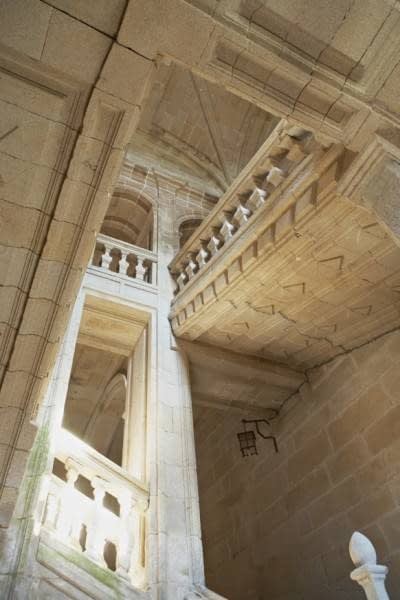
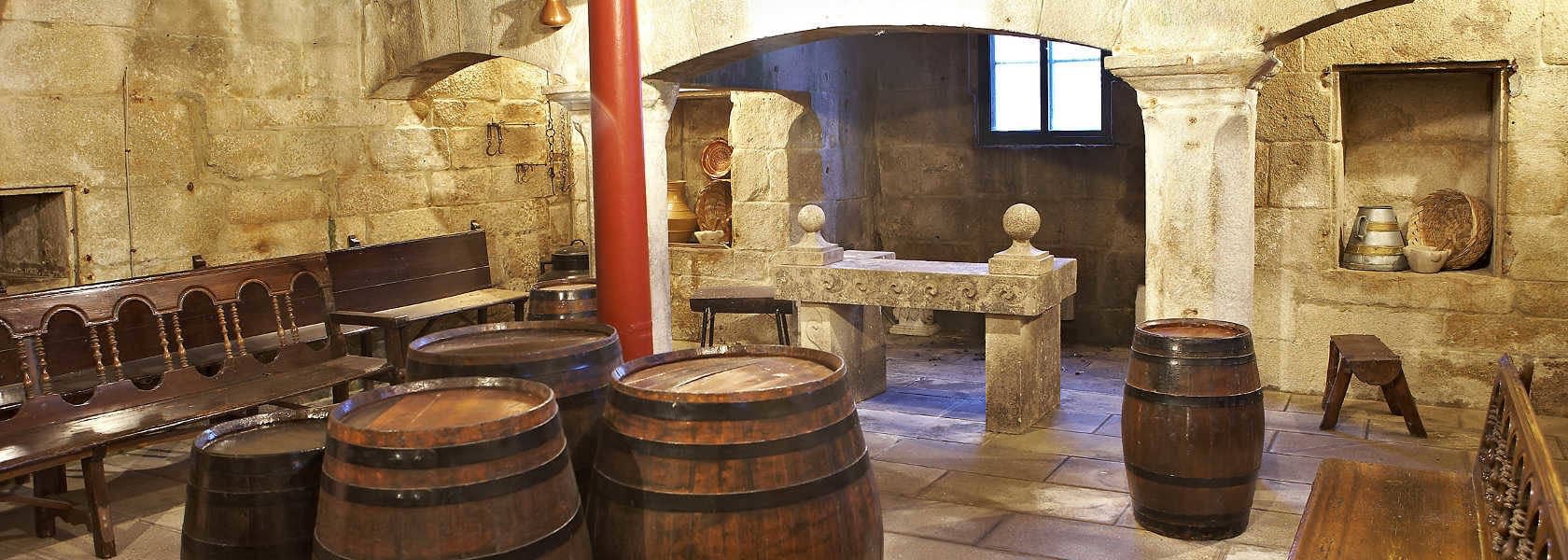
The museum came about as a result of efforts to chronicle the traditional culture of Galicia, especially in a time of swift, social, economic and ideological change – Galicia was at risk of losing its identity- this museum seeks to include disciplines, as diverse as history, art, environment , science and literature. The permanent exhibitions tell the story of the sea, the countryside the profession, the music, habitat and architecture and much more. All of these are housed in this beautiful monastery, whose original history goes back to 1219. The present building corresponds to the 17 th and 18 th centuries, apart from the church.
The most notable part is the work by Master Domingo de Andrade, whose amazing spiral staircase, with only one well, but three different ramps, that allows you to go around it, visiting all the sections, seamlessly.
The church belongs to the 13 th and 14 th centuries and housed a remarkable “Pantheon of Illustrious Galicians”, including the remains of Rosalia de Castro, the renown romantic poetess .
If you have the time, it is a pleasant walk, through a green area, the former orchard of the monastery and a hugely informative and entertaining museum. Highly recommended, especially if you as fond of Galicia as me.
A spot of shopping – Two tiny T- shirts, for my granddaughters, Martha and Florence….and one for me!
I liked the association with “The Who” on this T-Shirt.
We met up with Mac, late afternoon, in a bar opposite the Alameda Park.
What a joy – a pot of tea – how terribly English of me, but it was teatime!
Later, we went out for a drink in the old city and on to a restaurant, that had a dining area in its garden , ideal given the balmy temperatures . We had a good meal and Penny treated us to a bottle of Ribeira Sacra, a great red wine, with which we raised a toast to our Caminos.
“Don’t walk in front of me; I may not follow. Don’t walk behind me; I may not lead. Just walk beside me and be my friend”
Albert Camus
Cannot bid farewell to Santiago and the Camino, without an appropriate song.
Fine, bright morning, as we left Pazo de Galegos and walked uphill for a short while, to rejoin the Camino. The Pico Sacro, a mountain, with legendary links to the original finding and protection of St James’ body, towered in the near distance.
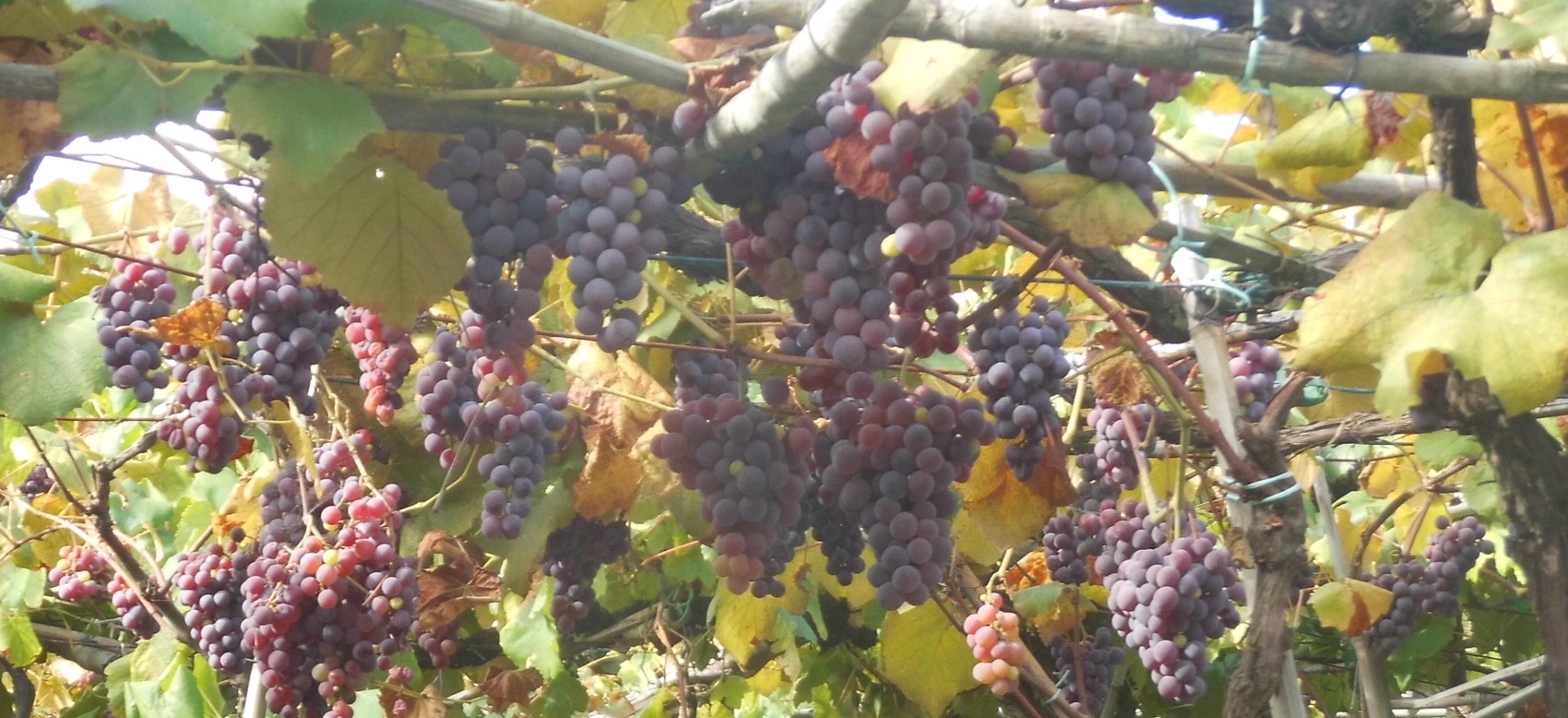
About 18 Kim’s to go alongside many small holdings and fincas, the grapevines were more advanced than any we had seen to date.
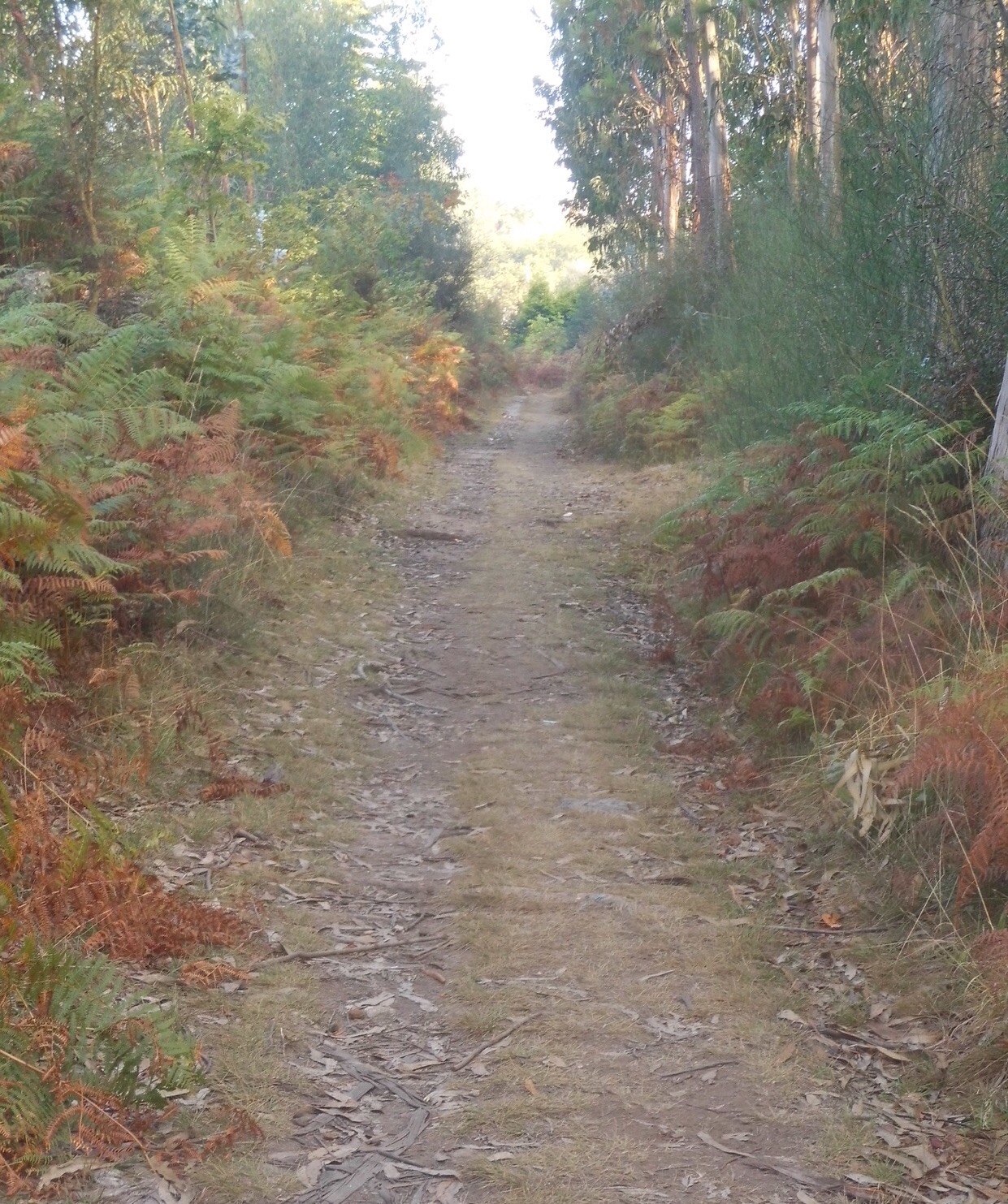
The path became quite narrow in places, despite the sunlight, there was plenty of both shade and natural colour.
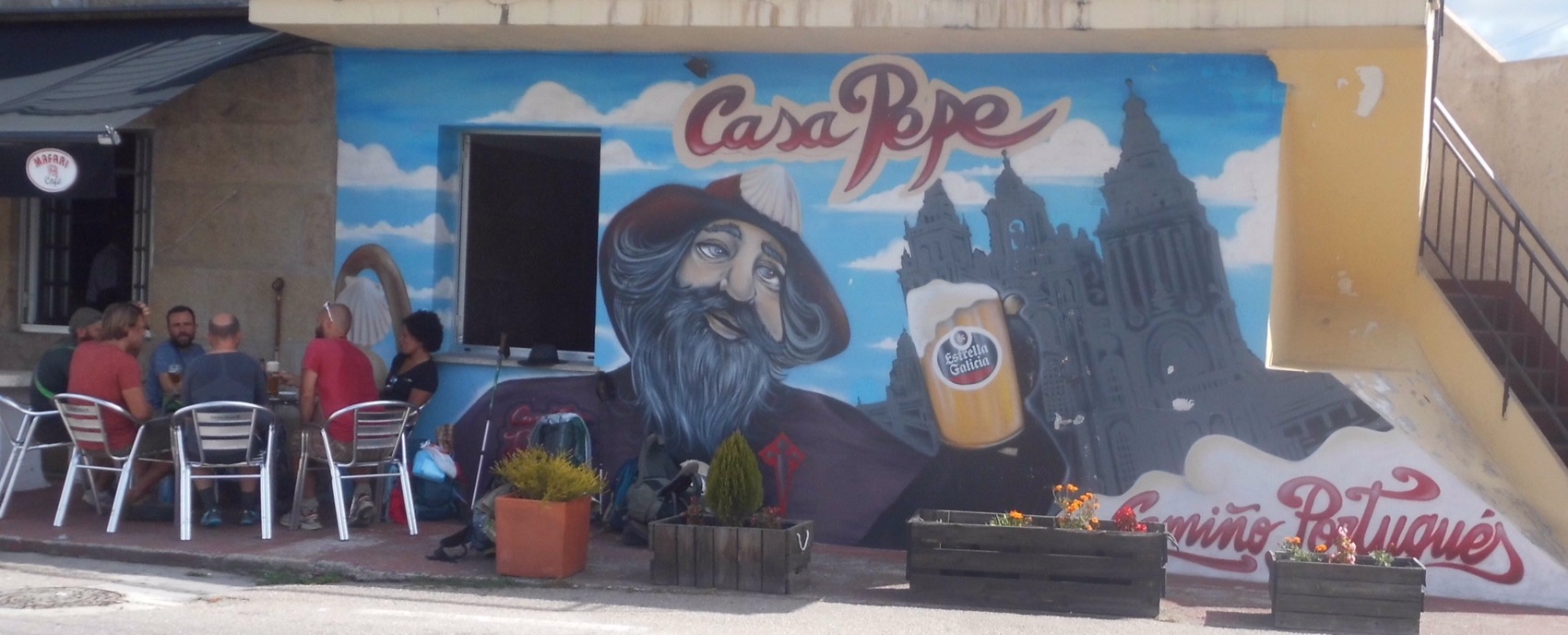
Probably the most pressing thought, during the first hour or two of the walk is…..Coffee ? We were pleased to see this sign.
Later, we met up with a couple of Irish girls we had seen the day before. Penny had picked up a sock that day – a clean one – she was glad to reunite it with its owner, one of the two girls. There was little else to distract us from our path, until we neared Santiago. Then, on turning into a road , I felt a tap on my shoulder and in an unmistakable Dublin brogue, I was asked ” You’re the ensuitepilgrim, aren’t you?” Well, there was nothing on my clothing, nor my bag, to give any clue to that conjecture, however, after ascertaining that it was safe to admit it, I found myself in the company of Tony ( 34 years working in London in the HR department of Wimpeys, once famous construction concern ). He was walking the Camino Invierno and told me he had been flowing the Blog for sometime. Another remarkable event on this ever surprising Camino.
Our high spirits on approaching Santiago were chastened as we reached the bridge, below which, the train disaster of a few years back, when 79 people lost their lives, due to the recklessness of the diver, took place; many of the Pelegrinos.
We took heed of the above admonition and entered a very friendly cafe for a beer and the inevitable bocadillo. This approach to Santiago is the most pleasant, avoiding heavy traffic and flyovers. Tony took a photo , with the Cathedral spires in sight.
The next photo gives a clearer view.
As we came into the outskirts , we were trying to remember just exactly where our hotel was….we had been so enthralled by Pazo de Galegos, we had forgotten to map it. Tony came to our rescue with the GPS on his phone. In actual fact, we were only 300 metres away! He led us to the door – the App. ” Maps.me” was his recommendation. A lovely guy. We bid farewell, fairly certain we would meet up again, which we did, in the Pilgrims’ office, as we queued for our Compostelas, later that evening, after some drinks in the sunshine .
Well, that’s another one done. A memorable Camino, not one for the first-timer, nor the faint hearted. 1000.6 KM.
We were leaving our accommodating Albergue, en route to a Manor House, in its own vineyard, hence the anticipation of a bottle of wine…Silleda will not be a memorable place, but for two things. First, I had a wonderful cup of tea with my chocolate croissant. Second, the house of culture displayed a banner, publicing the work and contribution of Carlos Caseres; would not have expected that in such a workmanlike town.
It was a fine morning, the paths went through pockets of woodland, mainly Oak, Pine an some Eucalyptus. The vistas were not so grand, but relaxing; quality farmland, some bijou shrubs.
Unexpectedly, and a good way on, we came across an Albergue/ Bar, run by an Italian guy. We had earlier met his wife and two beautiful,twin two year olds on the path. They accepted my offering of two fruit gums, after some encouragement from mum. It is a good, little Albergue; I hope it works out for them, as more pilgrims attempt the Via Sanabres/ de la Plata.
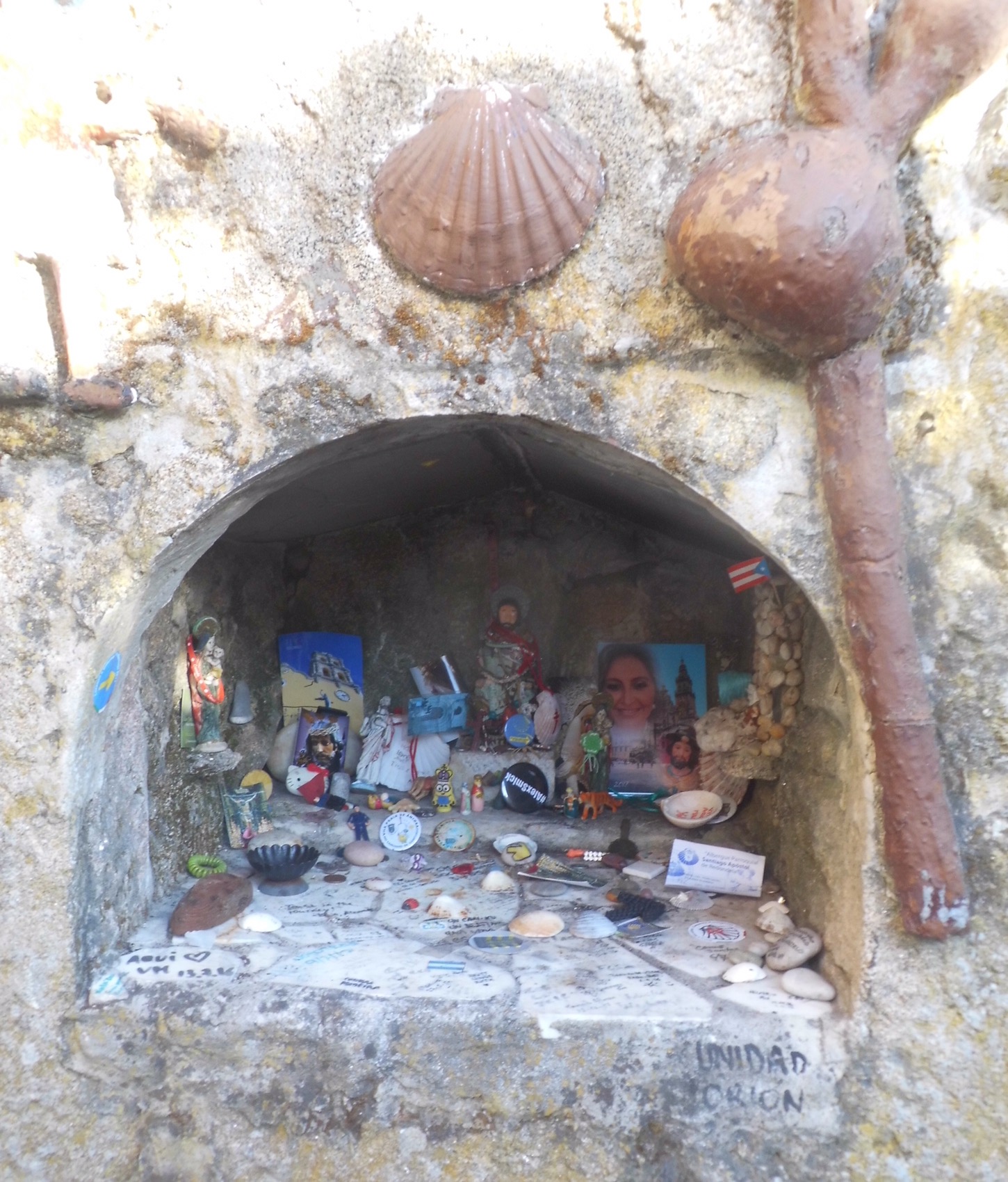
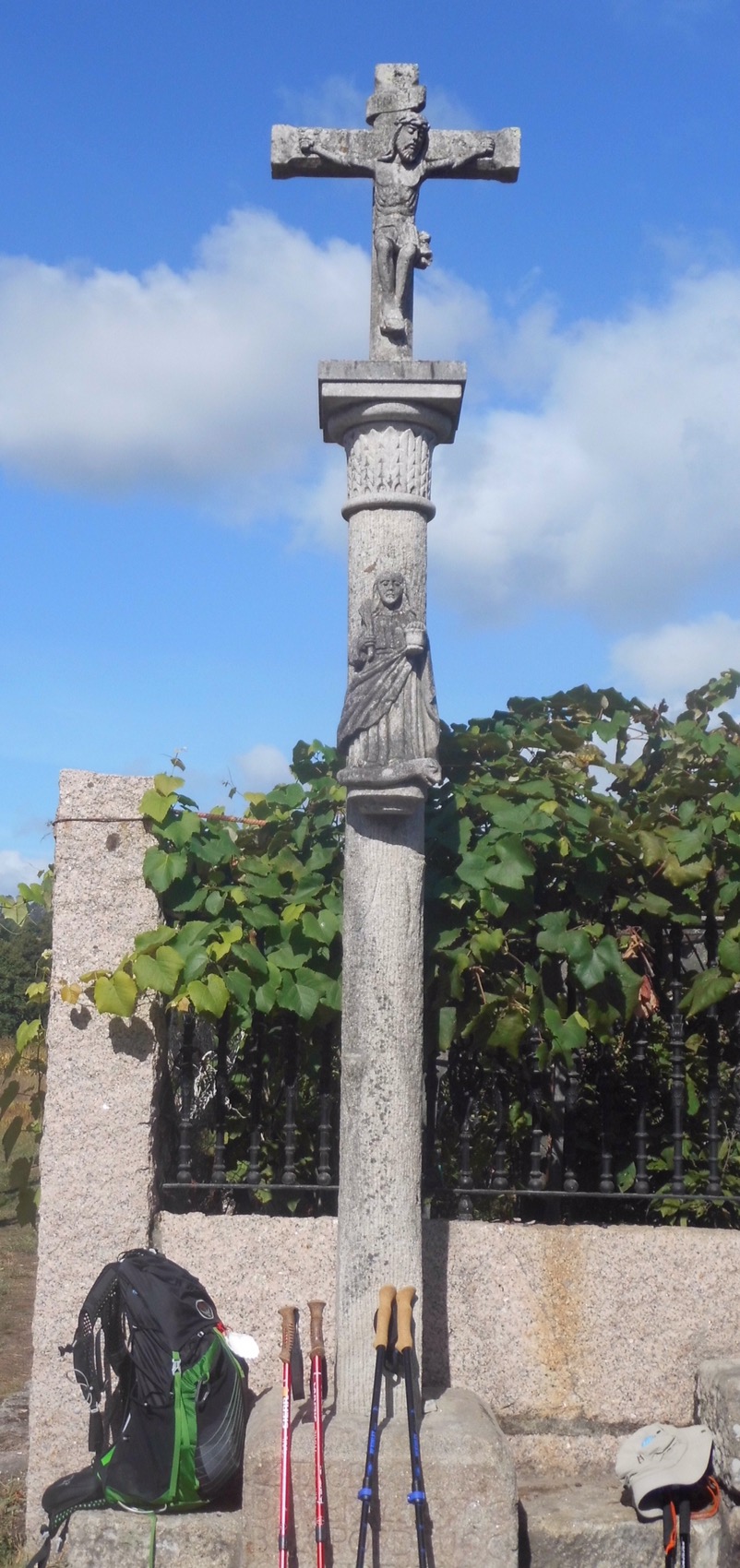
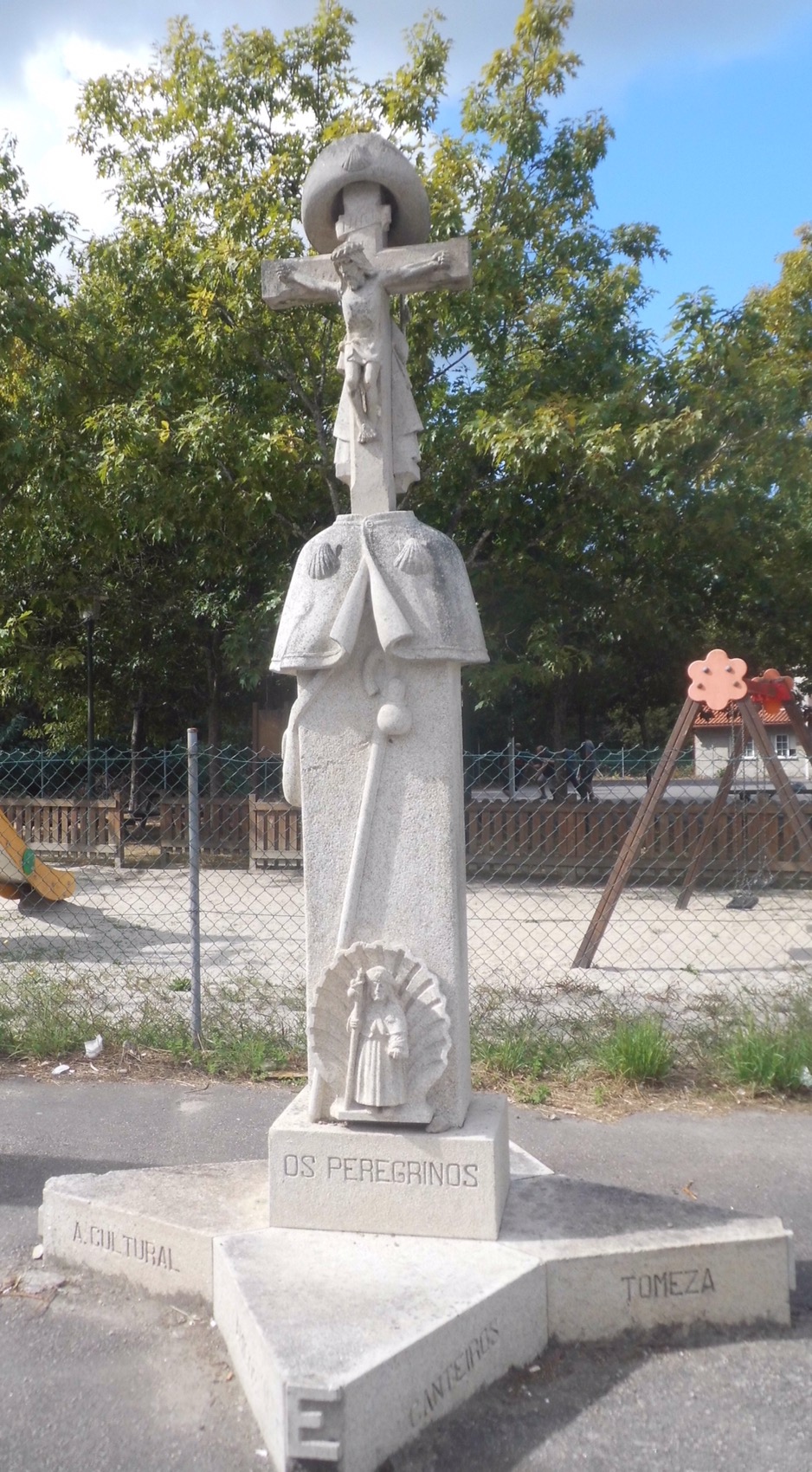
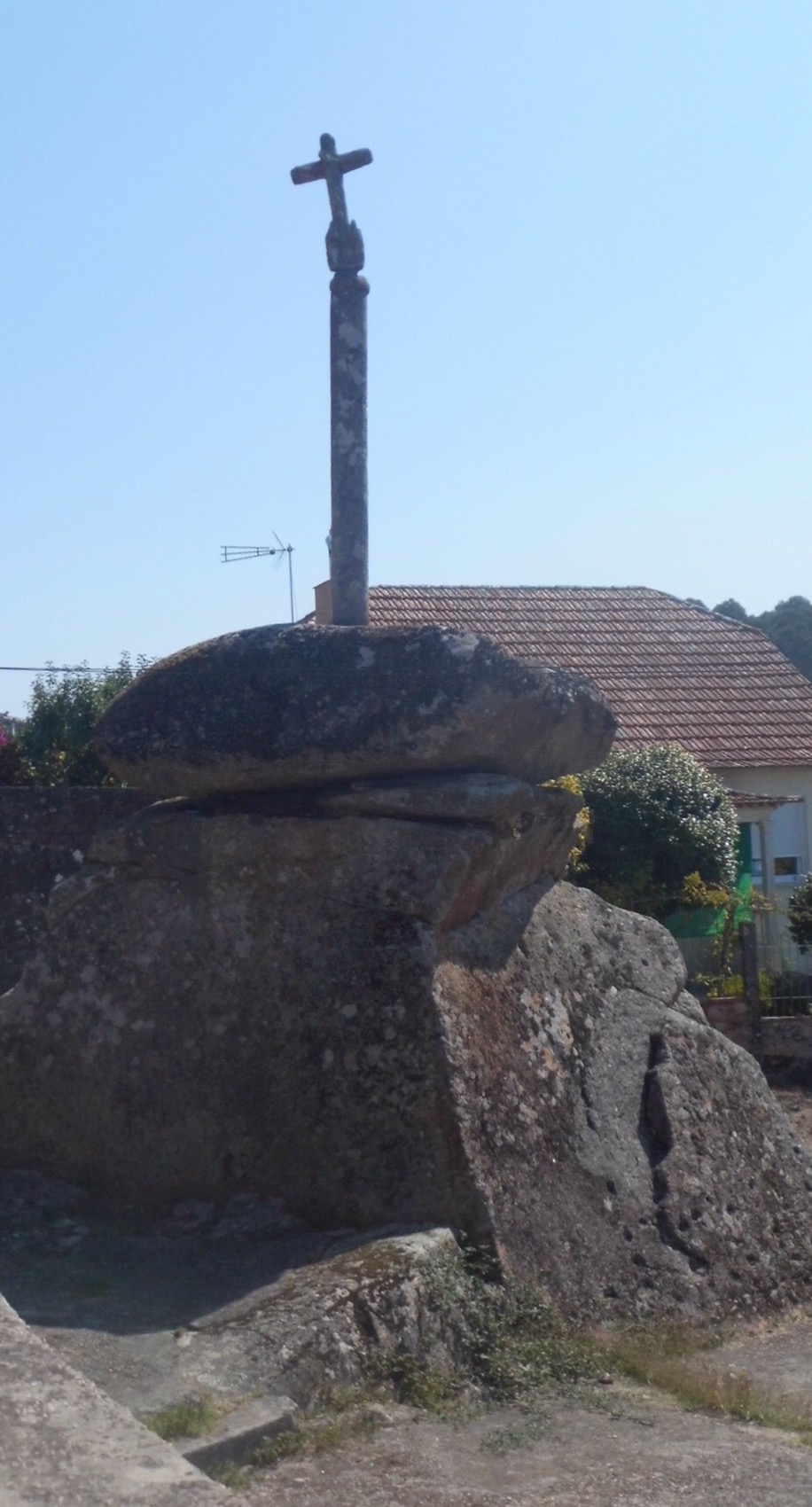
You find cruceiros in every Pueblo , but unusually, this little shrine was encompassed within a dead tree.
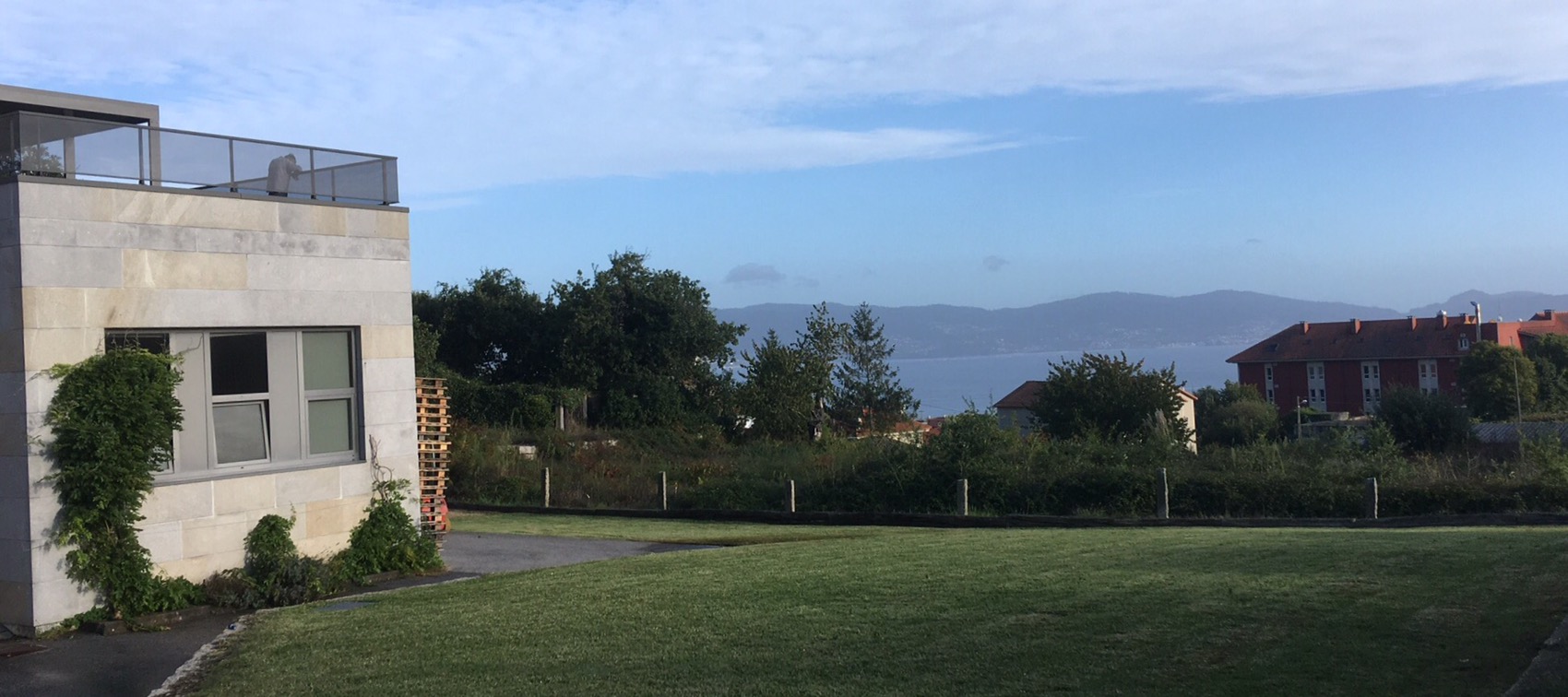
Pazo de Galegos , just past Ponte Ulla, was to be a Sunday Benediction. M 800 off the Camino, it looked so enticing as we entered the gateway. A real Galician country house – elegant,full of light, surrounded by its own vineyard, with distant views of the mountains. A warm ,but unfussy welcome as e were urged to go to our rooms , before bothering with passports, etc. The rooms, furnishings and views did not disappoint and an air of blessed tranquility overcame our understandable fatigue.
We were invited to a talk about the house, with its special connection to the Cathedral of Santiago and the vineyard at 7 pm. To be followed by dinner . Manolo, the owner, was to prove to be both a genial host and a mine of information, in very good English. He explained how the house had been the residence of D. Antonio Lopez Ferrero ( 1837 – 1910 ), canon of the cathedral, discoverer of the tomb of St, James and one of the great Galician writers.The relics had been moved because of a possible invasion by Francis Drake, whose fleet was threatening La Coruna , however, he was defeated and sent back empty handed to England. All of this disinterrement took place secretly, after midnight; “skulduggery” you might call it….
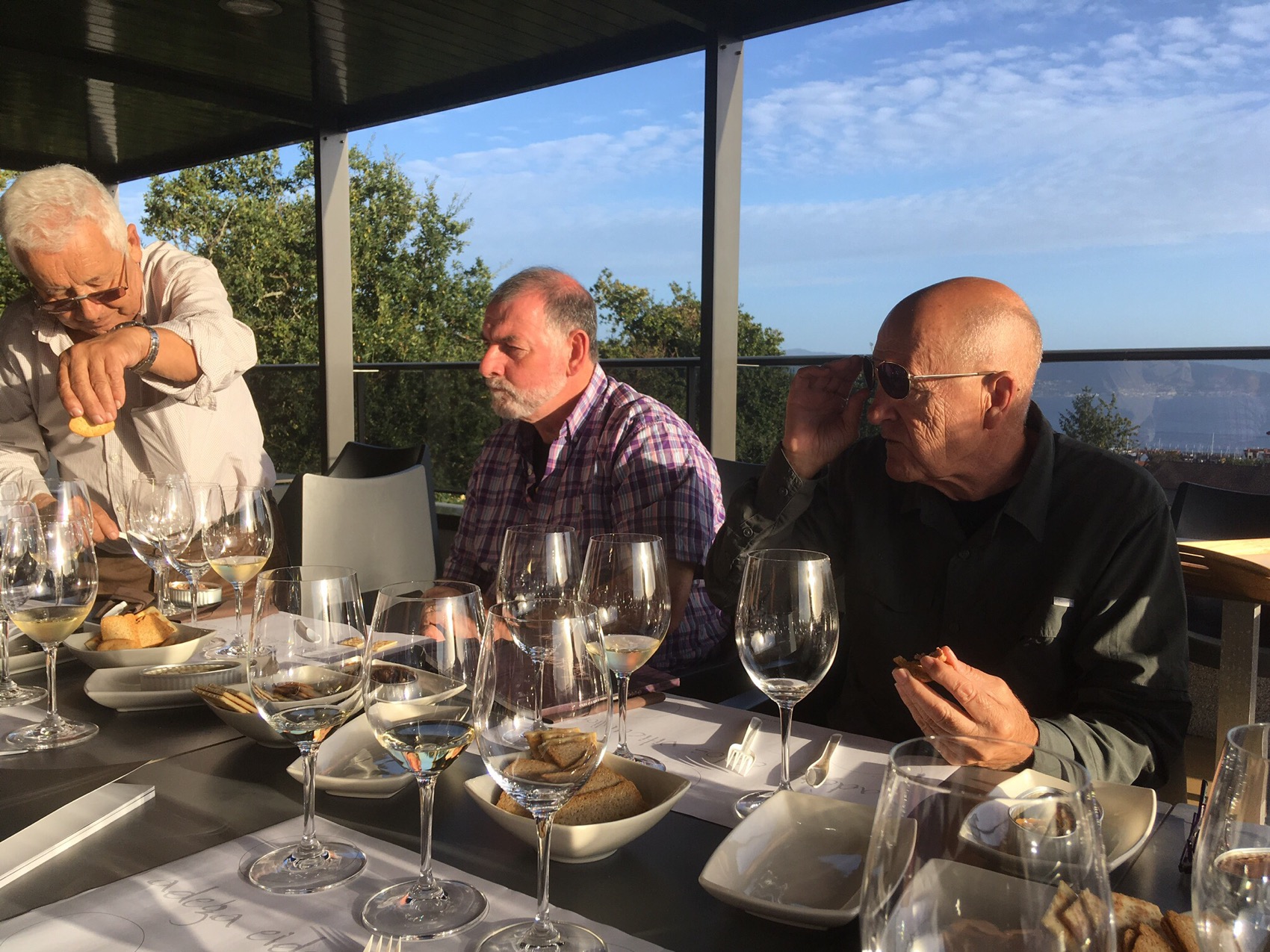
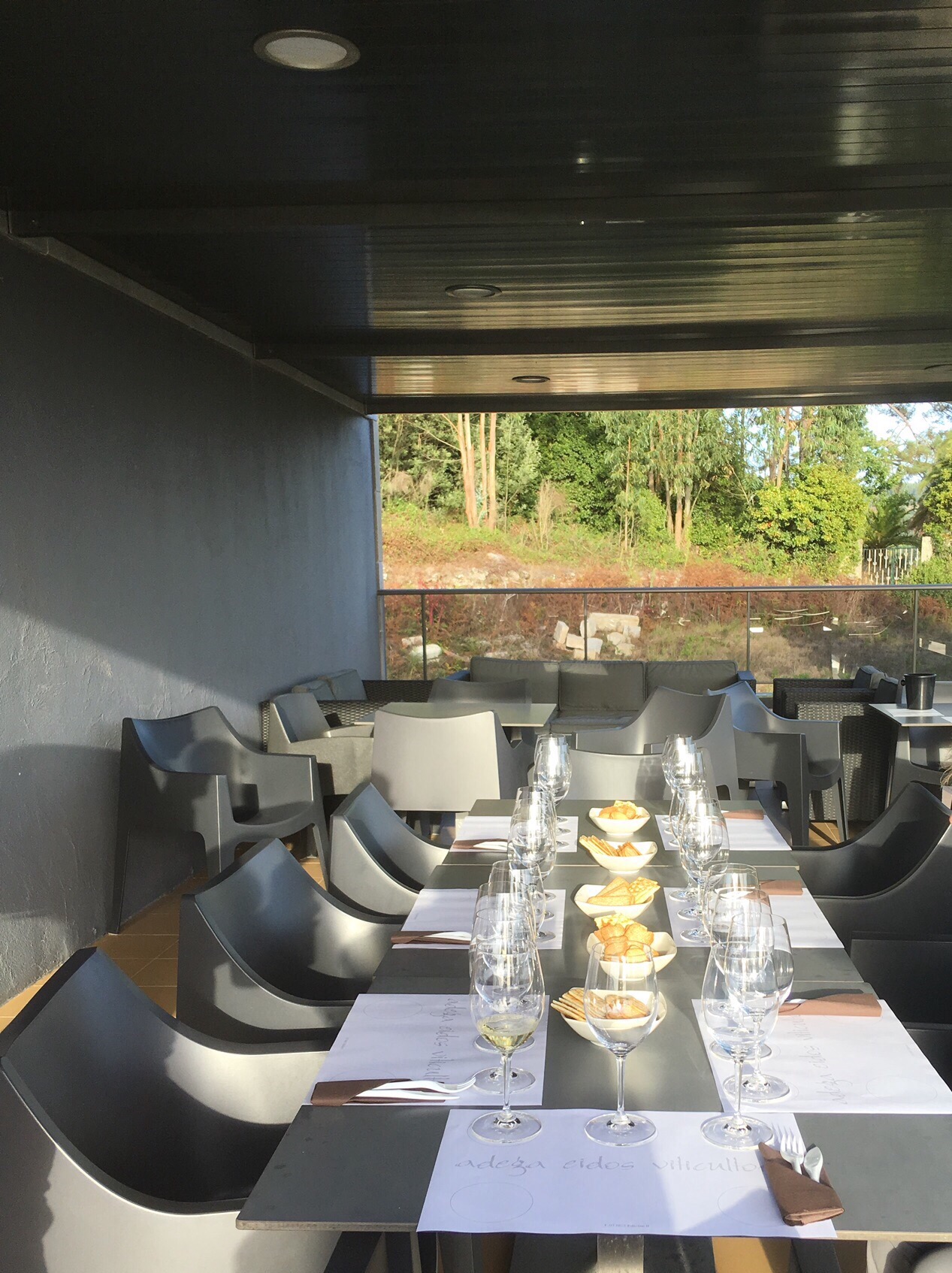
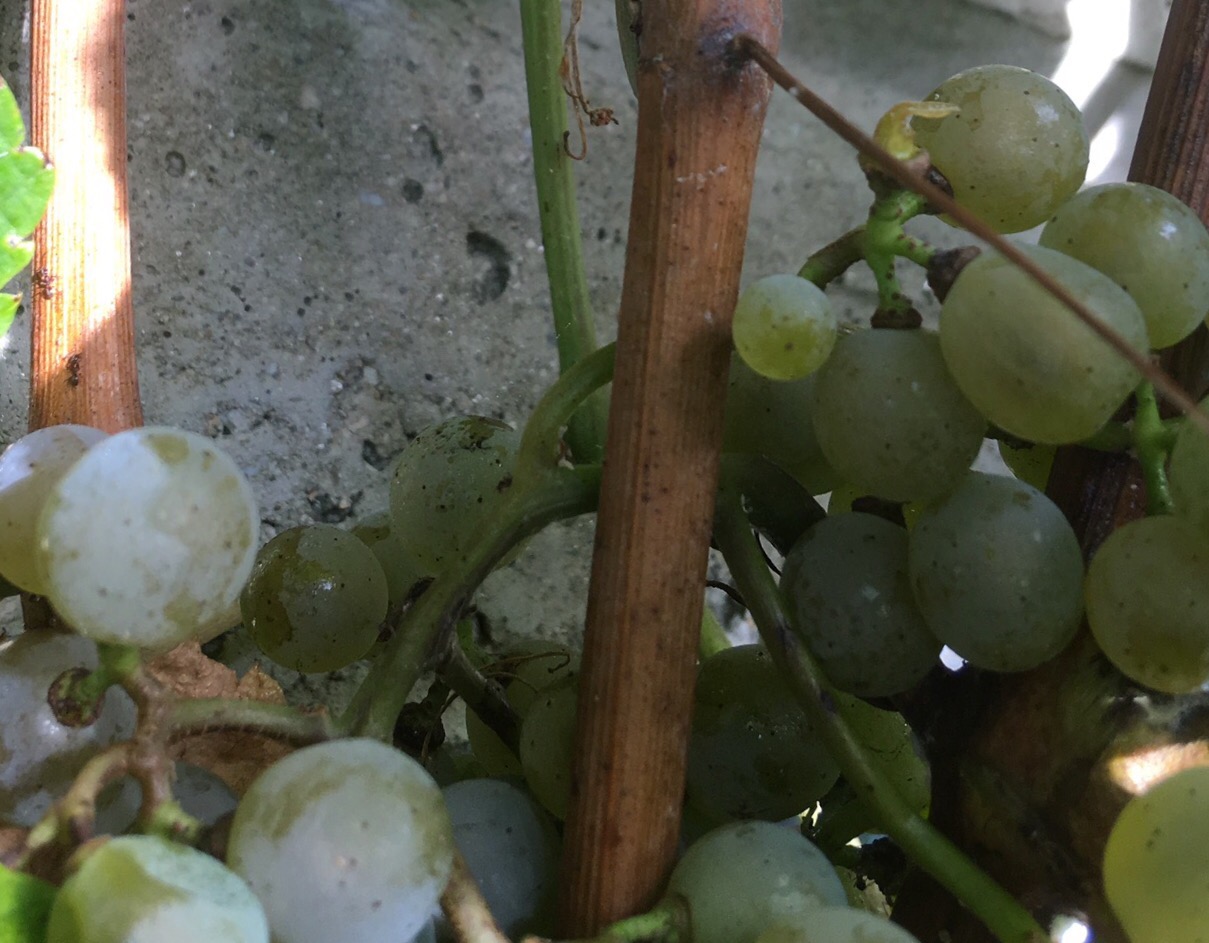
A fascinating story, which probably needs embellishment….but not here. We then moved out into the vineyards, where amongst the vines, were many different varieties of Camellias. My favourite white wine , Albariño is produced here, in modest quantities and with great care to be as organic as possible. Their own weather station helps to establish the best time to prevent fungus in the grapes, with minimum use of pesticides. All the grapes are hand picked, crushed, macerated and fermented on site. Pride of place is a near 500 year old vine unique in Spain and still producing many kilograms of grapes each harvest.
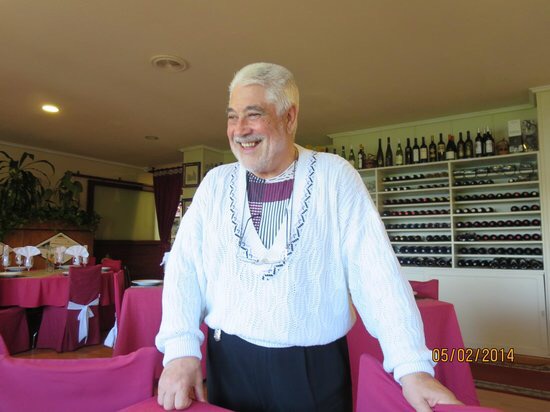
Dinner followed and Manolo entertained us with more anecdotes and his revelstion that he really enjoyed 60s pop music ; this showed another side to this genial, knowledgeable man. He remembered seeeing Olivia Newton John at the London Palladium and the Dave Clark Five was one of hid favourite groups! We took our leave the next morning, after an excellent breakfast ; if you are ever out this way, it’s a must do – Manolo, the perfect host.