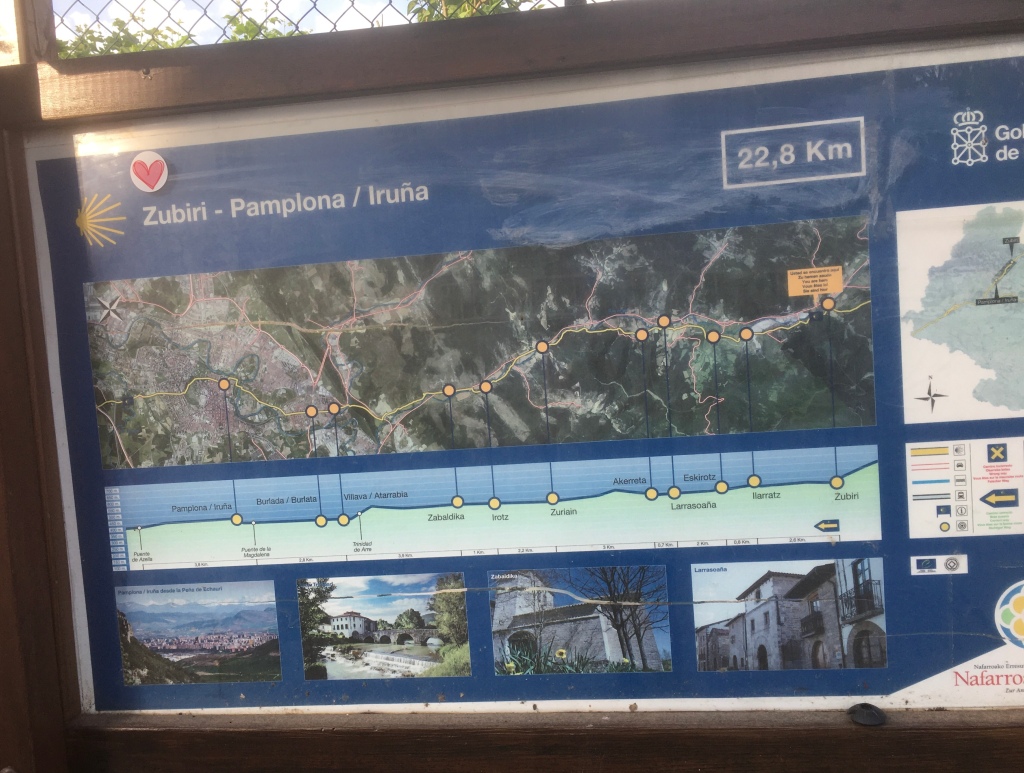
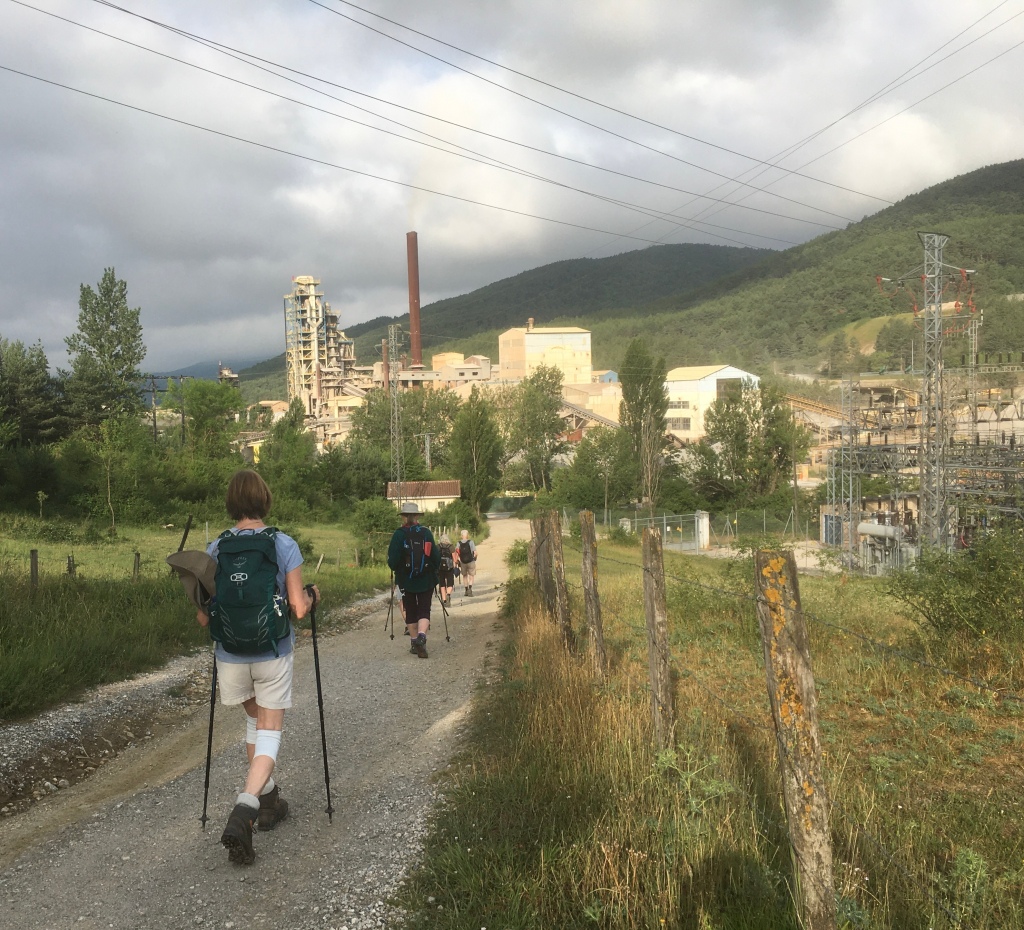
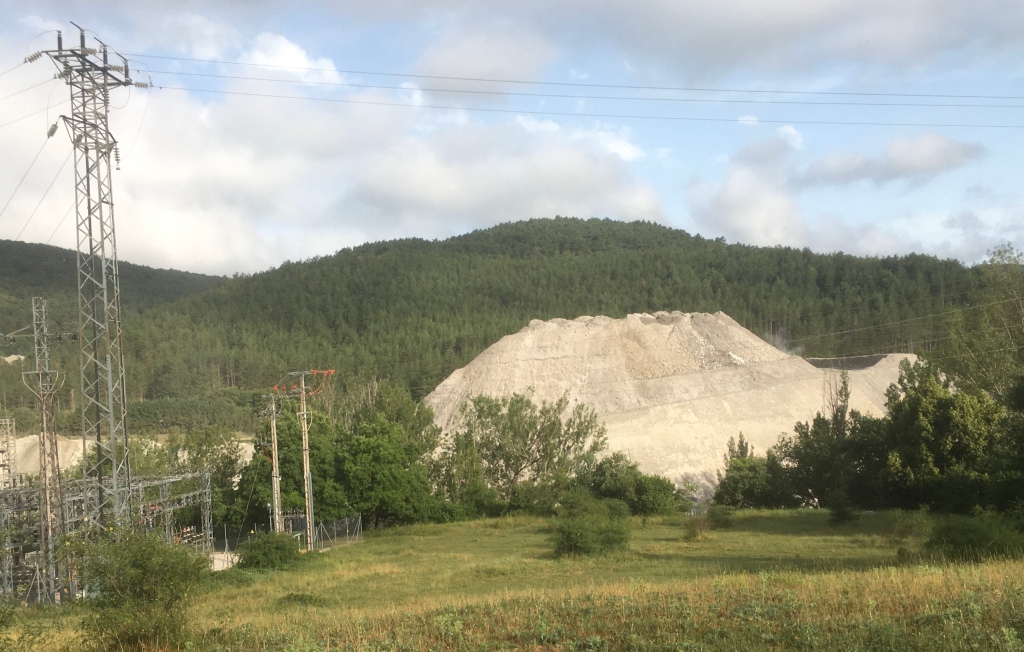
It was a longish trek past an enormous cement works as we left Zubiri
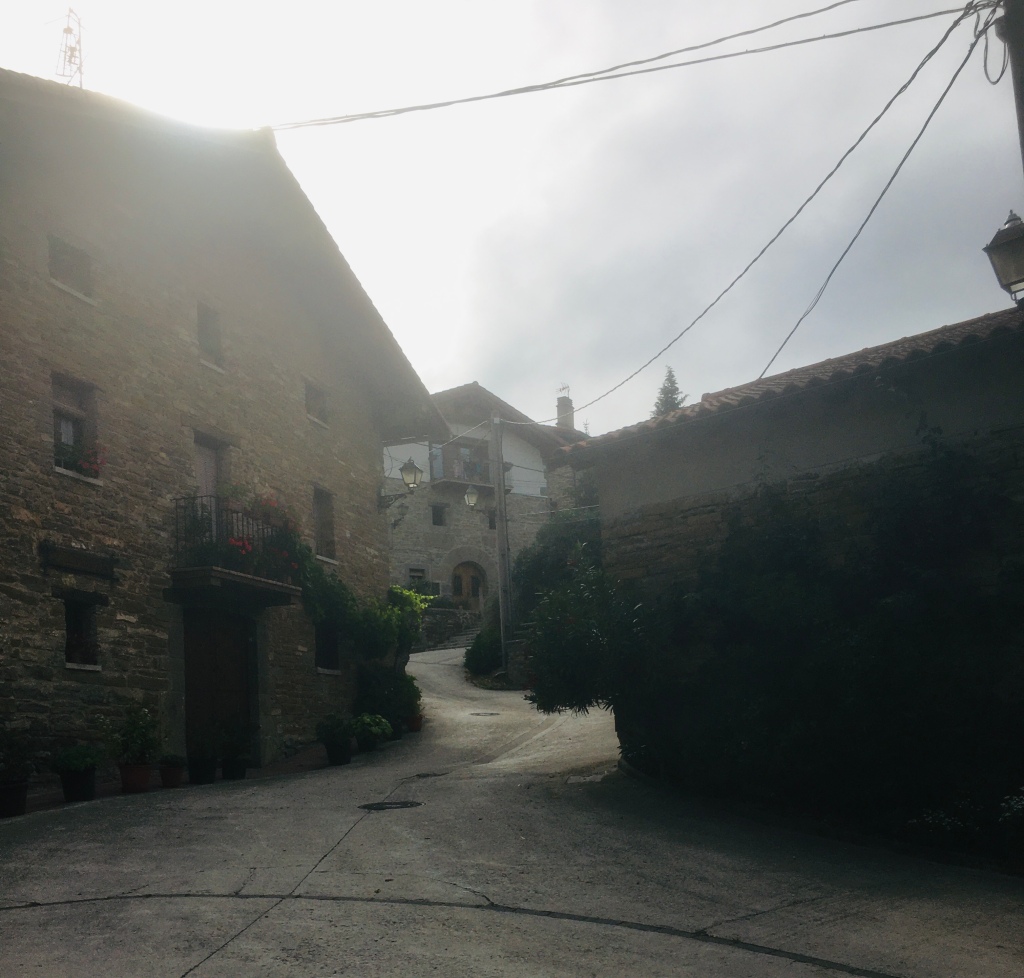
On through Larrasoana and shortly afterwards Akerreta. Another sleepy,delightful village.
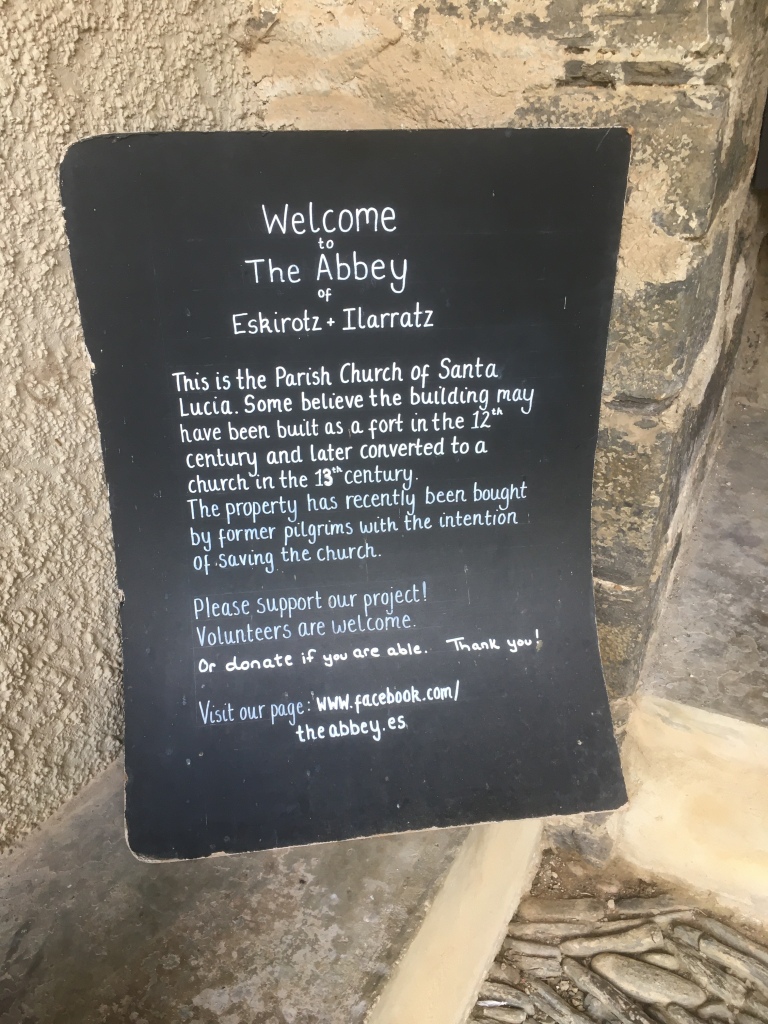
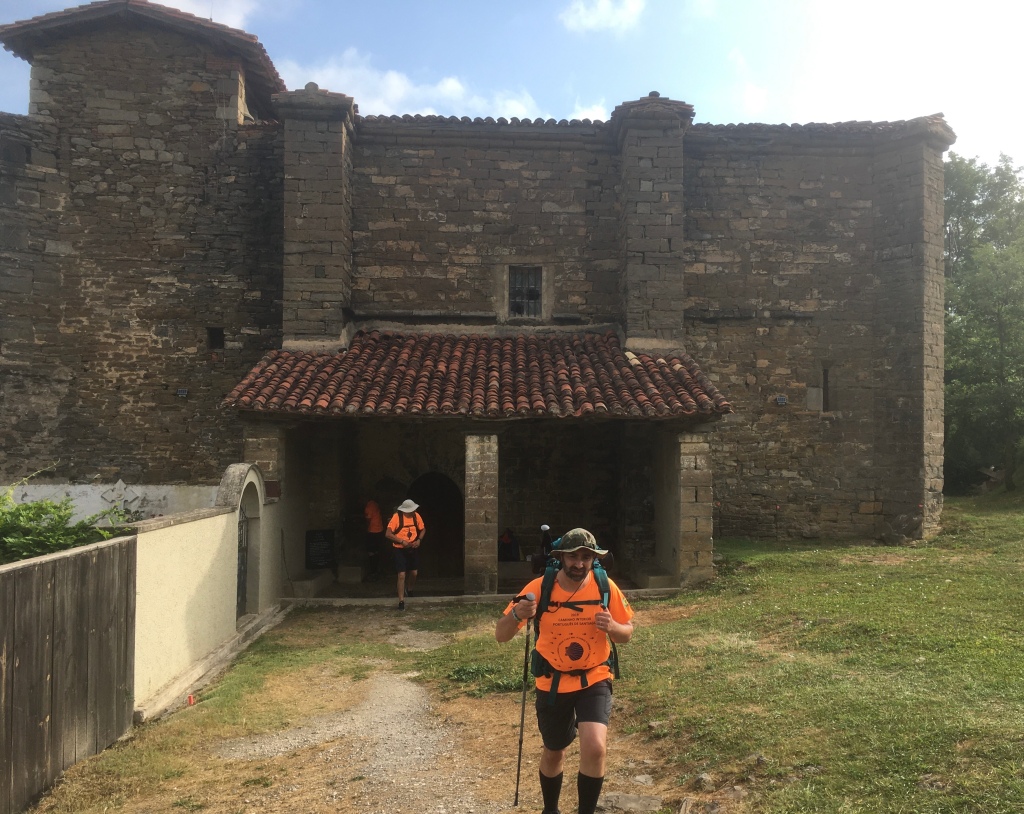
We were pleased to get a “ sello” – a stamp for our Pilgrim Passports or Credencials here.
Some members of a Portuguese group at the Abbey – more of them later !
Now for some flora and fauna
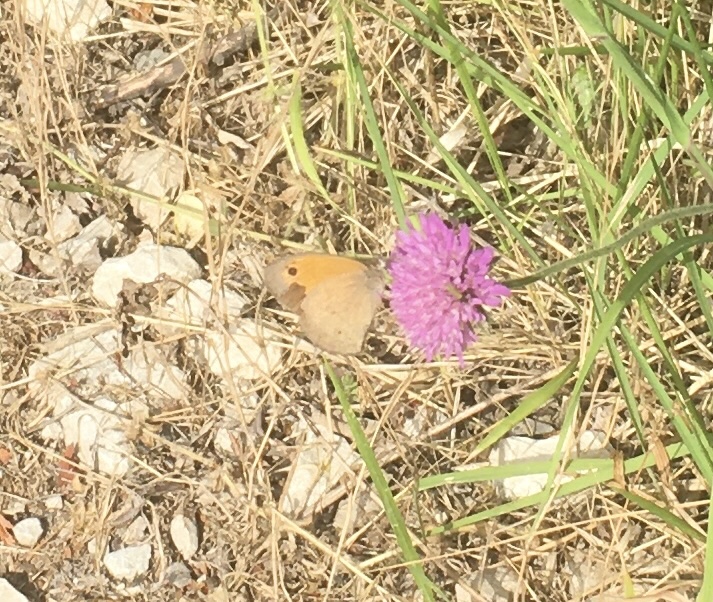
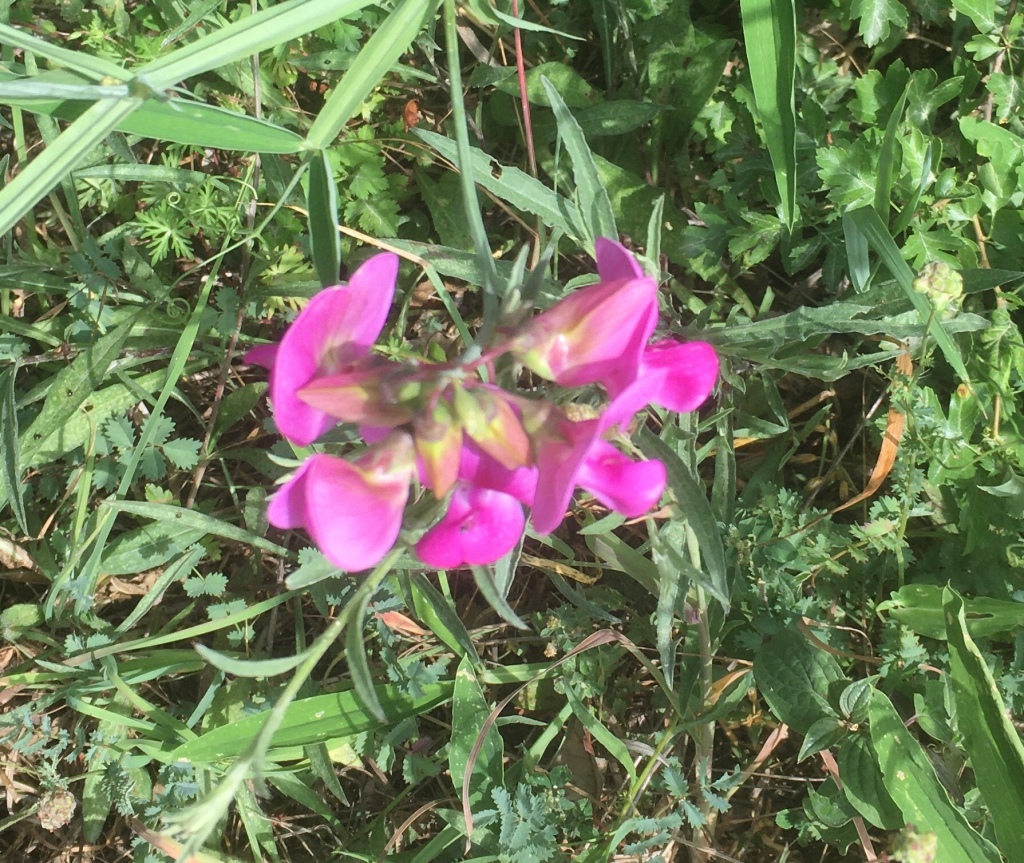
Butterflies with us all the wayWild Sweet Peas
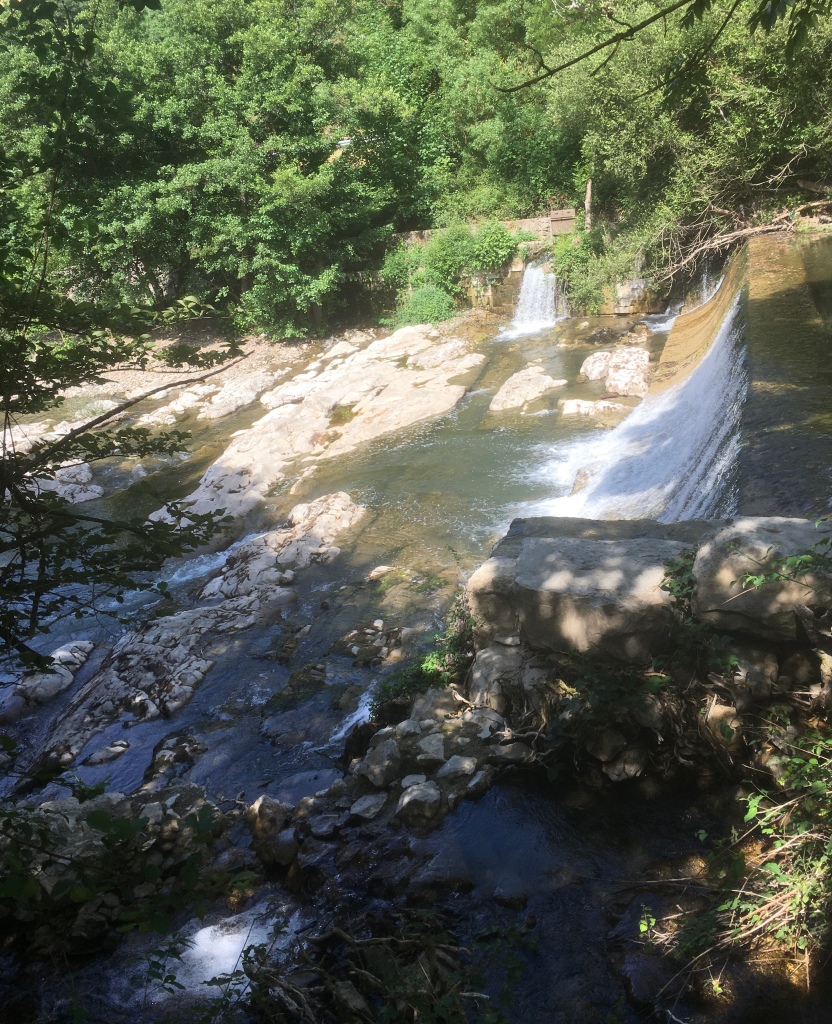
We were now walking alongside the Arga river and although it looked quite tame it obviously rose to some considerable heights as I noticed a wheelie bin which had been swept along until wedged in some tree branches .
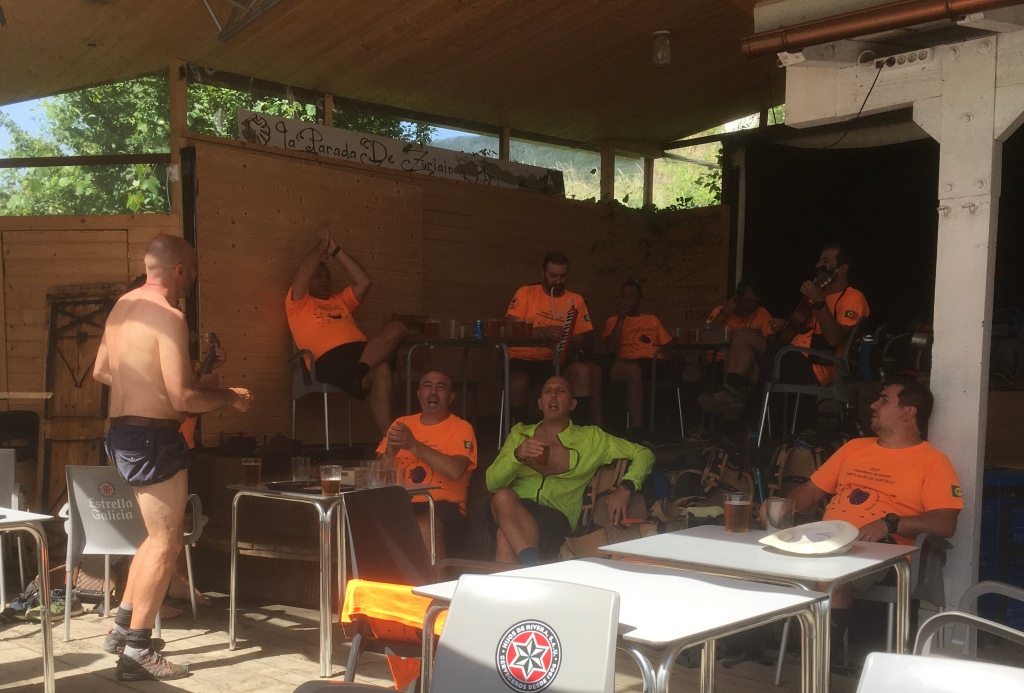
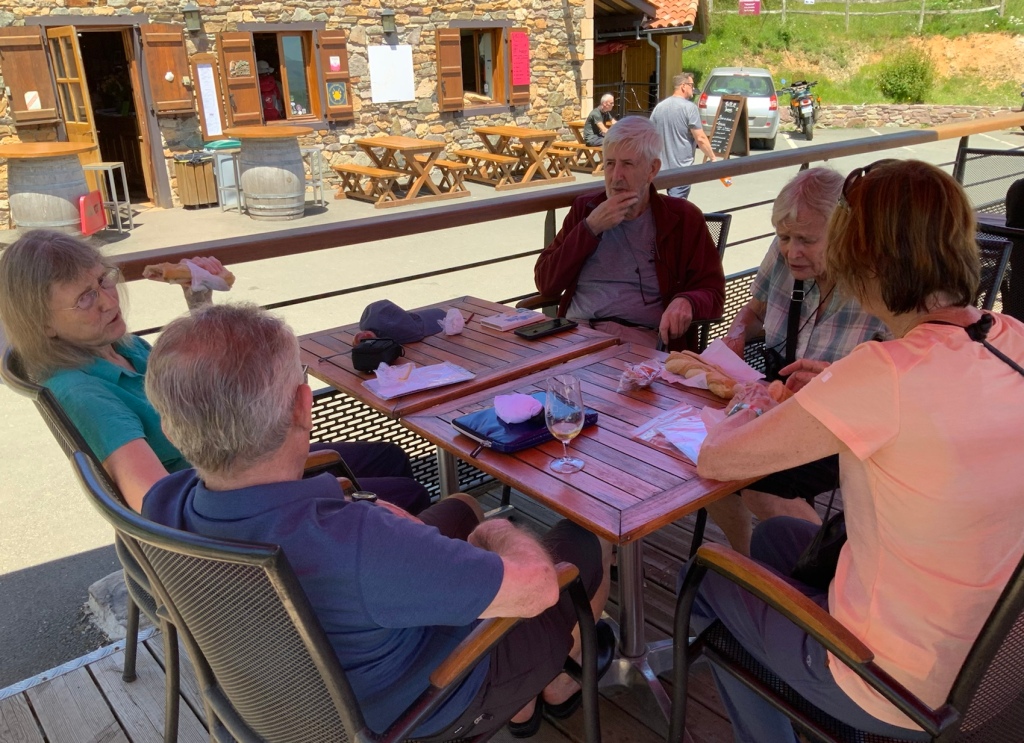
Over a bridge at Zurian for coffee where we were serenaded by the Portuguese group in great voice and even lack of dress sense!
Pelegrinos basking in the shade by the river – the temperature was rising.
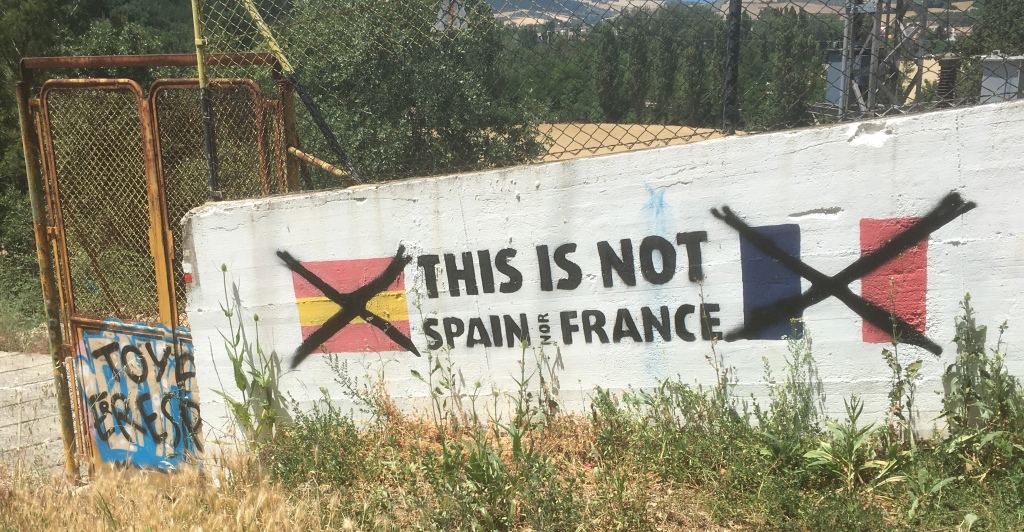
We were given this reminder about the Basque sense of pride.
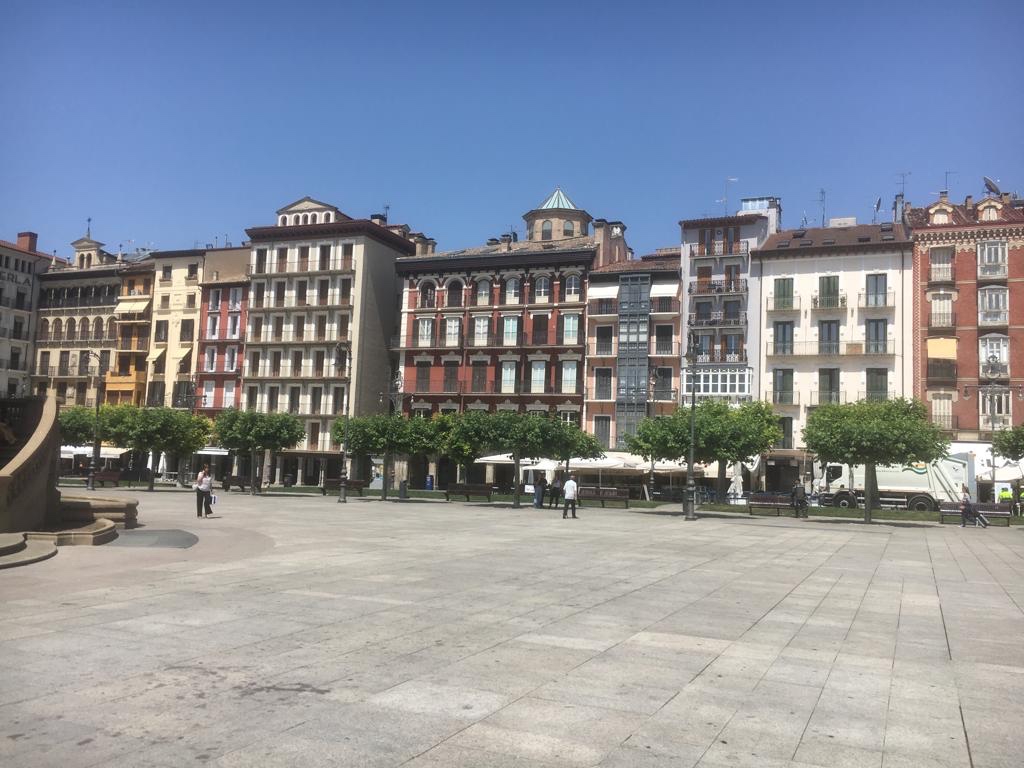
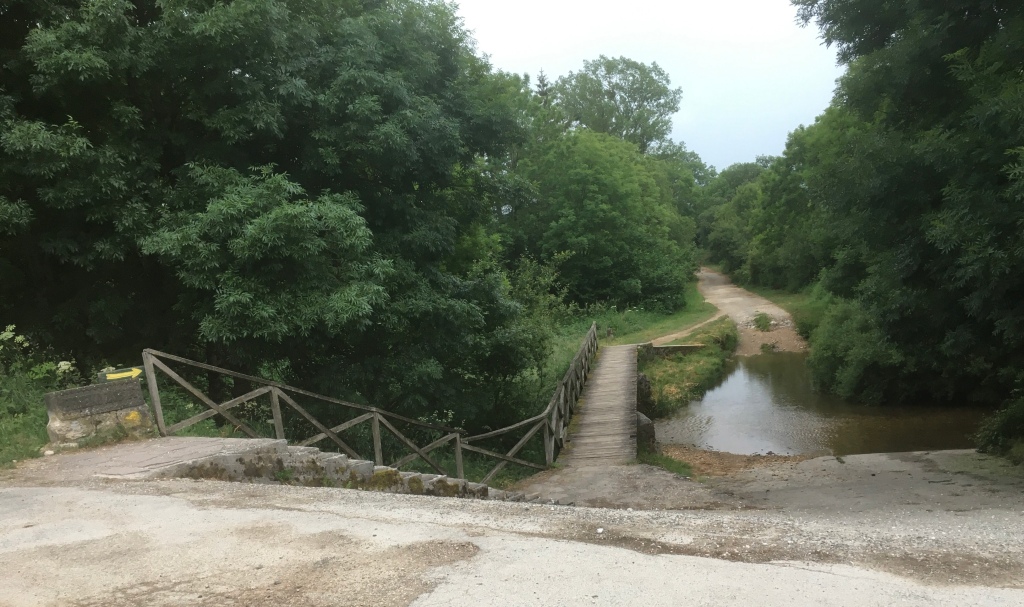
We were now approaching the outlying districts of Pamplona and at Excabarte we crossed the river.
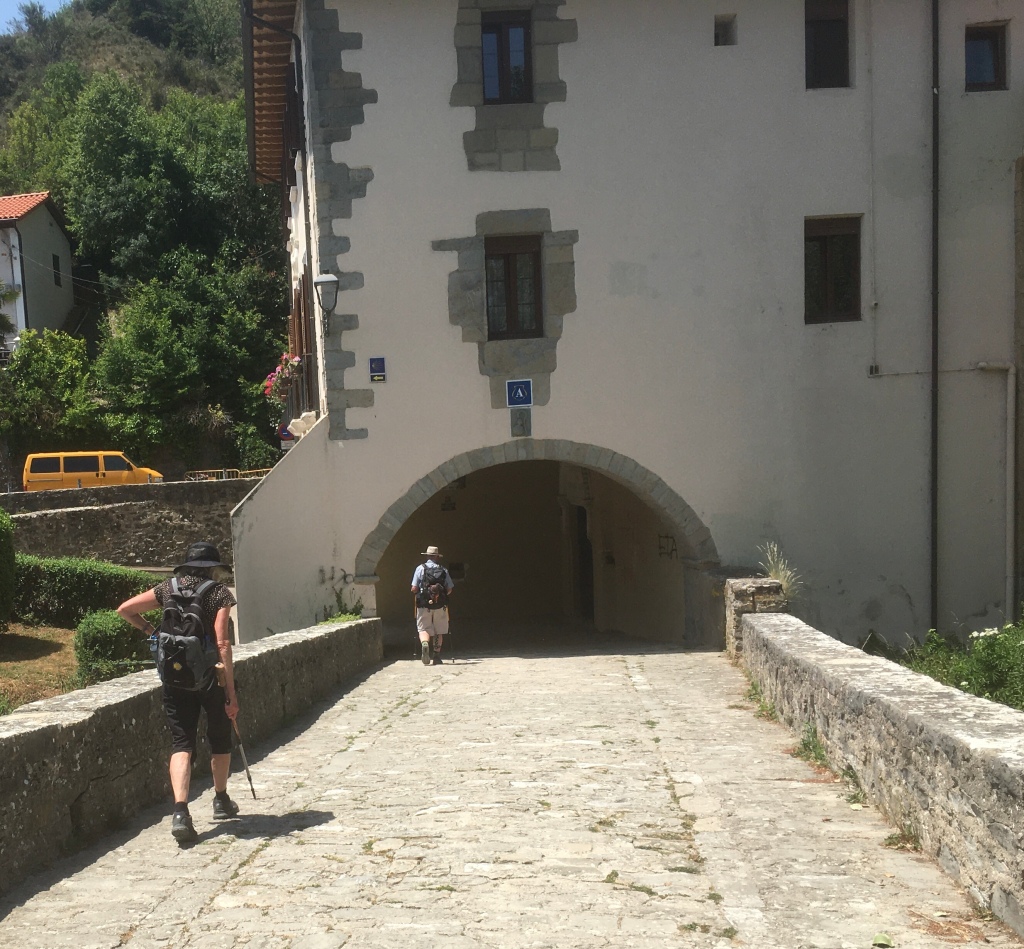
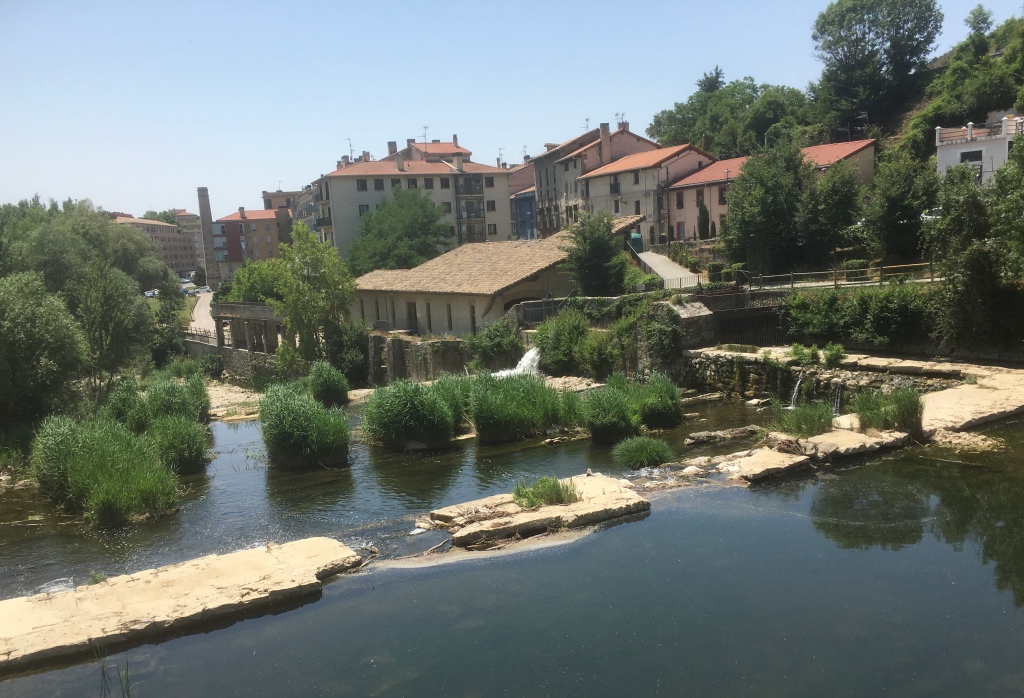
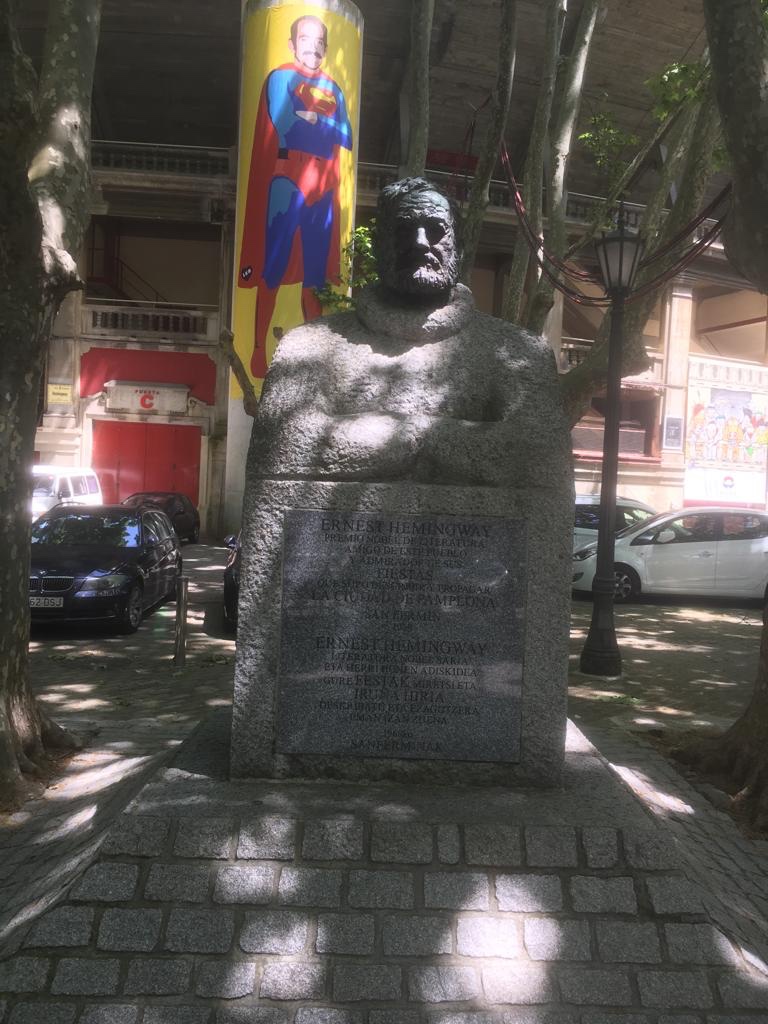
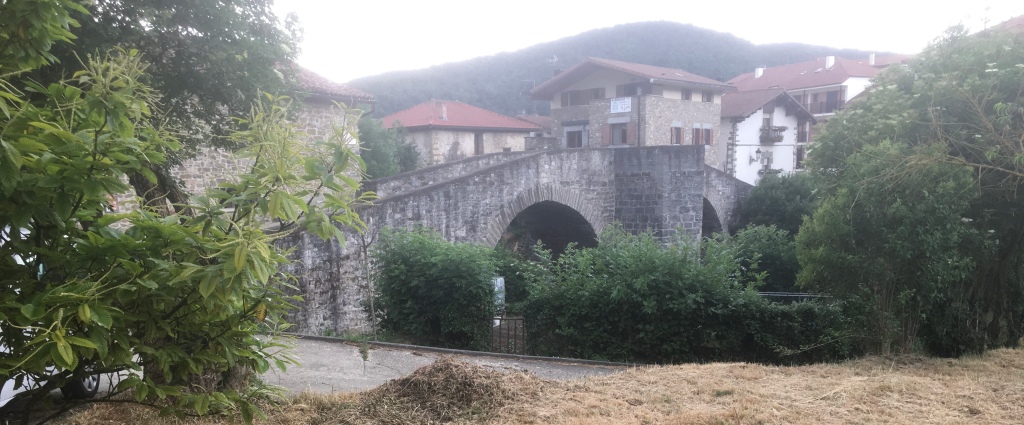
A Romanesque bridge dating back to Medieval times into Trinidad de Arre.June having a breather in the shadeBefore and after What a tempting scene. Oh for a dip.Hemingway in PamplonaPamplona is worth a day or two of your time if you are ever that way . A great deal to see. If you have the time, sadly we did not as a Camino keeps you moving on. There is more to it than San Fermin and the bull running. Take a look at the link below
And the only things you should leave behind are your footprint and a smile .
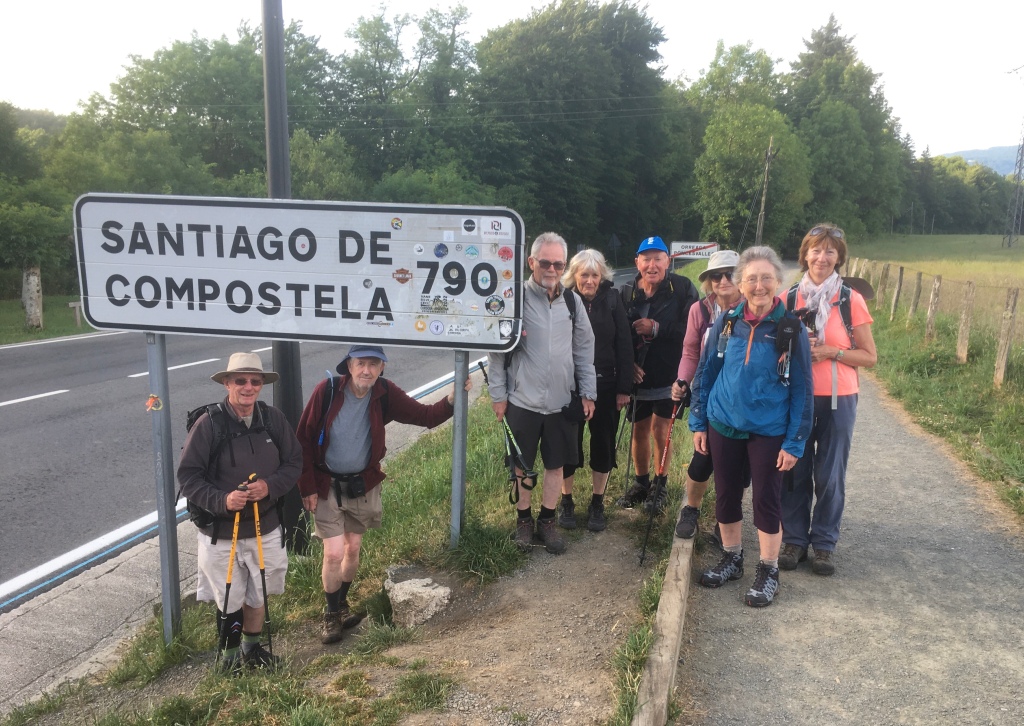
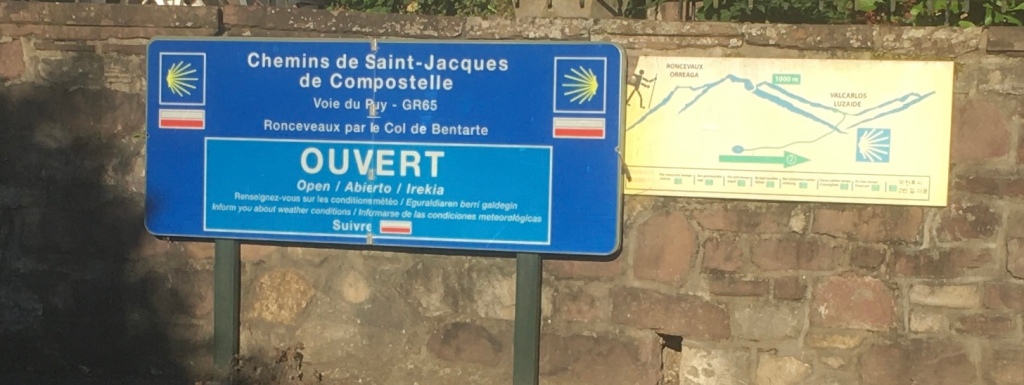
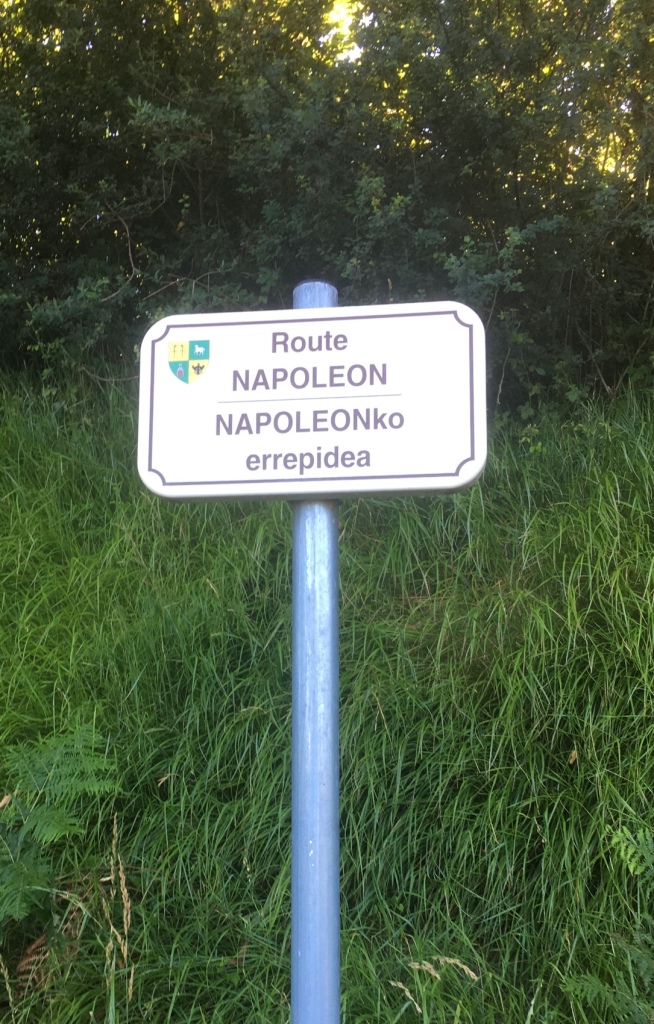
We set off in coolish conditions and paused for a group photo at this iconic road sign
It’s a shorter distance walking the Camino .
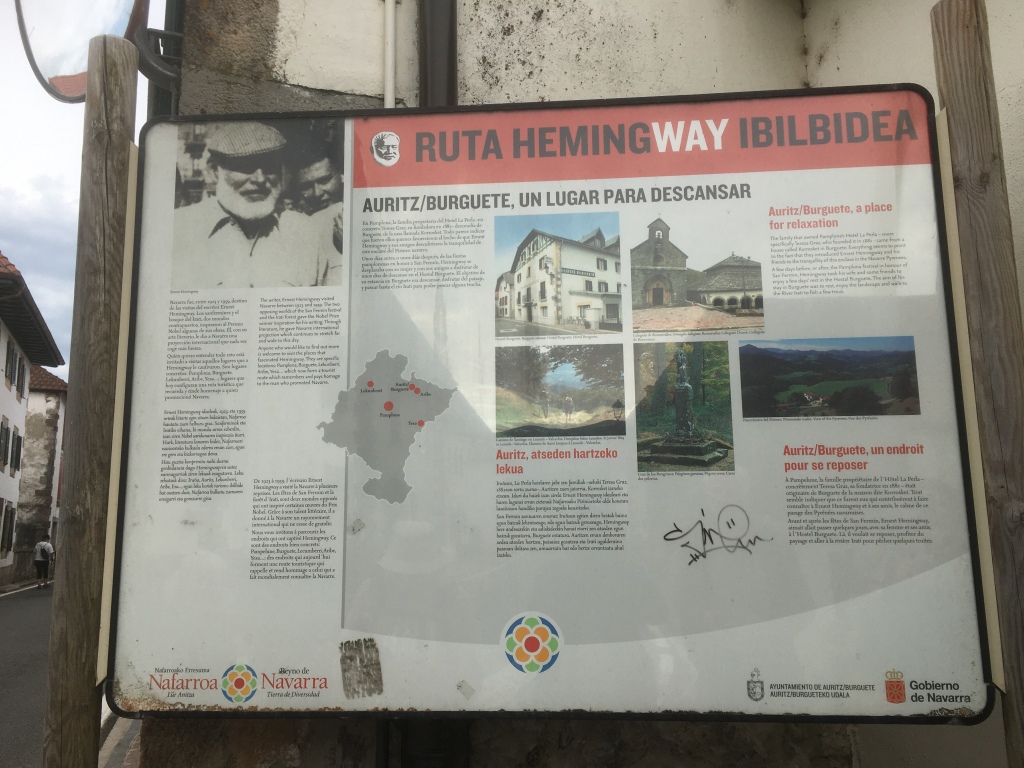
We reached Auritz/ Burguete – Hemingway is still a revered figure here.
Hemingway has some cogent thoughts about war .Thinking of that deluded monster Putin.
After coffee and snacks we set off across a stream under threatening skies.
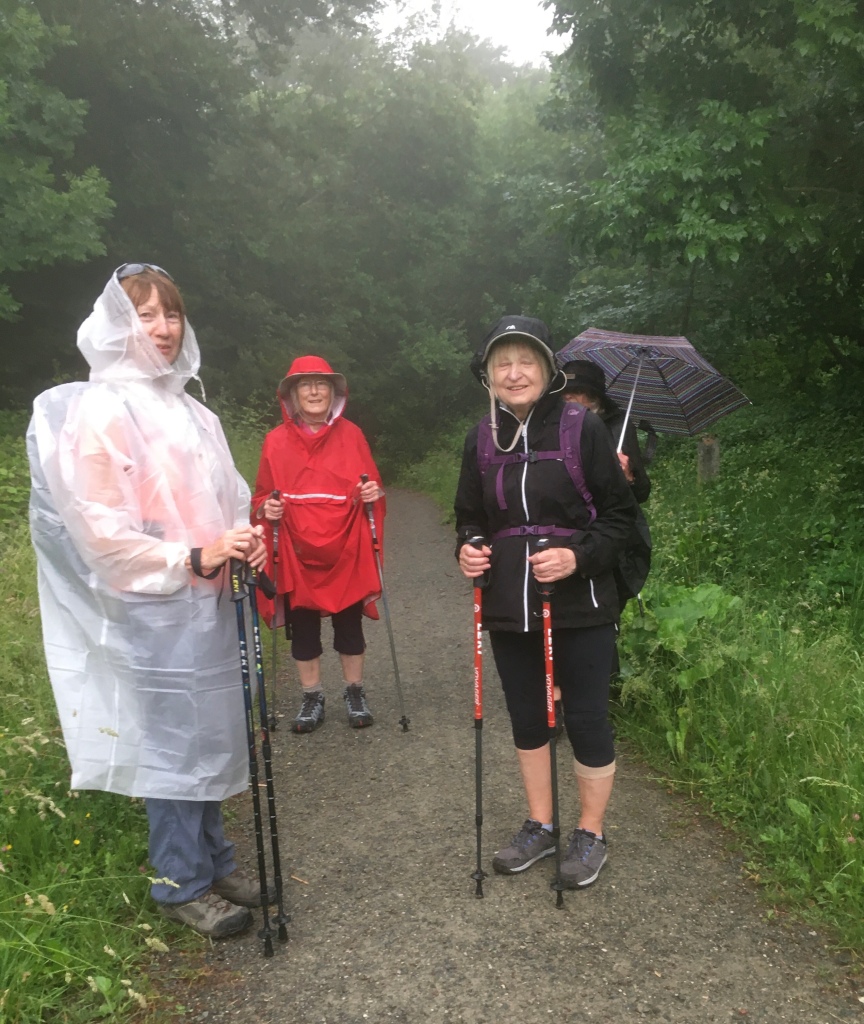
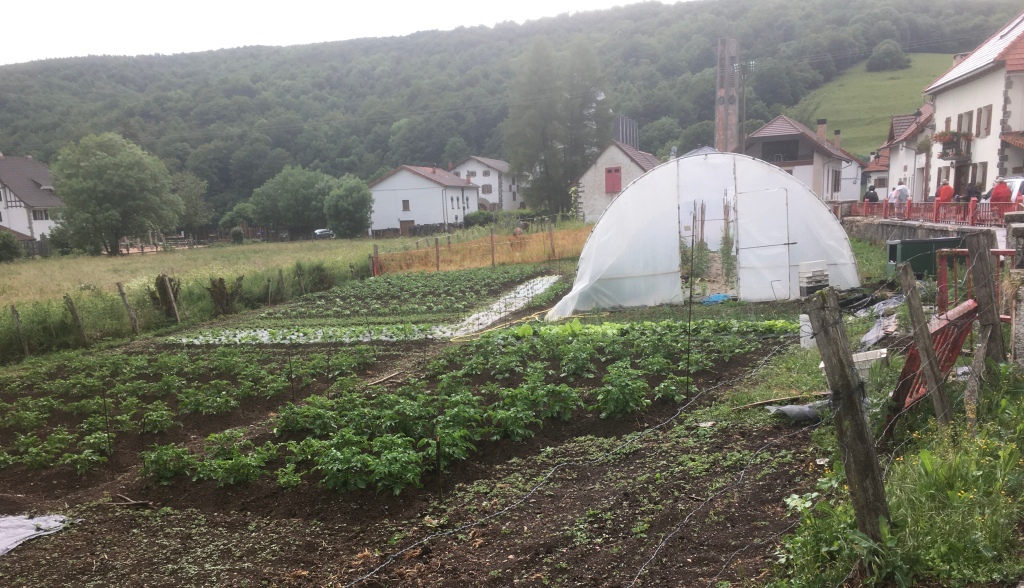
The rain swept in and it was Poncho time!Only for half an hour and we walked on past “ huertas” and broad views at Erro.Huerta – Spanish allotment Brightening skies
Our Lady of Roncesvalles protect us. Amen
Mary felt protected as she crossed over the stepping stonesLong strides
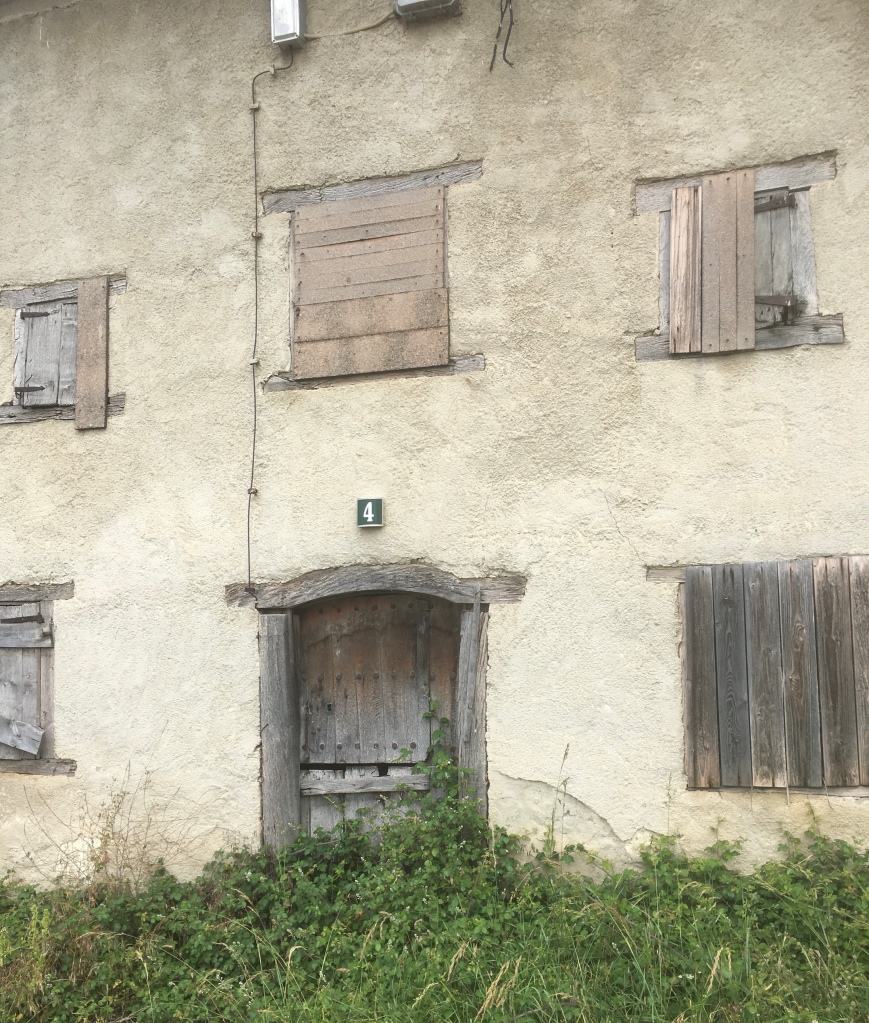
The villages are mainly well maintained and attractive although there are occasional signs of delapidation – some TLC needed.
Could be a place to have as a bolt hole
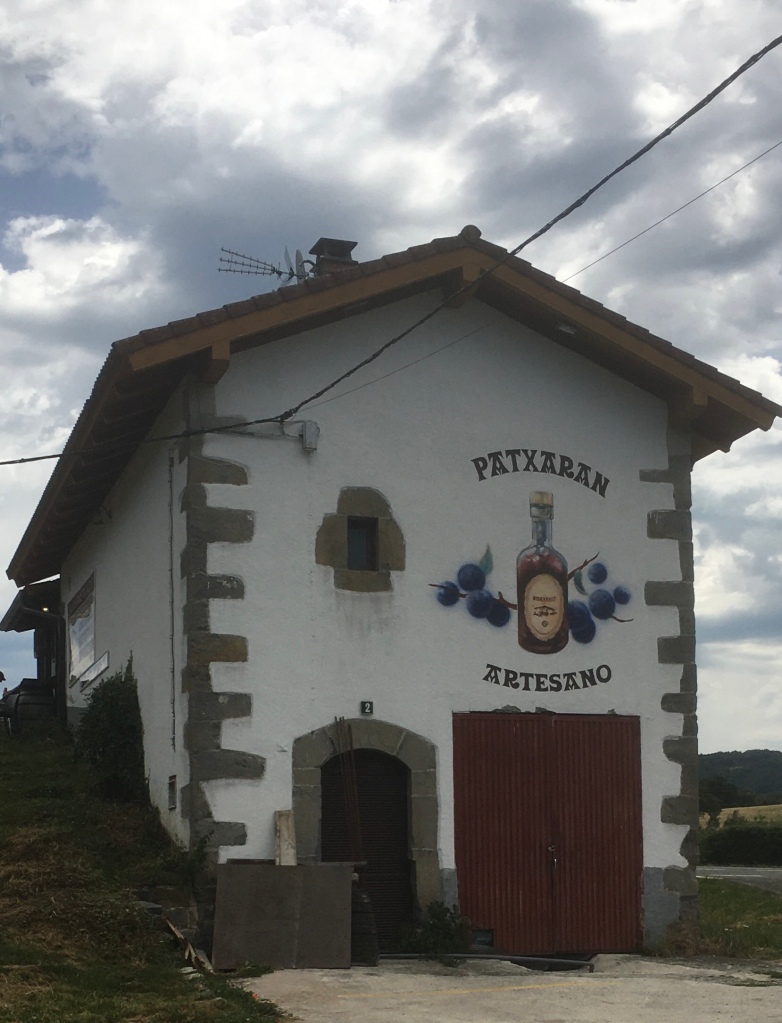
We had lunch in Gerendian but resisted the temptation of some locally brewed Pacharan
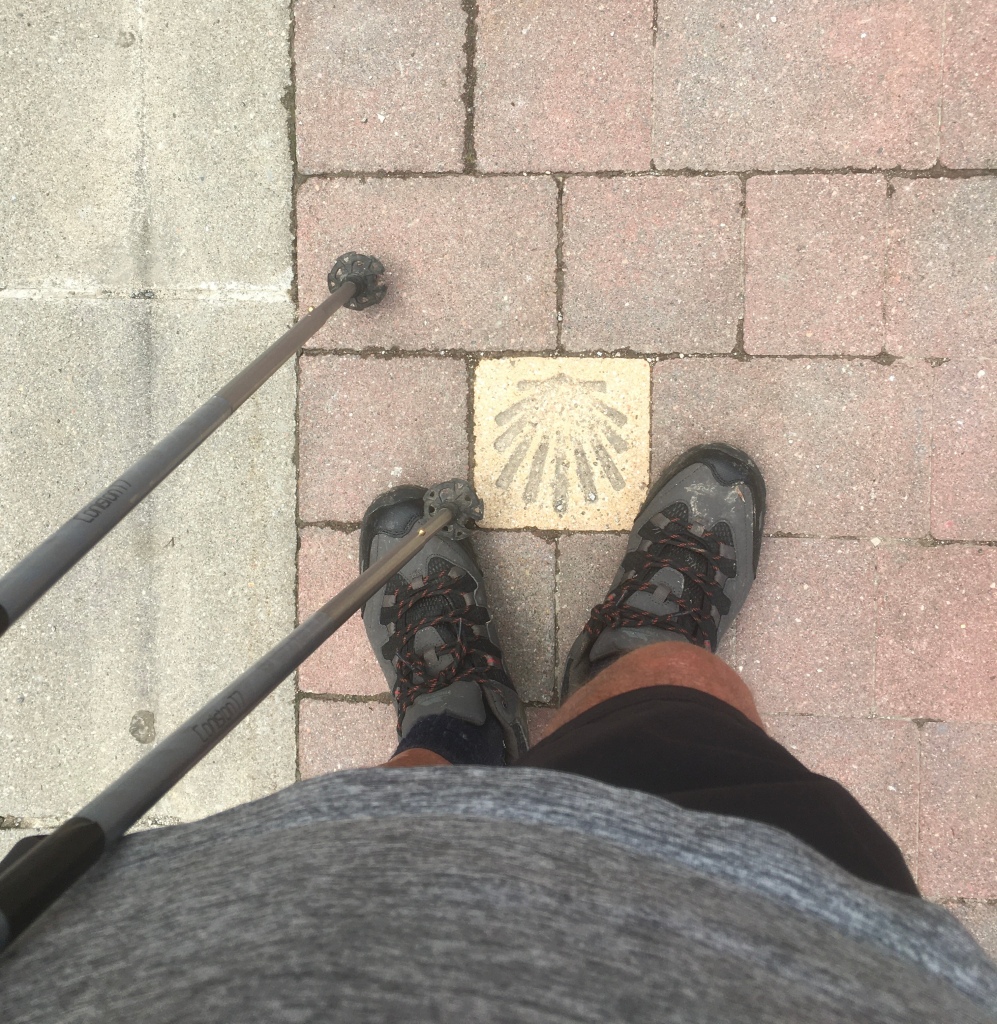
It was lunchtime after all and we would need to be at our sharpest on the descent through Esteribar in to Zubiri.Best foot forward on the Camino..
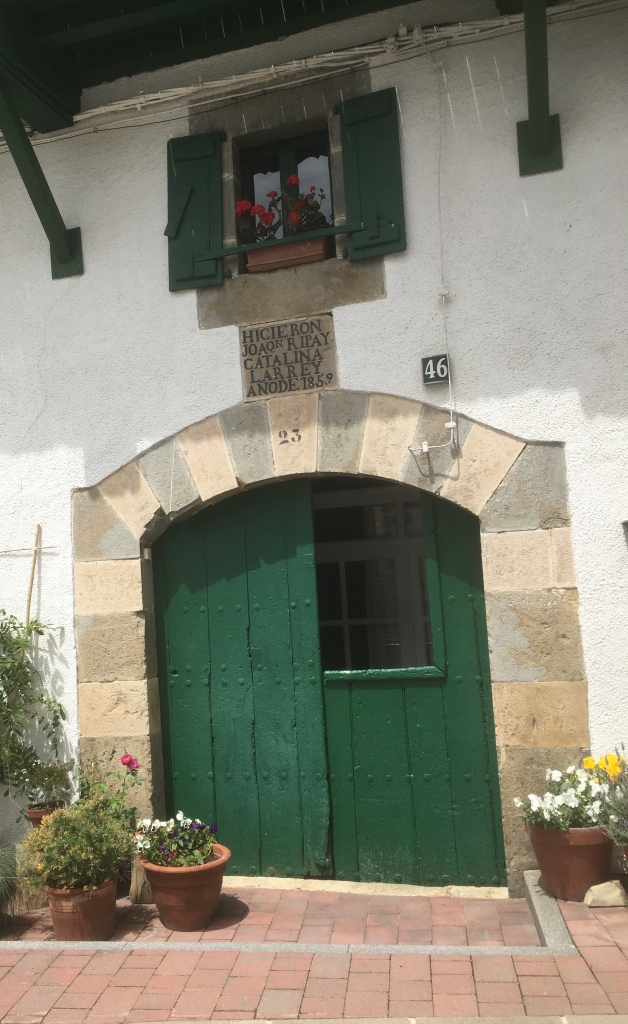
Walking through Gerendian was very pleasant
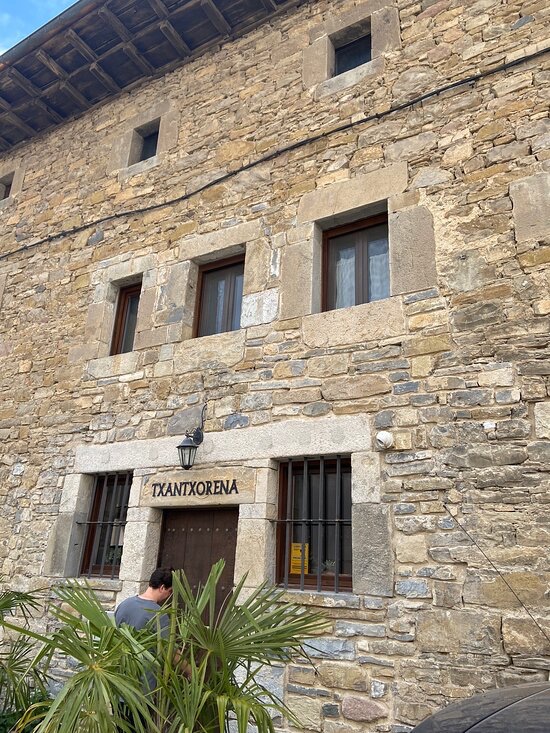
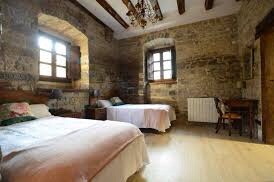
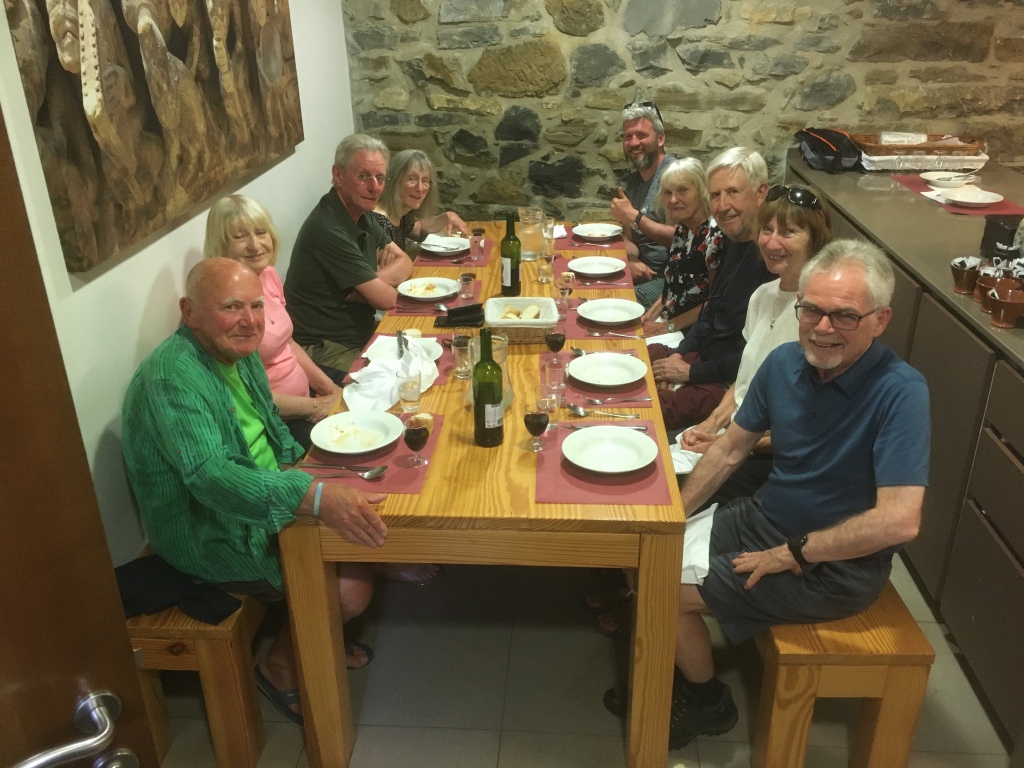
The path began to descend and became quite hazardous for some distance.Thankfully it wasn’t rainingEveryone made the descent without any misadventures and we crossed over the river into Zubiri to find our Casa Rural Txantxorena.Lots of original features and a charming hostSpacious bedroomsAn enjoyable dinner at a nearby albergueJune,Tom and Rob relaxing in the garden
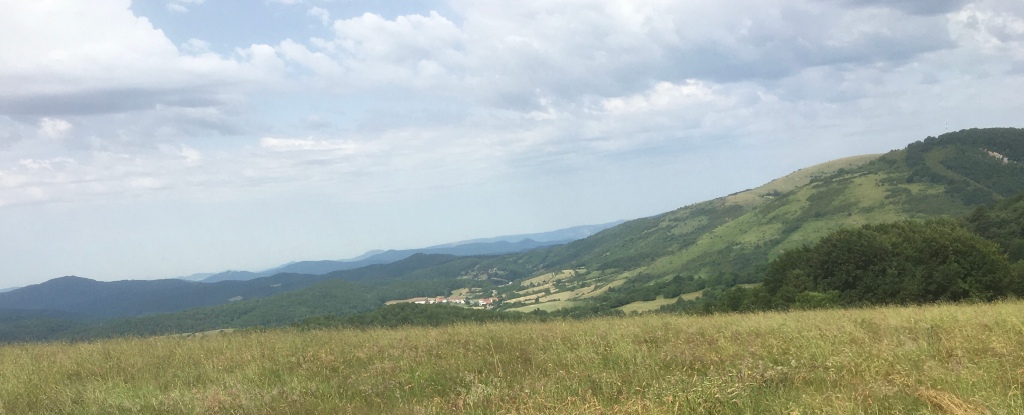
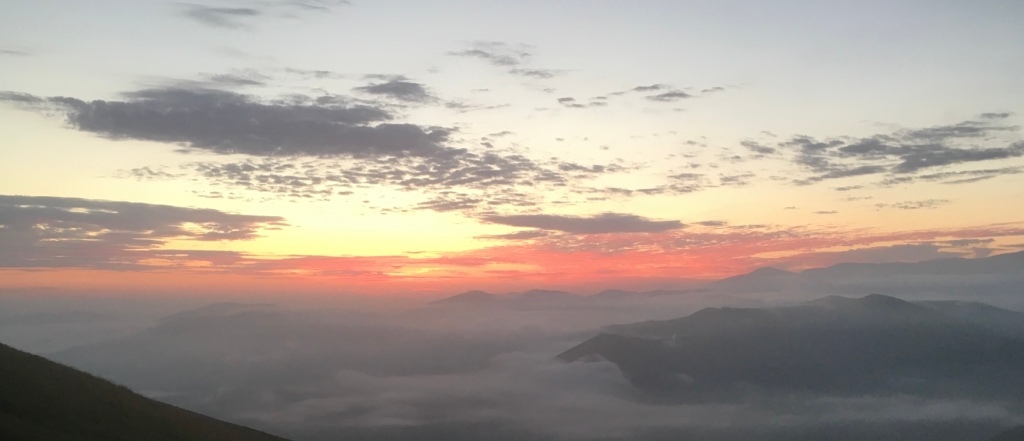
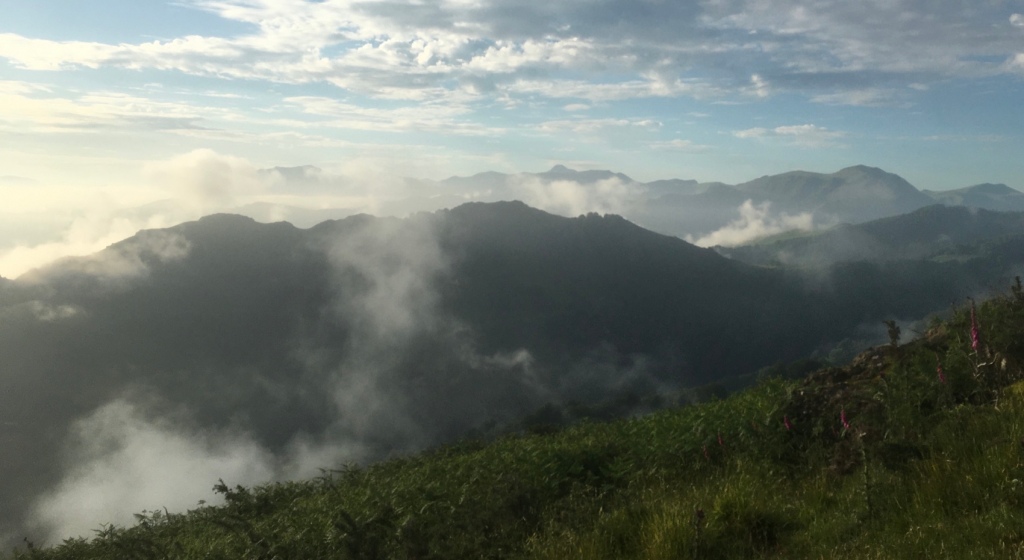
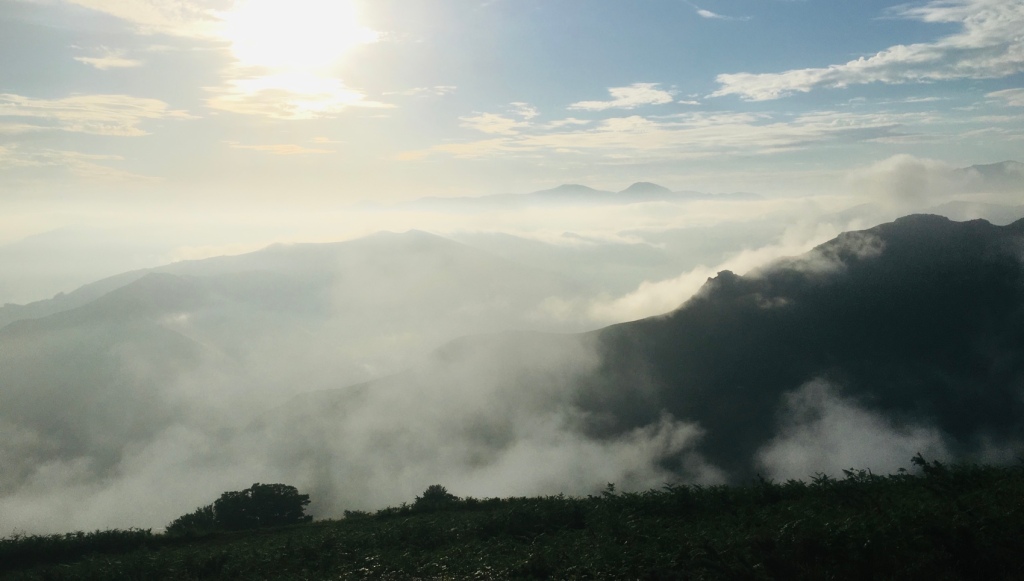
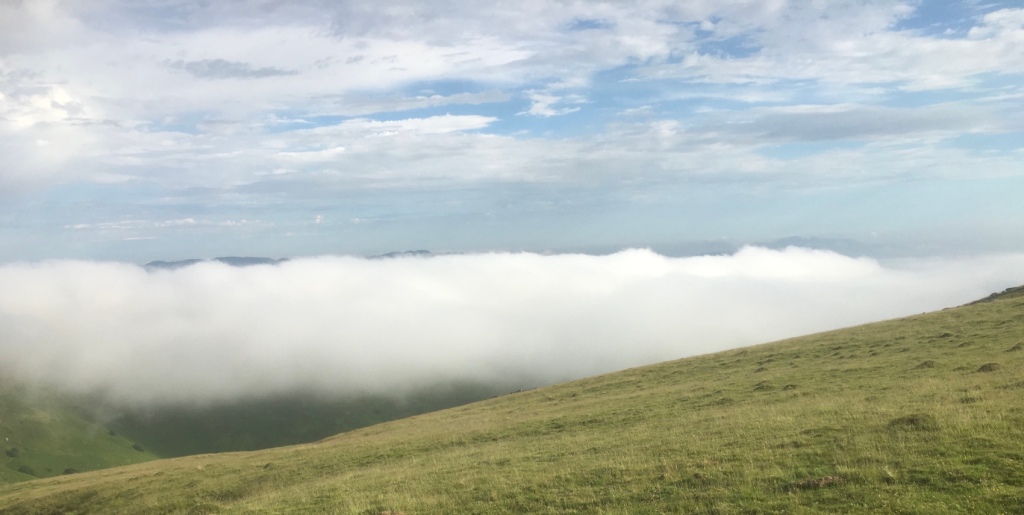
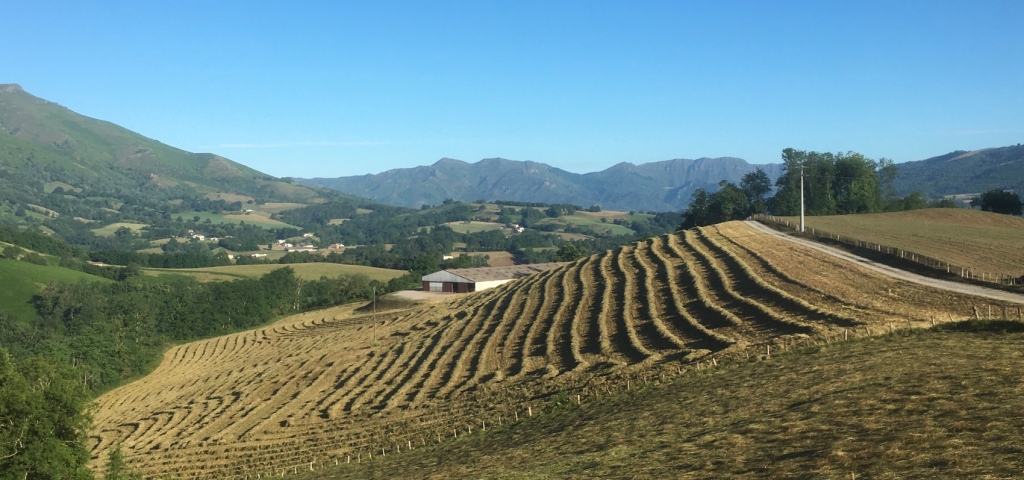
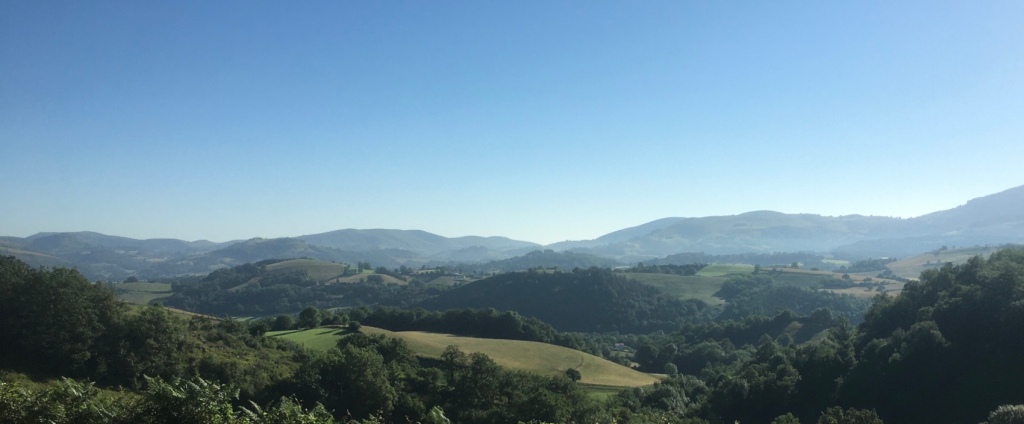
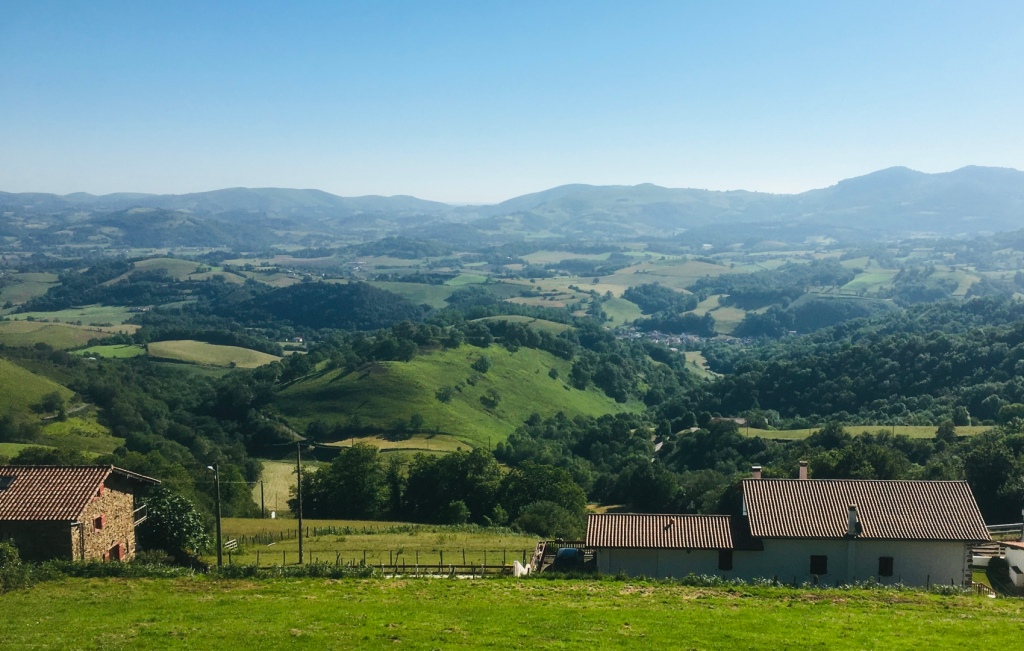
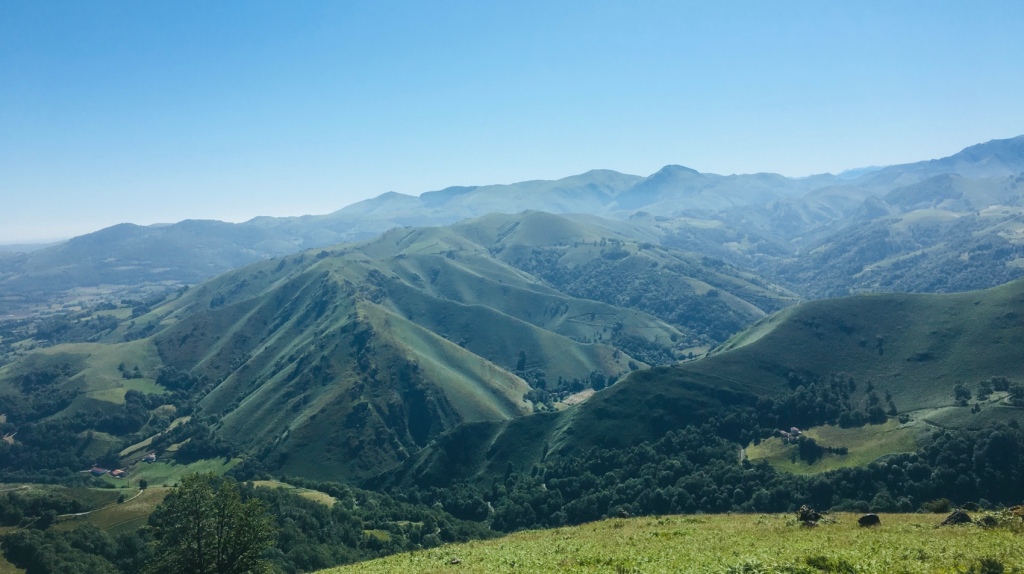
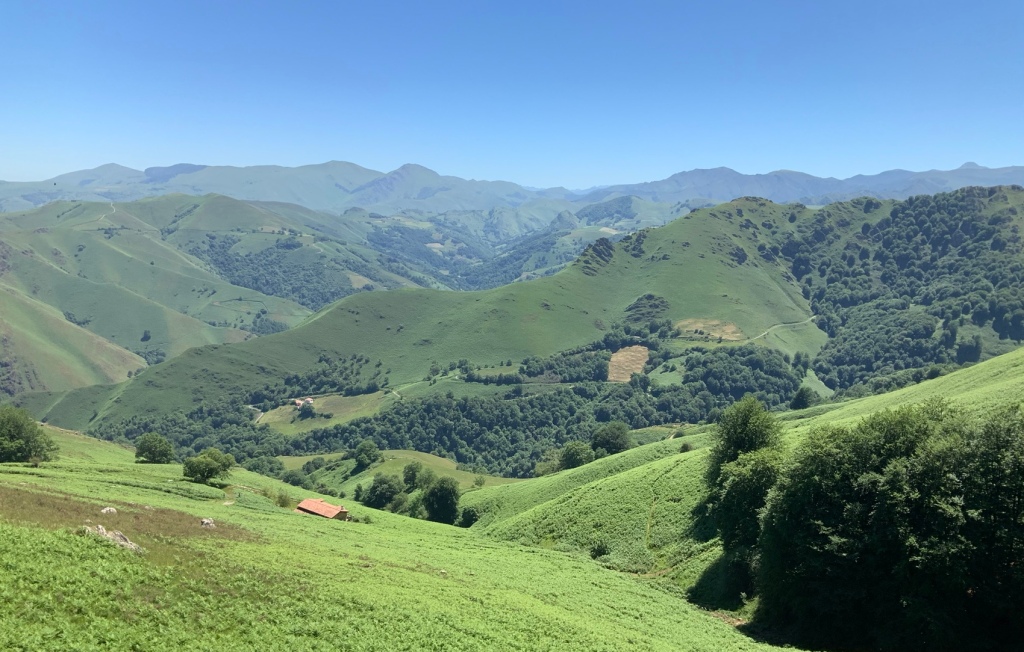
SUNRISEJust over ten miles of both climbs and descents to undertake as we set off from Orisson at 07.30 in brilliant sunshine. The views were spellbinding,unravelling at every turn in the track.The mist being burnt off.
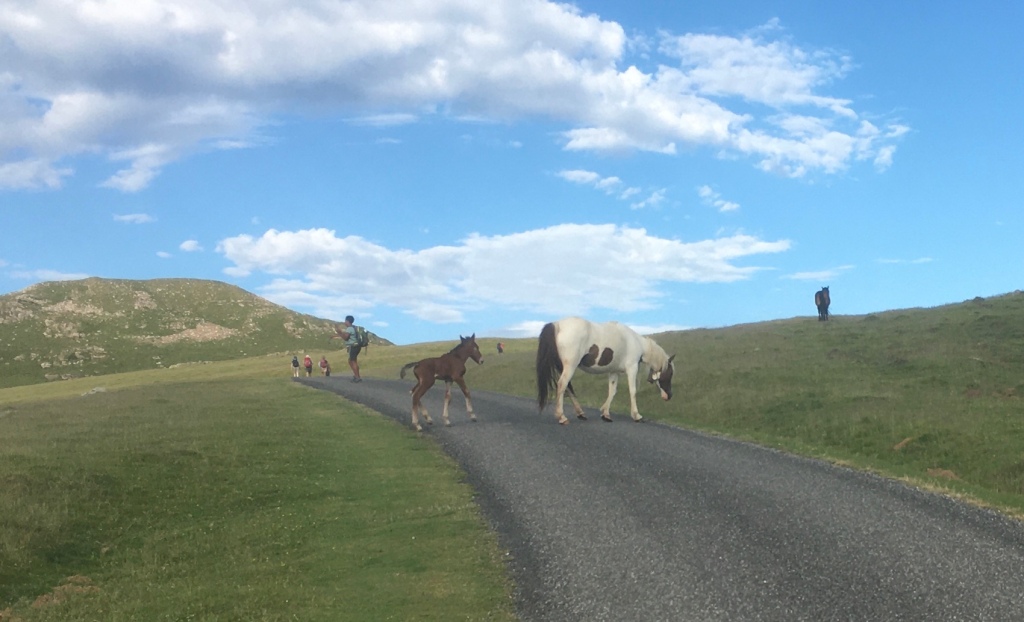
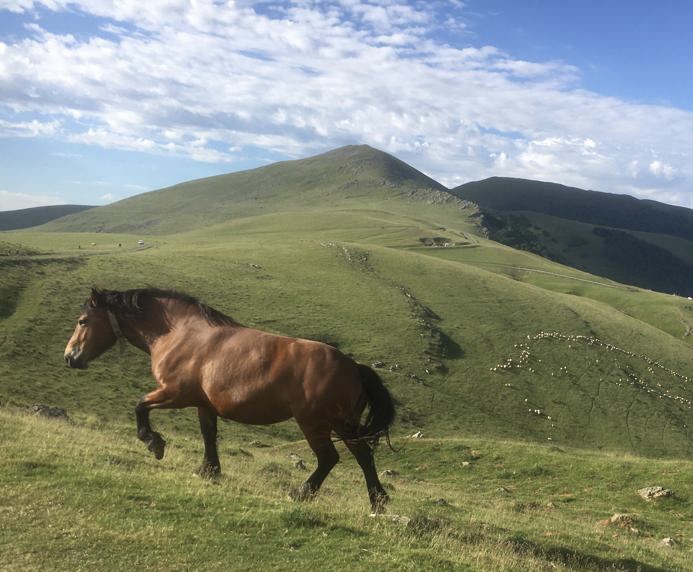
Horses roam freely up here – provisions for the still flourishing French horsemeat trade.
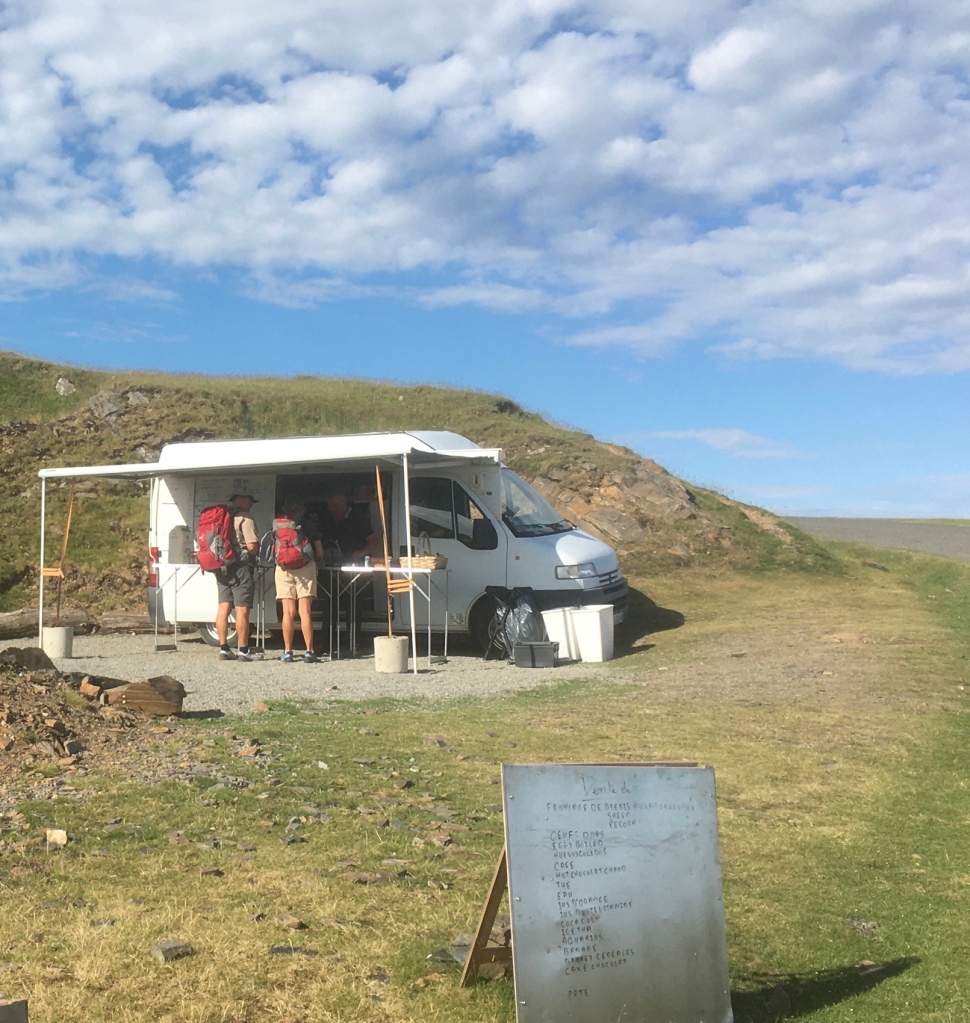
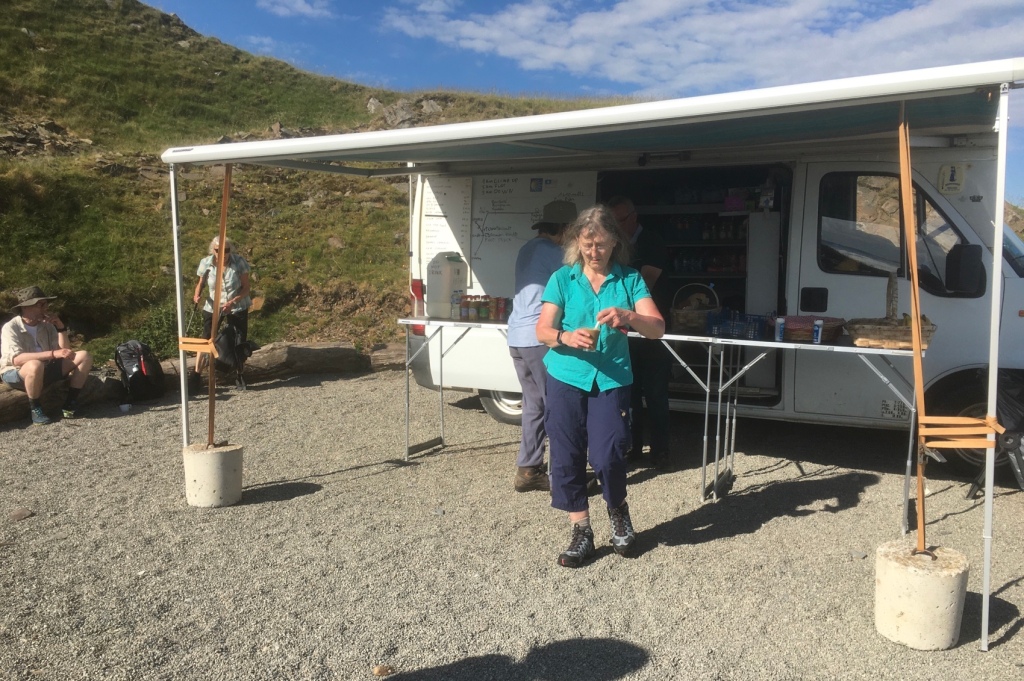
Newly born foal being taught the Green Cross Code.There are no permanent facilities up here,but there may be a pop up van.He just pops over from the nearby border with Spain, you can tell that because the prices are so reasonable.
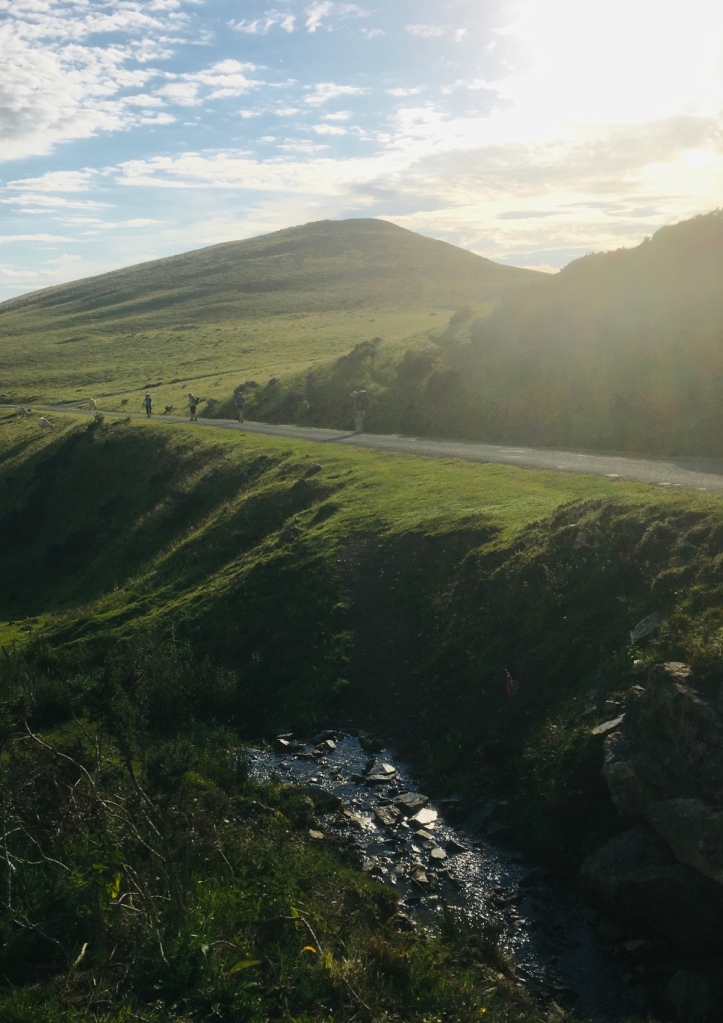
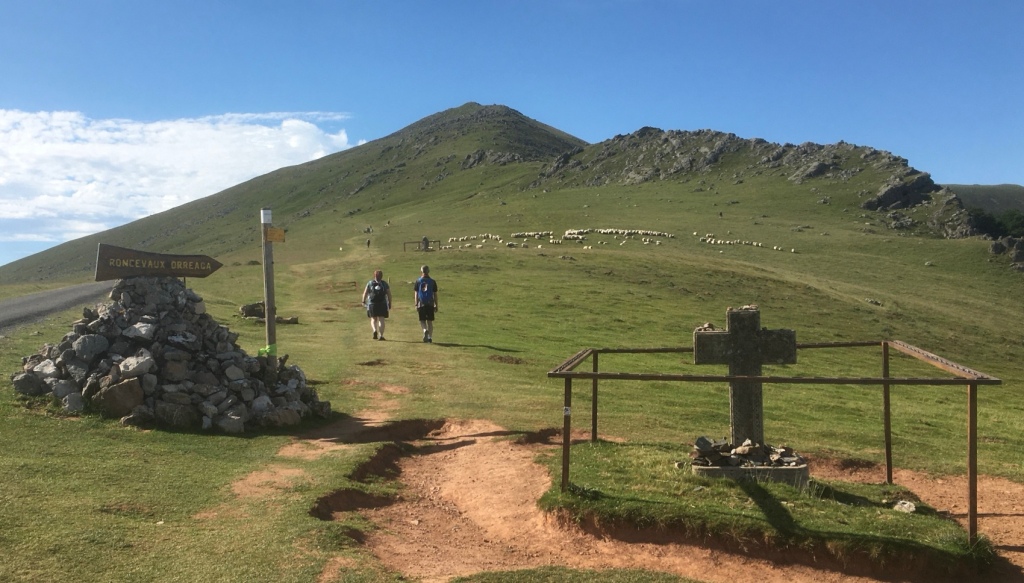
At this point you leave the narrow road and continue the ascent on well worn tracks
Heading towards the highest pointThe border crossing in to Navarre ( Spain ). Wish all borders were like this.Eventually, the track descends for a long way to Roncesvalles Most of the walking has been done either on grass verges or grass itself.Another horse with no name!Roncesvalles in the far distance.Getting ever closerAlmost thereIf something differentiates Roncesvalles from other neighbouring towns, it is its history, its legends, and for being the place chosen by pilgrims to start the Camino de Santiago, known as the French Way. I was surprised by how small this town in the Navarrese Pyrenees is , it only has 30 inhabitants for the importance it has in history and the number of visitors who pass by every day. Settled on the Ibañeta pass and the last town in the Auñamendi region, it was a passageway used since prehistory to enter the Iberian Peninsula. But the really important thing is their constructions. What most impresses when arriving at this town, a shelter for walkers and a meeting place for cultures, is its medieval monumental artistic ensemble such as the Collegiate Church, the tomb of King Sancho VII, the Fort and the old pilgrim hospital.
Hotel Roncesvalles a very pleasant stay and dinner.Another great day on the Camino Frances and the amazing Pyrenees are now behind us – unforgettable.And it’s good night from him.
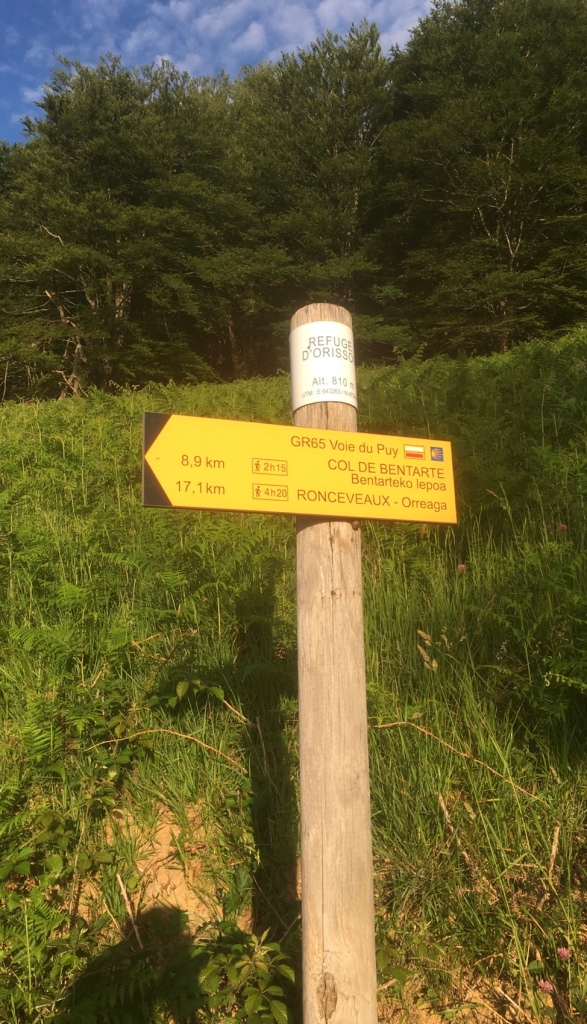
We agreed a 07.30 start to our climb up to Refuge Orisson after breakfast.
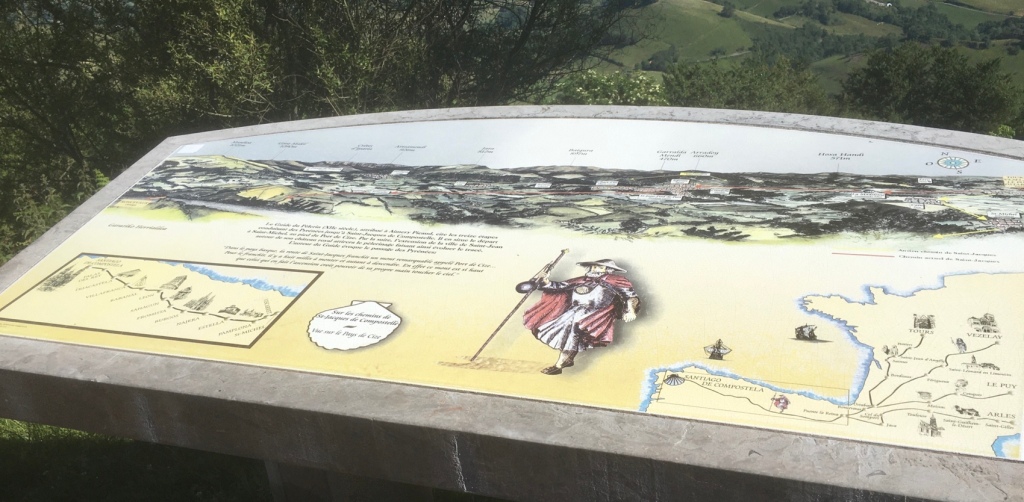
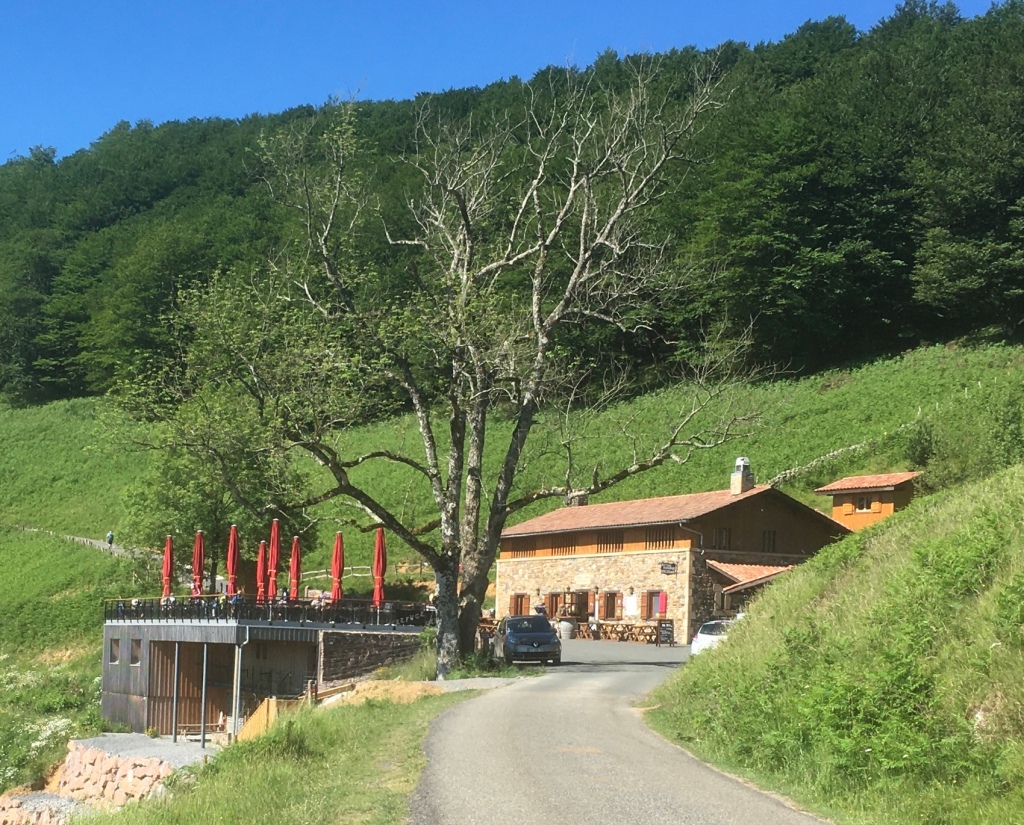
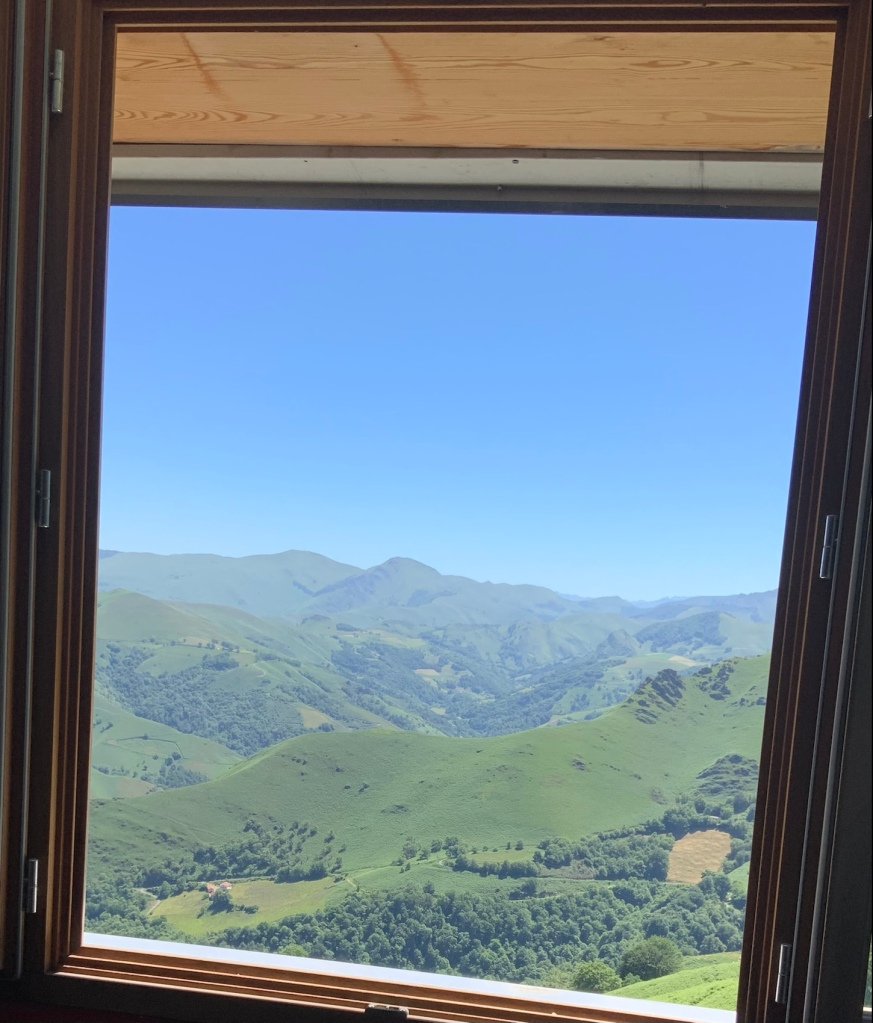
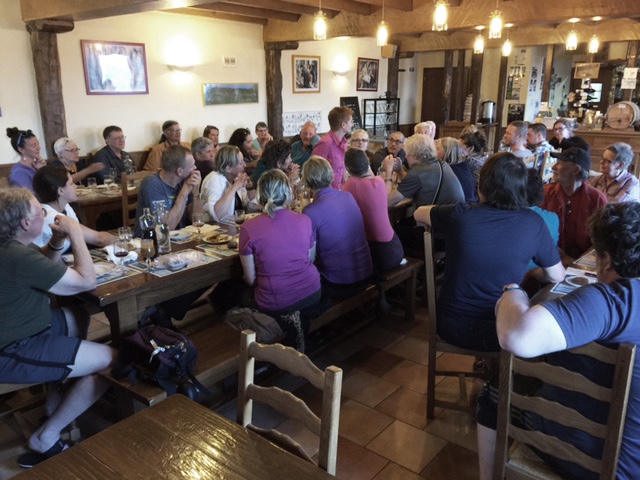
We took the Route Napoleon.The gradients were gentle at first, but soon began to lengthen.The sunlight and the views were spellbinding.Local,information boardAfter three and a half hours walking we were approaching Orisson – our first stopover .A welcome sight and the venue with its panoramic balcony proved to be as good as I had hoped.Mary and Rob arriving.The view from our Eight bed dorm – an Albergue experience for the group!View from the balcony cum terrace.Relaxing after a good mornings climb.A tradition at Orisson is for everyone to introduce themselves and say why they are walking the Camino – some of our group felt a little shy so after Tom said a few words I introduced the rest of the group and gave my/ our reasons.
Buenas Tardes,
We are a group of Jubilados, sounds so much better than senior citizens.
We are a group of refugees from disunited kingdom,or Little Britain as it now known. So relieved to leave an island ruled by evil people and take refuge here in Civilisation, or Europe as it is sometimes called.
We are all of a certain vintage, we have all walked Caminos before.
Our goal this Summer is Burgos,when in a fortnight we have to return.
Most of you will doubtless pass us on the way, please say hello and if by chance in a bar have a chat – you may discover a professor of chemistry,a cycling violinist , a director of the 3rd age university and a multi lingual player of the organ,amongst many other talents- you may discover a professor of chemistry, a cycling violinist, a director of the 3rd age university and a multi lingual player of the organ amongst many other talents / we are a convivial bunch, not a closed community.
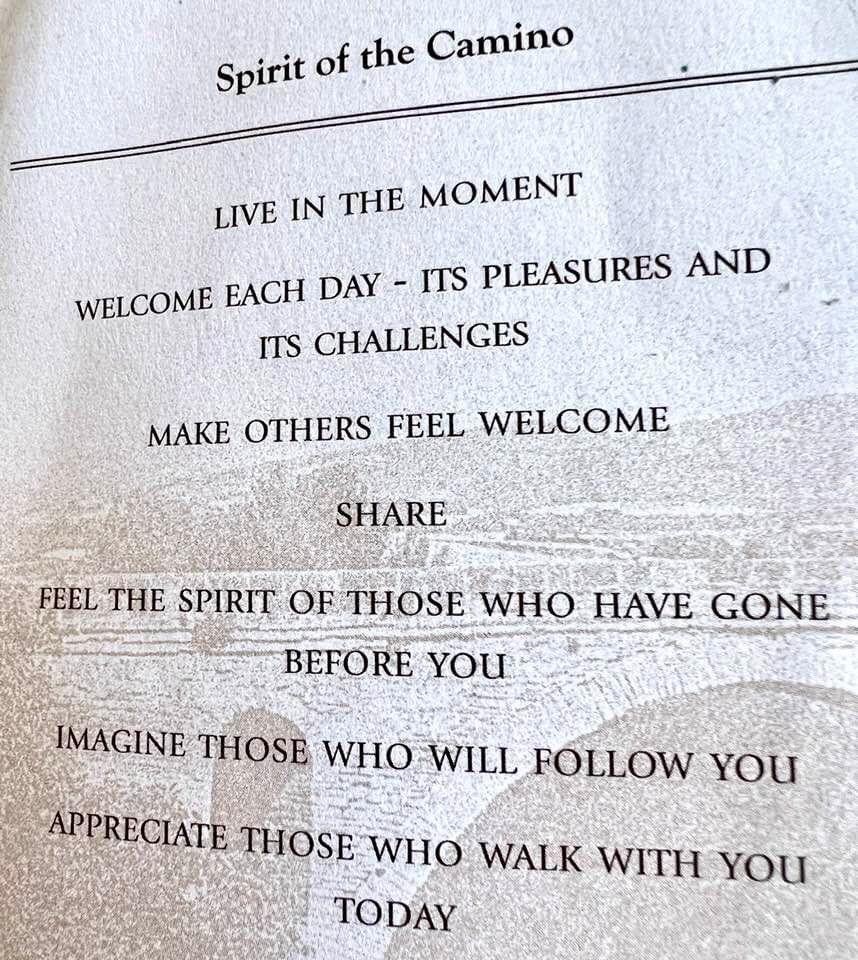
This is our opening day and once again I puzzled myself with the question why am I walking the Camino…again, after about 12 caminos . To conclude our introduction,
I liked this note written in the Pilgrim Book in Roncesvalles and cited by John Brierley :
“ I am doing the Camino once again,looking for something I left behind, or perhaps never found. It’s like coming home.”
And so good night. Tomorrow we climb on and then down to Roncesvalles.
The Town Council also has some innovative means of taking visitors through Berkhamsted ‘s history – it has a set of audio Town trails – plus maps.
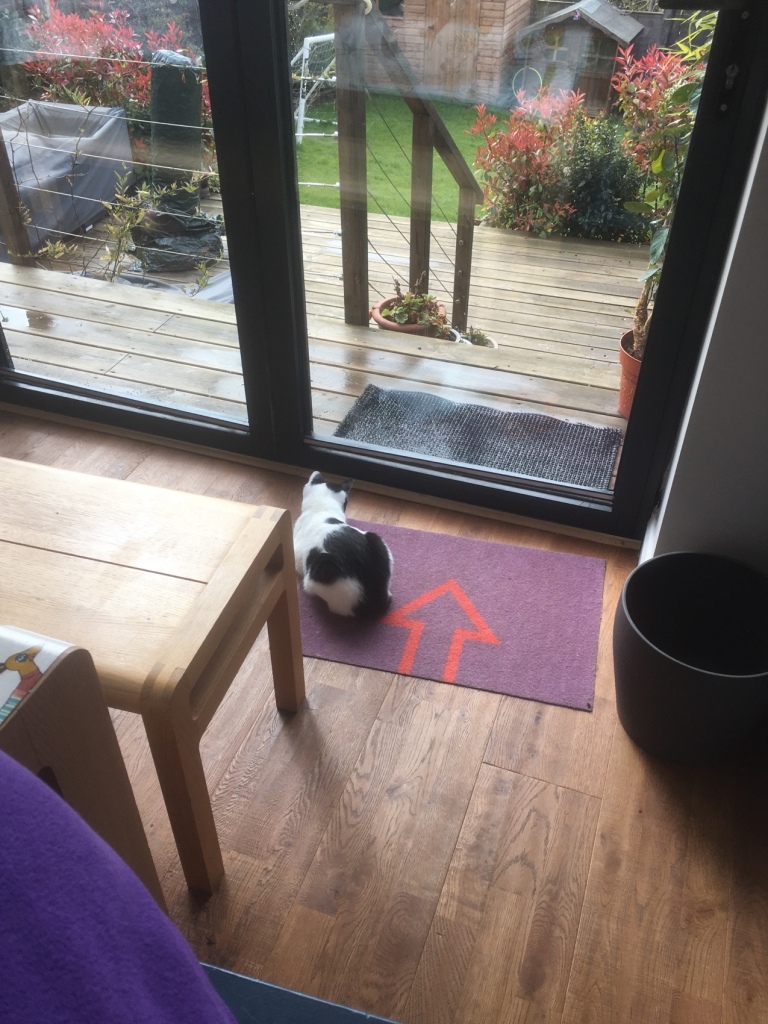
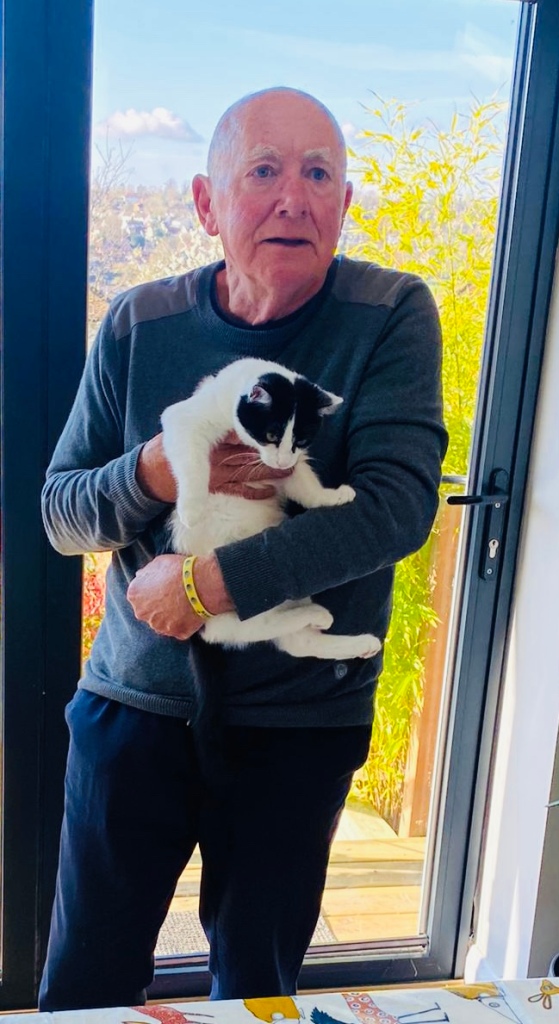
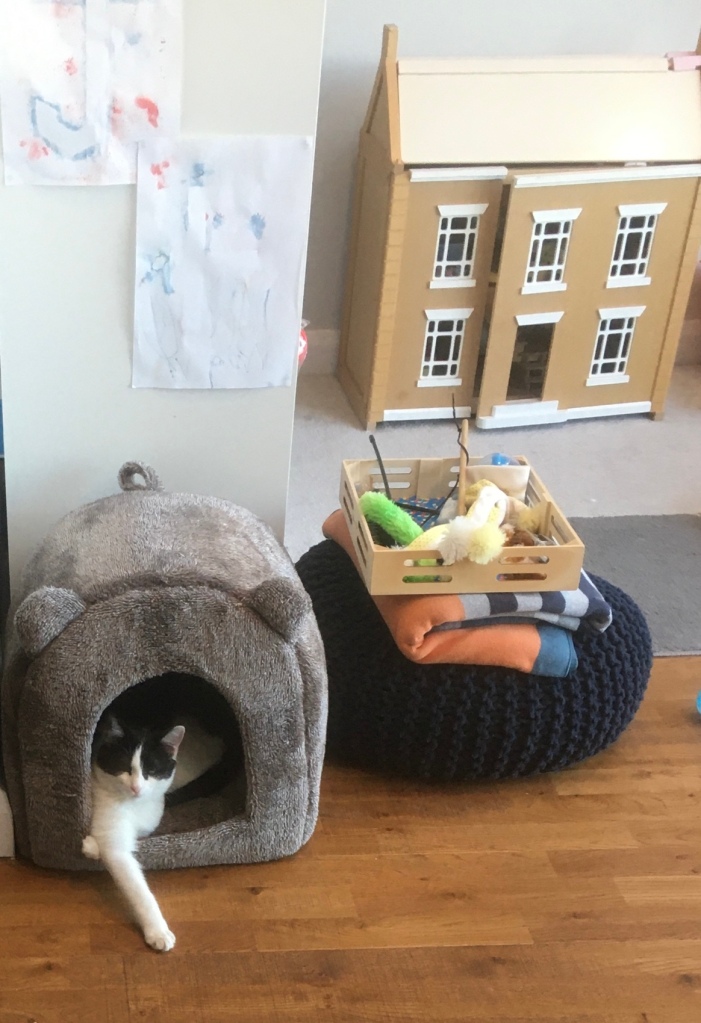
Enjoying a four day break in our son Daniel’s house, with amusing company in the shape of Missy the kitten. Fortunately, she is a “ house cat “ and apart from roaming the house,she spends a lot of time looking at the garden through the French windows.
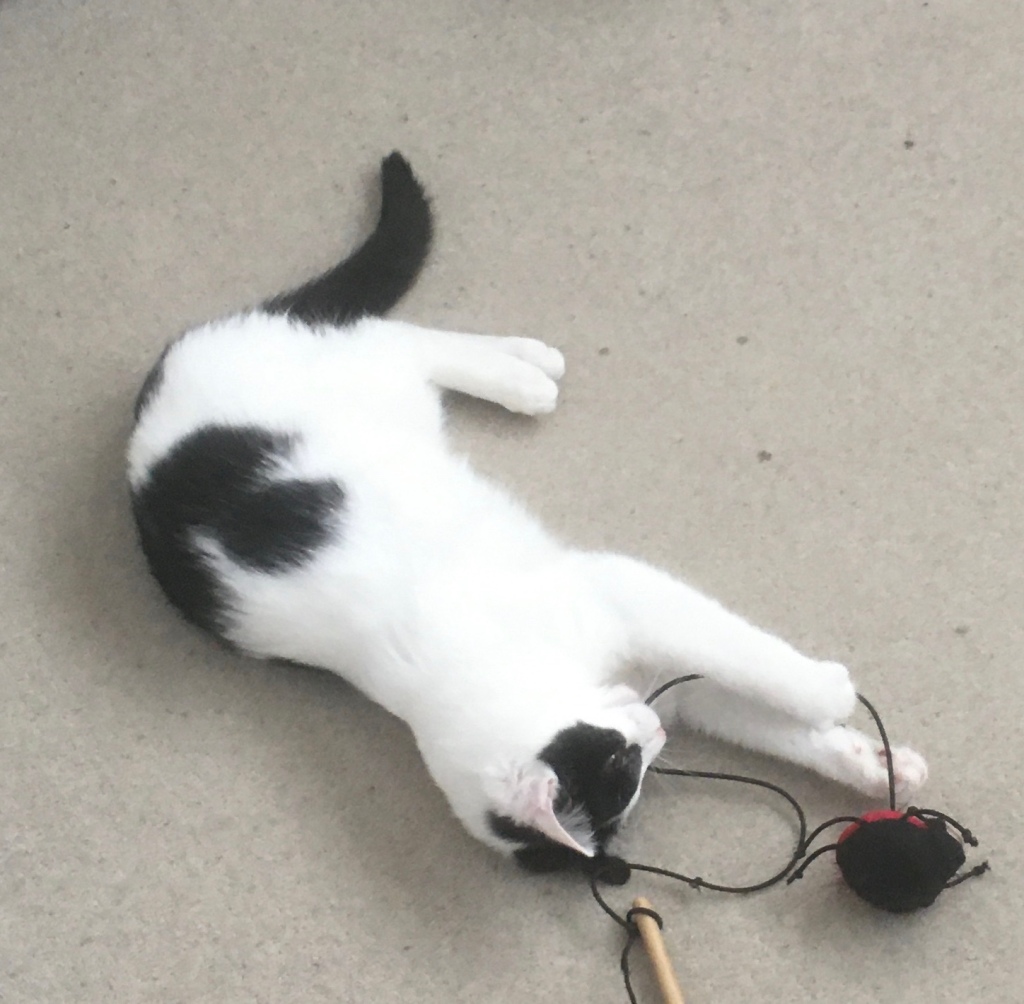
She is very inquisitive, particularly in the mornings and is no bother whatsoever – quite the opposite and she enjoys anything that could involve a pounce.Gotcha !
Berkhamsted lies on the western edge of Hertfordshire, bordering the Chiltern Hills. Over much of the last millennium it was an important market town with strong royal and literary connections; today it is a vibrant residential and cultural centre, and while it is now part of the Borough of Dacorum it has retained its own strong identity. Together with the adjoining village of Northchurch it is separated from other towns and villages by lovely countryside, all of it in the Metropolitan Green Belt and much of it classified as being an area of outstanding natural beauty.
Lying in the River Bulbourne Valley – a rare chalk stream – the town is also bisected by the Grand Union Canal and the main railway line to Euston.
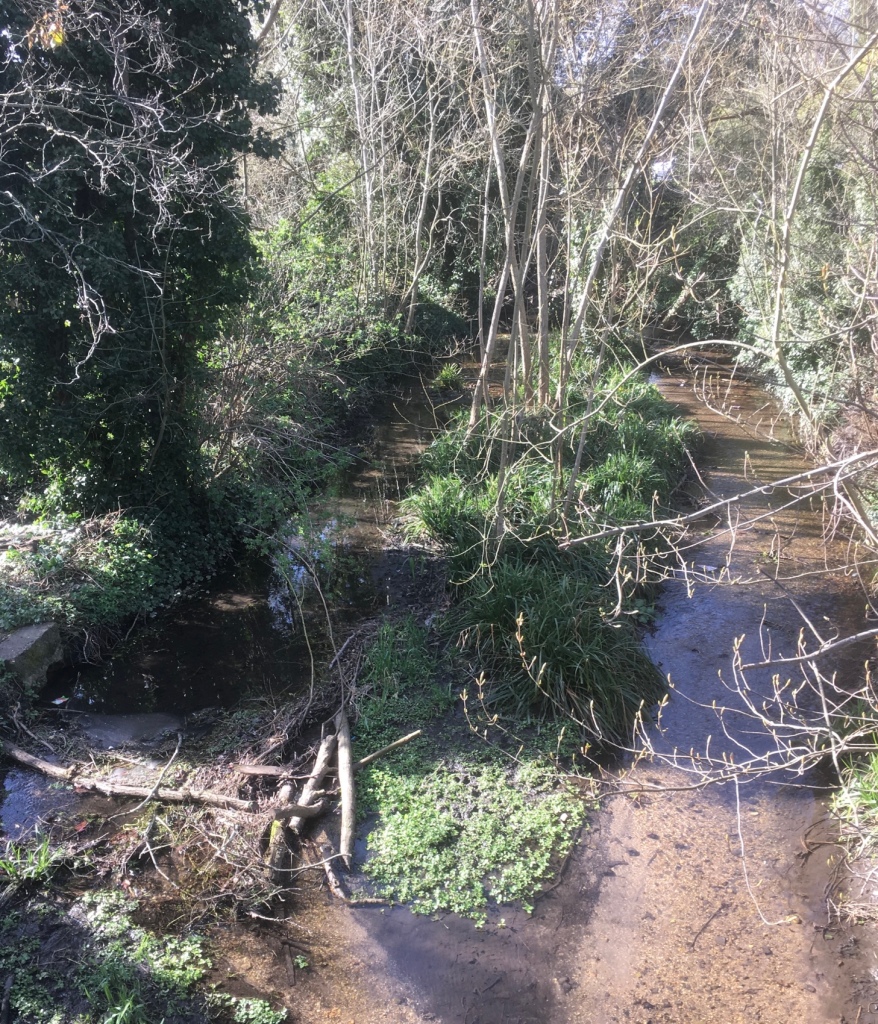
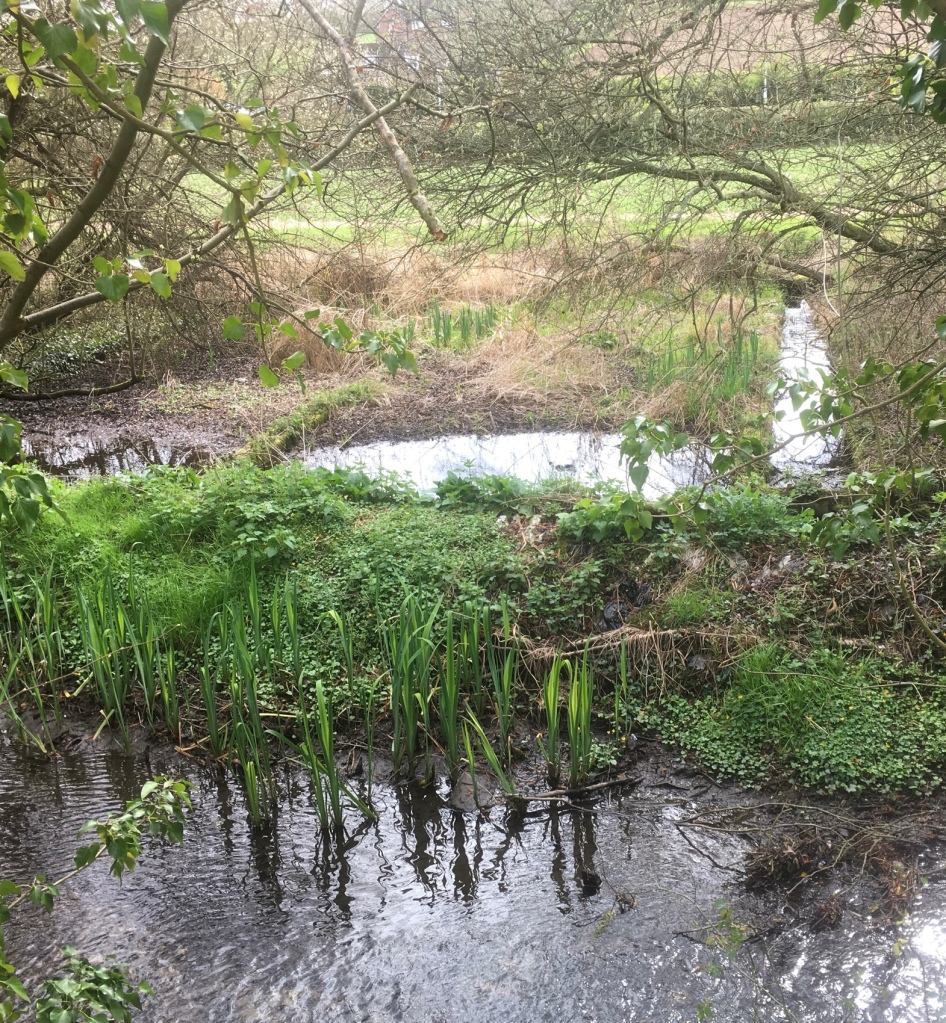
This particular “ lake” was once one of many watercress farms fed by the river.
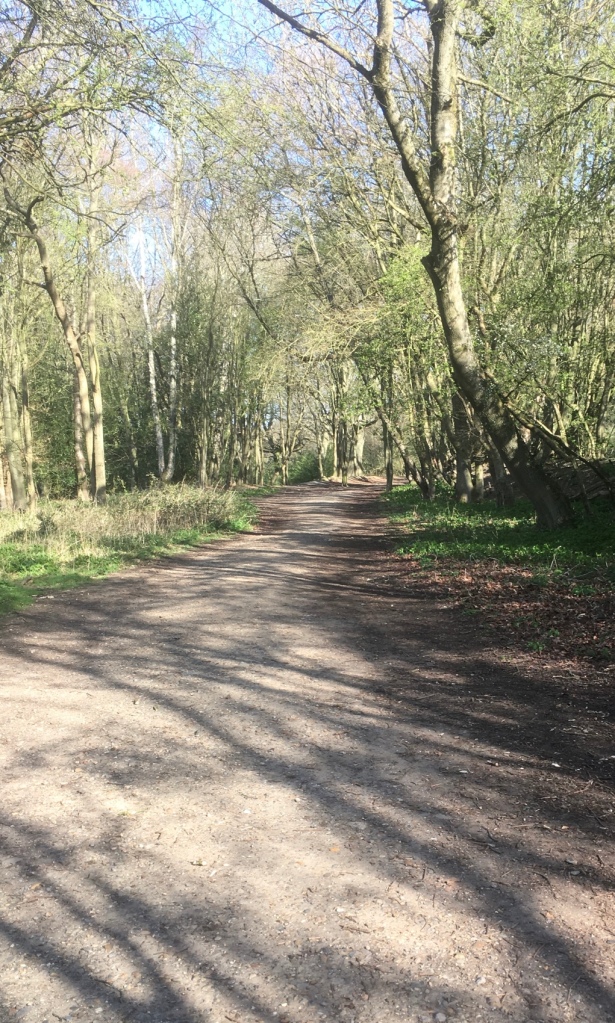
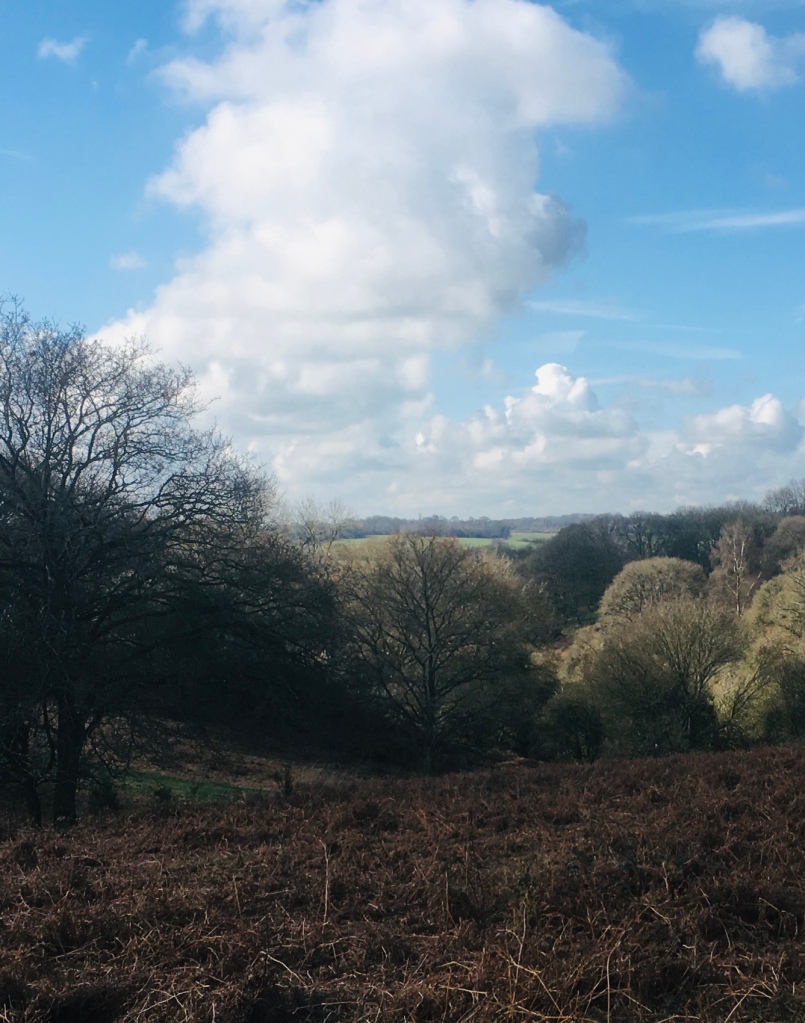
There is much to discover in the surrounding countryside and with weather set fair, it was time to set off. Hill Farm was in the area chosen to explore, easily accessed from Dan’s house along a pleasantly wooded ridge.
View from the bedroom window.
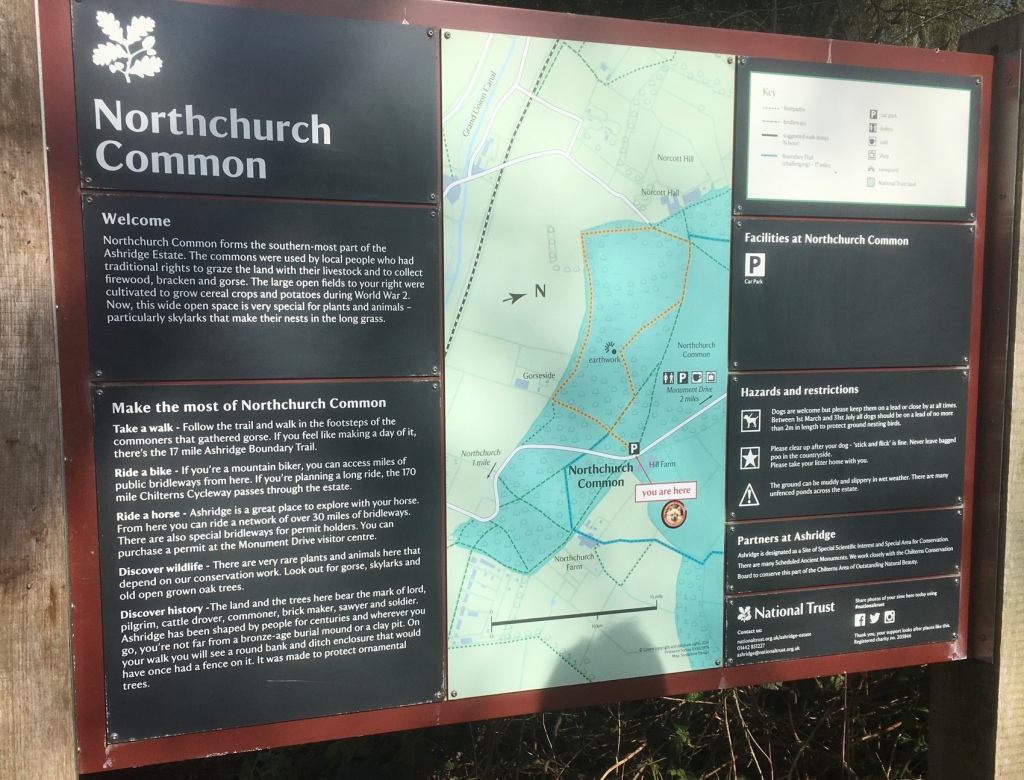
Northchurch Common was en route.
On reaching the farm a detour was taken across part of the Ashridge Estate – 5000 acres of woodland,chalk downs and lush meadows .
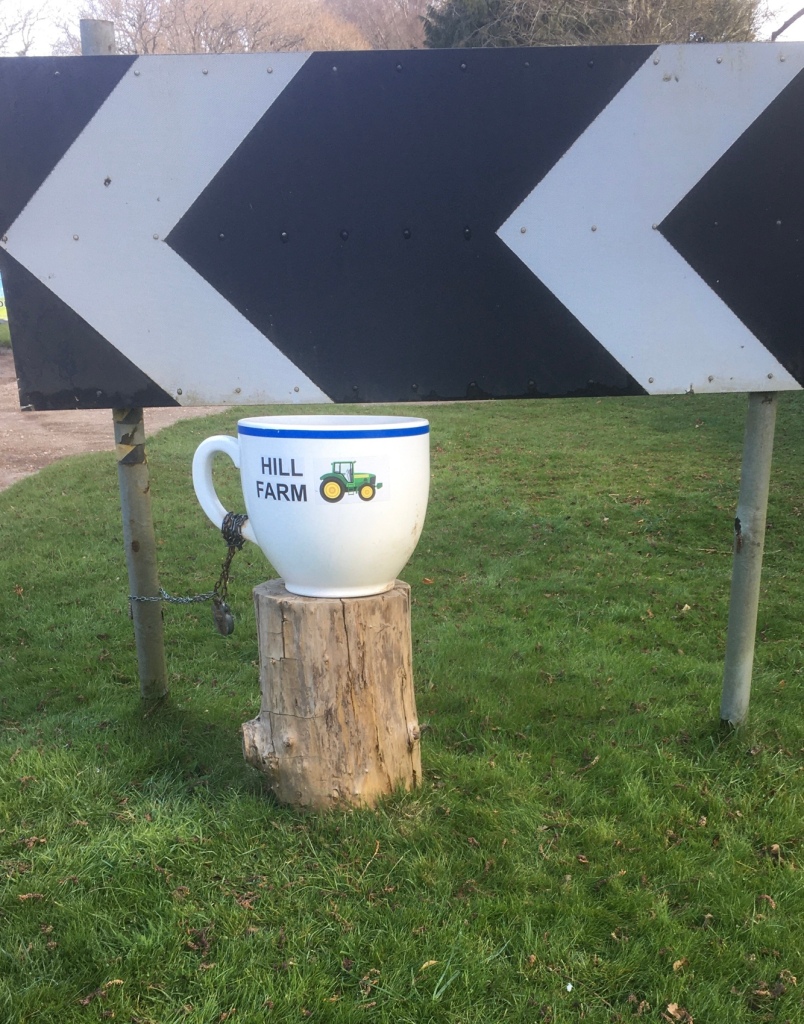
Hill Farm has a shop, cafe and an outside seating area designed to interest children,in particular.
Locally crafted walking poles.The kids love it.
A pleasant five mile walk – back home in time for the Premier League lunchtime kick off between Liverpool and Watford..
The next day broke fair and so a longer walk was chosen,using a pull-out from Country Walking magazine…dated March 2005…doubtless there will be pathway changes afoot after 17 years. “ Beech Beauty” was the title and promised “ a charming blend of peaceful common land and glorious beech trees…a varied walk through the beautiful Ashridge Estate,now in the care of The National Trust…(plus) the vastness of Ashridge House is breathtaking.” All the ingredients for an enjoyable walk in new surroundings. The walk began at The Alford Arms,Frithden, a 3.5 mile drive from Berko.
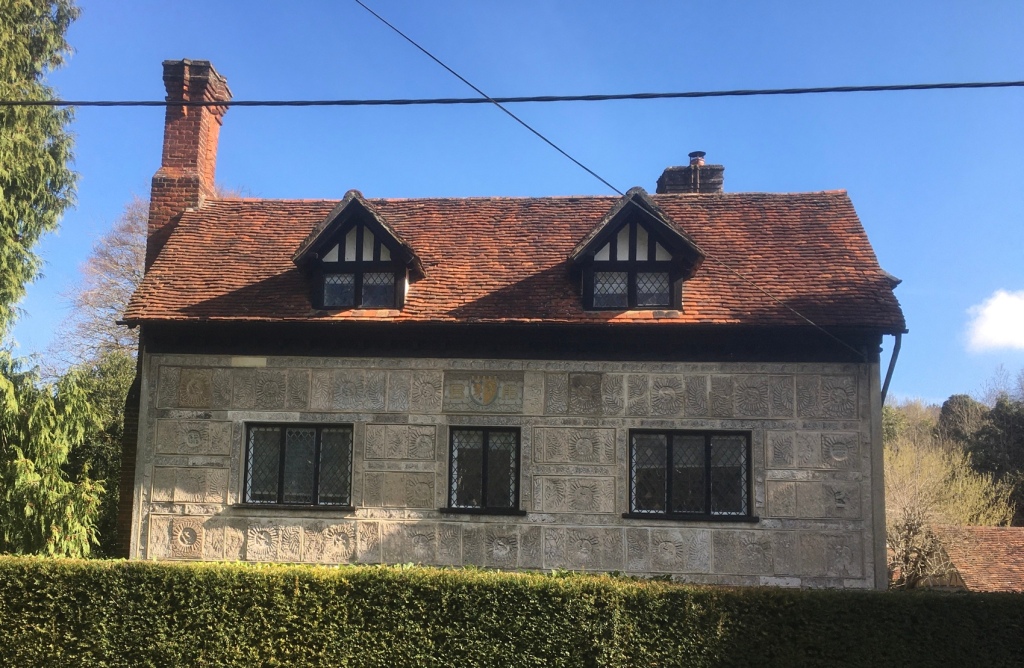
It was a lot busier when we finished the walk .An interesting house,adjacent to the pub.
A path immediately opposite the pub was taken,we had to stop occasionally to allow horse riders to pass – makes a change from bikes!
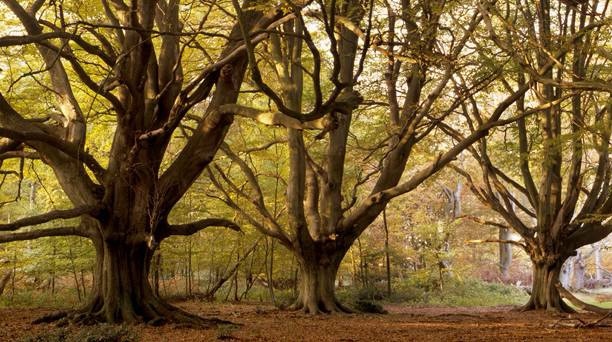
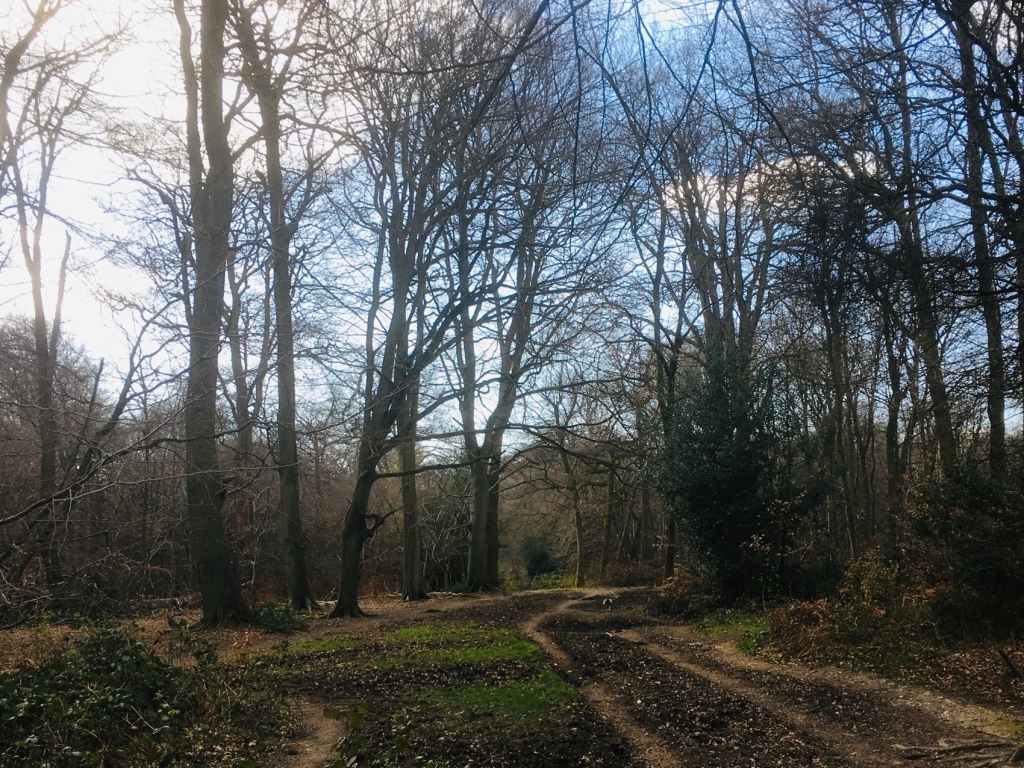
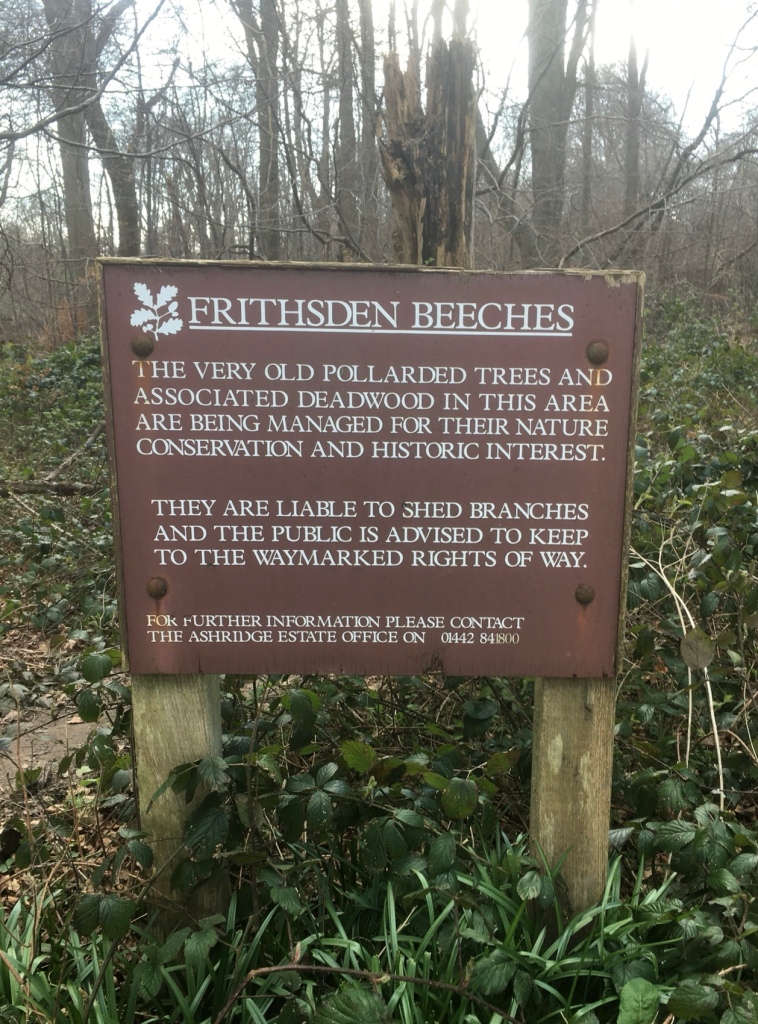
There followed a lengthy section through a golf course which looked like every other golf course I’ve traversed until we reached Frithsden Beeches.
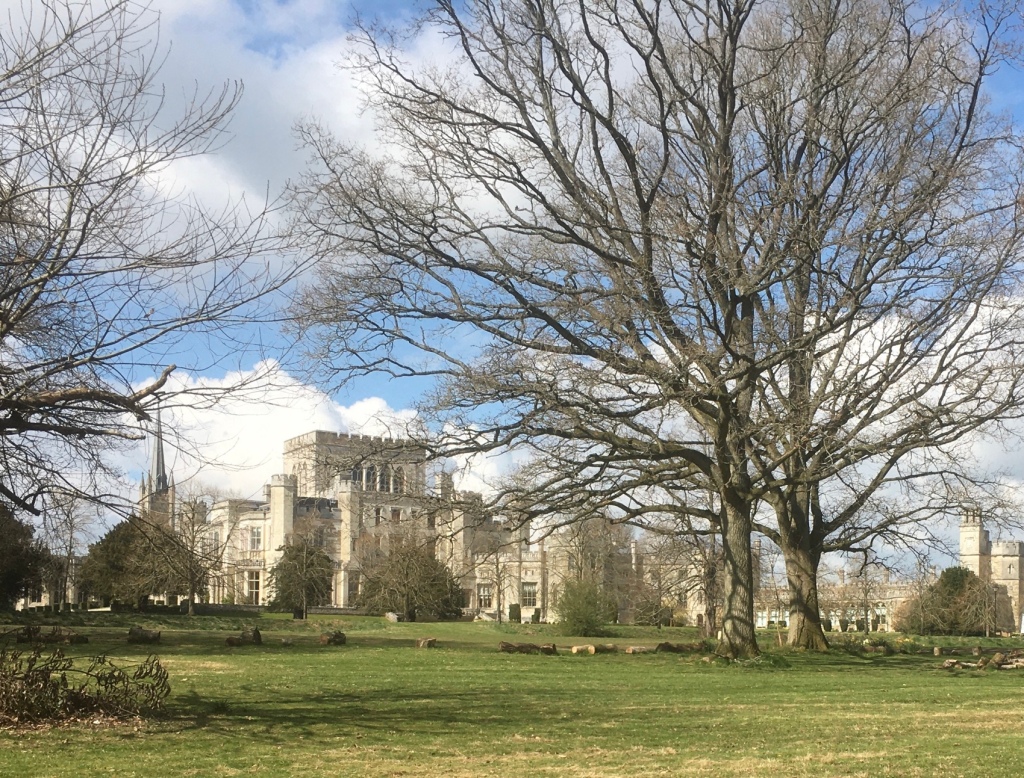
Apparently scenes from Harry Potter and the Goblet of Fire” were shot here. A walk then across rolling parkland and a climb over a fence brought us to Ashridge House.Originally built in 1276, with a long and chequered history, it was restored in 1808 by the English architect James Wyatt.
BRIEF HISTORICAL RESUME OF ASHRIDGE HOUSE Courtesy of the National Trust.
Monastic Foundations
Ashridge began life as a monastery founded by Edmund of Cornwall, nephew of Henry III, in 1283 to house a holy relic. The monks were known as Bonhommes or blue friars because of the colour of their robes.
During the 13th century a deer park was established with the ancestors of the Fallow deer that still roam the estate today.
Royalty at Ashridge
Ashridge House was popular with Royalty from 1290 when Edward I held a parliament in the monastery. After the dissolution of the monasteries Ashridge became the property of Henry VIII and his children.
The Egertons
Thomas Egerton, chancellor to Elizabeth I, bought the estate in 1604. He added domestic wings to the ancient monastic buildings.
The Capability Brown connection
The Ashridge Estate has been adapted by its many owners over its history. Around 1760 Capability Brown, a famous landscape architect, worked on Ashridge’s parkland creating the Golden Valley. His work was continued 50 years later during another phase of redevelopment by one of his students, Humphrey Repton.
The Canal Duke
The third duke established the name in connection with waterways establishing the first canal in Britain to serve his industrial interests in the Mancester area. He became known as the ‘Canal Duke’ and the Bridgewater Monument was built in his memory.
The Brownlows
The Ashridge Estate passed sideways though inheritance to the Brownlow family in the 19th century. Under the third Earl Brownlow the estate developed and many famous people stayed at Ashridge House.
Ashridge in wartime
During both World Wars the house was used to train and billet troops. In the Second World War it became a convalescent home for St Albans Hospital.
It is now also a bijou wedding venue and an American business school. In the twenties it served as a college, the full title of which was the Bonar Law Memorial College, Ashridge was to act as a school for Conservative intellectuals creating, in their own words, ‘Conservative Fabians’, and as a ‘College of Citizenship’ for ‘the general education of the electorate’. Well history would say it failed on all accounts!
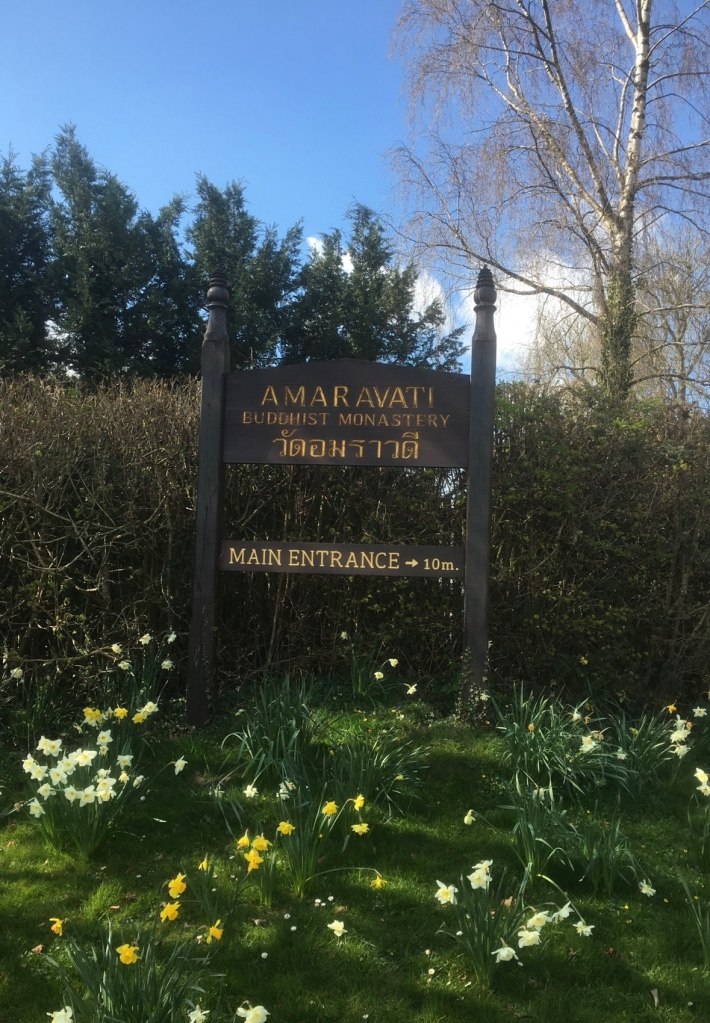
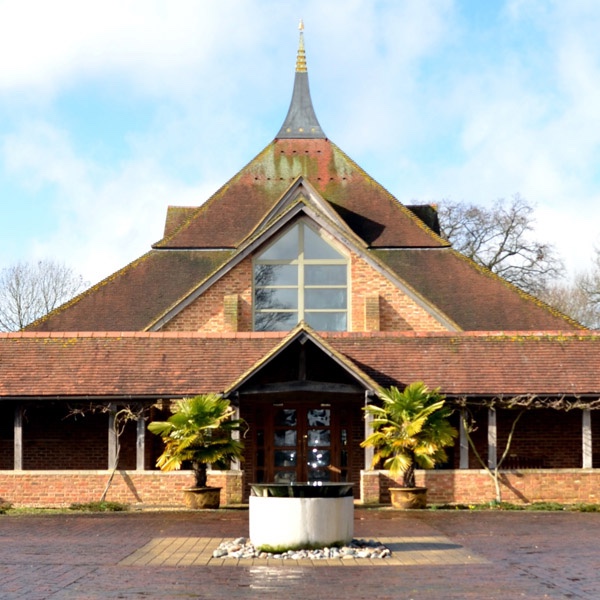
Moving on,the next interesting discovery was a Buddhist Temple.
The Amaravati Buddhist Monastery, which is rooted in the Thai Forest Tradition, opened in 1984 to create a space for inward reflection. To this day, it still has a full time community of male and female monks and nuns, as well as a steady stream of day visitors.THIS TRADITIONAL THAI TEMPLE LETS you escape from the hustle and bustle of everyday life. Its majestic, manicured grounds are an oasis of calm within a chaotic world…Apparently…it ‘s certainly right about the “ chaotic world”
On the descent to the Alford Arms we were overtaken either by a monk, or a chef who was late for his Sunday lunch shift at the pub. A welcome pint at the pub before returning to Berko and a time to reflect…
Monday dawned wet and grey as forecast,so I went down into Berko with Hannah in the car for a spot of shopping and coffee. Berkhamsted is a very comfortable place to live – no graffiti, nor beggars,nor much multi-ethinicity, though that might change. You won’t find a Poundshop,Aldi or Lidl either! Morrisons rules,but I secretly quite like a peek in there. Even the charity shops look like boutiques.
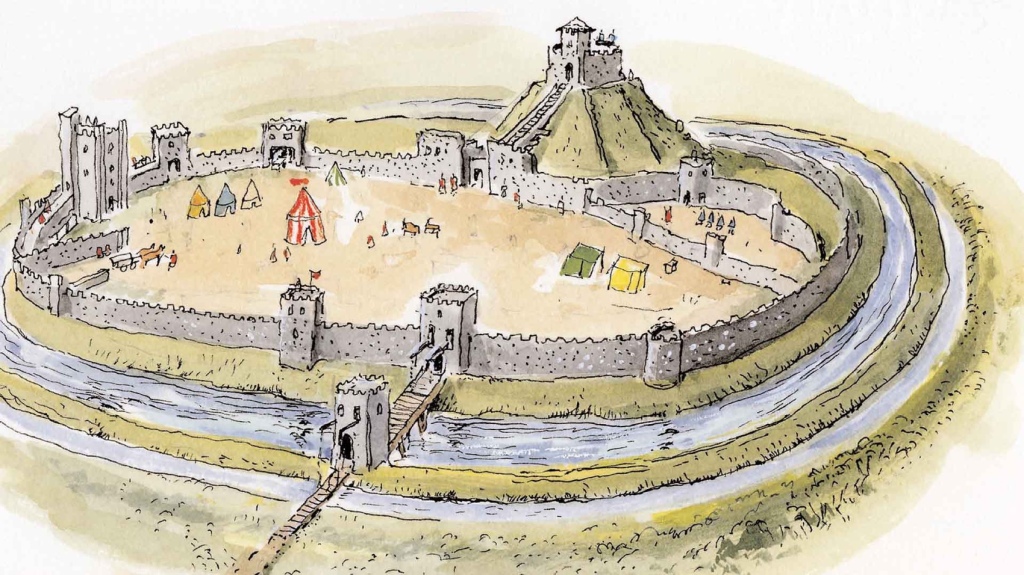
Thankfully the rain cleared by lunchtime so it was time to use one of the aforementioned town council guides to greater Berkhamsted. This began at Berkhamsted Castle .English Heritage manage the site now and there is plentiful information about the history of the Castle on their website.
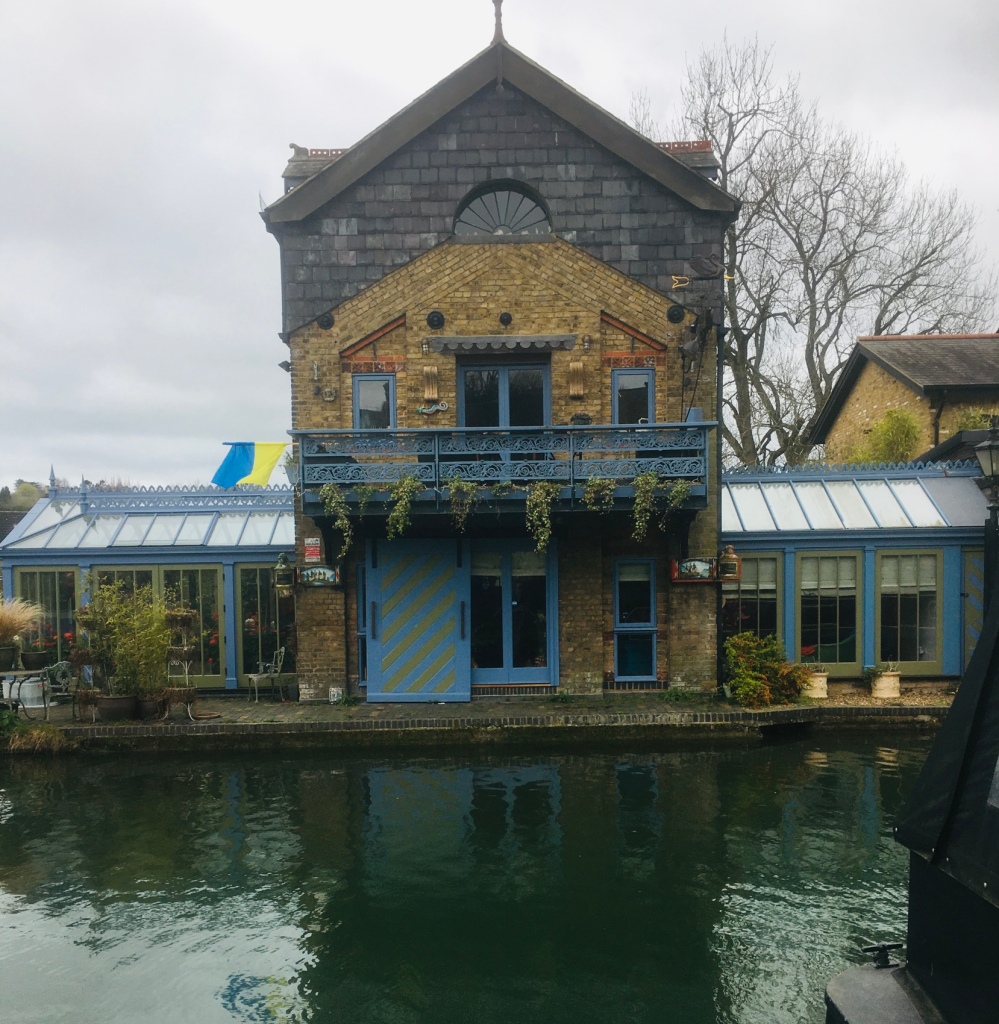
There followed a lengthy stroll along the canal and for some considerable distance the canal is overlooked by apartments and a variety of sometimes interesting houses.
Another gaily painted bridge.There are at least three interesting pubs along this section; if I had to choose it would be this one.
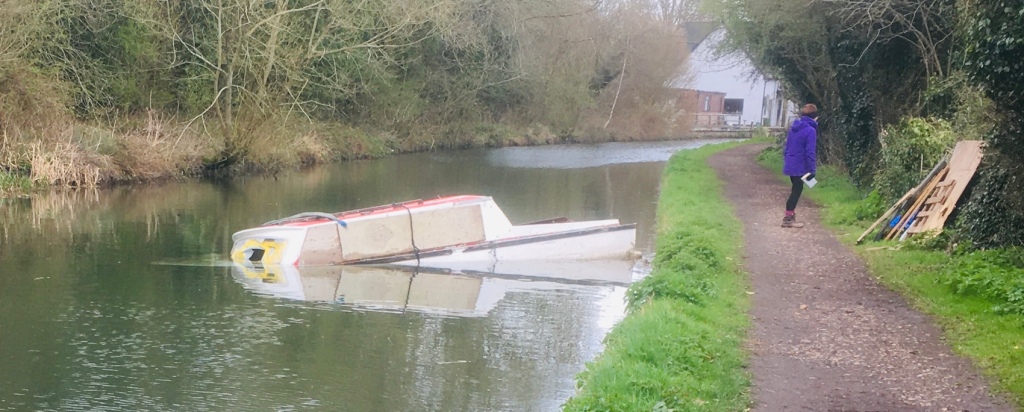
This was an unexpected sight, all the more so considering how busy this stretch of canal is.
Walking on, passing some more of the abandoned water cress beds adjacent to the River Bulbourne.
At this point the walk took us away from the canal, across a road and up the tantalisingly named Sugar Lane for some distance and quite close to the very busy A41 – still some good views.
A little further on I noticed this iron marker post half obscured by the hedgerow .
The Foundlings Hospital Estate. Now that did not feature on the map so I later researched the name and there is a very interesting history.
The horror of finding abandoned babies on the streets of London led a retired sea captain to found a historic children’s home. The sight was common in the capital during the early 18th century and spurred Thomas Coram to campaign for a Foundling Hospital. He was successful, and in 1739 George II granted a Royal Charter for the project.
In its first decade, the Foundling Hospital at Lamb’s Conduit Fields had more than 20,000 children during the 18th and 20th centuries whose mothers were unable to care for them. Foster mothers would rear babies until they were five years old, when they would be readmitted to the hospital for an education.
In the summer of 1935 the hospital moved to an impressive new building on the Ashlyns Hall Estate in Berkhamsted, where it continued until 1955. Herts County Council took over the educational responsibilities and the buildings eventually became Ashlyns School. The building, with its girls’ and boys’ wings, extensive playing fields and imposing chapel, would have been quite a talking point in the town.
Further and more detailed background can be found on the link below.
And all of that was prompted by an old marker post in the hedge.
Tuesday and time to return home, via Chesham for a lunchtime meet with friends then back to Sutton Coldfield in time to go to the symphony hall to catch 10cc in concert. Lovely break,thanks Nelly & Dan.
And of course, Missy
Where are my boys? They are in deepest water Where are they now? They are over the hill and far away But they are broken men who lie low Waiting for miracles
Old men of rock and roll Came bearing music Where are they now? They are over the hill and far away But they’re still gonna play guitars On dead strings, and old drums They’ll play and play to pass the time The old wild men Old wild men Old wild men, waiting for miracles
Lord have mercy upon the many Lord have mercy upon the few Lord have mercy upon the many Lord have mercy on me and on you
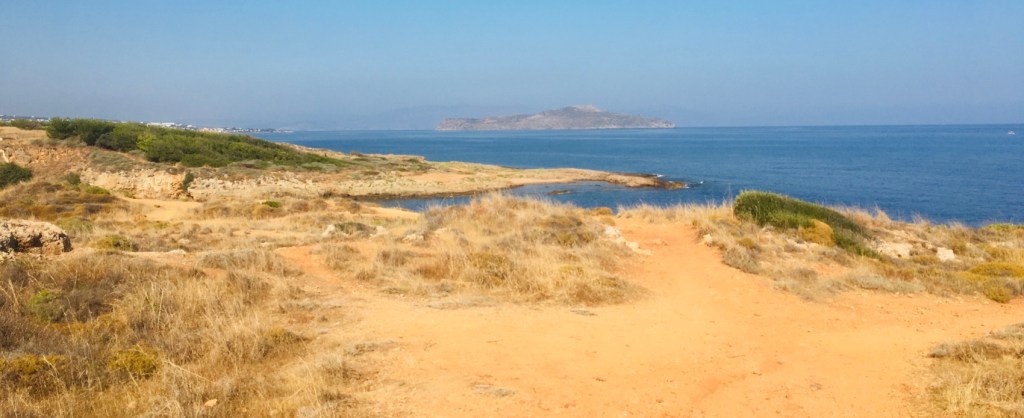
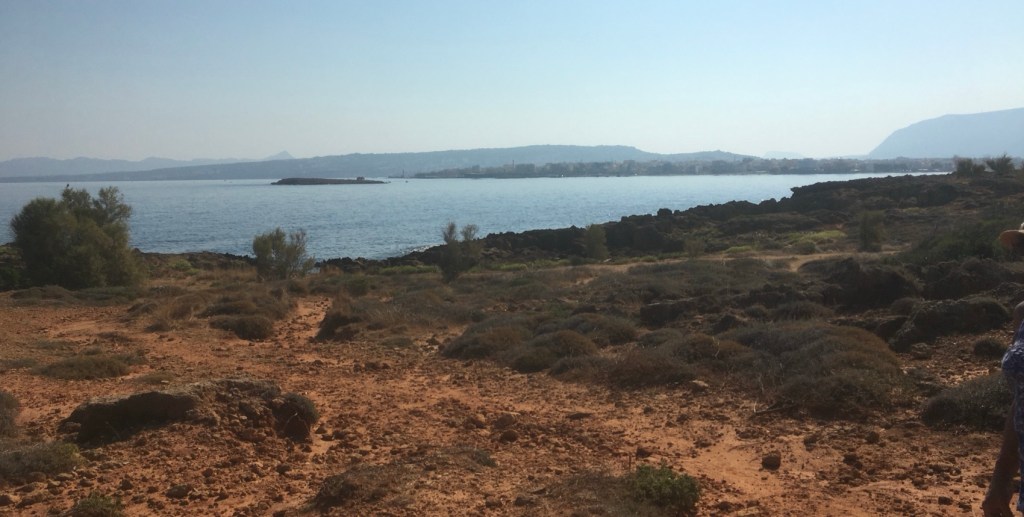
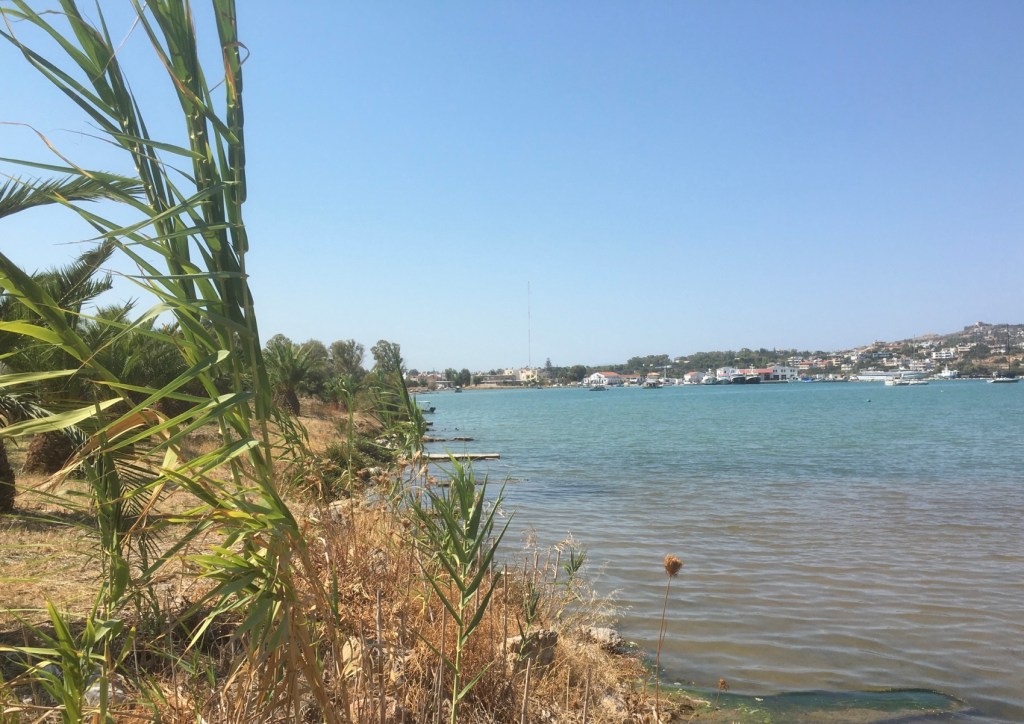
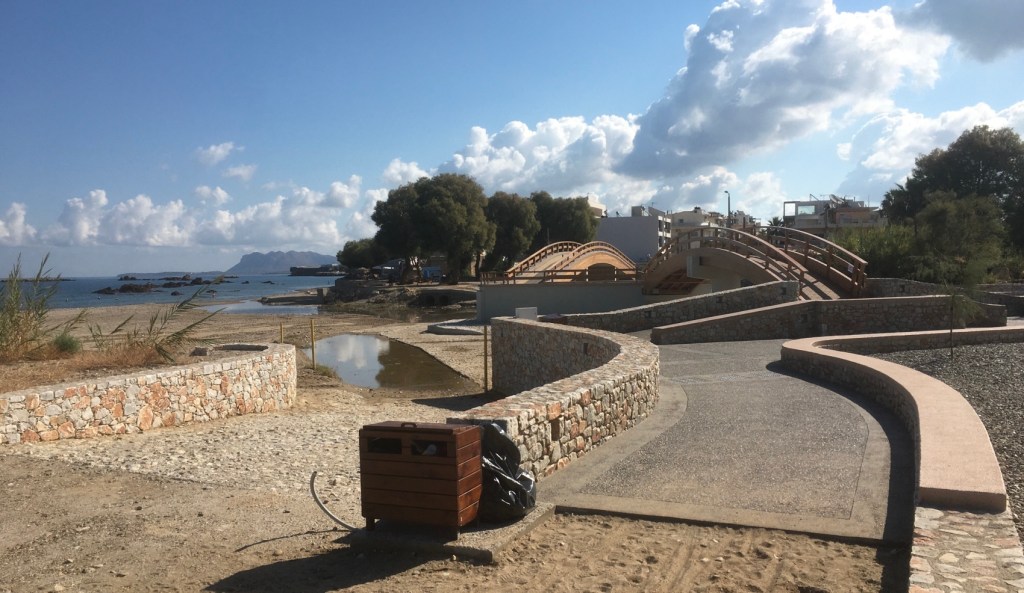
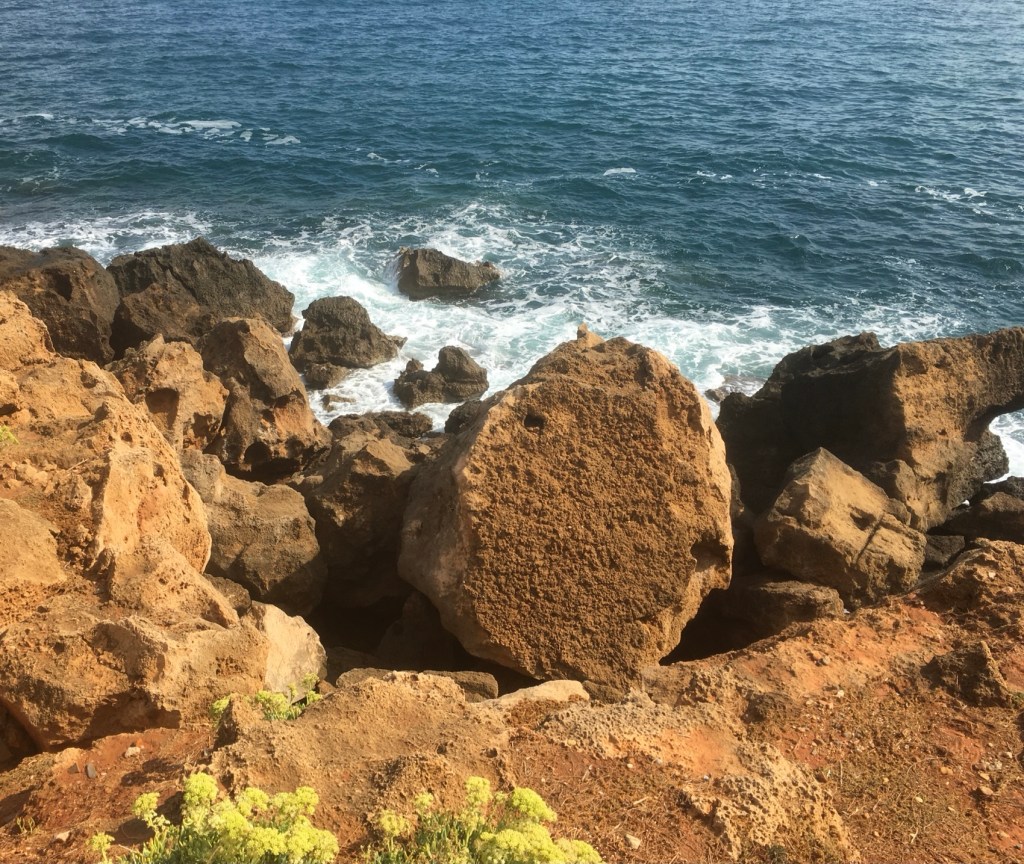
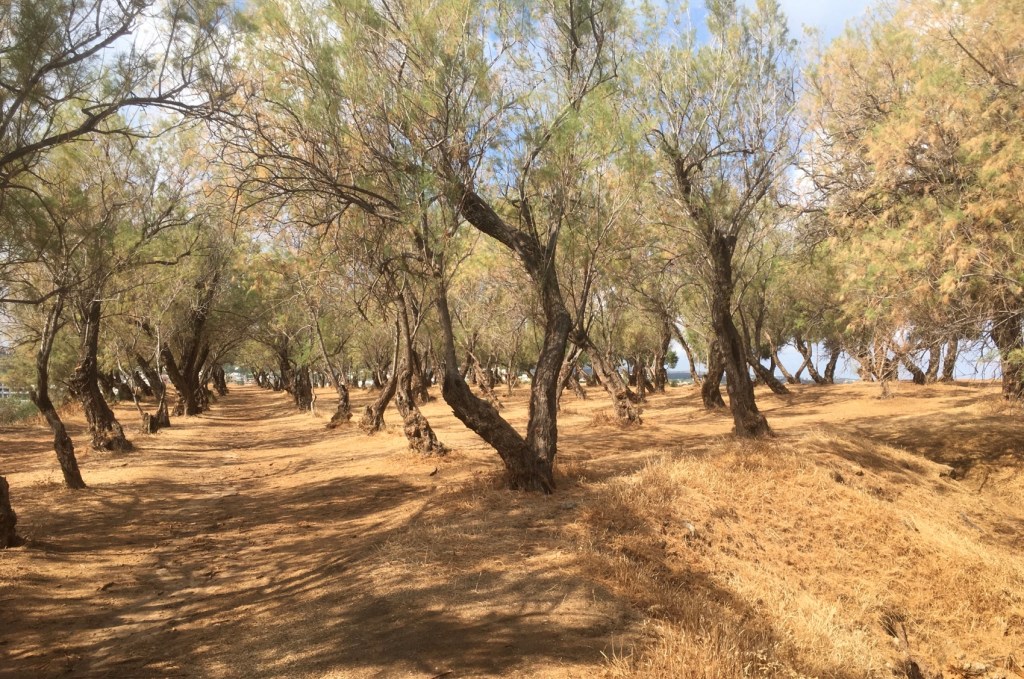
A final meander along the headland and beaches to Chania,with no other purpose than to enjoy the views and just walking…
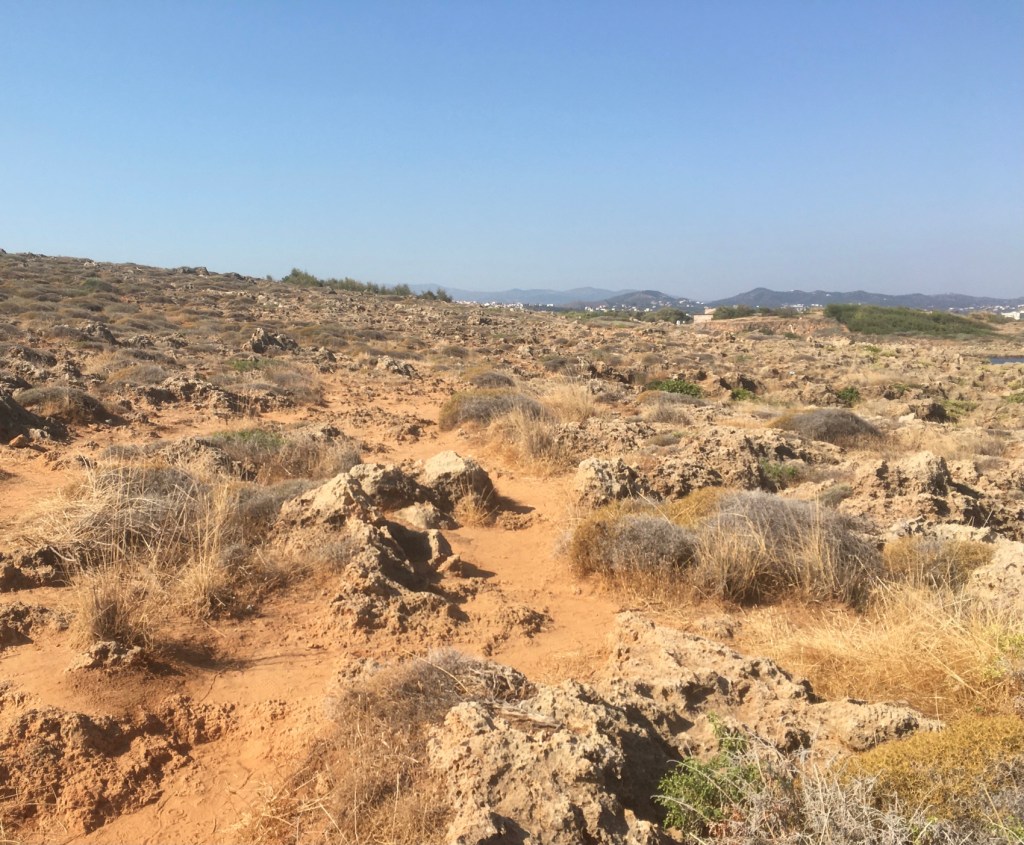
There are several paths marked only by usage.
The walk takes just under an hour,proceeding at a leisurely pace.
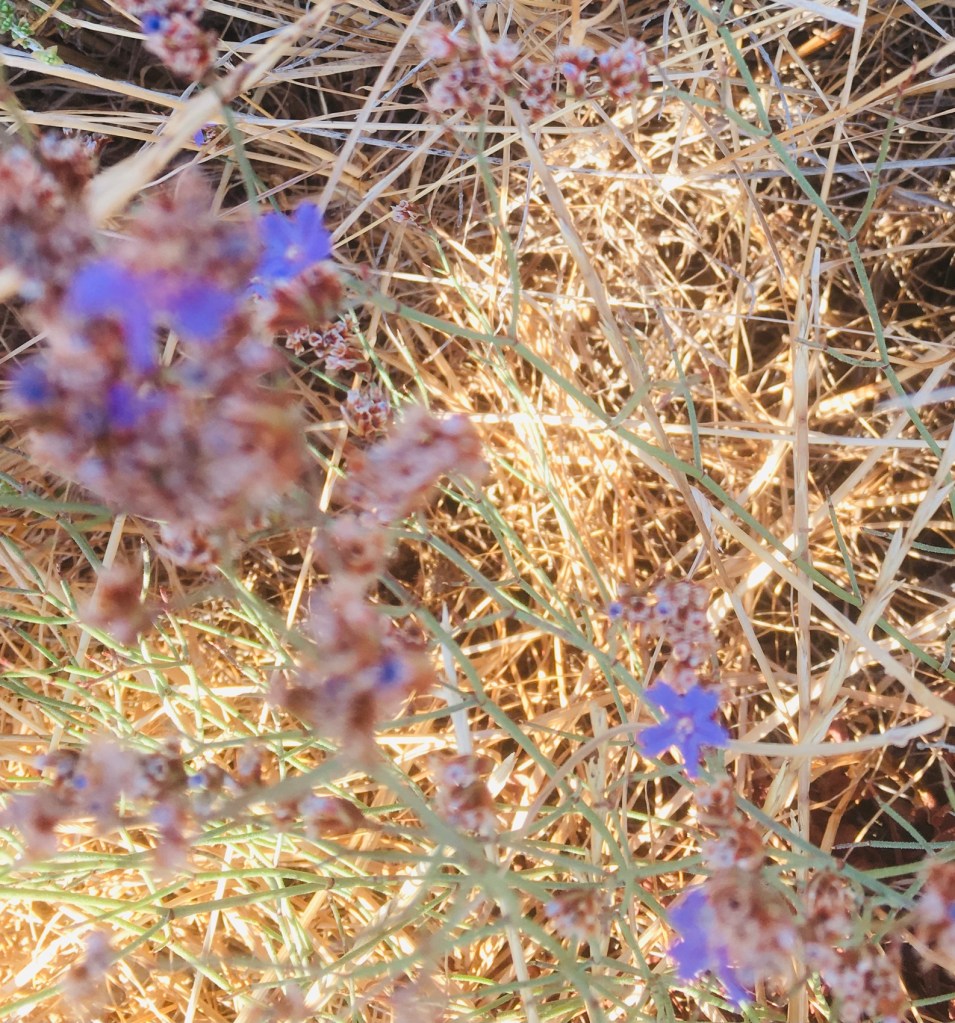
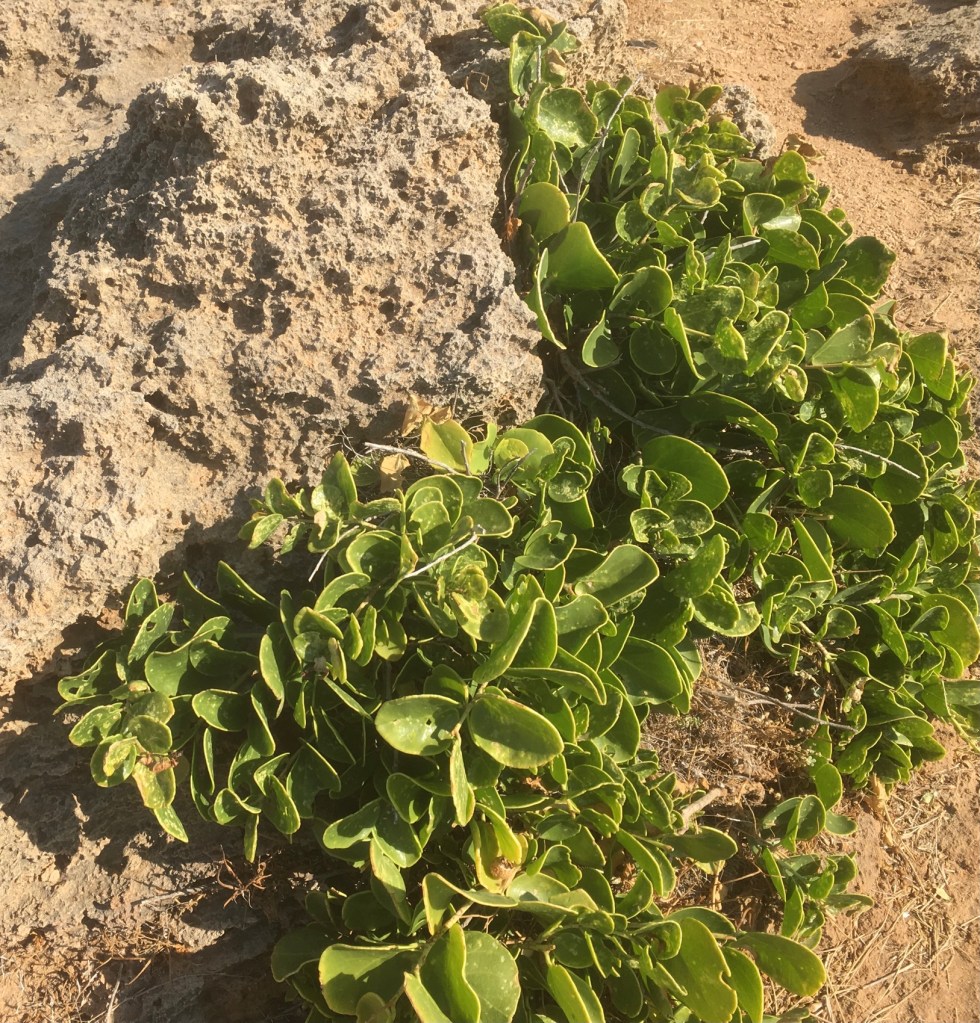
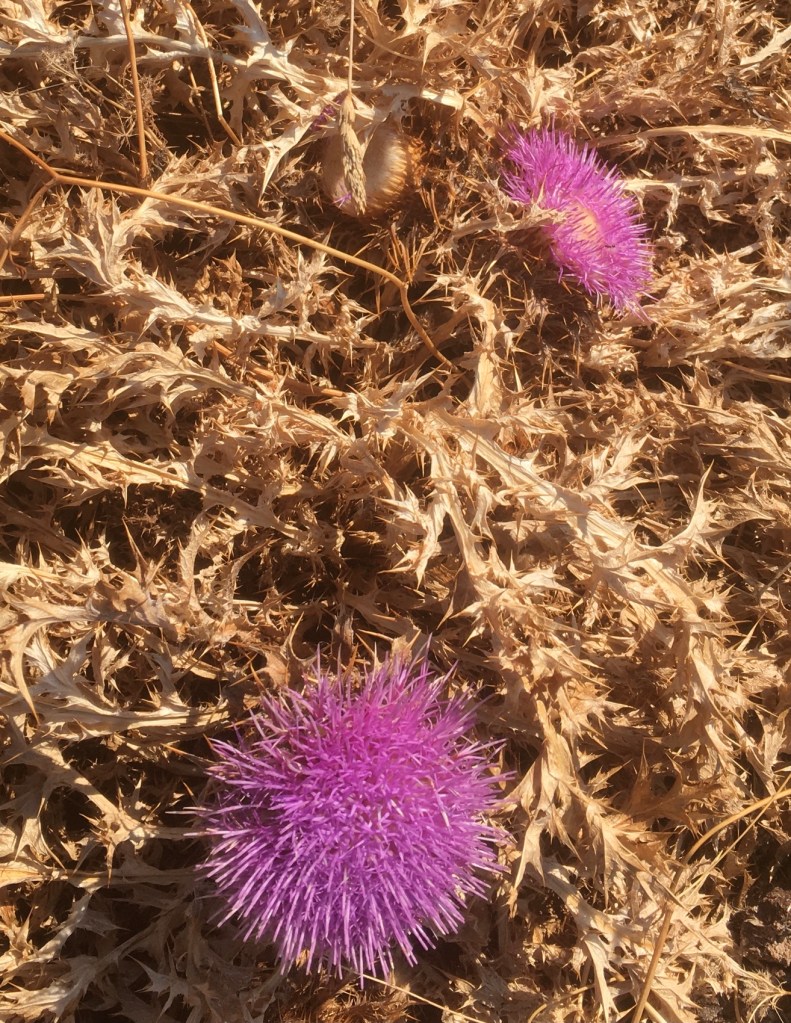
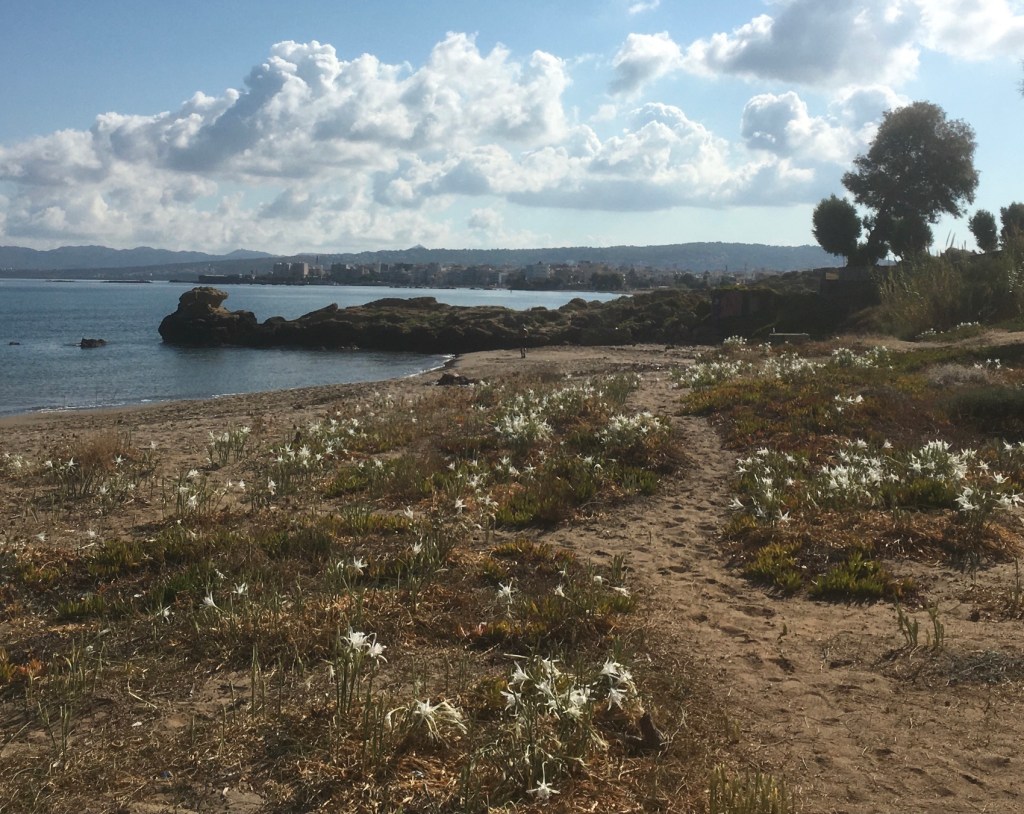
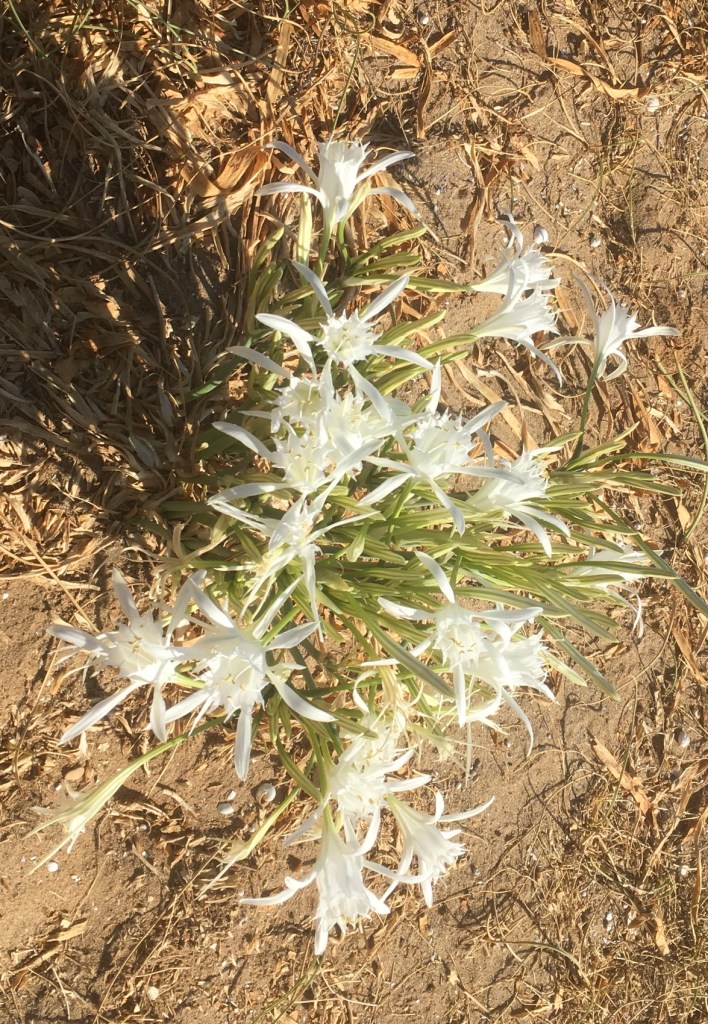
Flowers and plants are still to be found even in the driest of sand and rock.
Eventually,you come upon some low key hotel development but the beach is still accessible as you near the city.
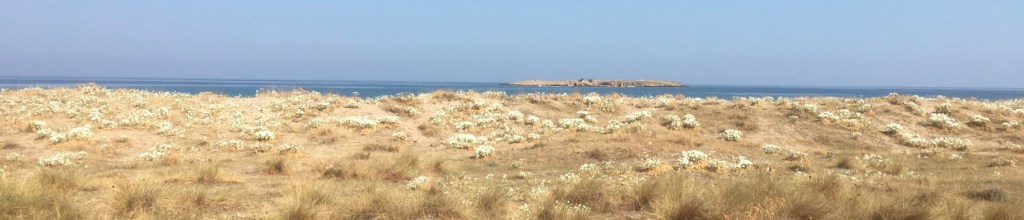
And a sweep of whitesward atop the rocks.
Kandylakia – shrines often but not always found by roadsides – this one was on a Restaurante terrace – Although road accidents are mostly the reason for placing these shrines, on numerous occasions they are placed as a promise and a gesture of thankfulness. They celebrate miracles and those who survived dedicate a kandylaki to their patron saint.
It is a custom that every anniversary relatives and loved ones pay a visit to the shrine which draws upon the ecclesiastical tradition. This tradition represents the Greeks outlook on religion, family ties, remembrance of family history, culture and finally fate. These unique roadside shrines are there to remind us to appreciate every second and every opportunity to be alive. ( From “ Flymetothemoontravel.com”
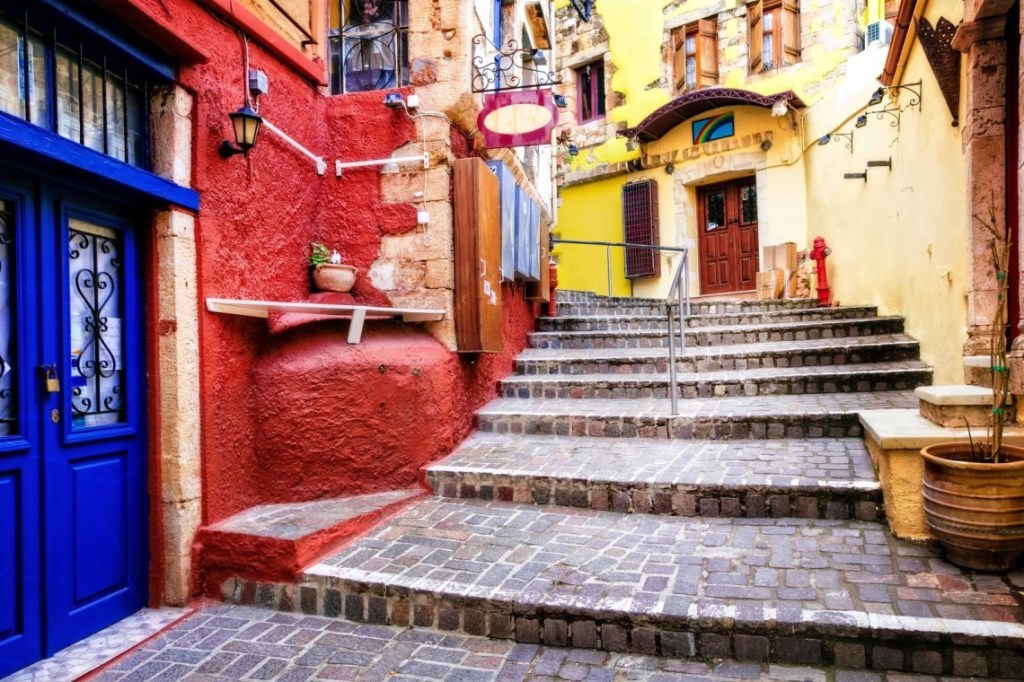
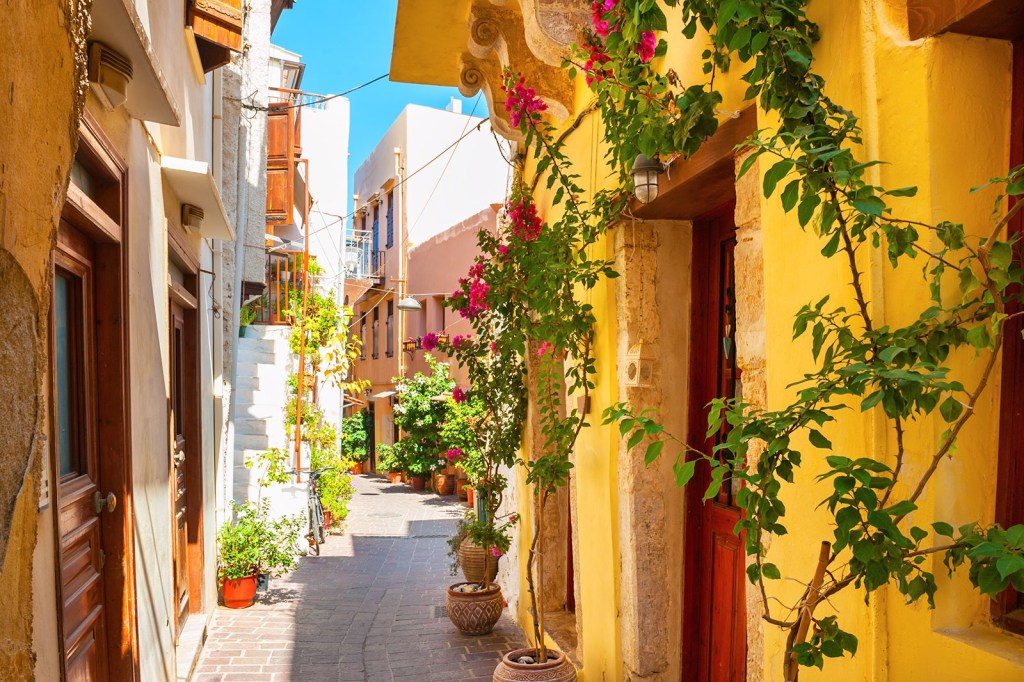
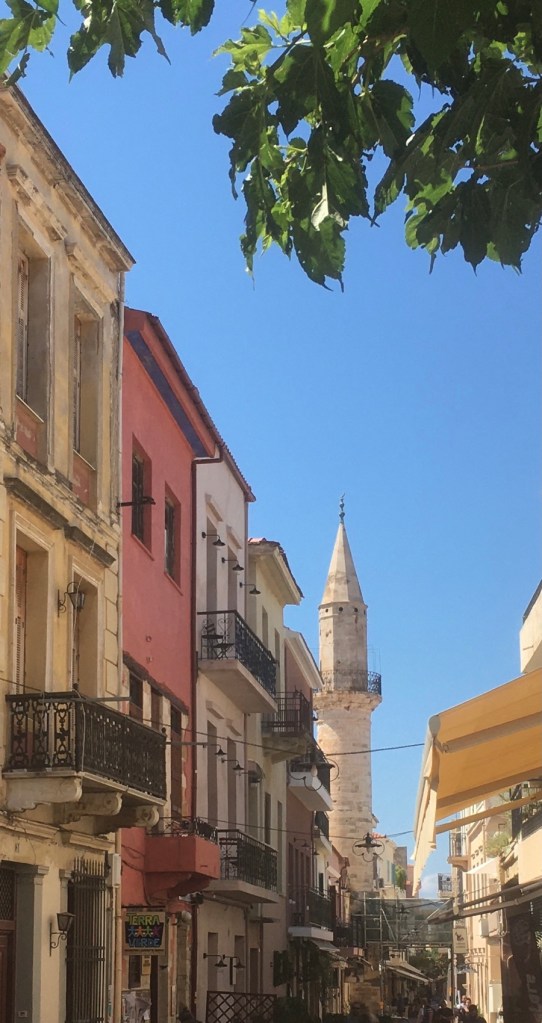
Chania is small enough to wander the enticing side streets and alleyways without ever worrying about getting lost.
Apparently it’s good for shopping,too.
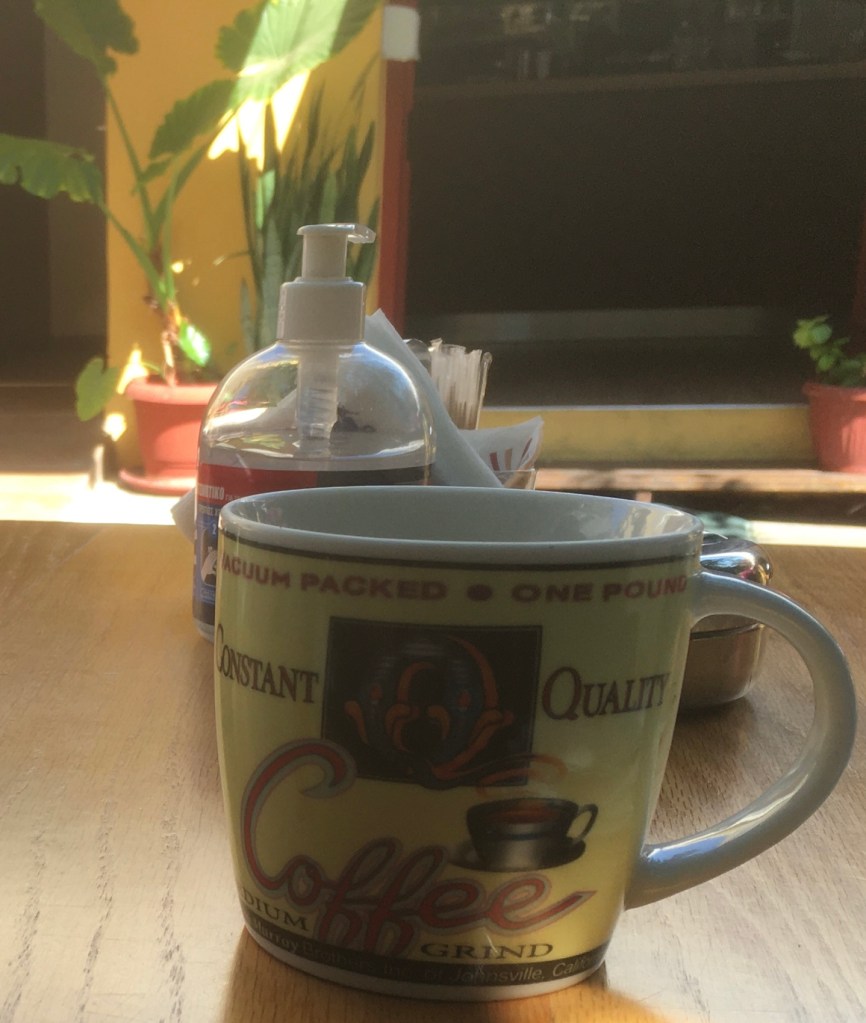
The coffee in Crete is excellent and this one was no exception,enjoyed in a favourite cafe.
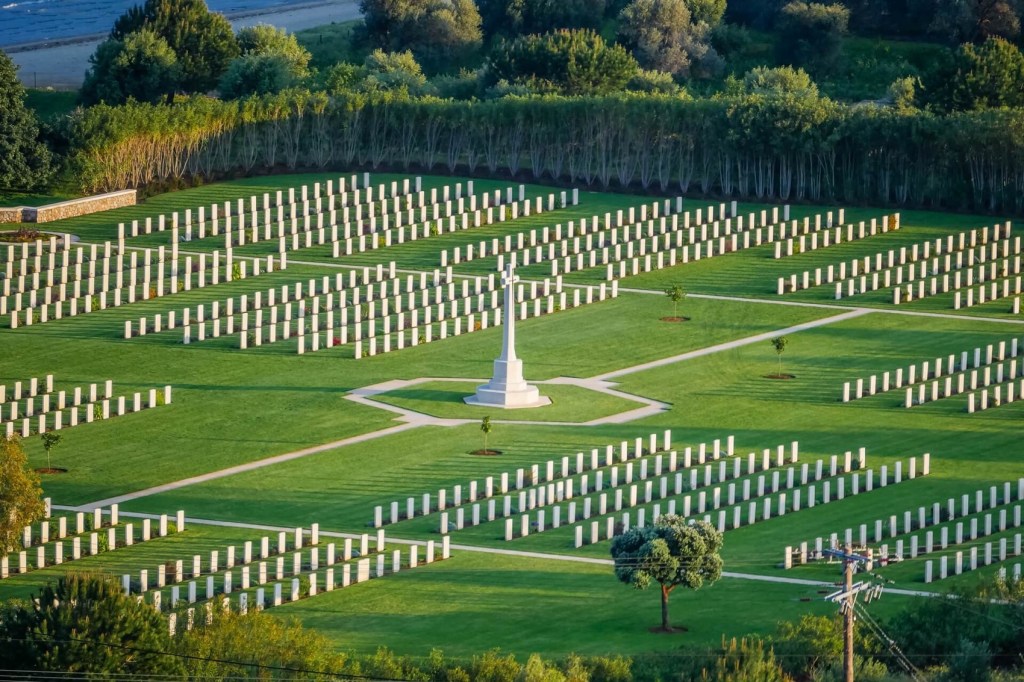
Bus number 13 to Souda Bay – this proved to be an unlucky choice as much of it is off limits – no photography – A massive NATO base. There is also a huge,allied cemetery .
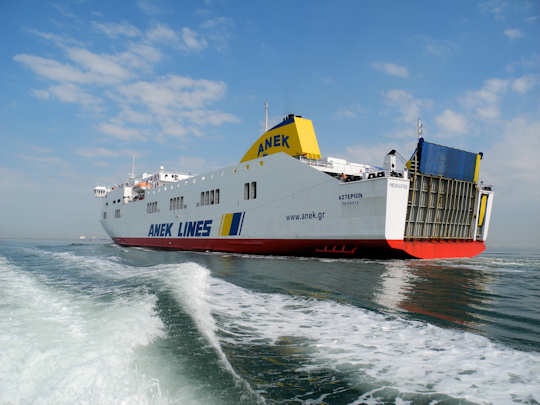
You can walk close by the ferry port.
Wikipedia provides basic information : Souda Bay is a bay and natural harbour near the town of Souda on the northwest coast of the Greek island of Crete. The bay is about 15 km long and only two to four km wide, and a deep natural harbour. It is formed between the Akrotiri peninsula and Cape Drapano, and runs west to east. The bay is overlooked on both sides by hills, with a relatively low and narrow isthmus in the west near Chania.
There are quays for both ferries and cruise ships.
Penultimate day was mainly spent on the beach, with a final meal out at Talos.
A relaxed and satisfying evening, taken at an easy pace. That summarises the “ pace” in general in Crete, amusingly captured in this final quotation:
Cretans, well, most Greeks I know it seems, have little appreciation of the concept of timed arrangements, or indeed the passage of time itself. That morning I noticed that the church bells rang six times at seven o’clock, when I commented on this to Dimitri he just smiled and said ‘God is slow…’
Crete, the largest, the southernmost and the most solitary of the Greek islands, and the fifth largest of the Mediterranean, floats halfway to Africa. It is a hundred and sixty miles long and roughly thirty broad, though wasp waists and swelling salients vary this girth. It is such a steep maze of gorges and crags that distances as the crow flies have no meaning; the islanders themselves measure them by time taken to smoke cigarettes, by hours gauged by the climb or the decline of the sun, and days reckoned from daybreak to sunset; or, more often, during the Occupation, by the duration of nights. Thirty miles in some parts, meant three days (or nights) of scrambles up rocks and breakneck, treacherous descents of landslides.
There were echoes of this evocative description in our revisiting the Gorge of Samaria after 43 years…They say time will tell and it did. But first let’s get to the practicalities which haven’t changed much since 1978.
An early start for this excursion. 06.15 pick up by coach at the hotel just two miles from Chania. Over and through the famous White Mountains to a cafe stop at Omalos for breakfast/ coffee, then a few more Kms to the head of the gorge, which is now a National Park. €5.00 entrance fee. Then you start descending. On completion of the walk which takes between 4-6 hours,depending on your fitness, attitude whatever, you arrive at Aghia Roumeli, now an established village , from where you take a ferry to Sougia, there the same coach takes you back to your hotel. TIMES : From Chania to the Gorge 50 mins, Walk as described. Boat – an hour , we left at 17.30. Coach to Hotel, longer than outward journey at 1 hour 45 mins. We were out for 14 hours. It was well organised:- Coach there and back,€25.00. Entrance €5.00,boat €10.oo.€40 .00 in all . Good value we thought .
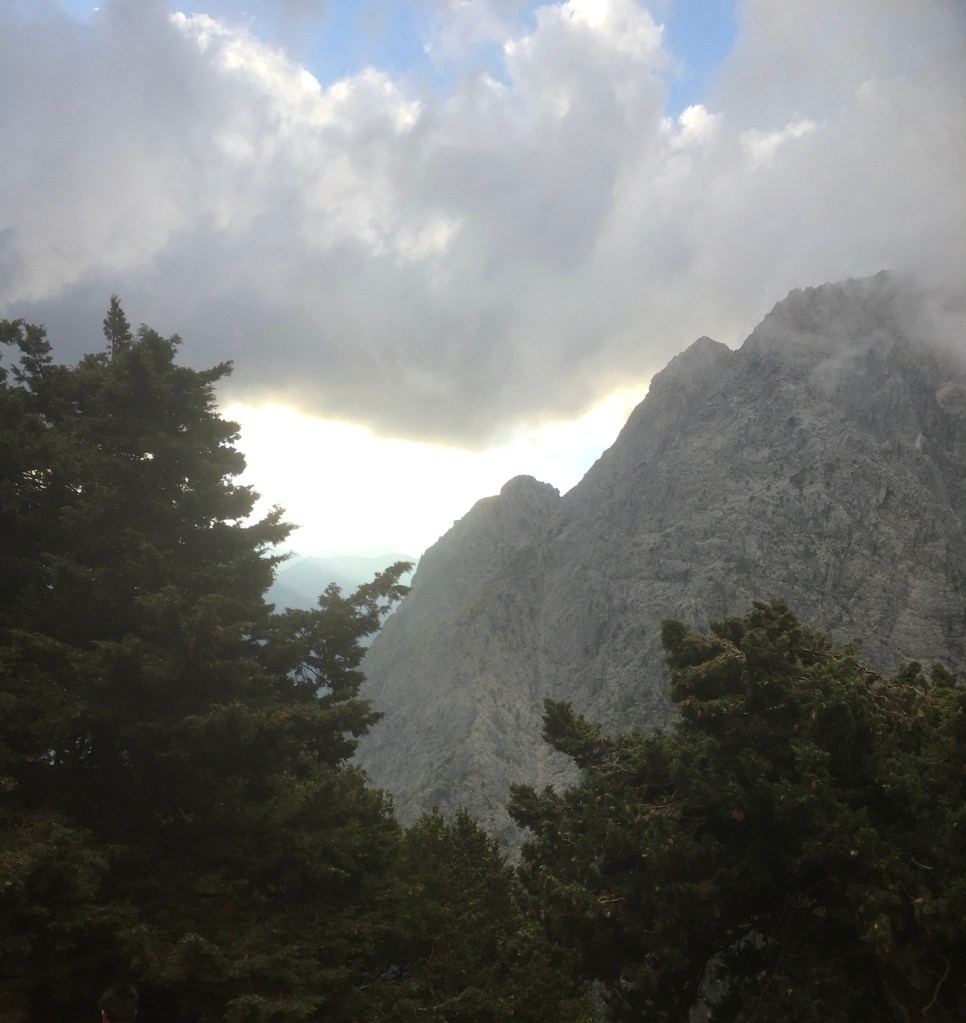
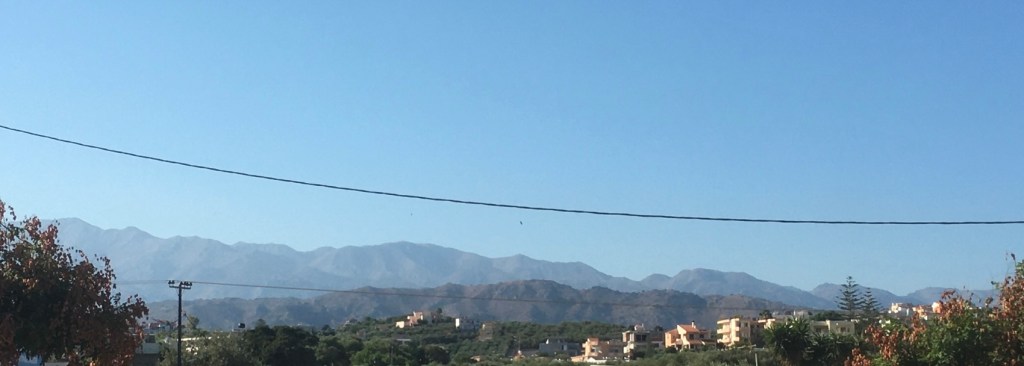
The coach ride was brilliant with views of these Limestone White Mountains. Occasional stops for the locals.
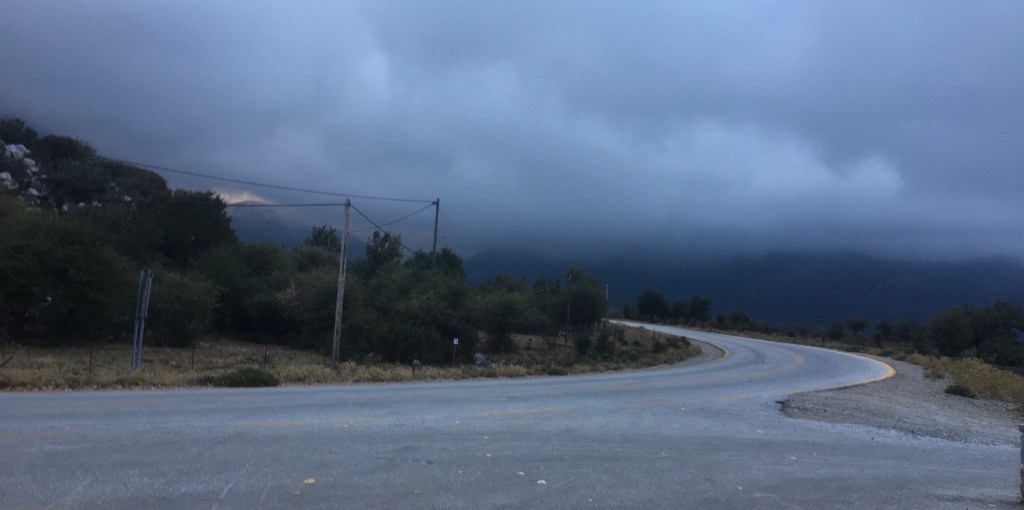
Near the head of the Gorge, the weather looked less than welcoming and the temperature was14*.
However, after a strong coffee, the coach took us on from Omalos to the entrance to the Gorge. Please show your ticket .
In ‘78, there was none of this infrastructure.The clouds began to break apart and there were a few spots of rain but no more than spit in the wind.
So, beginning at an elevation of 1230 metres, you descend on serpentine,stony paths.
This gives a false impression really because the descent soon became more tricky and Rocky.
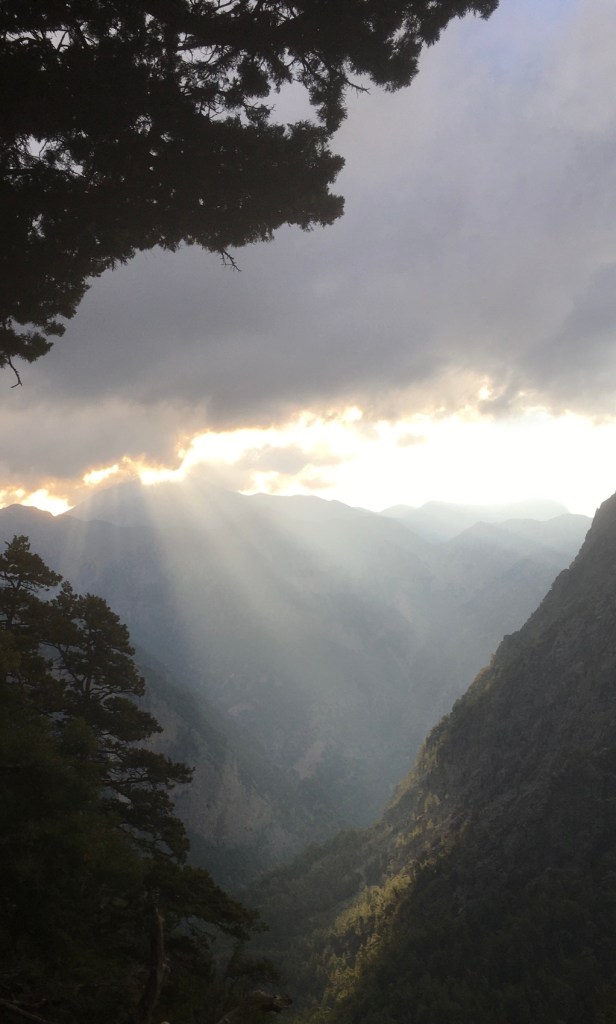
The views were awesome.
Now a National Park, there were designated Fire Muster Points, WCs and Fresh water springs. And even a horse ride back up for anyone having an accident.
Once at river level there were hazard warnings.
Eventually, the river bed was reached after about an hour’s descent.
Hard to believe that there was an actual village existing down here and it only became derelict when occupants were rehoused elsewhere as it became a National Park.
The river bed.
Some information boards.
Approaching the old village of Samaria.
Used for Park Rangers mainly,with WCs and a Spring to top up your water bottle, or have your lunch.
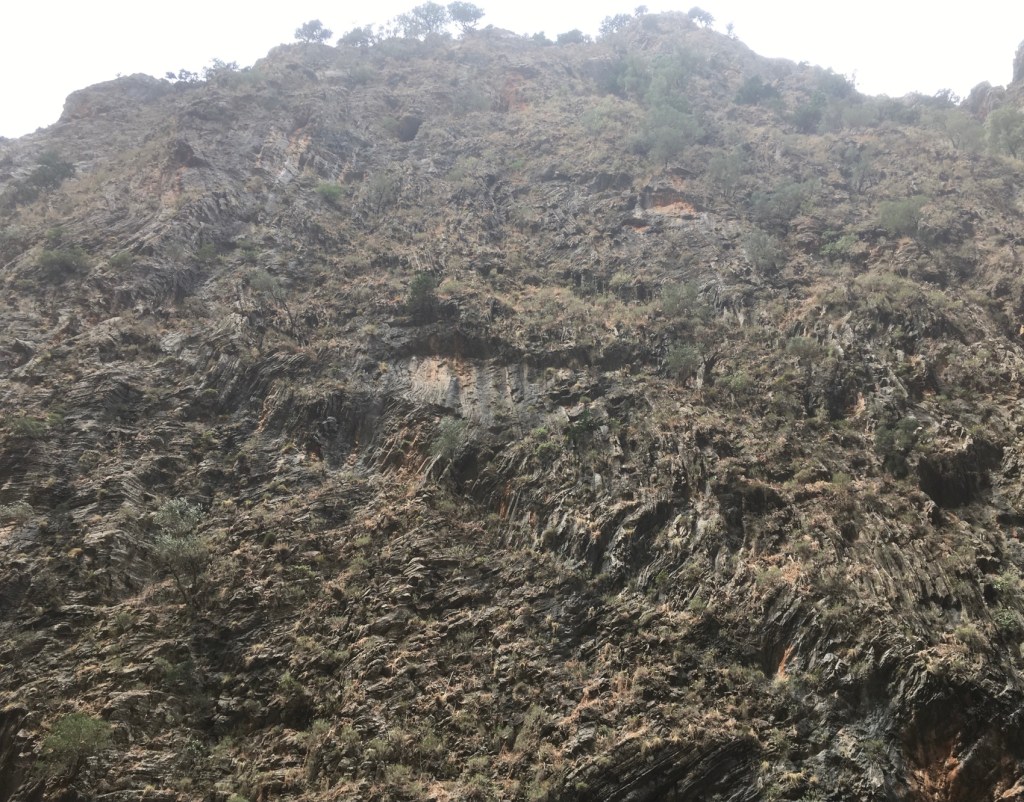
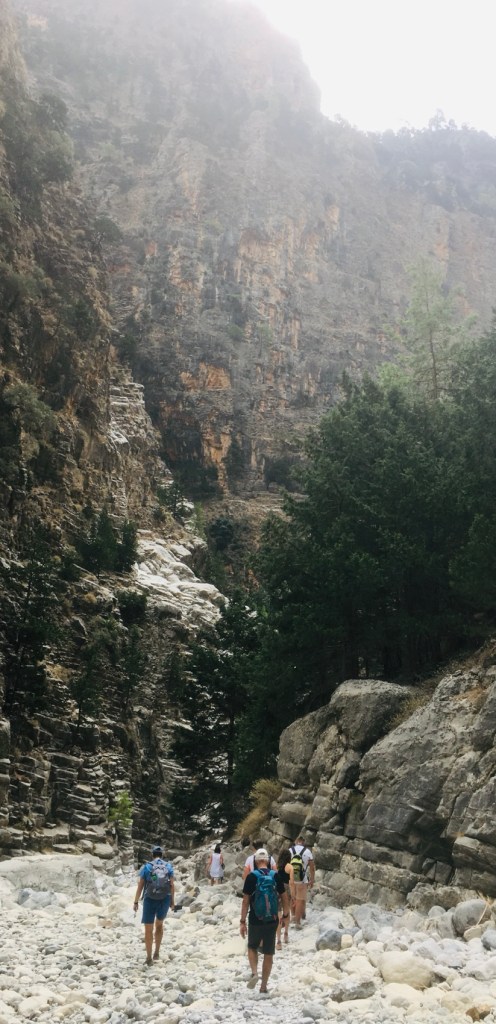
You now begin to feel again the encroachment of the mountains above you.
The gorge is named after St Mary of Egypt and there are the remains of her chapel.
At this point, the last thing I felt capable of was moving quickly!
There wasn’t much movement apart from a few bees, one of which managed to sting me beneath my Fitbit strap. Not a problem though,except for a tiny rash.
The walk became both more troublesome ,walking over and along the river bed and more dramatic.
The Gorge narrows to 3.5 metres at the top.
Another faculty which did not exist 43 years ago, was the walk way, Sidero-Portes ( iron gates) – one of many wobbly pathways across the water.
It’s a doddle crossing the river Tara.
Some more views as the route nears the sea.
A few more crossings.
The walk almost ends at the abandoned village of Palea, which means “ old”,Agia Roumeli. I remember reaching here in ‘78 and there were a few grubby kids with water bottles in a bucket for sale. Now there are three bars.
Look out our kid!
Three Kms on to the newly fashioned Agia passing an abandoned field and and the remains of an ancient bridge,
So now, let’ s get a drink and head for the beach before meeting our guide to pick up the tickets for the ferry at 16.30. The boat leaves at 17.30
The beach was fine pebble and volcanic sand – great to reshrink your feet at least a size – the Libyan sea beckons.
Cretan beer makers have got into the Craft beer scene and this was my favourite, especially after a trek like this,
Shame it didn’t touch the sides.
Boarded the ferry amongst a throng of post Gorgers and set sail for Sougia.
The Venetian Castle.
After an hour, approaching Sougia.
Disembarkation and the awaiting coach.
I’m writing this blog approximately 30 hours after finishing the trek. My thigh and calf muscles still reproach me in a way I cannot remember after any walk…This includes numerous Rambles and a dozen or more Caminos. Experiencing this at 32 years was obviously a very different experience even though there was precious little supportive infrastructure then. Age…. The other differences were as follows: massively more busy, literally coachloads ( hands up we were in one ). Welcome WCs Etc. I felt pressure from walkers wanting to get past.We had forgotten how difficult it is underfoot. Rocks, shingle, tree roots and boulders. Talk about rose tinted glasses. We probably walked quicker than we needed. When you are walking with Ramblers you are amongst a group of similar vintage, no apparent differences. Even on Caminos, the difference in generations is not so obvious, probably because there are fewer walkers and it is not so frenetic. Like the Camino, there walkers from all over the world,going by the different and unrecognisable accents and that was great. But watching spring- heeled 24 year olds hop and clamber was…
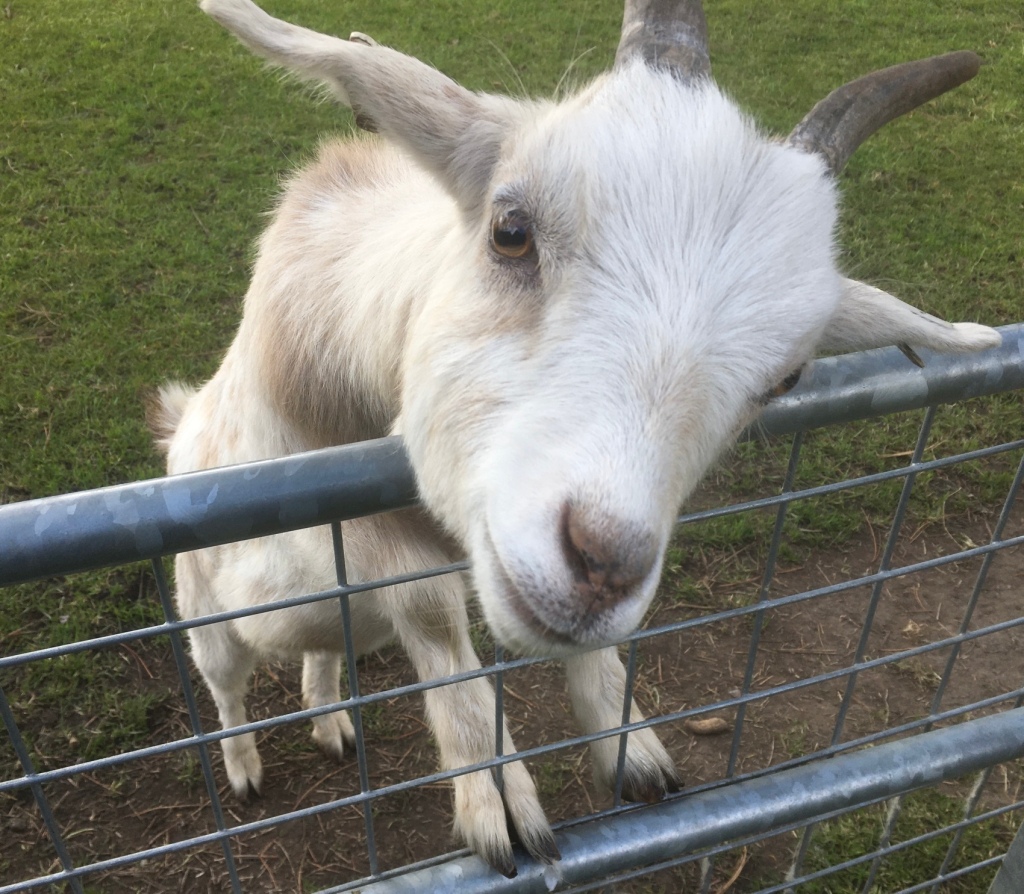
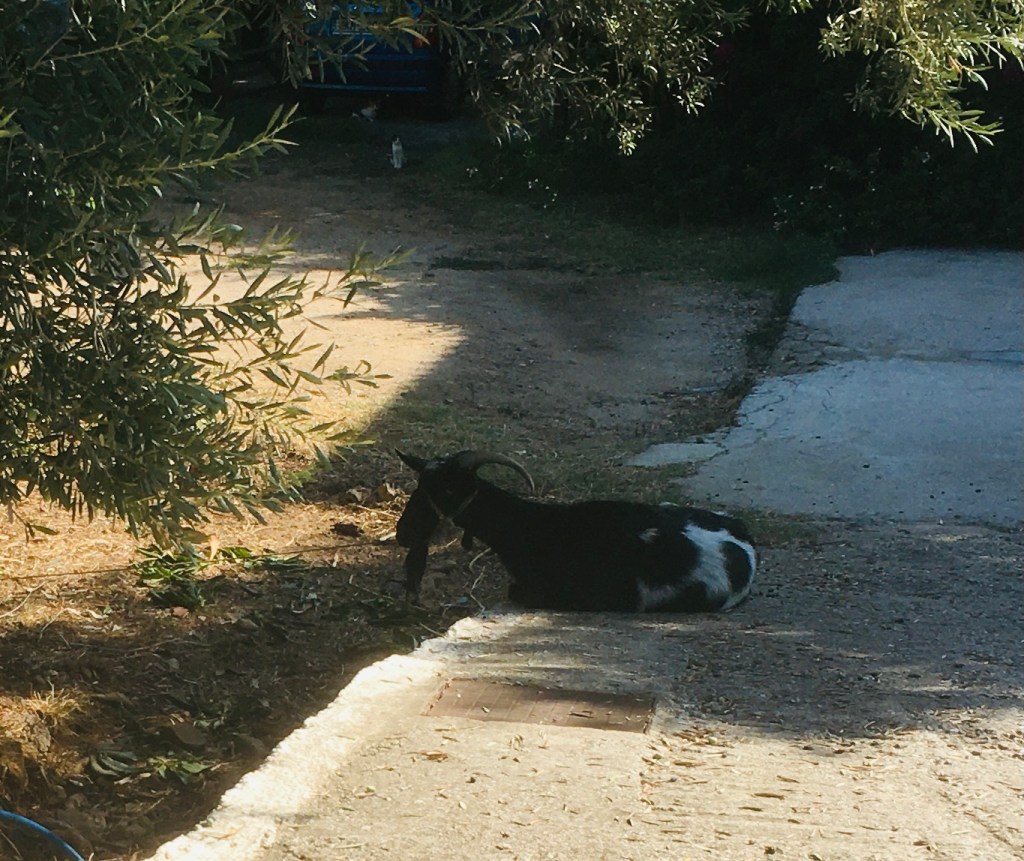
More akin to these unique goats.
At times it had me feeling like a down at heel 74 year old! The aches and pains will pass I’m sure, hopefully the Ibruprofen will kick in. No regrets.
Having checked the Chania App. We were fairly certain Chania could be reached on foot,keeping the sea on our left. After one false trail this proved to be the case.
Didn’t get up there but what a clear view.
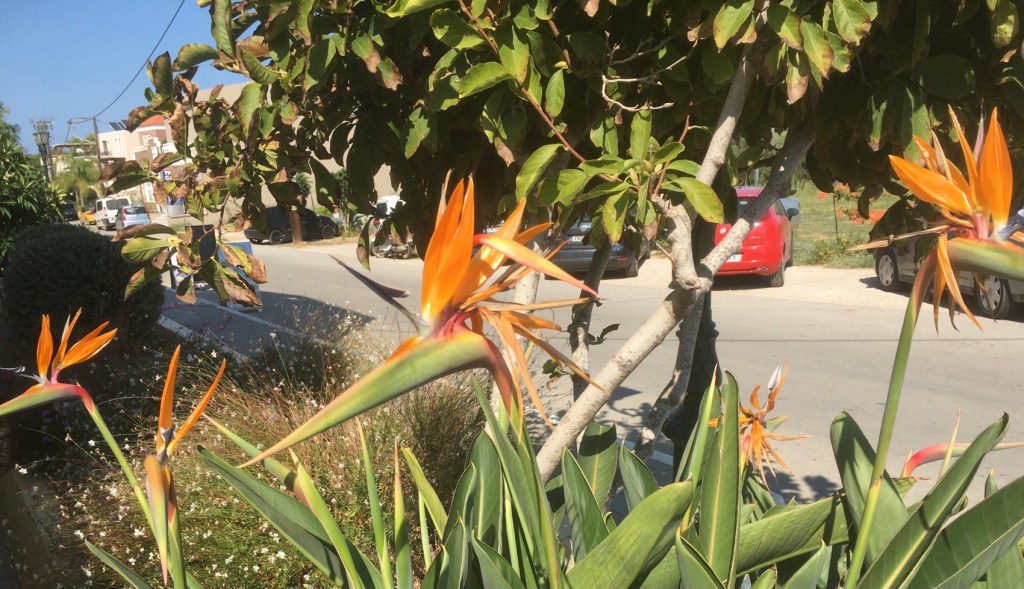
Came across some local fauna and flora en route.
Close Up.
The route was quite straightforward, passing a couple of hotel gardens and lots of unreclaimed land.
This impressive structure took us over a river and into Chania’s seaside suburbs.Must have been after Wednesday’s tumult!
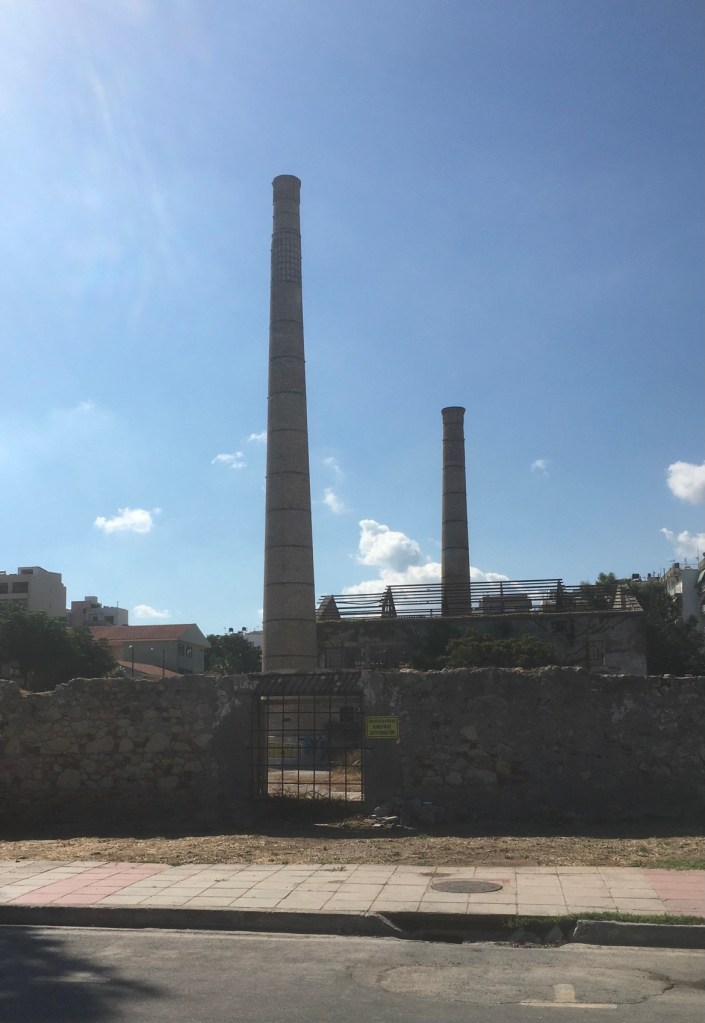
Soon Chania was in sight and these chimneys are the remains of early 20th century industry – an oil refinery.
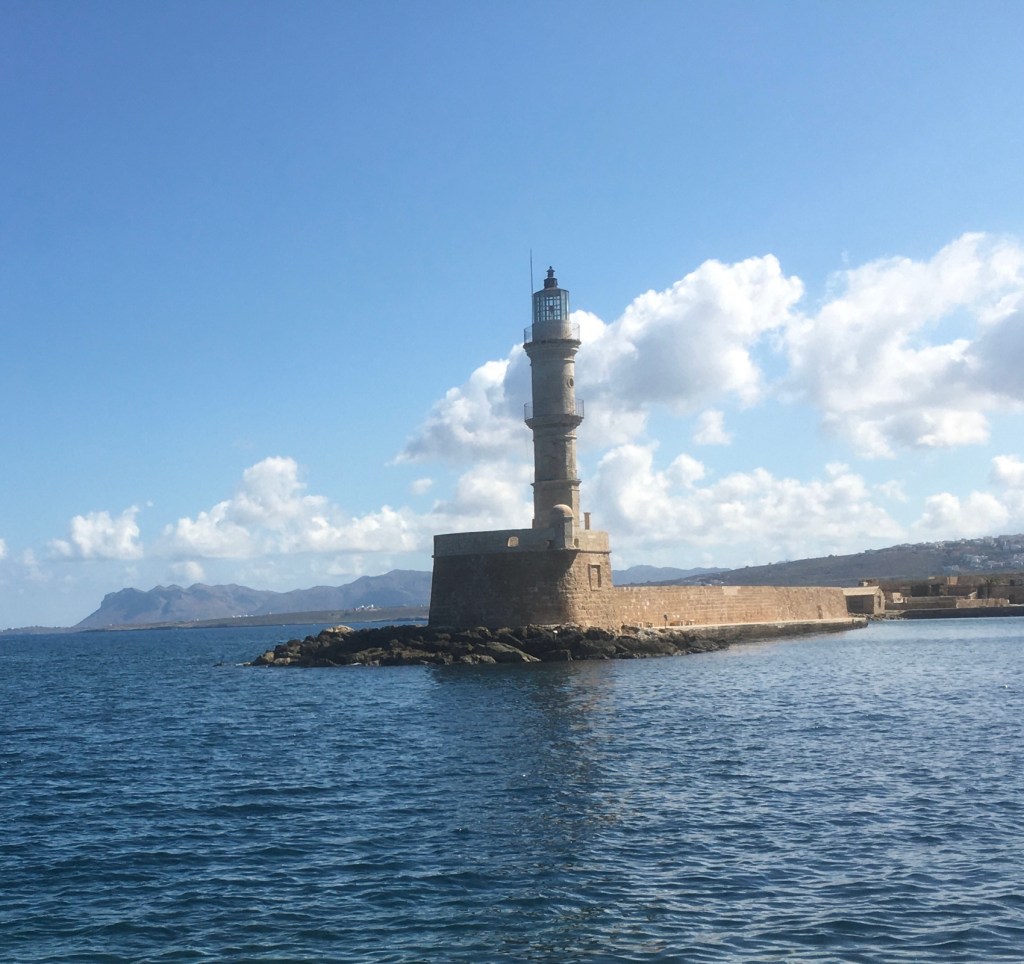
The iconic lighthouse.
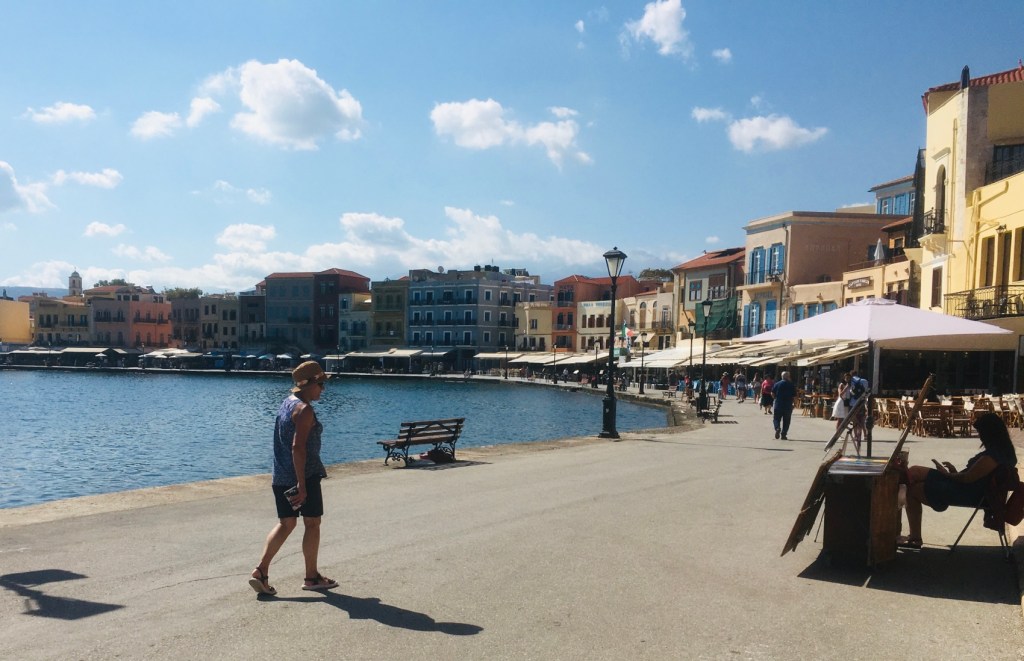
Walking towards the Venetian harbour – this time without the need for umbrellas.
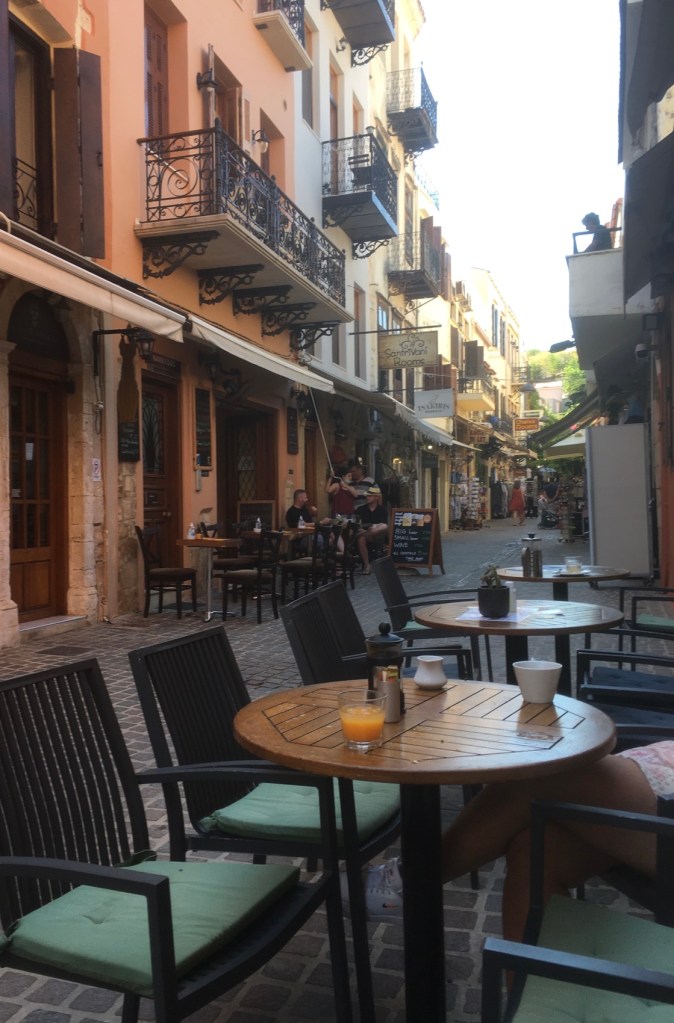
The many pedestrianised side streets are always a temptation.
Looking for a coffee stop.
Resisted buying one of these to scare off the pigeons from the patio back home.
A cool place to people watch and enjoy a coffee.
Rooms to Rent are ubiquitous.
Just hope you don’t have noisy neighbours.
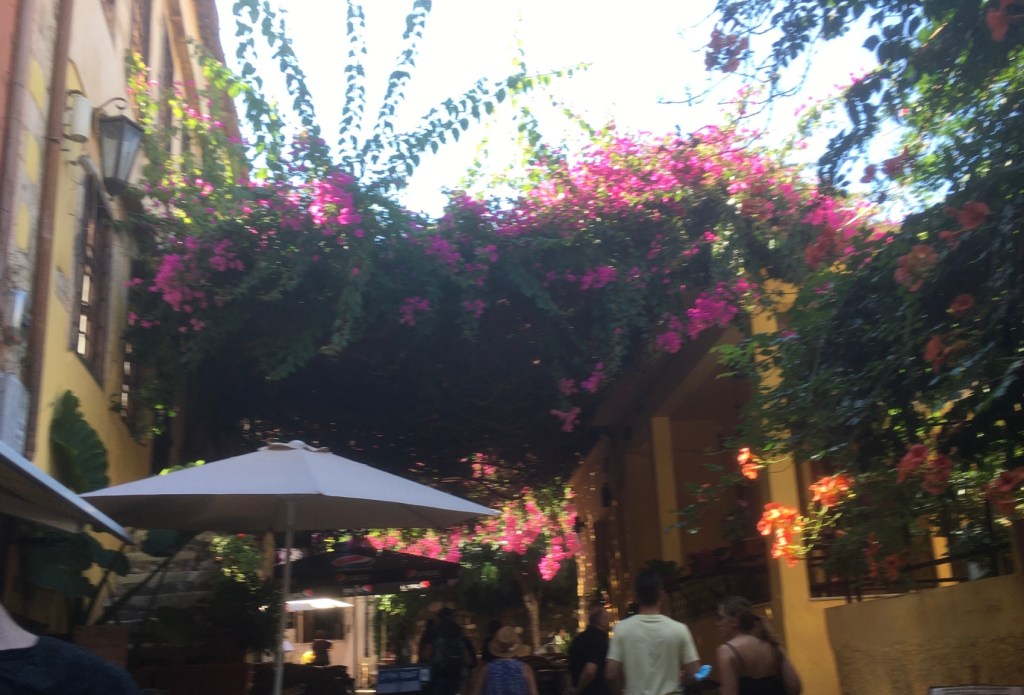
So many charming corners.
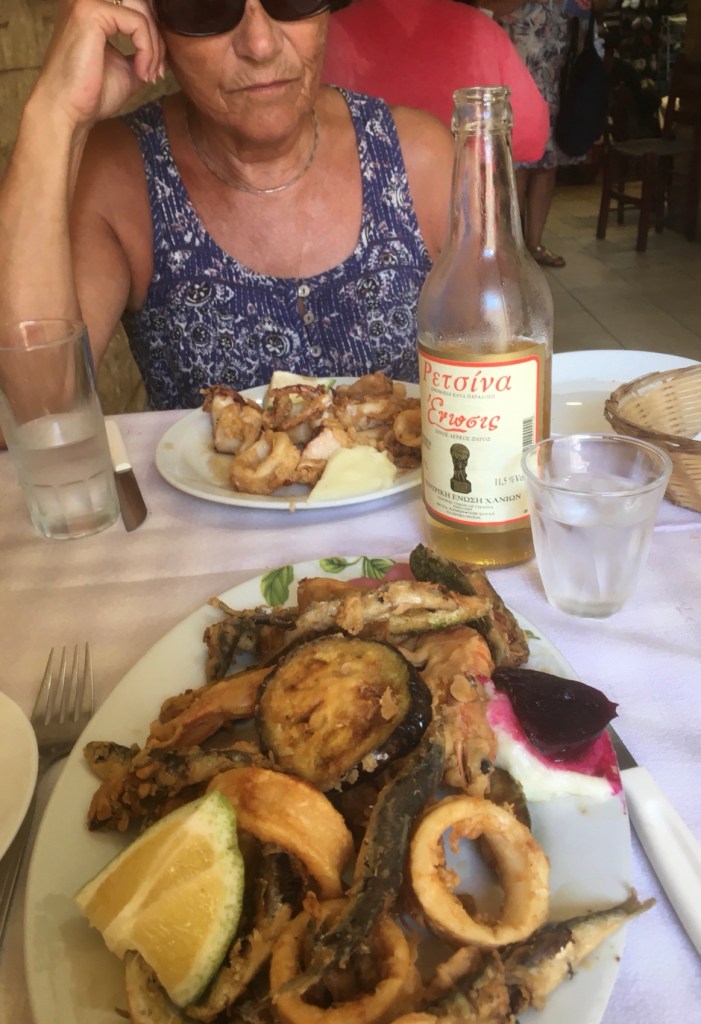
Headed for the famous market and enjoyed looking round,taking note of a seafood option for lunch,later.
Enquired at a travel agency about walking the Samaria Gorge next week – good information – took a selfie whist waiting.
That’s me in the corner That’s me in the spot-light Losing my religion Trying to keep up with you And I don’t know if I can do it Oh no I’ve said too much I haven’t said enough REM
Always a viewpoint, a tower.
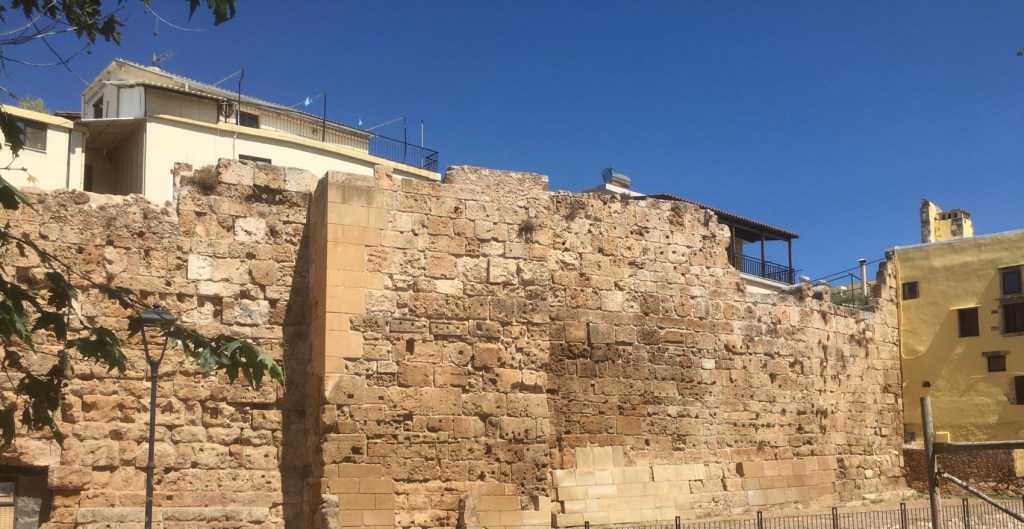
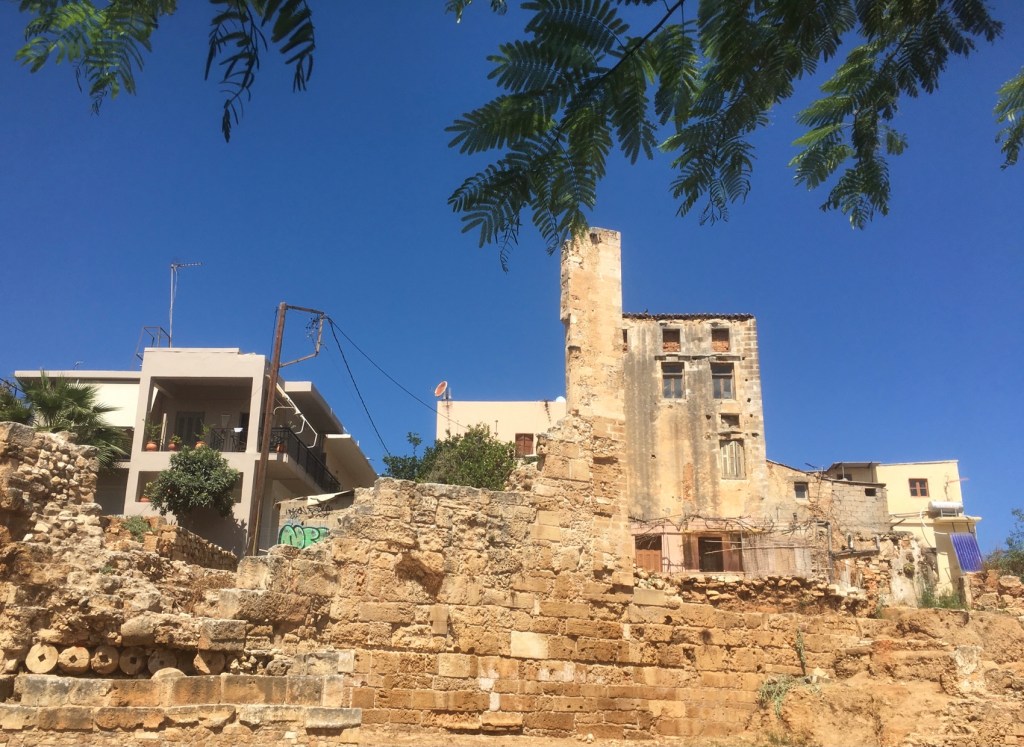
Walked alongside some of the walls which had intermittent desolation and new construction.
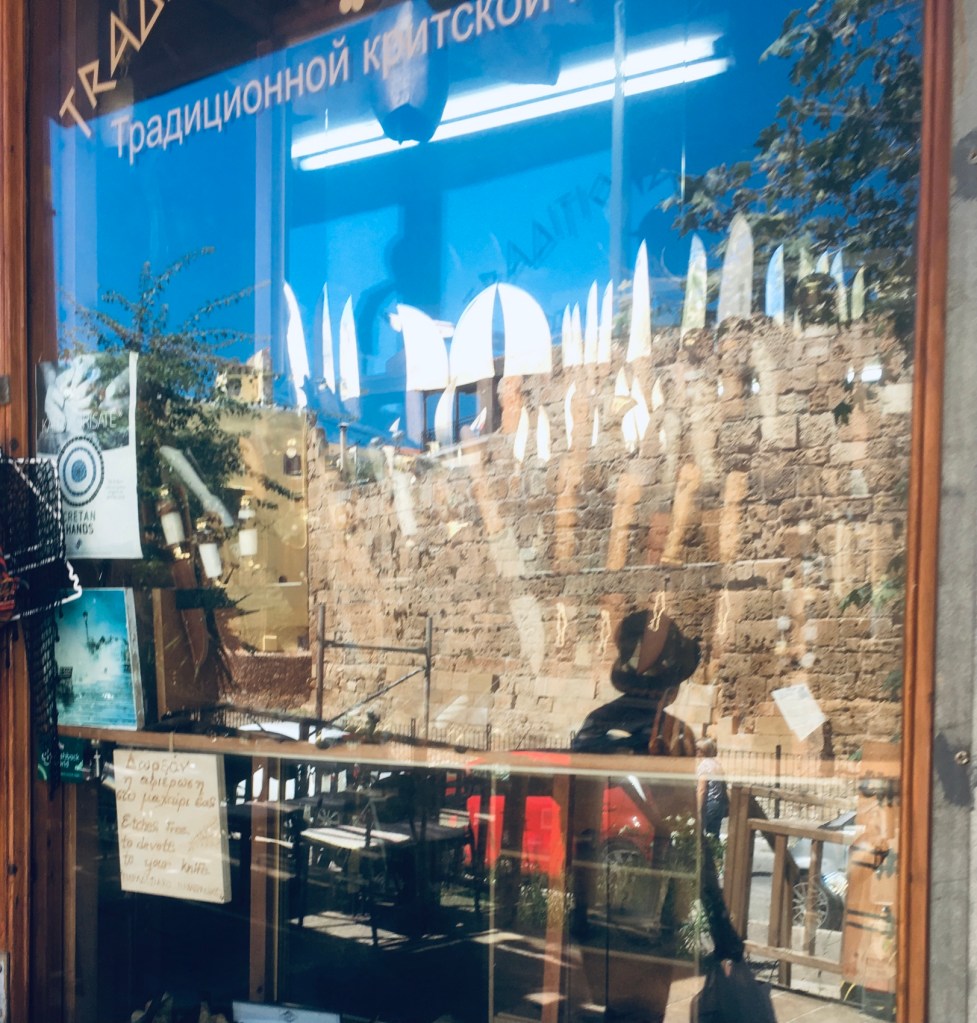
Eventually came to the “ Knifemakers’ street where they still make knives – for culinary purposes you understand.
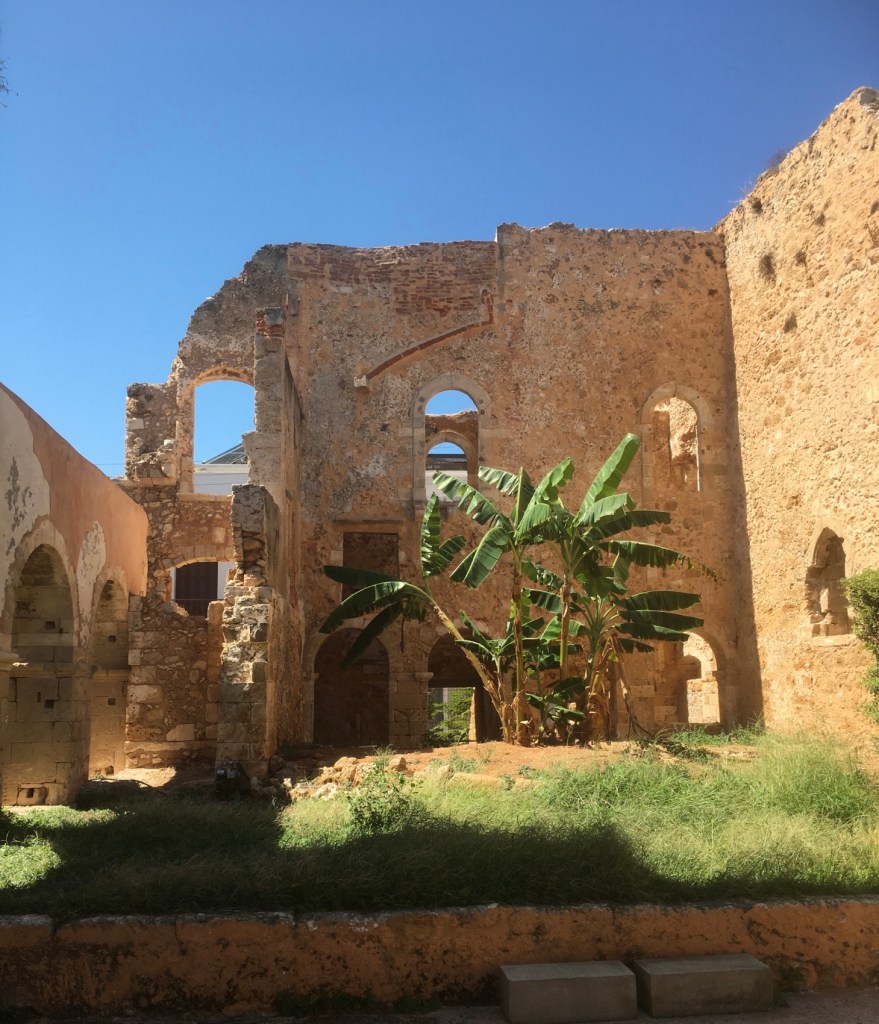
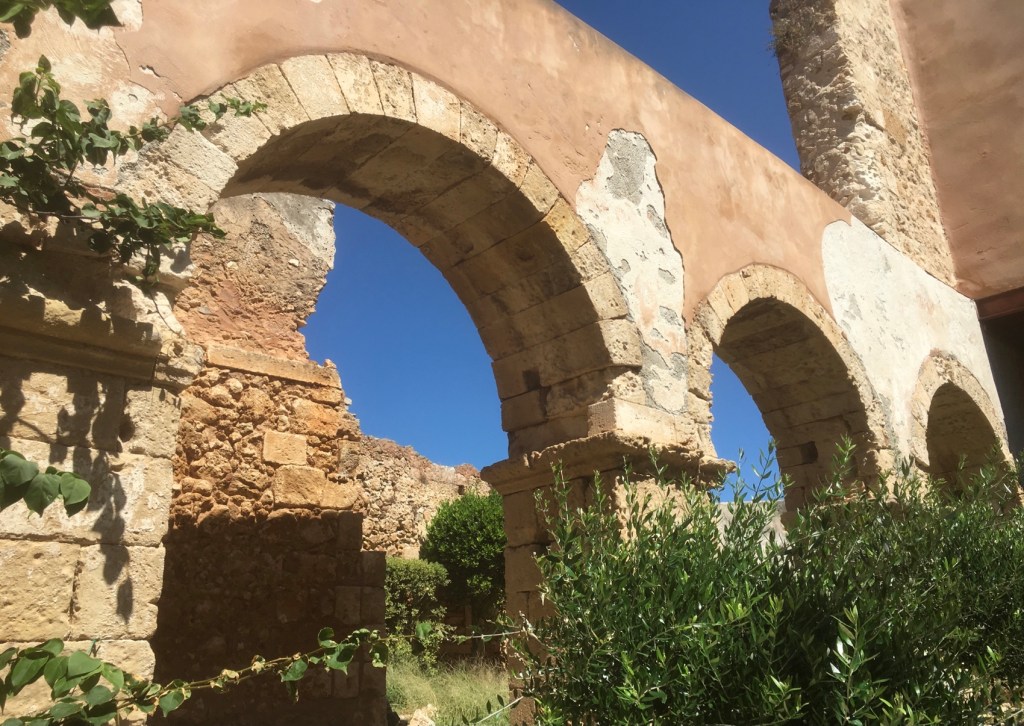
Came to a smart hotel built sympathetically, according to the sign, on and in the site of an ancient monastery.
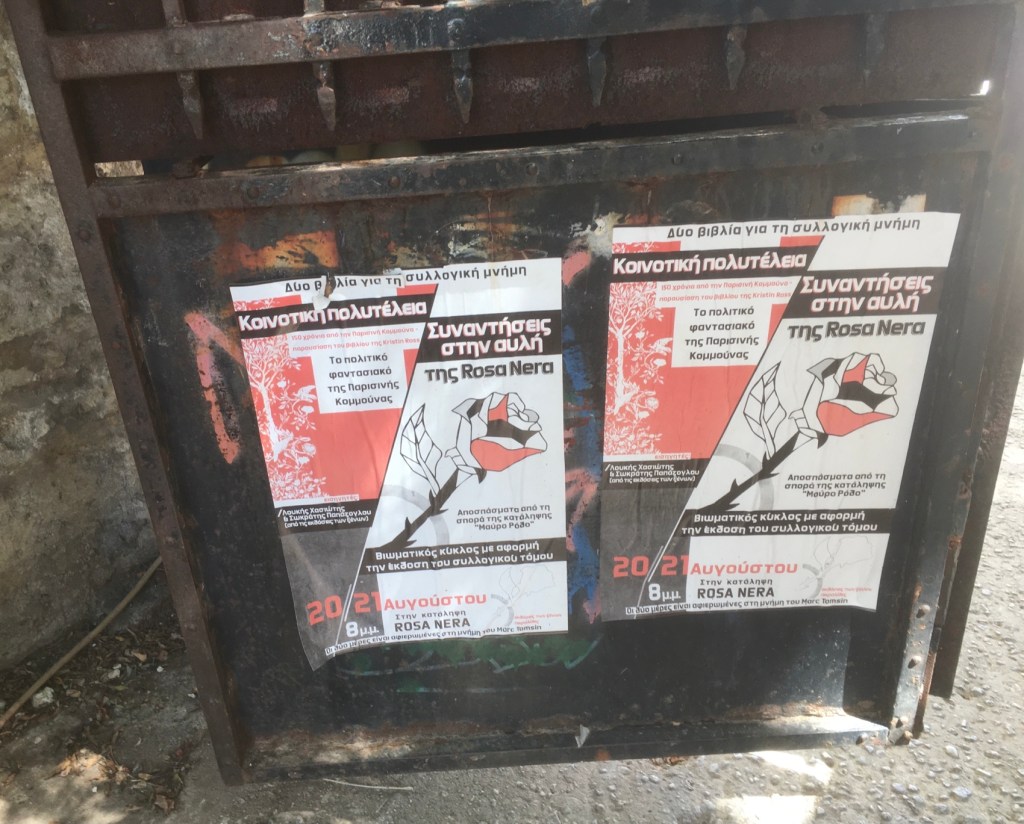
Walking on we came across a square which on first impression looked like the aftermath of a street party – desultory site we thought – I asked a couple of charming girls what is this place -apparently the site had been taken over by locals wanting to help out homeless or displaced people and so it was in effect a political squat.
This is the name of the group involved.The girls also added that views like this would then remain open to everyone. A hotel conversion would prevent public access. Maybe some things got lost in translation but it was refreshing to meet young people involved in positive political action.
Some more viewpoints of a different kind.
Not to mention the National Greek Soccer Museum.
Now what year did Greece sweep them all aside?
Back to the Market for that now overdue lunch.
Seafood and Retsina – a marriage made in Chania.
I was taken by an old photo on the wall of a gentleman enjoying his lunch . Not that I wanted to emulate him
Had to walk back to walk off that lunch. Could have done without the reminder about what had just been ingested,
The Aegean now on the right and the bay not too far off, after a bit of a scramble over the headland.
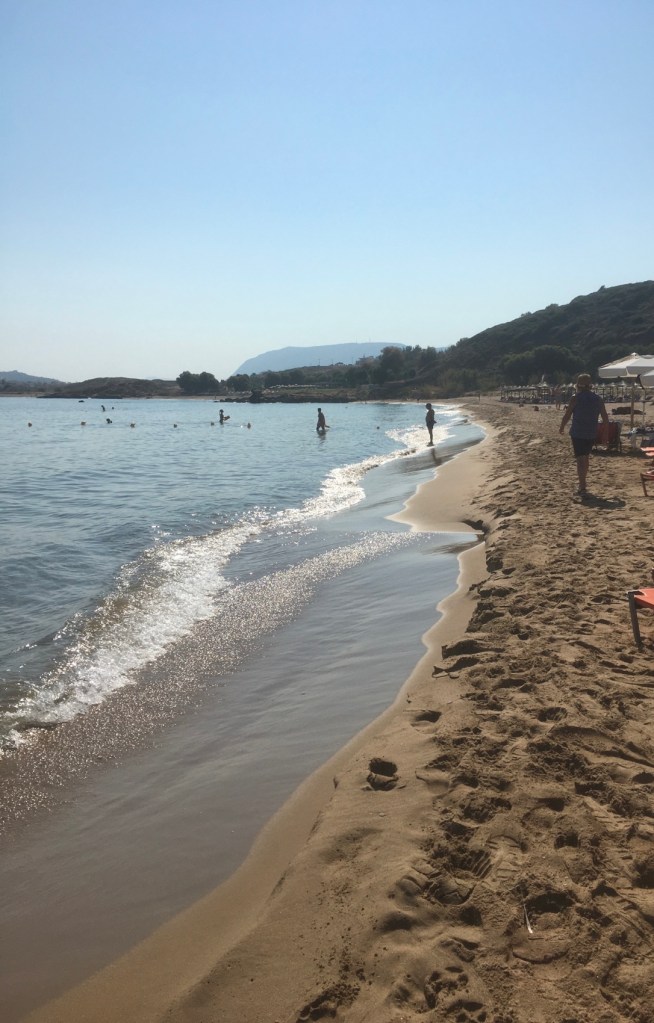
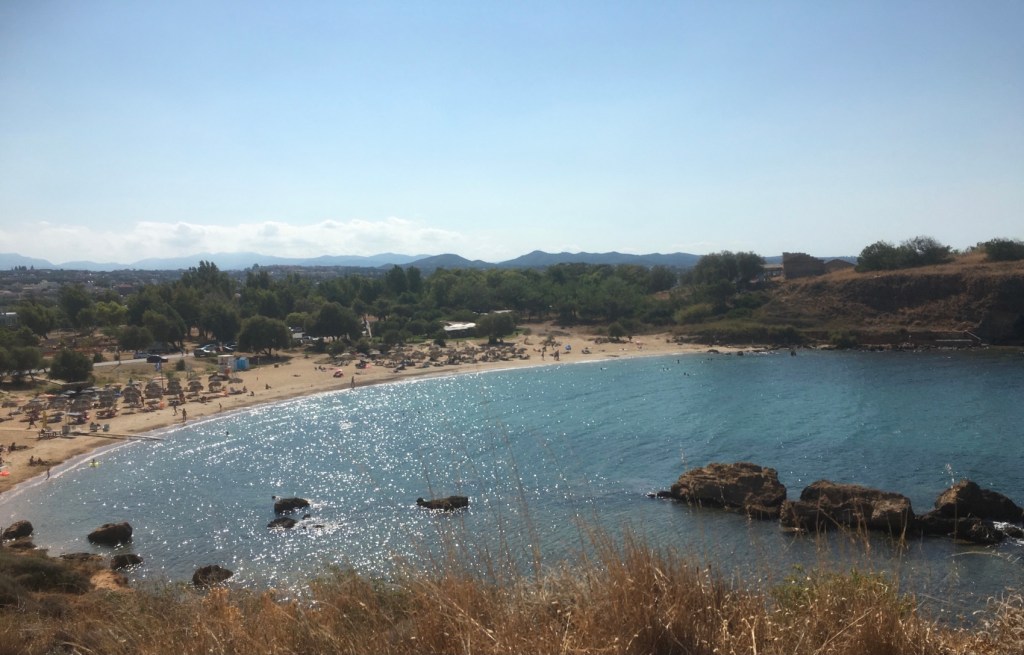
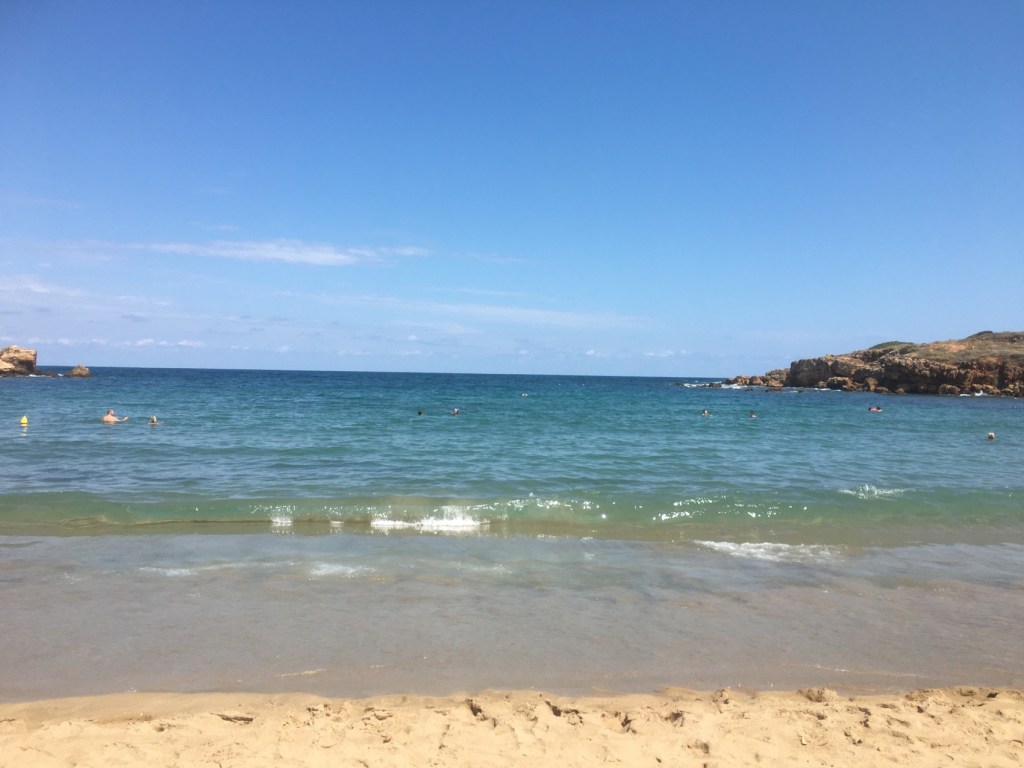
A day for exploring the nearby beaches,about a seven minute walk away.
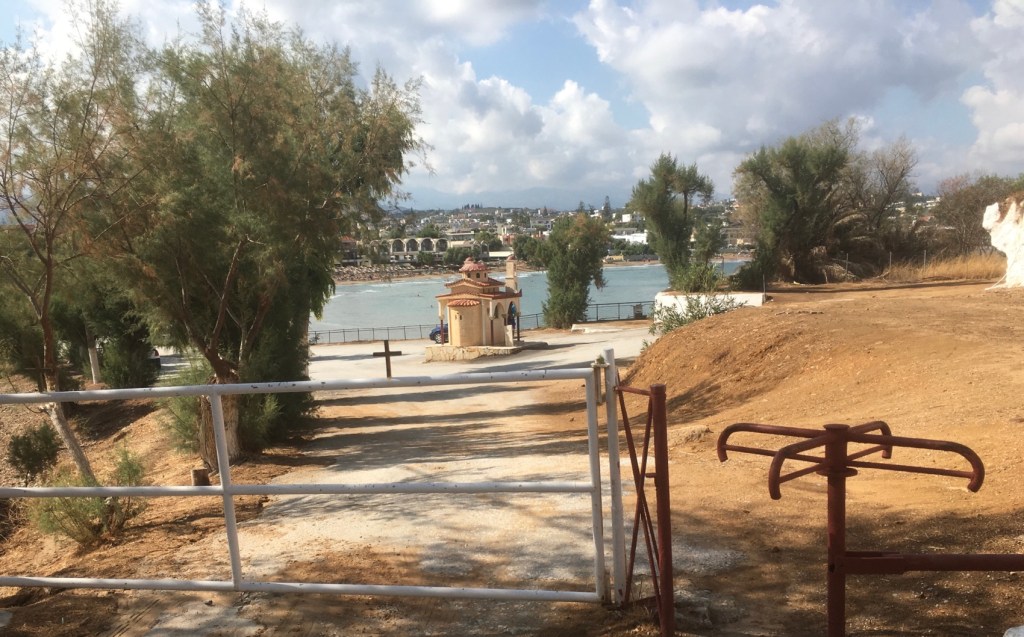
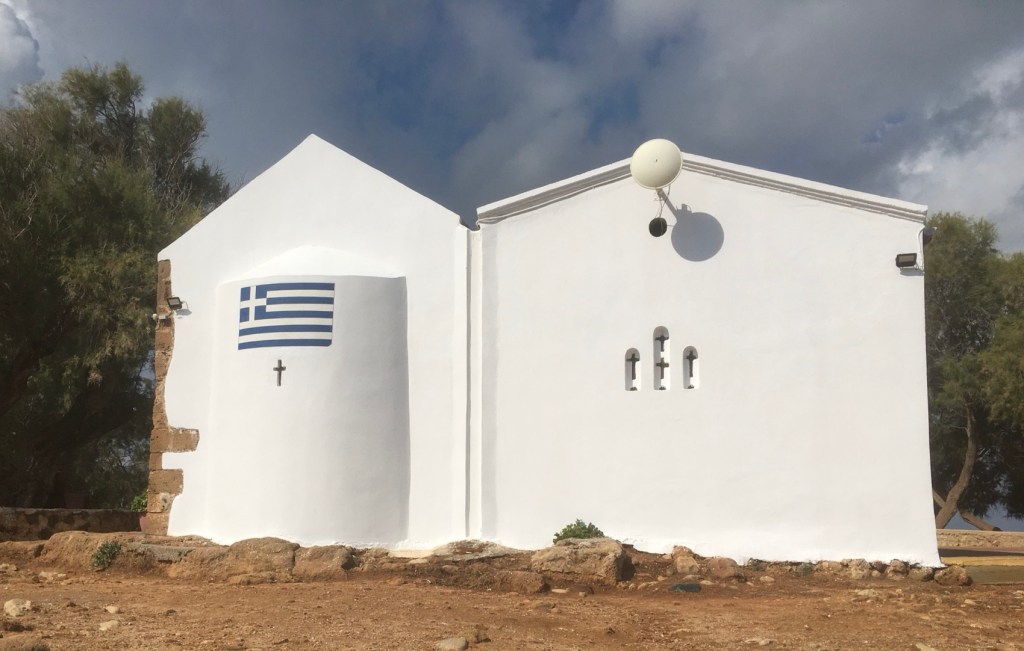
Most places are named after Saints and sitting atop an outcrop was the chapel of the Saints, in pole position. Getting up to it was through my kind of stile – a turnstile. Ramblers will know what I mean.
The guardian Angel has his feet up – doesn’t look like a stressful job.
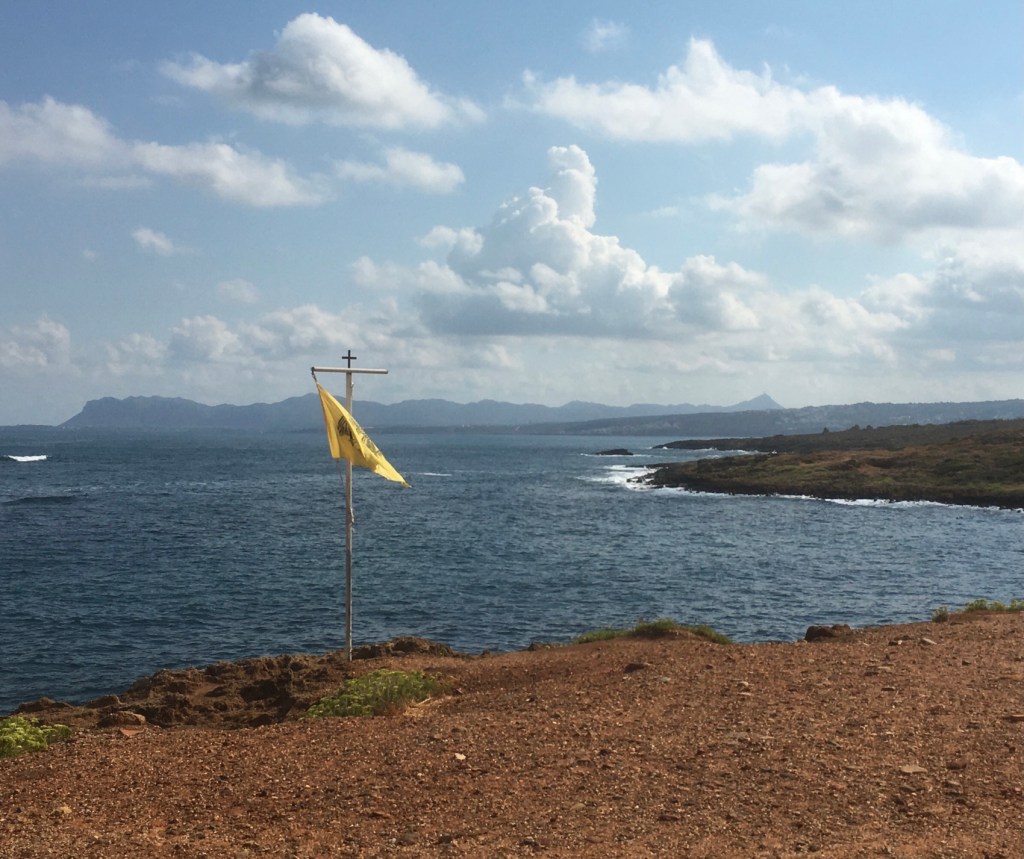
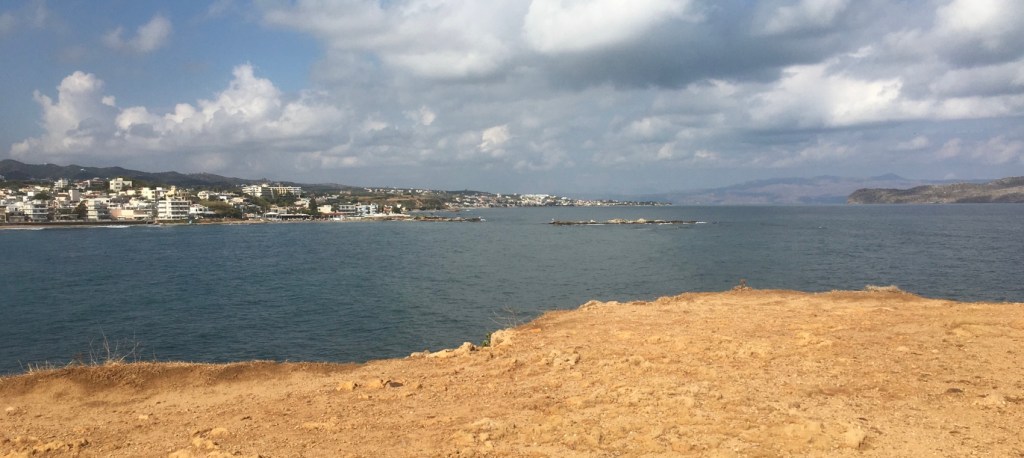
Fine views over both bays.
It didn’t take long to circle this pleasant,little outcrop,then it was back down to the beach and the serious business of doing nothing much except lounge and soak up some sunshine.Very clean, safe and warm.Everything you need to know…as long as you can read Greek.
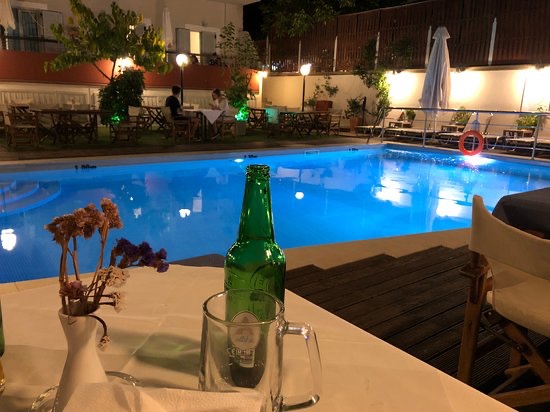
Later that same day, Hannah and I enjoyed a drink at the poolside .
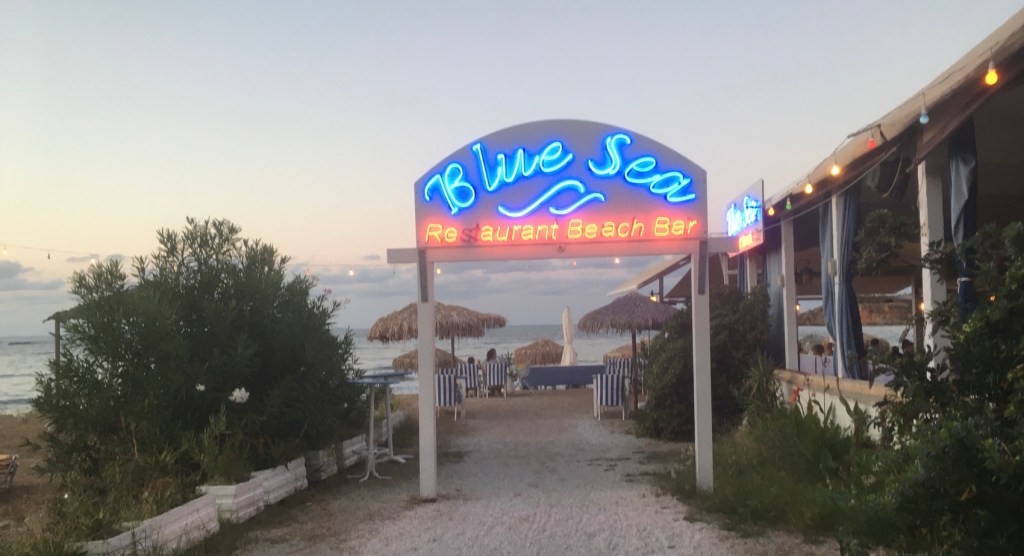
For dinner we headed for the Blue Sea Restaurant and stopped for a sharpener on the way in a bar with some very natural attractions.
Hanging by a thread .A canopy of Gourds.All grown from seed by the owner’s son,apparently. A man after my own …seedtray.
The scene at the restaurant was far calmer than the previous evening.
We had a really good meal here and the service was excellent.




























































 ensuitepilgrim's Blog