Archive | Uncategorized RSS feed for this section

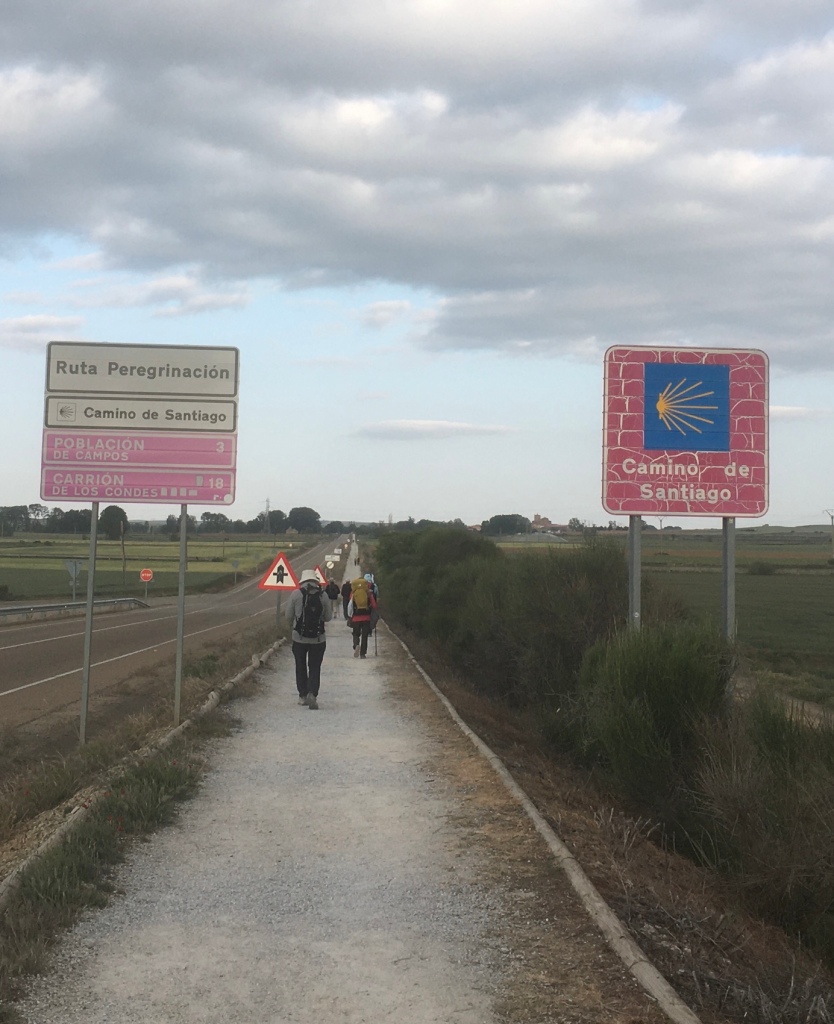
FROM CARRION TO LEDIGOS – AND TUMBEWEED JUNCTION,24 KM

20 May
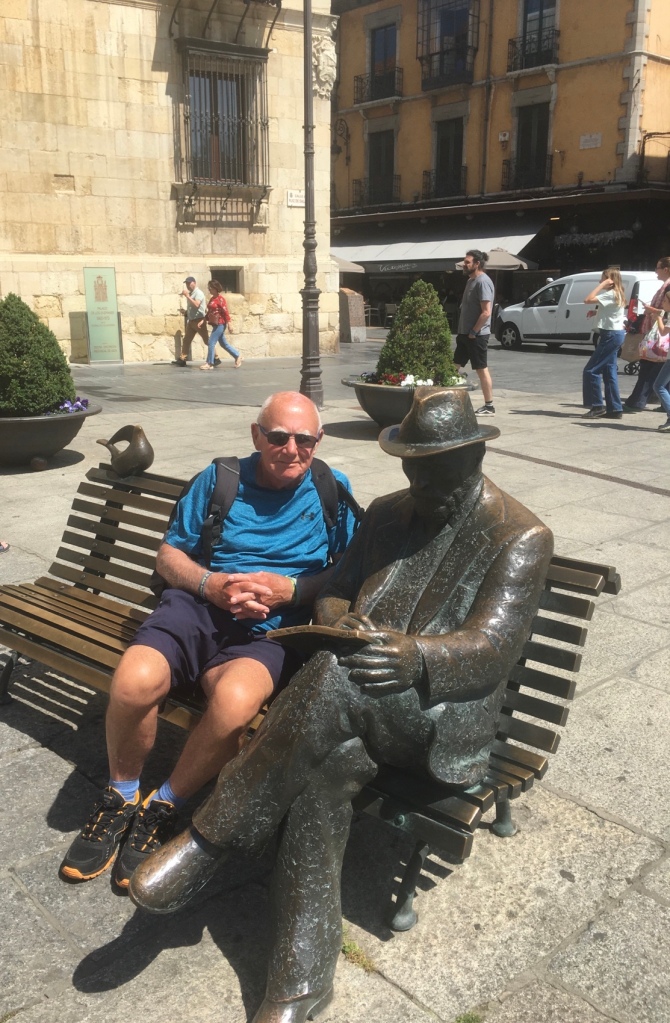
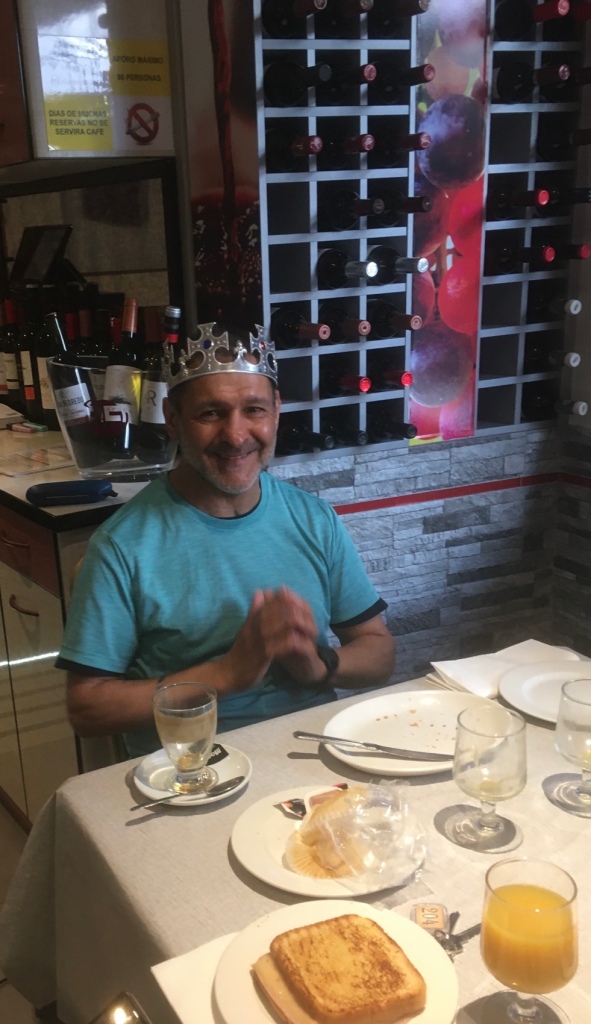
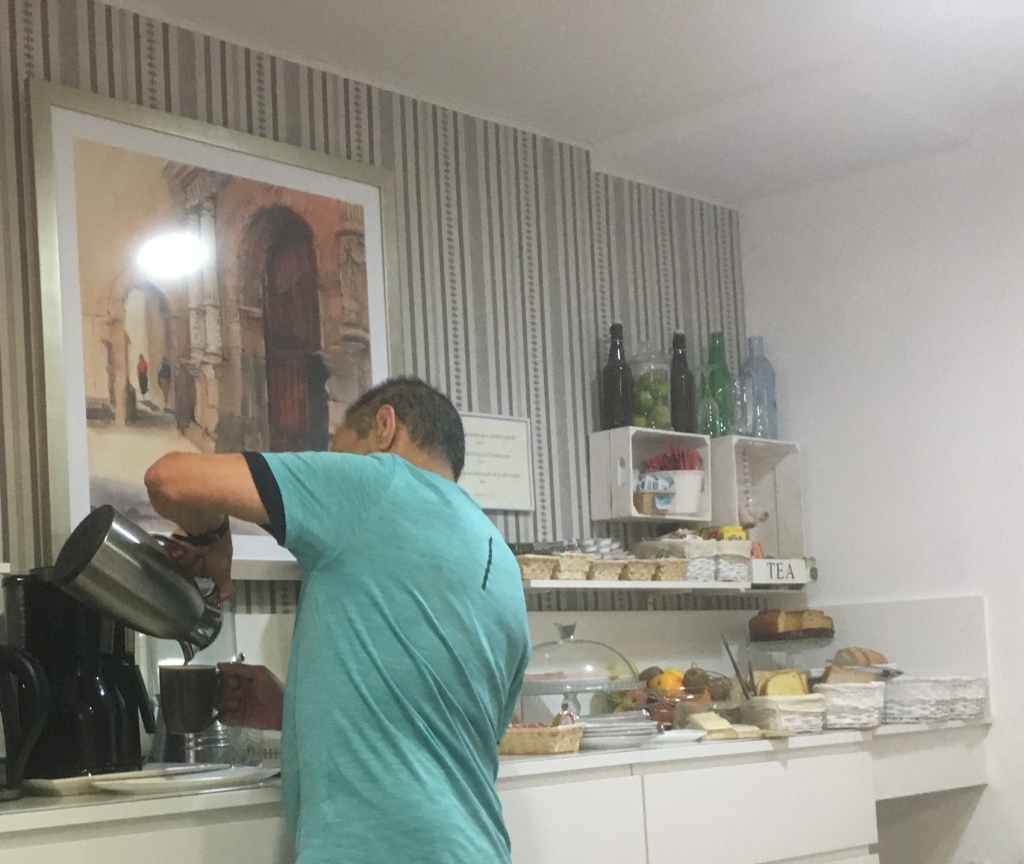
KING RANJIT OF THE CAMINO FRANCES AT BREAKFAST
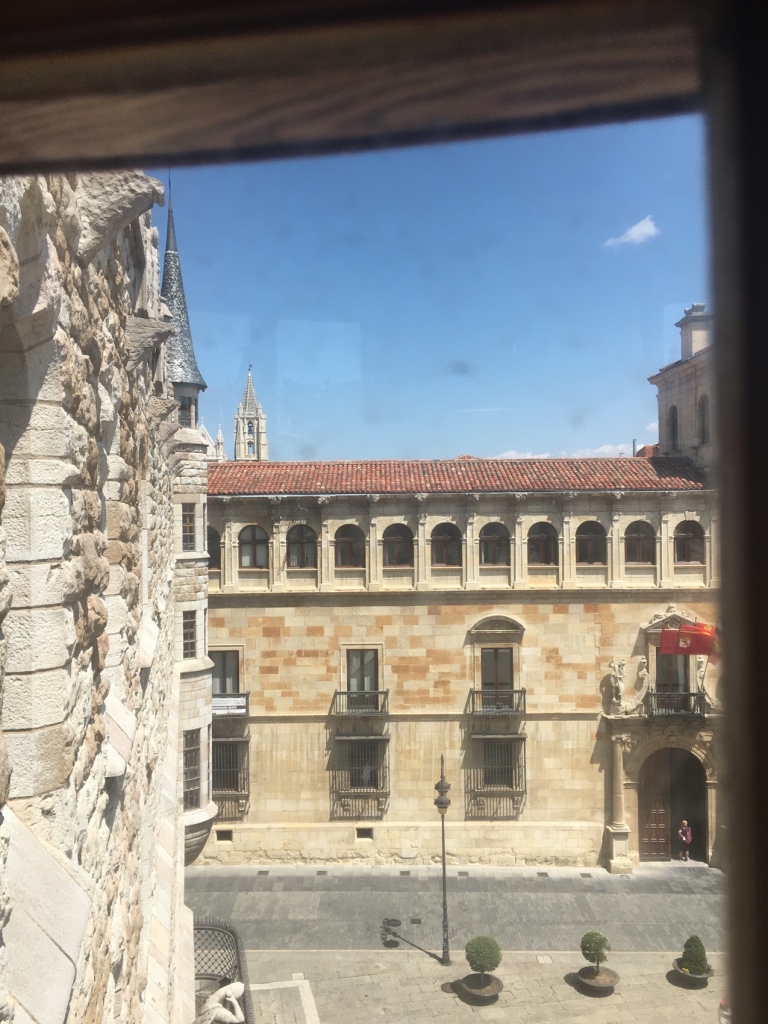
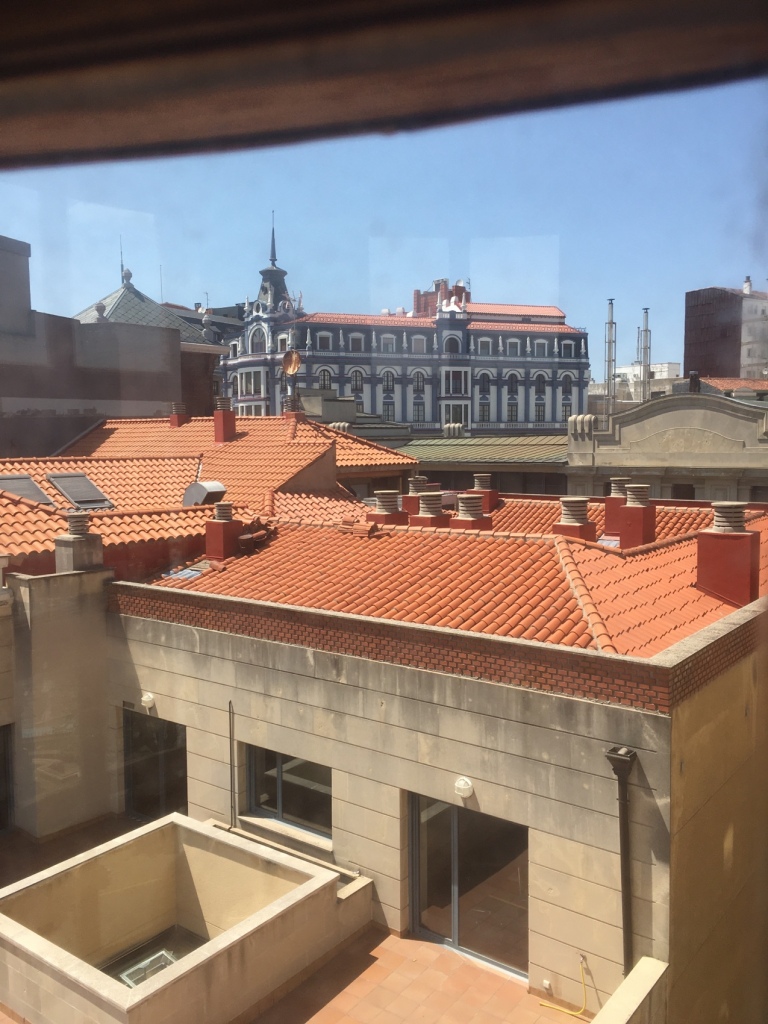
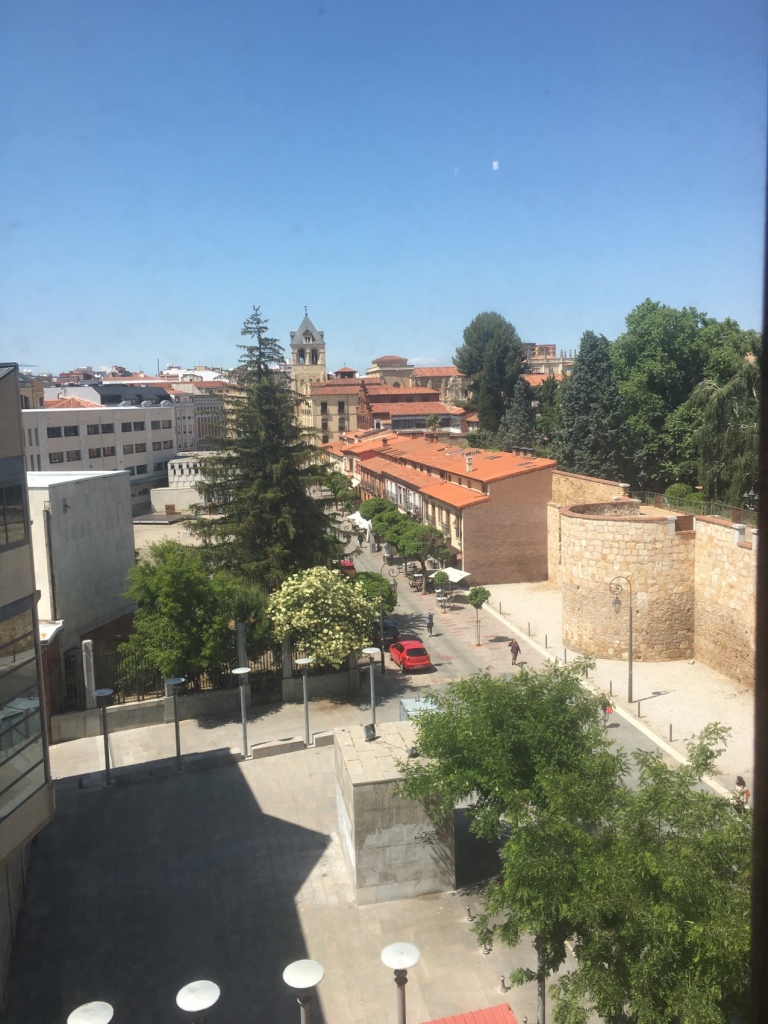
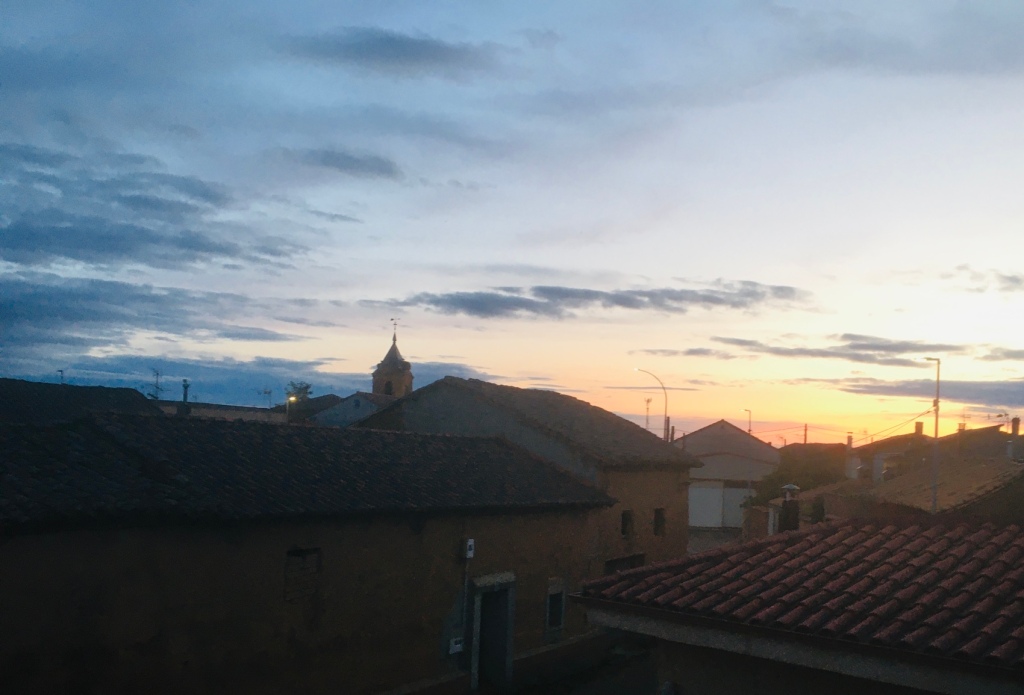
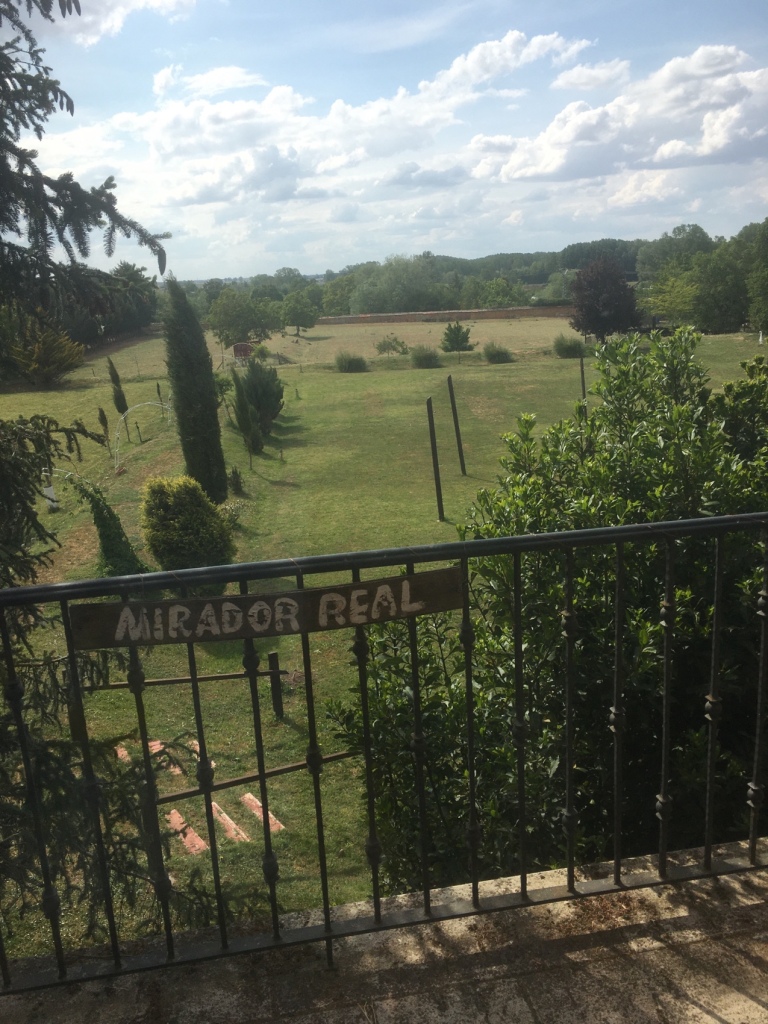
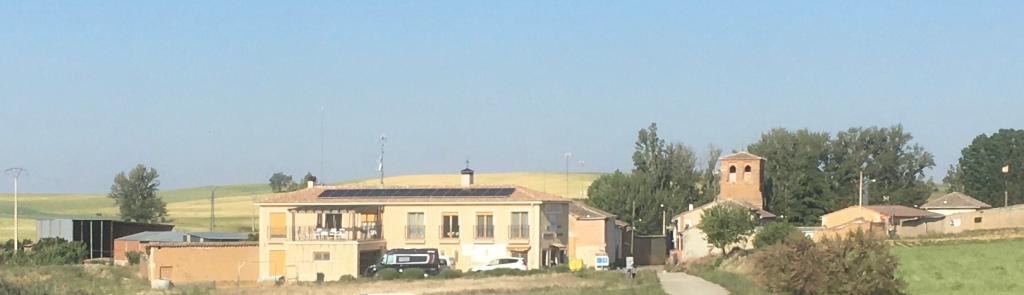
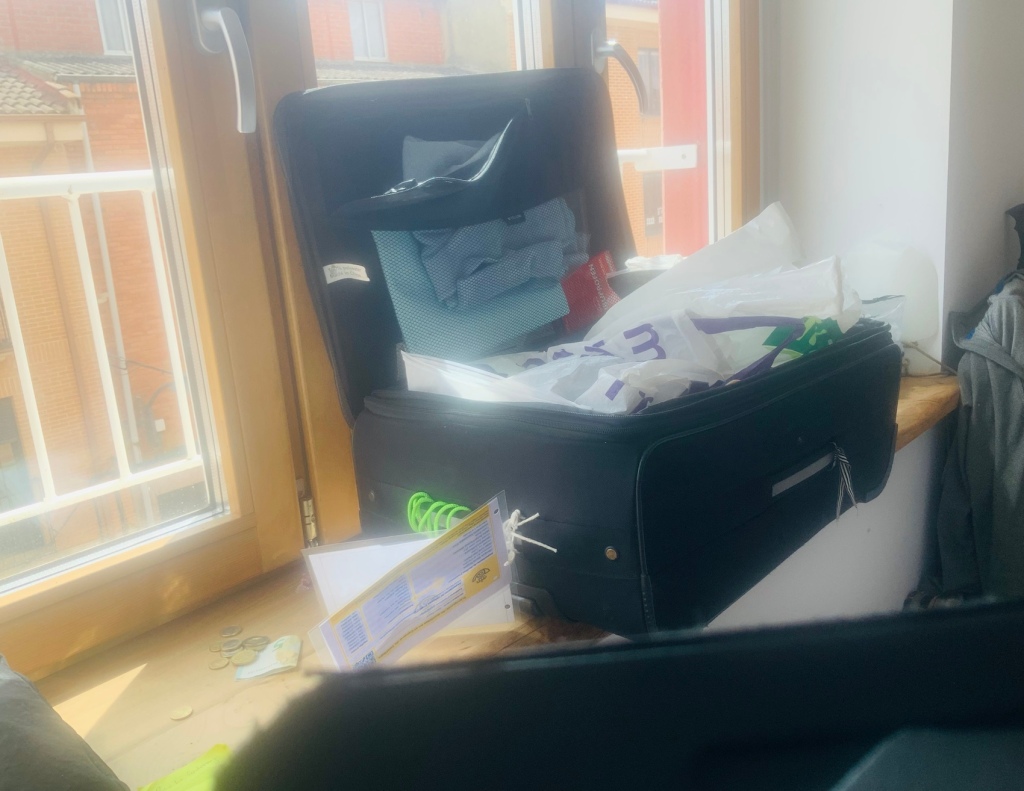
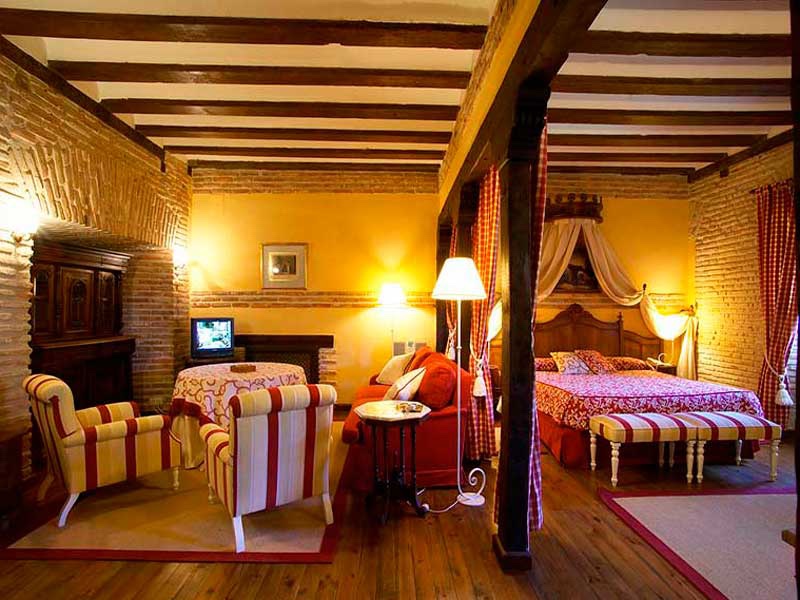
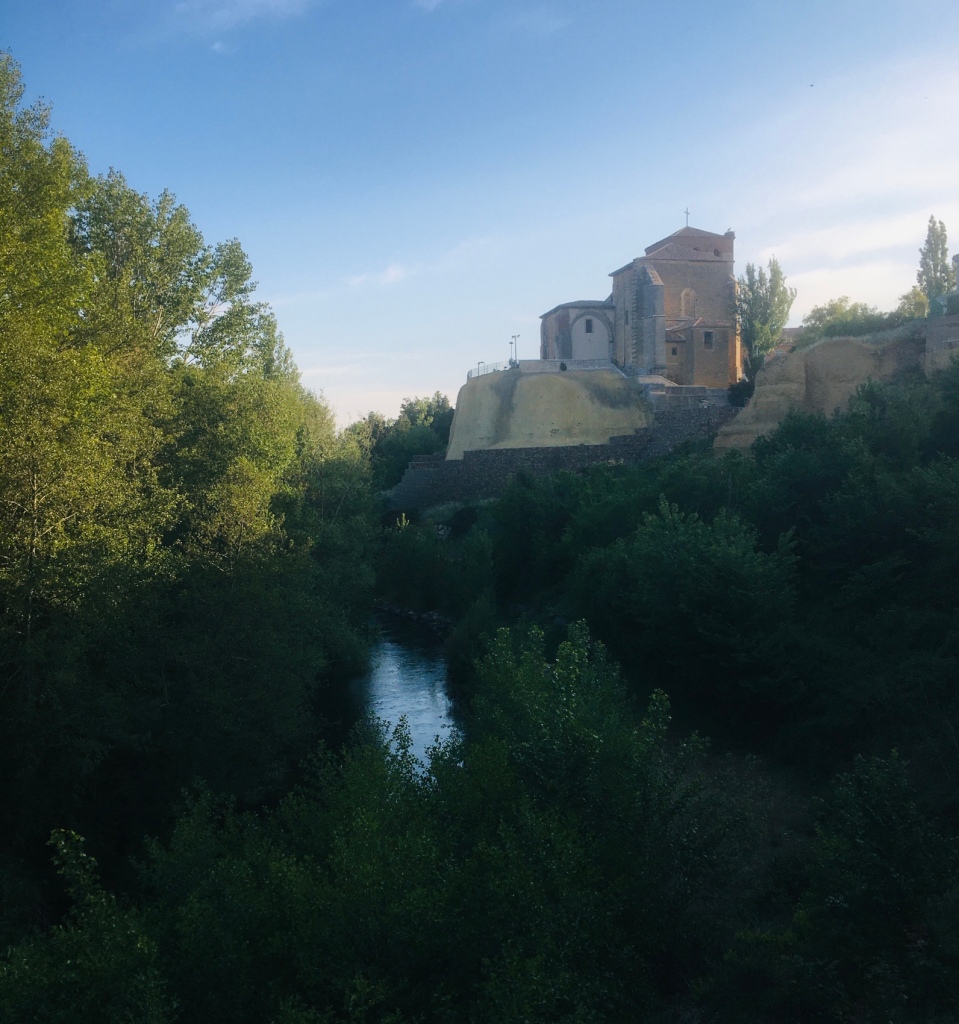
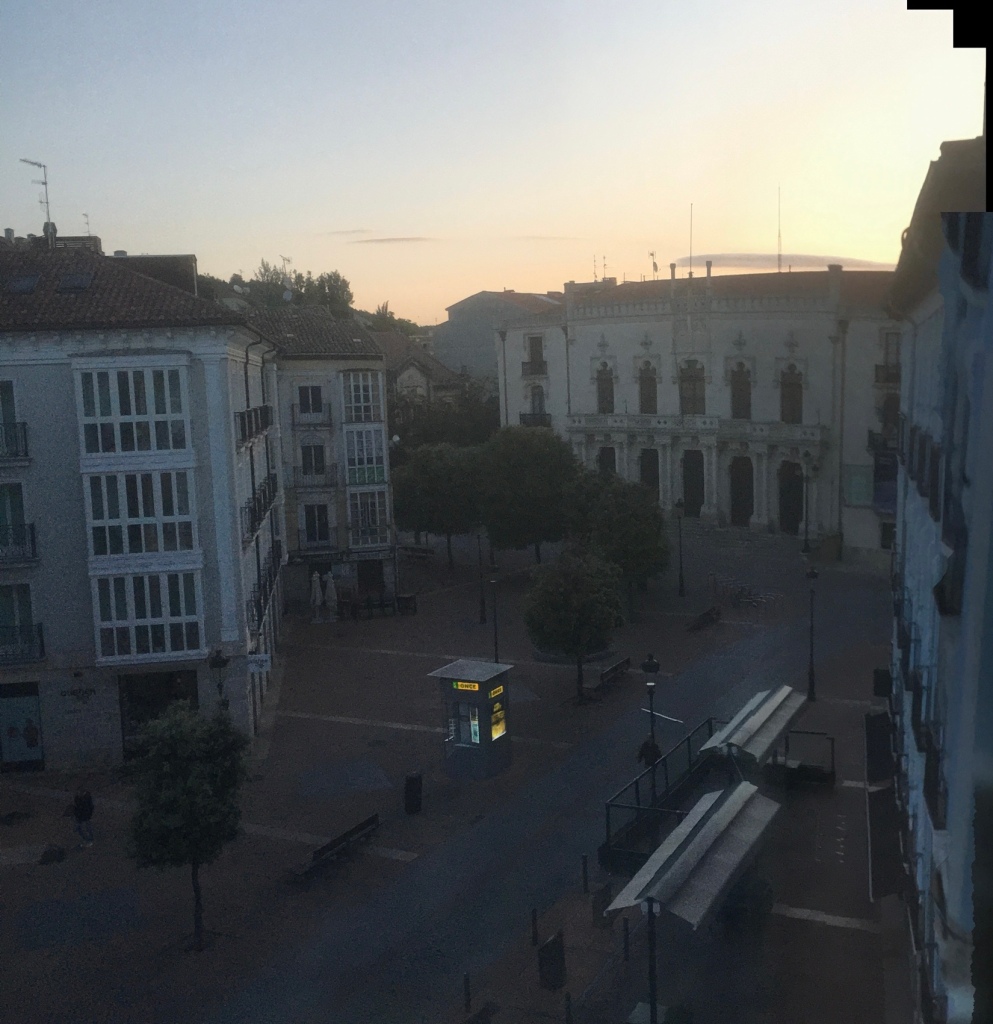
View from our bedroom window
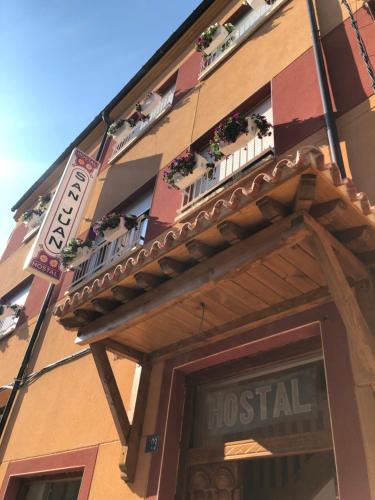
Waiting for the off from Carrion de Los Condes – we were sorry to leave as it is a very interesting and historic place – worth a couple of days stay.

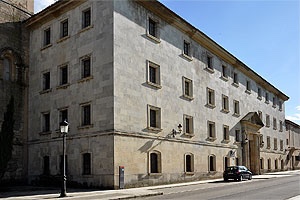
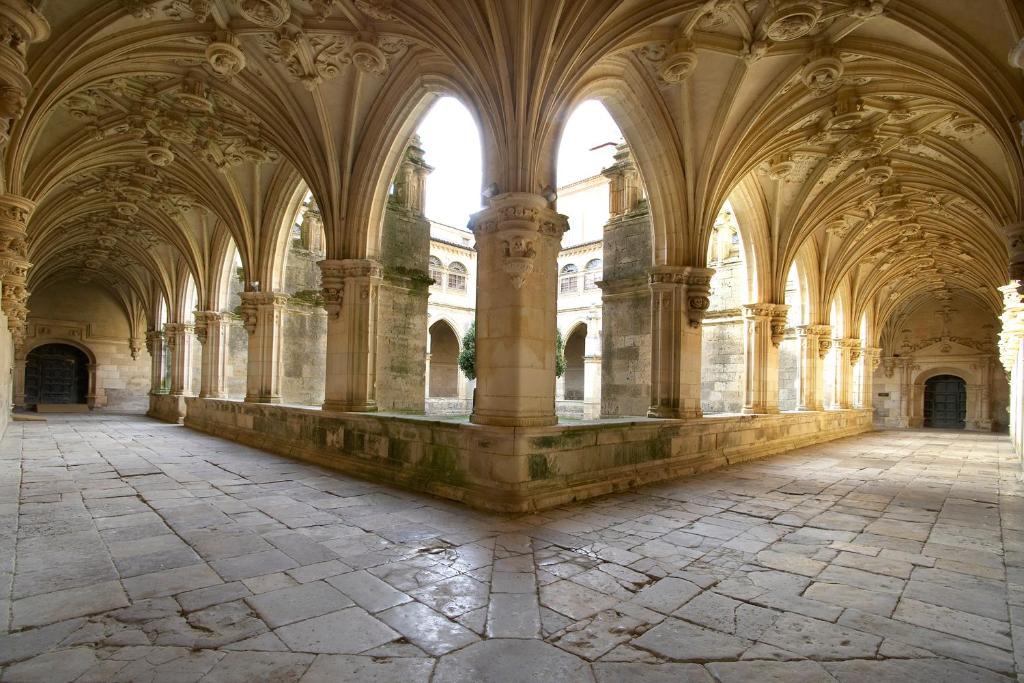
We passed Hotel Real Monasterio de San Zoilo on the edge of town – a very impressive place to stay, but at £92.00 a night, a little above our budget

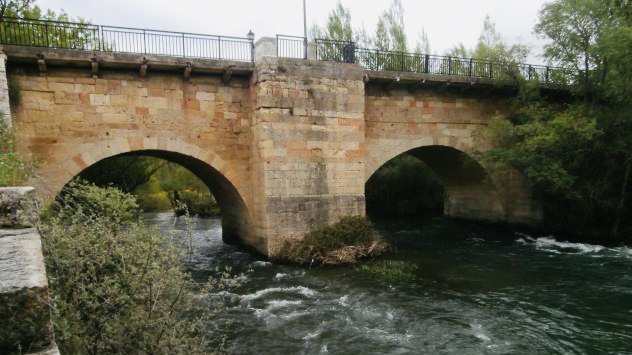
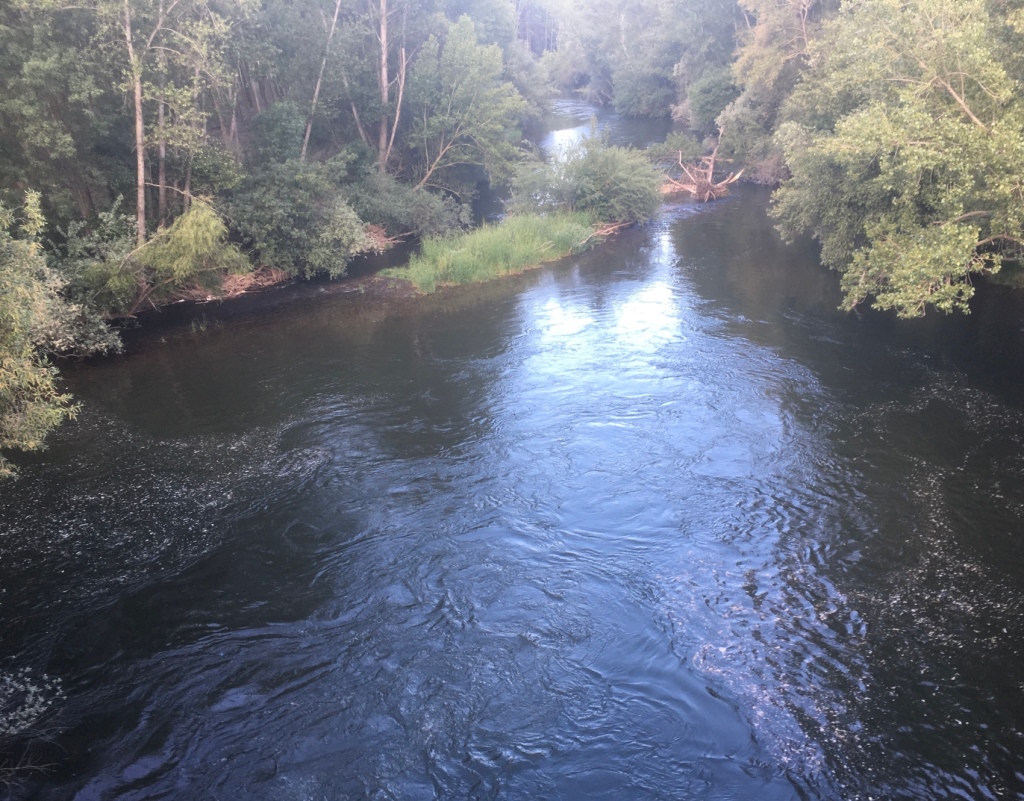
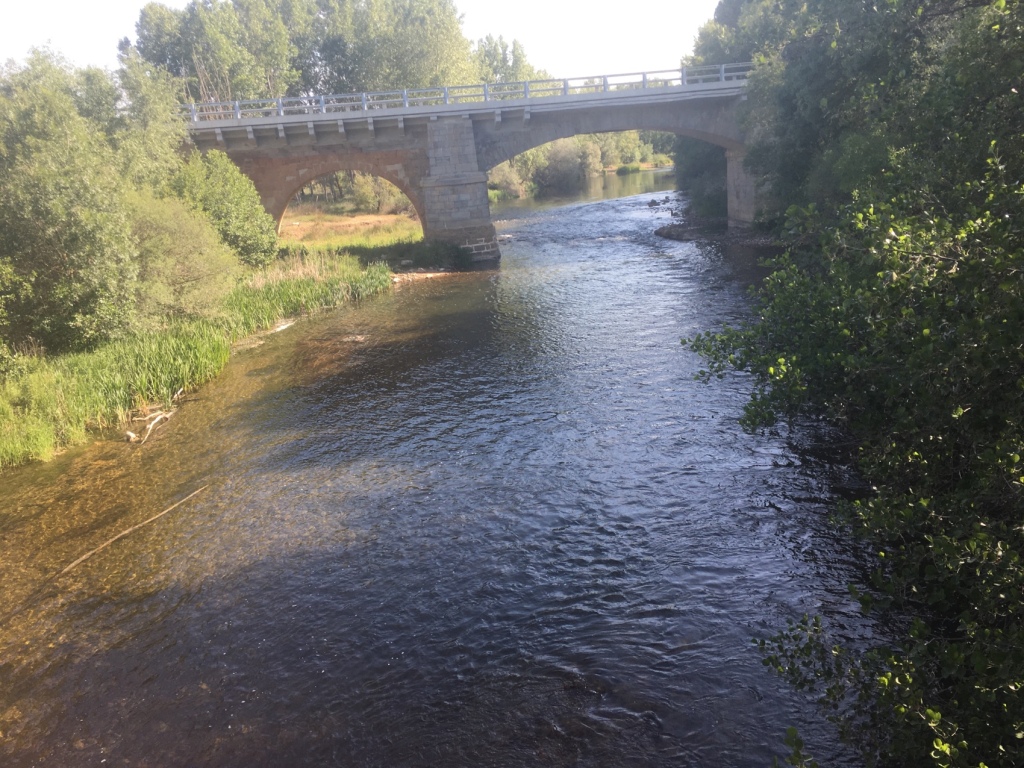
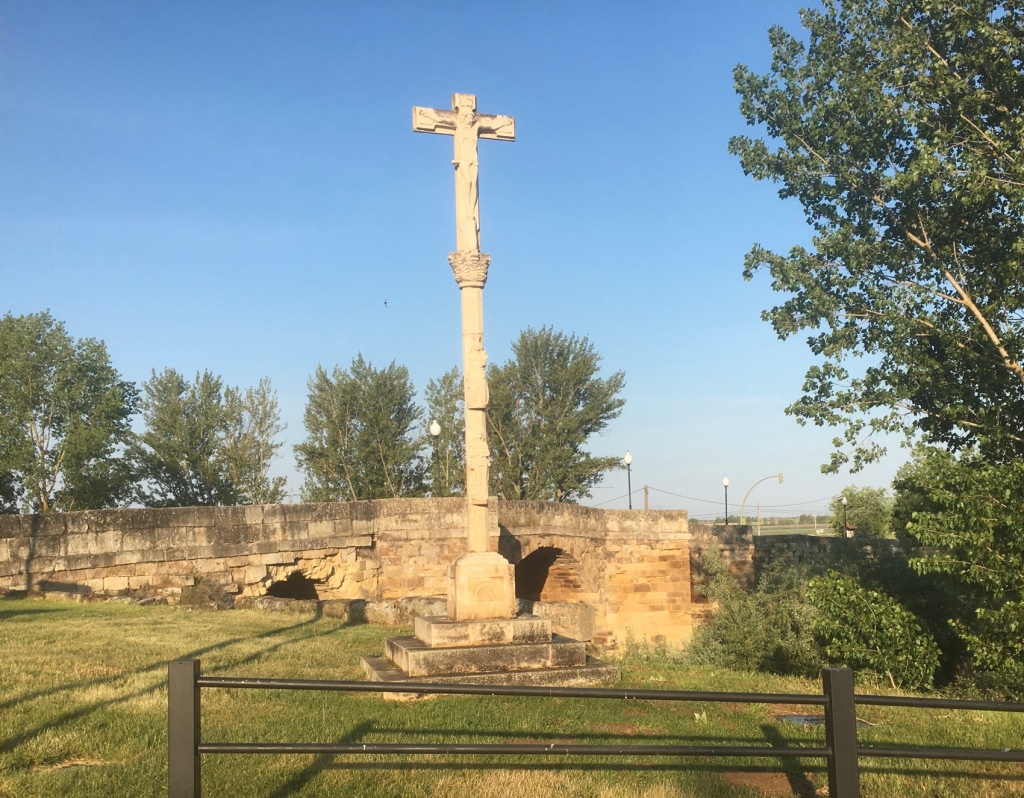
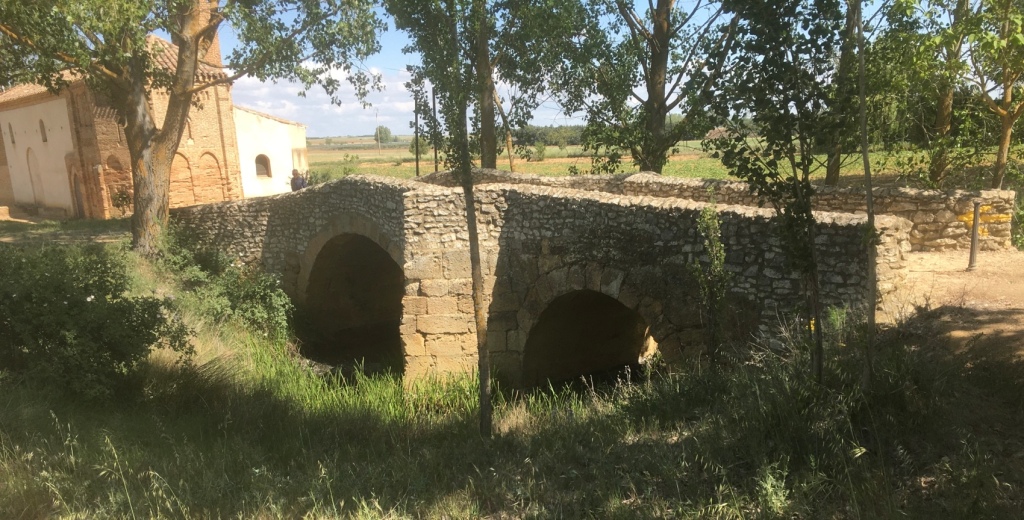
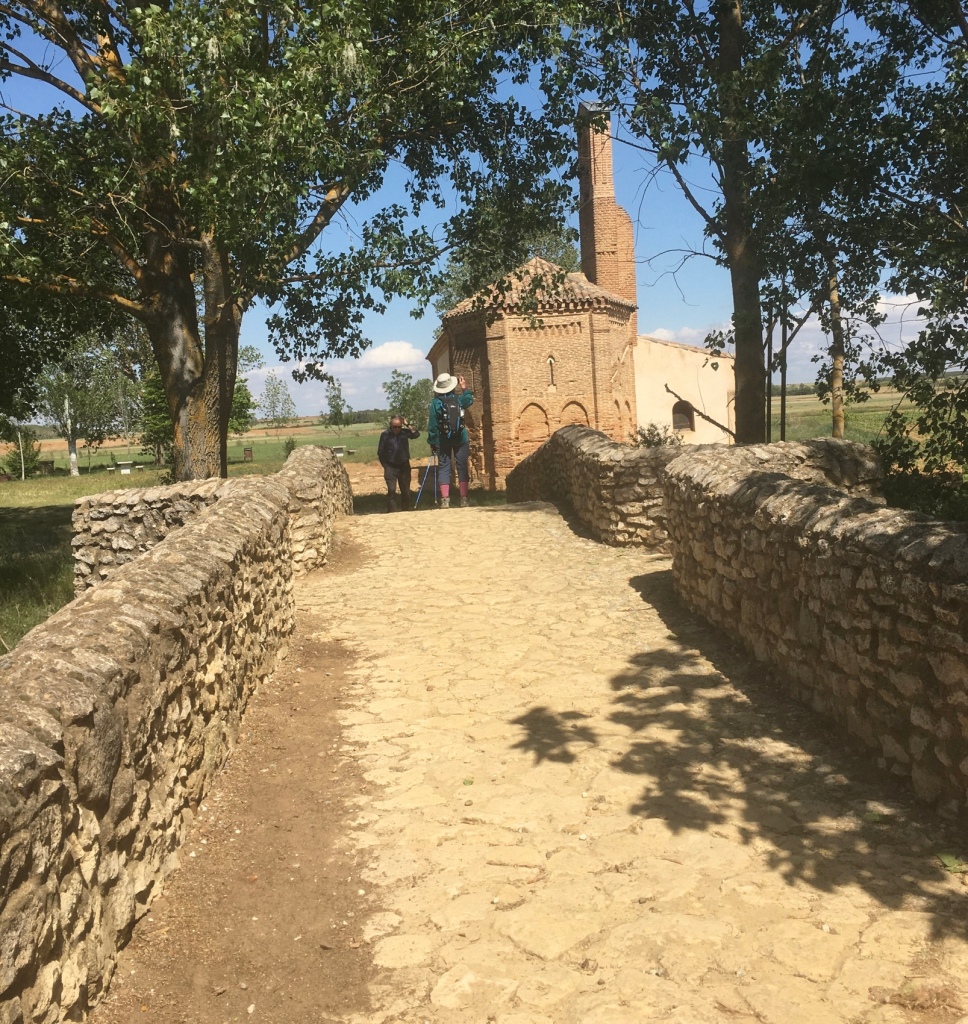
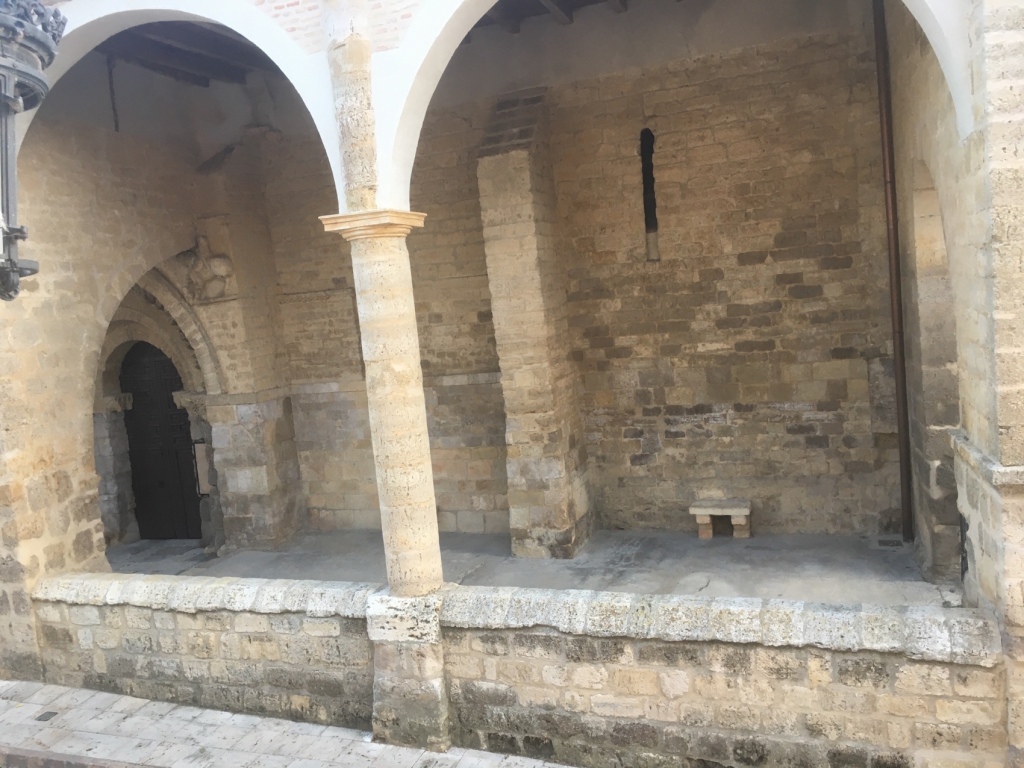
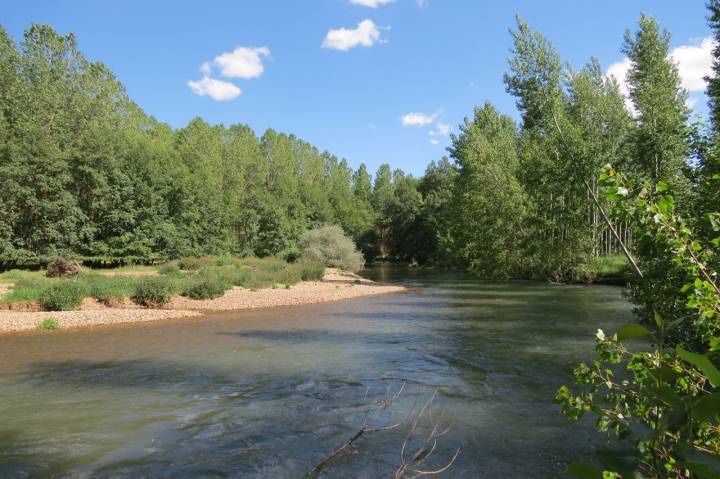
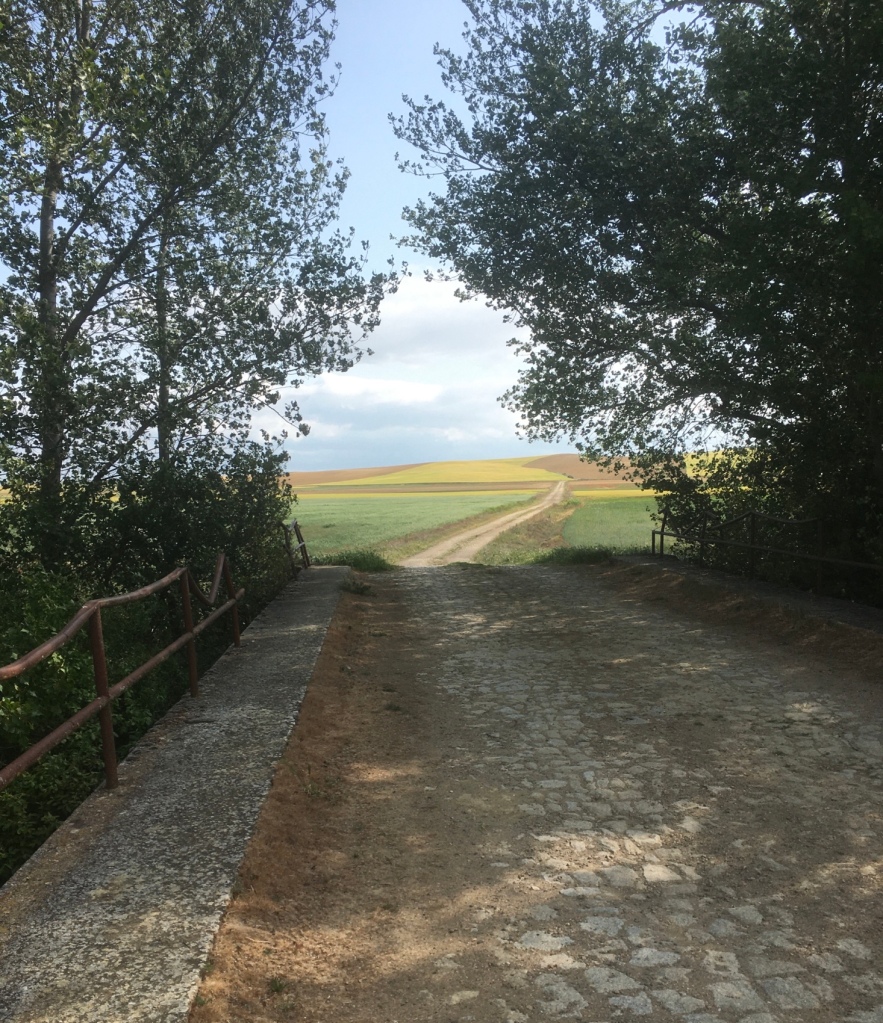
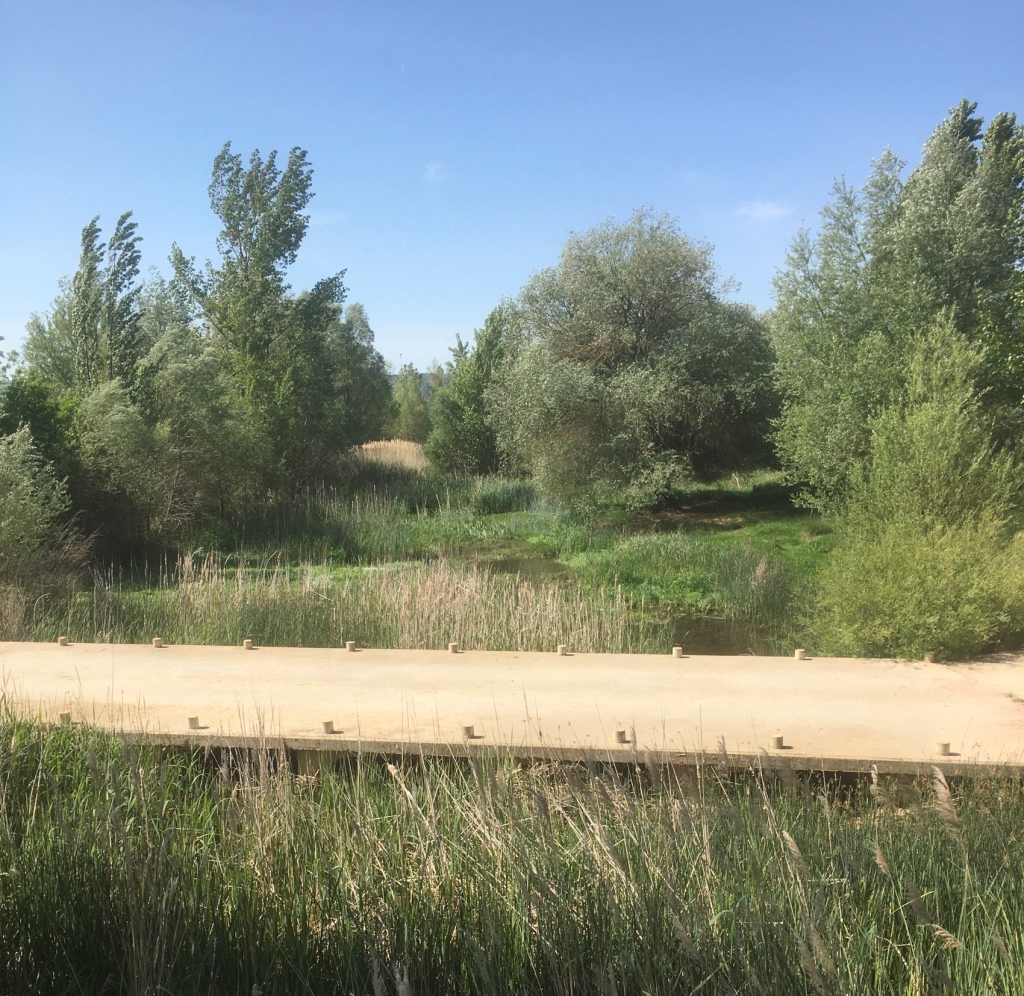
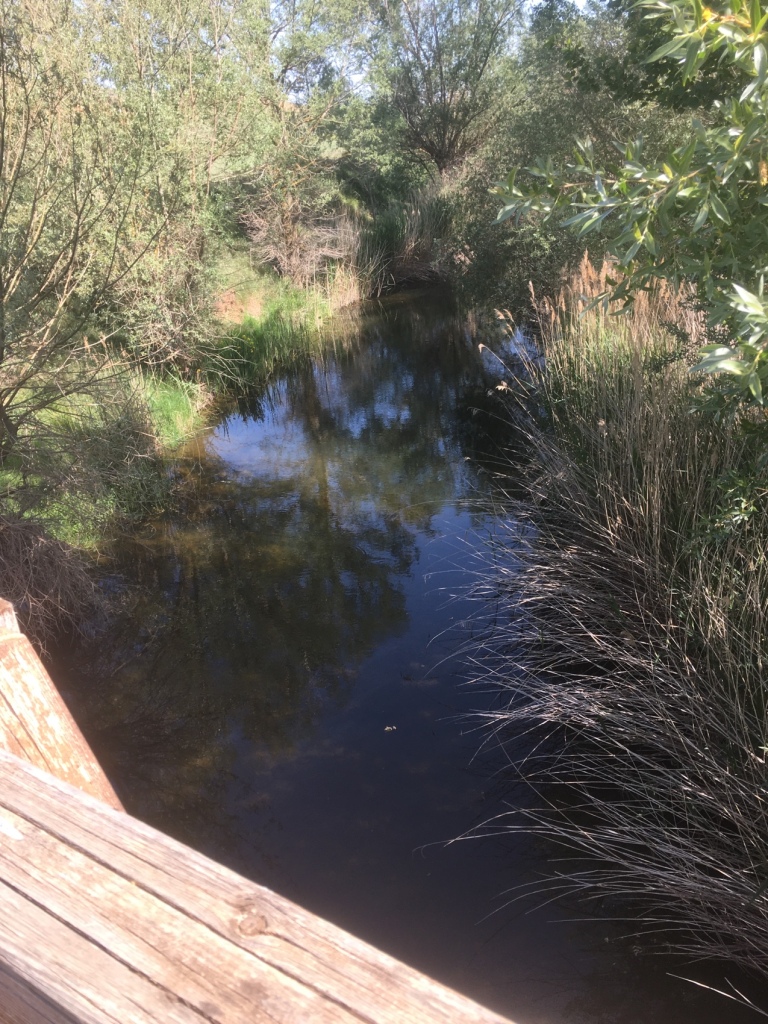
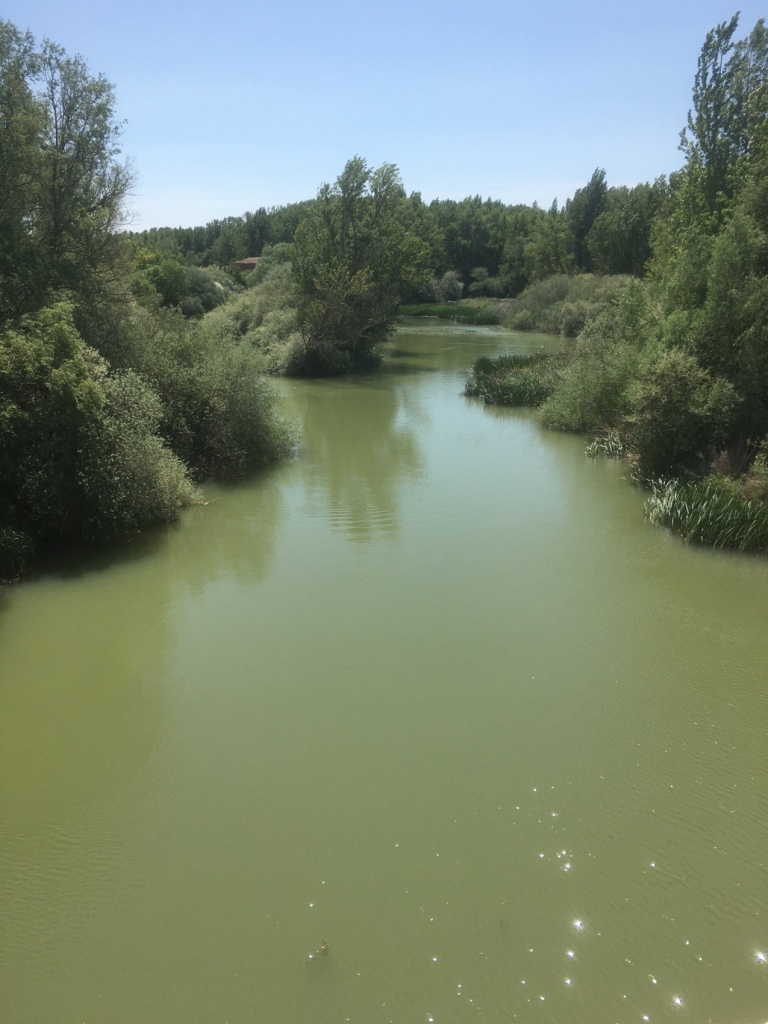
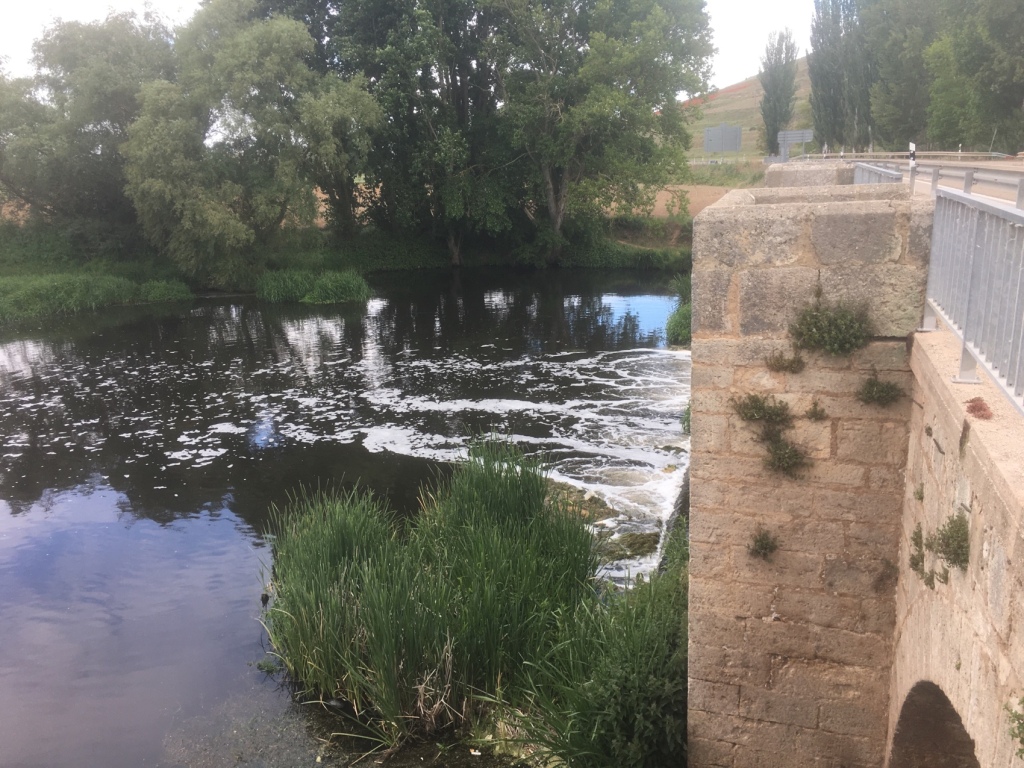
Crossing the River Carrion
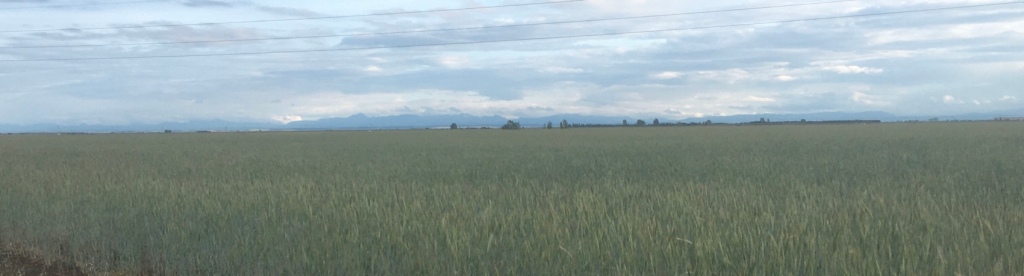
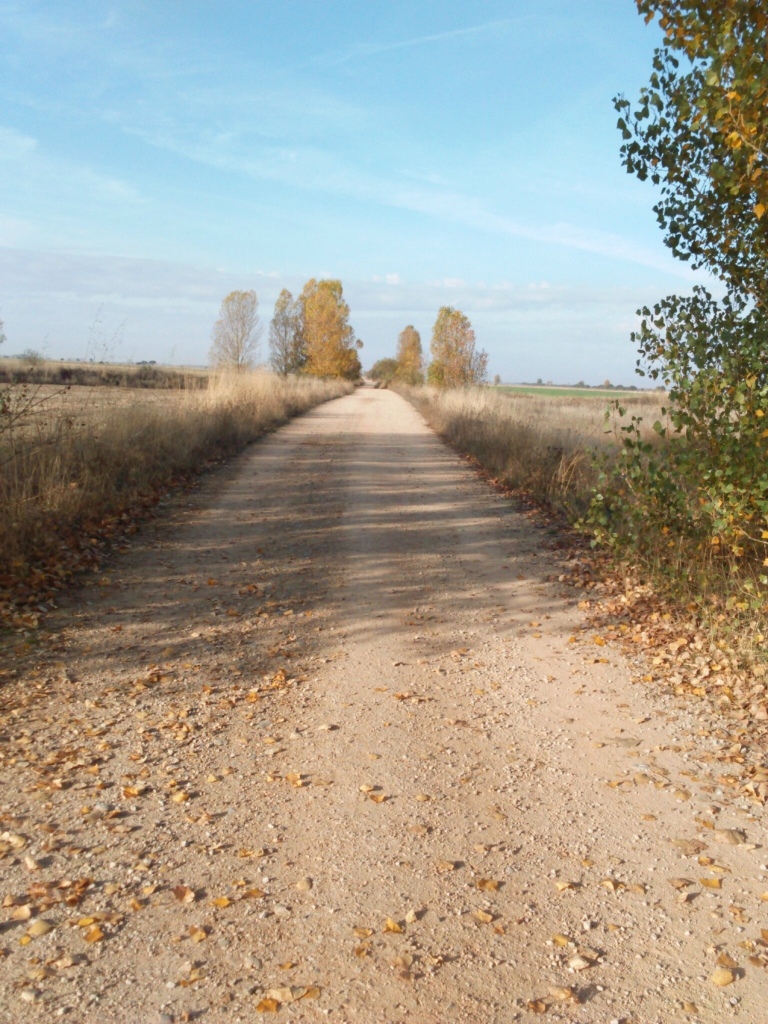
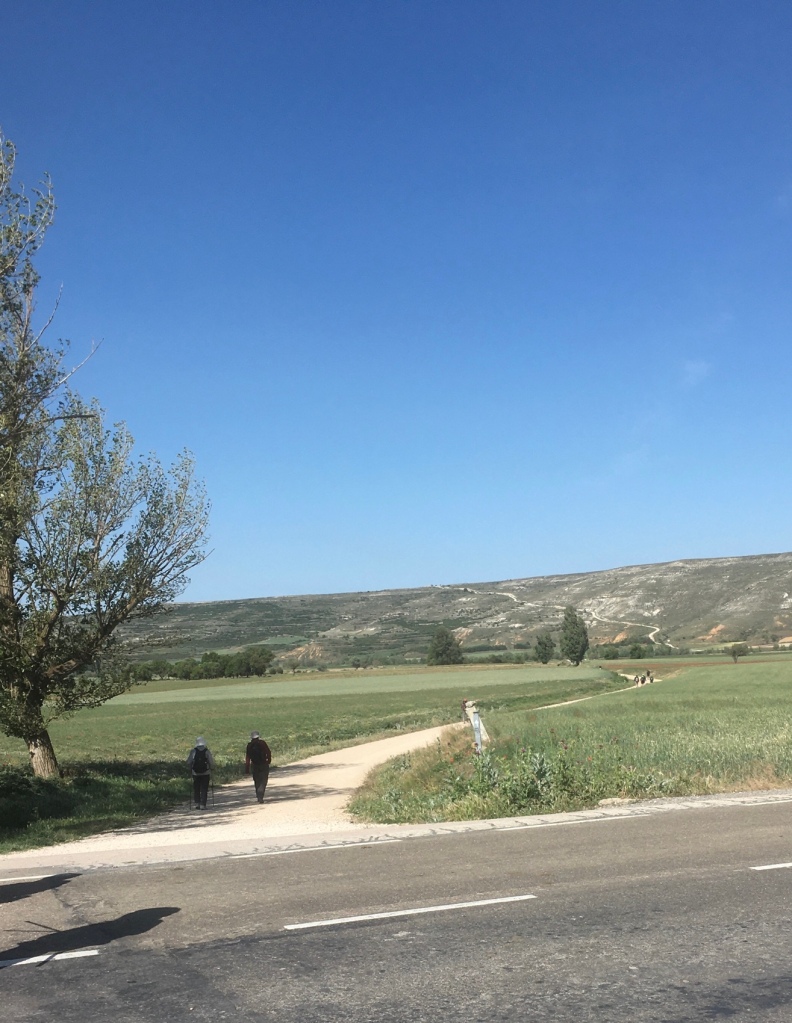
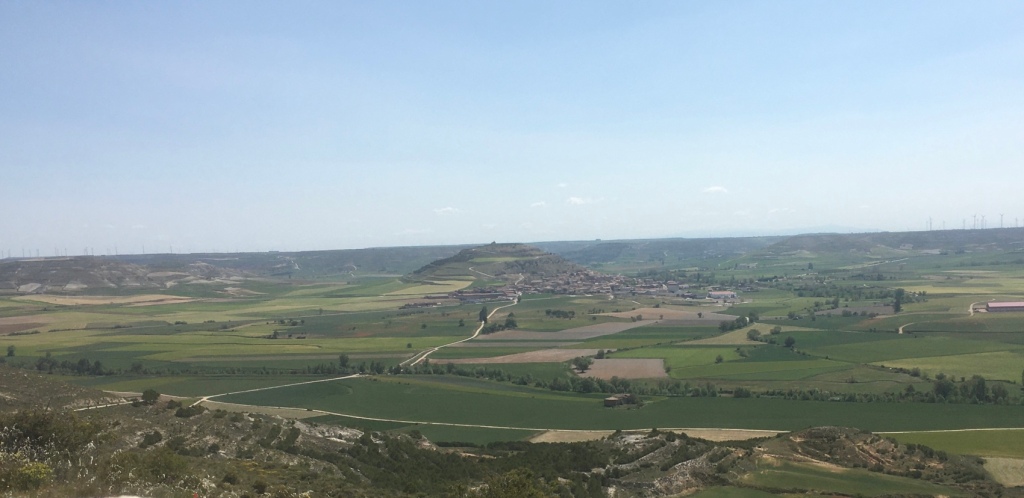
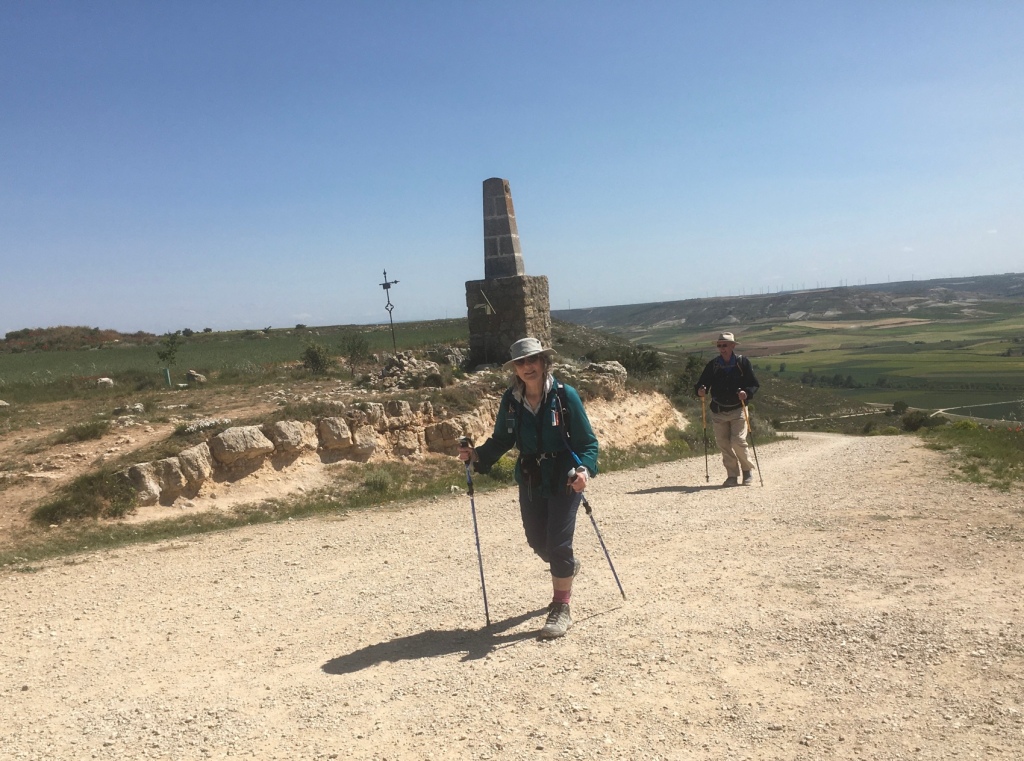
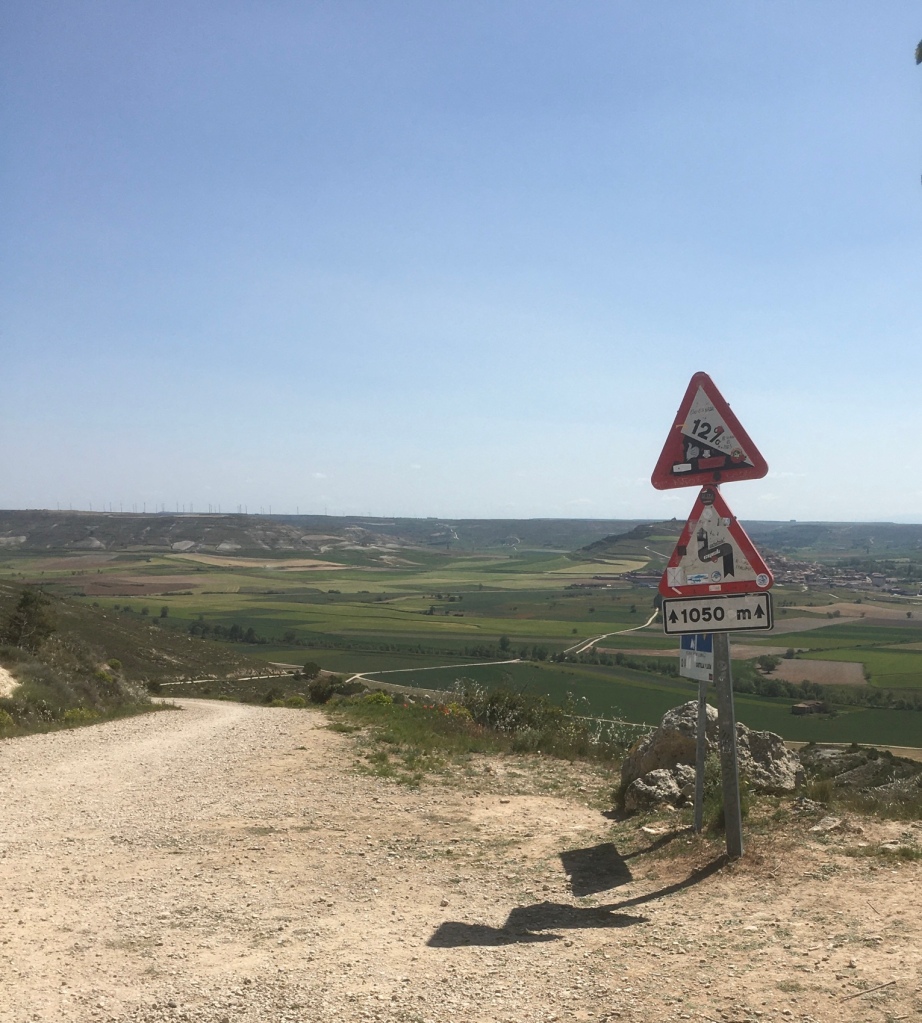
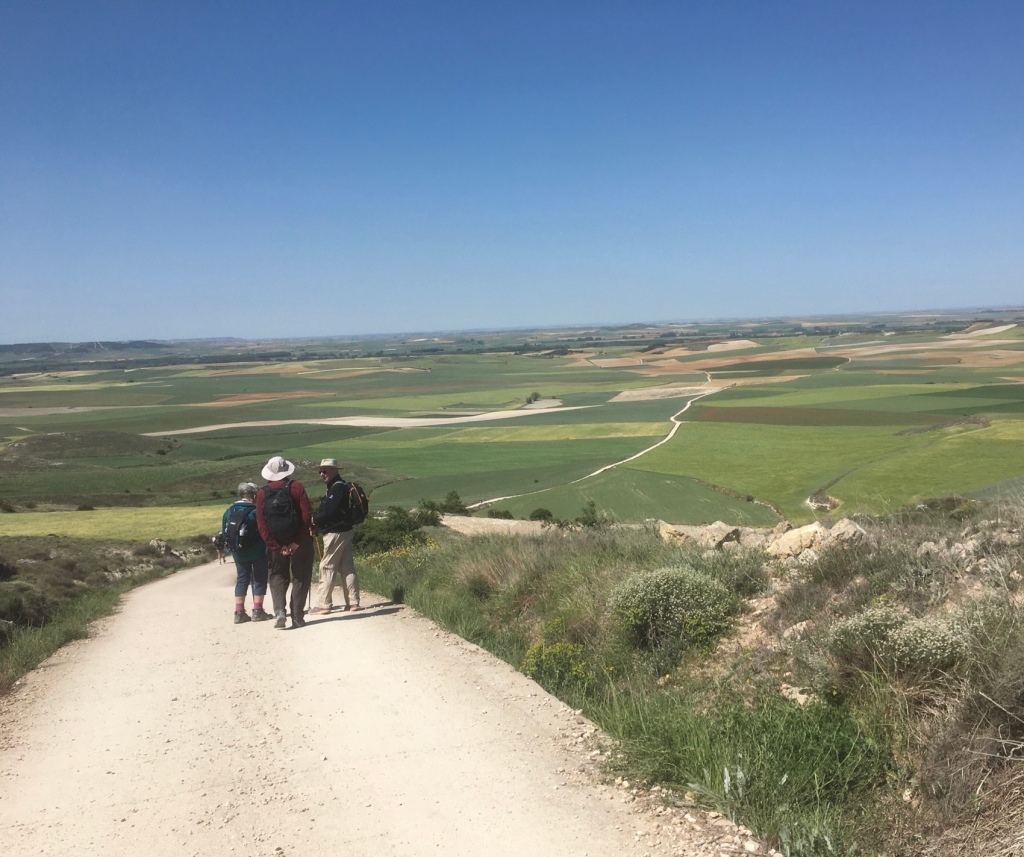
Another flat stage, with endless straight lines, through the cereal steppe;
Except for the first few kilometers on the local road, the rest runs along dirt tracks that easily get flooded in case of rain.
The section from Carrión de los Condes to Calzadilla de la Cueza is the longest without intermediate towns on the entire French Way;

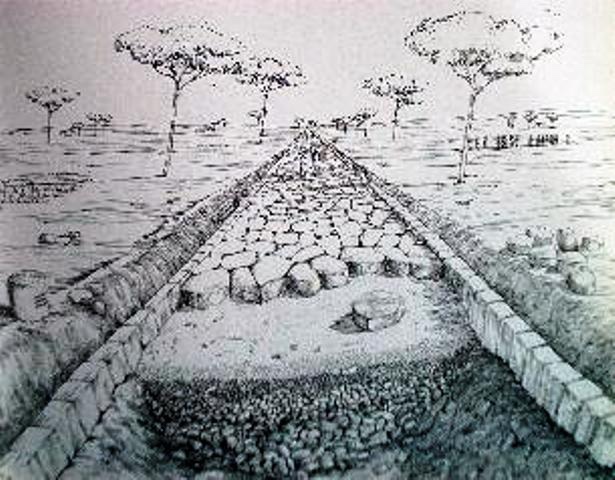
We walked along the very Vía Aquitania, the old Roman road that linked Bordeaux with Astorga.

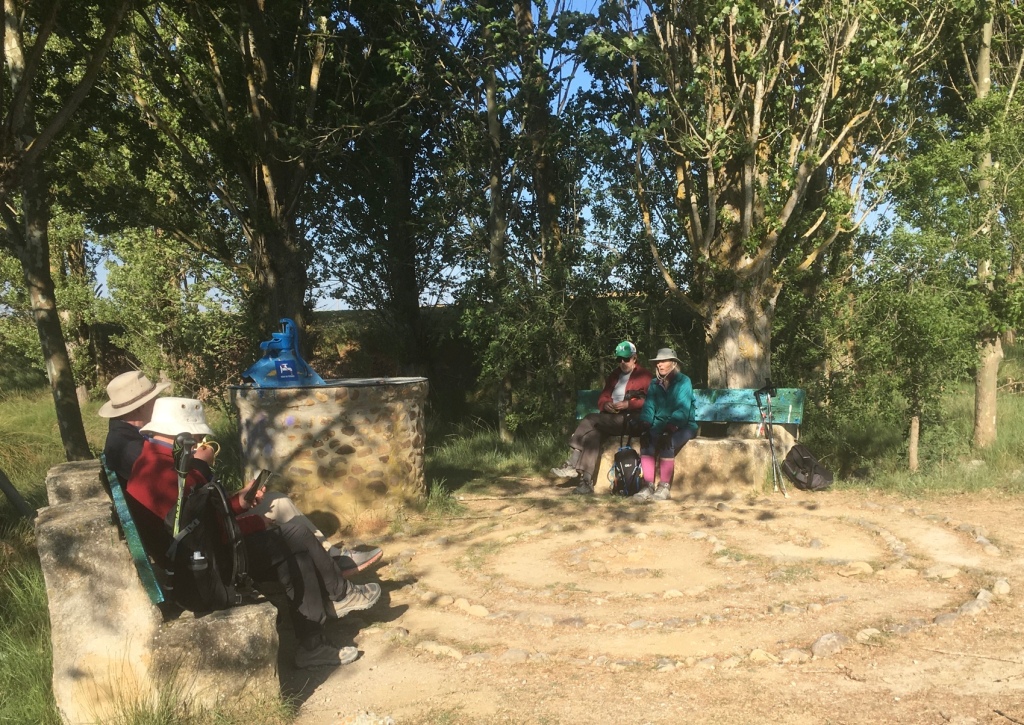
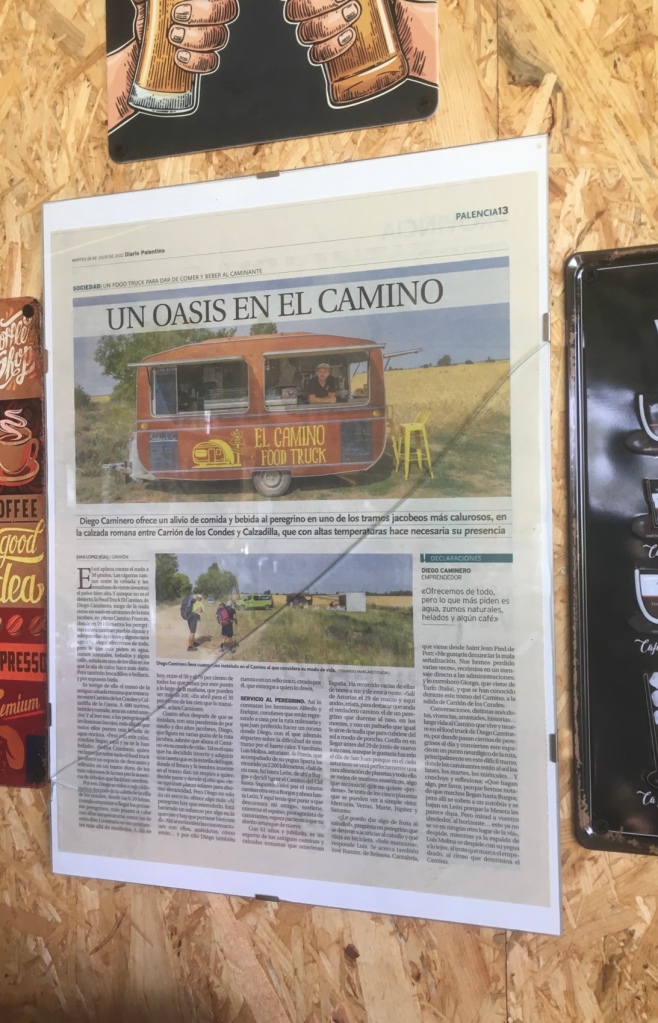
We were grateful to get coffee at a “POP UP “ seasonal coffee bar after 8 Km , later we made a picnic lunch at an area de Descanso .
It has been upgraded since then !

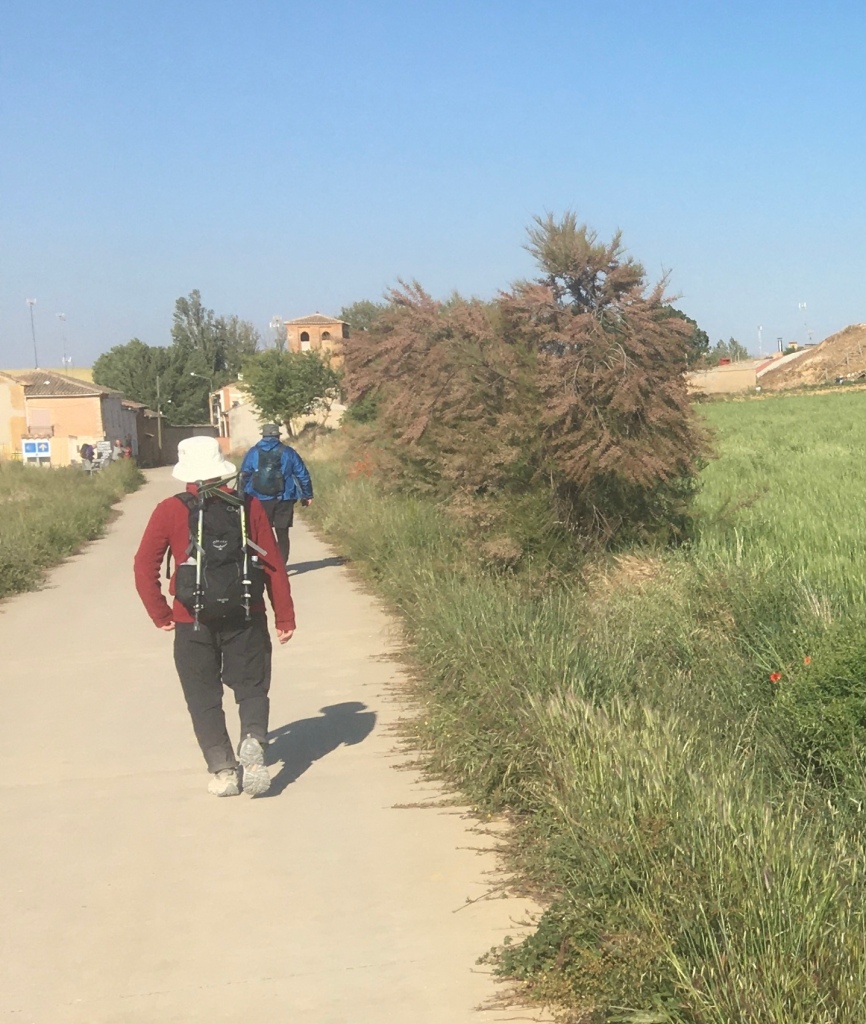
We walked on to Calazadilla de la Cueza – 10.5 miles on from Carrion .

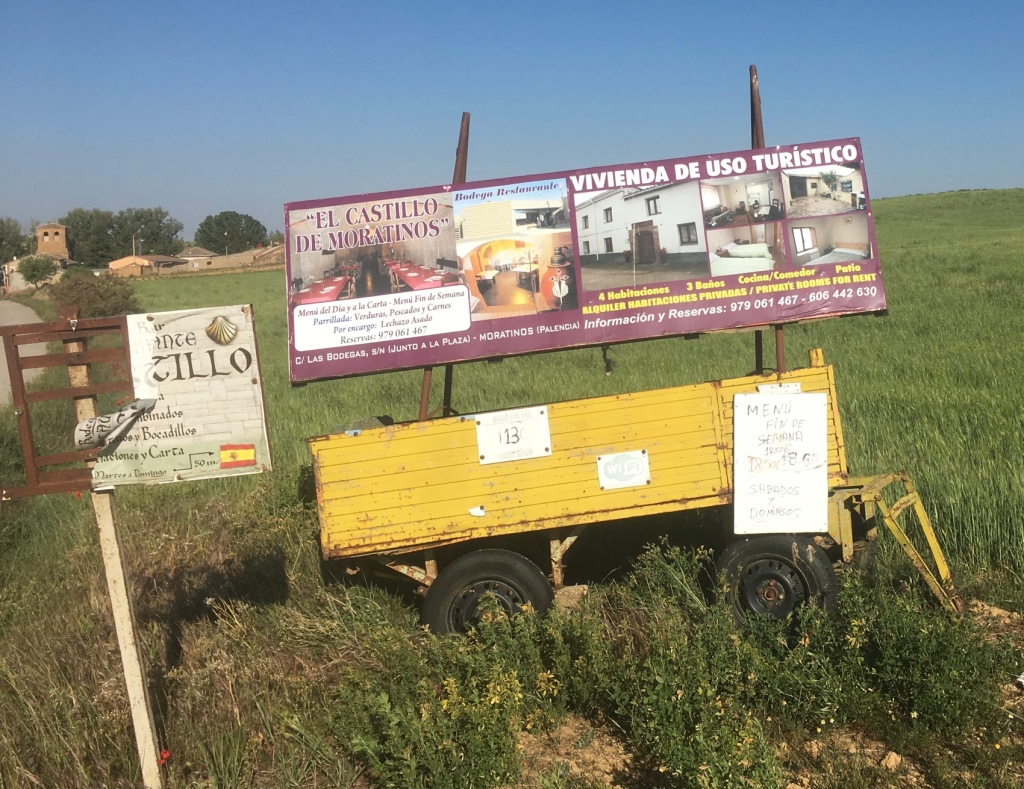
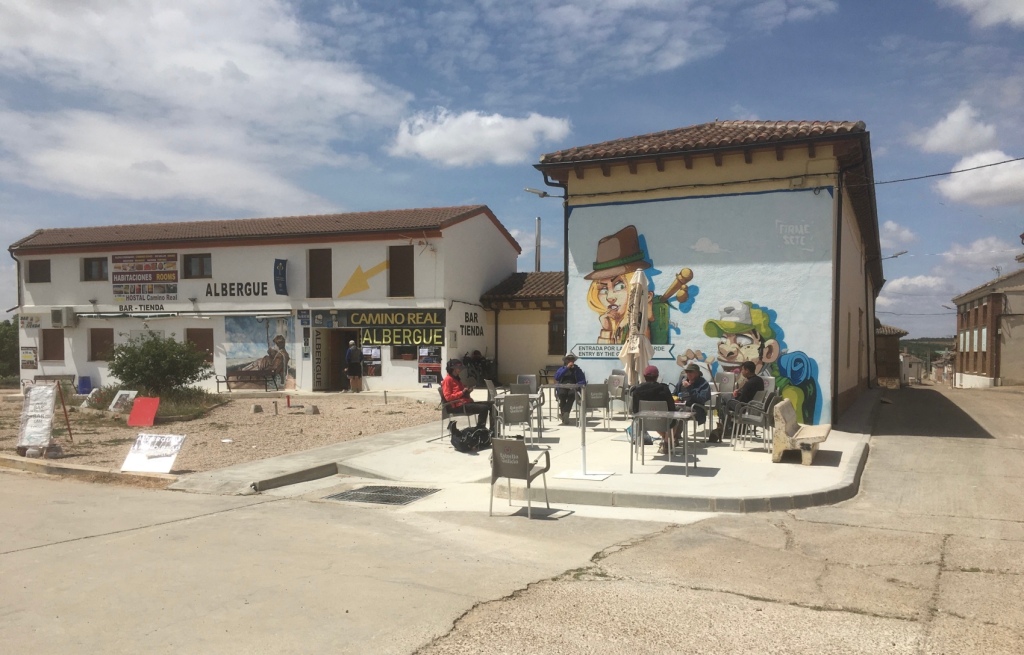
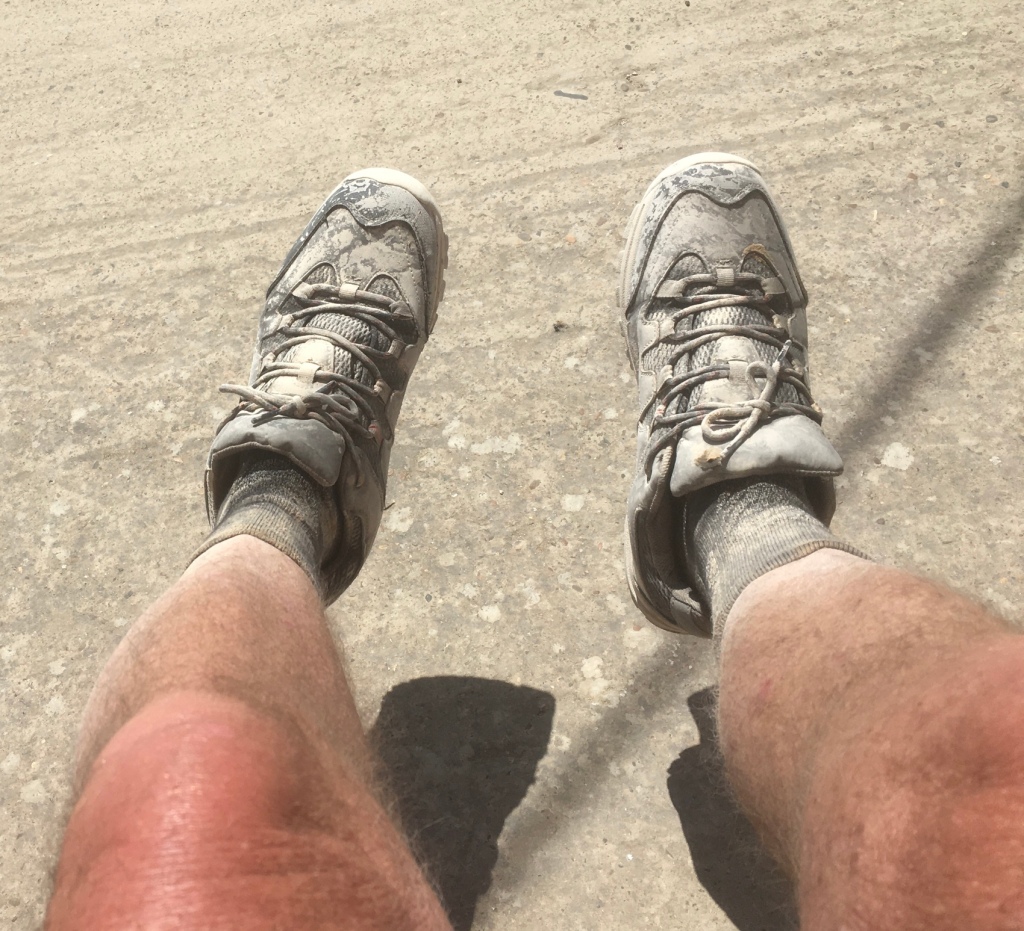
TUMBLEWEED JUNCTION MORE LIKE – We got drinks at a little Tienda and I contemplated my dusty feet….again!
Looks like I’ve been working on a building site.
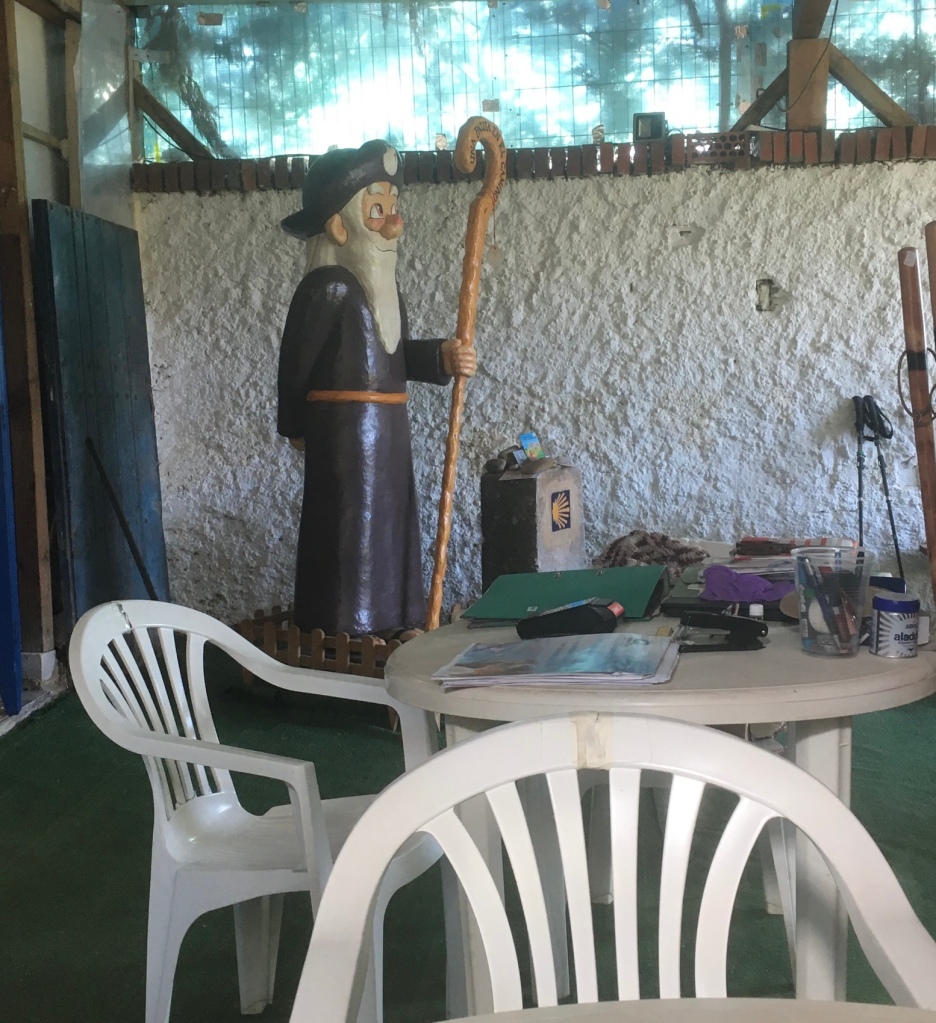
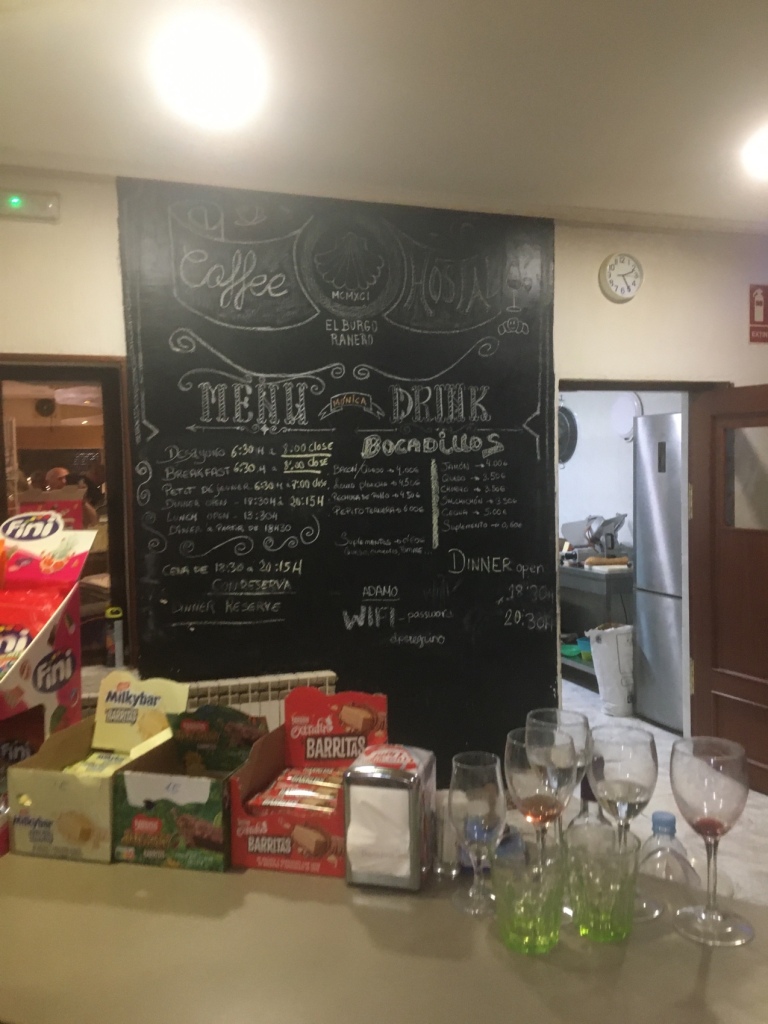
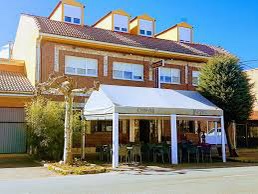
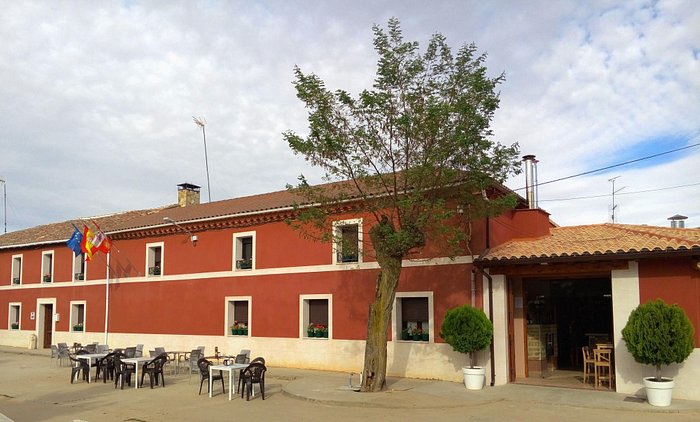
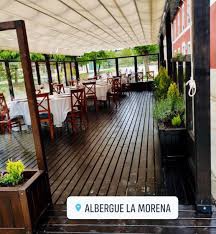
ALBERGUE LA MORENA – Ledigos – our digs for tonight with another communal meal.
This place has an interesting history-some of it lost in translation.”Priscila , only one woman from the town, Maru , called the Morena by her first name. My grandmother never knew why her parents chose that name, nor where it came from. It wasn’t a very common name in 1920, nor is it now. She was a person who lived through World War II, the Spanish Civil War, the Franco regime, the transition, democracy, and a multitude of misfortunes of those times that she remembered every day singing popular songs.
His life was based on principles of conduct and a way of being and doing focused on family, work and religion.
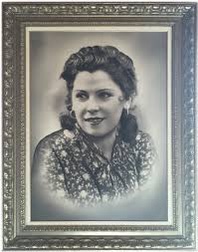
I cannot avoid moving to a Sunday at noon before describing La Morena. Dark heels with a gold detail, crystal stockings, a black skirt below the knee and a beautiful flower-printed blouse. An essential in her style were her lips perfectly made up in shades of pink and a good dose of Nelly hairspray to fix her combed hair. Her daily ritual was to wash her face with lizard soap and thoroughly apply a cotton pad soaked in 96º alcohol. A liturgy that made the skin of her face perfect, radiant and full of life. Her wavy black hair was a perfect tandem with her green eyes.
La Morena, according to those who knew her, was a woman with exuberant beauty . One of those women that the photographers of the time were dying to capture, trying to capture the perfect combination of beauty and personality on paper.
La Morena was much loved and admired. She was always willing to listen, help and lend a hand to her. At times, she was the victim of her bad temper and her strong personality.
When the Camino de Santiago was barely exploited, La Morena already received letters and postcards from London, Bilbao or Lisbon from some pilgrim who wanted to thank her for her hospitality. A glass of fresh water, a chorizo sandwich from the pot or a while under the shade of the fig trees in the house was reason enough to invest in a stamp bound for Ledigos.
Since the 50s, Bar La Cueza was a mandatory stop for pilgrims , merchants or residents of the town. The star dishes of La Morena were stewed tripe, roast suckling lamb in the wood-fired oven or the products of the slaughter. Some clients paid religiously and others not so much, but none of them lacked a glass of wine accompanied by a mouthful of tradition.
It is very difficult to leave a mark on people and on history, my grandmother did it. Today she is a well-known character and recognized for her good work.
My curiosity has awakened to inquire about the meaning of Priscila, my name and that of my grandmother. It is the diminutive of Prisca, derived from the Latin priscus, meaning “old, ancient”. It refers to material or immaterial goods that no longer exist today, what was in the past, what was from another time. It was a term used poetically in imperial times, with nuances of veneration and respect for the ancestral. Now I understand the reason why my great-grandparents chose that name, Priscila, La Morena.
We want to pay her this tribute to her daughter and her grandchildren, at home, where we will try to ensure that each corner does not forget its essence”. It took forever to book in as the receptionist chanted to all and sundry between showing pilgrims to their rooms – she needed some of grandma’s focus.
Looking forward to dinner and it’s now Sharpeners Time.

13 miles to Carrion de Los Condes,with a pleasant walk alongside the River Ucieza.

19 May
VARIETY OF BIRDSONG ALL THE WAY

We enjoyed a good buffet breakfast this morning, Ranjit on the coffee, before setting out for Carrion de Los Candes – 13 miles,or so.

Walking alongside a quiet local,road on purpose made paths – Roman style.

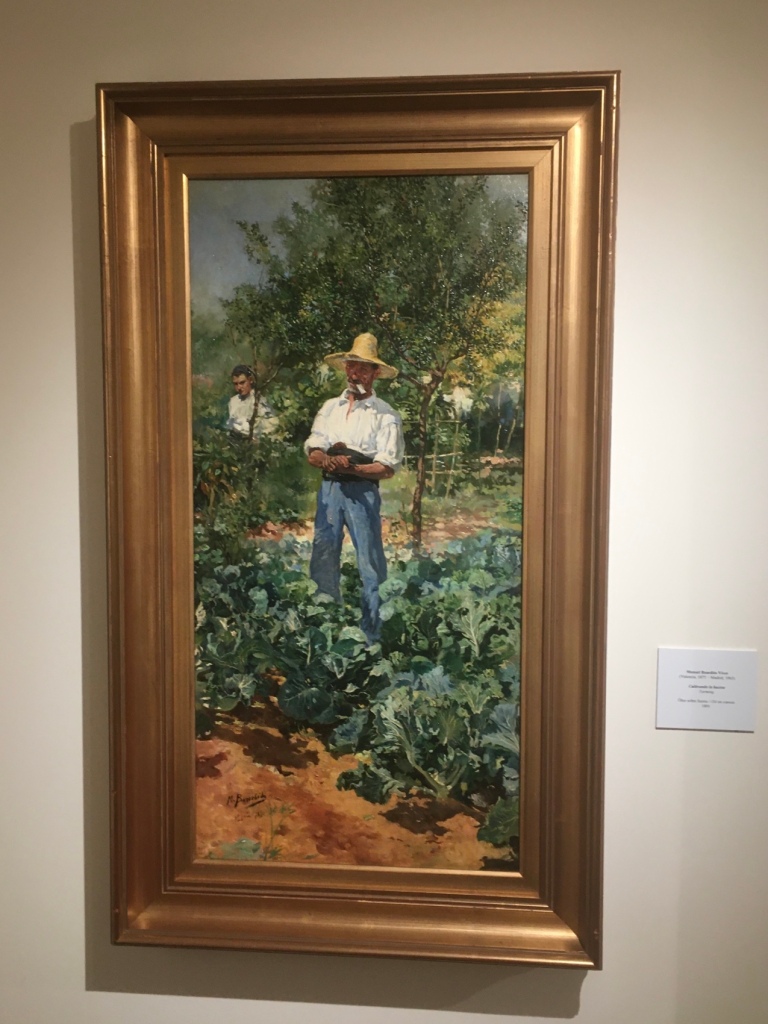
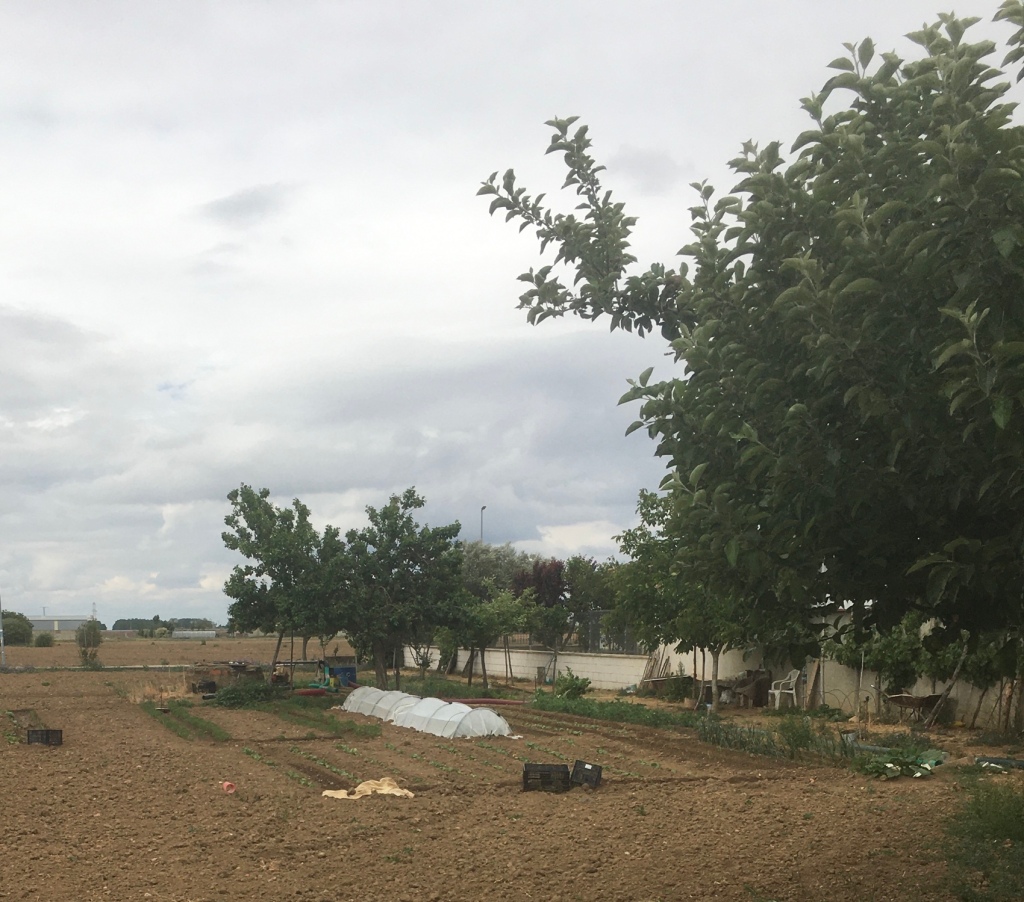
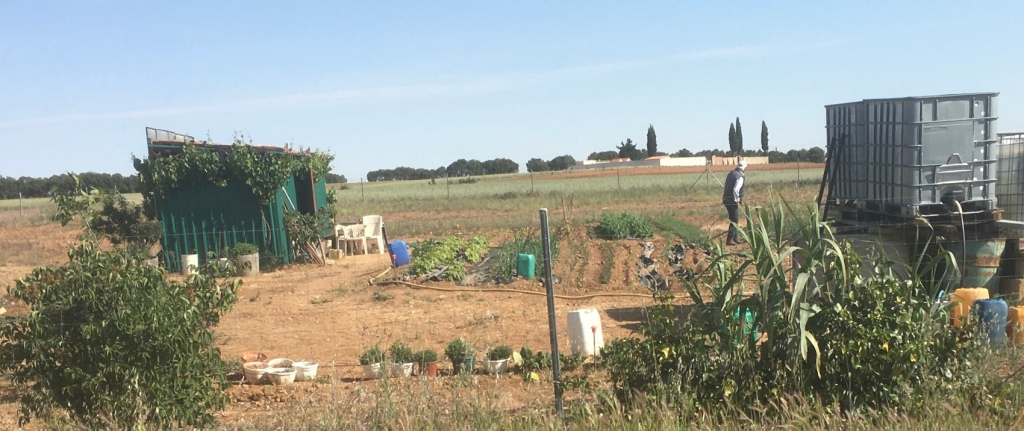
La Huerta – a Spanish allotment

My lettuce are further on , we’ll they were when I left home.
https://music.youtube.com/watch?v=7A76lTte8qE&feature=share. “ OLD FRIENDS” by Simon and Garfunkel
Having walked this way before Rob suggested the quieter more rural route
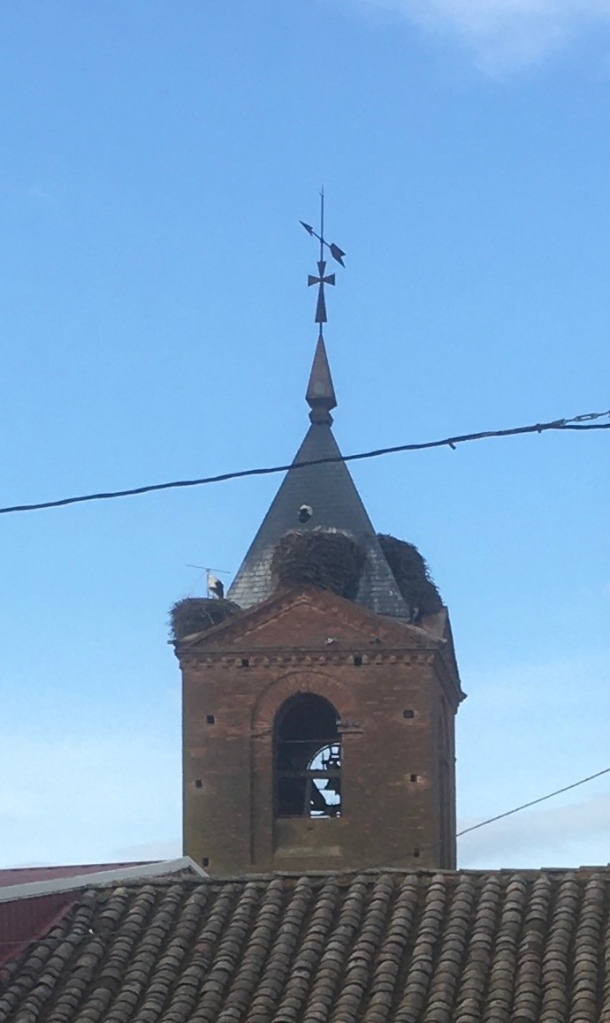
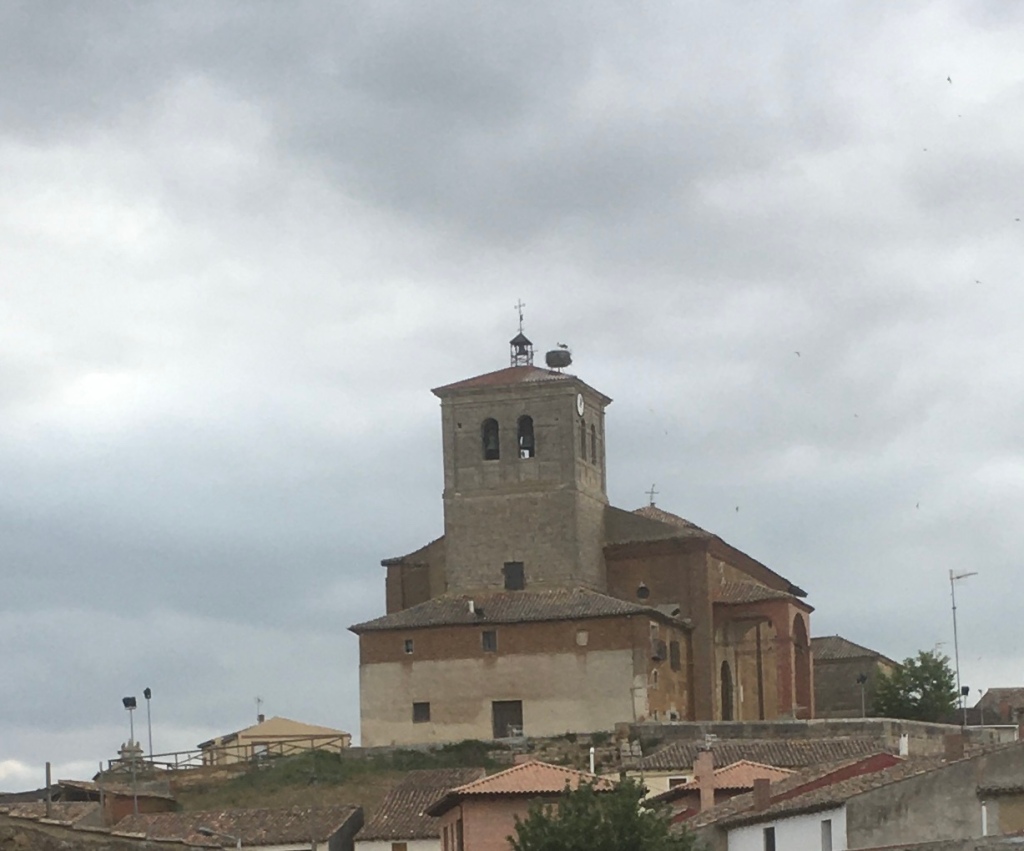
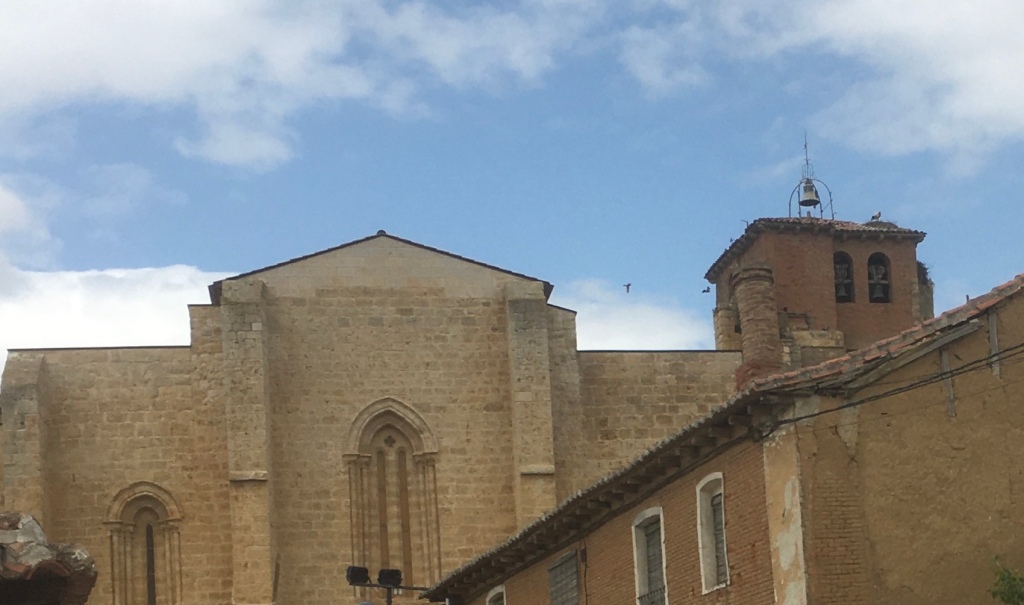
Another church tower, another Stork’s nest.
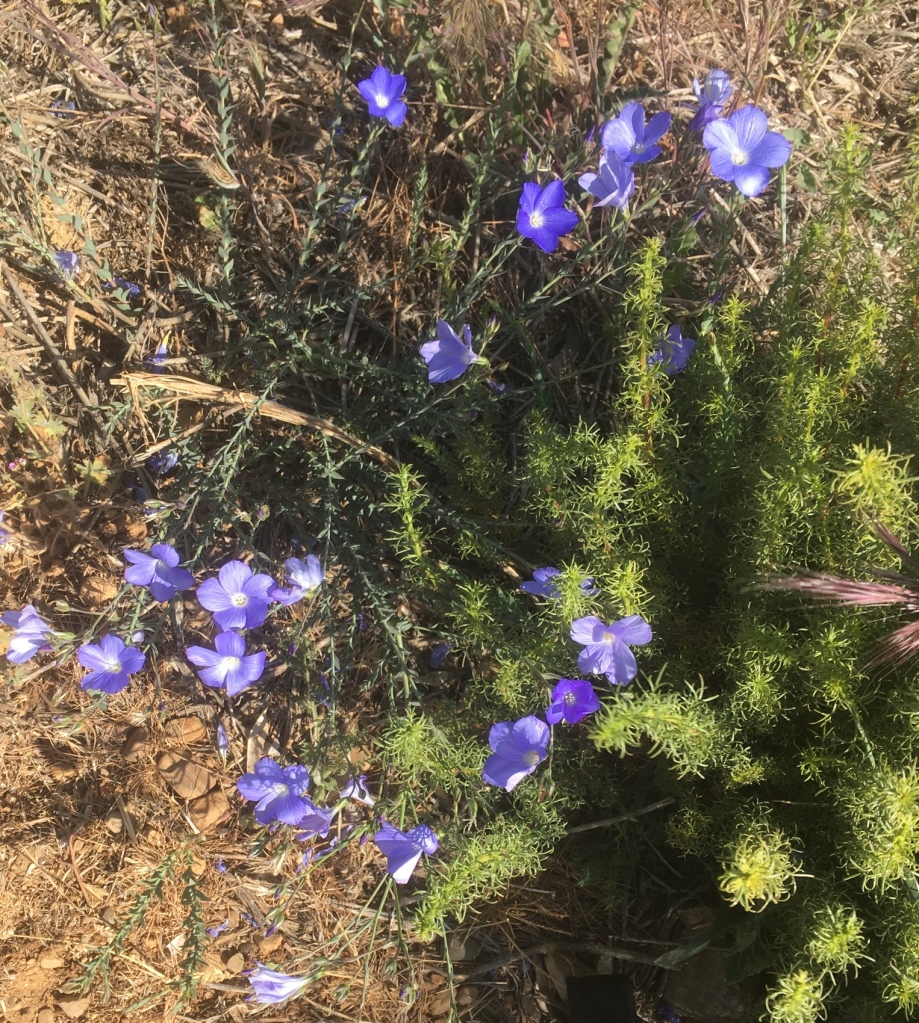
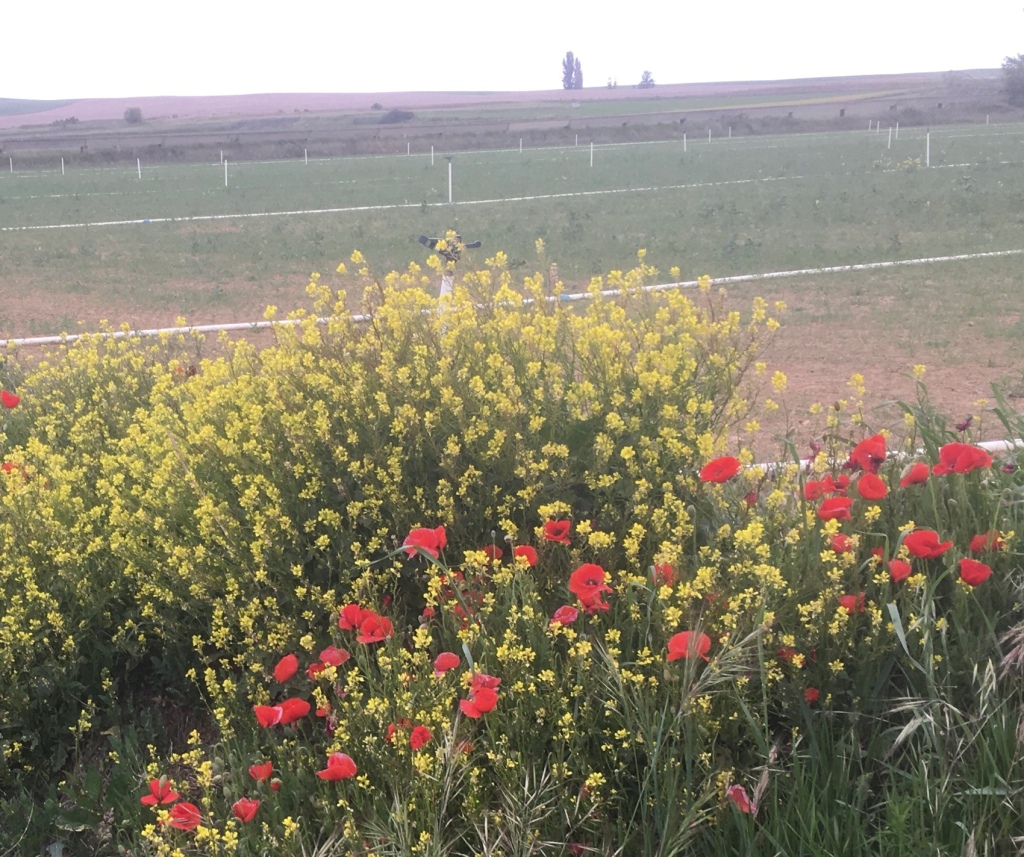
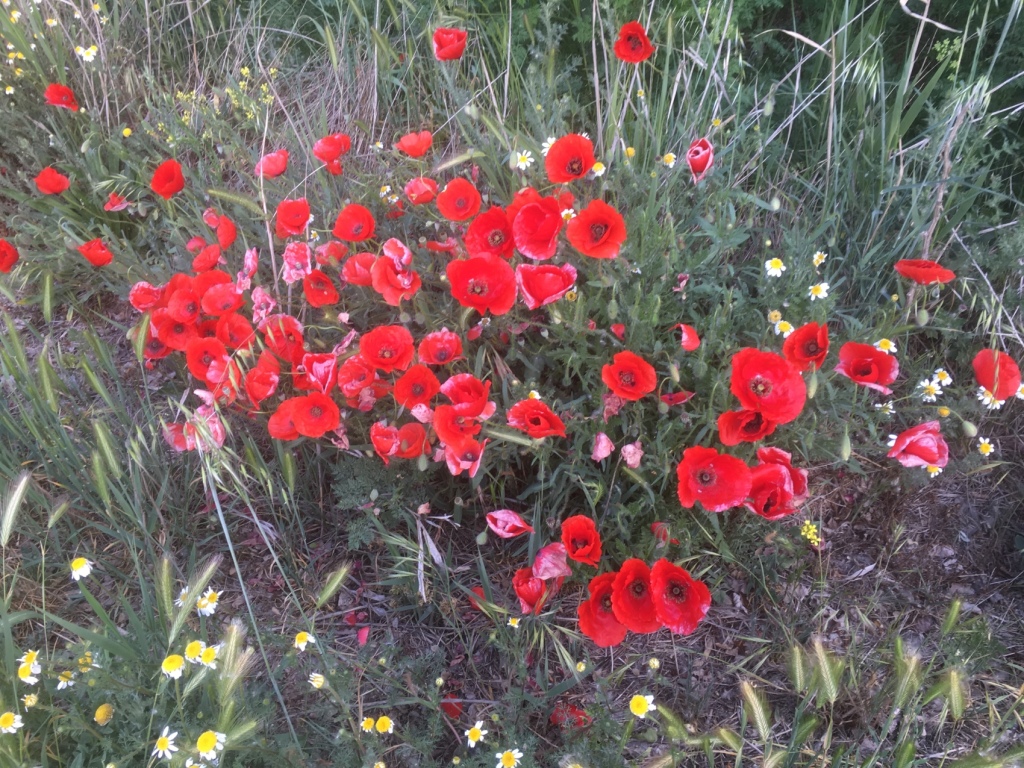
Wild flowers galore
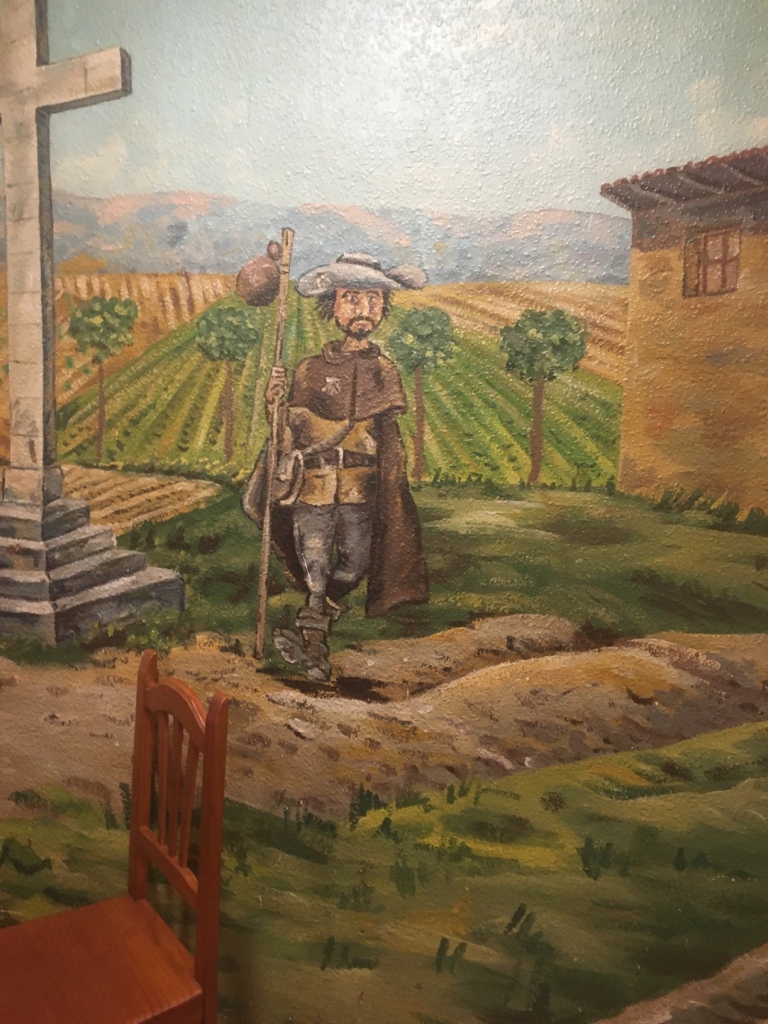
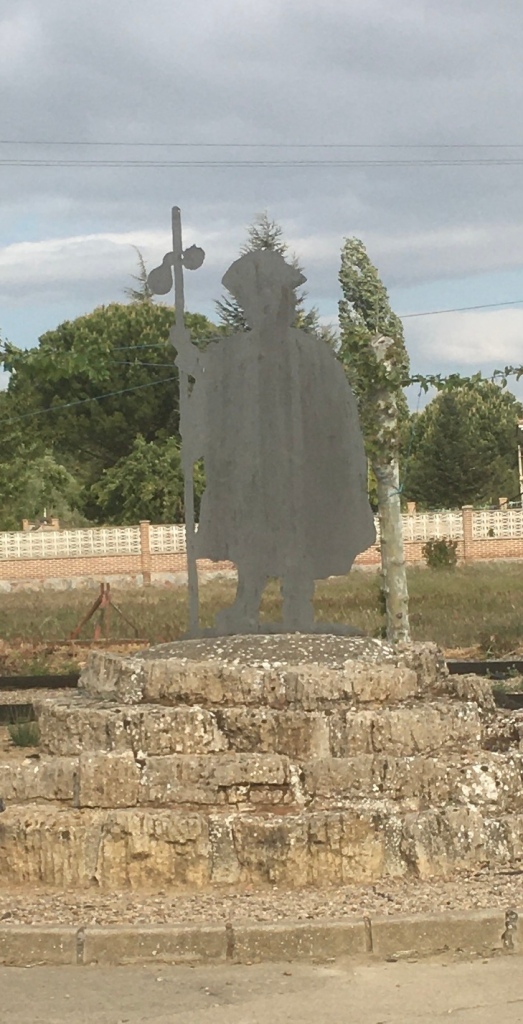
Classic Medieval Pelegrino
At Villovieco we came across an unexpected pilgrim refreshment opportunity
Coffee, biscuits and cake.
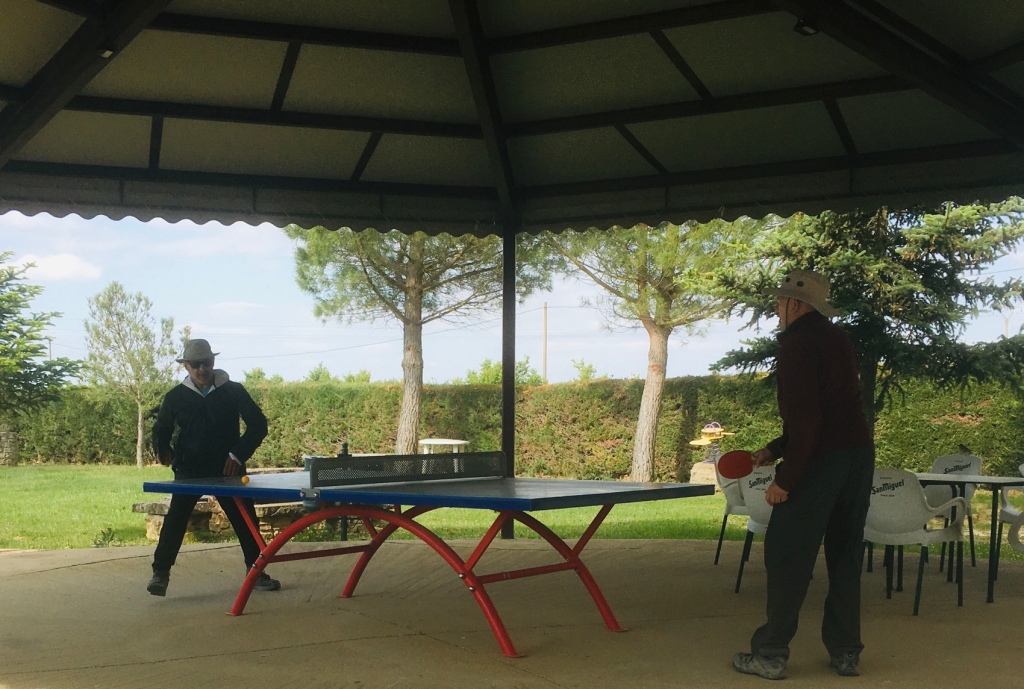
Tom versus Ranjit at ping-pong
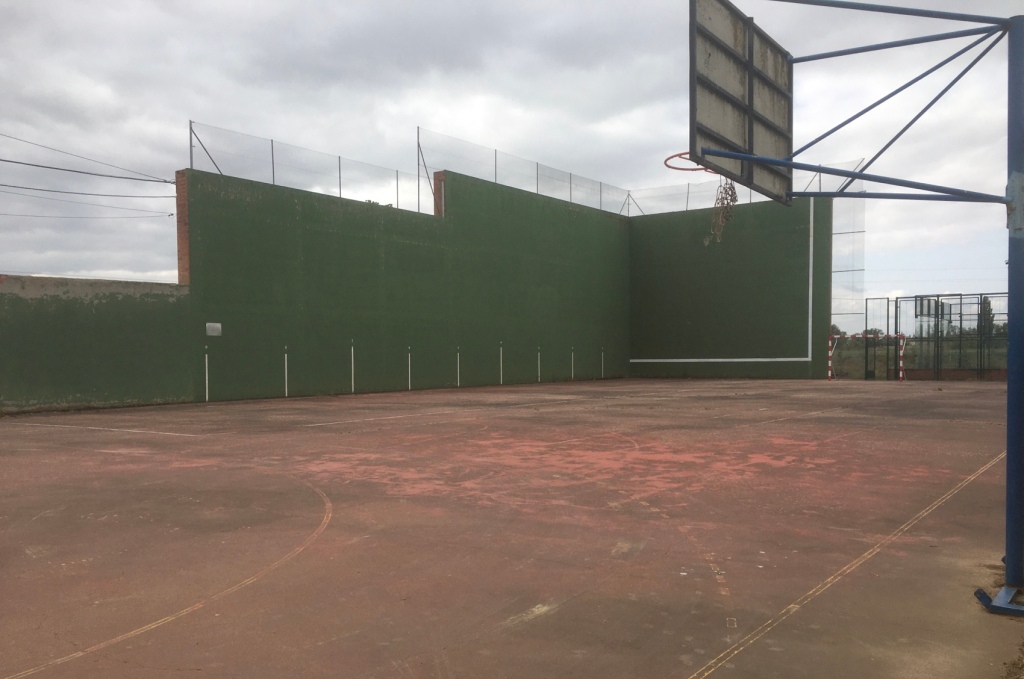
Good job it wasn’t Pelota!
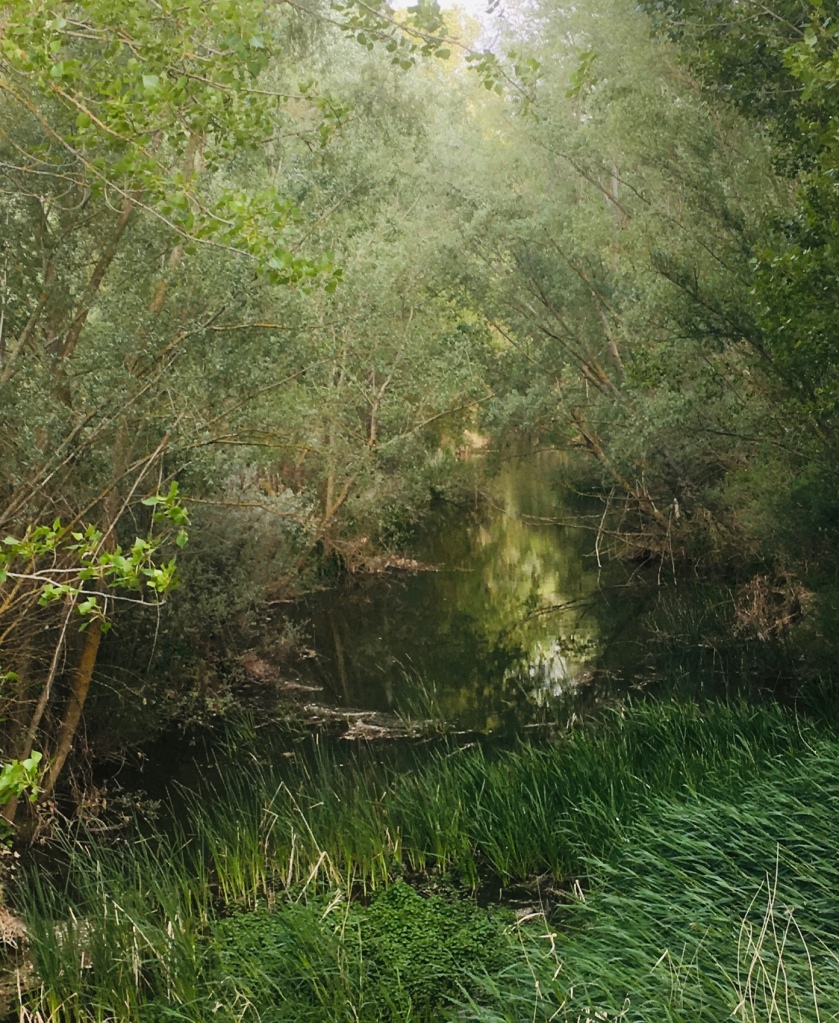
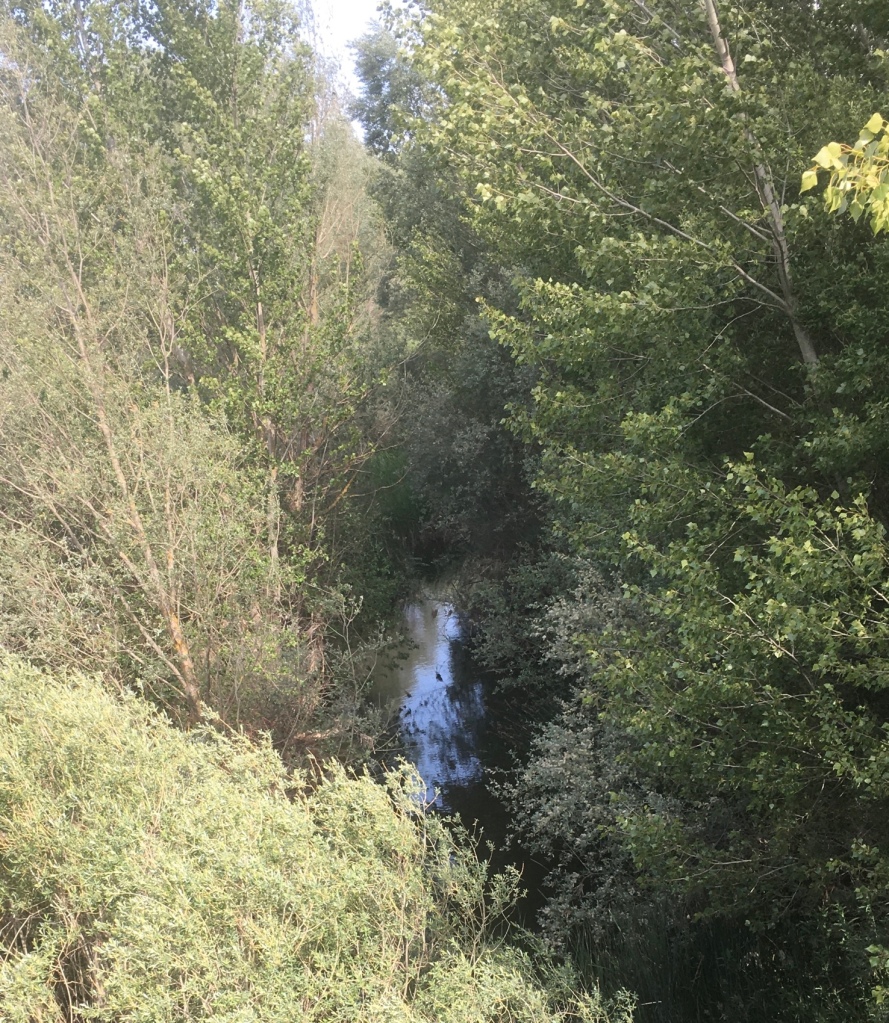
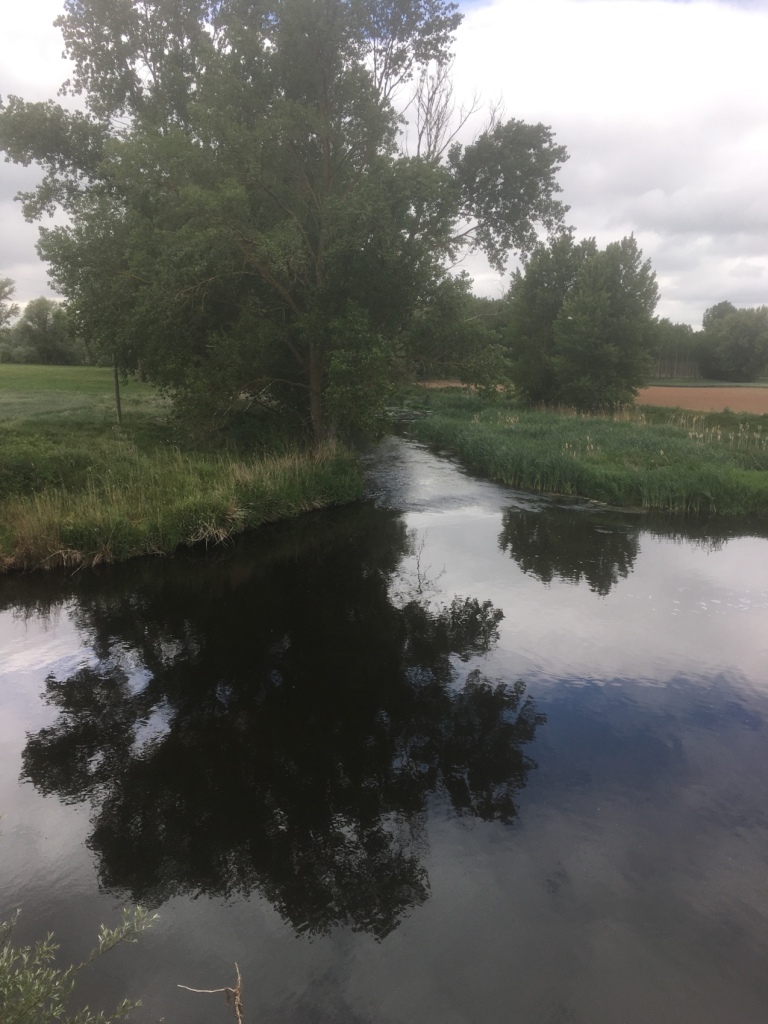
The River Ucieza – a welcome green corridor
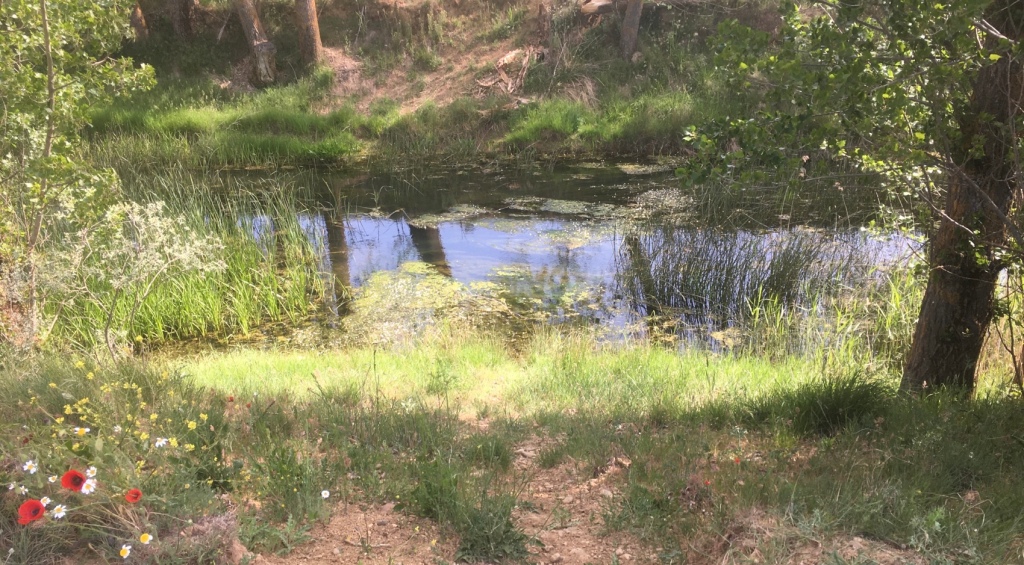
A glorious riverside display
A reminder that the Meseta was just over the bridge, but we weren’t going that way
More glimpses of the river
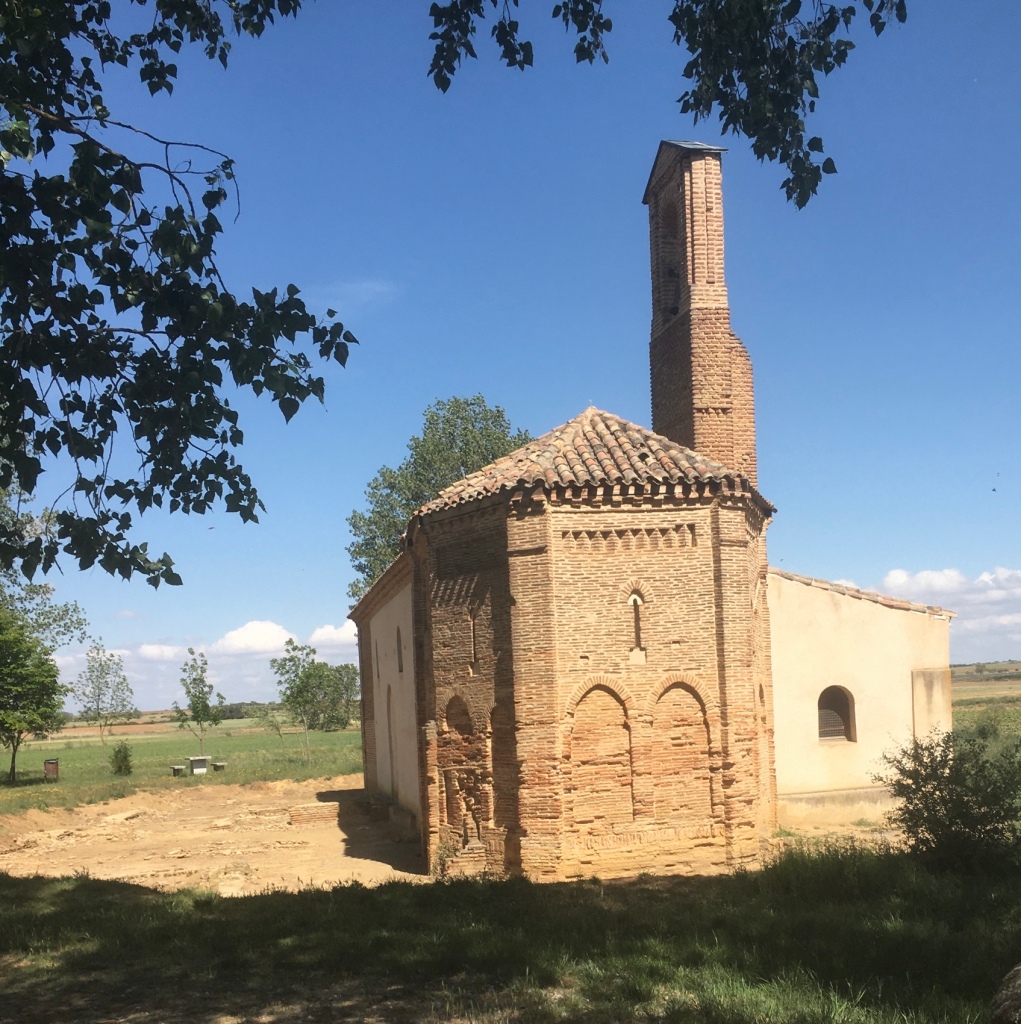
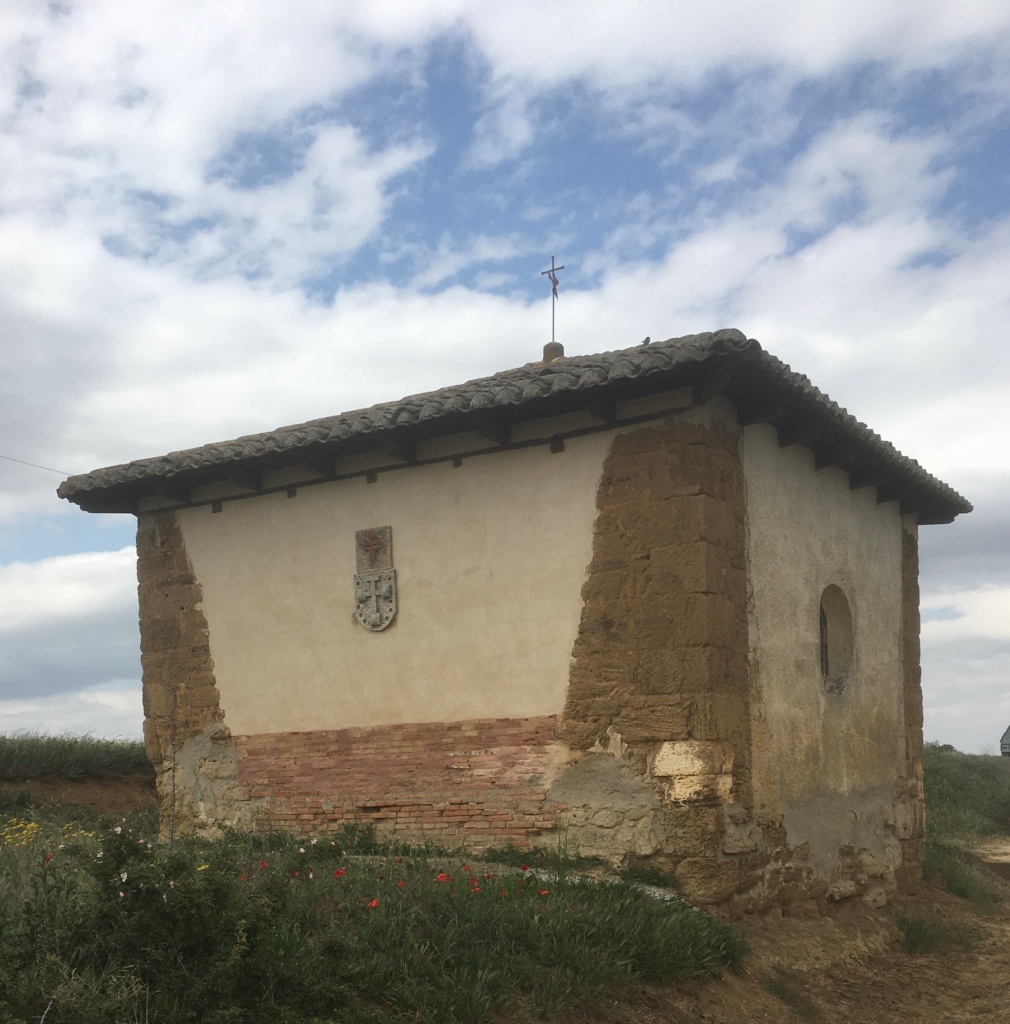
A tiny Hermitage
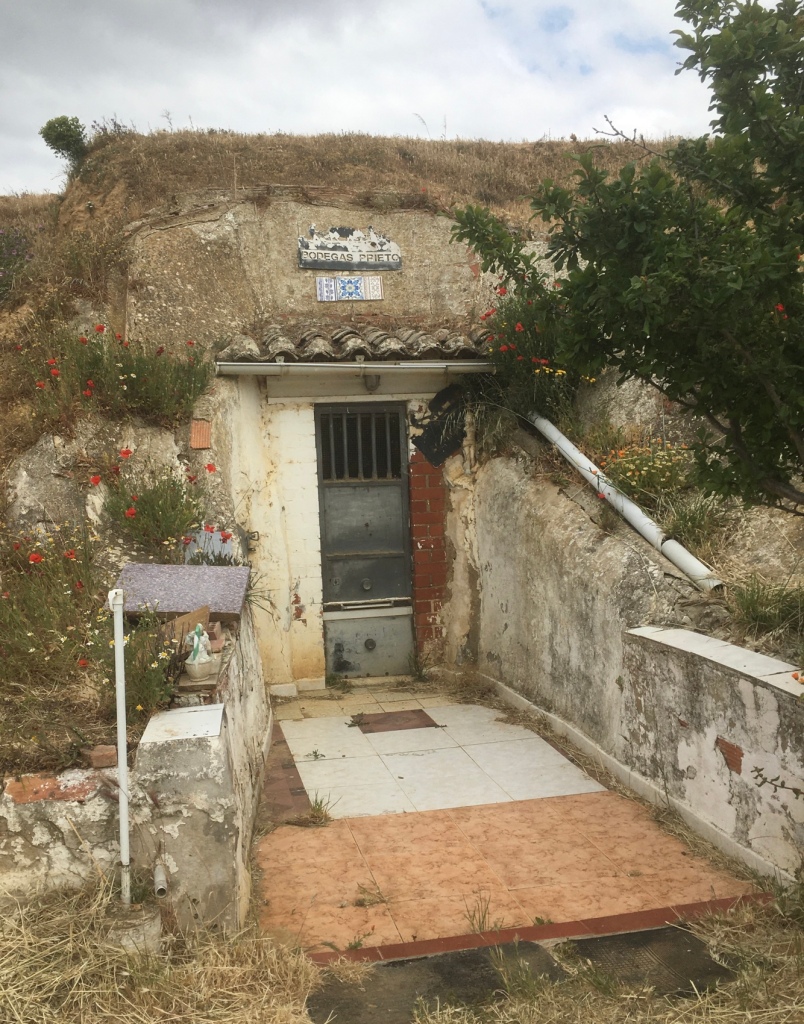
Another Hobbit hole Bodega by the side of the main road into Vllalcazar de Sirga
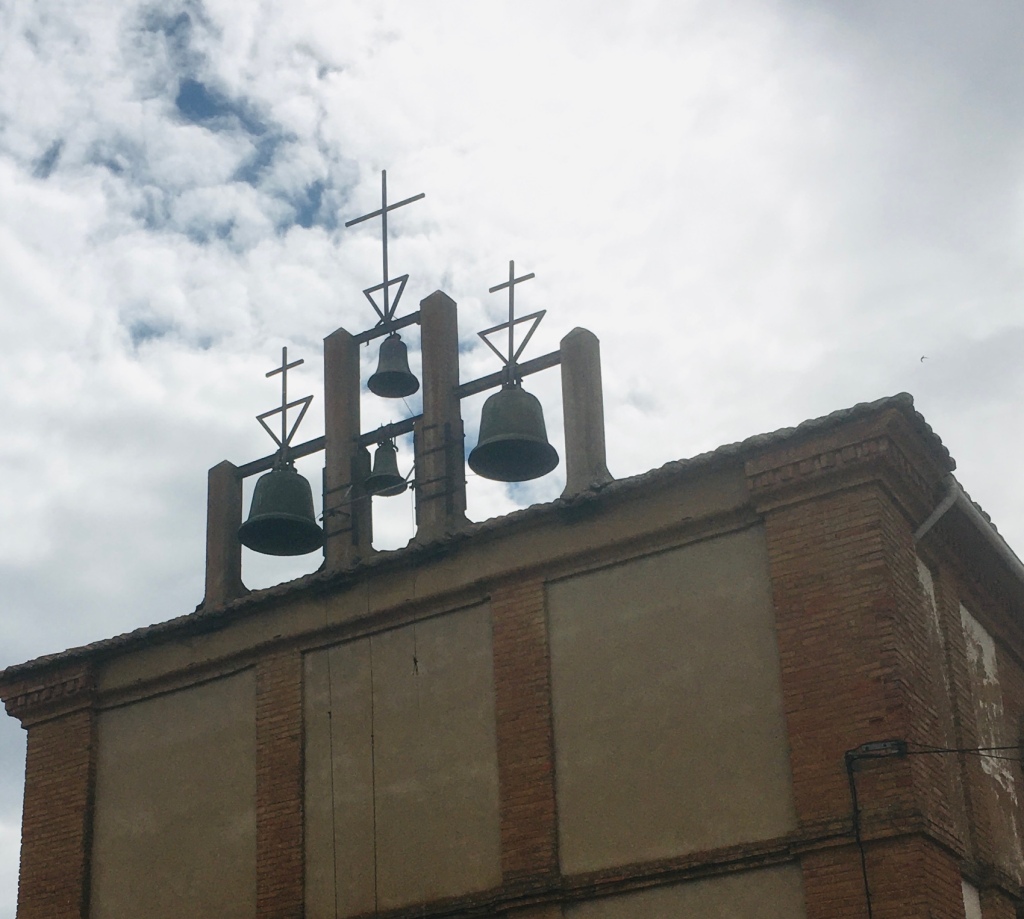
Guess who’s up on the belfry?
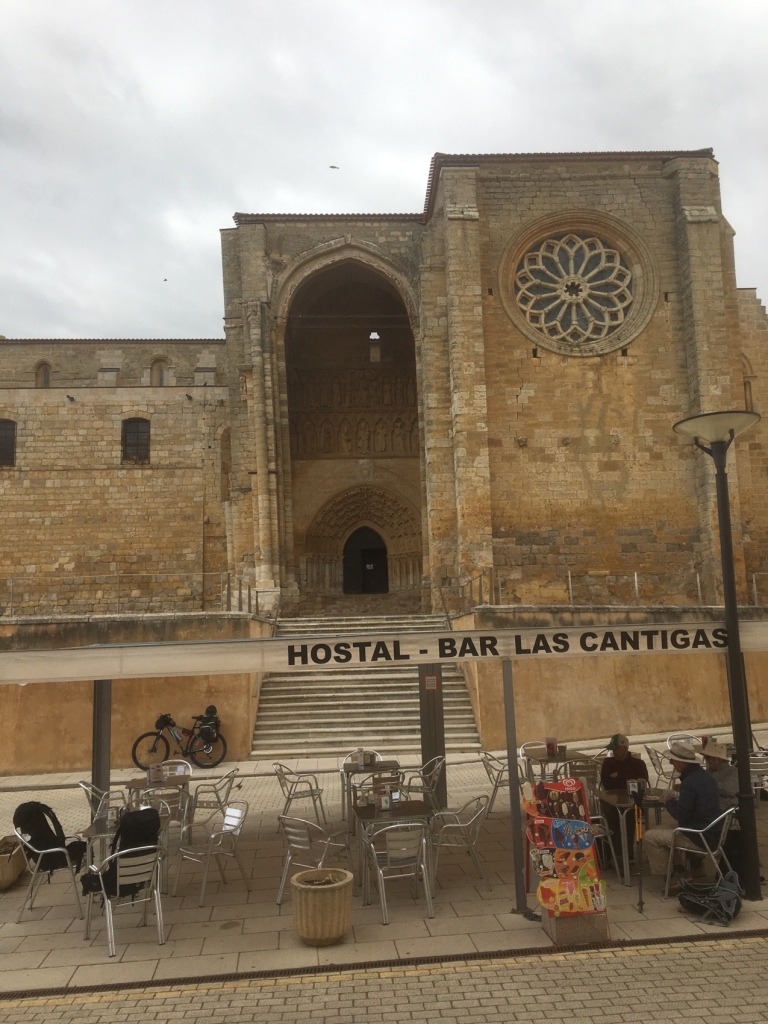
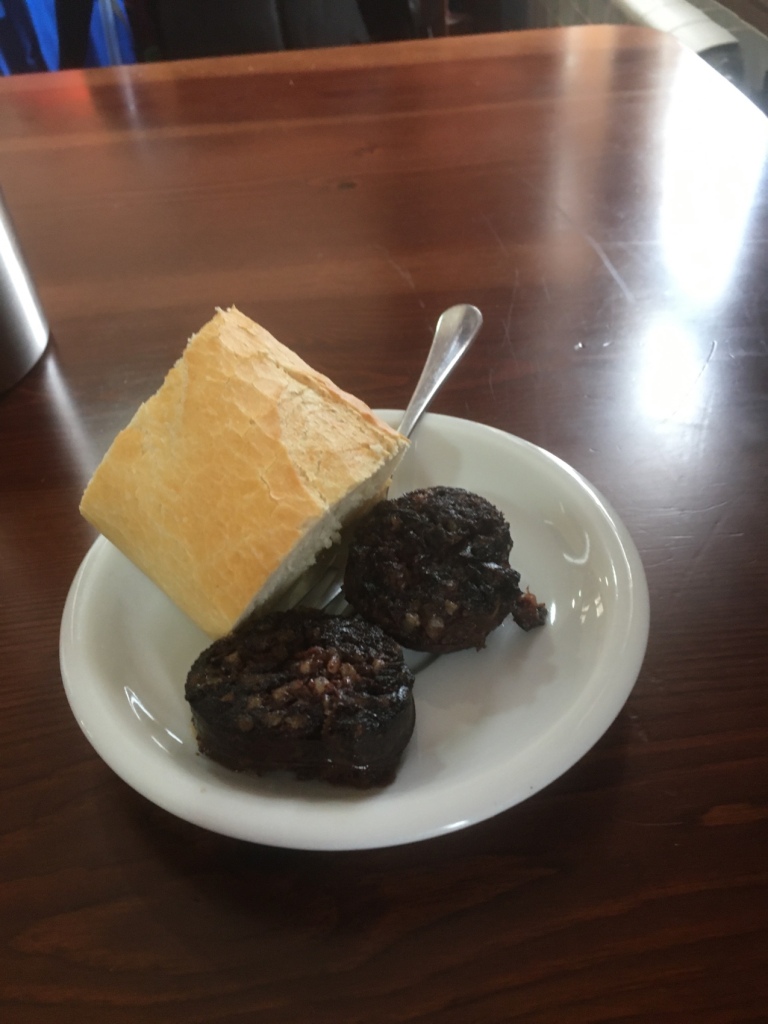
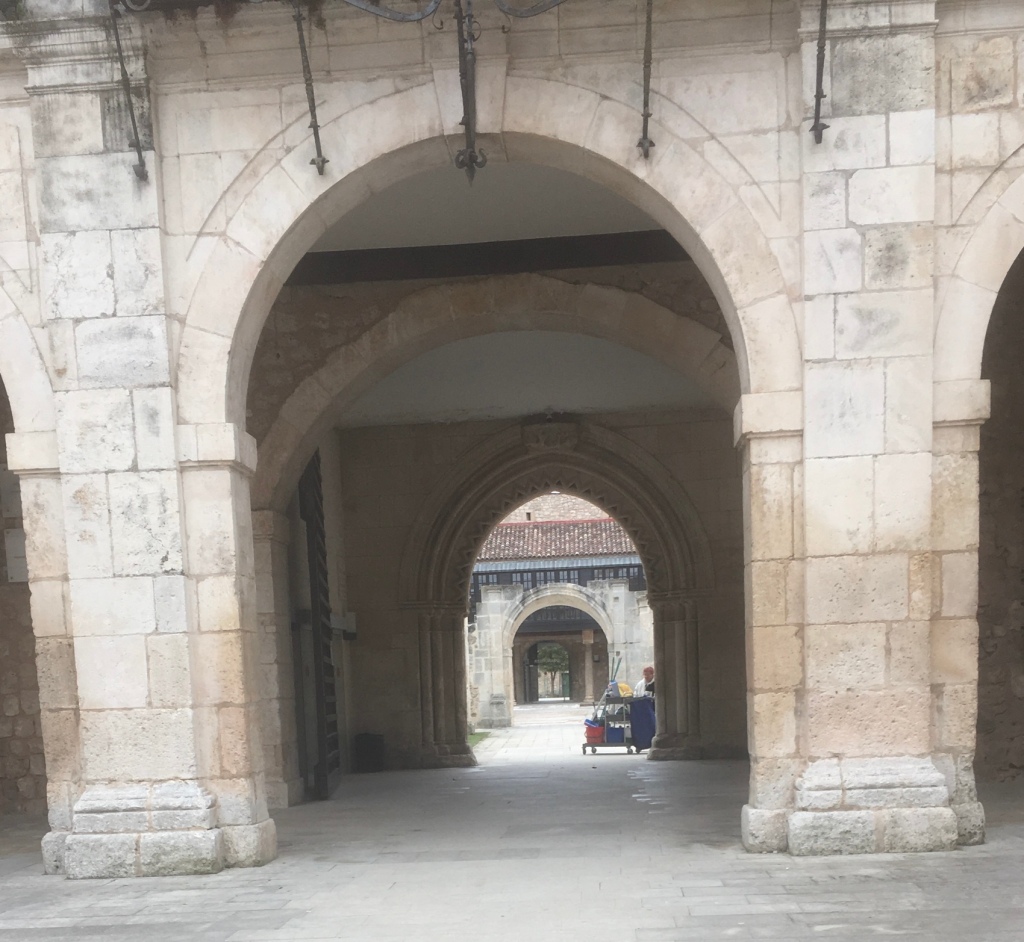
Beautiful archway of Iglesia de Santa Maria la Blanca which was probably used as a fortress at times. Some of us were blessed with a little lunchtime treat here – Morcilla😇
That should get us through the last six kilometres
Hands on with Mayor
Glad we have only six more KM to go….
CARRION de Los CONDES – 2 KM away.
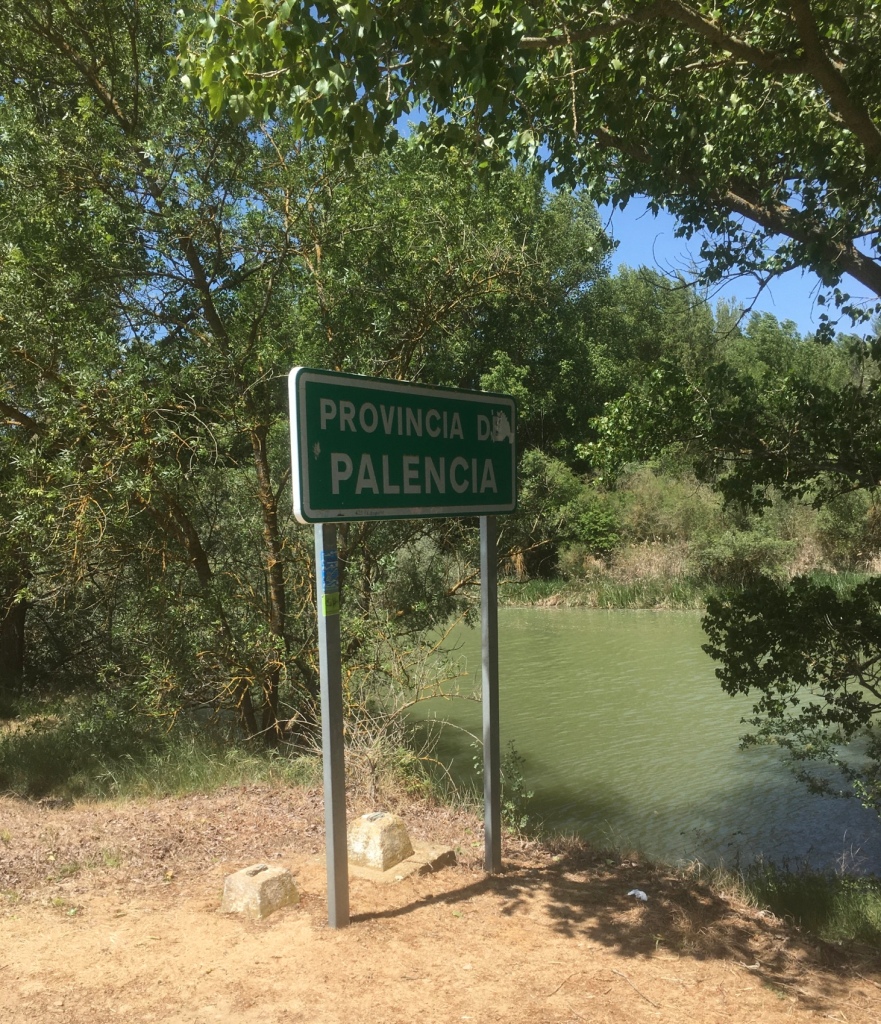
A welcome sign
An invitation to a tour of signs and smells….I think.
Just before our “ digs” for tonight
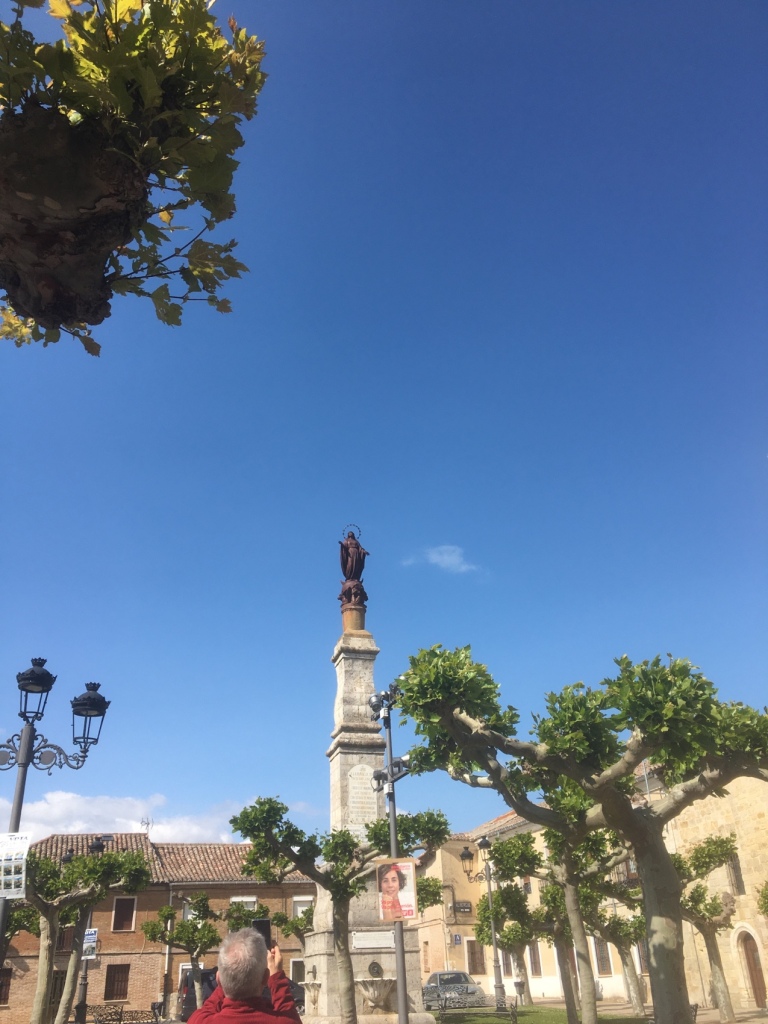
Our Lady On High. Carrion is a wonderful town – such a range of Camino related buildings etc. https://www.carriondeloscondes.org/ for more excellent information.

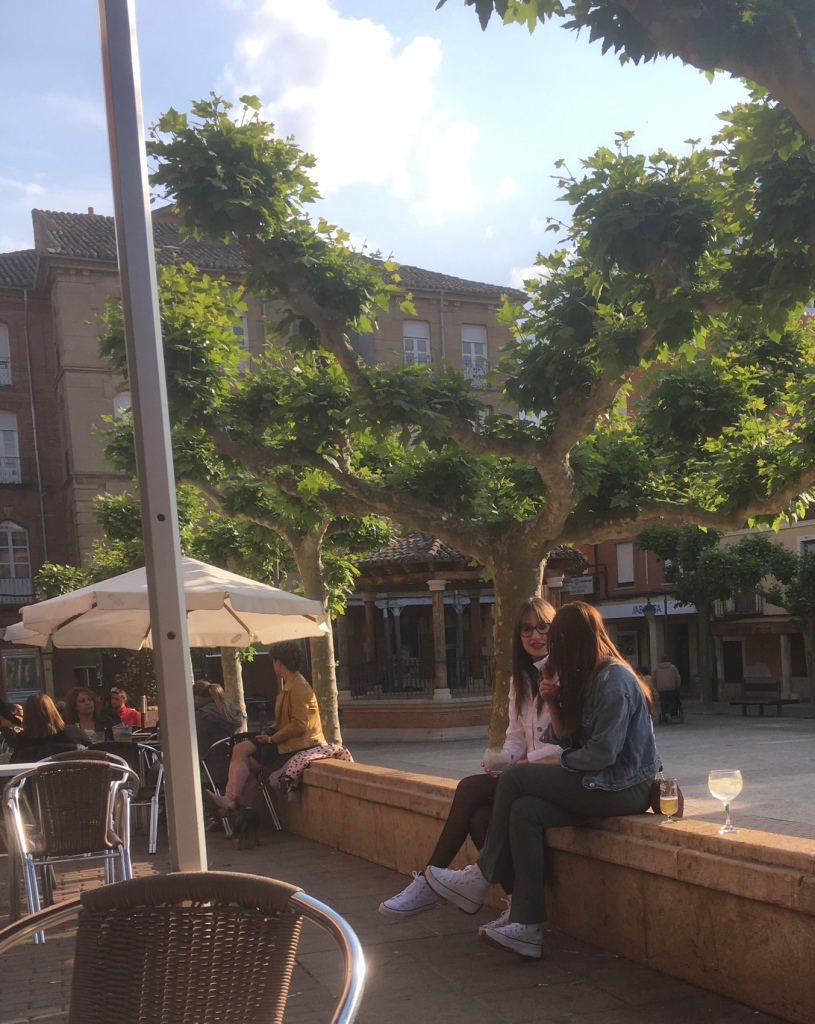
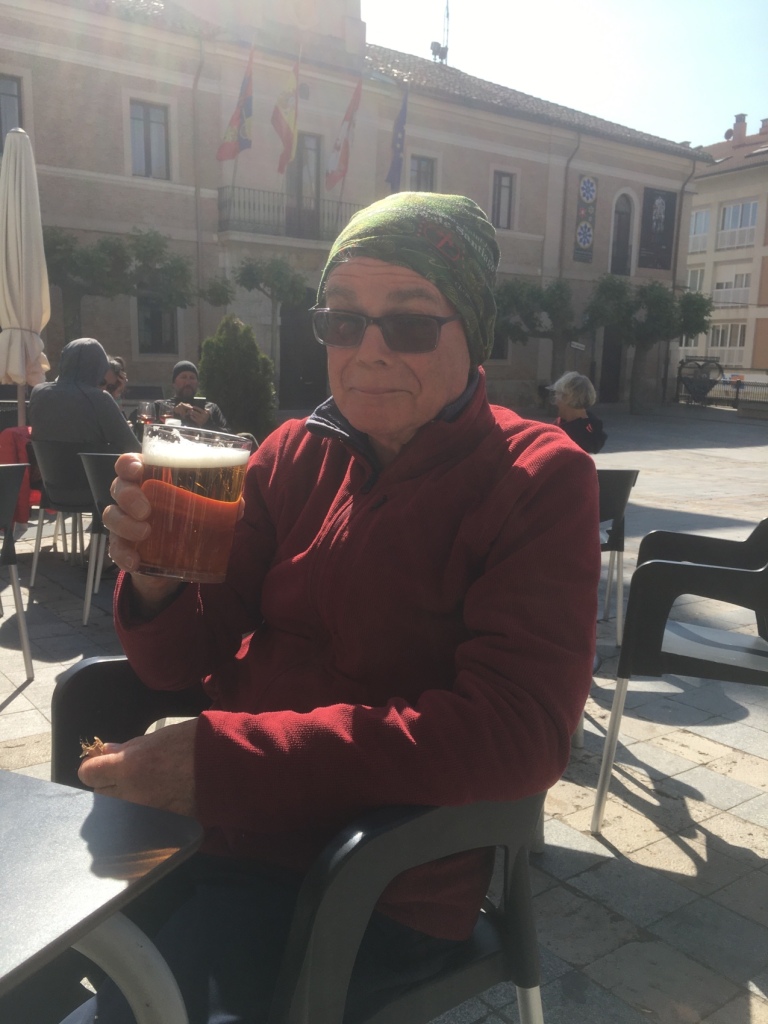
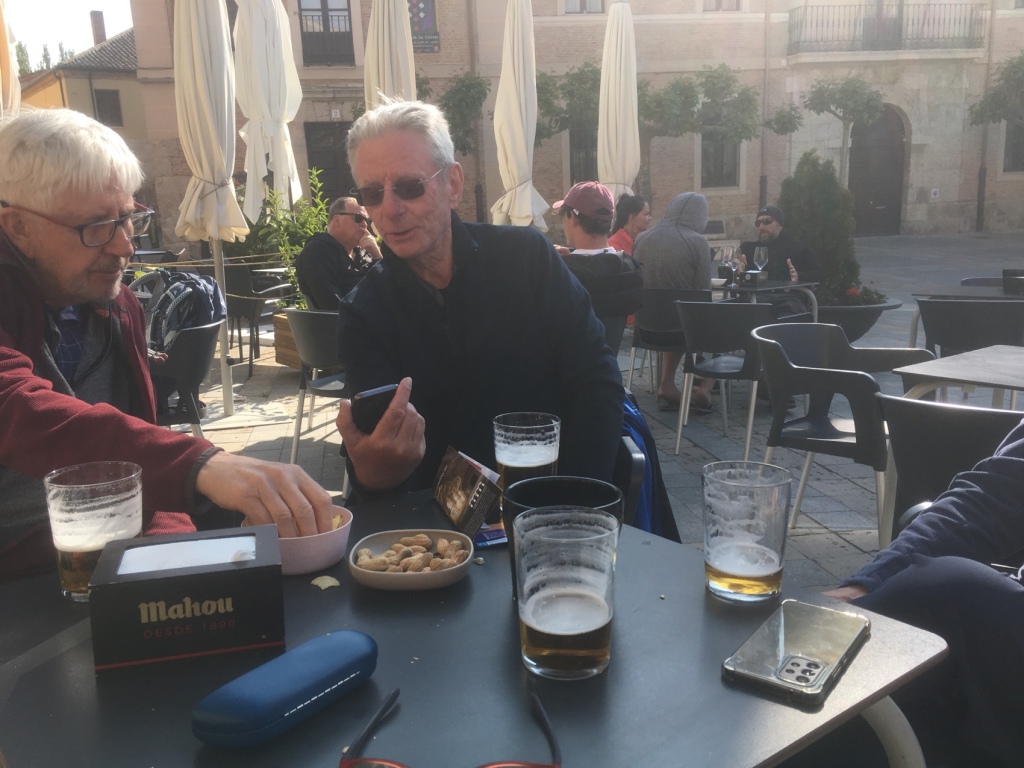
At last, the sun shone consistently and the wind dropped. A long stage tomorrow of 17 KM without much infrastructure and so Mike,Ranjit and I went to the supermarket to enable our progress tomorrow. After dropping off the shopping we headed back to the Plaza Mayor to sit in the evening sunshine with a couple of beers.

Mike borrowed my buff to keep the sun off.
Nuts in May
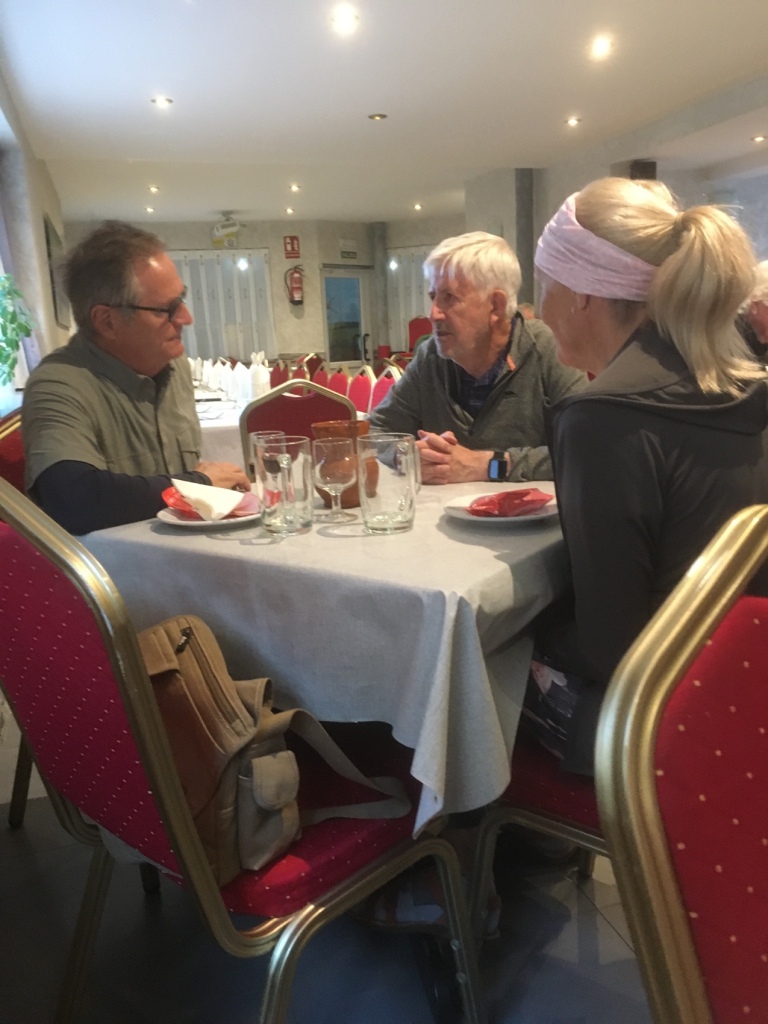
Tom chatting to an Australian couple we met yesterday after a great meal in La Corte restaurant attached to our “digs”.

SHORT WALK TO FROMISTA ALONG THE CANAL DE CASTILLA AND A “REST” DAY

18 May

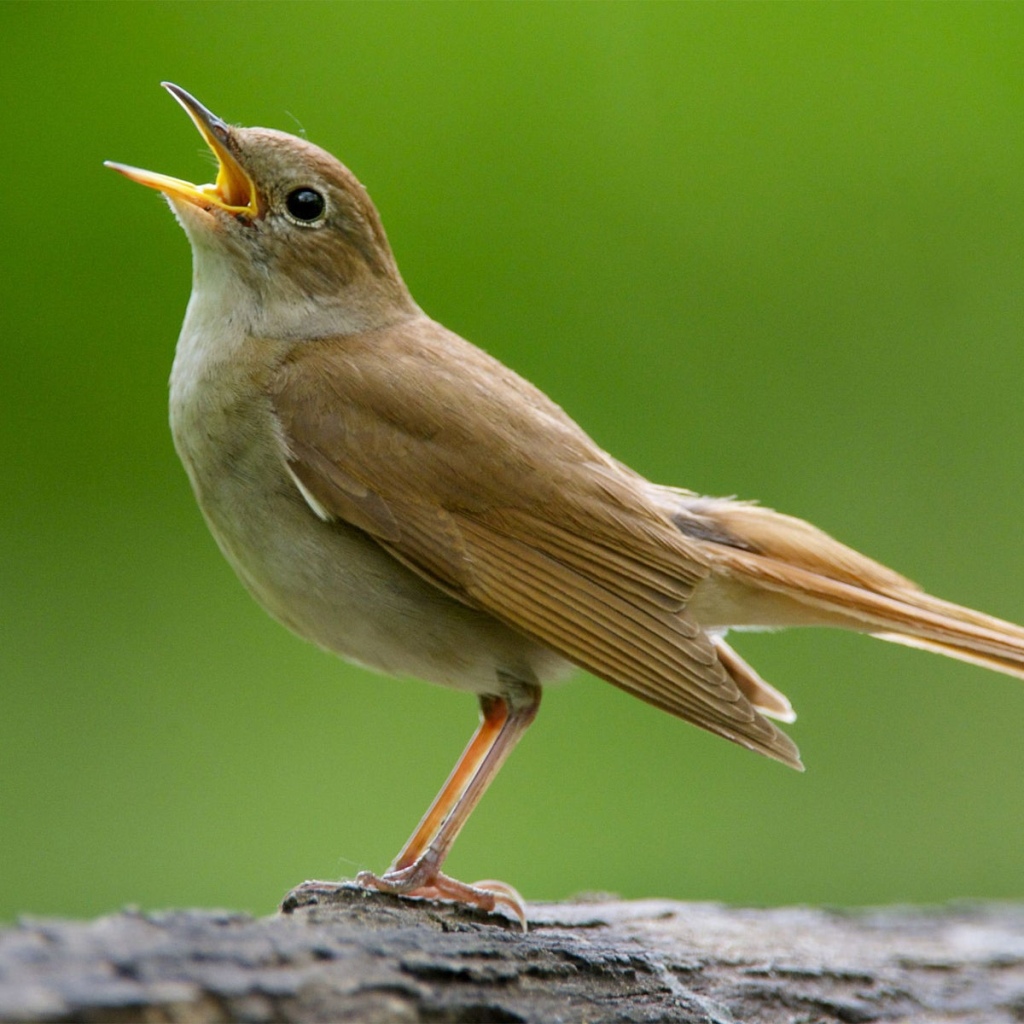
“That thou, light-winged Dryad of the trees,
In some melodious plot
Of beechen green, and shadows numberless,
Singest of summer in full-throated ease.”

ODE TO A NIGHTINGALE by John Keats

As we were walking along the Canal ,Tom stopped and with the aid of an App. on his phone, identified the song of a Nightingale – something I had never heard before – the Camino provides wonder,too.

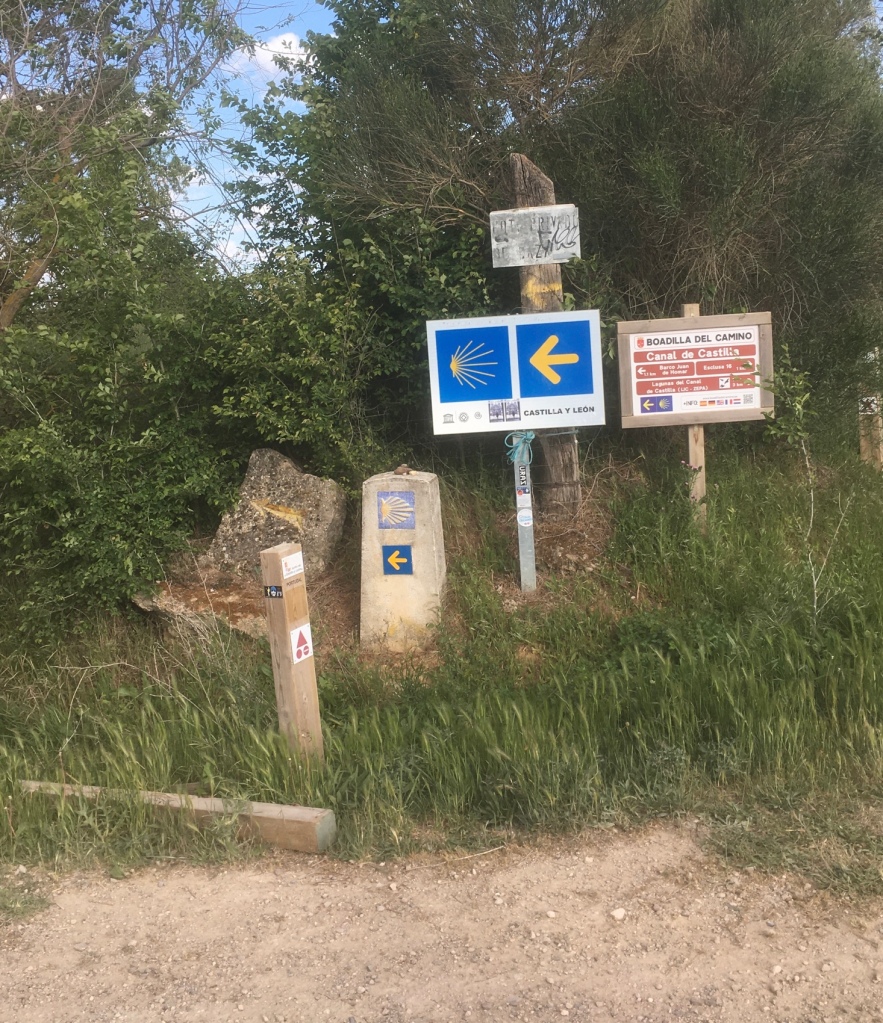
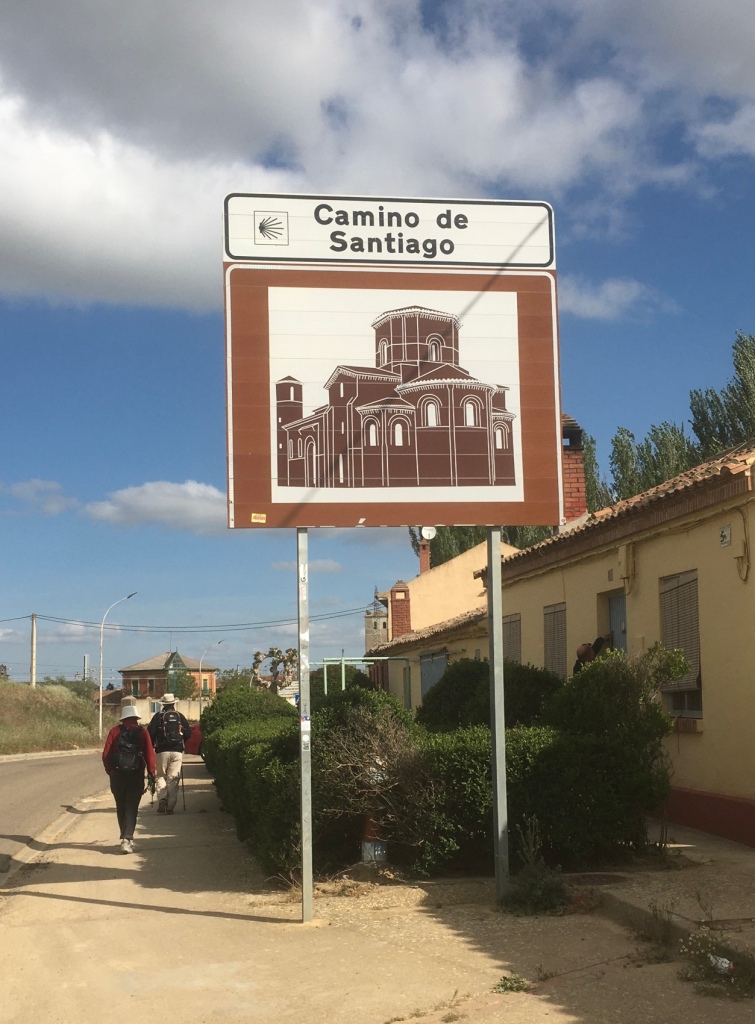
A leisurely start to a short saunter this morning,with the ever present markers to guide us.

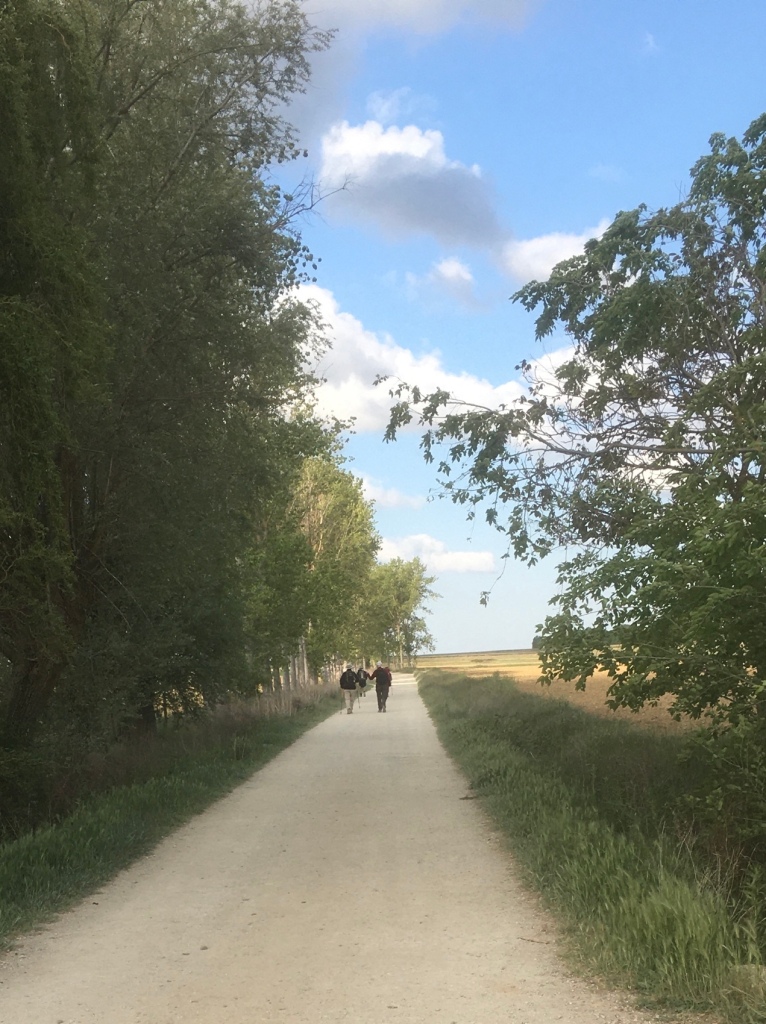
We walked along a good trail in the direction of Fromista
Some shelter from a strong breeze
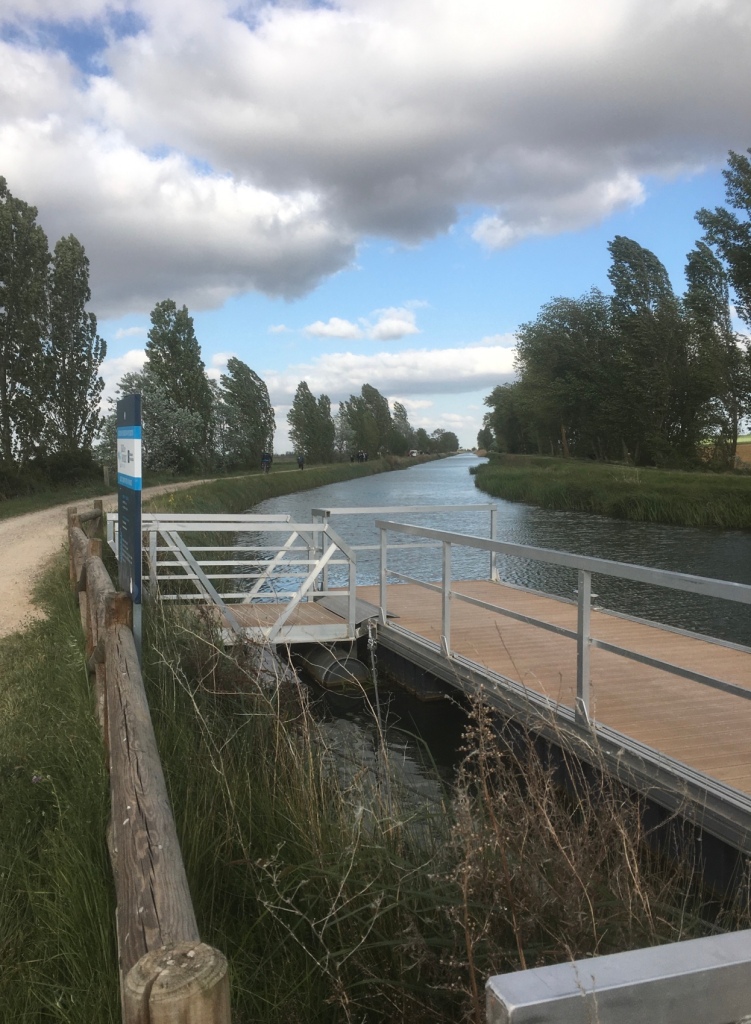
We soon reached the canal
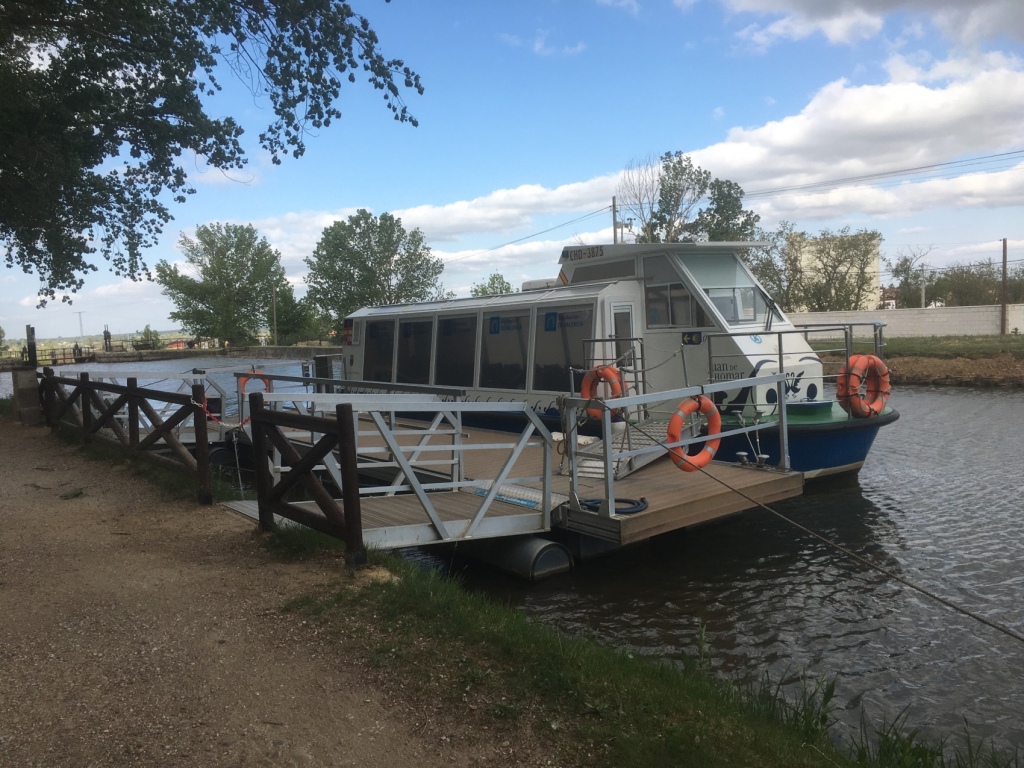
A deck advertising St James’ Way by boat, disappointingly not operative on Thursdays.
We came across the aforementioned craft moored just before the famous lock at Fromista.
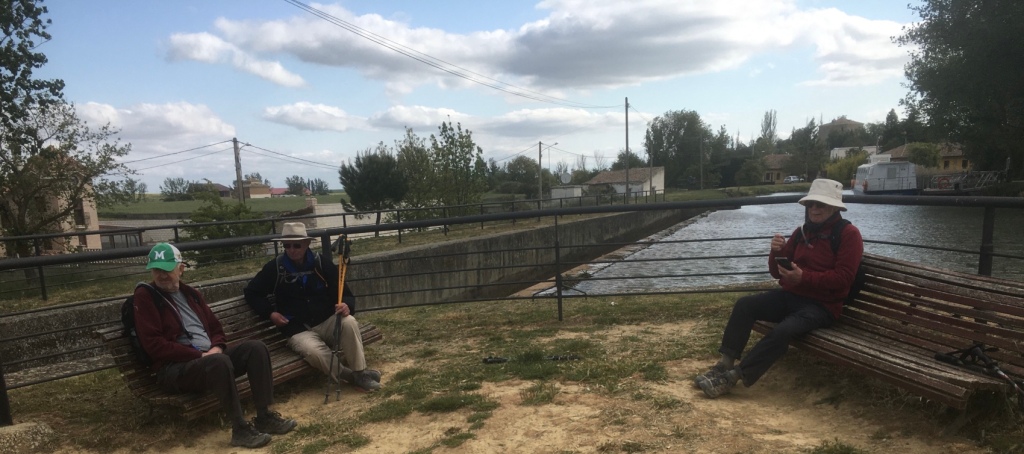
Tom,Mike and Rob.
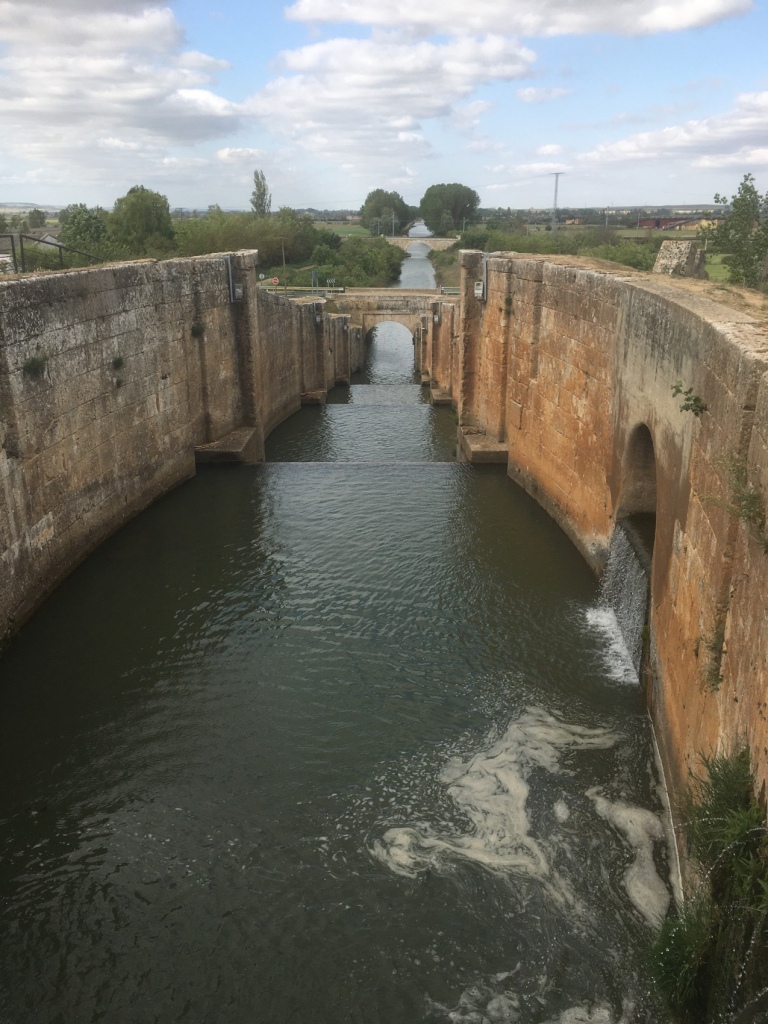
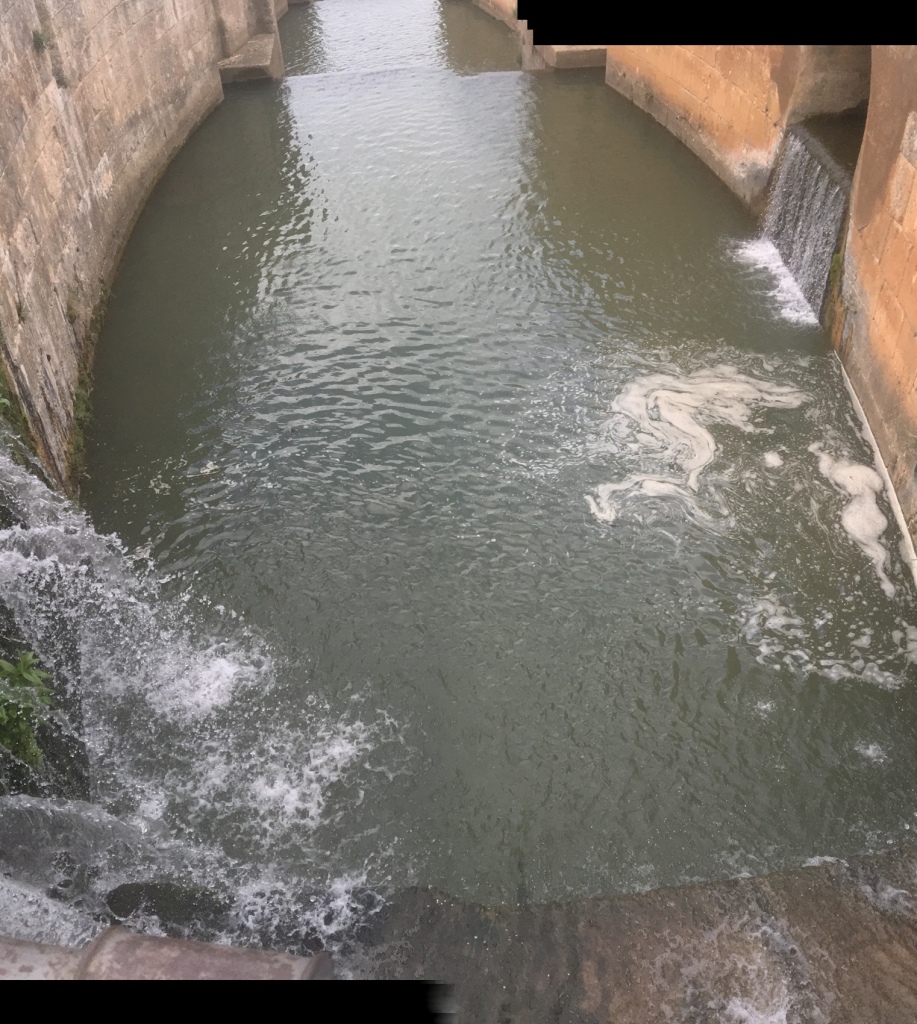
I doubt that the boat went through it.

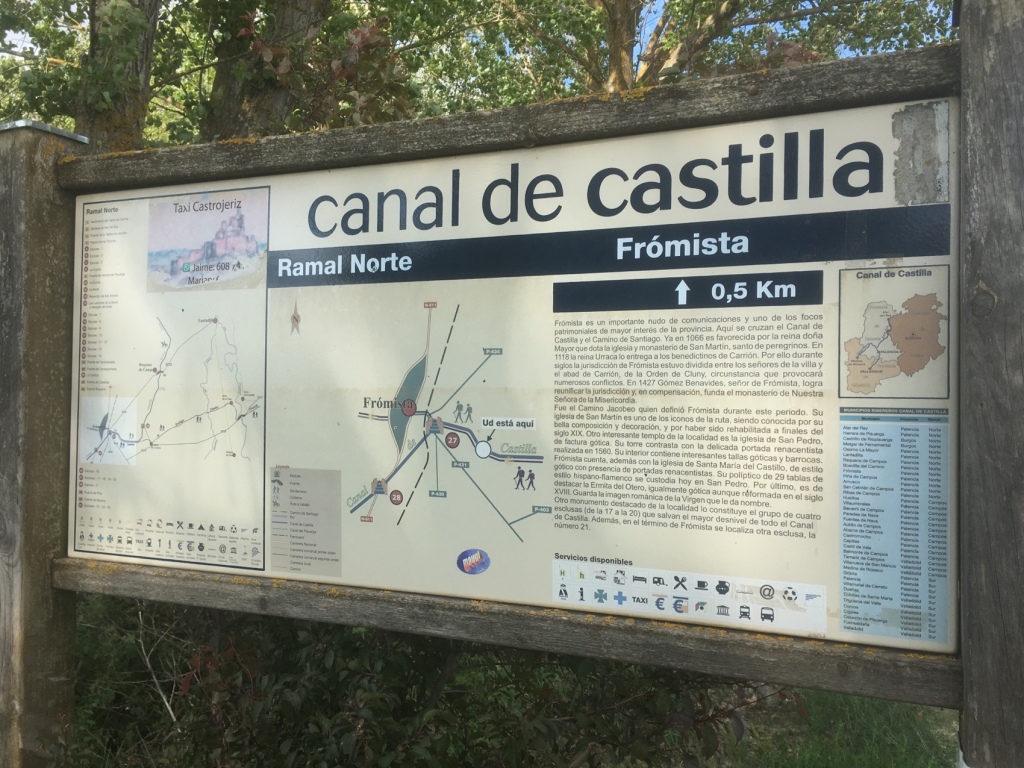
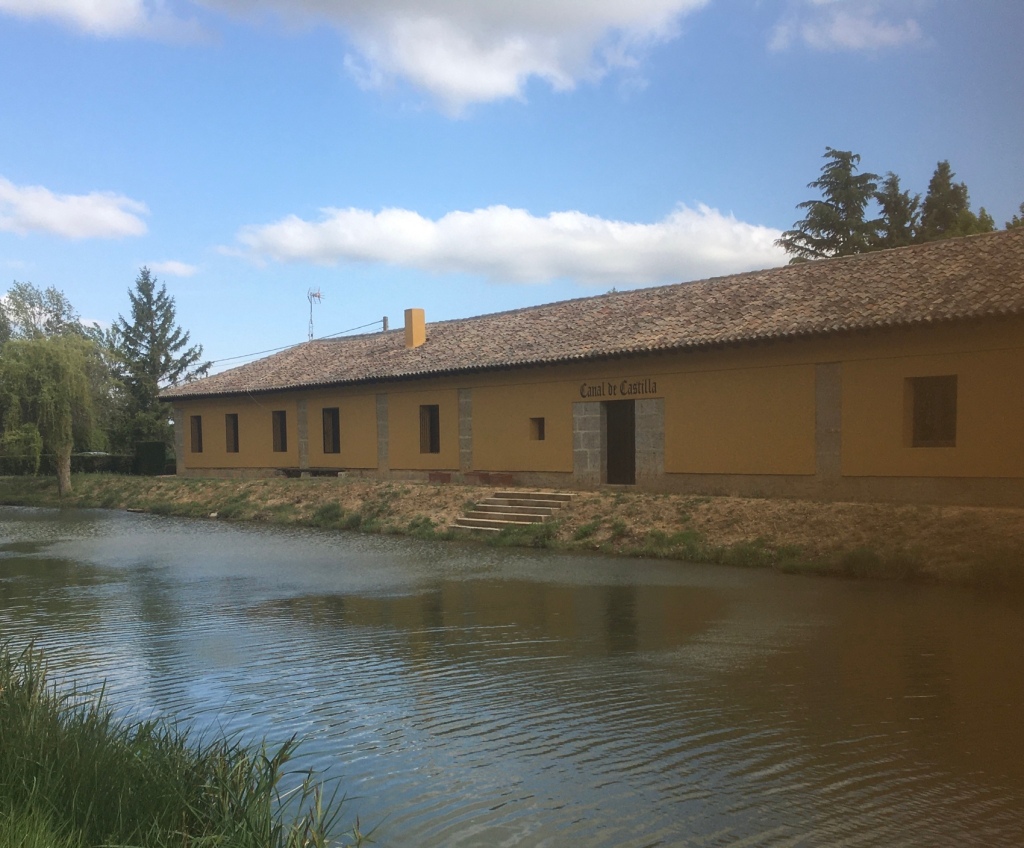
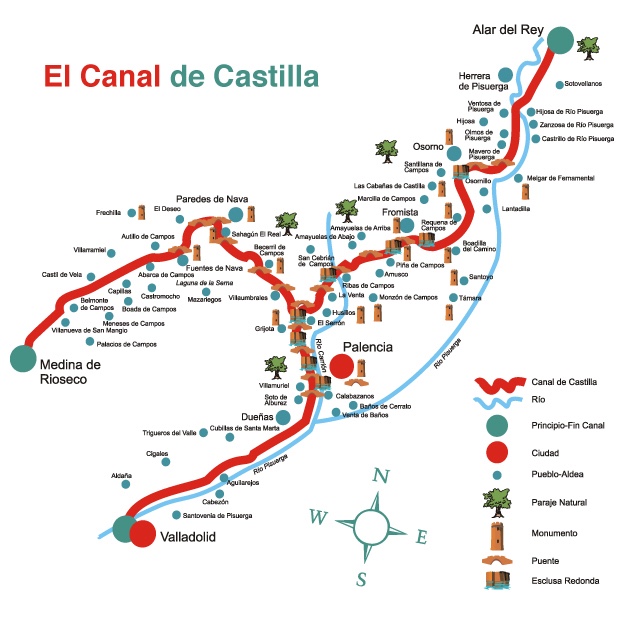
The Canal de Castilla, an impressive work of hydraulic engineering, was one of the best projects of this type to be built in Spain throughout the 18th and 19th centuries at the hands of the Enlightenment and at a time when it was necessary to sell grain surplus and improve commercial communications.

What was born as a navigation route for the transport of goods, would be closed to traffic in the middle of the 20th century, in 1959. Considered today as an Asset of Cultural Interest, since then its main function has been focused on irrigation, to which unites its interest as one of the most attractive tourist routes in Castilla y León, due to the scenic, natural wealth and the historical-artistic value that the cities that are in its path arouse.

This artificial river, which runs for 205 kilometers of the plateau between the provinces of Palencia and Valladolid, has become a route of cultural interest that in its three branches -North, South and Campos- offers visitors a rich and varied architecture of its own , a natural environment on its shores and the historical and traditional grounds of the towns that are in its path.

The Northern Branch starts in Alar del Rey and ends in Ribas de Campos, where the so-called Ramal de Campos begins, until it reaches Medina de Rioseco. And the Southern Branch begins at the fork of the Campos Branch in El Serrón and continues to the city of Pisuerga, Valladolid. https://www.turismocastillayleon.com/es/arte-cultura-patrimonio/grandes-rutas/canal-castilla

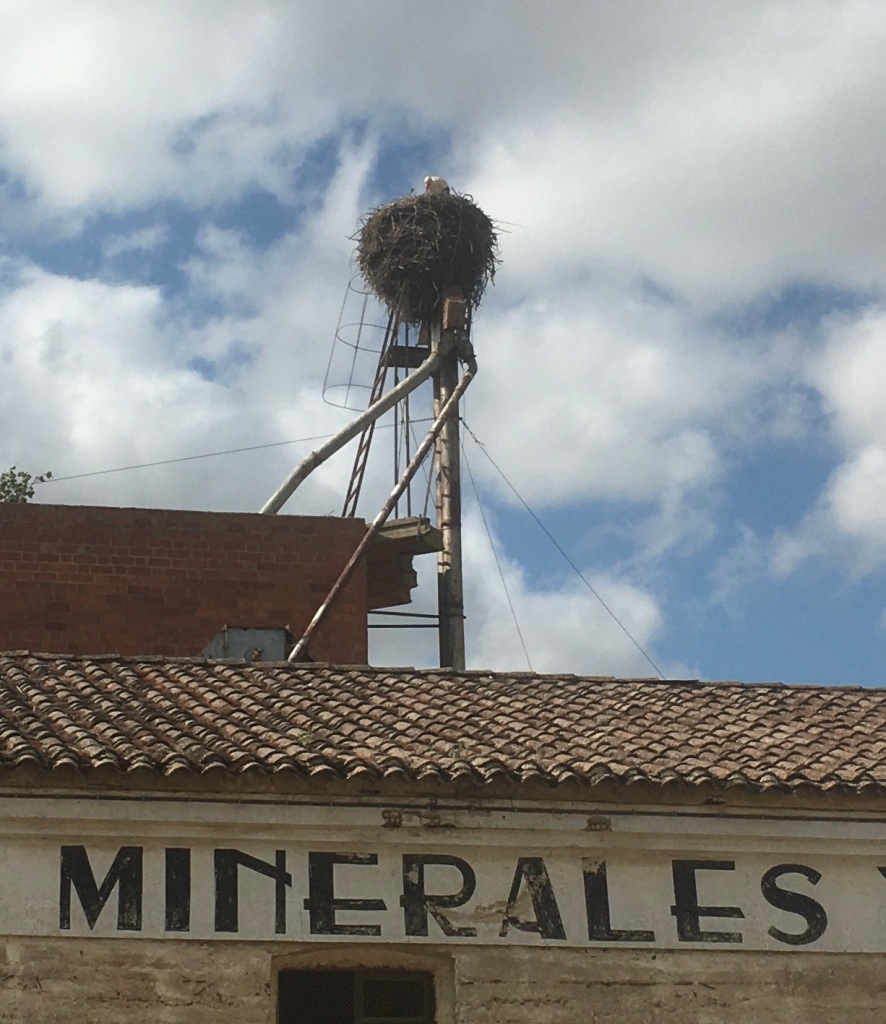
We continued along the Camino and entered Fromista noting another Stork’s nest on the way.

This time the nest was atop of a factory .
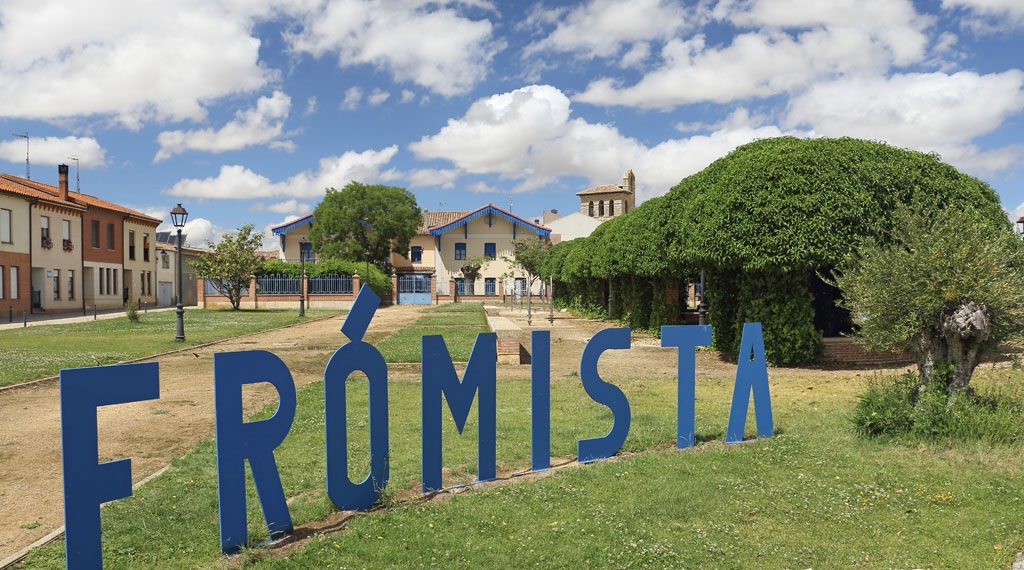
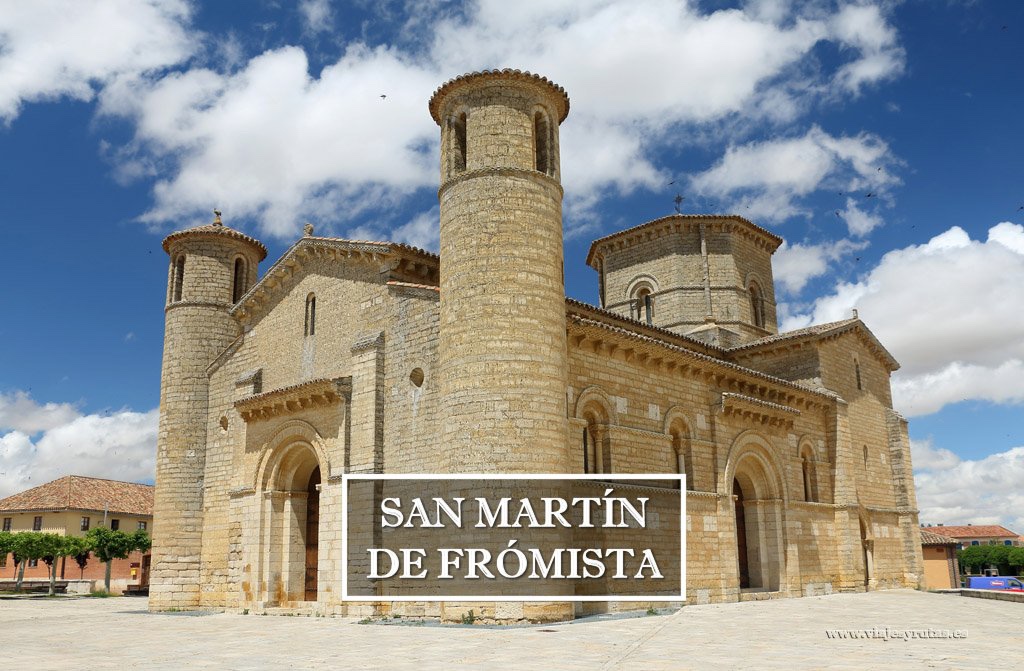
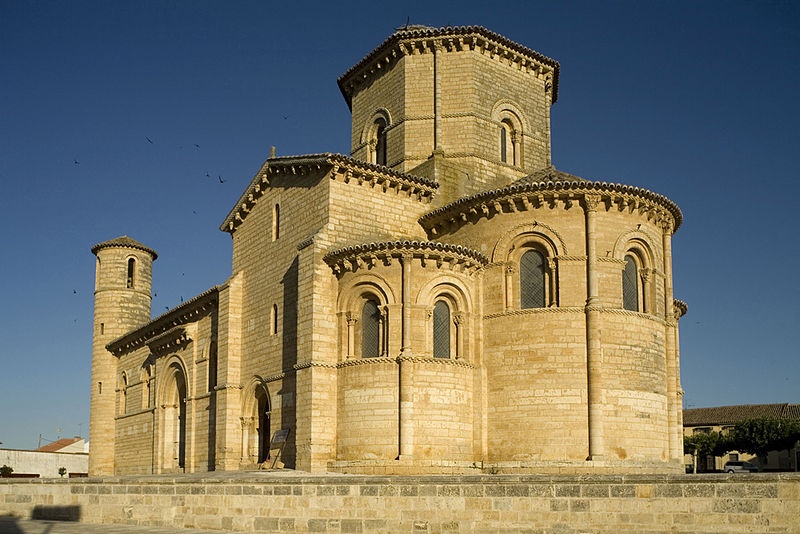
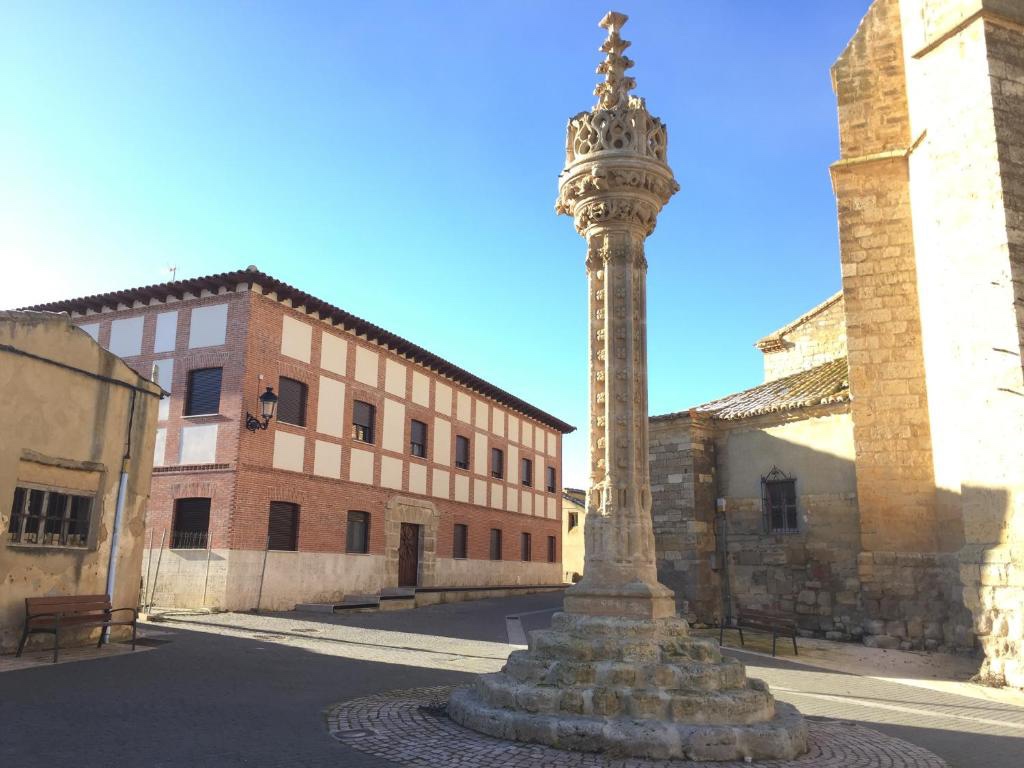
A town now more famous for its carefully restored churches than it’s Camino links.
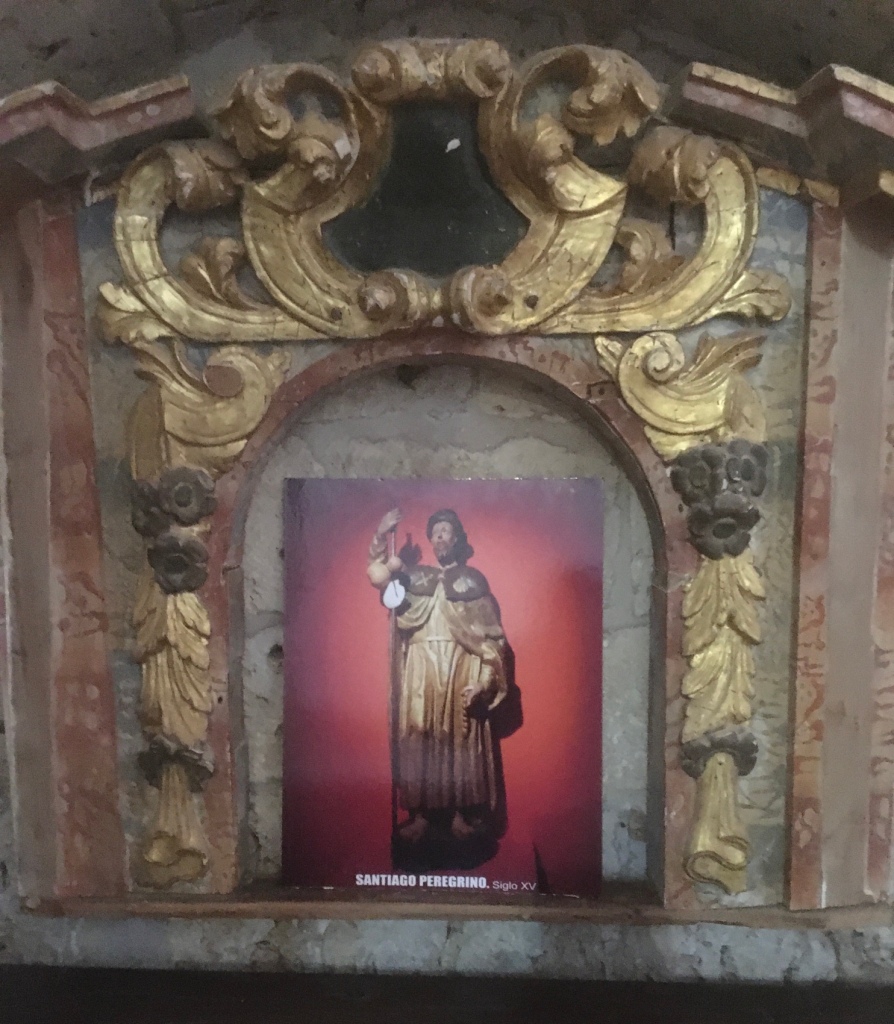
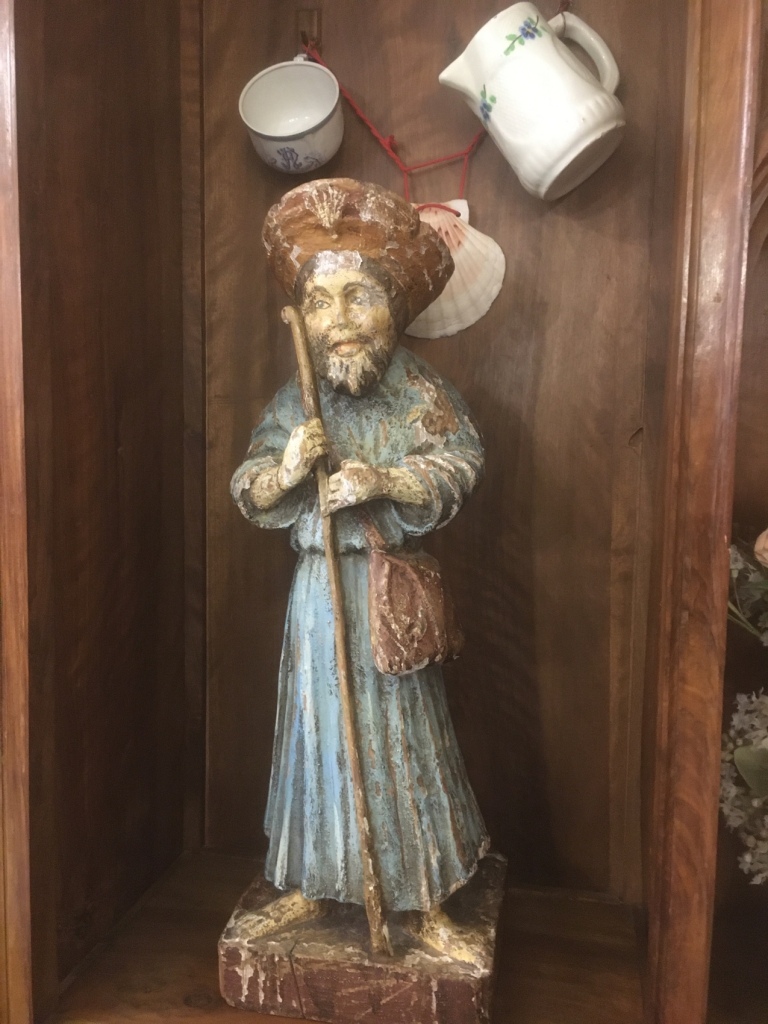
The Saint himself
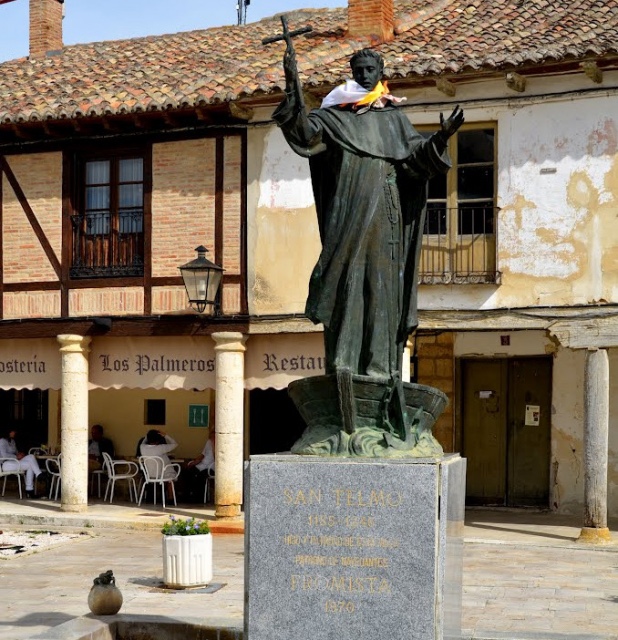
San Telmo
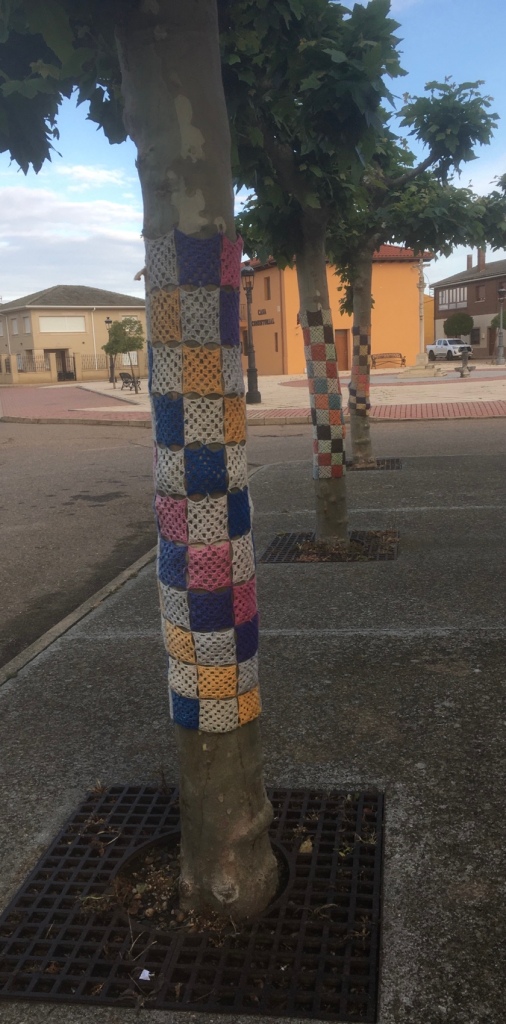
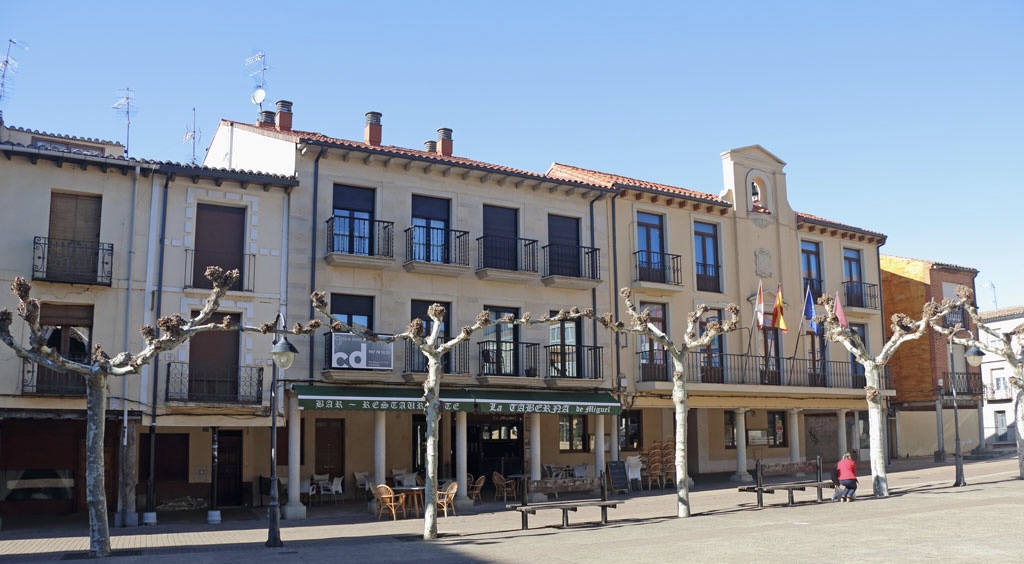
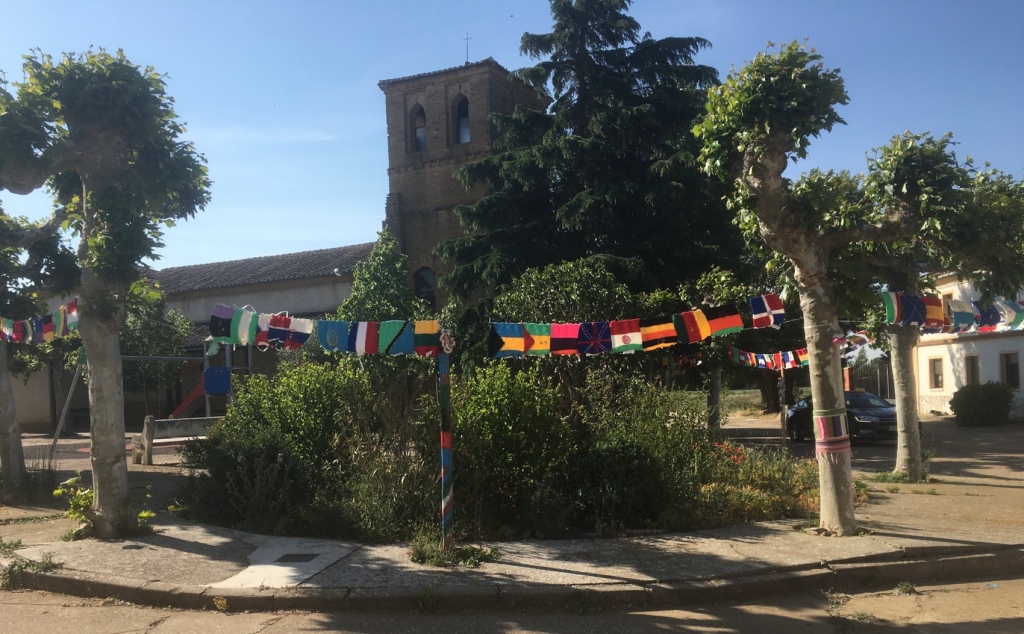
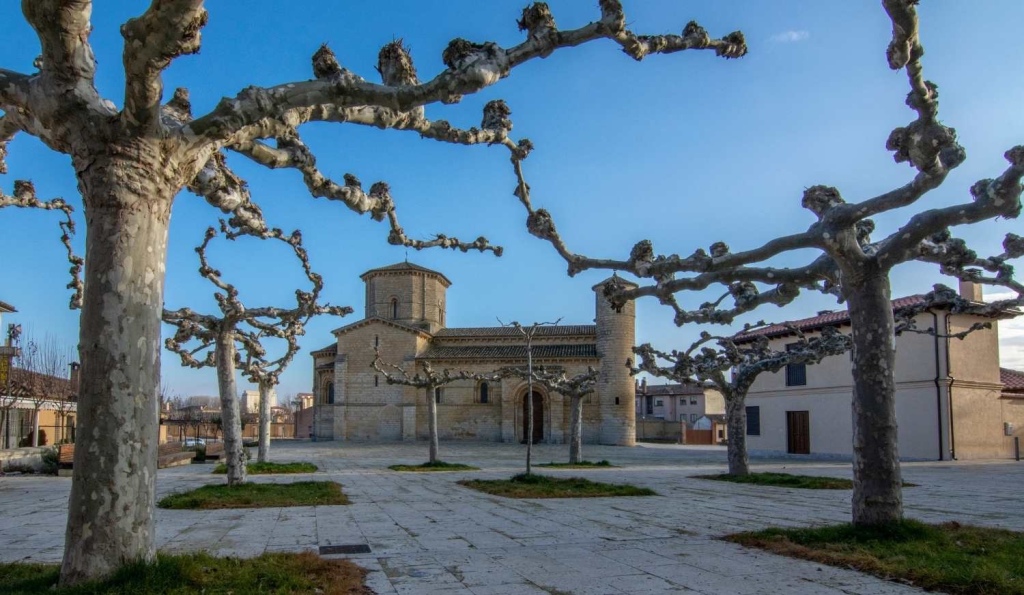
These pollarded trees are a feature of many Spanish squares.
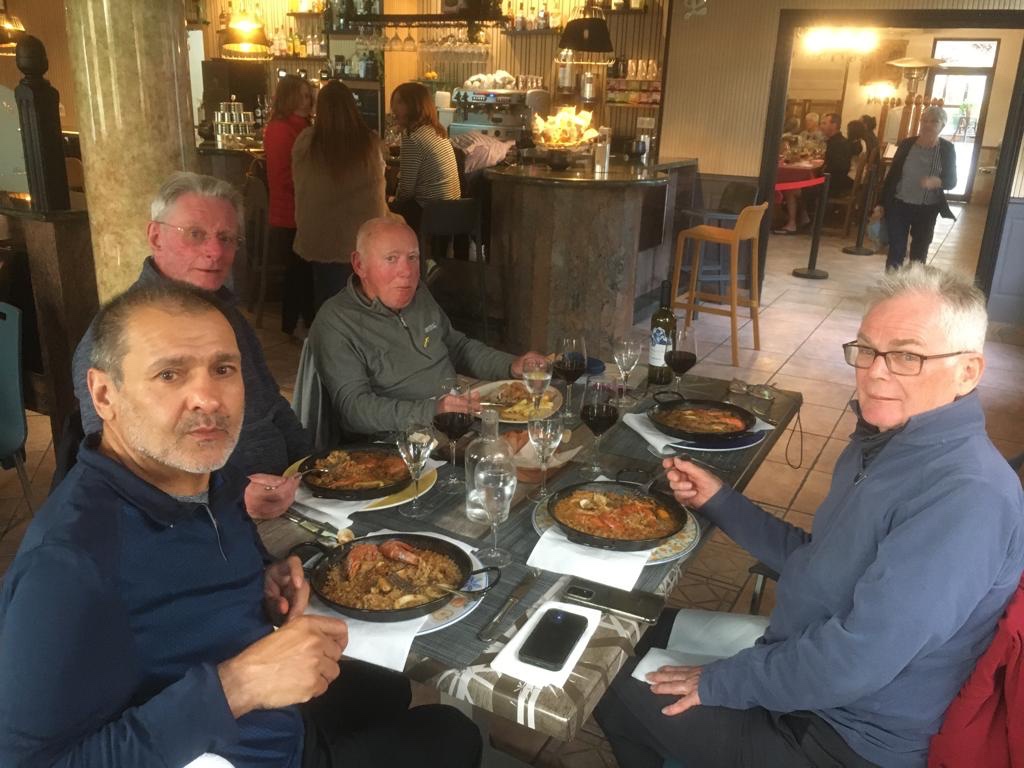
After a day of relaxation it was dinner time and the Paella was much appreciated.

A 12.5 mile walk tomorrow . Ranjit declared “ it would be a walk in the park “ – we’ll he would, wouldn’t’ he ?

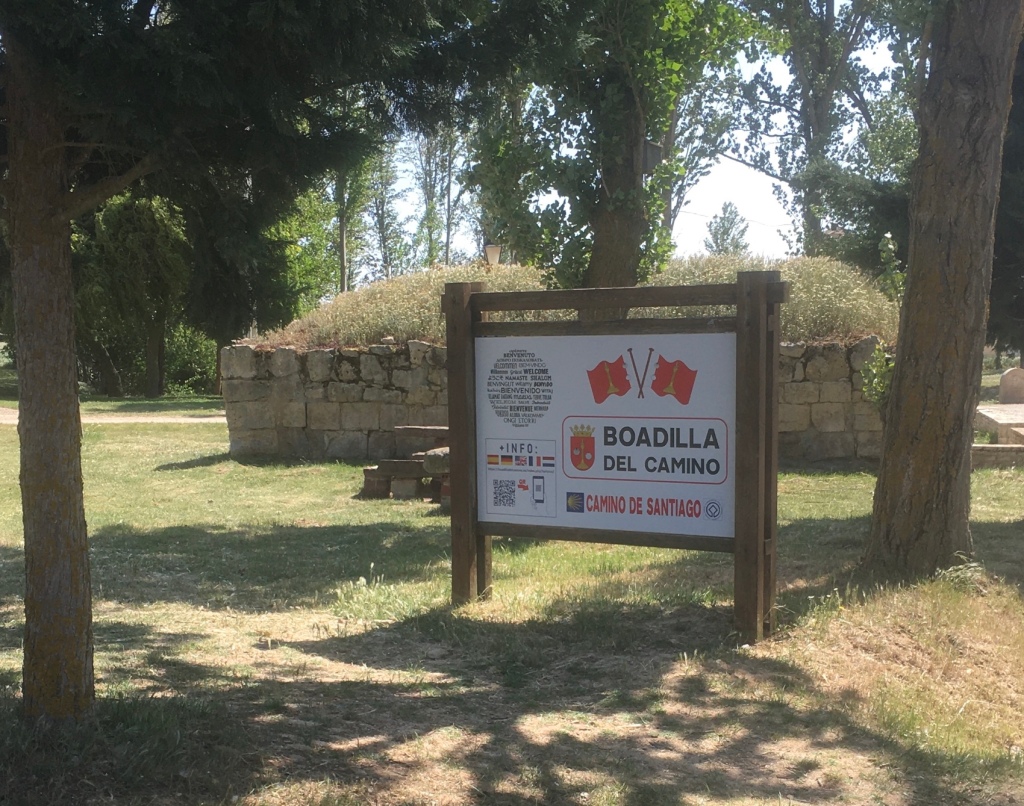
17th May – Hontanas to Boadilla del Camino. A long walk of 29-30 KM.

18 May

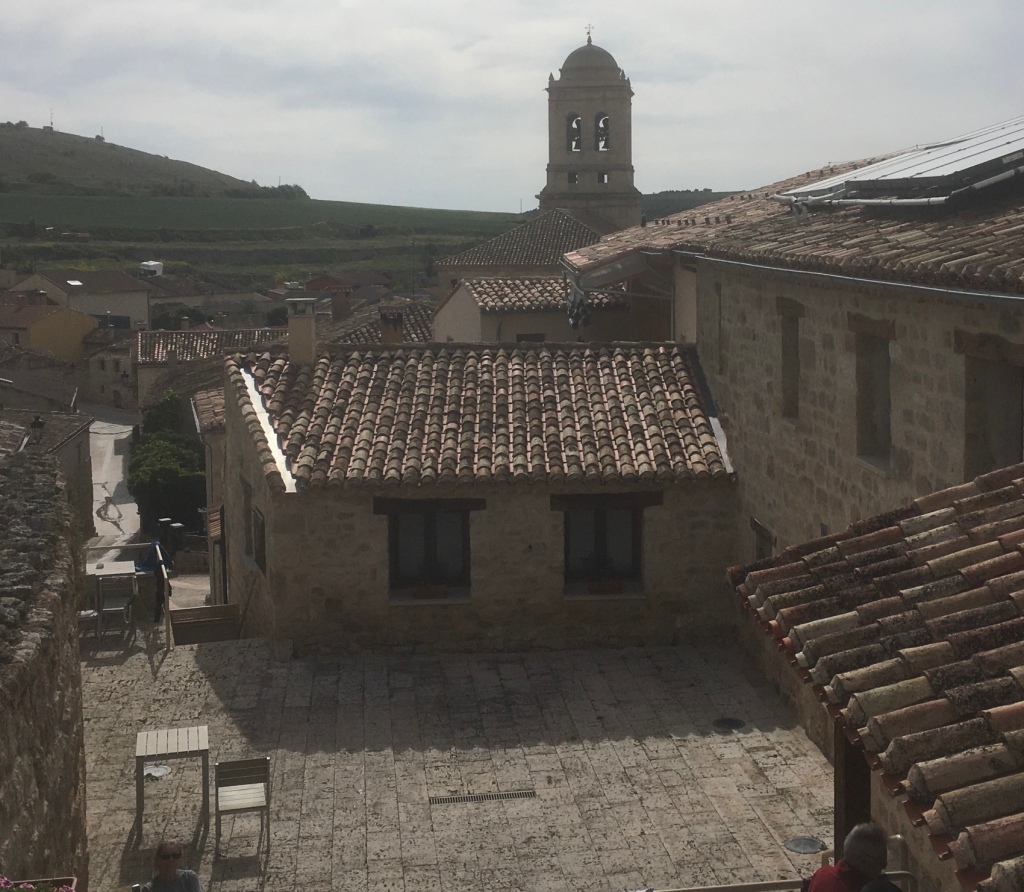
Hontanas is a picturesque and typical Camino village tucked away in a little valley – dedicated to Pelegrinos.

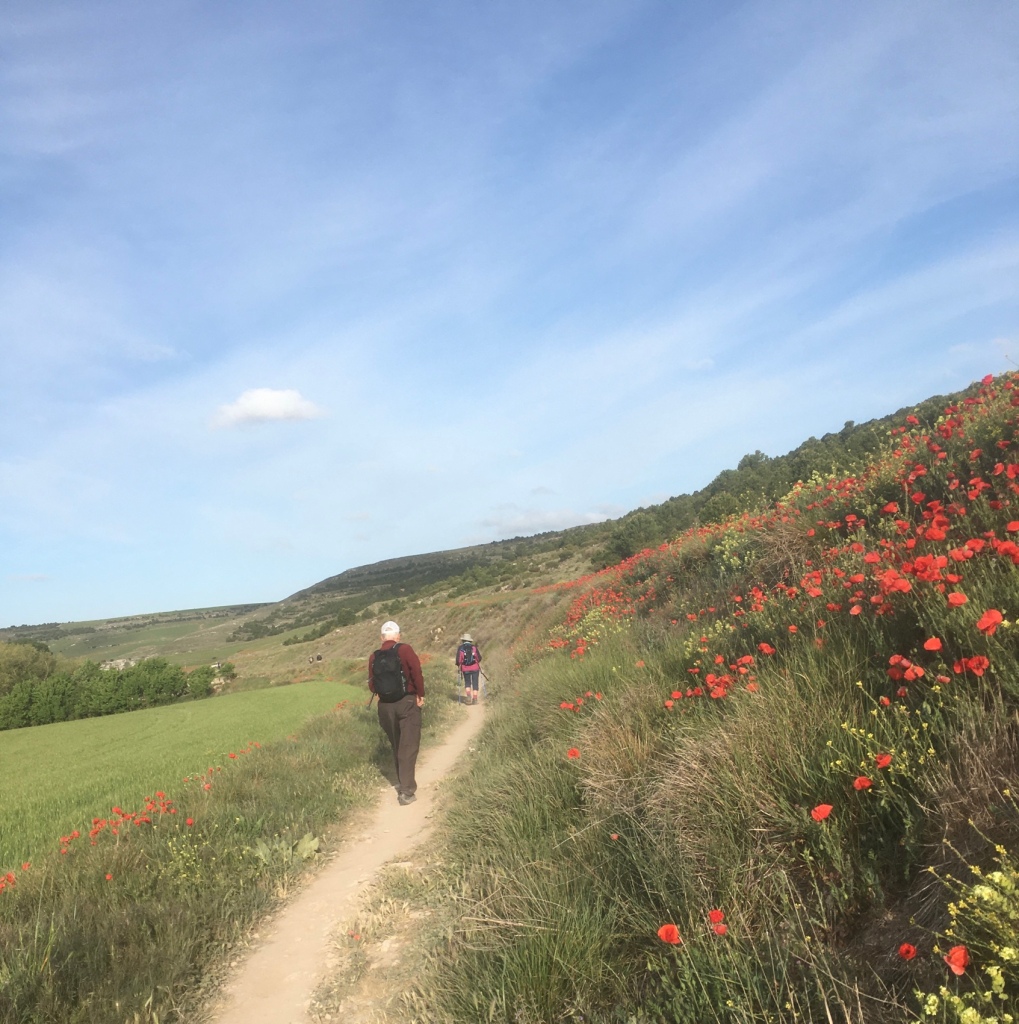
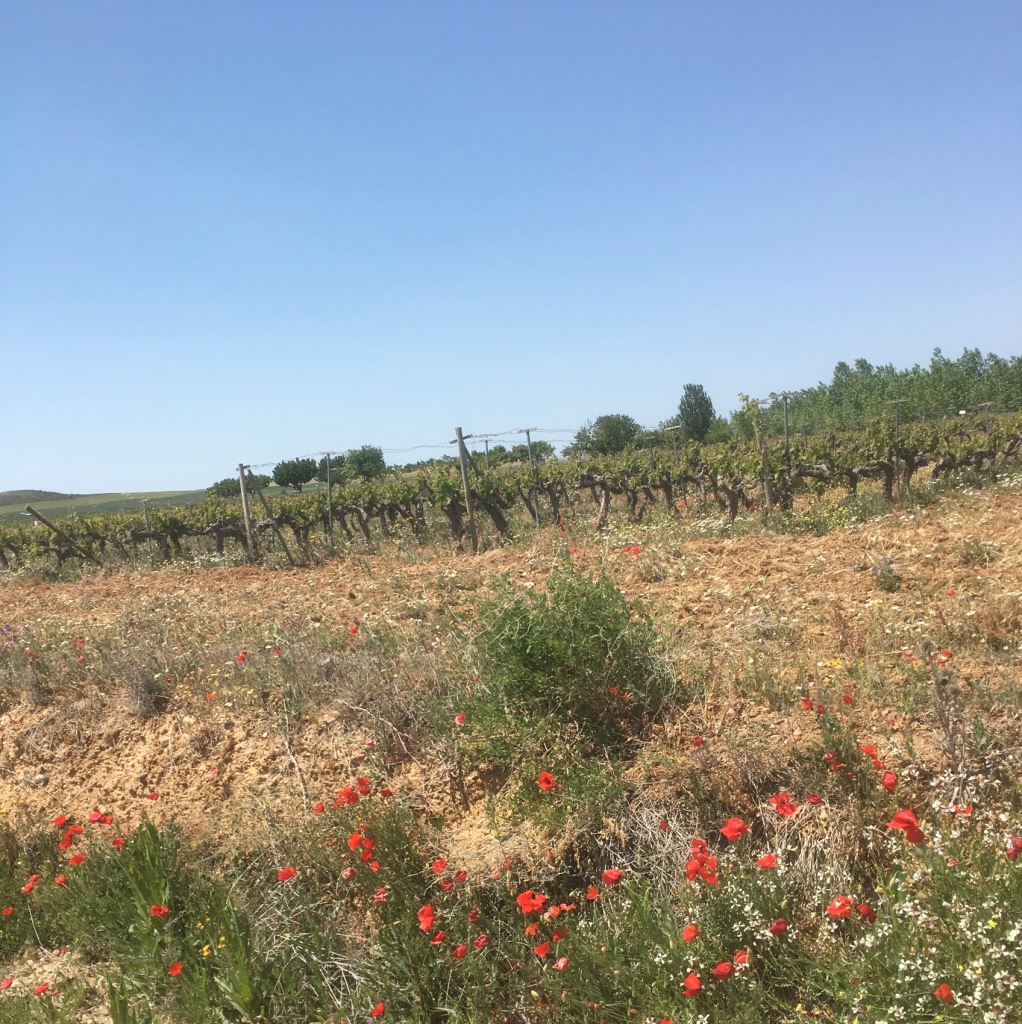
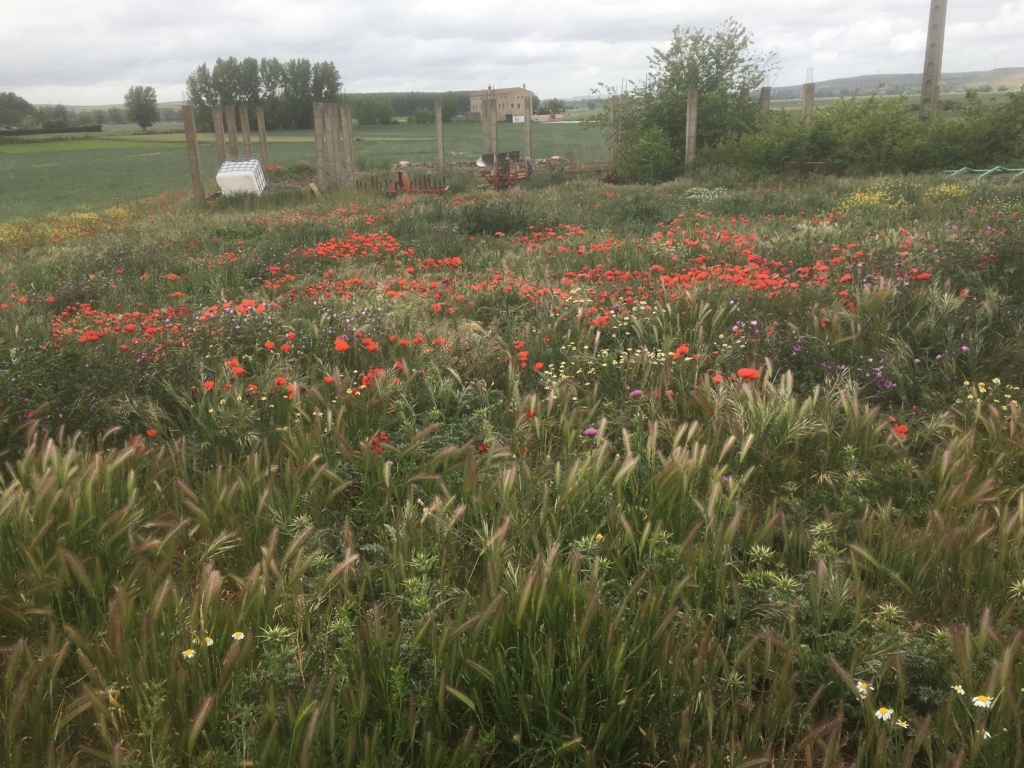
The first section of today’s walk was along a peaceful valley the sides of which were festooned with poppies.
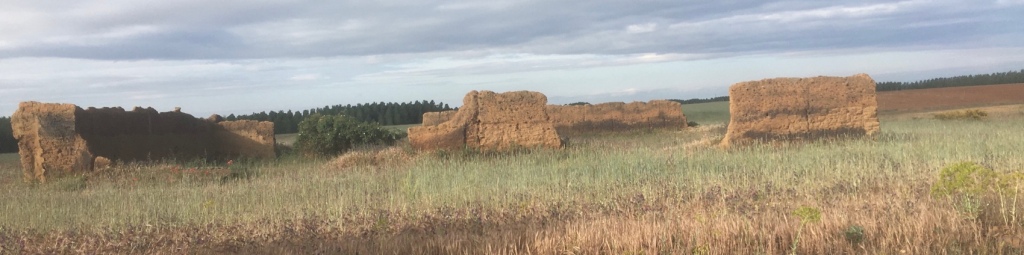
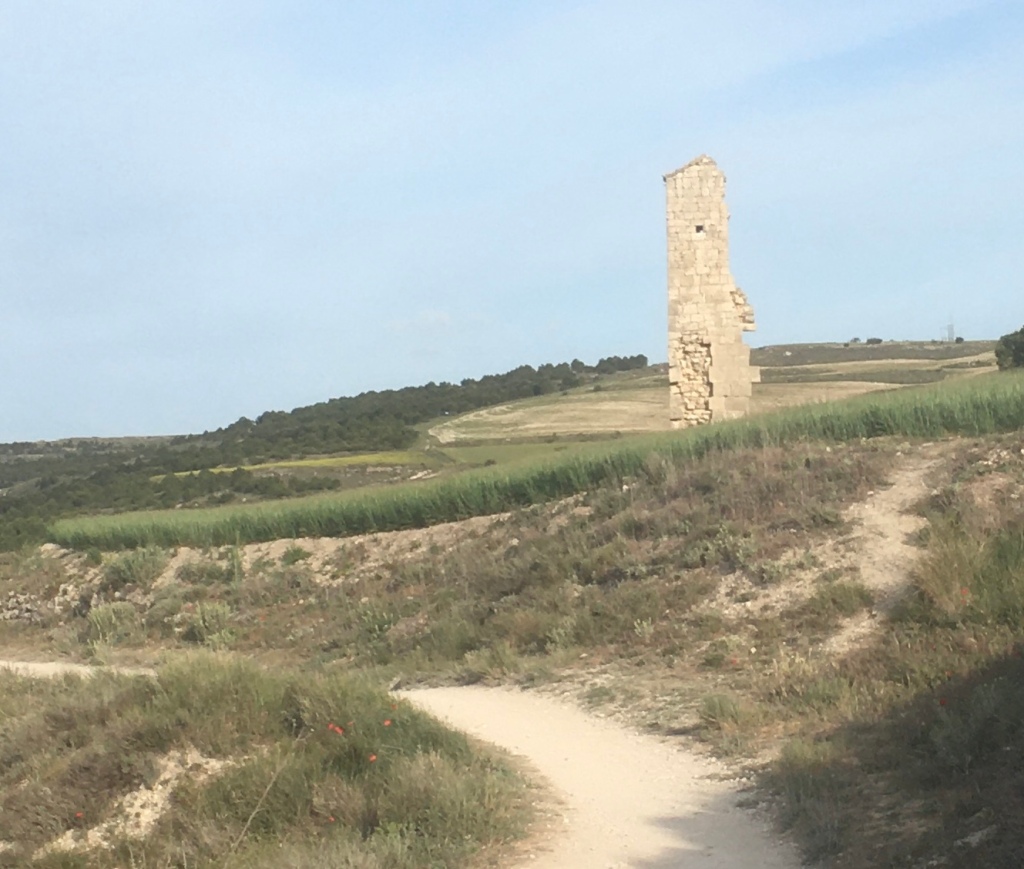
An incomprehensible remnant of a building in a field en route
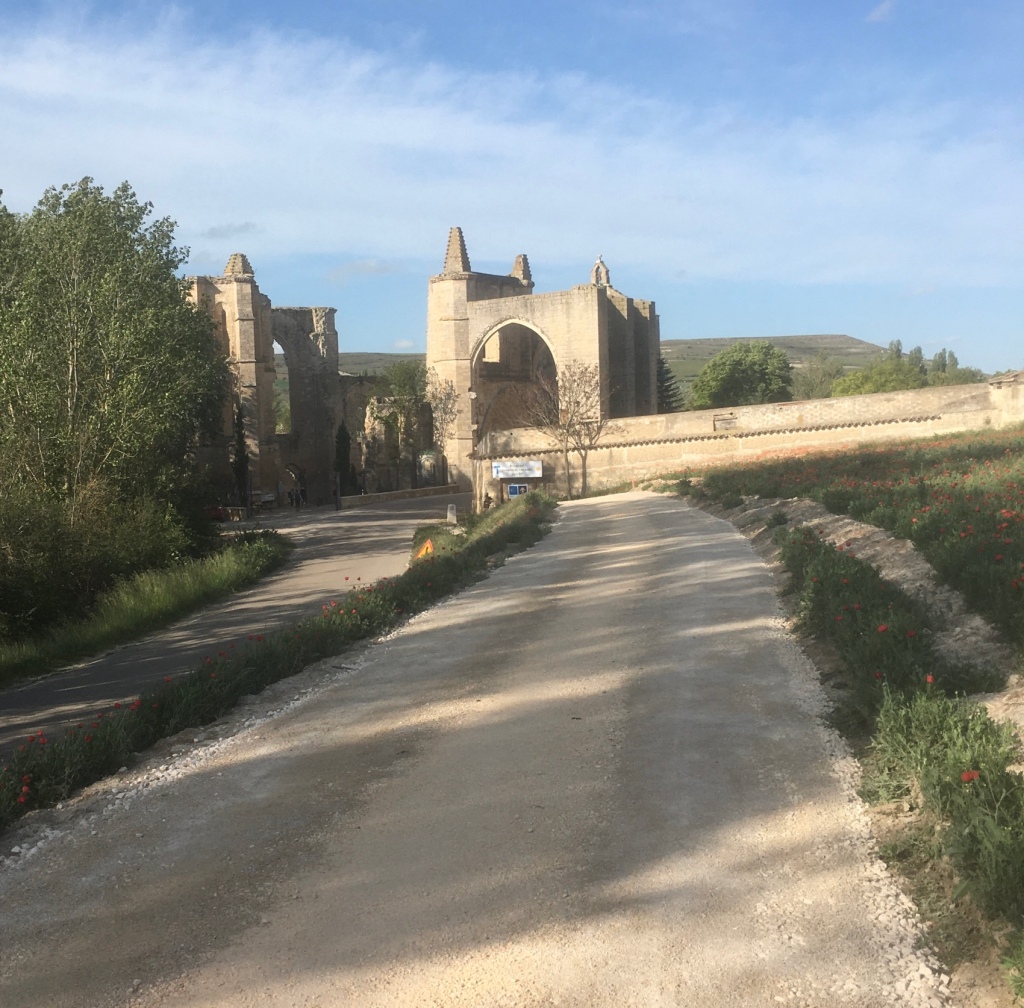
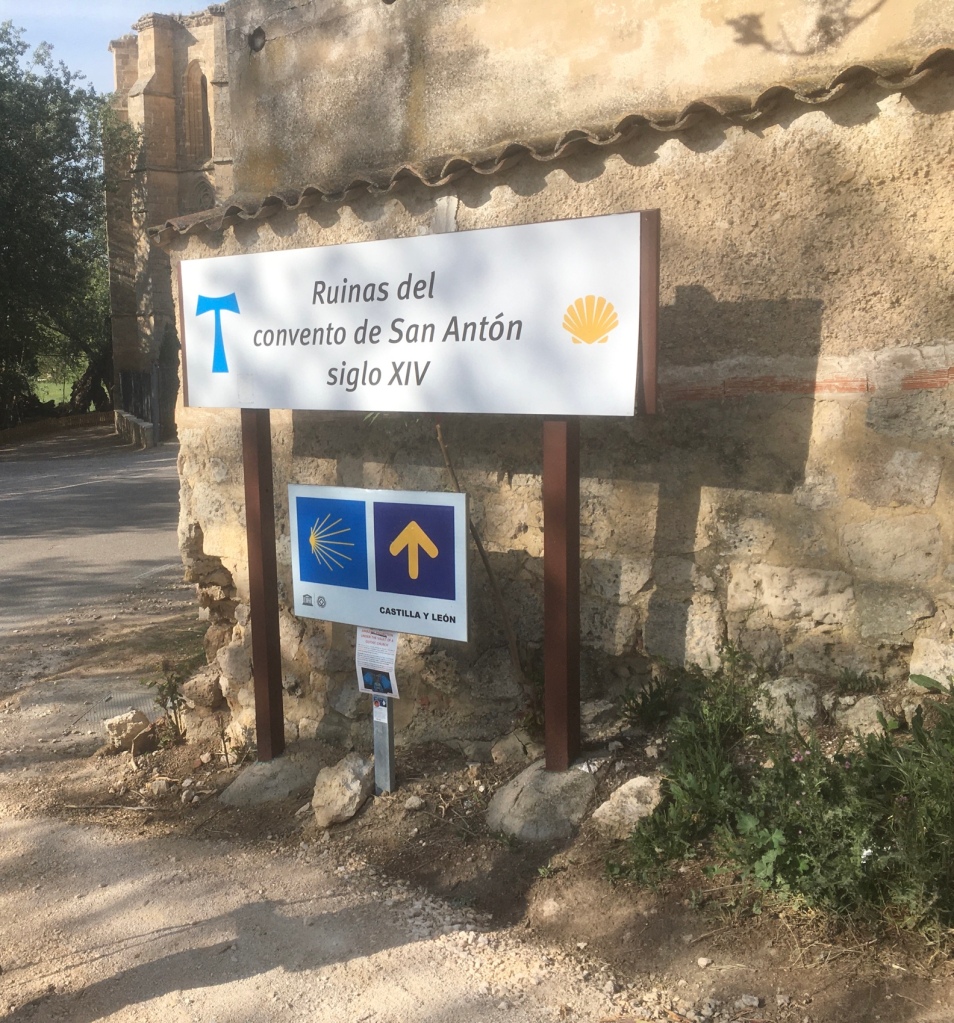
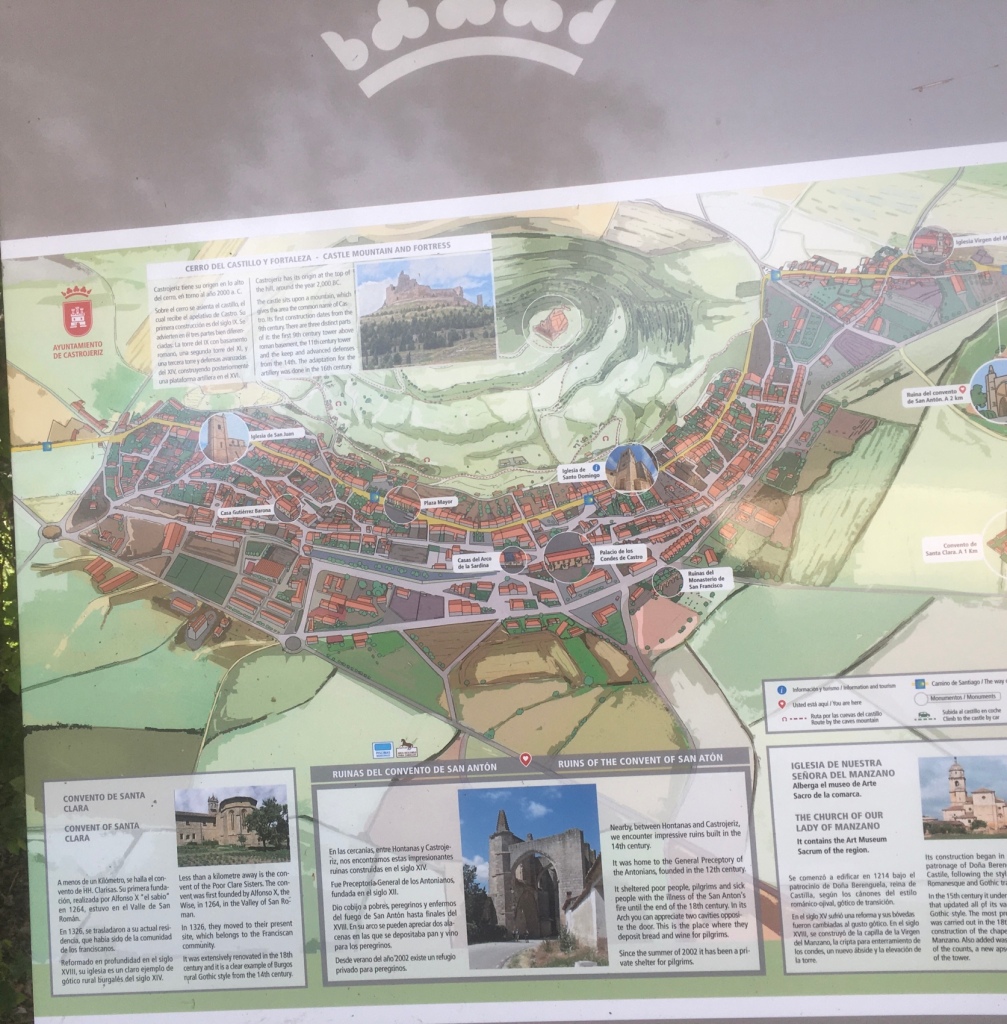
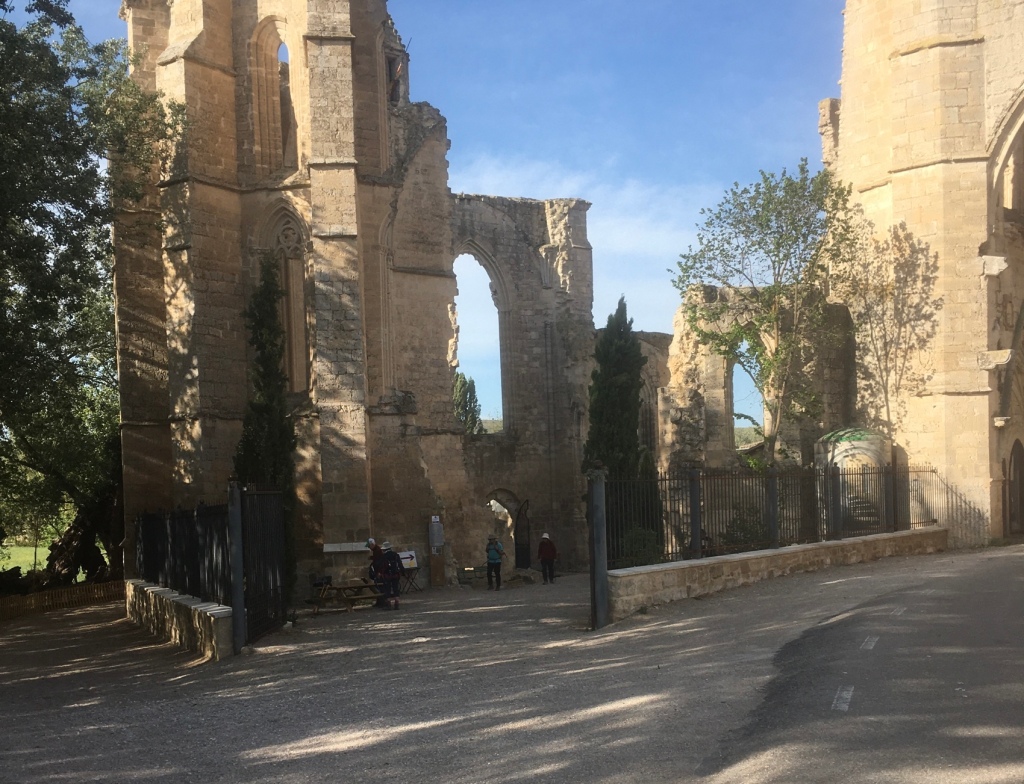
Ahead, the remarkable ruins of Arco San Anton – one of the most emblematic medieval monuments on the Camino to Santiago de Compostela: the Convent of San Antón.
This Jacobean icon, the aforementioned
convent of San Antón de Castrojeriz, was owned by a community of monks from the little-known Order of San Antón, also called by other names: Order of the Hospitaller Brothers of San Antonio or simply Antonian Brothers.
It is a Catholic Congregation founded around 1095 in France.
It was born as a charitable group of lay people at the service of the Saint-Antoinede-Viennois hospital (Isère, France).
It was founded by Gastón and his son Guérin de Valloire in gratitude for his miraculous healing from the disease of ergotism (Fire of Saint Anton), through the intercession of Saint Anton Abbot – whose relics had been taken to France by Count Jocelyn of Chateauneuf.
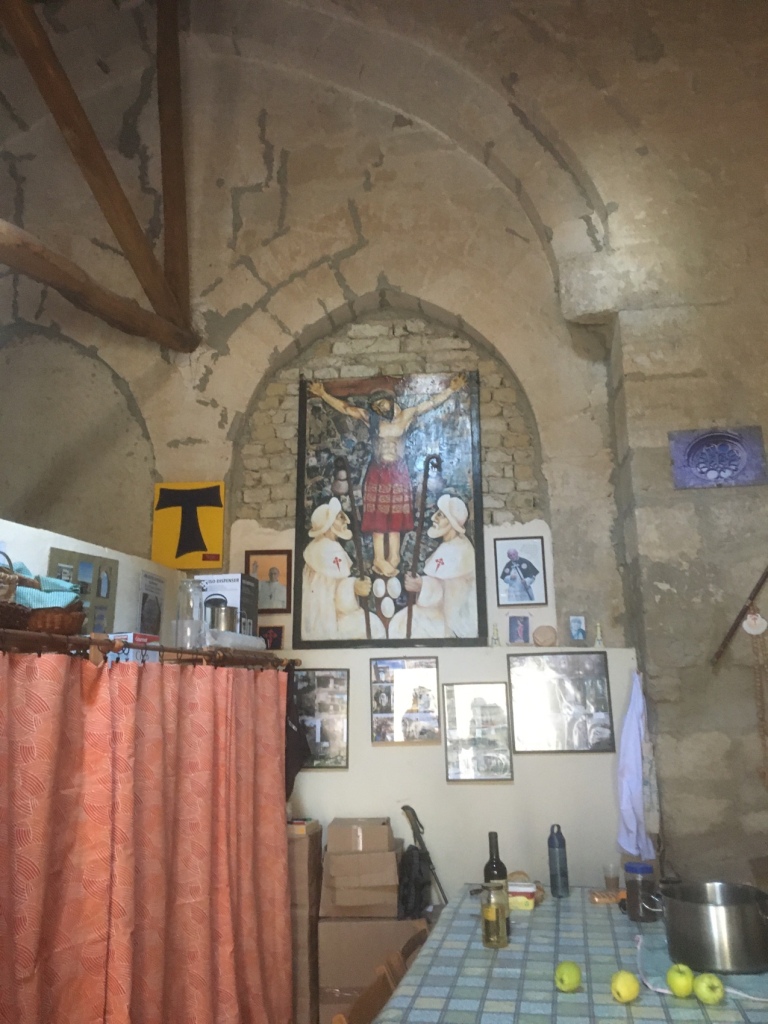
One of the few remaining rooms – now a donativo for refreshments and souvenirs.

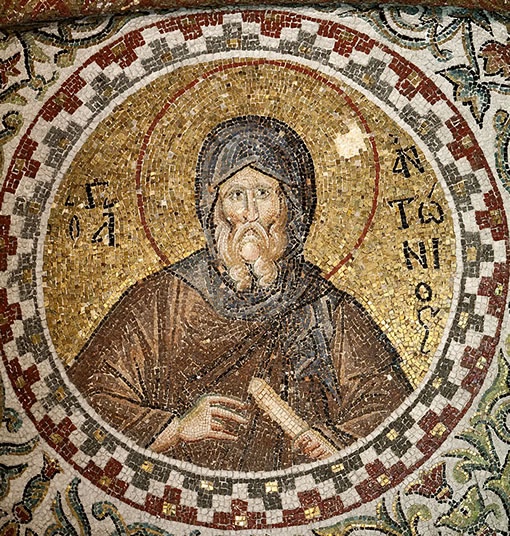
Saint Anton known as the hermit or the abbot, was a Christian ascetic of the 4th and 5th centuries. His life was written by Saint Athanasius. We know about him -among other things- that he was born into a wealthy family in Egypt. Later, he sold his goods and became a hermit. His relics were kept for a long time in Alexandria before being transferred to Constantinople and finally received in France. The rapid expansion of this group in free territory was the response to the strong devotion that San Antón produced for his intercessory quality against this disease. It soon ceased to be a lay group to become an order made up of regular canons of San Agustín.

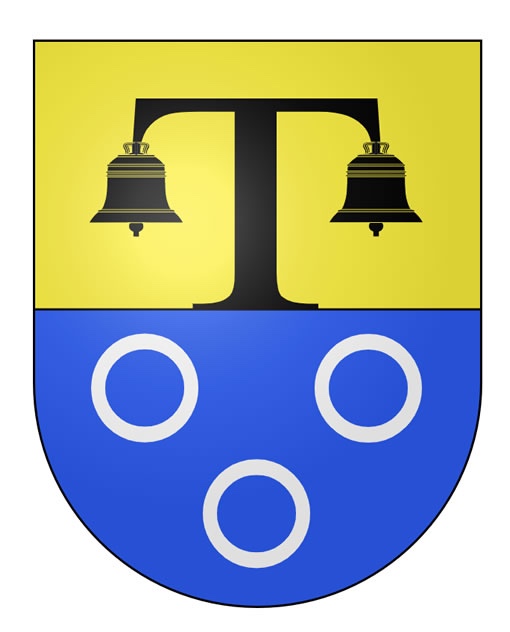
When San Antón cured the founder of his illness, he asked him to create a hospital to cure those suffering from the same disease, giving him a staff in the shape of a “T” (tau), which became a symbol of the Order (Antonians wore a letter tau on their robes) and an essential part of their ritual. ( info. extracted from an article called VIAJE A ASTURIAS

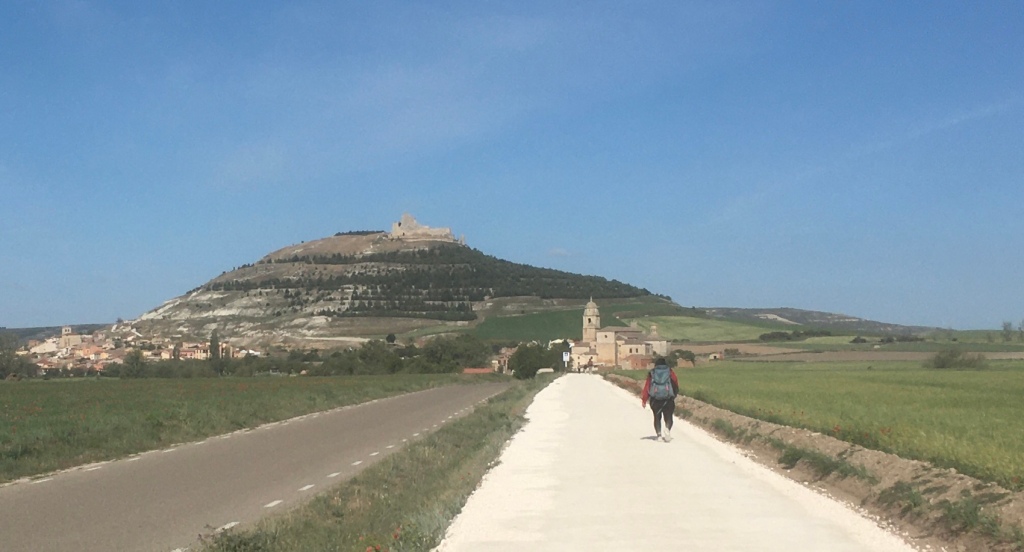
The Castle of Castrojeriz in the distance

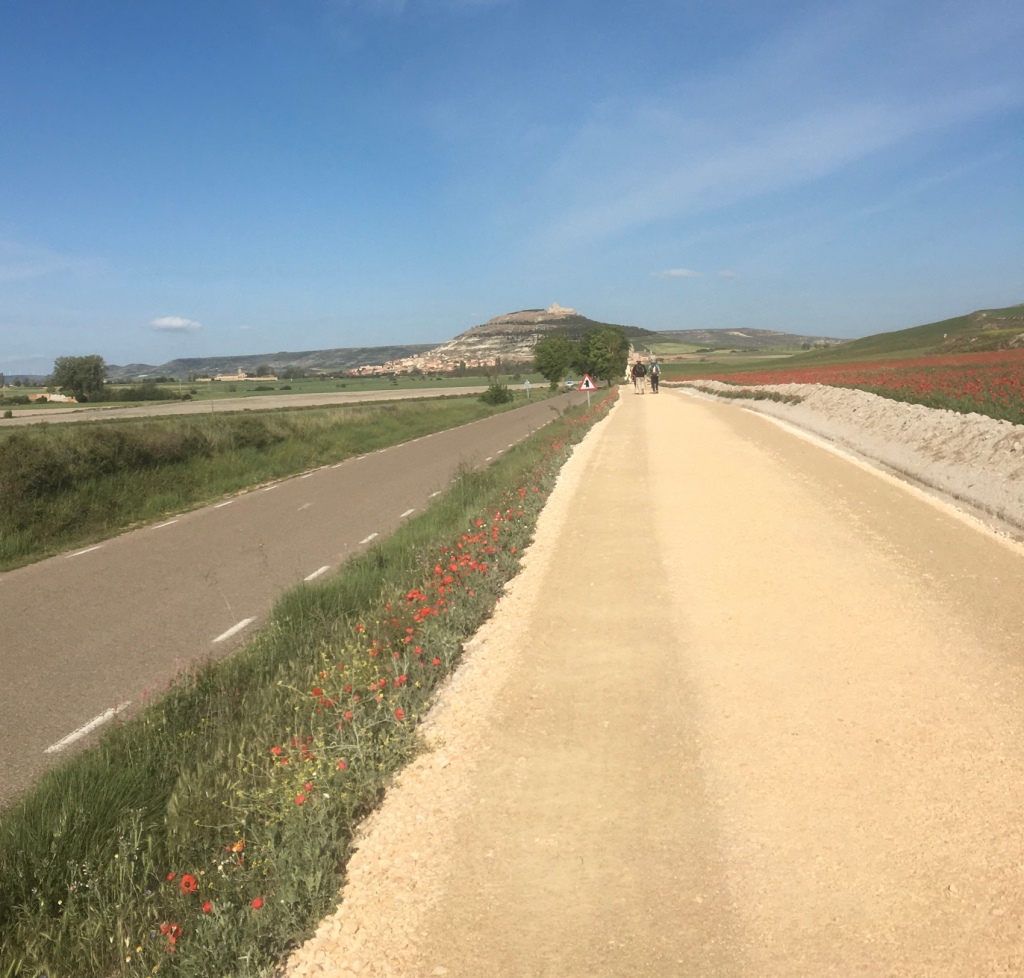
Onwards, then, along a newly constructed pathway to Castrojeriz

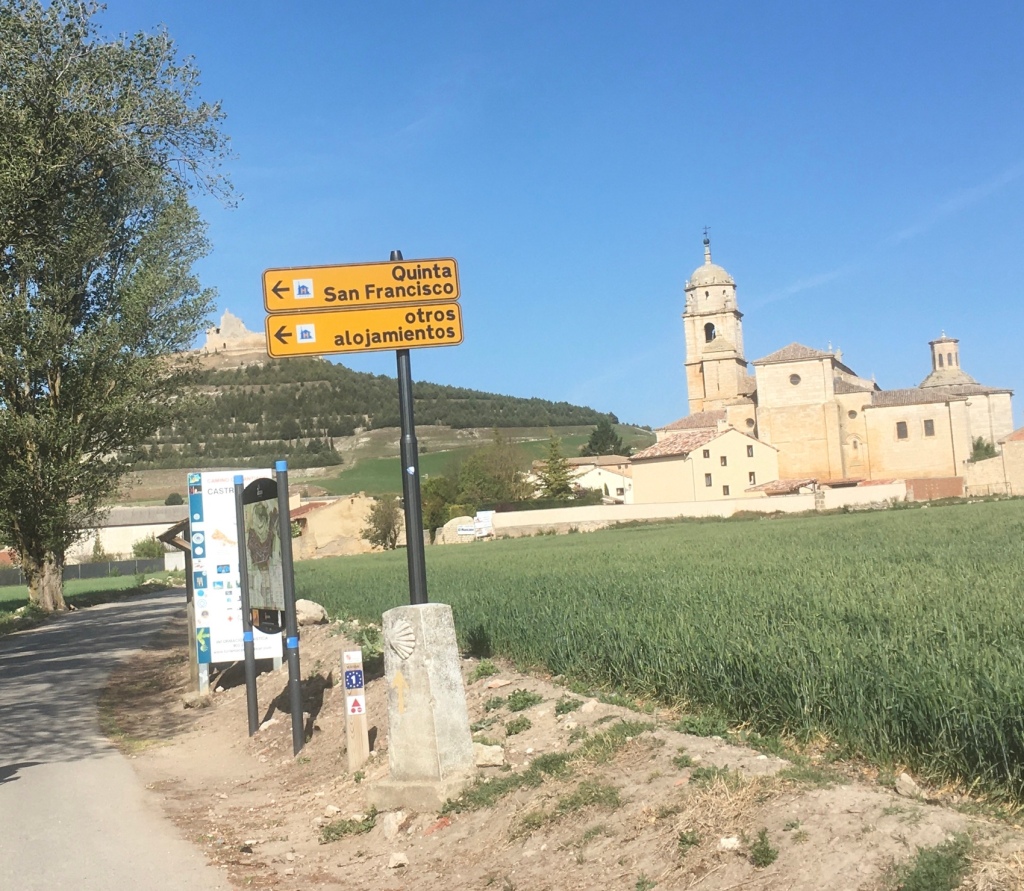
Getting closer
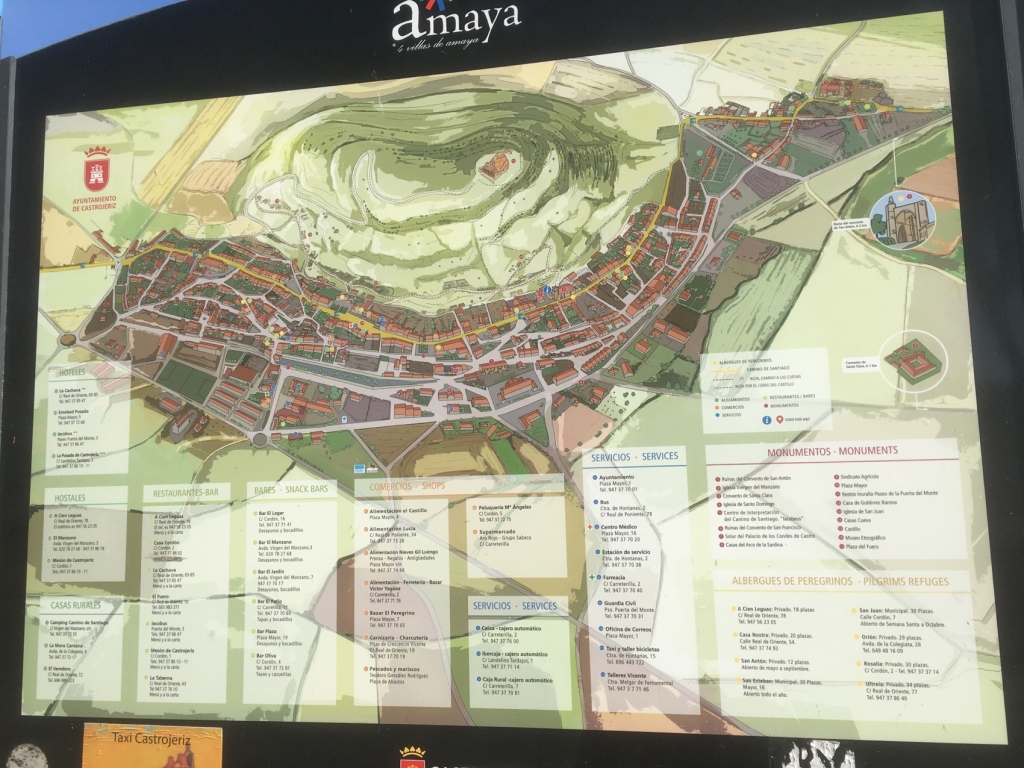
Castrojeriz is a town in the
province of Burgos whose layout has been shaped by the French road to Santiago that crosses it.
It is located at the foot of a hill dominated by the remains of a castle, in which bloody battles between Christians and Arabs were constant.
Many monuments and the ruins of others are preserved in the town, a reminder of the splendor it had in the time of the Catholic Monarchs.

 And it was 

these bloody battles that gave Castrojeriz its name since the Arabic name was 

Castro del Xaraiz , whose meaning is 

bloody castro .

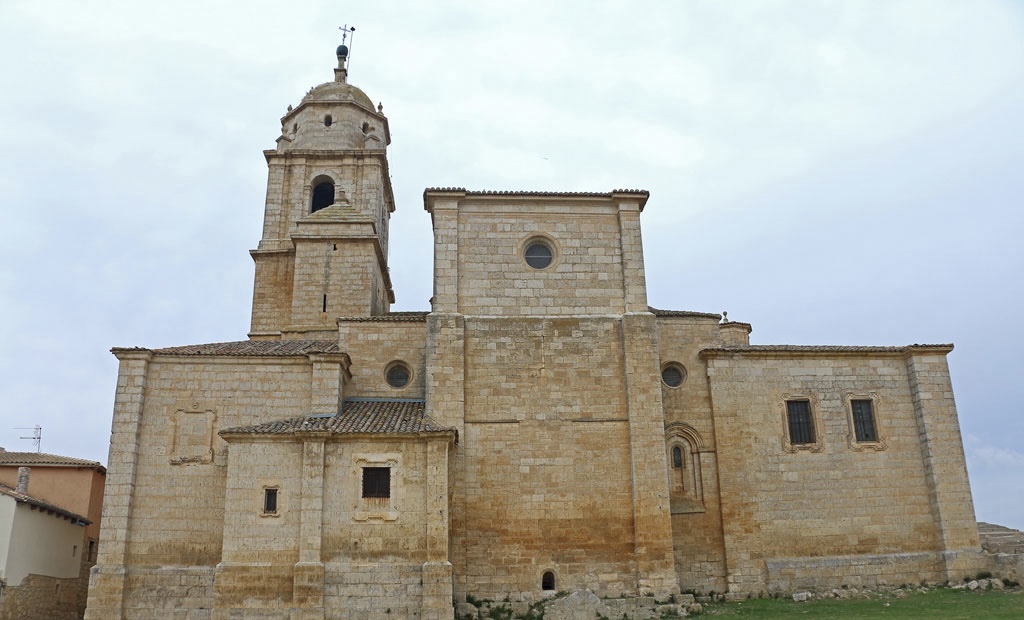
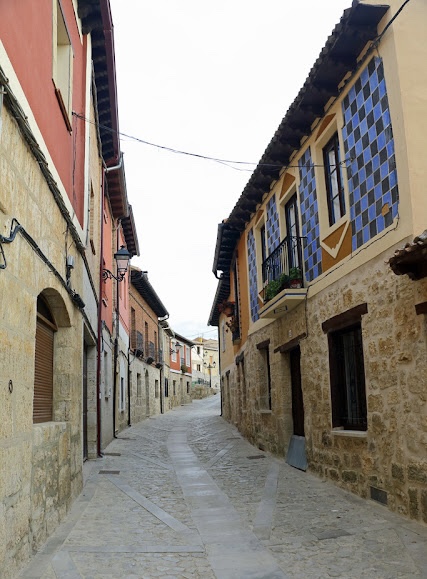
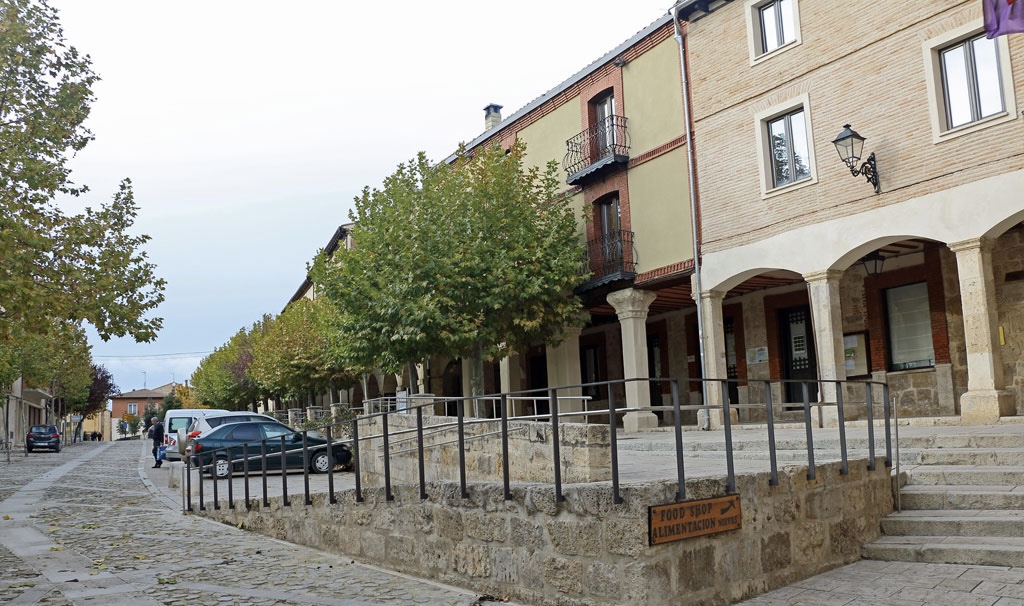
There are many interesting structures in this ancient pilgrim town.

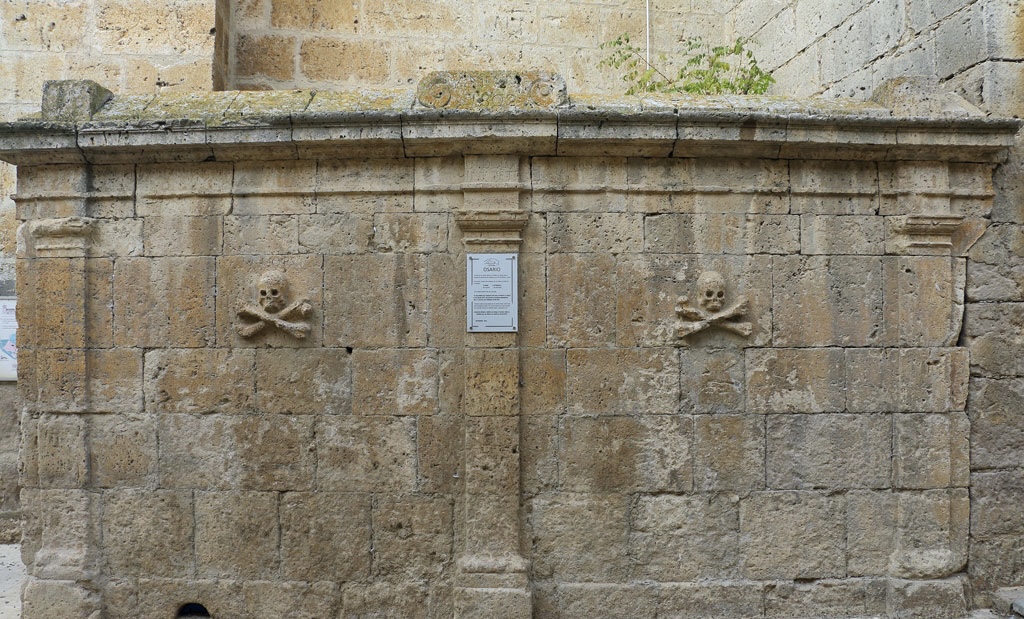
An Ossuary

Leaving Castrojeriz

We were on the way to a challenging 1 KM climb up there.
Crossing the Ria Odra
Then it was onwards and upwards
UTREIA!
Sue, still smiling and Rob make it to the top of Castrillo Matajudios
ALTO de MOSTELARES
Steeping descent
Nearing Itero de Castillo
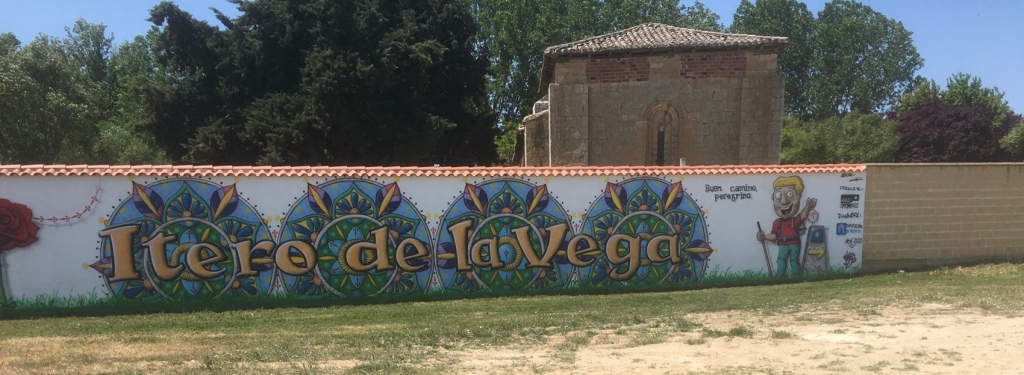
“ you are here” indicated bottom right. we then entered Itero de la Vega and a cheery welcome
We had a lunch break here. Then it was 8 final Km to Boadilla our destination for today, crossing flat terrain.
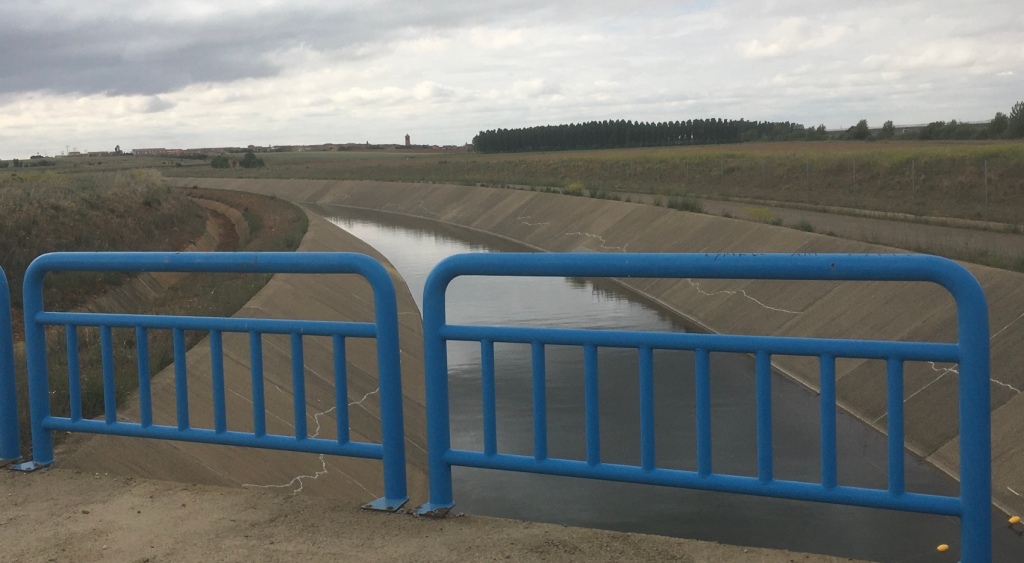
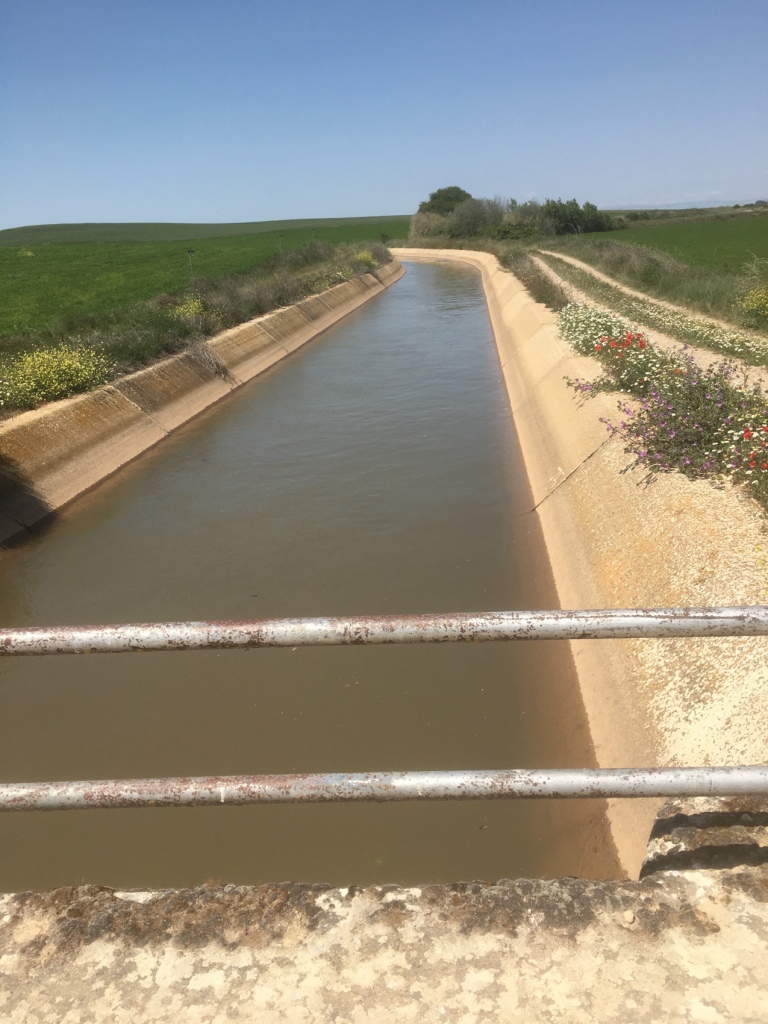
The Pisuerga canal built like for irrigation purposes
First vineyard to date
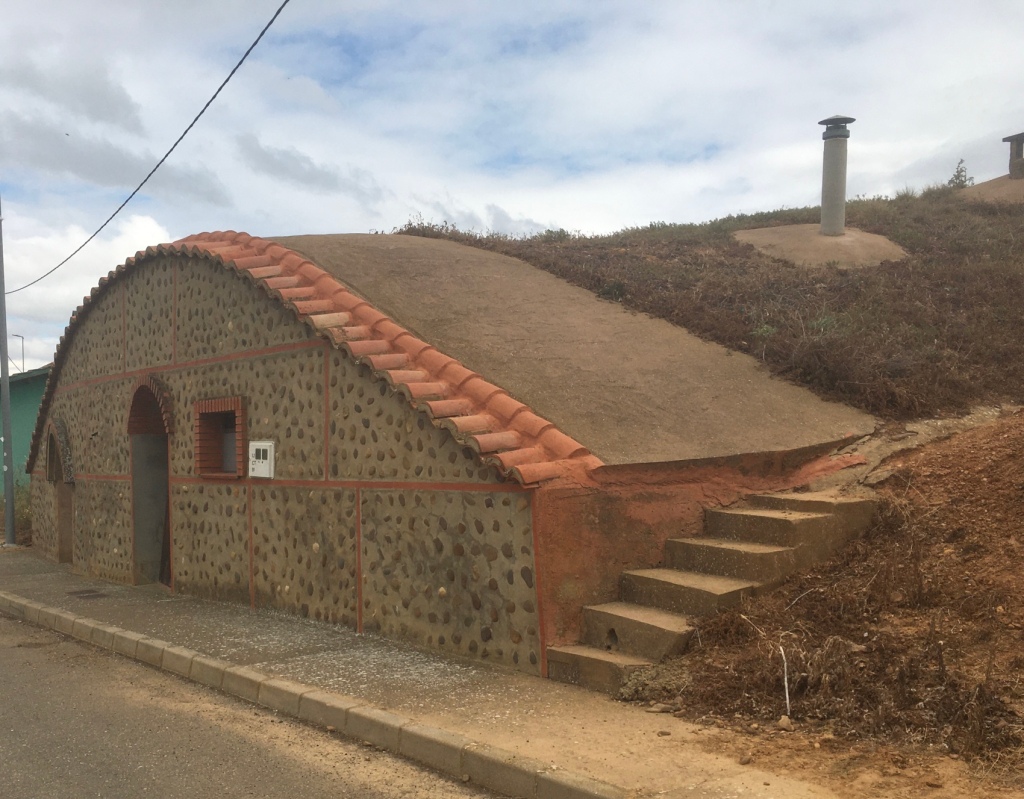
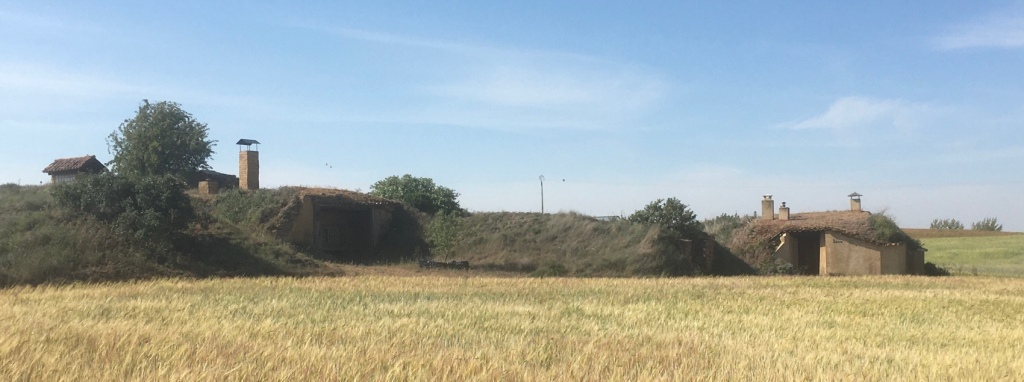
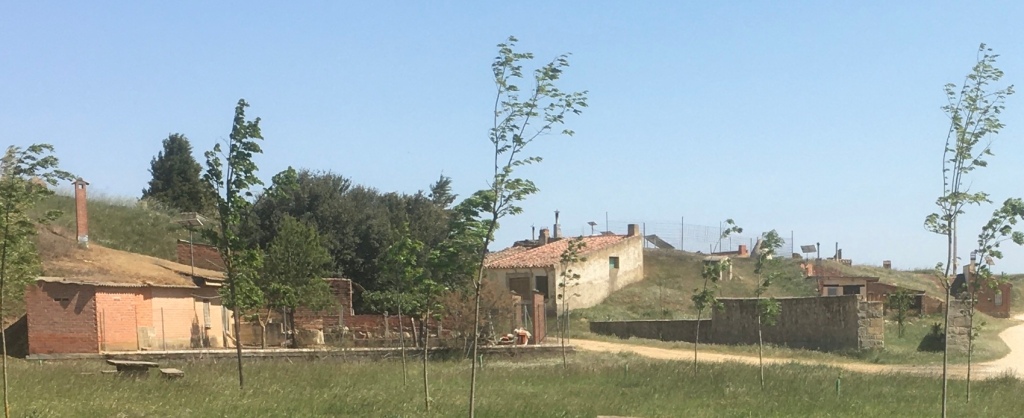
Boadilla where dotted around the hillsides are bodegas resembling what John Brierley describes as “ hobbit holes “
A welcome sight after a demanding walk.

A town whose population is diminishing and it’s only lively spot is our “ digs” for tonight Hotel Rural en el Camino.

A convivial communal meal and an early night,fortunately tomorrow is a short stroll a,ing the Canal de Castilla to Fromista and some relaxation.

16 th May 2023. Leaving Burgos for Hontanas, with a following breeze.

18 May
Well placed on the Camino and very Pelegrino friendly.
Two photos from the lobby of our hotel
View from our room at 06.30
We left just after 08.00 – school children en route.
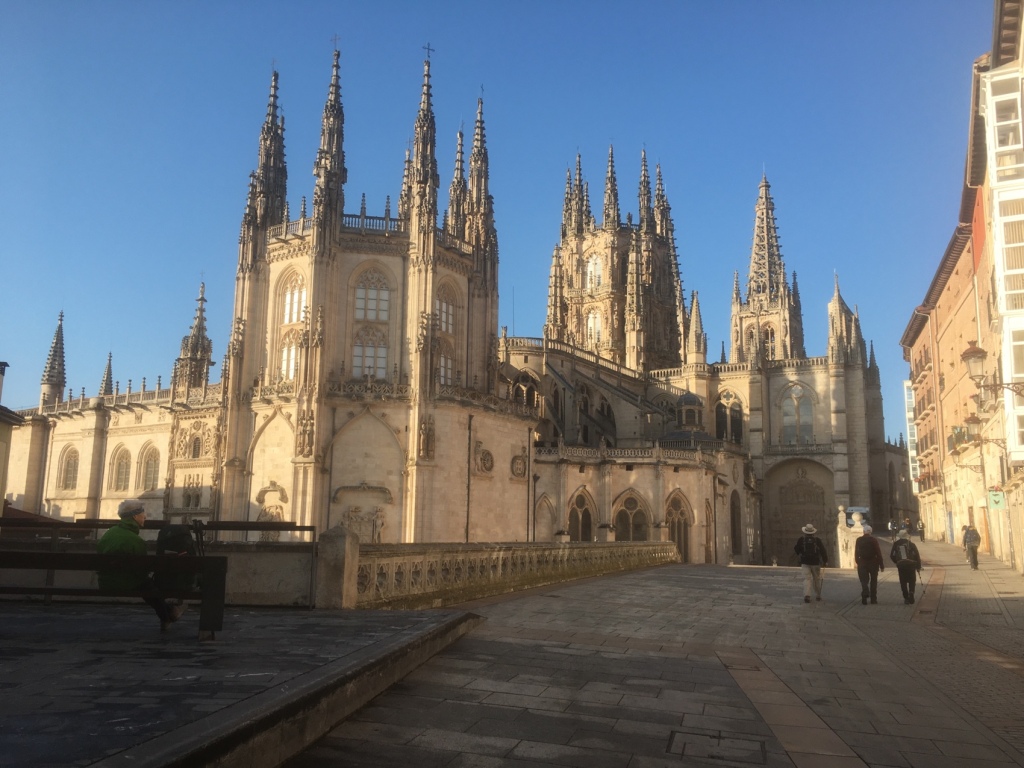
The Cathedral in all its splendour.
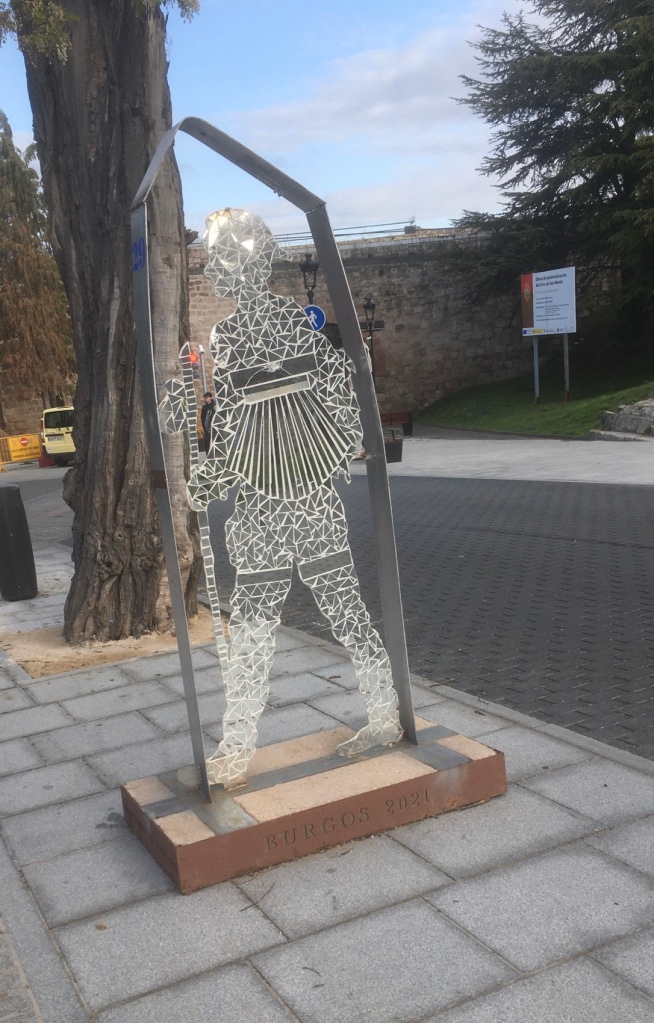
A number of these along the Way,commemorating the Holy Year,2021
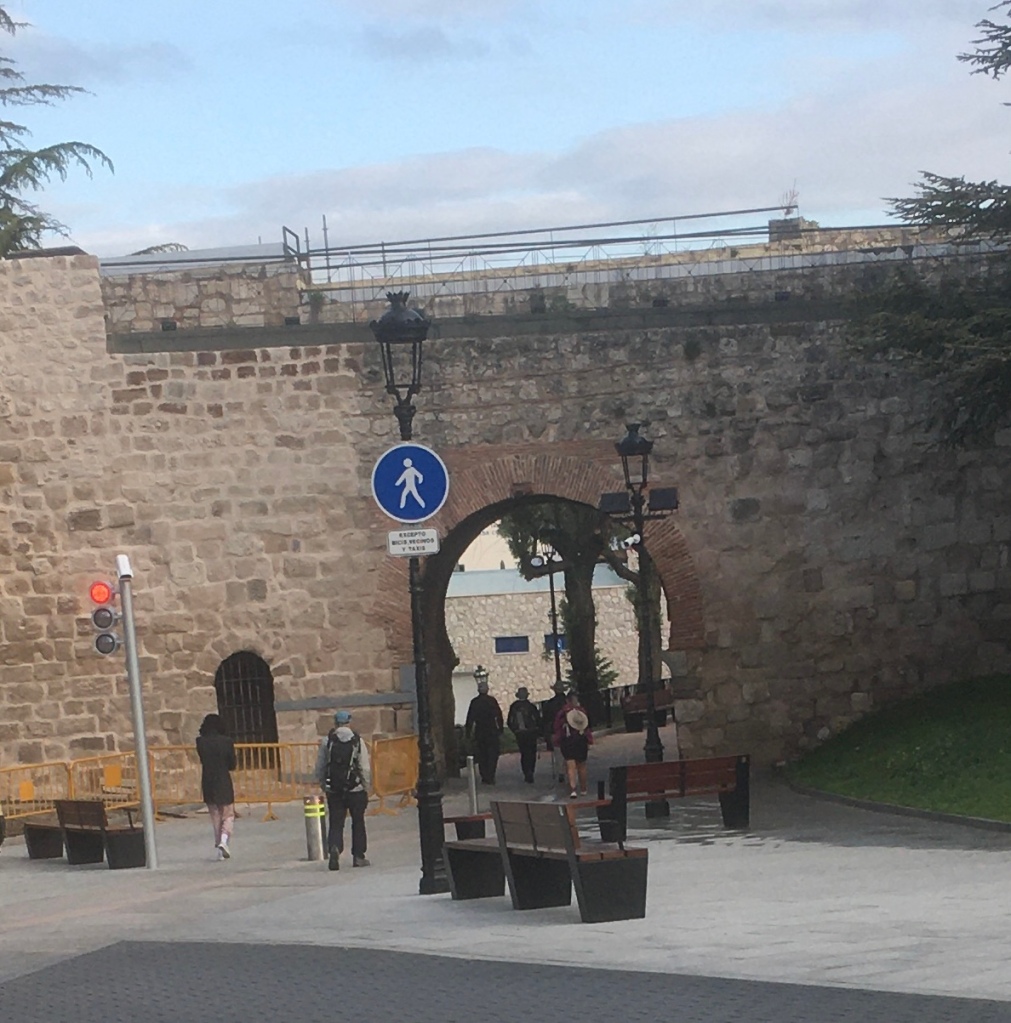
Leaving the old city via the Arco de San Martin and the remains of the city walls
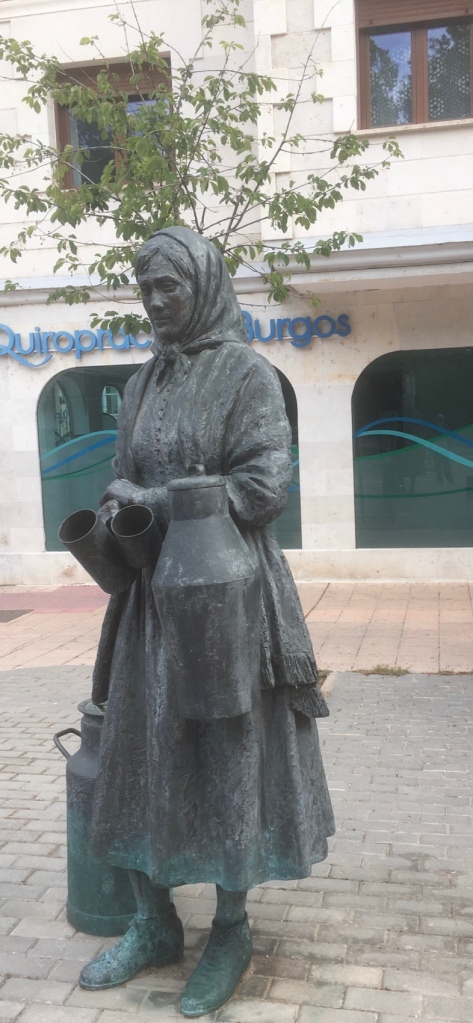
The Milkmaid.
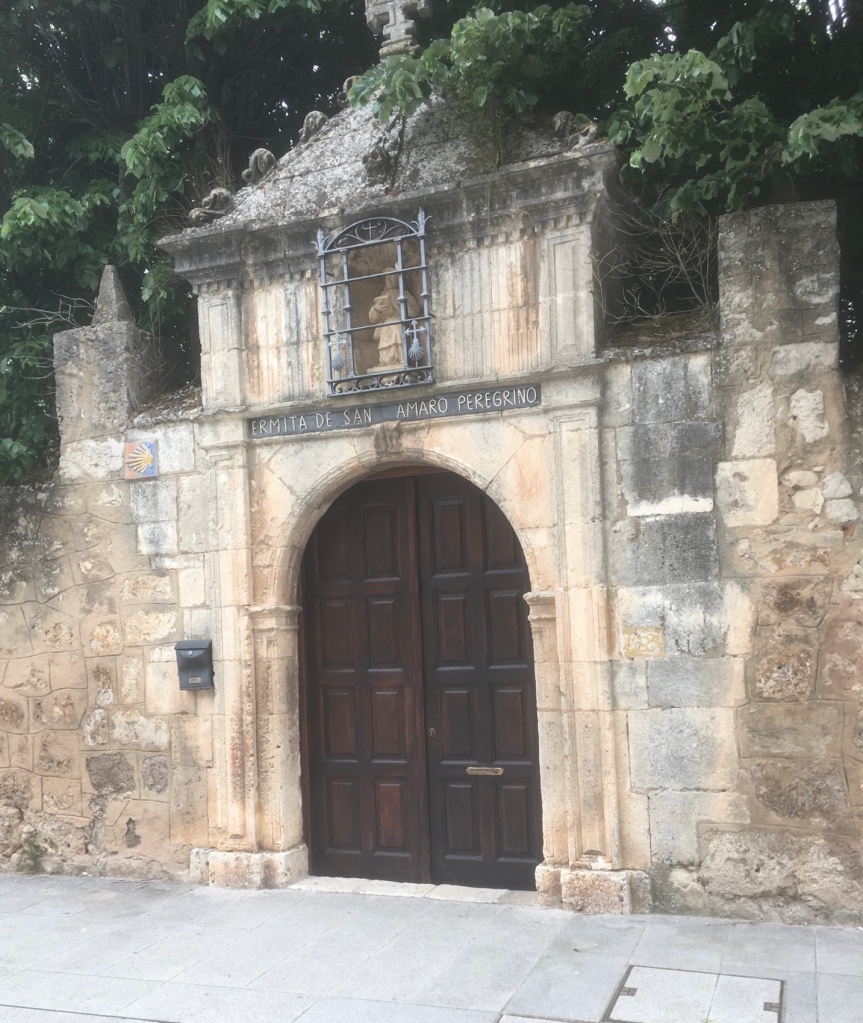
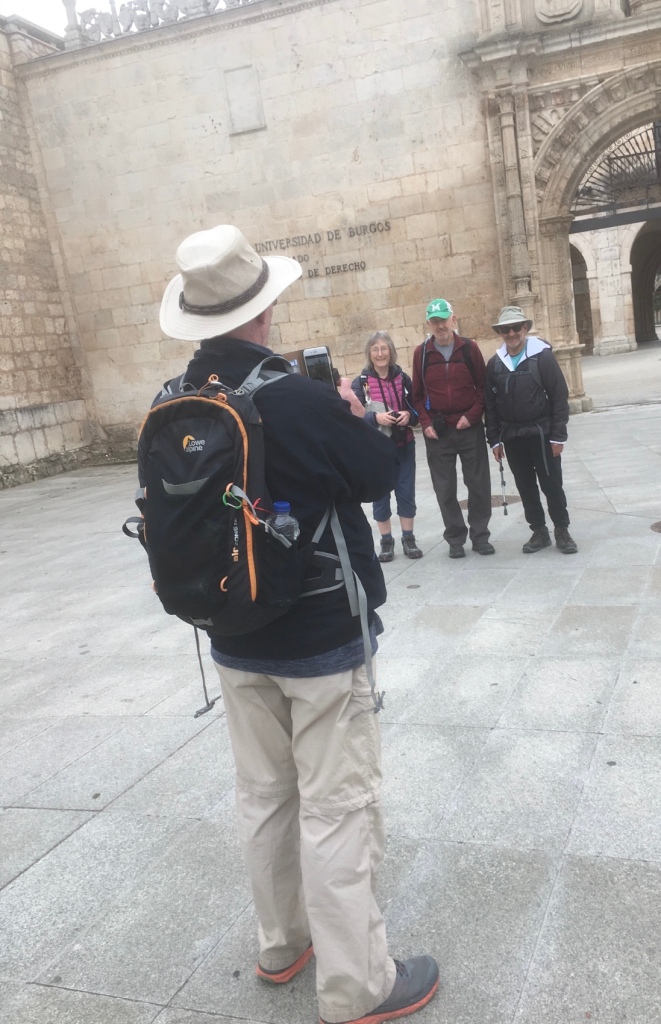
After a short stroll we came upon this ancient hermitage. San Amaro was a French pilgrim who returned here and dedicated his life to the service of pilgrims.Plus the beautifully renovated, ancient faculties of the University. Formerly the grounds of a Pilgrim Hospice.
It was Rob who attracted our attention to this site – what a privilege to study here.
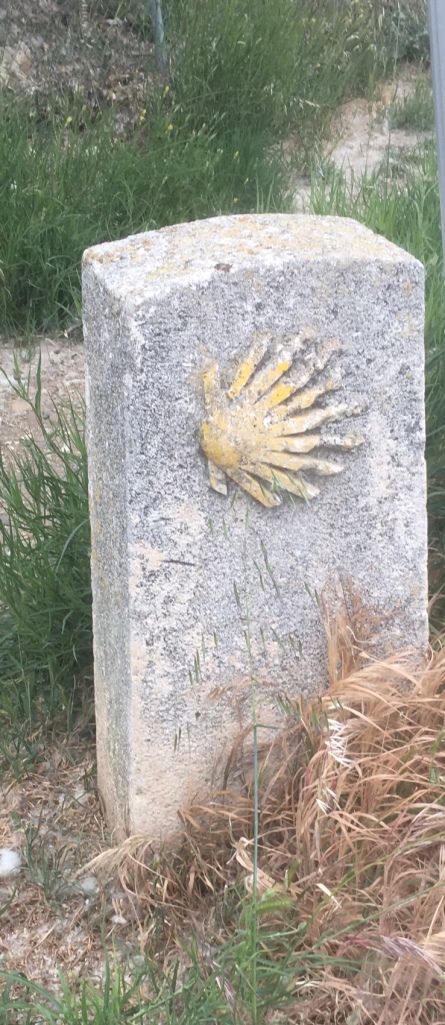
Our first signpost and an original waymarker.
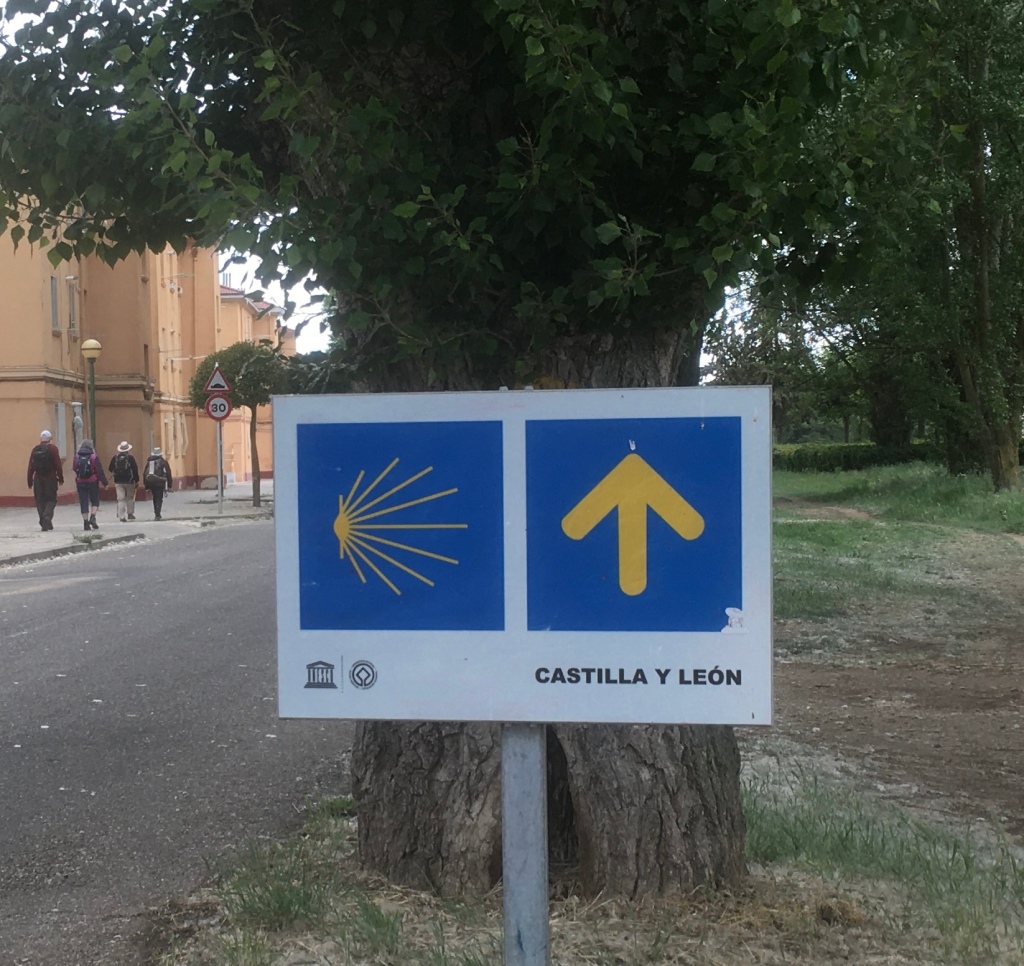
These more up to date signs will be helping us for many stages to come.
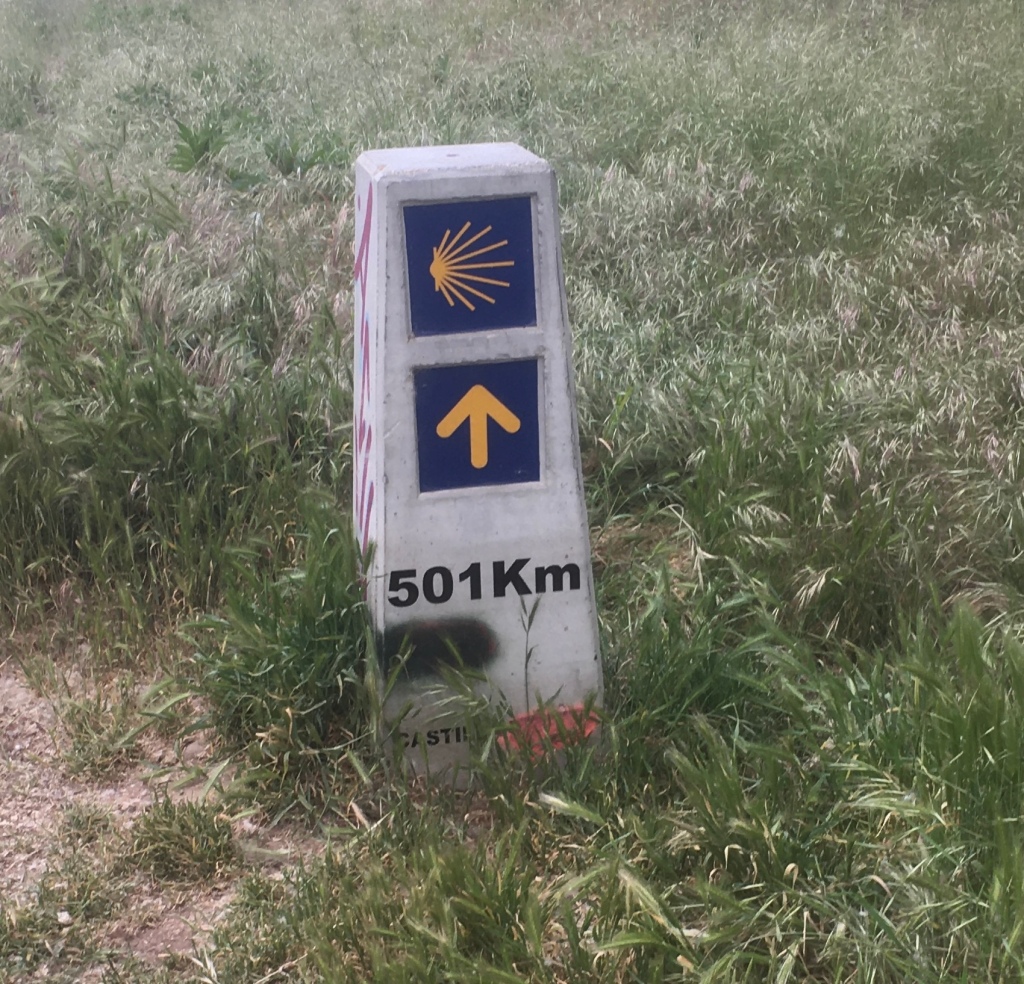
There were not many of these posts on this section – 300 miles to Santiago de Compostela
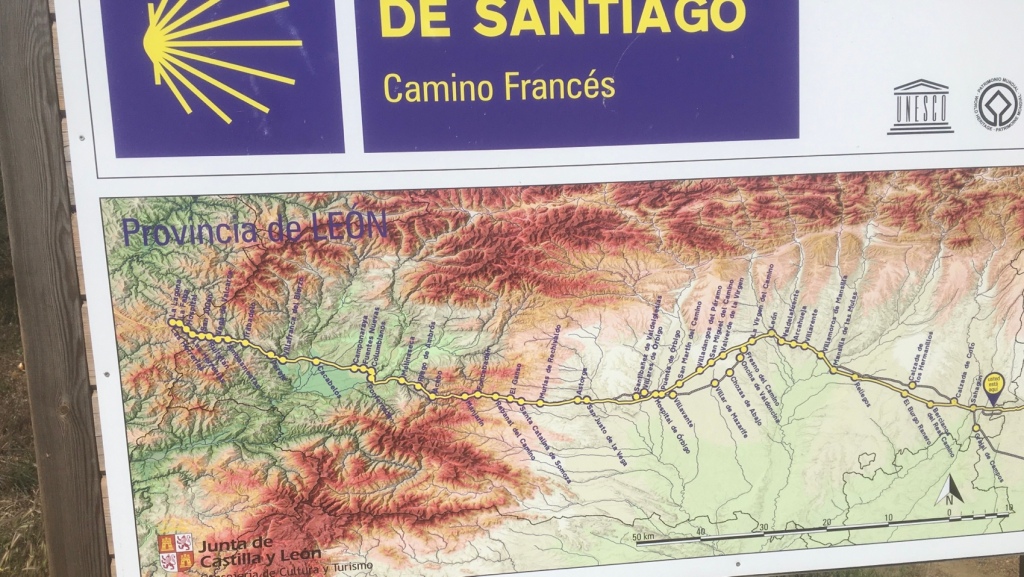
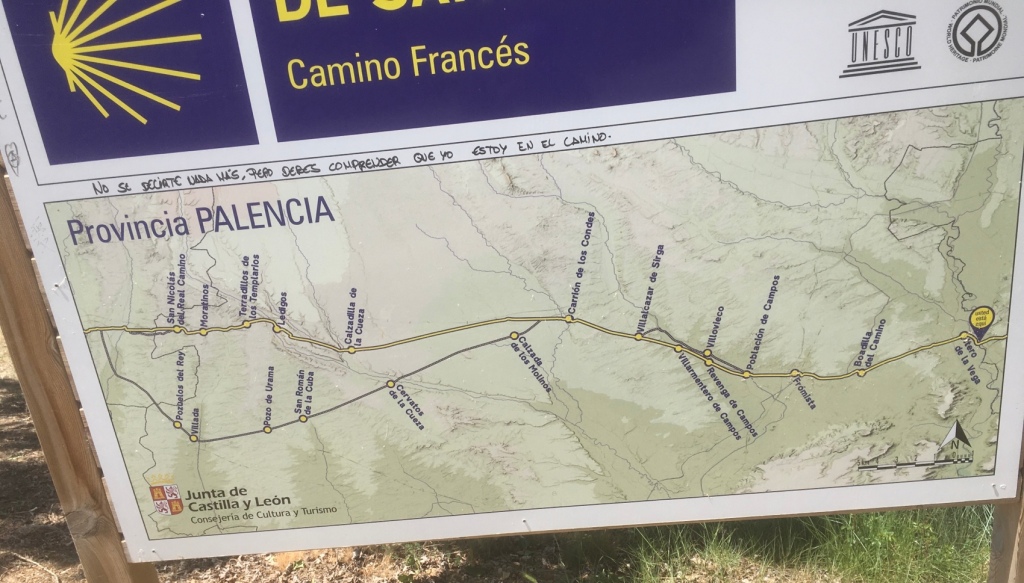
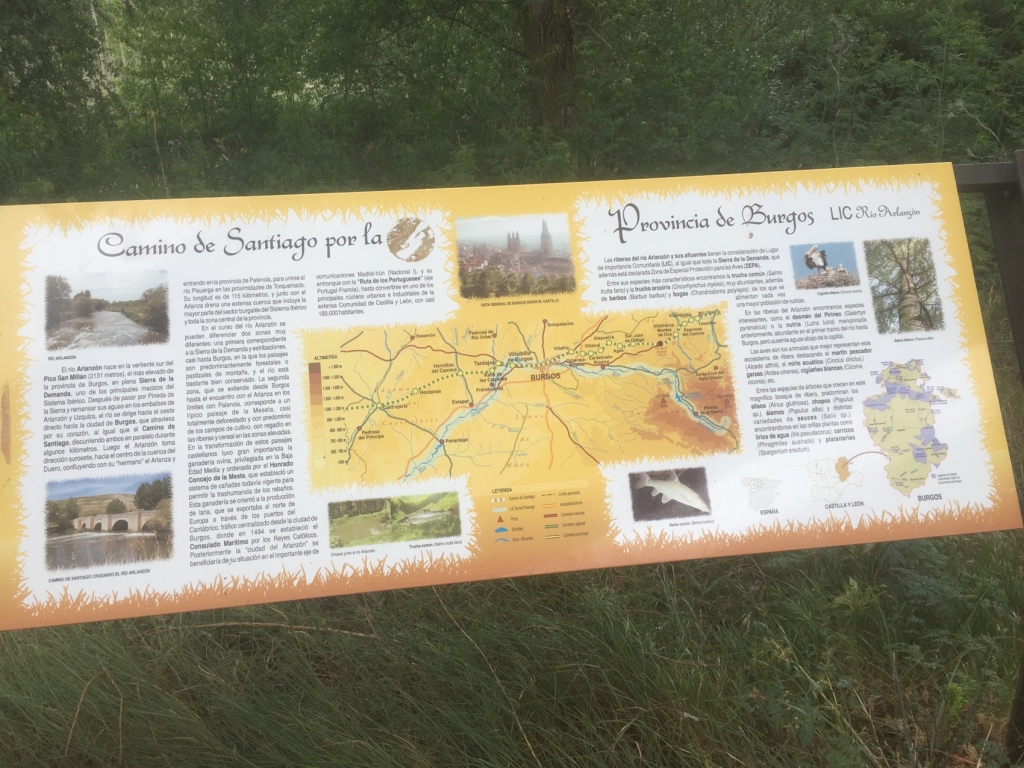
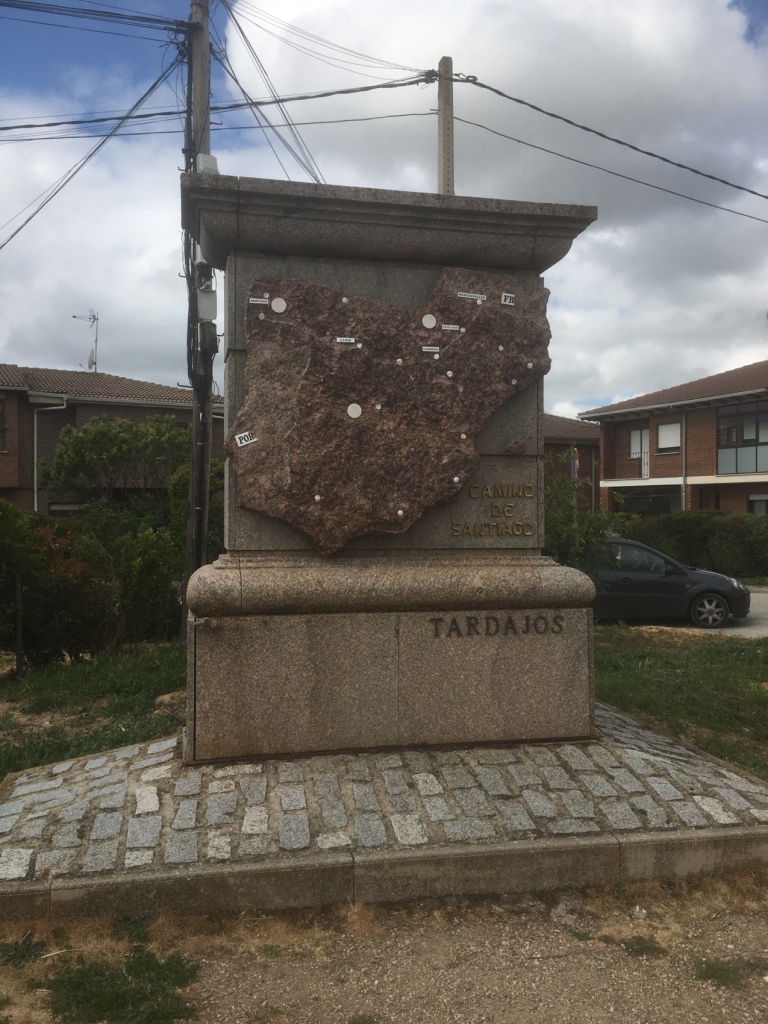
There will be a number of these information boards along the way – the maps,if not the Spanish, are self explanatory.
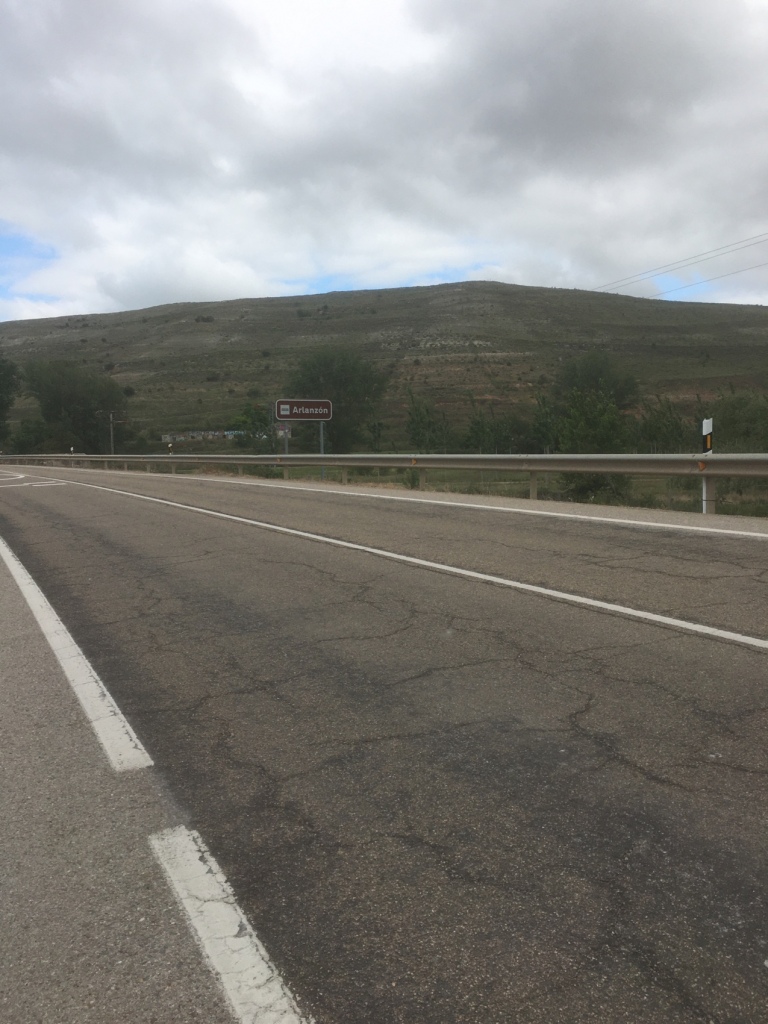
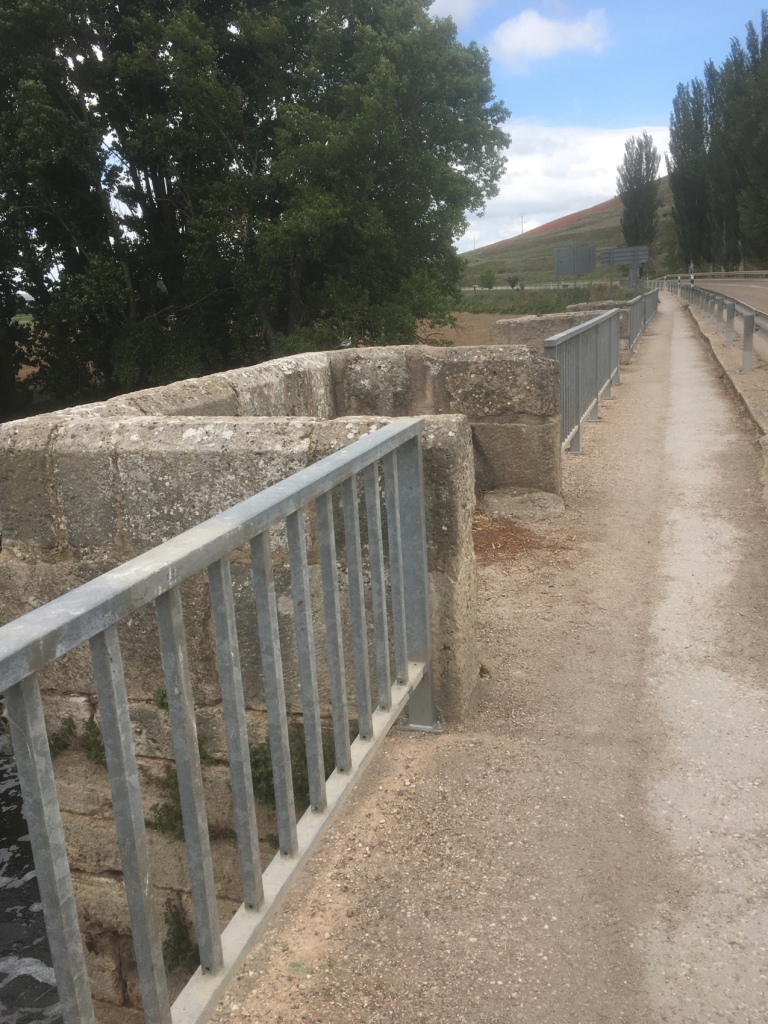
Some quiet road walking and then across the River Arlanzon
We were now making our way to Tardajos and hopefully, coffee.
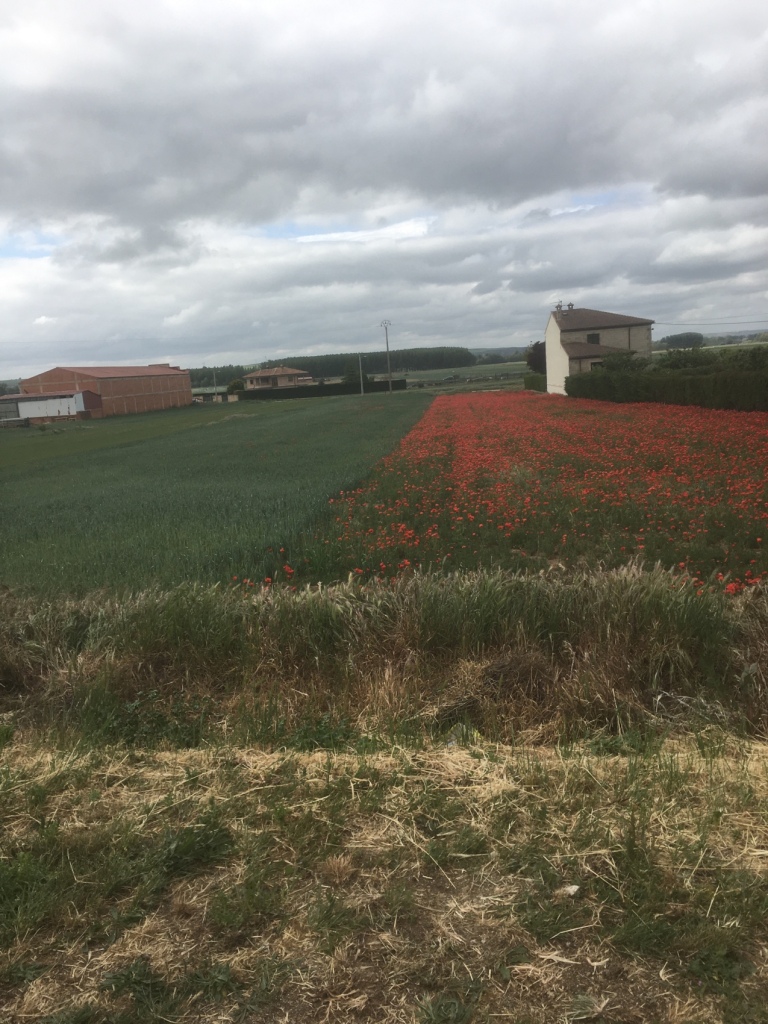
Wildflowers , especially poppies, were abundant in fields and verges.
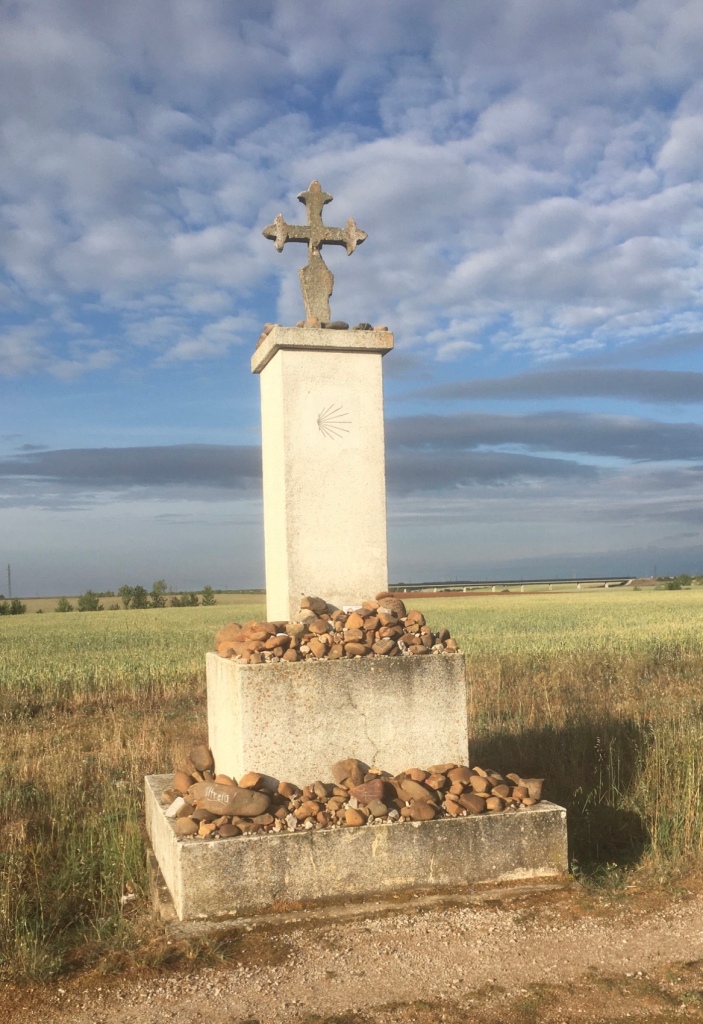
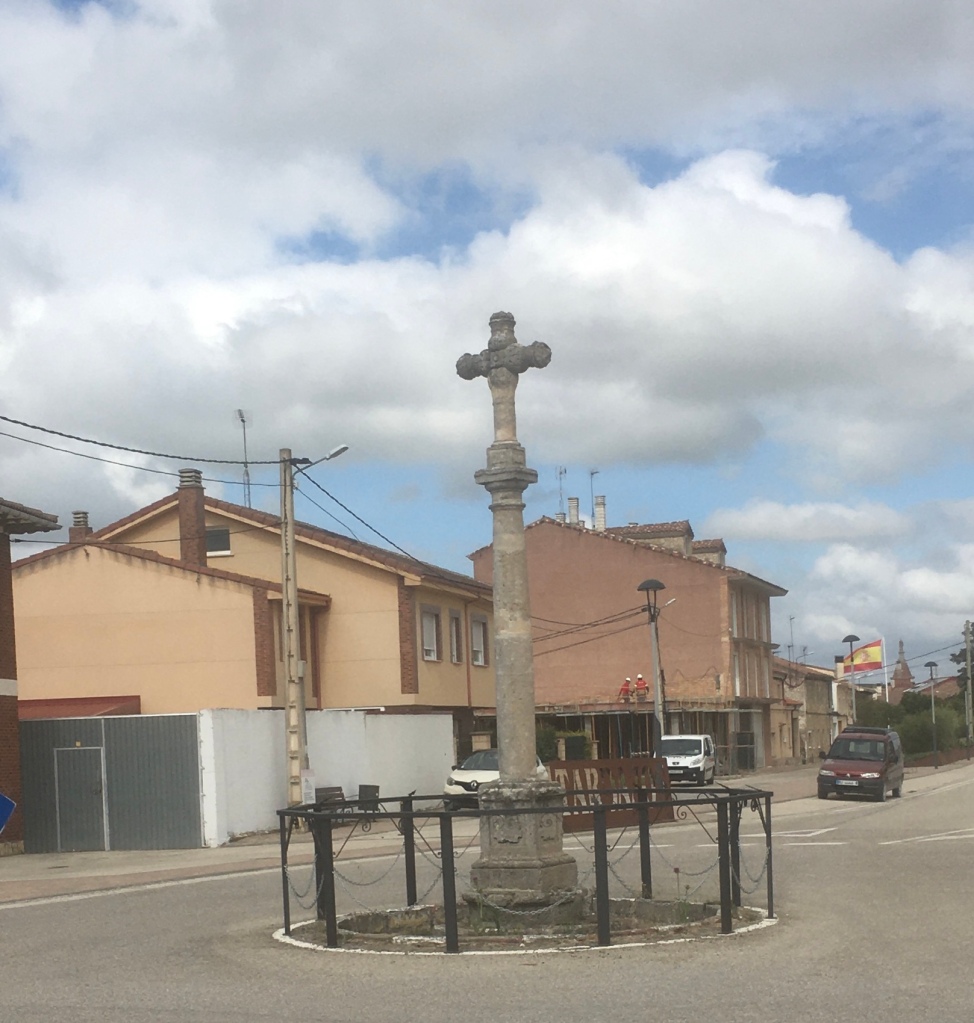
Cruceiros are commonplace on the Camino
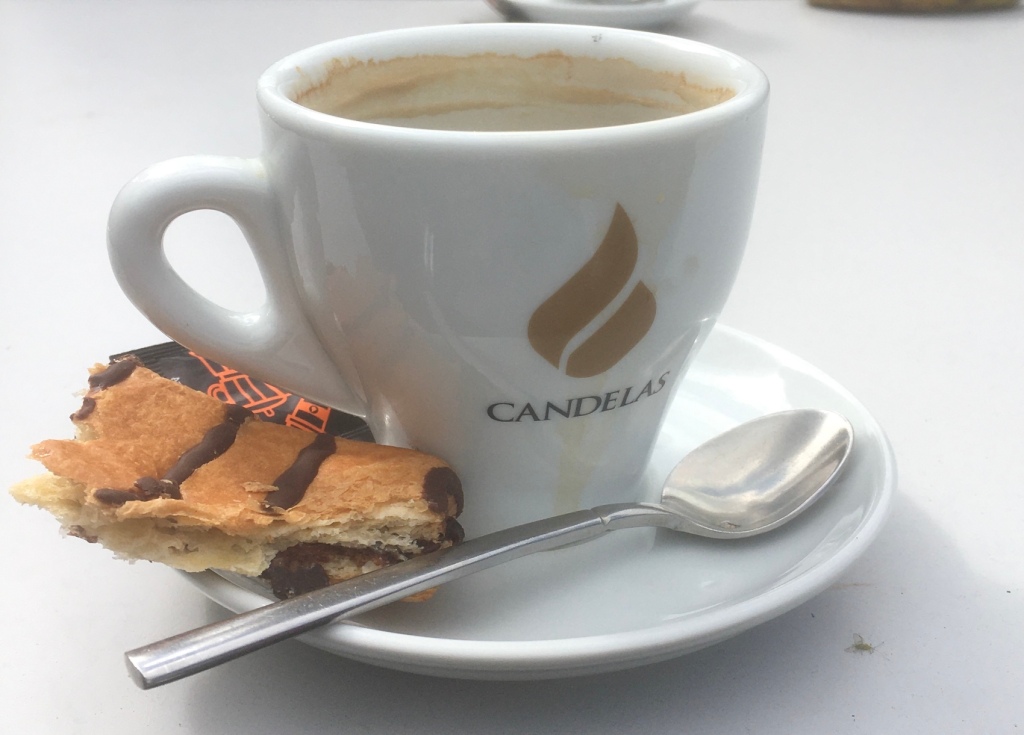
Americano and a pastry – perfecto.
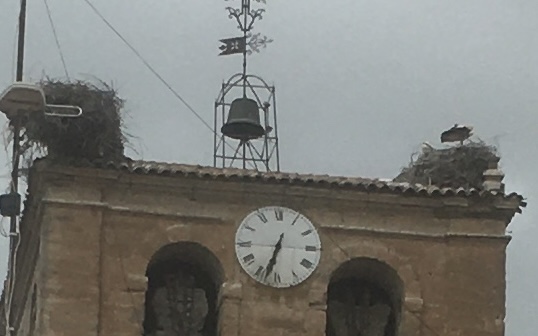
A stork’s nest – on any available tower- always eye catching.
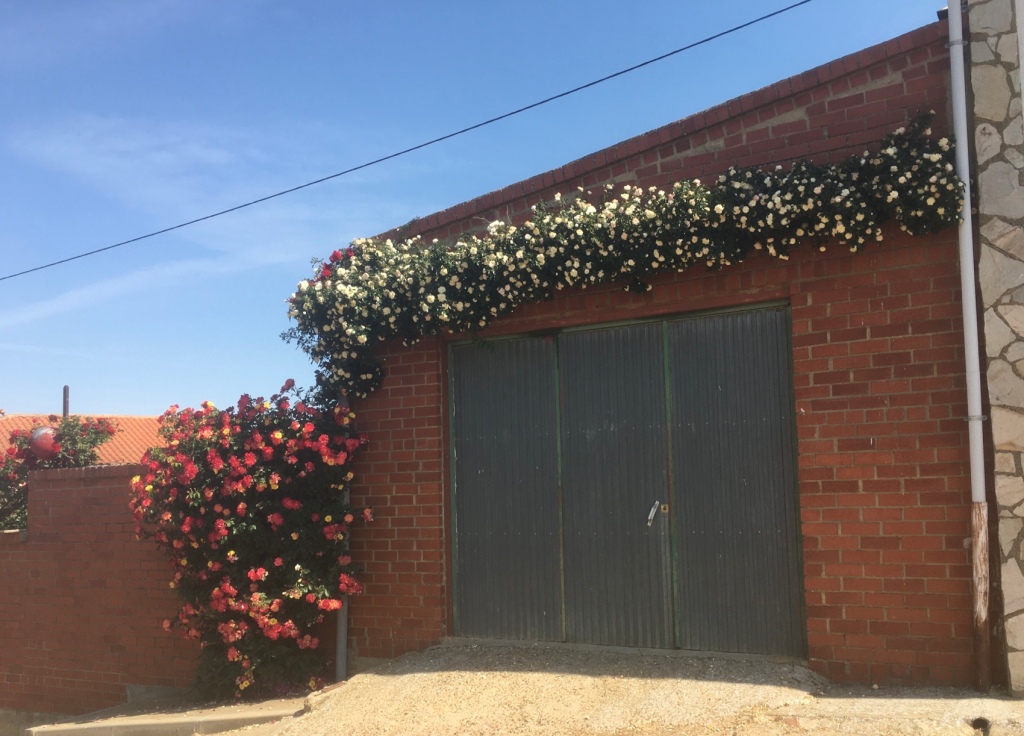
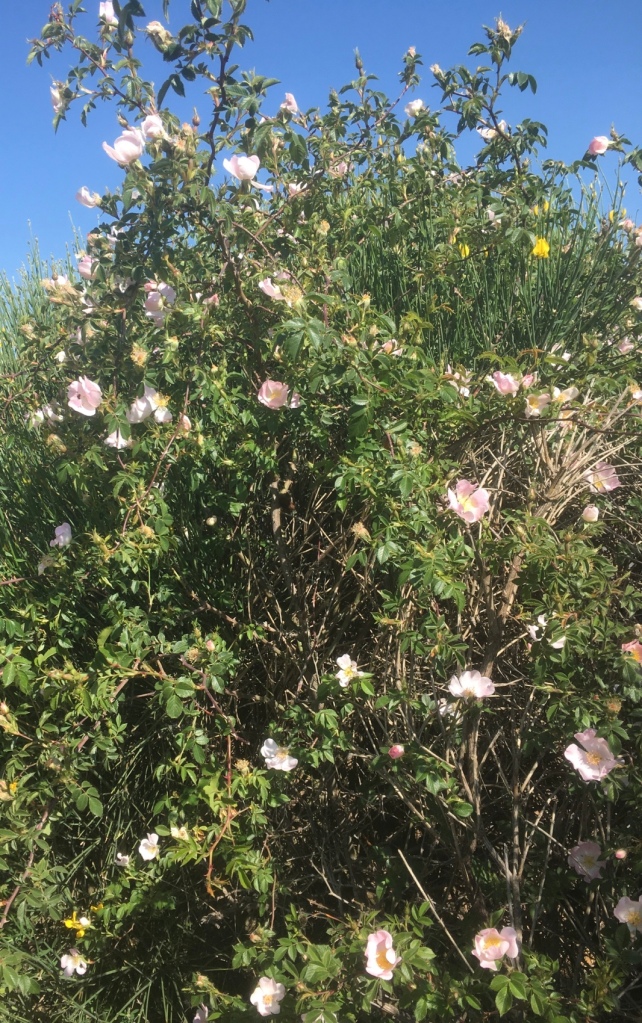
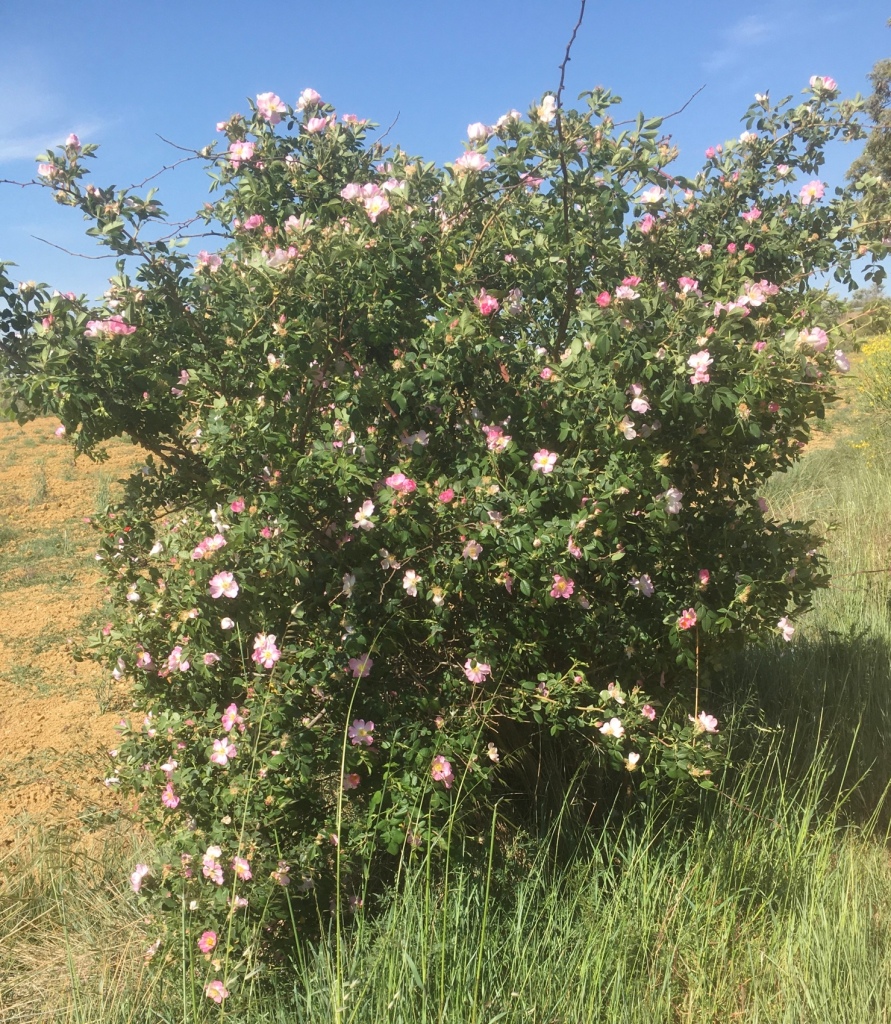
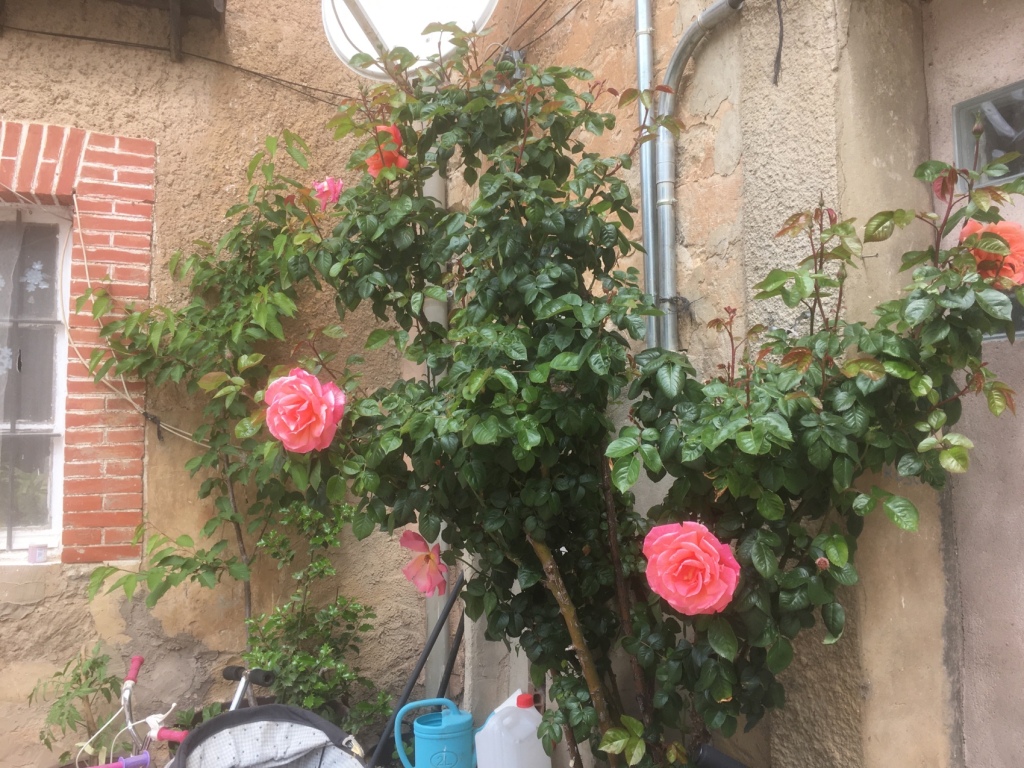
Equally eye catching roses in a sunny corner .
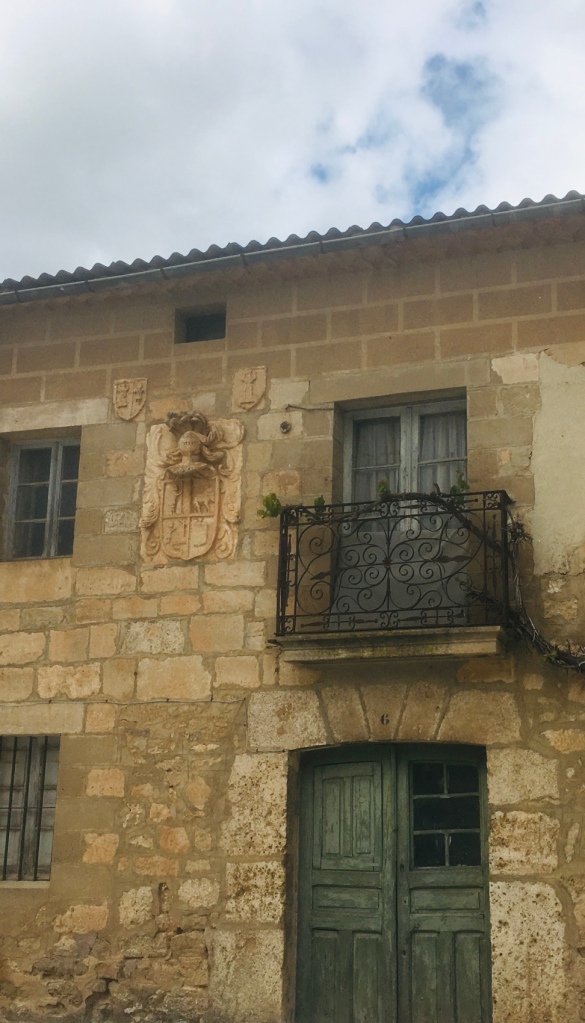
There were several larger mansions with coats of arms on the outskirts of Tardajos – Keeping up with the Vecinos?
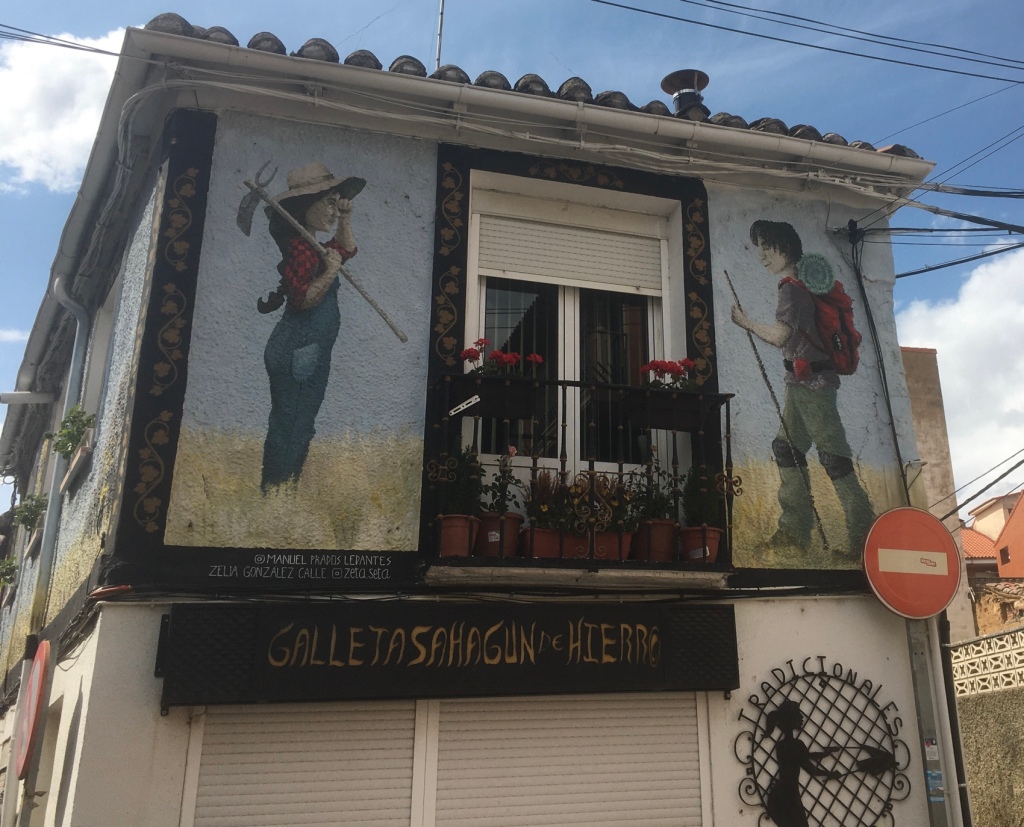
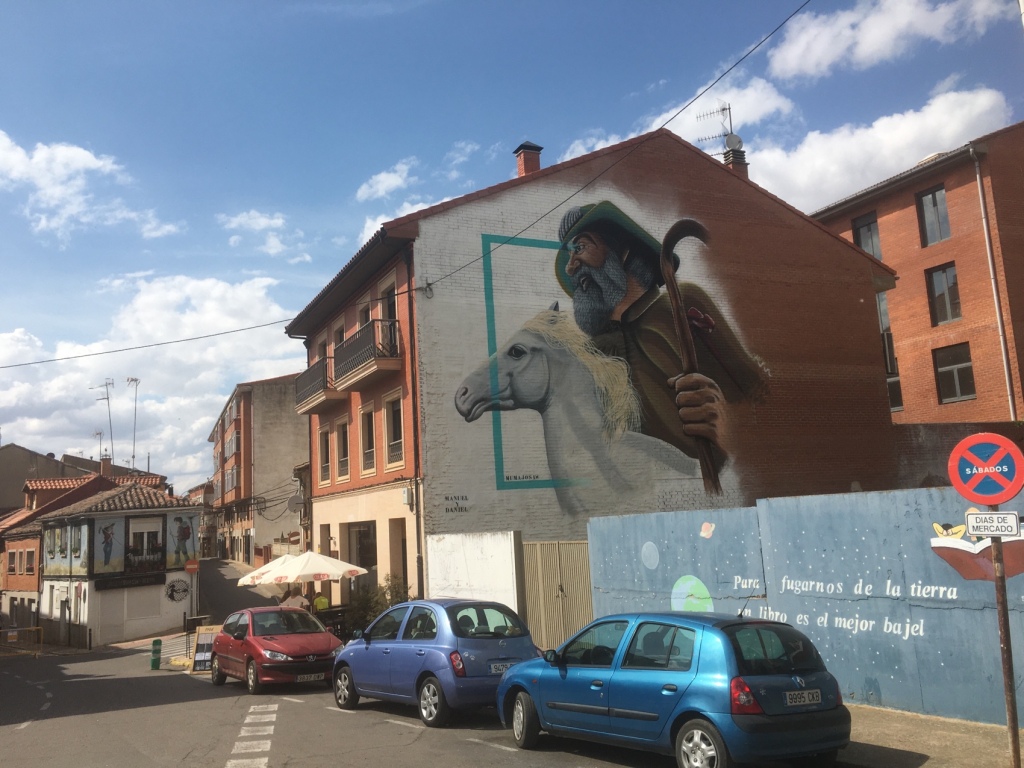
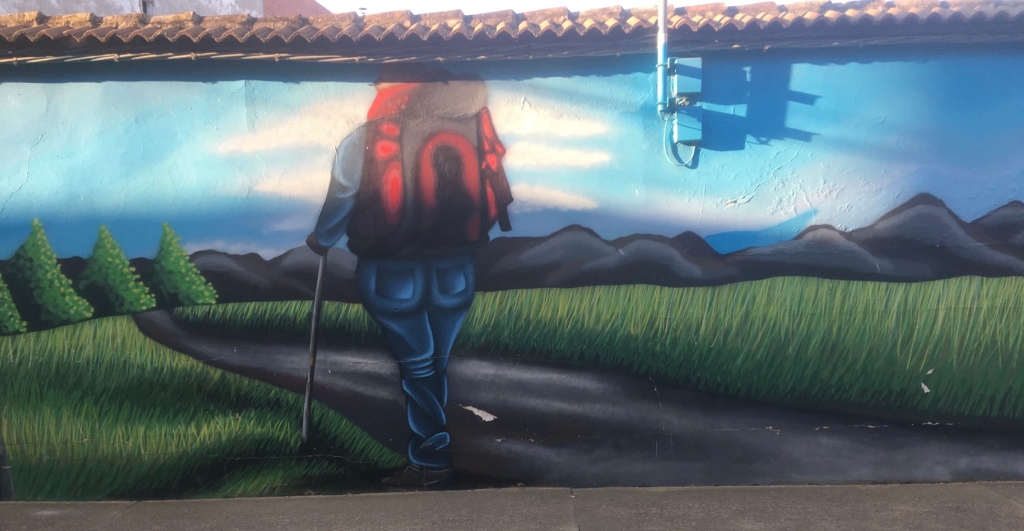
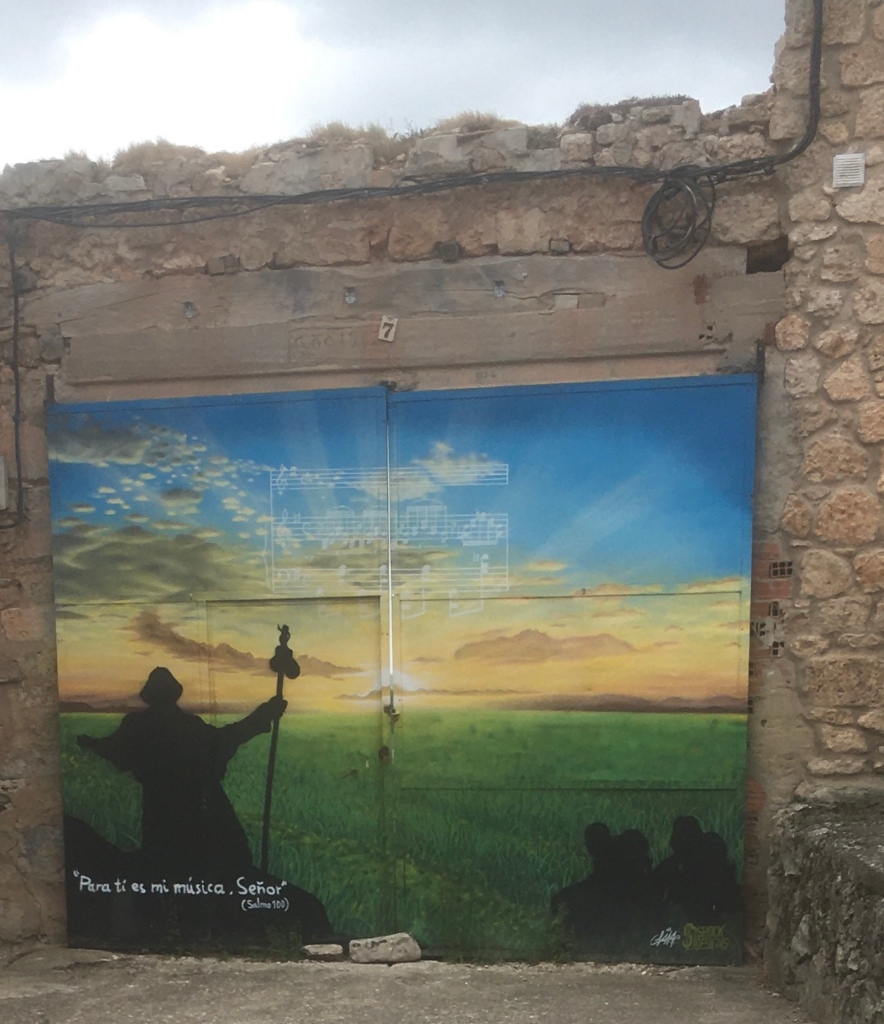
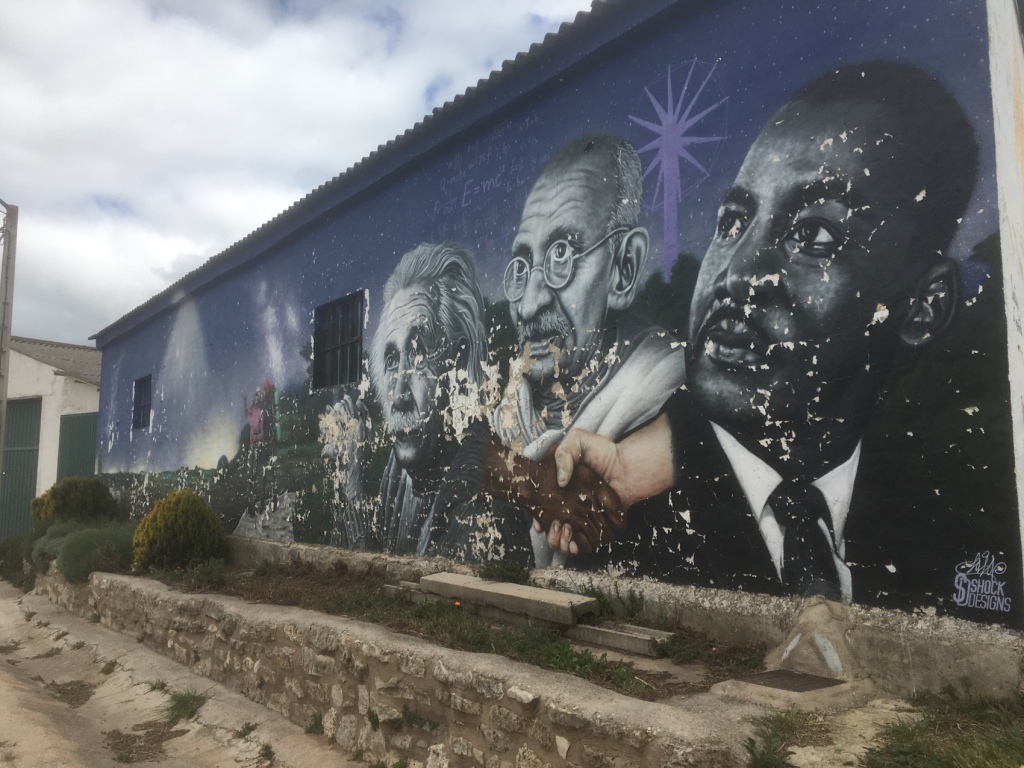
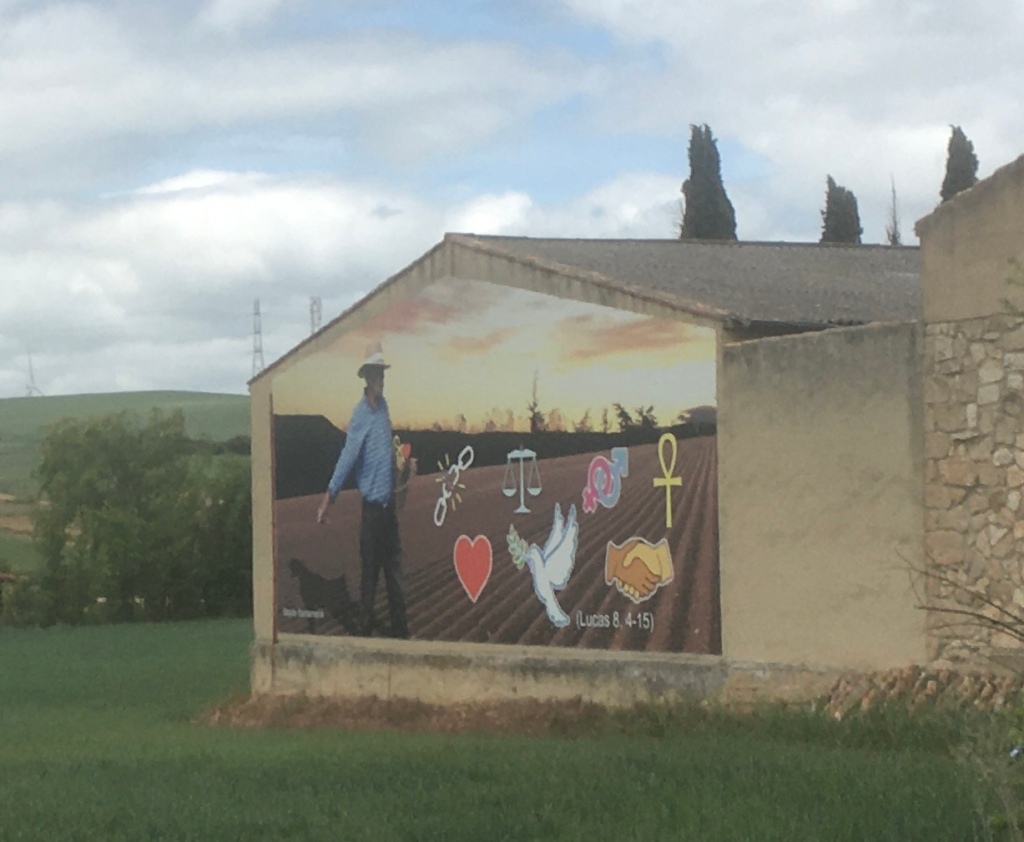
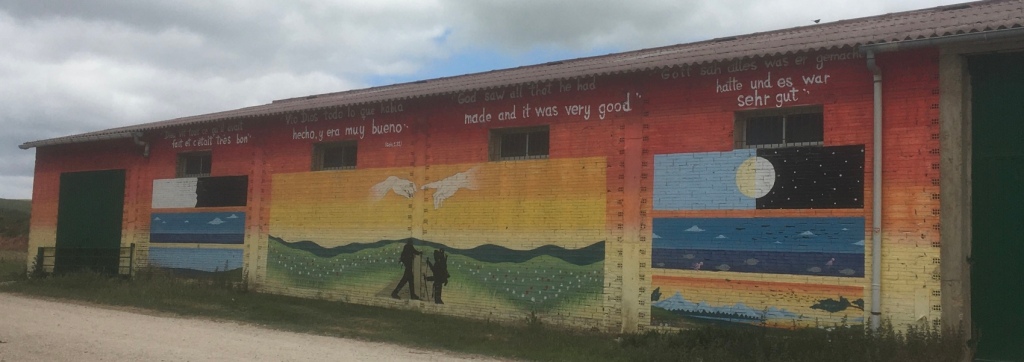
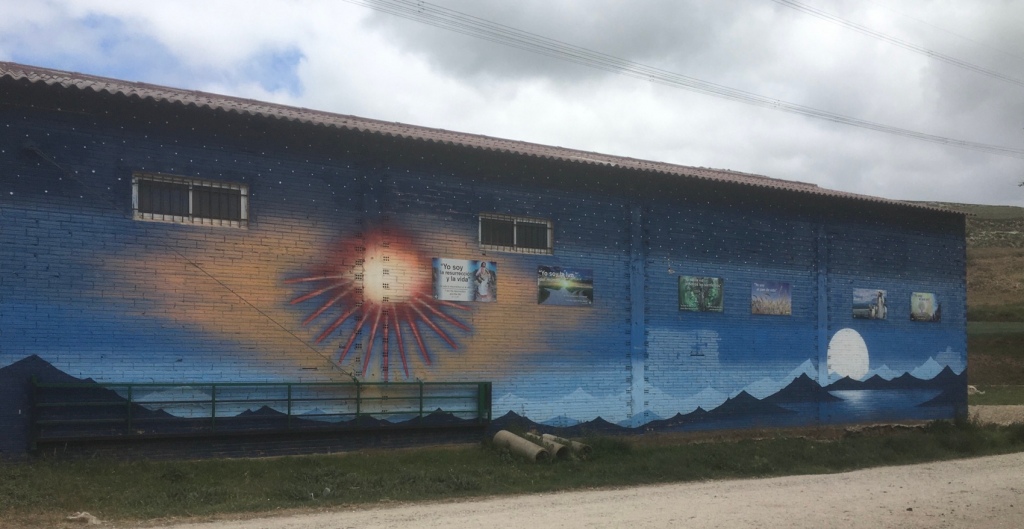
On the route now towards Rabe de la Calzadas and some striking murals.
Not all are Camino or Christianity themed.
A Sower Went Out to Sow…Very appropriate for the Meseta.
Multi lingual
Mostly decorating farm buildings
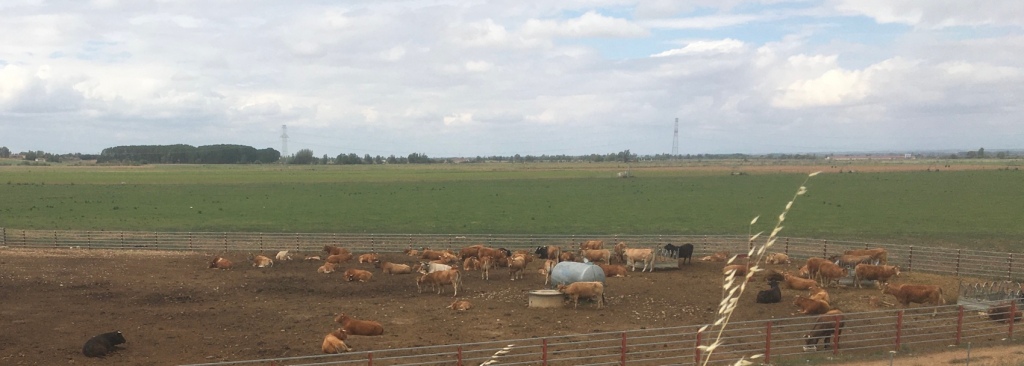
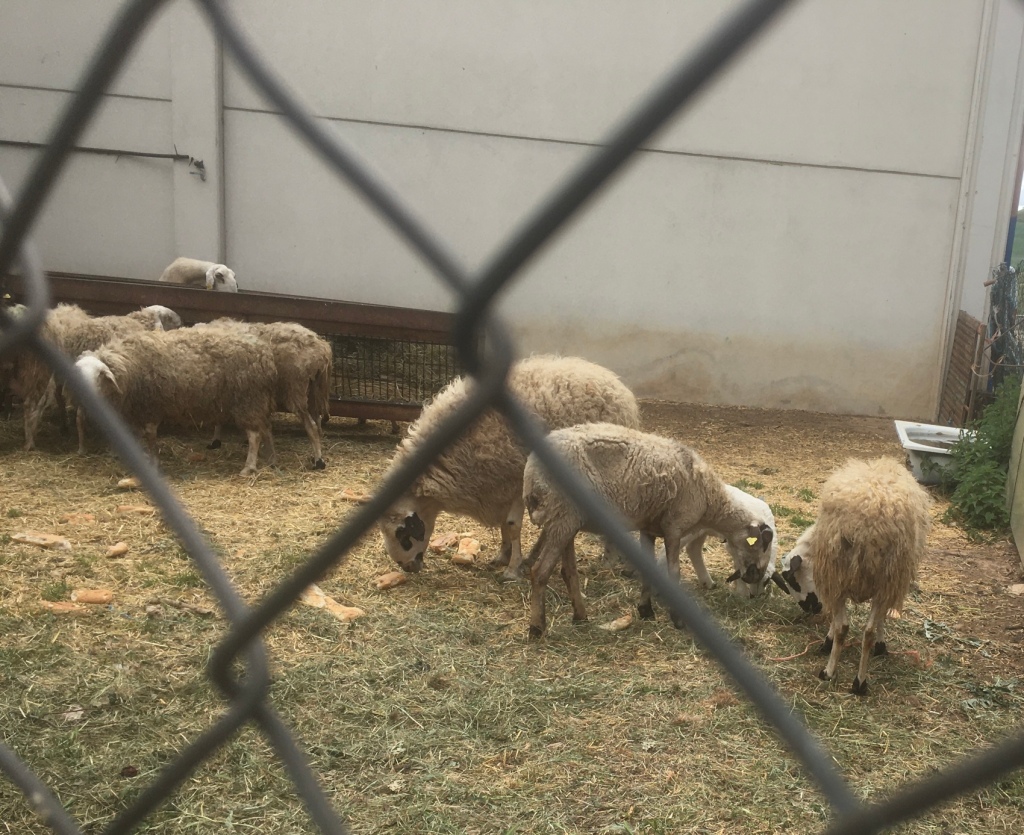
Livestock rarely to be seen over the next couple of days .
Leaving Calzadas and the Meseta has begun

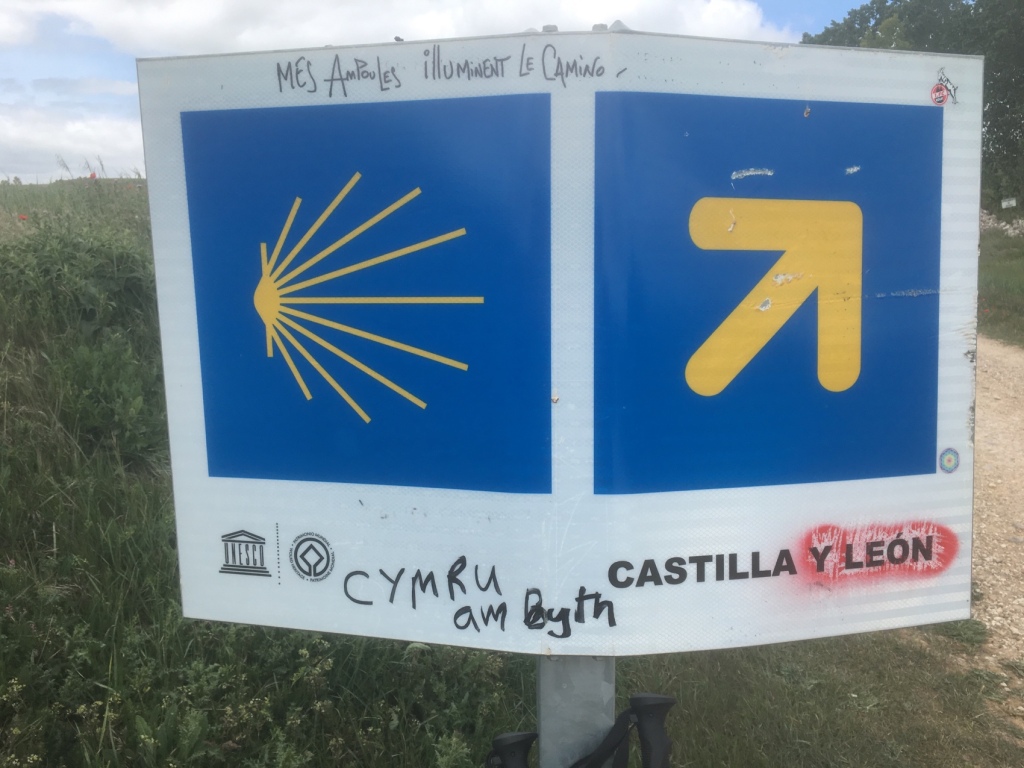
I have very ambivalent feelings about Graffiti, regarding it as mostly infantile scribbling – in cities I have developed indifference towards it – but my hackles were raised when this son of Wales cast no glory on his homeland by defacing these signs.

Welsh for “ Long live Wales” . I will spare you what some the group thought should happen to this prattish individual and to the son of France who thought his blisters added glory to the Camino!
RANT OVER…

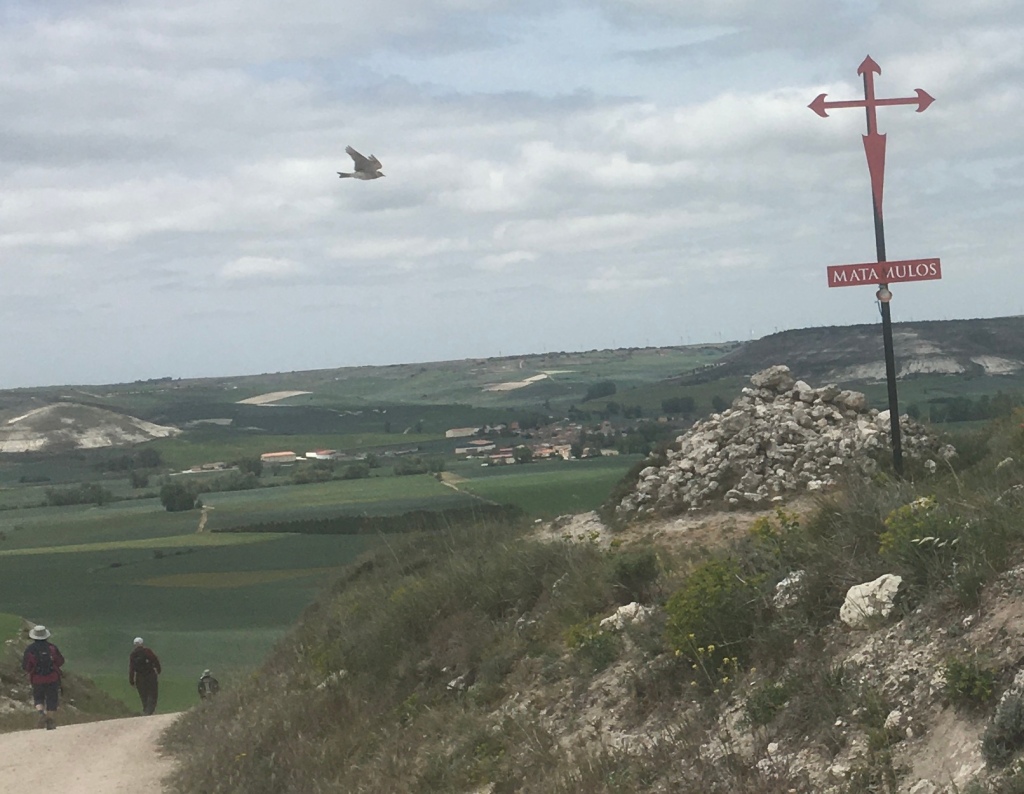
High on a hill overlooking Hornillos , was this cross at the top of a rare hill on the Meseta

MATA MULOS – a local reference- MULE KILLER, thankfully we were descending, so we were spared that fate.
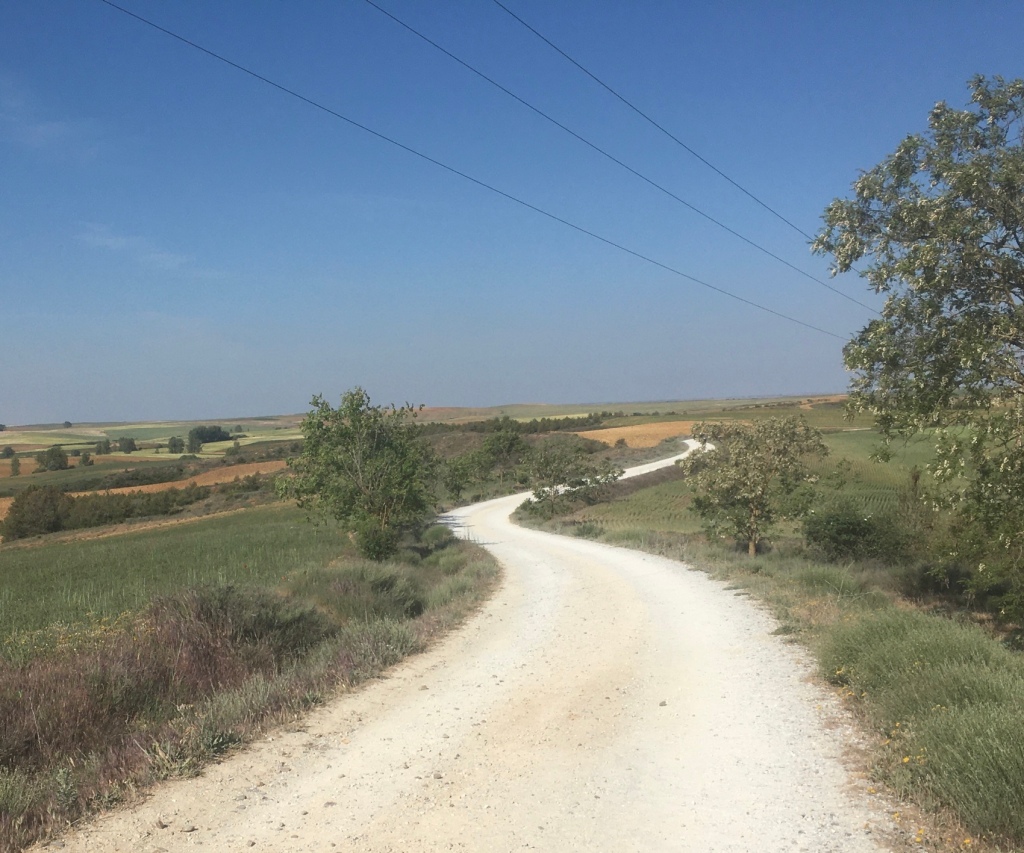
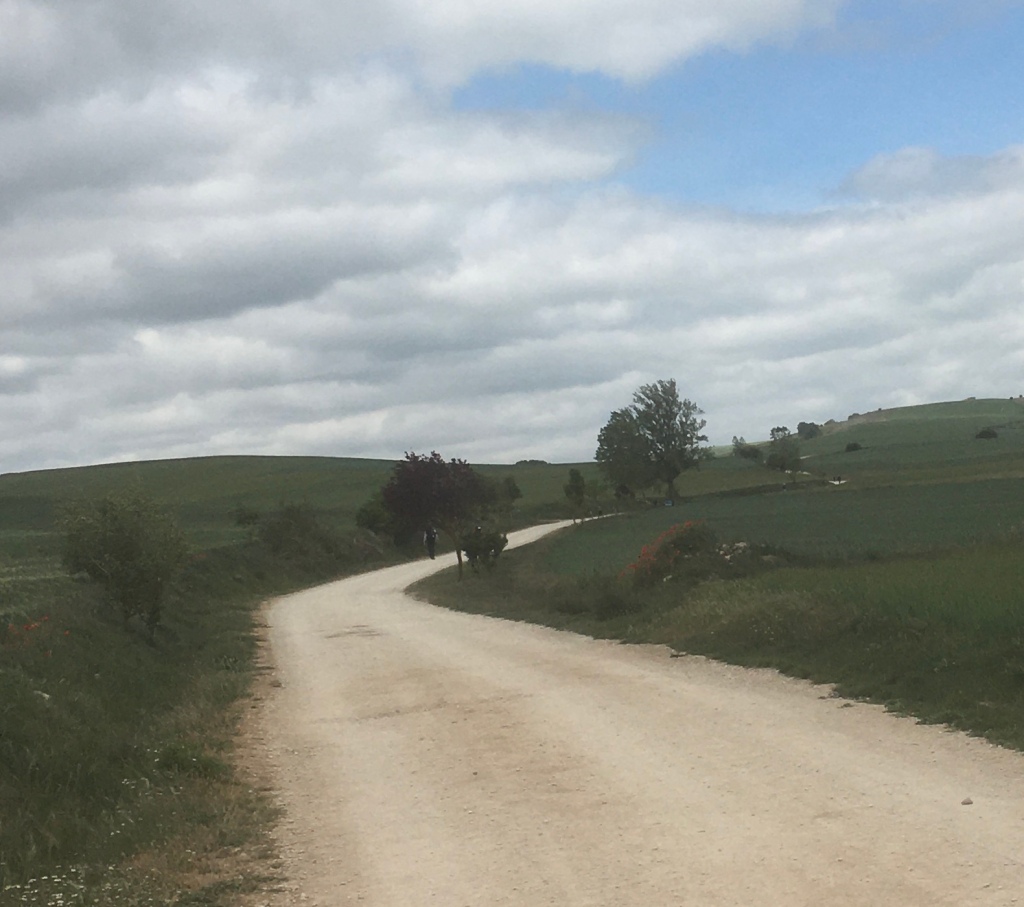
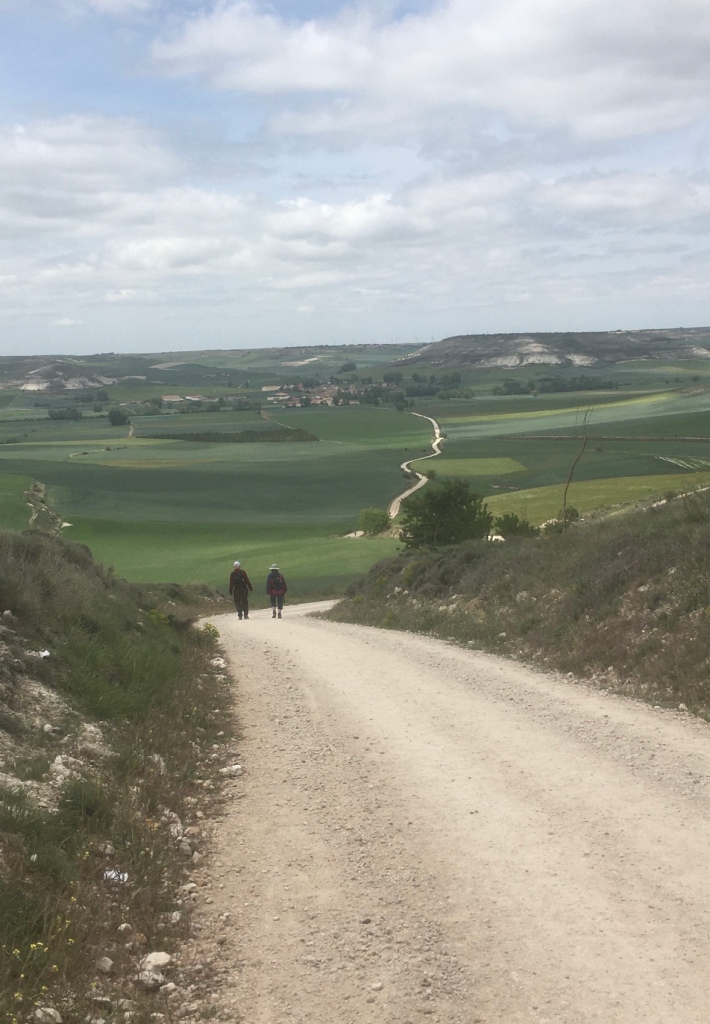
A classic Meseta scene with the path wending its way through the fields
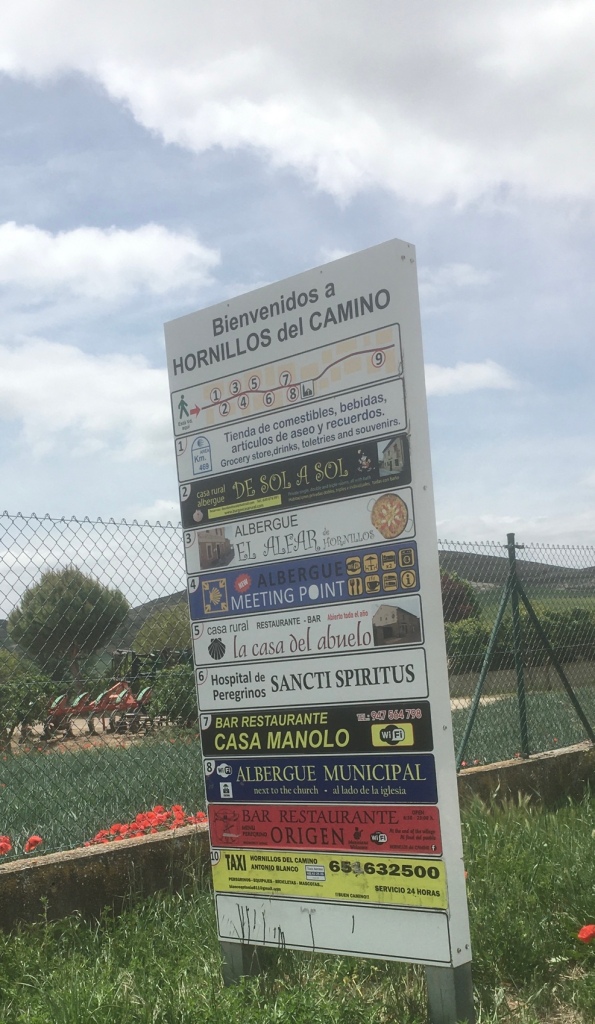
Lunch stop at Hornillos which means “ little stoves”. A quiet place to say the least, but none the more welcome for that. Other than the tiny hamlet of San Bol, there was little of distraction before today’s destination, Hontanas.
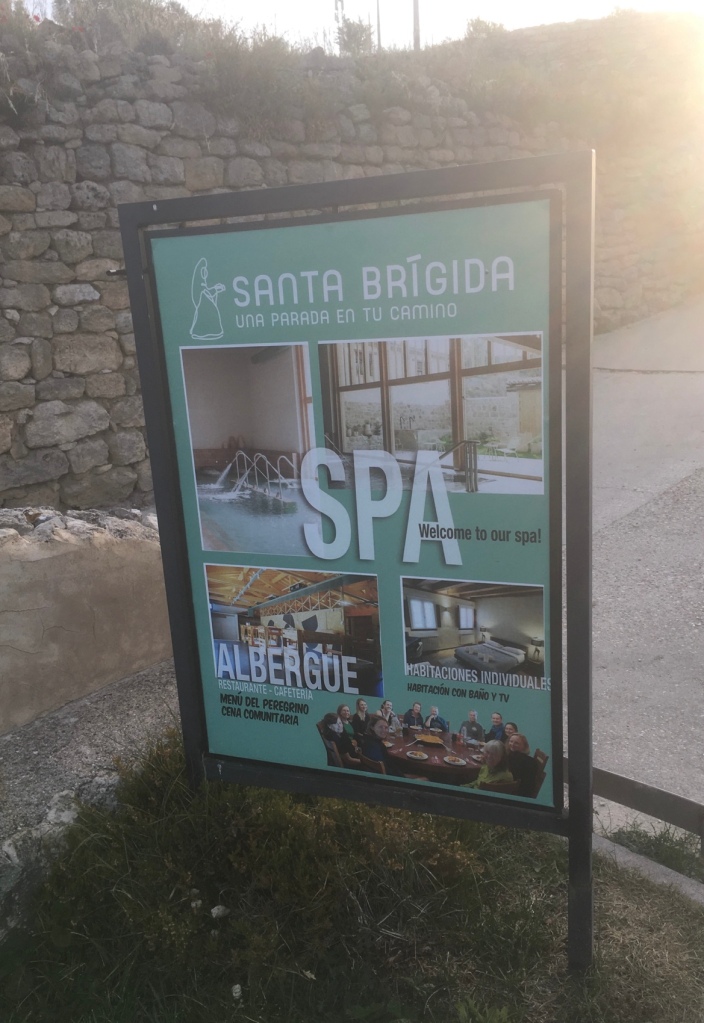
The terrace in San Brigida
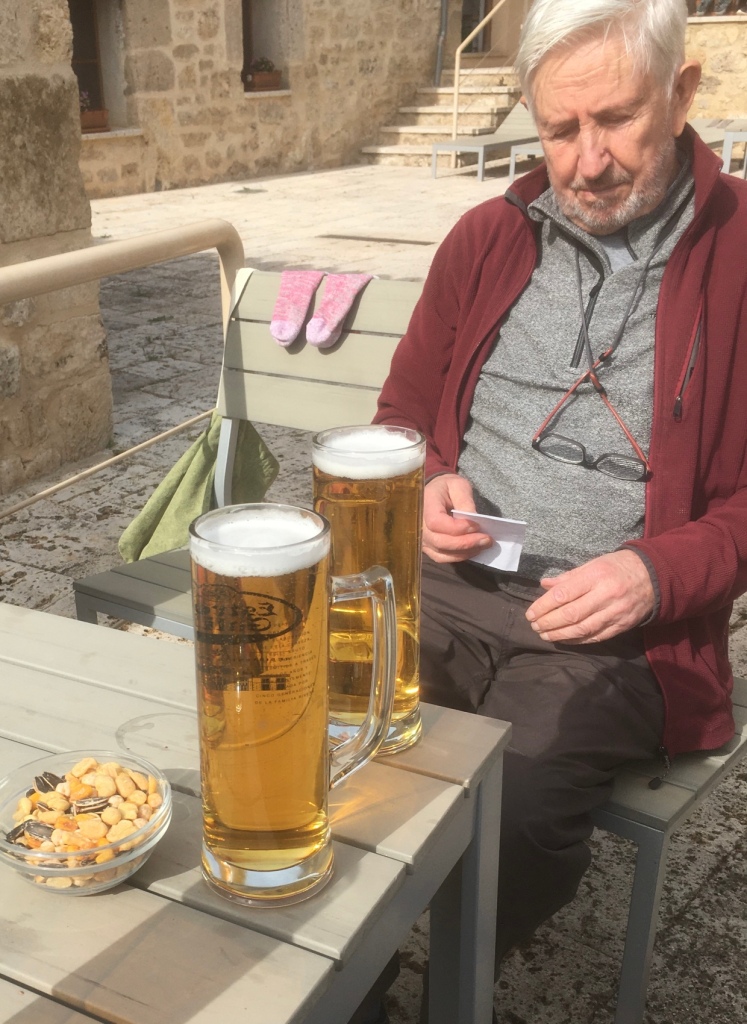
End of walk beers on the terrace with Tom in contemplative mode
Ps.They’re not Tom’s socks drying out – he doesn’t do Pink.

That quiet scene brings an end to the first day’s walking – such variety of places,scenery and signs…hopefully of more good things to come.

CAMIGAS – FIRST DAY ON THE SECOND SECTION OF OUR SAUNTER ON THE FRANCES. To Burgos from Madrid.

16 May

5.30 taxi to Birmingham Airport and a fairly efficient route through check-in with help from an
Assistant as the machine would not read my barcode!

However RYANAIR app did the trick.

Security took a little longer but we soon comfortably seated in the “ Spoons” where I treated myself to Eggs Benedict and limitless coffee. All the group were refreshed and after a trip to Boots we found our Gate and were seated efficiently on Ryanair 08.35 flight to Barajas Airport,Madrid.

An uneventful flight and after disembarking found ourselves in a long queue through security, casting envious glances at the rapidly disappearing EU passport holders,including Rob,proudly brandishing his Irish passport.

Another BREXIT benefit but at least we were in charge,confirmed by the fact that the UK had exceeded record numbers of migrants….Still, the Braverman witch was saying we don’t need to import fruit pickers – we can train our own .

There she goes …if only.

I wonder how many days,weeks or years it takes to train to be a fruit picker. Perhaps you get the same elevated status of someone who can make a cup of coffee who then call the selves “ Baristas”.

Synonyms for “ fruit picker “ are notoriously rude so don’t go calling yourself a “wenatcheebanana” !

Getting back on track we eventually found the transfer bus from Terminal 1 to Terminal 4 and the newly designed Barajas bus station.

Let the light in …

Very light and spacious, however, unusually for Spain, no cafe/ bar, but well stocked vending machines even though the group found the sandwiches rather bland. Fortunately, my accountant had prepared a Ramblers style picnic for which I was very grateful.

The weather looked fine from our viewpoint in the departures hall and Ranjit, one of our group on his first Camino disappeared for a few moments, only to return in a very fetching pair of shorts and t-shirt. I had to remind him we were going to Burgos not Benidorm but we all admired his optimism. Perhaps it was well founded because the forecast for our first day’s walking destination tomorrow,Hontanas’ is set at 16* and sunny – ideal walking conditions

There was a little confusion at the departure bays as there were two buses departing simultaneously.

How I miss driving in Spain.

Both via Burgos and it was far from obvious which was which until we started to board the wrong one ! The joys of travelling independently. ALSA buses

We had hardly travelled for five minutes when the coach approached the barrier to the Autovia, a coach in front moved through and just we were about to do the same, the brakes were jammed on suddenly….the barrier had managed to wedge itself between the drivers side wing mirror and the bodywork of the coach. Two female employees started rushing in and out of the booth and achieving precious little…I expect this was a “ first”. After a wait of fifteen minutes or so assistance appeared in a van with a man. After a few light hearted exchanges with our somewhat surly driver, he pressed something and the barrier lifted, the bus reversed a metre or so,the barrier was tested twice and then thankfully were were able to continue our journey northwards.

Whoops a daisy !

About 90 KM from Burgos there was a hold up on the road by the Guardia Civil – diverted into one lane- with guys holding serious weapons – I’m pretty sure they weren’t checking for insurance. No photos for obvious reasons.Not too long a delay and we were off again.

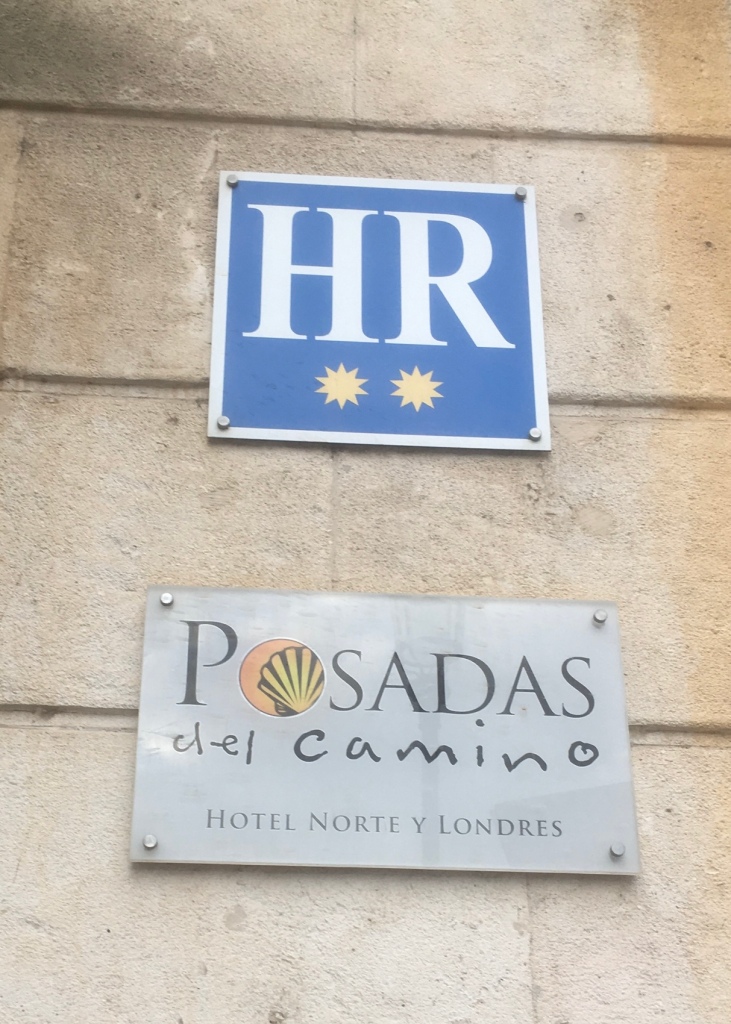
Tom got us to our Digs – Hotel Norte y Londres – pleasant check in and within half an hour we were in Bar Aguilas where Ranjit recounted his problems booking in down the road, but with only 200 metres to walk to our chosen restaurant for the evening – something to do with Blacksmith’s).

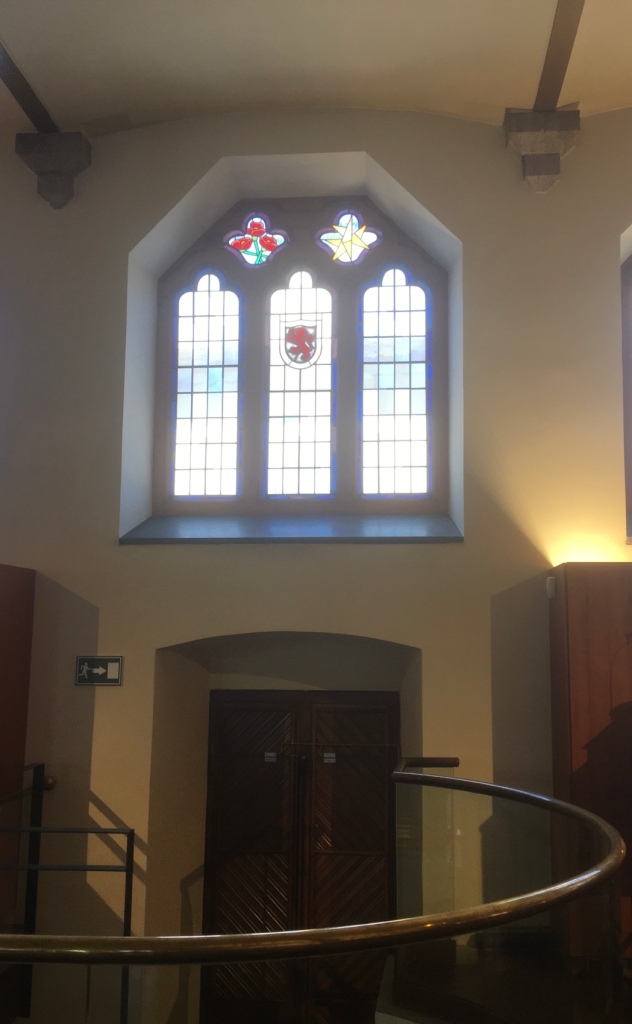
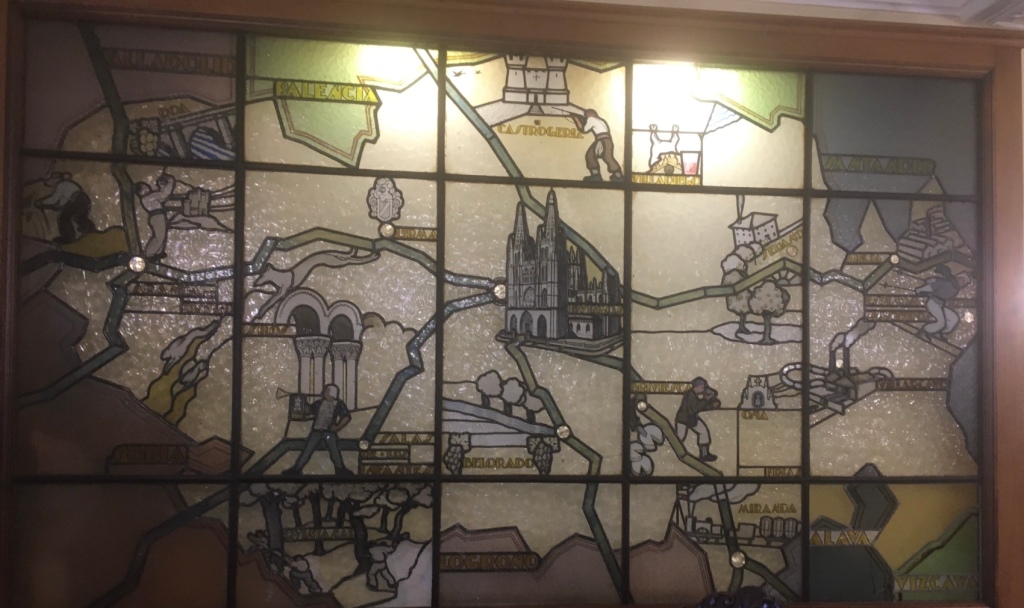
Stained glass mural in the hotel lobby

A pilgrim friendly menus for €17.00 , 3 courses plus wine and bread and a choice of ten starters and mains – rustic cooking at its best and to complete the night a dessert of Arroz con Leche. Muy Buen.

Something related to Blacksmiths

Somebody had the idea of a “ digestif” and so we called in at Los Aguilas again. Whilst deliberating on what to drink the waitress held a bill for 3 unpaid beers earlier on! A total oversight that they accepted good humouredly.After all, if we had done a runner we would not have some back!

A good night in Burgos.

Walking tomorrow.

The best G/T s are served in Spain 🤧 Salud

ASTORGA-THE END OF THIS YEARS CAMINO

6 May
We should have time, late afternoon and evening, of 27 th May to take in some of the highlights of this City.
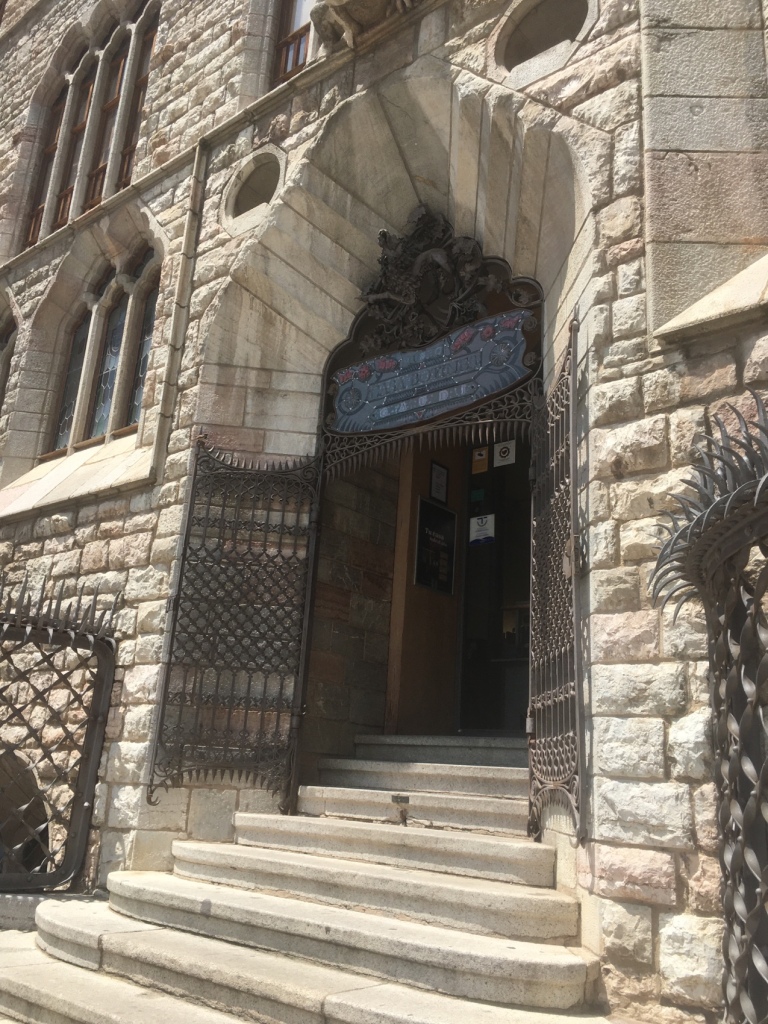
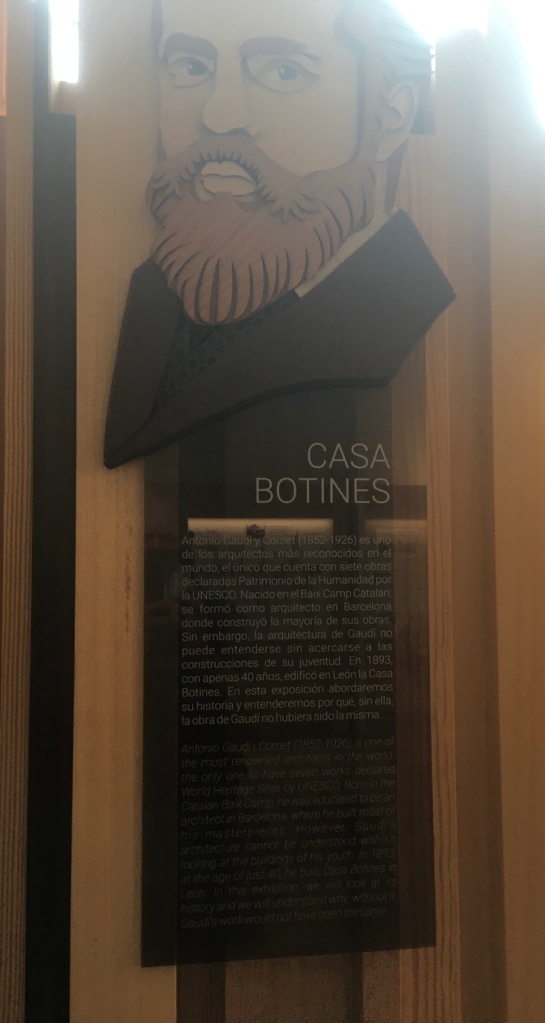
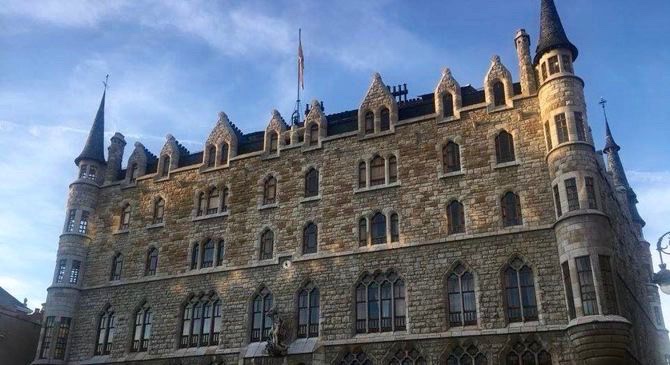
Part of Anton Gaudi’s legacy.

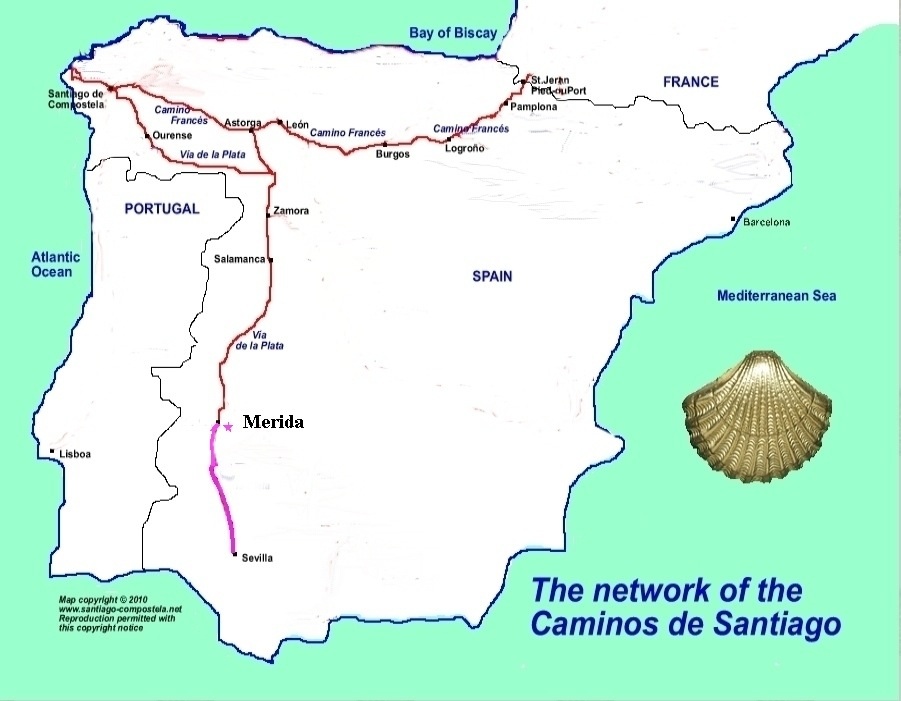
The capital of the county of Maragatería in the province of León offers a rich medieval legacy, the result of its location at the crossroads of: the Pilgrim’s Road to Santiago de Compostela and the Ruta de la Plata (Silver Road). Its walled town preserves churches, convents and hospitals which take travellers back to the purest tradition of the Pilgrim’s Road. Another outstanding feature in the town’s streets is a culminating work by the Modernist architect Antoni Gaudí: the Bishop’s Palace. Astorga is, also, a good opportunity for enjoying the rich cuisine of this area.

Beautifully preserved walls

Astorga stands at the confluence of two important Spanish routes which in past times were pilgrims’ itineraries. The older of the two, the Silver Route, dates from Roman times. This itinerary (Gijón-Seville) was the route used to transport the metal extracted from the mines in the north of the peninsula to the shipping ports in the south. During the Middle Ages it was used by Arab and Christian troops at the time of the conquest and the reconquest. This excellent communications route throughout the centuries then became the way for pilgrims heading for Santiago de Compostela.The Way of Saint James, the Jacobean route that has been declared a part of our World Heritage by the UNESCO, also runs through Astorga. This was part of a series of paths that criss-crossed Europe and northern Spain on the way to Santiago de Compostela, a holy city by virtue of being the site of the tomb of Saint James the Apostle. The historic quarter of this town in Galicia is also a World Heritage Site. WP States “ In Astorga you May notice a sudden increase in the number of pilgrims…they are likely Spanish, as this is a common starting point for Spaniards,or they have come from Sevilla along the Via de la Plata. A quick peek at their boots will tell the two apart”

About 700 KM

“ Astorga also marks the beginning of the territory of Leon known as the Maragateria,home of a people called Maragatos….defined by the unique culture of strong mountain people, including arrieros ( traditional muleteers ) who transported goods over the mountains before there were railways and trucks and who were key to to Astoga’s rebirth as a centre for chocolate making”. BB

Continuing the Maragateria theme, the local cuisine – make a stop in any of the restaurants in the centre of town to sample the region’s traditional dishes. The exceptional quality of the pulses from León can be savoured in dishes like ‘cocido maragato’ (chickpea stew), which here is served in the reverse order from in other parts of Spain. Diners begin with the meat, chorizo and dumplings, and end with the chickpeas, cabbage and soup. ‘Cecina’ (cured dried smoked beef), ‘botillo’ (cooked smoked pork sausage meat), ’empanada’ (savoury filled pastry) from El Bierzo, cod and trout are some of the other delicious options.
I think I might know who would be up for the challenge.

Here are just six of the highlights in what JB describes as “ An attractive city ( more akin to a lively market town) set atop a steep ridge with an…interesting array of historic buildings all tightly packed within its medieval walls”.

PLAZA SAN FRANCISCO
PLAZA SAN BARTOLEME
PLAZA MAYOR
PLAZA SANTOCILDES
PLAZA CATEDRAL

Brierley’s guide book has a useful walking tour on P.199

Hey Presto!

On the morning of 27 th May we take a five minute walk to Astorga Bus Station to board the 10.20 ALSA coach to Madrid. On arrival at 15.00 we will make our way to TACH Airport hotel.

Mural in the bus station
On Monday 29 th May we have an early start to get the 06.40 flight from Madrid to Birmingham, arriving 08.10.

I have benefited greatly from these four guide books and hope I have credited them accurately.

“Walkers seek their place in the world and often find it.” And walking heals. It is a remedy for melancholy, against the sorrows of a separation, even against certain diseases. There’s a lot of talk about resilience right now. I prefer the word resistance, more combative. Walking is resisting” by David Le Breton in “Walking Life”. The endless geography of the walker

SAN MARTIN DEL CAMINO – ASTORGA 25Km The Final Stage of Our Camino,May 2023 and WENDY’s REST.

27 Apr
Looks fairly flat, apparently some friendly hills towards the end of the journey

“ The majority of this stage is relatively solitary so bring food and water ( there are few villages on the way ) however there are attractive sections with trees and other shade in which to rest out of the sun…allow some time to savour Orbigo. Note the last section beyond Orbigo has some gentle hills” JB

Let’s hope we don’t feel like that when we reach Astorga
Nuff said !

BB gives some further advice, “ If it rains, even only slightly, along this stretch, watch the path under your feet,for snails and caterpillars may come out to revel in the precipitation. Notice that the terrain is changing, shifting from mustard yellow towards a darker,iron- rich Earth. The fields around you grow many large-scale crops, including corn,potatoes and sugar beets.”

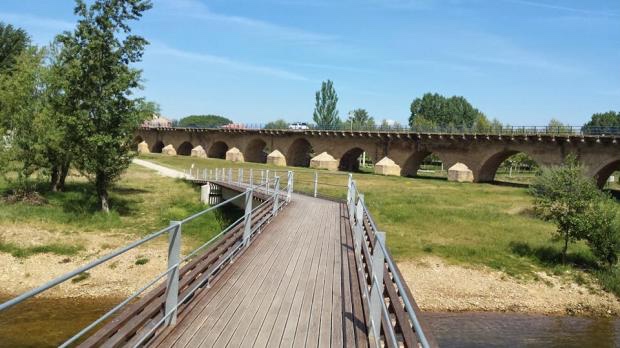
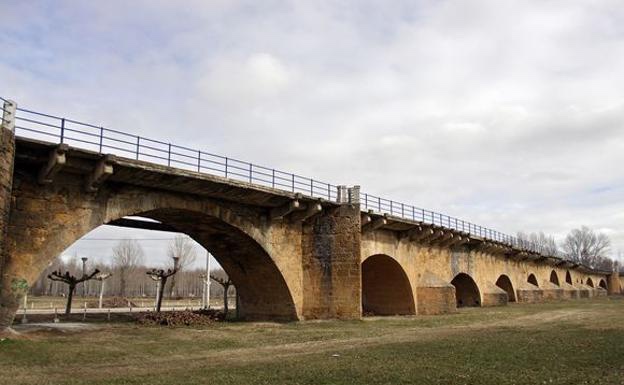
The Puente del Paso Honroso is called a “ top experience” by BB “ the 19-arched bridge “.

“ Pause for a while,take off your backpack and enjoy the magnificent sight of the bridge over the River Orbigo. It’s the longest on the Way, having no fewer than 19 arches and making more than one change of direction along its length.” SR
“ However,before crossing look carefully in case a knight in armour is barring your passage. The story goes that in the year 1434, in a Co with a promise he had given to a lady, Suero de Quinones mounted guard on the bridge from 10 July to 10 August and challenged whoever might wish to cross to a joust. The episode came to be called El Paso Honroso ( the honourable pass ). He found himself with plenty to do, as it is said that in that space of time 166 opponents faced him. He defeated them all.” SR
Let’s hope we can cross without a fight ! WP rightly states that “ Where there are rivers with bridges there is always history to be found”. And we should add, fabulous stories too.
It is also rumoured that the said knight set off on his own pilgrimage to Santiago. JB suggests that this act of chivalry’ “May have been the an inspiration for Cervantes’ Don Quixote “

“ Pass over the bridge to the equally delightful village which, on the far side becomes Hospital de Orbigo and a knights commandery of the ancient Order of St. John who maintained a pilgrim hospital here”

LEAVING HOSPITAL de ORBIGO “ Follow the yellow arrows out of town where the main road through Hospital de Orbigo turns from black asphalt to a wide earth path. Here the road splits, one following the Astorga / Camino Way to the right, and the other Astorga / by Highway to the left.BB Both JB & BB recommend the the turn to the right. “Staying on the Camino Way is more beautiful,wilder and rewarding, passing through low red hills,wheat fields and groves; this also seems to be the original path of the Camino and has more food and accommodation support.” BB “ It is only a little longer…and above all, you do not have to hear the traffic” . SR

There is a bar and a shop here. On leaving the village BB informs us. “ Keep your eyes open for wildlife, including hawks and falcons that hunt small game from the treetops and ride air pockets in the sky. Sant Ibanez de Valdeiglesias come shortly after leaving here , population 323. “ the village itself could be missed in the blink of an eye” BB
“ This place is in the heart of corn country, so much so that locals call it “El laberinto de maiz “ ( the corn labyrinth “ BB
One dog,man missing! But it does have a bar situated in the Albergue Camino Frances.

After 5 Km or so you come upon La Casa de Dioses.BB is the only one of the four guides I have been referencing to mention this “ free pilgrim paradise”. La Casa de Dioses “ feels like a small encampment on the Mongolian Steppe. Yurt like shelters made of blankets give warmth as does a hot kettle of tea. Bowls of fruit are arrayed on tree stumps and a food stand is arrayed with cheeses hard boiled eggs,yogurt, juices and vegetables….Drop what you can afford in the money jar and take what you need” . BB. David Vidal from Barcelona operates this oasis,he makes everyone welcome and his shelter is based on the honour system, hauling the fuel and water here himself . Such humility and grace.

Let’s hope this Camino Angel is still there when we walk by. “ You will notice that the landscape is changing. The plain is now behind you…you will encounter a series of climbs. The terrain is not demanding, however,and is certainly more interesting….You will then come to one of the notable features of the day , the Crucero de San Toribo. From here you can see,on the plain below, the two towns which still lie ahead”. SR

They are San Justo de la Vega and Astorga.

Following an initial steepish path downwards we come into San Justo de la Vega,” an expanding residential satellite of Astorga with several bars and restaurants” JB.

“ San Justo de la vega is not a beautiful town, but it has beautiful aspects, such as it’s surrounding fields and kitchen gardens, speckled with fluffy white sheep and it’s 17 th century church, of San Justo, a simple but pretty adornment on the town’s highest hill” BB
“ From San Justo de la Vega we continue out over the bridge and the Rio Tuerto and turn off right to take a pleasant track that runs along the river valley past the side of a factory crossing the Roma footbridge, Puente del Molderia,upto the main road …into the outer suburbs of Astorga .”JB He neglects the fact that aforesaid factory makes thousands of hojaldres de Astorga- flakey,honey dripping cakes. Those with a sweet tooth won’t be disappointed
Before we can enjoy these delights we come across what BB describes as “ a nutty zigzagging bridge ( some pilgrims call it the jolly green giant ).
Or,” the Peregrino torture tower over the railroad tracks…designed to keep pedestrians safe and away from the tracks. Then it is up the slope and in to Astorga and our accommodation for the night.
Boutique accommodation in Astorga
DESCANSO DE WENDY is a boutique accommodation located in the center of the bi-millennial city of Astorga, with easy parking outside.
We are a 2-minute walk from the Cathedral of Santa María and also from the Episcopal Palace (Gaudí), from the square itself we can visit the Roman Museum and its excavations, as well as the different and unique Churches, Museums, squares and buildings of interest artistic-historical.
WENDY’S REST is made up of only SIX ROOMS or SUITES, two of them on each floor of the building.
All with private bathroom or toilet in the room itself, furnished and decorated in an eclectic style with state-of-the-art TV, hairdryer, exterior windows and beds with “Premium” mattresses and pillows, as well as toiletries and extra cotton bed linen.
The laundry service is optional
Included in the price of the accommodation we will serve you our accredited
Maragato Breakfast , consisting of a seasonal fruit starter, followed by a hot dish cooked at the moment and a dessert of delicious pastries and sweets from the region.
All rooms of the accommodation have free WI-FI. ( From the hotel’s website ) 4.5 and rated excellent on Trip Advisor.
As for Astorga ? That will be in the next and final instalment of this series of Camino previews .

LEON REST DAY SUGGESTIONS THEN ON TO SAN MARTIN del CAMINO – 25 KM WALK.

18 Apr
With the best part of a day and a half to explore and enjoy this iconic Pilgrimage city, there are a variety of options to suit all interests.
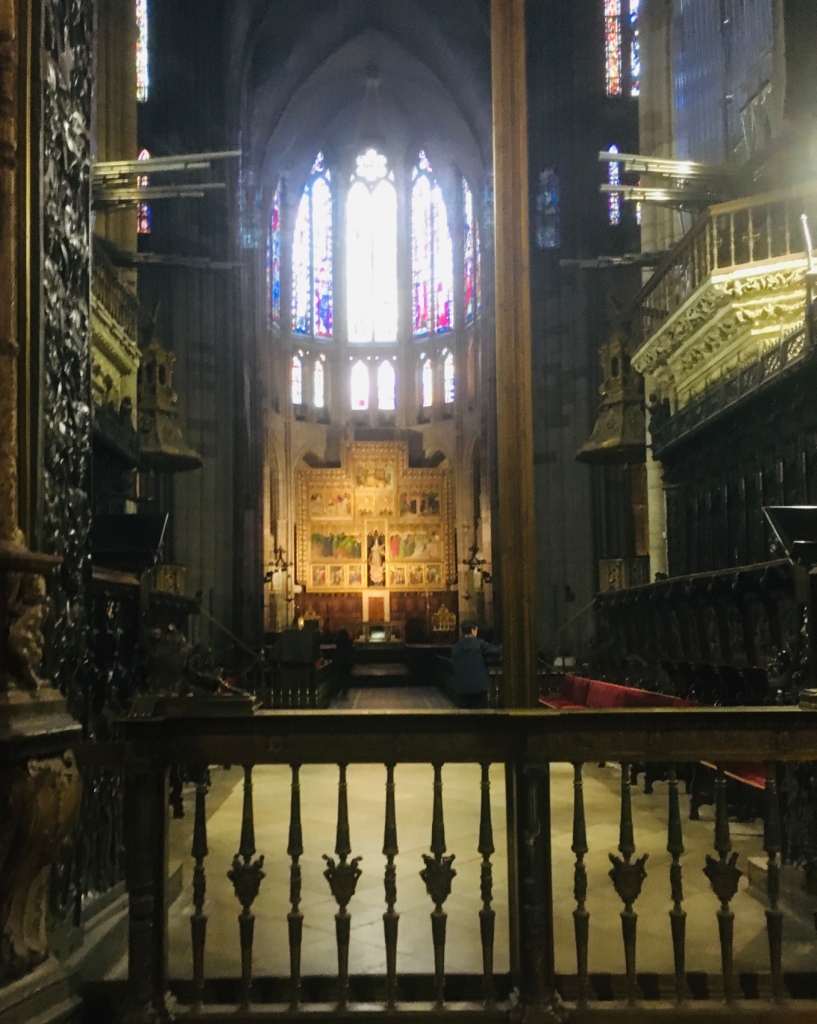
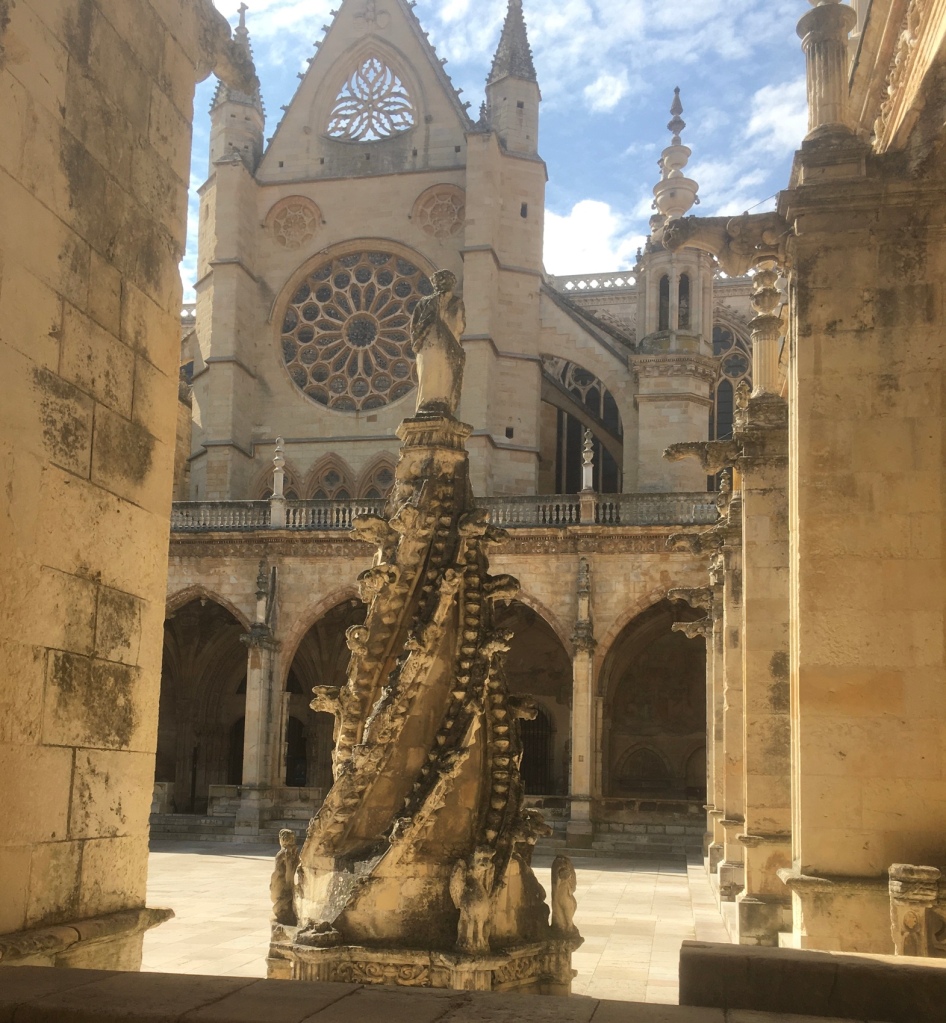
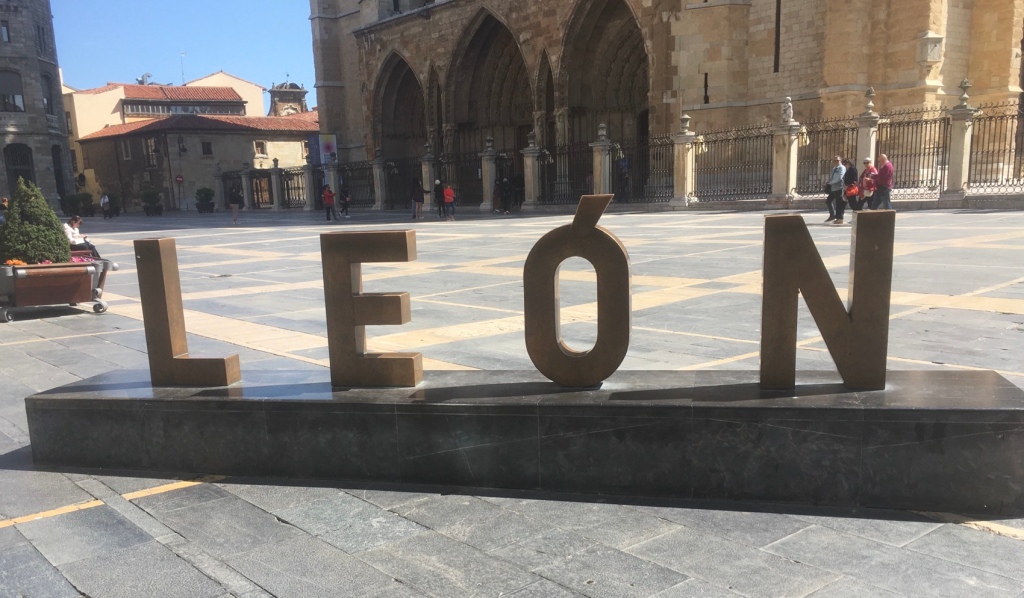
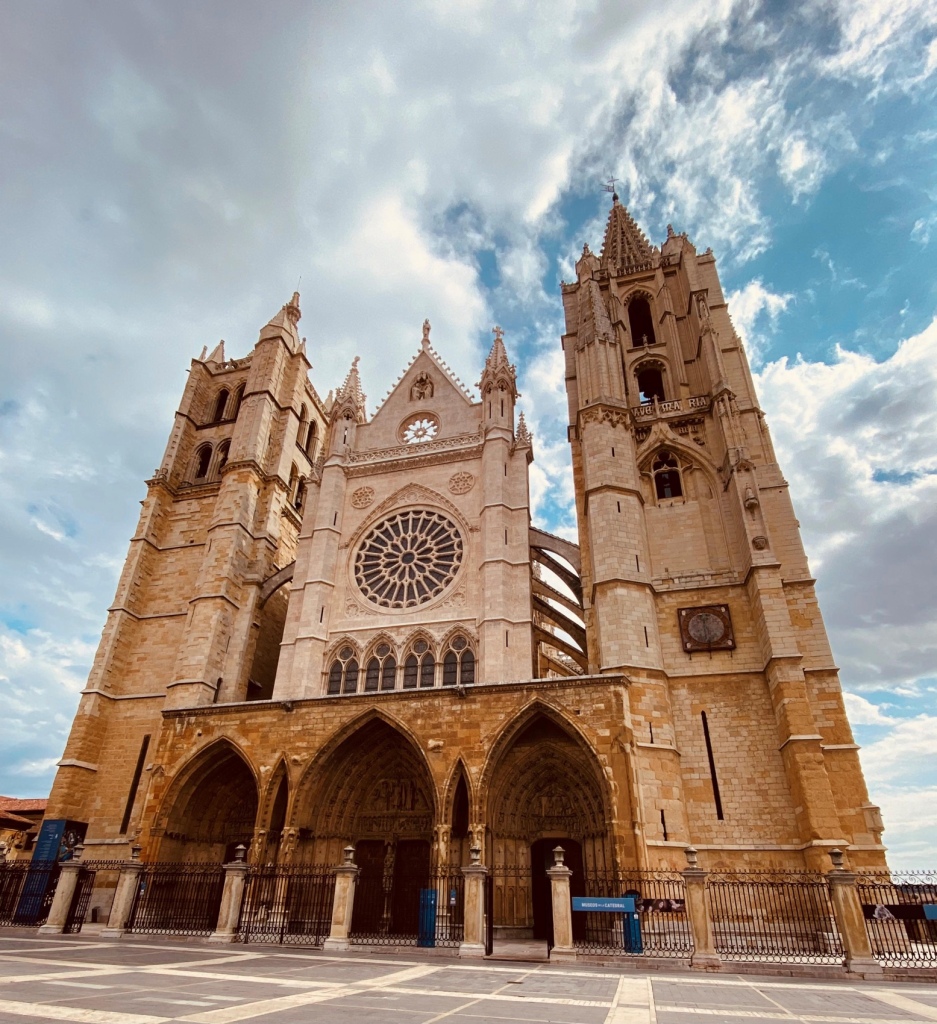
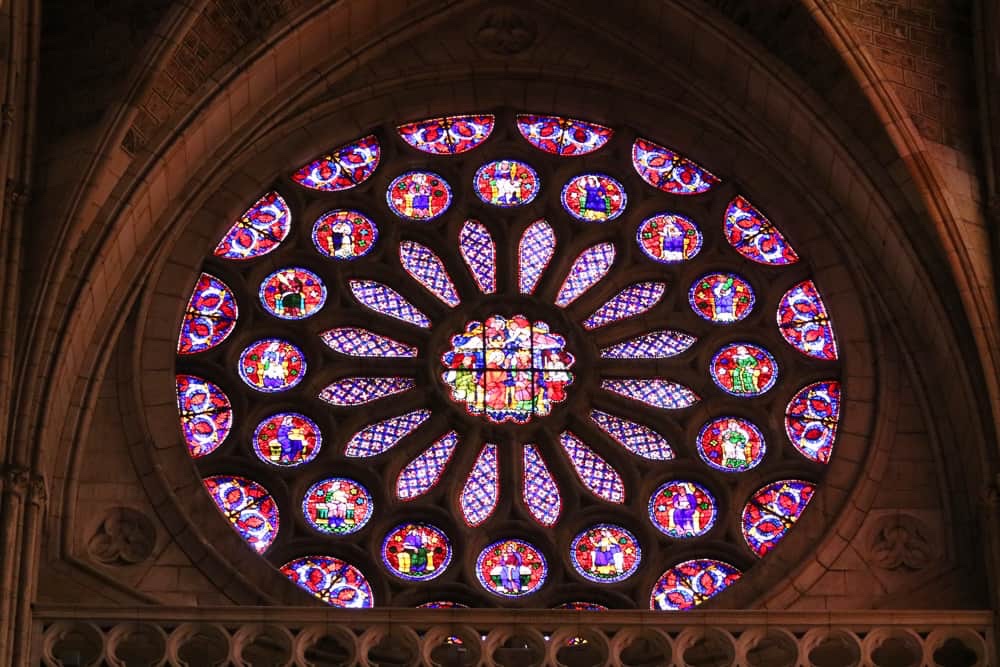
Catedral de Santa Maria de Leon “ Step inside this Gothic gem into a Cezanne – like swirl of saturated colours coming through the stained glass” BB. Let’s hope the sun is shining.

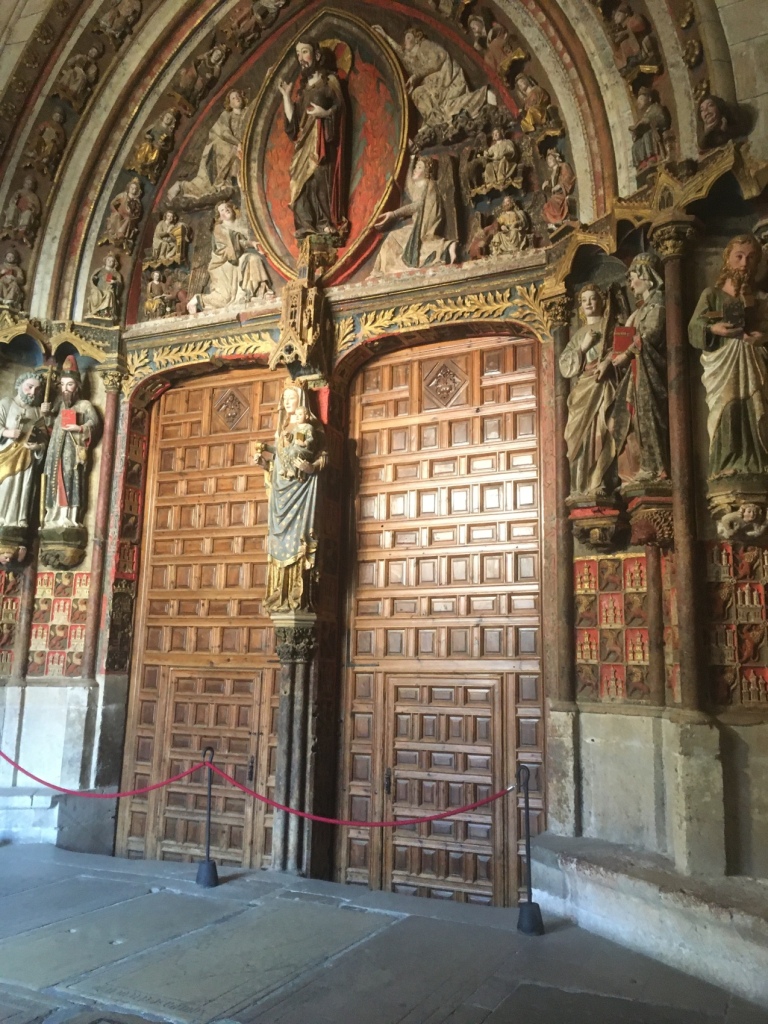
“León’s 13th-century cathedral, with its soaring towers, flying buttresses and breathtaking interior, is the city’s spiritual heart. Whether spotlit by night or bathed in glorious northern sunshine, the cathedral, arguably Spain’s premier Gothic masterpiece, exudes a glorious, almost luminous quality. The show-stopping facade has a radiant rose window, three richly sculpted doorways and two muscular towers. The main entrance is lorded over by a scene of the Last Supper, while an extraordinary gallery of vidrieras (stained-glass windows) awaits inside.” WANDERLOG.COM

Specialty Museum – The Sierra-Pambley Museum is dedicated to the Leonese bourgeois elite of the 19th century and their lifestyle. The museum features original furnishings and fittings, such as patterned wallpaper, luxurious carpets and gilt-edged mirrors. The collection also includes paintings, sculptures, objets d’art and manuscripts.
Museo Catedralicio Diocesano de León is a small but very interesting museum inside the Leon Cathedral. It has a great collection of religious art, including paintings, sculptures, and stained glass. The cloisters are also worth exploring, as are the royal tombs in the crypt. You can visit the Cloister and at the same time you can see different works. There is even a little game inside investigation. You can also see the statues that should be on the façade of the cathedral but for one reason or another they are there and not on the façade. The good thing is that it is next to the cathedral and if you buy the joint ticket it will be cheaper. It is a mandatory visit if you pass through Leon. GOOGLE TRANSLATION
Farmacia Merino, Dra. María José Alonso Núñez (Translated by Google) You walk past it without noticing it, and yet this pharmacy is a work of art from 1827. You can go inside to admire this wooden establishment, of course by asking the pharmacists for permission. There is no word to write this work…..Compeed,Ibruprofen anyone?
El Escribano (Translated by Google) El Escribano is the most beautiful and interesting store in León. It is entering medieval Spain at the hands of Antonio Suárez Gordón.
Parque Del Cid It’s old full of trees, cozy, cool and shadowy in the scorching summer evenings, right in the centre of town, surrounded by nice bars where you can have a quick bite. I’d say go and enjoy it.


Daniel Alonso — Google review
Panteón Real Attached to the Real Basílica de San Isidoro, the stunning Panteón Real houses royal sarcophagi, which rest with quiet dignity beneath a canopy of some of the finest Romanesque frescos in Spain. Colourful motifs of biblical scenes drench the vaults and arches of this extraordinary hall, held aloft by marble columns with intricately carved capitals. The pantheon also houses a small museum where you can admire the shrine of San Isidoro, a mummified finger(!) of the saint and other treasures.
Basílica de San Isidoro Even older than León’s cathedral, the Real Basílica de San Isidoro provides a stunning Romanesque counterpoint to the former’s Gothic strains. Fernando I and Doña Sancha founded the church in 1063 to house the remains of the saint, as well as the remains of themselves and 21 other early Leónese and Castilian monarchs. Sadly, Napoleon’s troops sacked San Isidoro in the early 19th century, but there’s still plenty to catch the eye.
Museo de San Isidoro Incredible place in a beautiful city. The staff are so helpful and pleasant to talk to. They obviously take great pride in the place and want to share it’s history with visitors. They offer information in English for visitors to read .

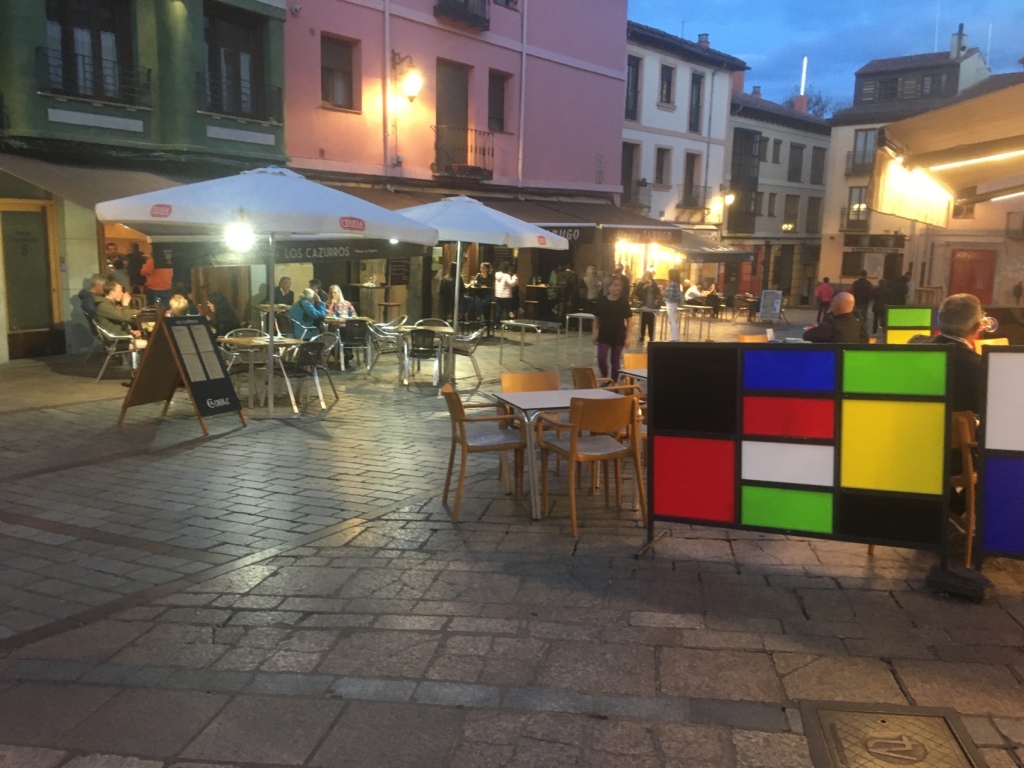
For the evenings’ entertainment and delectation there is only one destination – The Barrio Húmedo is located in the Spanish city of León and is part of its Old Town. The name roughly translates as the ‘Wet District’, so called because of the number of bars and pubs located in the area. The Barrio Húmedo is a circular area in the centre of the city, running from Las Cercas street, up to Calle Ancha and across from La Rua to Caño Badillo street. At its centre sits the lively Plaza de San Martín,

I could not resist the temptation to include two places renowned for their food and drink, just to give a flavour of what to expect.

El Rebote

If you like croquetas (deep-fried croquettes), then you’ll love El Rebote, as it’s famous for them. Instead of regular croqueta flavours such as ham or mushroom, they have innovative varieties such as pizza, beef or even jalapeño chili pepper.

El Rebote I love croquetas!

Plaza San Martín, 9, León, Spain

El Rincon Gaucho

This cute little bar offers a limited number of tapas options, which are all equally tasty. Try the traditional Leonese sopa de ajo (garlic soup). Thick and fragrant, it’s made from crusty bread and roasted garlic.

Calle de la Azabachería 1, León, Spain

I love Sopa de Ajo too!

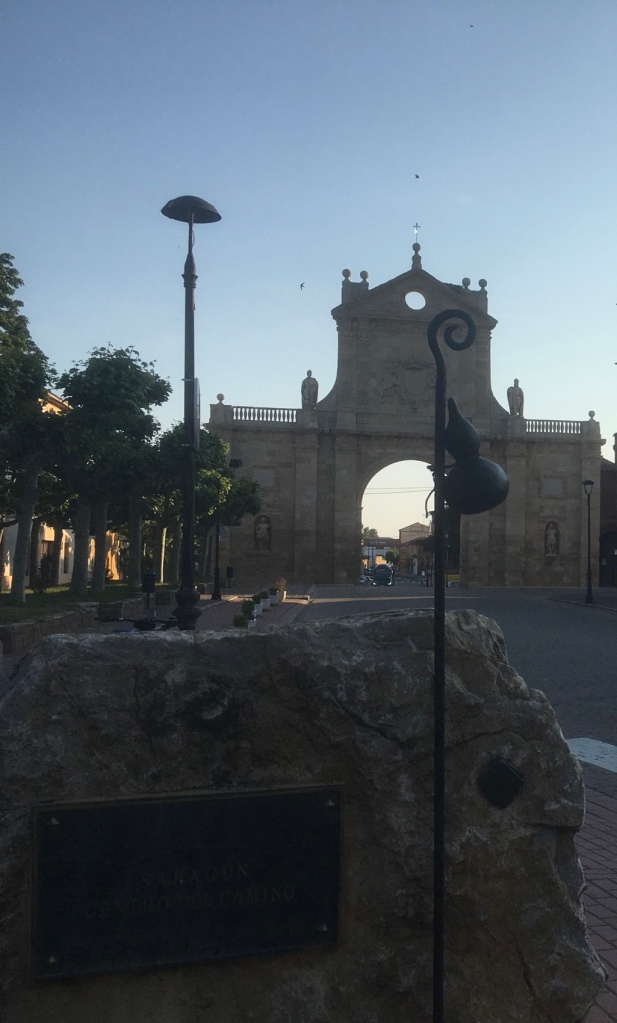
San Martin del Camino, at the end of the next day’s saunter will come as a complete contrast to Leon with less than 400 inhabitants! “ Leaving Leon….you will cross the bridge over the Bernesga river , and pass a small tree- covered park,where hens and roosters roam. The Camino then continues west. This is perhaps one of the road’s ugliest,most industrial stretches, though the people along it are very nice. If you wish to skip the 7.7 KM of walking on pavement, the bus…with “ Virgen del Camino” noted on its digital sign,stops at the corner where Avenida de la Magdalena opens up after the first traffic roundabout,just after passing the park ( a hardware store, Ferreteria El Crucero, is across the street). You’ll see a small sign on the sidewalk and a large white BUS painted on the asphalt. Buses run every half hour. The bus drops you off on the Camino in La Virgen del Camino”. BB Useful and very detailed information

“La Virgen del Camino is named for the miraculous sighting of the Virgen by a local shepherd. His vision has been translated into sculptures several times by artists…the sculptures are stunning and bear a resemblance to La Piedad by Michelangelo, with the exception that Jesus is facing downwards.

“ When you get to the Basilica de la Virgen del Camino you will cross the busy road and continue on a small access road. In 300 metres you are presented with a choice between two routes . The painting of yellow arrows here is confusing, and there is zero official signage to indicate your options.” WP SR is more forthright, in his opinion it is the result of “ Disgraceful Competition” . The numerous signs have been painted by the owners of local businesses! WP recommends taking THE SCENIC ROUTE “ and it adds <3KM to your journey. It is considerably more pleasant and there are now plenty of services and albergues along the way “ . However, a look at the map shows that this route does not go through San Martin, our destination, but bypasses it by some distance . It would seem we should take the original historical path with the N 120 on the right. DECISIONS,DECISIONS….

JB’ s maps indicate a cafe/ bar in Valverde Casa Camino and BB describes two options further on in Villadongos del Paramo,” just before exiting town,there’s a good bakery and general store Hermanos Garcia to your right that sells provisions , including fresh baked goods,fresh fruits and vegetables,olives,cheeses and cold cuts…”

“ Villadangos del Paramo is known as the site where Queen Urraca of Leon and Castile fought a battles against her husband,Alfonso I of Aragon, in 1111” BB It’s a complicated story but well worth researching . “ Every August the the town people stage a re- creation of the famous battle called La Mantanza )

Not sure if the Covid masks are original!

BB tells us that we’ll “ next cross over the irrigation canal, Canal de Villadongos, followed by a wild wooded park ( you may ) get a glimpse a lot of bird life , including hawks, for nearly 2 kilometres before returning to run parallel with N 120, crossing to the left side of the road”.

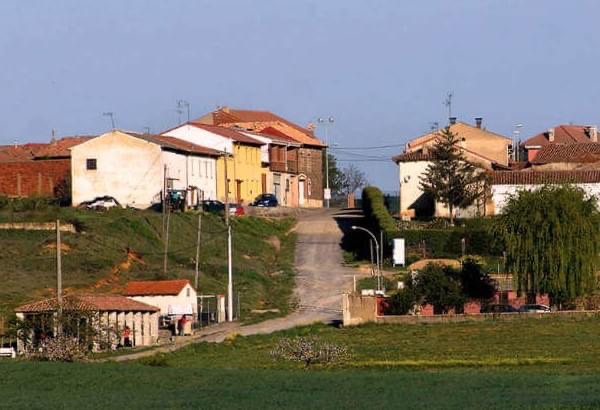
SAN MARTIN del CAMINO “ is a quiet farming village …Nothing remains of the original 13 th century pilgrim town or the 17 th century hospice that stood right on the main street, calle real. The church is from 1963, though the bell tower survives from the 1600s” BB

Storks’ nest

Our “ digs” for this evening are in Albergue La Huela


Sharon E
5/5a month ago on Google
Excellent! Very modern, spacious, organized and clean. Great service, great food.
In the summer take advantage of the pool 🙂 This is the place to stay after Leon. Perfect distance. Clean and comfortable rooms. Alejandro was very helpful from the moment a book it. Staff is friendly and will welcome you warmly for sure.

Mansillas de Mulas to Leon 12.4 miles DAY 9

6 Apr

“Thou shield of that faith which in Spain we revere

Thou Scourge of each foeman who dares to draw near

Whom the Son of the God whom the elements tames,

Called Child of the Thunder, Immortal Saint James!”

– – – – – – – – – – – – – – – –

~ Pilgrims’ hymn, translated by George Burrows

Modern day protectors on the Camino – The Guardia Civil – what a cultural difference from my first encounters with them in the 70s.

NOTE THE SHELL
ORIGINAL GUARDIA CIVIL MOTIF

I thought I should preface today ( I’m writing this on Maundy Thursday ) by reminding us of the four principal sources I have used: CAMINO DE SANTIAGO – Sergi Ramos – SR in the text. A WISE PILGRIM GUIDE TO THE CAMINO FRANCES – WP in the text. CAMINO DE SANTIAGO , A PILGRIM’S GUIDE – John Brierley – JB. CAMINO DE SANTIAGO -MOON – Beebe Bahrami – BB in the text .

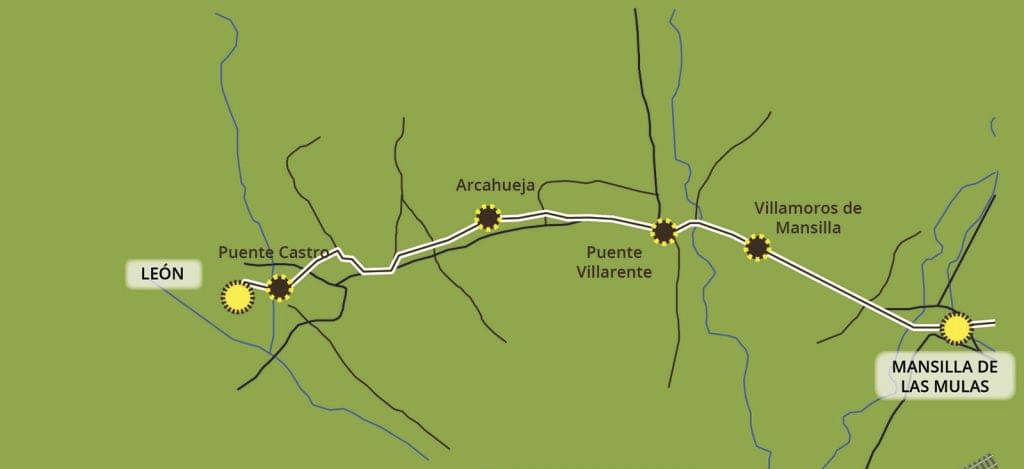
This would appear to be a relatively straightforward saunter and SR interestingly,gives it most attention. “ …it is a testing one …the towns along the stage are far apart,although all of them,with the exception of Villamoros de Mansilla, have at least a bar , restaurant and grocery store. It is necessary , however, to carry sufficient water,above all for the first section.” WELL NOTHING WE WOULDN’T DO ANYWAY !

“Much of the way between here and Puente de Villarente is adjacent to the road. “WP

Just a little further on is the Archaeological site of Lancia – “ a detour to the right …the partially excavated ruins of the Roman settlement of Lancia “BB

After 6 KM or so “ Villarente shaded area down by the river ( The first building( left) was a medieval pilgrim hospital which operated a donkey ambulance service for sick pilgrims to Leon ). There are several cafes to choose from here.

“ The river here once posted a serious threat to pilgrims when waters ran high and as a result it became home to several pilgrim hospices”WP

“ As you are leaving Puente behind you,keep an eye out for arrows pointing you along a trail to your right hand side ,and up a small hill towards Arcahueja. It is fairly well marked but is along a service road that is often lined with parked trucks and the way might be obscured “ WP

Next up is Arcahueja,” The last chance to take a rest in the relative quiet before we hit the city traffic.150 metres off route,( left) is the welcoming bar La Torre”. JB

It is also an Albergue.
As traditional as it gets…Thank goodness

Puente Castro is the last notable place before entering Leon. ( The modern buildings here disguise the fact that this was an influential Jewish district in the XIIth c and site of a former Roman settlement “ JB

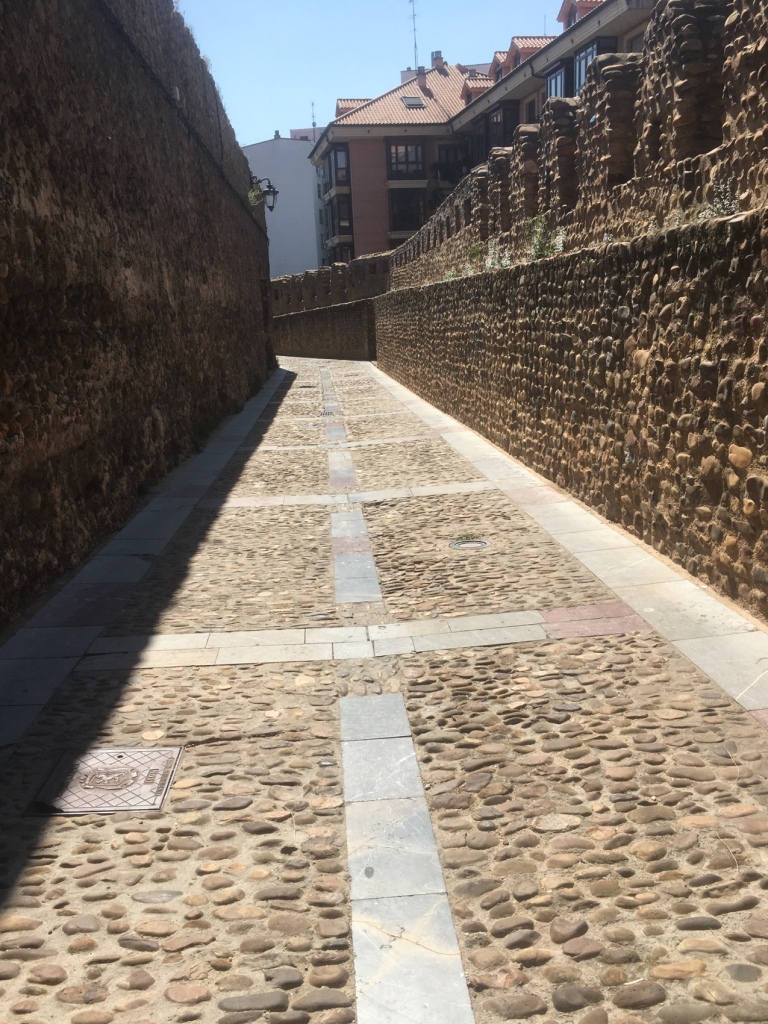
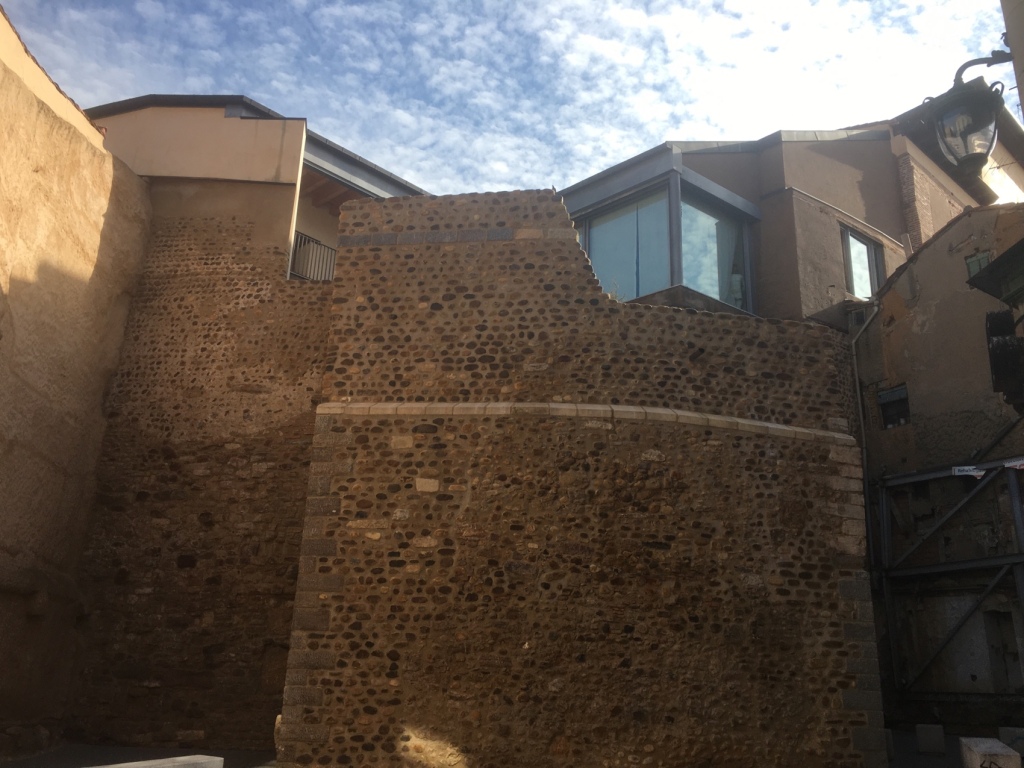
We the shall continue through the “ Leon suburbs up the wide Alcarde Miguel Castano ,eventually arriving at Av. Del Europa and then into Plaza de SantaAna…here we can calm frayed nerves “( speak for yourself ) JB. Then on through Puerta Moneda one of the original gateways to the medieval city ( note the vast city walls as you pass) JB
PUERTA MONEDA

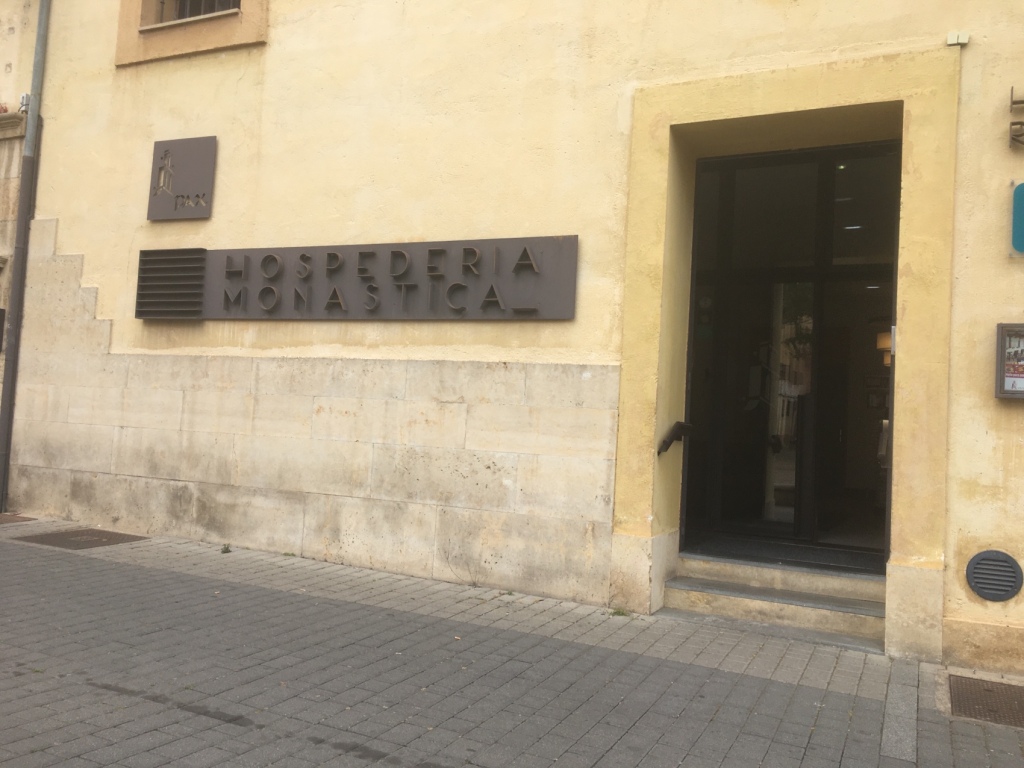
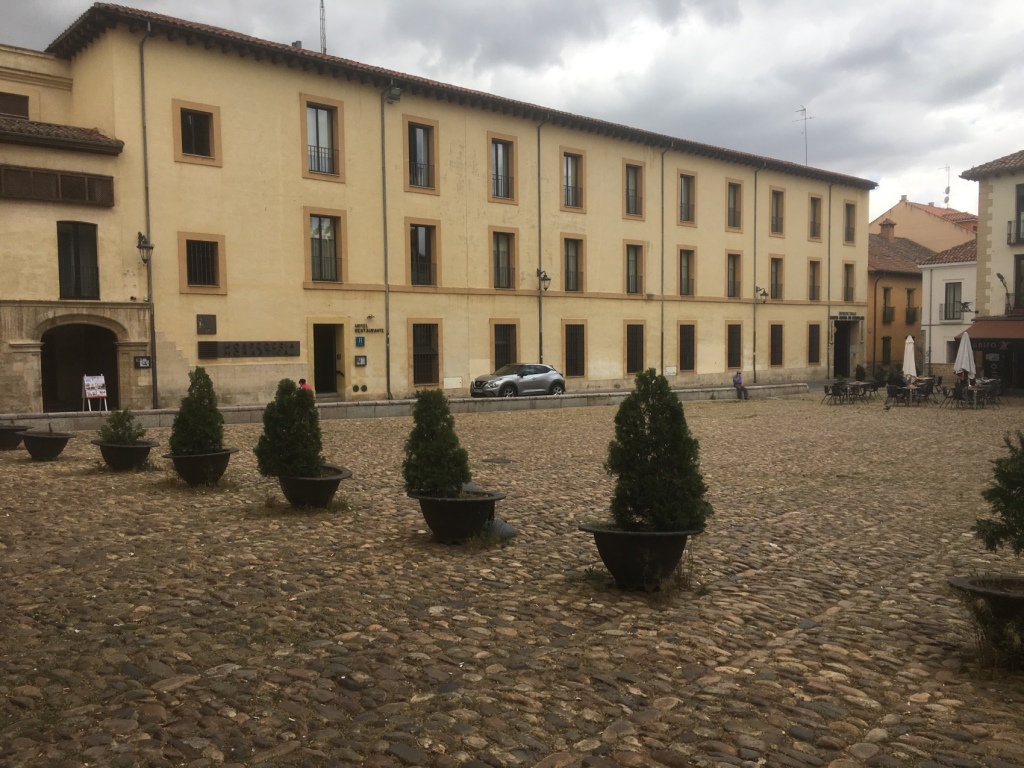
And the digs for this night,and our rest day ( 2 nights in all ) is rated 9. on Booking.com HOSPEDERIA MONASTICA PAX . It’ ll have to do….

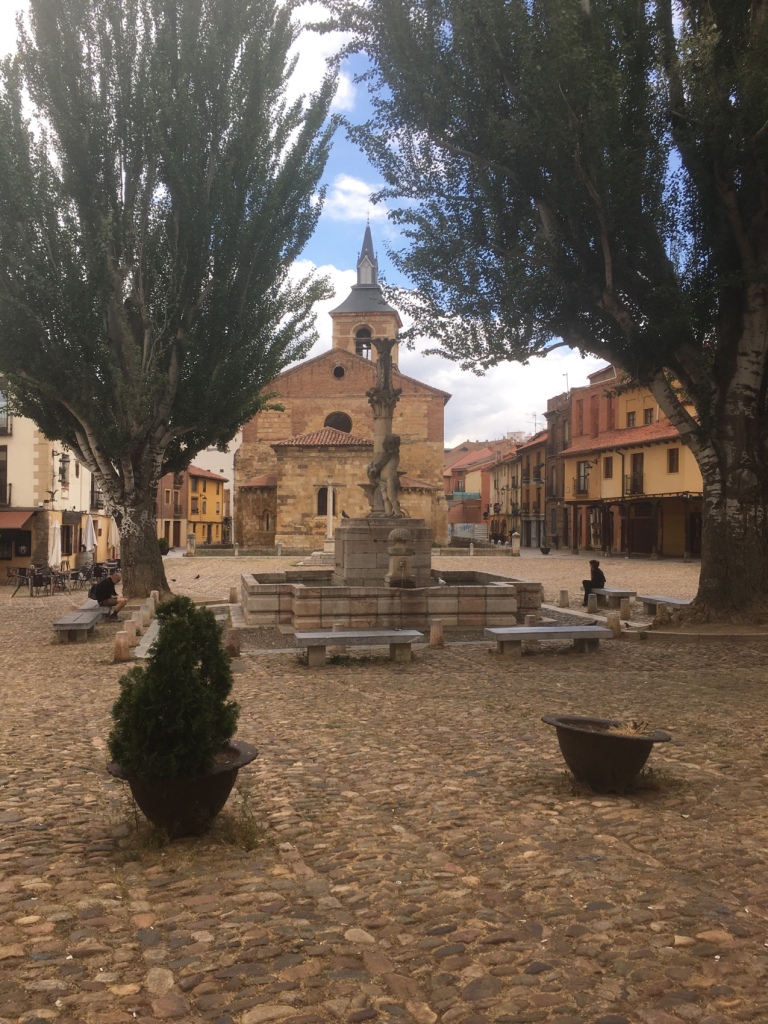
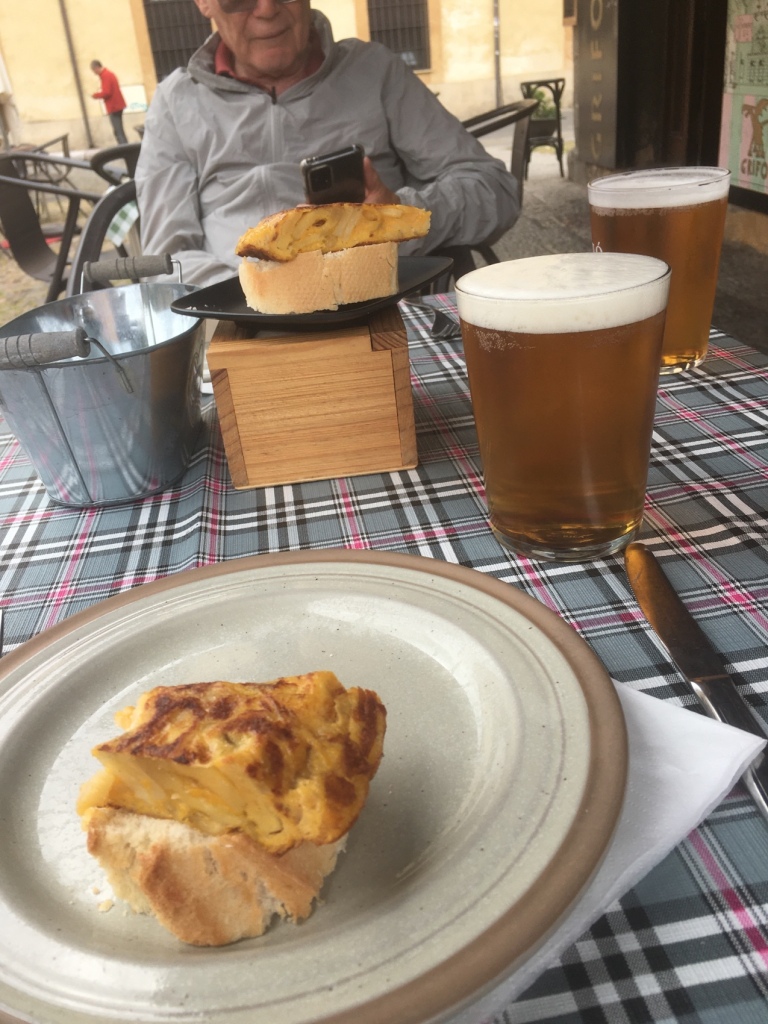
In the old part of town. We shall probably take ourselves off to the BARRIO HUMEDO “A district made to delight the senses, the Barrio Húmedo is home to the essence of Leon. The weight of tradition can be felt in the old shop fronts, in the web of streets whose names are a testimony to the medieval guilds who worked there, and in the infinite number of bars and restaurants that have given the district its name. The local custom of tapas (small snacks served with every drink) here takes on almost religious dimensions. The Barrio Húmedo is a place not to be missed.
The history of Leon, a very human city, full of culture and made for walking, is encapsulated in the Calle Ancha, one of the most beautiful streets in the city. A testimony to local hard work and talent, seen in the 19th century buildings that still do business there.” Quoted from leon.es.

The literal translation means “ damp quarter’ – say no more!
APROVECHE !