Archive | Uncategorized RSS feed for this section

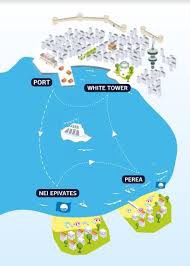
THESSALONIKI – AN AUTUMN BREAK NR GREECE’S SECOND CITY – PEREA.

14 Sep

1 Thessalonians 4:12

“so that you will behave properly toward outsiders and not be in any need”

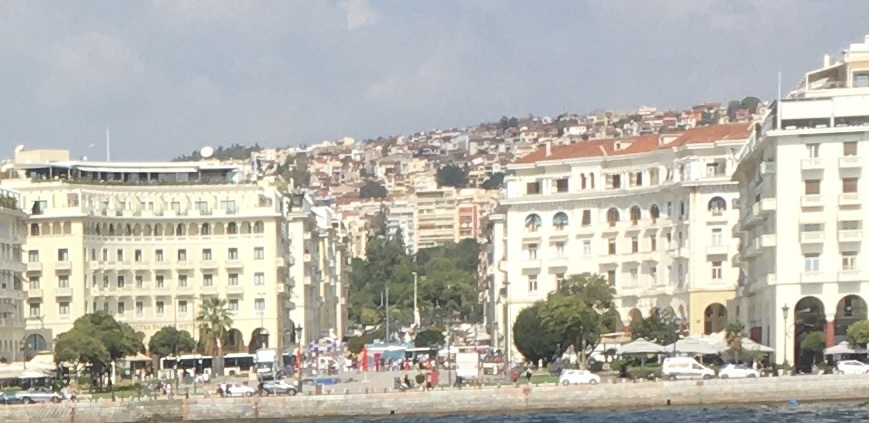
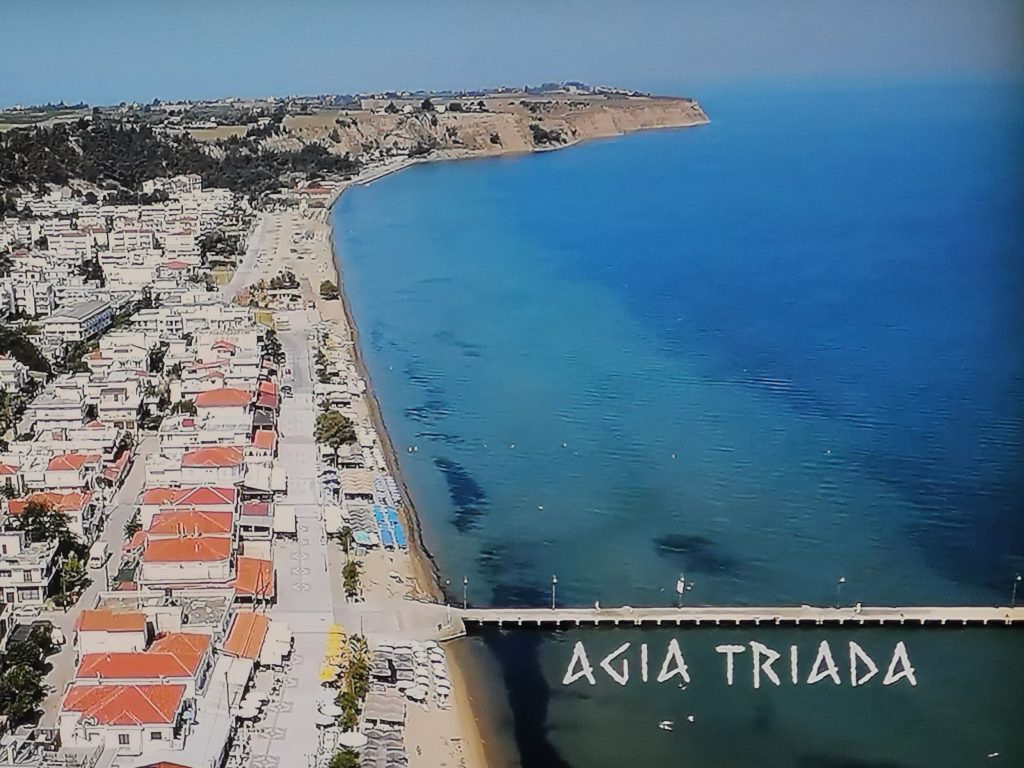
Well just to make clear we did not decide upon Thessaloniki as a result of St Paul’s exhortations to the Thessalonians,but because of its reputation as a hospitable and historic city. Furthermore, researches beyond the New Testament convinced us that the nearby town of PEREA and its beaches might be the best base. After four days here, including a day in Thessaloniki, it is proving to be worthwhile research.

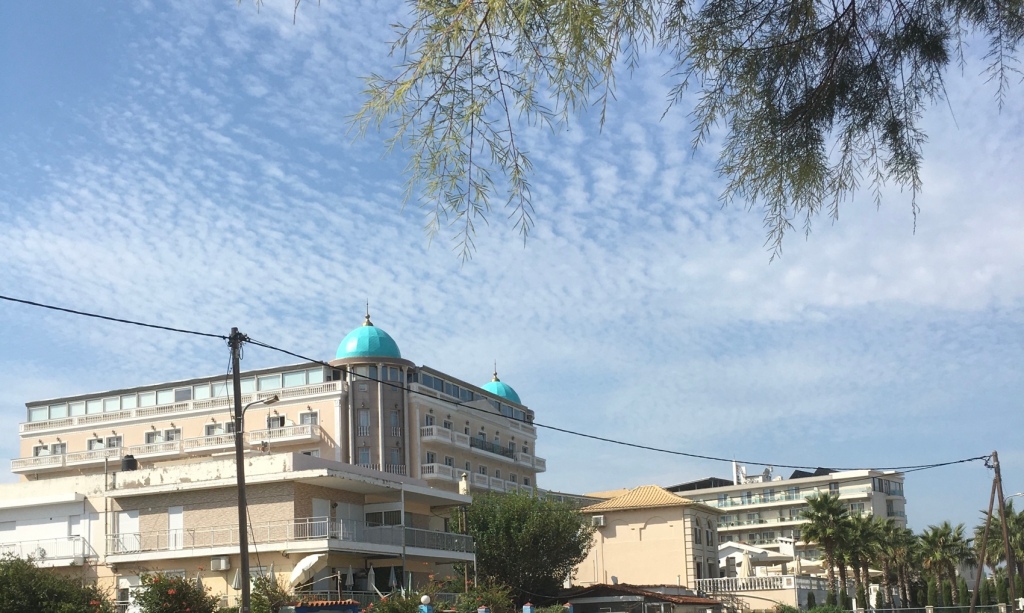
After a “ Silly O’ Clock” departure from Birmingham, easy passage through security , we arrived at our apartment in PEREA at 12.30. After some confusion about finding the keys, we climbed the stairs and quickly took stock – the three balconies looked great.

The big one of the three
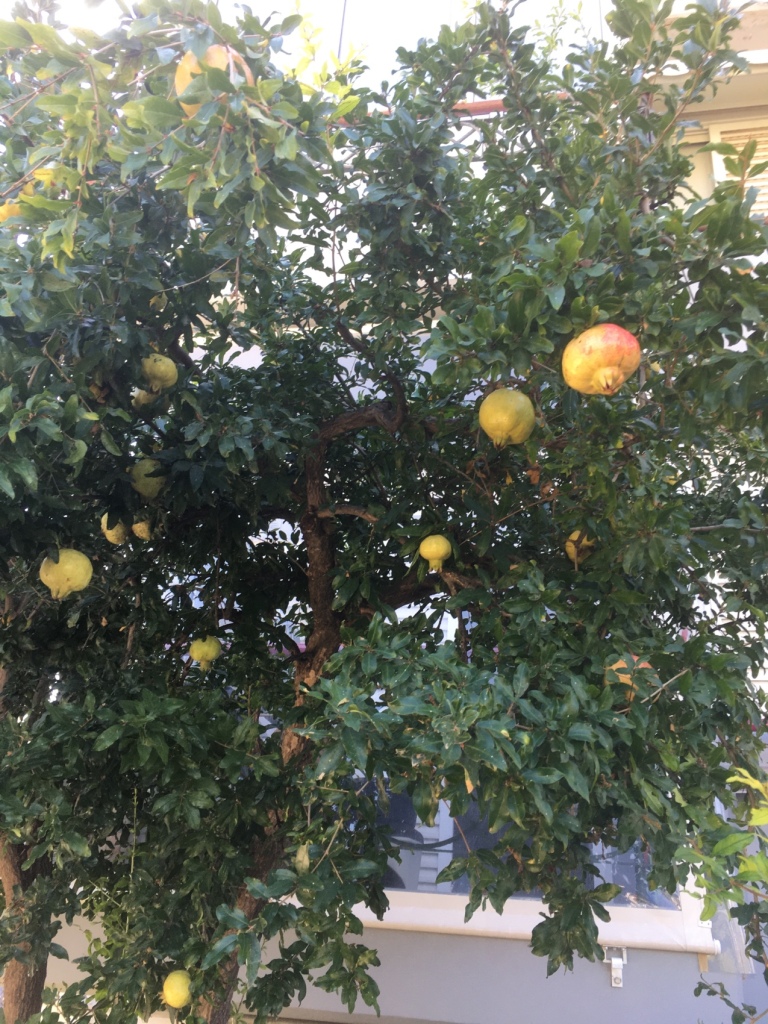
POMEGRANATE TREE AT THE ENTRANCE

A light lunch in an impressive local bakery and walk down to the beach.

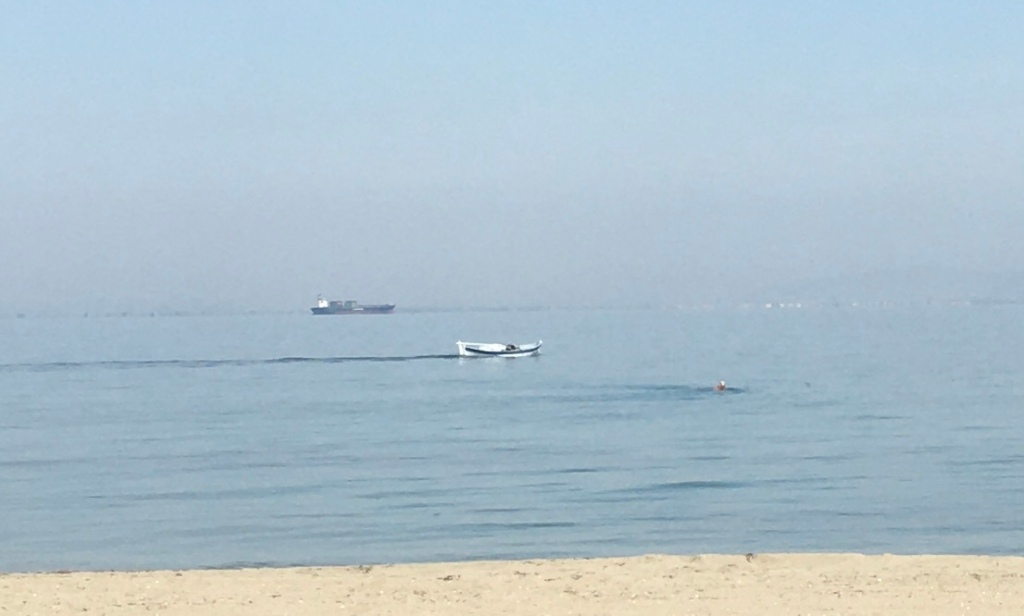
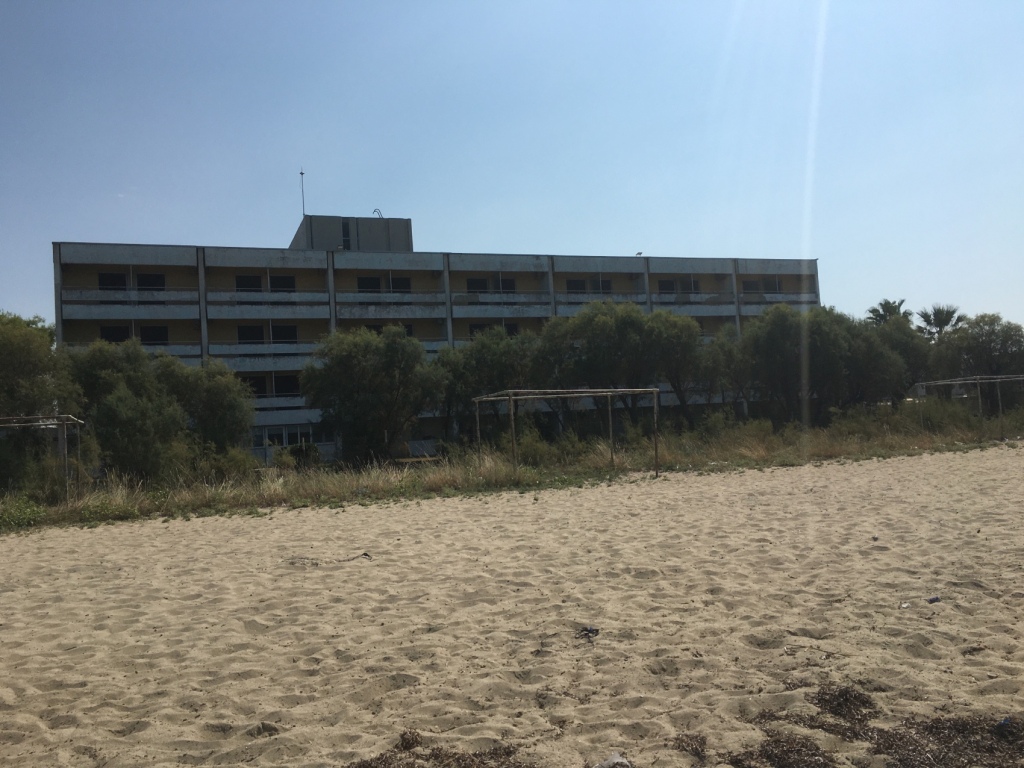
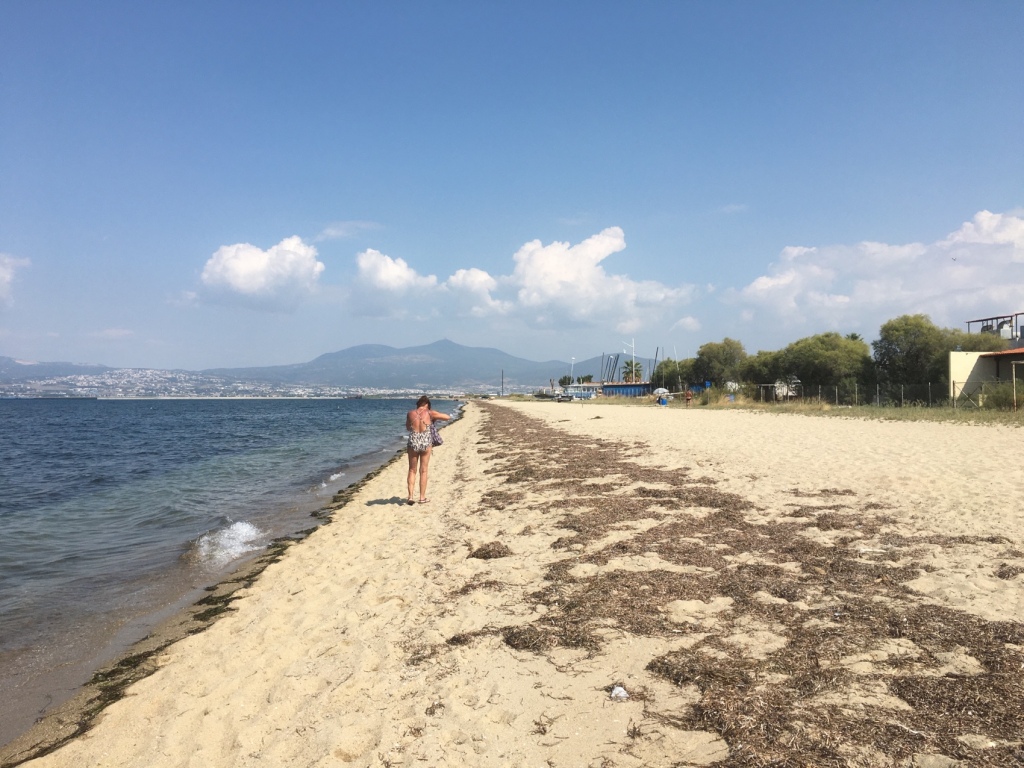
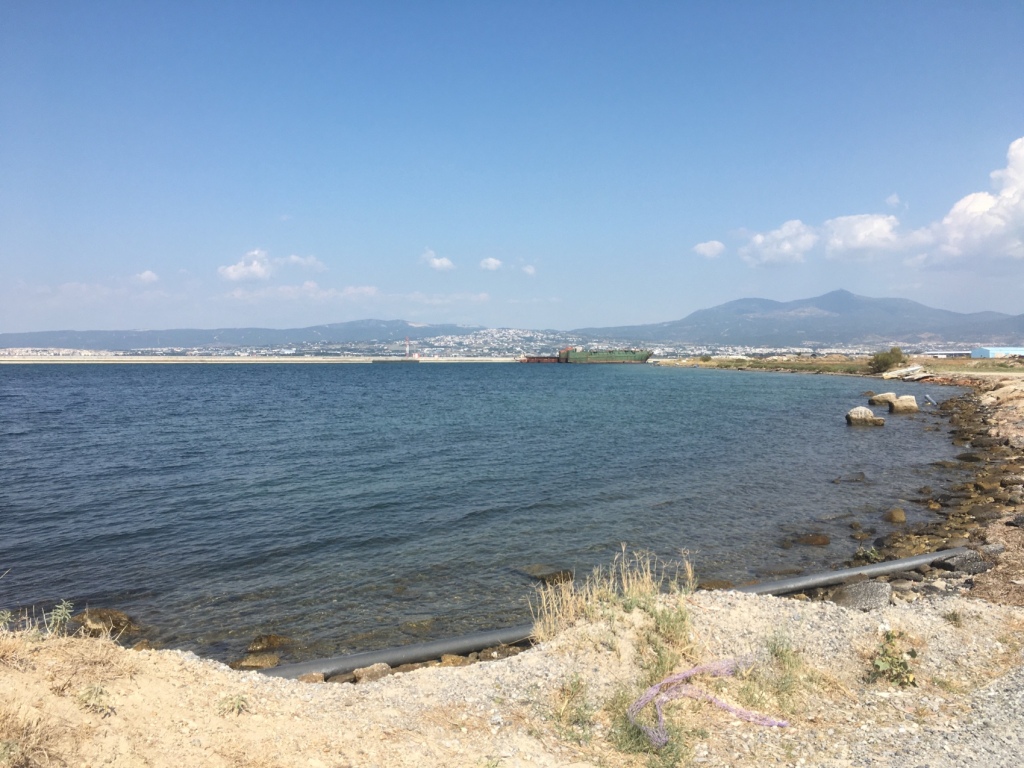
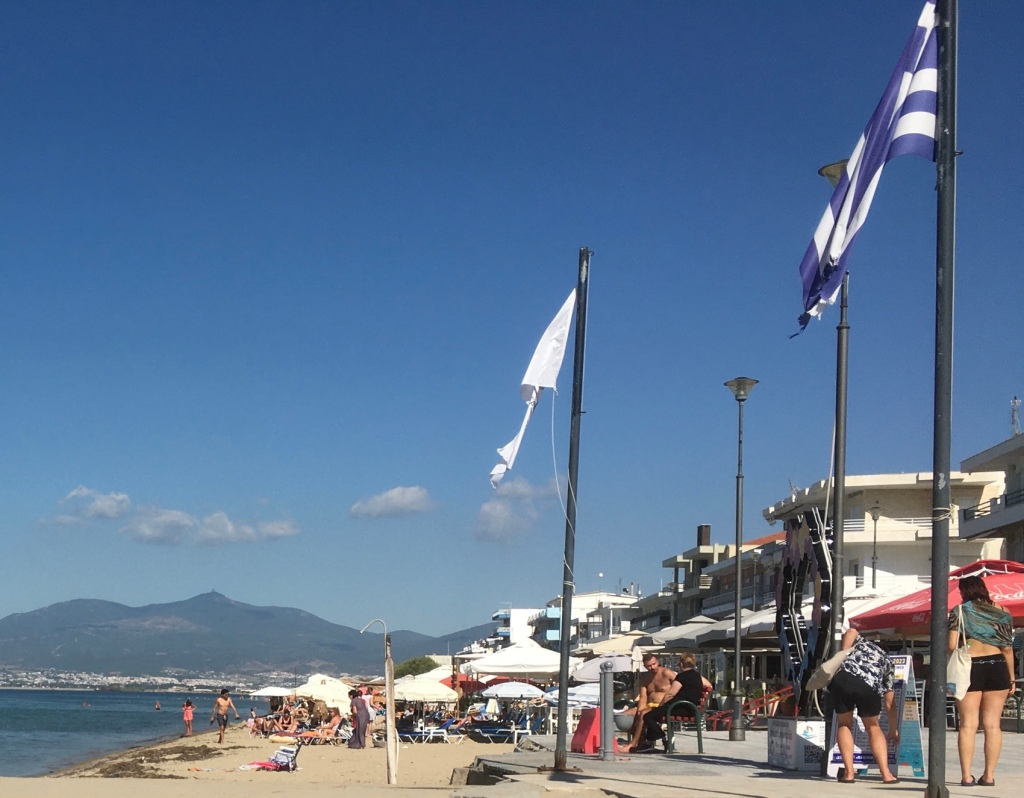
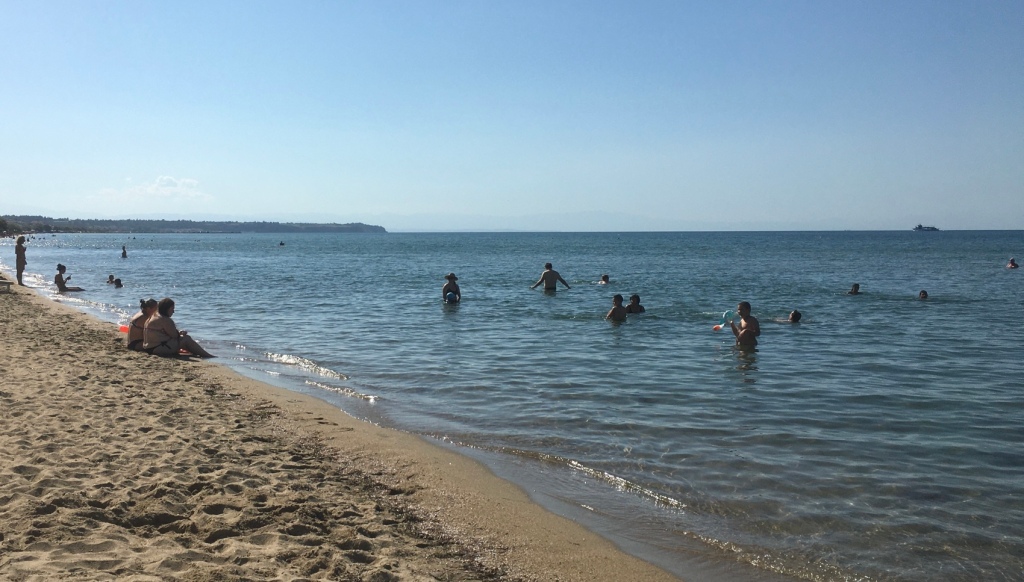
Pellucid water and flawless sands were the first impressions and being nearly mid September- tranquility.

PEREA

The origin of settlement in Peraia was the arrival of 740 refugees from Asia Minor and Eastern Thrace in 1923, as a result of the Greco-Turkish War (1919–22).

Today Peraia, together with the other suburbs of Thermaikos, forms one of the most rapidly developing suburbs of Thessaloniki. Wikipedia

Also,PEREA from the Greek: peran (Iordanou) [“beyond Jordan”]. District on the east side of the Jordan river whose northern border was south of Pella in the Decapolis … Not sure if there is any connection between the two.

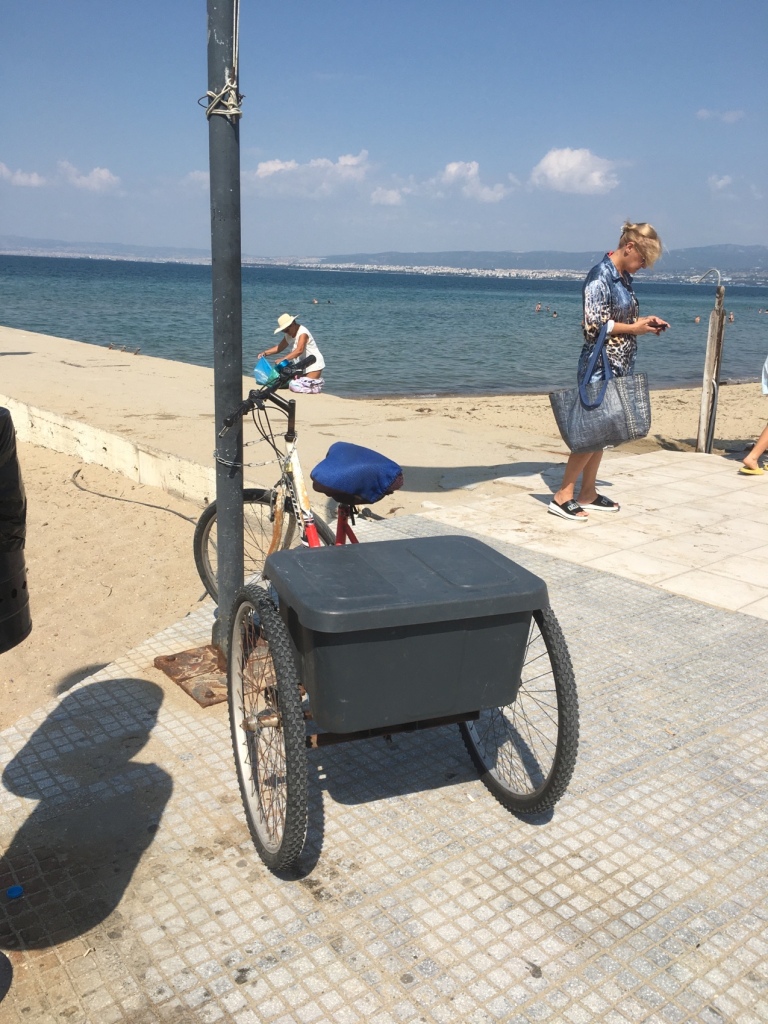
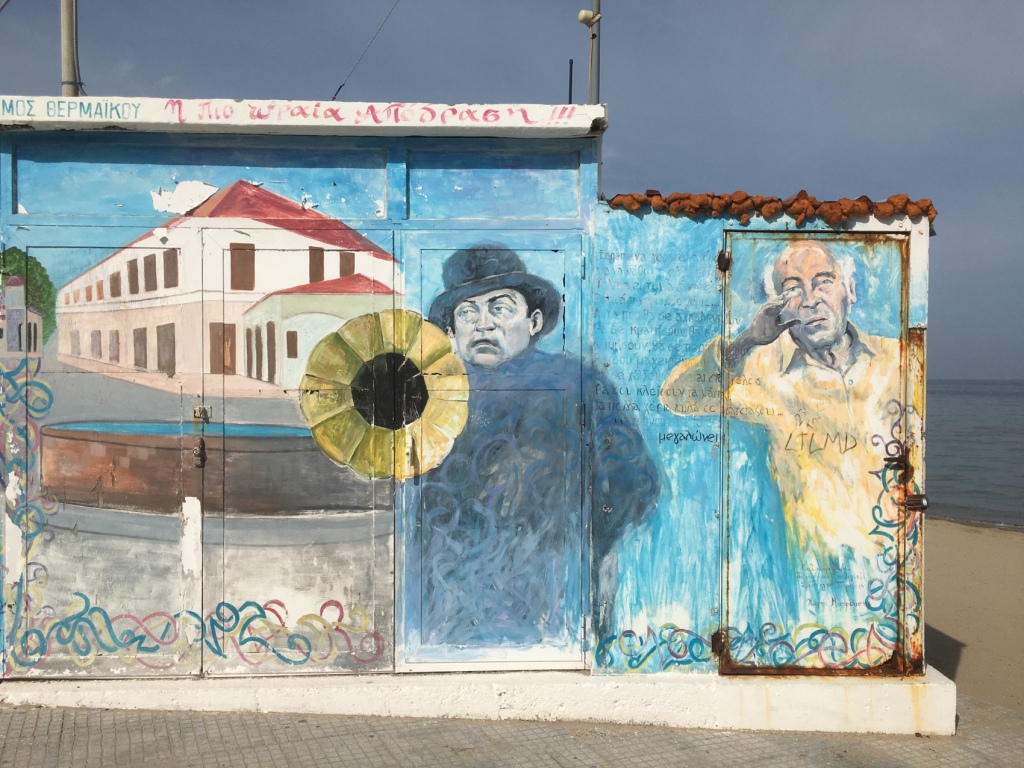
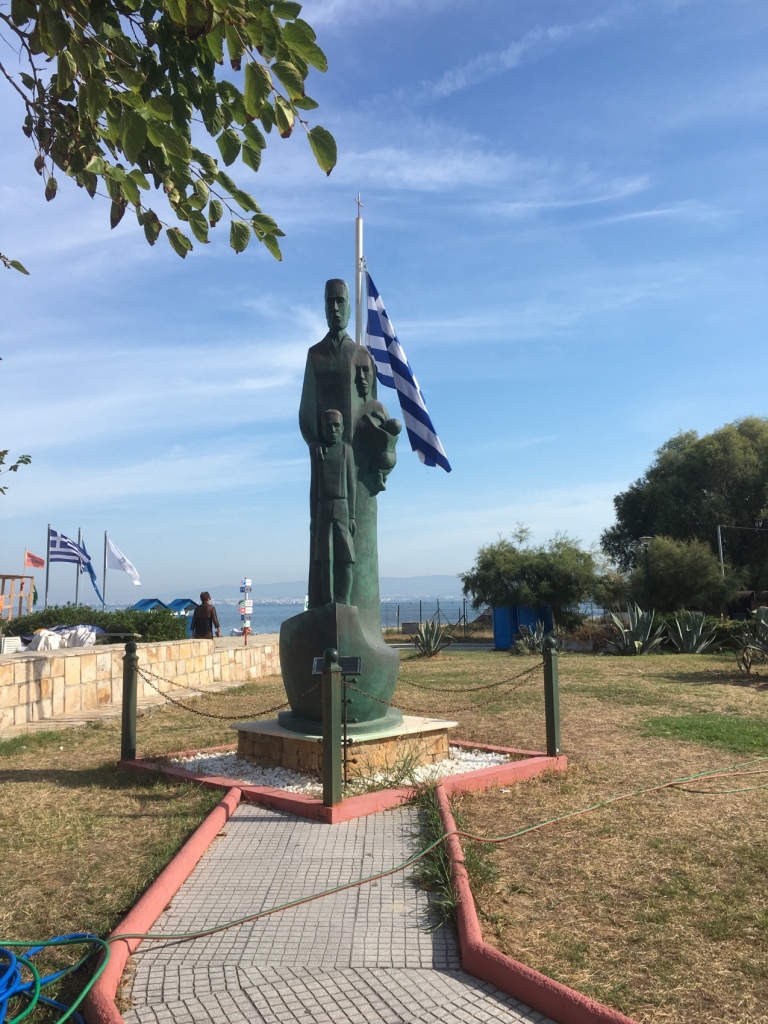
This image is located by the beach. Not much in the way of the history of Greek PEREA.
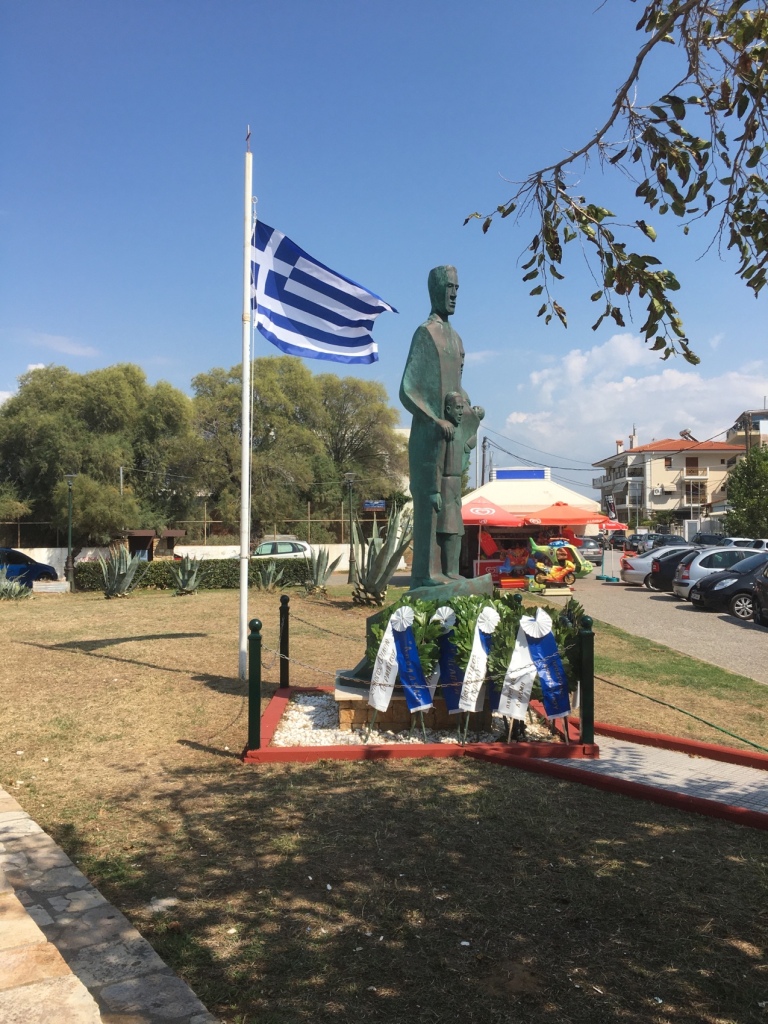
This statue is located at the town end of the Promenade.

“Perea has changed a lot since 1923 when the first residents (refugees from Asia Minor and Thrace) settled. Perea it has changed from a small refugee town into a beautiful city with the features of a tourist destination that does not need to envy the other more promoted regions in Greece.At a distance of just 15 km from the “MAKEDONIA” International Airport and 20 km from the centre of the city of Thessaloniki. Perea is an easily accessible destination for visitors who want to enjoy beaches with crystal clear blue waters, fresh fish, seafood and traditional dishes, and ouzo appetizers with the local tsipouro drink and wine or their coffee, literally on the beach with a view of the Thermaikos Gulf and the city of Thessaloniki.

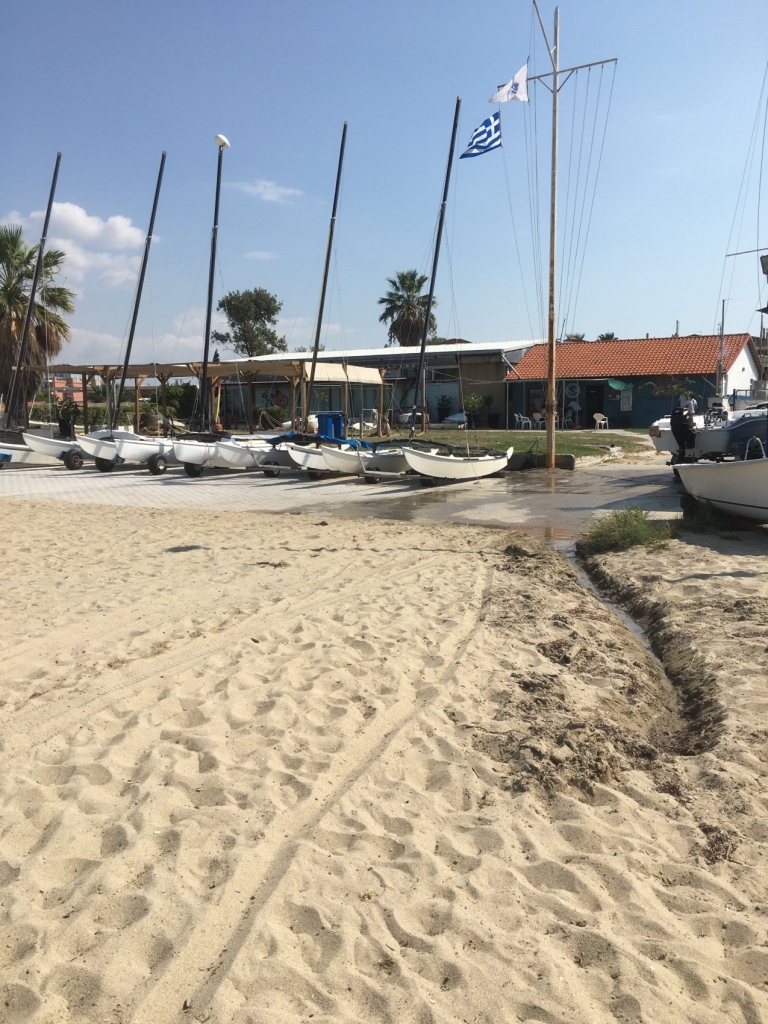
The traditional stroll along the beach is a unique experience. Abundant cultural and sporting events are an attraction, especially during the summer months with the characteristic “bicycle ride” that is organised every summer by the Municipal sports centre, with visitors of all ages participating daily. With a rich tradition in terms of the sea, the residents in the region have established two sailing clubs, NORTH and TORONEO, whose members have participated in both Greek and International regattas.The School of Macedonian Tourism Professions has been based in Perea since 1974 and has a significant impact on the development of tourism in the region.”

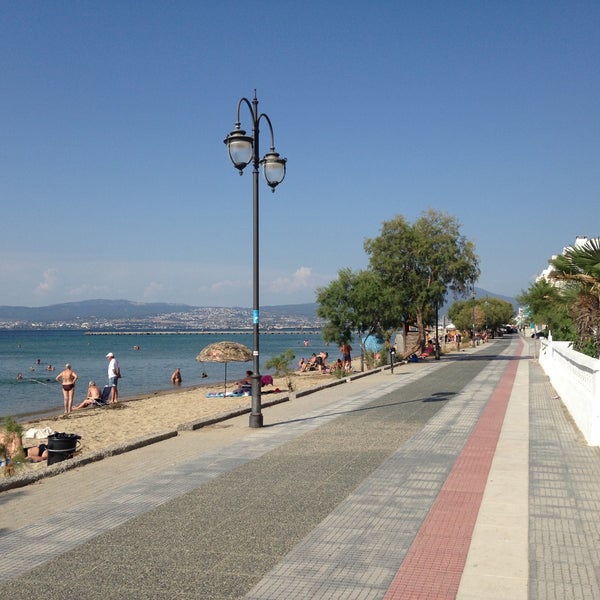
There is some overstatement in the above article! You could not call it either beautiful,nor a city – but it is an excellent beach resort and the promenade is a great feature.

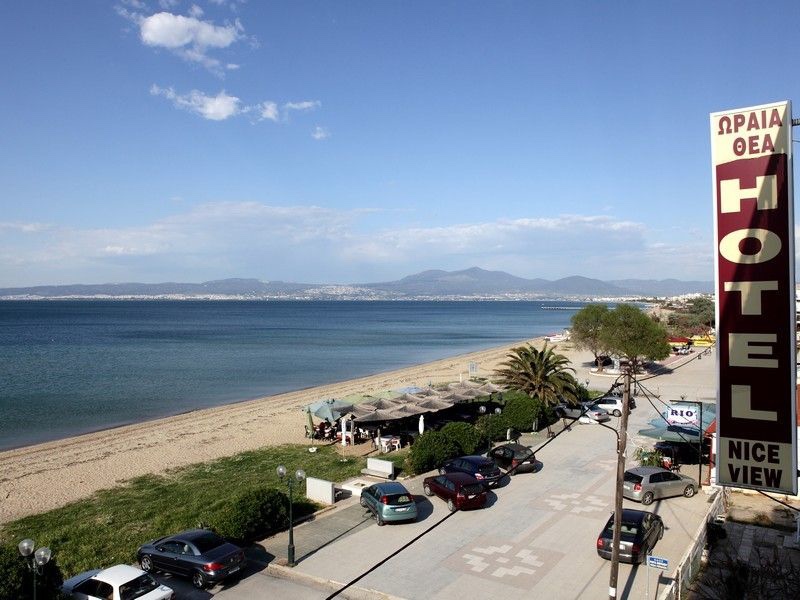
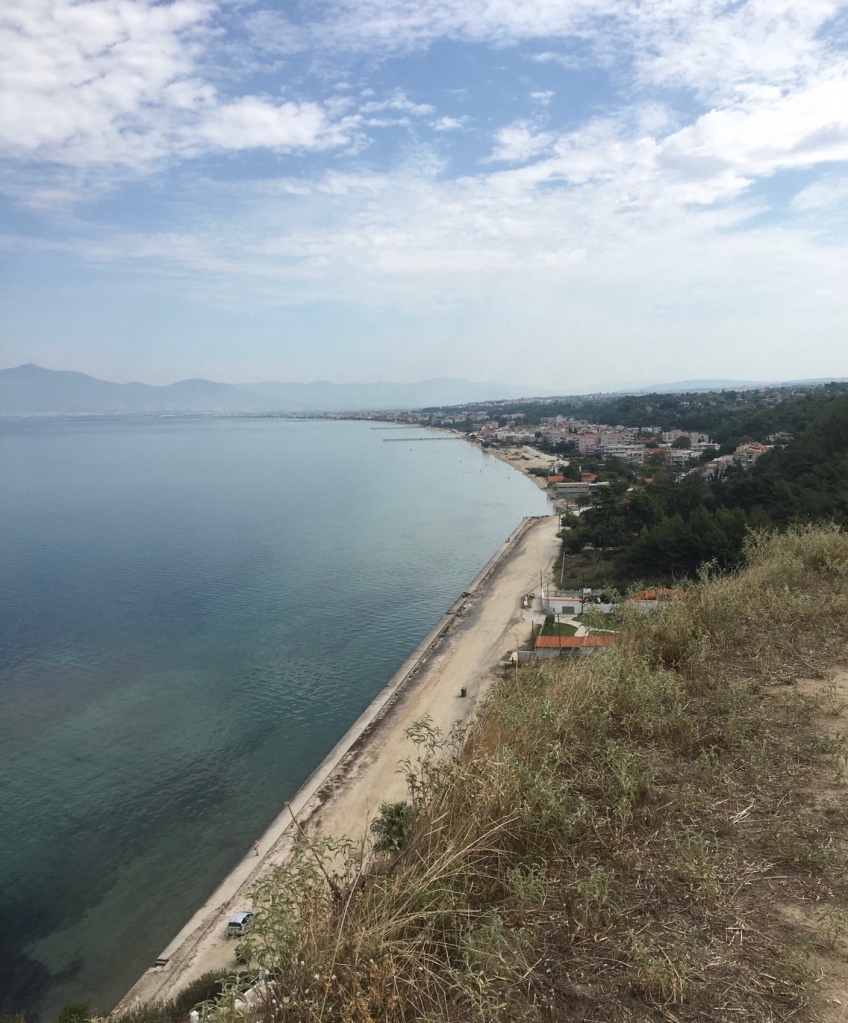
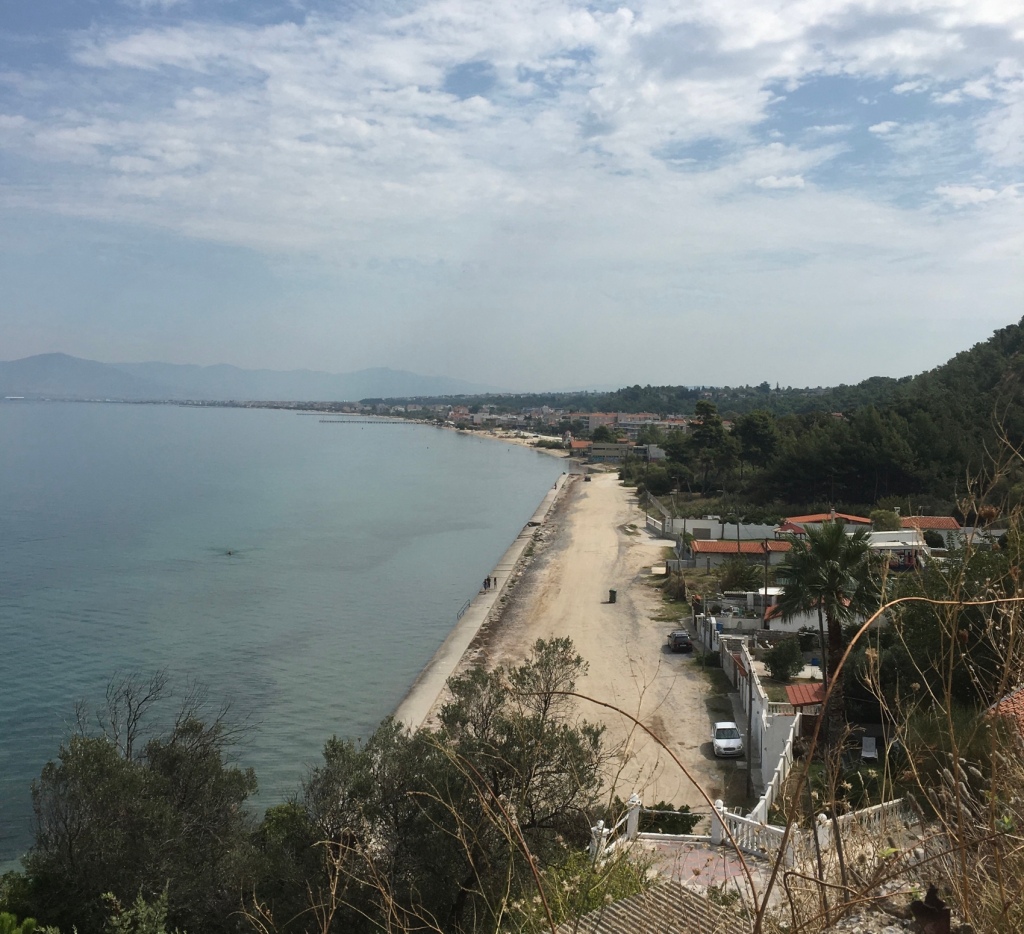
This 7.5 km long sandy beach is a point of attraction and we enjoyed walking the entire length .
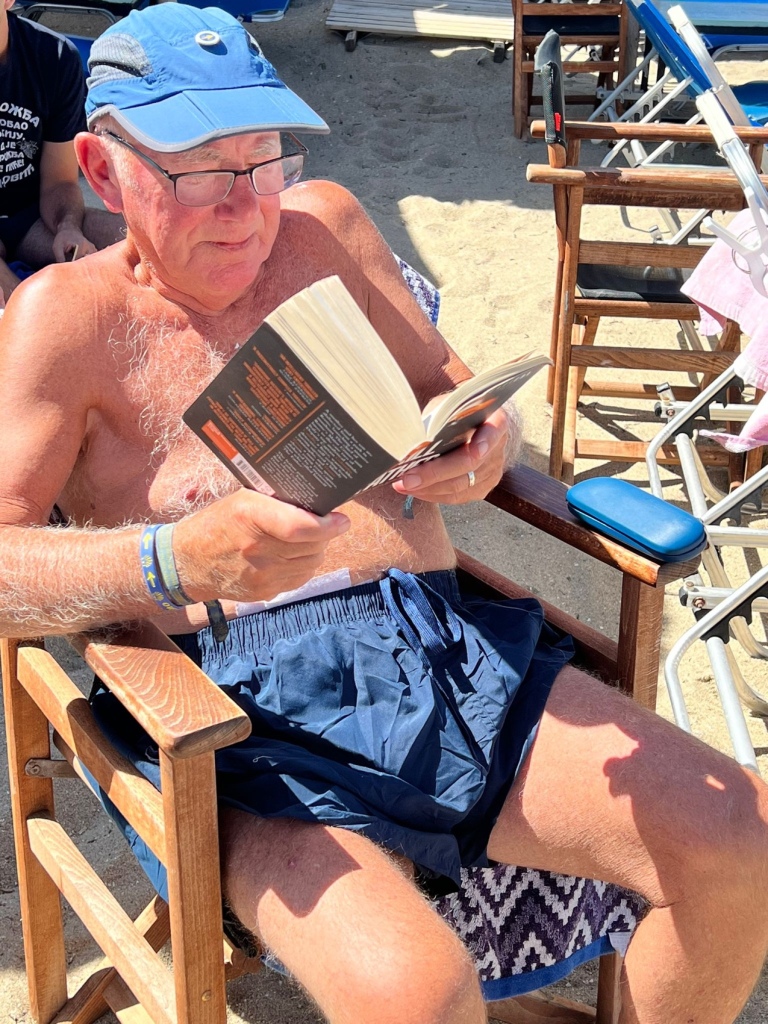
“ Kill the Father” – Not me,the novel – a great holiday read.
Barbara would have had nightmares if she knew there was a cat snoozing under the sun bed !
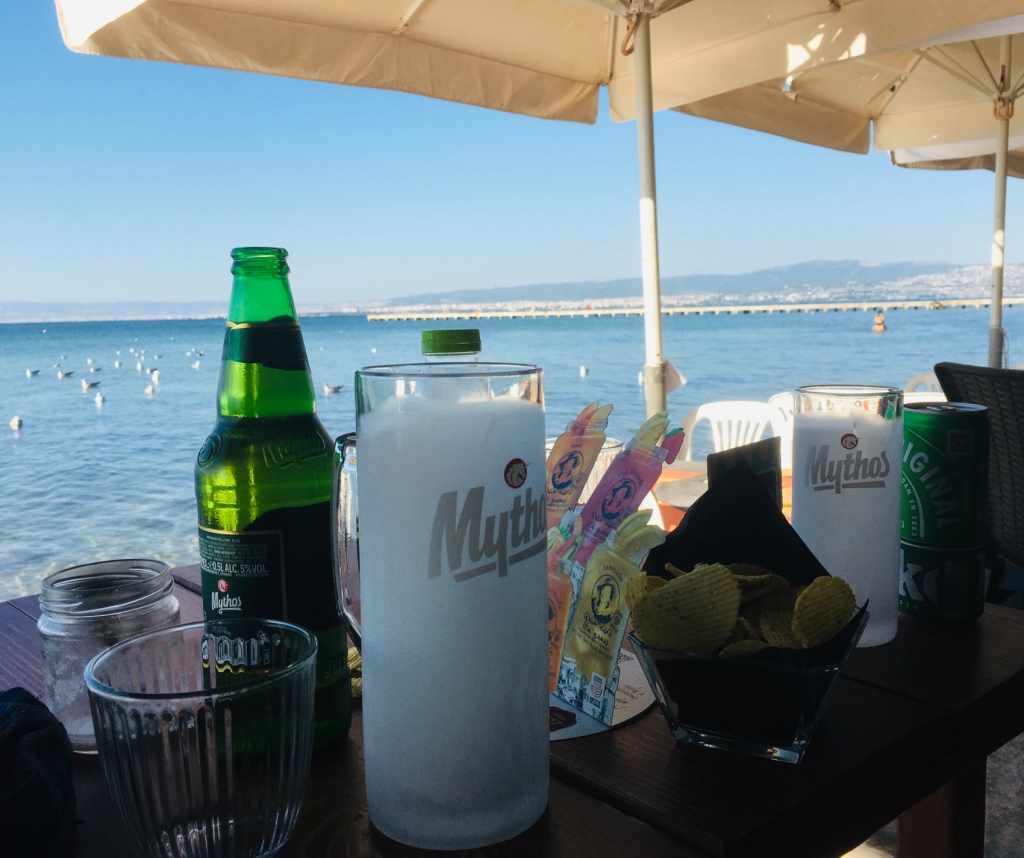
The tradition for hiring sunbeds and parasols is unique in our experience. Often advertised as “ free” what happens is that you choose your beds, table & shade – we then paid €5.00 each and that included a drink and a bottle of ice cold water – my kind of tradition – for the day.

“So then, brethren, stand firm and hold to the traditions which you were taught by us, either by word of mouth or by letter” (2 Thess. 2:15).

A typical beachfront restaurant
Another great sight.
This was the only fishing activity we noted.
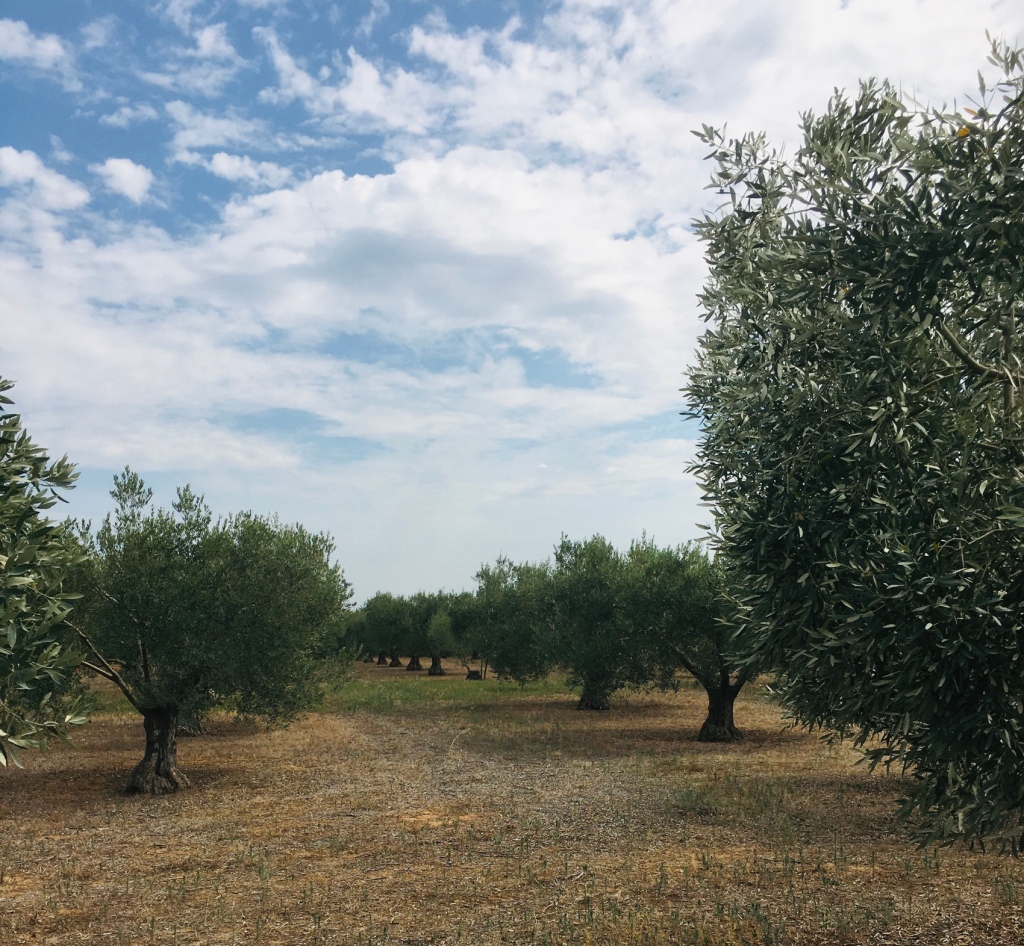
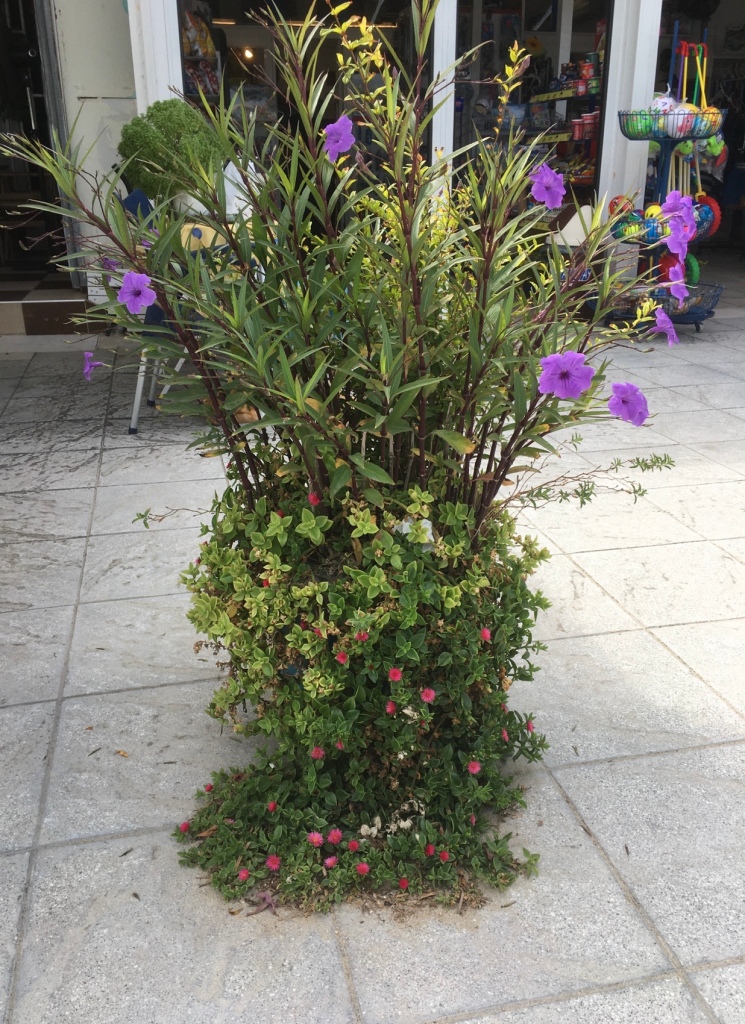
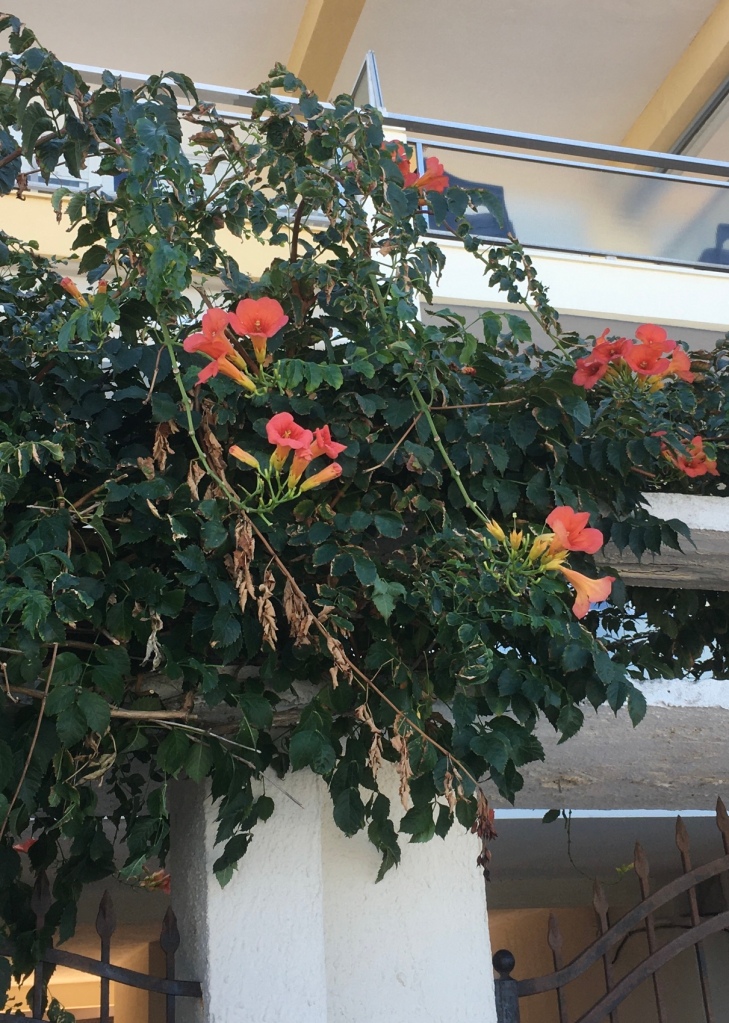
Local Flora

One of the attractions of an apartment is the flexibility it gives – no timetable and the opportunity to both eat out locally and shop locally… and to cook at home, BBQs being a particular favourite.

I love Retsina !

A “ POETIC “ FINALE – With apologies to Edward Lear – FROM THE CAMINO FRANCES

20 Jun

Edward Lear

There’s a poet who hails not from here
With a penchant for bending your ear
The form he exported
Was carefully worded
The grand master minstrel Ed Lear

It’s impossible to say who wrote the very first limerick, but the traditional form of poetry seems to have existed well before the 19th century. Kudos to Mr. Lear however, for raising it out of obscurity.

Although Edward Lear may rightly be considered the Father of Limericks, due to the popularity of his nonsensical anthologies, he is not actually the original inventor of the limerick. It should also be noted that Lear never used the word “limerick” to label what he called his “nonsense” poems.

How does the Limerick come to figure on our Camino Frances? Well, on about the third evening of our walk across the Meseta, whilst we were partaking of a sharpener, Tom H. recalled a long walk he did in his York ramblers days,where it was suggested that time might pass more quickly if the group composed Limericks about each other,to share the following evening. What follows is the consequence of Tom’s suggestion.

Now Tom is man of some style
With or without poles he’s versatile
Up hills and down dales
Along plains and through vales
Our Tom walks on with a smile. MIKE

We shared plenty of laughs with each other and I have tried to match the group’s poetic attempts with an appropriate photo.

There was a Pelegrina called Sue,
A violinist and a cyclist,too.
When it came to the Camino
The weather was a no-no,
But she beat it did Pelegrina Sue. JOHN

There was a Pelegrino called Michael
Whose preferred mode of transport was cycle.
When it came to the Camino,
Blisters almost a no-go,
But he made it did Pelegrino Michael. JOHN
Once again our leader’s John Twort.
He’s done more caminos than he ought.
You can see through his vest that hairy chest
But on his head you can see that there’s nought! ROB

Our Maestro is the affable John Twort
Who plans and leads the caminos we walk
Over many a mile
With always a smile
John may be tired, but never fraught. MIKE
There was a Pelegrino called Roberto,
A musician with many a lingo.
When it came to the Frances
He fancied his chances +
Tortilla,Morcilla & Vino. JOHN
I’ve met a fine fellow called Halley
Who certainly won’t dilly-dally
He ate very slowly
A dish of broccoli
Possibly cooked by O’Malley. TOM
There was a real “ newbie” called Ranjit,
Whose Camino went as he planned it.
Not one for a half measure
He laughed at our leisure.
An incurable pilgrim called Ranjit. JOHN

My friend over there is a Sikh
And he’s very very fast on his feet
Since he cut off his Joora
He’s not even slower
But he’s likely to have gone while I speak. TOM
There once was a miserable sod
Who was forced to sleep in a pod,
He grunted, he groaned,
He continually moaned,
‘Cos he much preferred being on his tod. SUE
THE KING OF THE CAMINO
There was an old man with an app,
With which the birds to entrap,
But the birds in his mind were not the feathery kind,
So he made do with bunting and blackcap. SUE
My room mate again is Tom Halstead
Who amongst us no doubt is the best read!
A podcast or two, and an email………… from who?
Then he’s ready to crash out on the bed. ROB
We said, ‘Sue, don’t look at this scene.
You will find it all quite obscene.’
But she looked, and she gaped at the tortured shape.
It became the stuff of her dream. ROB

I know a young lady called Sue
Whose favourite colour is blue
She uses two poles
To get to her goals
But I’ve not yet viewed her haiku. TOM
I Know a fine fellow called Mike
Who pedals a bike where we hike
He’s wedded three girls
Just for their pearls
Perhaps they did all look alike. TOM

You know that auld fella called Twort
He’s walked far more than he aught
He dreamt just for fun
That we’d walk t’ Sahagun
A taxis’d be fine if we’re hurt. TOM.


The Meseta – “This is a joy, endless paths surrounded by golden fields of grain, poppies galore, solitude, silence with nature humming around you, and a real feeling of walking with the ancient pilgrims, don’t miss it fellow pilgrims “ 😊 We loved it…for the most part.

There were six Camigos from Sutton

The Meseta for them was a “ come on”

Stories about “poles” did

Not inhibit their strolls,

Celebrating in Astorga was full on. JOHN

Salut a todos

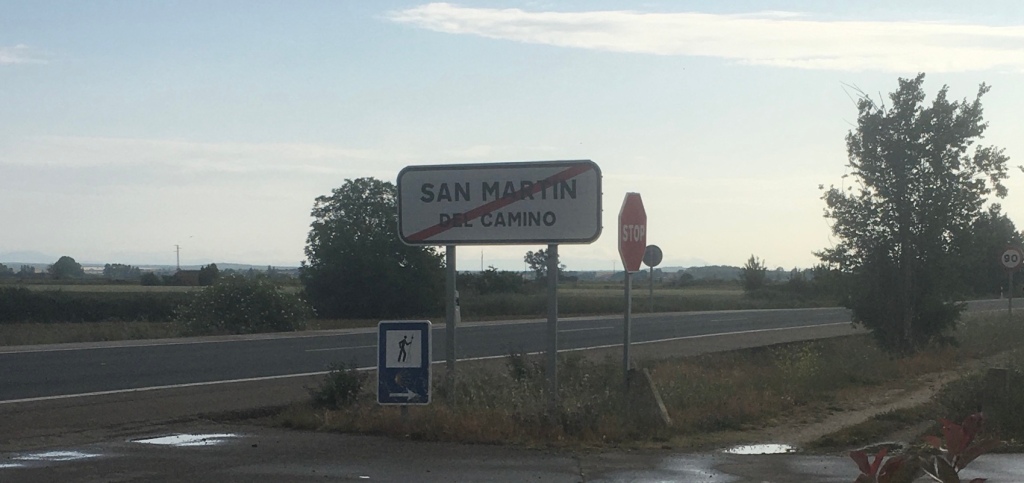
FAMOUS FIVE CAMIGAS + ONE NEW RECRUIT ON THE LAST STAGE OF THIS YEAR’S CAMINO FRANCES – SAN MARTIN DEL CAMINO TO ASTORGA

29 May
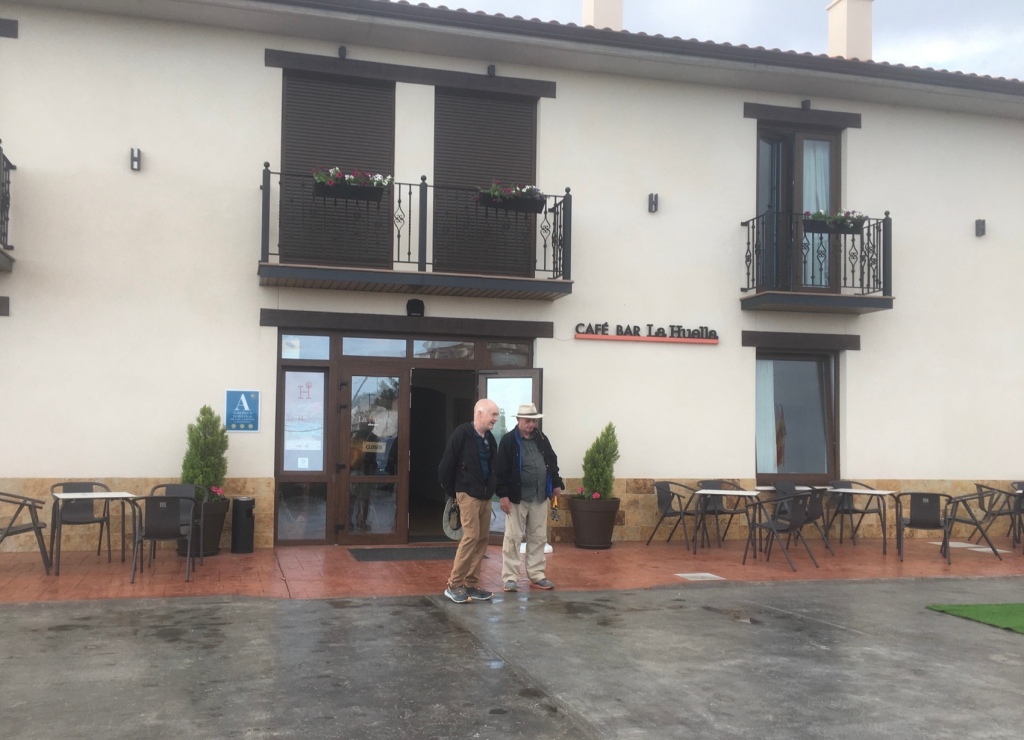
By the time we had got down to breakfast in La Huella,Ranjit had departed – we were not to see him for the rest of the day, not until our accommodation for the evening, El Descanso de Wendy, in Astorga. Plus la meme chose….you walk the Camino your own way, they say and why not?
George from Dublin with Rob
Sue and Mike on their way
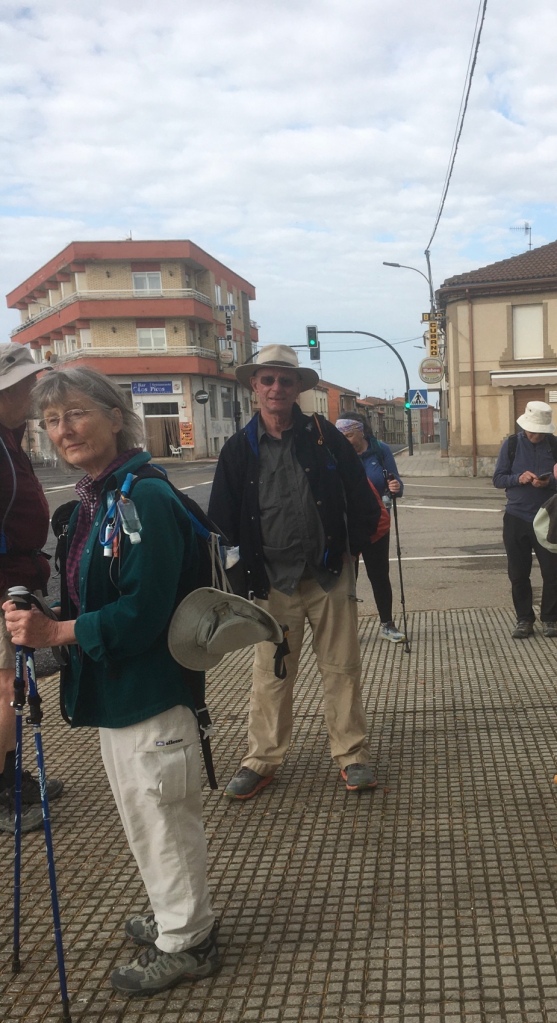
Waiting for the bus to Orbigo to miss out 5 KM of main road walking
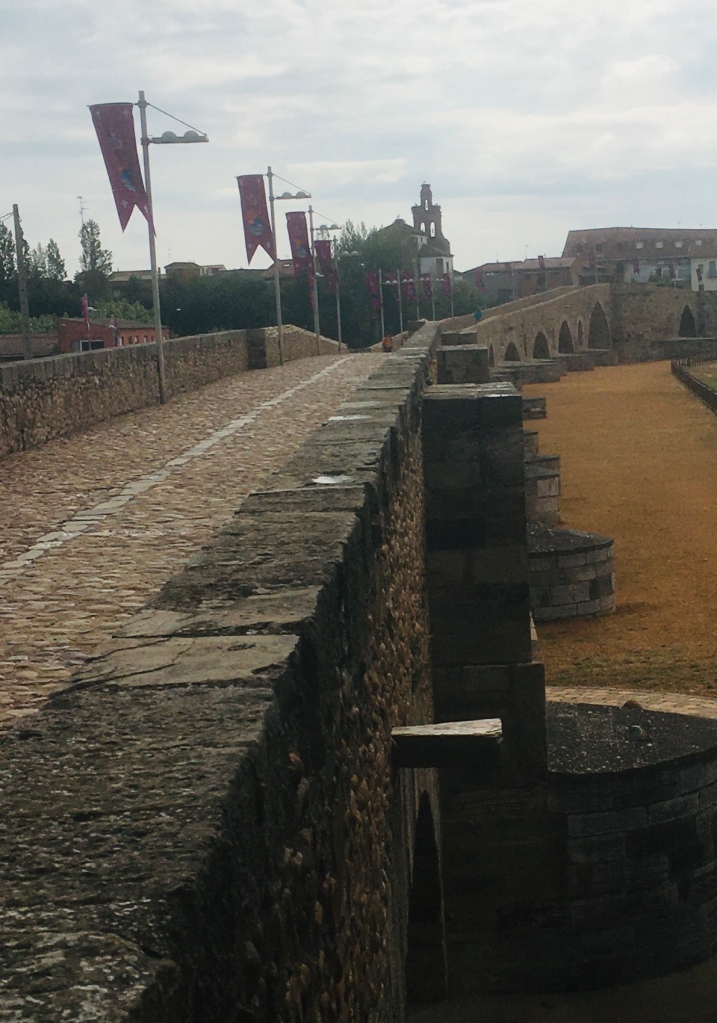
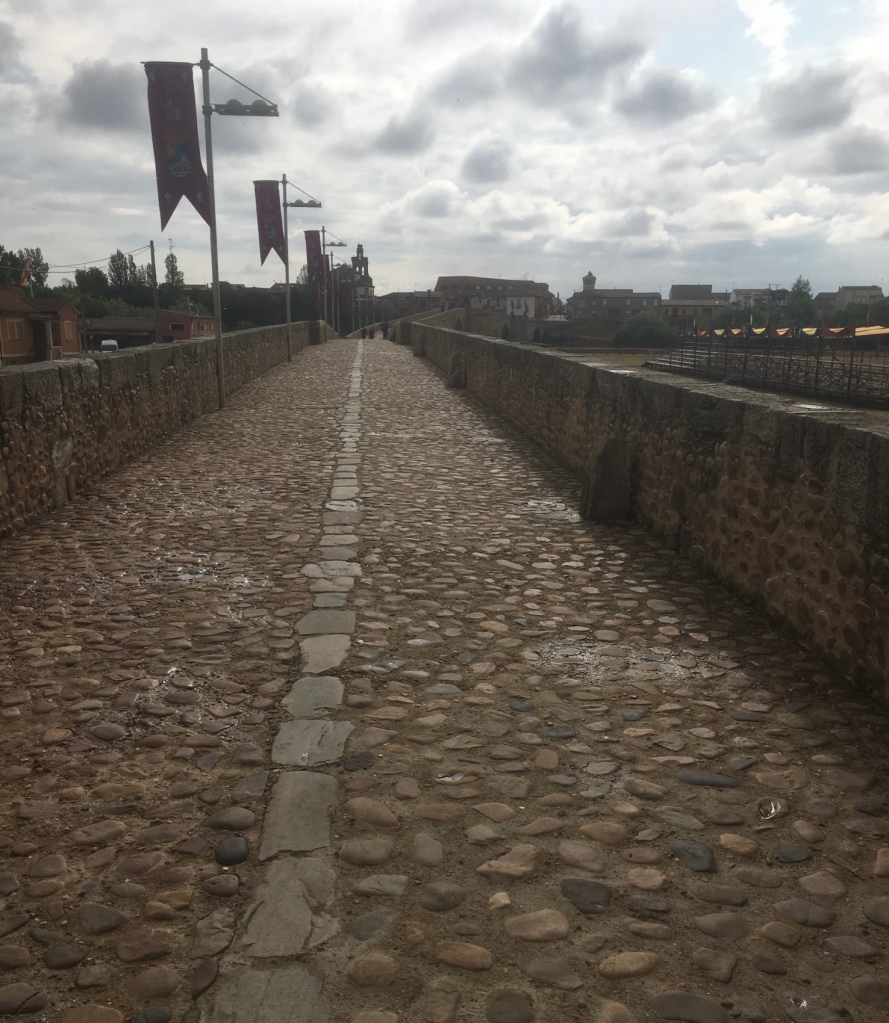
We began our walk from Hospital del Orbigo, with its marvellous bridge.

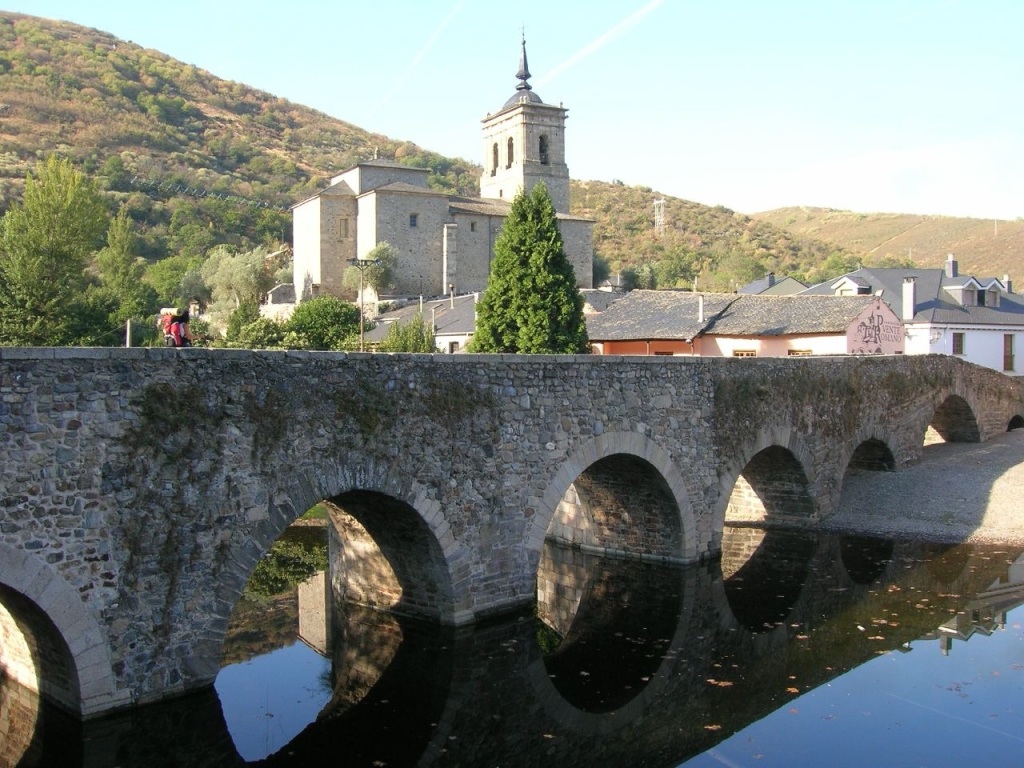
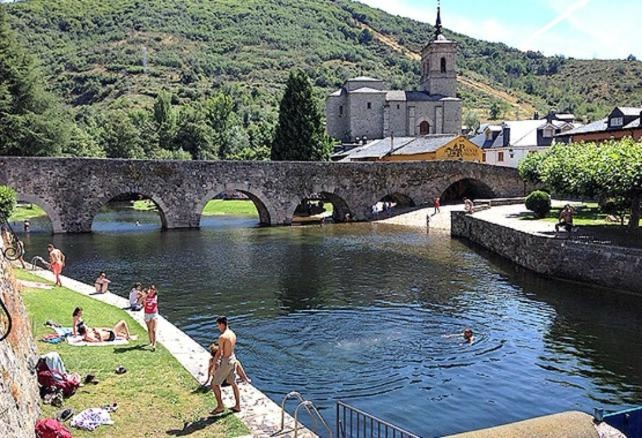
The 13th-century stone bridge of Hospital de Órbigo is 200 metres long and boasts twenty arches, which now mostly rest on bare ground now that a dam blocks much of the Orbigo River, but the bridge survives because of the Camino-worthy legend of Don Suero de Quiñones.

The legend of Don Suero and his duel attracts lovers of the Middle Ages to this bridge.
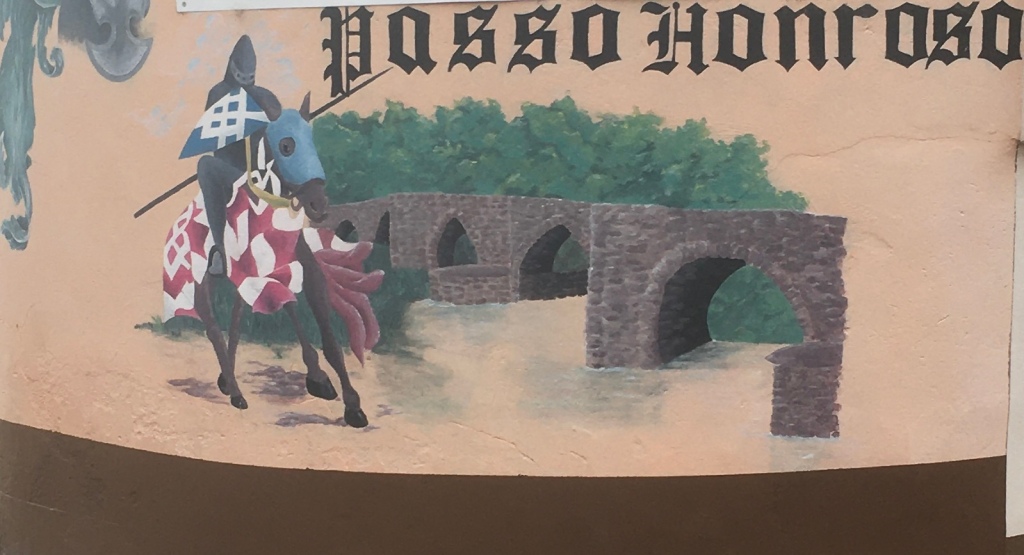
It is a 13th-century bridge which served and still serves as part of the Pilgrim’s Road to Santiago de Compostela. The legend says that on this bridge a knight from Leon confronted some foreigners who wanted to cross it in a duel in order to undo a pledge of slavery to his beloved Lady Leonor, under which he would have to fast every Thursday and wear a heavy iron ring around his neck. He must have broken 300 lances. He did not succeed, but the judges of the contest repaid Don Suero by freeing him from the ring. For this reason, the bridge is known as Passo Honroso (Honourable Crossing).
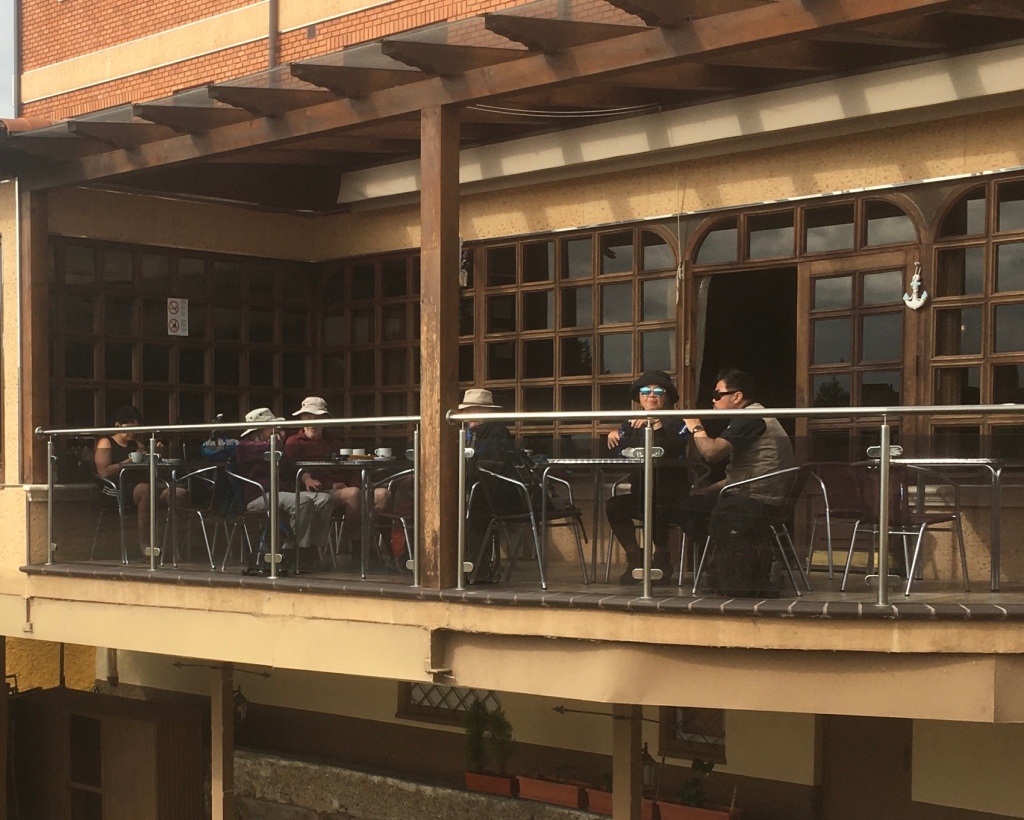
It was such an interesting scene that we took advantage of the cafe overlooking the flood plain and the river.
From here there are two possible routes, along side the RN 120,or through the countryside on the “ real” Camino – we chose the latter,albeit KM1.2 longer. It was to prove to be a good choice .
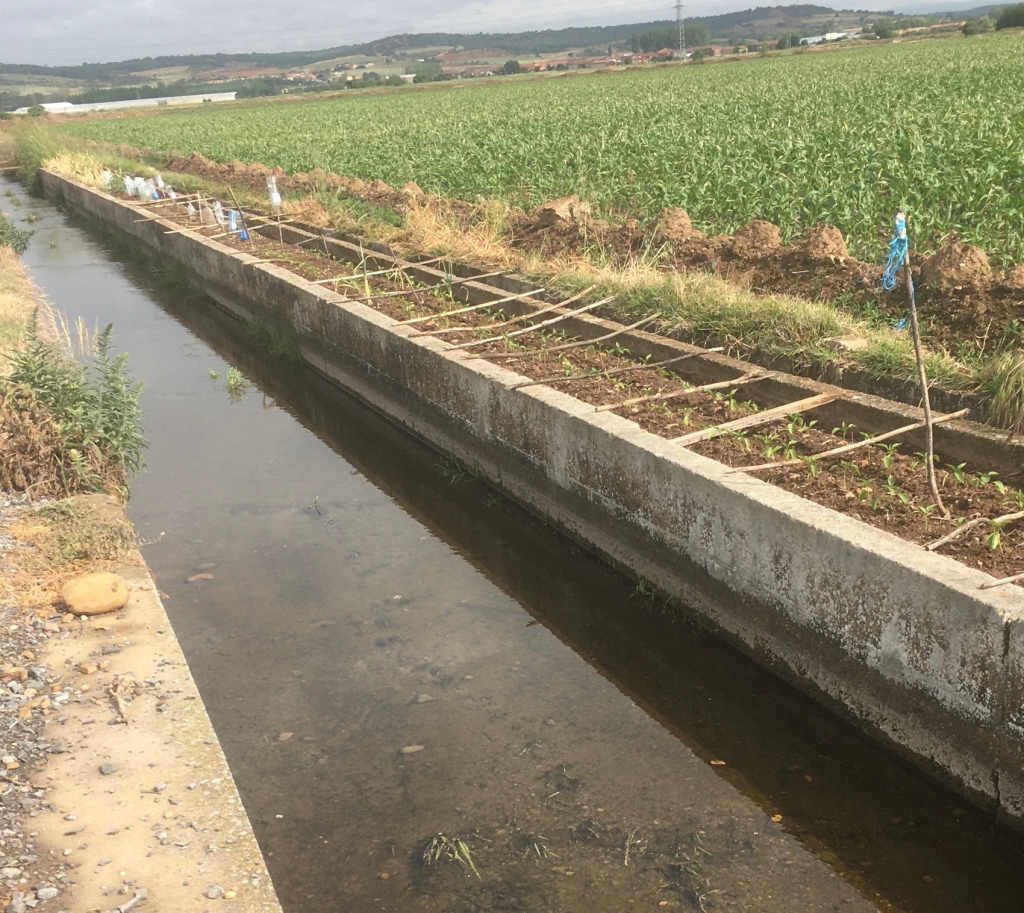
Irrigation channels are always to be found alongside the fields which in this area were mainly for vegetable growing.
An ingenious way to grow your tomatoes etc
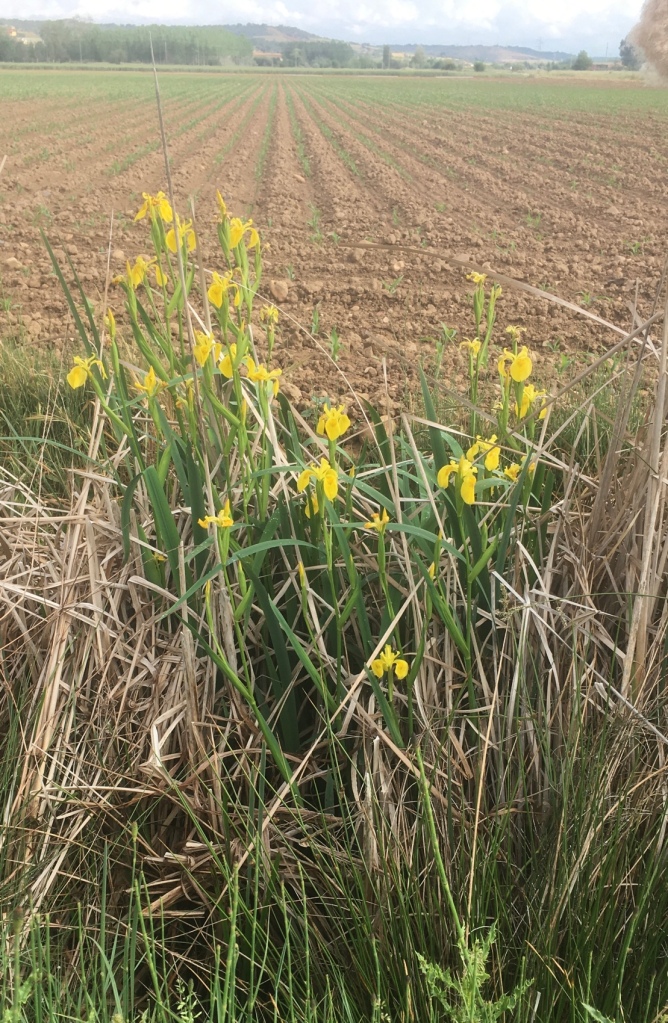
Irises in the ditches
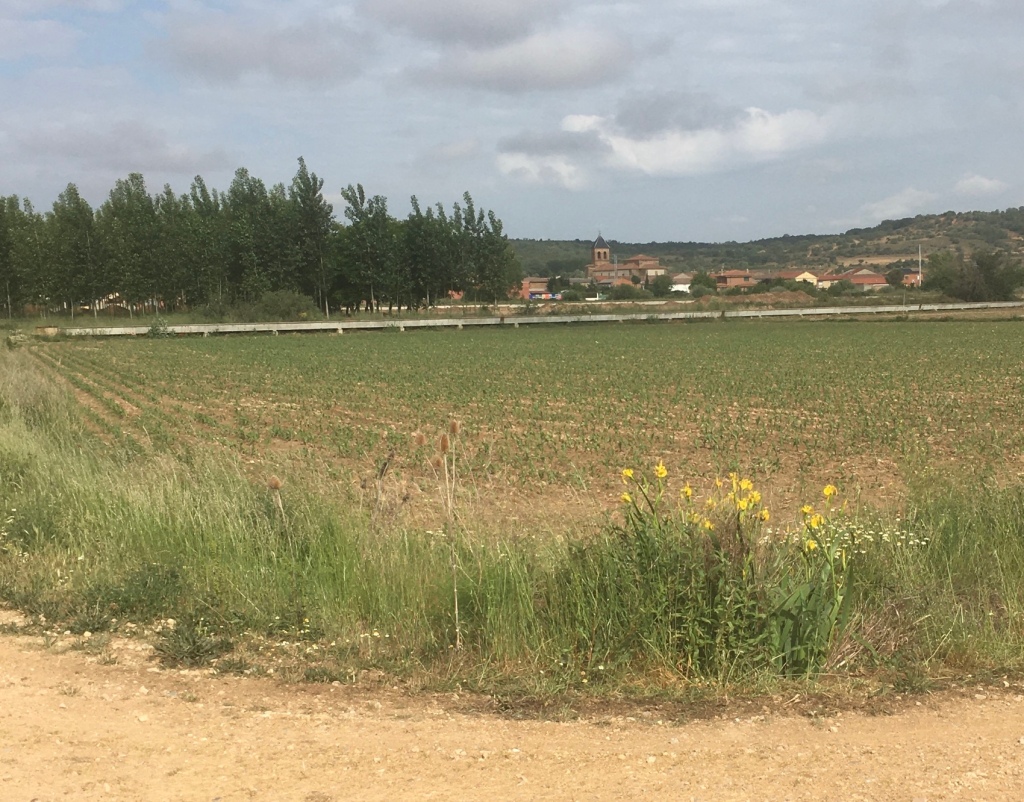
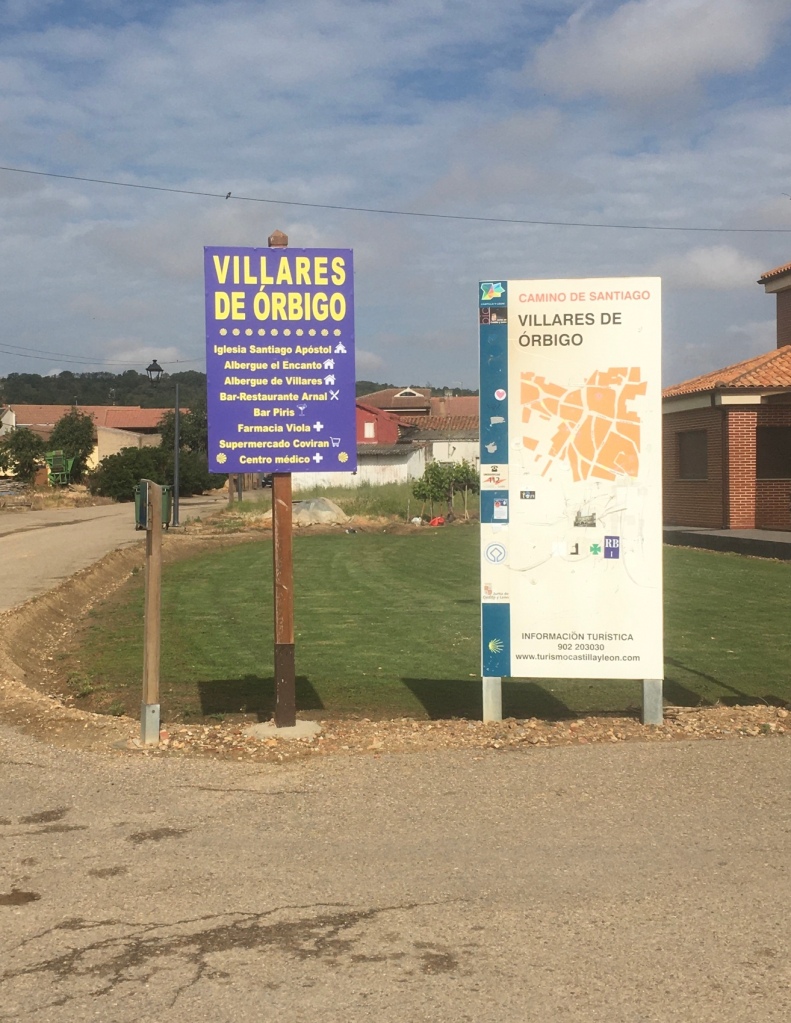
Looking across towards Villares del Orbigo.
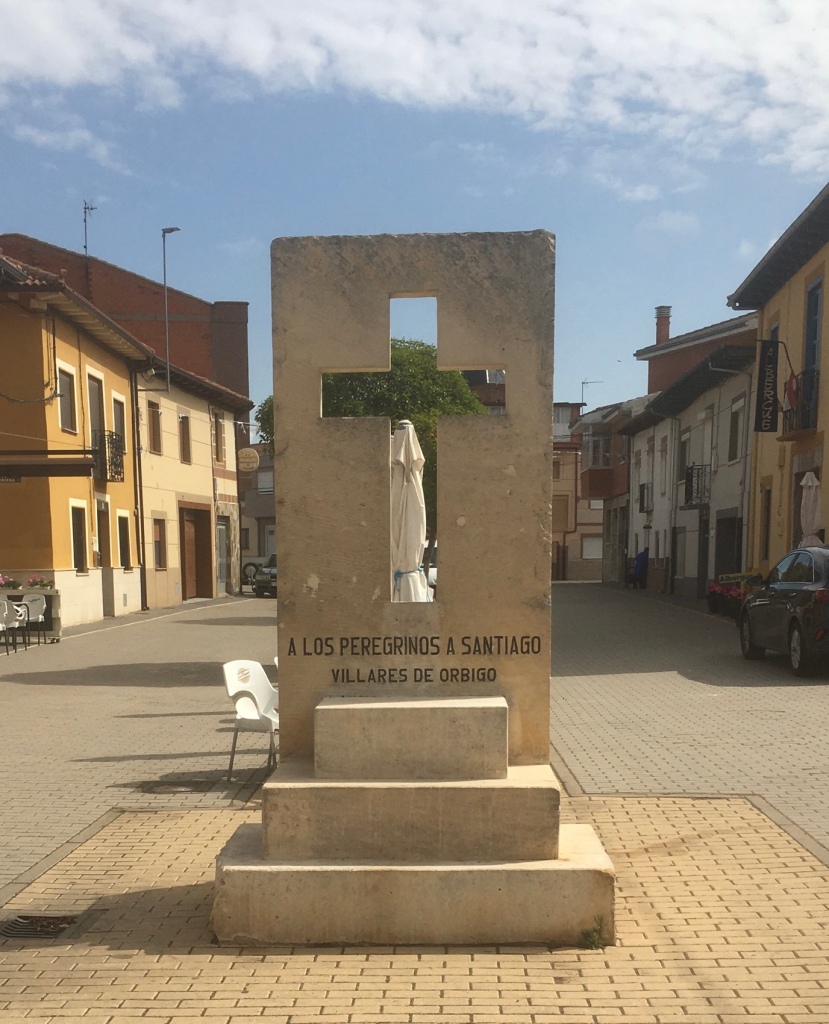
It was a familiar pleasure to be both walking in agreeable countryside and passing through a village where the Camino was celebrated.
We didn’t hang about here for too long.
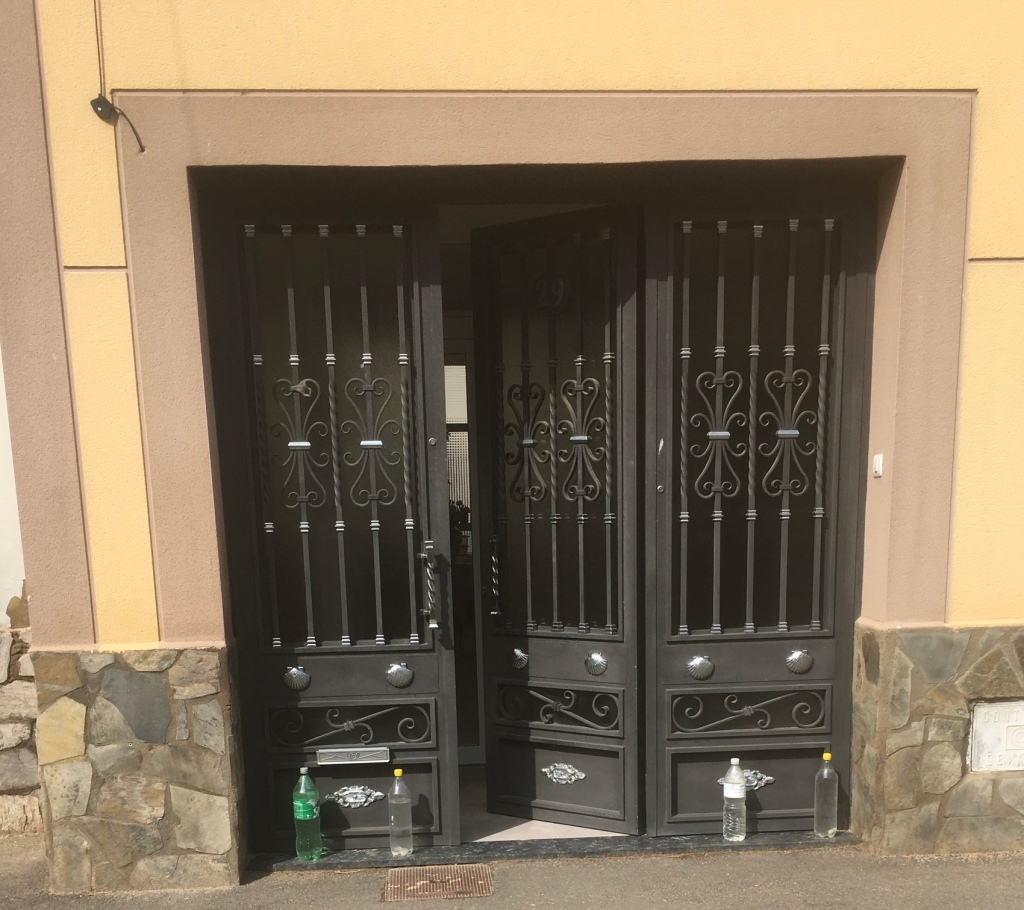
Decorative shells. The water bottles are not for consumption, they are placed to stop passing dogs cocking their legs up. Apparently they are afraid of their own reflection.
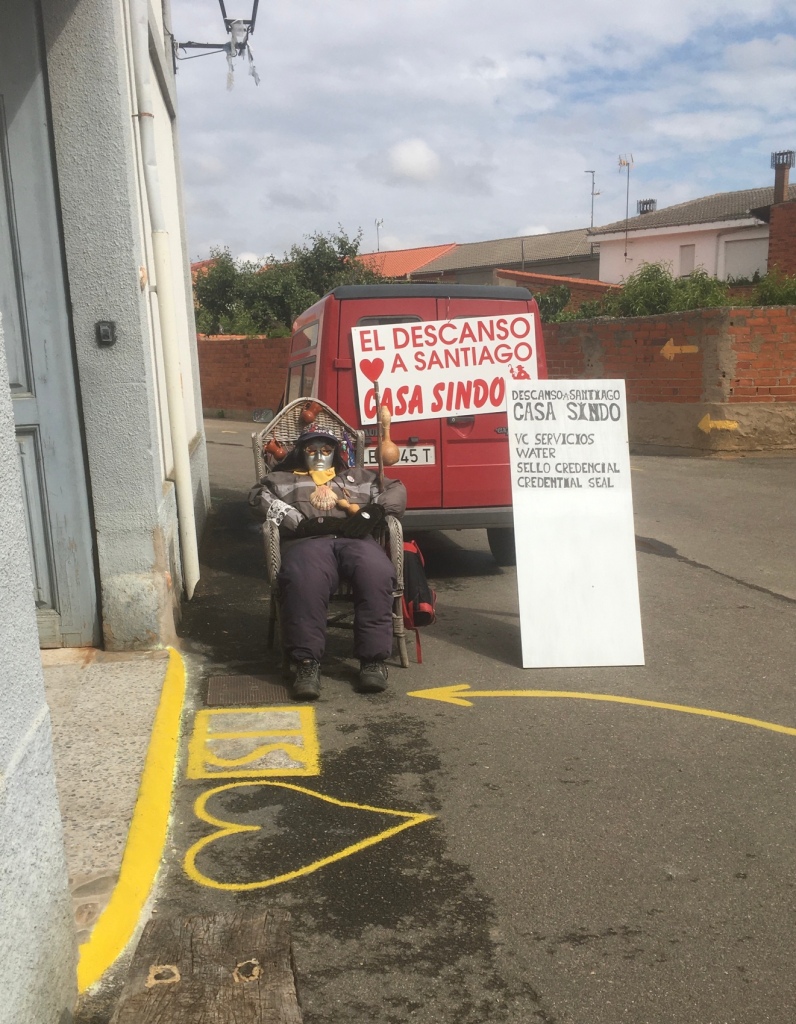
Descanso is a term used to imply a restful place

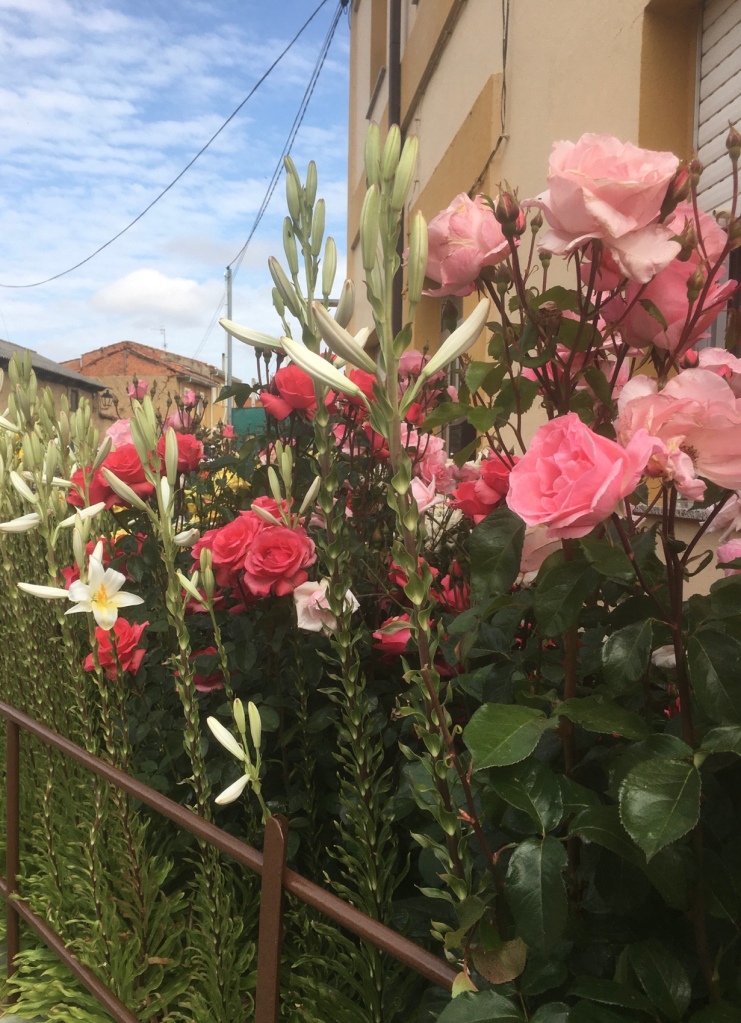
A fabulous front garden display

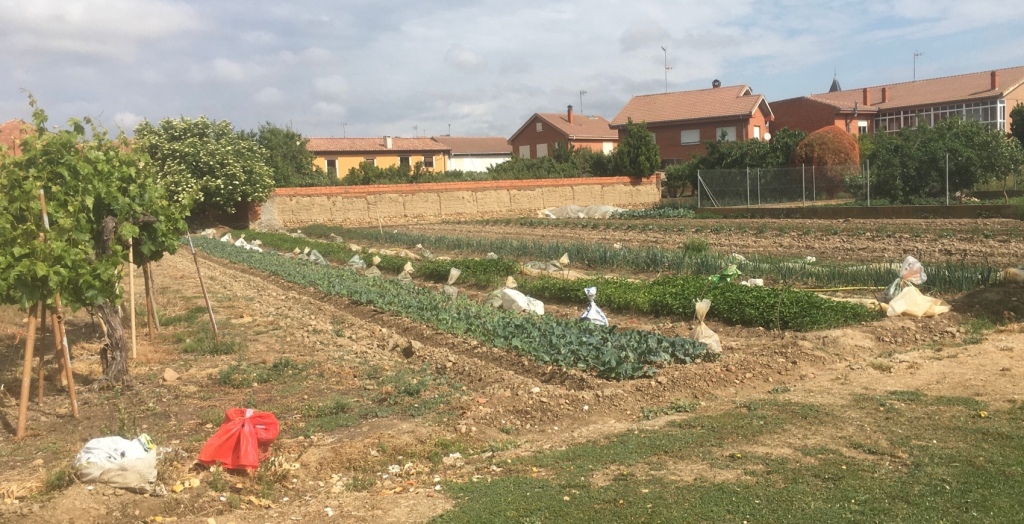
A well ordered Huerta
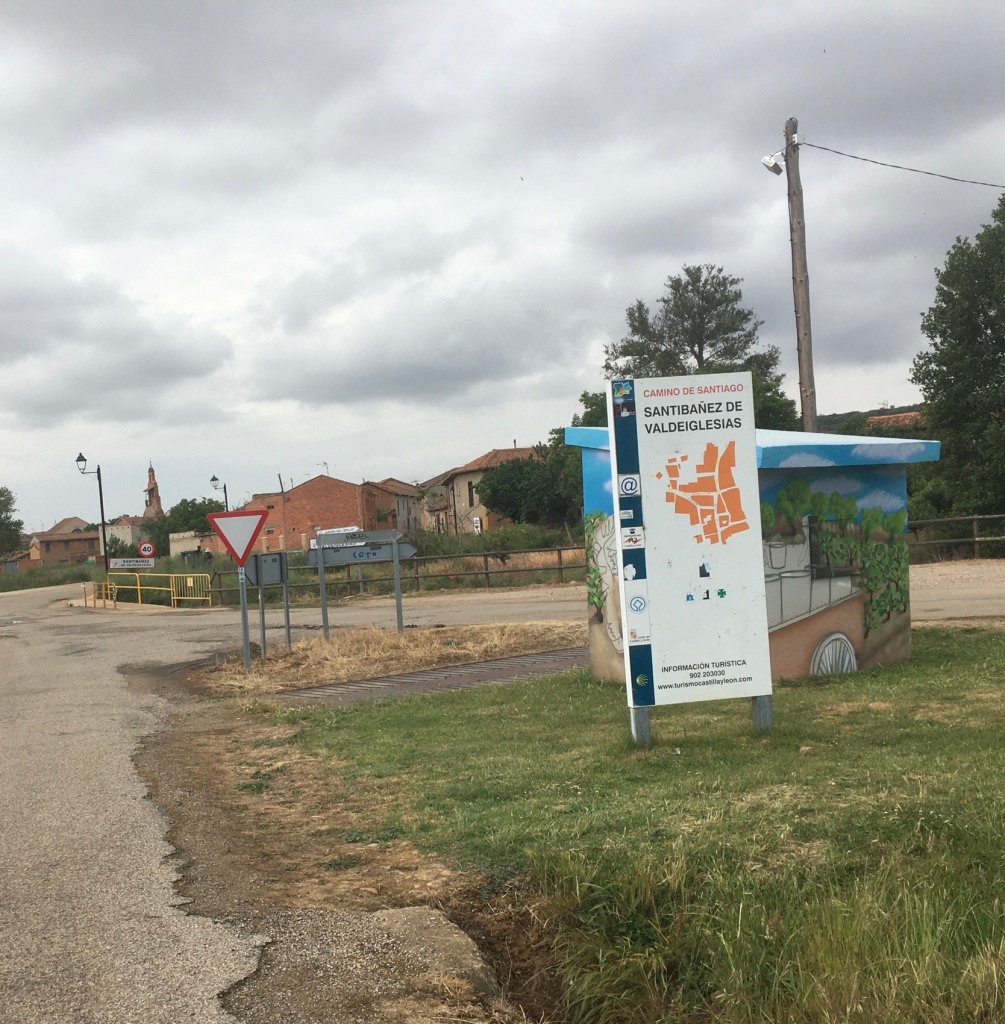
The sign for Santibanez de Valdieglesias
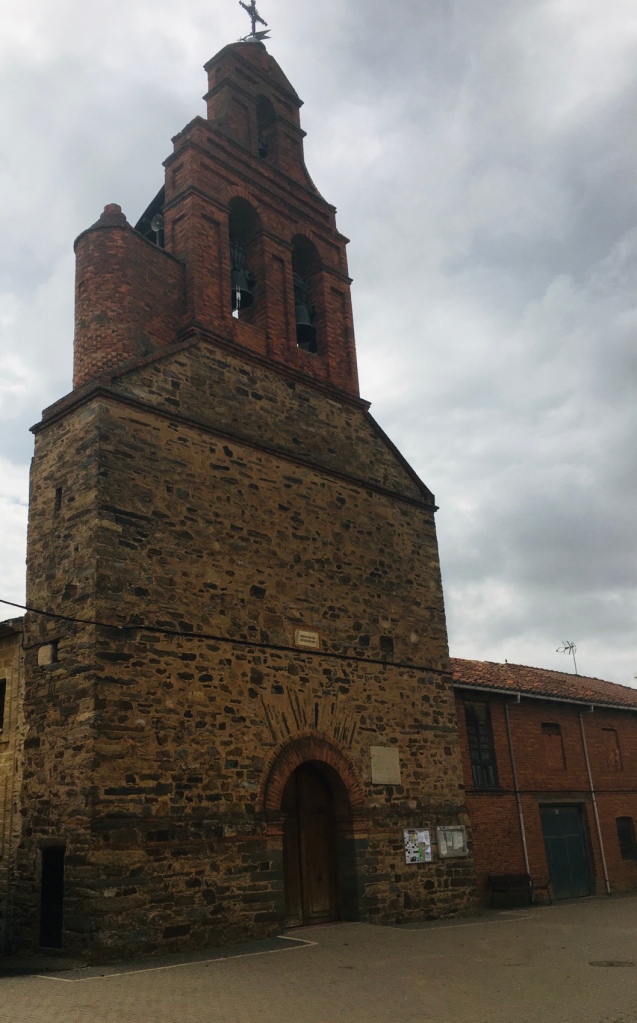
A long and impressive name for a hamlet that contained very little except its church.
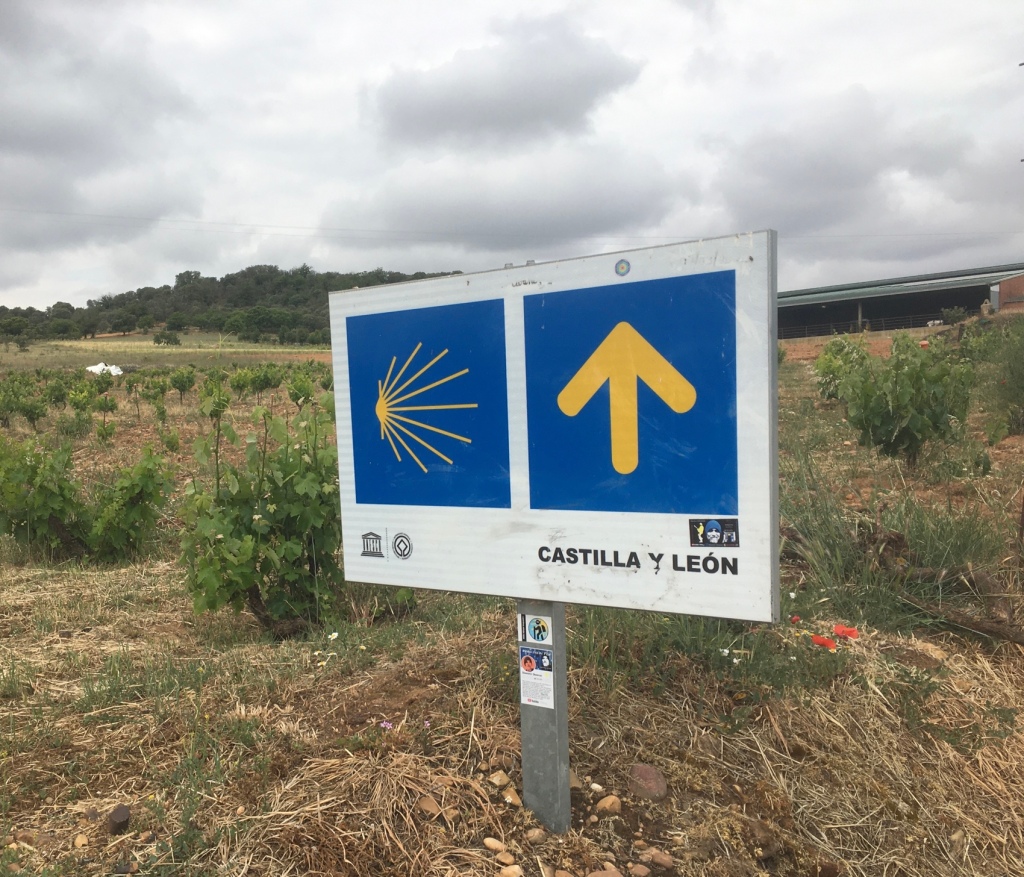
A rare graffiti- less sign. Maybe the Welsh idiot left his crayons behind in his cot.
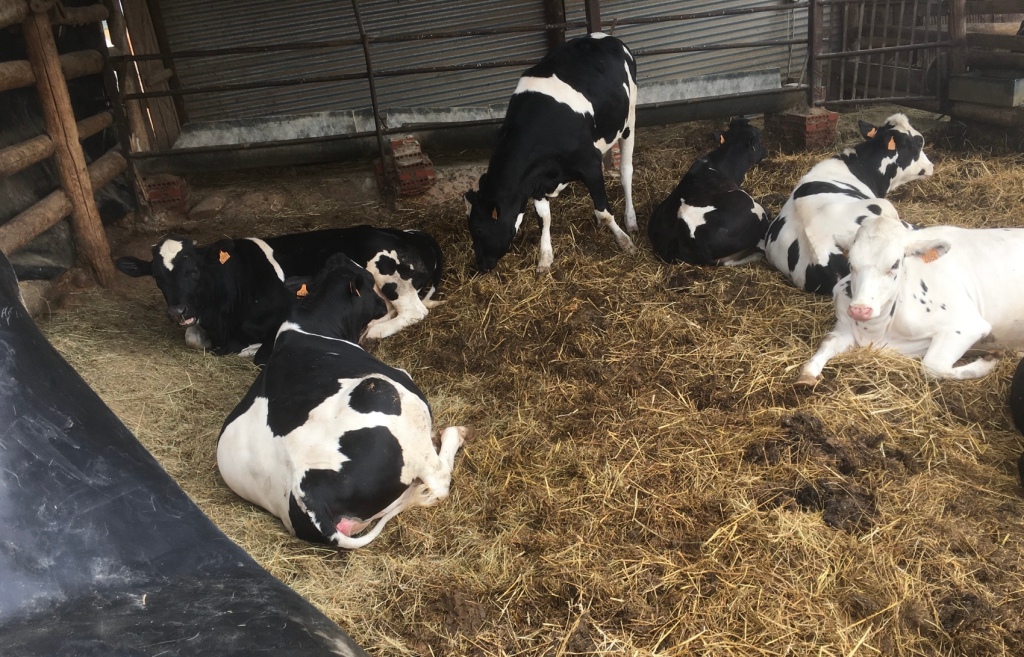
Away in a Manger
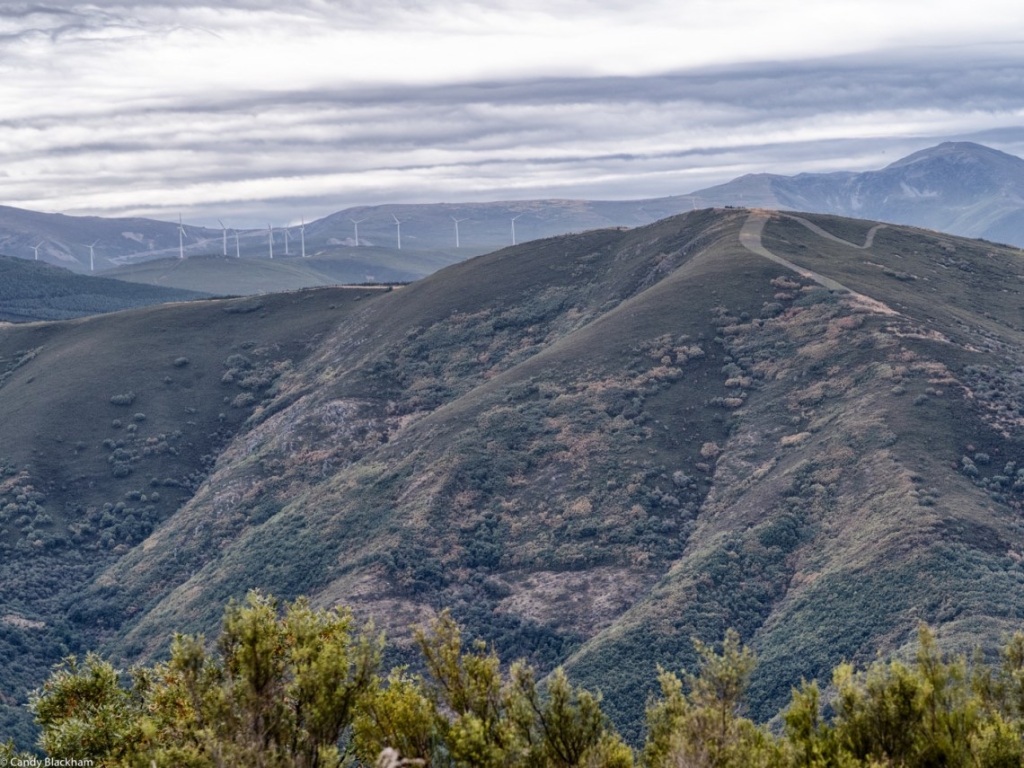
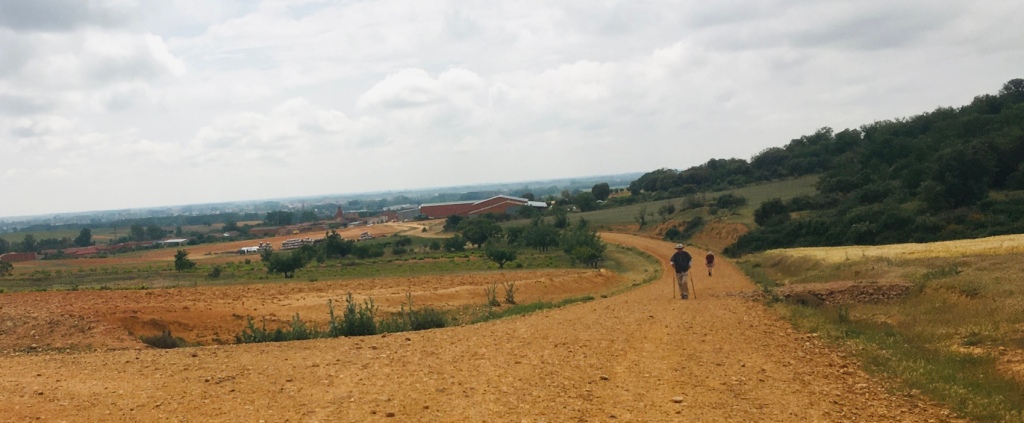
John Brierley, in his guidebook described the final 1/3 of the Camino, walking through Castille and Leon into Galicia as the most varied scenery of the entire Camino. This began with some light hill walking – Rob and Tom on the ascent.
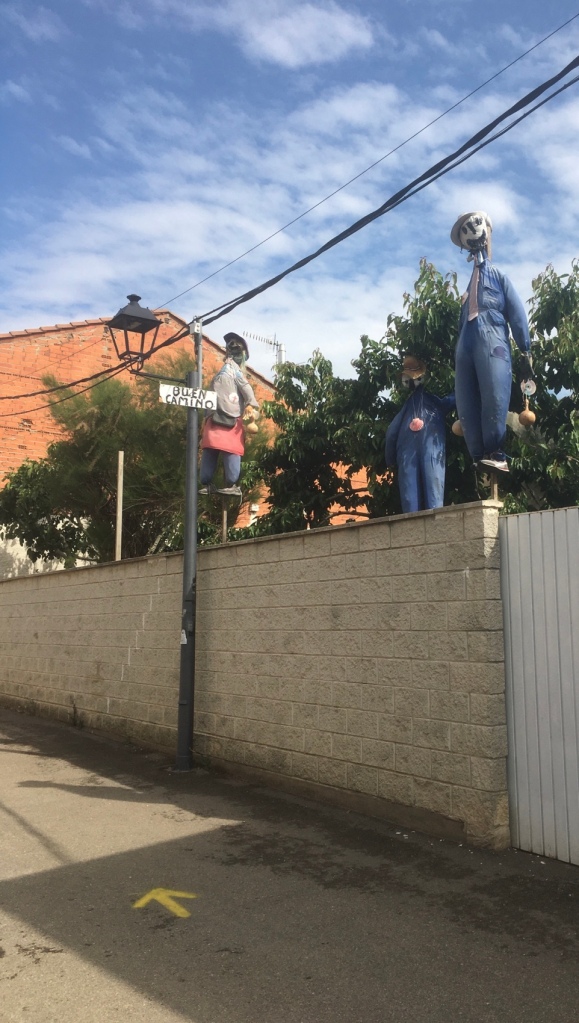
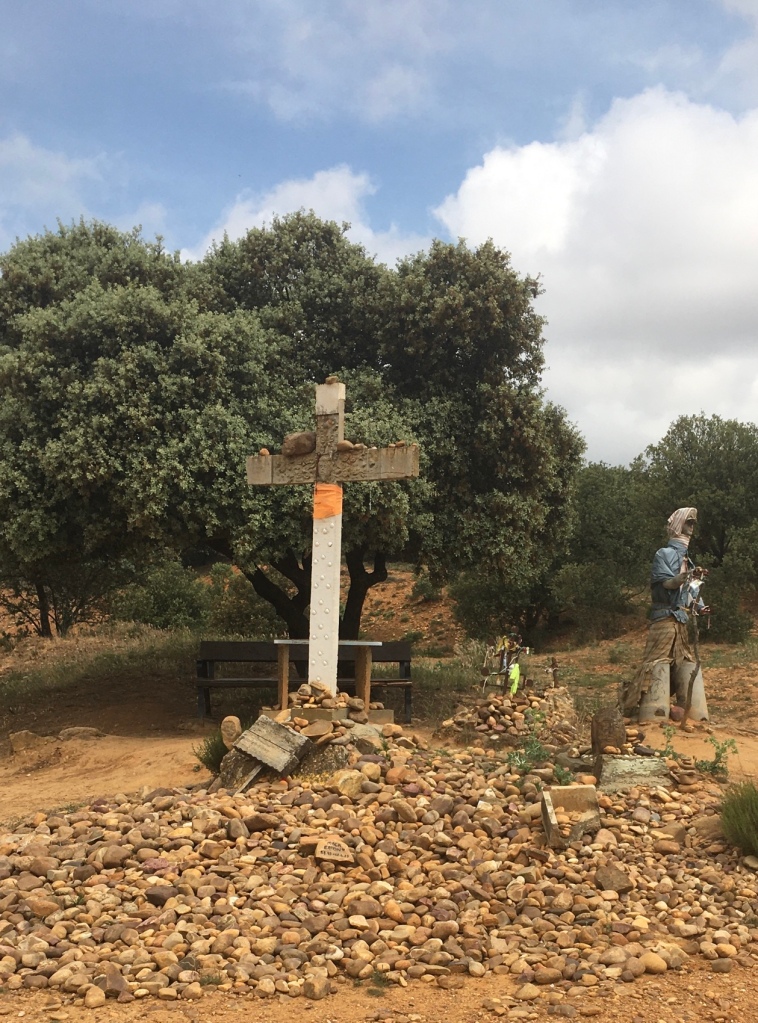
It’s a fairly common practice for pilgrims to place stones at the foot of a Cruceiro – prayers, regrets and hopes – not so customary for there to be dummy alongside!
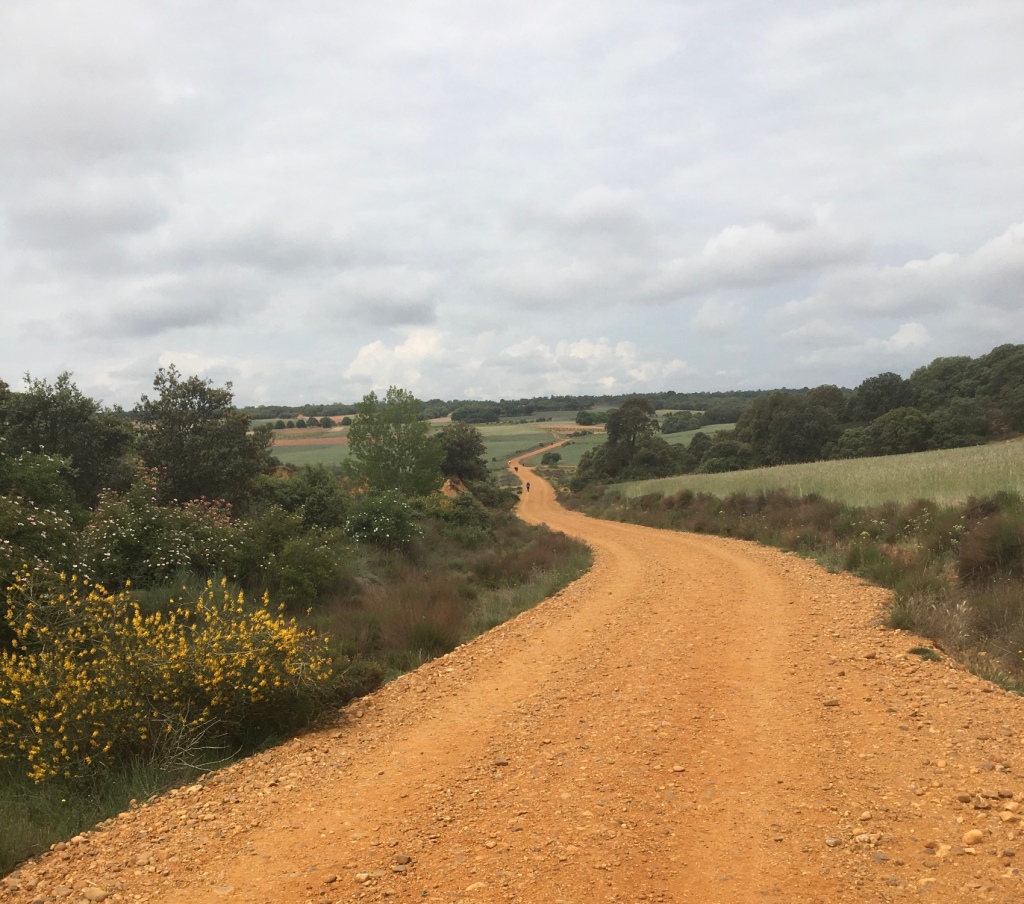
Pleasant sauntering along these paths – it has been a litter free Camino for the most part. They say leave nothing behind but your footprint.
More mountains…maybe next year ?
I am wearing these for this final stage as my other pair caused a blister just under my right ankle bone – only the second time I’ve ever had a blister – both in the same place! A compeed plaster did the trick.
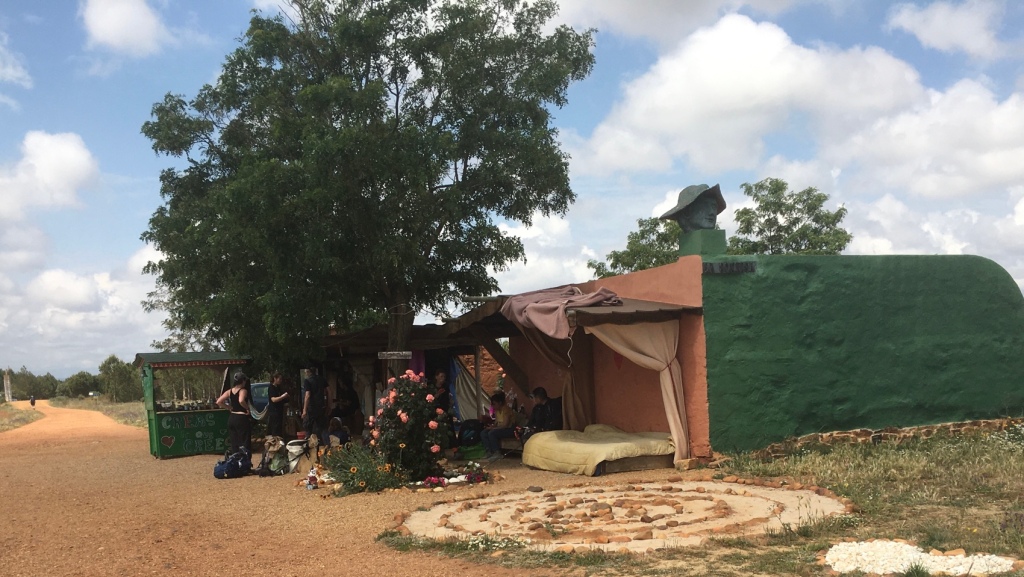
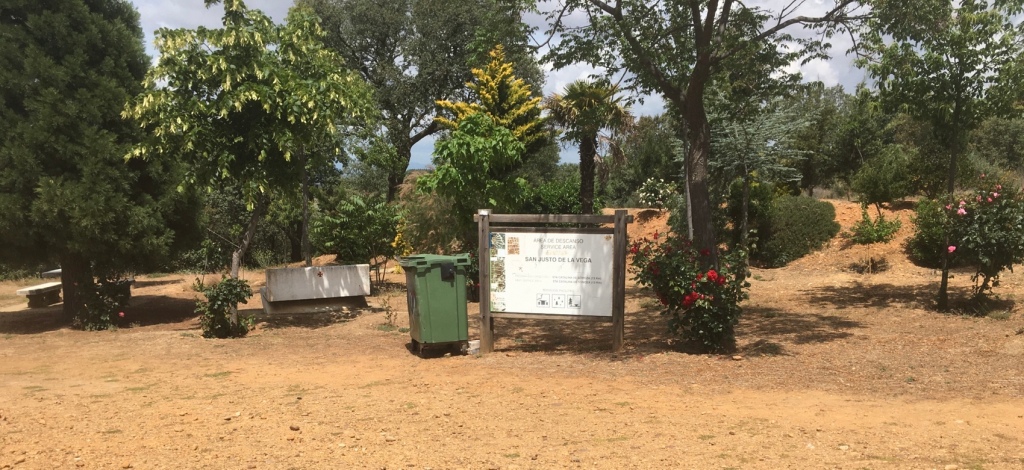
We were more than ready for refreshments when in the middle of the countryside we came upon this “ oasis”.
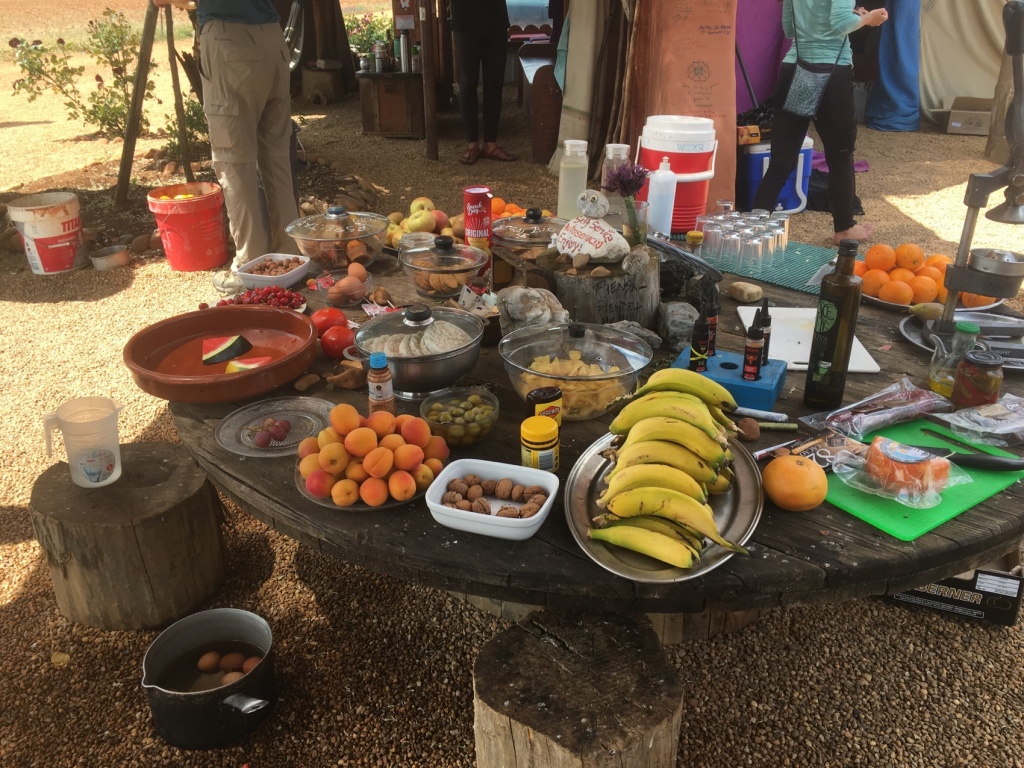
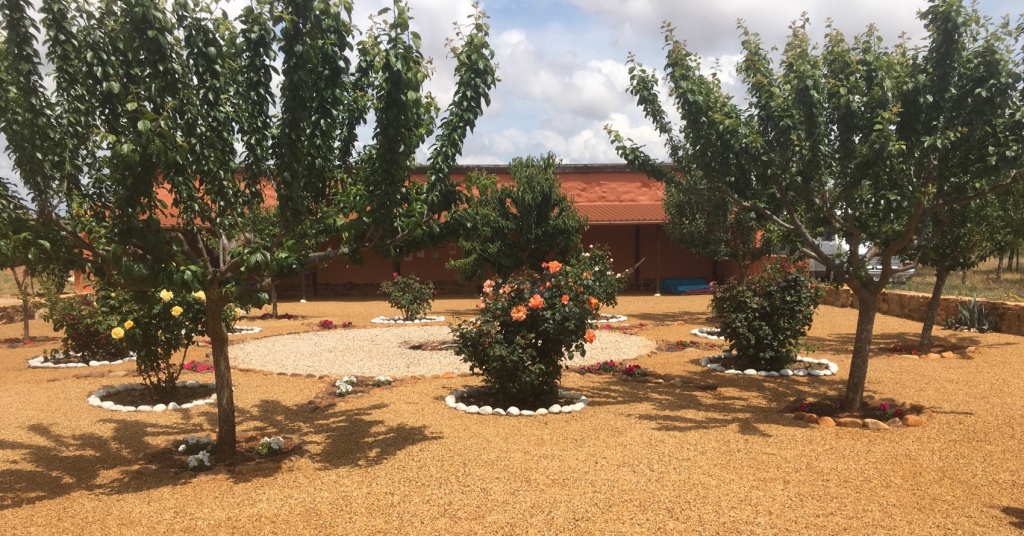
A “Donativo” – which means you contribute what you can for what you partake – the watermelon was the coldest and best I have ever enjoyed and crushing oranges to make your own juice was fun. What a banquet, put together by a young hippie. The rose garden beyond was a credit to the huertino responsible. All around were opportunities to relax, from hammocks to loungers. A great place – the Camino provides…for a donation.
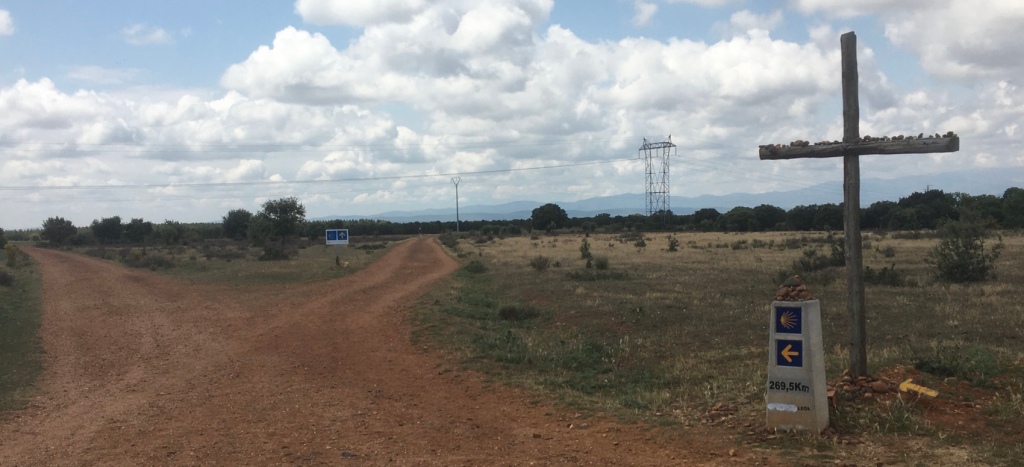
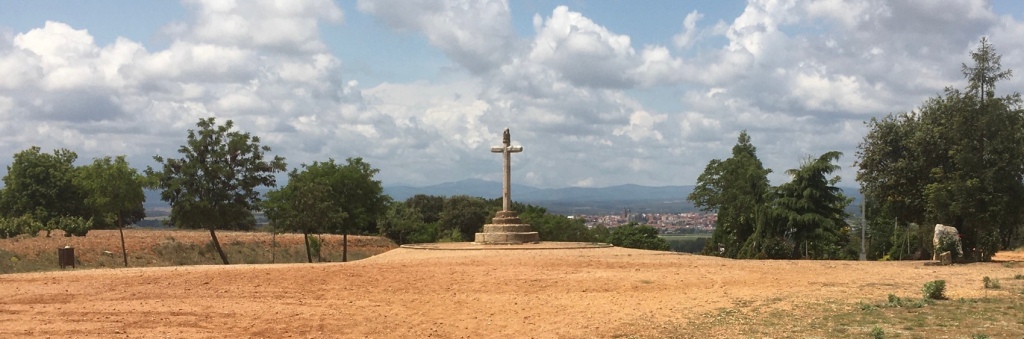
This crossroads and Crucero are above San Justo de la Vega – a village below the hill which was to eventually merge with the outskirts of Astorga.
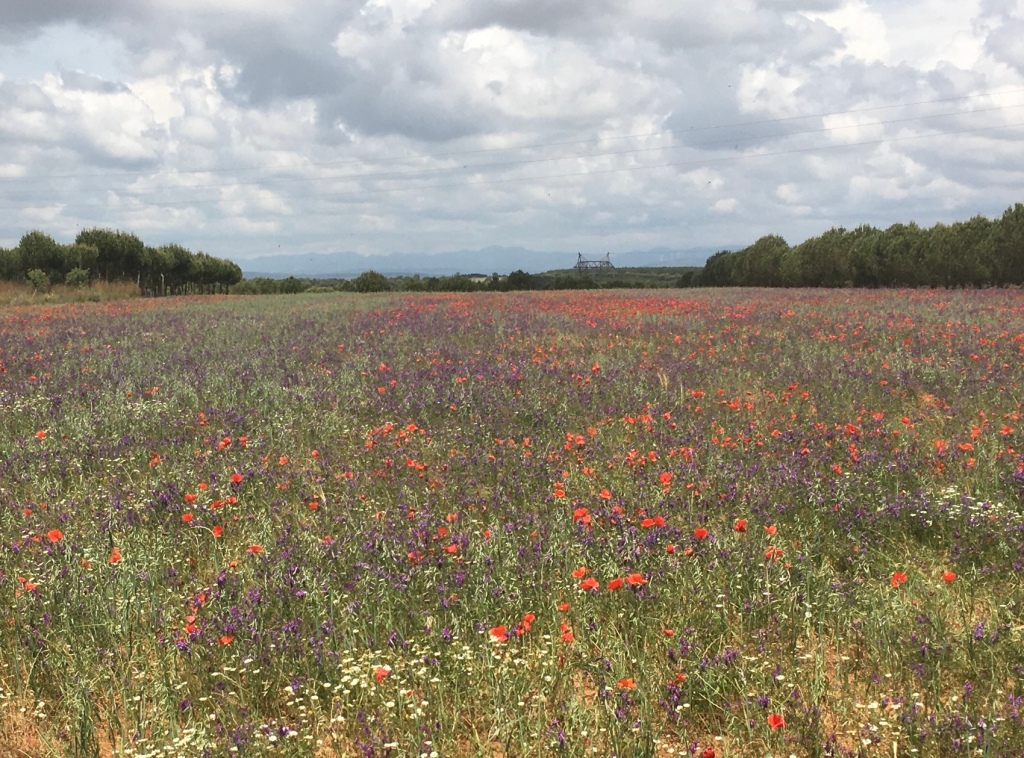
A field of wild flowers
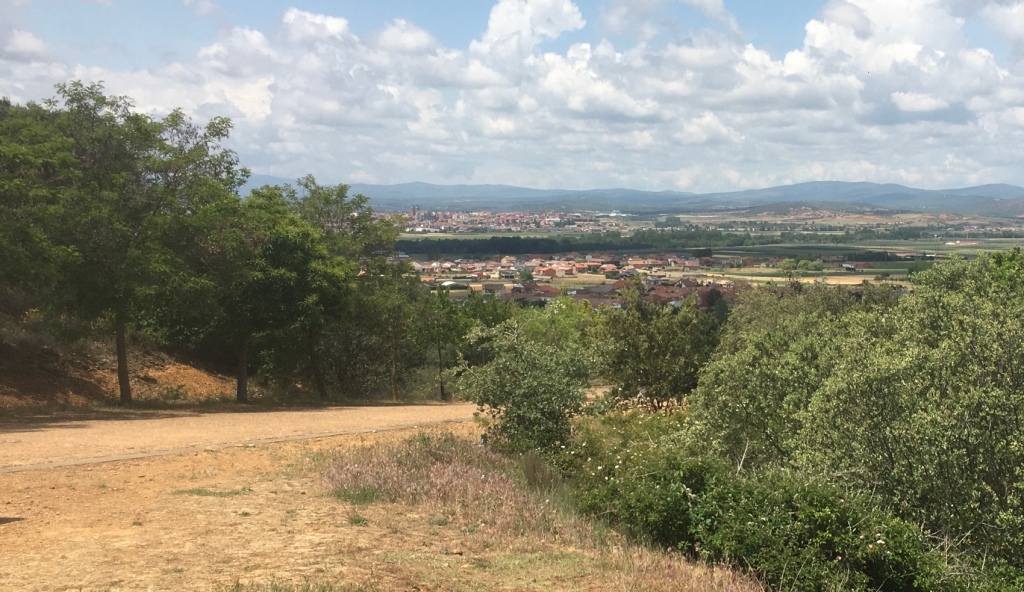
Looking down on San Justo and Astorga – mountains away in the background
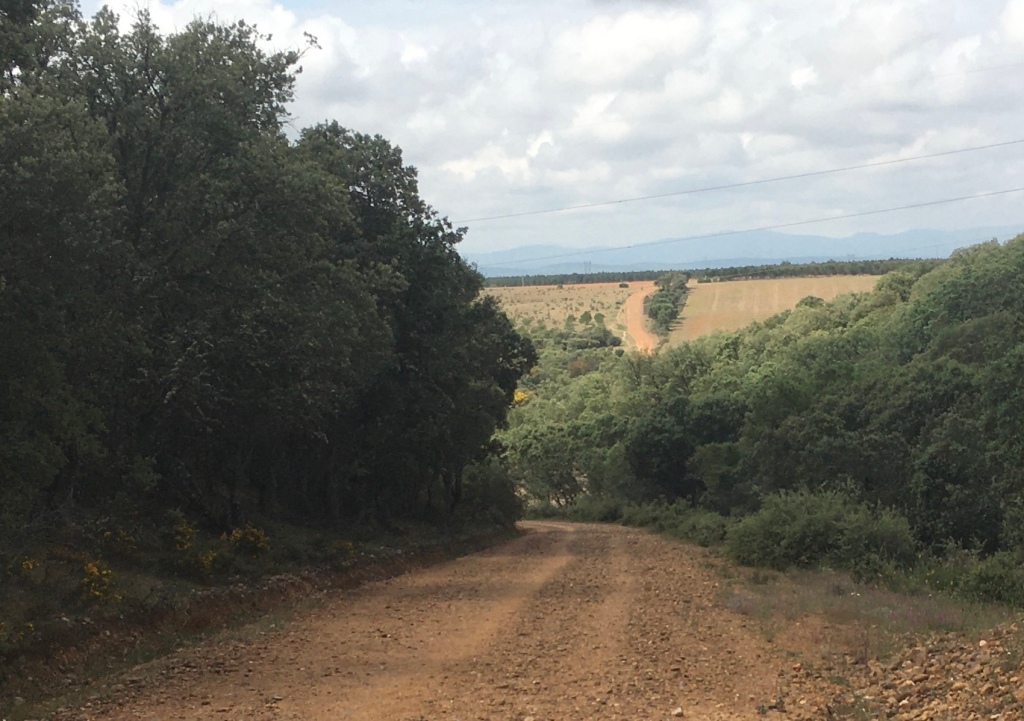
This was to be a long walk downhill – poles come into their own on descents.
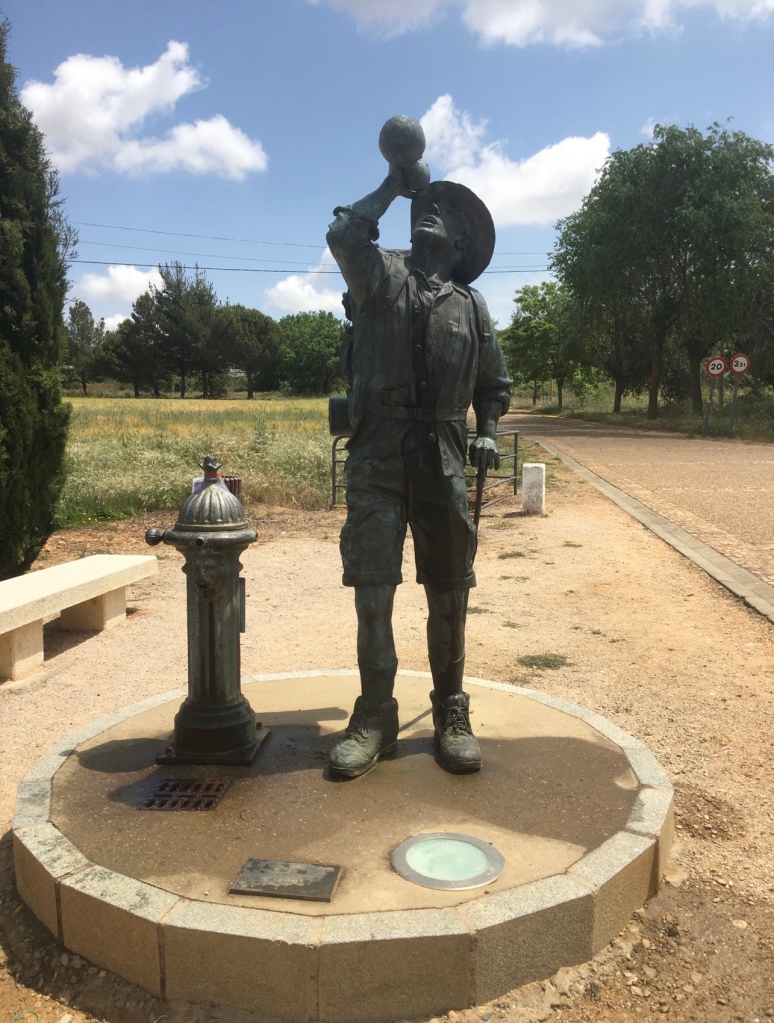
A striking sculpture by a welcome fountain at the bottom of the hill.
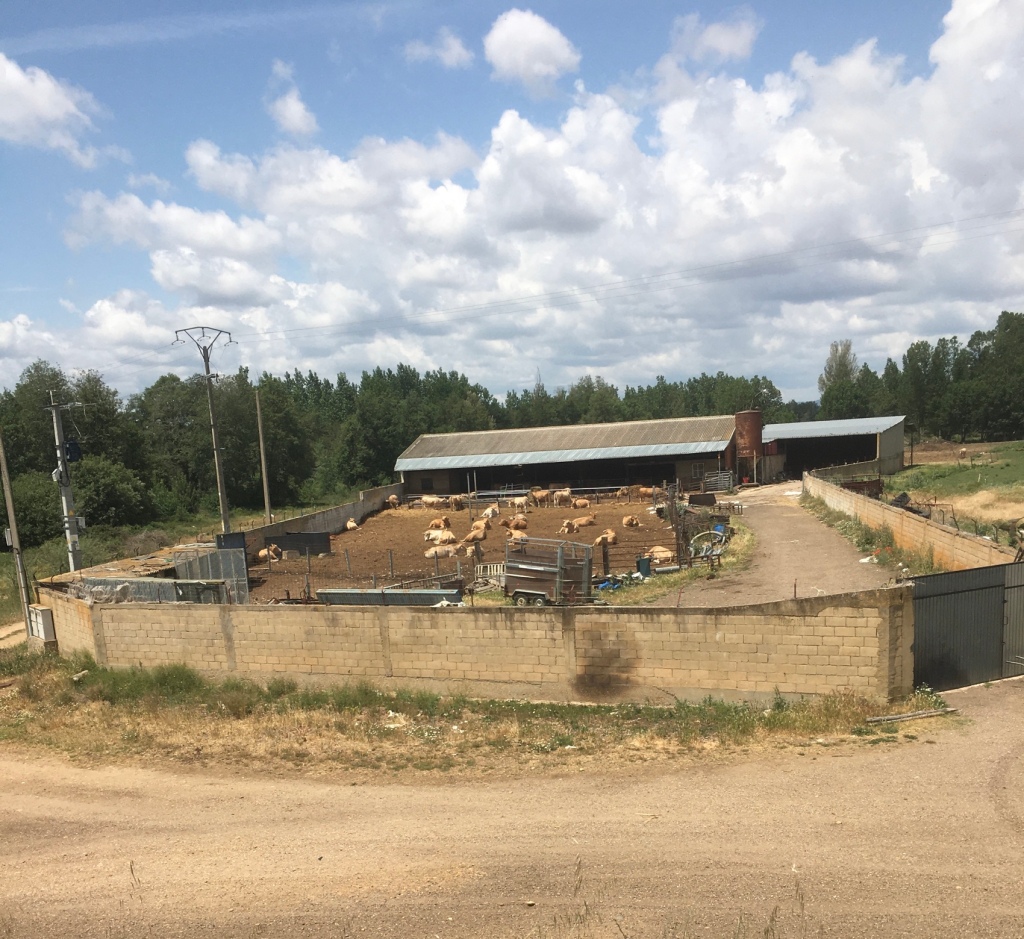
Not much livestock on this Camino dominated by arable farmlands and then only in barns or stockades. I suspect that most of the milk and meat comes from the Asturias, to the north of here.
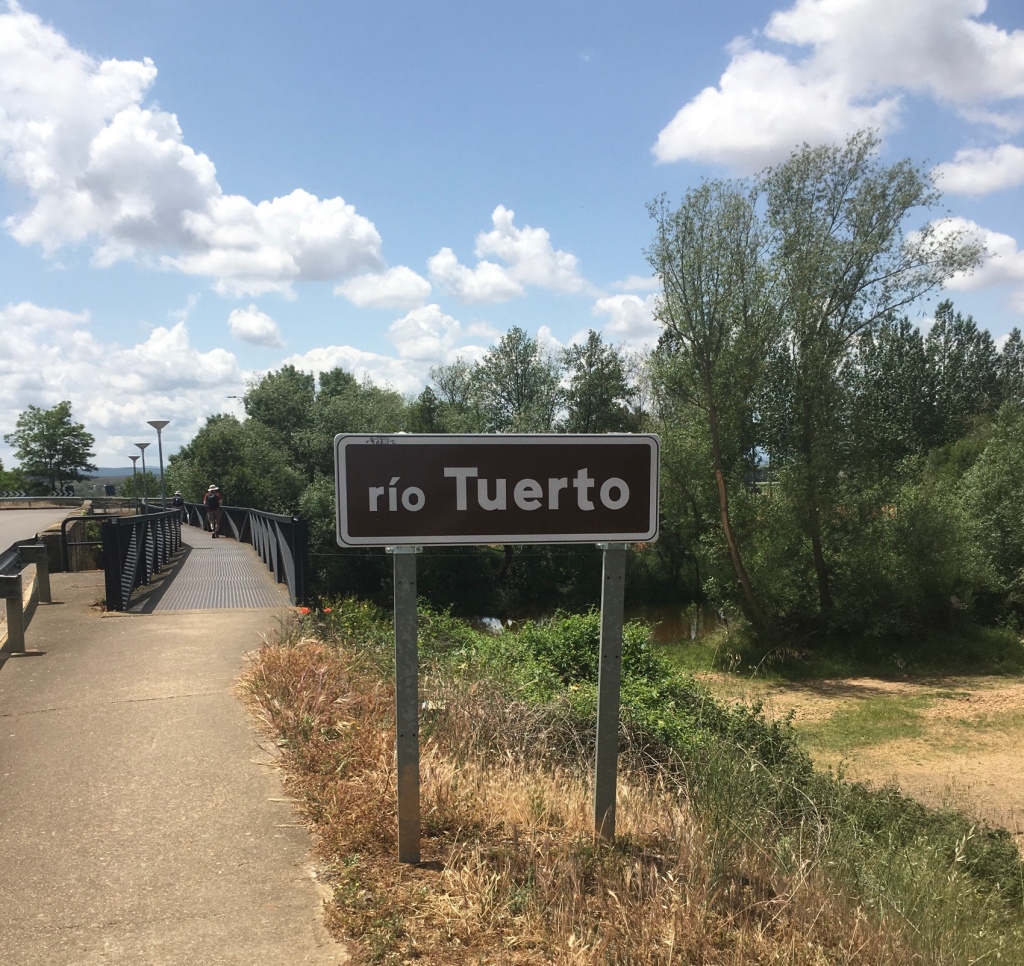
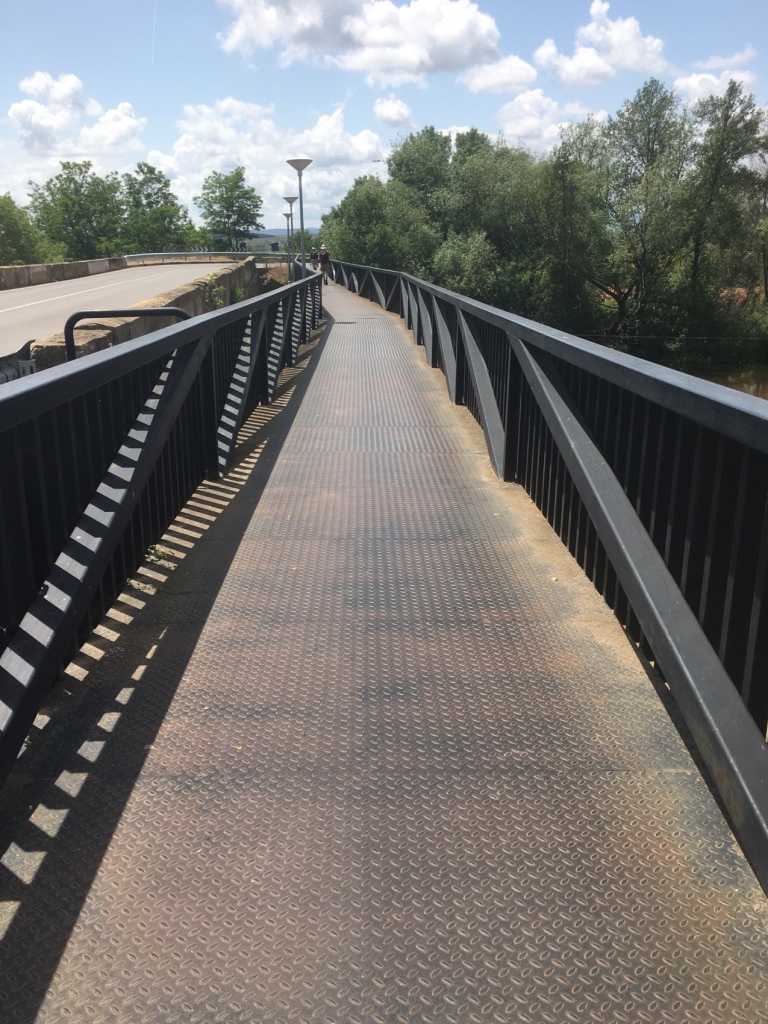
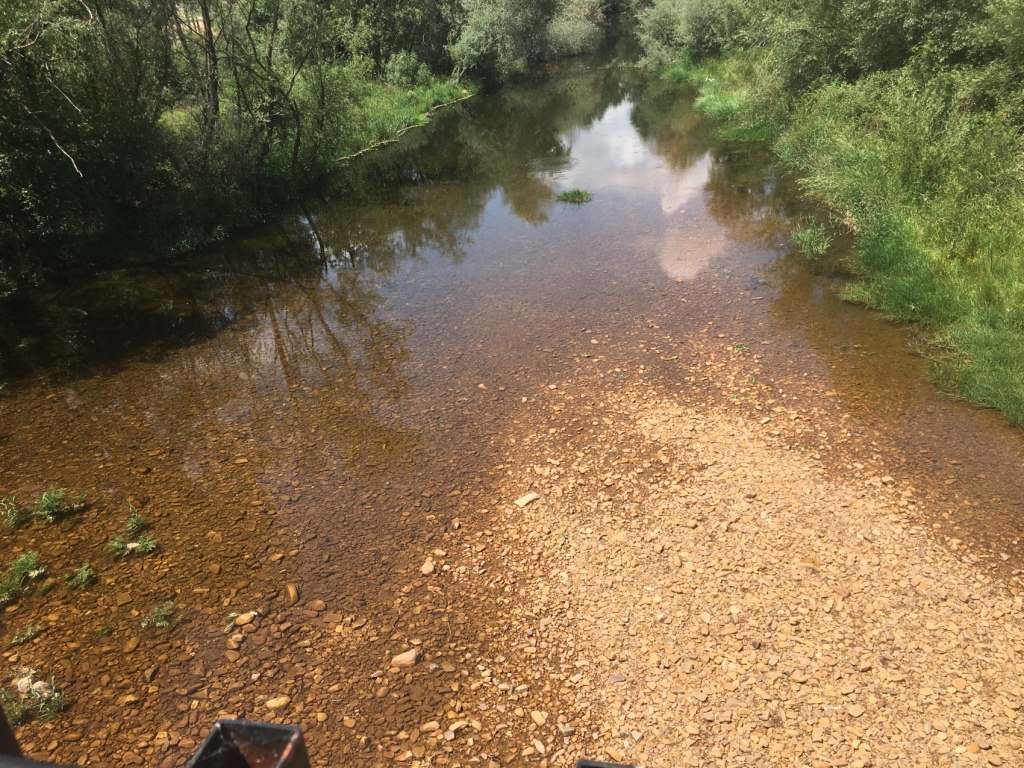
Crossing the River Tuerto
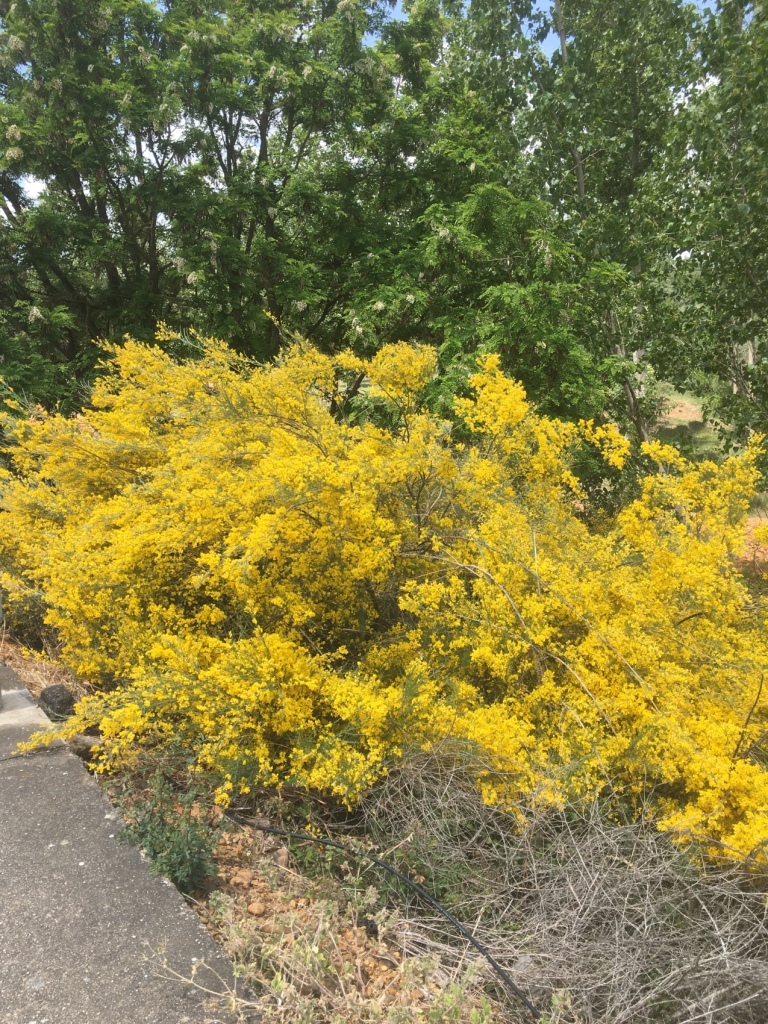
Mellow Yellow
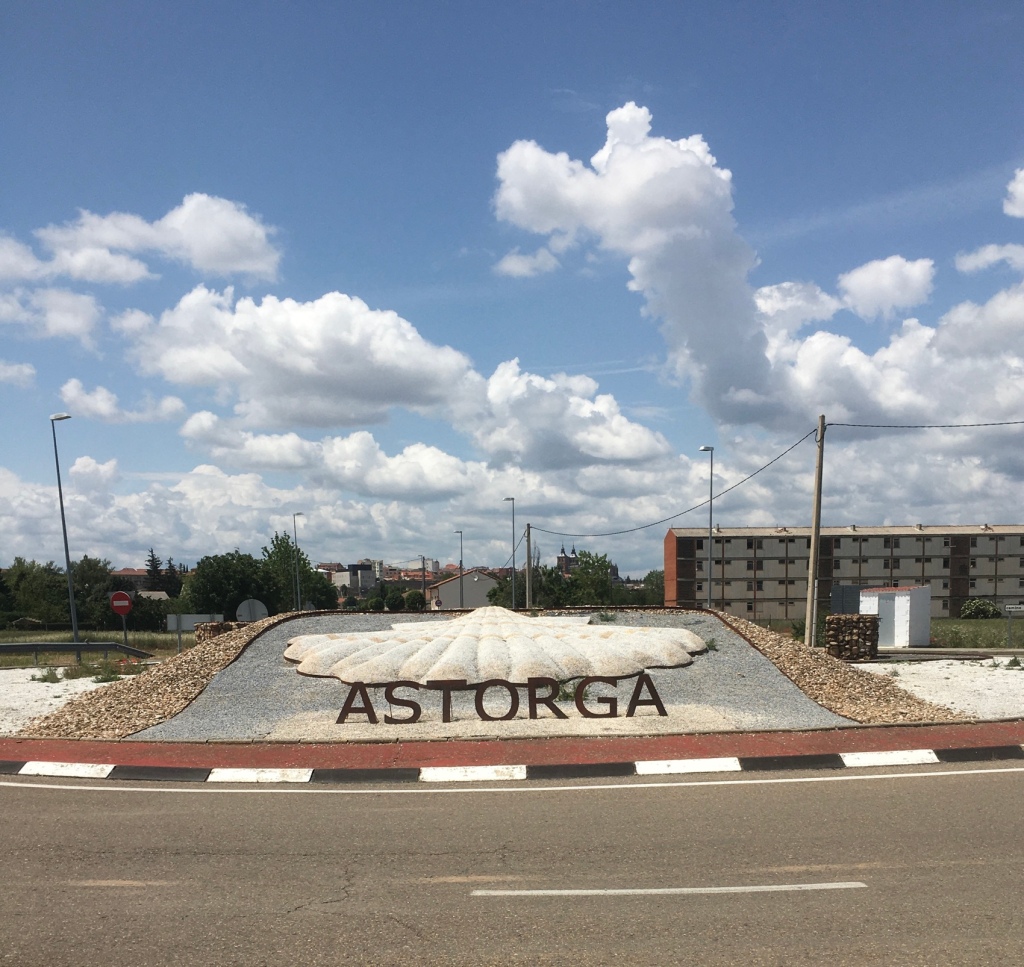
San Justo is strung out along the RN 120 and of little remark so we were glad to enter the outskirts of Astorga.
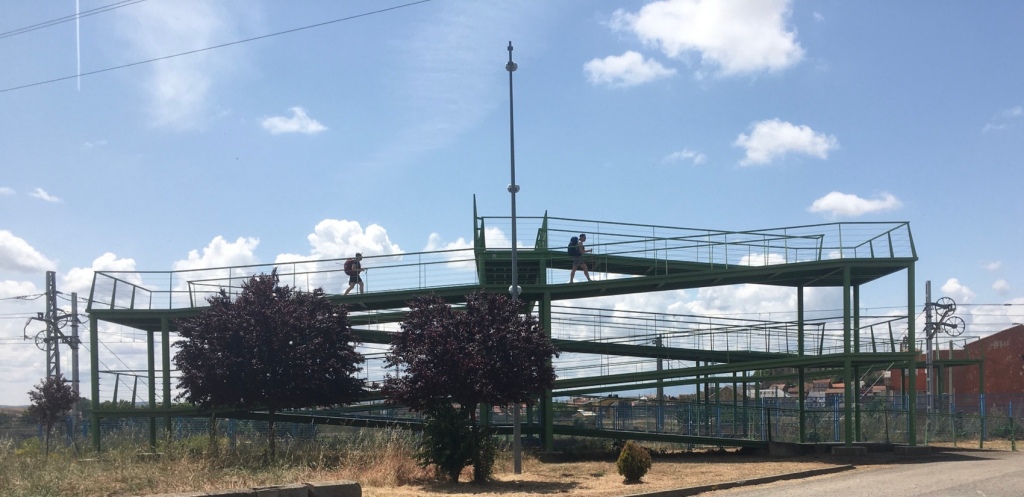
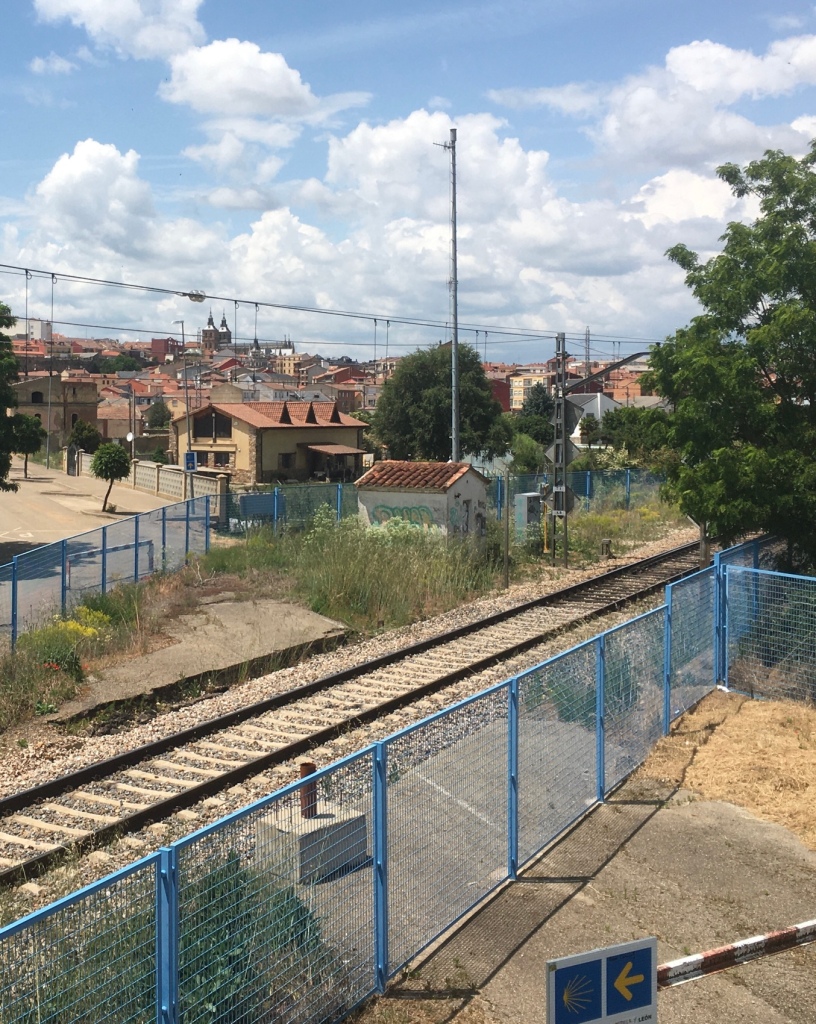
We climbed up a helter skelter pedestrian crossing, over the single track Palencia to A Coruna railway.
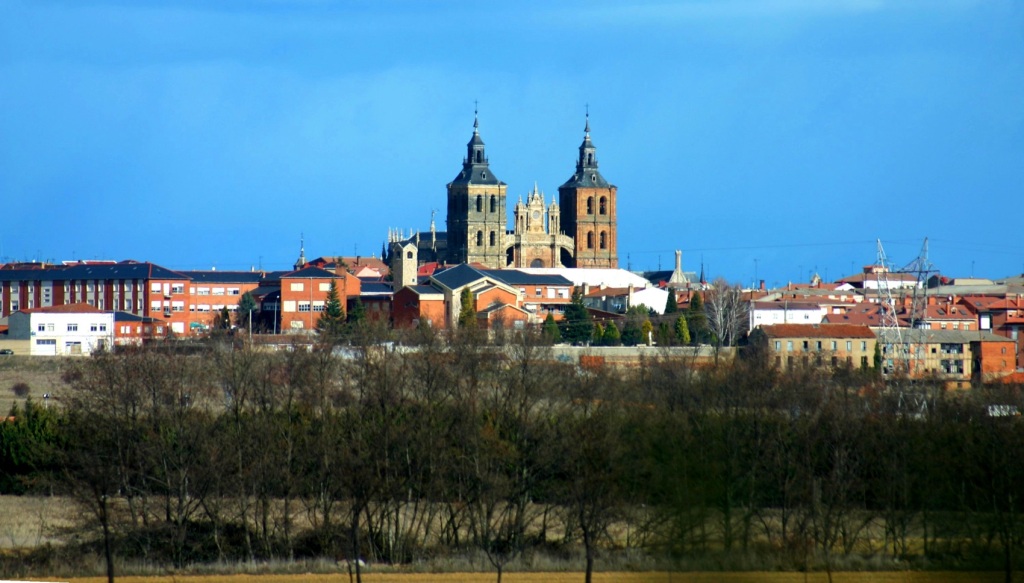
Spires of Astorga cathedral in the distance
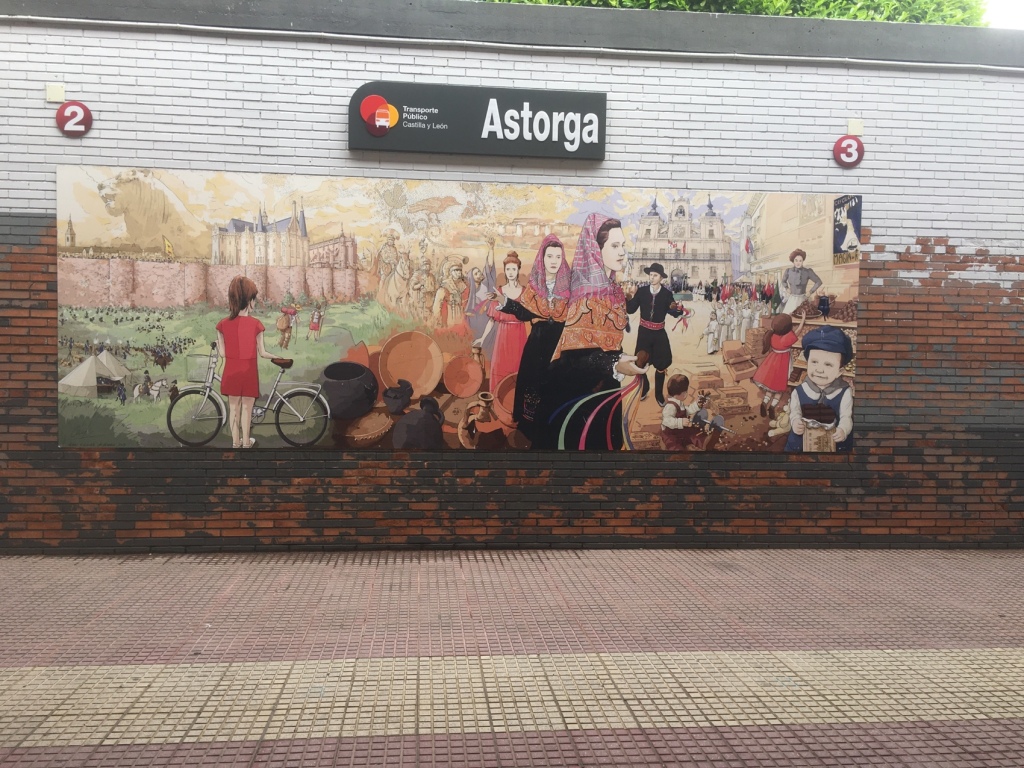
Then it was up the hill into Astorga. A city with a colourful history dating back to Roman times and famous for two buildings in particular. Eleven miles completed by the time we reached our hotel.
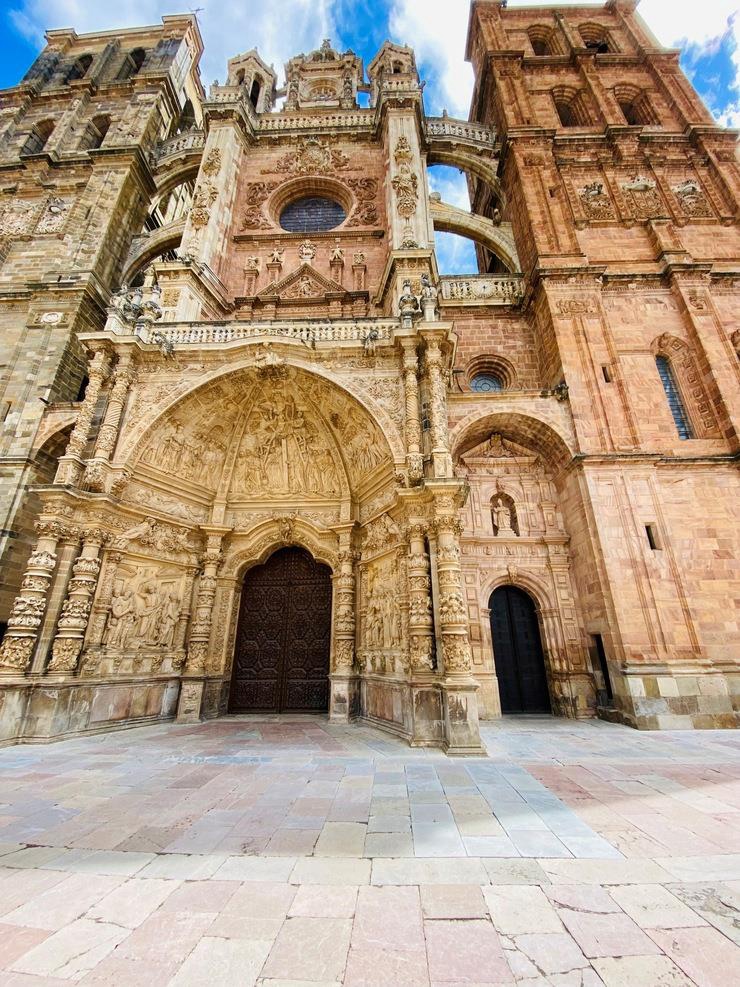
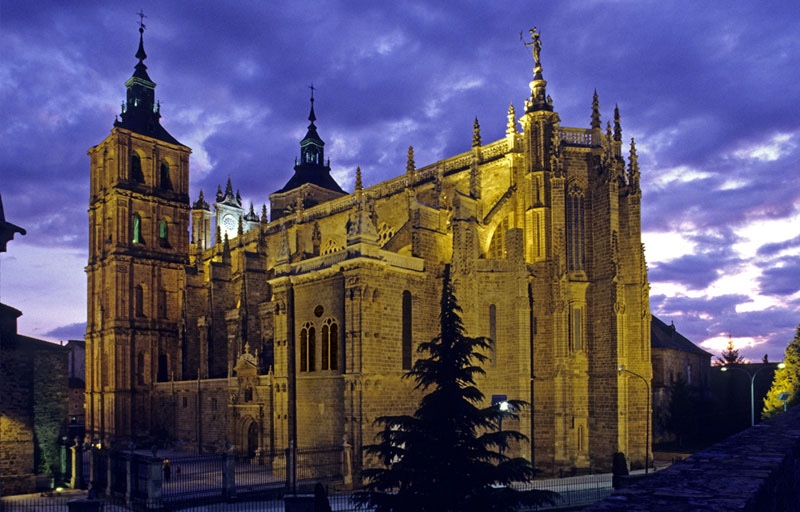
The construction of the Cathedral began in 1471, rebuilding the old Romanesque cathedral on the same site, the building was not completed until the eighteenth century, so we can find different styles of Spanish religious art combined in the same building.
The Renaissance façade of the Bishops by Rodrigo Gil de Hontañón are of particular note, the main façade by Pablo Antonio Ruiz from the Baroque era, built at the beginning from the 18th century and the astonishing façade on which five scenes of the life of Christ are sculpted; the main altarpiece, masterpiece of Gaspar Becerra of the sixteenth century, which narrates the life of the Virgin; among the outstandng imagery are the Virgin of the Majesty carving from the 12th century with Byzantine influences and the Immaculate of Gregorio Fernandez from the sixteenth century; and from the same time the choir stalls can be admired, or the Hispano-Flemish altarpiece of San Miguel.
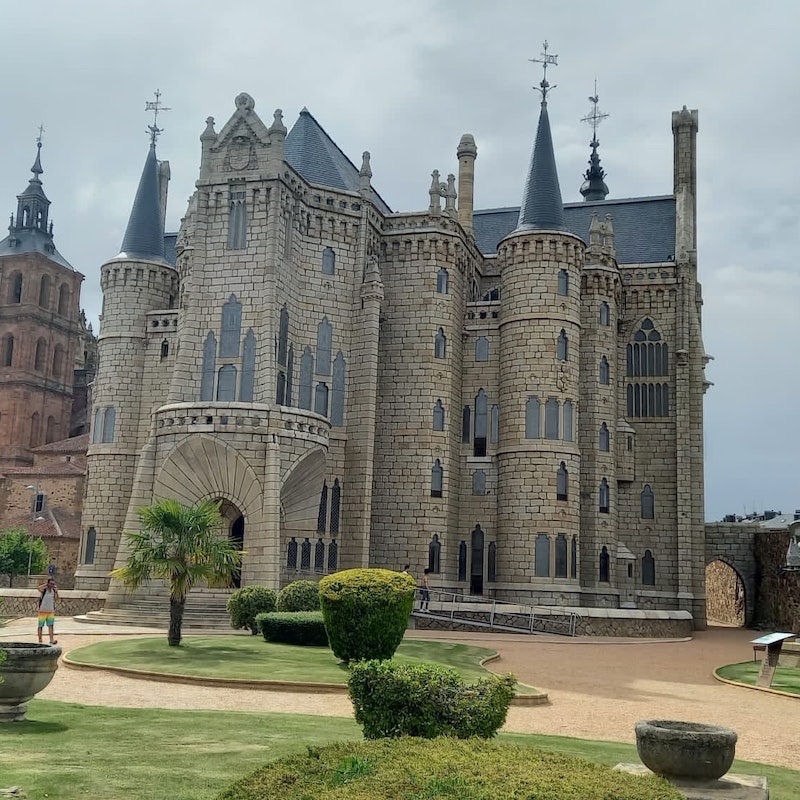
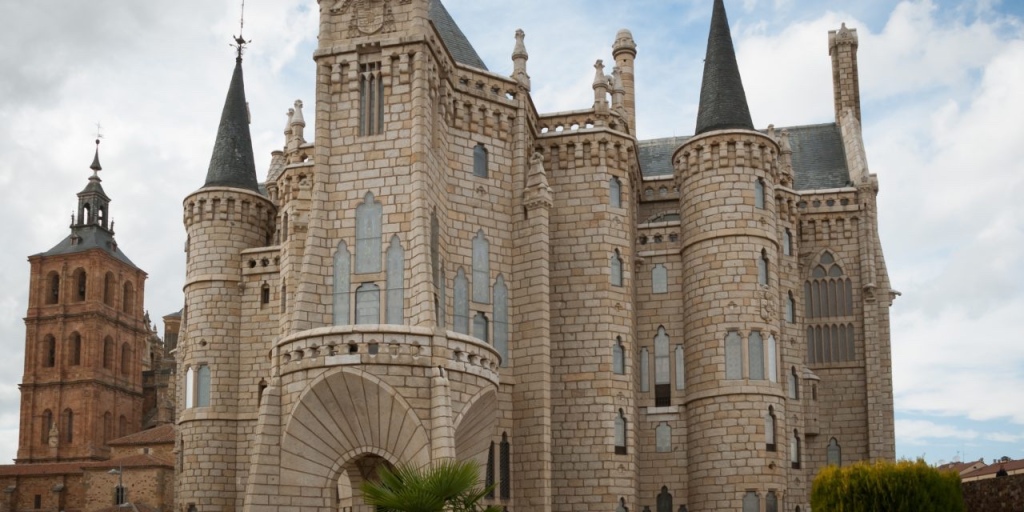
After the destruction, due to fire, of the previous residence, Bishop Juan Bautista Grau Vallespinós had the present palace built by his fellow countryman and personal friend, the architect Antonio Gaudí.
Construction works began in 1889, but after the sudden death of Bishop Gaudí leaves project being stopped until the architect Ricardo García Guereta finished it in 1913.
In addition to the mentioned architects, several artists worked inside the palace, highlighting the fresco artist Fernando Villodas; the French glassmaker José Maumejean; and the sculptor Enrique Marín.
Because of its uniqueness, it is one of the most outstanding buildings of the Astorgan architectural heritage. In 1963, it became a Museum of the Caminos, and it exhibits several and outstanding pieces from the Diocese of Astorga that include from prehistory, epigraphy and Roman numismatics, religious art from different periods and contemporary art.

https://turismoastorga.es/what-do/ This newly designed Astorga website has much more about Astorga and an excellent photo gallery.
Most Camigos walked the short distance to the Cathedral and the GAUDI designed episcopal place for a tour – the unquenchable curiosity of true pilgrims – curiosity satisfied, it was time to join pilgrims and locals for a beer in the sunshine….

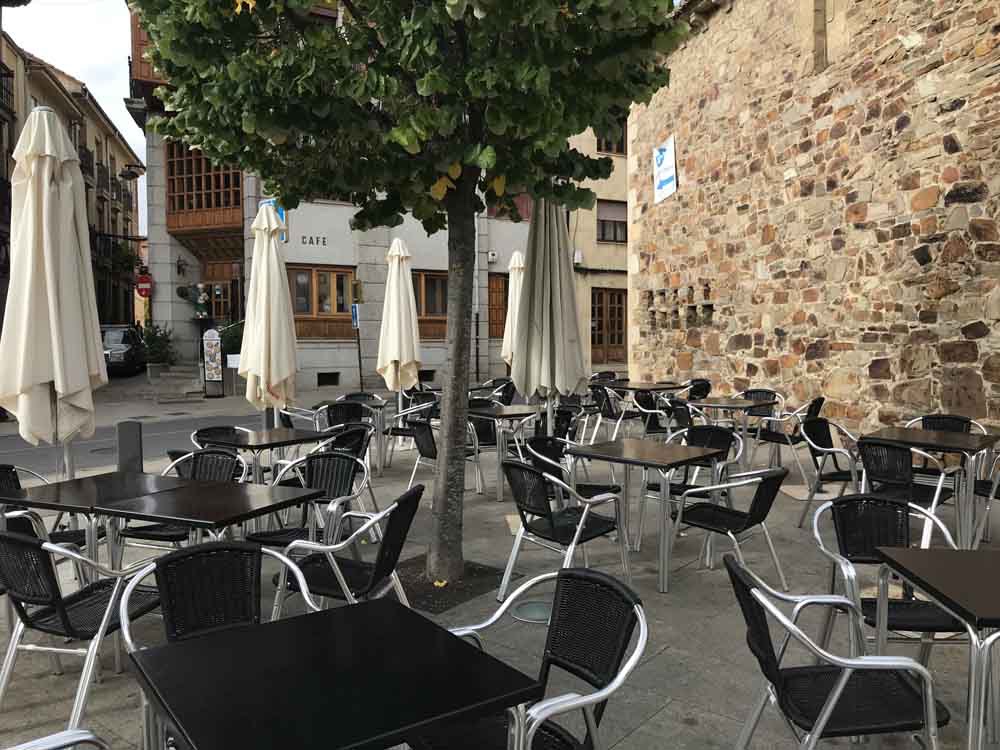
Amongst the tables of the appropriately named Cafe Gaudi.

Where are they all?
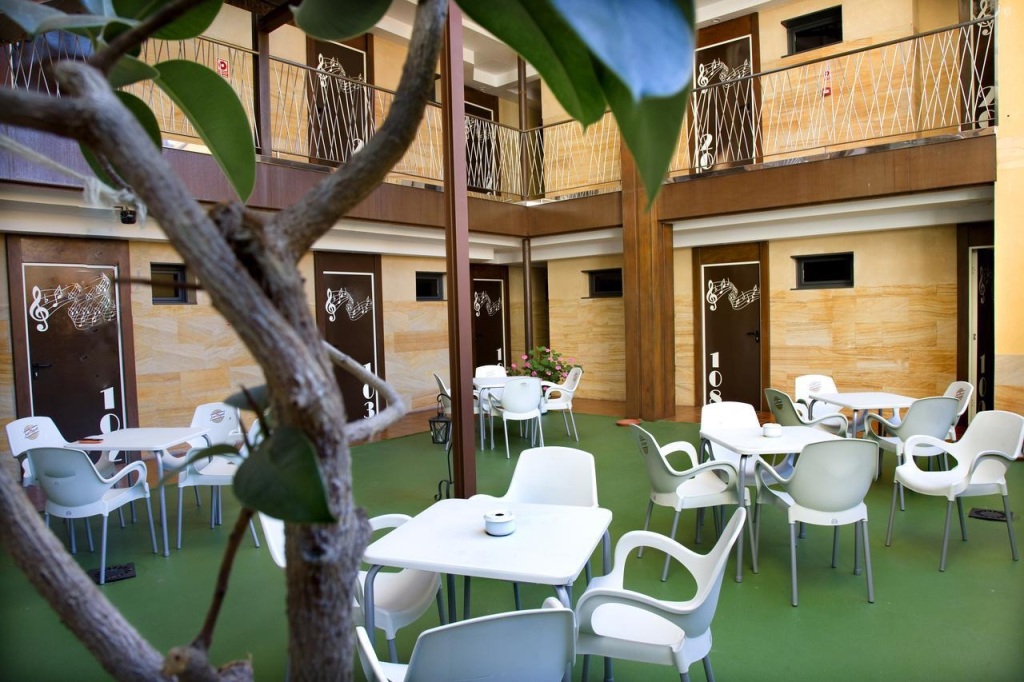
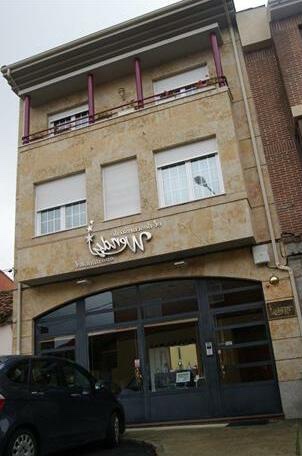
Our accomodation was at the unusually named El Descanso de Wendy. A beautifully decorated, small apartment-hotel.
This was our room,complete with patio.
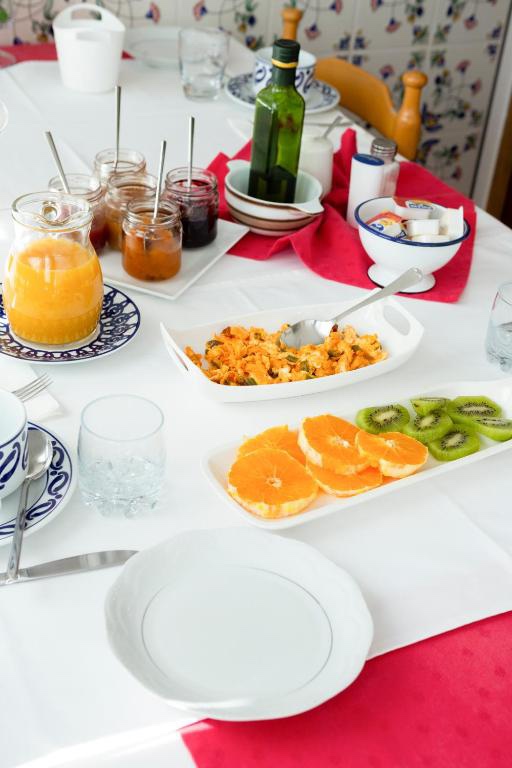
Breakfast was as tasteful as the decor.
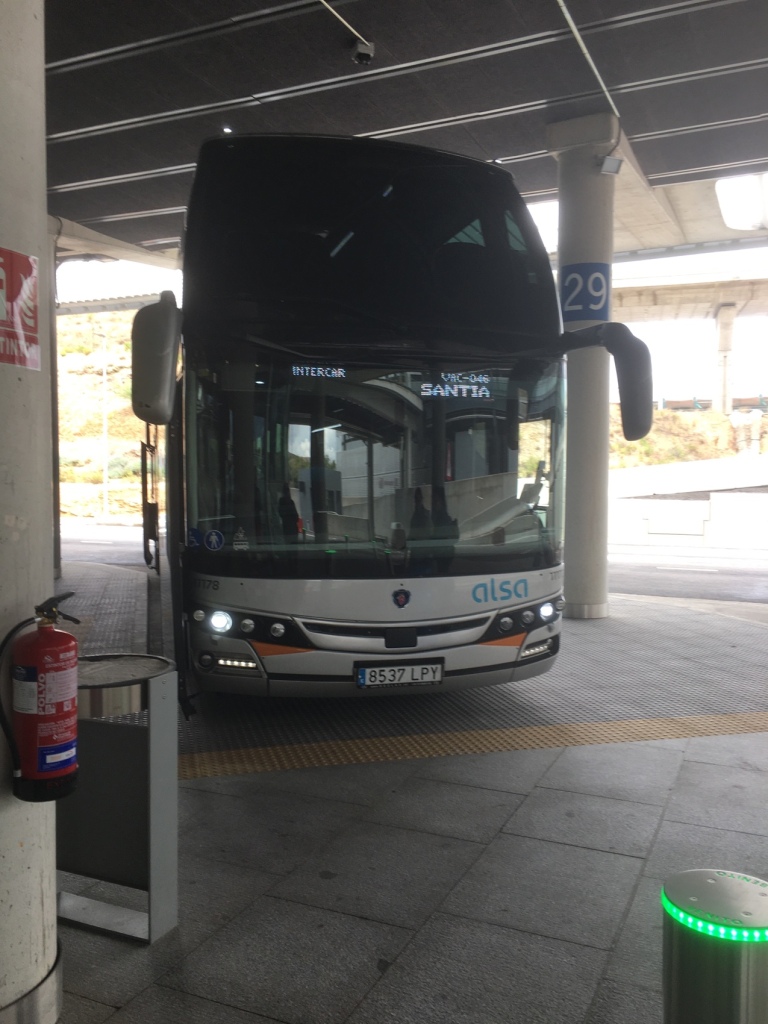
Sunday morning and off to the bus station for a long journey down to Madrid
We had great seats complete with table and TV
screens if required.
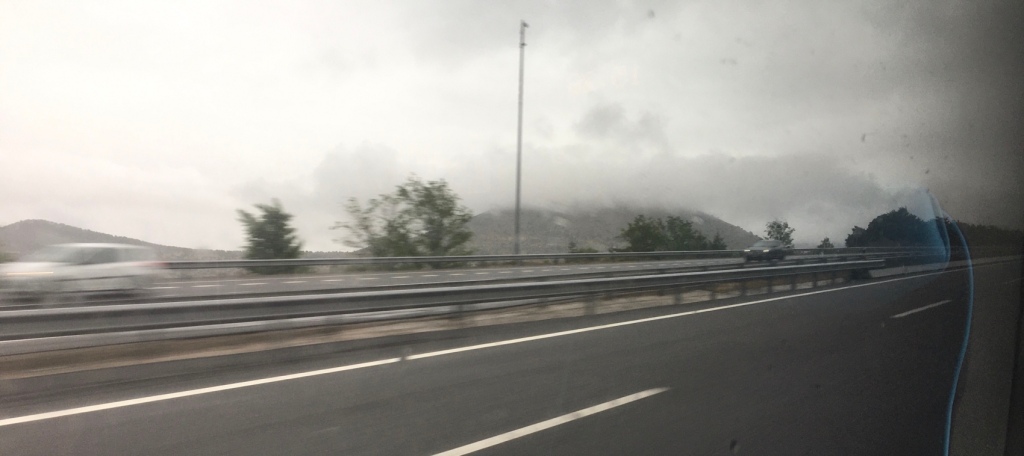
Some rainy weather en route,taken at speed!

The bus terminated at Madrid airport – our hotel was only five minutes from terminal 4 – unfortunately the new bus station is based by terminals 1,2 & 3 – the airport was very busy and the queue for taxis was over a 100 metres long! Overcoming our astonishment we joined the line and were relieved to have had to wait only 20 minutes to get a cab. The final evening was spent in a restaurant around the corner from the hotel – sharing tapas and supping excellent red wine from Extramadura – a pleasant change from Rioja. Then early to bed for Monday morning ‘s 4.30 am taxi ride back to the airport .The flight arrived 15 minutes early at Birmingham airport and we were through passport control in two minutes. Mike had organised taxis and we were home before 9 am.

Adios Espana,hasta luego El Camino.

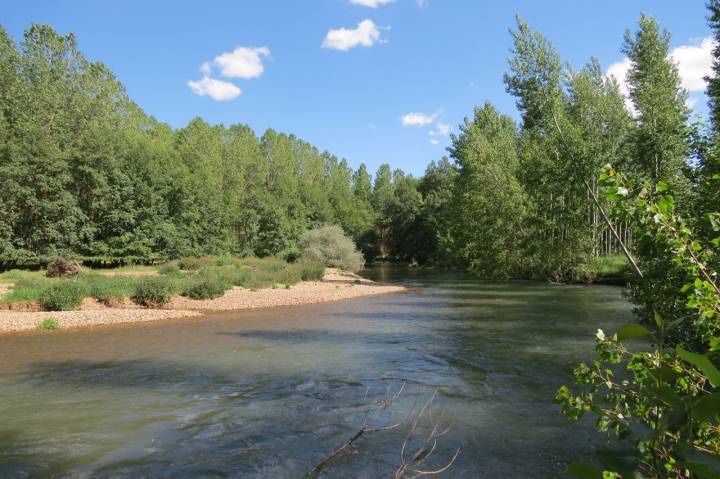
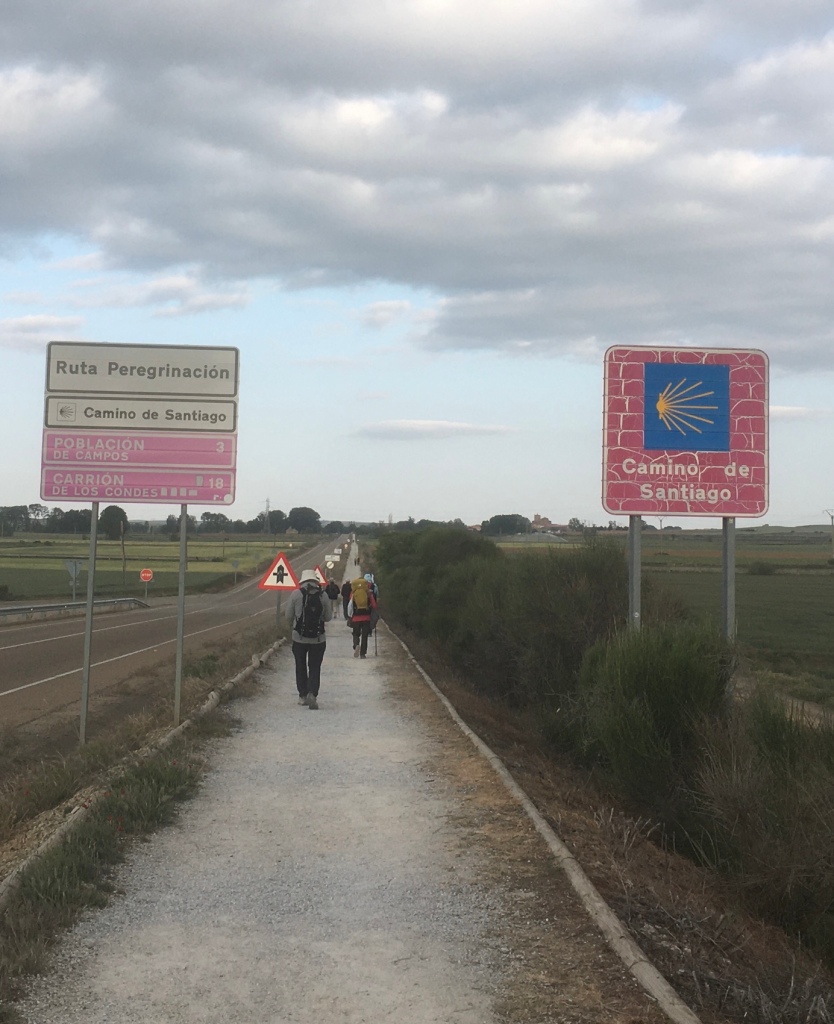
13 miles to Carrion de Los Condes,with a pleasant walk alongside the River Ucieza.

26 May
VARIETY OF BIRDSONG ALL THE WAY

We enjoyed a good buffet breakfast this morning, Ranjit on the coffee, before setting out for Carrion de Los Candes – 13 miles,or so.

Walking alongside a quiet local,road on purpose made paths – Roman style.

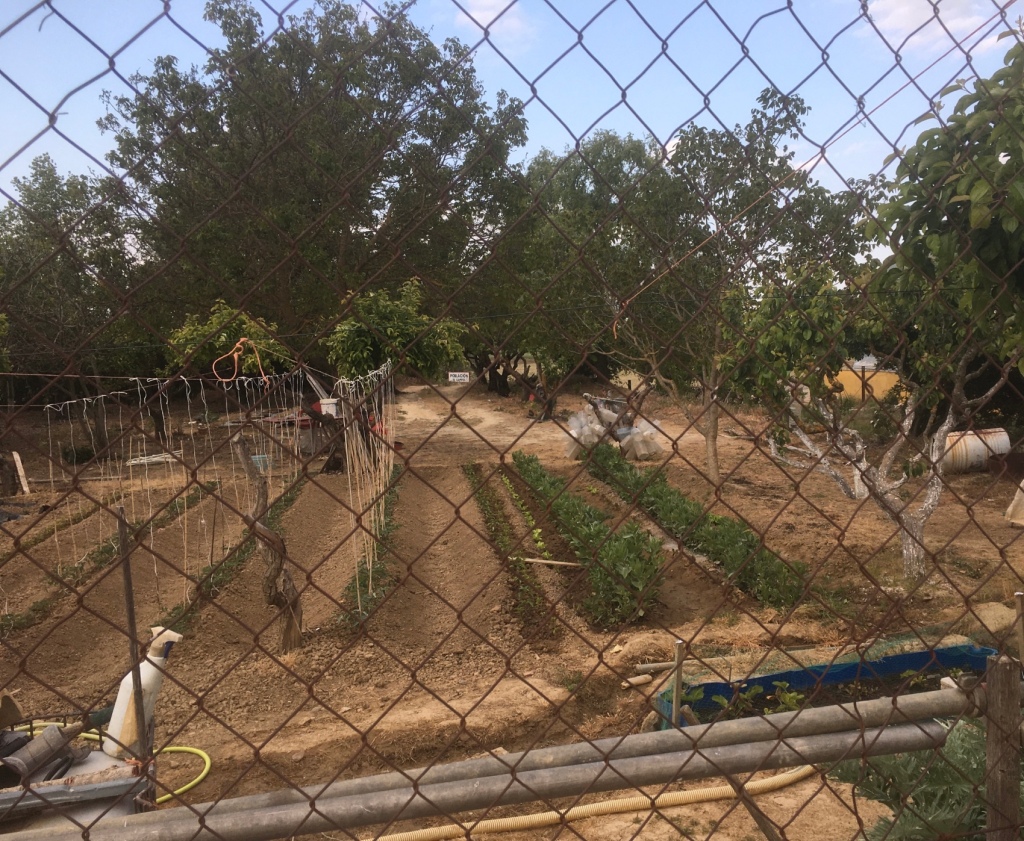
La Huerta – a Spanish allotment

My lettuce are further on

26/06/23 LEON TO SAN MARTIN DEL CAMINO

26 May
Last night…cap in Leon

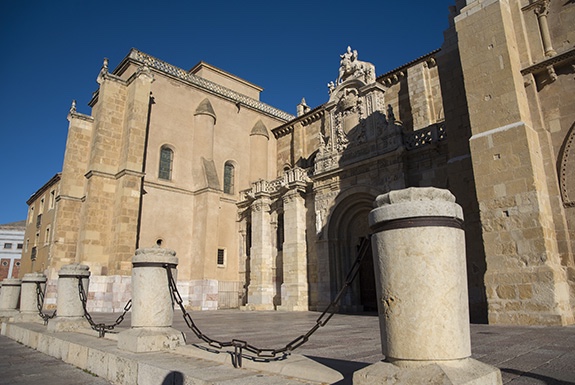
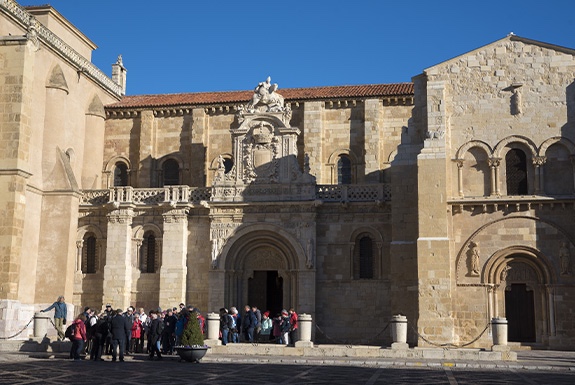
A forbidding daybreak over Leon with a threat of rain to come, but a brisk walk took us to one of Leon’s jewels – San Isidoro.

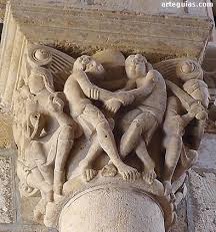
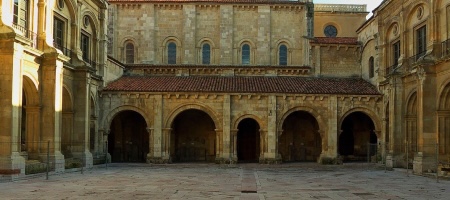
The most important Romanesque building in Spain, a synthesis of styles ranging from Romanesque to Baroque. Commissioned by King Fernando and Queen Sancha, it was home to an important school of ivory, jet and gold workers.
A 9th century church dedicated to St. John the Baptist, built on the site of a Roman temple dedicated to Mercury. After the transfer of the remains of the child martyr St. Pelagius from Cordoba, the patron of the church was changed. It was destroyed by Almanzor and later rebuilt in brick and cheap materials by King Alfonso, “the King of Good Laws”. Fernando and Sancha (11th. c.) later commissioned Petrus Deustamben to build the new church.
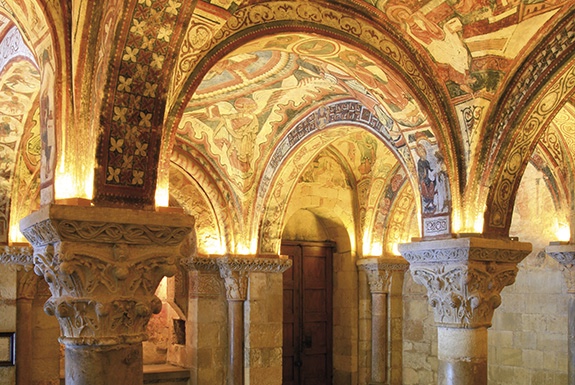
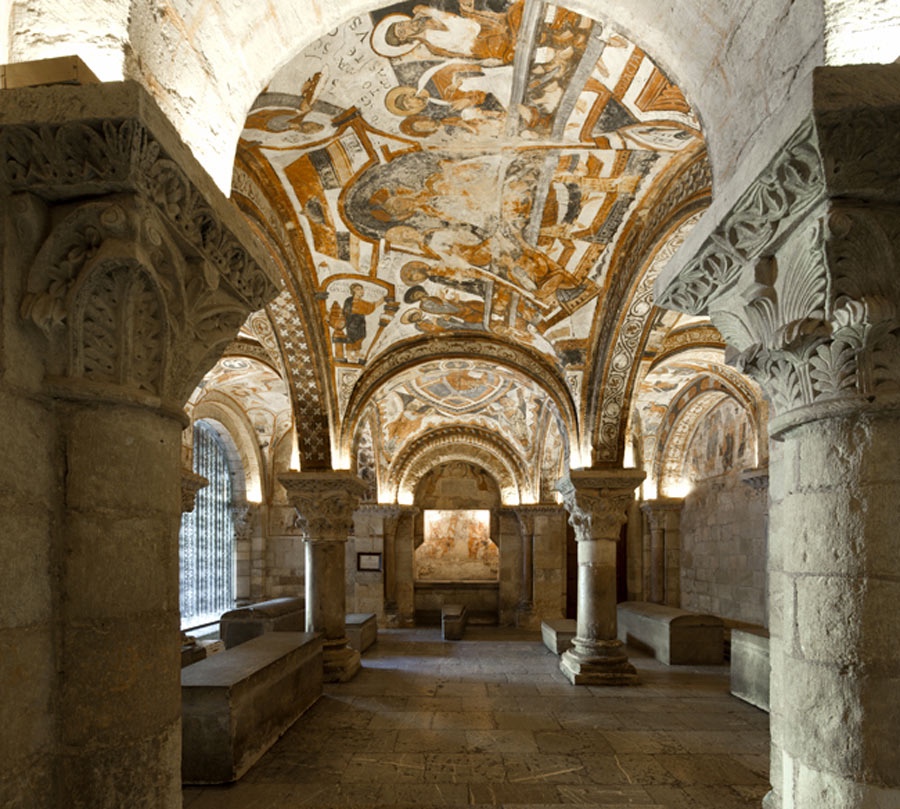
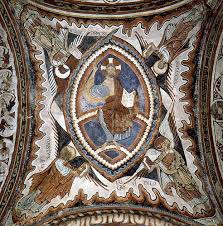
The Panteón de Reyes is the oldest monument in the complex; Known as the “Sistine Chapel of Romanesque art”, it houses frescoes that are over a thousand years old and was ordered to be built by Fernando I and Sancha. This pantheon was used to unify the sepulcher of the remains of various kings of Leon . as far as we know: 11 kings, 12 queens, 10 infants, 9 counts and different nobles. The most relevant:
• Alfonso V.
• Ferdinand I
• Alfonso VI
• Urraca
• Alfonso IX

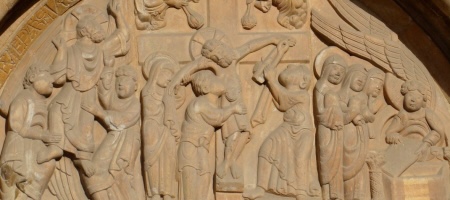
“The basilica also deserves to highlight its chapels , its museum (with a large amount of early medieval art and a library), the sculptures on its doorway and the architecture of the building itself.” TAKEN FROM THE WEBSITE

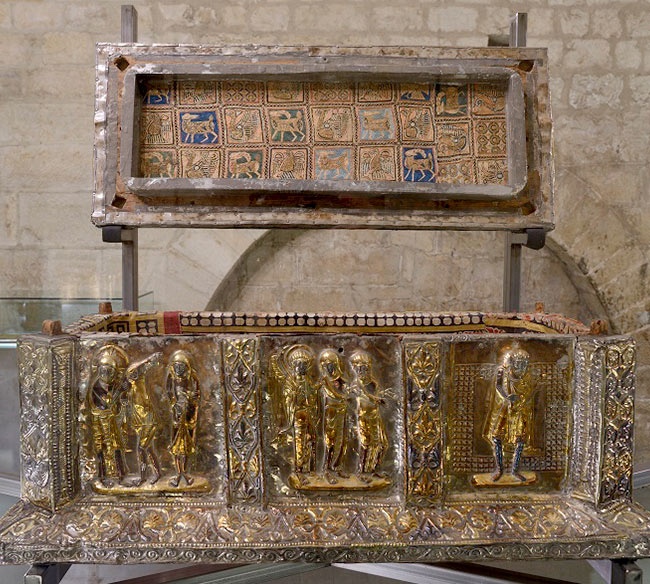
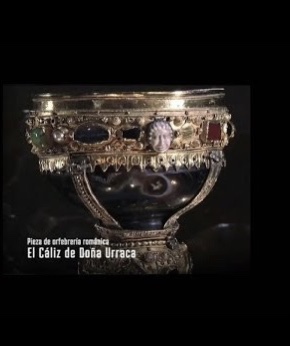
An exceptional chalice.Kings of León endowed San Isidoro with different sacred pieces of great value , which fortunately have survived to this day.

The most important piece in the museum is the chalice on display in its own room, La Sala del Cáliz .
It is a cup made up of two onyx stone bowls, dating from the 1st century AD, adorned with jewels from Doña Urraca herself and which has been linked to the cup used by Christ at the Last Supper .
That is, what we all know as the Holy Grail .
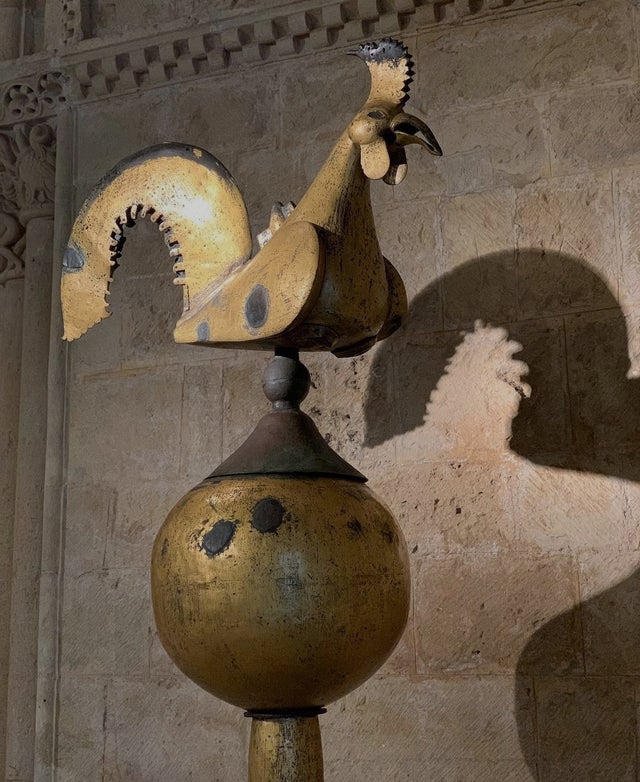
For many years the tower that the San Isidoro complex has was crowned by the figure of a rooster, which everyone thought was a simple weather vane.
Today it is exposed to the public, and we know that it was not conceived as such. It is a large piece, made of leaded copper covered in gold, with gems serving as eyes (now disappeared), dating from the 6th century and coming from Persia. How did you get to Leon? Nobody knows , nor does anyone know what the inscription inside it means.For many years the tower that the San Isidoro complex has was crowned by the figure of a rooster, which everyone thought was a simple weather vane.

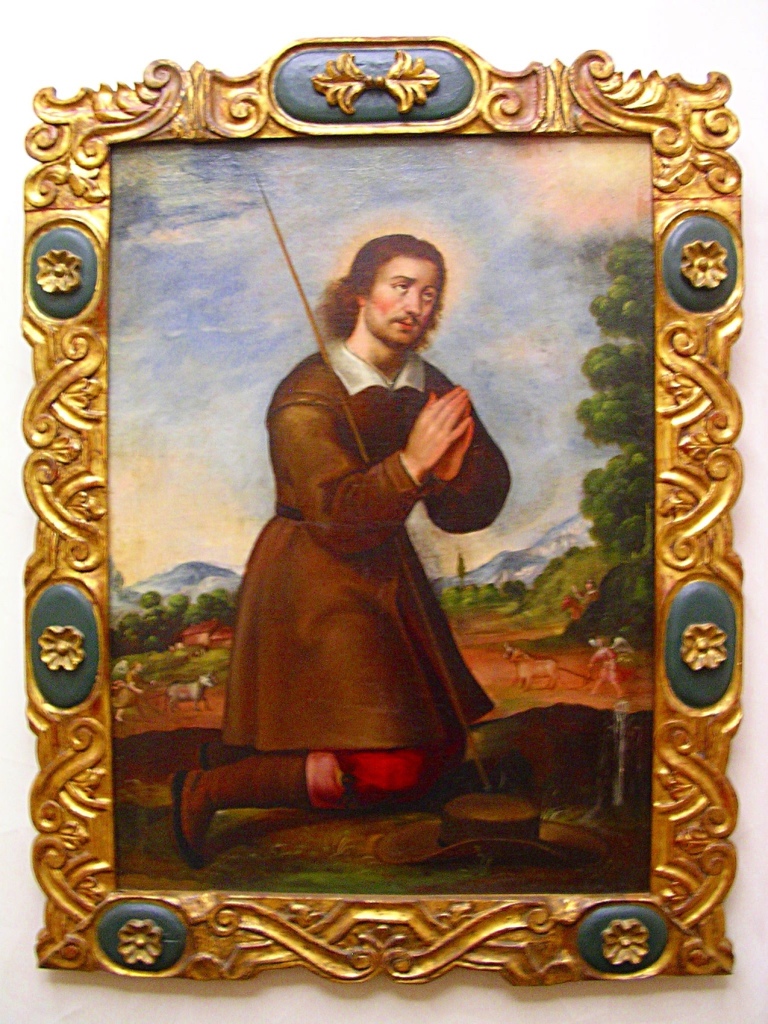
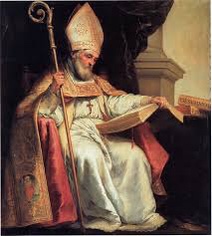
Who was San Isidoro ?

According to legend, a man in a white tunic appeared in a dream to Bishop Alvito de León, who told him that he was the Archbishop of Seville and asked him to take his remains to León, in addition to giving him indications of where they were (it was not known exactly).

Indeed, he found the tomb of the archbishop, and how he also transmitted it in his vision, three days after the discovery he died in the city.

As already mentioned the advice from many guidebooks is to skip the first part of the route out of the city which traverses monotonous suburbs and industrial units. The whole walk from Leon to San Martin can be described as somewhat uneven terrain, for until arrival, everything has been an endless plain….or should I say pain”? There was little of photographic interest as the route crisscrossed – crossed the N 120.

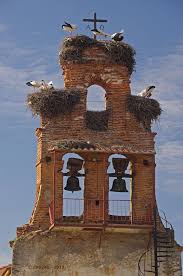
We have enjoyed the Storks’ nests through our Camino. It was a relief to reach La Huella Albergue, a very new accommodation, bright, cheerful with good views
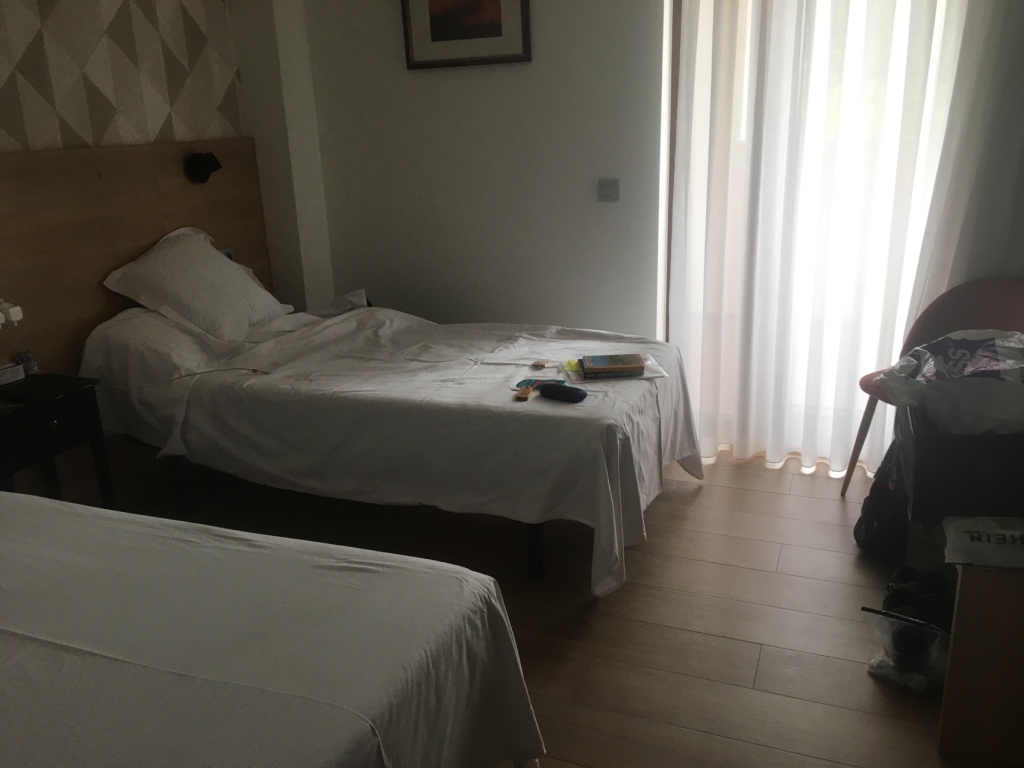
Twin room
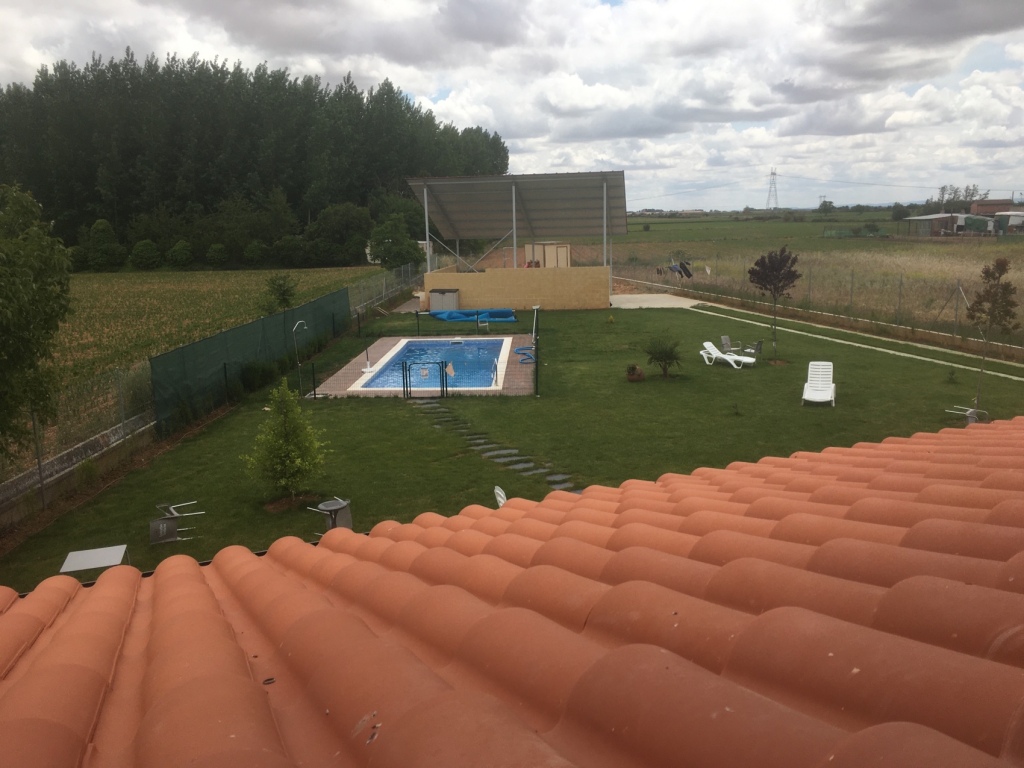
Not many takers for the pool today
The skies did begin to lighten by late afternoon.
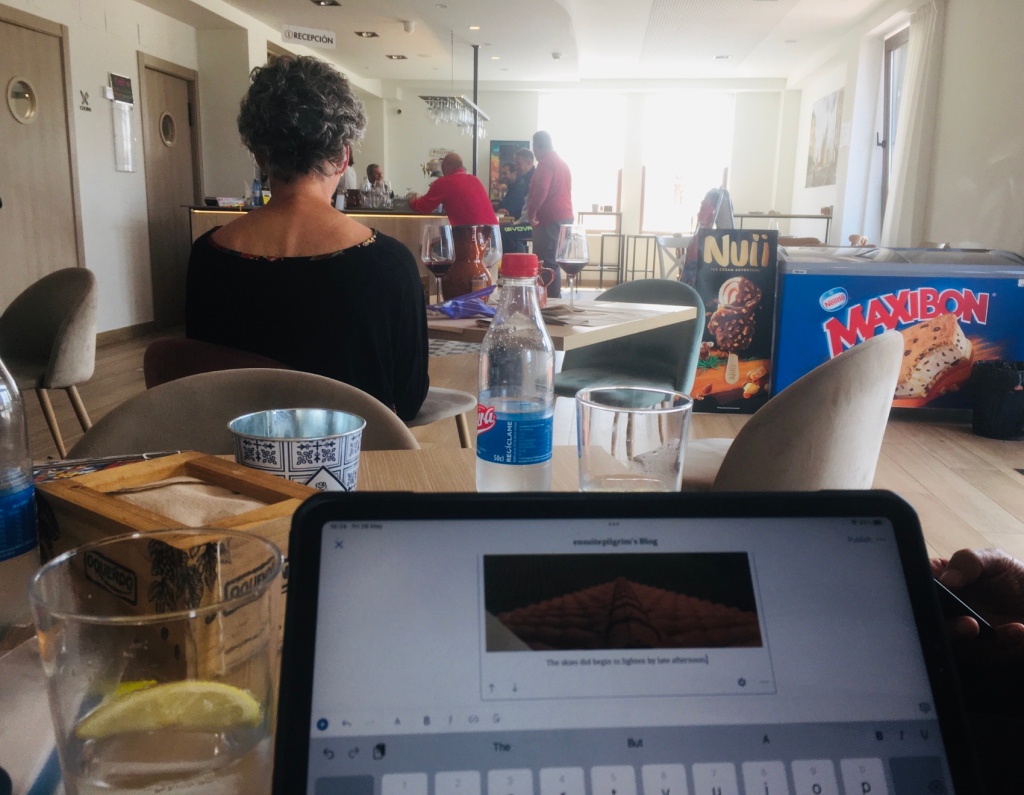
Quietening down in the bar after lunchtime- the view from my table .

25 th May – A REST DAY IN LEON

25 May
The Ayuniamento
The Lion KING. There are many links with kings in Leon
The famous Catedrale – It was 1975 when I first visited here on a camping holiday.
Thst image of the Rose window has remained with me for 49 years
https://www.catedraldeleon.org/ is the cathedral website
– click on the Union Jack. There is so much to enjoy here it would be impossible to do it justice in a Blog. So I shall just share some photos
The Cloister
Sections of the Roman walls
In some places the residents have incorrectly apartments and houses in to the walls
This one needs some TLC though.
En route to our next place of interest
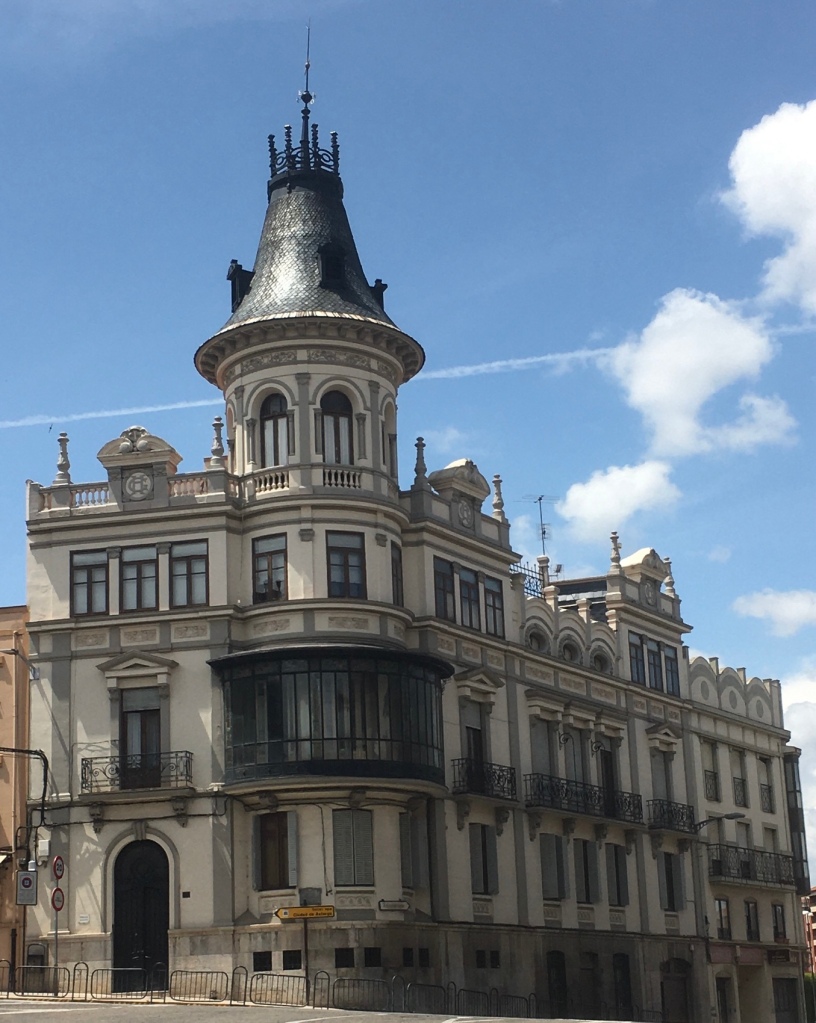
MUSEO GAUDI – CASA BOTINES
Gaudi in Leon
Gaudí Botines House Museum
At the end of the 19th century, a young architect who had never left Barcelona crossed the peninsula to build a fabric warehouse in León.
His name was Antonio Gaudí, and the building would be Casa Botines.
A unique work that cities all over the world would dream of.
Casa Botines is part of the monumental itinerary that any traveler wants to know when visiting a place.
There is no history of art or architecture that ignores its originality and its contribution to the world of construction.
The building, declared a National Historical Monument in 1969, is an amazing example of what the art of architecture is.
The Museum, dedicated to the history of the building, the figure of Antonio Gaudí and art and painting from the 19th and 20th centuries, exhibits the Fundación España-Duero Collection with works, among other artists, by Ramón Casas i Carbó, Raimundo de Madrazo, Joaquín Sorolla, José Navarro Llorens, Ignacio Pinazo, Nicanor Piñole and Joaquín Mir Trixet.
Gaudí’s magic is present in multiple details such as the Catalan vaults, the cast iron columns, the stained glass windows on the noble floor, the light in the patios, the wooden and wrought iron stairs or the basement that houses -among other curiosities- the original tower from 1893.
Casa Botines is one of the most interesting pieces of nineteenth-century architecture in Spain, whose angular towers give it the appearance of a fairytale castle.
The Gaudí of Casa Botines is the most architect Gaudí, the artist who knows how to unite technique and aesthetics without a solution of continuity.
THIS IS AN EXTRACT FROM THIS INFORMATIVE WEBSITE https://www.turismocastillayleon.com/es/arte-cultura-patrimonio/museos/museo-casa-botines-gaudi
The house is one of the very few architectural creation GAUDI constructed outside Catalonia. Designed as a textile workshop to make fine gowns for the growing Leones bourgeoisie. He designed apartments in the upper floors and it was also home to a bank at one time.
The whole concept of this fascinating place is a “ beautiful thing”
Stained glass shields appear in the windows
This one depicts Leon with an acknowledgment of the Camino representing the stars  – Compostela – a field of stars.
An awesome invention
Some views from the Corbels
Another section of the city walls
I loved this portrait of a gardener in his Huerta
Sitting with the genius GAUDI, facing his Casa Botines
Mike and I also fitted in a visit to the Leon Museum
A friendly welcome here from all the staff. https://museoscastillayleon.jcyl.es/web/es/museoleon/museo-leon.html is the link for more information.
The Humidor district where we are bound this evening for a Tapas trail
AMEN TO THAT

TO LEON – NOT A PARTICULARLY MEMORABLE WALK – BUT LEON WILL BE.

24 May
Today’s route
Leaving Mansilla
Crossing the River Elsa

There was little in the way of particular interest fora few kilometres and we were pleased to come across a rest stop not mentioned in the guide books.

This little place is run by a really hospitable lady from Vigo in Galicia. Refreshments and Camino products. Coffee and cake for €1.30 so I made a donation and had a good chat with owner who has been there for three years. She has walked the Camino Frances and the Camino Primitivo and is planning the Camino Portuguese in November. As I had walked all these we had a lot to talk about! A lovely Peregrina.
We were nearing Puente Villarente with its bridge of twenty arches
Like the next village on this section,Arcahueja they are dormitories for nearby Leon
We began to walk through industrial sites and suburbs and so following advice in the guidebook we took a taxi for the last 5 Km to avoid the tedium and the traffic islands
An impressively designed Fuente – one of the more attractive sights en route. We asked our driver which was the bigger city,Burgos or Leon?. He replied “ Leon is bigger and more Beautiful “. We were dropped off at the Hotel door.
A swift check in by a very cheery receptionist and we were off to find a latish lunch,nearby.
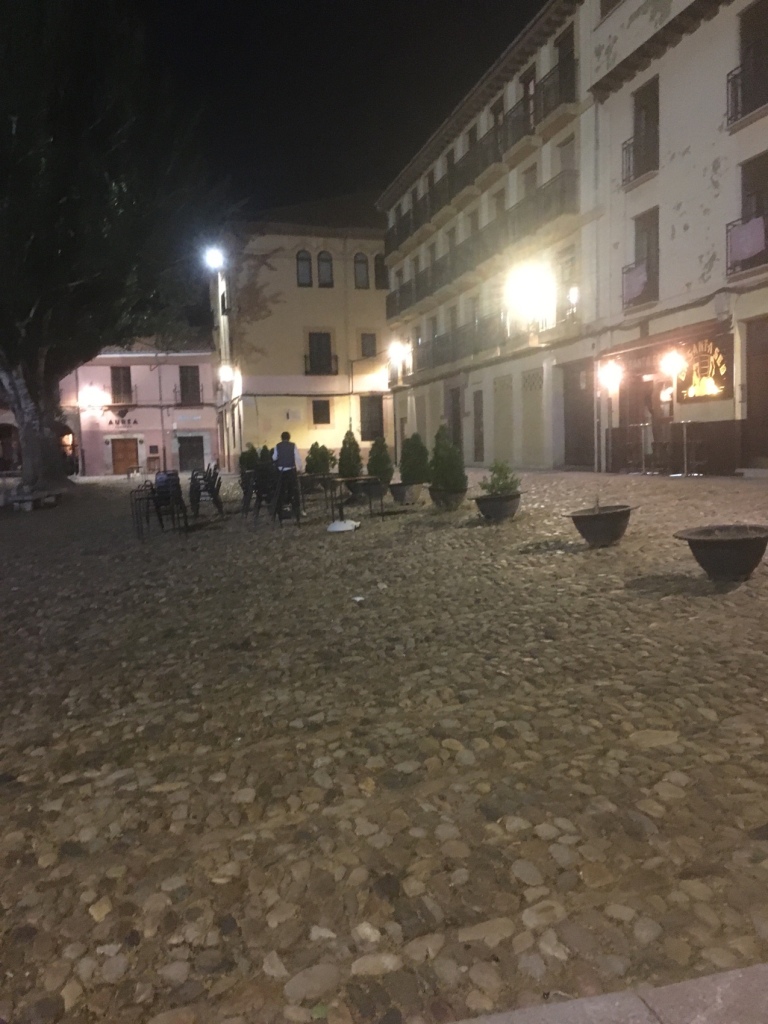
Plaza de Santa Maria del Camino – medieval cobblestones – originally a grain market
We ate at the cafe just to the left of the fountain
Tapa’s starter
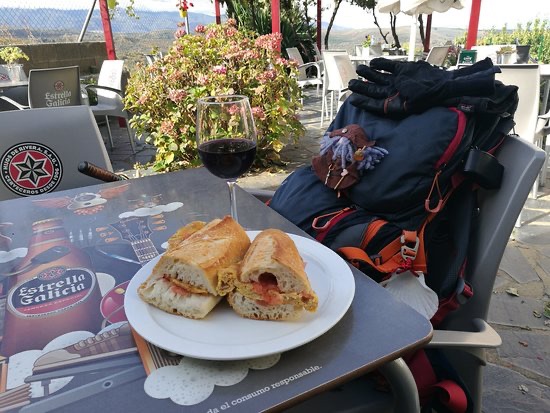
A bocadillo with grilled Chiperones and home made Aioli – lovely light brown bread .

That will have to do for now. Leon still maintains the traditional siesta where most places, except restaurants, close from 13.00 – 16.00. Temperature reached 25* today – very pleasant and a good forecast for our “ rest” day here.

Camigas – FROM BURGO EL RANERO TO MANSILLAS DE LAS MULAS – Fin de Meseta

24 May
Good bye
Early start
One way to pass the time in quiet places like this – tree huggers!
The usual church tower attraction
Mountains appeared in the far distance
Every village has a Cruceiro- – pilgrims leave stones as prayers or symbolic of leaving their cares,problems behind
Leaving the Meseta with its endless plains and fields – encountering two things not seen for good few days – First a forest
Second – Grazing cattle
Ruins of an old farm building the walls are of lime and pebble bonding. Adobe.
Mountains more apparent as the clouds disperse
An irrigation canal
Descending at last towards Reliegos
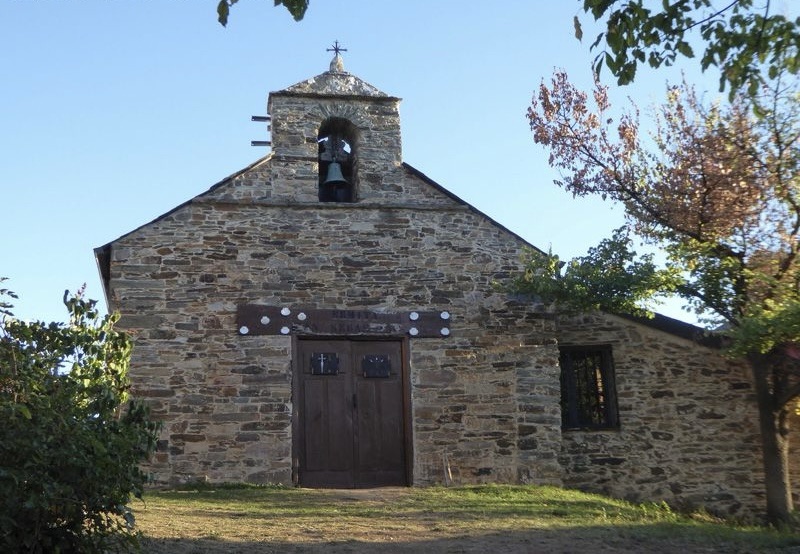
A tiny chapel dedicated to the Virgin Mary
These stone and placard type notices are found at the entrance to every village
A lovely, more modern Adobe style structure, complete with chimneys
We received a warm welcome at BODEGA Gil II just past the house,above.
The ELVIS Bar has been here for many years but bit it looks as if Elvis has left the building for good,sadly.
What! No Storks amid the bells?
This traditional Adobe house still occupied- must be very dark inside.
Another Huerta
And even more cattle on the outskirts of Mansilla
A helpful map on the town outskirts
An ancient gateway through remnants of the town walls,Mansilla de las Mulas is a town located about 15 km from the capital of Leon, on the Ctra. De Valladolid and on the banks of the Esla river.
It is an important enclave of the Camino de Santiago, since in this town the Royal French Way and the Vía Trajana converge.


The town has a medieval origin, and is surrounded by a walled enclosure, built around the year 1181 to defend the town from the banks of the Esla, so the walls have considerable dimensions (3 meters thick and 14 meters high). .
Sections are still in good condition, especially next to the river;
although of the four gates it had, only two remain .
In the vicinity of the
Hermitage of the Virgen de Gracia and the ruins of the Puerta del Castillo (today destroyed), through which the intramural town of the
walled enclosure was accessed , is this monument dedicated to the pilgrim.


It is made of stone, and consists of a series of statues representing pilgrims on the Jacobean route, resting on a staircase on which stands a cross carved on both sides with images of the Virgin and Christ respectively.


The monument is erected in this place as it is the junction between the French Camino de Santiago and the Roman Road (or via Trajana).

This square is the geographical center and one of the most important of the small town of Mansille, where the modern building of the Town Hall is located.
It is surrounded by two-storey houses, typically Castilian, characterized by its arcades in which the columns are large wooden beams supported on stone plinths.
These houses are a sample of the typical architecture of this area, which can also be seen in other places in the city (Plaza del Grano and Plaza de Lena).
They are generally inhabited by traders, who have their store on the ground floor and their homes above.

In the middle of the square is the well, hence its name, and also a modern monument built in metal.
Not of historic interest but an essential outlet on the square as we had decided to self cater as we are staying in a townhouse, Casa Belia.
Sharpeners in a lovely setting just across from the house. And tomorrow we are bound for LEON

22/05/23 From Sahagun to El Burgo Ranero

22 May

Sahagun is a sleepy place – in a time warp – the only lively activity was a bouncy castle for children who had made their First Communion – all sailor suits and white frocks.

Also on hand was a Churros and Chocolate van
“ Let’s leave then to,it “ these two decided.
The Plaza Mayor
There are a good number of heritage sites here. It looked as though it has taken a long time,literally, to begin much needed restoration of some of them.
It’s a cat’s life in the monastery.
Amazing grounds
ARCO SAN BENITO
PILGRIM THEMED MURALS
This morning we came upon some more on our way out of the town
The arch way at 08.00
Being a BBQ fan I took a double take on this metal sculpture
The Puente Canto – originally Roman
But reconstructed in the XI AND XVI TH centuries

We were on our way and after an hour or so,it was a welcoming picnic spot for refreshments on the REAL CAMINO FRANCES.

By 10.00 it was heating up and time to strip off tops and walk with arms and legs bared.
Just before Bercianos we came across the biggest Albergue ever!
Una Huerta
Entering Bercianos
This display was a eyeful of colour.
Lago de Bercianos – you might have easily failed to have noticed this lake on your right were it not for the din the frogs were making.. El Burgo Ranero,our destination, is said to have got its name either from being a granary town or a place with an abundance of frogs!
You could hardly hear the bird song.
A long,straight road but with plenty of shade if needed . Upon reaching El Burgo ( whatever ) we were told by the people in Piedras Blancas that we had no reservation and despite my insistence they directed us to Albergue La Laguna which they obviously ran as well. A five minute walk later we were told by the formidable receptionist there that we had no places booked there either! So, I showed the lady,the e-mail correspondence from last November when I reserved the rooms and she began to nod her head, picked up the phone, barked a few instructions, then gave me a “post it “with her name and 3 Habitaciones dobles written upon it. Smiling she redirected us back to Piedras Blancas where, I think it was her her husband, grudgingly filled in the forms with passport details etc and heigh ho we had our rooms. At the same time, the Correos arrived with our luggage and we were home and dry. The hotel’s decor was still very sixties, clean but basic. Given the choice I wished we had been given places in the Albergue where there was some greenery. Relieved,but unimpressed with our treatment we decided to dump,the luggage in our rooms and head next door to El Peregrino for a boccadillo and a beer .
We were greeted with a smile and great bocadillos, so we decided to book dinner and breakfast tomorrow there. Rob had researched and found that El Peregrino was highly rated.

An experience that reminds us that an independently arranged Camino is not a package holiday- there will be occasional setbacks but always more than compensated by the rewards.

Complete this sentence : “Local wine, regional food, laughter,camaraderie, kindness, resilience,revitalising your will,power, discovering the richness of another culture…..”

SUN. 21/05/23 Ledigos to Sahagun10 miles

21 May

In my last Blog I wrote quite a piece on Albergue La Morena, however, the reality of staying there yesterday ( Sat. 10/05/23 ), was quite different. A tale of two contrasting scenarios. FIRST the rooms were modern and bright, with nice touches – fruit bowl, complimentary water, foot cream and hydration pack – the problem was getting in to the room. It took 50 minutes to register and get keys, I was unimpressed by the initial greeting I got on entrance , from a diminutive woman dressed impeccably in white – “ You’ll have to wait “ – she made no effort to assist her hapless colleague on reception duties. SECOND after enjoying a couple of beers in the sun we made our way to dinner promptly at 19.00 as ordered. We examined the Pilgrim Menu 2 choices of first and second courses,3 for dessert. Traditionally, and in every restaurant I have ever eaten, water,soft drink, beer or wine is included in the menu – this menu “ included” water / bread.The receptionist came for our drinks order – 2 bottles of wine €36.50 – no house wine! Then eventually our order for the meal,was taken by the barman, they had run out of one of the choices ( there were only two ). One of the first courses was Estufado of Broccoli ( broccoli stew ). It has to be the worst thing I have ever seen on a Spanish plate. TG I had the soup which was lukewarm . It took 45 minute before any food was served. My main gripe was not the poor quality of the food,on a Camino you can expect the occasional stinker, what enraged me ? It was totally unpilgrimlike and not in the spirit of the Camino . IE – a rip- off as there was no other place to go in this small hamlet. Grandmother La Morena would be turning in her grave.

GRIPE OVER

Sunday’s walk began under cloudless, blue skies. We passed an Albergue on the way out of Ledigos

The Templar Knights were a powerful force in medieval times around here.
After an hour we had a drinks break and Sue had already walked around the stones in circles…
Very soon another Pelegrina passing by, stopped said Hola and She,too, walked around in circles! “It’s a female thing” said Sue.
In contrast to yesterday’ s saunter, the longest,amenity- less stretch on the whole Camino, we had choices on this stage.
The Albergue bar in Moratinos
Very Moorish – hiding an overgrown patch of under growth !
The square by Iglesia de Santo Tomas decked out in colourful Knit-yarn creations made not only by a local group but from places as far away as Pennysylvania!
Competition in the next village which was still some way away
More Hobbit like bodegas dug into the hillside
The competition
Reminded me of a song we used to sing on school coach outings “ Oh you’ll never get to heaven ( repeat ) on that green bike ( repeat ) ‘ cus halfway there you’ll have to hike ( repeat ) . We used to use teachers’ names!

Knock, Knock….
Some examples of the flora en route
Huge Broom shrubs
Such is the influence and affection for the Camino, even the motorways get named after it.
Tom is examining the information as we leave Palencia and enter Leon Province – first view of Sahagun in the distance.
Apparently, the last third of our Camino (hopefully next year ) has the most diverse qualities of landscape on the whole Camino .
The landscape may change but your shadow won’t as we continually head West.
SAHAGUN AHEAD
Look carefully and you will see a very tall priest. Not often you see Religious on the Camino which may seem strange considering it is a pilgrimage . We didn’t see the priest very often without an acolyte in close proximity…” One More Step Along The Road I Go” ..
sing along with Sydney Carter’s classic

https://youtu.be/5jhAzbdKq6U
We crossed this medieval twin- arched bridge over the small Valderaduey river which lead to the Ermita de la Virgen del Puente. This was an Augustinian pilgrims’ hospice in the Middle Ages. It was also a pleasant stop for an impromptu lunch in the adjoining picnic area.
Some excavations going on too.
We eventually left via this unlikely grandiose gateway – “ centro geografico del Camino “ and made our way to the accommodation at ALBERGUE San Juan, where we were very efficiently booked in by dad and daughter.
A sunny windowsill on the 2nd floor. Now for a walkabout in Sahagun.