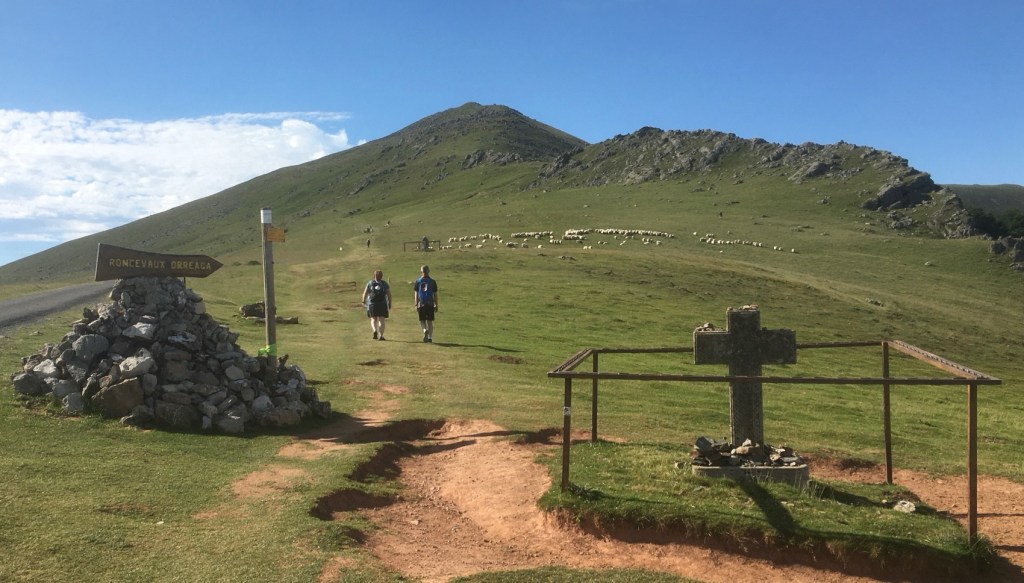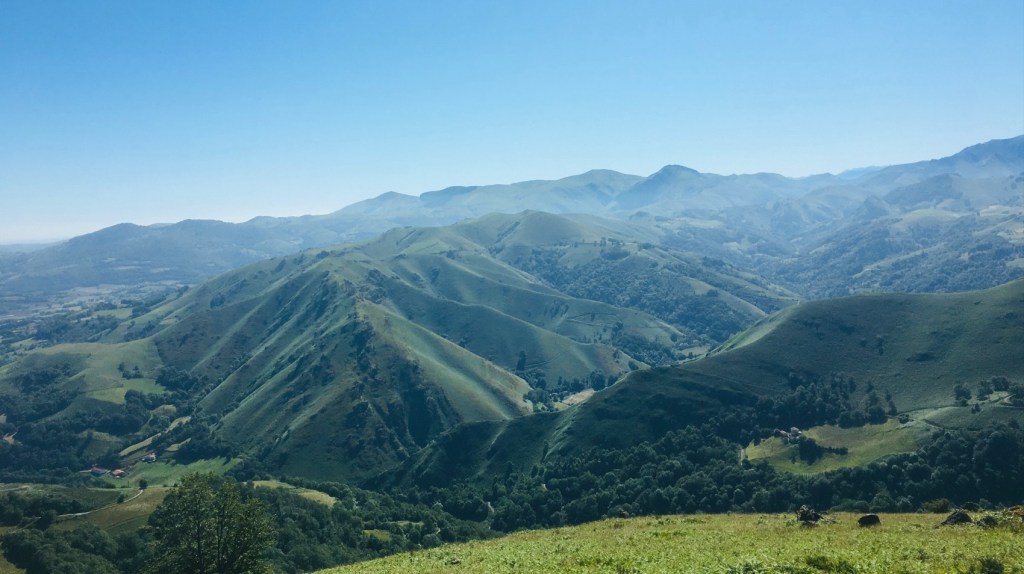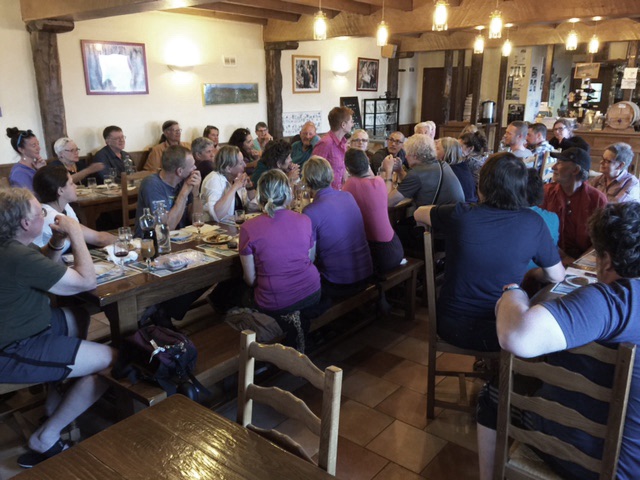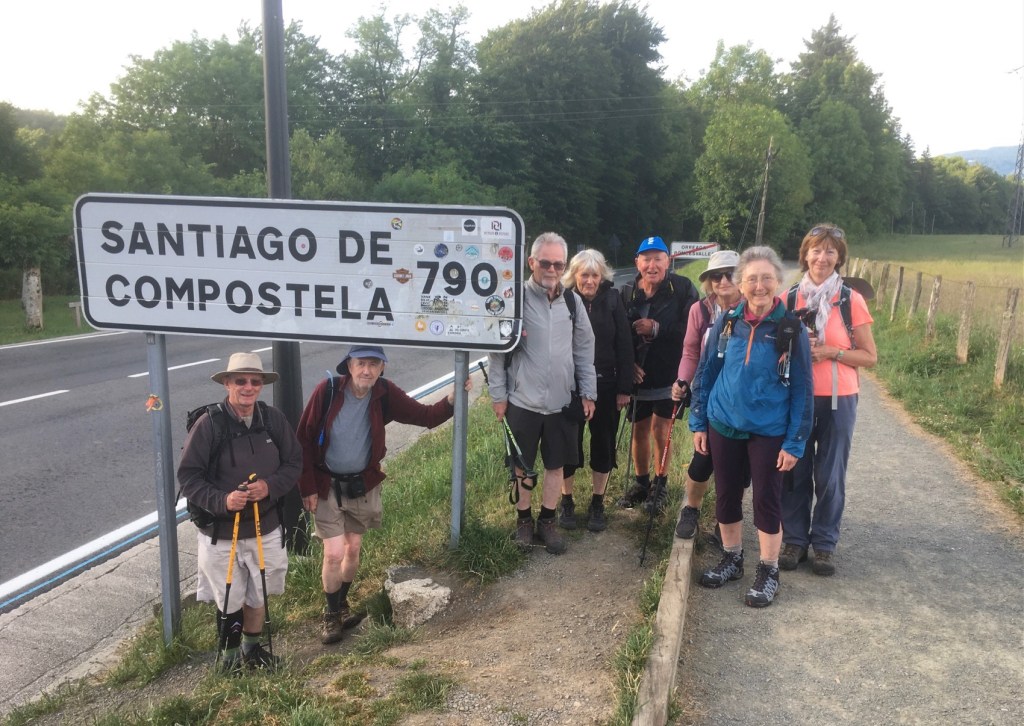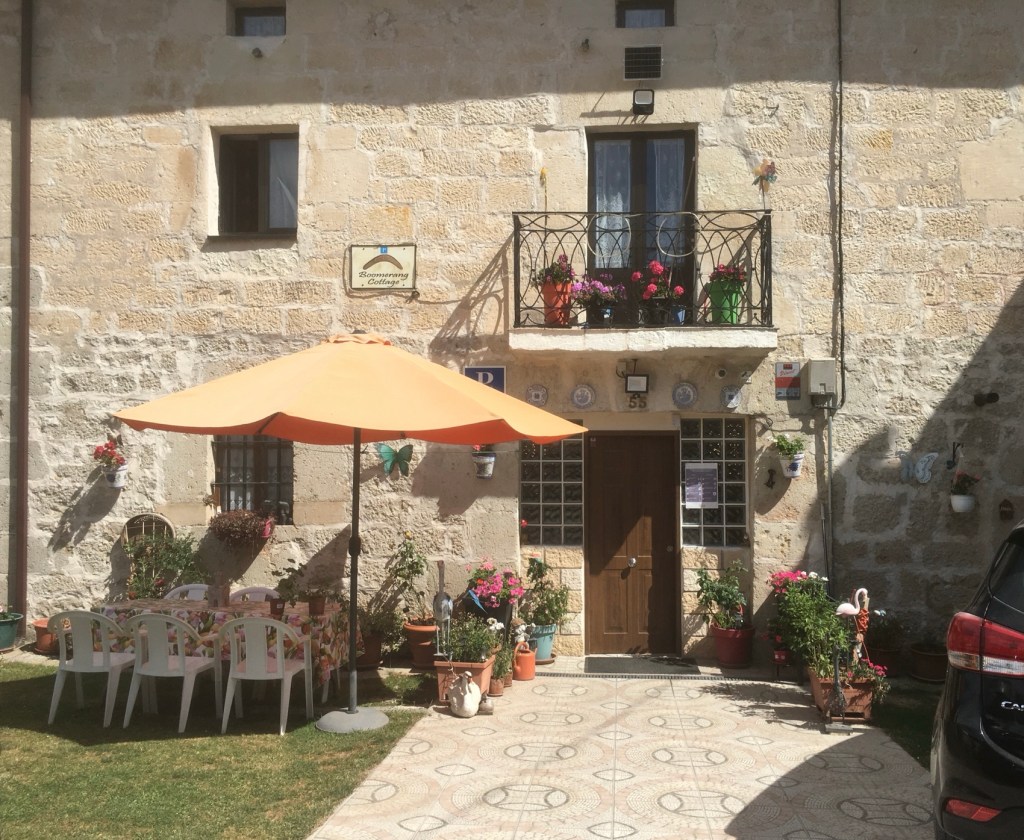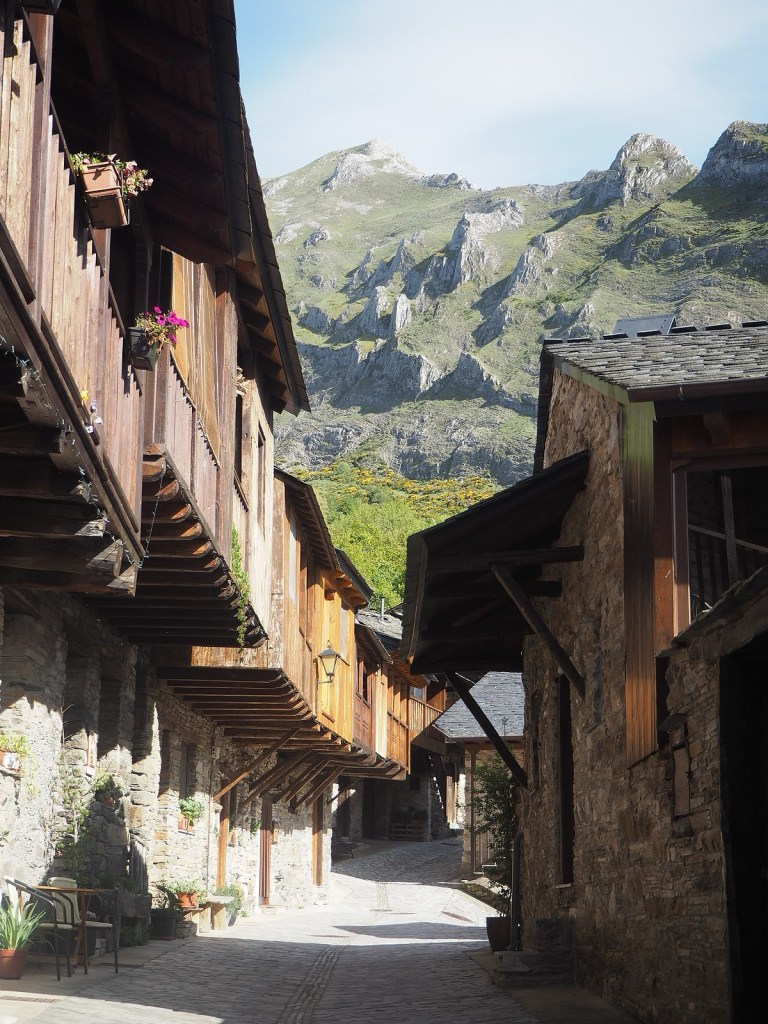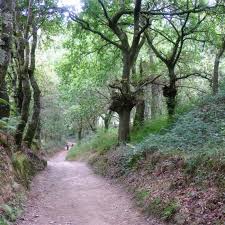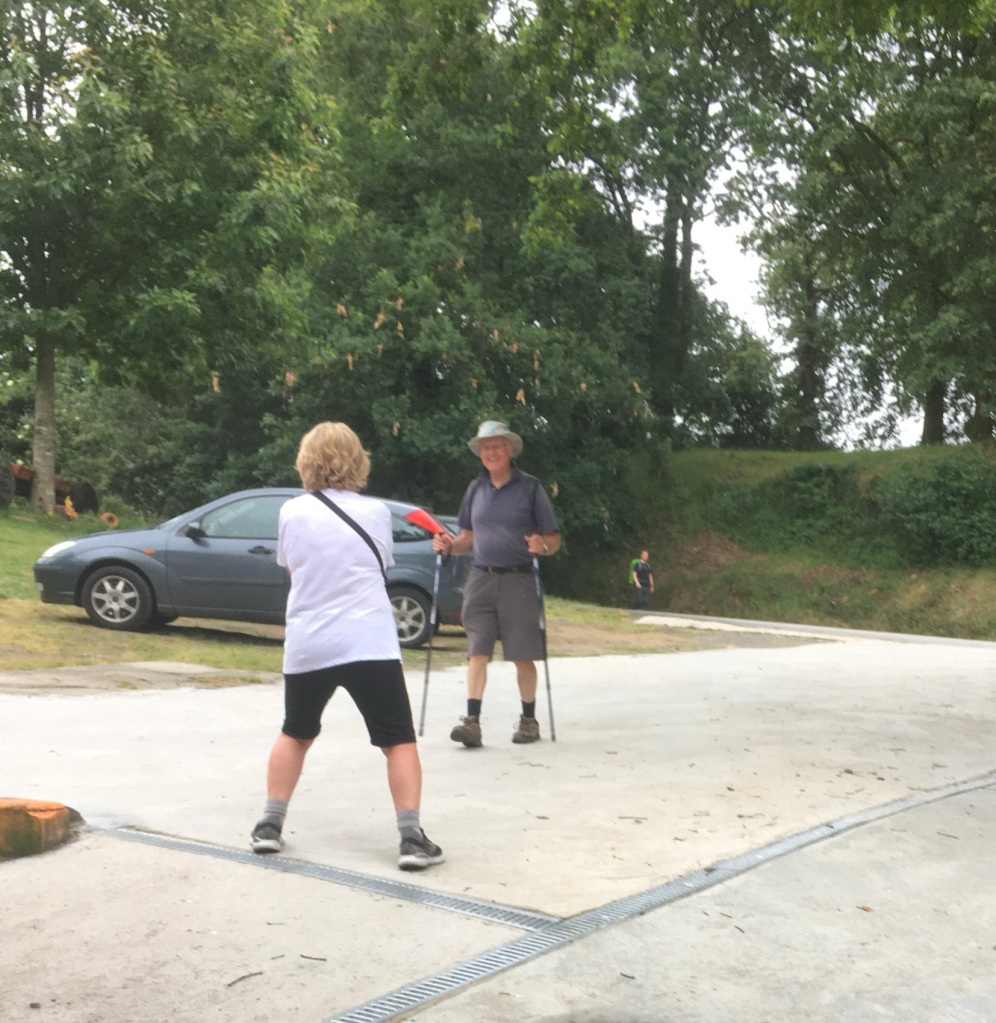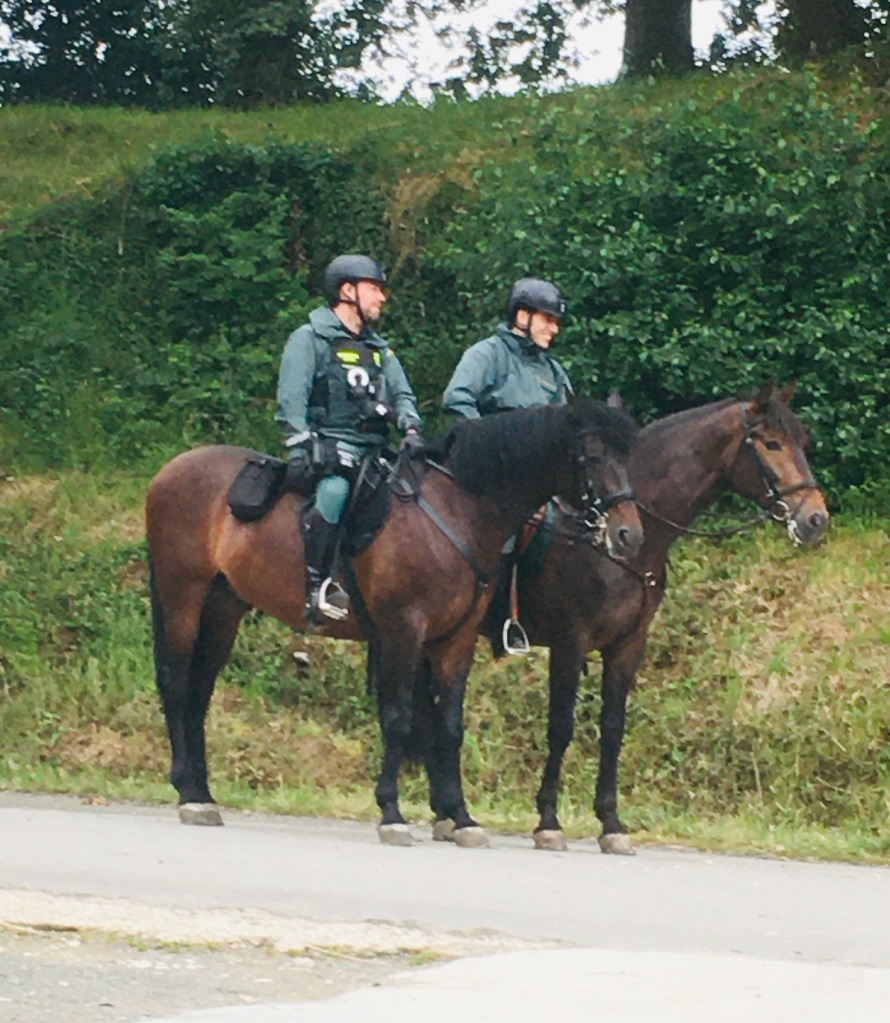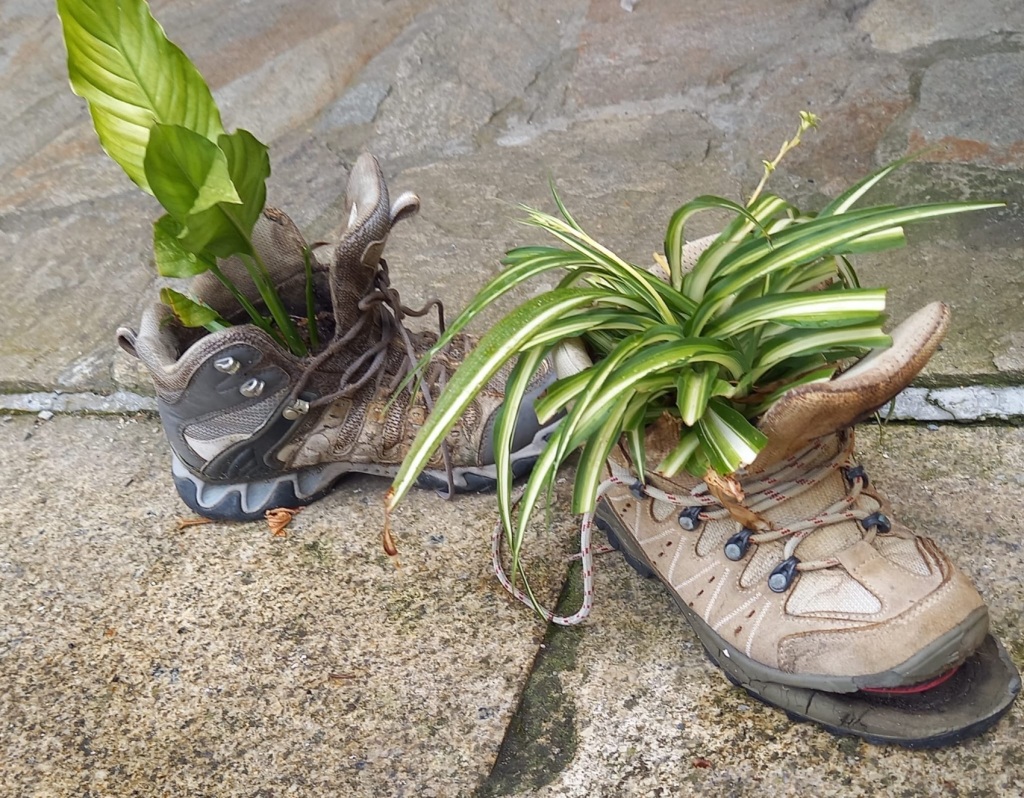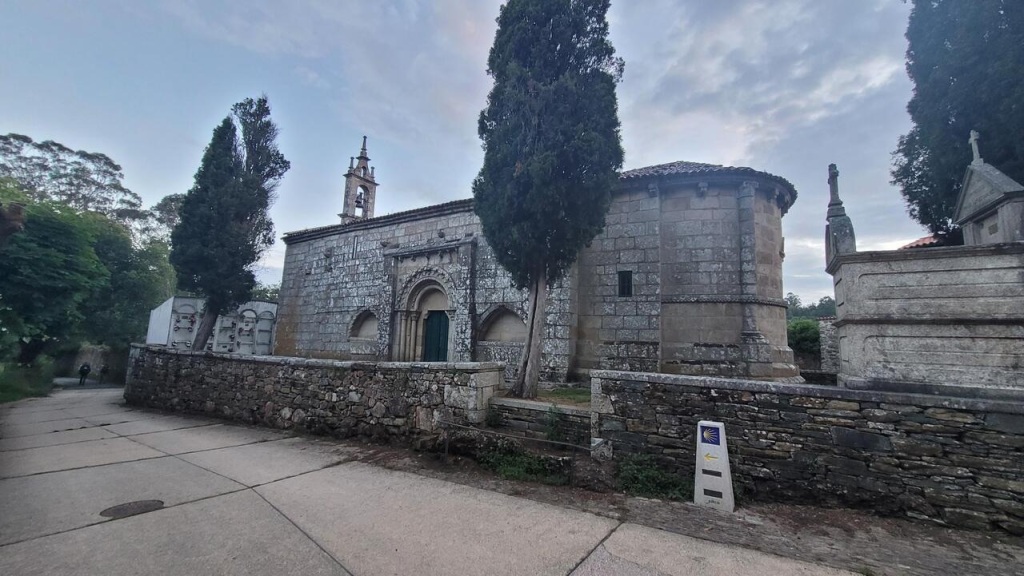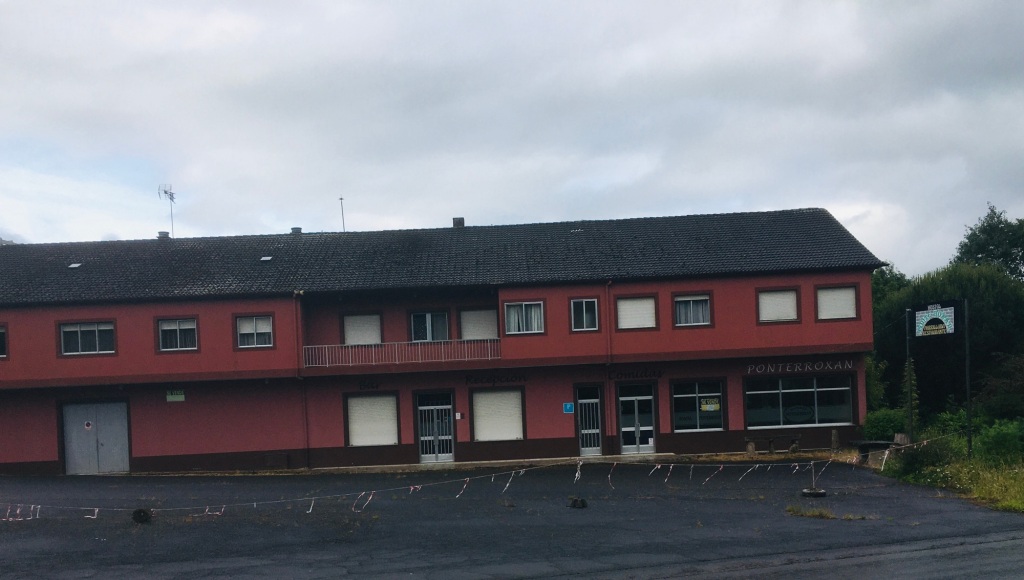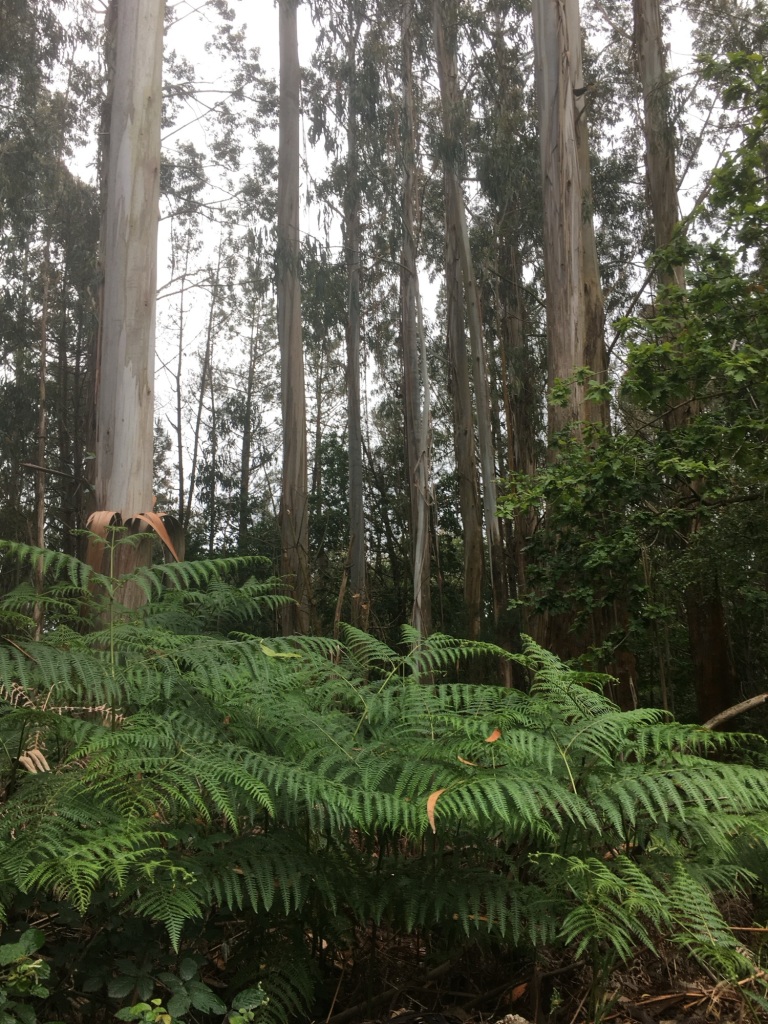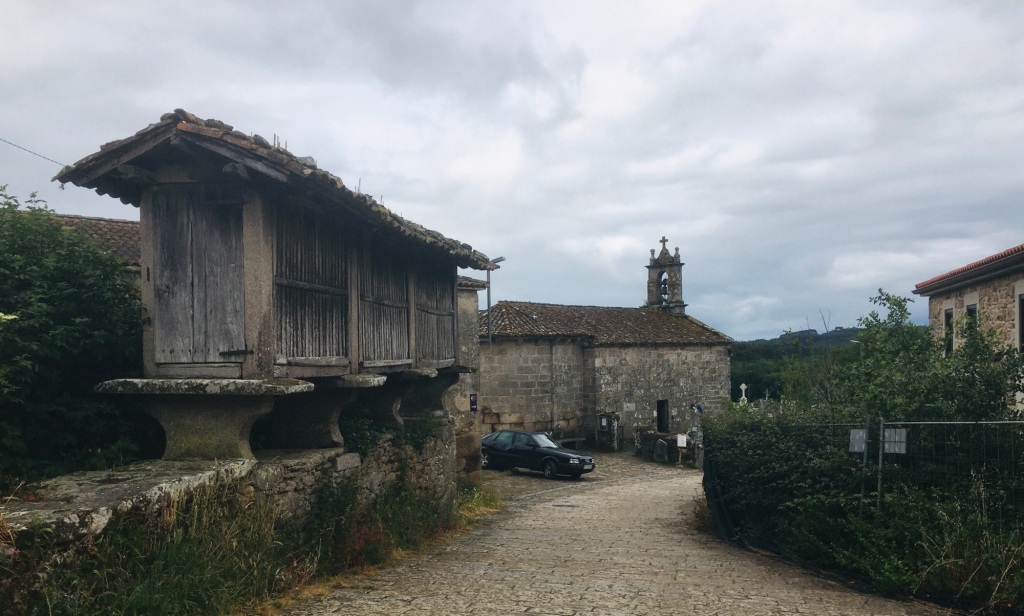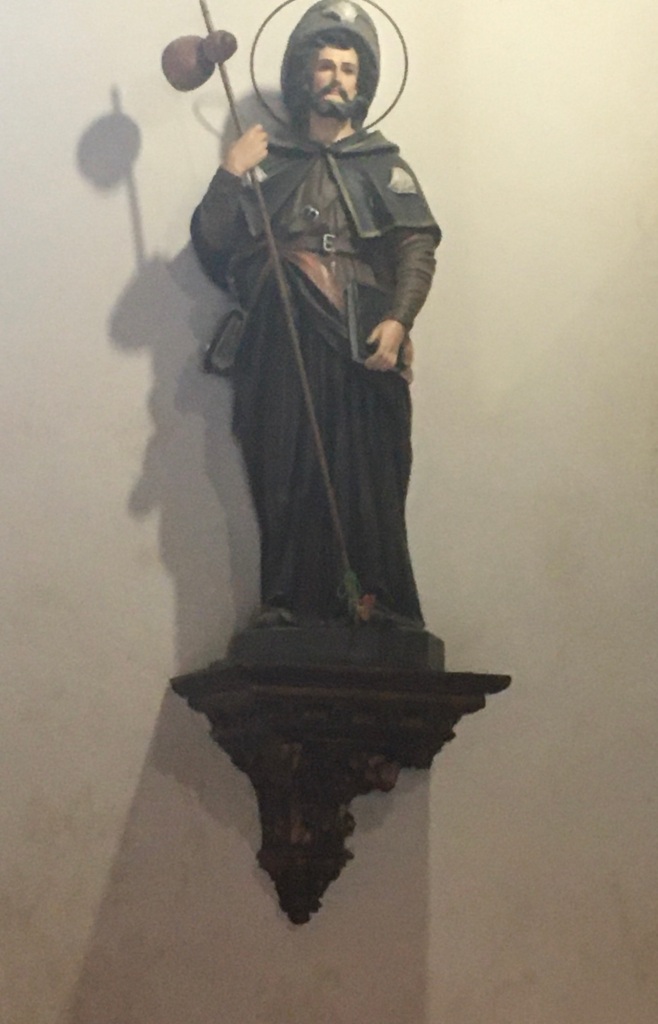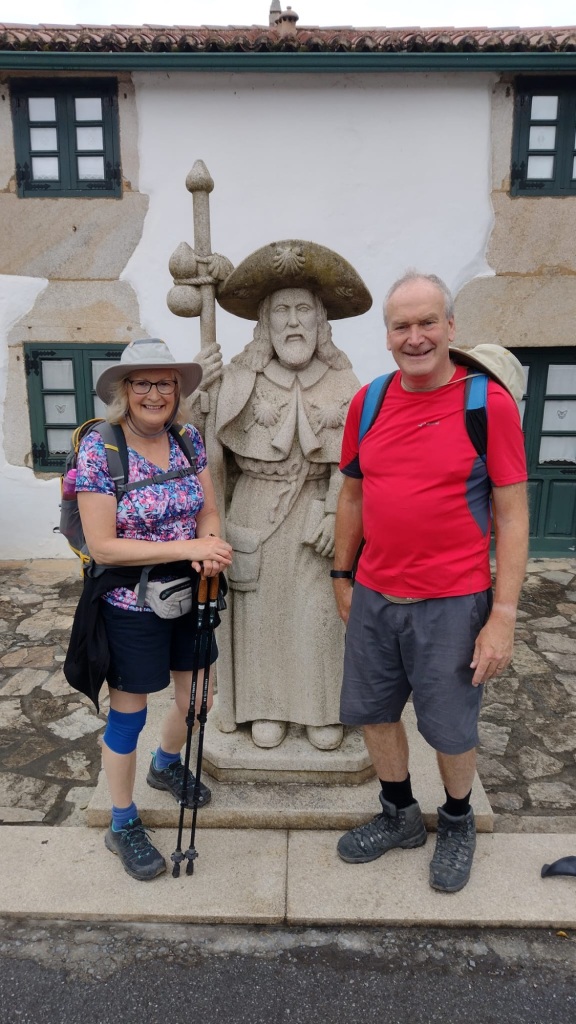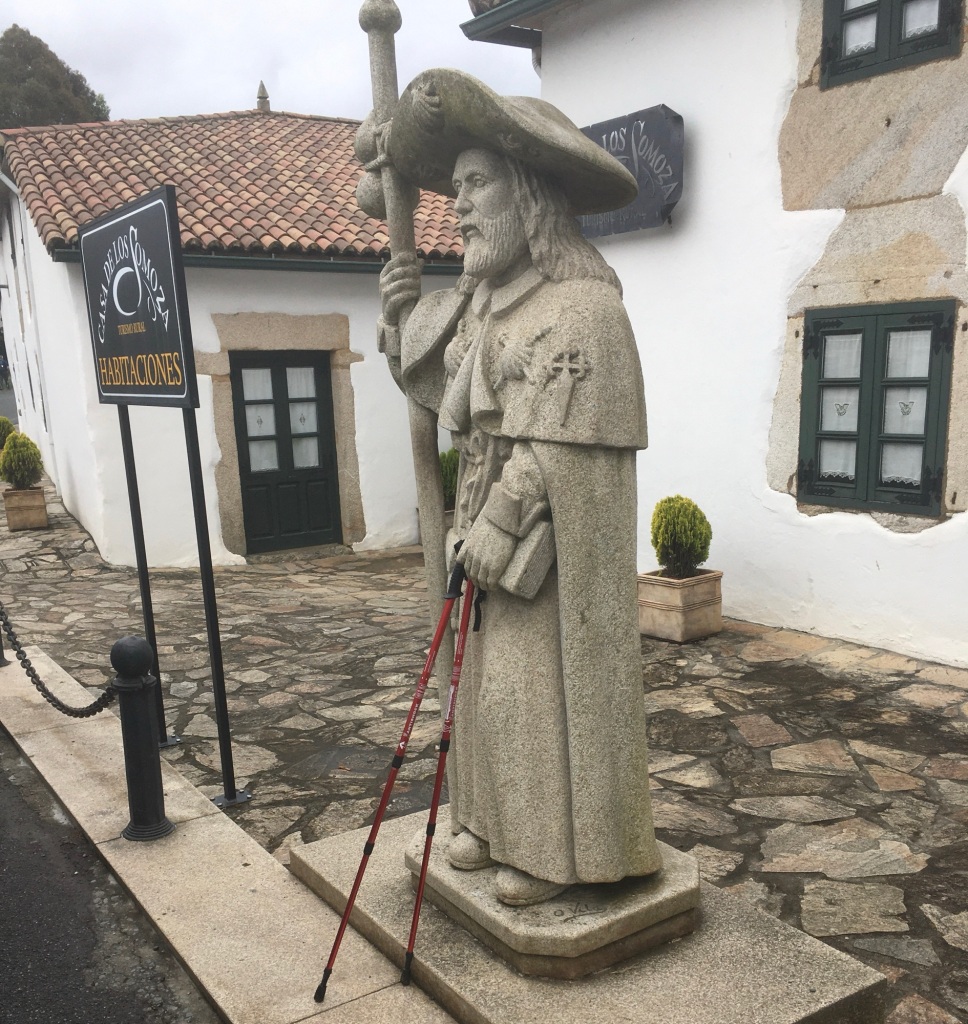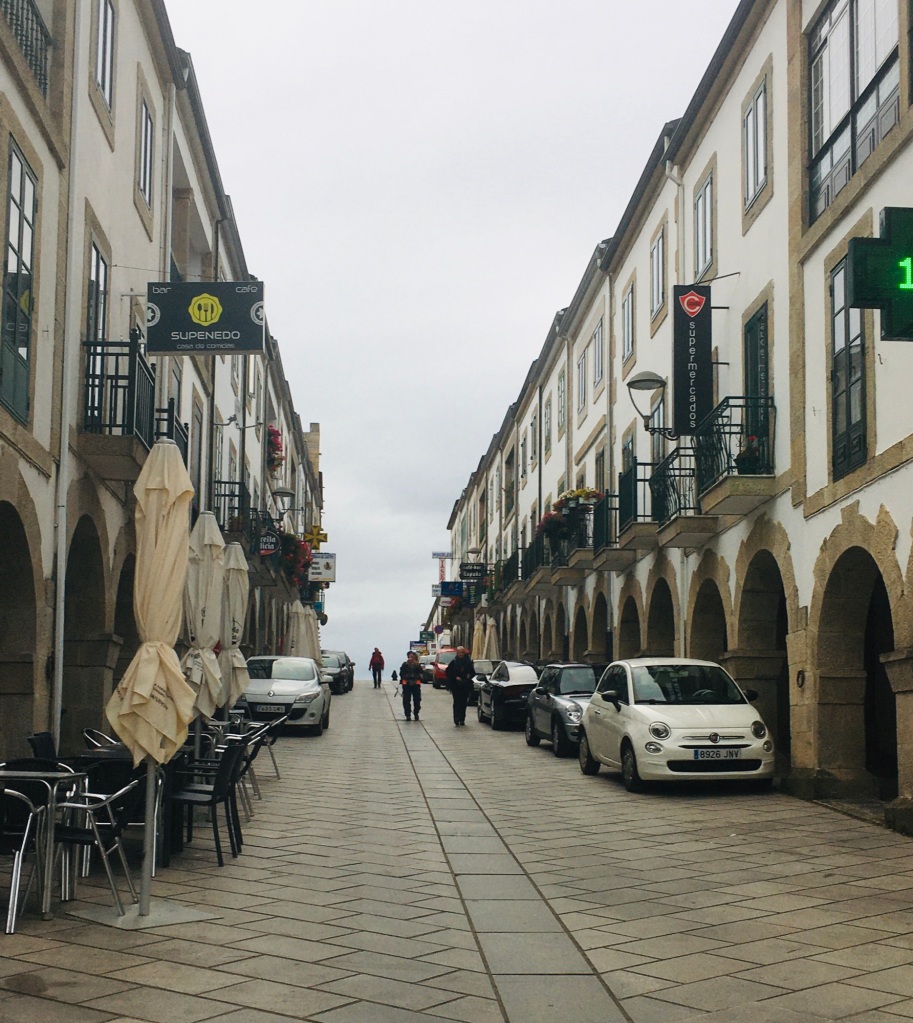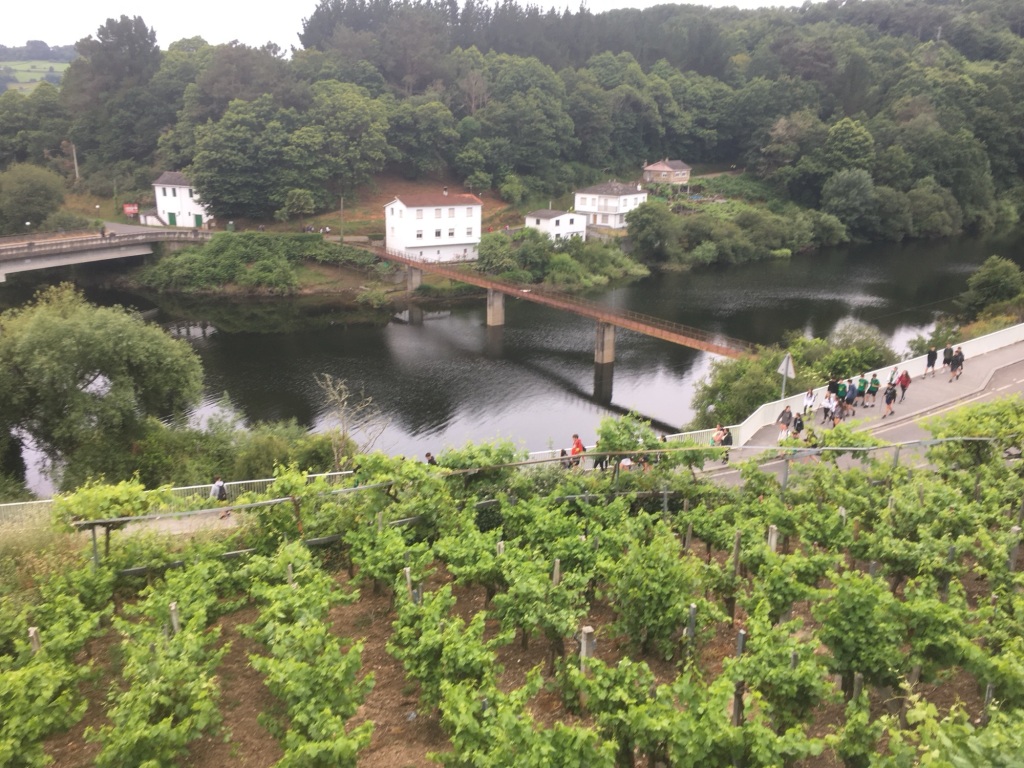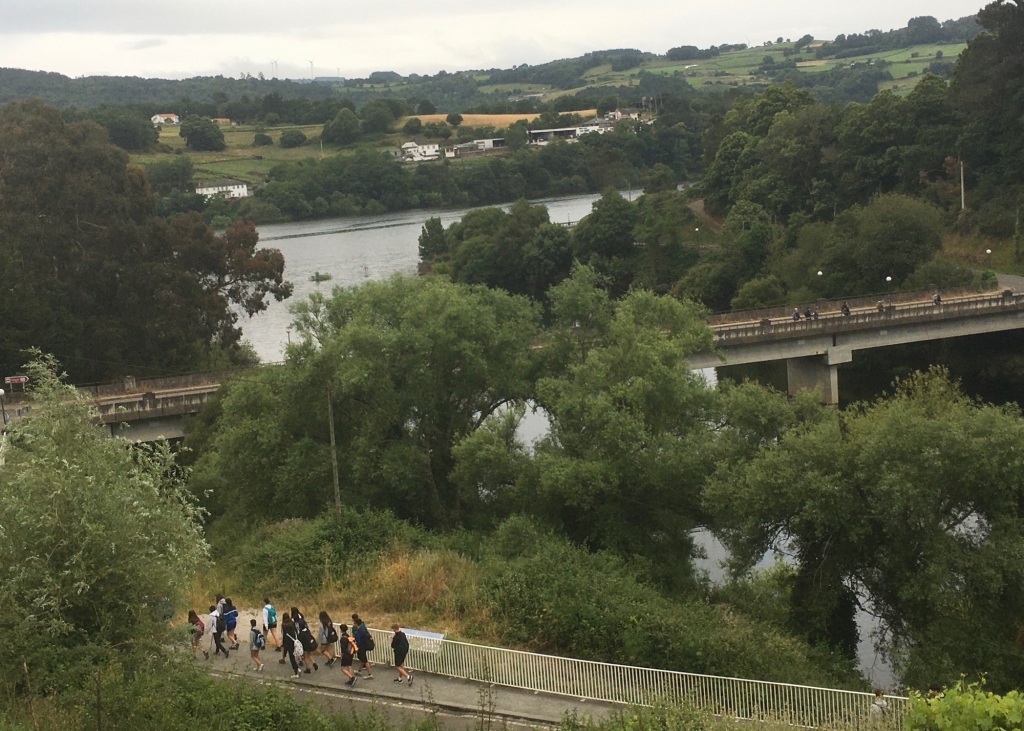
We took a couple of uphill 3.5 km taxi rides back up from Pedrafita to rejoin the Camino at O Cebreiro, after a good breakfast at Miguiñas.
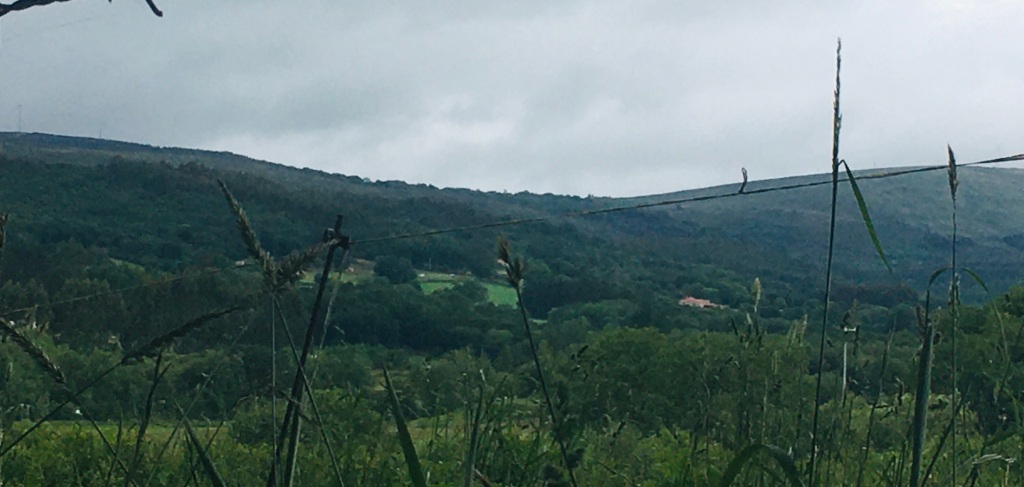
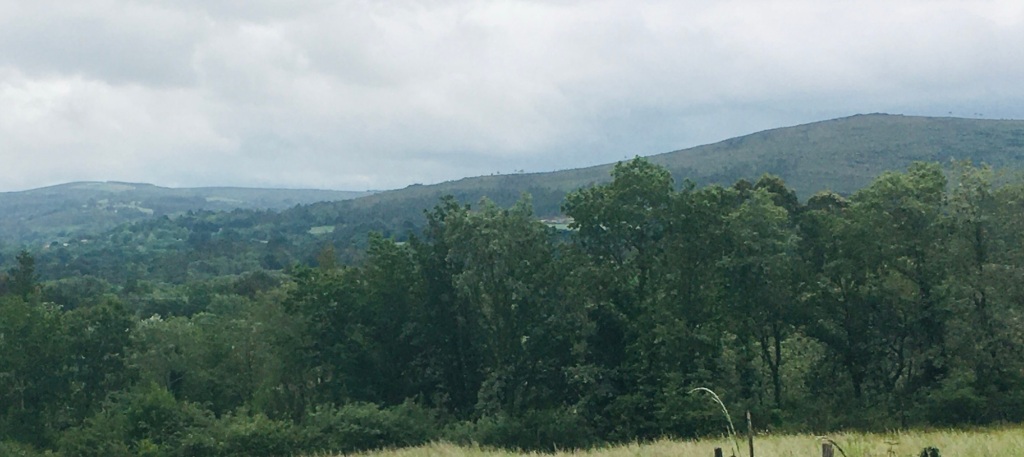
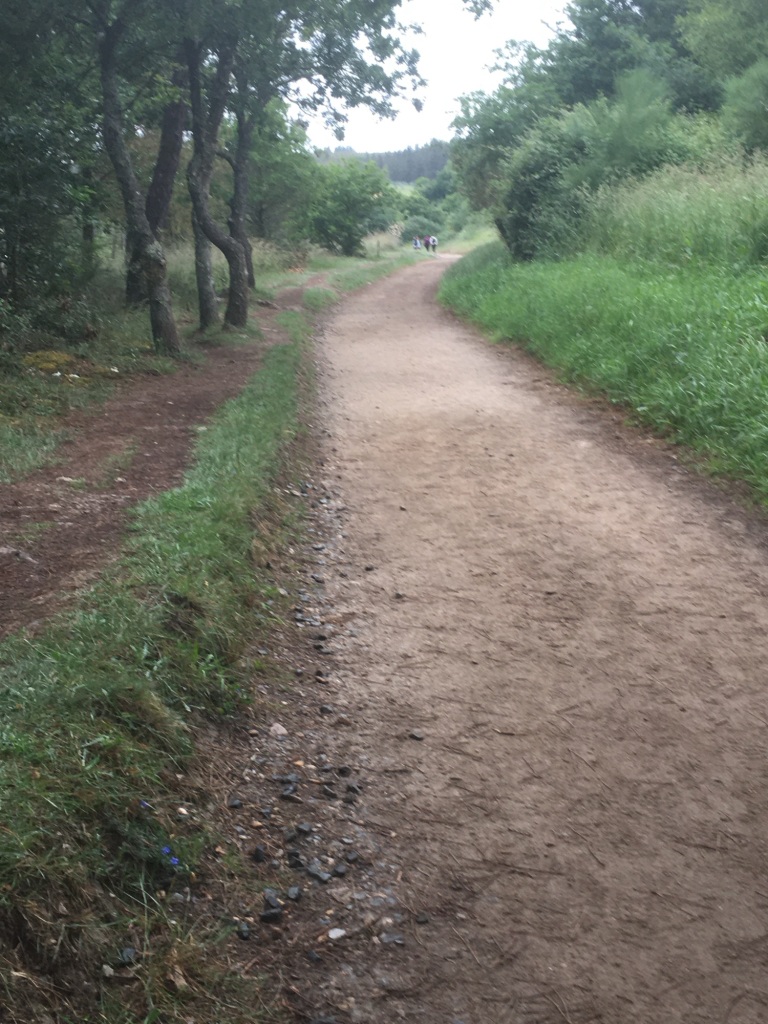
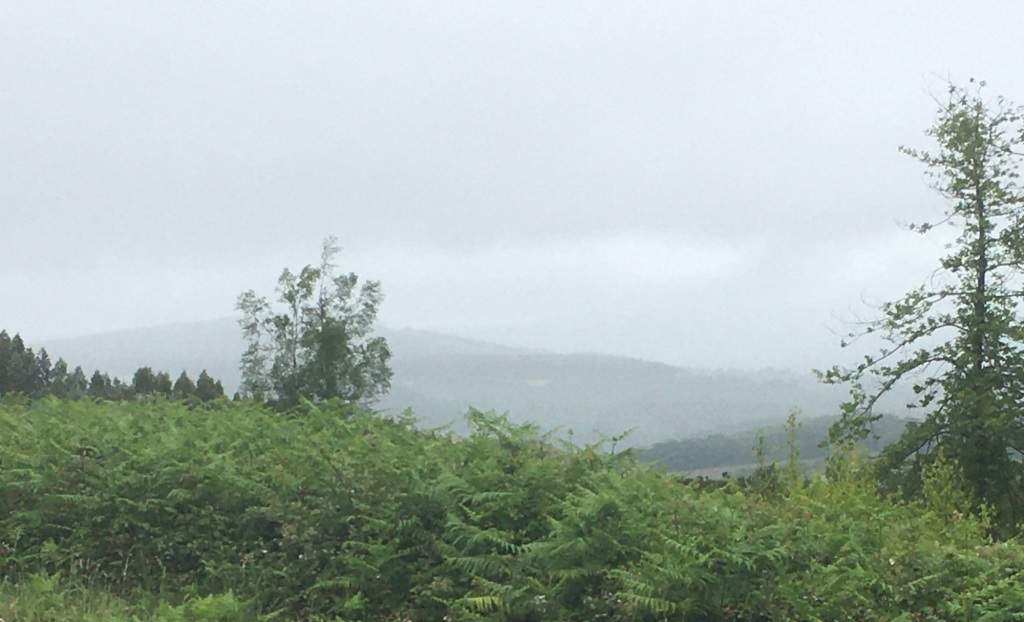
Bright morning with a cooling breeze and fine views.
Going downhill is always harder on the knee and hip joints than uphill
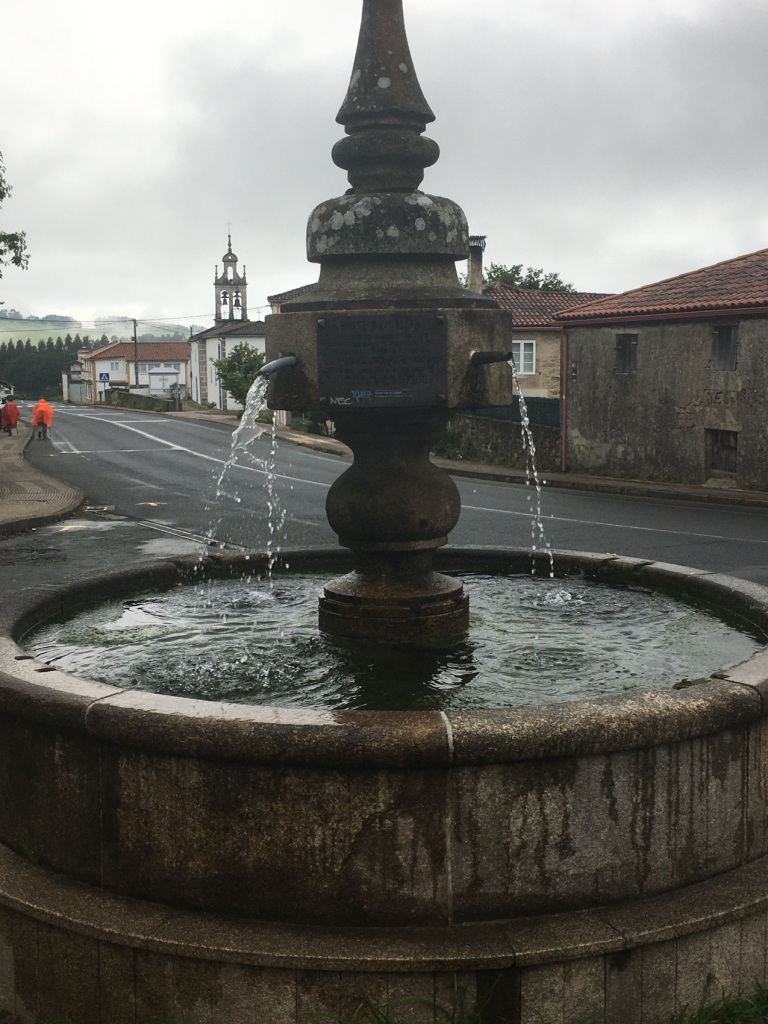
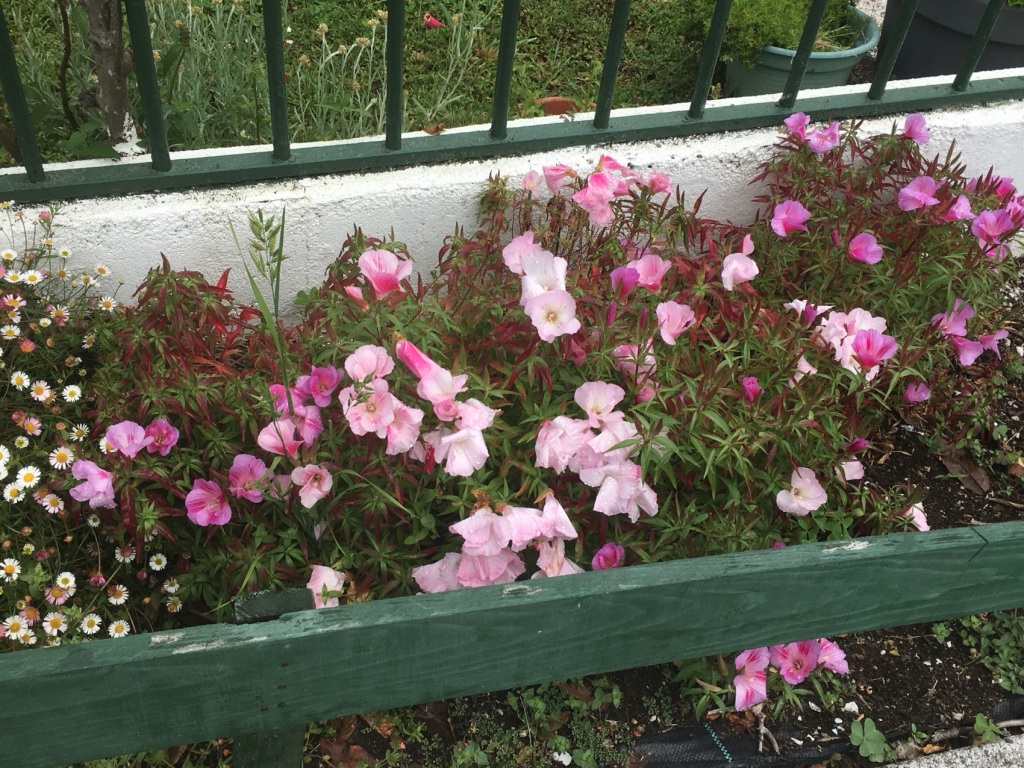
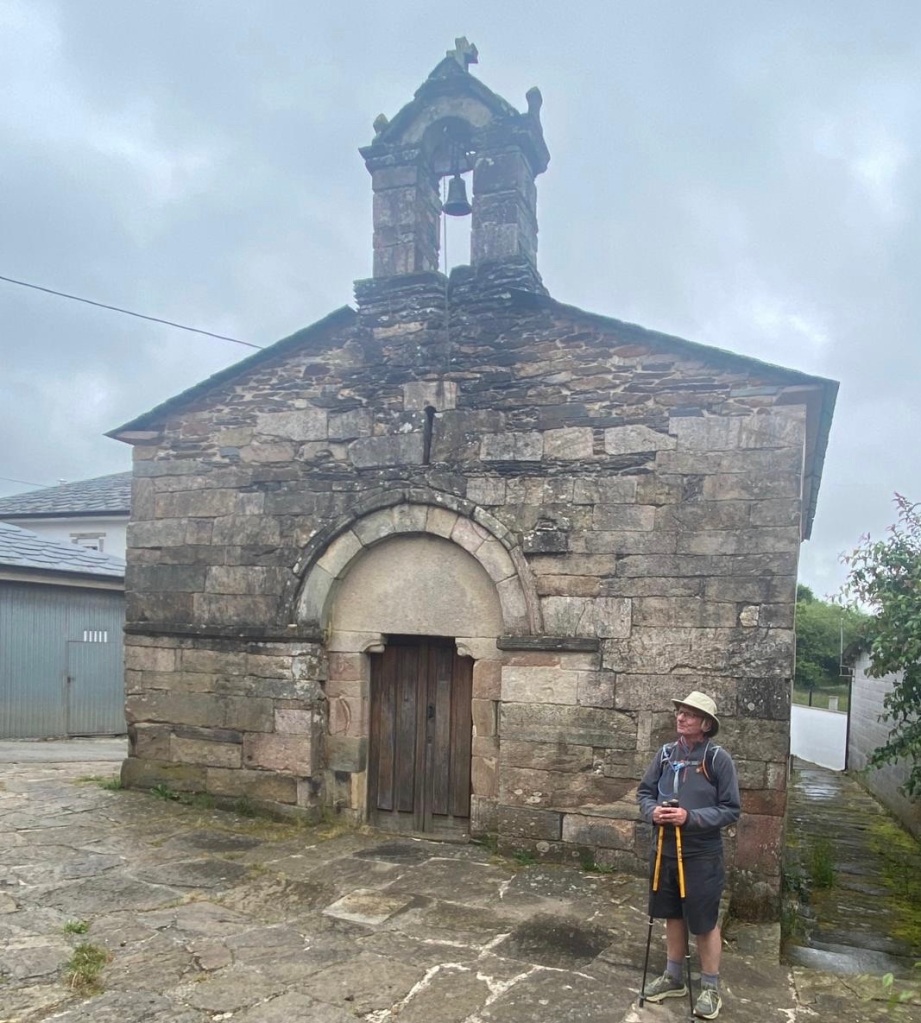
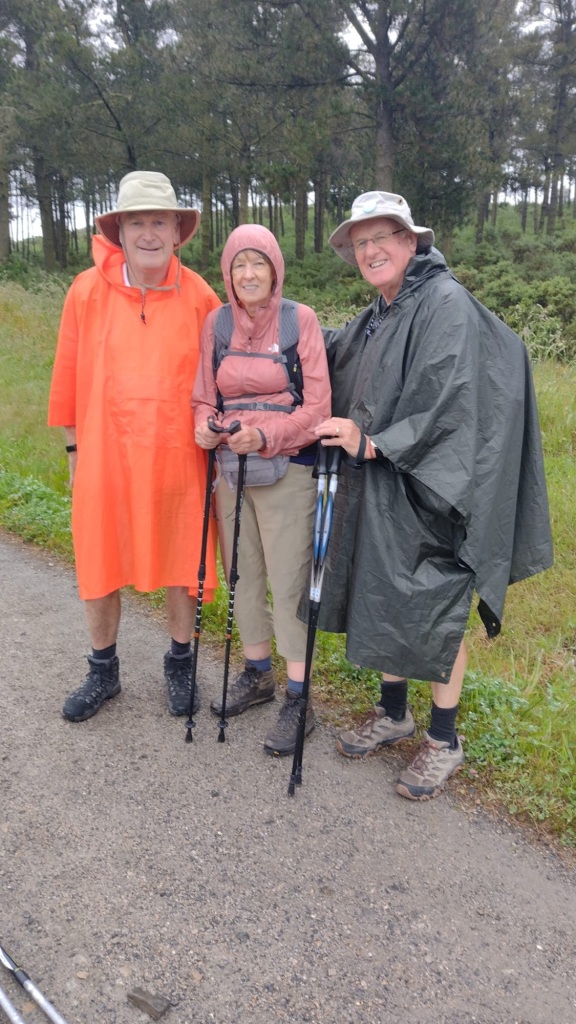
Mountain bloomsI quite like the outstretched arms as I looked down the valleys An unobstructed viewThe three SilhilliansJust two SuttoniansStill a long way down to overcome A Fuente ( water fountain)Captivating Little Donkey,Little Donkey…Some way down to go to Triacastela 24 hour pharmacy machine - you know you are on a Camino .Every little hamlet has a tiny chapelPeaceful herd – a pity you can’t hear the bell ringing.
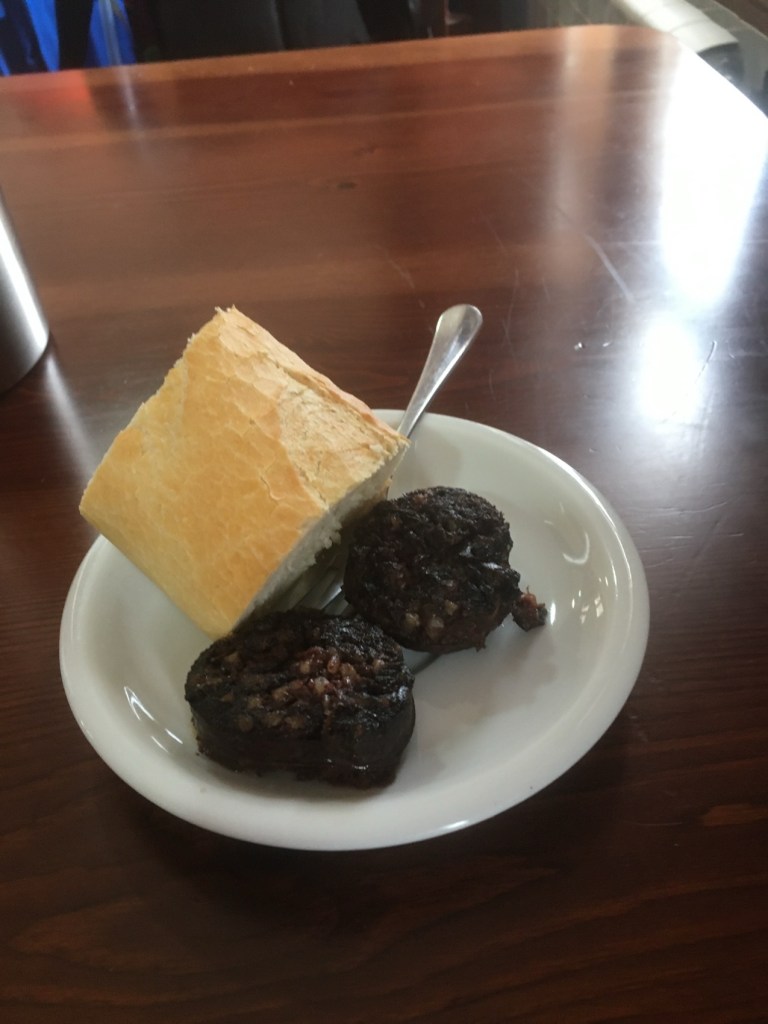
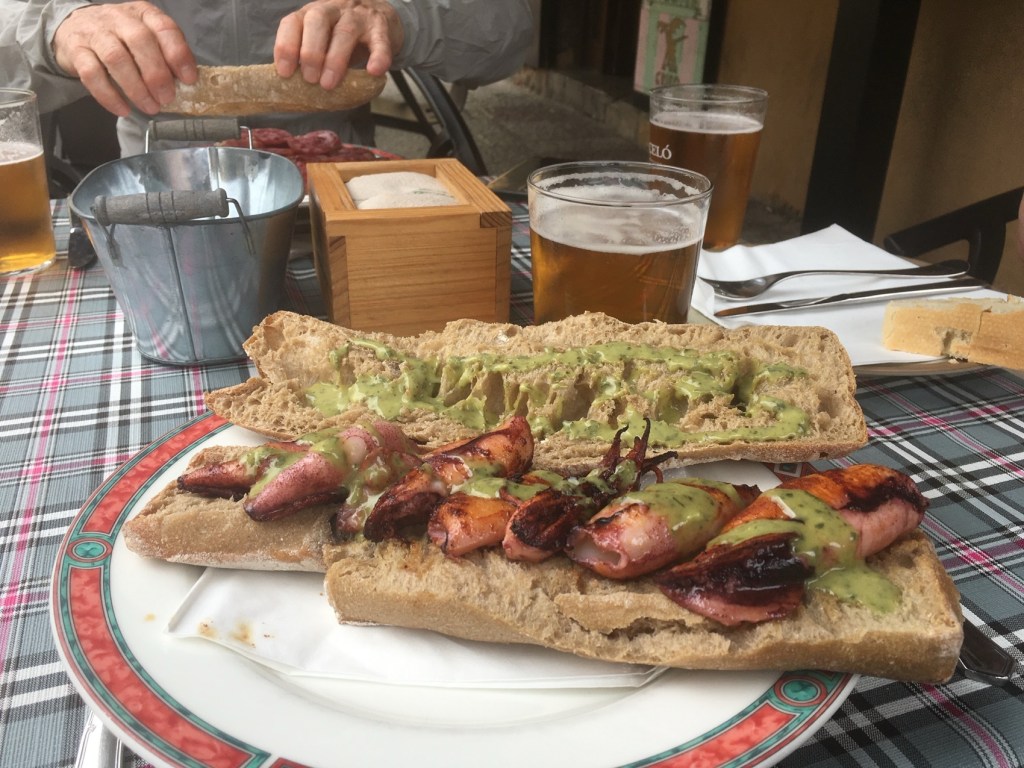
It was time for lunch and at the top of a short but steepish climb the camino provided, well,at least for me as I was determined to have meat free day.
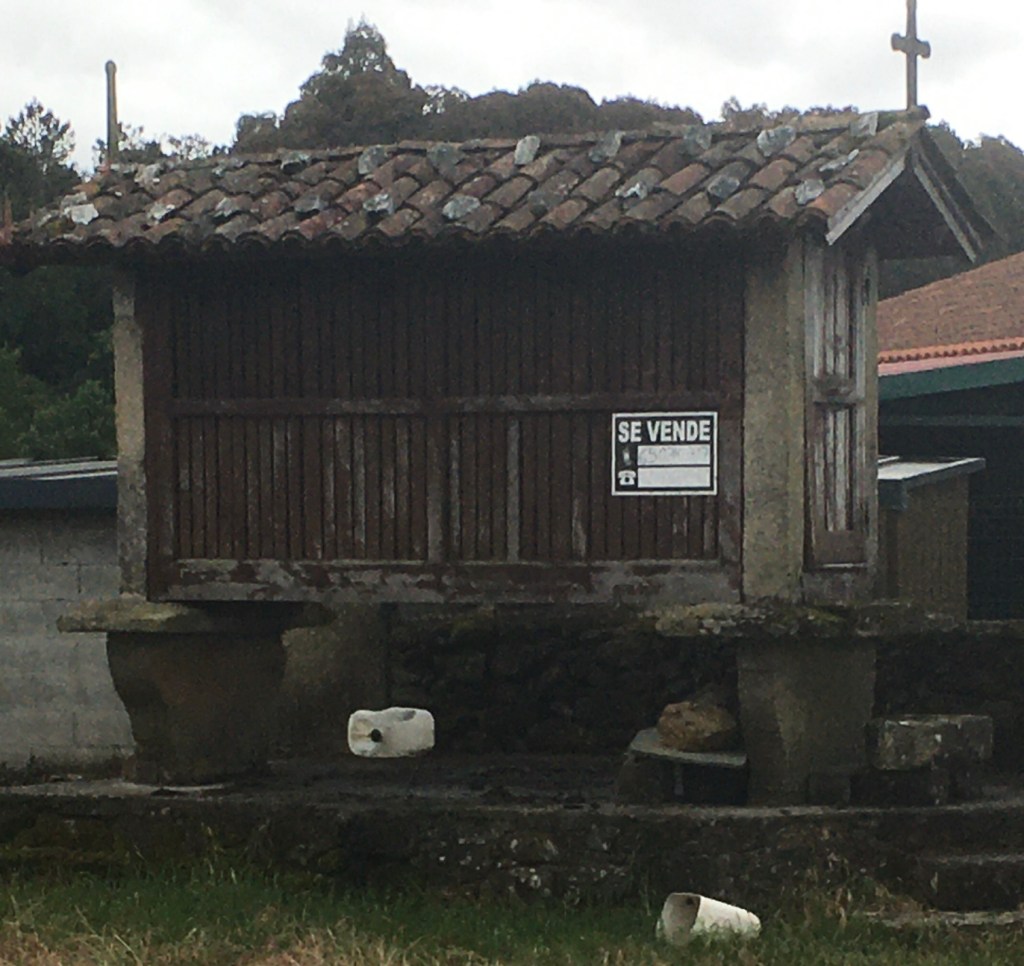
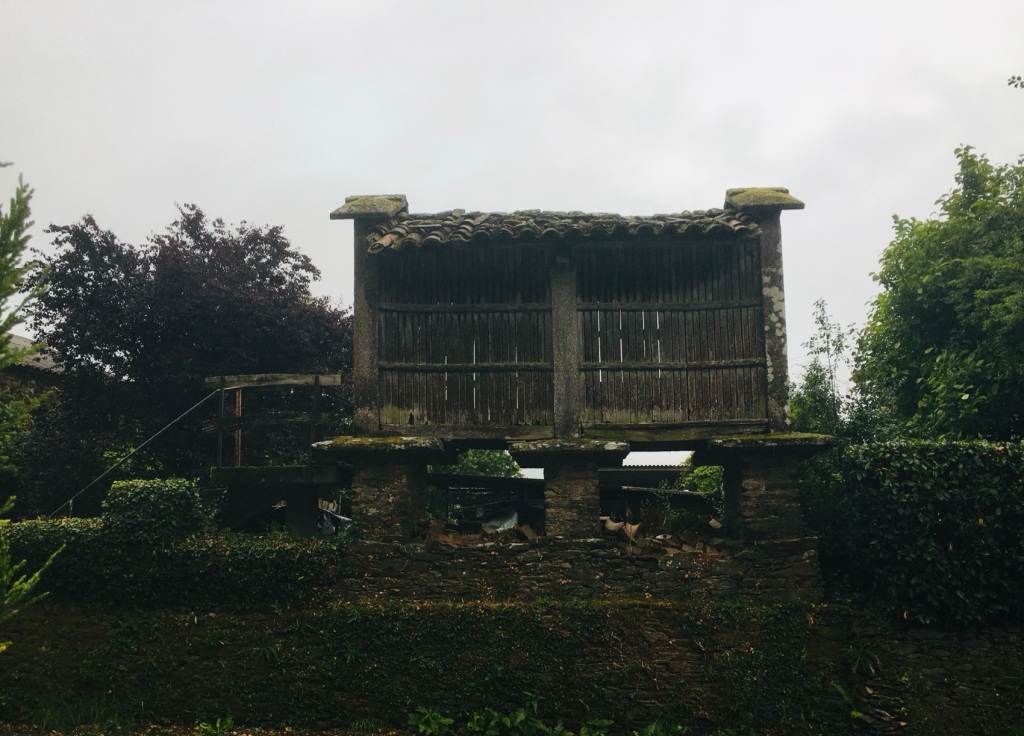
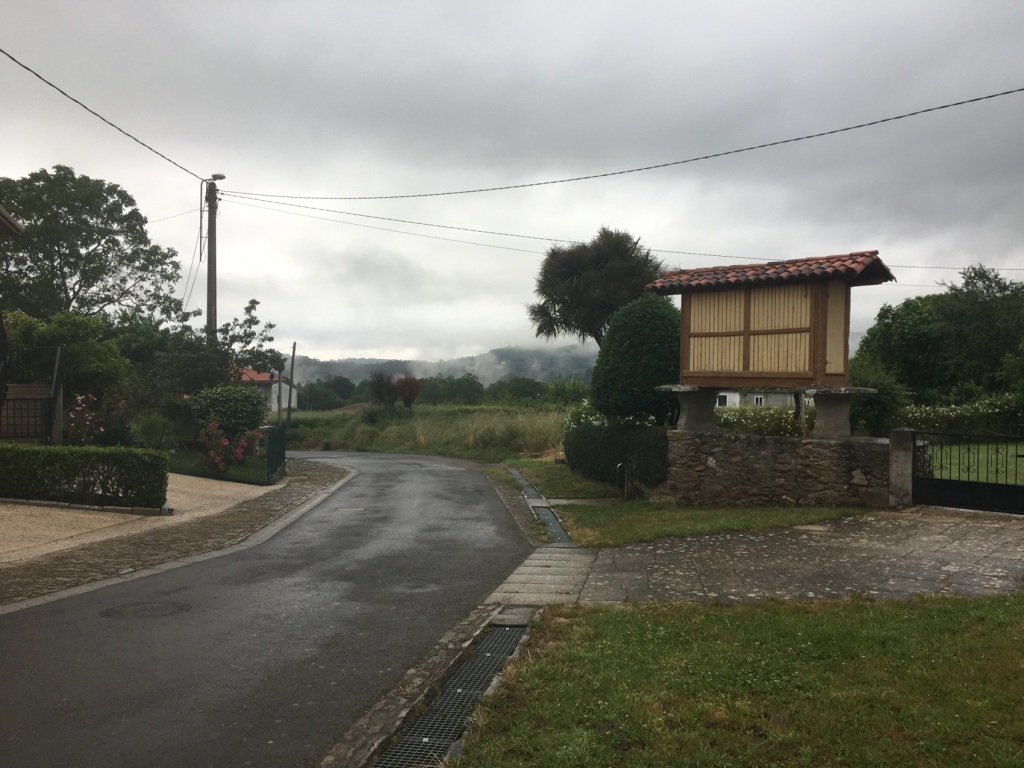
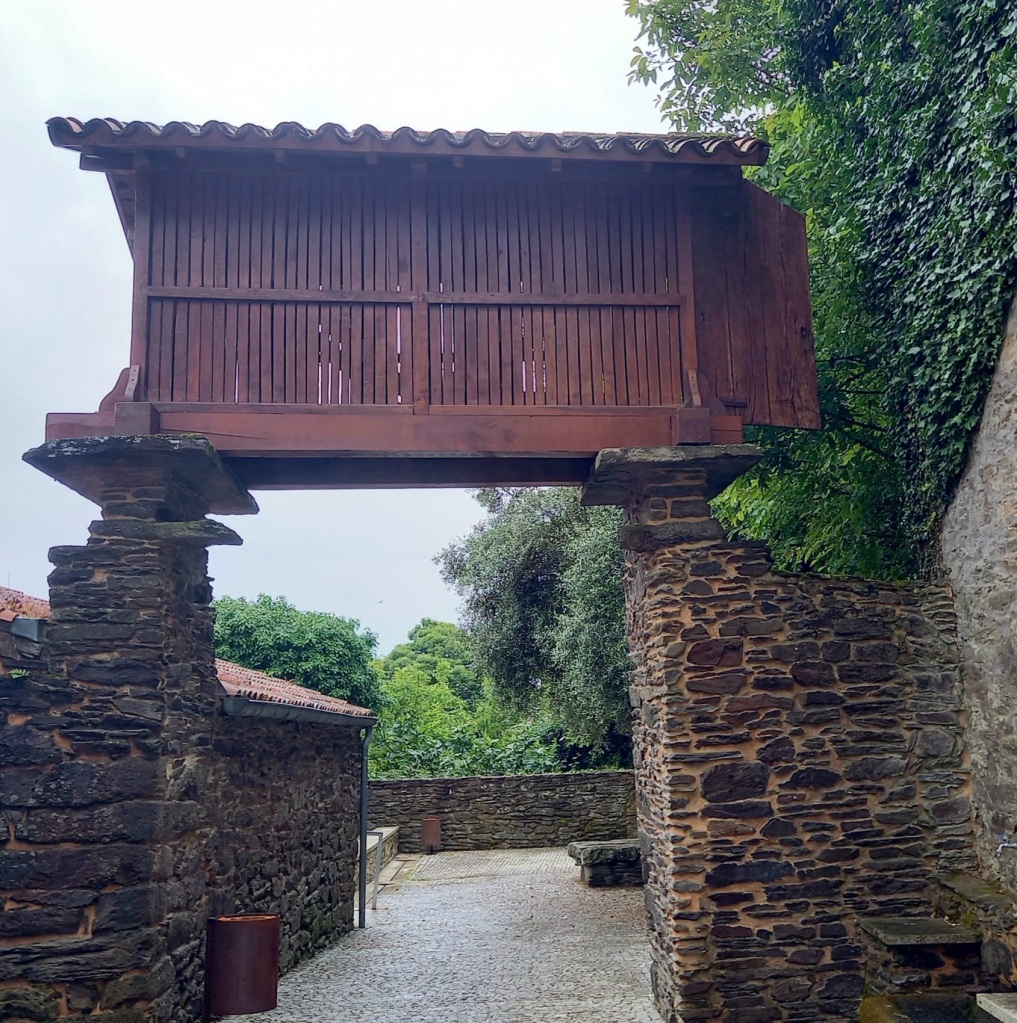
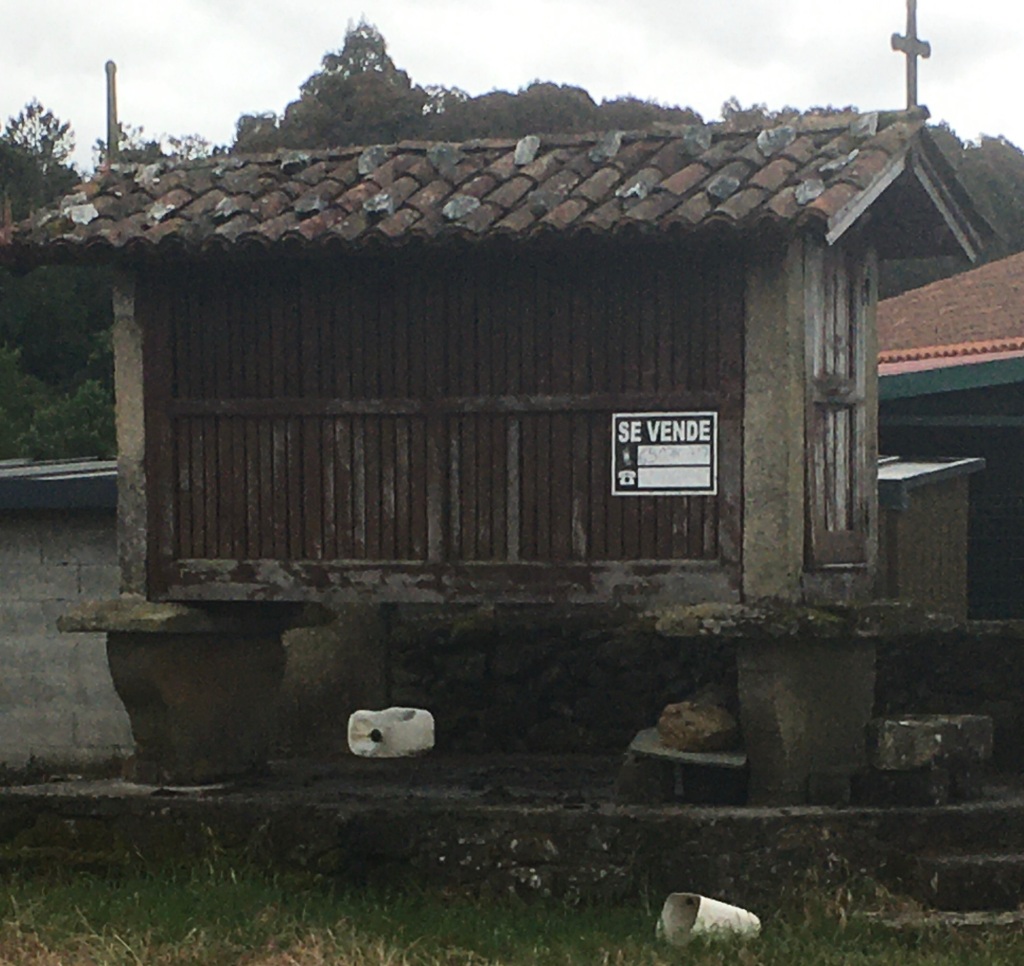
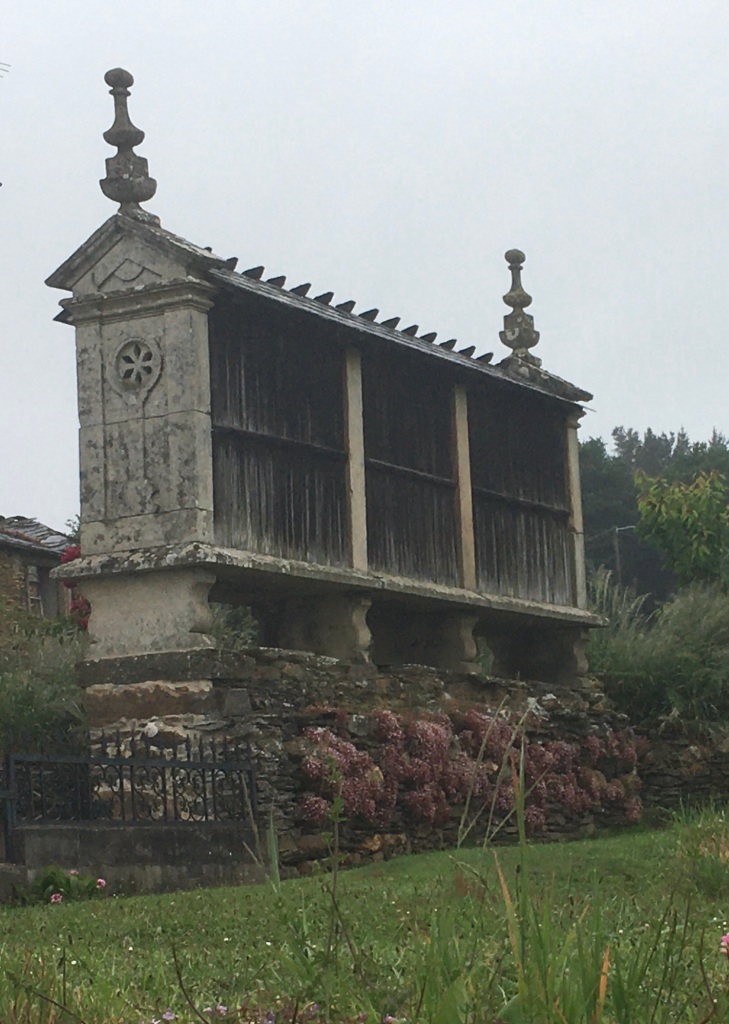
Maybe not fat free – a bocadillo with calamari and mayonnaise- muy bien.Vintage tractor penned in.Downwards with every stepThat is Triacastela— our destination.The first Horreos – a corn store – the stone mushroom uprights designed to perplex the rodents – not typical, but a famous Galician symbol.
Eventually to Triacastela – a hard descent –
Thanks to Camigos for their shotsOur digs for tonightHad to take the washing in as the promised rain arrived – well, this is Galicia!
Tomorrow we walk to Sarria and possibly a change in the numbers of Pelegrinos walking – so far it has been very uncrowded – but that is a part of the Camino experience still to be appreciated or at least accepted.
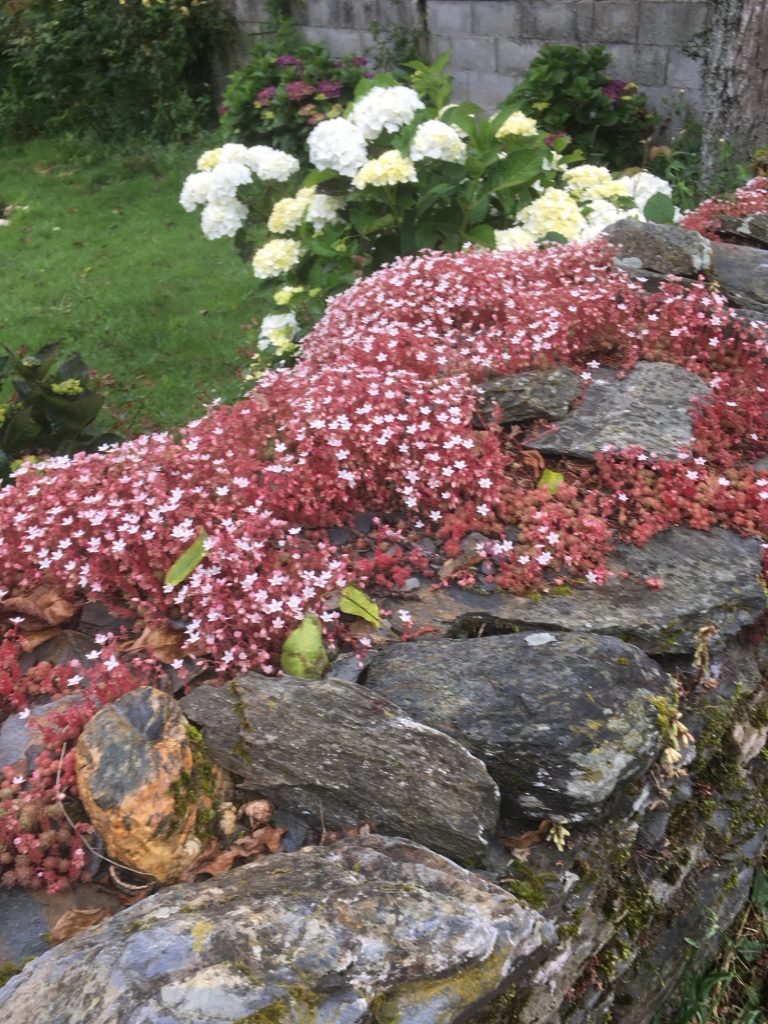
Tom will tell you they are Orchids – well spotted Tom.
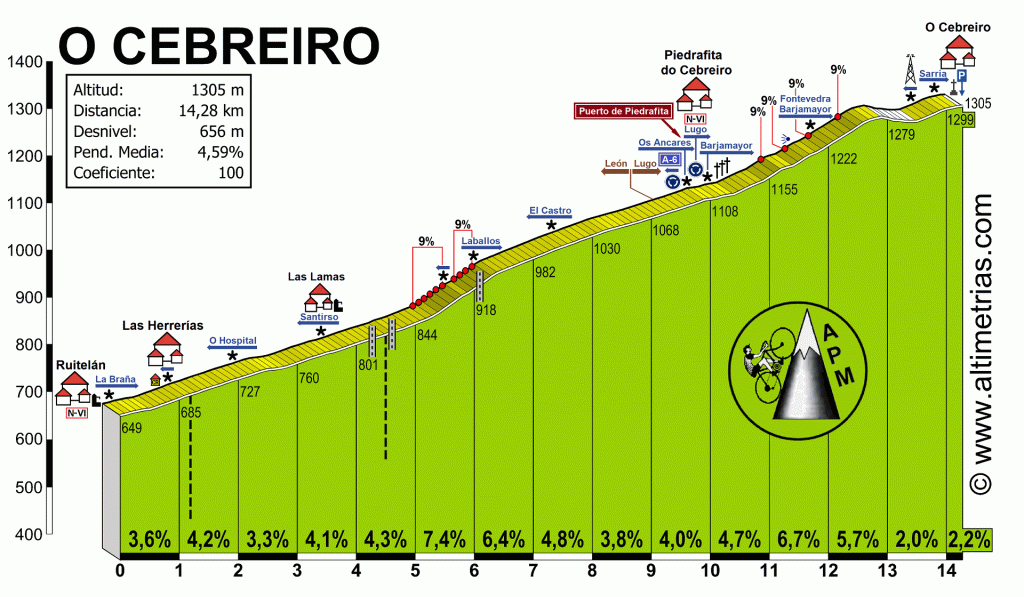
Best graphic of the climb I could find. Our distance was longer, starting from the hotel.
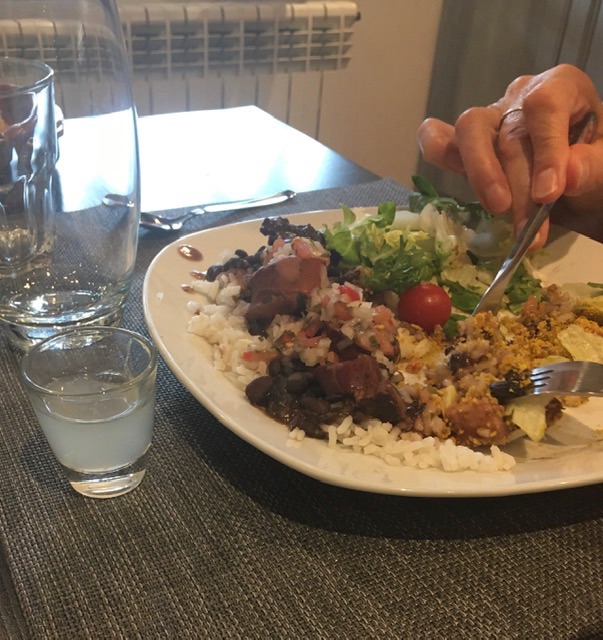
When climbing a mountain it is best to be well fuelled
There is some tomato paste under there, too.
The first few Kms were deceptive as we followed the River VALCARCE – quiet and flat as were the sleepy villages we passed through.
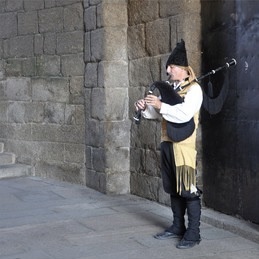
The AUTOVIA has taken a lot of the traffic off the route national.We were going to need some encouragement from the Apostle for the next stage.We soon left the roadside and began to climb towards O Cebreiro Mountain floraMooove over . It’s amazing who you meet on a Camino You’re pulling my tail!Crossing from Castile y Leon province into Galicia.The piper at the gates of O Cebreiro- you could hear the mournful wailing as you climbed the last of many hundred metres…it took your breath away as did the views.O Cebreiro conquered. Below is a pilgrim friendly guide .
From here it was 3.5 km off the Camino to our accommodation. Some walked it,some took the bus for €1.55 each, to Pedrafita.
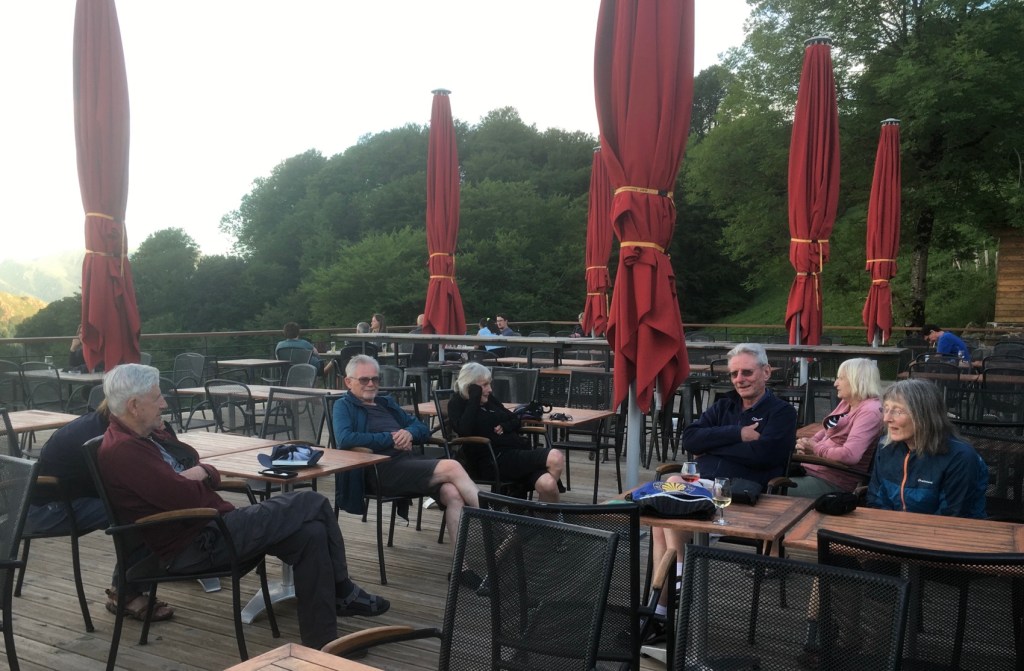
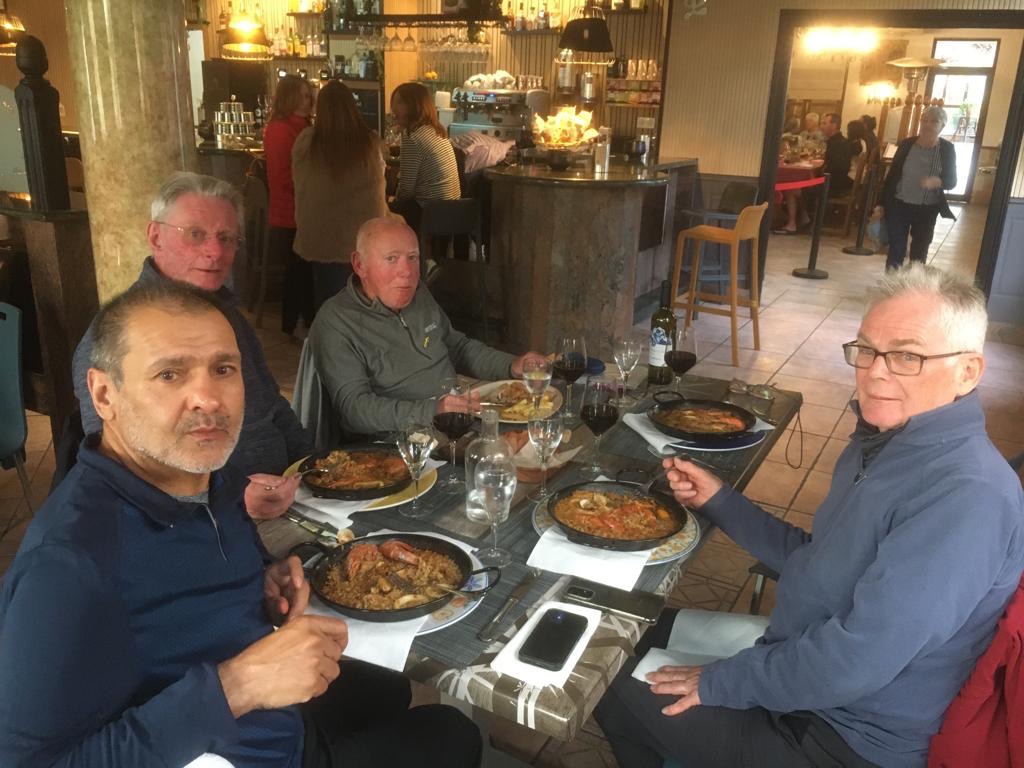
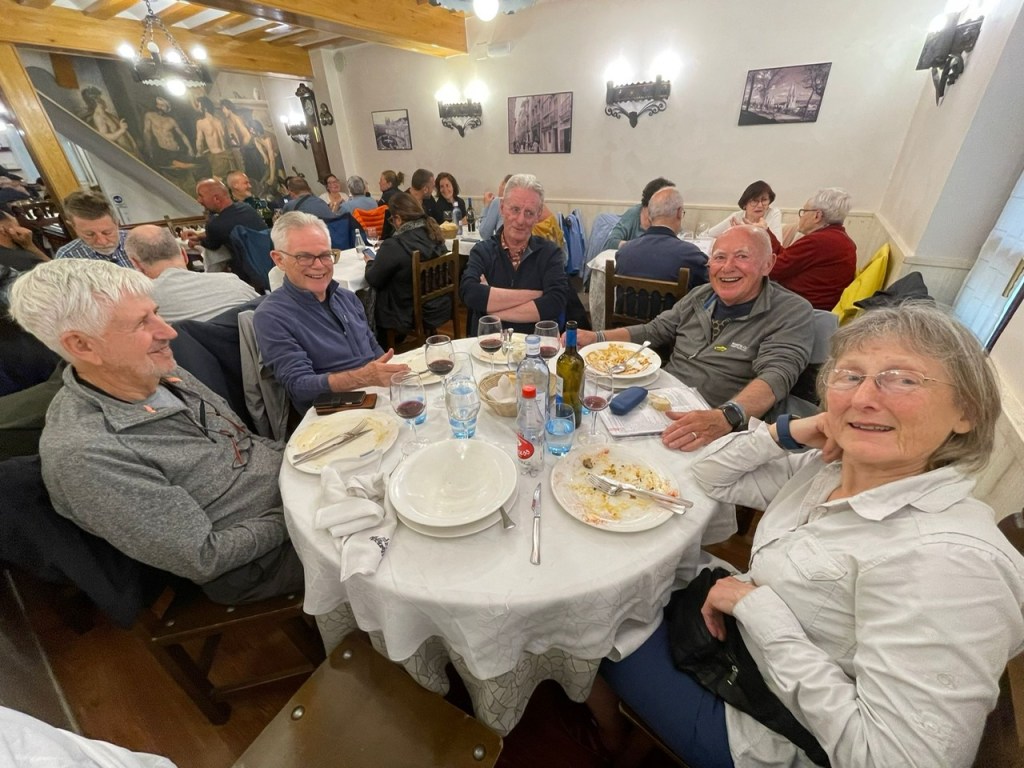
As Miguinas do Cebreiro – we had a very entertaining evening at a locals’ restaurant nearby, with Val ‘s quiz on Birmimgham’s cryptic places and the food and wine was Galegos style and hearty.Tomorrow ( Thursday ) it’s mainly downhill, but that’s for another Blog.
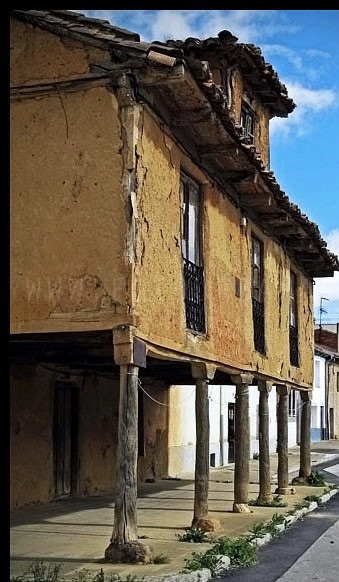
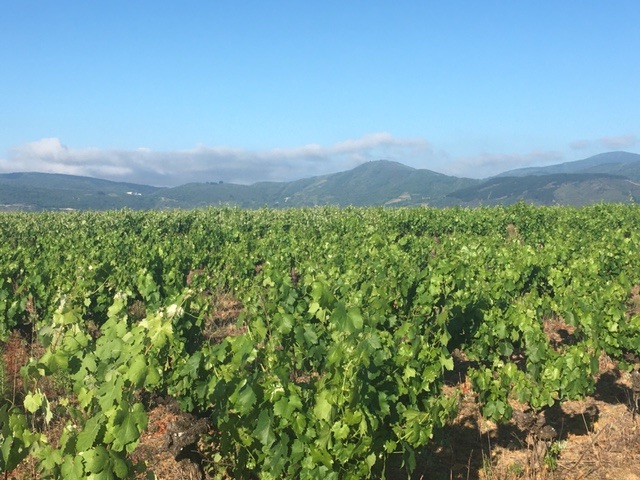
Most of us left the hotel by 08.00, myself,Mike and Val thinking of grabbing breakfast after an hour or so.Cacabelos is another typical “ Camino” village – a long Main Street offering accommodation and a few other facilities. But it had its charm.Parish church HermitageNumber 2 has a mysterious 1/2 door.And let that be a warning to us all!We were on our way, walking through the Verdant Bierzo valley surrounded still by various Sierras.Dominated by vineyards – it’s like there is a micro climate – Mediterranean even. Collards – I beg your pardon? – Greens for the local soupSome of the houses and especially the balconies look like they are really tired and need propping up !En route to VILLAFRANCA. del BIERZOThe parish churchThe CastilloThe plaza where we took brunchOne of the most attractive villages in the regionThataway.
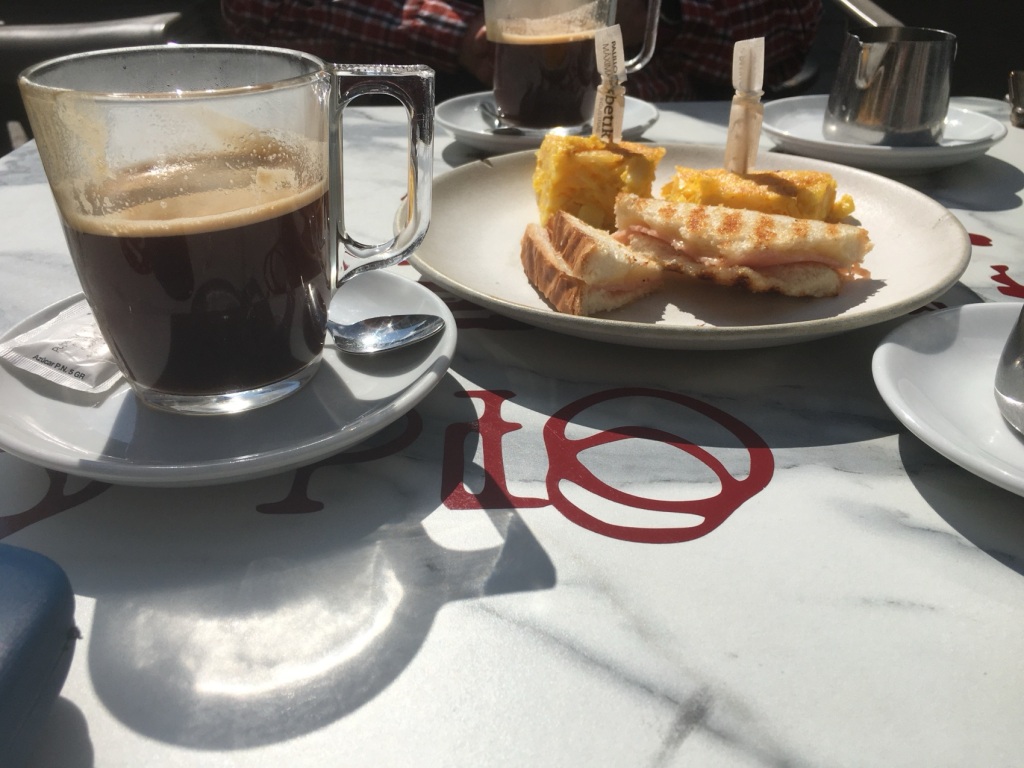
We eventually got breakfast here after 2 1/2 hours, more than welcome Tostada with Tomato, salt and olive oil,some local ham for protein more like Brunch by 10.30.
The River BurbiaWe were then walking for a good while alongside the N VI – not a problem as all the transit traffic uses the nearby Autovia.Walking the Camino it is slightly less than 200 km.A woodmill on the edge of Pereje where we refreshed with Gaseras, tea and coffee in a very friendly bar. A few more km and we reached our digs for the night,The WisePilgrim guide calls it a “ truck stop “ which is a total misnomer – it has facilities for truckers, yes, tourists, business folk and pilgrims- a hotel and I loved its vibe and busy, friendly atmosphere.Tonight we shall take advantage of its restaurant – the menu should suit all tastes.The view from our spacious room and balconyFeet up in the sun , washing done,after 11 miles .
Split decision this morning as some of the group wanted to walk the entire Etape and some wanted to take a taxi to Ponferrada- 6 km – and tour the Templar Castle. So be it and I was in the latter group which was quickly taken to Ponferrada. On climbing up to the castle entrance we discovered that it was closed Mondays! I wasn’t too disappointed as I have often found that the exterior of castles, like French chateaux, more interesting than the interior and often gone inside out of a sense of duty rather than curiosity.There was the barrio historico to compensate and a needed ATM found in the new town. Whilst waiting ,we saw on the Pharmacia clock that it was 18* ( 09.00 ). Tom disputed this saying it wasn’t that warm because the hairs on his legs were still upwards! Tom, out human barometer.
Templar Castle Ponferrada
We retrieved our steps and met up with the other group coincidentally,in one of the squares. Second breakfast time.
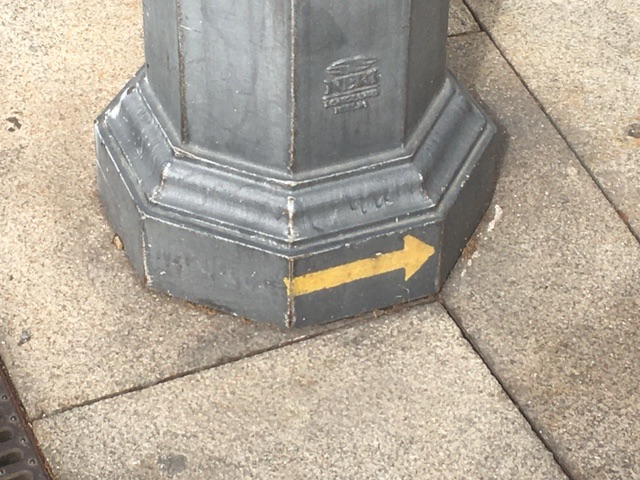
The flèches are found in/on all sorts of places. Time to be moving on.
We walked out of Ponferrada along a pleasant path by the side of the river.
Pilgrim friendly placeOld Power Station now a Museum of industry Looking back atop of the only hill today.
Walking on to Columbrianos and its hermitage.
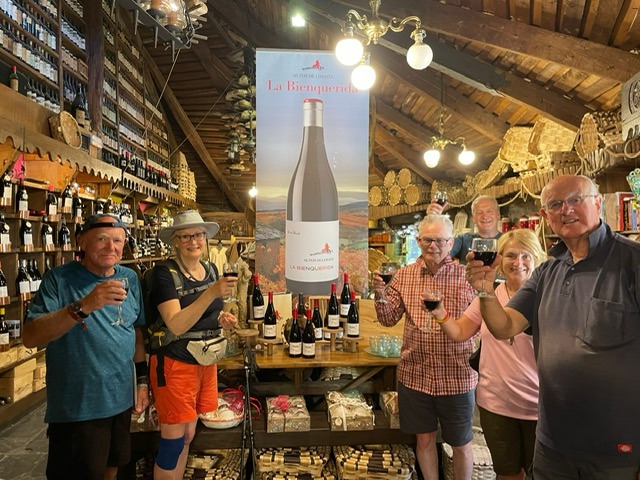
The way is well marked as everLas huertas – allotments Amazing front garden Flying the flag TLC NEEDEDLunch enjoyed at the very pilgrim friendly El MedinaSympathetic grounds and gardensRelishing the shadeHumour,too.Christina taking the lead Vineyards of the Bierzo regionThe good things to be enjoyed here as we later discoveredA region not well known outside of Spain- we were later able to attest to the quality….of the wine.Taking in the shade just before Cacabelos.A welcome glass and publicity shot of the ,wine of the week at our wonderful hotel just after we checked in .
Some of the views and some of the Pelegrinos:-
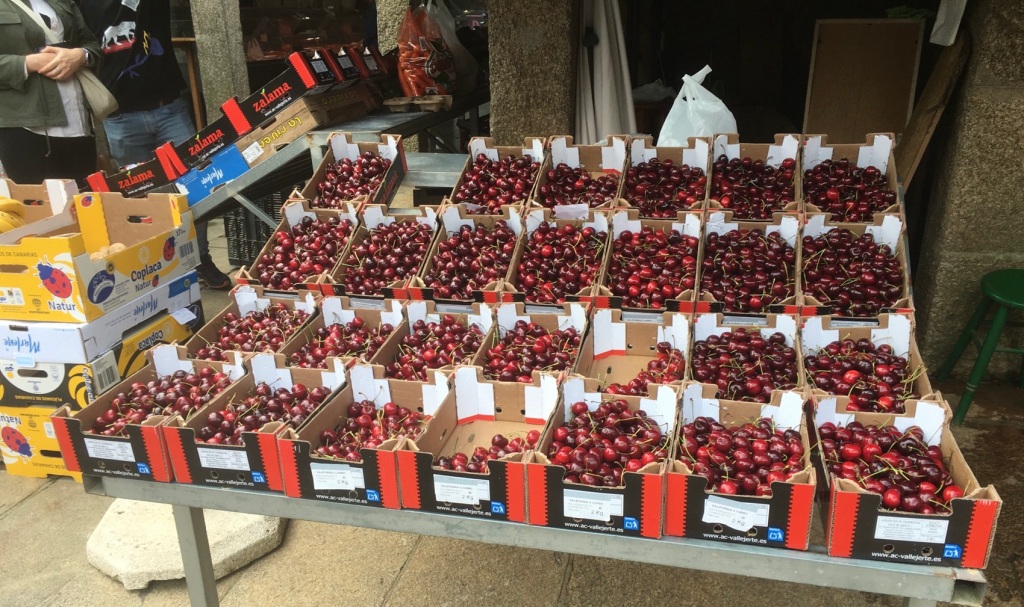
Don’t step on my blue suede shoes..!Vineyards Cerezas ripening In a valley surrounded by Sierras – a really productive area – Bierzo.
Then our digs for the night - El Monclao de Lazaro – unique.
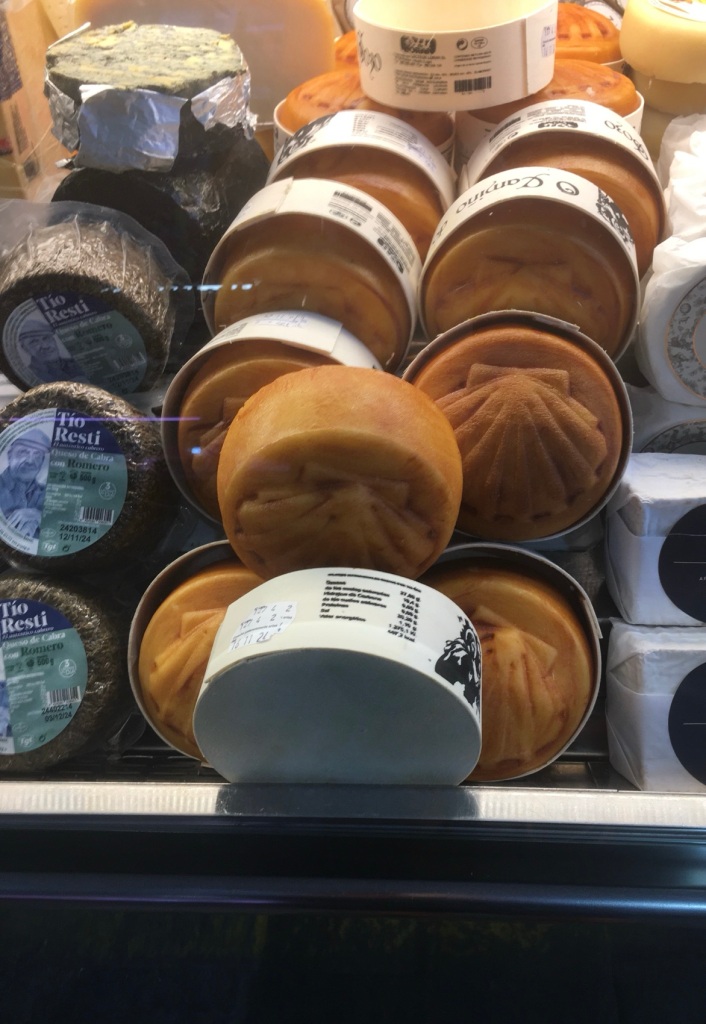
Spacious and greenLocal goats’ cheese and relishes Bollito – look away if you are not a fan of the pig! Delicioso.Highly recommended.
We left at 08.15 after breakfast – very friendly place – good dinner too.
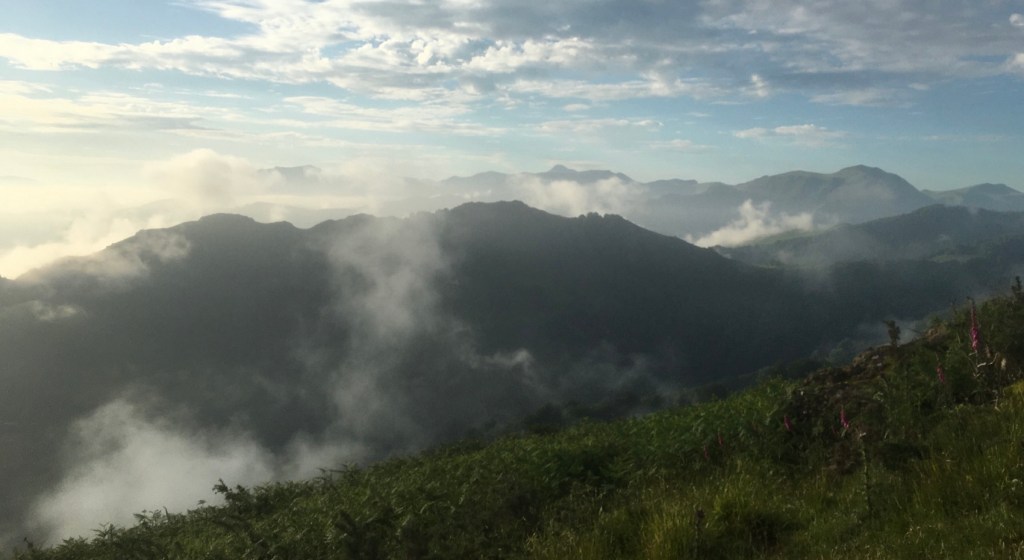
A very misty skyline with a few breaks in the cloud – no rain forecast – sunny intervals late afternoon.
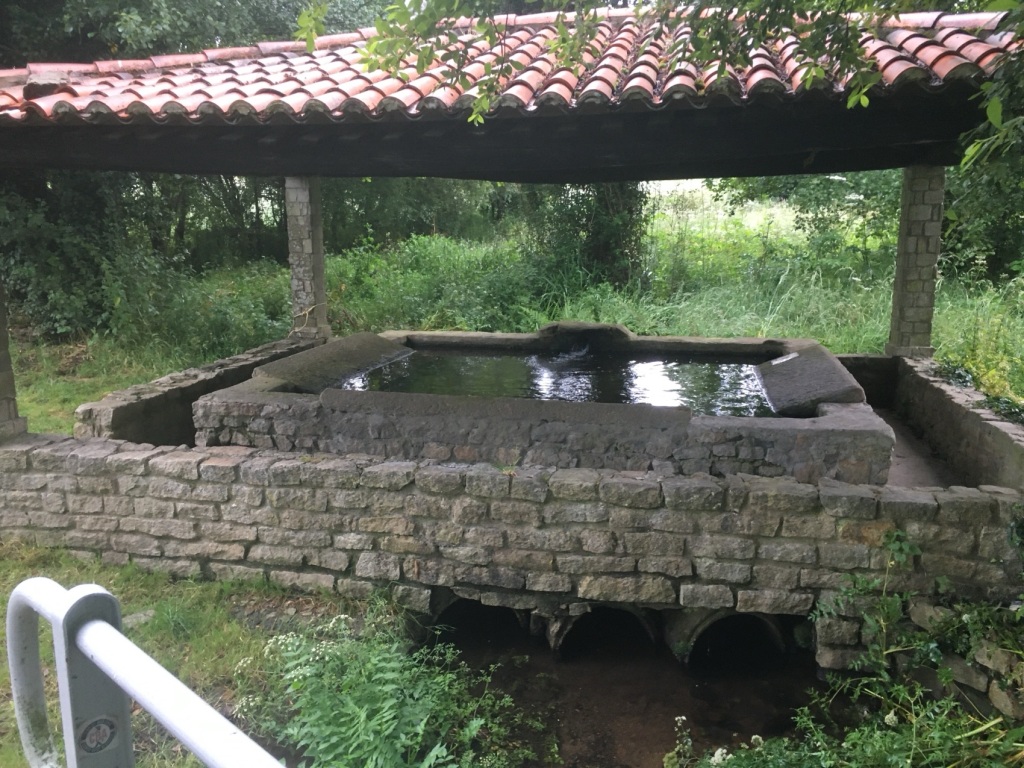
Slowly climbing towards the cruce de Ferro – 1504 Metres up and the highest point on the entire Camino – an iconic spot.A Lavadero where the washing was done and a fair bit of gossip too I should imagine.A Fuente and shelter Val and Richard heading towards a coffee break in FoncebadonMike and I were stopped in our tracks by the volume of noise made by the croaking of the frogs!Remaining ruins of a former hermitage/ hospice – now a “ peace garden”.Leon Mountains Flora
Climbing on pretty good terrain, wet in places because of heavy overnight rain, we eventually reached the summit.
THE CRUZ DE FERRO – some details on the link below.
Three Solihull Ramblers,Myra,Val & Richard I don’t normally do selfies for obvious reasons!PUERTO de FONCEBADON 1504 metres And what an experience - the descent from here started gently – but…A hippy dreamCows in the mist
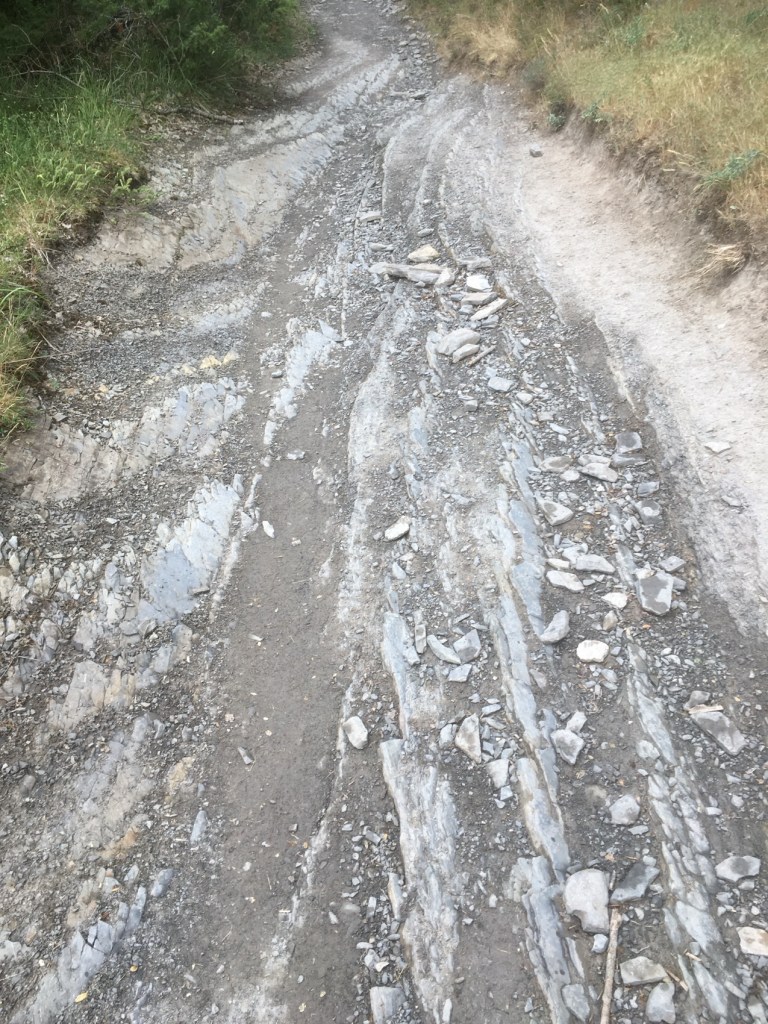
The five guidebooks I have used for the Camino Frances have been almost faultless in their unique ways in detailing information about routes, accommodation, local history and mapping. However, they all omit to mention the difficulty level of the final 900 metres descent. Of all the Caminos I have walked including the Primitivo, the climb across the Pyrenees, the valleys of the Camino del Norte, nothing comes close to the challenges of both the path and the awful terrain in many stretches of this descent.
Km after Km.
The difficulty was exacerbated by recent heavy rainfall but even taking that into account it still remains inexplicable that the guidebooks do not go into any details of the dangers of this section . I got so fed up with it I reverted to the nearby road which mercifully was very quiet ( Sunday ). I even managed then to get a couple of photos as the mist began to clear .
There is a saying amongst Pelegrinos that “ the camino provides “ and as I was walking downwards It crossed my mind that some of our group might be experiencing similar difficulties and that I would not be surprised if they had already taken a taxi to miss the last section. Lo and behold, a couple of km later a taxi drew up alongside and in the front seat was one of our group wisely safeguarding against a knee problem ( no one wants to get injured, especially only two days into a Camino ). Inside were also m two Australian pelegrinas who had become unnerved by the state of the path. Guarding my dodgy hip I needed no second invitation to grab a ride as my intention was to take a taxi from the next village anyway.Molinaseca was our destination - a lovely village with its river beach and Roman bridge – relieved to get there unscathed. However,I have to acknowledge the fortitude of five of our group who managed the entire descent, albeit taking some considerable time and an accumulation of blisters!Views from the little balcony of our digs the owner of which suggested dining in their house to enjoy a Brazilian dinner .The menuThe dining room was on the first floor Our host explaining the menuCocktails to boot – It was an enjoyable meal – the Camino provides…The Puente RomanaThanks to Val for this montage of another special place on the CaminoROMAN BRIDGE MOLINASECA
“Do you know the origin of that word ‘saunter?’ It’s a beautiful word. Away back in the Middle Ages people used to go on pilgrimages to the Holy Land, and when people in the villages through which they passed asked where they were going, they would reply, “A la sainte terre,’ ‘To the Holy Land.’ And so they became known as sainte-terre-ers or saunterers. Now these mountains are our Holy Land, and we ought to saunter through them reverently, not ‘hike’ through them.” John Muir. AS IS THE CAMINO!
A punctual departure from Astorga, without breakfast, though each one had a snack and a drink of some kind. Christina even had a ready made paper carton of cafe latte!
Clock in hotel foyer.
Once again I am indebted to Val & Christina for sharing photos, far superior to mine.
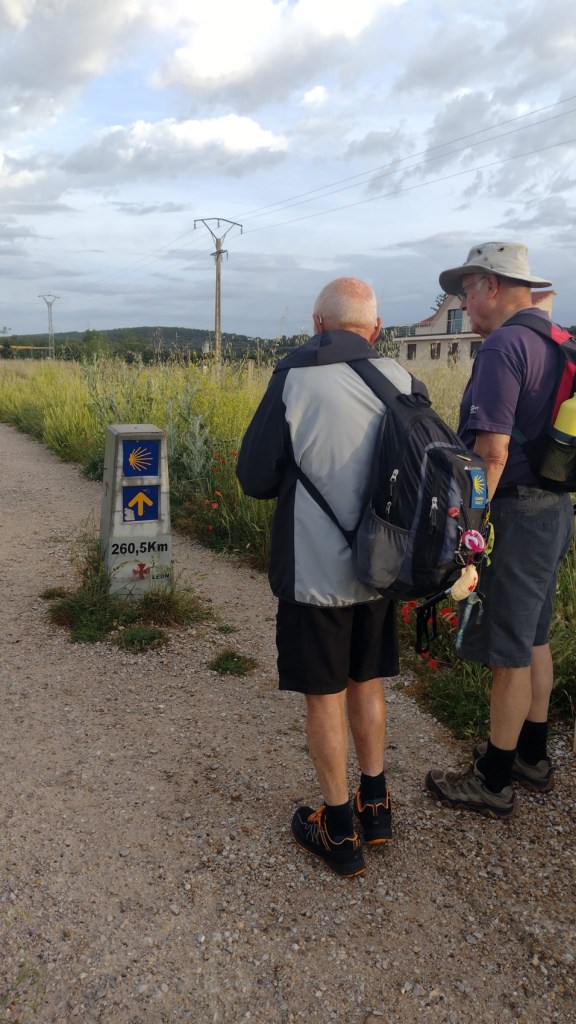
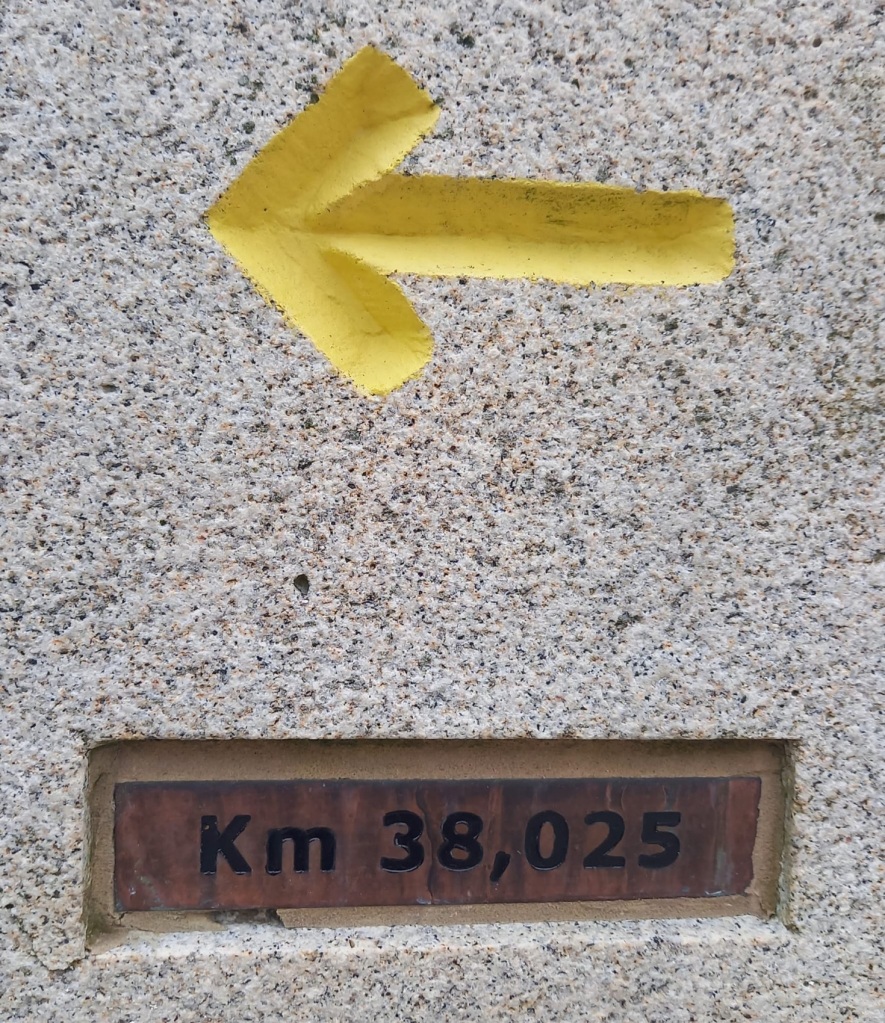
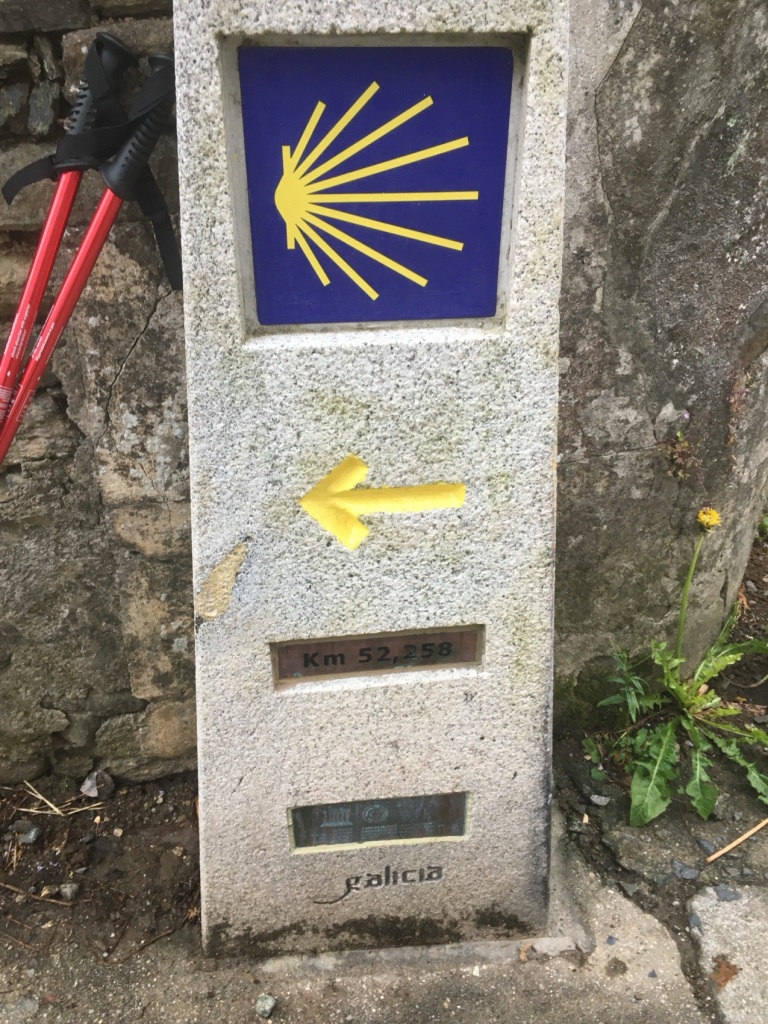
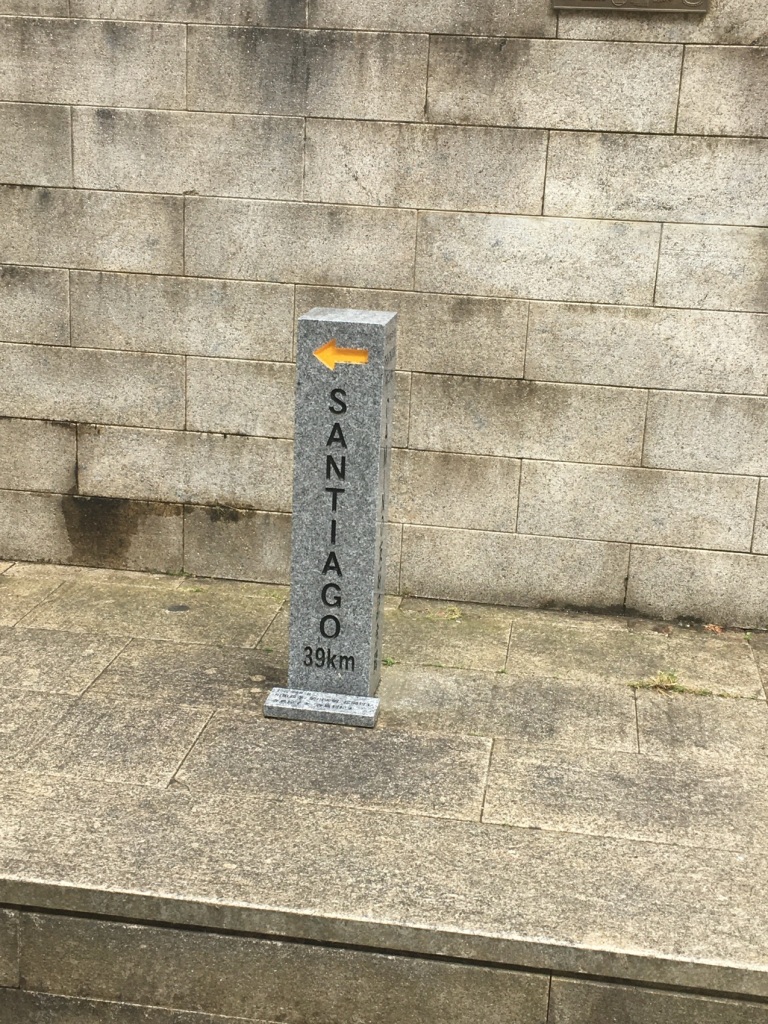
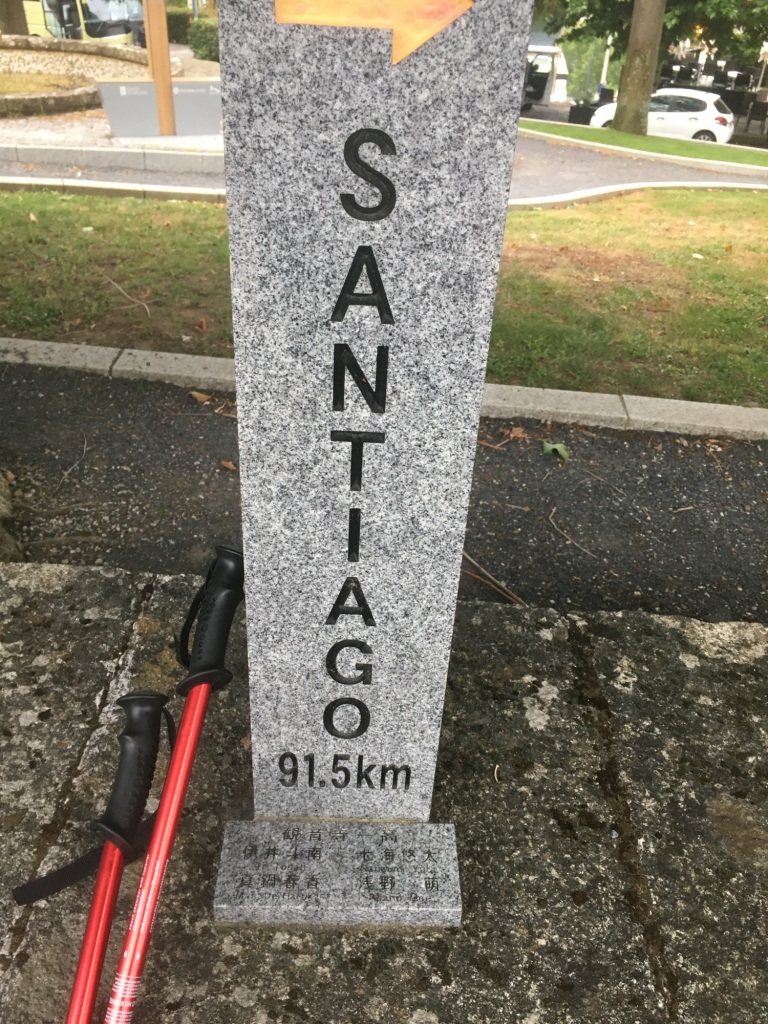
Richard and I admiring the first distance marker post.
We anticipated walking about 5 Km to our breakfast coffee stop.
Hats On to the Camigos at MURIAS DE RECHIVALDO.An Americano and one of Hannah’s cookies – hit the spot!
We walked through SANTA CATALINA then EL GANSO, peaceful, pretty villages – red roses do well here.
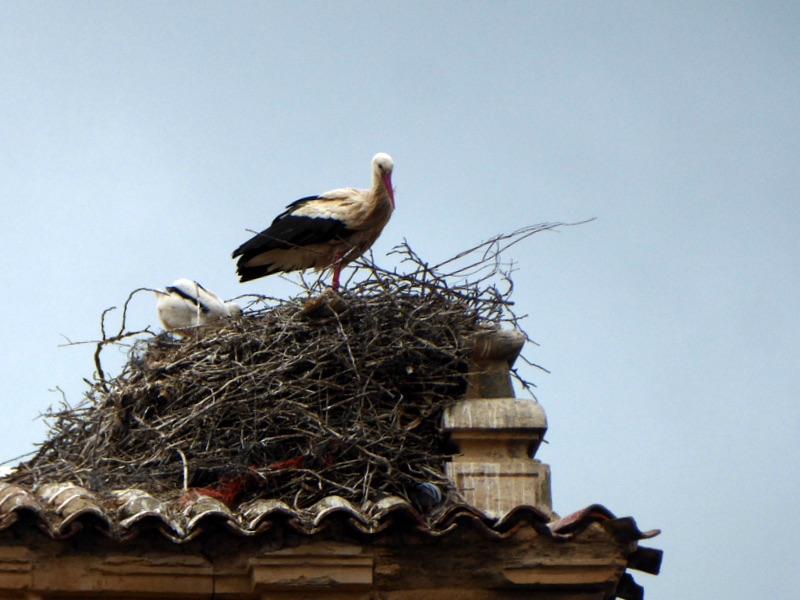
And a Stork’s nest to admire .Some great views as we sauntered along the way.Christina’s cruce.Ray, Richard and MikeNot too much further to go.La Candela – our accommodation – on the edge of the village.
We reached here at 13.00, five hours walking and two 30 minute breaks en route. A good start,blessed with fine weather. We had anticipated rain which came later than expected at 16.45 and expected to continue overnight. The forecast for Sunday is dry with sunny periods – if that turns out to be the case we shall be blessed again as we have a couple of challenging climbs to make.
A good number of photos used in this Blog are both Val and Christina’s – Muchas Gracias – plus some of mine.
Arrival at Birmingham Airport by train with Christina and Tom was straightforward enough and considering the amount of structural work taking place, checking-in and security was quite efficient.
Some of us gathered in the Spoons for coffee and a bite and we whiled away the time with a seminar on cryptic cross words, led by Tom using the Guardian Saturday Quick Cryptic puzzle, with clues.
I still feel quite clueless, despite getting a couple right.
Departure to Madrid was 30 minutes late, but a smooth flight ensued.
Barajas airport seemed quiet and we were through to the taxi rank in record time and taking three taxis for the group we soon arrived at Hotel Clemente to check in to our accommodation at Fly Rooms.
After a quick turn around we met back in the very cool Hotel Clemente bar, for a “ sharpener” .
Christina,Myra and Val .Richard,Tom and Mike.
Then, on to a local restaurant, La Vino de PEREA , where we were quickly seated in the shade. Helpful menu + specials in English.
We had a very convivial meal which everyone enjoyed, although I did say that this level of fare was a cut above what we might usually expect, but it was our first night so why not something a little special?
Croquettes filled with creamy finely chopped Oxtail
We were back in Hotel Clemente on Thursday morning for a state of the art breakfast, with a selection of hot dishes as well as fresh fruit,,cereals and cake.
Taxis had been booked for 09.00 for Terminal Four back at the airport and we were there quickly enough. Madrid airport is a huge place but well designed and the road system is exemplary.
The estacion de autobuses is only a couple of years old and we were soon seated with Christina directing what turned out to be a hilarious game of UNO,using two cases as a card table.
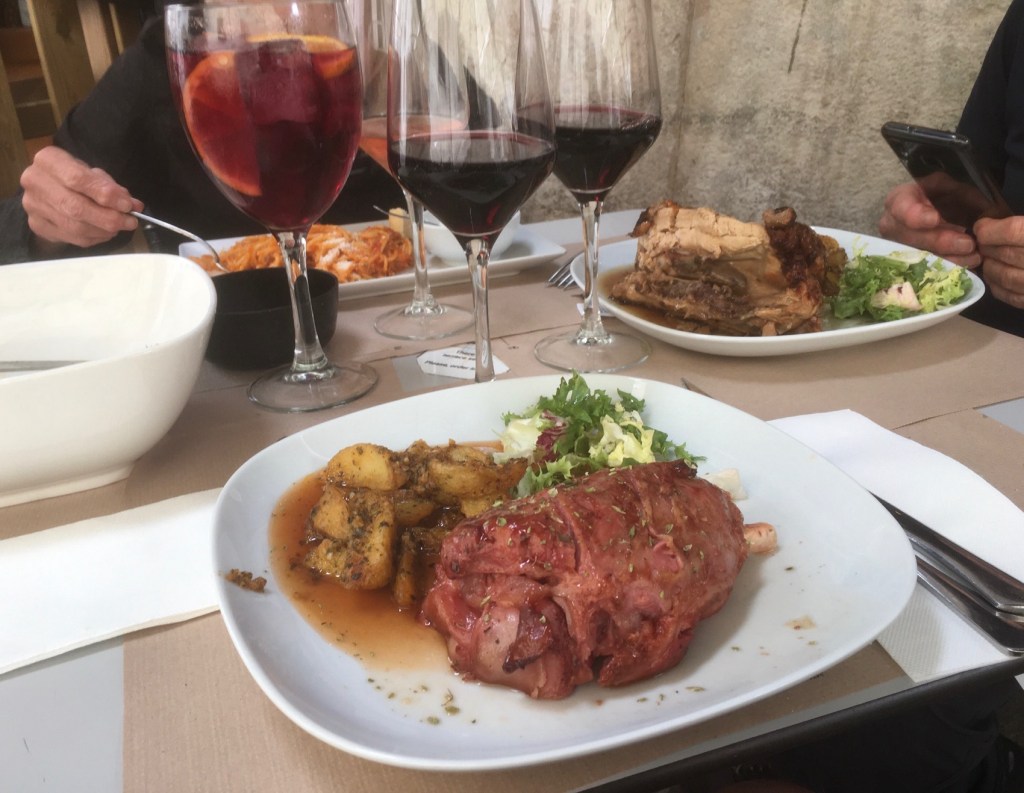
Thumbs up !UNO !
Our ALSA coach was a comfortable twin axle vehicle and we took a route around Madrid, calling at two smaller coach stations before eventually exiting the city .
Typical views heading NorthA little blurred as we sped along but you can just about make out RAMON BILBAO, fine local wine.
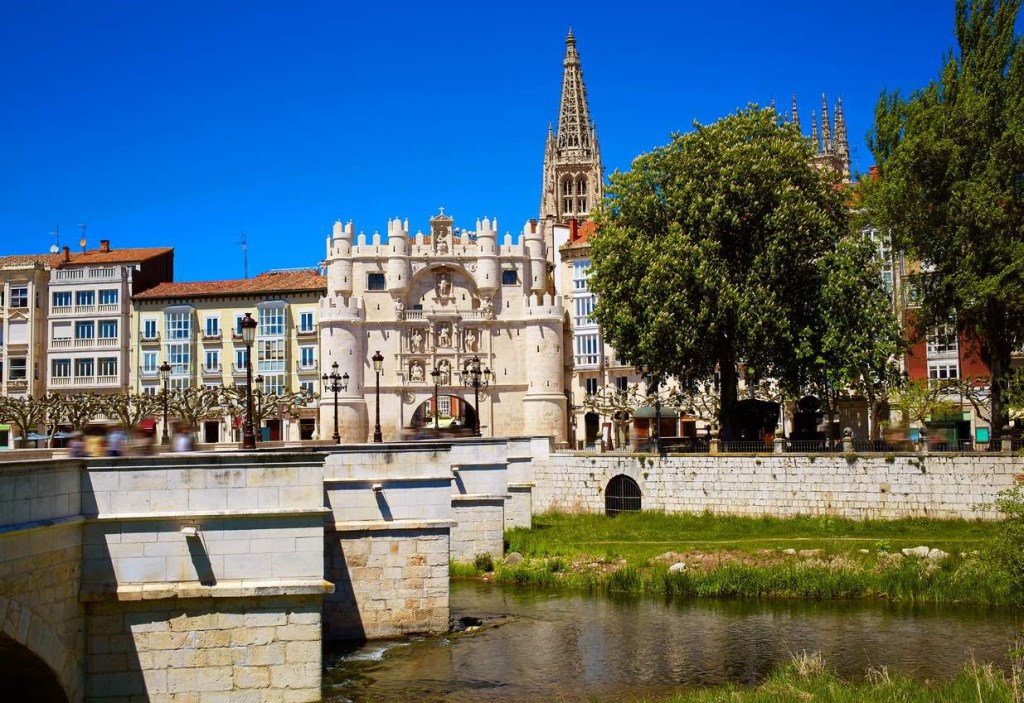
En route, Rob pointed out a tall cross on the hillside to our left – it was overlooking the Valley of the Fallen where Franco was interred. However, the government decided to exhume the body as it was agreed by a majority that the dictator’s remains had no place amongst the fallen of the Spanish civil war.
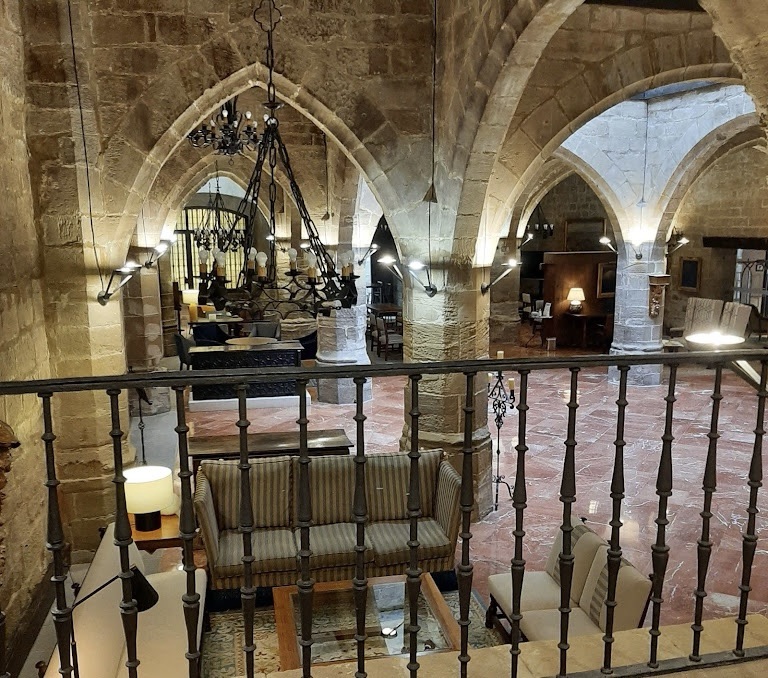
We arrived mid afternoon in 30* temperatures and made the 11 minute walk to our hotel IMPRENTA MUSICAL ALOJIOMENTO.
Mike and I decided to take advantage of the balcony and get some washing done.
Not often you can fly the flag alongside your socks!
With the best part of a sunny afternoon and early evening to spare we went on a random kind of walkabout of this fascinating city.
Representative of the Maragota local culture..Magnificent muralsGlass balconiesAstorga has many Roman remainsFine churchesSculpturesAnd fountains Not to mention ice cream Plus floral inventiveness.
Friday promised mostly sunshine with showers possibly late on. The forecast for Saturday’s first walk was wet and so we have decided to make a 07.00 start to Rabanal del Camino – 20 km. Tomorrow.
Mike and I enjoyed a late start and a very enjoyable traditional breakfast of tostadas con tomato y hamon, with fresh orange juice and coffee – €4.00!
We then walked the Camino out of the city to be sure of our route tomorrow. Passing a church that reminded me of my granddaughter, Martha.
We then passed another very modern church.
Camino embodied
We were surprised to notice a plaque on the wall of a house dedicated to an English hero.
Sir John Moore
We reached the edge of town where the Camino begins for real.
Fairly flat for the first 8 Km then a slight climb to Rabanal.
Retracing our steps we took in some of the buildings for which Astorga is renowned .
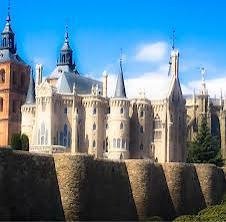
Towards the centrepieceThe Cathedral Soaring upwardsThe GAUDI Episcopal PalaceThe PalaceOn guard in the grounds.Eye catching variegated trees along the squareAfter a restful afternoon and some repacking,it was time for some sunshine on the patio.That’s our room,102
At 16.30 the Chocolate Museo opens . Let’s go, something different. What has chocolate got to do with Astorga; what has chocolate got to do with Cadbury’s Bournville? Both unlikely places.
The Chocolate Museo.A Villa put to good use and we got three samples , too.
The storm came in about 18.30, so Rob, Tom, Mike and I took shelter in a tiny bar, El Rincon, about 150 M from our hotel. A simple, locals’ favourite. I rang the rest of the group to say we could have a good night here…and we did….super service and incredible value for money . Enjoyable night and it has stopped raining,thundering and lightning as we walked back to the hotel.
“In my soul I am a farmer. I see the worms and the small things on the ground along the way, note the plants that thrive and know this earth is rich and alive.
I could grow things here.
In my heart I am a fisherman. I stand beside the rivers and streams and watch the fish jump.
I could feed myself here.
I know how to grow things. I know how to fish. These are gifts given to me at childhood by my parents.
I may struggle to converse with the people I pass. But Spain… the land, speaks to me in a language I understand.
I could live here and be happy.”
In my soul I am a farmer. I see the worms and the small things on the ground along the way, note the plants that thrive and know this earth is rich and alive.
I could grow things here.
In my heart I am a fisherman. I stand beside the rivers and streams and watch the fish jump.
I could feed myself here.
I know how to grow things. I know how to fish. These are gifts given to me at childhood by my parents.
I may struggle to converse with the people I pass. But Spain… the land, speaks to me in a language I understand.
I could live here and be happy.
In my soul I am a farmer. I see the worms and the small things on the ground along the way, note the plants that thrive and know this earth is rich and alive.
I could grow things here.
In my heart I am a fisherman. I stand beside the rivers and streams and watch the fish jump.
I could feed myself here.
I know how to grow things. I know how to fish. These are gifts given to me at childhood by my parents.
I may struggle to converse with the people I pass. But Spain… the land, speaks to me in a language I understand.
At this point and before we begin our Camino from Astorga on. 20 th June 2024, it is worth remembering a few of the things that differentiate a camino from a holiday. We all undertake our Camino for a vast array of reasons.
DECELERATION – A Camino can be an “ Oasis of deceleration “ Below are some notes I made at a seminar on “ Slowness on the Camino” . At Southwark Cathedral about 5 years ago.
Travel per day – walking is the ultimate slow mode. Natural rhythm
Experience of physical discomfort / pain. Overcoming challenges
Listening to what your body tells you
These inhibit…slows you down, more reflective more likely to engage face to face with others.
Decrease in number and variety of actions per day
Simplicity of experiences
Reduction of consumer choice Eg Menu Del Dia / Pelegrino Eg lunch is not Pret A Manger with 30 different sandwiches/ soups
Walk, Eat, Sleep – a different bed every night and being grateful
You have only to consider what time you start, where you are going to finish
What to have for breakfast
Where/when to have a break
Hostal or hotel
Dinner? Or Tapas trail ?
Let’s go back a few centuries
There are many ‘What a lovely wonderful day that was’ on the Camino but there are also days that are more difficult, ‘Thank Goodness that’s over’. History shows us that such was always the pilgrims’ role.
14th Century Pilgrimage to SdC
Licensees authorizing the owners and captions of ships to carry a fixed number of pilgrims to Spain are still in existence and fill many pages of Thomas Rymer’s book ‘Foedera’. They are written in Latin, the name of the ship in French. The pilgrims must swear before leaving England: they must upon their oath do nothing contrary to the obedience and fealty they owe the king; they must not take out of the realm gold or silver or bullion beyond what is necessary to their journey, and they must not reveal the secrets of the realm. Don’t think for a minute that these ships, one hundred pilgrims and crew on a long journey were large, well-appointed vessels. The pilgrims suffered from overcrowding, seasickness, the fear of storms, disgusting smells, and the derision of the sailors. They very much resembled the jam-packed pilgrim ships on the Red Sea of our recent history which brought crowds of believers to Jeddah, Muslims on their way to Mecca. Our example dates from 1394: “Know you that we have given license to Oto Chambernoun, William Gilbert, and Richard Gilbert, to receive and embark in the harbor of Dartmouth a hundred pilgrims in a certain ship belonging to the same Oto, William, and Richard, called la Charite de Paynton, of which Peter Cok I captain; and to take them to Saint James, there to fulfill their vows, and from thence to bring them back to England, freely and without hindrance, notwithstanding ordinances to the contrary.”
We got it easy.
Sit back and relax for now,: “I’m not telling you it’s going to be easy, I’m telling you it’ll be worth it.” ”
There is a saying in Spanish “cada día tiene su afán” which translates to “Every day has its desire.” I love this saying because so true in life and especially on the Camino. Each day there some new challenge; weather, terrain or aches and pains. But it is important to remember these things are temporary or tomorrow offers something new. 🙏😊
On leaving O Acrivo we very soon walk through Pedrouzo, following the arrows as we go. There is very little to say about this modernised town – no myths nor monuments – generally full of pilgrims like us ,excited and relieved to have got so far.
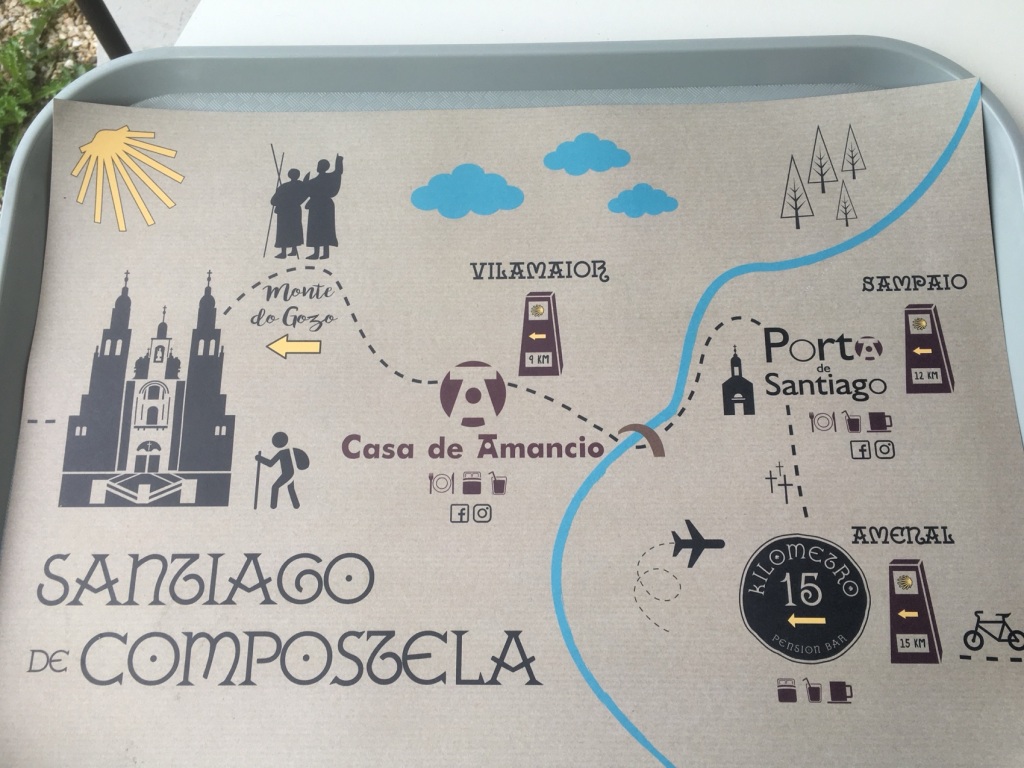
Amenal is merely a pit- stop but has a popular cafe
Possible fellow travellers
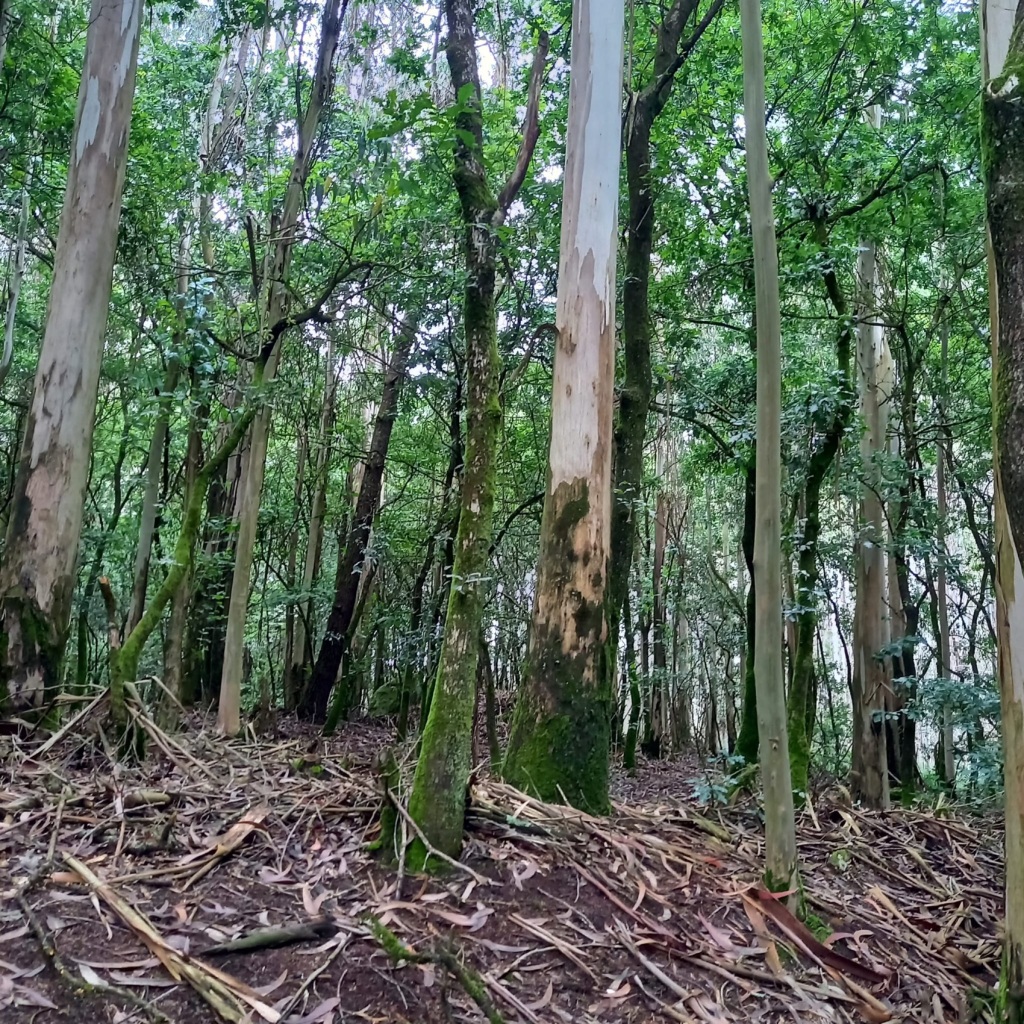
We shall be walking beneath Eucalyptus for some way until we come upon the Lavacolla airport. There are many theories in relation to the origin of the place name Lavacolla. One of the theories claims the name Lavacolla comes from the fact that pilgrims in the Middle Ages used to wash in the stream that crosses Lavacolla to arrive clean in Santiago. This is one of the theories you might hear from the guides of the Cathedral in Santiago de Compostela if you take a rooftop tour of the cathedral. This theory implies the name Lava-colla could come from the words ‘lavar’ (to wash) and ‘cuello’ (neck), meaning ‘to wash the neck’. There is a more earthy interpretation but…You may notice discarded items of clothing by the stream – as we walk around the perimeter of the airport.
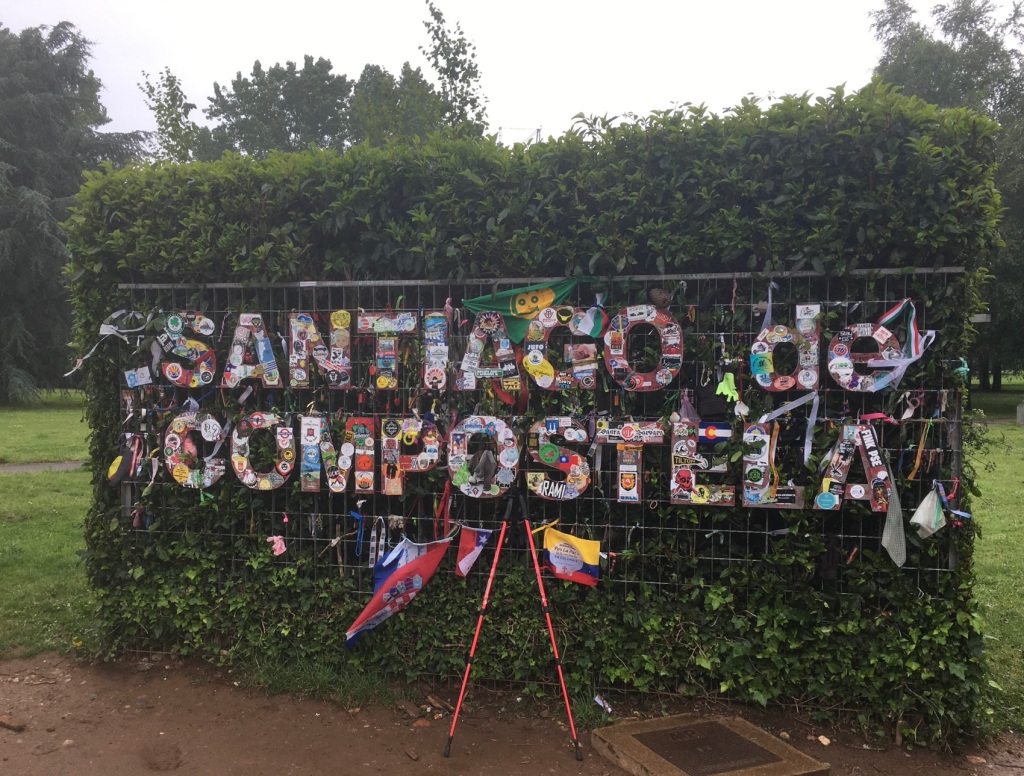
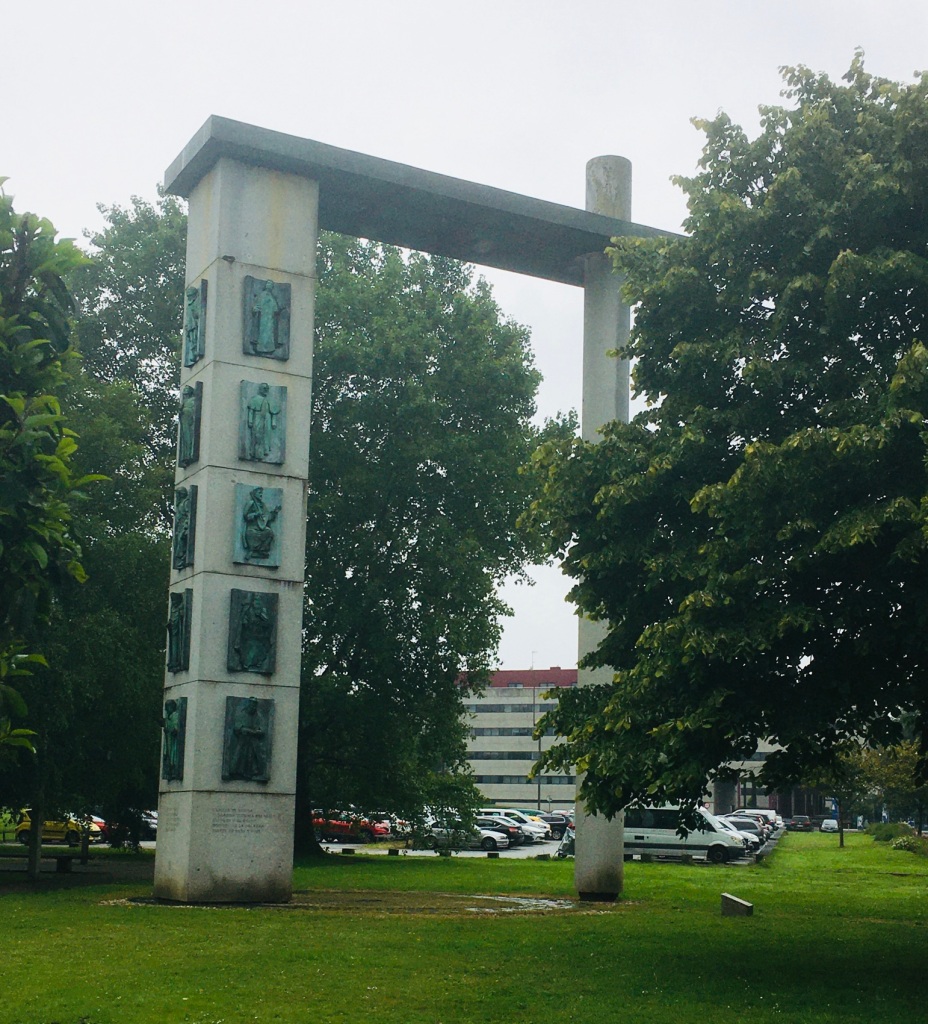
Wooden crosses in the airport fence A sure sign that our rural oddysey is behind us.The best campsite for Santiago in my opinion Monument on Monte de Gozo .Monte do Gozo (Hill of joy) is the last hill on the Camino de Santiago before reaching Santiago de Compostela. From this hill the pilgrims can see the three spires of the cathedral for the first time. On top of the hill there is a modern religious sculpture and a park, plus a chapel .Capilla de San Marcos – last place outside of the city to obtain a sello. This was the site of a medieval chapel and marks the original site of the look out point at which pilgrims stood to get their fist glimpse of the cathedral spires – hence Gozo meaning joy . Made of two giant pilgrims pointing the Santiago de Compostela Cathedral. It was built in the 1993 Holy Year and was design by the Galician sculptor Acuña..
The Camino continues and takes us into the suburbs of Santiago, Rua do Peregrino and a flight of steps to join the city’s traffic.
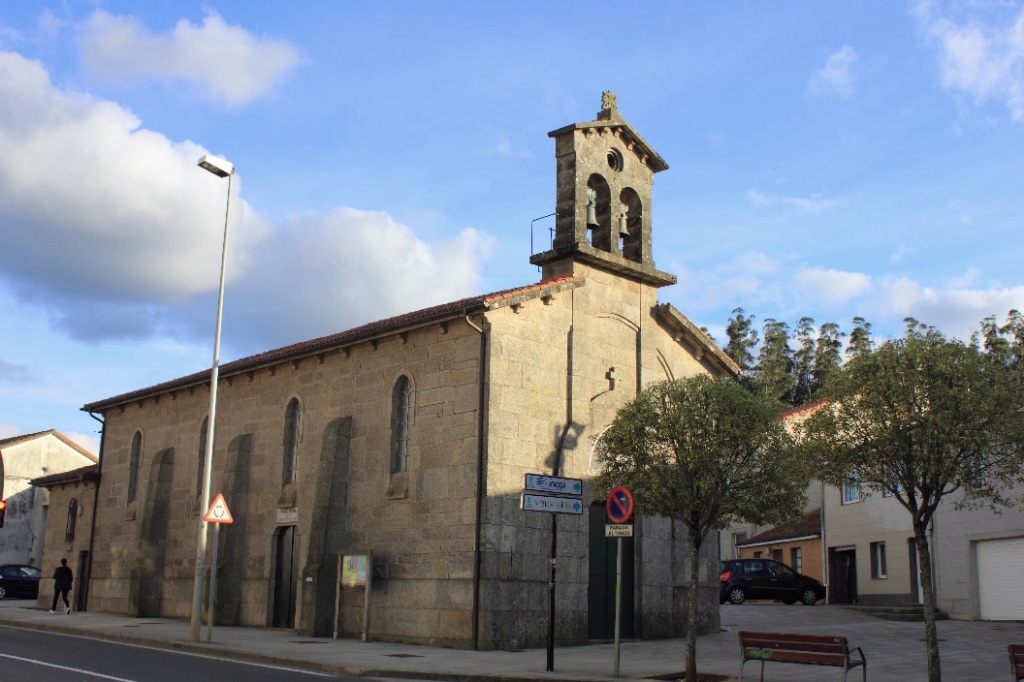
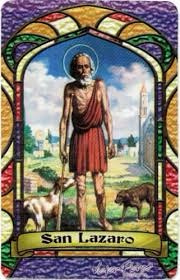
San Lazaro. (Last time I came by here it was open and there were parishioners issuing stamps for your passport and directions to the cathedral . )Witness to the leprosarium that existed here in the XIIth Century sufficiently far enough away from the city walls to exclude contamination
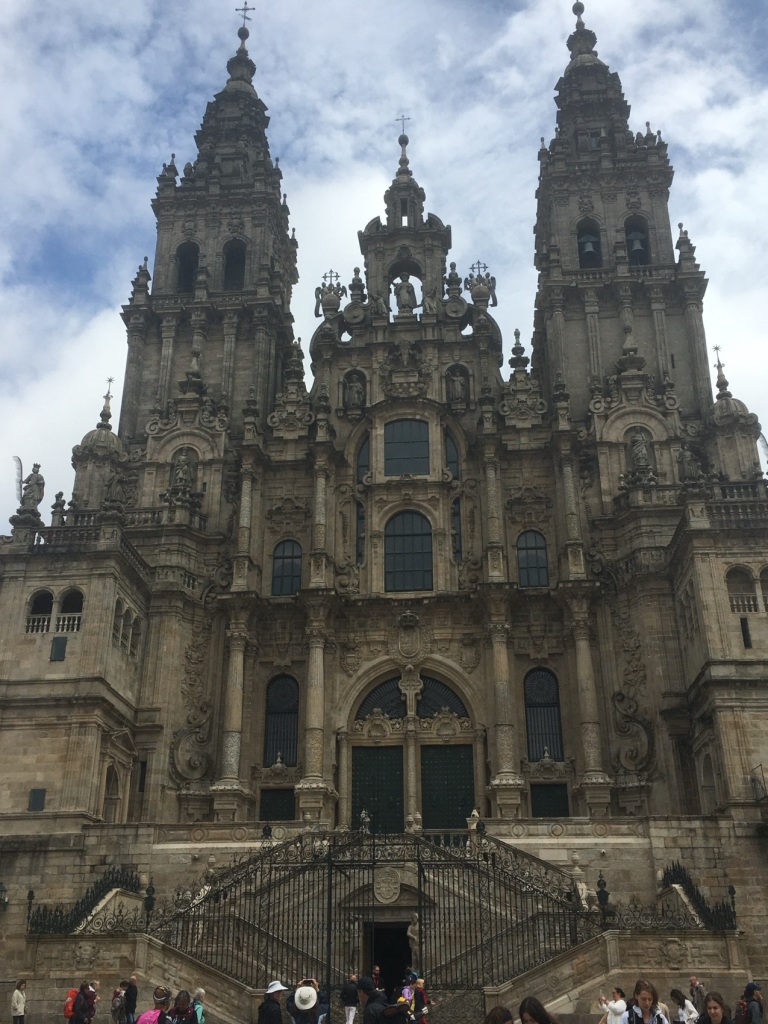
The path enters Santiago on the west side via San Lazaro. The Rua dos Concheiros which flows into rua San Pedro and crosses into the medieval walls of Santiago at Puerta del Camino, leaving a final few hundred Kms to reach Kilometre Zero at the cathedral. John Brierley’s advice is worth regarding on your arrival…..” “Take time to arrive . We each experience different emotions, from euphoria to disappointment, on seeing the cathedral . Whatever your individual reactions, honour and accept them . Gratitude for safe arrival is a frequent response but if you are overwhelmed by the crowds why not return later when you feel more composed …”
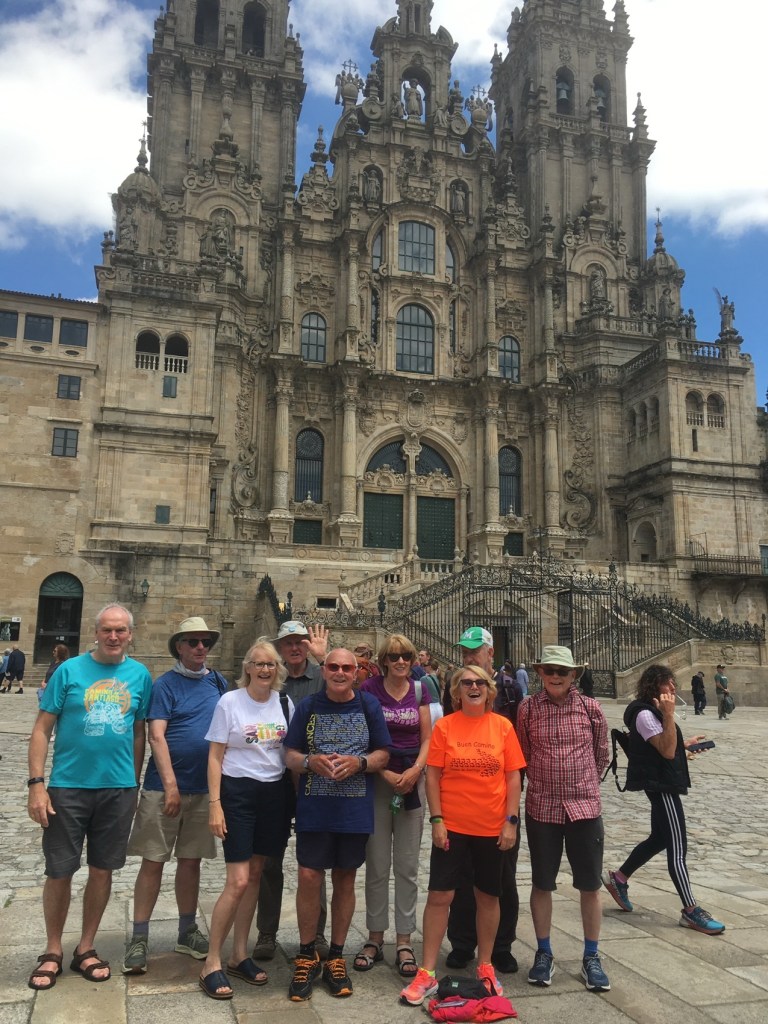
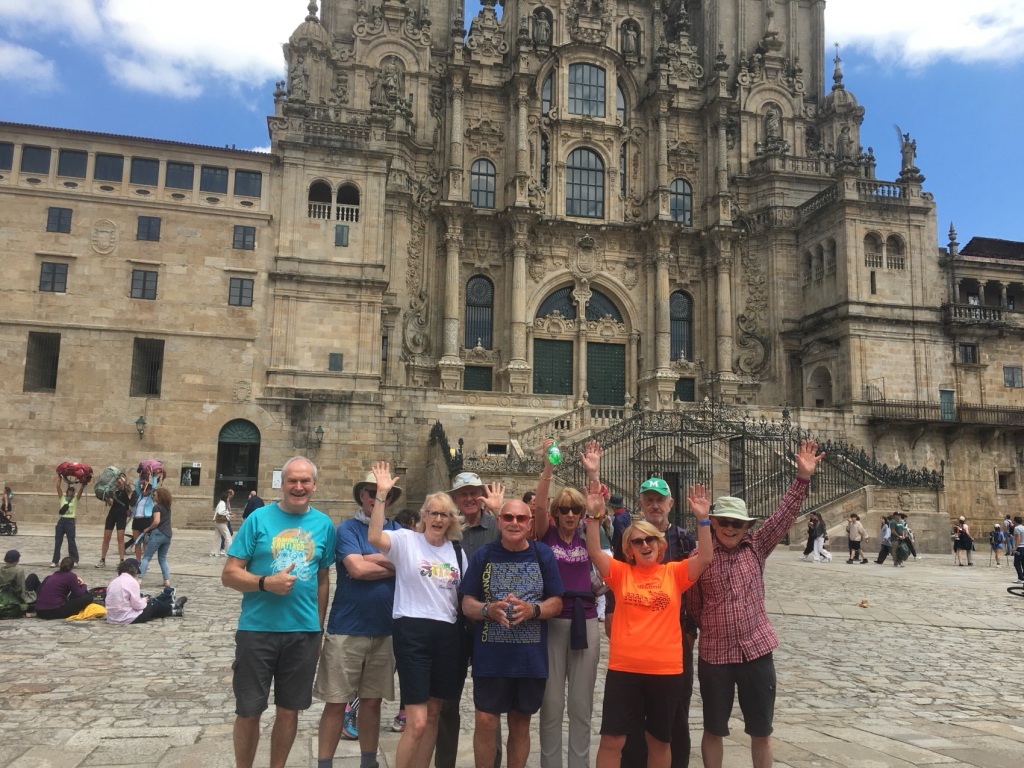
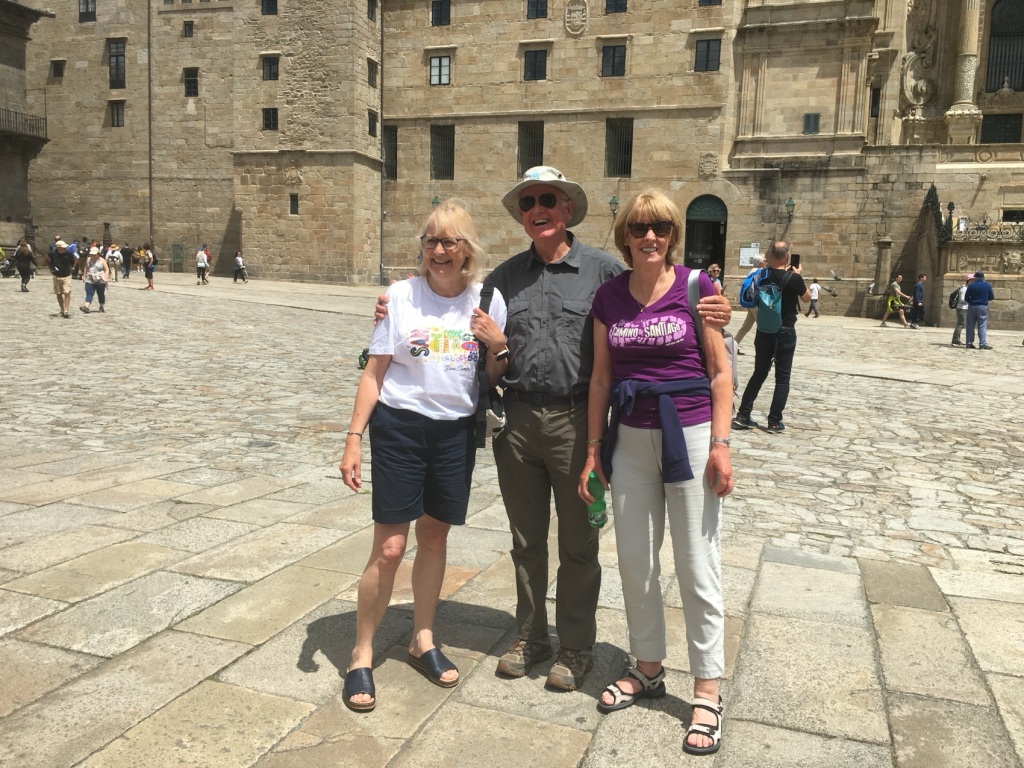
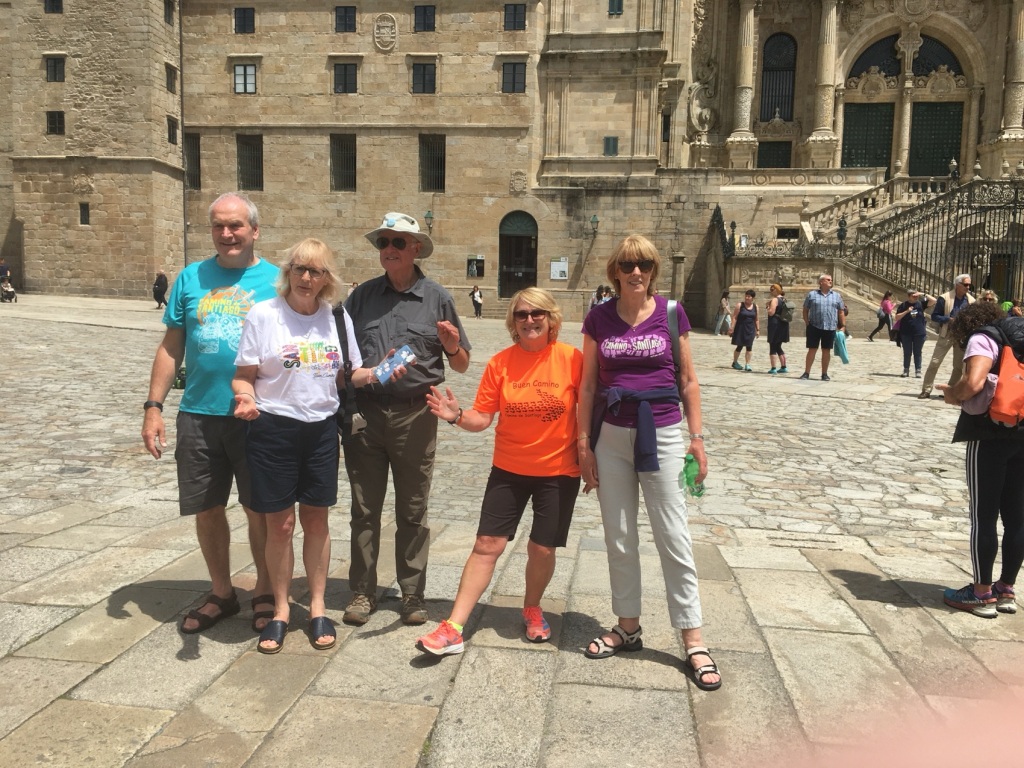
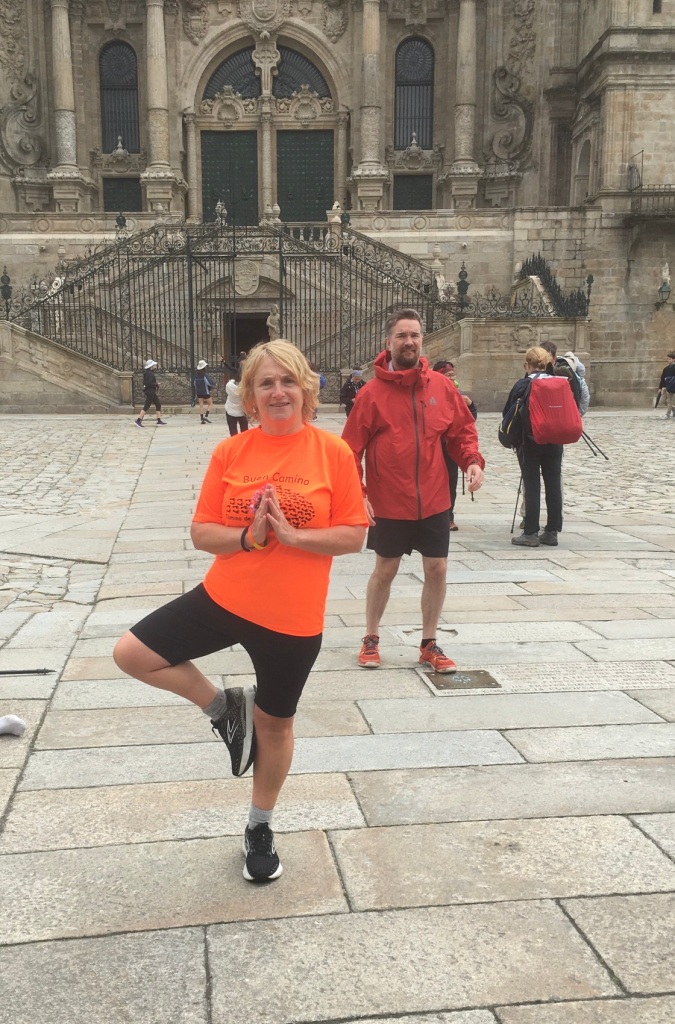
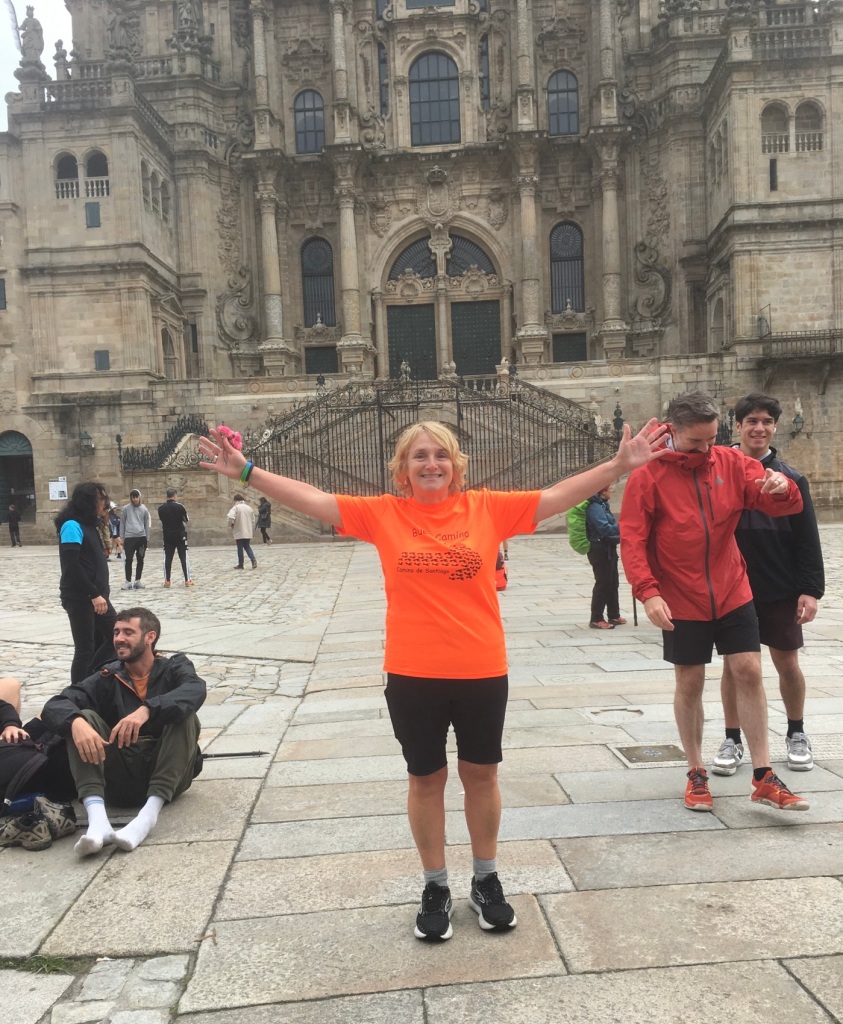
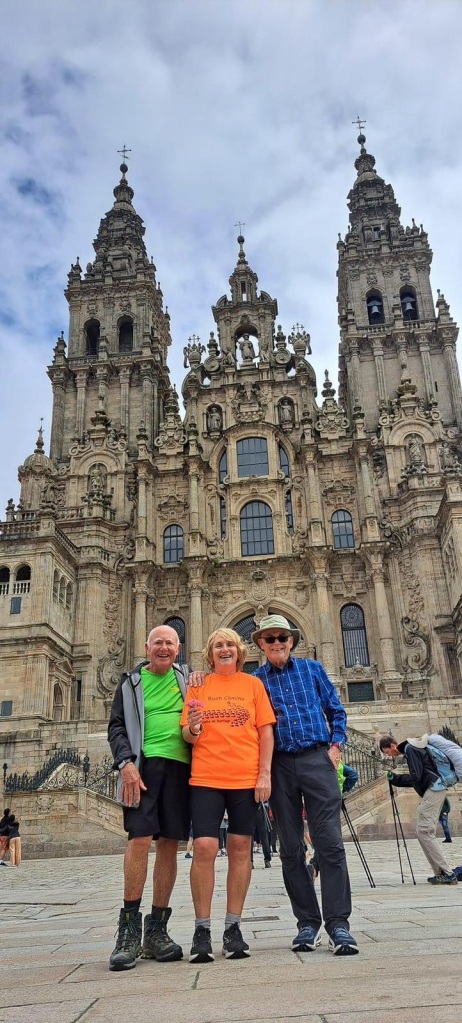
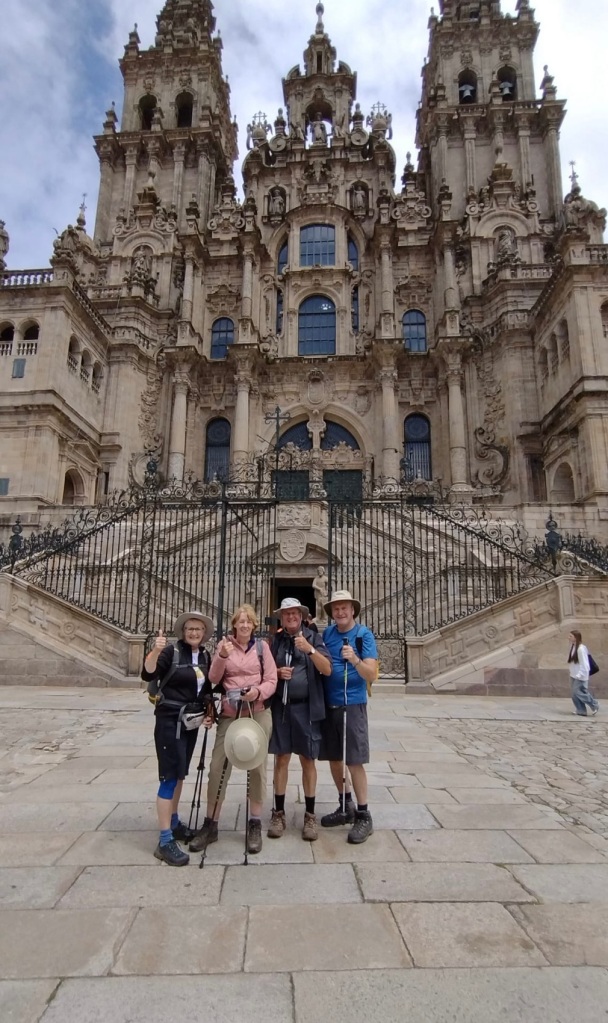
I have often sat here and watched the joyful,sometimes tearful arrivals.There is a tradition of having both an individual and a group photo taken on arriving in the Praza ObradoiroSC Ramblers – 2020
Codex Calixtinus: “ Compostella, the most excellent city of the Apostle,complete with all delights , having in its care the valuable body of St. James, on account of which it is recognised as the luckiest and noblest city in Spain”.
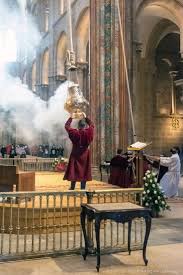
There are certain rituals associated with Santiago, no obligation .
There is so much to see in Santiago de Compostela and the link below is helpful in making decisions about what to do. Take your pilgrim passport with you as it enables free entrance into some places. If there is a fee, it is worth asking if there is a discount for “Jubilados “ – Retirees.
The Camino continues out through the old quarter of the town.
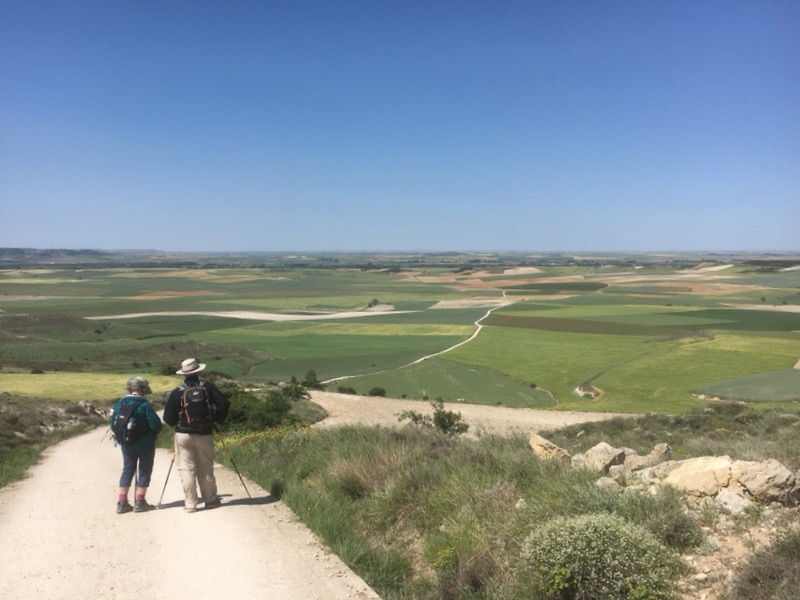
The trail passes through numerous hamlets. There’s just a bit of undulation with several shallow river valleys. Most of the trail is off road with shade from the prolific Eucalyptus trees.
Then locals in these parts enjoy telling you without the slightest tone of irony or sarcasm that “ no hay vacas in Galicia “ ( there are no cows in Galicia )….mmm. Another corker is : “No hay burro calvo, ni calabaza con pelo!” (” “There is no bald donkey and no pumpkin with hair.” ) I can clarify: it’s an idiom that basically means “don’t bullshit me” or, more generally, used in situations where something is clearly exaggerated, false, etc. I would add that there might be a second layer of irony to this, in the context of a conversation about Trump, because he’s often made fun of for his orange-colored fake tan, and people have often called him a pumpkin. So he sort of is a pumpkin with hair…
How did we get here ? Let’s leave this diversion and get back on to the Camino .
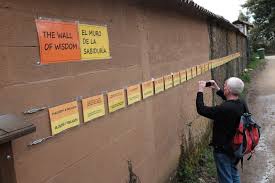
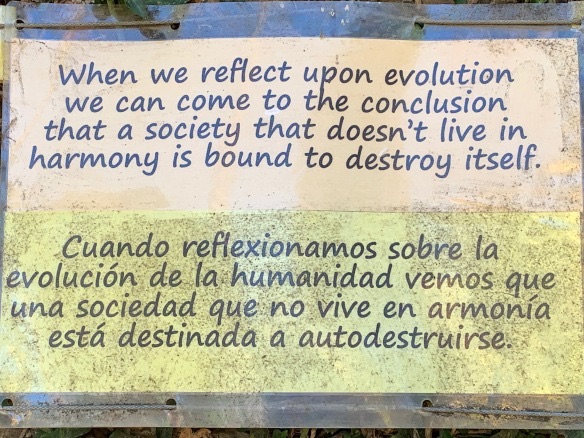
Striding out we soon reach a tiny place,Preguntono.We go under the N- 547 by a tunnel and reach Taberna Velha and the Wall of Wisdom that has been “modernized” (i.e. laminated) to survive the elements of the Camino. It has inspirational quotes to motivate tired and worn peregrinos as they finish their final kilometers to Santiago de Compostela.In John Brierley’s guide he says,it depends on one’s perspective
After all that philosophy we shall be ready for refreshments and here is just the place.
Casa Calzada – only if you’ve got the bottle for it.
We soon reach A Calle, a typical Camino village
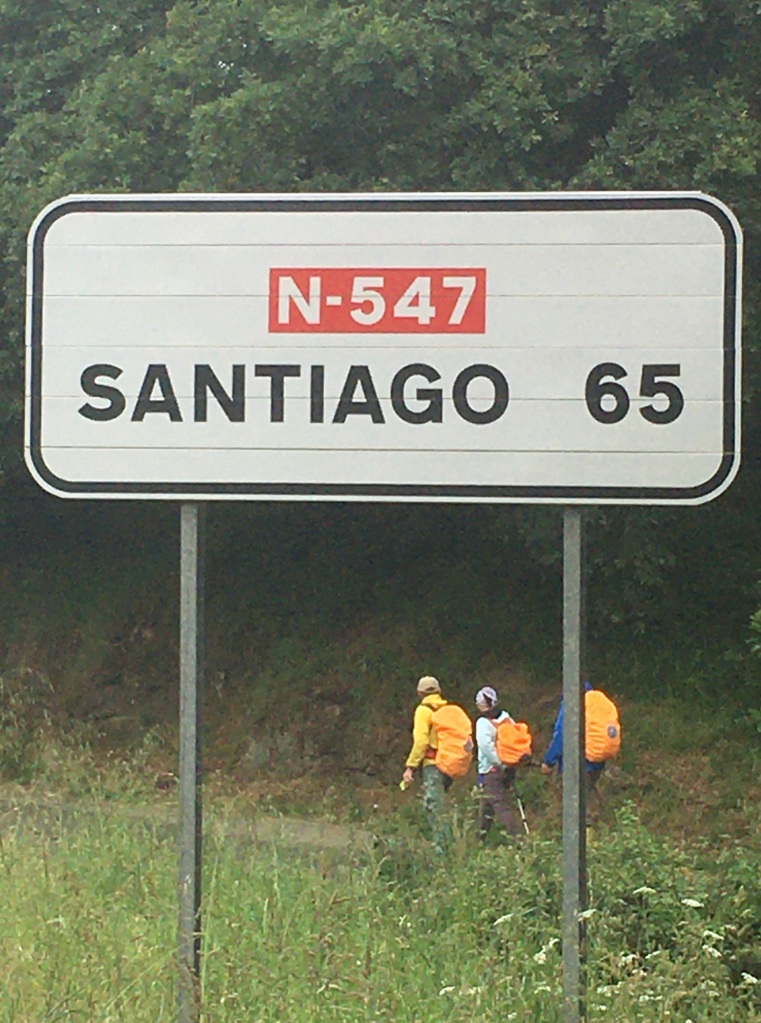
We walk under the Horreos, towards Salceda.A handy bridge.N-547
PLEASE NOTE
The path joins the road at Salceda , and although you don’t walk on the road, you stay quite close. In fact, the path crosses the highway several times between here and Santiago. The speed of the traffic, the curves in the road and the abundance of pilgrims make this the most dangerous stretch along the path. Cross carefully and quickly and always stay under the road when possible.
Son after leaving Salceda we pass a poignant memorial
The monument is of a bronze pair of his shoes and people are known to leave little gifts beside the monument. The plaque at the side says “Guillermo Watt Peregrino, Abrazo a dios a los 69 años a una jornada de Santiago el 25 de Agosto 1993, año santo, vivas en Christo.”He died one day before reaching S de C.
The next place of interest as we near the end of this stage is Santa Irene. At 25 km from Santiago de Compostela, the small and beautiful village of Santa Irene, belonging to the municipality of O Pino.
Here you can find good places to eat and rest. One of the most interesting places in the locality are the hermitage and the fountain, since important curative powers are attributed to it and therefore, it hides several legends.
For many the water emanating from this source is able to kill pests and plagues of crops, so it was used to spray the crops. Also, it is presumed that it cured all the ills of children, who stopped crying when they passed by the image of the Saint. It was previously decorated with the image of the Saint, but this beautiful piece from 1692 was stolen in the eighties.
Chapel of Saint Irene Perfectly located at the foot of the Camino de Santiago, you will see this beautiful and well known chapel. This hermitage dedicated to San Pedro was built in the 17th century and has a simple rectangular floor plan built in stone, with lintels and a bell tower. Inside there is a baroque style altarpiece. It is surrounded by a spectacular oak grove, which forms its wooded atrium where the feast of St. Peter is celebrated on June 29th. Fountain of Santa Irene Called by many the Fountain of Eternal Youth where pilgrims come to enjoy the water, this fountain is located right next to the aforementioned chapel. The story goes that the waters of the Fountain of Saint Irene had the power to cure the plagues and the ills of the pilgrims, which is why it became a historical place.Not far away from O Pedrouzo / Arca
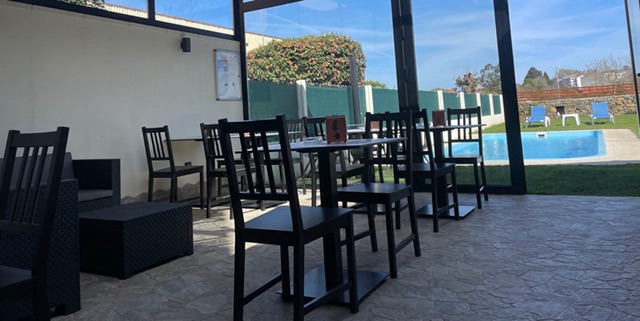
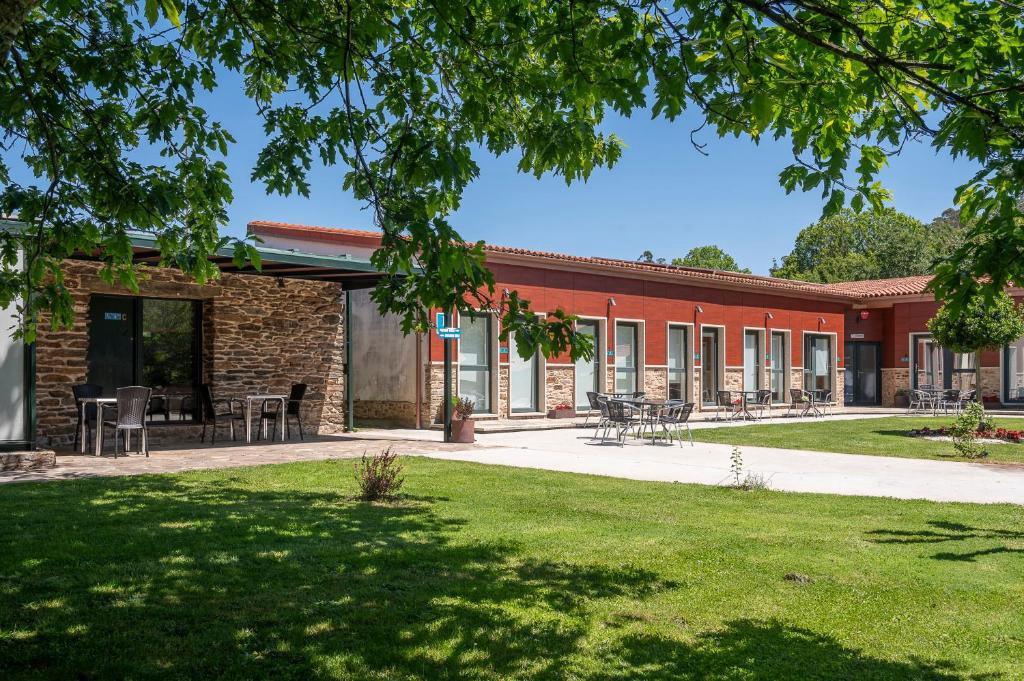
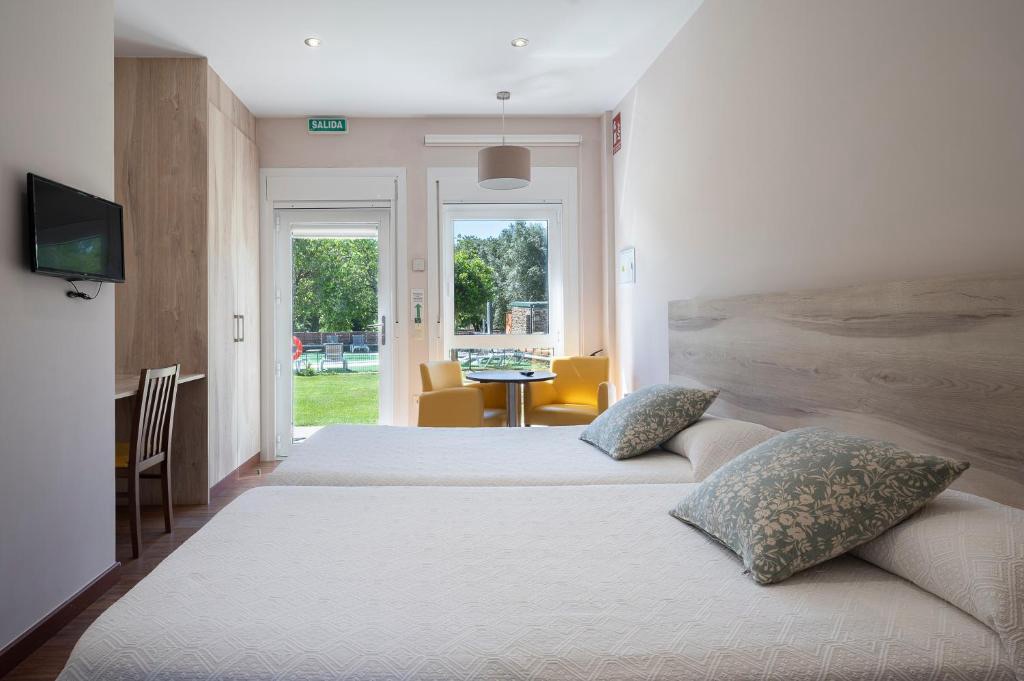
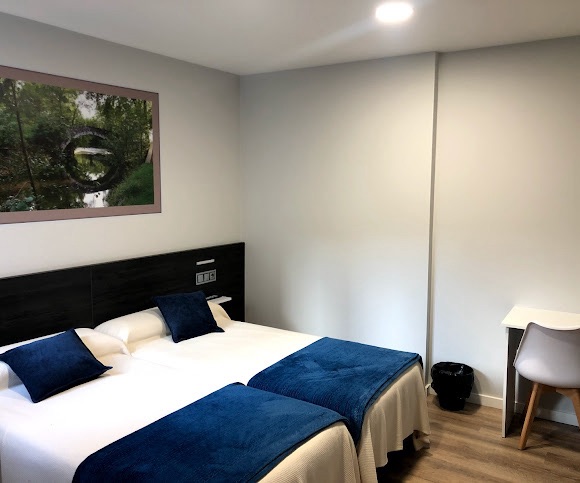
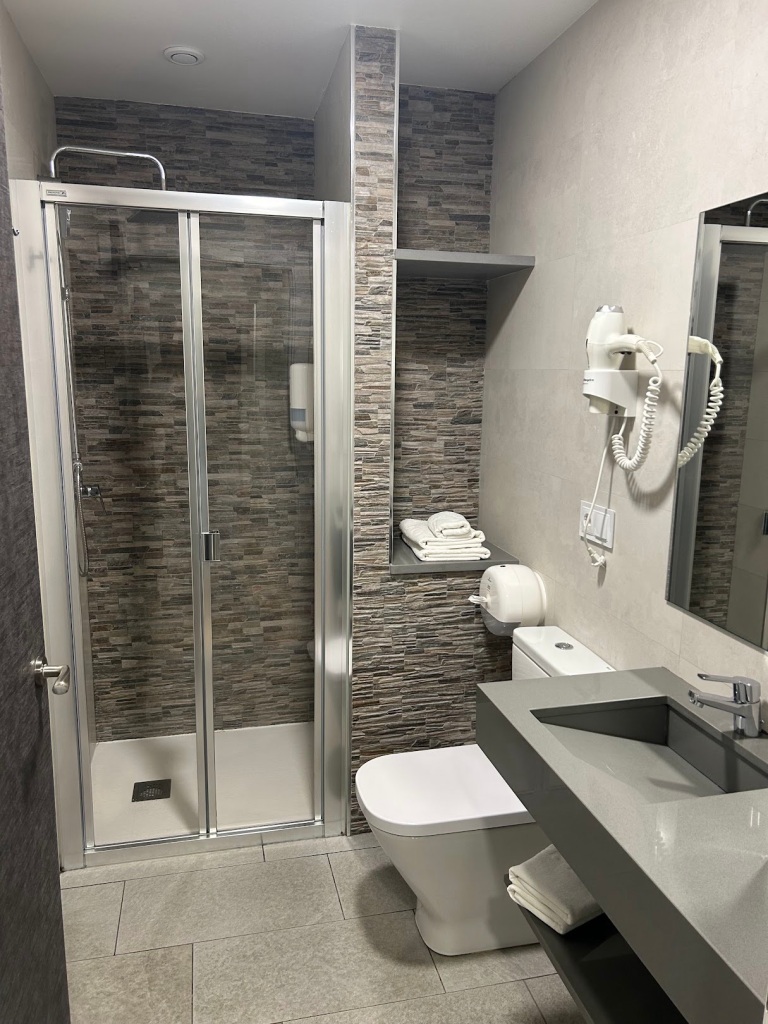
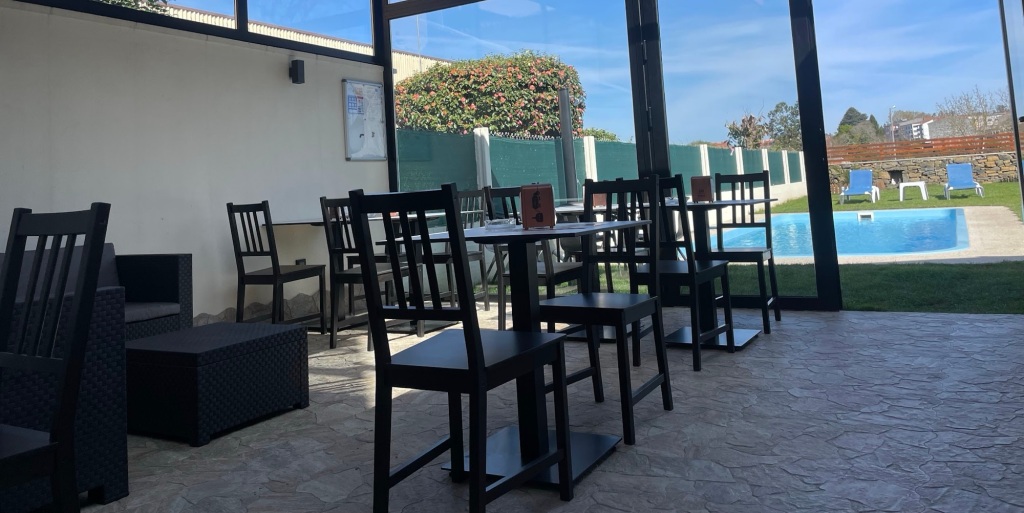
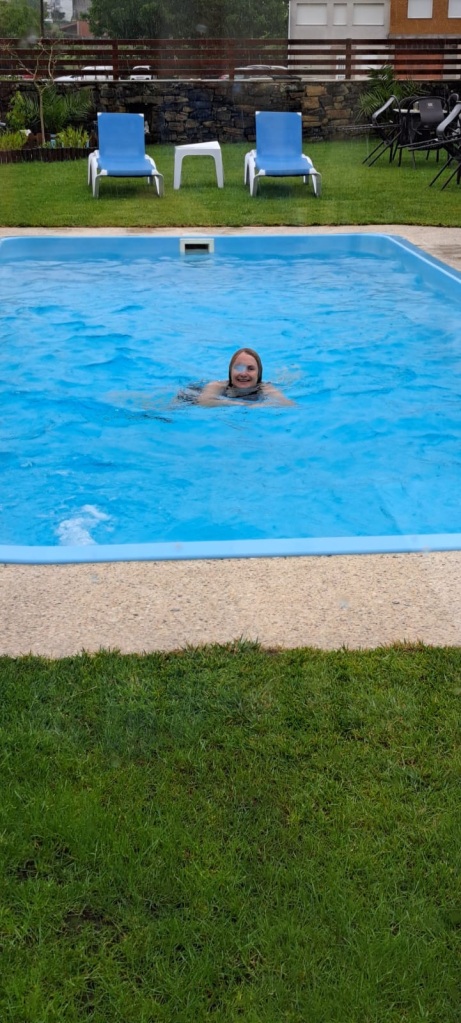
Ten minutes from O Pedrouzo and close to a campsite is our welcome accommodation Alojamientos Rurales O Acrivo Right on the Camino path about 1km from O Pedrouzo. A recent review :- “Well appointed, clean, comfortable little motel type rooms. Laundry facilities were very much appreciated & pool was open, which was fab for tired legs. Restaurant was handy for evening meal & breakfast.” O Pedrouzo is a locality of 540 inhabitants. It is erroneously cited on many occasions as Arca. However, O Pedrouzo is a locality of the parish of Arca and capital of the Concello of O Pino. Let’s hope we get the weather for it!The barThe restaurant terrace
This location should prove to be more peaceful than O Pedrouzo, and we have one more day’s sojourn to go.
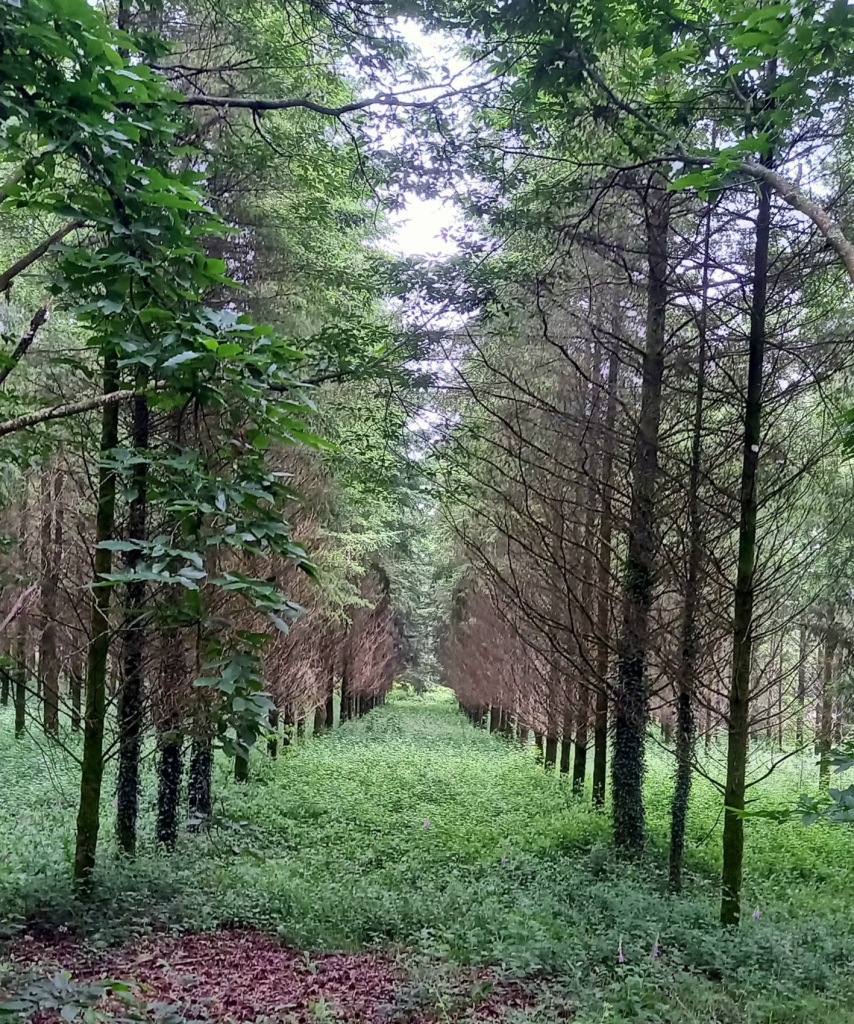
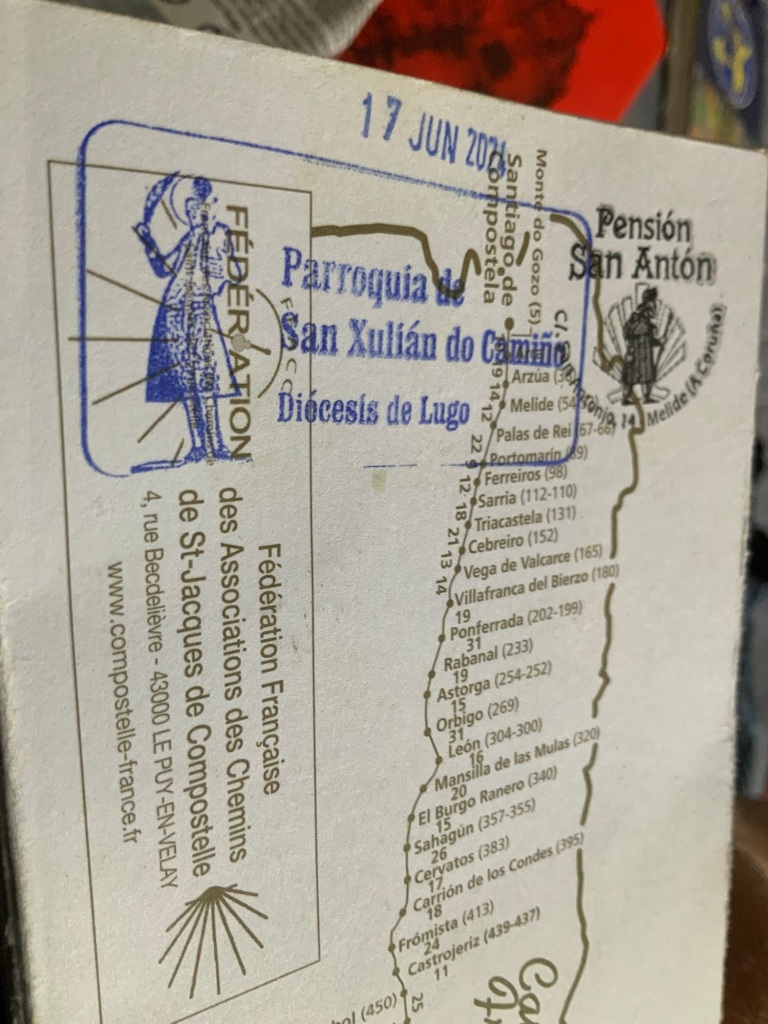
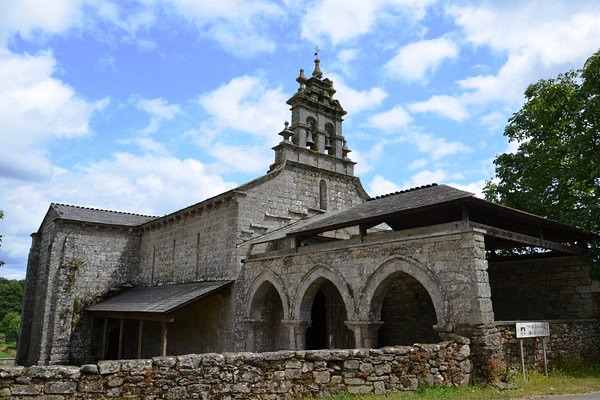
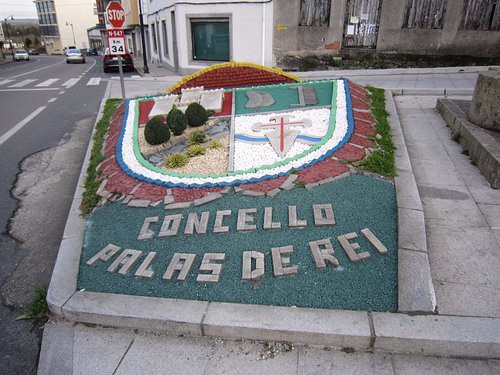
Pilgrim Monument Fairly flat terrain – well made paths. The N-547 will be near at times and we shall have it for occasional company and crossings as far as ArzuaLeaving Palas de ReiMuch woodlands from Oak to Eucalyptus to traverse today. The first settlement of any consequence is San Xulian do Camino
Iglesia de San Xulian . Saint Julian is one of the favoured saints of the Camino and is the patron of hospitaliers and hoteliers. However, the legend that surrounds his calling is a dark one.
SAN XULIÁN HAS A SHOCKING STORYTO TELL
According to legend*, when Xulián was a young man, it was prophesiedthat he would one day kill his own parents. To keep the prophecy from coming true, Xulián left town in an effort to stay away from his parents and keep them safe from his own hand. He eventually built a new life for himself away from his parents (likely in Portugal) and married a young woman.
Soon after Xulián’s marriage, his parents set out to locate their lost son’s new home and found his wife there alone. She, unaware of the prophecy, was thrilled to finally meet her mother and father-in-law, welcoming them into the home and even offering hers and Xulián’s bed to the weary travelers while she attended church.
Unfortunately, Xulián soon returned home before his wife and unexpectedly found two people in his bed. Assuming that it was his wife and a secret lover, he murdered both of his sleeping parents in a blind rage.
Immediately realizing his mistake and that the prophecy had come true, Xulián and his wife began a pilgrimage to Rome to seek forgiveness for his sins from the pope. As his penance, Xulián was ordered to devote his life to caring for pilgrims. He did so, and he and his wife were both canonized as saints after their deaths. This story is entirely according to legend and is not officially verified by the Catholic church, but it makes for a good tale, anyway.
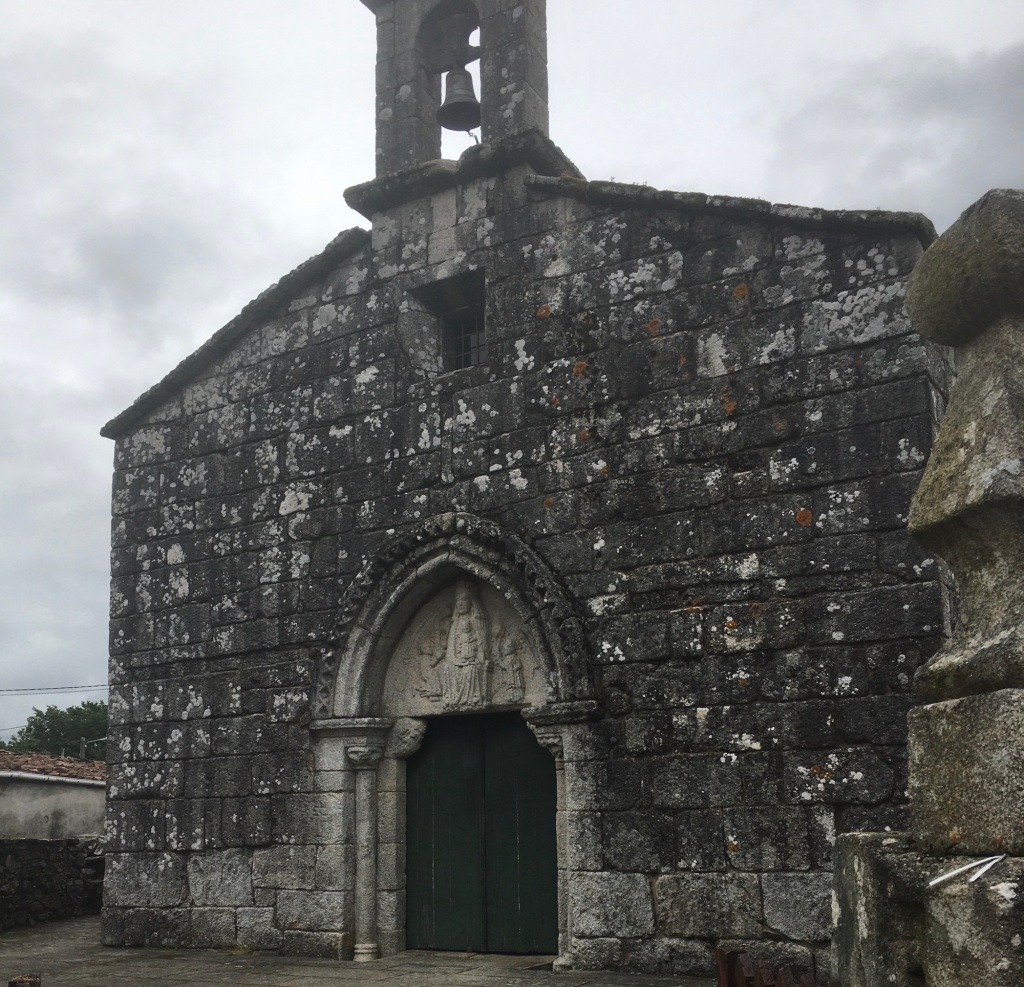
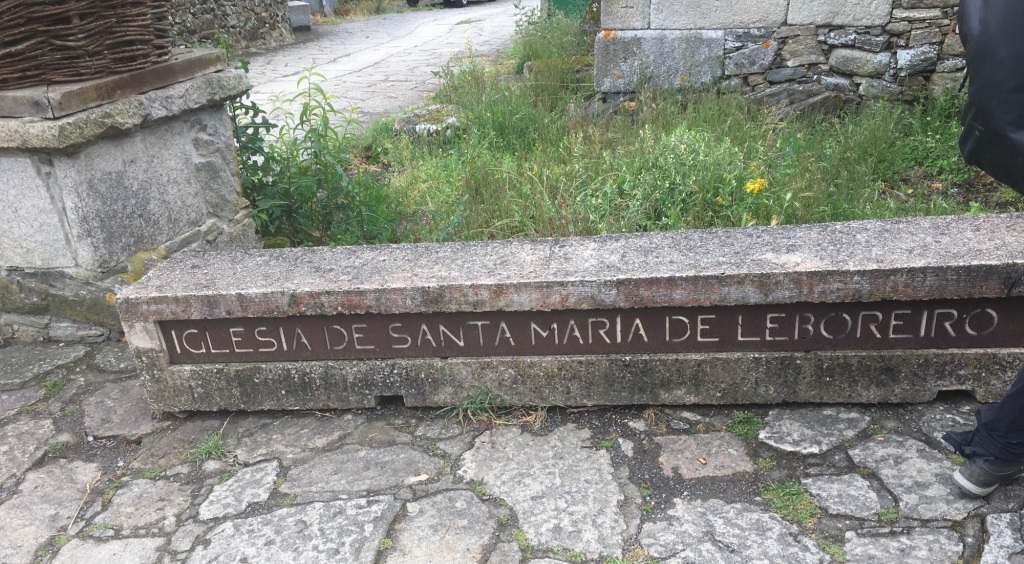
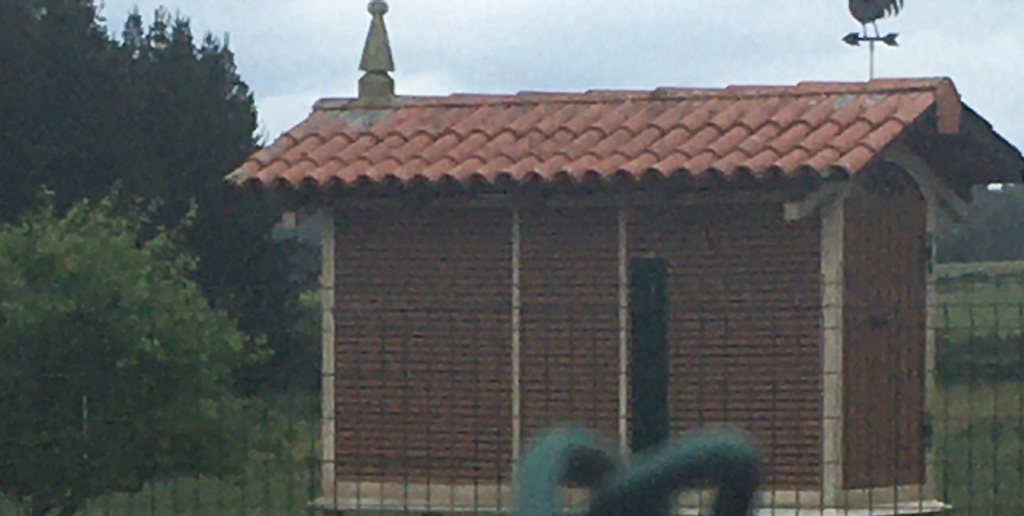
Reaching Casanova and it’s solitary Albergue we walk 2.8 km further on to O Coto – a good choice of cafes here – It is here that we cross from the region of Lugo to A Coruna and a village noted in the Codex Calixtinus – Leboreiro – as a good pilgrim stop in the 11-13 th centuries. However, its significance had dimmed over the centuries, but remains a pleasant, peaceful spot.The church of Santa Maria – Rebuilt in the 18th century this church has an interesting legend attributed to its founding. It was said that a nearby fountain was emanting a “heavenly odor” and at night a “shining light”. Villagers, seeing this as a sign from above, proceeded to dig at the source of this divine intervention and found an image of the Virgin Mary there. They immediately placed it on the altar of the church. The one catch was that the image would not stay where it was placed and somehow returned to the fountain. This pattern repeated itself over several days until the villagers carved the tympanum we see here today and dedicated the church to the Virgin Mary. Satisfied, the image of the Virgin remained on the altar and has been in the church ever since. To add to the legend, it was believed by villagers in the 1960’s that the she returned to the fountain every night to comb her hair. And another style of granary used for storing harvested foods. On leaving we cross a single arch bridge over the River SecoFancy a paddle? Possibly a calmer setting than Bruce Springsteen’s “ The River”
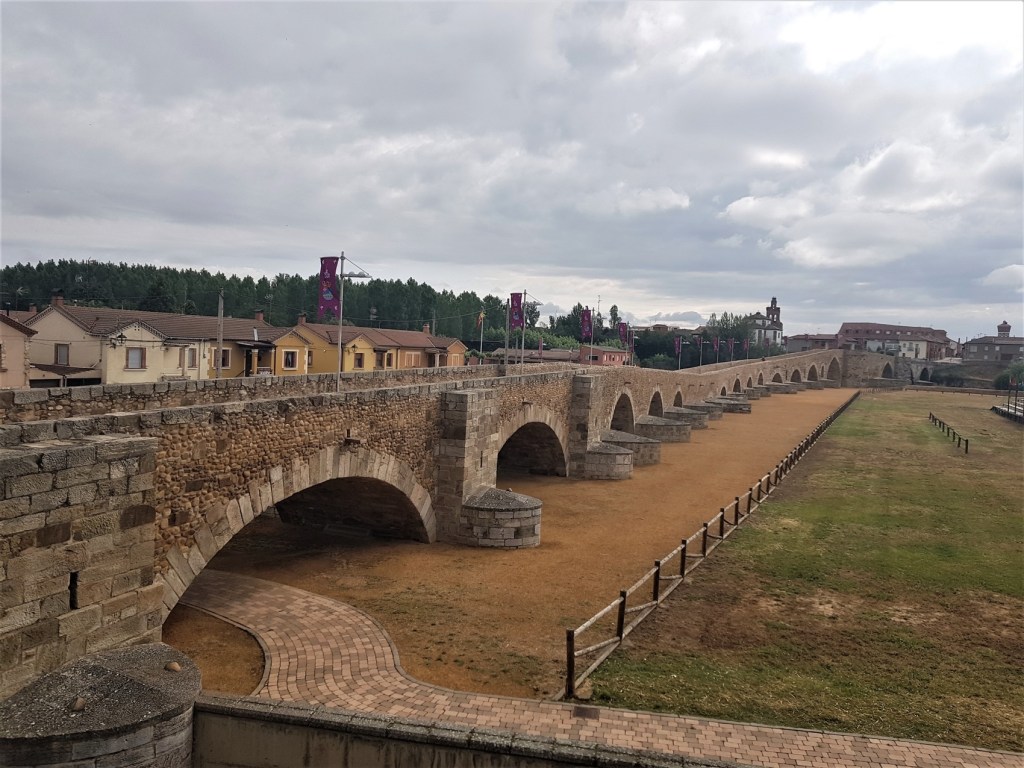
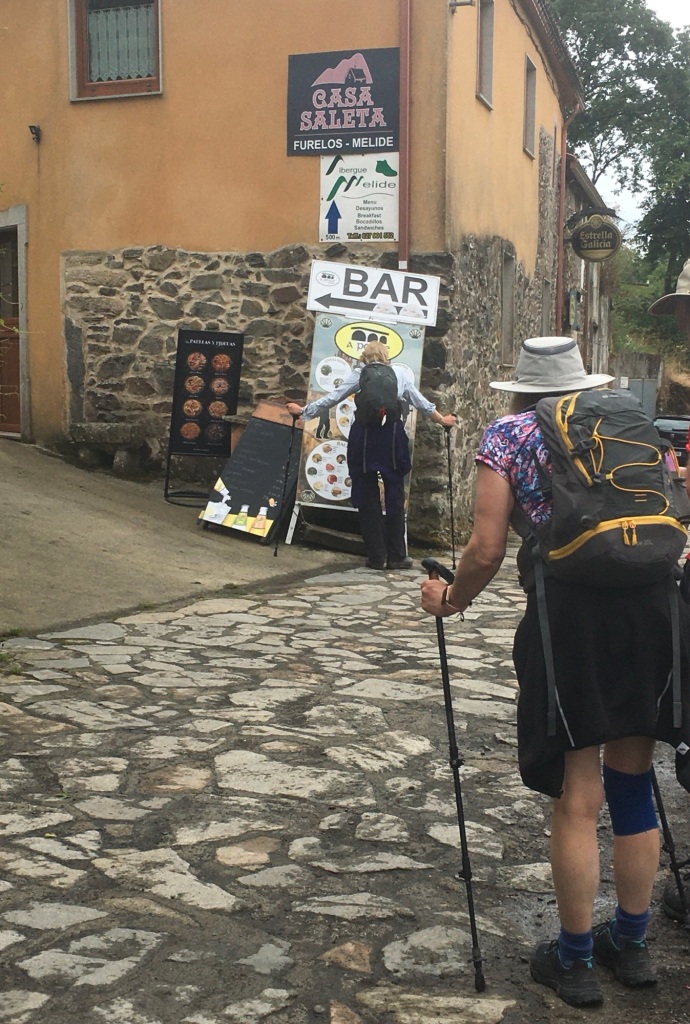
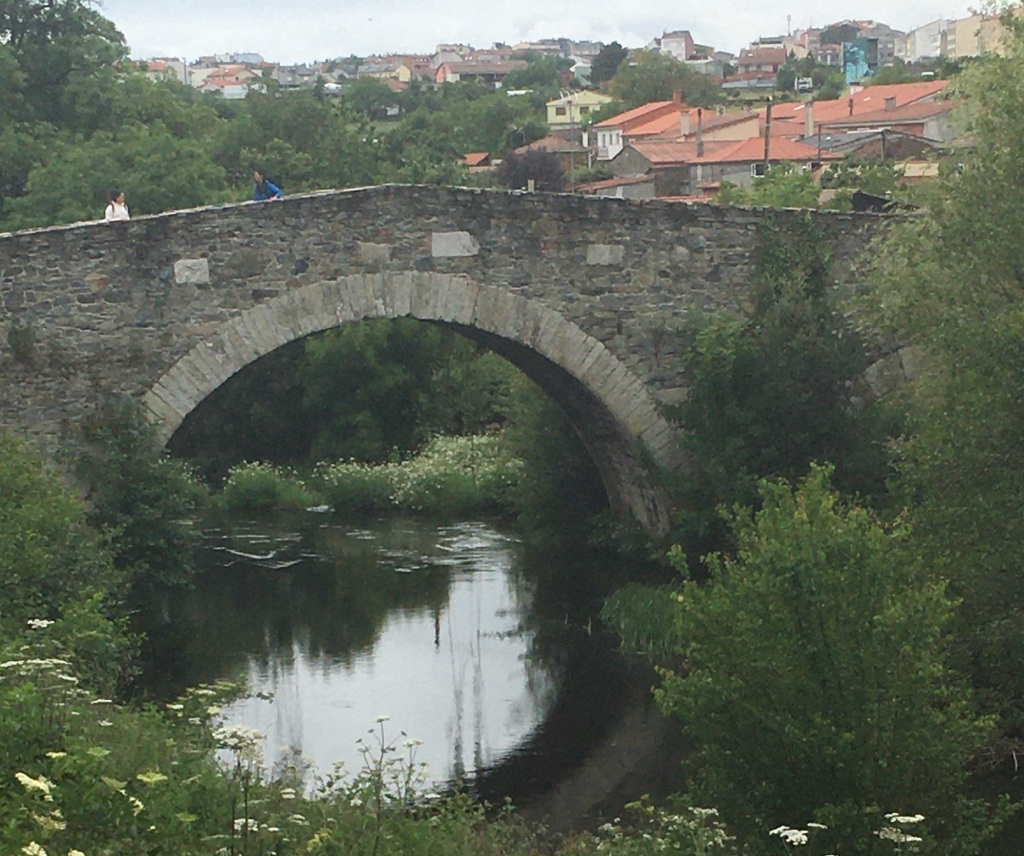
Village with an ancient origin, it was recorded in 12th century documents and it maintains part of its medieval structure. Its medieval bridge is one of the jewels of civil architecture in all Ways of St. James. Without a doubt, whatsoever, it is the most beautiful bridge in the whole Galician route of the French Way. It is mentioned in the monastic cartularies of Sobrado (12th century) and it was partially remodelled in the 18th century San Xoán de Furelos Church, just next to the French Way, preserves part of its Medieval Romanesque architecture, and more specifically, its southern wall. Inside, on the right side, we can find the impressive Neogothic altarpiece of the Santo Cristo, which was created by the sculptor born in Furelos, Manuel Cagide. The Ethnographical Museum of Melide was recently opened, just next to the church and the bridge.Iglesia de San Xoan – during the peak of the pilgrimage in 11-12 th centuries, Furelos and other villages with pilgrim hospitals and churches were protected by The Order of Hospitaliers of San Juan
South of Furelos from the Camino,archaeologists have unearthed much older guardians of the land and people,such as 2000 year old burial grounds called mamoas.
Mamoas – this area is littered with Castries,dolmens and mamoas – many are yet to excavated – the Museo Terra de Melide is a good place for further information.
And finally, Melide.
The northwest region of Spain has been inhabited since the Neolithic period. Melide itself began to grow and become important after the discovery of the tomb of Saint James.
From the 10th Century, Melide grew as the popularity of the Camino de Santiago did. With the increasing number of pilgrims on both the Primitivo and French routes, traders and innkeepers began to set up along these routes.
In the early 14th Century, the Archbishop of Santiago, Berenguel de Landoira stayed in Melide on his way to Santiago to take up his Bishopric. To thank the village for their hospitality, he granted them permission to build a fortress and charge taxes.
In the 15th Century, Melide played a central role in the Irmandiña Revolts against the power of the local barons. It was during these revolts that the walls of the town and the fortress were destroyed. The stone however was later used in the construction of the Convent of Sancti Spiritus.
In the 19th Century, Melide played its role in the fight against Napoleon’s troops during the War of Independence. Despite being outnumbered by the French the troops managed to push the French into a retreat. Less than half of the fighters had firearms, but they were assisted by villagers wielding rudimentary tools and sharpened sticks.
Despite many people leaving the town since the 1950’s Melide is still going strong. Today, tourism from the Camino plays a major role in the economy of the town, alongside more traditional agricultural activities.
Melide, located in the region of Galicia in northwest Spain, is the only town where two Camino routes meet. The Camino Primitivo(Original Way) stops in Melide and the Camino Frances (French Way) passes through.
This town is well equipped and accustomed to helping pilgrims. After all, the Primitivo is the oldest route and the French is the busiest! I have stayed in Melide at least twice . Once 20 years ago on my first Camino and relatively recently , coming in on the Camino Primitivo.
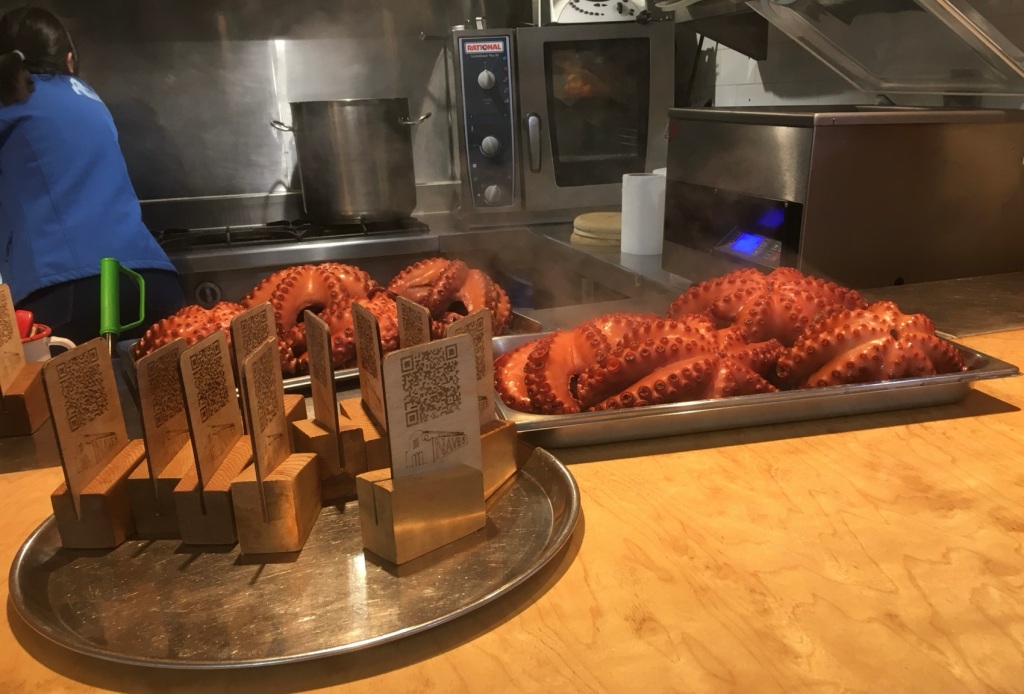
Despite being inland, Melide’s best dish and one you must try when here is ‘Pulpo á Feira’, boiled octopus. To enjoy this dish like a local it should be accompanied with bread, cachelos (boiled potatoes) and red wine.
The wine is served in bowls here ( but not for breakfast!”Our accommodation in Melide – Pension San Anton. A recent review:” I walked the Camino from Sarria (very slowly!) and the PENSION SAN ANTON was one of 10 places I stayed in total, and was most definitely the best value for money. I had a fantastic ensuite room (on the top floor with great views). It was spacious, spotlessly clean, full of light and really comfortable. I’d booked room via website and it’s a bit confusing if you’re staying in Pension or Albergue – as I believe they are the same company and they are right next to each other on Rua S.Antonio. My bag had been dropped off at the Albergue, so I rolled it up the road and fortunately the lift in the Pension took me to directly outside my room. I could rest my weary legs lying on a sun bed by the pool (what a luxury!) and better still, there was a cafe/bar alongside to enjoy a chilled Estrella whilst I did so. It was also the cheapest of all the places I stayed, which made it amazing value.”