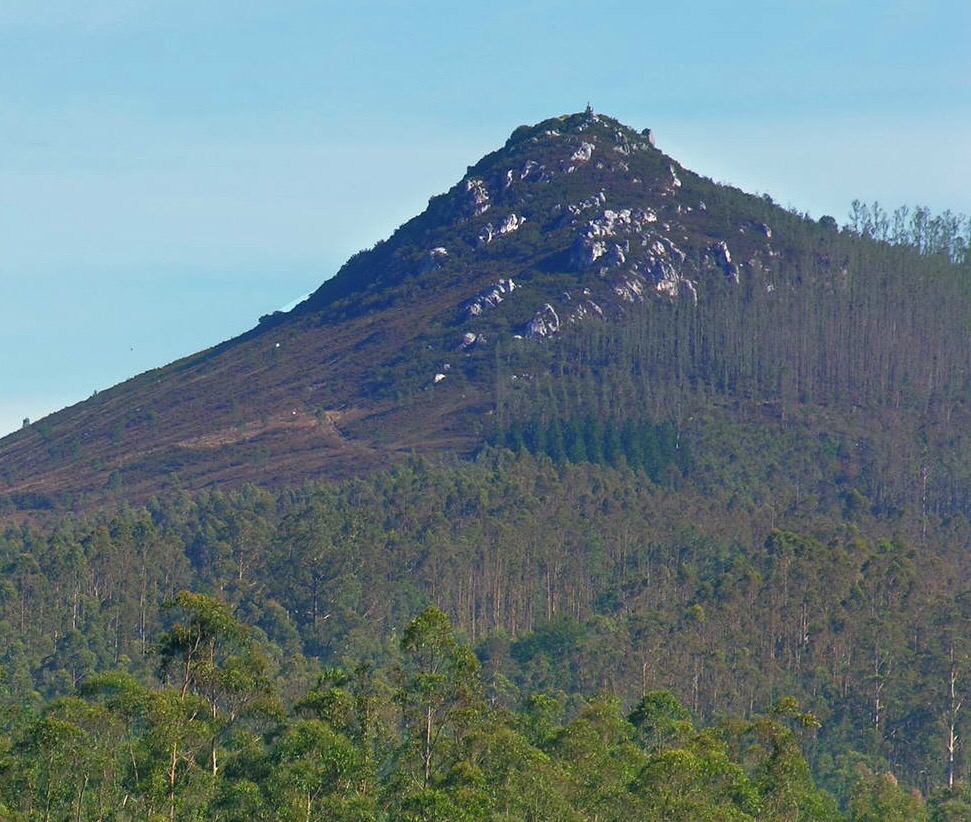
Fine, bright morning, as we left Pazo de Galegos and walked uphill for a short while, to rejoin the Camino. The Pico Sacro, a mountain, with legendary links to the original finding and protection of St James’ body, towered in the near distance.
About 18 Kim’s to go alongside many small holdings and fincas, the grapevines were more advanced than any we had seen to date.
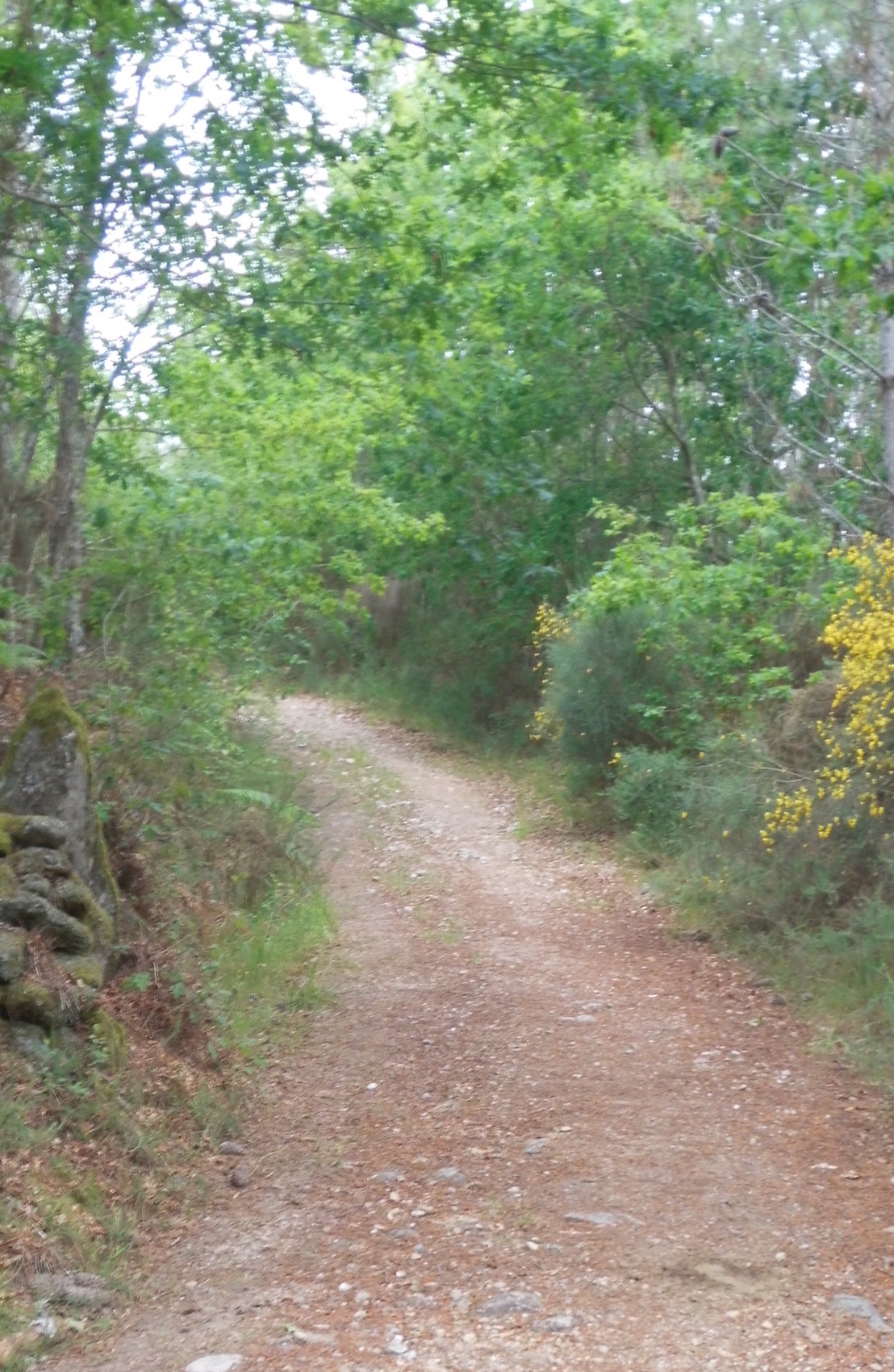
The path became quite narrow in places, despite the sunlight, there was plenty of both shade and natural colour.
Probably the most pressing thought, during the first hour or two of the walk is…..Coffee ? We were pleased to see this sign.
Later, we met up with a couple of Irish girls we had seen the day before. Penny had picked up a sock that day – a clean one – she was glad to reunite it with its owner, one of the two girls. There was little else to distract us from our path, until we neared Santiago. Then, on turning into a road , I felt a tap on my shoulder and in an unmistakable Dublin brogue, I was asked ” You’re the ensuitepilgrim, aren’t you?” Well, there was nothing on my clothing, nor my bag, to give any clue to that conjecture, however, after ascertaining that it was safe to admit it, I found myself in the company of Tony ( 34 years working in London in the HR department of Wimpeys, once famous construction concern ). He was walking the Camino Invierno and told me he had been flowing the Blog for sometime. Another remarkable event on this ever surprising Camino.
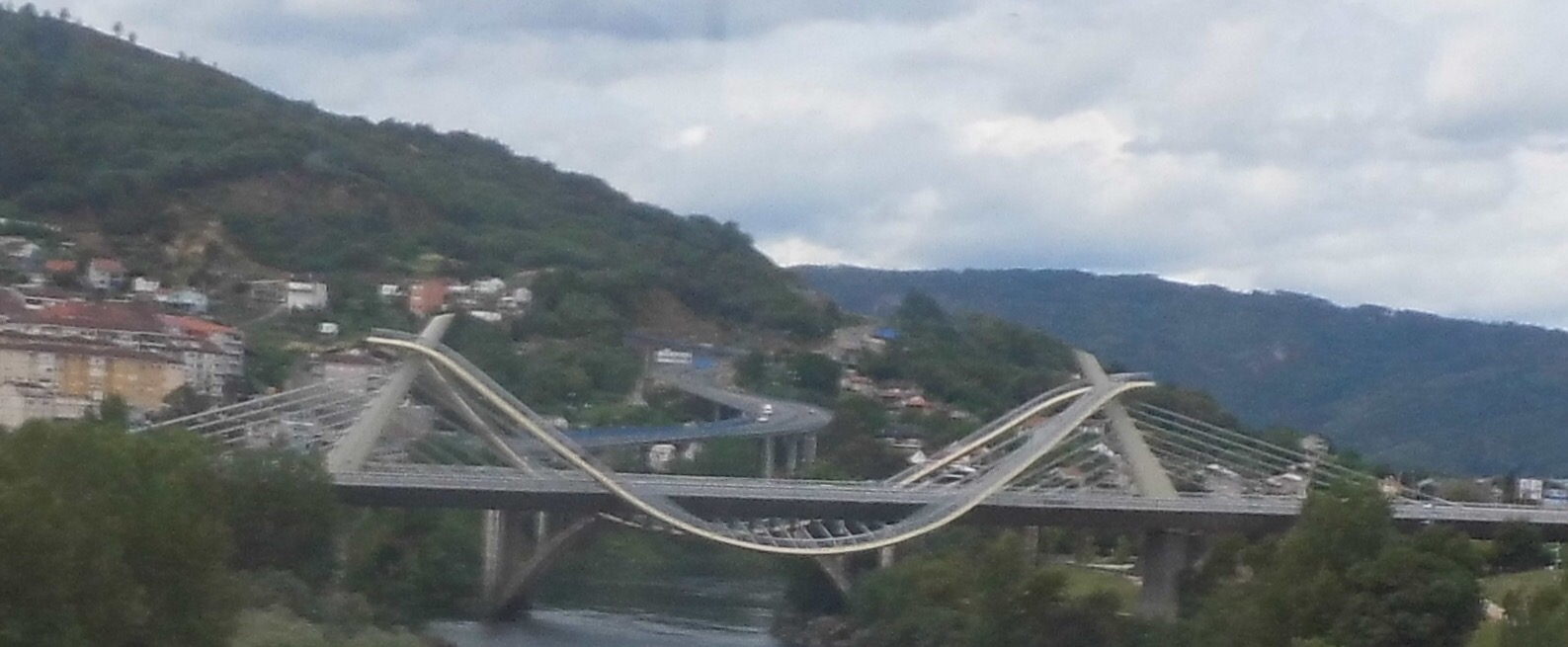
Our high spirits on approaching Santiago were chastened as we reached the bridge, below which, the train disaster of a few years back, when 79 people lost their lives, due to the recklessness of the diver, took place; many of the Pelegrinos.
We took heed of the above admonition and entered a very friendly cafe for a beer and the inevitable bocadillo. This approach to Santiago is the most pleasant, avoiding heavy traffic and flyovers. Tony took a photo , with the Cathedral spires in sight.
The next photo gives a clearer view.
As we came into the outskirts , we were trying to remember just exactly where our hotel was….we had been so enthralled by Pazo de Galegos, we had forgotten to map it. Tony came to our rescue with the GPS on his phone. In actual fact, we were only 300 metres away! He led us to the door – the App. ” Maps.me” was his recommendation. A lovely guy. We bid farewell, fairly certain we would meet up again, which we did, in the Pilgrims’ office, as we queued for our Compostelas, later that evening, after some drinks in the sunshine .
Well, that’s another one done. A memorable Camino, not one for the first-timer, nor the faint hearted. 1000.6 KM.
We were leaving our accommodating Albergue, en route to a Manor House, in its own vineyard, hence the anticipation of a bottle of wine…Silleda will not be a memorable place, but for two things. First, I had a wonderful cup of tea with my chocolate croissant. Second, the house of culture displayed a banner, publicing the work and contribution of Carlos Caseres; would not have expected that in such a workmanlike town.
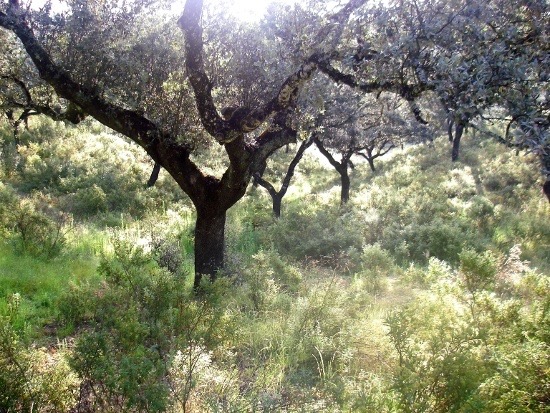
It was a fine morning, the paths went through pockets of woodland, mainly Oak, Pine an some Eucalyptus. The vistas were not so grand, but relaxing; quality farmland, some bijou shrubs.
Unexpectedly, and a good way on, we came across an Albergue/ Bar, run by an Italian guy. We had earlier met his wife and two beautiful,twin two year olds on the path. They accepted my offering of two fruit gums, after some encouragement from mum. It is a good, little Albergue; I hope it works out for them, as more pilgrims attempt the Via Sanabres/ de la Plata.
You find cruceiros in every Pueblo , but unusually, this little shrine was encompassed within a dead tree.
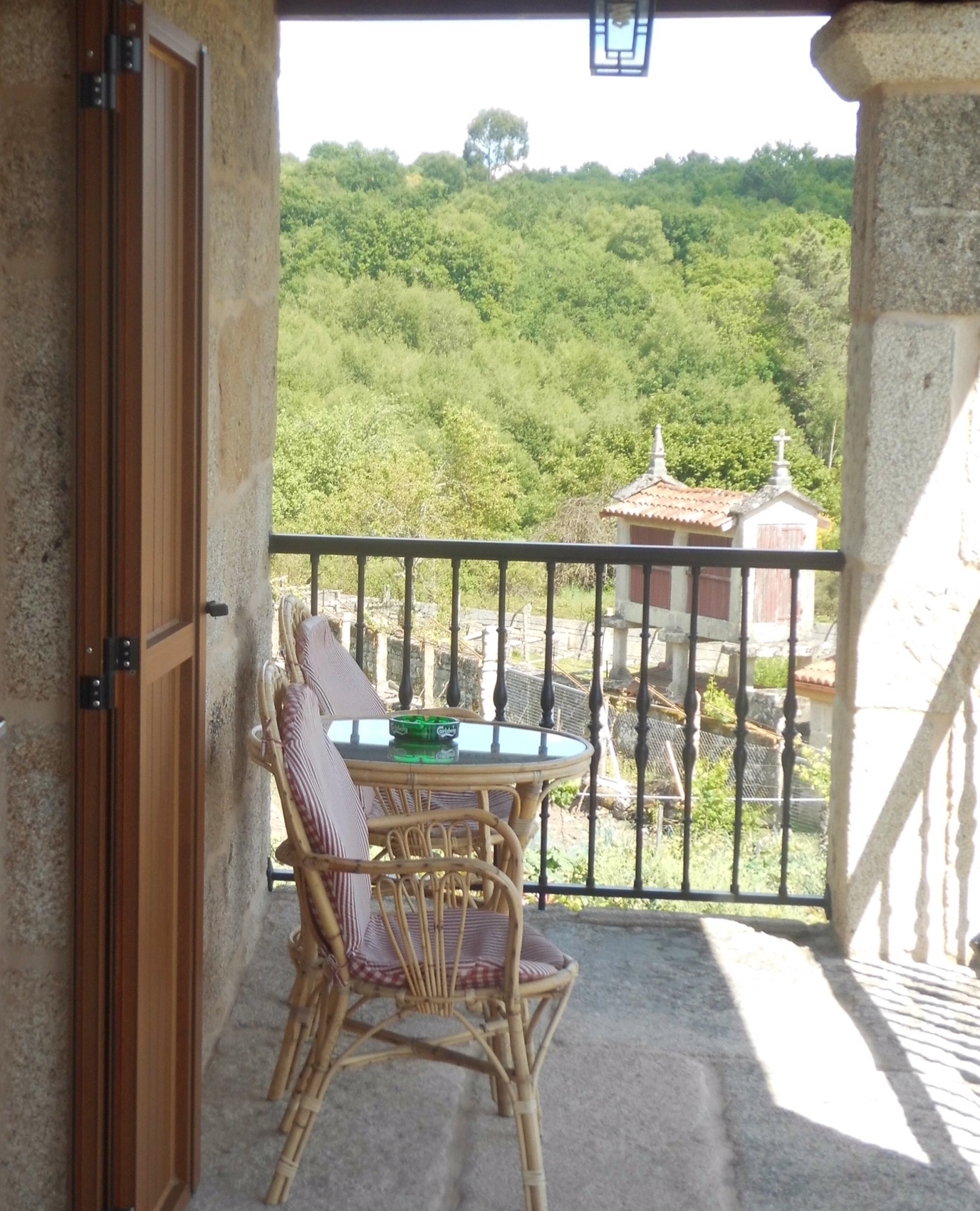
Pazo de Galegos , just past Ponte Ulla, was to be a Sunday Benediction. M 800 off the Camino, it looked so enticing as we entered the gateway. A real Galician country house – elegant,full of light, surrounded by its own vineyard, with distant views of the mountains. A warm ,but unfussy welcome as e were urged to go to our rooms , before bothering with passports, etc. The rooms, furnishings and views did not disappoint and an air of blessed tranquility overcame our understandable fatigue.
We were invited to a talk about the house, with its special connection to the Cathedral of Santiago and the vineyard at 7 pm. To be followed by dinner . Manolo, the owner, was to prove to be both a genial host and a mine of information, in very good English. He explained how the house had been the residence of D. Antonio Lopez Ferrero ( 1837 – 1910 ), canon of the cathedral, discoverer of the tomb of St, James and one of the great Galician writers.The relics had been moved because of a possible invasion by Francis Drake, whose fleet was threatening La Coruna , however, he was defeated and sent back empty handed to England. All of this disinterrement took place secretly, after midnight; “skulduggery” you might call it….
A fascinating story, which probably needs embellishment….but not here. We then moved out into the vineyards, where amongst the vines, were many different varieties of Camellias. My favourite white wine , Albariño is produced here, in modest quantities and with great care to be as organic as possible. Their own weather station helps to establish the best time to prevent fungus in the grapes, with minimum use of pesticides. All the grapes are hand picked, crushed, macerated and fermented on site. Pride of place is a near 500 year old vine unique in Spain and still producing many kilograms of grapes each harvest.
Dinner followed and Manolo entertained us with more anecdotes and his revelstion that he really enjoyed 60s pop music ; this showed another side to this genial, knowledgeable man. He remembered seeeing Olivia Newton John at the London Palladium and the Dave Clark Five was one of hid favourite groups! We took our leave the next morning, after an excellent breakfast ; if you are ever out this way, it’s a must do – Manolo, the perfect host.
We were driven back, to just past our Camino starting point at Santo Domingo – approximately 10-12. Km to Laxe, where we would be sure to find bars, etc and refreshment. We had plenty of water on board because it promised to be a hot day. The rises looked resplendent in the sunlight, surrounding a traditional, Galician Camino waymark.
There were more eye catching flowers, poking their heads up to the sky.
The way often takes you over ancient bridges and small rivers; this looked very refreshing in the rising heat .
On the approach to Botos y Bouxa, I became separated from Mac and Penny, it was only when I turned to take a photo of the railway viaduct, that I realised they were not behind me. I just surmised that they had found a bar and quite sensibly, taken advantage of it. As I was halfway up a hill, I was disinclined to go back down! And I carried on upwards. I eventually came back on the main road, at which point I discovered that I had walked well past Laxe, however, a road sign cheered me with the distance left to Santiago.
Before rejoining the country lanes at Taboada, , I was taken by a sign towards a church, dedicated to Santiago , wherein I was able get a Sello for my credencial – not many country churches are open – it was beautiful chapel and cool respite.
Rural scenes, We often saw women hoeing between rows of crops. All the blokes are in the bar, playing cards! I wonder how much longer this way of life will continue?
Thankfully, I didn’t blink and miss Silleda, where we are residing in Albergue Turistico – a private Albergue, so we have our own room and so does Penny. Dinner is booked for 20.00; don’t think we ‘ll get anything so exotic as Elvers! Time for a ” sharpener”…
The track for today is Duane Eddy, playing ” 40 Miles of Bad Road ”
We were sorry to leave Cea (and Casa Manoso ) a compact and prosperous seeming place, compared to so many we have walked through. I should dedicate this next photo to my daughter Hannah, whose seedy loaf rivals anything I have eaten here.
Penny led the way, enjoying the sunny morning and good, underfoot conditions.
This grounds and situation of this fine chapel reminded us of an English churchyard.
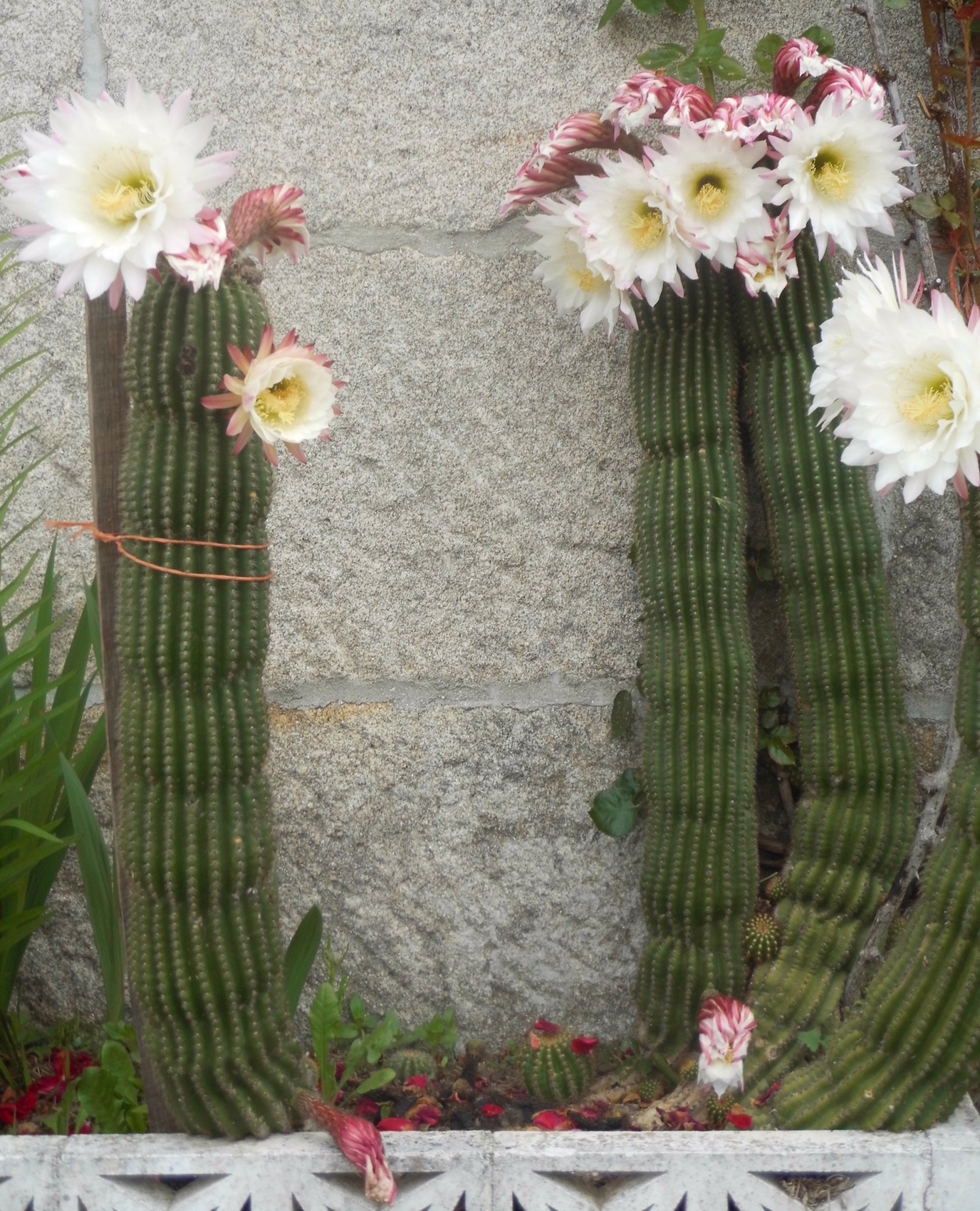
Along rustic lanes, we meandered onwards, pausing to photograph the amazing flowers on this cactus, situated by a small Paso.
With the weather making for perfect walking conditions, we made good time; Gorse, in the sunshine, comes into its own.
We got to Castro Dozon, from where we were to be collected and taken to our night’s lodging. Time enough for the early afternoon ritual of beer and bocadillo. Some viewpoints, upto this stage.
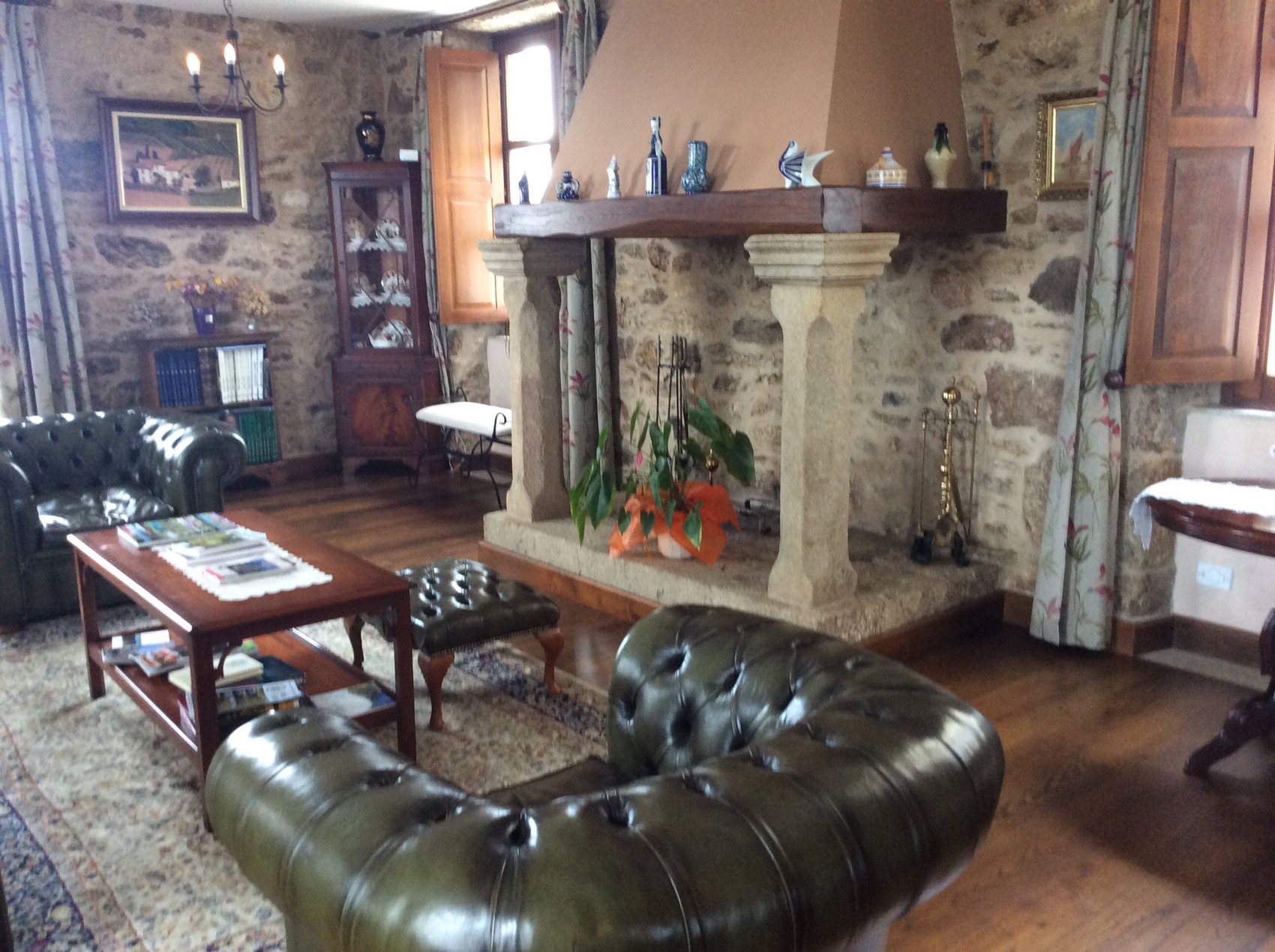
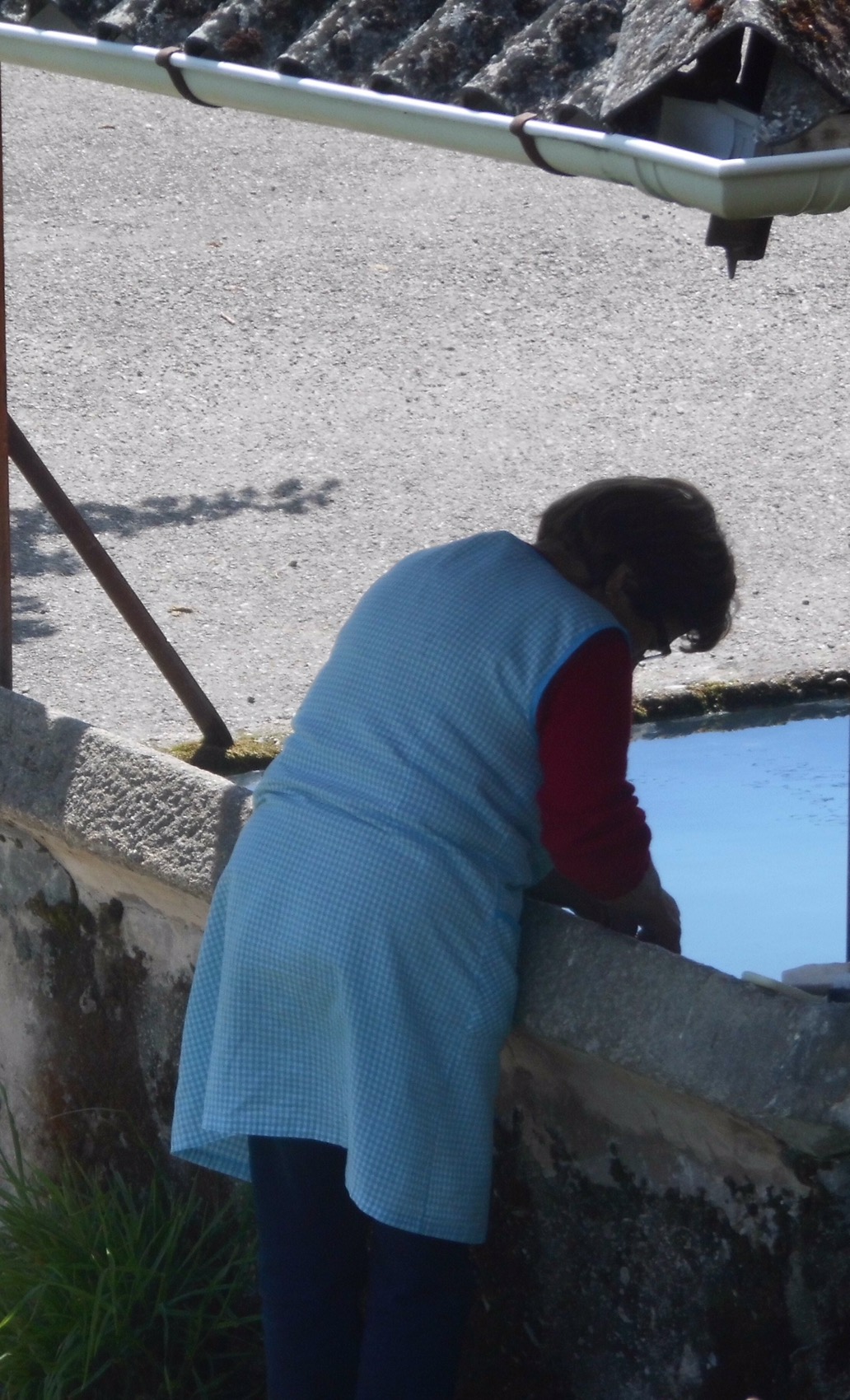
We were swiftly driven to Alojamiento Rural Pazos – Pazos is a traditional, Galician stone house – and were impressed by the both the house and gardens. A ” rural escapada “, where we relaxed and Penny used the nearby lavadero to get her washing done.
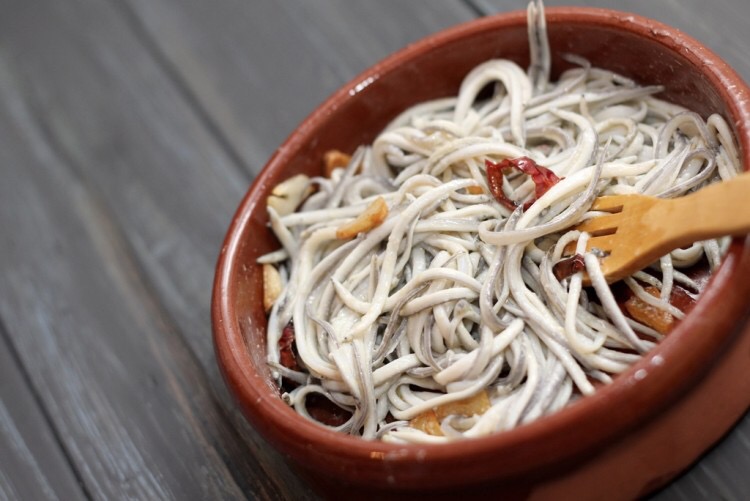
We were driven to nearby restaurant, for dinner and were spoilt by the attentiveness of the cook and staff. We chose some Tapas and especially enjoyed the Anguilas – Elvers – baby eels.
Today’s track has to be by Bread – ” Everything I Own ”
Wednesday 17 th feast Day in Galicia, to celebrate its language, ” Gallego”, and unique culture. Ourense has a birthright of famous writers, like Carlos Casares, who worked hard in this area…and many others, too comprehensive to include here. The city was very quiet, not much sign of celebration . However, it was good to walk around and go up to the cathedral, where we took a self guided tour. Overwhelming in parts, an ancient place of worship,going back to the sixth century, though the existing basilica, is much later.
“San Martino” was constructed during the middle ages under the rule of King Alfonso III, but was originally foundered in 572 AD and occupies thesite of an older ” Suevian” basilica. It combines a variety of architectural and Masonic styles, a result of the involvement of several notable designers from the 12th century onwards. One of its features, the “Portico del Paraiso” (door of paradise) is very similar to the that found on Santiago’s great cathedral, the “Portico de la Gloria” (see photo below). Also of note is the magnificent sixteenth century “Capilla del Santo Cristo” (Christ’s chapel) which is in the Baroque style. Other parts of this building are alternatively Gothic, Neoclassical, Renaissance and Romanesque and the 13th century clock tower is another dominant feature.
The cathedral of “San Martino” was built in the shape of a cross and has three naives separated by pillars in the shape of crucifixes with double arches. On its longest span, the cathedral is 84 metres in length. “San Martino’s” altar was consecrated in 1188 AD and the building was granted “National monument” status in 1931.Of particular interest is the main chapel which holds a large “reredos”, depicting scenes of Jesus and the virgin dating from the early sixteenth century. This cathedral is claimed to be strongly influence by the cathedral at Santiago de Compostela from which several of its features can be identified. It is also an important passing point for us pilgrims (perigrins) on the Camino to Santiago de Compostela that travels via Ourense.
We then took the tourist train from the Plaza Mayor towards the Thermal Springs, over the Roman Bridge , for €0.85.
My sister , Penny, arrived from the UK and we had a good evening, initially meeting up with pelegrinos, we knew well and later Tapas – Bar Samuel was particularly good.
Thursday morning we set off from Hotel Mino, after our favourite breakfast of toast, dribbled with olive oil and covered with cold, fresh tomato pulp…..you could have had jam, too. Penny had arranged to use the Correos ( Spanish post office ), mochilla transfer system, for both her and my rucksacks. MAC demurred. It certainly helped to be rucksack free, on the climb out of Ourense, after crossing that splendid bridge – you can get a glimpse of Mac, to the left.
Passing Ourense railway station, I was stopped in my tracks , by this superb engine, which is placed , en face.
It was a three km climb, the stiffest yet, after exiting the pedestrian bridge, under the railway.
“Looking Back Over My Shoulder ” https://youtu.be/p1GkR54wQaM, by Mike and the Mechanics, at our 837 metre climb up Canedo Hill. Very new and informative Camino board, at the crest; disappointingly, the nearby restaurant was closed.
Logging work on the Camino – endless acres of Pine and Oak trees.
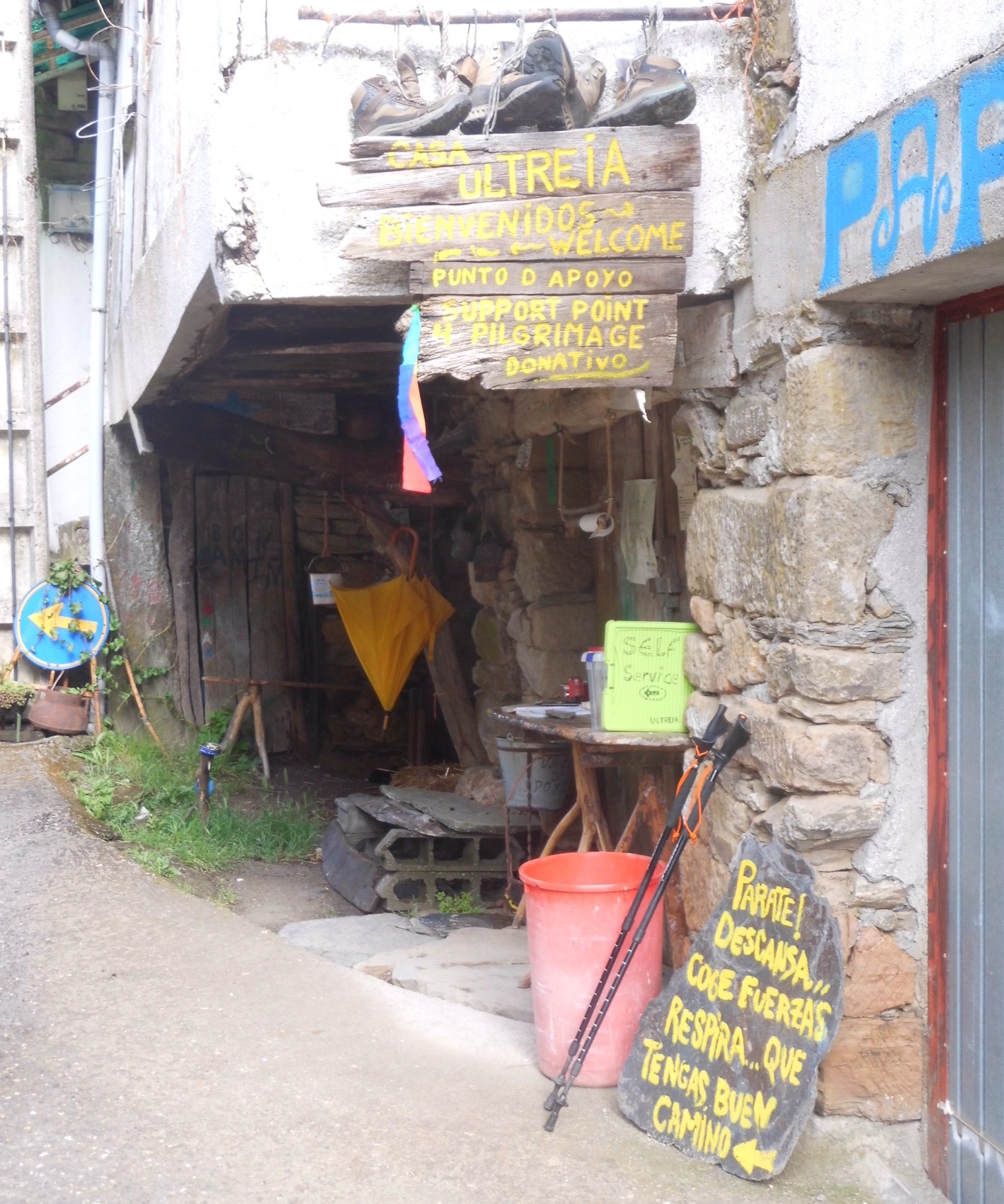
12 km onwards and we needed a break – the Camino provides – a most unlikely pelegrinos welcome post, run by Cesar, an ex-European, long distance coach driver. Quite a character and his little refuge is filled and embellished, inside and out, with Camino artefacts and memorabilia. He made us coffee, dispensed Höme made cake and even twisted my arm ( not very hard ), to share some of his own wine, made without additives of any kind – delicious. No prices, you make a ” donativo”, which we did, after posing for photos.
We posed for another photo in the village of Cea, famous for its bread making and an unspoilt pueblo. Across the Plaza Major, where a young couple hailed Penny- ” Are you Penelope ?”- the owners of the beautifully restored casa Manoso, where we are staying, tonight. The owner’s handsome six month old son was presented to us, in the equally handsome dining area, where we take breakfast, tomorrow. Now for a ” Sharpener”, dinner, hopefully with some of that famous bread.
Longish,undulating climb out of Xunqueria, after crossing the river, reflecting its borderline trees.
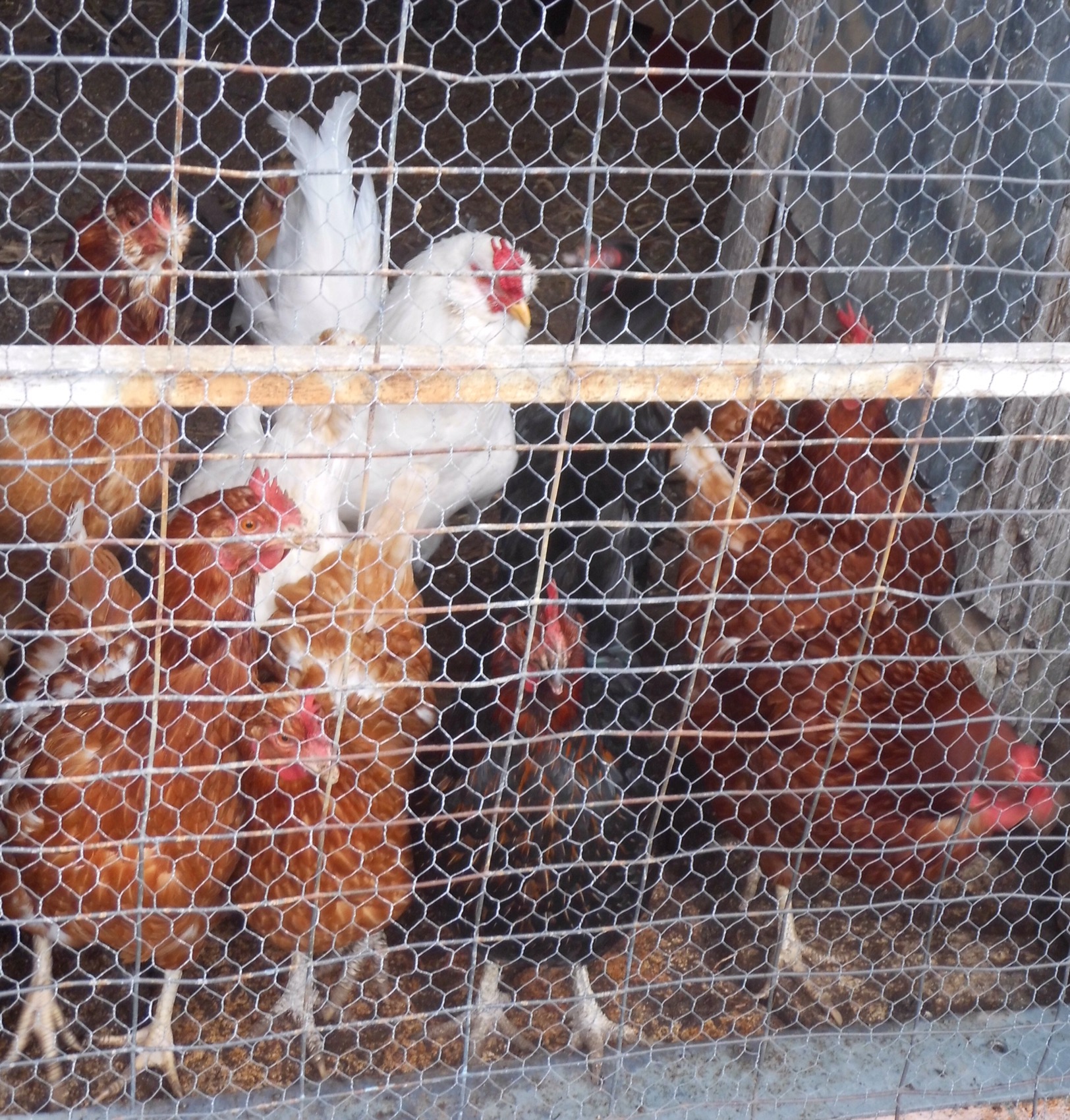
Along wooded paths,after passsjng a dead snake on the road. There have not been too many spottings of wildlife, despite walking in areas where it abounds – Some deer, a variety of birds, goats, mules and pigs. We heard the cuckoo call quite often. Pigs under your parlour are not unusual up here, nor chickens next to your kitchen.
The walk was mainly on asphalt and in well tended land, occasionally on paths. Good views, even of Ourense in the distance.
Signs of pilgrimage were evident, even a restplace, on the main road into Ourense’s suburbs.
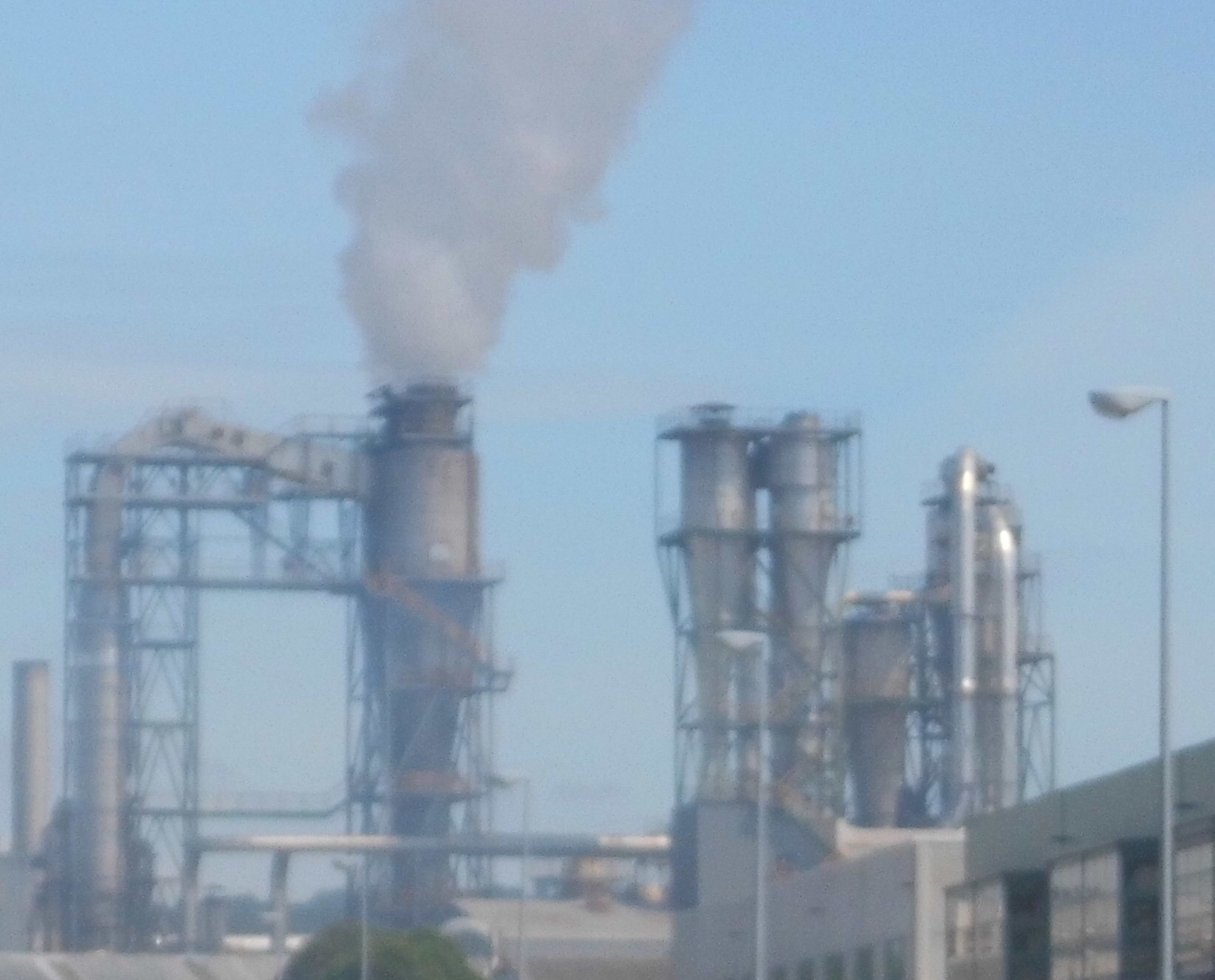
We approached the industrial poligino and met a quite different scene.
We passed into the city, after taking advantage of a mirrored door. ” Here’s Looking At You, “.
No, I am not wearing a skirt!
Pleased with our Hotel, Mino and met up,later with our German amigos, Joffrey and Helmutt, plus Stephen and we had a good catch up, over a few beers. Then Mac & I went for Tapas . Very enjoyable , but passed on the Orellas ( pigs’ ears ).
Look away now, if you’re at all squeamish…..in full technicolor.
Well, the bar was just around the corner, from our Casa Turistique. One of the first questions you get asked on the Camino, after exchanging names, is ” how old are you? ” John, from Cavan was a sprightly 76 years, Steve from Kansas, 63, Lora from Basel, looked 25, but admitted to 43! We were incredulous. John walks rapidly and used to have his own business, which involved a lot of driving in Europe. Steve was making a video/ film of his Camino…..not that straightforward….using a camera technique, whereby all clips and photos were taken from the point of view of a dog….I joke not. There is a recognised name for this technique. Our Swiss Maid, worked in the hotel business and after helping herself to some of our € 2.00 vino tinto- I said that she might find it a little ” thin”- she wrinkled her nose and tried not to look too disgusted. She then finished off my arroz con leche which she approved. One of her roles was a Sommelier and she said the price of a glass of wine in Basel was between € 6 – 8.00 a glass.
So, just a little cameo of the wonderful variety of people you meet on the Camino.
“There are no friends, just people you have not met yet”
The track – ” You’re a Friend of Mine” by Jackson Browne and Clarence Clemons.
This old photo is only indicative of how old these caminos are; South East is another name for Sanabres. The way, today,took us away from the barely habitable, but beautiful mountains.
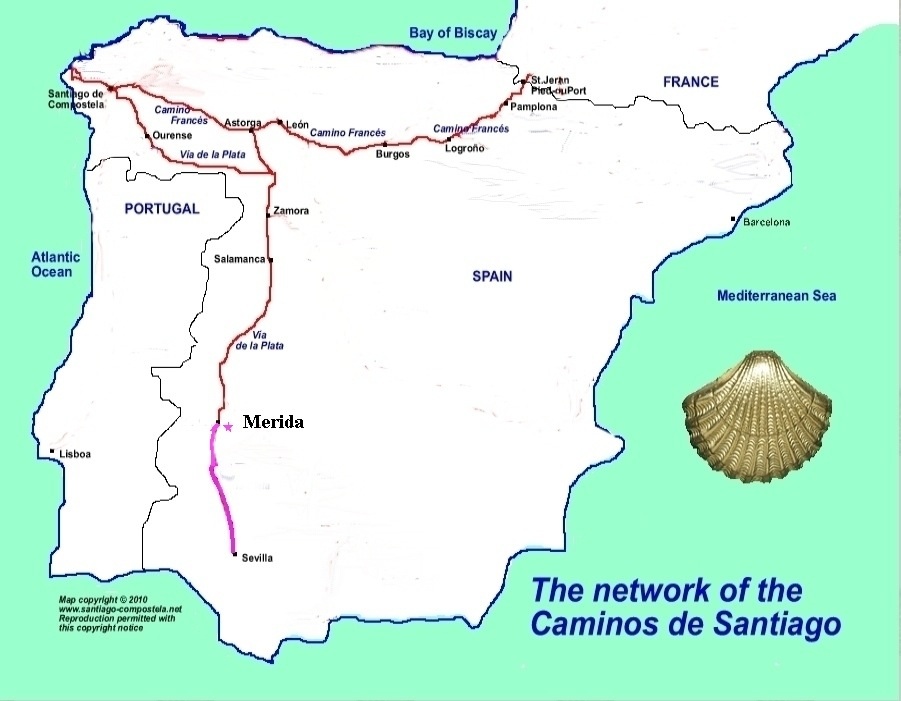
This is a useful map of the route.
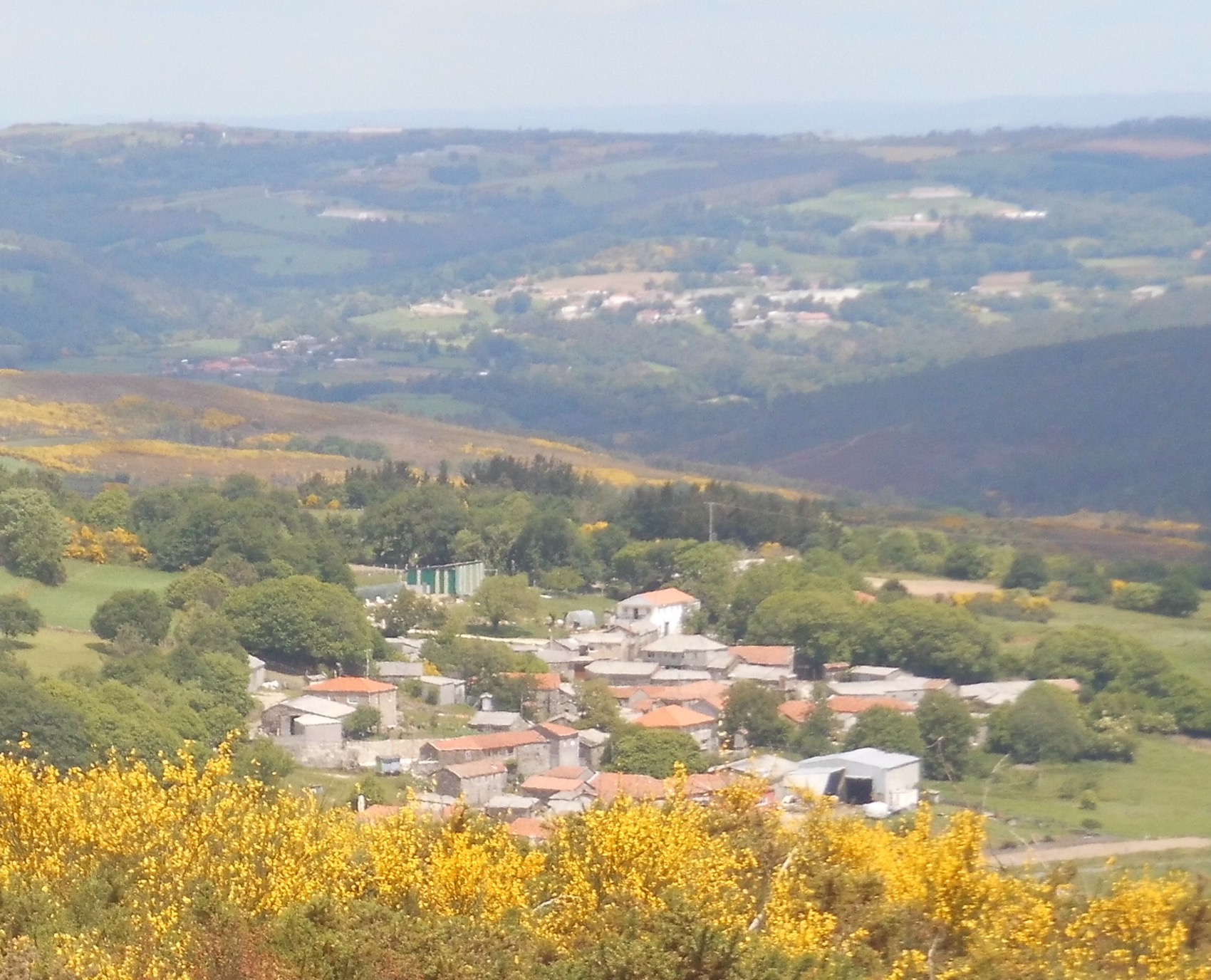
Into the more populated and arable plains. Albergueria and Vila de Bario, though small have a long and hospitable association with the Camino. Coffee was enjoyed overlooking this fountain, just before exiting Vilar, very tiny for a municipal capital!
Leaving the town, this tiny row of balconies caught my eye.
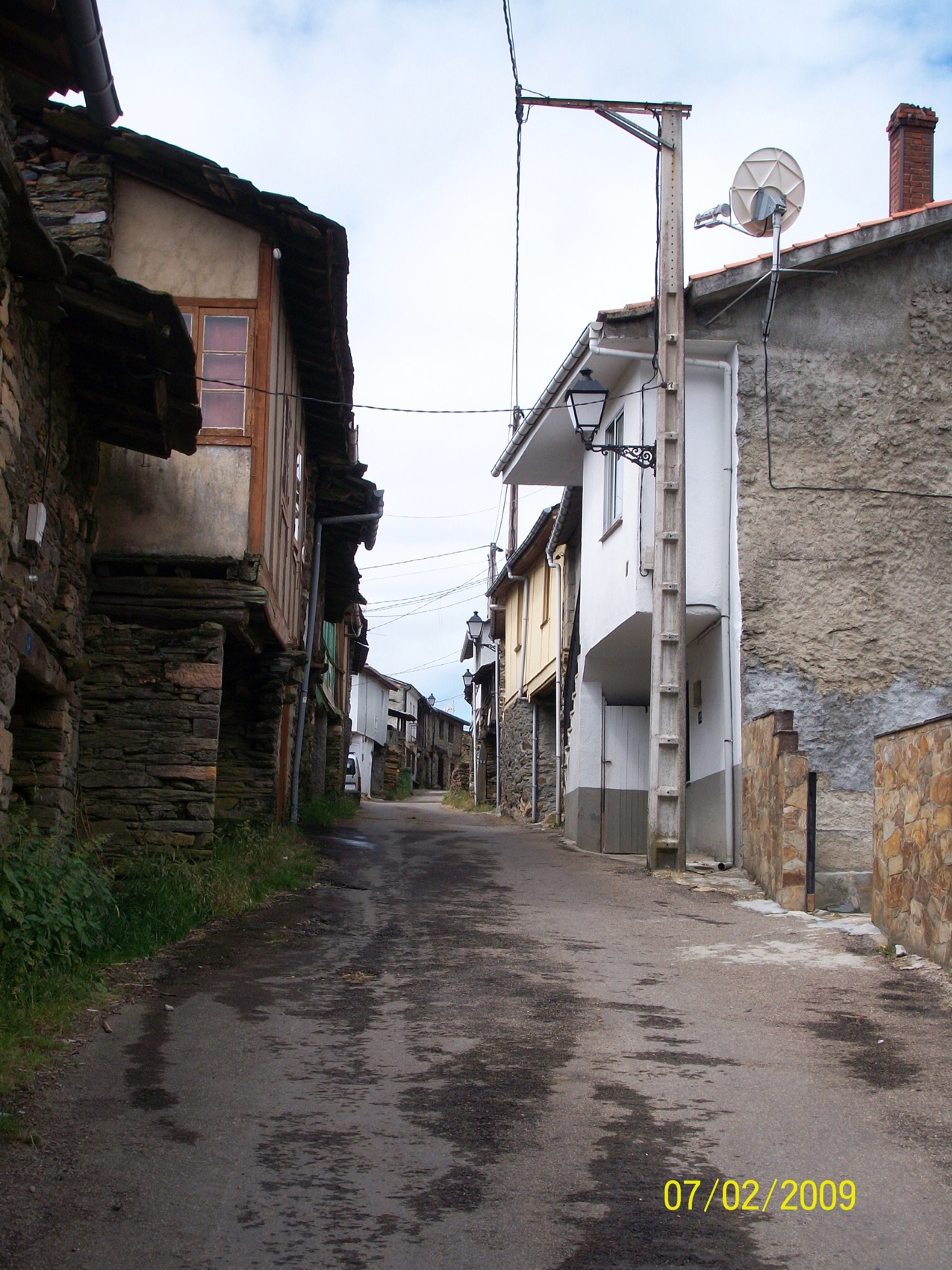
From here, it was a different Camino and the straight paths took us past freshly ploughed fields, rows of potatoes and beans. The housing stock changed dramatically from the ramshackle, abandoned cottages of the mountain villas, to small areas of ” new builds”. More eye-catching were the irresistible ” horreos”, iconic landmarks in Galicia. I felt my old ” train spotting” instincts …I wanted to snap them all! I’ll spare you with just this selection, taken en route to Xunqueria. look out for the beretta wearing, kindly gentleman.
The fertility of these plains is borne out by the number of natural springs, converted to fountains, in the pueblos. I think the figure atop may be Santiago.
We came across another ” donativo” watering hole, in a small village, again quite unexpectedly, but this time, manned. We were given slices of empanada; went down well with my 1/2 litre of Gasera.
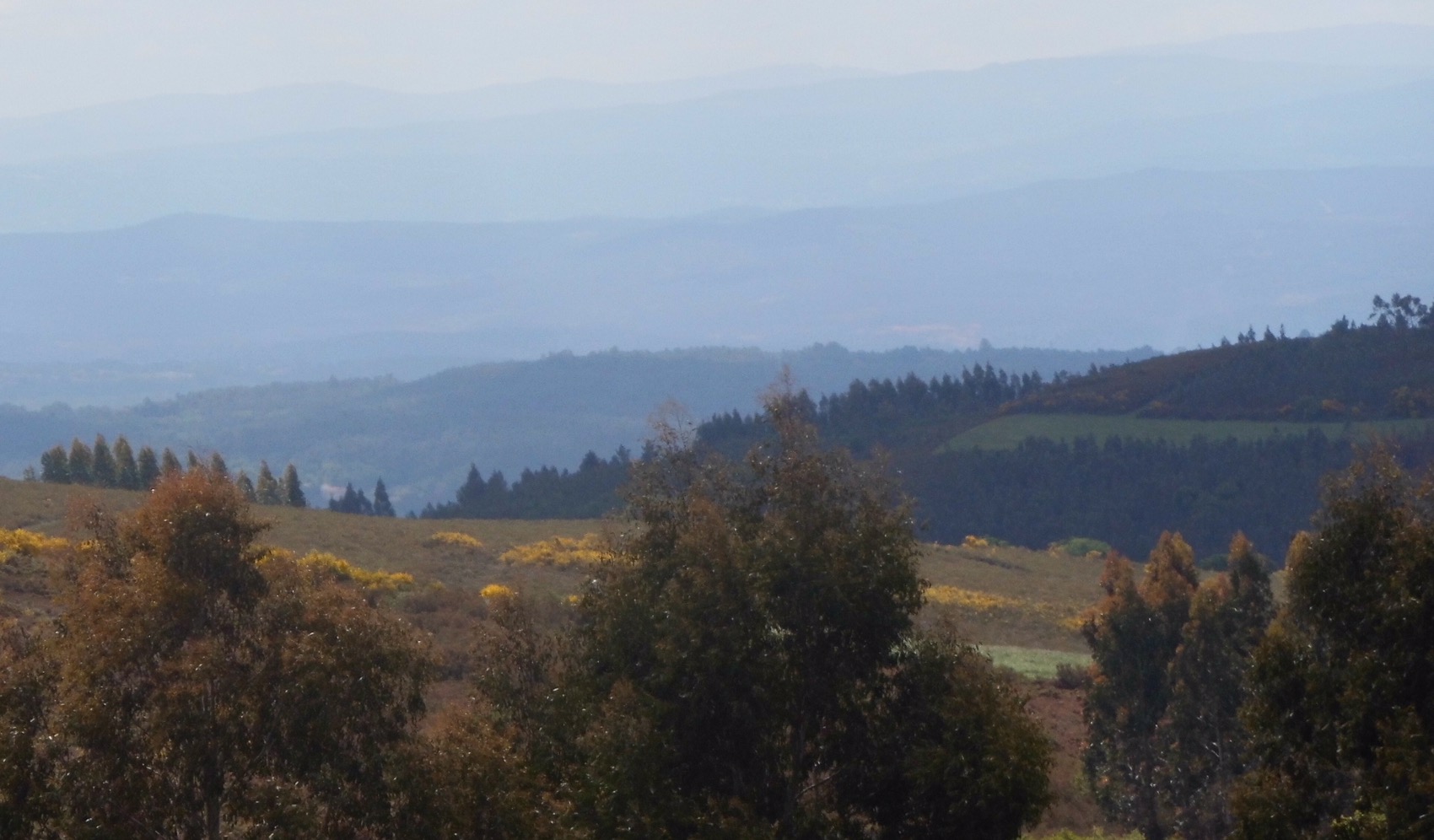
The contrasts in landscape are captured here:
I should also mention the Camino waymarks, which are unique to Galicia – always a welcome sight; sadly, the distances, measured to three decimal points ( to Santiago ), have been vandalised by so- called pilgrims. However, as directions, they are they are immovable. The blue posts appeared warnings…crossing minor, or major roads.Xunqueria de Amba – beautiful, Romanesque church and cloister . Our Lady of the Reeds. Dating back to Medieval times, was once a pilgrim hospital – you can imagine how sick people would become, given the times and distances. ( I don’t mean sick of ” menu pelegrino” ! ) . This site dates back to the 9 th century.
Casa Tomas was advertised on flyers , all along the Camino; you can imagine our bewilderment , when we reached what appeared to be a burnt out wreck .
This time, we found a reliable source of assistance in the Ayuniamento and were told to proceed a 100 metres or so along the road. Apparently , the Casa Turistique was destroyed by fire and Tomas was able to relocate, thankfully for us.
We found the new location and were pleased with our base, €12.00, each; down the road the inevitable ” menu pelegrinos”. Let you know if there is more than Lomo and chips on the menu, tomorrow. Tapas in Ourense, anyone?
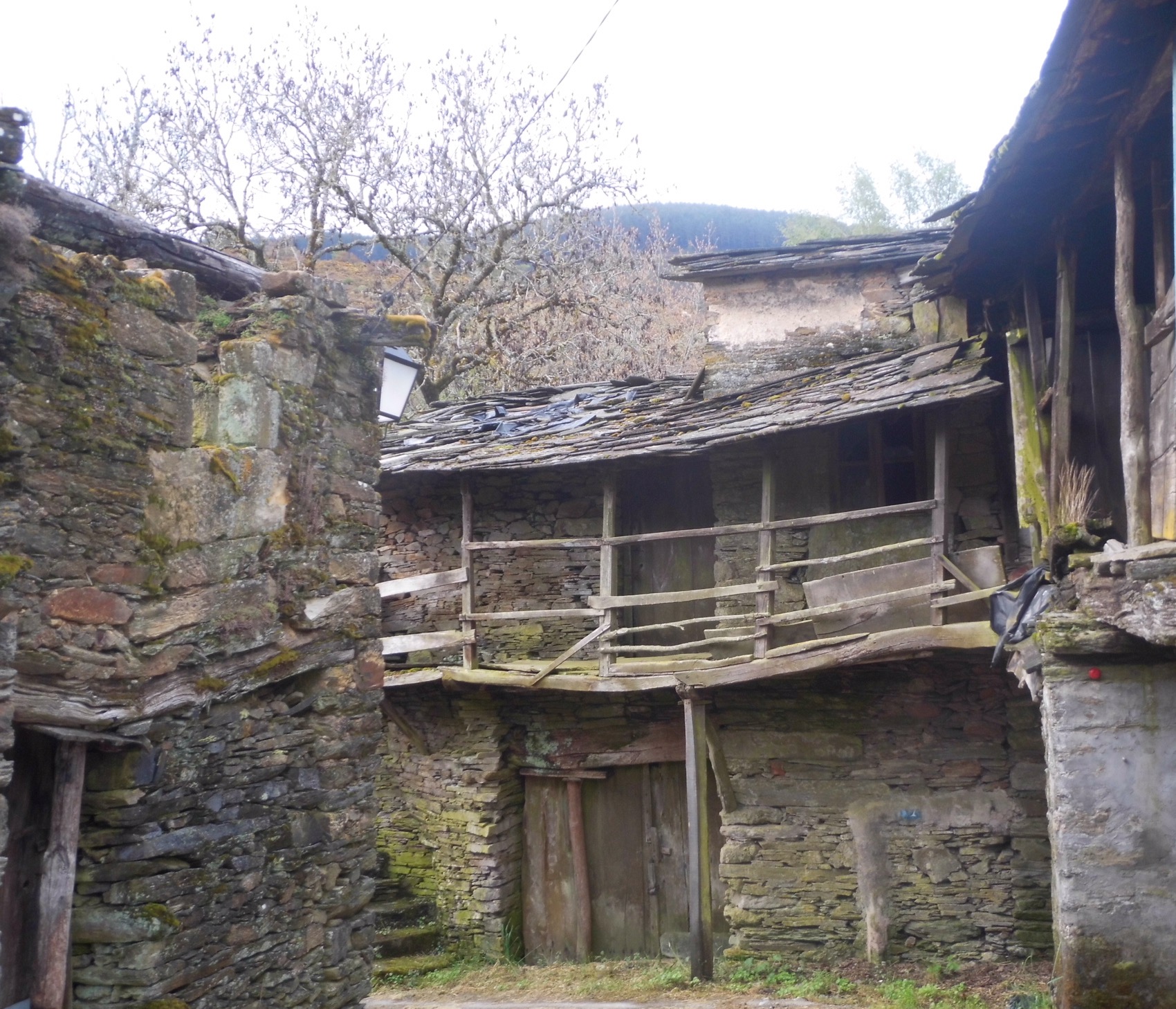
This blog will try to convey more of the amazing countryside and sadly deserted villages,rather than the vicissitudes, which, apart from a couple of stiff climbs, there were none.
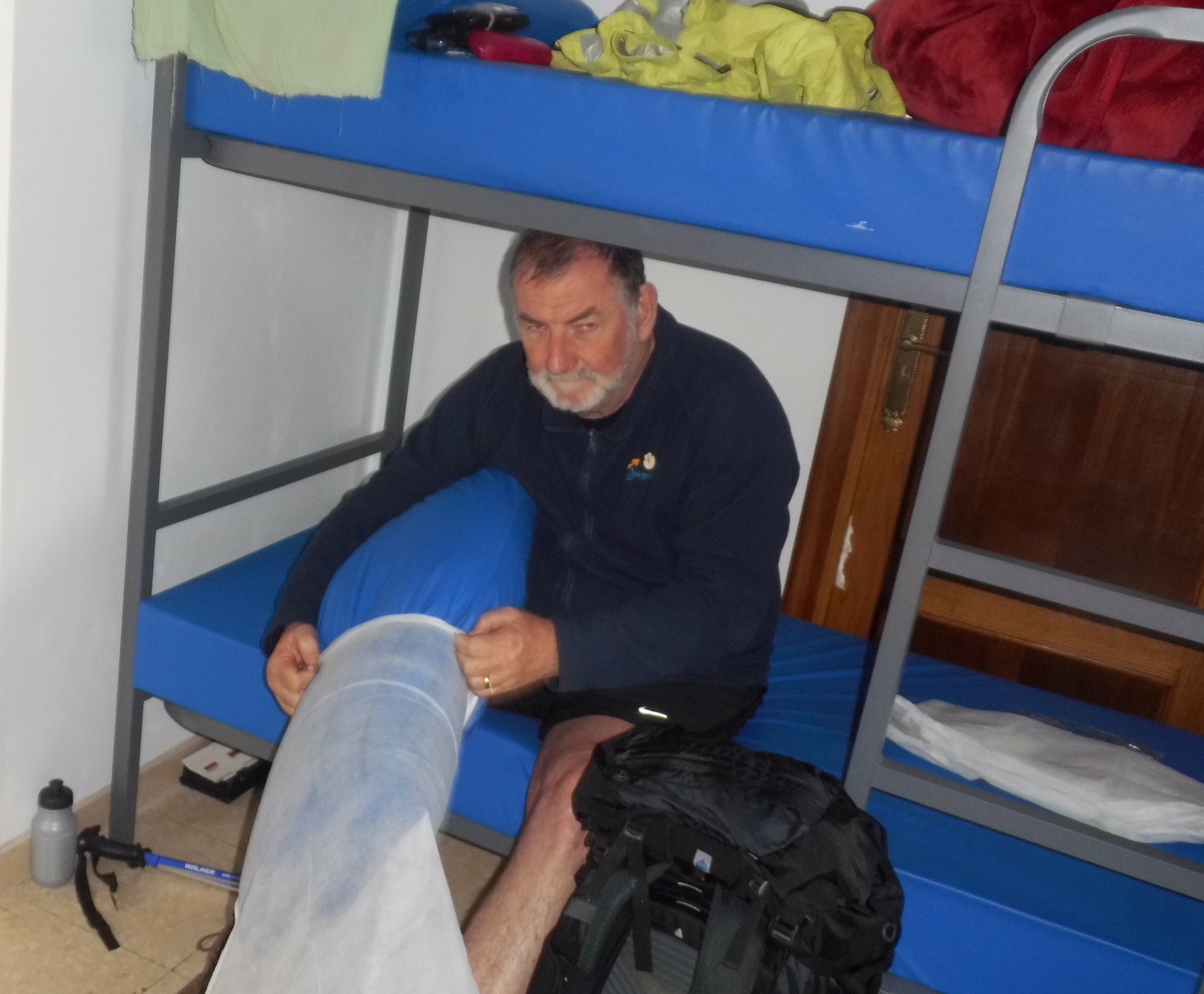
We enjoyed a peaceful night in the Albergue, once Mac had got to grips with sleeving his pillow.
The morning was greyish, but dry; the air warmer. Not a soul abroad, notwithstanding it being a Sunday; you don’t encounter too many people on any day. Just by the cafe, I noticed a monument, erected to immortalise the contribution of Campobecceros ‘s inhabitants, to the construction of the railway- 1927 – 1957. This transformed the lives of these villagers, whose previous existence was mainly as charcoal smelters. Ironically, 90 years on, another transformation is taking place, as the high speed AVE line is running though the edge of the village and a tunnel is being bored, close by.
The first photograph shows the scar that this ” progress” is making on the landscape.
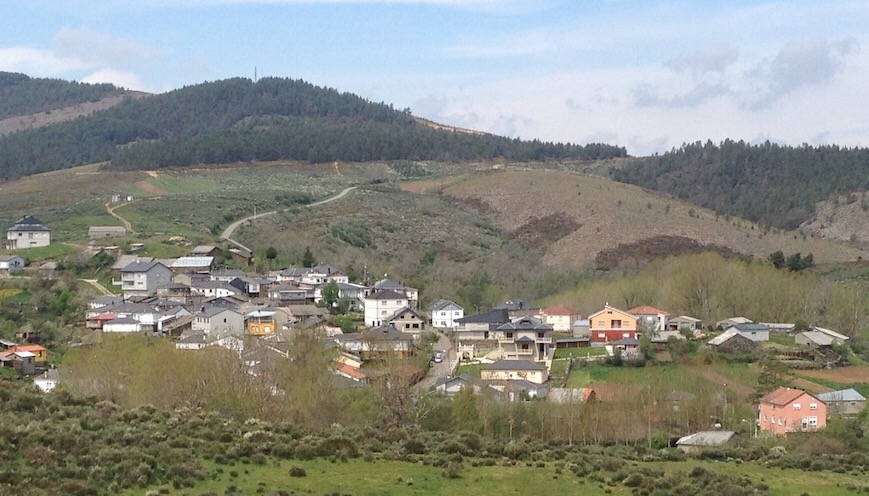
We climbed out of this village, whose inhabitants have a fond regard for Pelegrinos, for nearly 1000 metres and came into another Pueblo, Porto Camba,still going uphill, signs of dereliction apparent.
We then came across a Camino waymark, with a erected as a memorial to those who died on the Way – not, I must hasten to add , solely for this ETAPE.
A more cheerful sight – a festoonment of Roses.
By now, we were in need of refreshment, but most guidebooks state that there is nothing, until Laza. To our surprise, in the tiny Pueblo of As Elias,we came across a somewhat makeshift, self- service point for Pelegrinos. It stated that it relied solely on donations. We enjoyed coffee from a flask and stamped our Credencials, whilst reading all the impromptu messages scrawled on the timber facade.
A long descent, amongst beautiful scenery followed,as we made our way to Laza, in the valley of the Tamega river. 6 Km to go.
Walking poles essential for these sections.
We clocked in to our previously reserved accommodation, Pension Blanco Conde, met the owner, a cheerful, welcoming lady. € 44.00 a double,with breakfast and use of washing machine and dryer.
We walked into Laza, rather bigger than our last few stopovers, it had two bars! Boccadillo and a beer at La Picota, recommended by our host, after which we discovered an information point, run by the local Camino confraterntity.
There was also an interesting waymark stone, Joan Miro style, that took my eye.
Returning to the Pension, I noticed three calves , in a pen, just below our room.
The owner later found me in the communal kitchen and offered me a coffee.
I had noticed a box of tea bags; my first cup, since leaving home! I inadvertently stretched my shoulder, which led to the owner encouraging me to join in an impromptu session of Yoga! I really needed the tea after that…
Two maps and motifs on the entrance to the Pension.
Antonio Machado.
Using the Way, as a metaphor for life
“Travellers there are no paths, the paths are made by walking….”
Coincidentally, the owner’s son, told Mac, that he looked after 75 beehives, in different locations, hereabouts; collected 70 Kg of honey, last year , most of which was sold to different outlets in Spain. Machado again, ” I dreamt – marvellous error! – that I had a beehive, here in my heart . And the golden bees were making white combs and sweet honey from my past failures.”
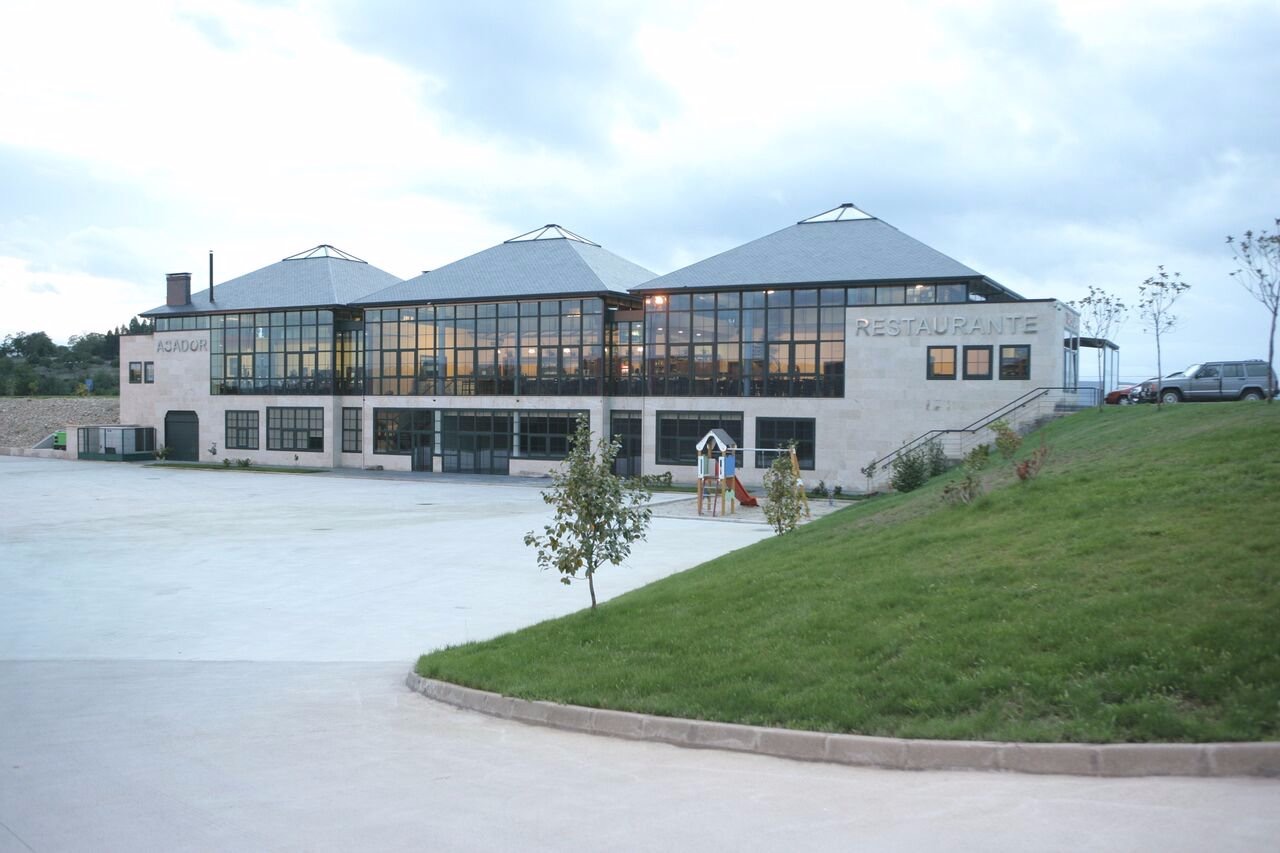
Hotel Meson de Erosa – we really rated this hotel for value,amiability and good food. Plus a good TV service !
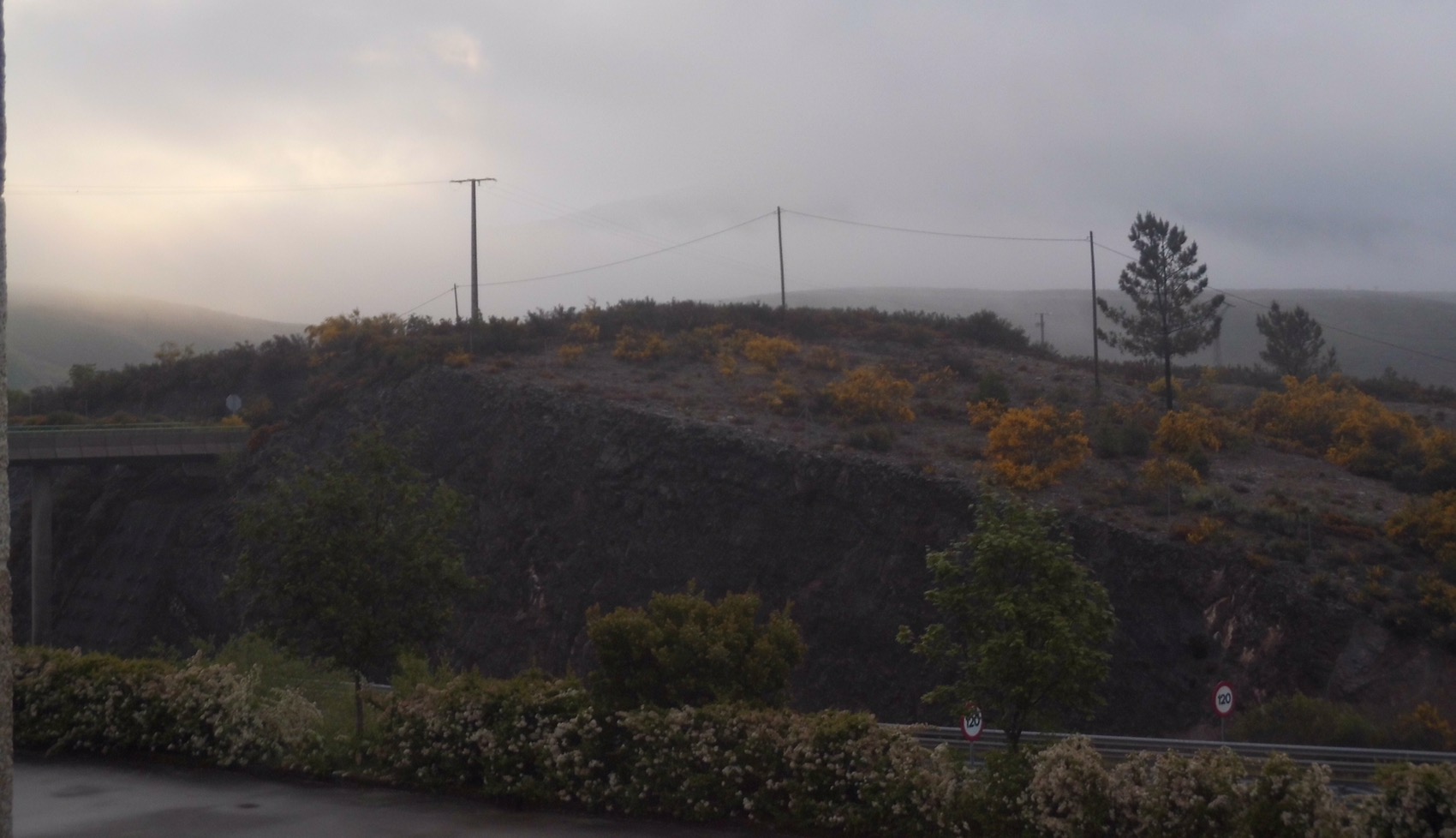
We had pleased ourselves, the previous evening, by crosssing the road from the hotel, to suss out the Route to the Camino ; across the road was a sign, on the pathway, with two arrows, one directing you via Verin and the other towards Laza, which is 14 km beyond Campobecceros, our destination. Congratulating ourselves on this reassurance, we made our way back, for a ” sharpener ” and Menu Del Dia, in the hotel restaurant. La cena was served between 21.00 – 00.00. Our waiter found the WBA v Chelsea game for us😊and we enjoyed a good meal of a small appetiser, Calda Gallego , Chargrilled belly pork and chips,or chipirones, , plus Postres ( couldn’t manage one, but Mac made up for it ! ) and wine. As residents we had a reduction to € 10.00 ! Gave our excellent waiter a good tip and went to sleep, after I mastered the retraction of the electric blinds in our room.
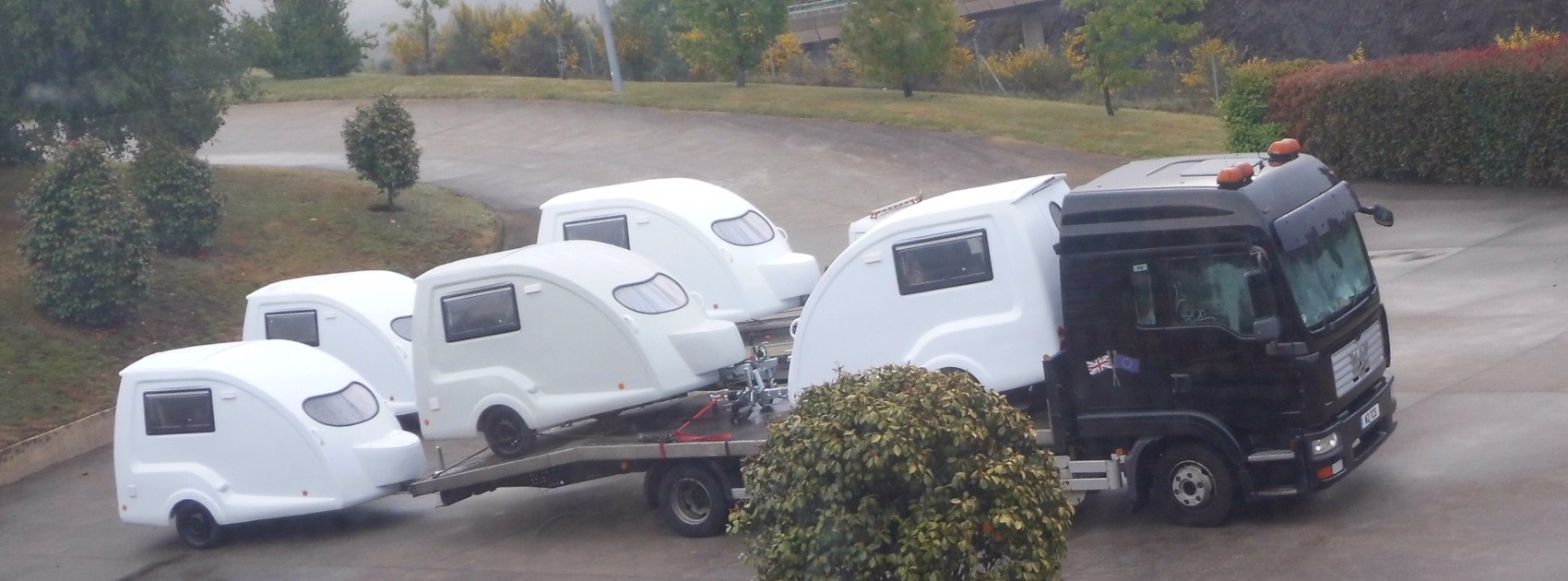
At 07.15, it was dry outside, so we were really uplifted by the prospect of a good walk. We saw the ” diddy ” caravans, described to us, yesterday, by the guy from Stockport.
We set off on our pre- researched route and made good progress to a tiny Pueblo, Erosa. It was here, that our plans began to unravel. My Google Earth route took us through the village on a very minor road, however, a local came towards us, waving his hands and directed us to a path to the right. We took it; we should not have been so subservient!
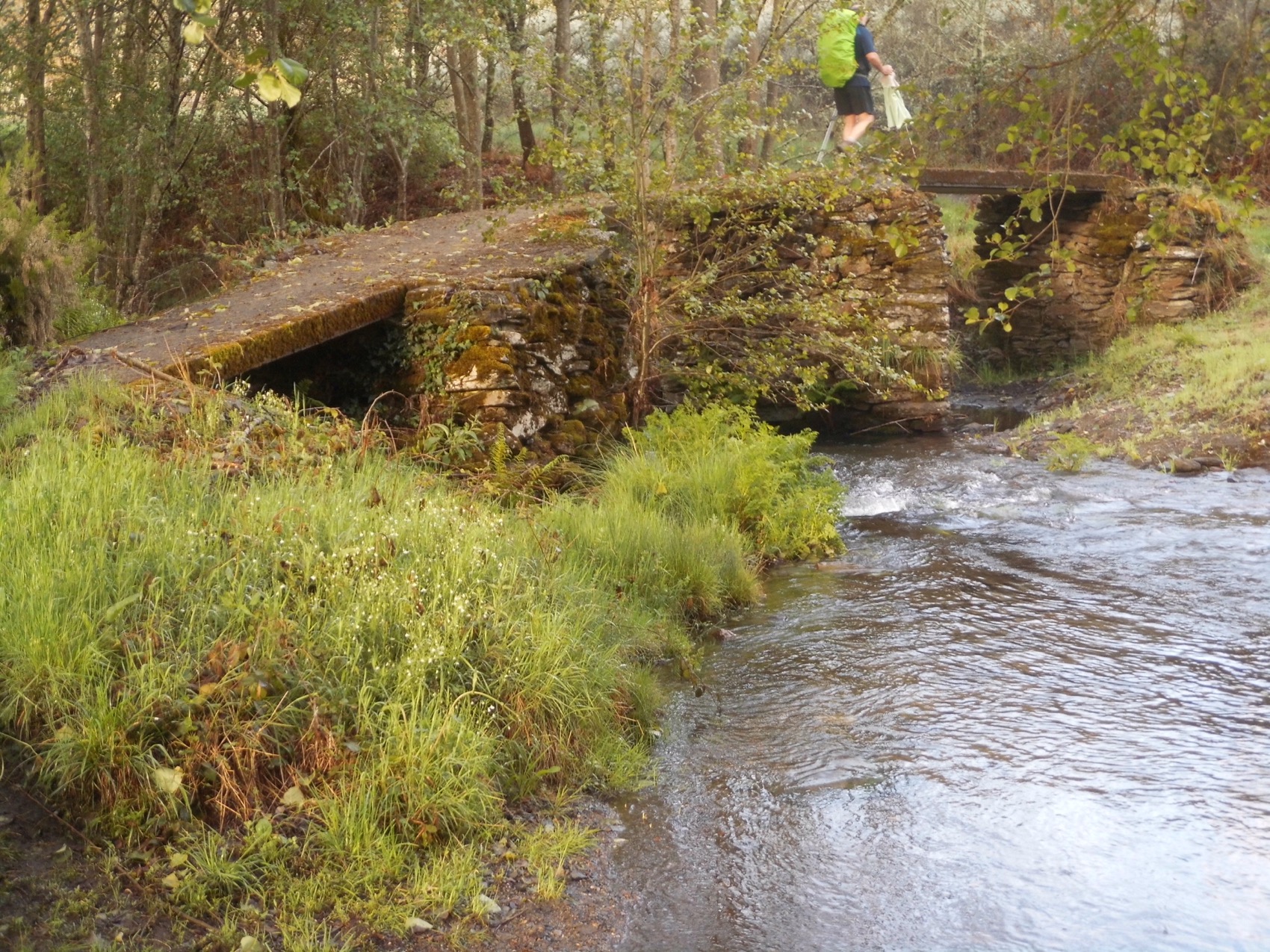
We walked up a considerable incline, on a good, dry path , at the bottom of which we approached a rushing stream……for a moment, it brought back the experience we had last year, of wading across a flooded waterway. Thankfully, there was a primitive, but passable stone bridge, hidden from immediate view,to the left.
After which, we climbed again and traversed a sierra – brush, gorse, Heather and scrub, pine trees and endless views of the hills, in every direction; no habitation,whatsoever. If ” Remoteness” is your thing, this is the area to make for- Galicia at its purest. After 2 1/2 hours walking, on what had to said, were good, dry surfaces, considering three days’ rain had fallen, we reached another tiny pueblo .
Question – where the hell are we?
Waterbreak and a search on the phone led us to believe that we needed to stay on this small, blacktop road….. which would have been the correct decision, had we walked in the right direction – there were no signs and nobody to ask. We walked for another 9 km until we found ourselves at a road junction, with signposts…relieved until we saw that Campobecceros was 21Km away ! About as far as we had walked thus far.
We sat in a bus stop and mournfully considered our options, after cursing the guy who had sent us off piste. The village of San Lourenzo was signposted, across the nearby motorway and which was on the Camino, as we passed authentic Galician marker stones, albeit they were pointing towards Verin, which was not the branch we wanted and which was 25 Km away.
San Lorenzo, district of A Gudina.
We hoped to find a bar and call for a taxi. A figure appeared at the first house, in the village. I approached and asked in my best Spanish, was there a bar?
No. The lady in question was then joined by a younger couple and between them, they ushered us into a large storeroom cum kitchen, where we were given strong coffee and 🍪, whilst we relayed our woeful tale. Meantime, a taxi was summoned by phone.
In this short time, we met Concepcion ( call me Conche), her niece and husband, Paulo and Verona. The couple lived in Ourense. She worked in Insurance and he was an ambulance driver. Charming, helpful people.
The Camino provides again.
I noticed a hessian sack hanging from one of the eaves and was curious to know what were the contents ?
Walnuts from their own trees.
Then our sojourn was ended by the arrival of the taxi and as we exchanged kisses on both cheeks, Conche handed me a bag of walnuts, wishing us ” Buen Camino” as we departed; warmed by their generosity and helpfulness.
The rain began to fall as we departed on a tortuous trip across the hilltops – T G we didn’t have to walk it!
A final twist in the day’s tale. Campobecceros was one of the places I had found impossible to reserve accommodation, however the 18 bunk Albergue had good reviews, as did a nearby restaurant, Casa Nunez.
Campobecceros.
The ” Ensuitepilgrim” had to capitulate in this case.
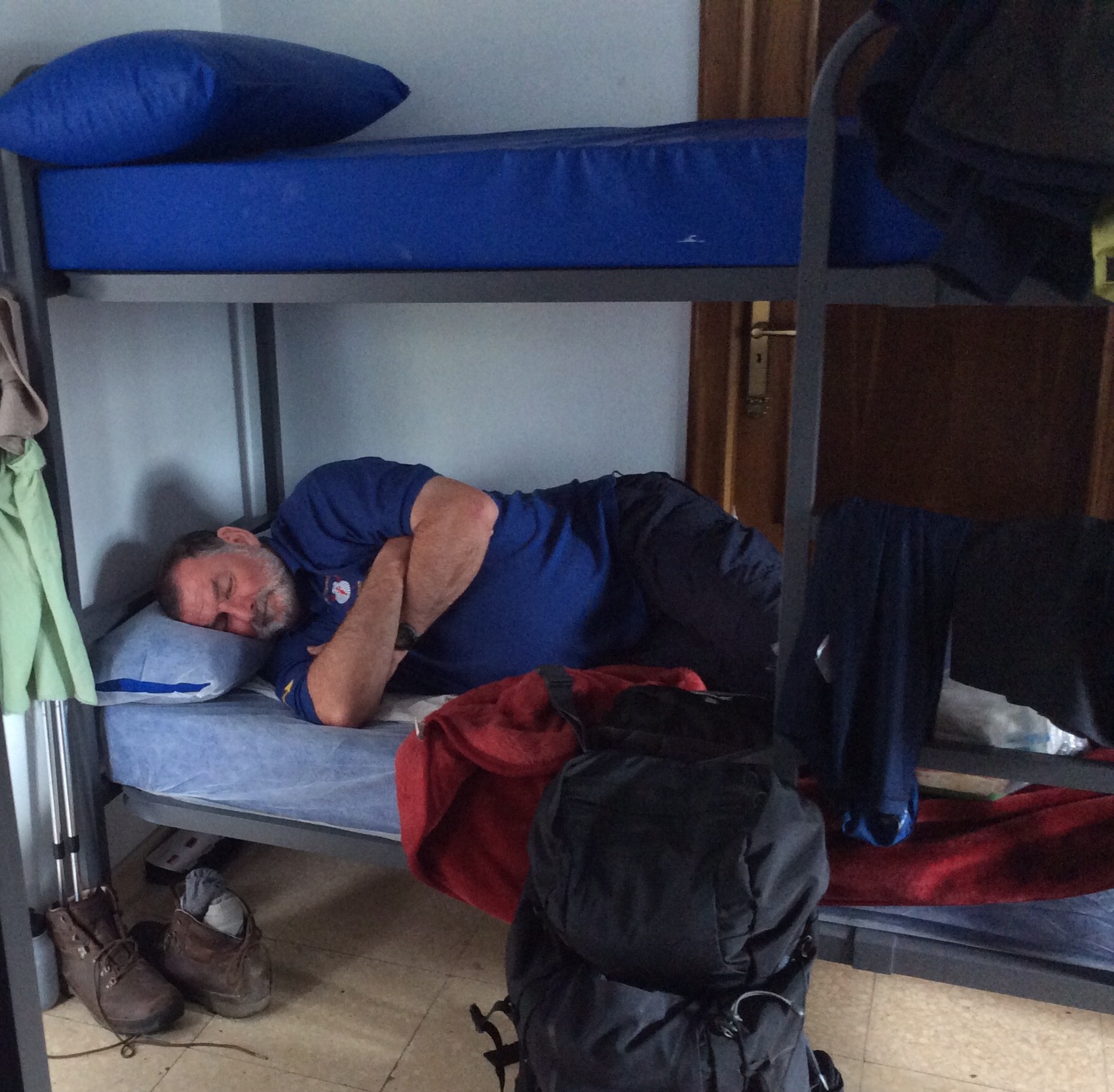
So, Mac and I grabbed two lower bunks, near the loo and by a wall.
Although we avoid them, wherever possible , we know that being near to the ground and toilet/ shower are plus points , in an albergue!
We were OK on both accounts.
We reacquainted ourselves with two ladies who had been at Casa Irene, a Swiss and a German – both with good GSOH. Shook hands with Stephen from Kansas and John, from Ireland and met up with a young pelegrina from Quebec, Maude. It would seem that these would be our only overnight companions, making the Albergue experience relatively painless, at € 8.00 each.
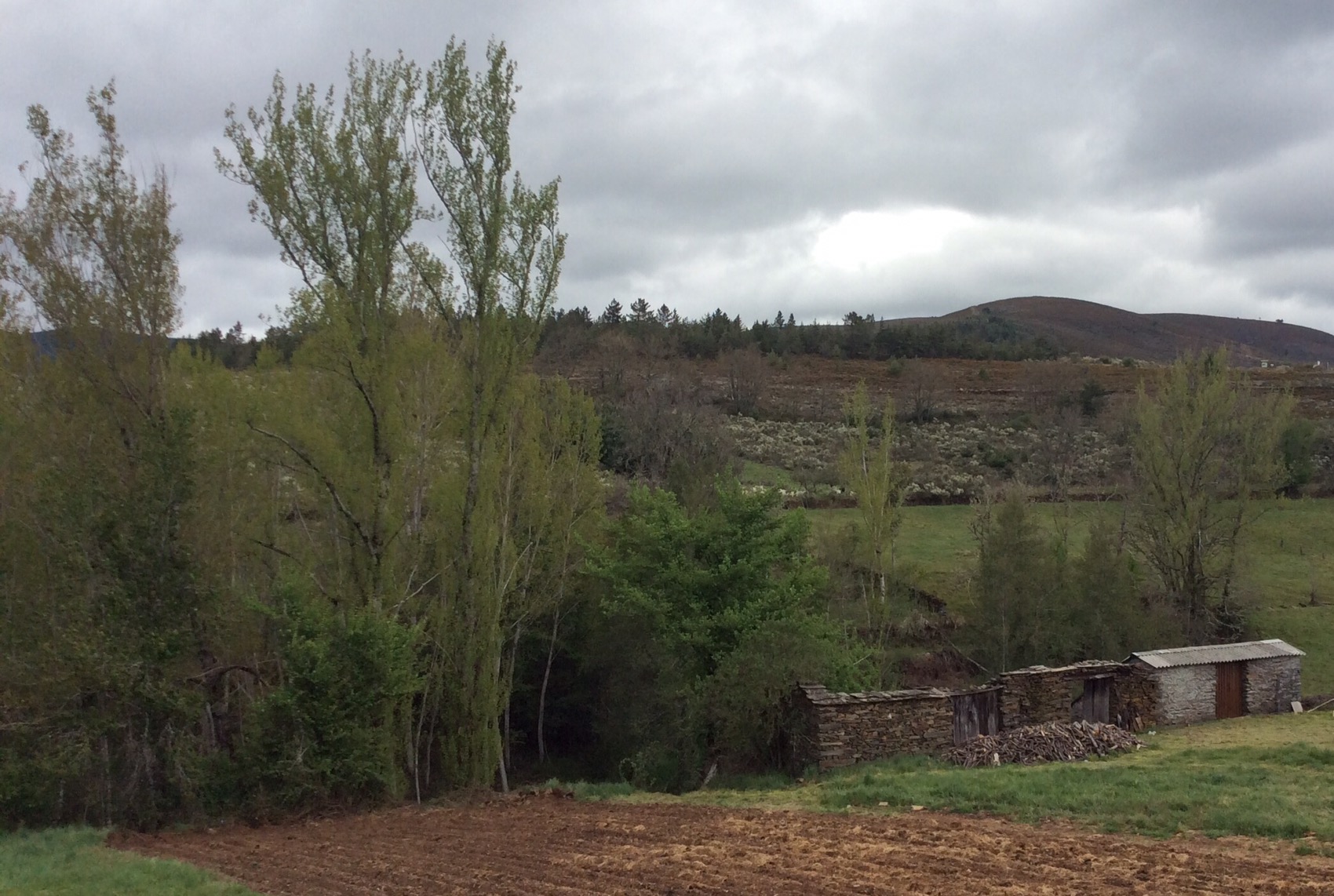
Bar Rosario,for a bowl of hearty soup, country bread, rice pudding again😝and a bottle of wine, for €4.00 each. Mac snatched a siesta and I took a shot of the countryside, from behind the Albergue. The other side of this medieval village has been ripped apart by the AVE construction.
The only wifi available is in Casa Nunez – dinner destination sorted.
Track for the day -” Can’t Find My Way Home”, Steve Winwood


























 ensuitepilgrim's Blog