Heartwarming cards and presents from Hannah,Daniel and Tom for Fathers’ Day. Great way to begin the day.
Awake at just after 06.00.
Routines are essential for Camino preparation and begin the night before by getting all the packing done barring what is needed for the morning. This includes supplements to take after breakfast, socks and feet bag ready, walking poles by the door so they are not forgotten! It’s important to remember any washing that may be hanging around somewhere. After a shave, attention turns to feet preparation which includes massaging Vaseline into toes and any sensitive spots, putting on polyester toe caps ,a dusting of tea tree powder then trail shoes on. Gear on next, then two aluminium water containers to which soluble hydration tablets are added,plus an other litre bottle of water – all placed in day rucksack along with any other bits and pieces after an application of sun cream. Put all electric leads in case – close it , check the room for any forgotten items – take the case to reception for collection by luggage transfer to that evening’ s hotel, then breakfast usually at 07.00 -07.30 . Hoping to be on the trail for 08.00 most days.
Now after all,that excitement,today’ s stroll.
Sloways, our travel company booked two taxis to take us upto the summit of Radocafani.
An amazing setting.
San Petro The altar piece A view from the wallsA striking statue.
The previous evening it was decided to take taxis down from Radocafani as the descent was 500 metres of steep tracks . Not a great distance, but it would help preserve our knees for the next ten days’ walking.
“A Long and Winding Road…” as they sang so memorably.
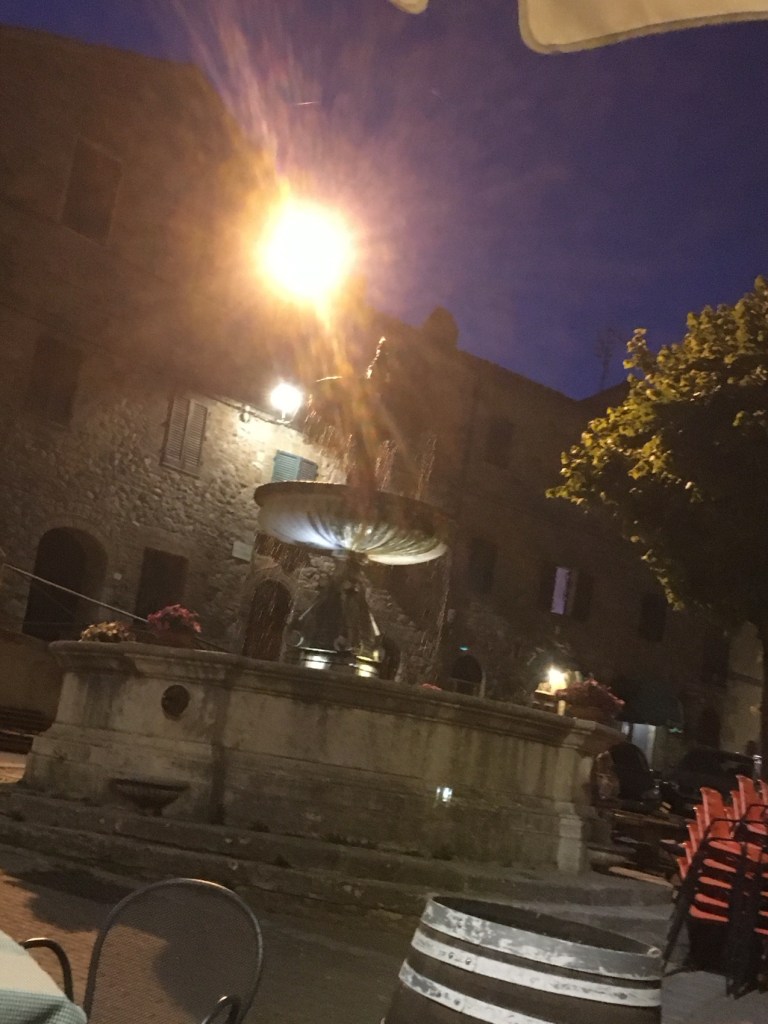
The piazza near to our digs in Acquapendente.Locals’ Sunday papers’ Reading club Our nearby piazza Our digs- in a family run hotel,of nine rooms.At about 15.30 as forecast there was a short storm and a spot of rain .Plenty of water for the fountains behind our place.After the storm subsided I went for a stroll. View from the walls.Rapturous sculpture You can just pick out the Basilica to the left from here.A cooling Zuppi Inglese.Artwork underneath town hall arches As promised ,Tom’s Fathers’ Day present – a Wolves themed T-shirt in iconic Old Gold and Black – our present Portuguese manager appointed last year to save us from relegation; which he did. He famously goes to local pubs and mixes in.Great guy and an excellent coach.
Fountain express – a Tuscan special meal – yesterday’s bread and bean soup – a speciality.
This morning we left our homely B&B to have breakfast ( included) at a small Trattoria in this piazza.
A traditional breakfast was enjoyed there,though the choice of teas was a guessing game!June joined us from her hotel as it was planned to cut down the length of today’s walk by taking to 09.18 bus to Abbadia San Salvatore. I got the front seat and we drovec down sinuous county roads and serpentine bends with the driver nonchalantly using one hand most of the time . It was only when we disembarked at Abbadia that I realised we were the only passengers.
After a coffee stop on this busy town it was,decision time.
Fountains rule opposite our cafe. There was no option but to use Mapy.com to enable a short cut off the Francigena route. I must admit to being somewhat dubious because main routes are made to enable a safe passage, however, the walk began simply enough.
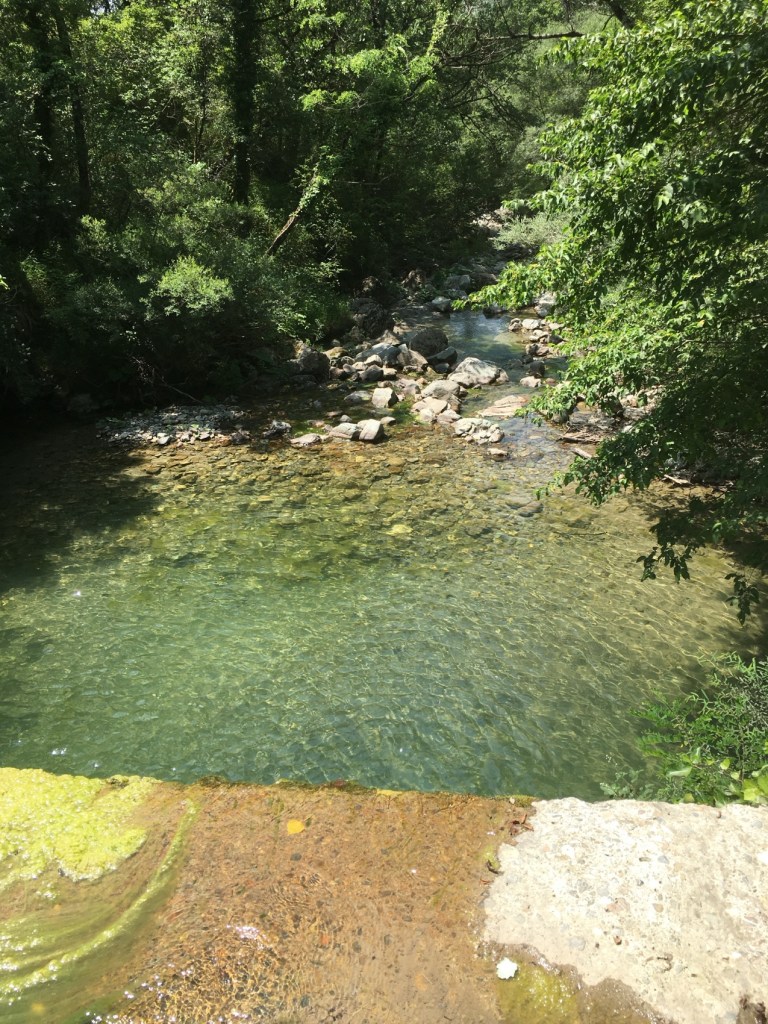
A wall,of wild flowers.A stream which we crossed safely over a concrete bridge .The path was beginning to disintegrate.We then came upon a stream running across our way. Not too deep thankfully.But uninvitingly slimy – we all got cross with our socks dry.From this point on and for a long,uphill,stretch the vegetation became as challenging as the Rocky underfoot conditions. We managed to help,each other across a metre drop onto a small dry stream bed.Yes the views were still enticing.
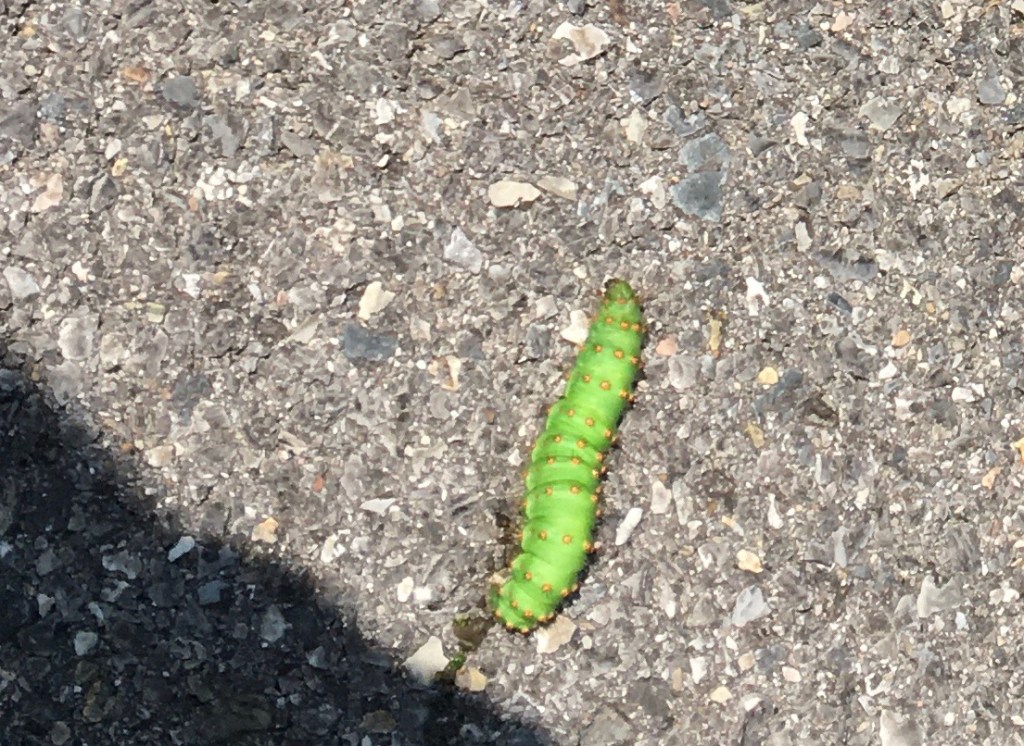
After what seemed an endless climb we emerged on a typical white path – TG.Yellow flora my favourite colour.A caterpillar crossed my path – these have a very unpleasant sting.These were popular with beesI used my bog standard App. Earlier which reassured us were close to our accommodation.La Selvella Agriturismo. A wonderful setting.What a relief after a really hard walk to relax here for a couple of hours
Dinner was served under an ancient tree – it was a very good meal served with panache and a smile . I can’t speak highly enough of enough of the help given to me by the receptionist in acquiring two,taxis to take the group down from the heights of Radificoni the next day as there were no buses on Sundays.
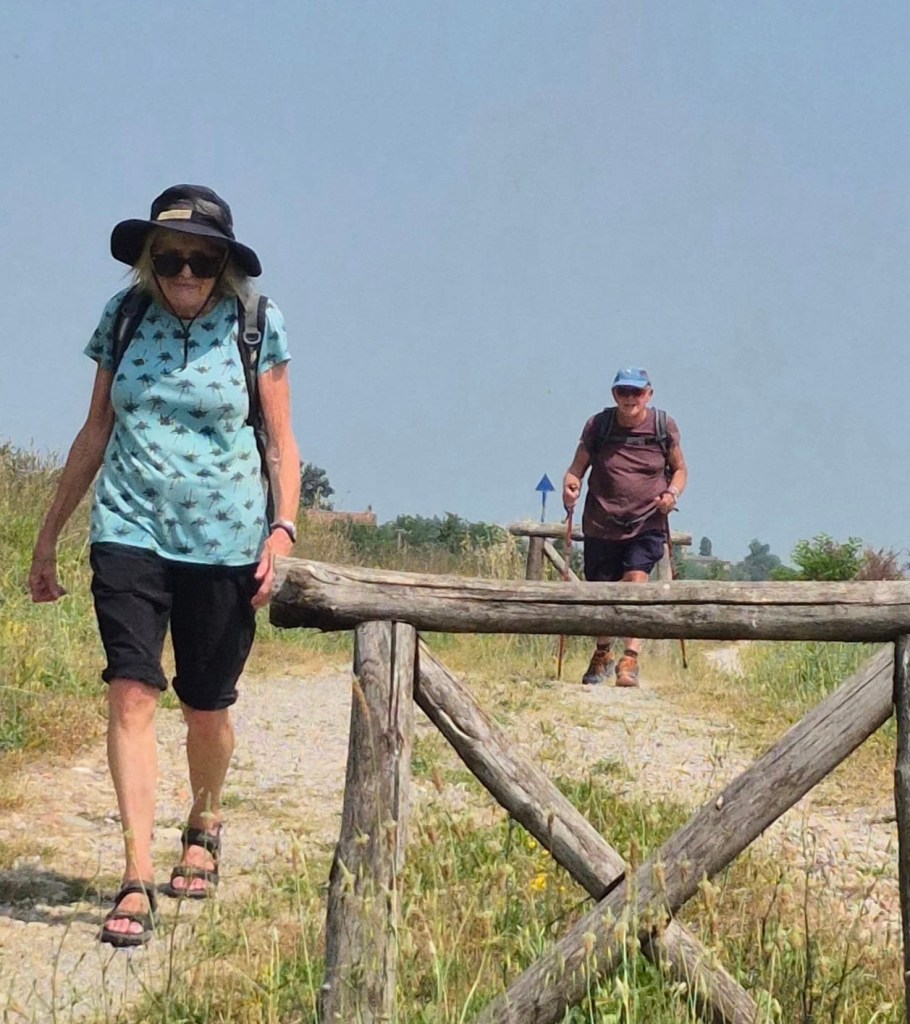
9km we said, it will be a breeze we said…Wrong! Friday 13 th? Nobody in this group is superstitious but perhaps we might avoid walking on that day in the future 🫣
The day began peacefully and uneventfully….But.
June pausing at an advert for an Agroturismo .Wonderful views as ever.Local floraA wild OrchidThis stretch was buzzing with insects – good to see.A lot to choose from but we chose the second one down.We explored this hamlet,but not the tower.A view from the court yardA gorgeous gardenChristina in the frame.Not long until we reached Bagno Vignoni with its ancient hot springs now walled in as a centrepiece of the village, visited over the years by Queens,Popes and Lorenzo the Magnificent We managed coffee here – rather a day trip feel to the place – but interesting, even though you can’t take a dip. The waters flow into the River Orcia.It was at this point things got tricky as a long awaited repair of a pedestrian bridge was still incomplete, which meant we had to find the traffic bridge with no footway.We had to navigate the rest of the way in searing heat using our phones which sent us up and along some tricky,rock strewn paths. This diversion, for want of a better description, added five km to the day and it was slow going, wisely, for some of us.Yes,there it is.By early afternoon and much later than anticipated we reached Castiglione d ‘Orcia and it’s peaceful squareVery welcoming lady served us Agua Frizzante and beers.Salute!An interesting menu and we might revisit in the evening
Then on to B&B Il Vecchietta Via del Cassero, with its wonderful garden and vistas; a medieval house whose stone walks made for a very cool interior
Not thinking of climbing up there but we had a very restful afternoon which helped us all recover from a tough day…but we did it!
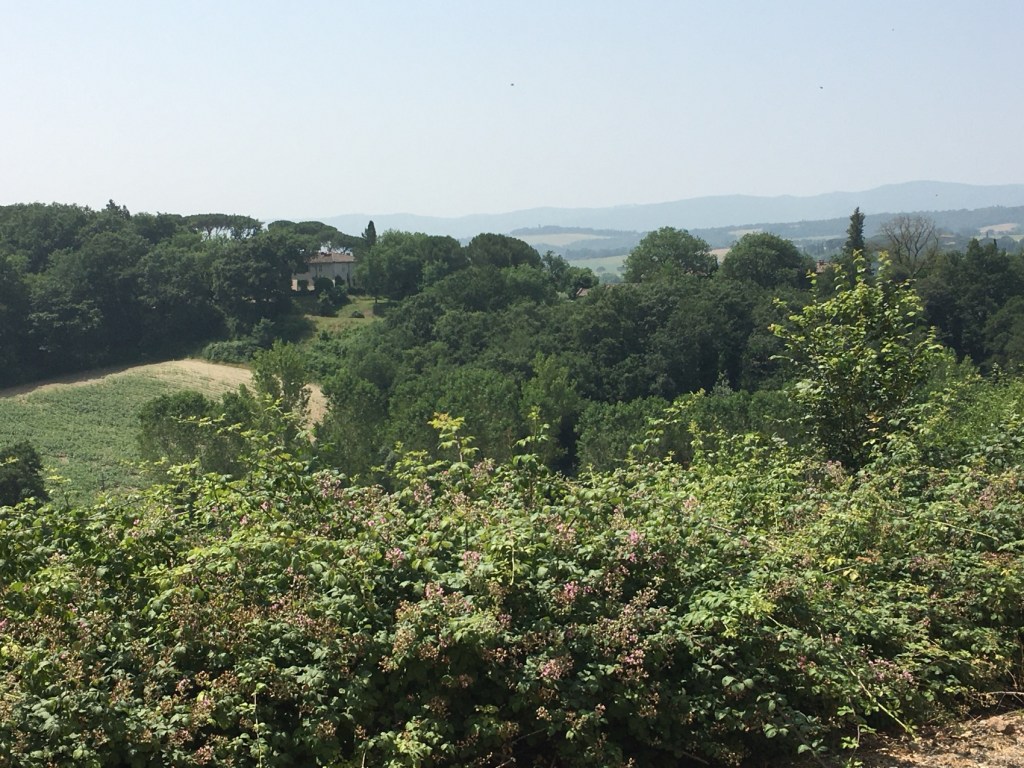
The first part of the walk was very pleasant and uneventful ,with good views of the ever enchanting Tuscan countryside.
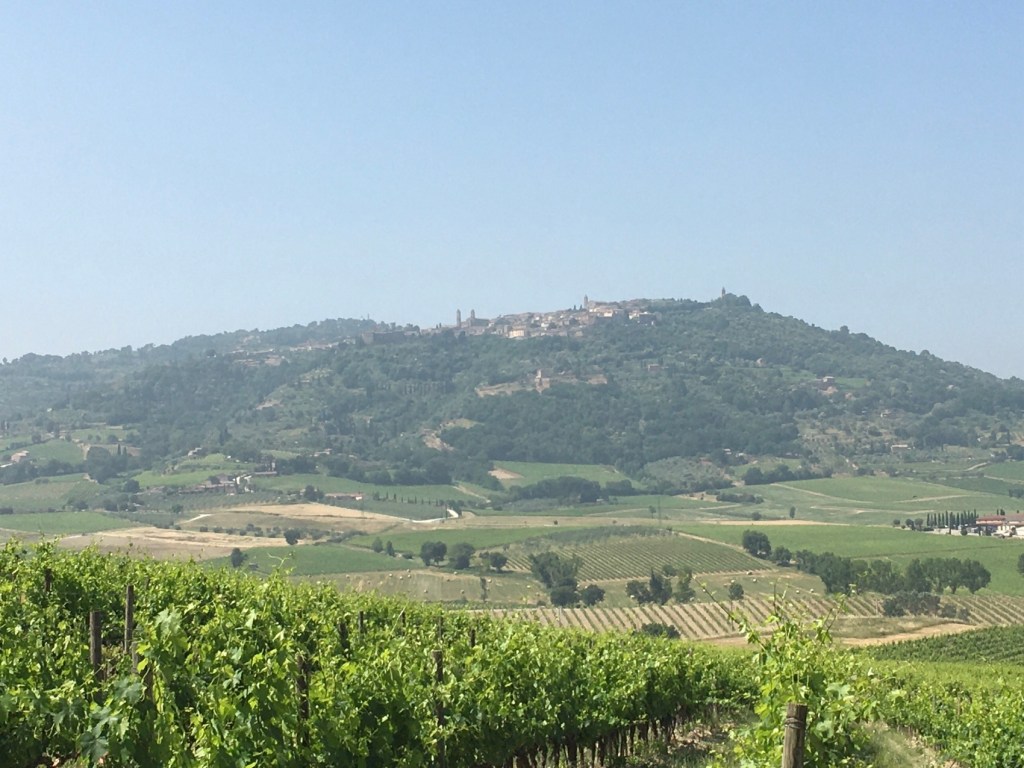
This is a famous wine growing area One of Italy’s (and the world’s) greatest red wines, Brunello di Montalcino is a small wine region in southern central Tuscany, producing particularly impressive wines. In Tuscany, its homeland, it perhaps ranks alongside Chianti Classico. On global markets, it seems to command even greater attention. Cypress Trees and vines dominate the landscapeWe stopped by the Caparzo WineryRather early in the day so temptation avoidedGlad we didn’t have to climb up there The rest of the walk to Torrenieri was along a meandering gravel roadCoffee and a snack in this pleasant little placeWe were to discover later why the flags were out. We decided to take the bus for the last few km as the temperatures were hitting 30* and reached San Quiricio quickly avoiding a long climb.Pelargoniums ruleThe square in San Siricio where we decided to have dinner. The town celebrates a feast day where the four districts parade tunefully to the church with drums rolling and flags waving. We were fortunate to be well placed to enjoy the spectacle.Great atmosphere and a good meal – memorable evening.Sunset at the hotel.
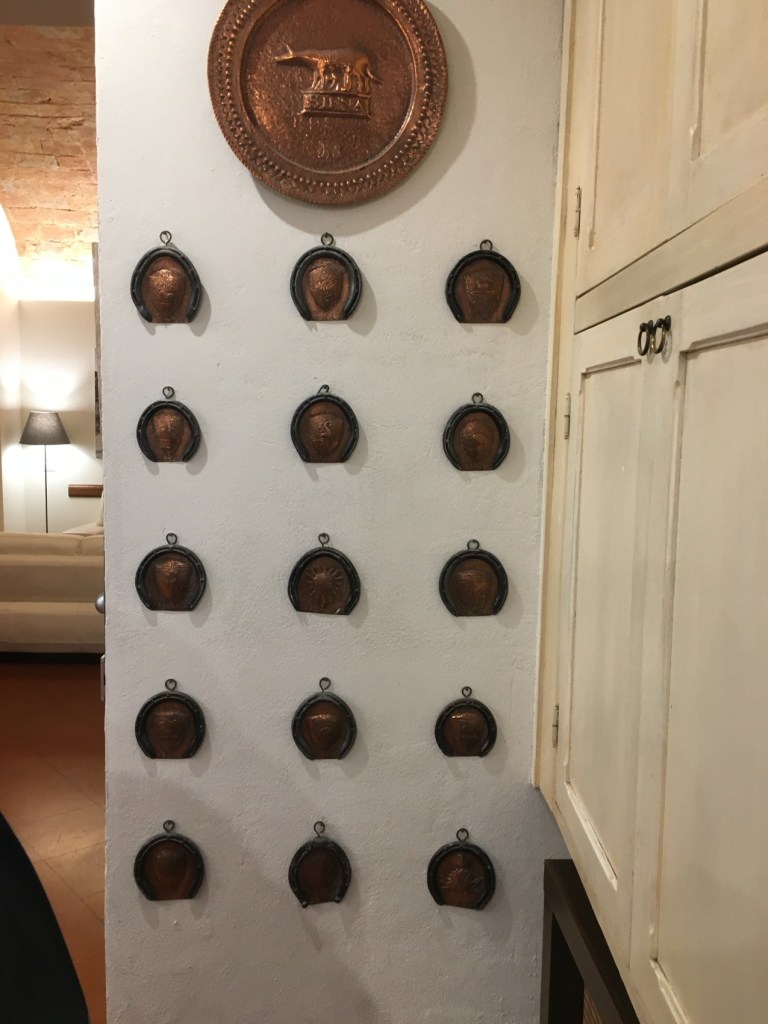
A fond”Farewell “ from our hotel,receptionist.These are horseshoe momentos of the Siena “ Palio”.Christina’s photo as we prepare to,start the walk. We walked down hill and around the Siena Salumi factory into the Tuscan countryside.A communal laundry washing point.
Up the hill and another solitary sink for scrubbing.
Wonderful vistas as you are soaping up.
We walked for some way alongside a single track railway, passing through fields of Alfafa and young Sunflowers
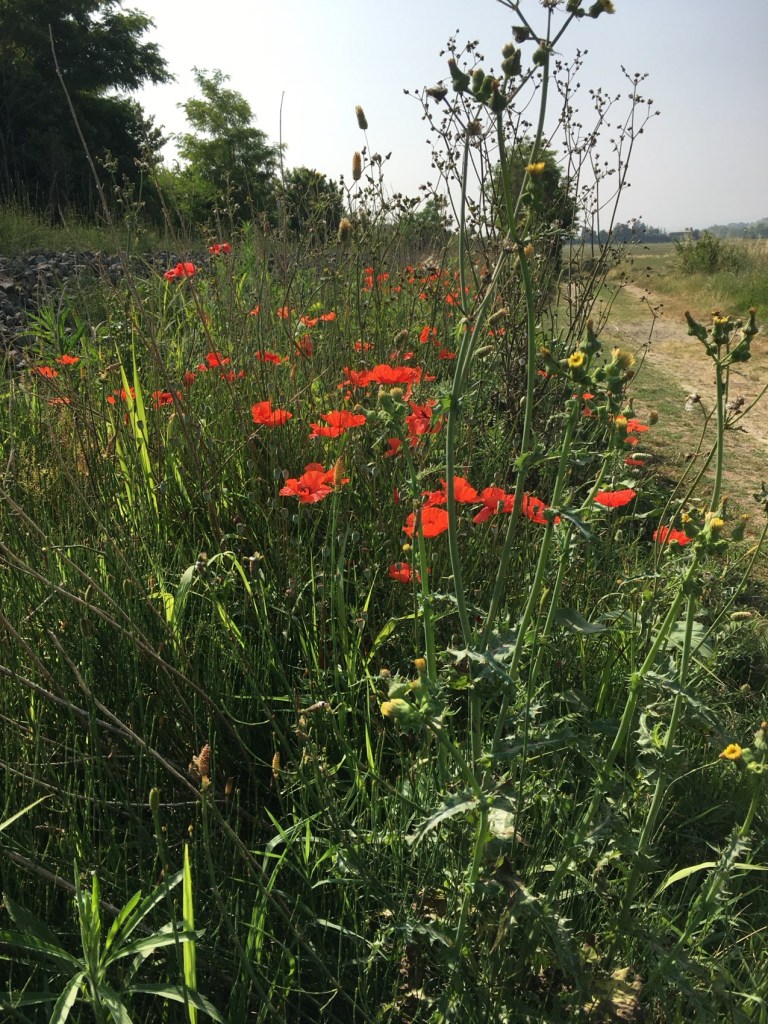
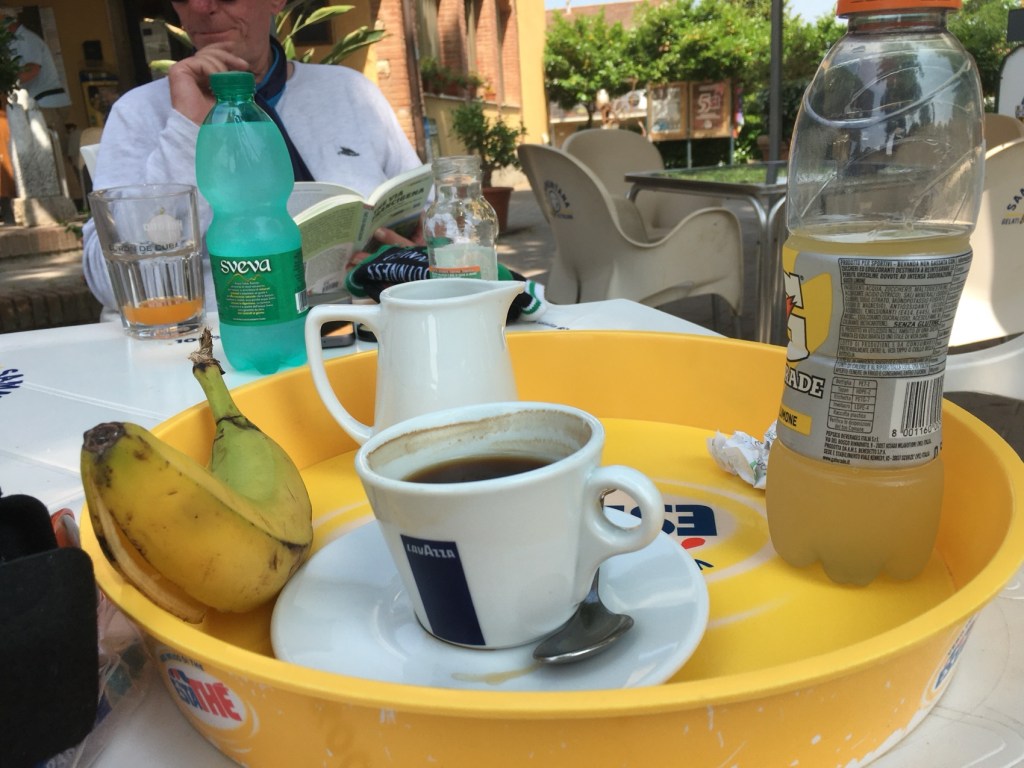
Splendid poppies, too.We crossed over a solitary bridge and eventually reached Ponte d’Arbia for a welcome break.Americano , Gatorade and a babana – default morning break for me.
A welcoming place for pilgrims and we had a chat with French group who apart from a large group of Aussies yesterday are the only folk we have met on the Via,so,far.
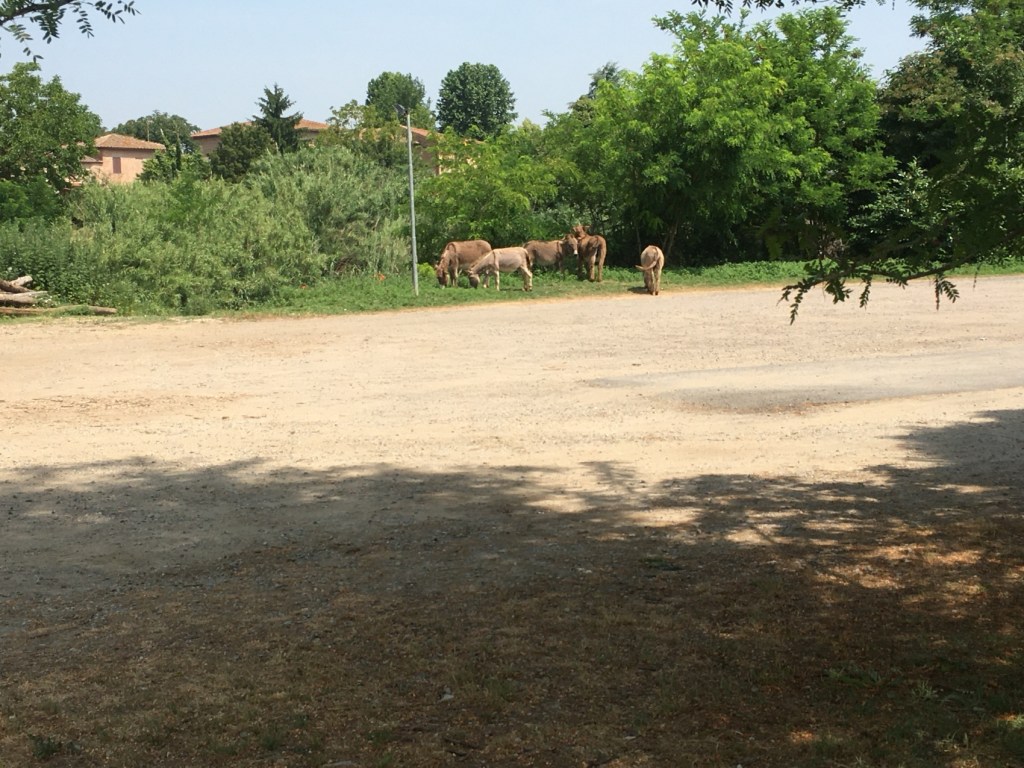
A saucy tray.We were leaving via its famous bridge which Tom had discovered escaped bombing by the Germans in the war.The Francigena did not cross the bridge because there was no footway,but directed us to a nearby pedestrian crossing.We got a great view of the Ponte from the pedestrian bridge A tethering of donkeys aside the river.A less peaceful,scene - Barking mad dog and Englishmen - glad he was not on the loose.One of a number sculptures we passed on our way up,a steepish climb.The climb begins.These were on the approach to the summit.One of a number of views.Going down…Buonconvento in the distance Almost full bloom.
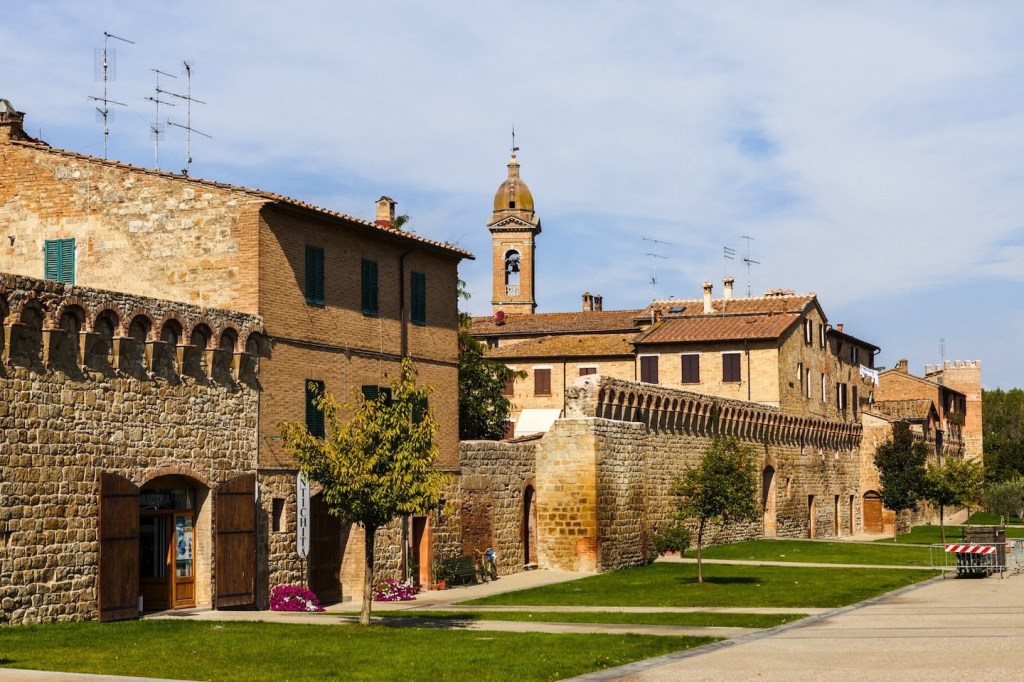
Buonconvento, only a few kilometres from Siena, is one of the most beautiful villages in the whole of Italy according to ANCI classification. Enclosed within a city wall built in 1379, the medieval village originally only had two entrances at opposite ends of the main street: towards the north is Porta Senese, where the original wooden doors and windows with metal fittings remain, and towards the south Porta Romana, which was destroyed in 1944 by the retreating Germans.
Via Soccini runs right through the historic centre, and was named in memory of the ancient family whose members included illustrious jurists, as well as a couple of heretics who organised various doctrinal Socinianism movements that developed during the sixteenth century.
The aforementioned doorsThe high street.Beautiful settingWe were all in agreement that this town had a really atmospheric feel of the Francigena – and that was before we had a beer.Then on to our comfortable accommodation and a siesta for some.Hotel Ghibellino
The name “Buonconvento” translates to “happy place” or “fortunate community” in English. It comes from the Latin phrase “bonus conventus,” which refers to a gathering of good people in a place that is enjoyable and beneficial. The town’s name reflects the historical setting as a safe and welcoming location for travelers on the Via Francigena, a historical pilgrimage route.
This is a sample from the guide book Recommended by Sloways
We called in at a local supermarket enroute to the start of this stage and stocked up with bananas, cereal bars and water as there was a long stretch before coming to a a cafe . We had enjoyed an excellent breakfast at the hotel which would sustain us for the most part. We walked past the Duomo .
Rob capturing the stained glass.
We then traversed the famous setting of the annual “Palio” a mad horse race around the periphery of the square.
JUNE striding out…
We were making our way to the Porto Romano to exit this wonderful city.
Out into the countryside with its non stop vistas It was heating up – 28* and counting, with only spasmodic stretches of shade.A well sign posted stage so far.We paused by this stream for a drinks break and Christina captured some birdsong on her APP. a Blackcap and a Nightingale.
The soil,takes on a distinctive grey colour for a wide expanse in this area.
The Crete Senesi (Sienese Hills) is a region located south of Siena in Tuscany, Italy. It’s characterized by rolling clay hills, woods, and semi-desert landscapes, creating a unique and unspoiled beauty. The area includes the towns of Asciano, Buonconvento, Monteroni d’Arbia, Rapolano Terme, and San Giovanni d’Asso.
we reached the outskirts of Monteroni eventually with temperatures in the 30s.A diversion from the main Francigena.An interesting connection.An allotment alongside one of the impressive villas along the the way. Eventually, after a climb uphill we came to our hotel.BORGO ANTICOThe terrace for “ Sharpeners” and tales of heated woe!The dining room, where, after a rest and recovery we enjoyed a typical Tuscan dinner including wild boar.
Thanks to group,members for some of the fine photos
Tomorrow’s walk is to Buonconvento and Tom has promised a shortcut!
Four stages to the journey today with most of us up at 05..00. Taxis to Digbeth coach station for the 07.05 to Luton airport . It was 20 minutes late but made up most of the time via a convoluted route,taking in stops at Bham airport,Coventry – slow there – Northampton, Milton Keynes, Luton town and eventually …. The airport ! I may have missed one stop out,I think.
En route
Getting through baggage check in and security was very efficient- 30:minutes, although I got frisked about six times at security 🤨. Then flight departure from Gate 43…after 20 minutes everyone had to disembark from the bus to be told the plane was in operative,please go to gate 11, the other side of the airport. Arriving there, checked in for the 2nd time…sorry you’ll have come back from the entrance to the planes because this plane developed a puncture on landing. After an hour, we checked in for the 3rd time and eventually got on board, people remained in good humour, however,and the flight was enjoyable , the captain making up 25 minutes.
June and Rob celebrating take off!The Swiss Alps
Pisa airport was a doddle and our minibus awaited our departure- I had whatsapped them about the delay. A 90 minutes ride through the Italian countryside to Siena and our hotel which was very welcoming .
We enjoyed a cold drink on their patio with Swallows dive bombing everywhere and everyone loved the setting in the evening sunshine. We adjourned to a nearby restaurant for dinner which was great value ,with humorous friendly sevice.
“The last leg starts with a long segment along the sidewalk of the Via Cassia, very traffic congested. Once passed the Grande Raccordo Anulare (Great Ring Junction) the Path enters the green Insugherata Park, a wild oasis in the outskirts of Rome. Then it enters once again in the traffic of Via Trionfale, for then entering Monte Mario park. The view from the overlook of “Mont Gaudii”, the happiness’ Mount, will let you forget the pollution and the traffic, before of the descent to St. Peter’ square, your destination. Frequent eat and drink points and fountains along the itinerary.” GRONZE
Leaving Giustiniana, we cross above the A90 Autostrata tunnel,turn right and pass through the gates of the InsugherataNature Reserve – an hour’s welcome respite.
Insugherata Nature Reserve History, nature, and spirituality merge in one of the largest green areas within the city: 740 hectares of a territory of an immense naturalistic and historical-archaeological value. The Insugherata Nature Reserve hosts, in fact, numerous remains of sepulchers and Roman villas. The most famous is undoubtedly the so-called Nero’s Tomb, along the Cassia. Datable to the II-III century AD, it is actually the tomb of Publio Vibio Mariano, Prefect of the Third Gallic Legion. In the area of the Acqua Traversa, where Villa Manzoni is now located, the villa of the emperor Lucio Vero once stood (161-169 AD). The excavations carried out in 1999 for the construction of the new Octavia flyover have revealed the presence of tombs relating to an Etruscan settlement of the 6th century BC. Along Via Trionfale, bordering the reserve, the Traiano-Paolo aqueduct, built by the Roman emperor (98-117 AD) and restored in 1612 by Pope Paul V, passes through an underground path. It leads to the Trastevere district, the water of Lake Bracciano, and reaches the Gianicolo Fountain. The area of the park, in part corresponding to the ancient estate already registered in the Alessandrino Land Registry (1660) with the name of Inzuccherata, also preserves the ancient Casale of the Insugherata, together with some publicly owned farms. From here, too, passes the Northern trail of the Via Francigena, the ancient itinerary of faith, which for centuries has accompanied pilgrims and visitors from Central Europe to St. Peter’s Basilica.
Then through the Roman residential neighbourhood of Sant’Onofrio, two blocks on we reach the Via Trionfale,one of Rome’s historic main arterial roads – cafes, etc,.
We then follow the Via Igea, turning right on to Via della Camilluccia along which we meet the entrance to Monte Mario Park The Monte Mario Nature Reserve extends in the north-western part of Rome and takes its name from the highest cliff (139 metres) of the Farnesina hills, which dominate the Tiber valley. Geologically speaking, the area consists of sand and gravel, from which numerous fossil remains originate. Inhabited since prehistoric times, in the Roman age, Monte Mario housed numerous residential villas. Used in the Middle Ages to plant vineyards and vegetable gardens, from the Renaissance on, the noble families chose the hill as place of residence due to its dominant position over the city. One of the most distinguished examples of Renaissance villas is Villa Madama. In the park area are other historic mansions. Among them are Villa Mazzanti and Villa Mellini, home to the famous Astronomical Observatory. Villa Mellini
Following footpaths we should get our first sight of Rome.
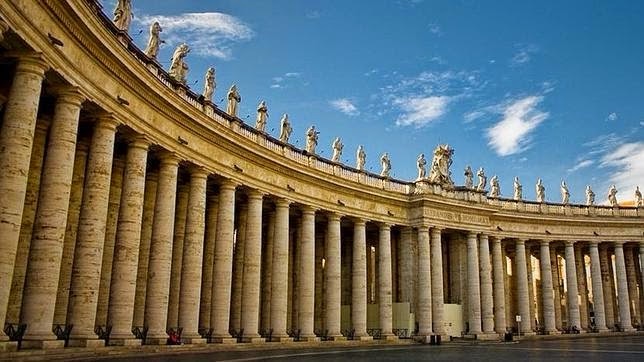
St Peter’s Basilica We descend along switchback paths to the lower gate of the park. Carrying on for two blocks to the wide and green Viale Angelico which we follow for 2 KM.Passing the Vatican City walls to enter the Colonnade of St Peter’s Square.The Colonnade of St Peter’s Square – Gian Lorenzo Bernini designed the colonnade that frames St. Peter’s Square in Rome. The square’s elliptical shape and the colonnade are a defining feature of the square, symbolizing the Church’s embrace of the world. The colonnade, built between 1656 and 1667, is composed of 284 columns and 88 pilasters, arranged in four rows. 140 statues of popes,martyrs,evangelists and saints carved by Bernini and his students.
St Peter’s Basilica, still after 500 years, the largest church building in the world at an astounding 15,000M2
Sylvia Nilsen writes: “During the Holy Year of 2025, pilgrims who go on pilgrimage to the four Holy Doors of Rome (Basilica of St. Peter in the Vatican, Basilica of St. John Lateran, Basilica of Santa Maria Maggiore, Basilica of St. Paul Outside the Walls) will receive, on request, an official ‘testimonium’ – a certificate proving they have undertaken a pilgrimage to the Tombs of the Apostles Peter and Paul.
The testimonium can be collected at the official Jubilee InfoPoint, located in via della Conciliazione 7, in Rome. Info Point. This certificate is a testimony of the pilgrim’s spiritual participation in the Jubilee, a year of grace for all men and women in the world. The testimonium will be personalized by the volunteers at the InfoPoint with the name and surname of the pilgrim, and the date of the pilgrimage.
In addition, those who arrive in Rome on pilgrimage by foot or by bike, having travelled one of the many paths towards the eternal city, will be able to receive a special, even more personalized Testimonium.
The official Testimonium of the Jubilee will carry a special watermark, with unique properties, guaranteeing its authenticity and certifying it as an official document of the Jubilee. Thus, each certificate will become a unique and significant memorial of the spiritual journey undertaken.
Pilgrims are asked to apply only for the official Testimonium which can be collected only at the InfoPoint in via della Conciliazione 7. Info Point
For large groups it is advisable to book the Testimonium in advance by contacting the InfoPoint.”
At some point we shall need to get to our hotel accommodation for the next two nights – Hotel Domus Sessoriana,Piazza Santa Croce. The hotel is 6.5 KM from the Vatican City. There are buses and obviously taxis. I am hoping Sloways will provide some definitive advice. 5 ways to travel from Vatican City to Domus Sessoriana, Rome,according to the “Rome to Rio” website- Bus 13 mins, Taxi 3 mins,Subway 13 mins, Walk 28 mins.
“Good location, lots of options for public transport, very kind receptionstaff.”
“There were great places to eat nearby and a 24 hour bar across the street.” Two recent reviews The following day is a “ free one”
“Leaving Campagnano you can adimire the enchanting views of Latium countryside, before coming at Veio Park, where you flank the Church of Madonna del Sorbo. Cross the inhabited area of Formello, where there is a wonderful hostel in the historical Palazzo Chigi, in order to undertake a long track later till Isola Farnese and La Storta. Bar and water in Formello and Isola Farnese.” Both the Francigena and the Caminos to Santiago de Compostela have strong links with the EU.With the weather likely to be warm ,we need to take plenty of fluid with us, although there will be at least two villages with facilities. We leave Campagnano via the Porta Romana gates ,heading slightly uphill ,following signs to the Santuario de Sorbo, then entering Parco VeioSanctuary of the Madonna del Sorbo and an enthralling porcine narrative : – “There is a legend that tells the tale of the founding of the Sanctuary of the Madonna del Sorbo. It runs thus: There was a young man of Formello who kept his pigs on the grazing land in the Valley of the Sorbo. One day he noticed a sow run off alone and return and hour later. Having watched the animal repeat this for several days in succession his curiosity was aroused and he decided to follow it. The sow climbed the hill to the Sorbo tree where it sat on it’s haunches raising it’s forelegs as if in prayer, and gazed fixedly at the icon of the Virgin and Child nailed to the tree. The Madonna spoke to the swine herd telling him to run to Formello and tell of the apparition saying that, should they not believe him, she would perform a miracle. So it was that when no one believed him, the swine herd thrust his mutilated arm into his pocket and drew it out complete with hand. Thus convinced the people of Formello carried out the Virgin’s wish and built a sanctuary at the site of the apparition. They kept the Sorbo tree with the icon of the Madonna that had spoken to the swine herd, as it stood, building the church round it. The new church became a place of pilgrimage.”The Assumption of Mary into Heaven and a chance to get a stamp in the pilgrim passport.Park of Veio – With nearly 15,000 hectares, the Veio Regional Natural Park extends north of Rome between the Via Flaminia and Via Cassia and includes the so-called Agro Veientano. It is the fourth largest park in Lazio and covers an area of natural, historical and cultural interest. It includes the municipalities of Campagnano di Roma, Castelnuovo di Porto, Formello, Magliano Romano, Mazzano Romano, Morlupo, Riano, Sacrofano and the 15th Municipality of the Province of Rome. The network of trails is signposted by the CAI and covers 99 kilometres, including the Via Francigena.A wide gravel road takes us through pasture land towards Formello.Erected by the VF Confraternity of Formello.FORMELLO A medieval town a few kilometres from Rome, in the heart of the Veientano countryside: Formello, crossed by the Via Francigena, is rich in history and immersed in a splendid natural landscape.
Starting from the Piazza named after Donato Palmieri, local painter and pupil of Vasari, who painted the frescoes in the church of San Lorenzo, we pass through the ‘Porta da Capo’ dating back to the Chigi era. From here begins Via XX Settembre, the main road through the town and along which the main buildings are located. On the 15th-century Piazza San Lorenzo are Palazzo Chigi, the Church of San Lorenzo and its Oratory of the Nativity, and the Council Building; continuing on we come to the Church of San Michele Arcangelo and then to the other monumental entrance to the town, the ‘Porta da Piedi’.
After refreshments we depart along the central street as it descends among old stone and stucco homes,reaching the valley floor where we reenter the Parco Veio. The road becomes a path through Alfalfa and Bamboo trees, then heading up past a sports complex. After crossing a bridge look carefully for a poorly marked left turn onto a gravel road. Shortly we come to a Veio shortcut option ( 1.8 KM ) offering a shorter route to Isola Farnese, bringing us alongside Etruscan archaeological sites and an ancient mill.
The centre of modern Isola Farnese is a non descript ,disappointing commercial cluster where the Via Cassia meets the Via dell’Isola Farnese. Medieval Isola, easily missed by walkers, is a cluster of buildings around the castle ( now a wedding venue ).
La Storta Sacro Cuore church
Although La Storta is the official ending of this stage our accommodation is RESORT LA ROCCHETTA in La Guistiniana.
This is situated a little further on from La Storta – bus Urbana #201 “Mancini” from La Storta is a possible, alternative option. “A 3-star hotel in Rome in the La Giustiniana area, the Resort La Rocchetta is immersed in the greenery of a residential neighborhood, within the Veio Regional Natural Park – crossed by the last stretch of the VIA FRANCIGENA -, a few meters from Via Cassia , close to the main communication routes and the gates of Rome. Converted from an old farmhouse and immersed in the greenery of a lush garden, the Resort La Rocchetta is an oasis of peace with large outdoor spaces, convenient parking and a generous buffet breakfast service. “ We stayed one night during our Francigena pilgrimage
“We stayed one night during our Francigena pilgrimage.Beautiful building. Clean rooms. Friendly and helpful staff.” RECENT REVIEW April,2025 Restaurant Antica Osteria Da Pietro has good reviews – 11 minute walk.
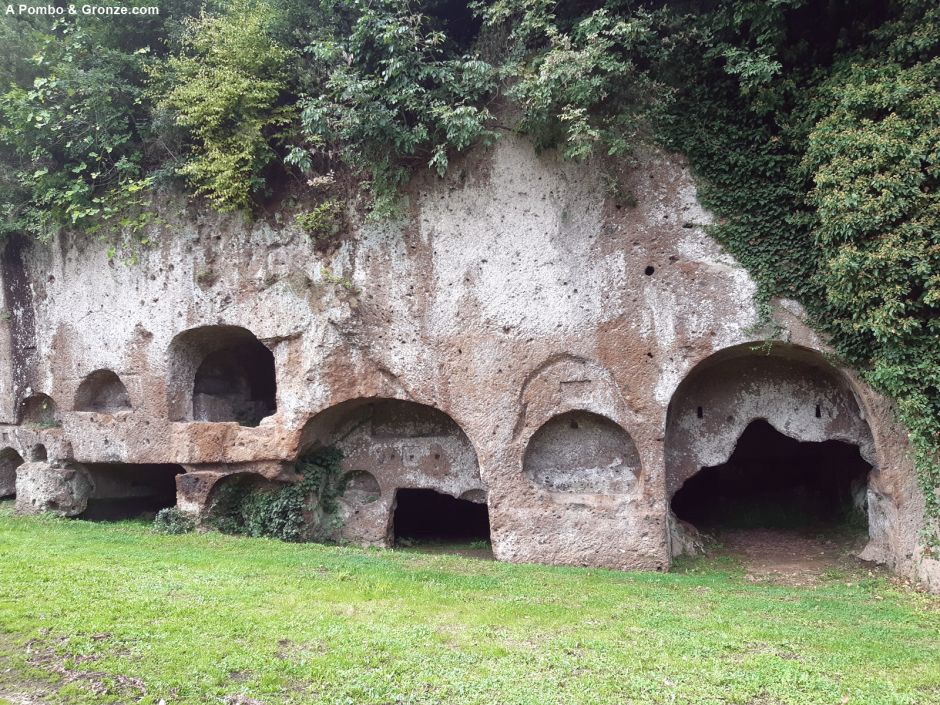
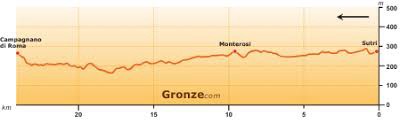
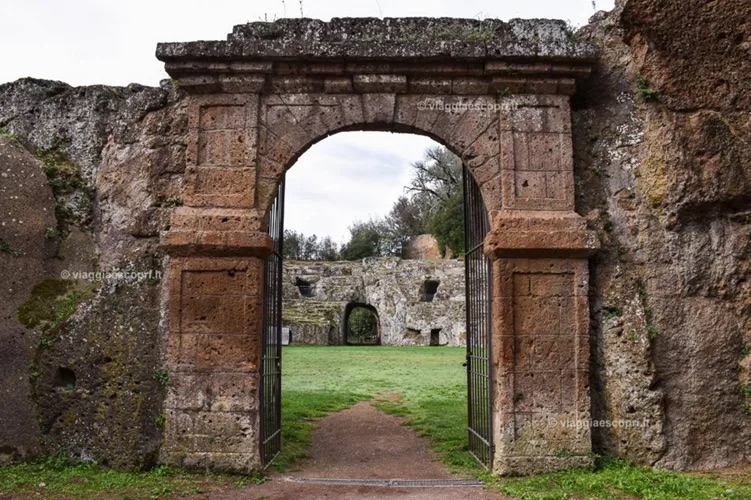
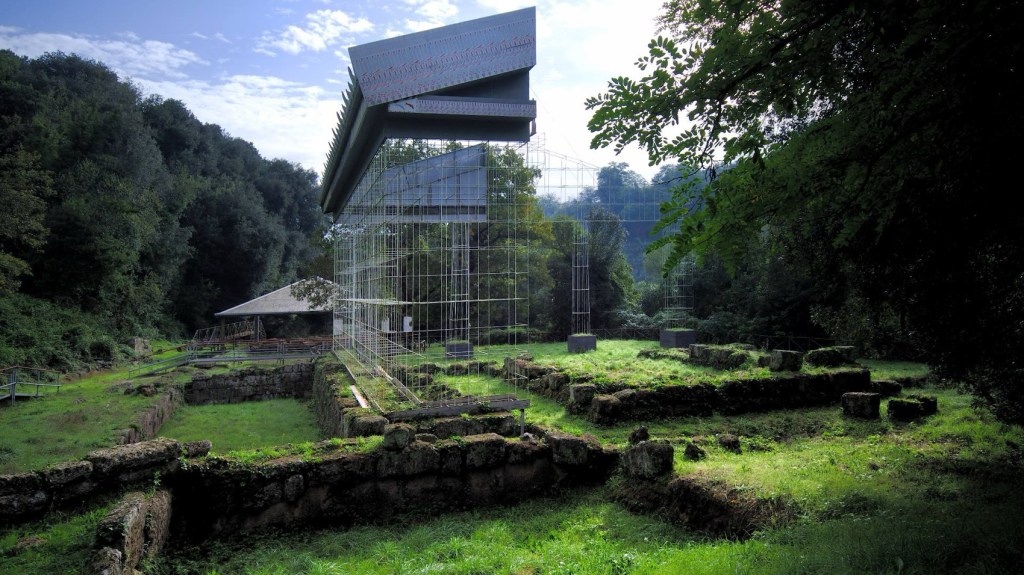
Sutri Necropolis Mostly fields and forests walking with refreshing stops at Monte Gelato and Monterossi. Bearing in mind that it is Sunday,best to take plenty of water/snacks just in case bars are closed.Apparently Campagnano is a small town typical of Lazio,full of life in the evenings,particularly in the more modern piazza just outside the Porta Romano gates.Sutri’s Ampitheatre is the departure point and once again we are presented with the dilemma of a choice of routes. A quieter exit along Via Dei Creti which adds 3.2 KM to what is already a longish day, or to keep to the official route by turning right just after the Ampitheatre towards the SP40.
Shady forest trails.
We pass the National School of Golf,quite a contrast to the surrounding countryside and make our way towards Monterosi,slightly uphill.
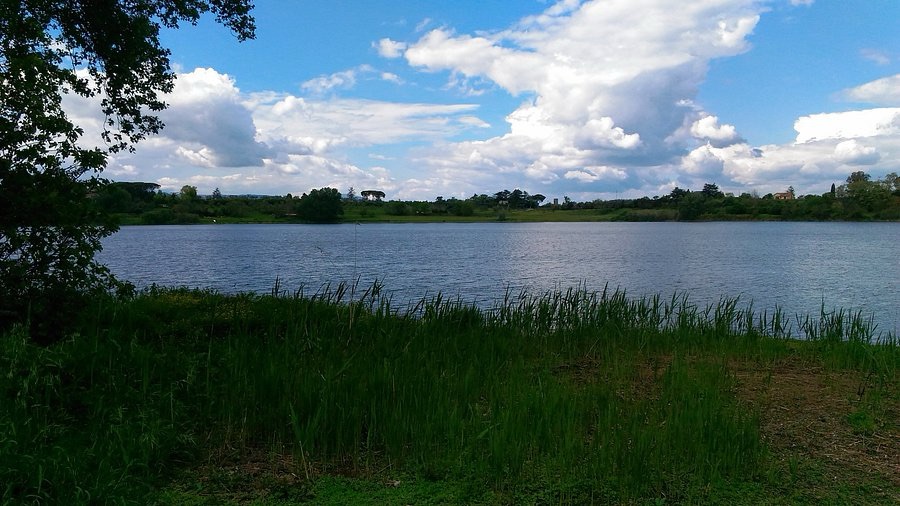
The town has a long and colourful history including invasions, papal interventions and assassinations. There is a small 30-hectare volcanic lake within the city limits.
Lago Monterosi.
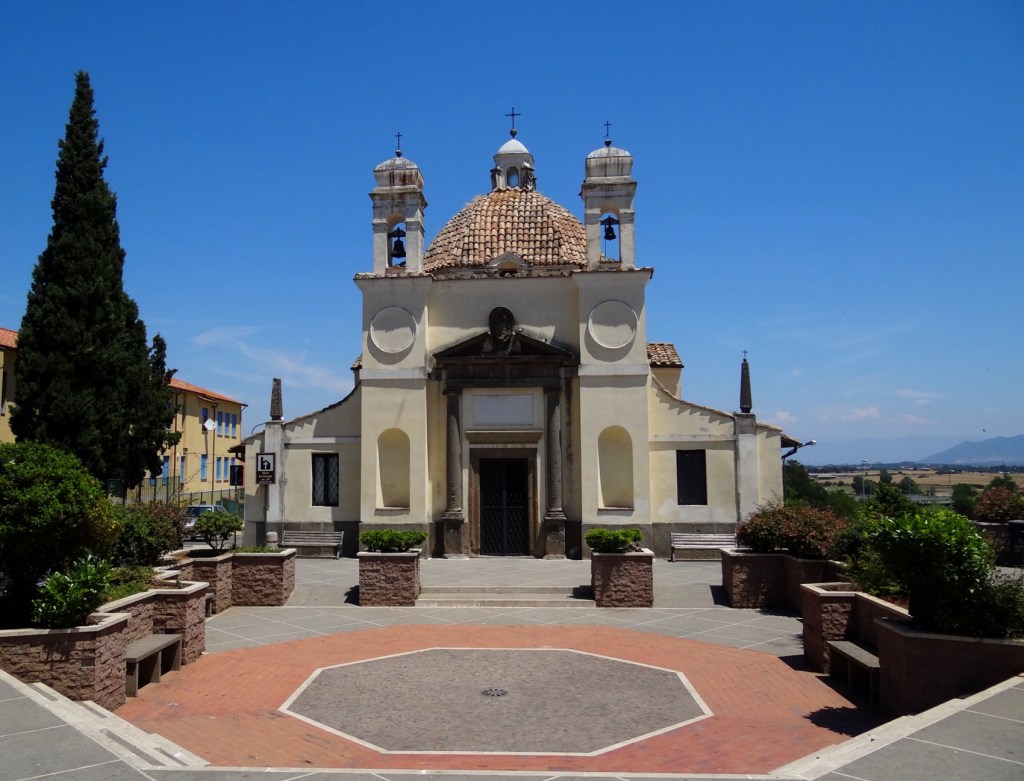
The unusual Renaissance-era Chapel of San GuiseppeHopefully it will be open .
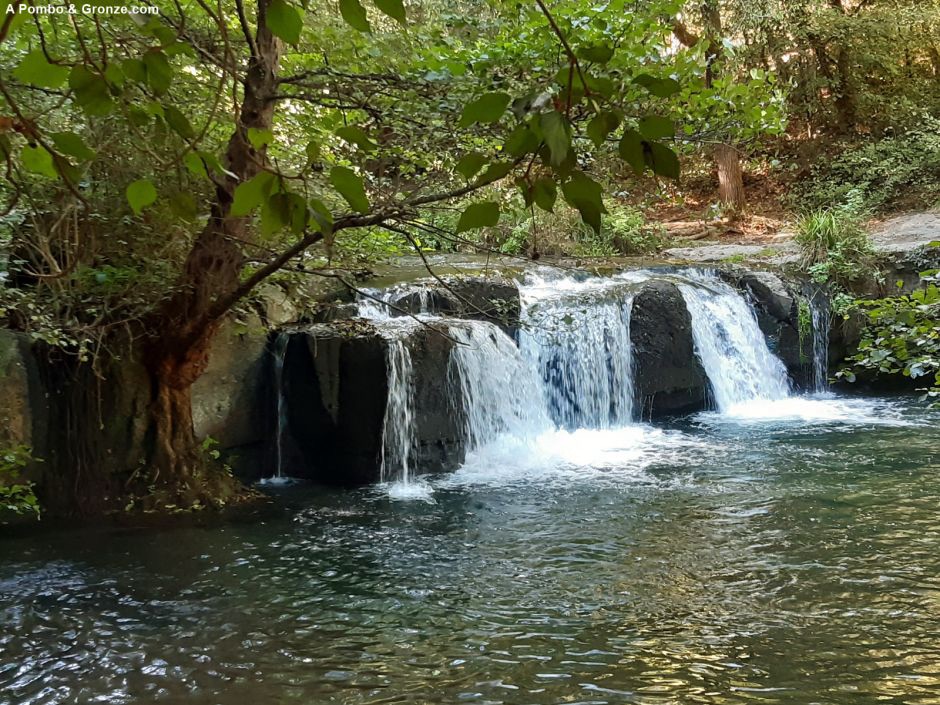
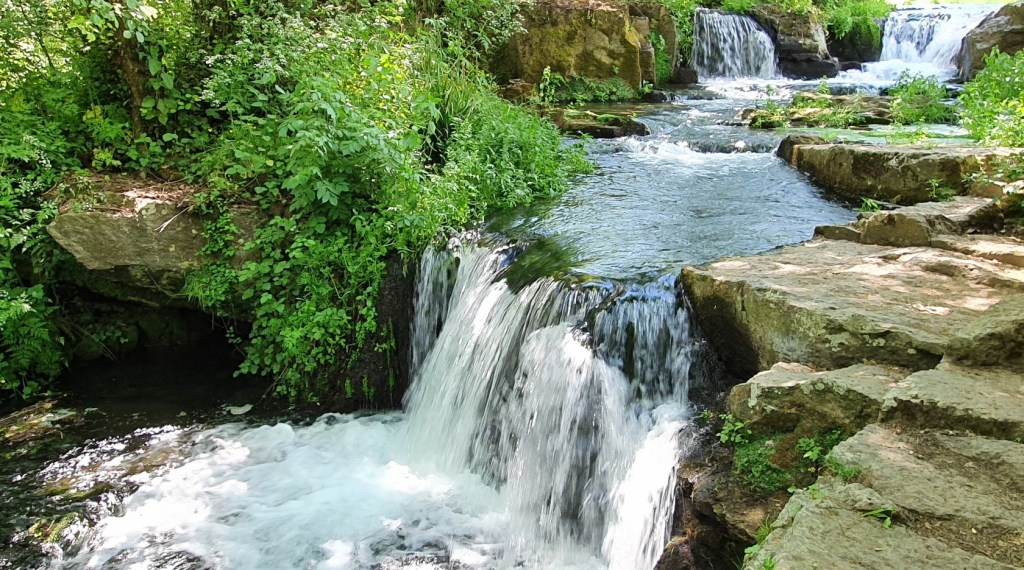
A straightforward route to the next stop of significance, Mont Gelato with its renowned waterfalls.
Monte Gelato Falls are a series of small waterfalls which form part of the Treja River and can be found in the Treji Valley Park. This is a popular picnic area at weekends,especially trippers from Rome.
We fork left after the park and walk upwards along an asphalt road, through hazelnut orchards. We come close by the Vallelunga motor racing track ( No Italian drivers’ jokes please…oh go on then ). We descend to cross the bed of a season stream,running alongside the Parco Regionale Di Veio.
Today’s saunter, not unusually, ends with an uphill climb on switchbacks before sighting Campagnano.
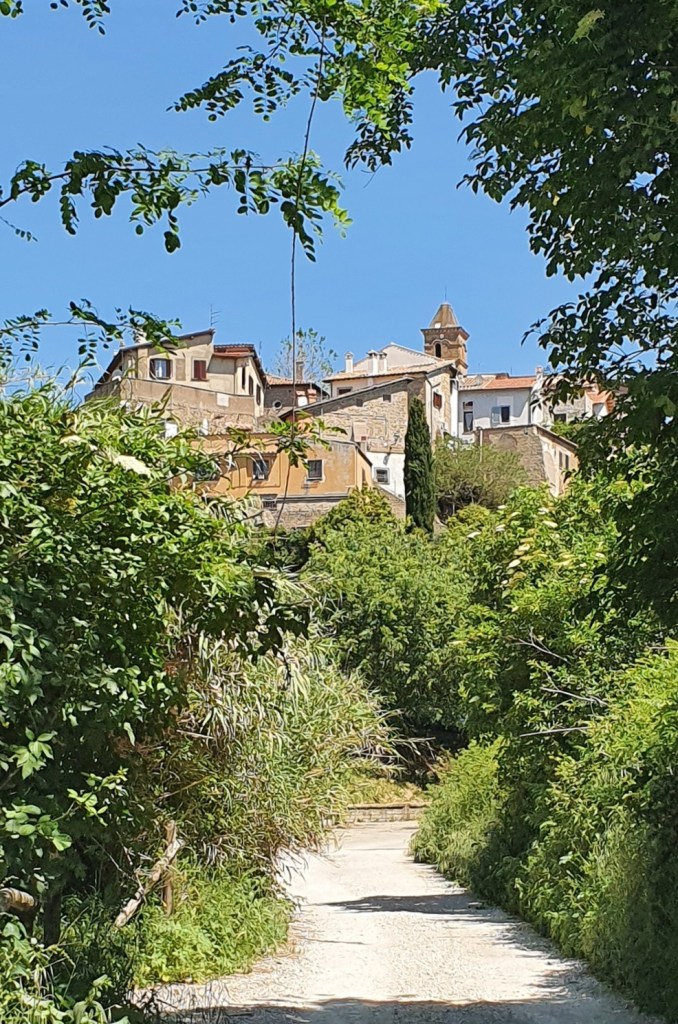
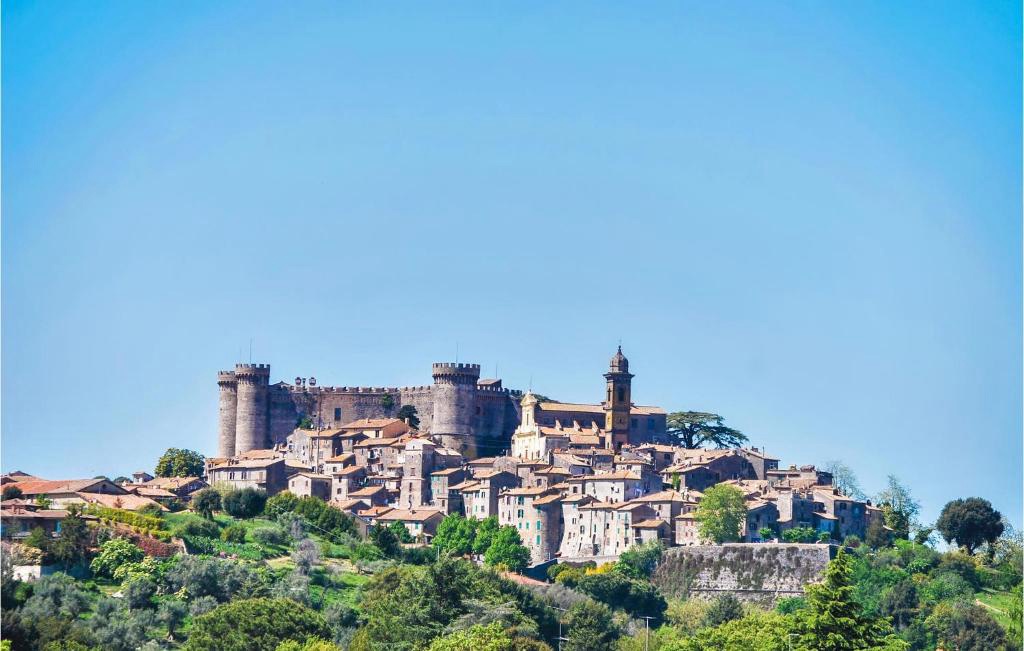
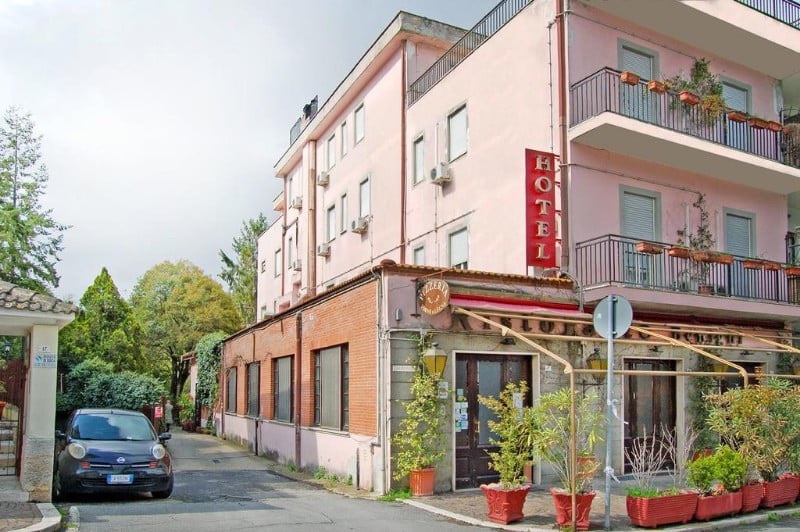
A pretty town in the gentle Lazio hills north of Rome, Campagnano di Roma retains the atmosphere of the Middle Ages. Its “medieval borgo” has towers and sinewy streets to enjoy, and the ancient Porta Roma, gateway into the city, still stands proudly next to the City Hall, and opens onto Corso Emanuele, the main street. It is lined with pastel palazzi, shops, eateries and coffee bars, before spilling out into Piazza Leonelli, with its fancy fountain by Vignoli in the middle guarded by an old clock tower. The Piazza della Fontana Secca, or dry fountain, features antique basins where spring water collected, both washing clothes. The church of San Giovanni Battisti was built in 1515 and features some fine frescoes. The archeological museum shows off artifacts found in the area, which was an Etruscan zone before being taken over by the Romans. The red town hall. In the evenings,people make for the Parco Pubblico, the centre of activity.ALBERGO BENIGNI Via della Vittoria 13, Campagnano di Roma
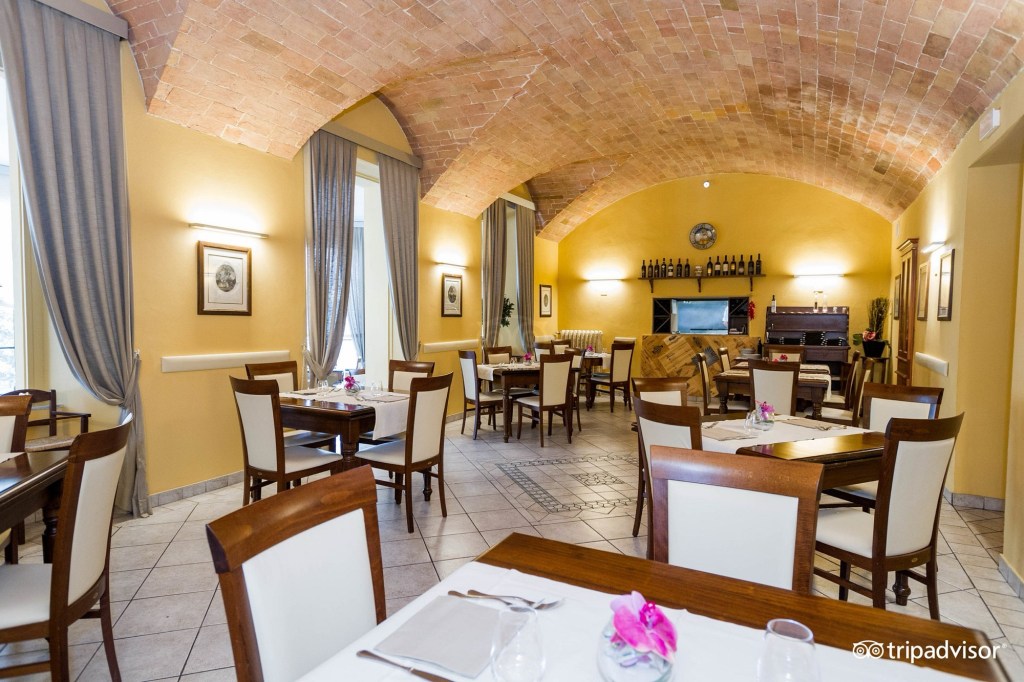
“An ancient restaurant, born in the early 1900s as a tavern-inn, expanded and renovated over time. Our cuisine is typically Roman, over time it develops and becomes more creative, reinterpreting traditional Roman-regional dishes.” HOTEL WEBSITE
RECENT REVIEW – A stop on the via francigena to room hotel in square in the newer side of town. WiFi excellent good shower comfortable bed etc. I had dinner in hotel very good meat cooked over charcoal Breakfast included all you need ham cheese etc





































 ensuitepilgrim's Blog