The Camino Spiritual Variant Signpost
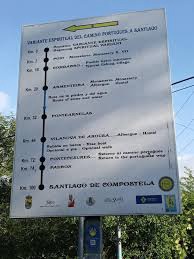
Located approximately 3 km (2 miles) north of Pontevedra, this signpost is a critical waypoint for pilgrims choosing to deviate from the main Central Route.
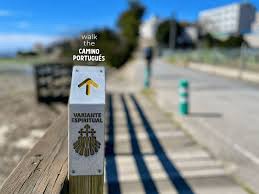
Visual Appearance: The turn-off is marked by a large information board on the left-hand side of the path. Along the route itself, you will find specific wooden signposts topped with a silver arrow and a scallop shell with a St. James cross.
What it Indicates: It marks the start of a three-day, ~74 km detour that follows the historical maritime path used to transport the remains of St. James to Santiago.
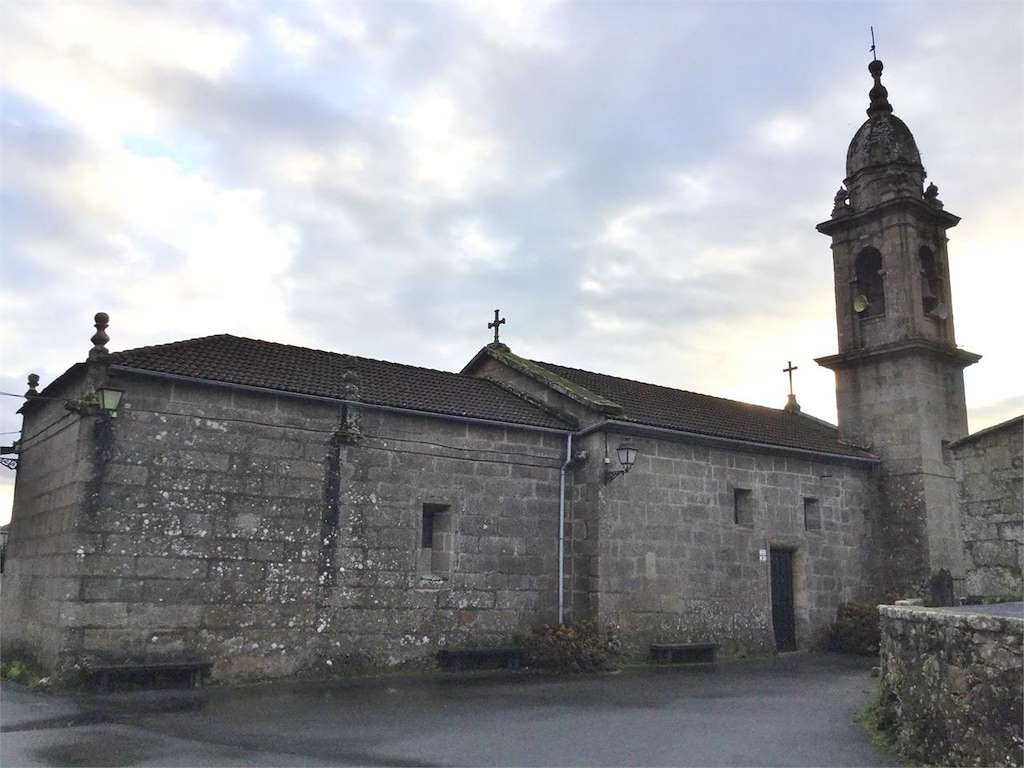
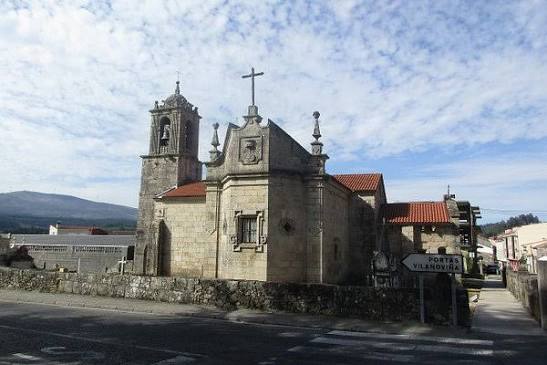
At first glance, it may seem like just another church along the Camino, but we may wish to take a little detour here and go treasure hunting
While much of the current structure dates to the 18th century, its history stretches back to the Middle Ages. On the north side of the church, near the bell tower, you’ll find an epigraph carved into a single stone, which hints at a more ancient past.
The inscription mentions Diego, Bishop of Compostela, and an abbot named Peter. Scholars debate its exact meaning, with some suggesting it could date as far back as the 10th century. Either way, it’s an intriguing find and worth a minute or two exploring.
Just beyond the church you’ll also find the Cruceiro de Santa María de Alba, one of the many Galician stone crosses. These cruceiros are often found at crossroads, churchyards, or other prominent locations. They act as markers of faith, offering protection to travellers and serving as waypoints; perhaps the Middle Ages version of our yellow arrows.
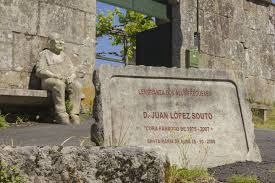
Pilgrim Monument.
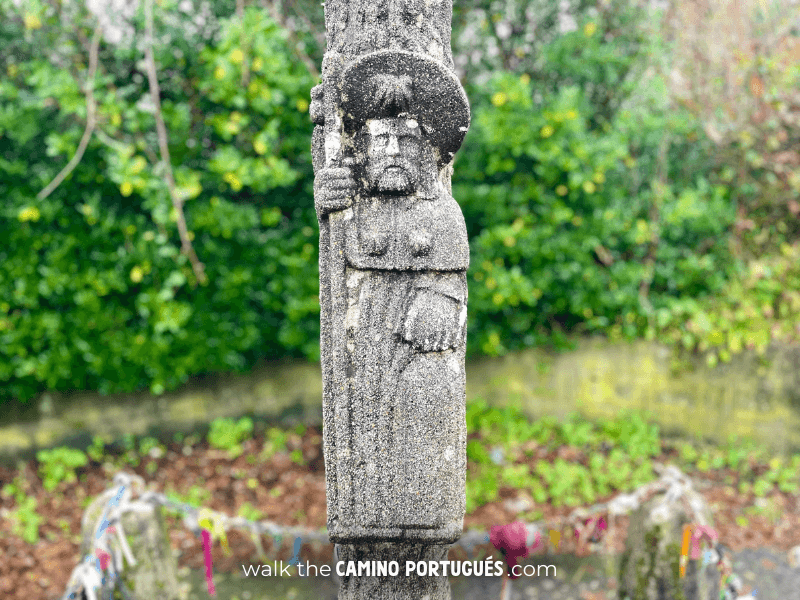
Saint James on a historic cross outside the Iglesia de Santa María de Alba
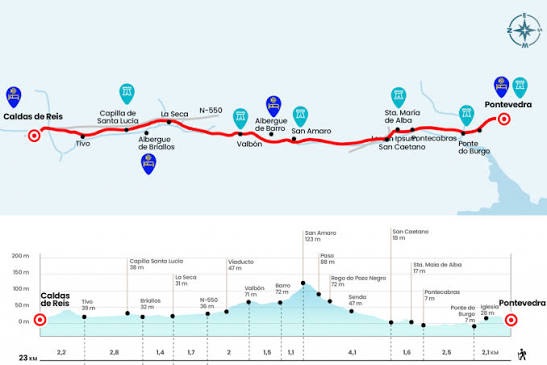
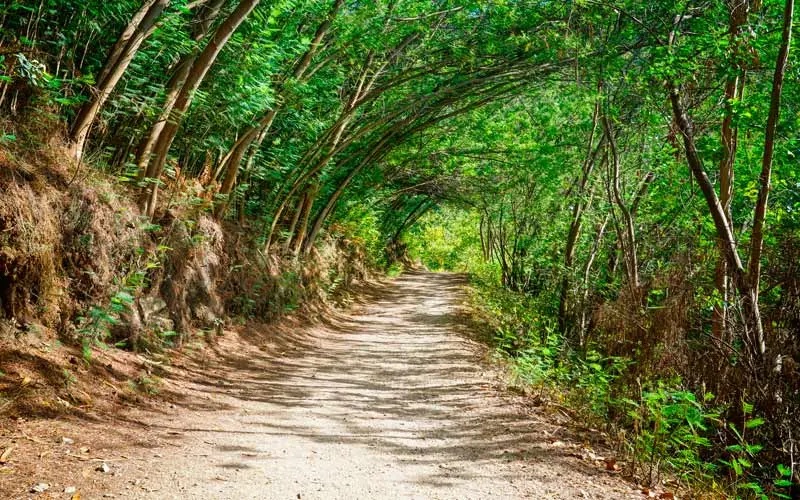
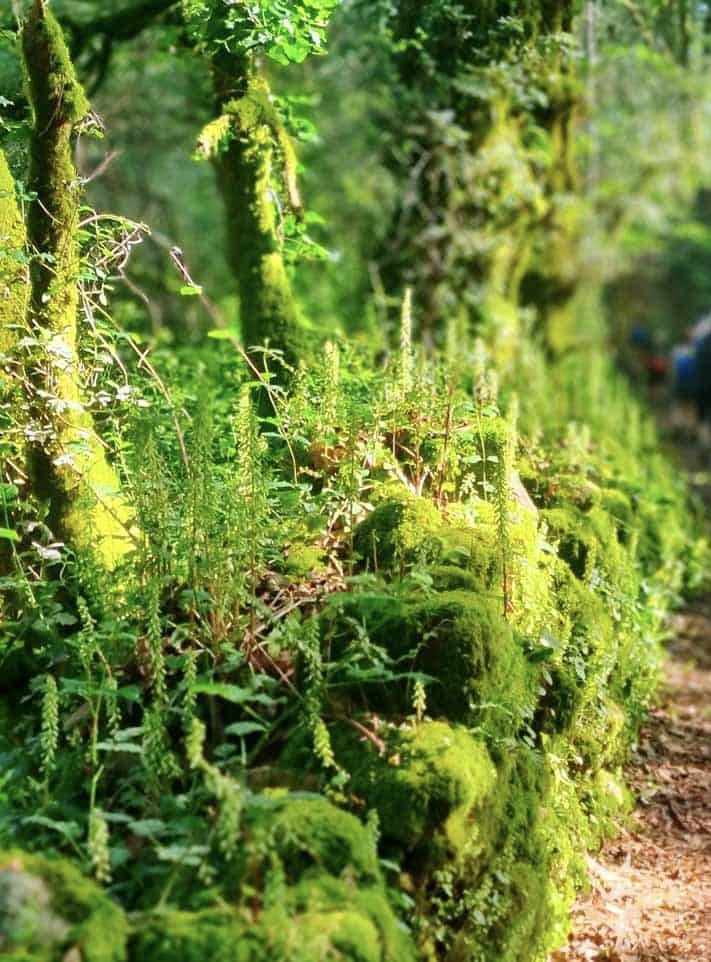
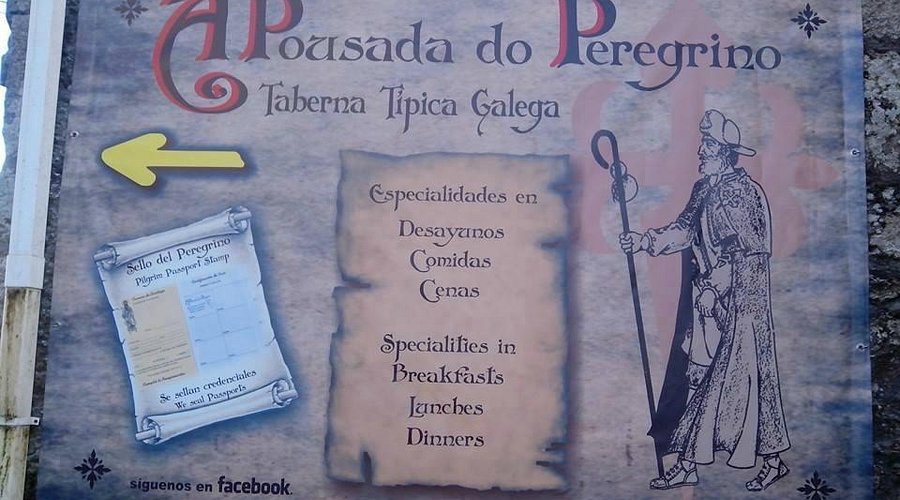
The route continues passing close by two cafes, Bubela and A Canota. Then a pleasant stretch that runs alongside the rail line through dense woodlands.
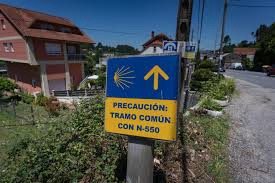
From here we reach the cross-cross part along the N-550; we follow the the yellow fleches, directing us on and off the highway ( onto safer roads ).
We then come to Briallos
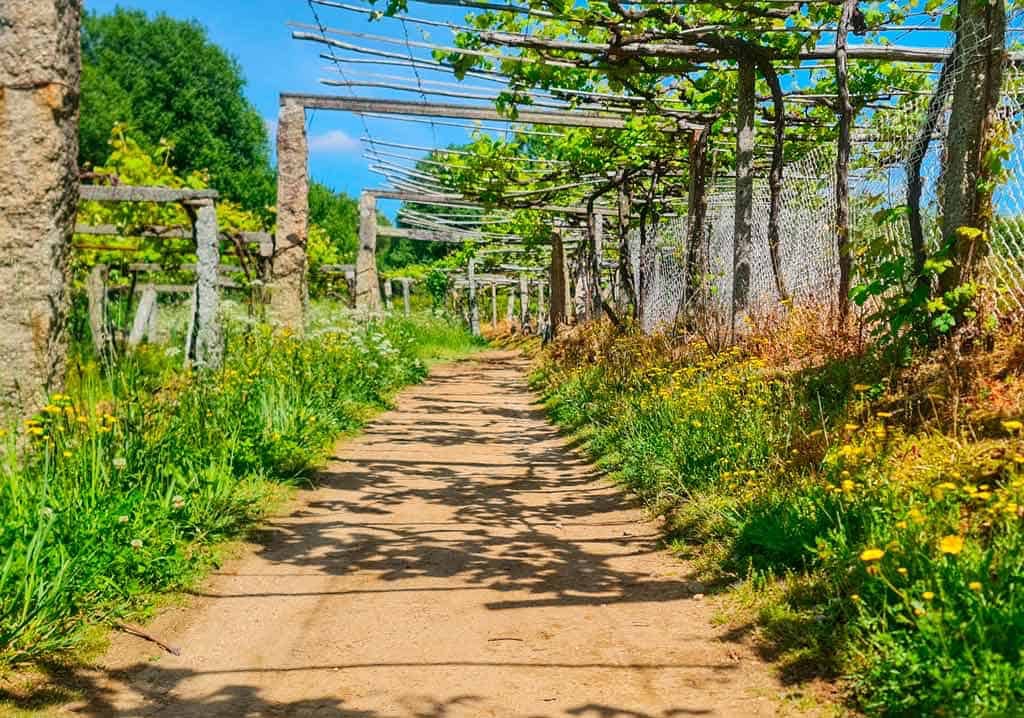
As we walk today, we shall pass rows and rows of vines supported by sturdy granite poles. This traditional system, known as emparrado, is a distinctive feature of Galicia. The elevated trellises help vines thrive in the area’s rainy, humid climate. The height improves air circulation, reducing the risk of fungal diseases, while ensuring the grapes receive the sunlight needed to ripen.
The granite poles, abundant in this rocky region, are also resistant to the elements; and they’ve supported Galicia’s famous Albariño vines for generations.
This is unmistakably wine country, with rows of vines supported by the iconic granite poles. The region is part of the Rías Baixas Denomination of Origin (DO) and is particularly celebrated for its Albariño white wines.
After walking through the tiny hamlet of Tivo, passing a fountain and a Cruceiro, we are back on the N -550 and will soon cross over the river Umia into Caldas de Reis. There is a renowned Taberna here ,where I have had dinner twice over the years.
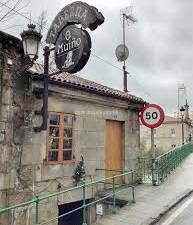
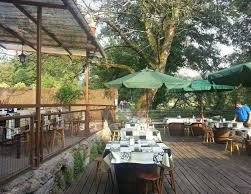
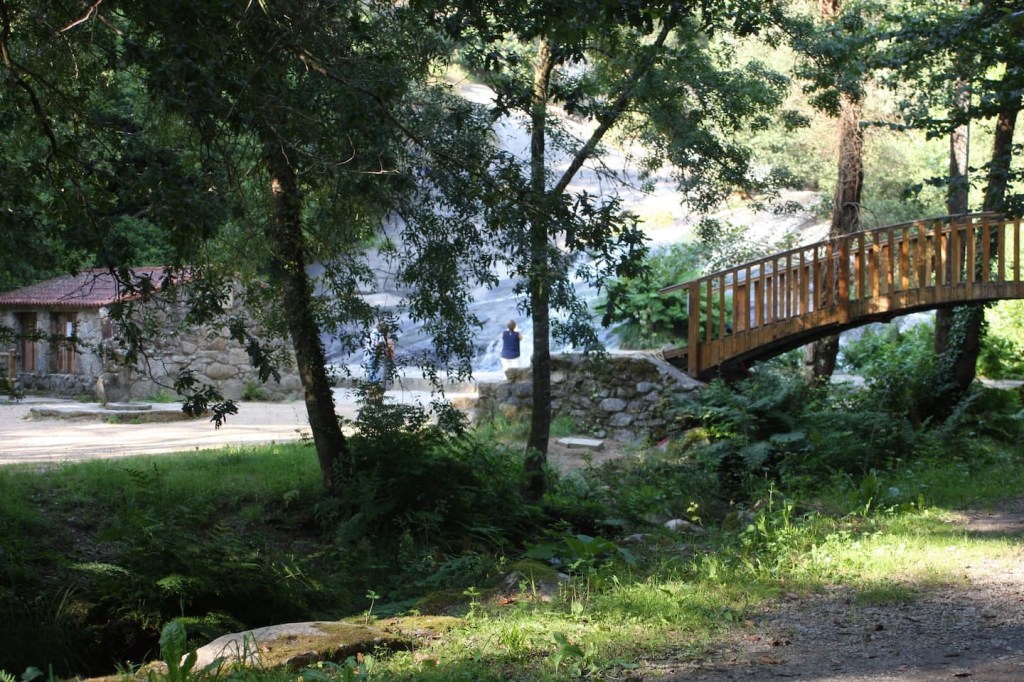
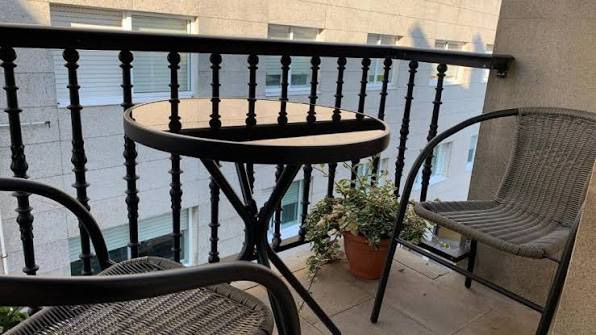
Ratings about Casa Da Alfóndega
9.8
Excellent
Based on 141 reviews
CALDAS de REIS
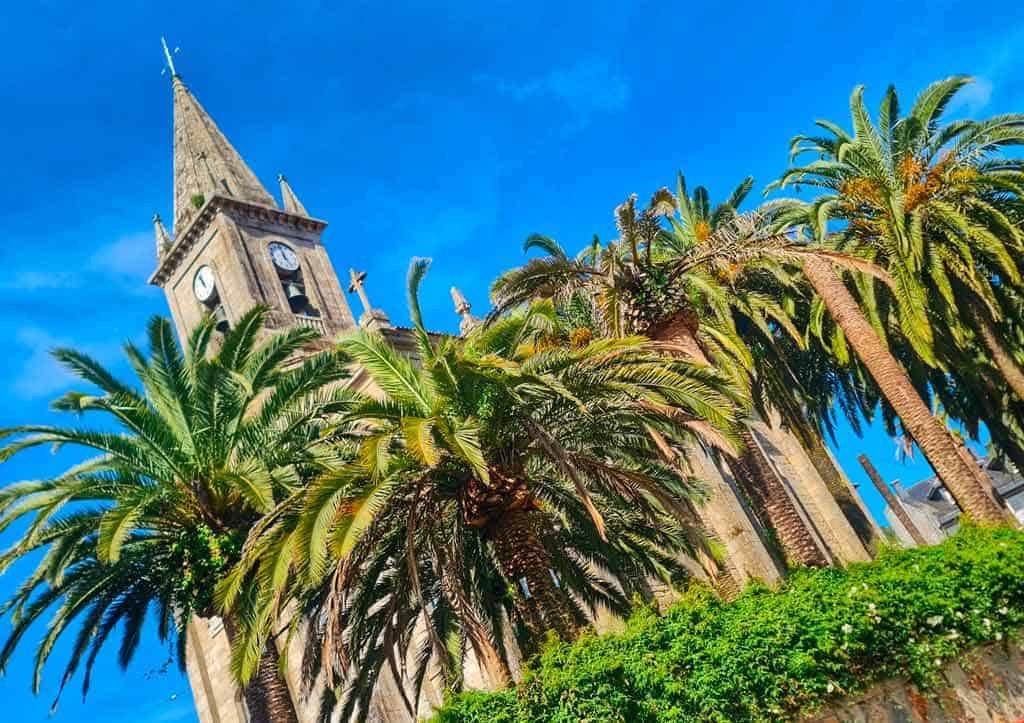
Another famous church
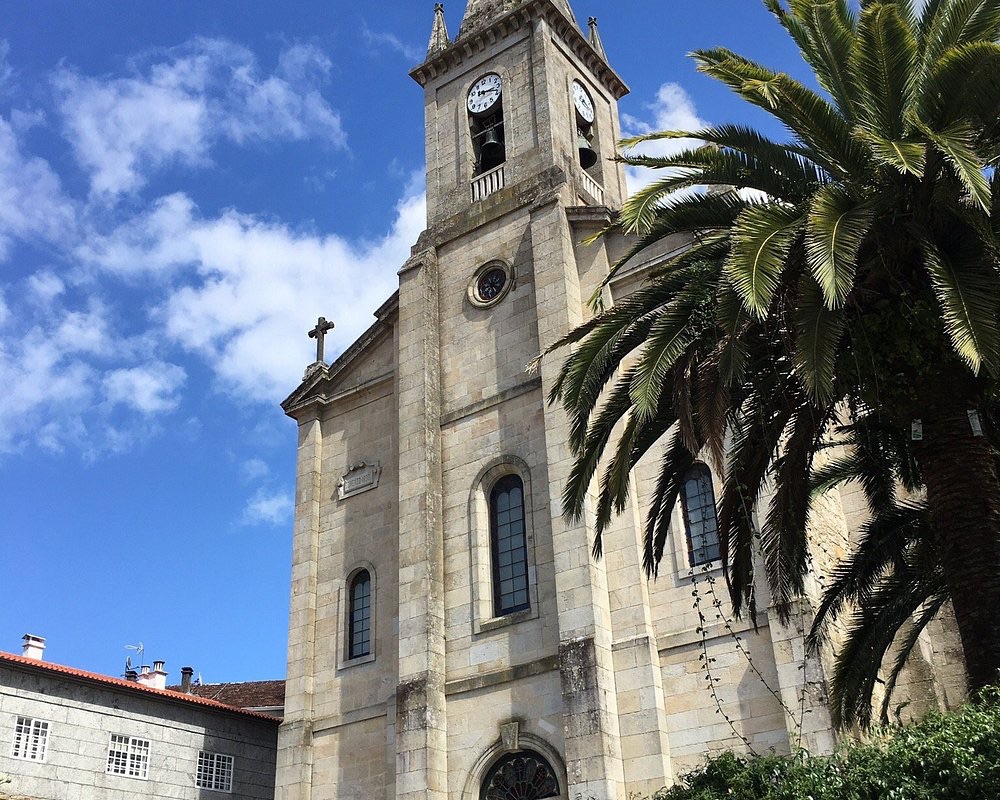
The Church of St Thomas A Beckett. Rare to find a church dedicated to this famous English saint in Spain, but it is believed he made the pilgrimage to Santiago de Compostela
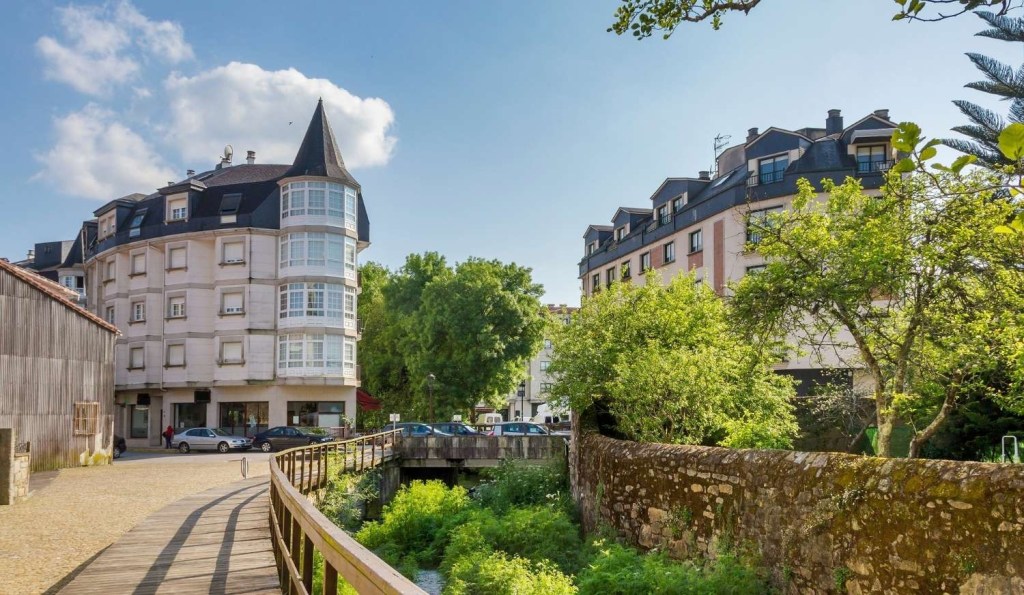
Caldas de Reis is a small corner of Galicia famous for its thermal baths. The water, famous for its healing properties, offers relief for the body and spirit for those who come to visit. These waters are Caldas de Reis’ most precious resource and the driving force behind its development. The history of Caldas de Reis goes back to several centuries, being numerous cultures that have inhabited this corner of Galicia. People like the Cilenos, the Galaicos or the Celts already inhabited these lands before the arrival of the Romans. From this period is the famous Tesouro de Caldas de Reis found in 1940 and that according to studies is preserved from the Bronze Age. But it was not until the arrival of the Romans that this town experienced its true commercial and cultural explosion. Today the main attractions of the city date from this period.
Termalismo
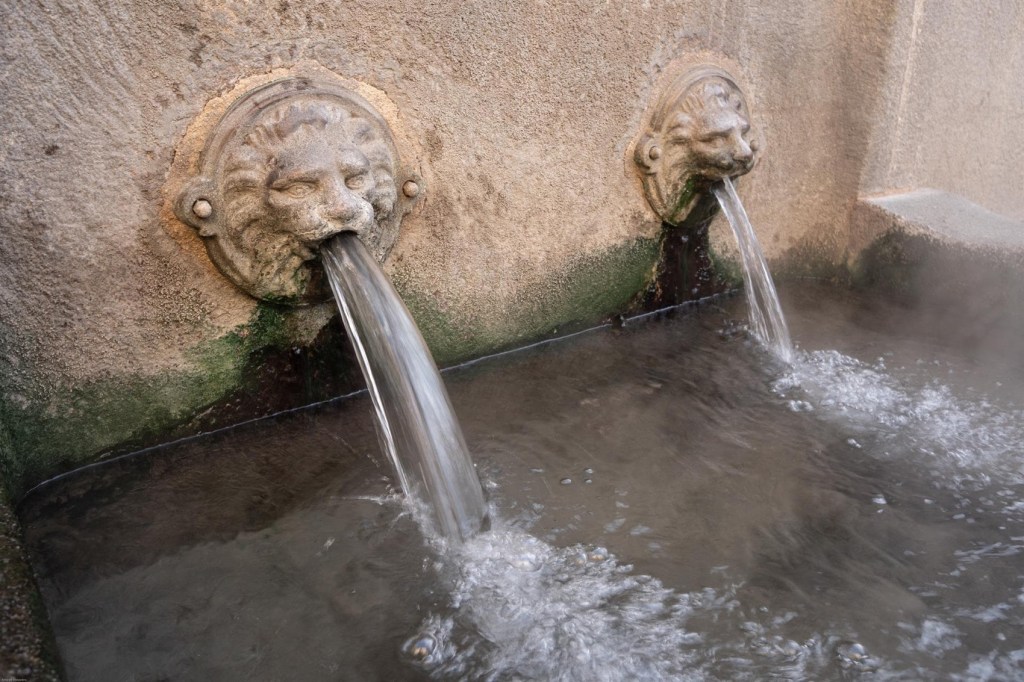
The locality has waters with highly curative properties, which belong to the group of hyperthermal waters. They are very suitable for treating respiratory tract disorders, rheumatism, skin problems and gynecological and surgical conditions.
The public spring of Las Burgas is suitable for hydropinic, a treatment characterized by ingesting water orally, often for therapeutic purposes.
It should be noted that the thermal village is home to two spas, the Acuña Spa, which is located in a building typical of the Galician style of the twentieth century, and the Dávila Spa, which has a wonderful reedbed populated with bamboo canes very unique.
https://music.youtube.com/watch?v=ut_KOPe7Oyg&si=Qq7LIQT_U86rJlbs
“ Healing Waters” by Michelle Tumes :-
I’ve built a bridge
All of my strength cannot cross over
I stand at the edge
The end of a road that I have followed
Sinking from the weight of my own world
Wanting the waves of Your ways to wash my feet
Healing waters
Healing waters
Solace flows through the river of forgiveness to my soul
Oh, I need You
Healing waters
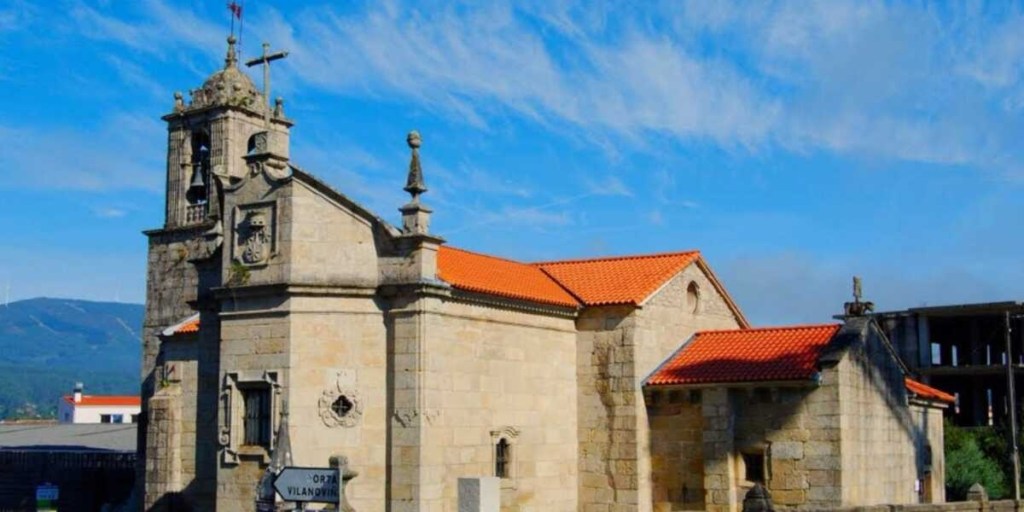
Built after the original was destroyed in the period of Almanzor, throughout its history, this church has undergone several modifications. It features a beautiful cover of the twelfth century, and the chapels of San Diego and Del Carmen dating from the seventeenth and eighteenth centuries.
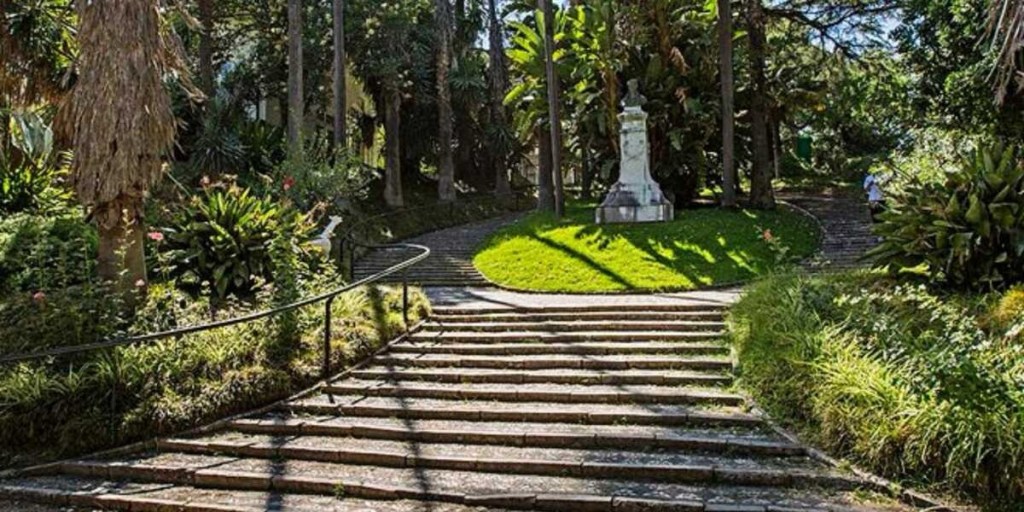
Botanical Garden and “carballeira”.
This beautiful place, dating back to the 14th century, is connected to the thermal culture of Caldas de Reis. It showcases different species of plants from the 5 continents. Besides, it highlights its collection of Camellias and its beautiful oak trees located parallel to the river.
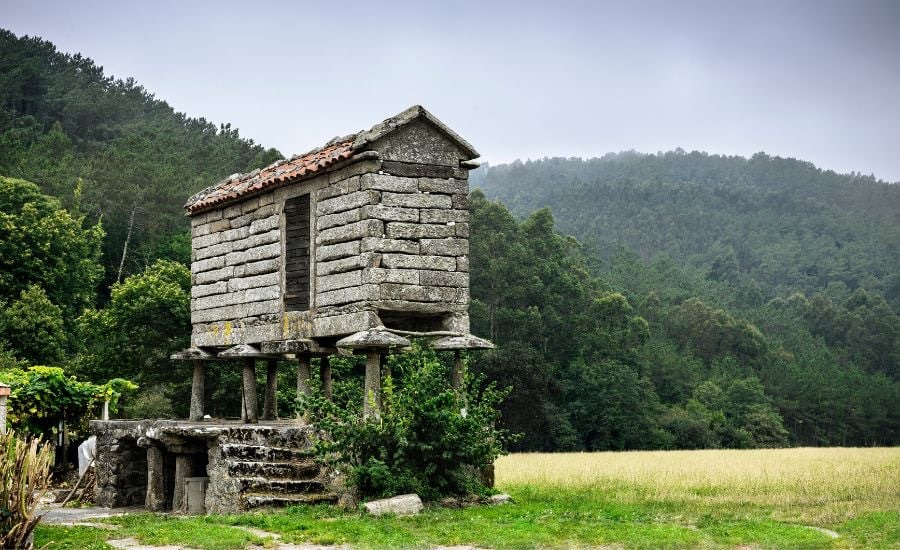
“It is your road, and yours alone. Others may walk with you, but no one can walk it for you”
44.7 KM TO SANTIAGO DE COMPOSTELA – TO GO…
 ensuitepilgrim's Blog
Thanks John! Am visiting Gran Canaria this week. Cheers Derm