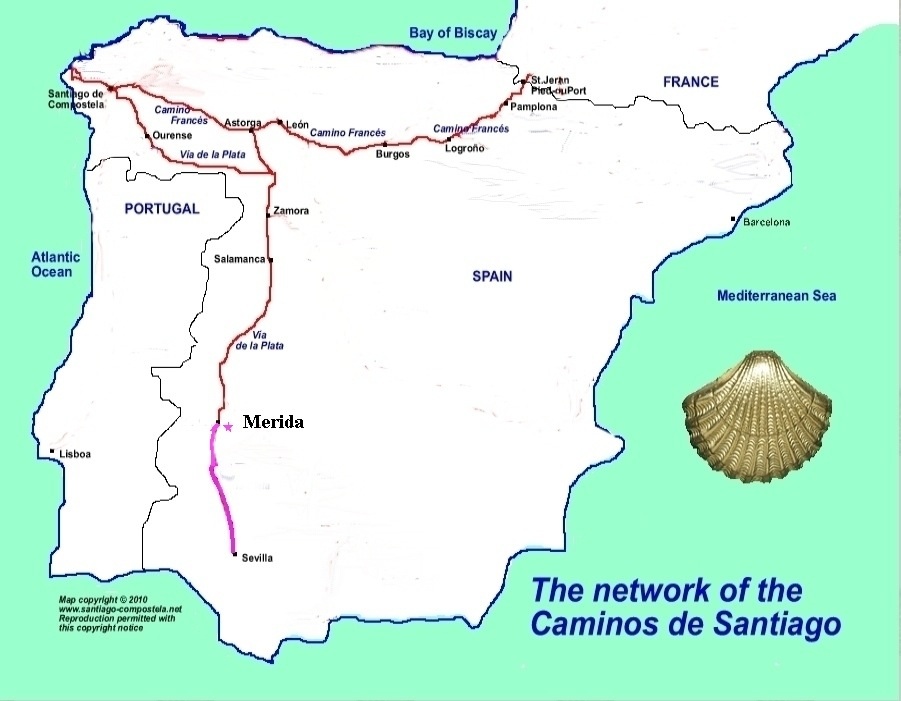
Awoke to another sunny morning . All ready for today’s saunter.
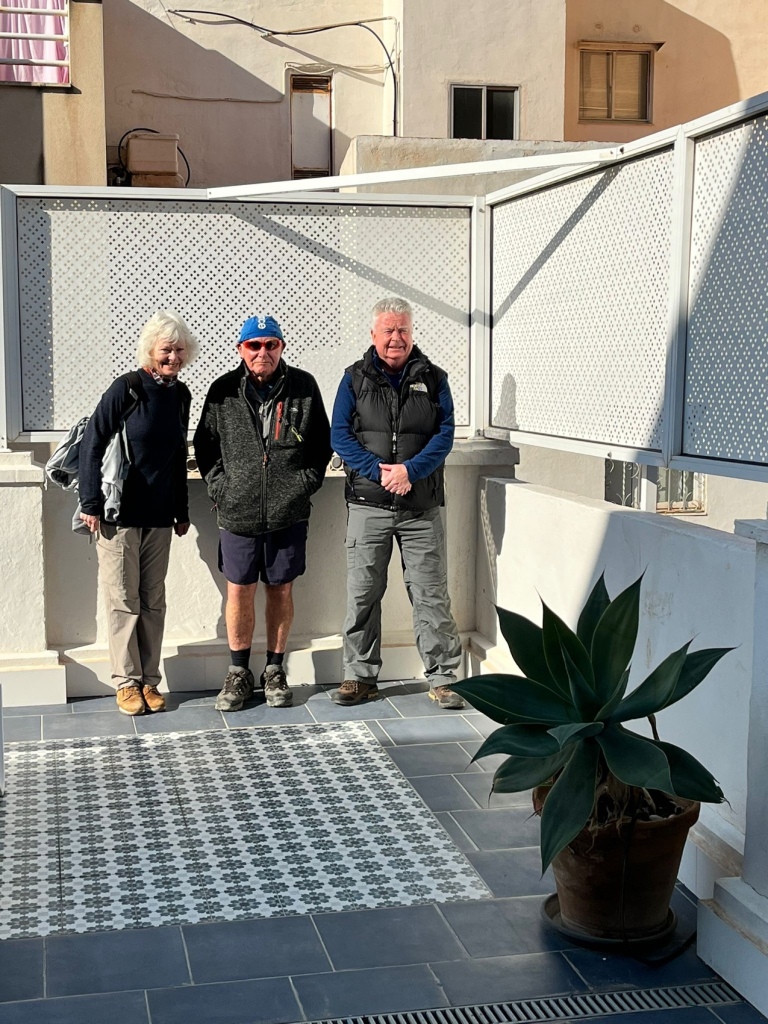
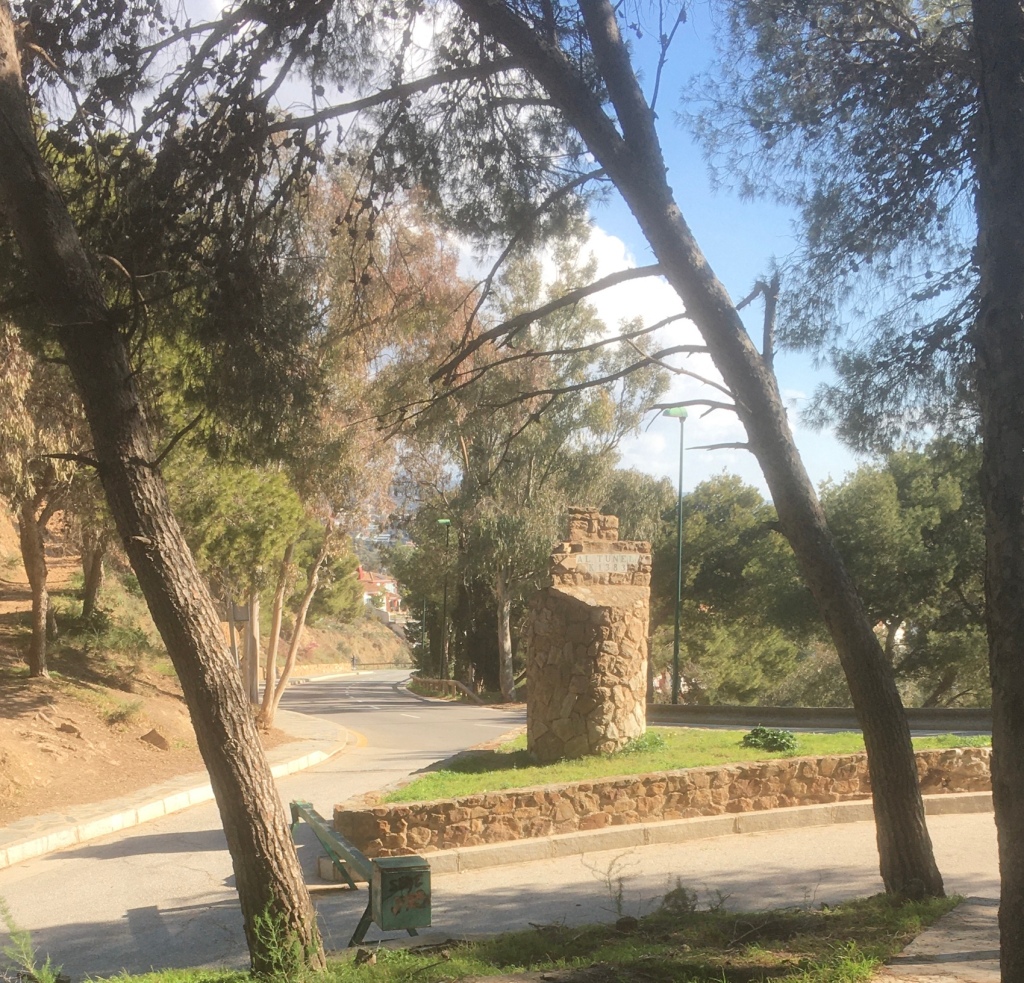
Leaving Plaza de Merced,we began a steady uphill walk.
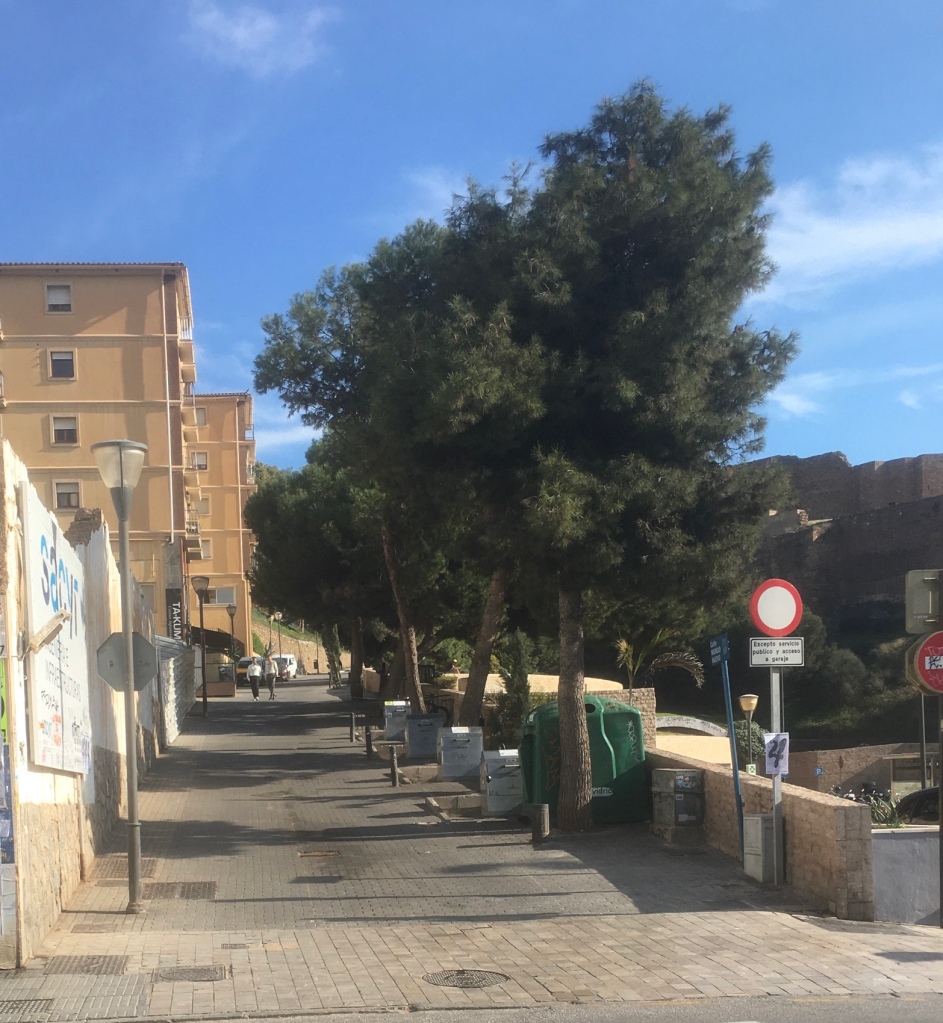
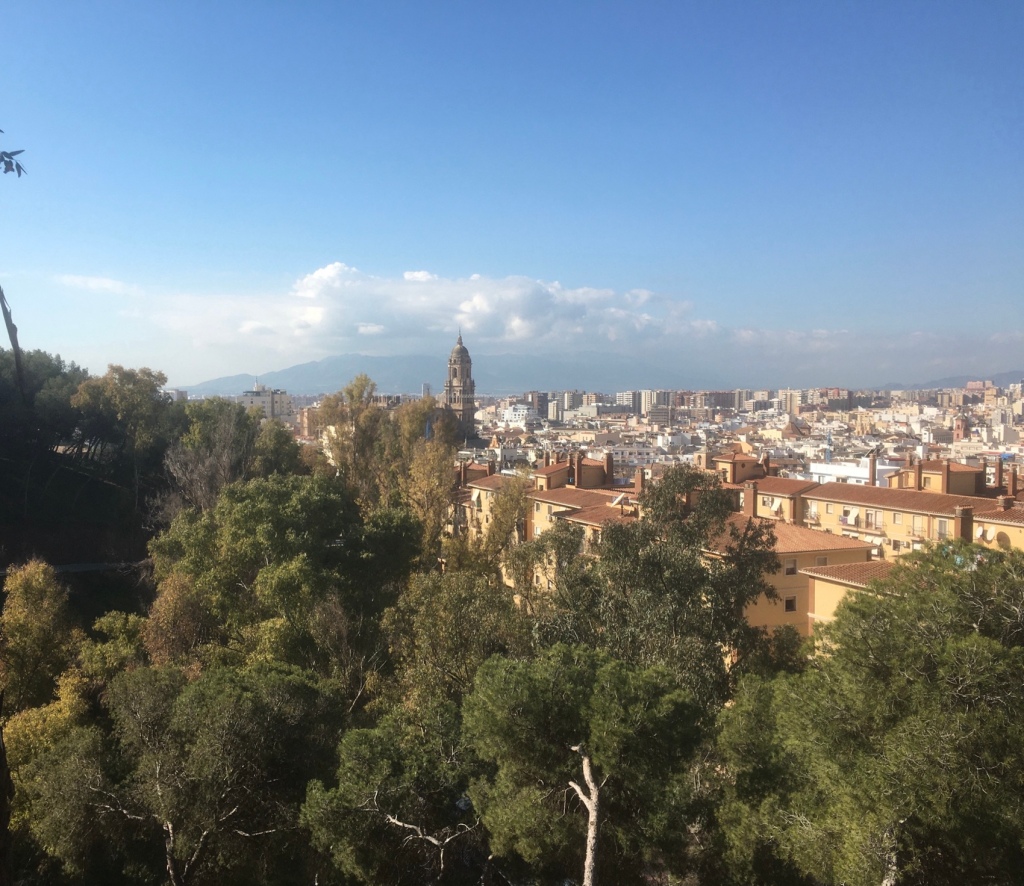
Nearing the top we were looking forward to coffee.



HISTORY OF GIBRALFARO CASTLE
It is a Muslim fortress built in the 14th century AD to house soldiers and to control access to the capital both by land and by sea, so its height, approximately 132m above sea level , was key. for said task.
It arose as a defensive support for the citadel, with which it was once linked through the outer passage of the coracha that today is inaccessible.
Its current nickname, “Gibralfaro” , derives from the Arabic word “Jabal-Faruk” (mount of the lighthouse), and it is that the Phoenicians, the first settlers of Malaga, also took this mountain as a settlement and established the lighthouse on its top. gets name
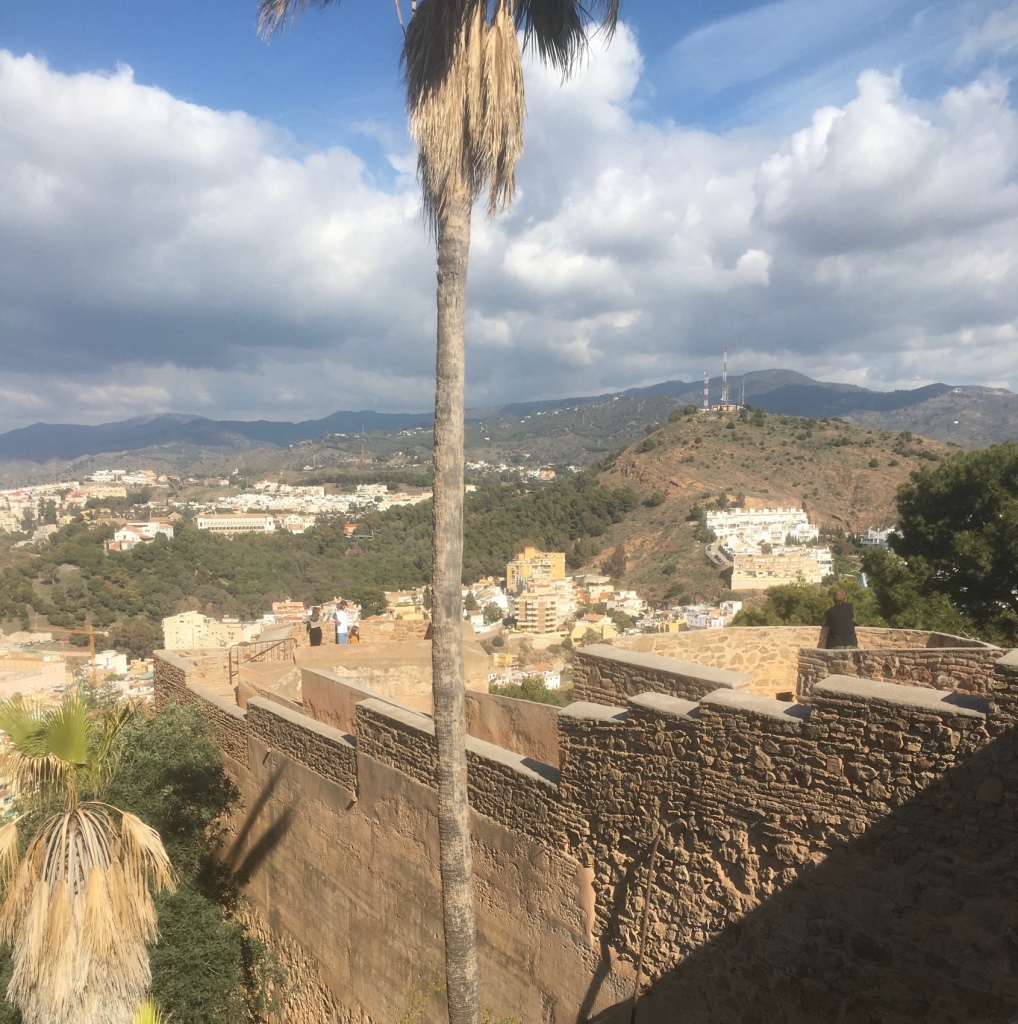
A fascinating remnant of Malaga’s Islamic past are the sheer walls of Gibralfaro Castle , spectacularly perched high on the hill overlooking the city. Built by Abd al-Rahman I, Cordovan emir from the 8th century and rebuilt later in the 14th century, when Málaga was the main port of the emirate of Granada .
Gibralfaro Castle , also called Castillo de Málaga , is particularly notable for its twin centers: the castle garrison built on top of a rocky hill overlooking the city and the fortified Islamic Palace or Alcazaba, situated at the foot of the hill, both connected by a defensive back.
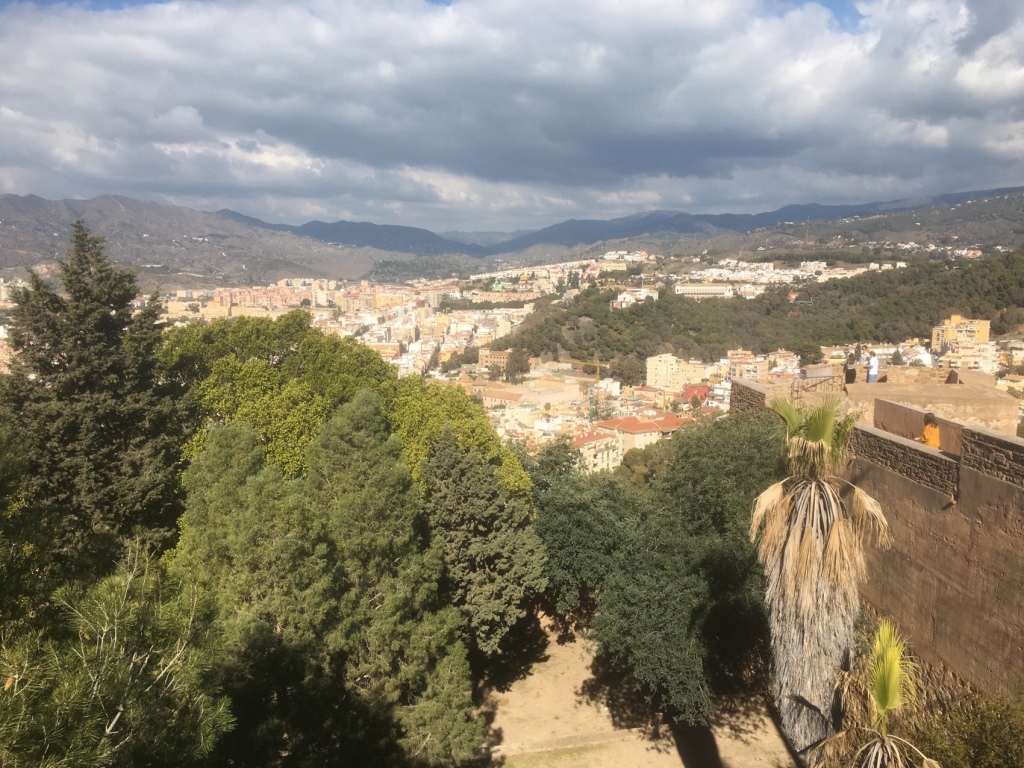
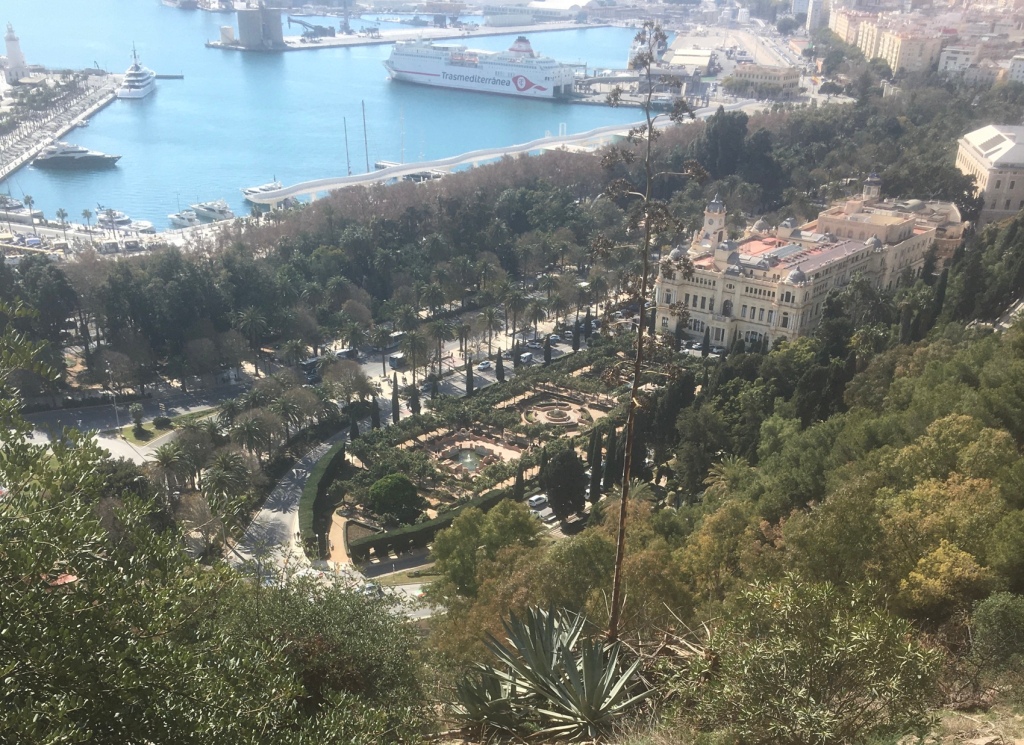
The Gibralfaro fortress dominates the entire city, and is located on the crest of a long hill located 132 m. above sea level, whose steep slopes descend towards the sea and towards the city. Since time immemorial, this fortress was the great watchtower not only to observe the population settled at the foot of its western slope, but also the accesses to it by land and sea.
Very few Arab remains are preserved inside the Castle due to its military use, and to the many interventions that occurred in Christian times, such as the disappearance of the mosque and dependencies. Later it was partly blown up by the French, together with the ammunition that they could not transport, when they left the city during the War of Independence. The powder magazine of the Castle is currently occupied by an Interpretation Center.
The castle is famous for the three-month siege in the summer of 1487 by the Catholic monarchs, Ferdinand and Isabella, after which Ferdinand occupied the site, while his queen took up residence in the town.
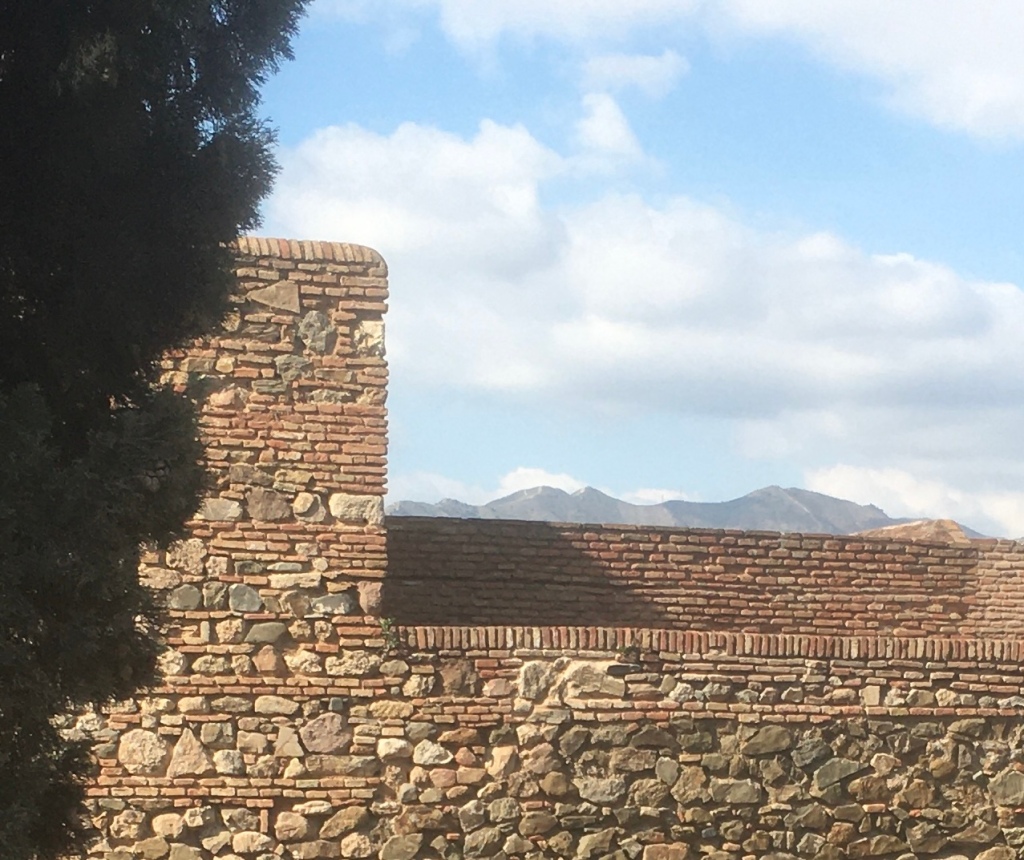
For a time, it was considered the most impregnable fortress on the Iberian peninsula. It has two lines of walls and eight towers.

What’s the meaning of Alcazaba?
The word Alcazaba comes from Arabic ‘AL-qasbah’ and refers to a fortification within a walled town.
The Alcazaba of Malaga is a fortress palace built between 1057 and 1063 by the Muslims and at the request of the king of Taifas Berber in Granada, which used elements of the ancient Roman theater that sits at the foot of the palace. Due to the Muslim origin of the Alcazaba, its name arises, which in Arabic takes the meaning of ‘citadel’
Built between 1057 and 1063 by the Moors, the Alcazaba of Malaga was, at its height, comparable to Granada’s Alhambra in terms of its splendour and the impressiveness of its fortifications.
The Alcazaba is located at the foot of Mount Gibralfaro and overlooks the city of Malaga. A huge citadel, it spanned 15,000 square meters. Its fortifications, which included double walls and 110 towers, guarded the harbour and the city from attack.
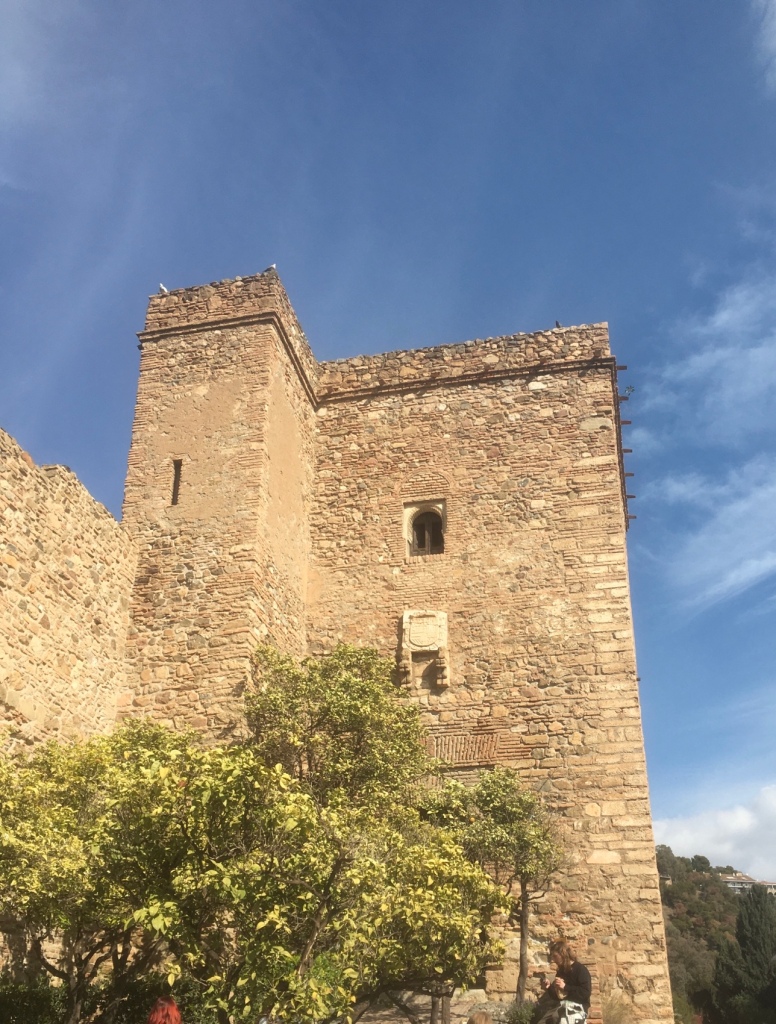
In addition to the impressiveness of its fortifications, the Alcazaba was also a palace. Within its walls were gardens, ponds, sumptuous halls, a deep well and a mosque.

The Alcazaba was put the to test in 1487 when the Catholic Monarchs tried to take Malaga. For four months the Muslim army, formed of 15,000 men (versus 80,000 Christians), resisted. Finally, having run out of provisions, they surrendered.
The Fortress was used by the Catholics after the takeover and was kept in good condition until the 17th century. At the time two events contributed to its deterioration: a severe earthquake in 1680 and the damage caused by an attack by French ships in 1693 (during the Nine Years’ War). After that, the fortress was used for various purposes including as a prison and a hospital.
In the 1930’s rehabilitation work began and the compound was declared Historical Heritage of Spain (now an Asset of Cultural Interest). The Alcazaba is today one of the most important Muslim works preserved in Spain.
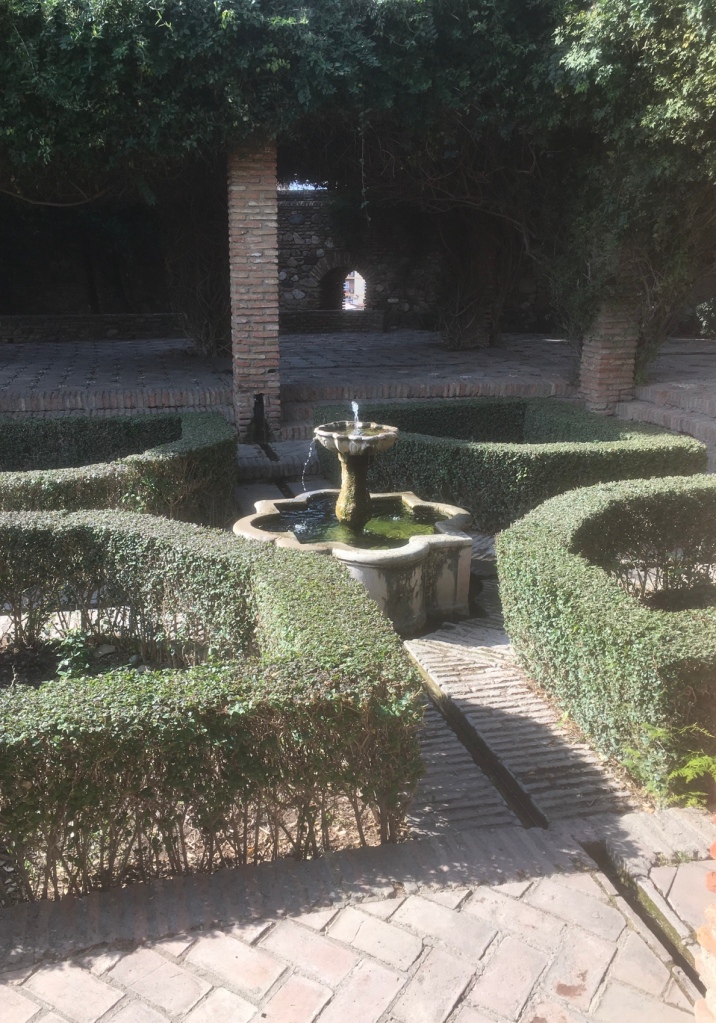
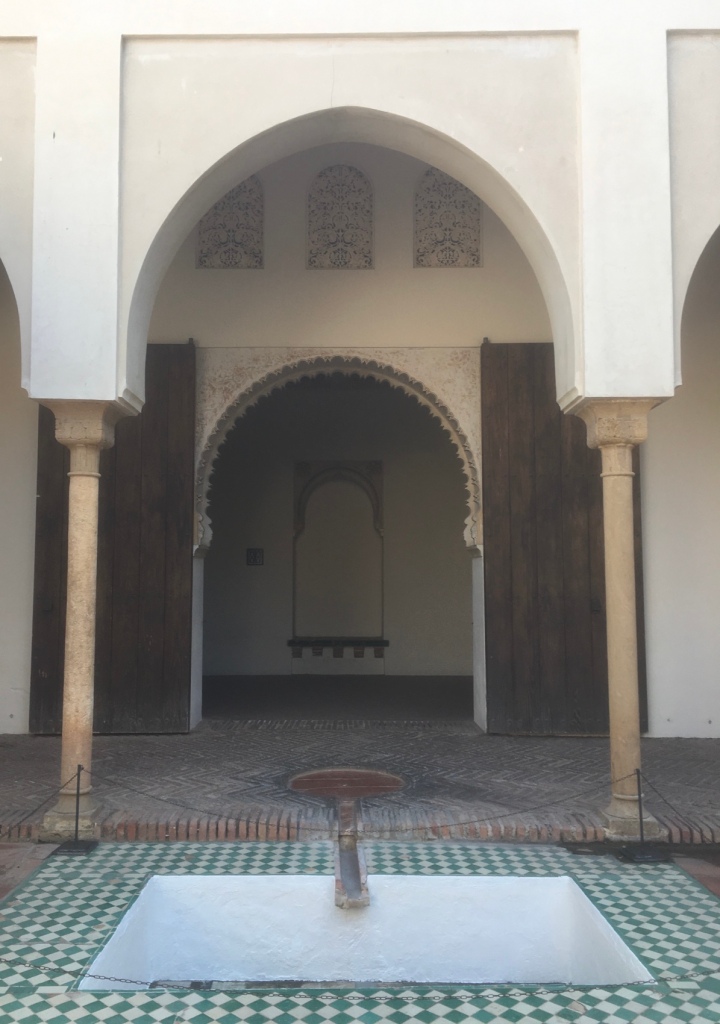
The almost constant features in the Alcazaba are those of water and shade.
The rivulets that ran through and across rooms and corridors reminded me of the Alhambra in Granada. These are distinctly Moorish designs and obviously appropriate to what are for most of the year very hot temperatures.
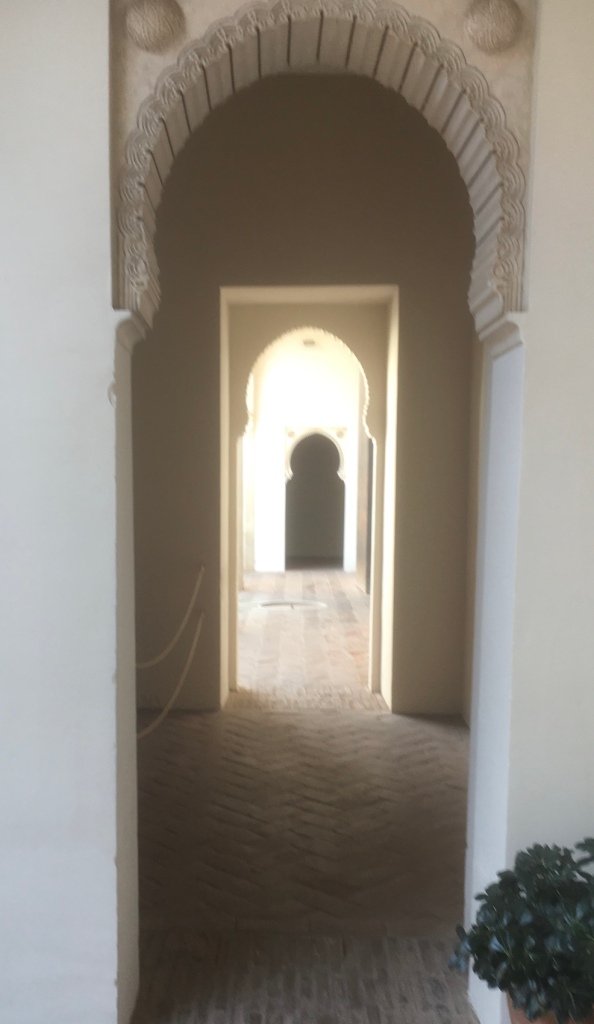
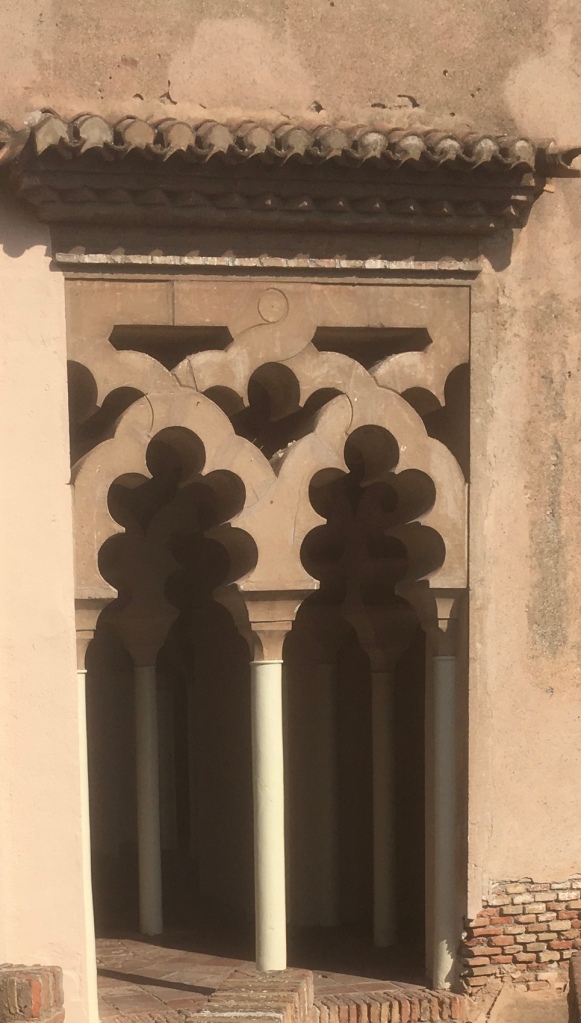
The other classic Moorish feature is that of design and artwork- none of it figurative; no statues nor pictures – but delicately patterned and repetitive.
The ceilings in particular are striking.
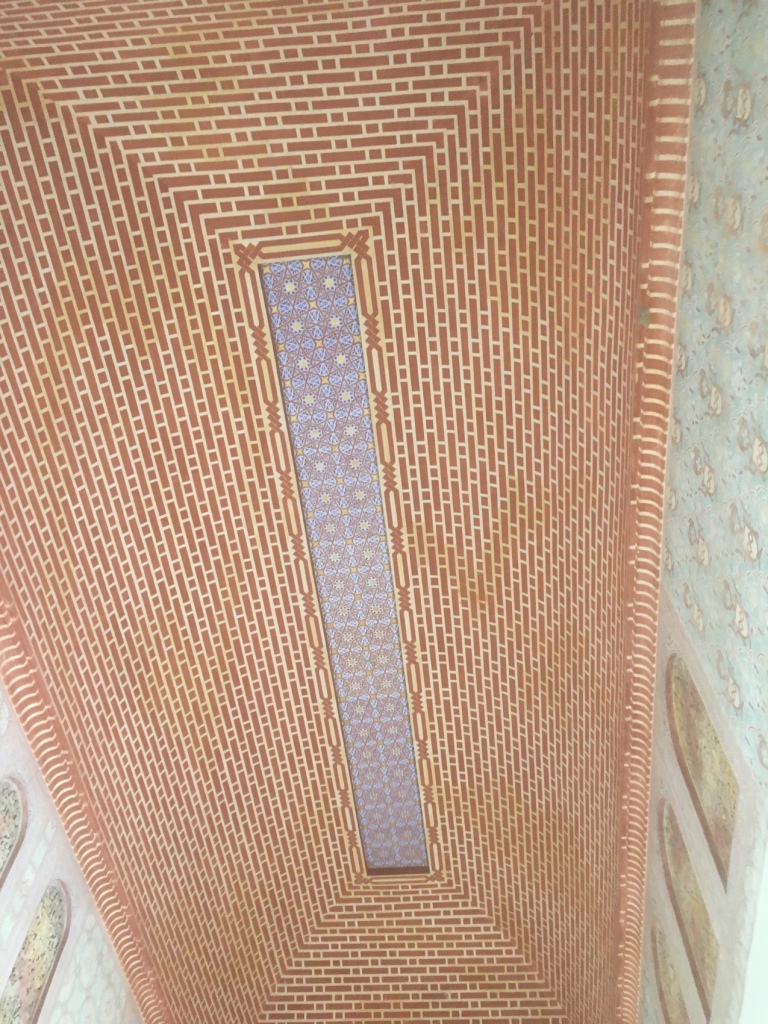

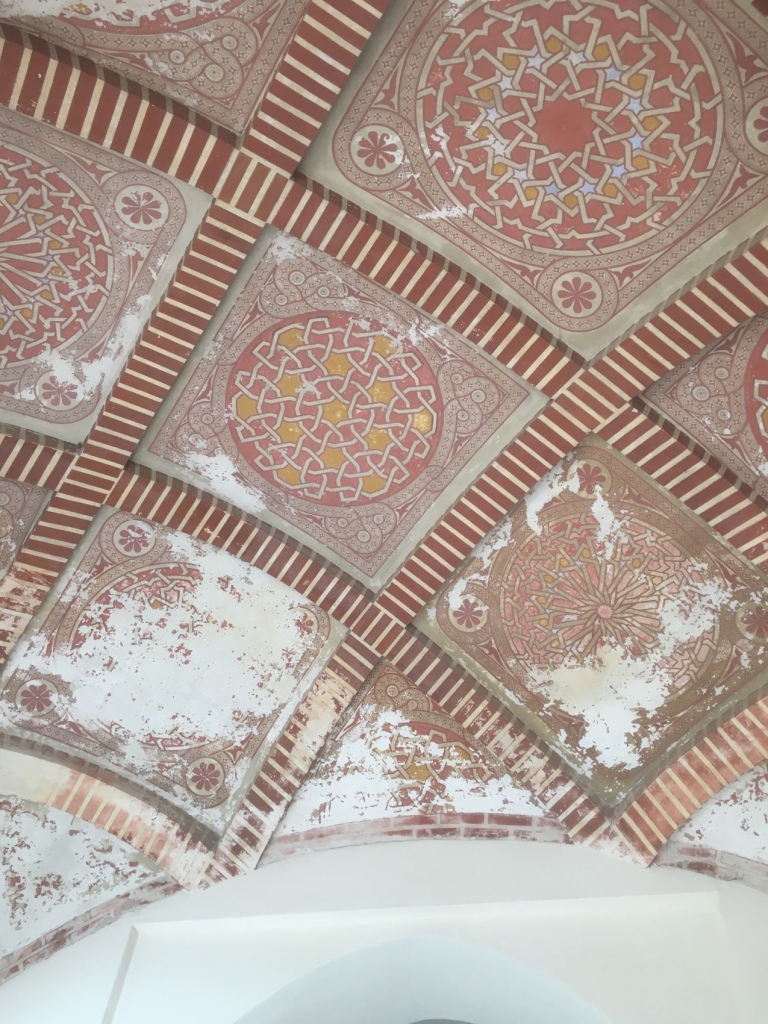
Some of the water features…
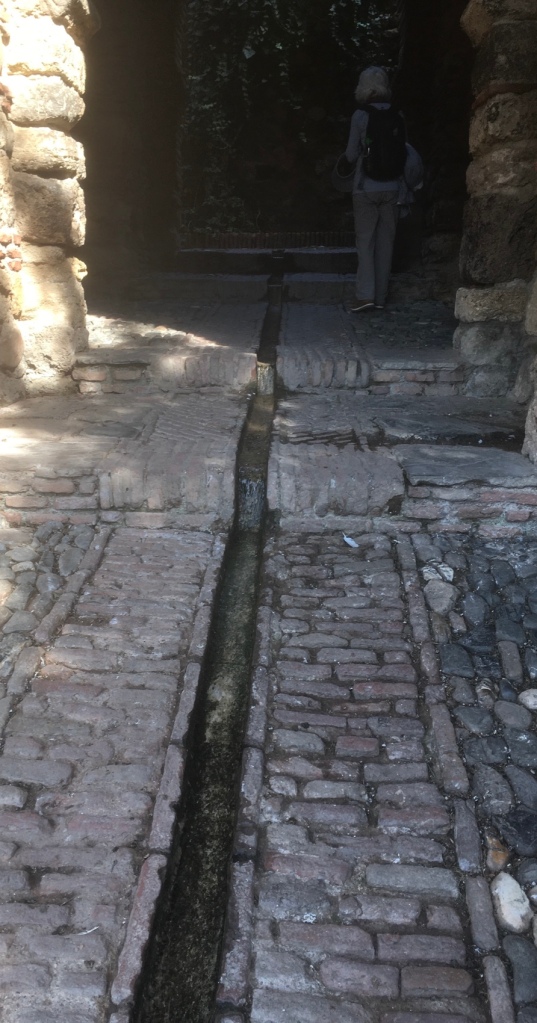
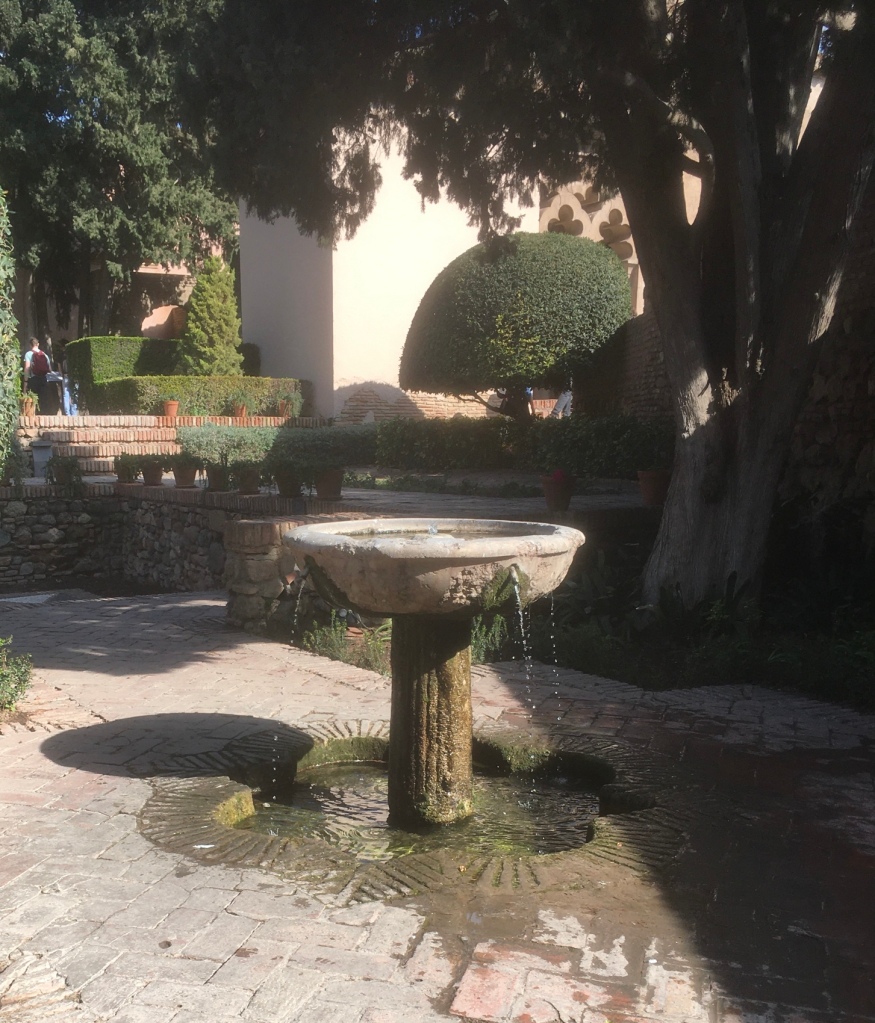

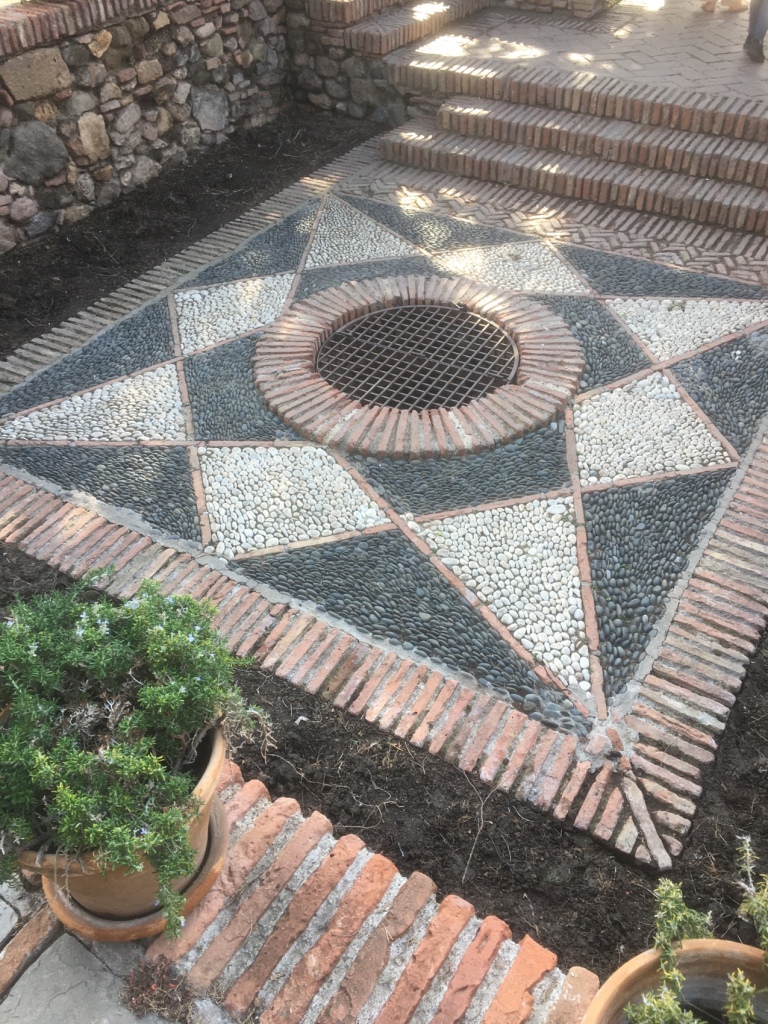
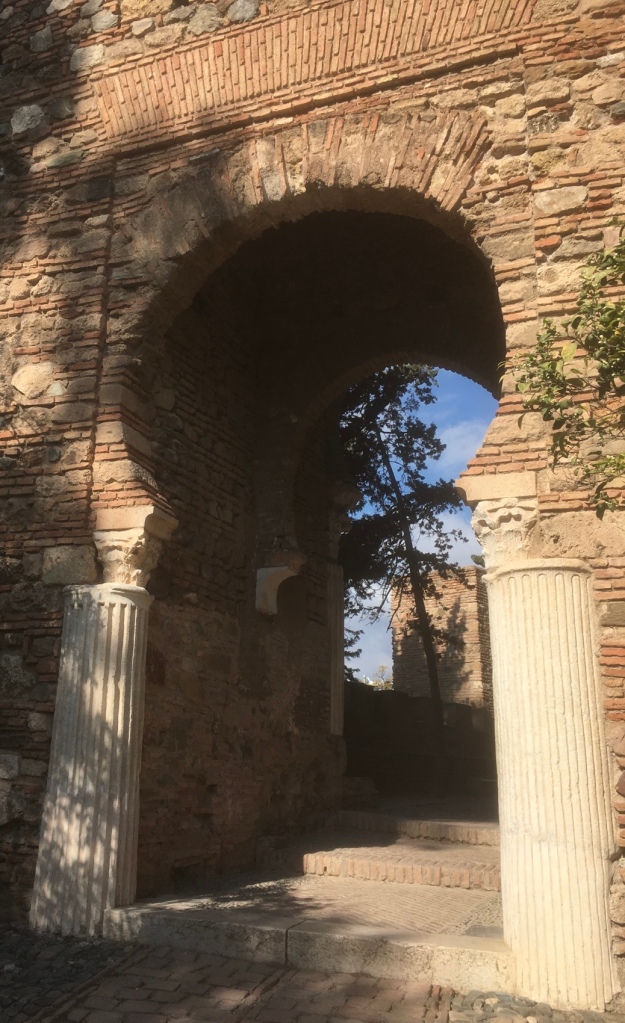
Archways and pattern work.

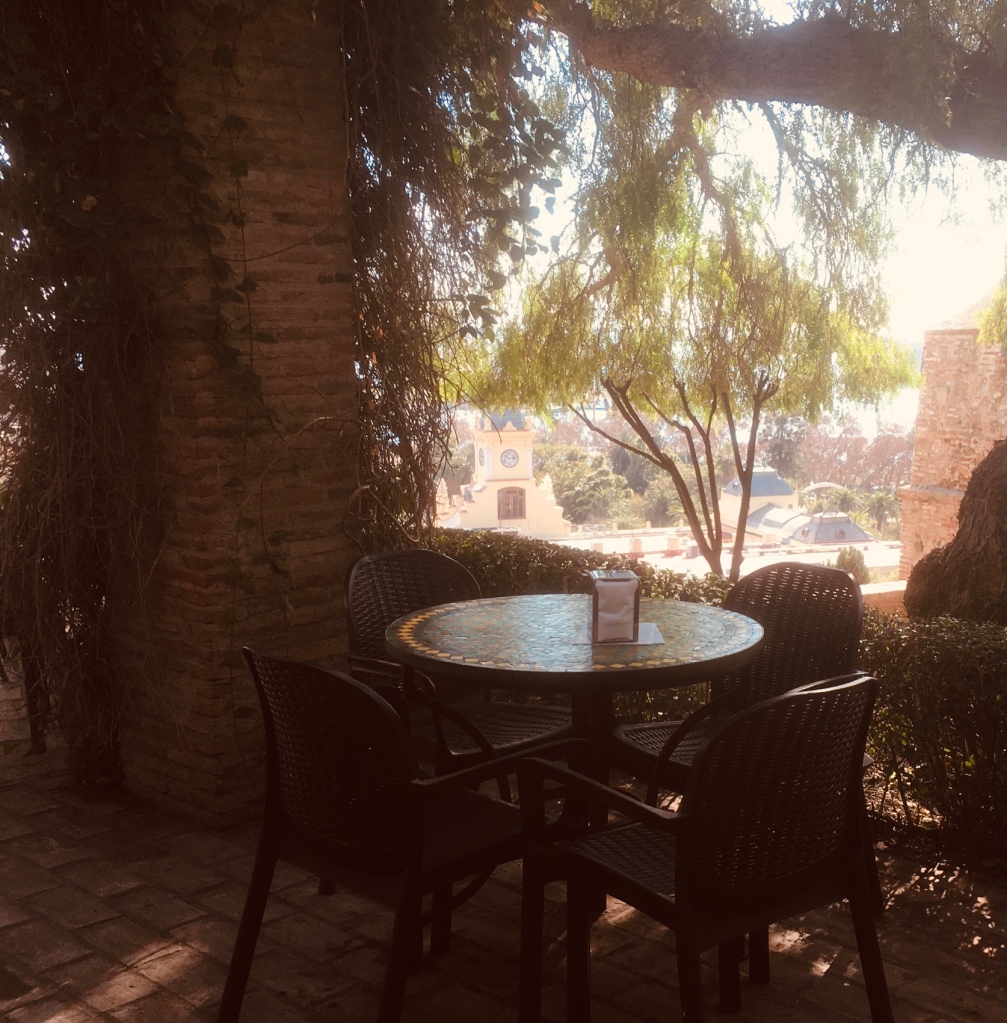
The Bar has good views and and is typically very shady – we enjoyed some excellent Bocadillos along with the cold drinks.

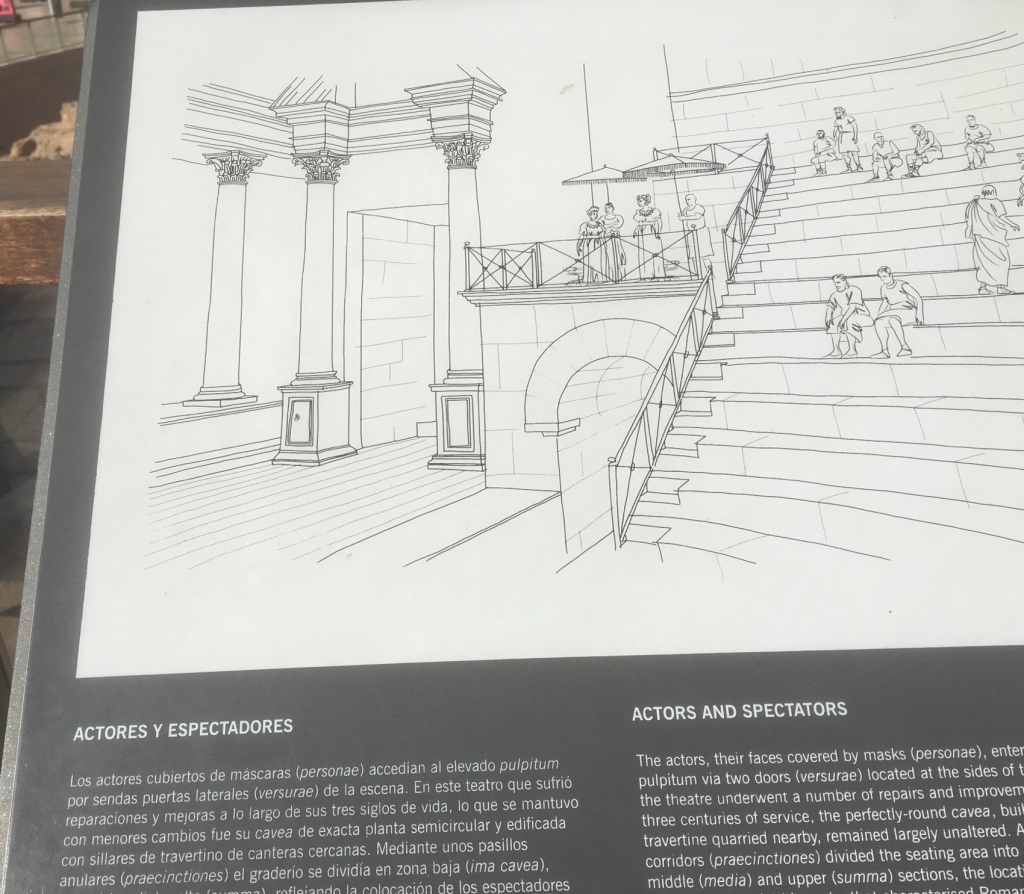
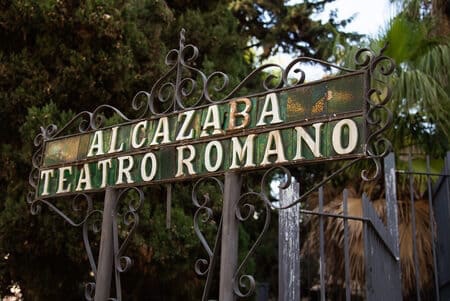
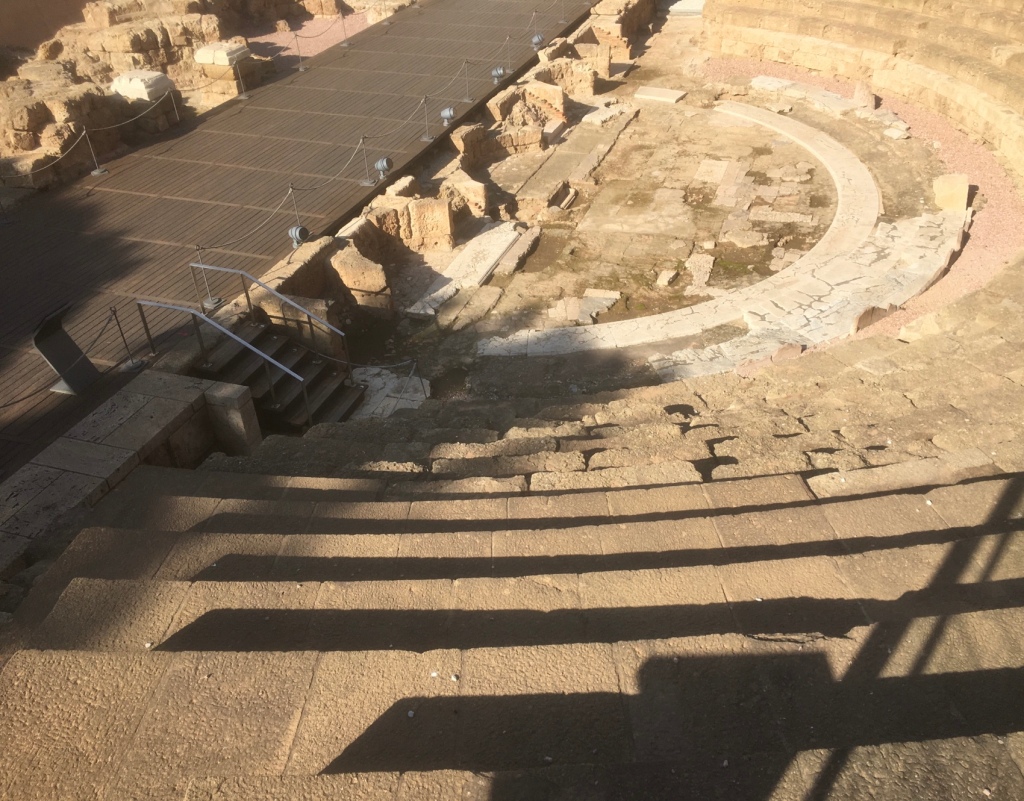
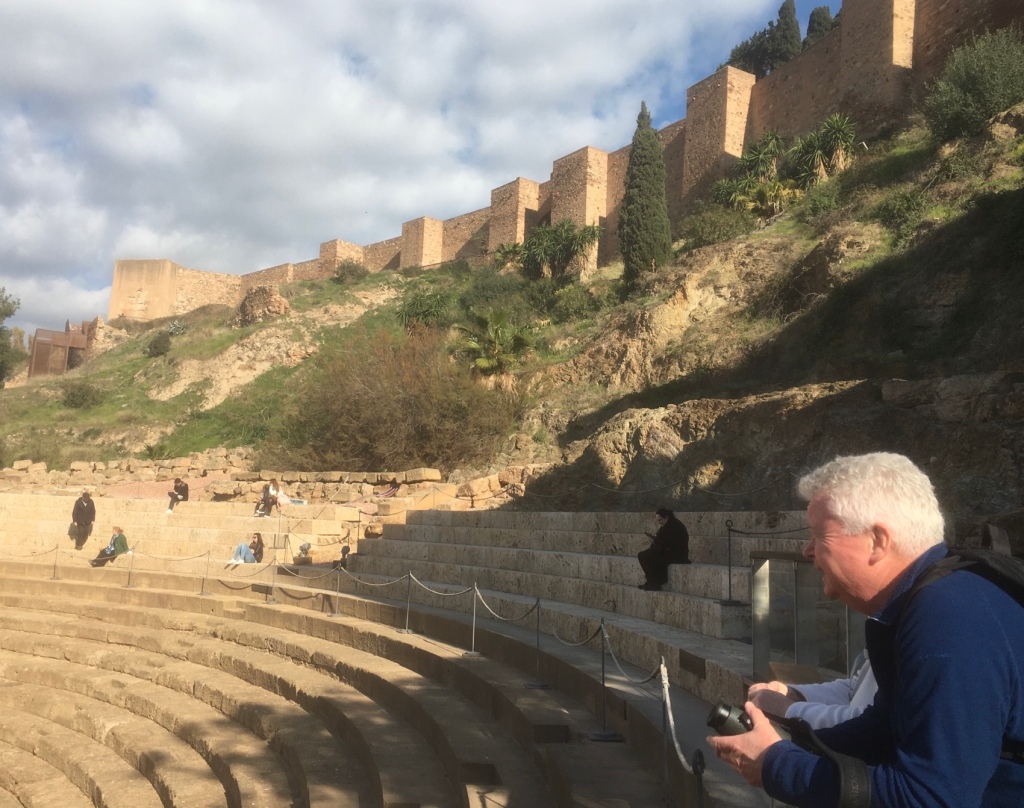
Finally, it was another short walk down to the Roman Theatre.

 ensuitepilgrim's Blog
Leave a comment