A rest day? In theory, but not for too long. So after breakfast in San Pinario – part of which is still a Franciscan Monastery – time to saunter around one of the greatest European cities.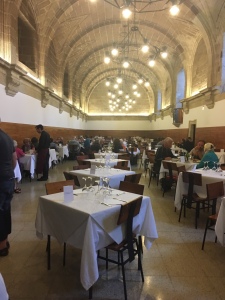
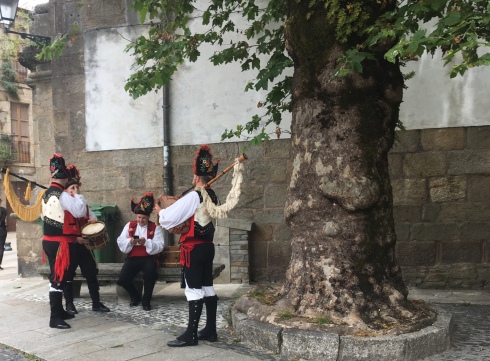
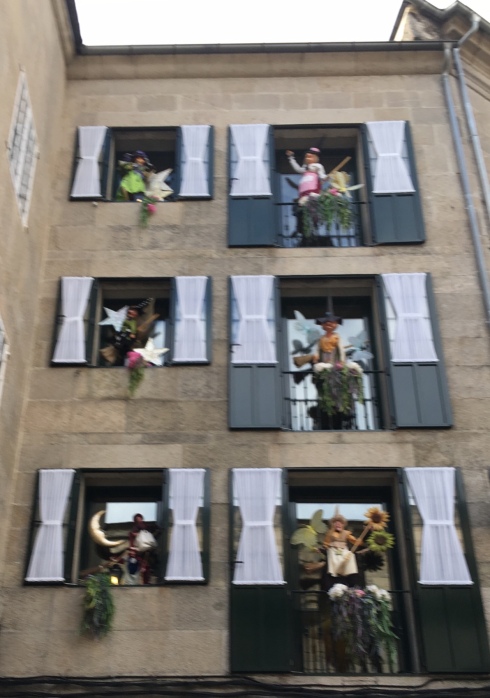
The Current Fiesta, linked to the Equinox and by coincidence, a saint, was already in full swing – Foliada are traditional Galician musical performances, which feature gaitas (bagpipes), pipes, violins and flutes. It has similarities with Celtic-style music.swing, close by the oldest gateway to the city.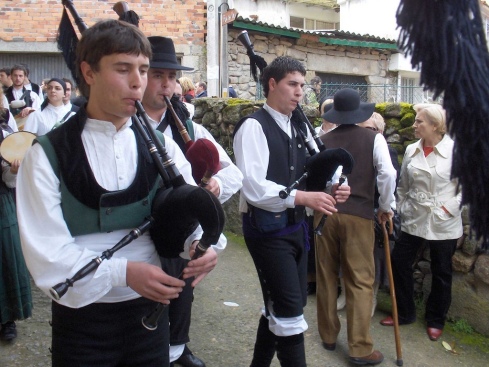
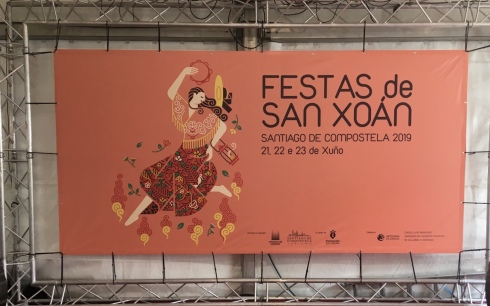
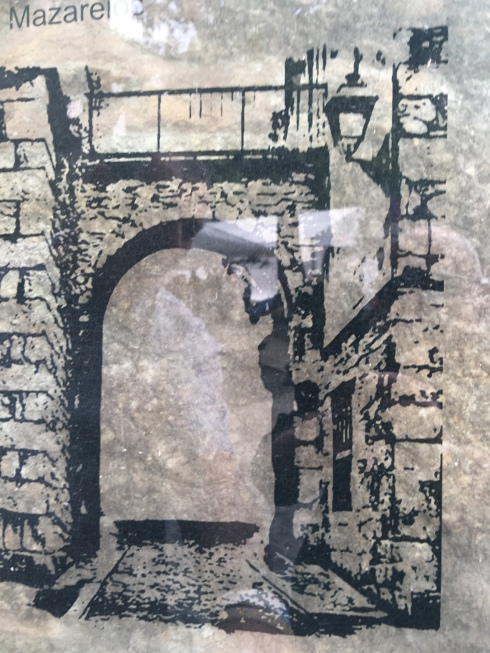
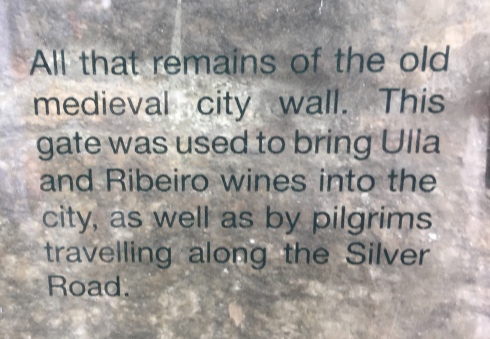
 We remembered this gateway well as it was through there we entered the city after completing the last leg of the Via de la Plata two years ago – the Silver Route – recalled some of the fine wine,too!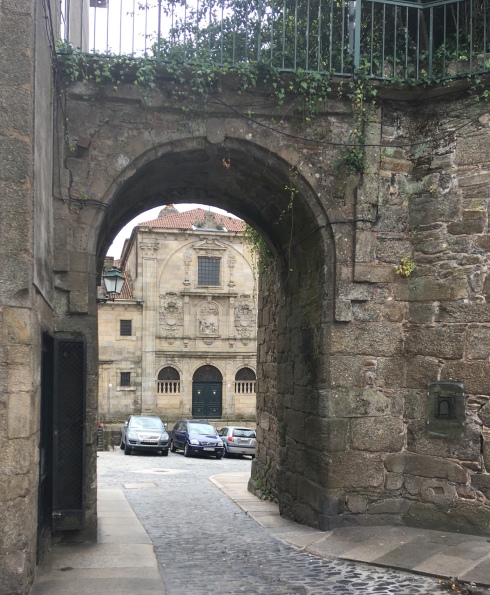
 There was a bbq heating up nearby but it was a little early for a blow-out so we settled for a beer and free tapas.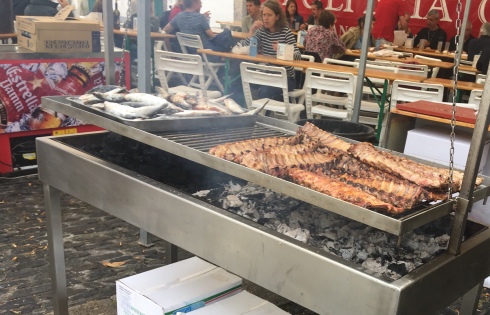

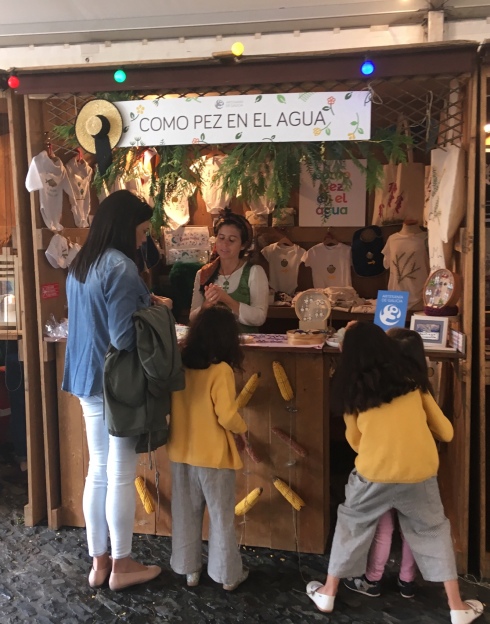
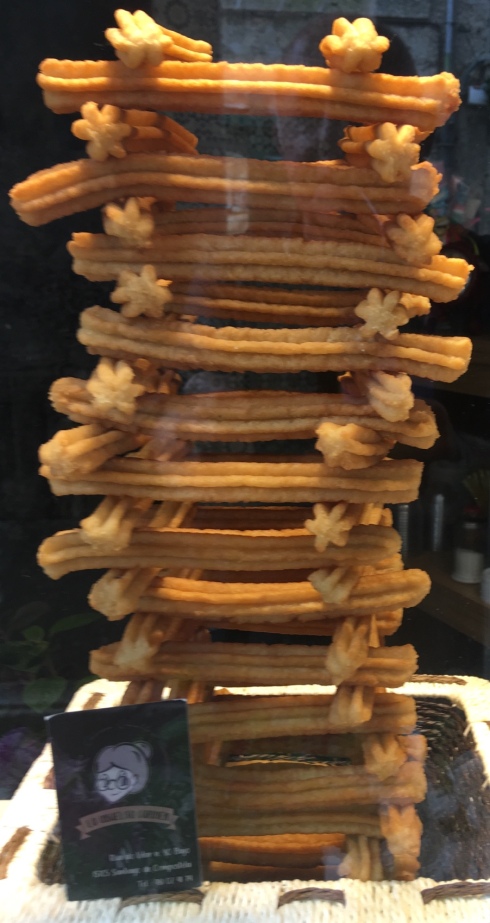
Hannah has been badgering me to eat some churros, well sad to say the shop was shut, being a Sunday, but here are some photos to cheer her up.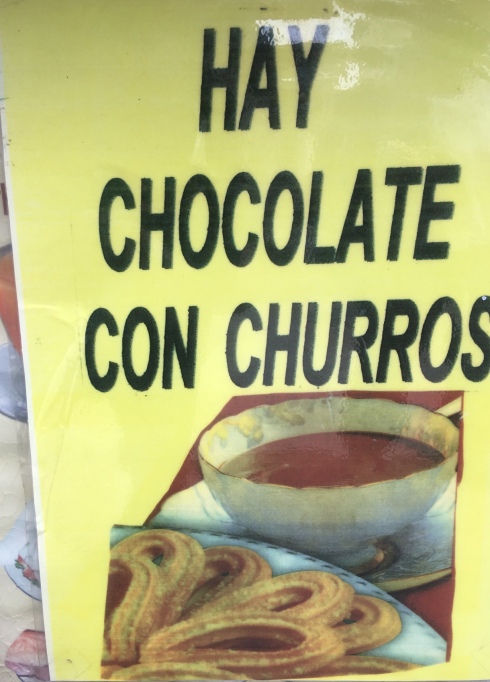
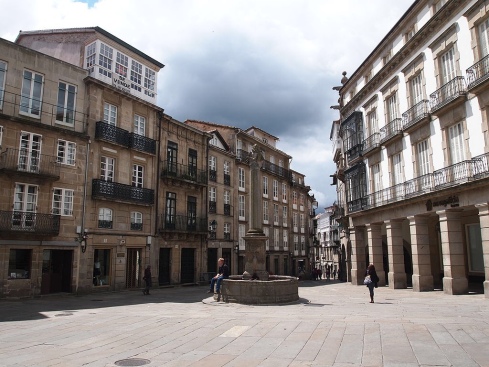
There is so much to see in Santiago and this Blog could not possibly do the city justice – come and spend about three days here – so what follows is just a taster. First the Prazas…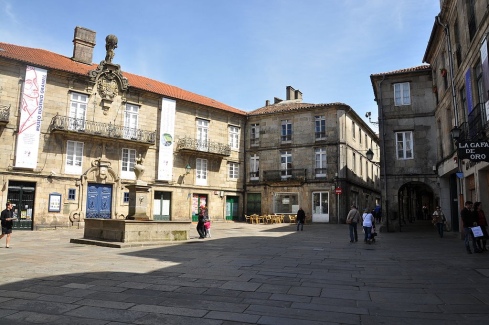

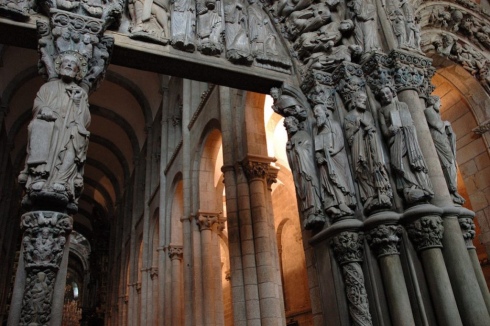
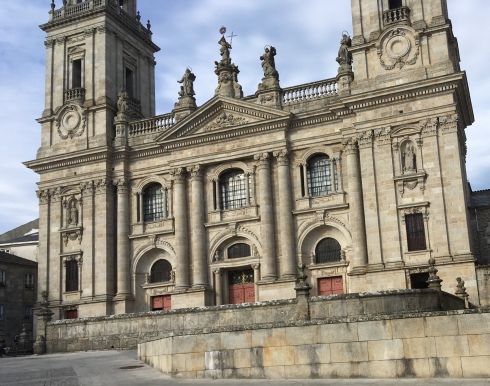
Some of the major monuments,including the Cathedral, the Portico Gloria , San Pinario Seminary, where we are based,and the university library.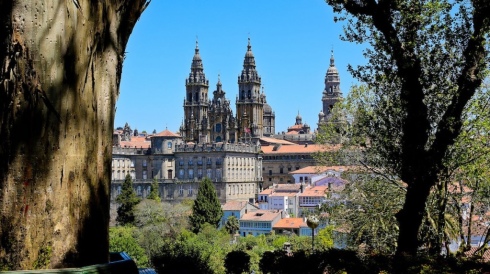
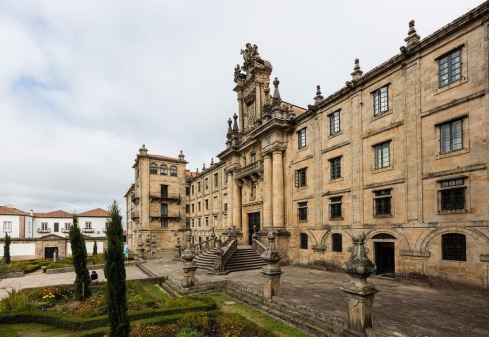
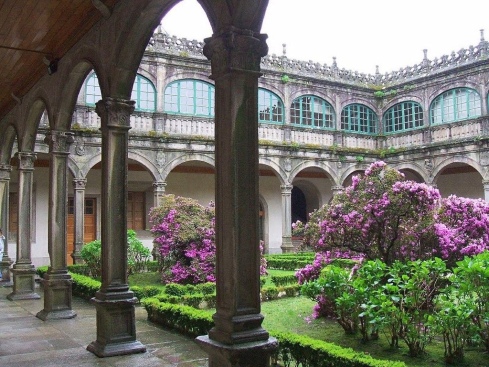
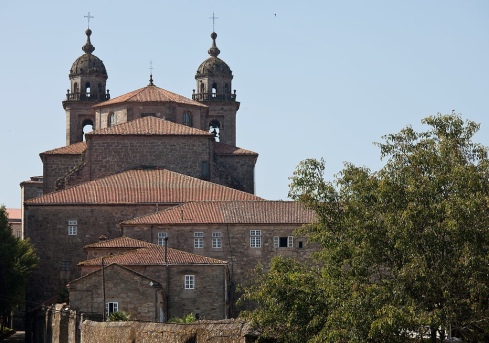
At the Mass in English, celebrated in a chapel by the Pilgrims’ Office, this little hand out was distributed and whether you are of a religious persuasion or not, it sums up a lot of what the Camino can mean to many people.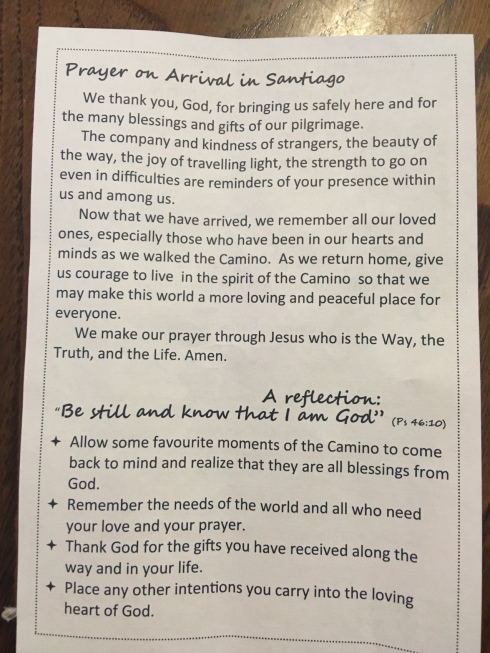
We certainly received many gifts along the way and hopefully, especially with Mac being Mac, left people with a smile. We tried to live up to this quotation :-
A very simple quote I saw on the back door in a village I stayed in: “El turista exige, peregrino agradece.” … “The tourist demands, the pilgrim gives thanks”.
I think you learn much from relating to other walkers and I vowed to be non-judgemental about the numbers, the motives and the demeanour of many on the way.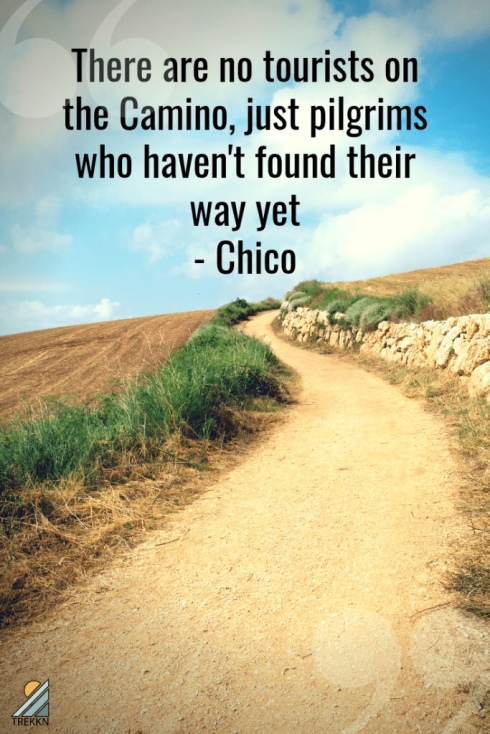
So…Been There,Done That, Even Got the Camiseta…and the Compostela certificate and Distancia.
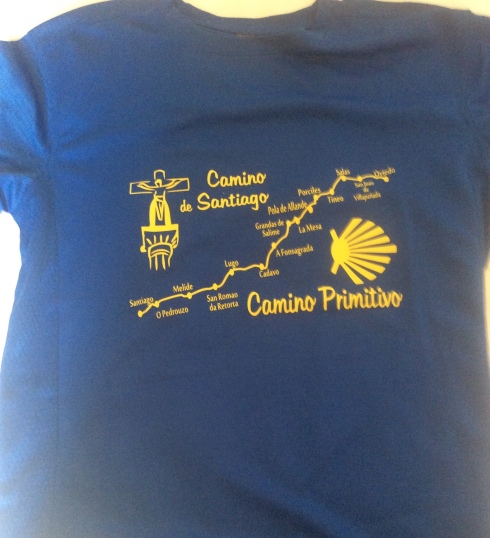
Hope I’ve left some of my baggage behind though.
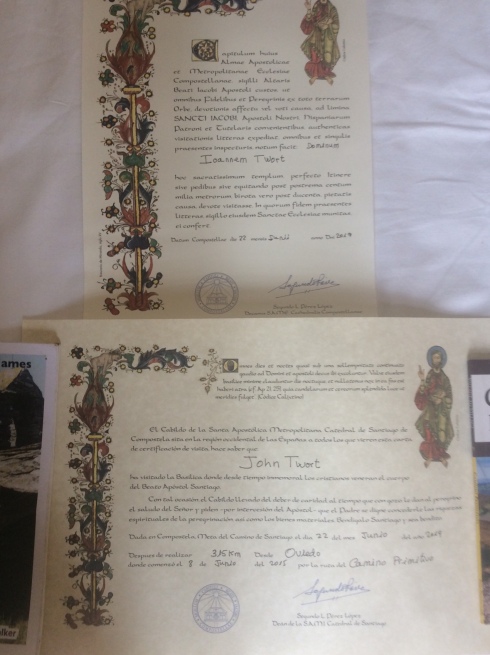
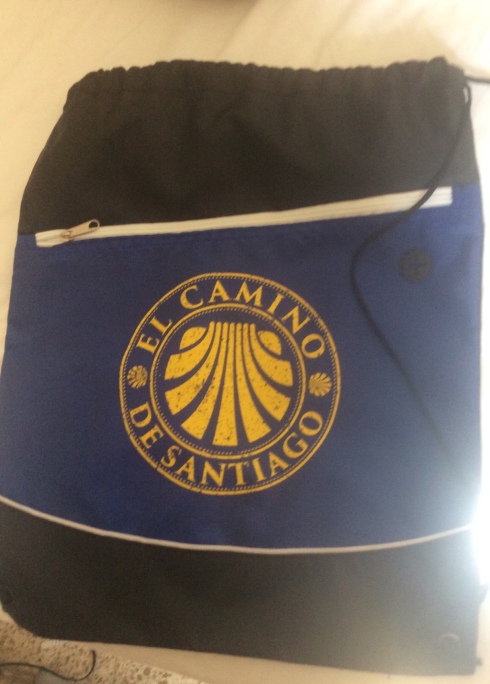
We have been so fortunate to saunter through these two great Spanish Regions.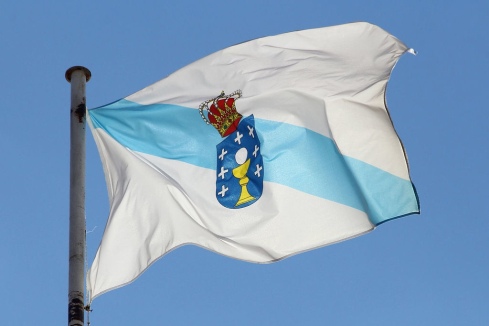
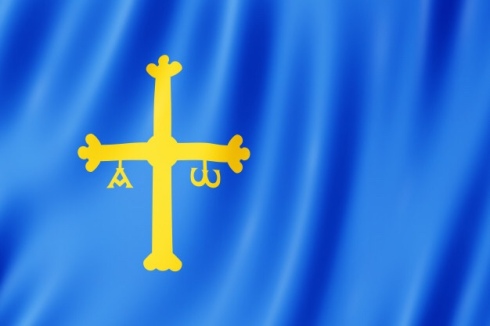
Looking forward, now, to the Camino Ingles in September, with Sutton Coldfield Rambleros , whose many needs, hopes and wishes are fulfilled; even the non- Spiritual !
“There is of course a deep spiritual need which the pilgrimage seems to satisfy, particularly for those hardy enough to tackle the journey on foot.”
― Edwin Mullins, The Pilgrimage to Santiago
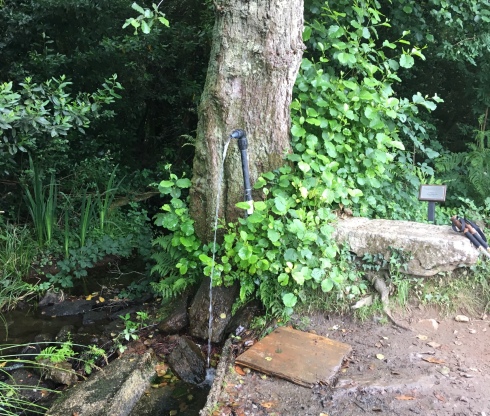
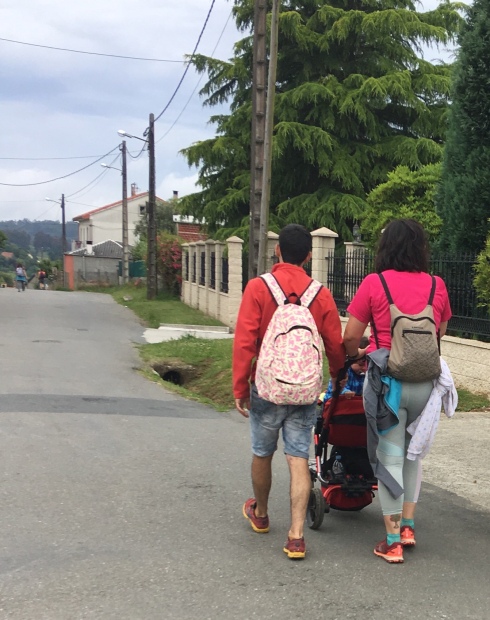
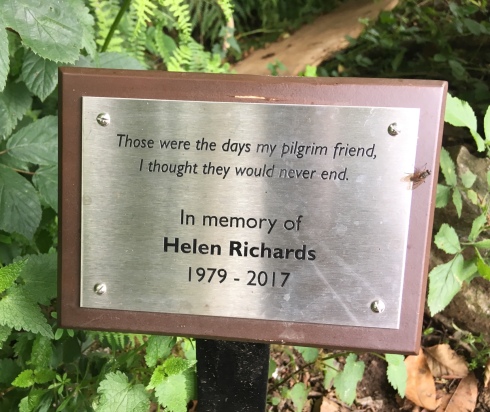 Such a short life and this memorial to her as a Pelegrina, took me back to that Mary Hopkins song. And as I sauntered on the idea came to me that as this was the last day of the Camino,I should incorporate some 🎶.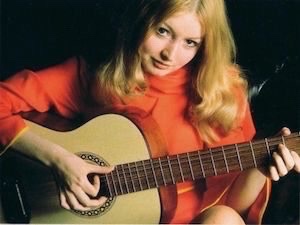
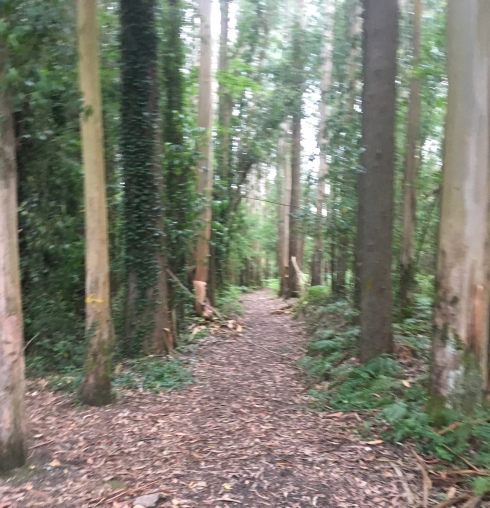
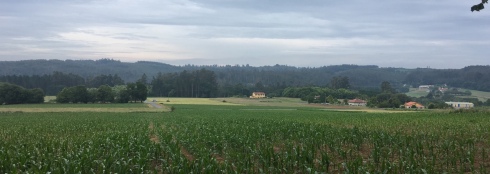
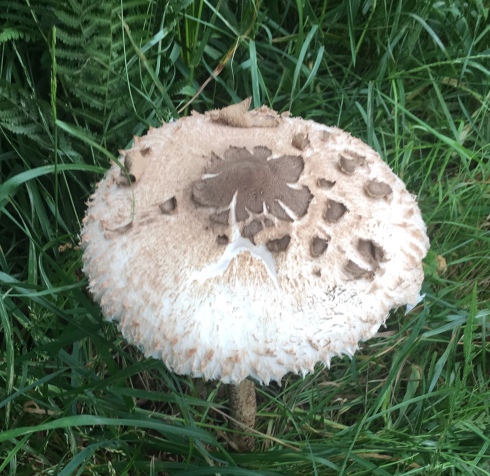
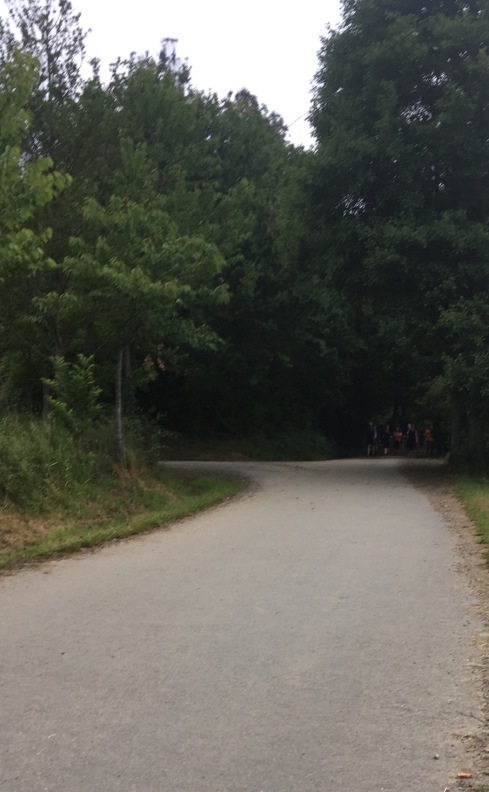
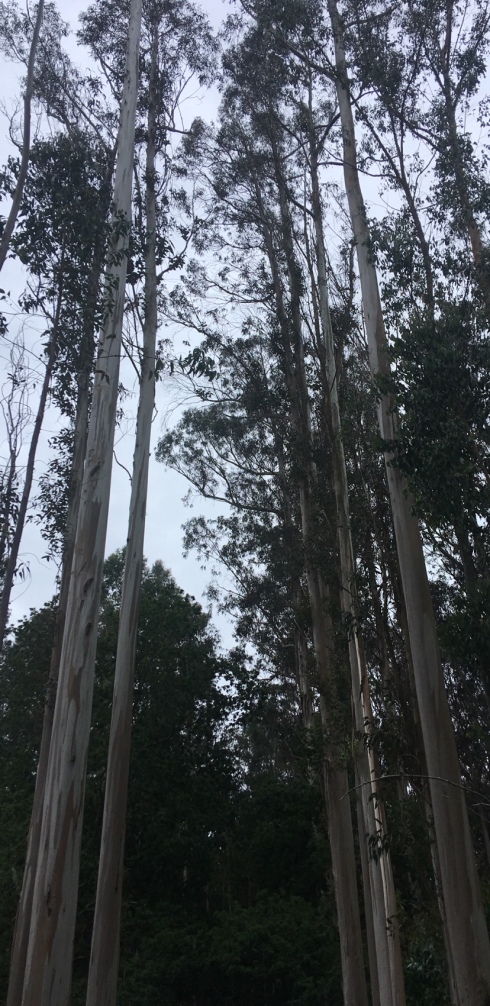
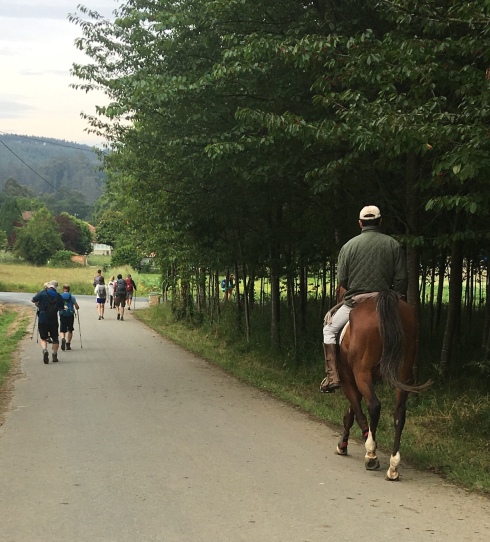
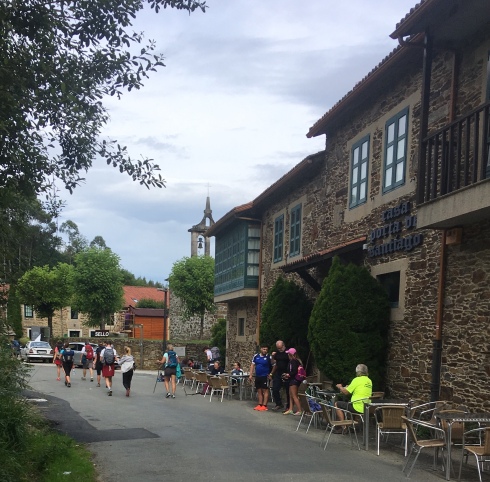
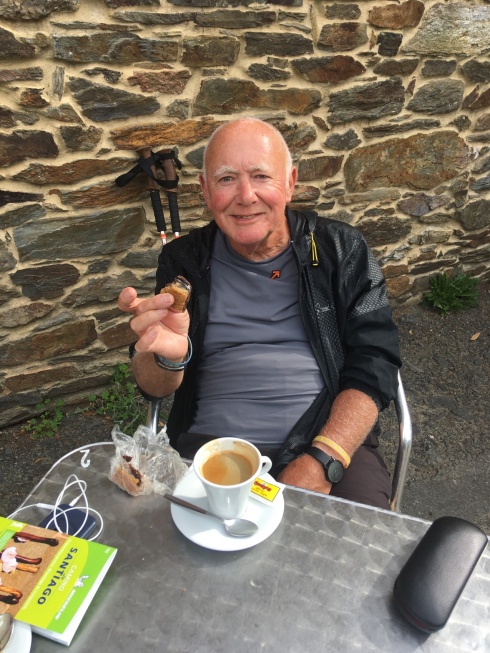 The last of Hannah’s cakes went down well with this last cup coffee before I …go – cue for my favourite Camino song – ” One More Cup of Coffee” by Roger McGuin & Calexico.
 Onwards to A Lavacolla, where in the Middle Ages, Pilgrims would wash themselves before entering the city – the name ” lavacolla” has one of the most debated origins of all the Camino towns. They range from the bland ” field at the bottom of the hill” to the more profane ” scrub your scrotum”!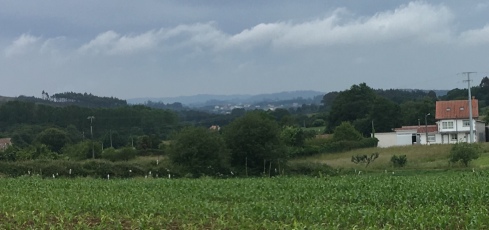
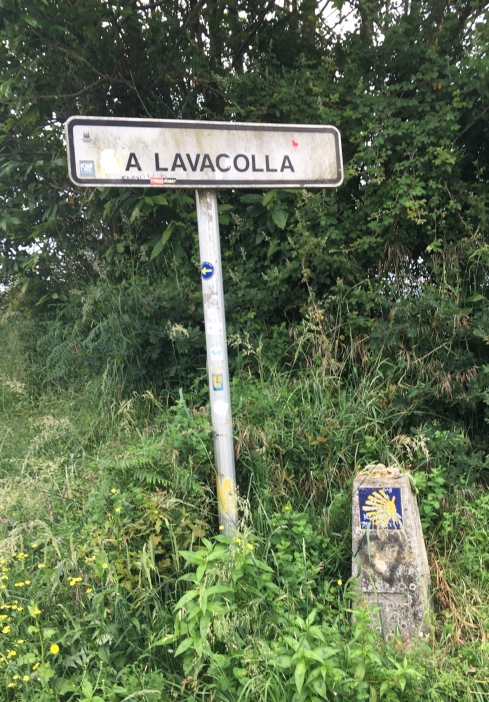 Don’t worry, it didn’t inspire a song – open to suggestions though.
 ” Walk-in My Baby Back Höme” by Nat King Cole
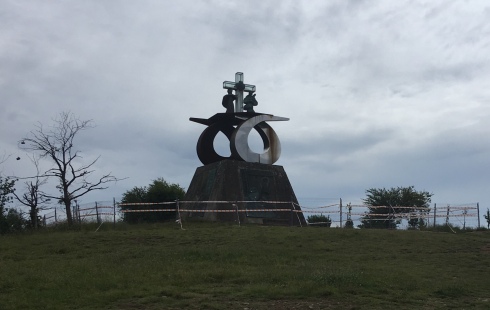
 Passing The last of the forests as the outskirts of Santiago are approaching. Mount Gozo – The Mount of Joy – as it is known. Originally because you could see the Spires of the Cathedral for the first time, then someone had the idea of planting some trees, which now block the view. It is also the place where the Pope celebrated Mass in the 90s and there is a very large, unlovely sculpture to mark the event and in much need of TLC.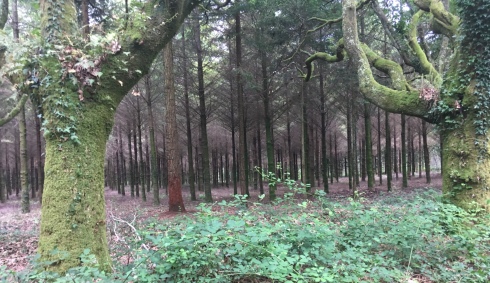

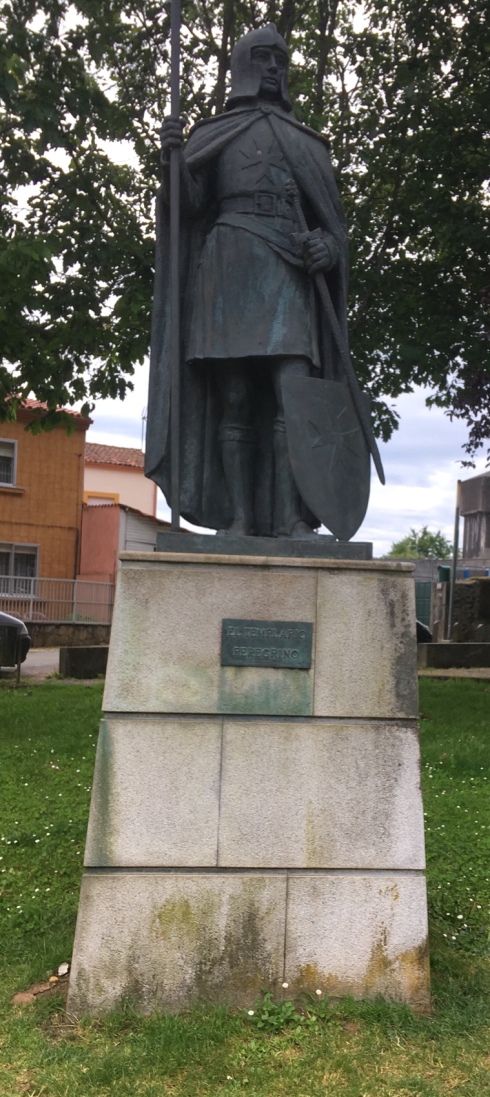
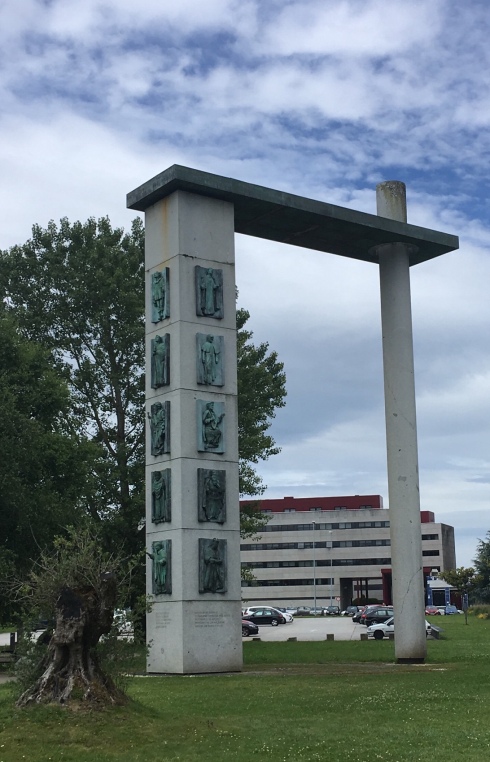
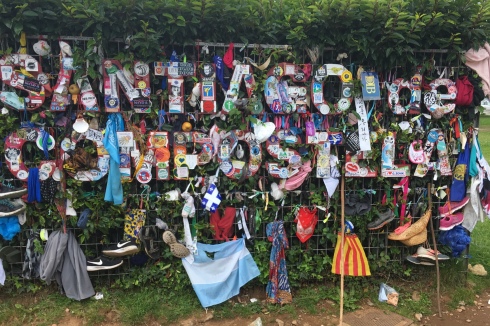
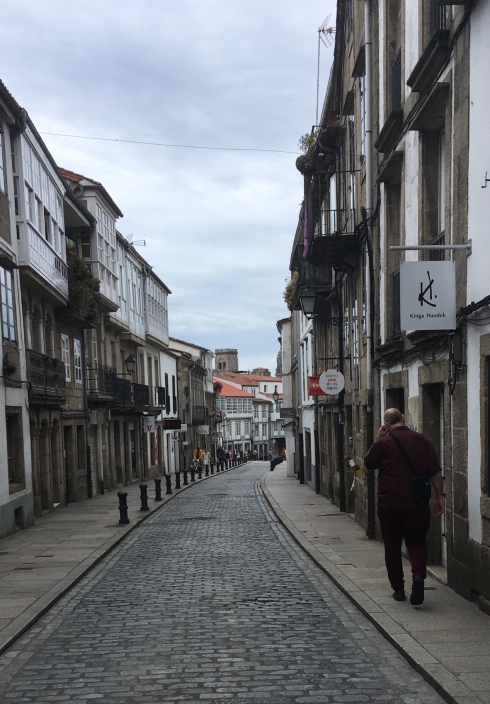
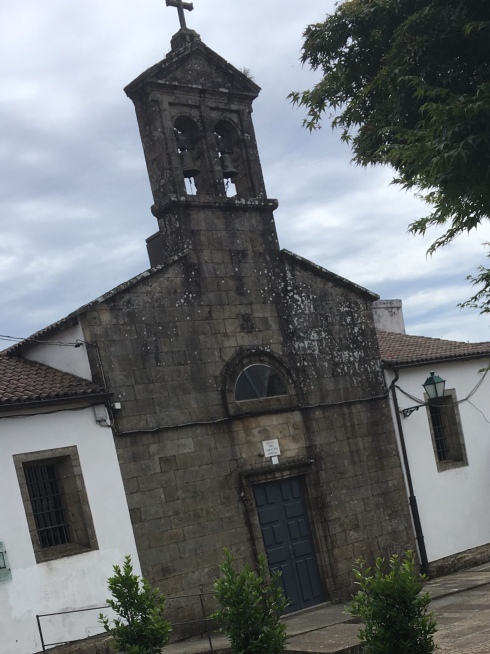
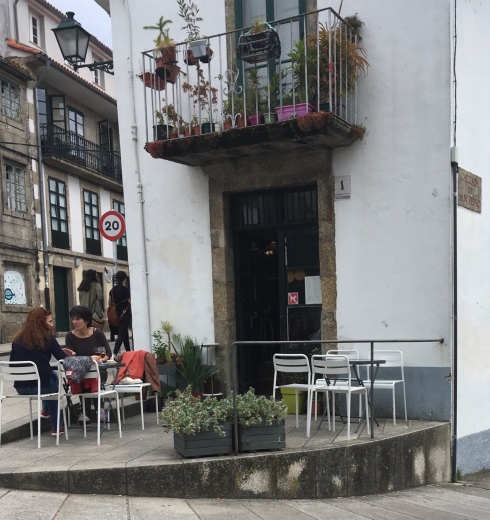
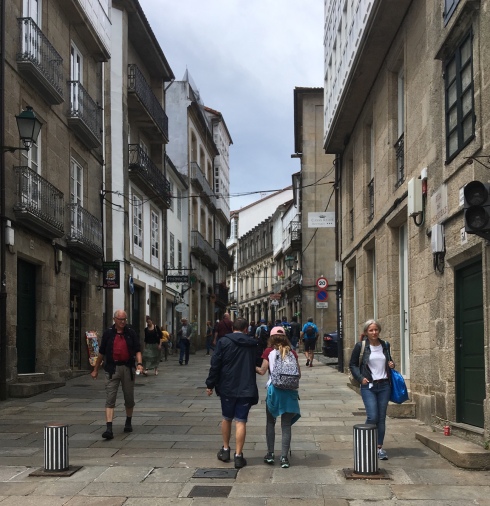
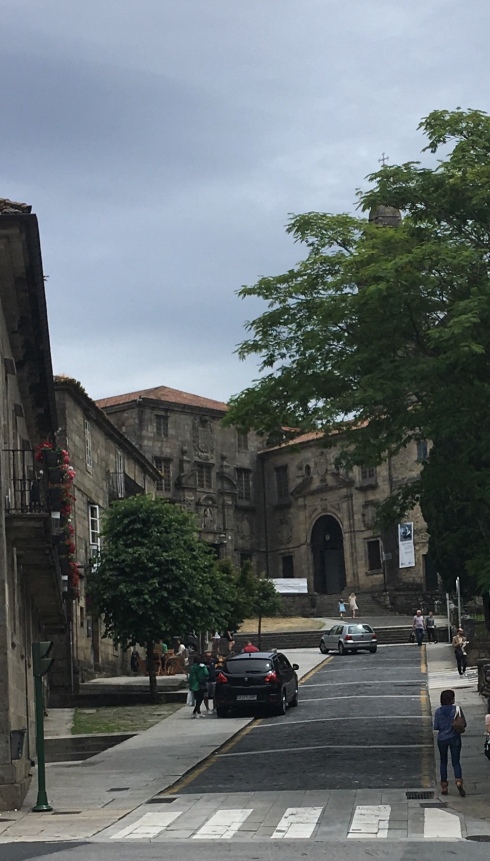 Eventually you reach the Porto da Camino and suddenly you are there.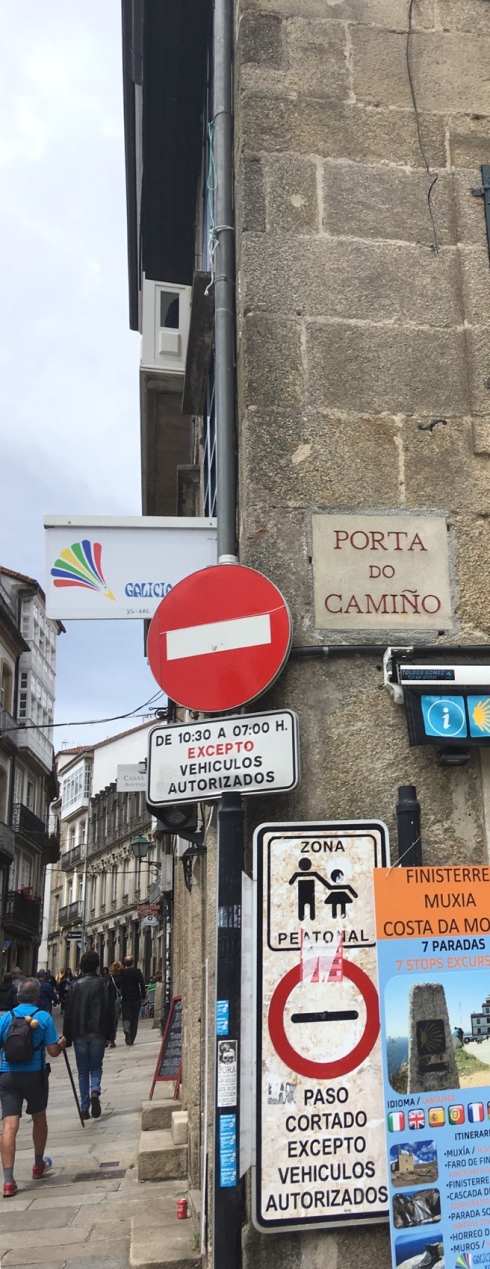
 I entered a little ahead of Mac and someone offered to take my photo, as hundreds of thousands have done before.
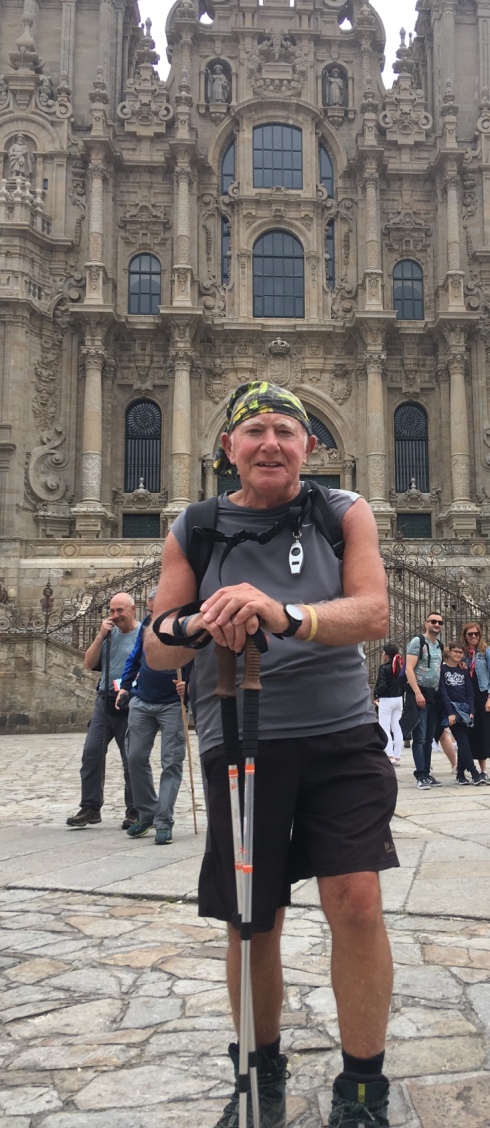 Mac was soon on the scene and another kind, young lady took great pains to commemorate our arrival.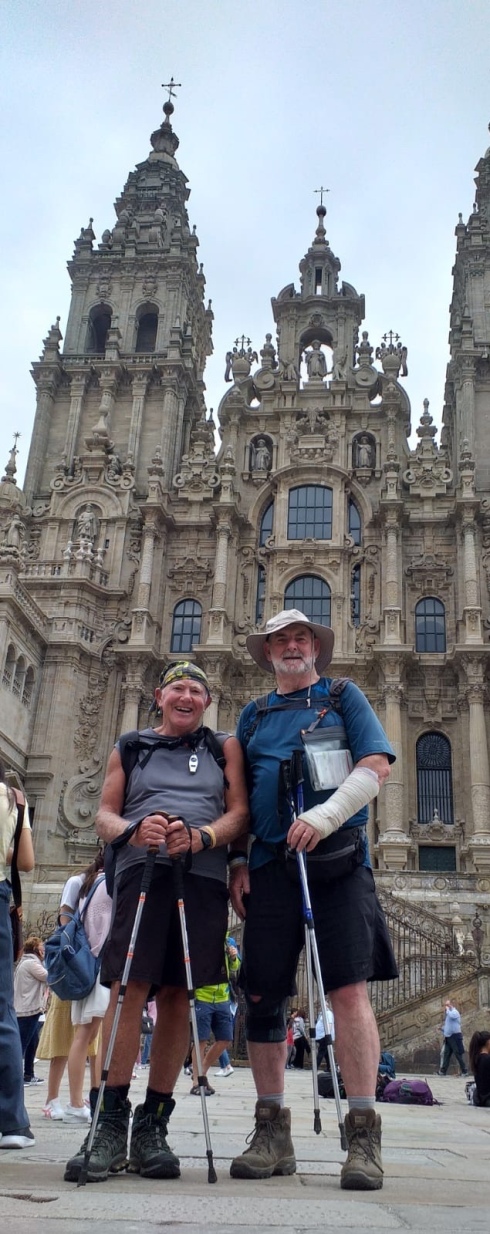
 Then it was on to our digs for the next two nights San Pinario. Happy memories again.

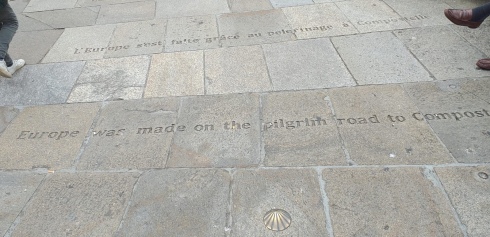
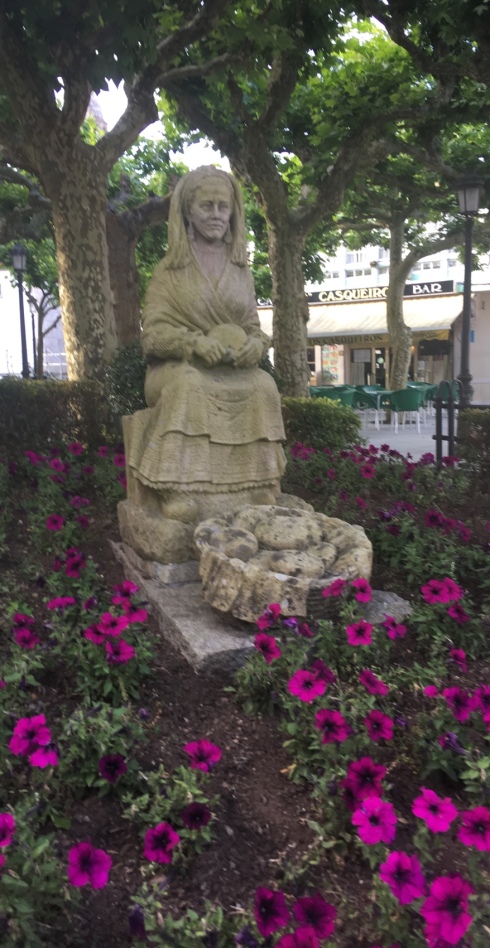
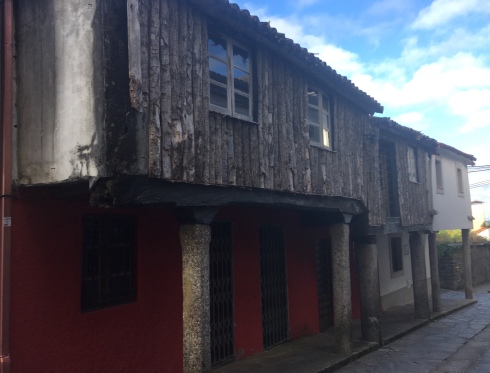 The Way went downhill and I didn’t need the signpost to alert me to the fact that I was now walking the Camino Frances, which had subsumed both the Del Norte and the Primitivo.Arzua was now in the far distance;not so the crowds.There was no shortage of cafes on this section – my choice was based on two factors – was it authentic and was there a queue? The bottle bar did not pass muster.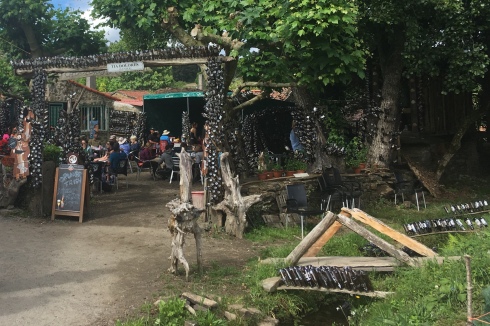
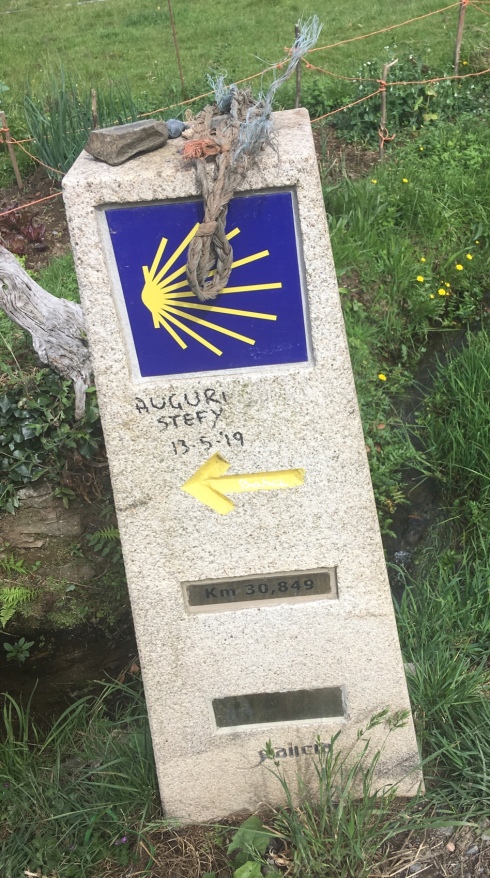 By now I was telling myself ” I told you so” – too many people, too many stalls. I saw more trinkets on this section in two hours, than I did in ten days on the Primitivo . I realised that it was getting to me so I stopped for coffee and a rethink at Bar Lino. I liked it because it reminded me of Theresa May -LINO – leader in name only. Cheered by that thought if not by the prospect of which arse would follow her,I relaxed and chatted to Frances,from New Zealand, who I met whilst standing by the door to the aseos. I encouraged her to skip the queue for the ladies and use the caballeros’.
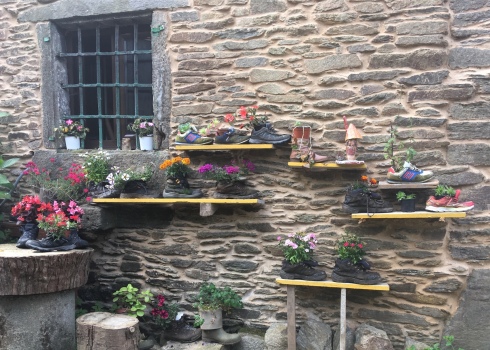
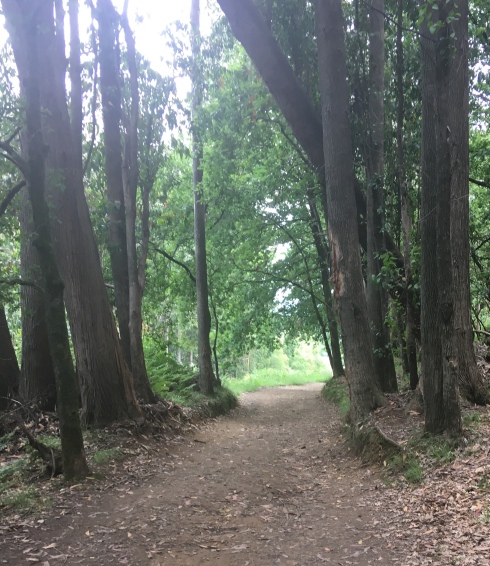
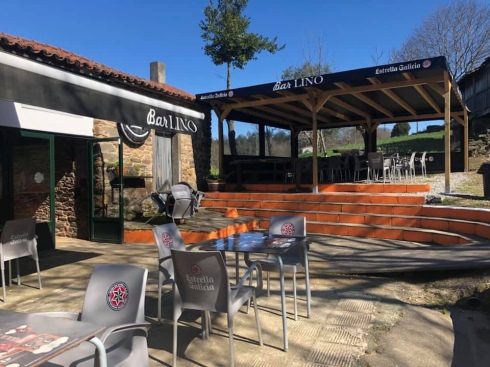 The Frances – it is what it is,I reminded myself and vowed to see only the positives. And As the photos show,I did.
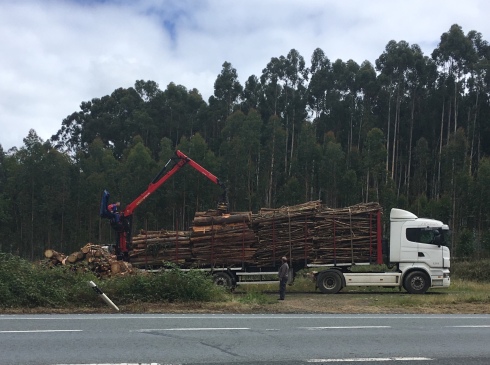
 The Frances has encouraged much development, both on the Camino itself and in places where it intersects with the N 547. Many autovias and major trunk roads in Spain have followed in the footsteps of the Caminos.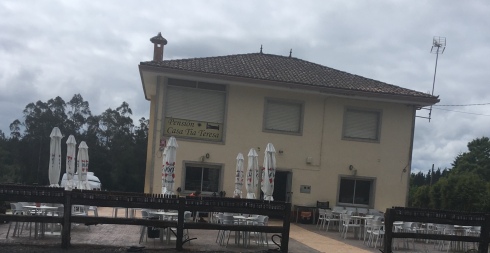
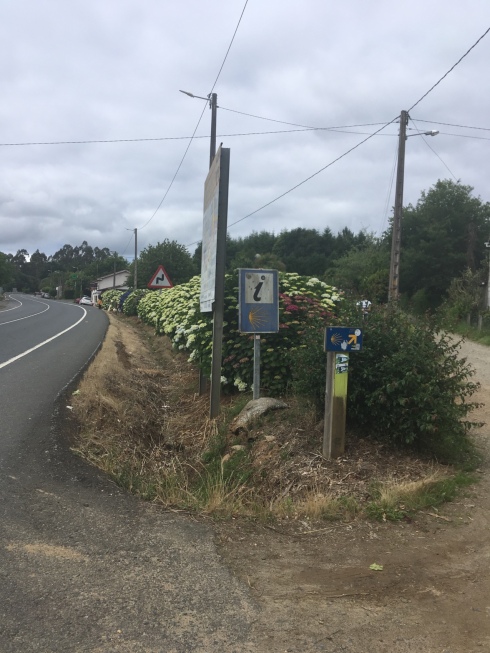
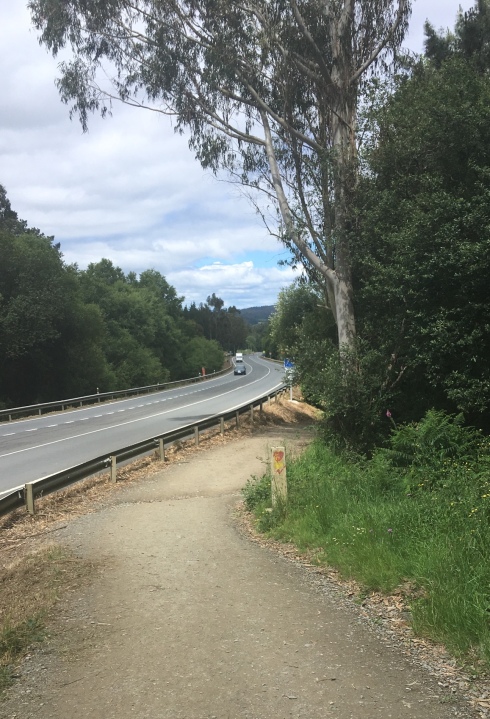
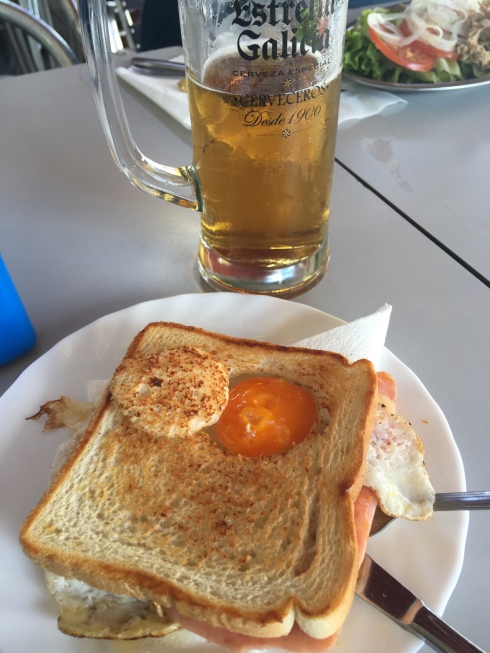
 PR Estella Dorada is on the main road, as are many albergues and hostals. I have stayed here before and it is a simple,clean,welcoming place. Off with the boots and down to a local cafe for a Sandwicha Mixta Con Huevos – a long time favourite of mine.

 Later that evening, we basked in all too rarely seen sunshine with our two amigos,Mick and Mike, welcoming Chris, from County Cork, walking with his fifteen year old son.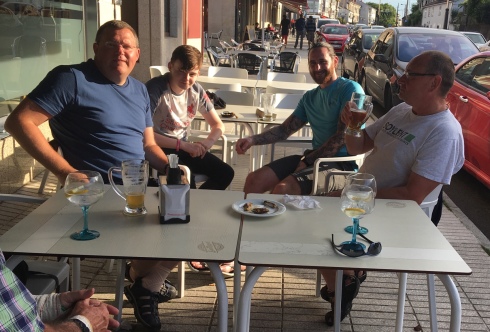
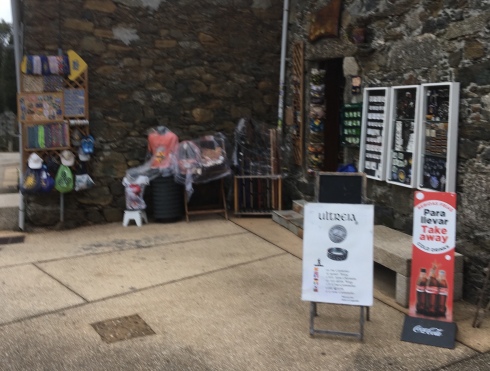
 Well a transformation might be an overstatement, but I was pleasantly surprised by the lack of numbers as we left Melide on the Frances,only to be brought up short by a Trinkets stall immediately on the Camino.
  Yet, within a few metres, behold an ancient Romanesque church – the Catholic Church does not have a proud record when it comes to bedfellows and she has always been comfortable in the lap of Capitalism – beautiful place.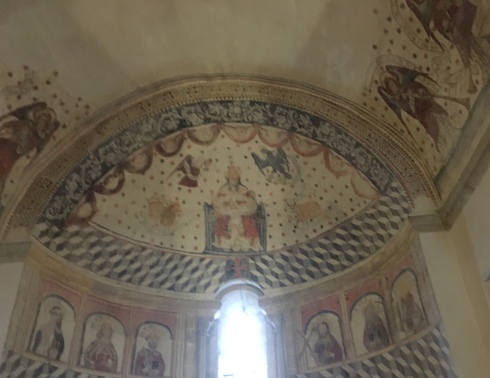
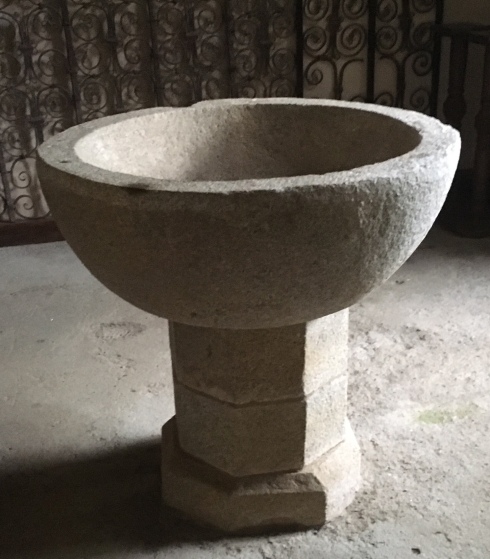
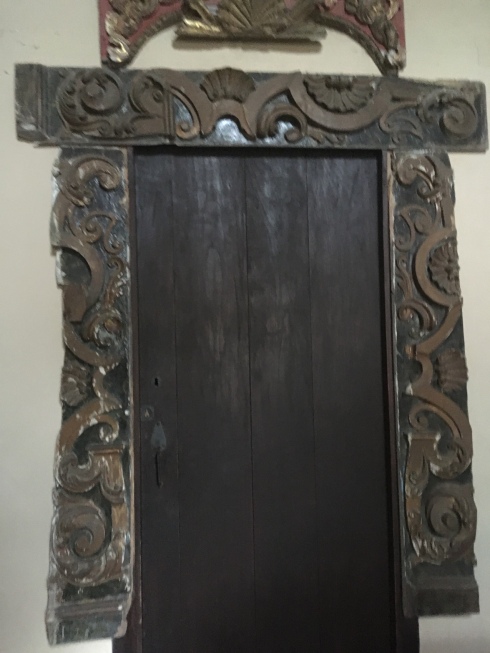
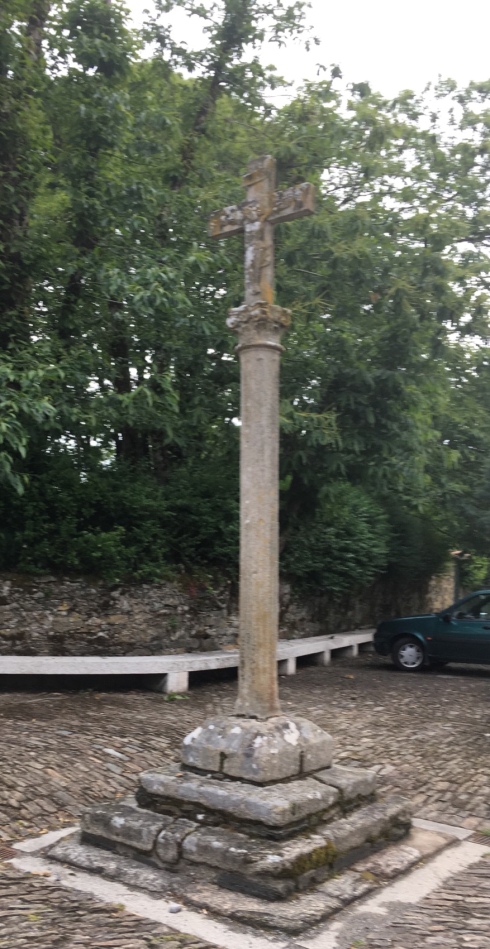

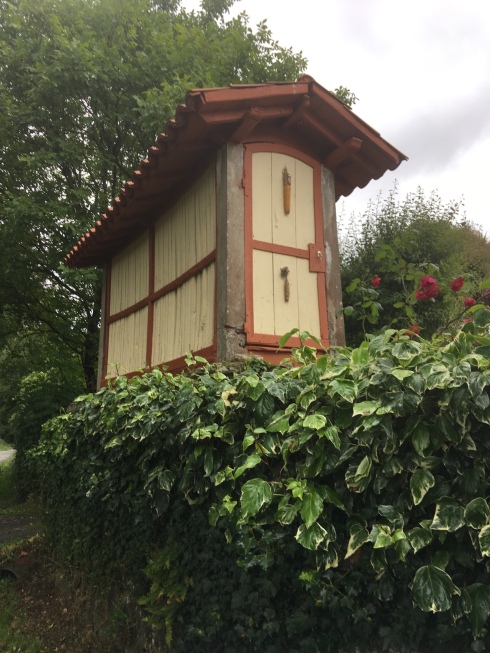
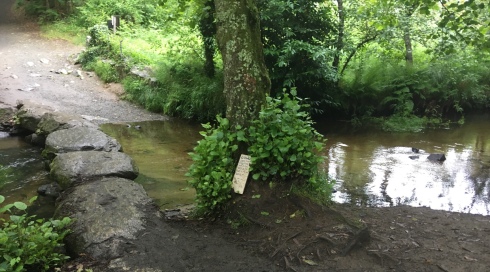
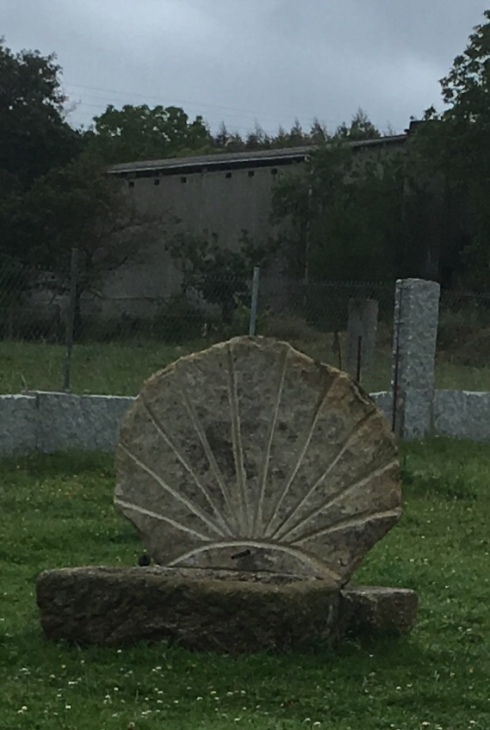 There’s is no lack of cafes on the Frances and this one did not disappoint.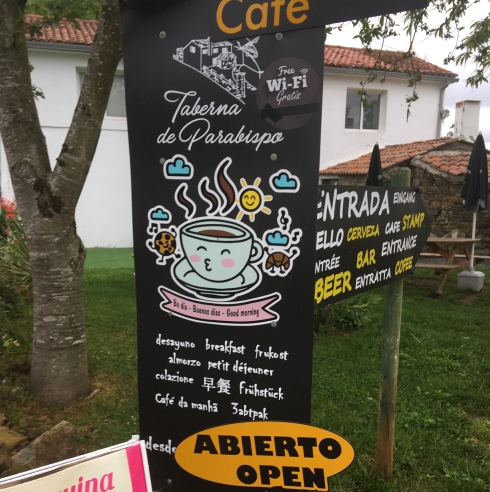
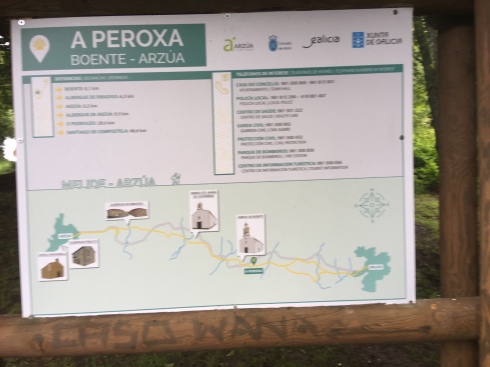
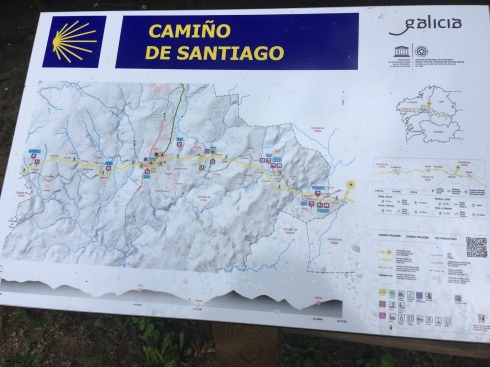
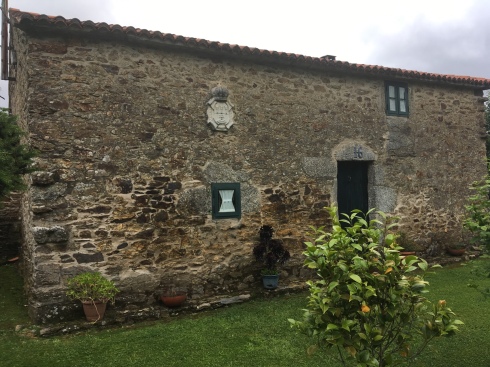
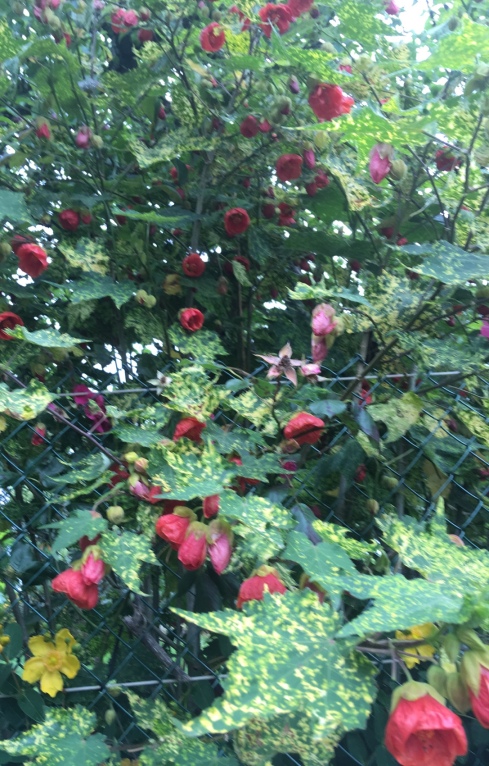
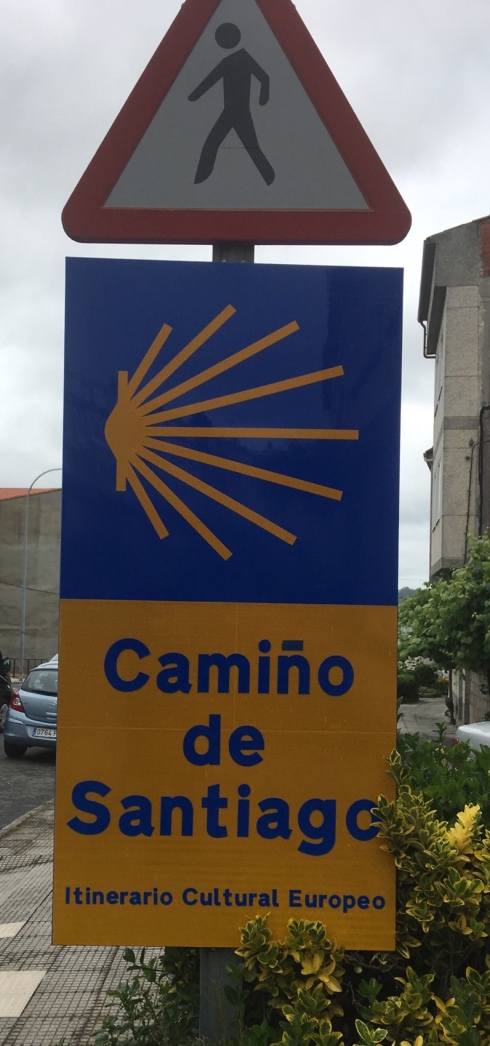
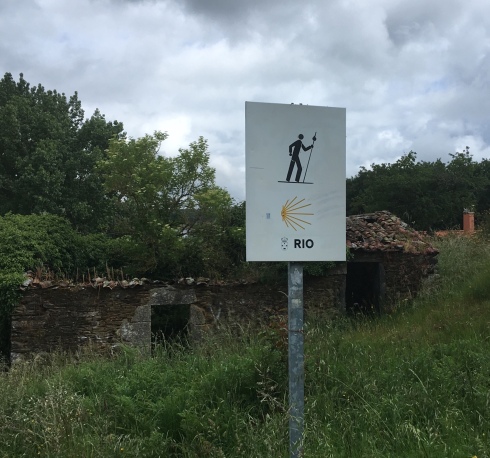
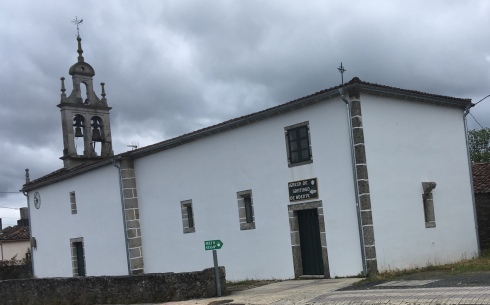
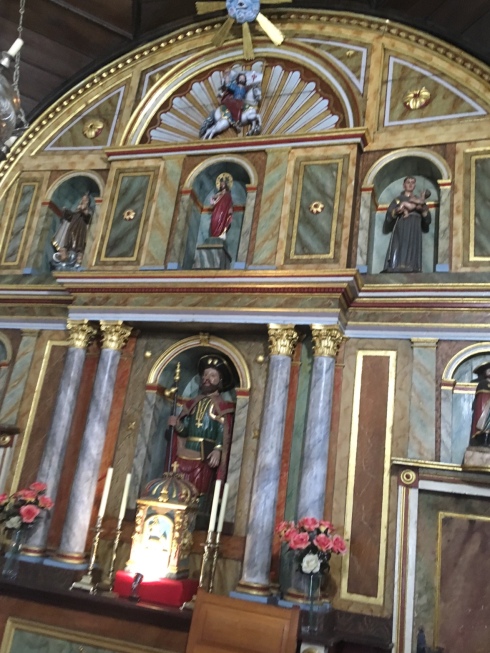
 It was time for lunch and being near Arzua, the locally but famous cheese is a must in a bocadillo.This is a long established cafe on the Frances. I remember it well.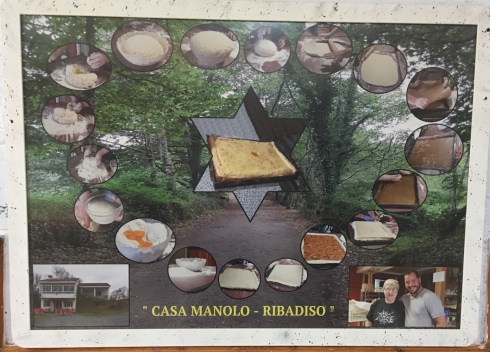
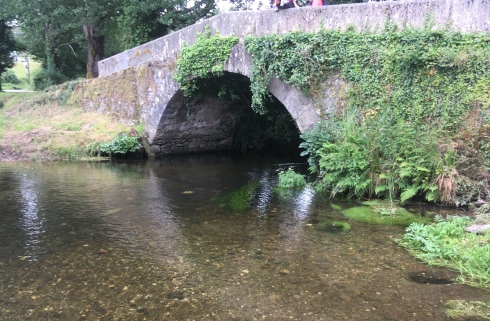
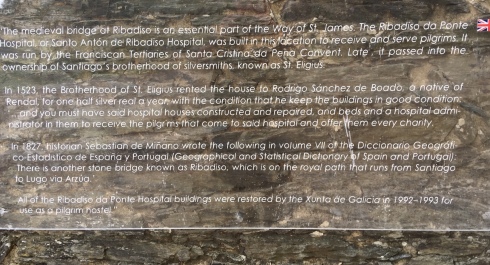
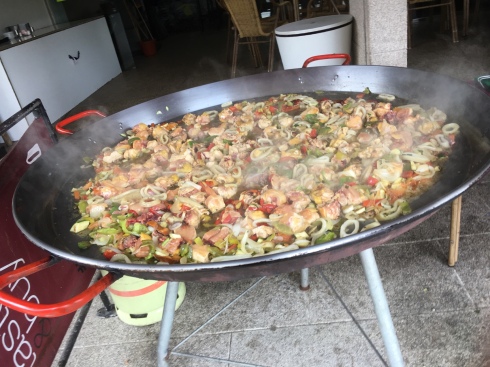
 Casa Chelo was recommended and you walk through the kitchen to the dining room – a great smile from the chef.The pig’s cheeks were sumptuous.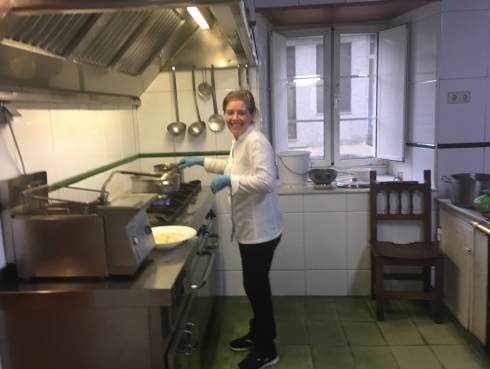
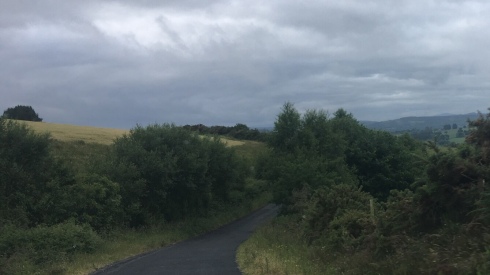
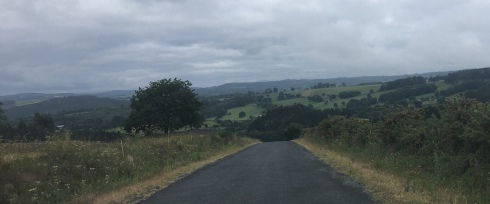
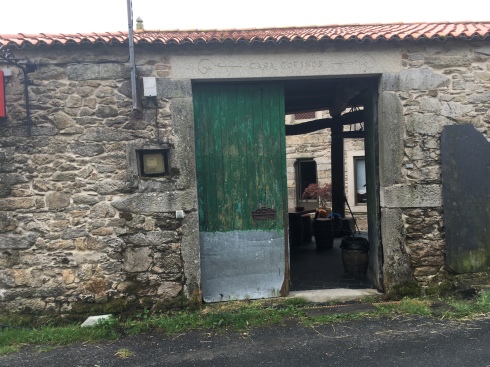
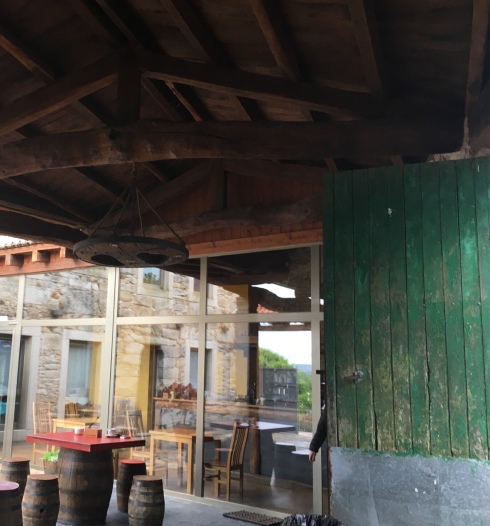


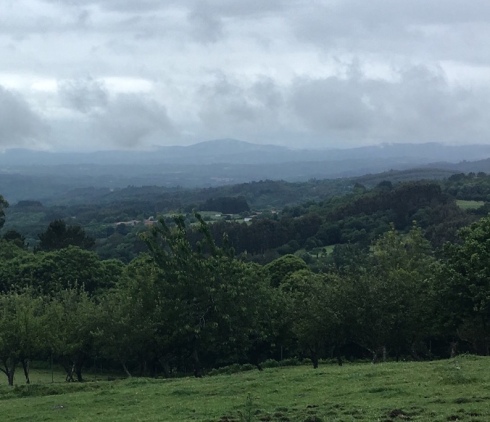

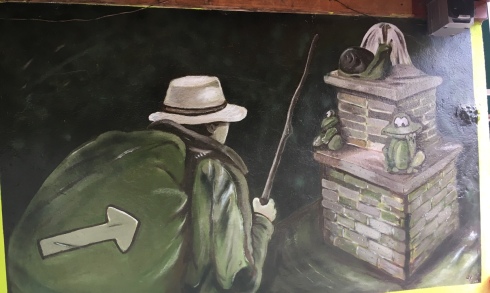
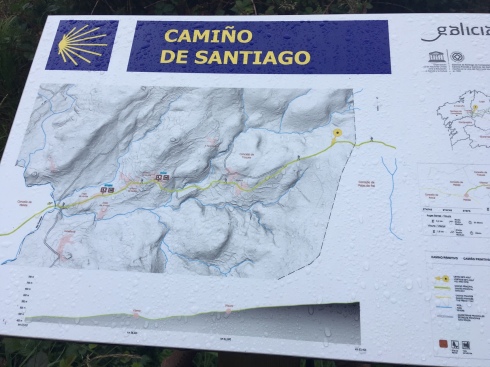

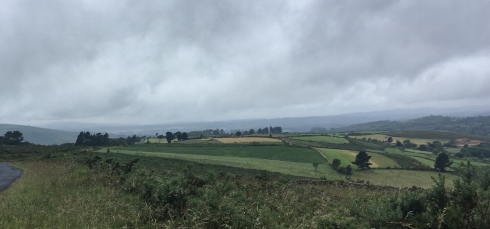
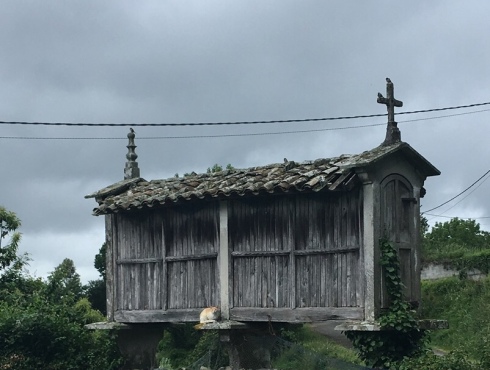
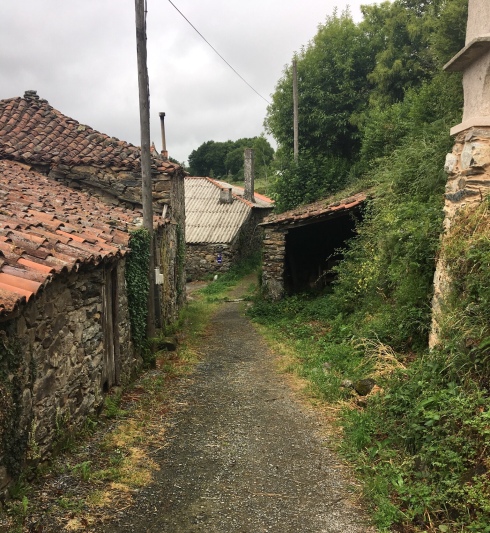
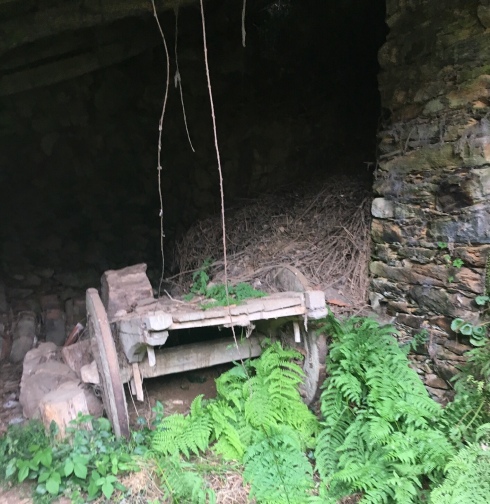

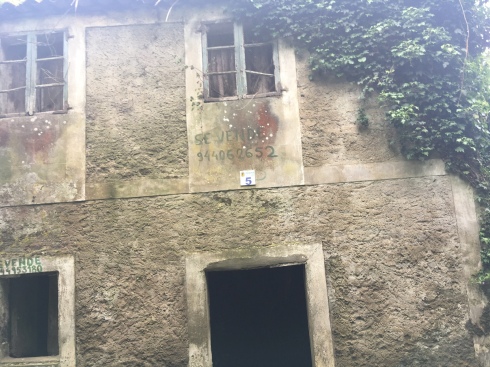
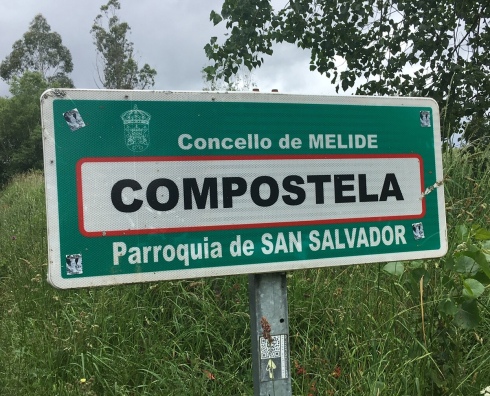
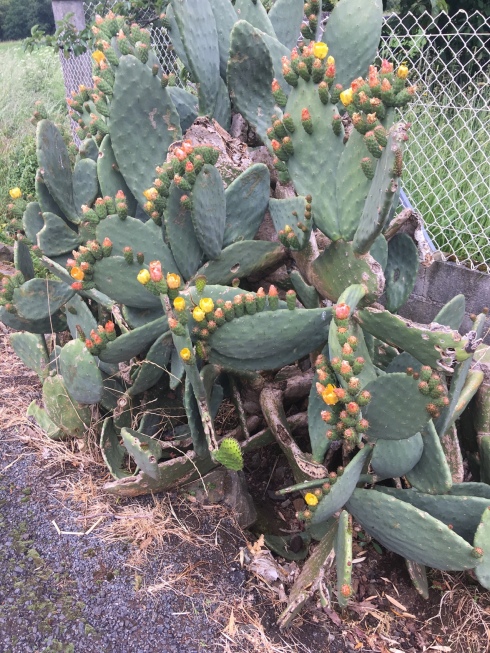
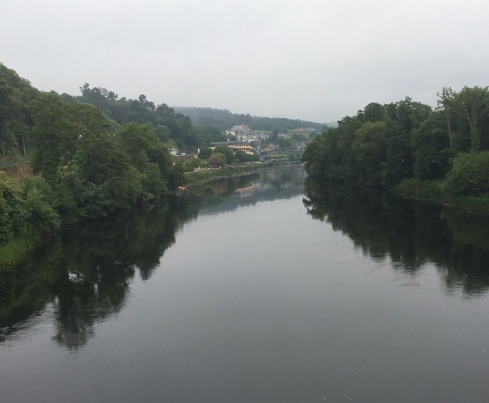
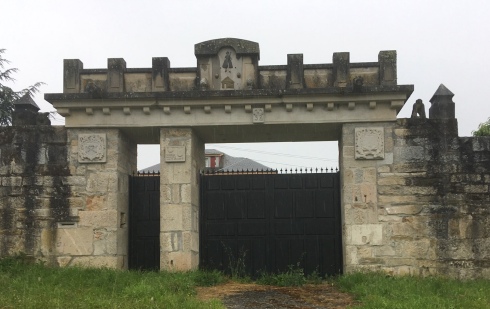 Lugo is an excellent base for a longer stay – Roman walls etc, but a host of other things to see. The walk was relatively flat now and after a couple of hours I reached this church and a nearby, somewhat ramshackle but welcoming cafe. Stripped off the poncho as the sun came out and enjoyed one of Hannah’s ” sugar rush” cakes with my Americano.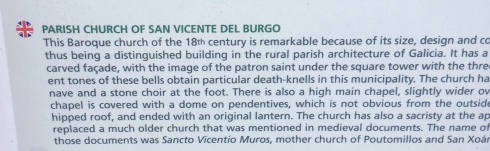
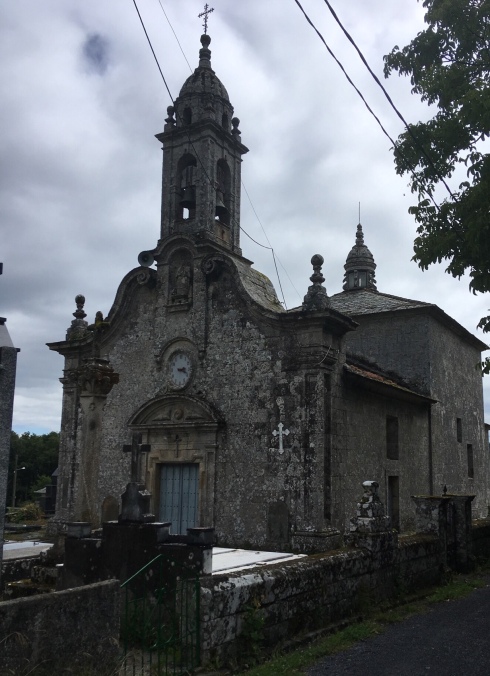
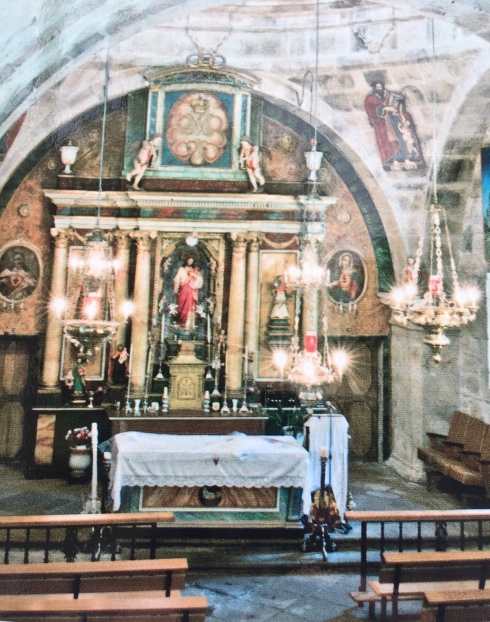 Lugo was now in the far distance and as there had been a lot of quiet road walking,it was a relief to get back on more traditional pathways.
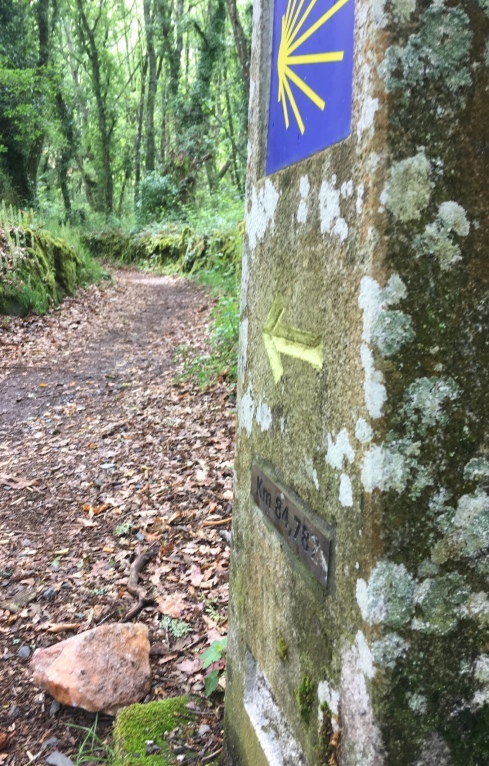 84. 7..KM to Santiago from here.
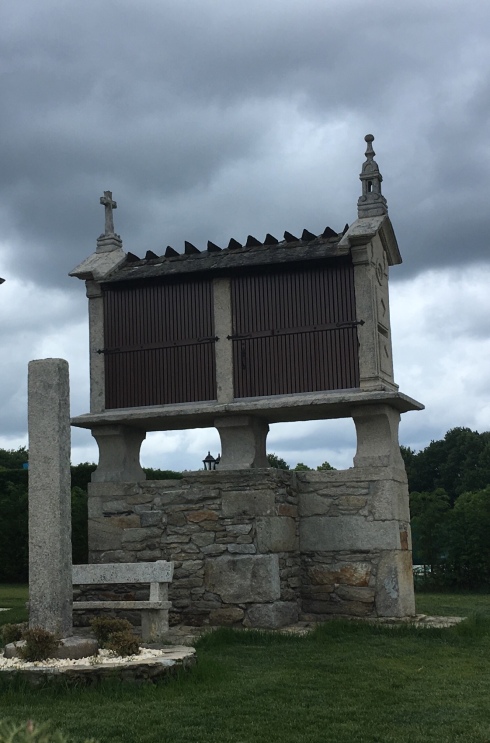 Rome’s influence extended to San Remoa daRetorta , where at the Albergue we were to ring our accommodation ( 8 km away ) for a lift. We did; they came.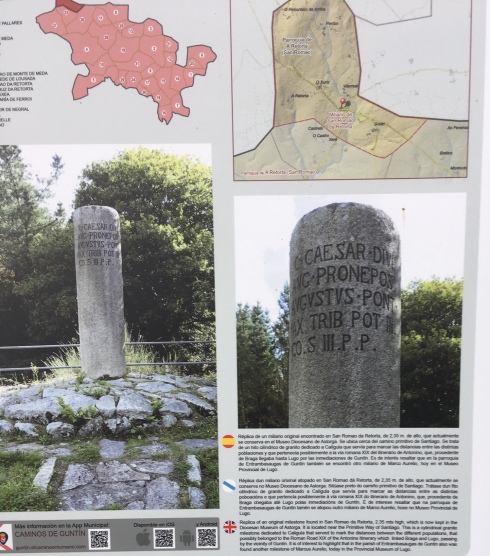
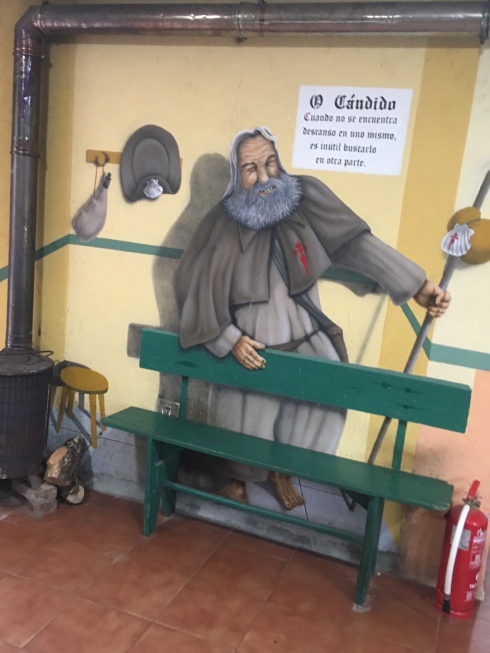
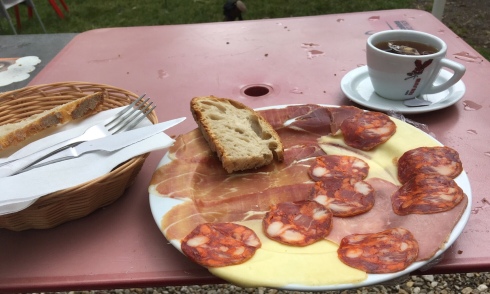 We were pleased with the basic, but clean room and will be dining later.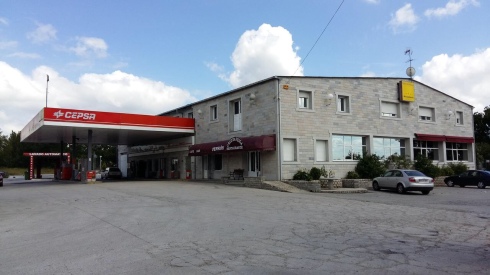
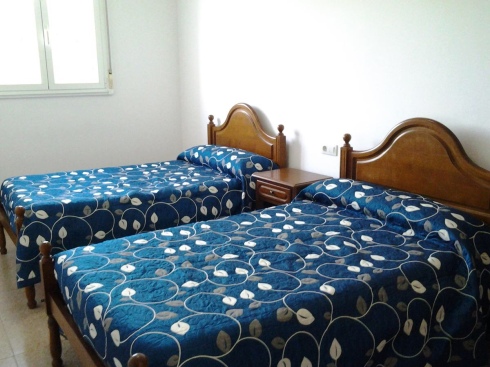
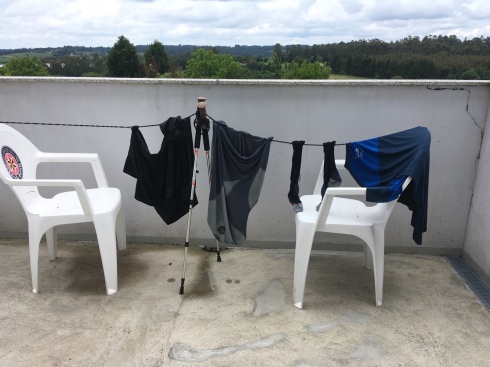
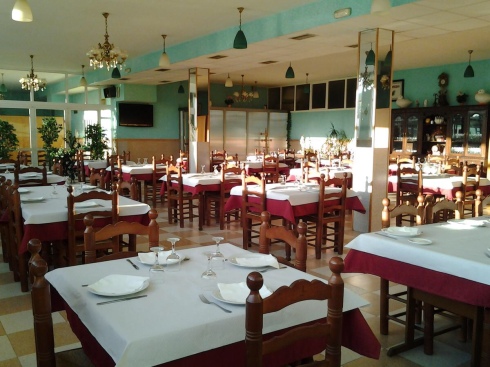 And it has stopped raining, the socks and tops are drying on the radiator- a Pelegrino’s work is never done – I love these stopovers, you never know how it will pan out .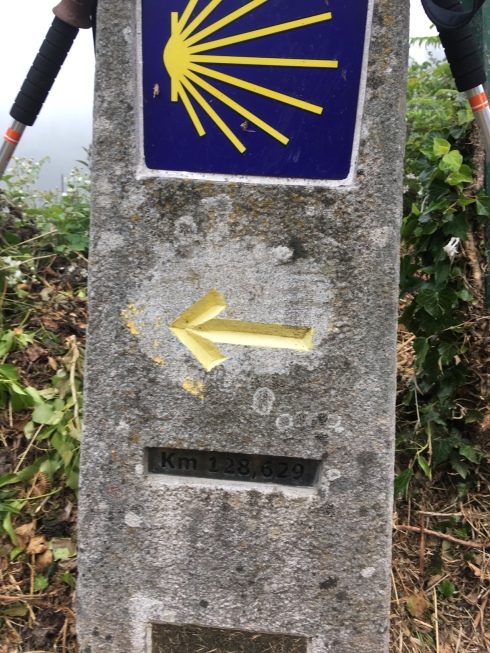
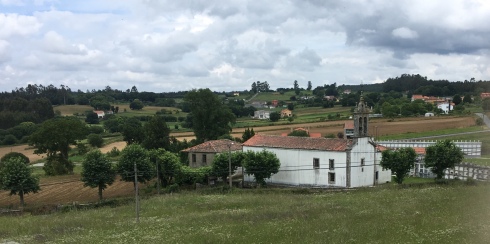
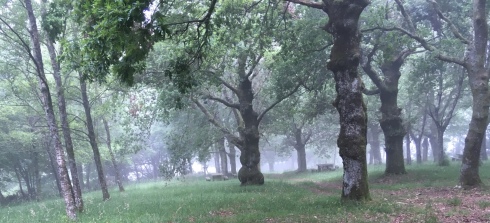
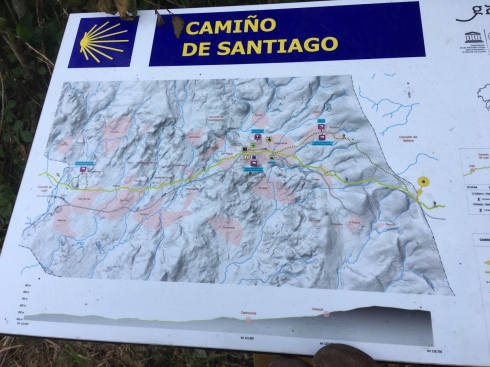 There was a heavy mist which lingered for a couple of hours. I spied this church in what looked like a picnic spot, neither of which seemed to have been used for some time. There was not the usual information board and I could find no reference in my guidance. It was a forlorn scene.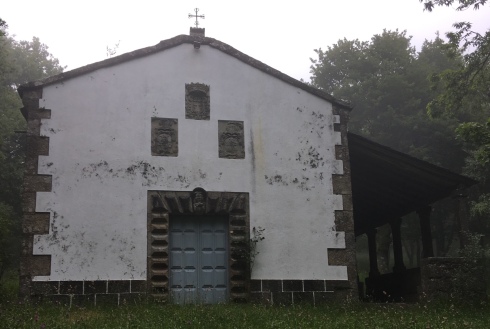
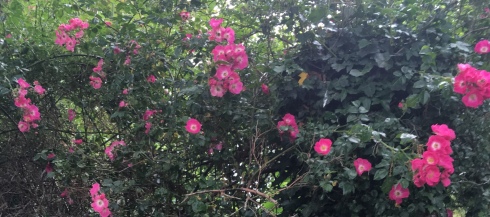
 Some brightness around the next bend. Roses are popular in this hamlet.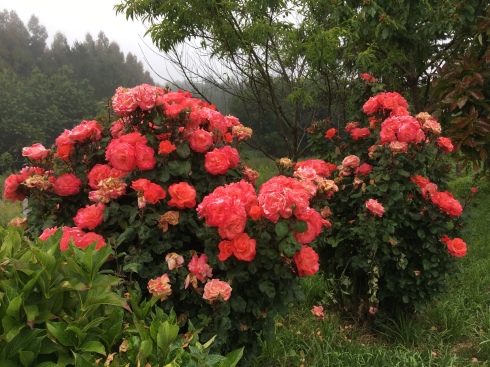
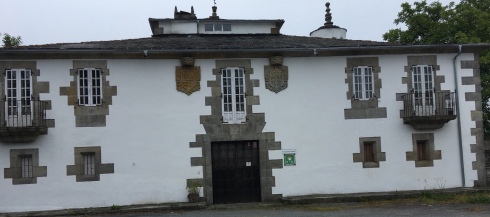
 I had read that there was an occasional, summertime – only coffee possibility in the next village which was famous for its 15 th century church – a national monument- and a regal Manor House that had been a Hotel, but which now was closed. The coffee spot was both unlikely and very welcoming – A Camino burger van!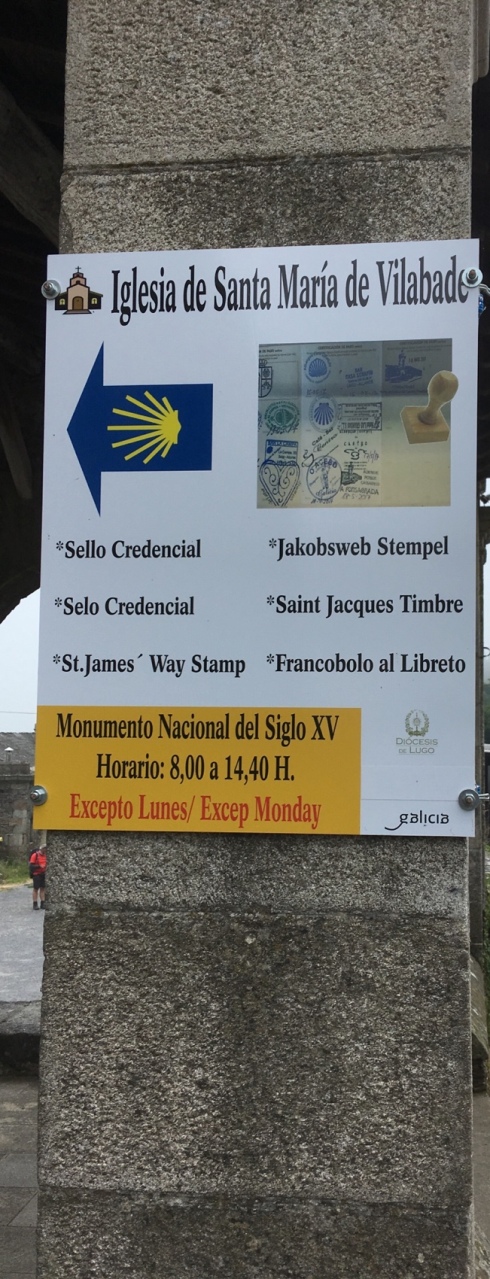

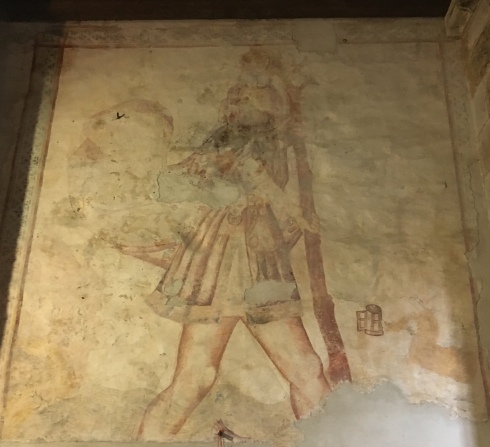
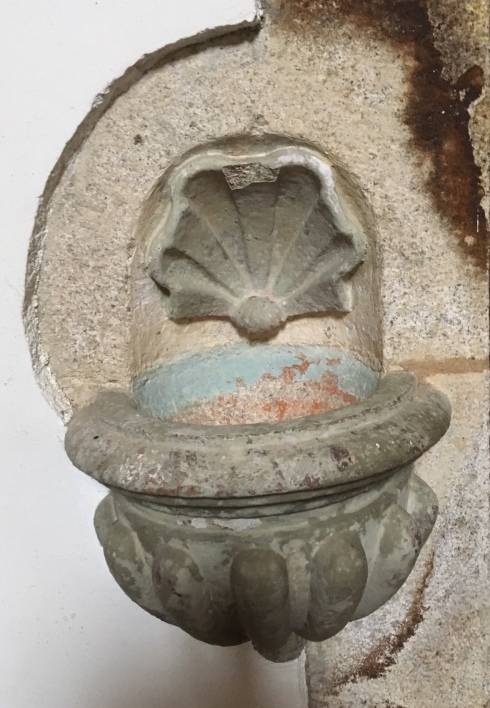
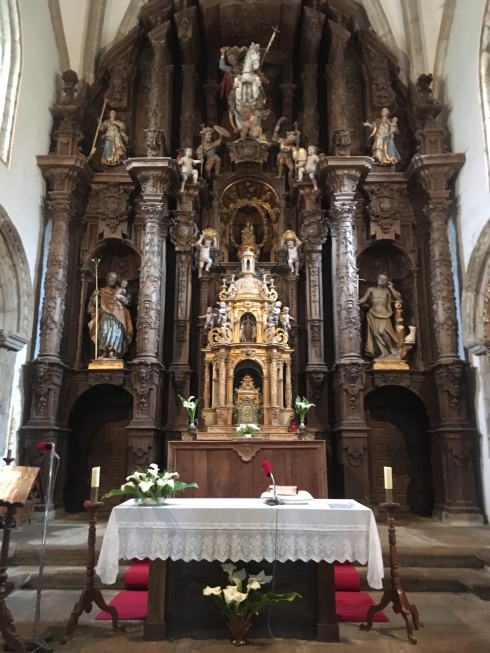
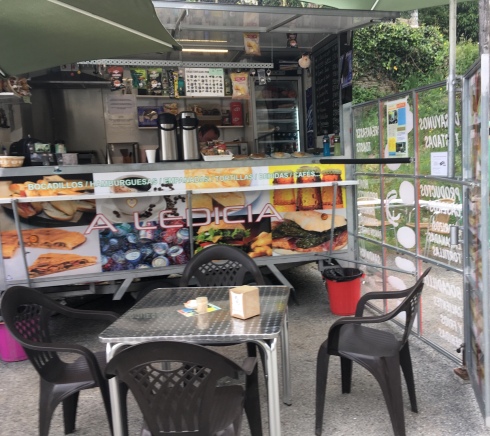 After enjoying a super large Americano and a slice of Empanada, the proprietor gave me a pen decorated with the Camino and his van – super guy.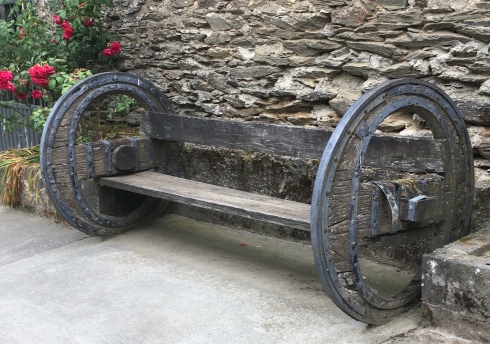
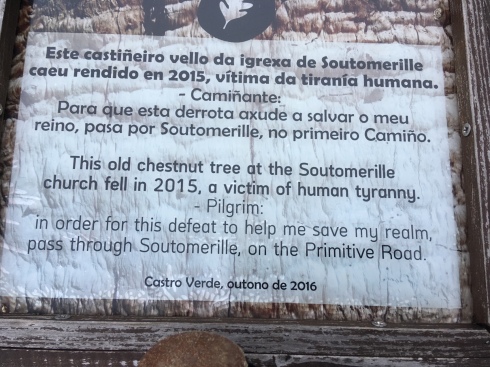
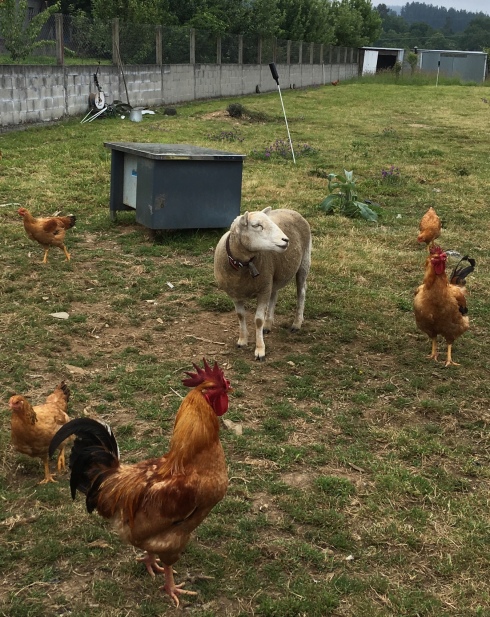 A little further on there was a sad scene.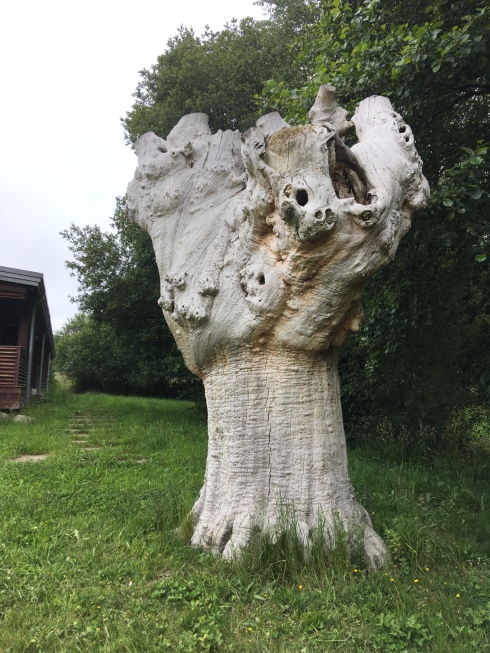
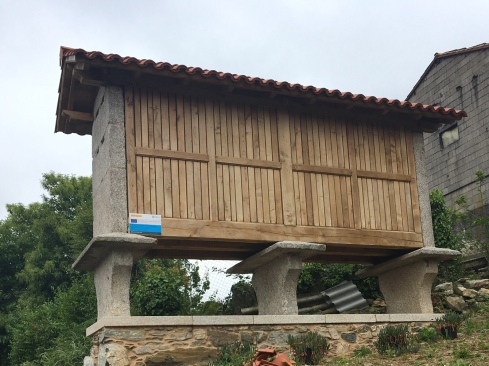
 The Primitivo has been much improved in its infrastructure with the help of The E U’s cultural arm.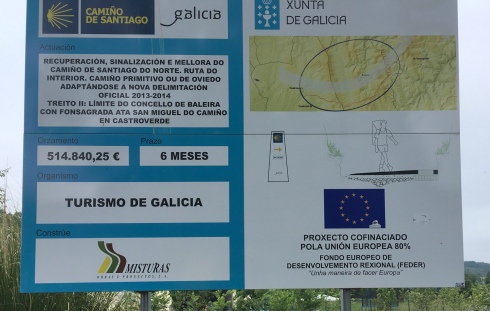
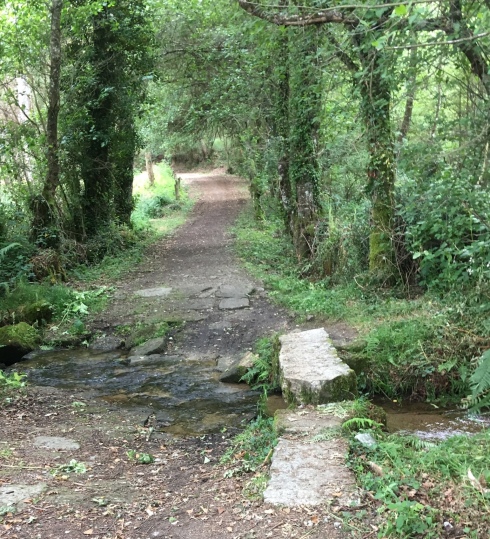
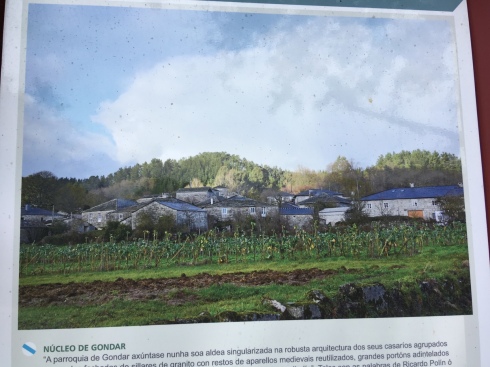
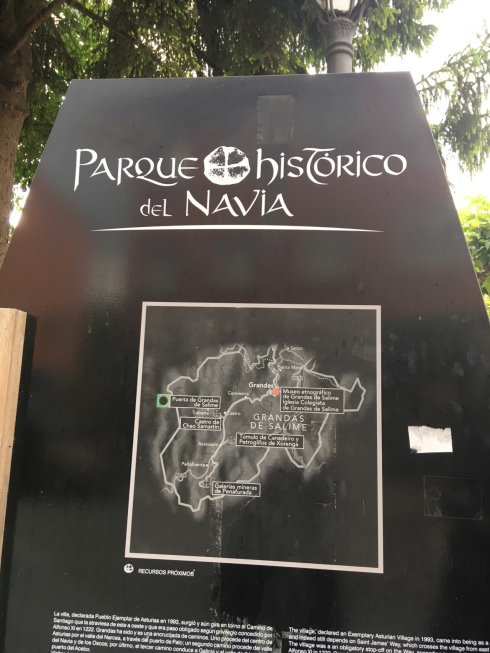
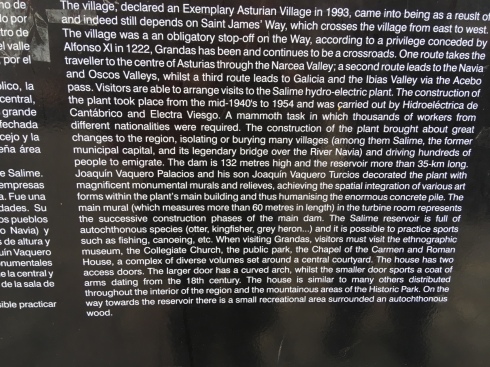
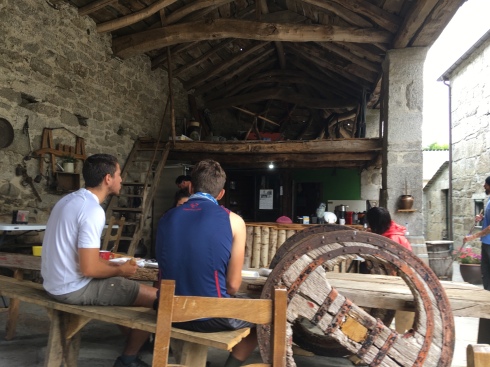 Renovating the Way, developing remote hamlets by assisting with the development of hostals, for example. More wagon wheels,too. There were several small villages along this etape and helpful notice boards provide an insight about their history.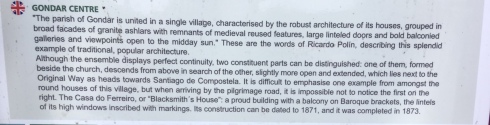
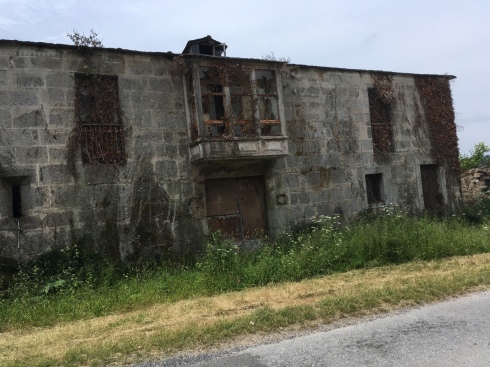 Not everything has been reclaimed and one wonders what fate befell this once imposing Manor.
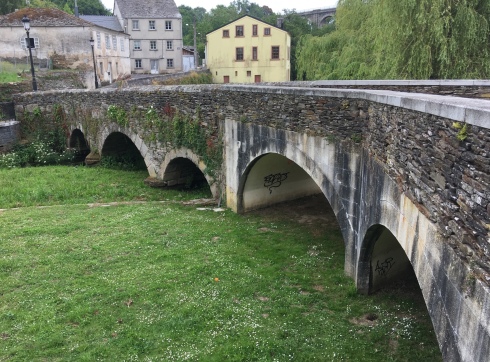
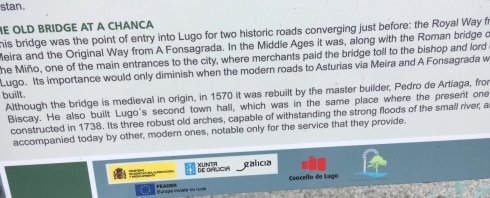
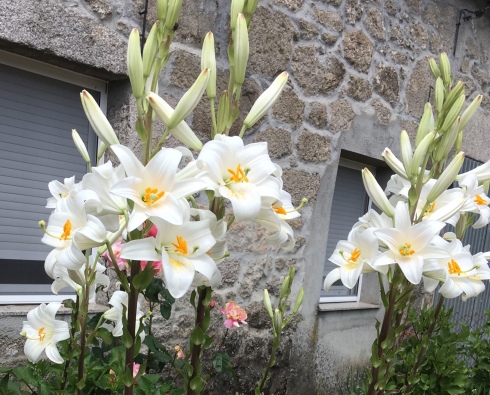 The lilies were a showcase. After several rather dreary kilometres ( compared to the rest of the walk), Lugo was nearing and the Primitivo enters the city via an ancient bridge and barrio.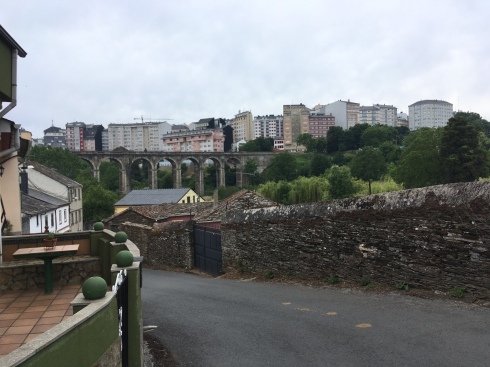
 It took me the best part of an hour to find the accommodation, passing Santiago’s chapel en route – Despite being here on another Camino four years or so ago,I had forgotten how big a city it is.
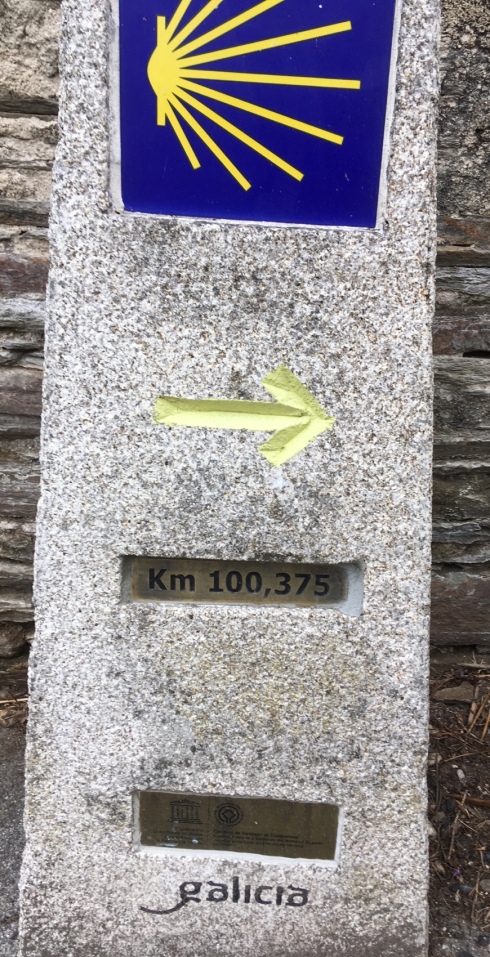 Only a 100 kilometres to Santiago,now.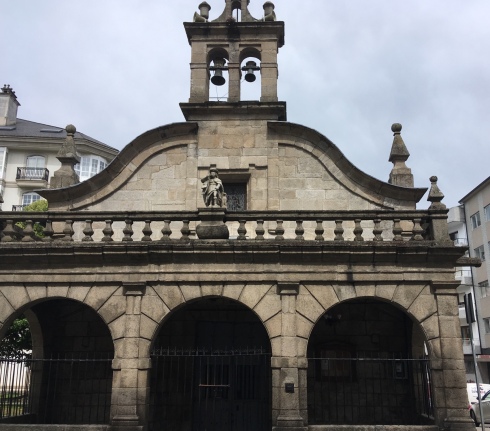
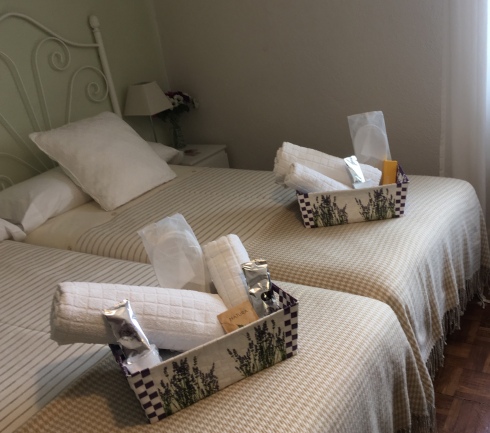
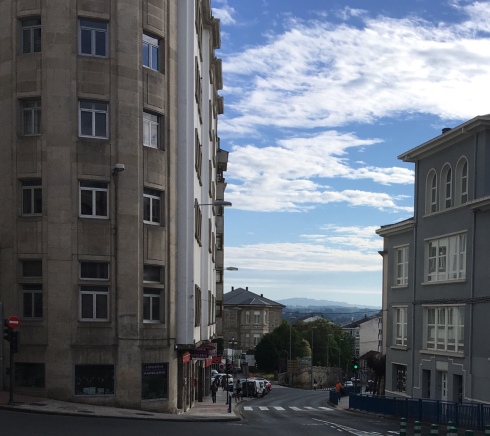 B& B Murallos Romano took some finding even with Google maps, but it was worth it as the host gave me a lovely, sympathetic welcome and urged me to enjoy tea and buns, English style.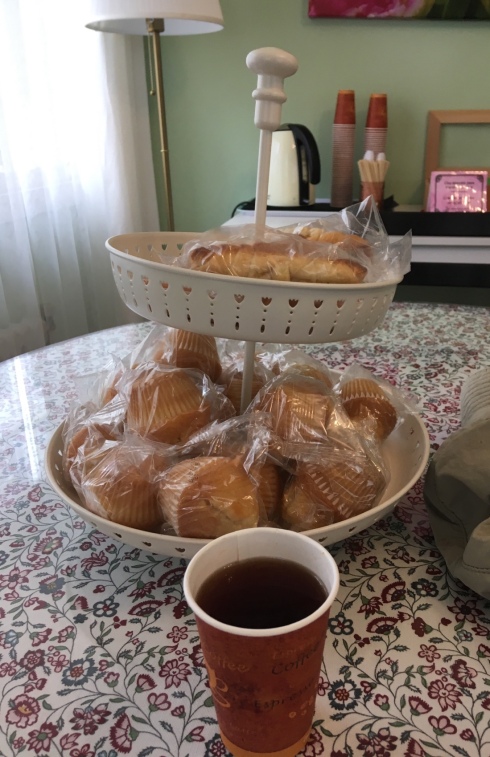
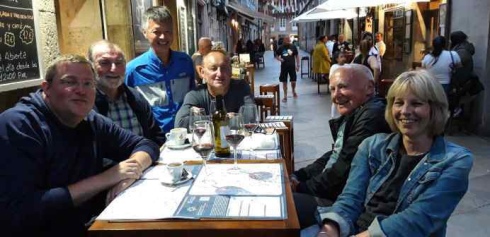
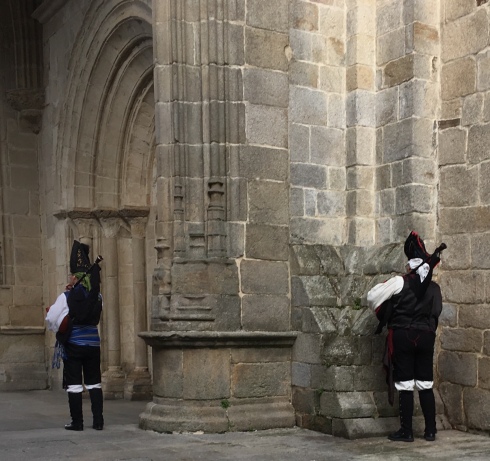
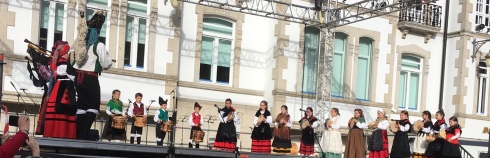
 After a shower and brief rest, it was time to head in to the old city to meet up with our three English amigos for a meal in the tapas area – we met up with other Pelegrinos who had been our daily comrades, by coincidence – when the Spanish pilgrims choose a restaurant you know it’s going to be good. Atmosphere enhanced by a concert celebrating Galician folk music and costume – just look at these wonderful children piping and drumming their hearts out in the Cathedral square.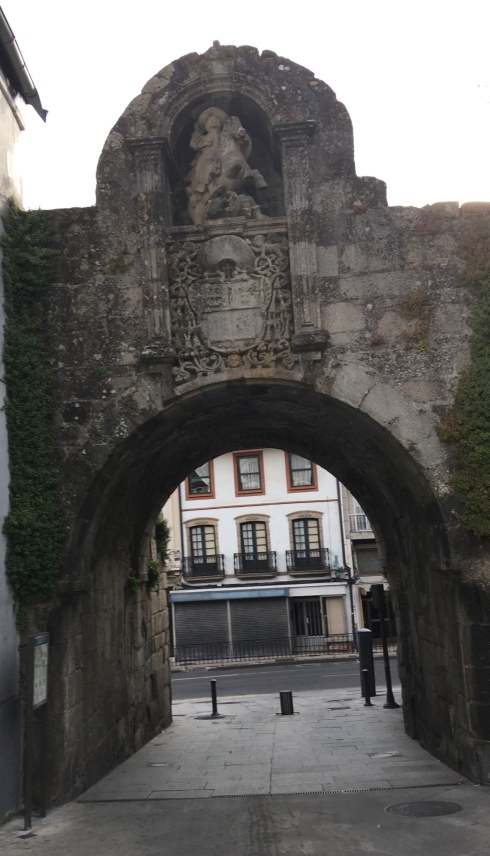
 This has been the longest stage of the Primitivo so far – the feet are standing up to it well, so far.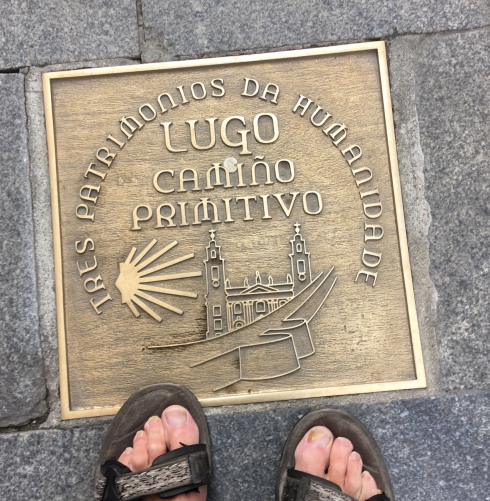
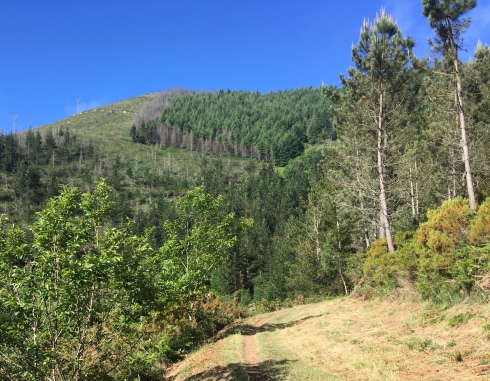
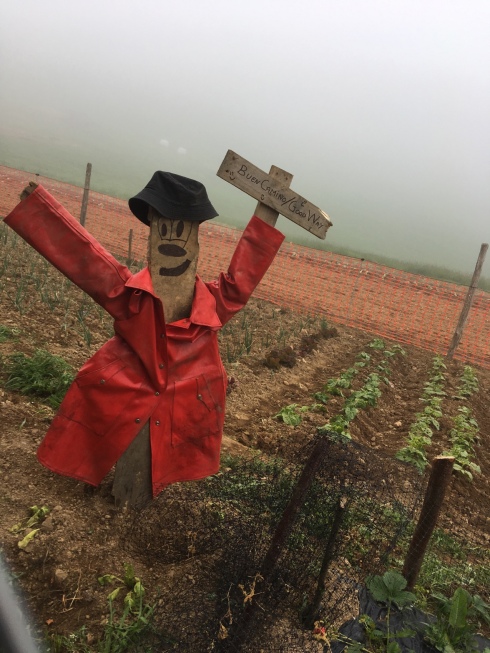
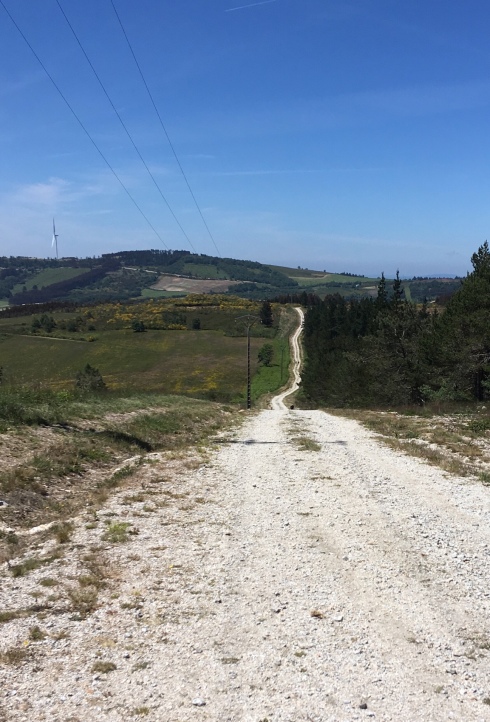
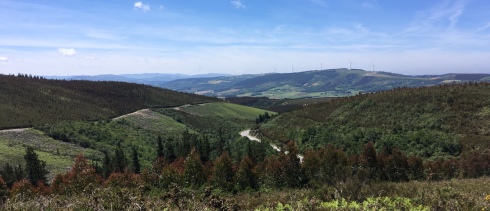
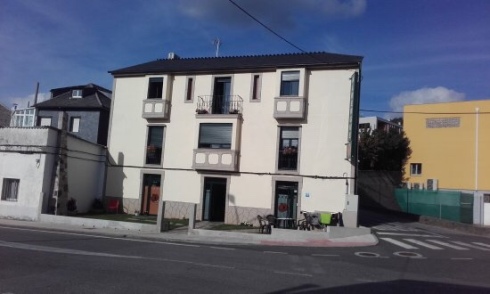
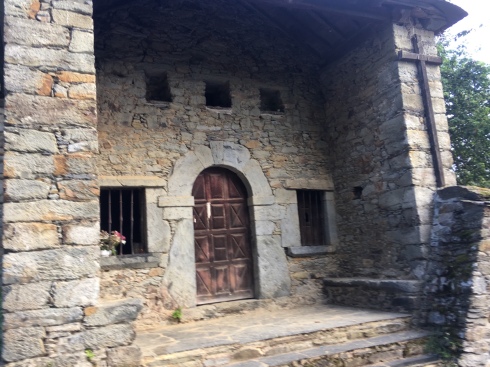
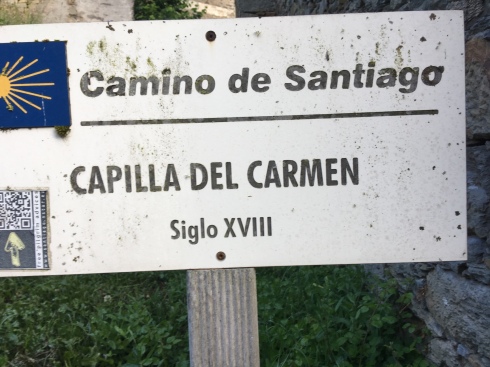
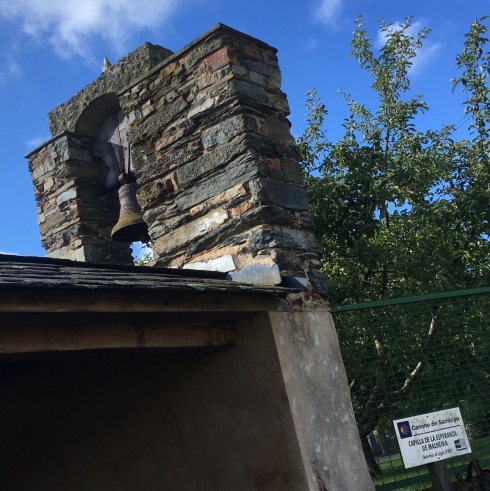
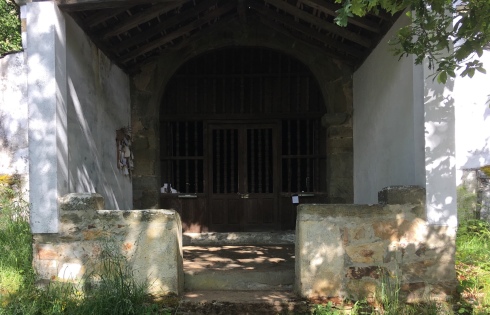
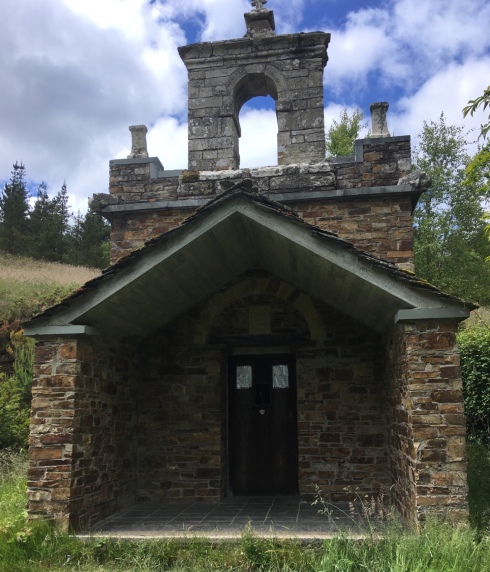
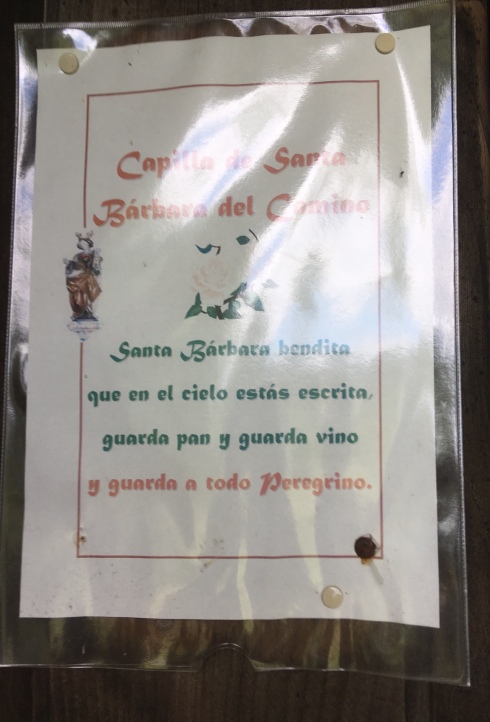
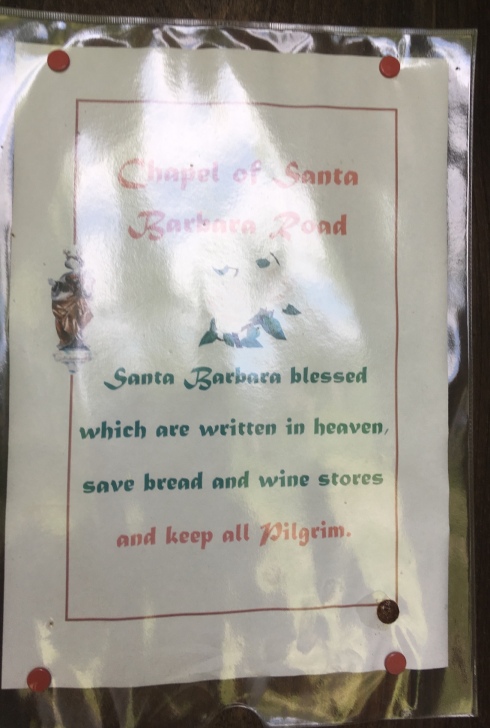
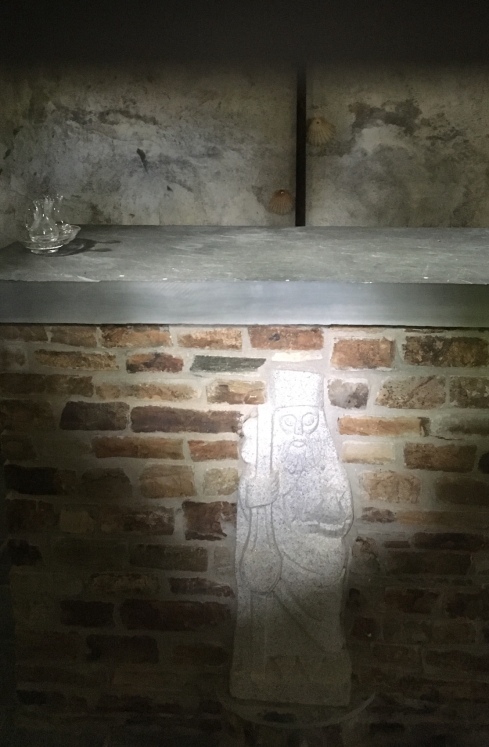
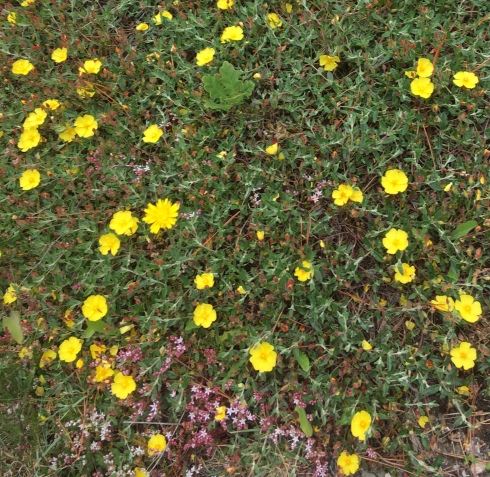
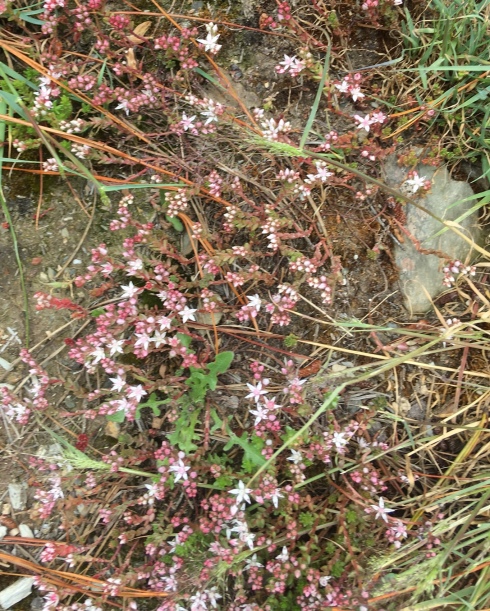
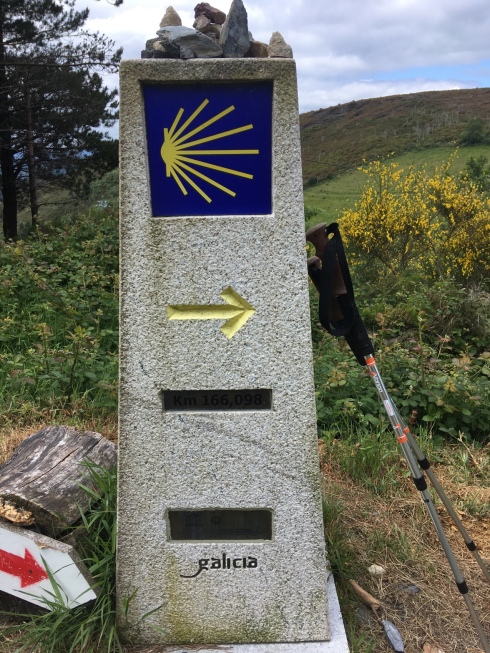
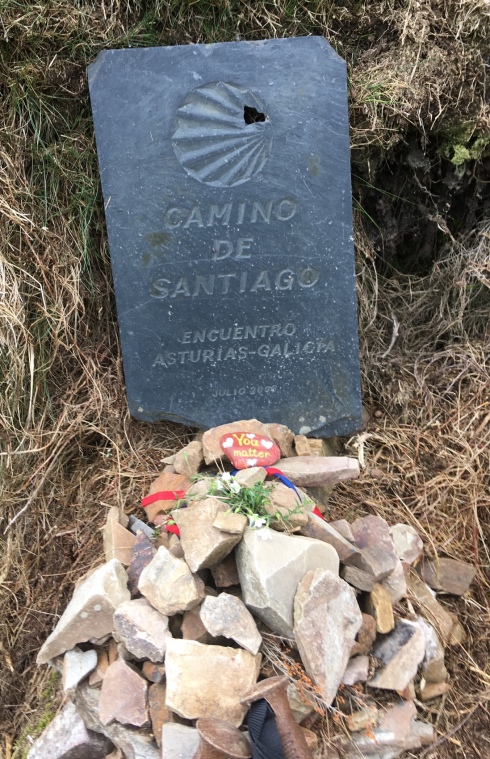
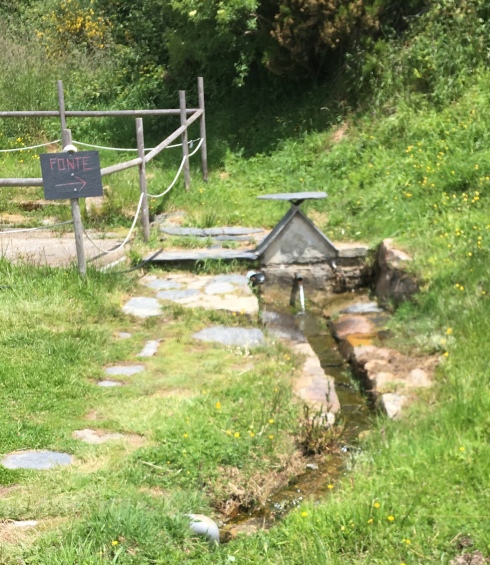 Bafflingly, the signage in the Asturias region is in the opposite direction to Galicia and most other regions that I’ve walked through; last sign in Asturias.

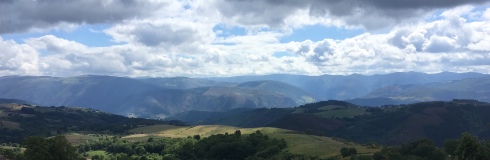
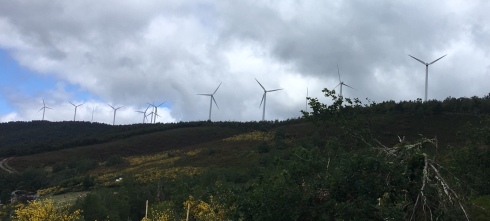
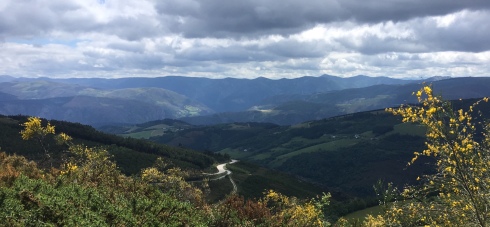
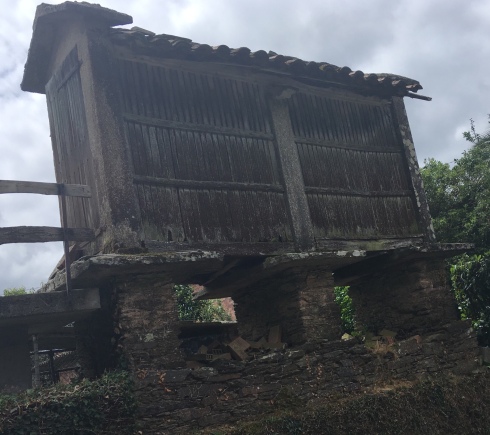
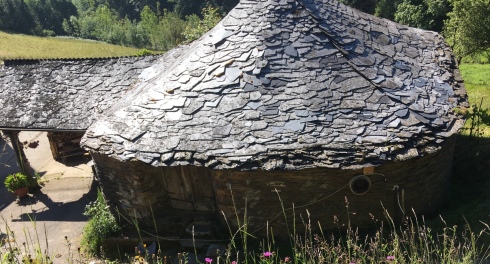
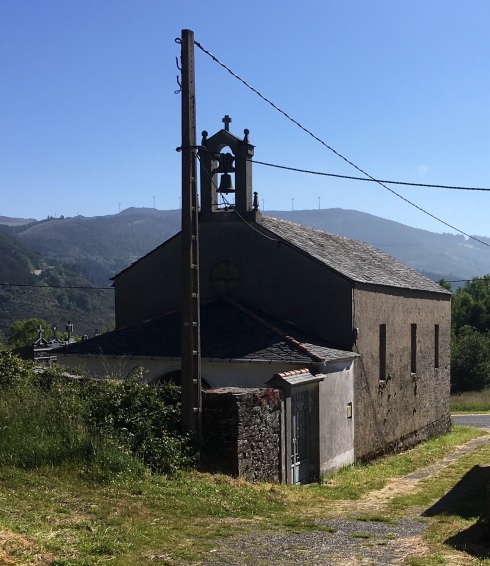
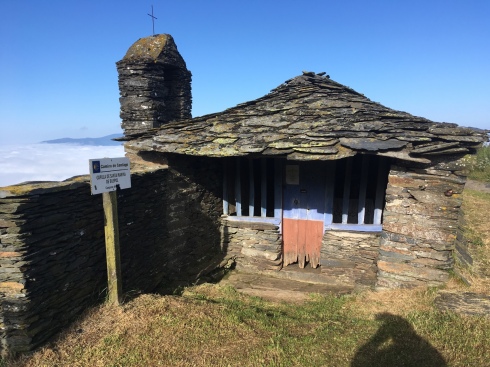
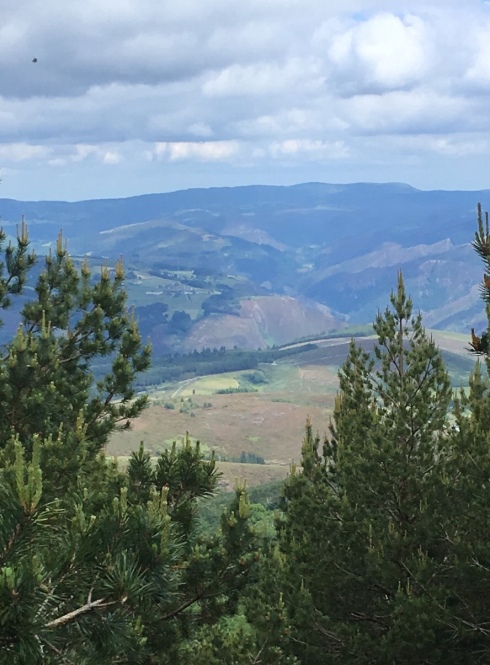 The local people don’t waste materials and even tiny stores are made from materials to hand like slate and stone.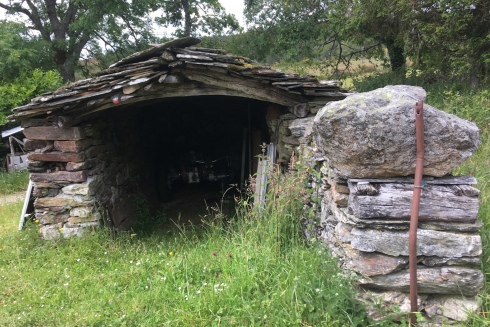

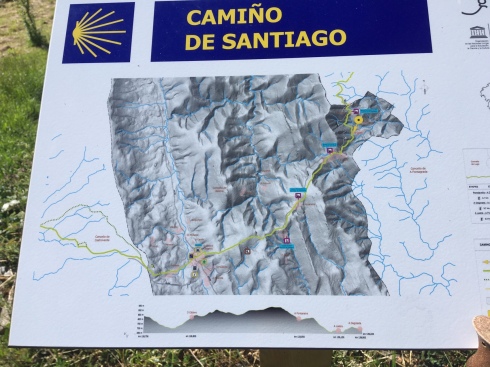
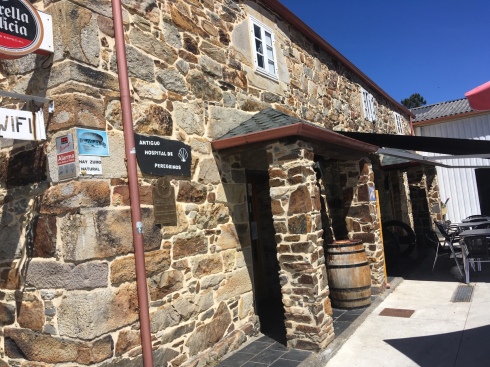
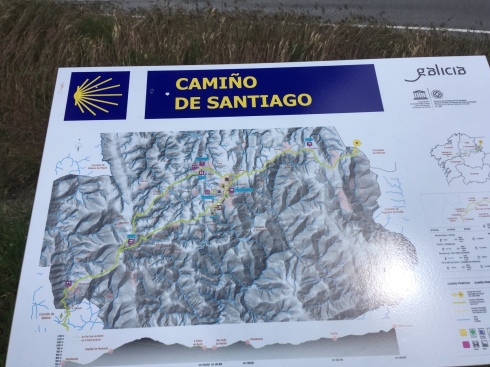
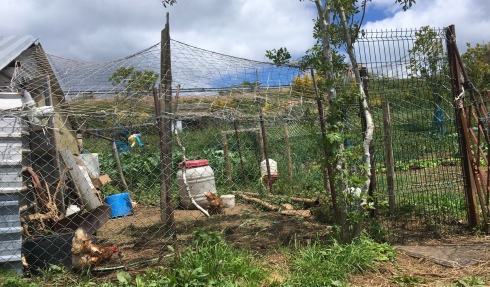 The signage has been good on this Camino and the information boards,too.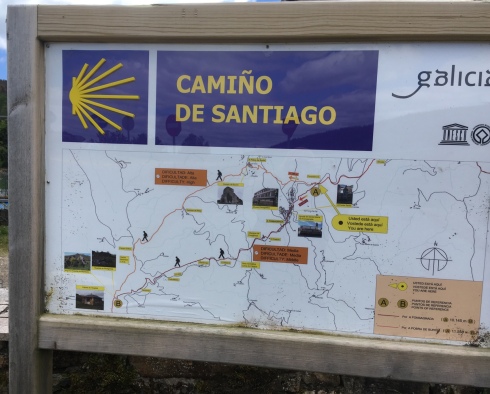
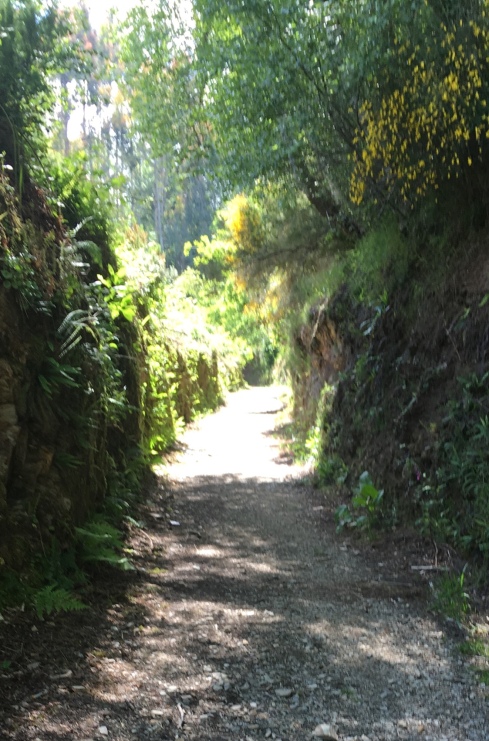
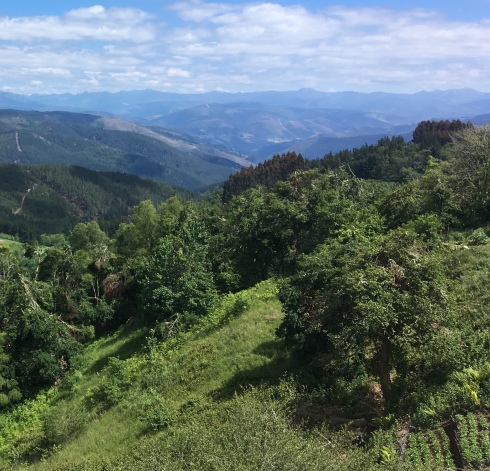
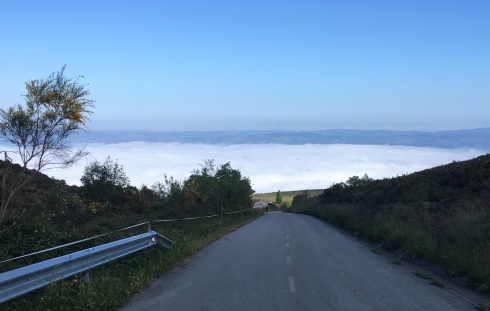
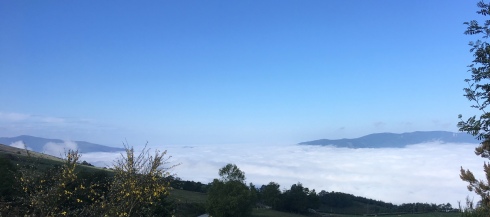
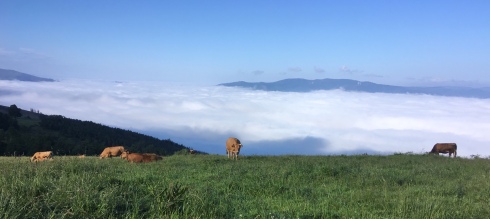
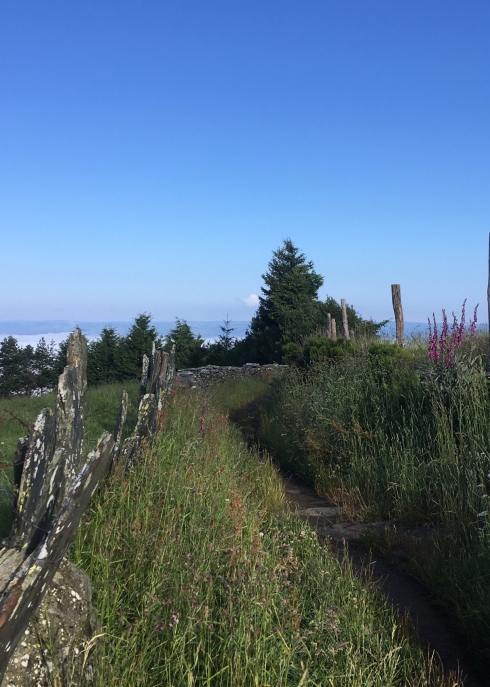
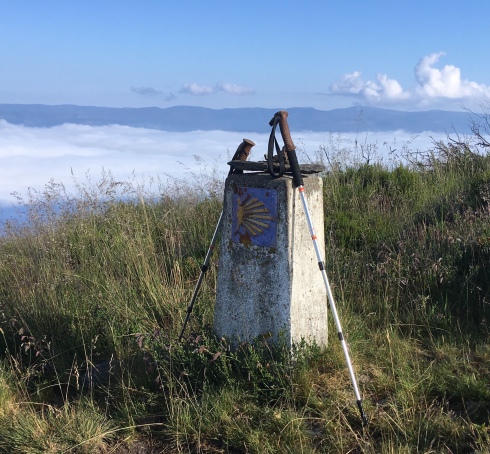
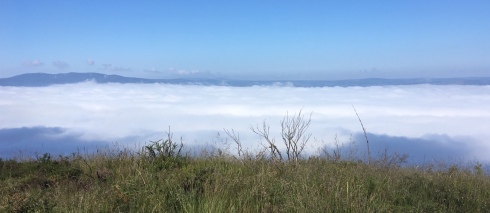
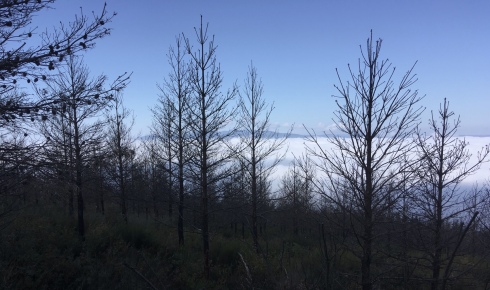
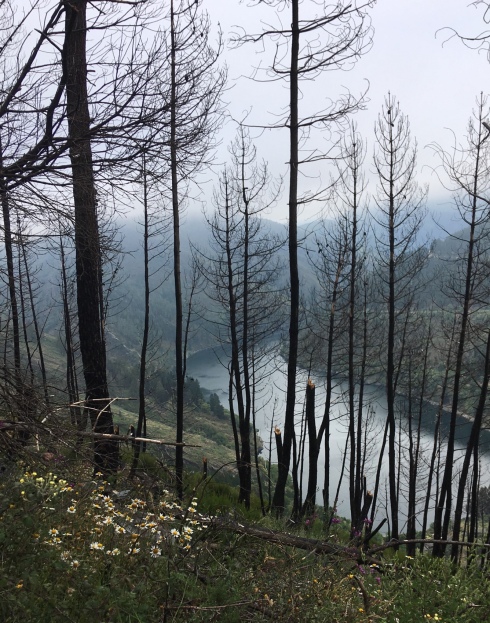
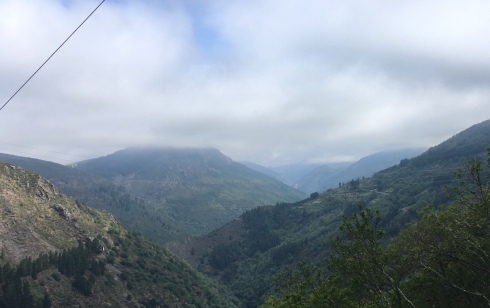
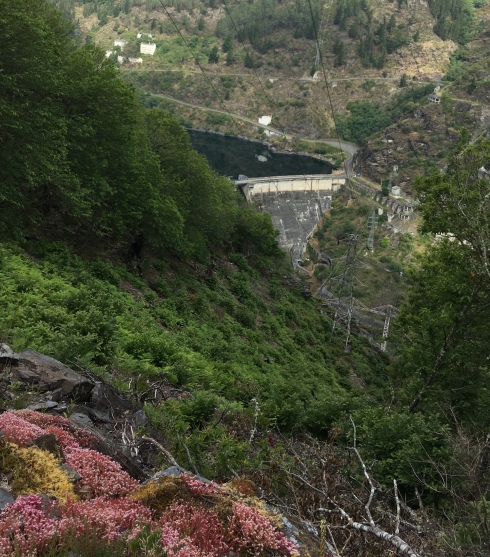
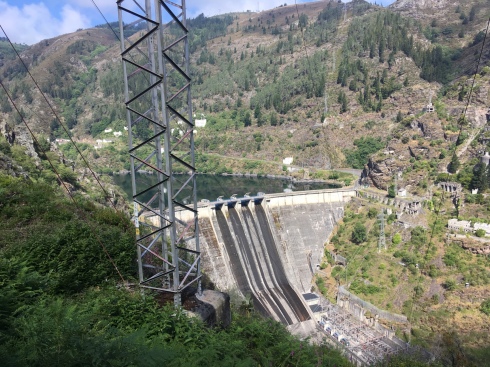
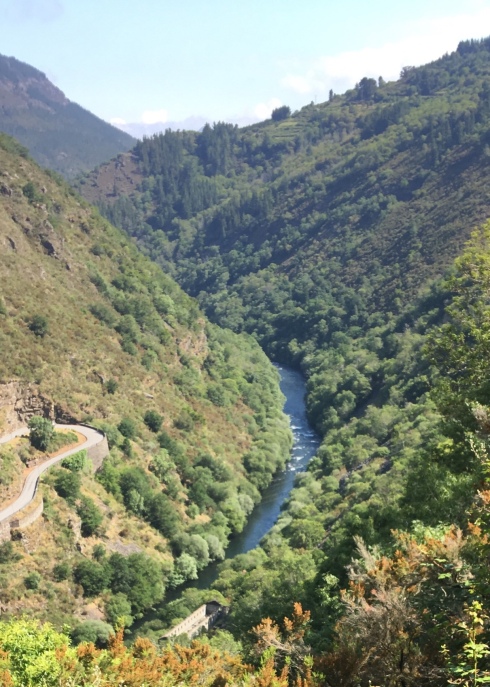
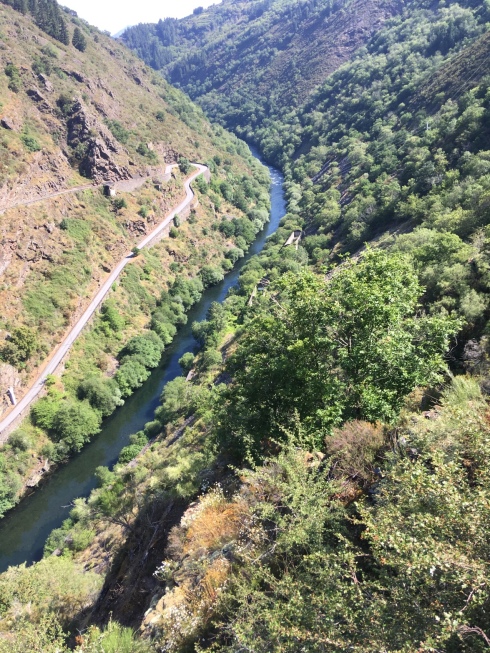
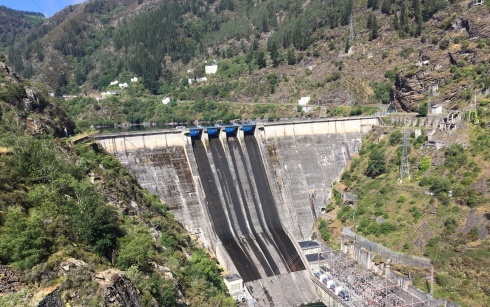
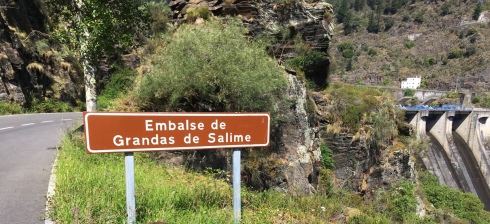
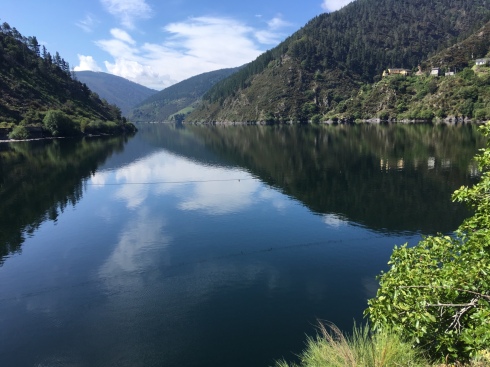
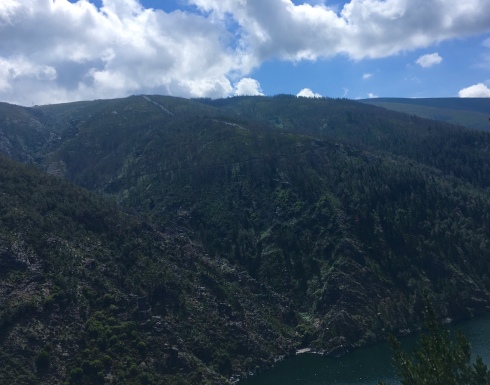
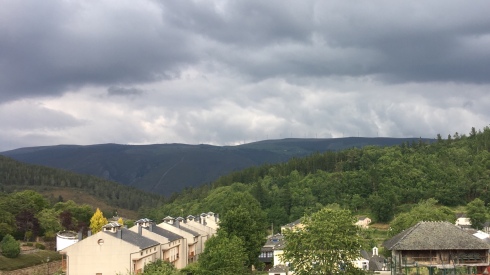
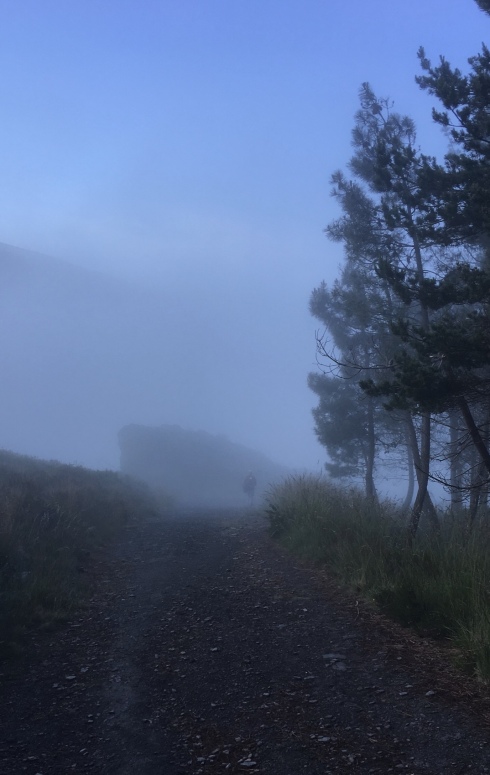 Lower down, after nearly an hour’s descent, the first views of the Embalse ( artificial lake )
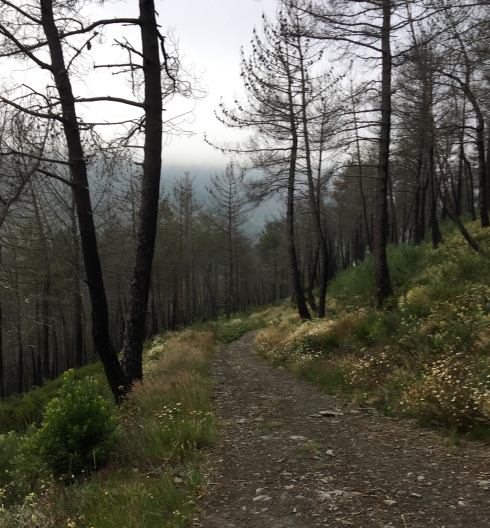
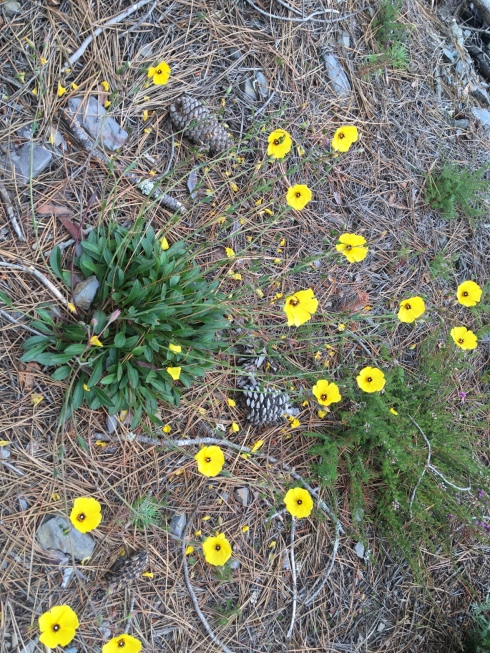
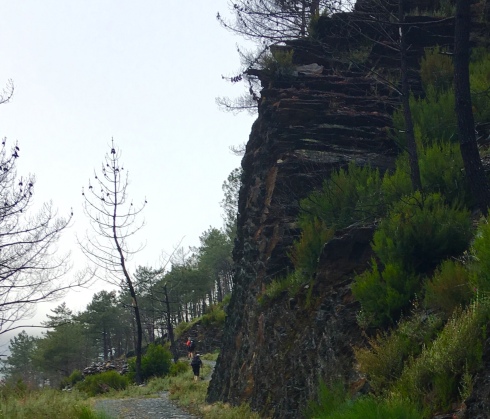
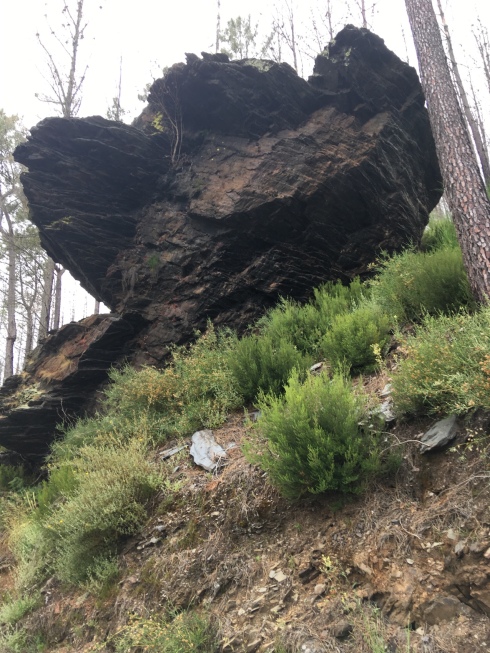
 ‘
‘
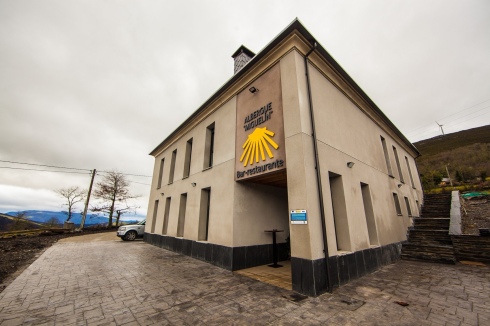
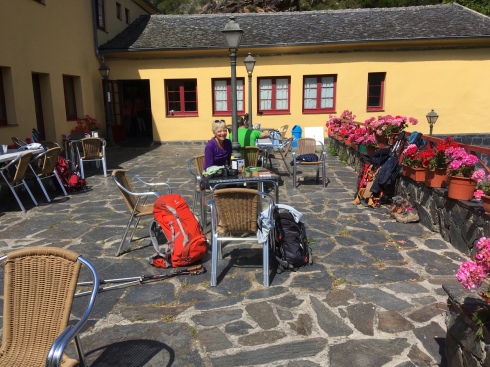
 Three and a half hours’ walking and this gem of a hotel was a welcome stop for coffee on its balcony.An Americano and one of Hannah’s cakes never tasted better.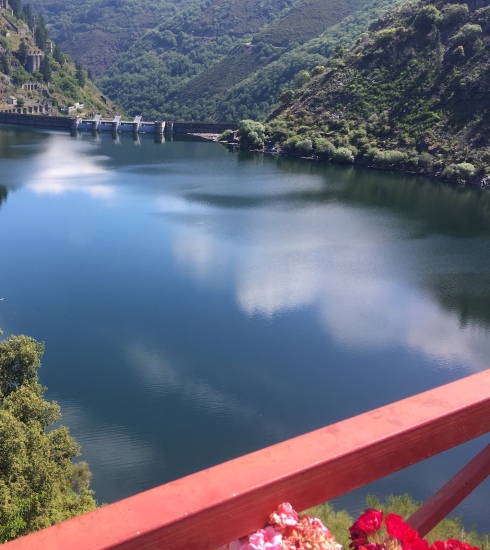
 ‘
‘
 ensuitepilgrim's Blog