“Leaving Campagnano you can adimire the enchanting views of Latium countryside, before coming at Veio Park, where you flank the Church of Madonna del Sorbo. Cross the inhabited area of Formello, where there is a wonderful hostel in the historical Palazzo Chigi, in order to undertake a long track later till Isola Farnese and La Storta. Bar and water in Formello and Isola Farnese.” Both the Francigena and the Caminos to Santiago de Compostela have strong links with the EU.With the weather likely to be warm ,we need to take plenty of fluid with us, although there will be at least two villages with facilities. We leave Campagnano via the Porta Romana gates ,heading slightly uphill ,following signs to the Santuario de Sorbo, then entering Parco VeioSanctuary of the Madonna del Sorbo and an enthralling porcine narrative : – “There is a legend that tells the tale of the founding of the Sanctuary of the Madonna del Sorbo. It runs thus: There was a young man of Formello who kept his pigs on the grazing land in the Valley of the Sorbo. One day he noticed a sow run off alone and return and hour later. Having watched the animal repeat this for several days in succession his curiosity was aroused and he decided to follow it. The sow climbed the hill to the Sorbo tree where it sat on it’s haunches raising it’s forelegs as if in prayer, and gazed fixedly at the icon of the Virgin and Child nailed to the tree. The Madonna spoke to the swine herd telling him to run to Formello and tell of the apparition saying that, should they not believe him, she would perform a miracle. So it was that when no one believed him, the swine herd thrust his mutilated arm into his pocket and drew it out complete with hand. Thus convinced the people of Formello carried out the Virgin’s wish and built a sanctuary at the site of the apparition. They kept the Sorbo tree with the icon of the Madonna that had spoken to the swine herd, as it stood, building the church round it. The new church became a place of pilgrimage.”The Assumption of Mary into Heaven and a chance to get a stamp in the pilgrim passport.Park of Veio – With nearly 15,000 hectares, the Veio Regional Natural Park extends north of Rome between the Via Flaminia and Via Cassia and includes the so-called Agro Veientano. It is the fourth largest park in Lazio and covers an area of natural, historical and cultural interest. It includes the municipalities of Campagnano di Roma, Castelnuovo di Porto, Formello, Magliano Romano, Mazzano Romano, Morlupo, Riano, Sacrofano and the 15th Municipality of the Province of Rome. The network of trails is signposted by the CAI and covers 99 kilometres, including the Via Francigena.A wide gravel road takes us through pasture land towards Formello.Erected by the VF Confraternity of Formello.FORMELLO A medieval town a few kilometres from Rome, in the heart of the Veientano countryside: Formello, crossed by the Via Francigena, is rich in history and immersed in a splendid natural landscape.
Starting from the Piazza named after Donato Palmieri, local painter and pupil of Vasari, who painted the frescoes in the church of San Lorenzo, we pass through the ‘Porta da Capo’ dating back to the Chigi era. From here begins Via XX Settembre, the main road through the town and along which the main buildings are located. On the 15th-century Piazza San Lorenzo are Palazzo Chigi, the Church of San Lorenzo and its Oratory of the Nativity, and the Council Building; continuing on we come to the Church of San Michele Arcangelo and then to the other monumental entrance to the town, the ‘Porta da Piedi’.
After refreshments we depart along the central street as it descends among old stone and stucco homes,reaching the valley floor where we reenter the Parco Veio. The road becomes a path through Alfalfa and Bamboo trees, then heading up past a sports complex. After crossing a bridge look carefully for a poorly marked left turn onto a gravel road. Shortly we come to a Veio shortcut option ( 1.8 KM ) offering a shorter route to Isola Farnese, bringing us alongside Etruscan archaeological sites and an ancient mill.
The centre of modern Isola Farnese is a non descript ,disappointing commercial cluster where the Via Cassia meets the Via dell’Isola Farnese. Medieval Isola, easily missed by walkers, is a cluster of buildings around the castle ( now a wedding venue ).
La Storta Sacro Cuore church
Although La Storta is the official ending of this stage our accommodation is RESORT LA ROCCHETTA in La Guistiniana.
This is situated a little further on from La Storta – bus Urbana #201 “Mancini” from La Storta is a possible, alternative option. “A 3-star hotel in Rome in the La Giustiniana area, the Resort La Rocchetta is immersed in the greenery of a residential neighborhood, within the Veio Regional Natural Park – crossed by the last stretch of the VIA FRANCIGENA -, a few meters from Via Cassia , close to the main communication routes and the gates of Rome. Converted from an old farmhouse and immersed in the greenery of a lush garden, the Resort La Rocchetta is an oasis of peace with large outdoor spaces, convenient parking and a generous buffet breakfast service. “ We stayed one night during our Francigena pilgrimage
“We stayed one night during our Francigena pilgrimage.Beautiful building. Clean rooms. Friendly and helpful staff.” RECENT REVIEW April,2025 Restaurant Antica Osteria Da Pietro has good reviews – 11 minute walk.
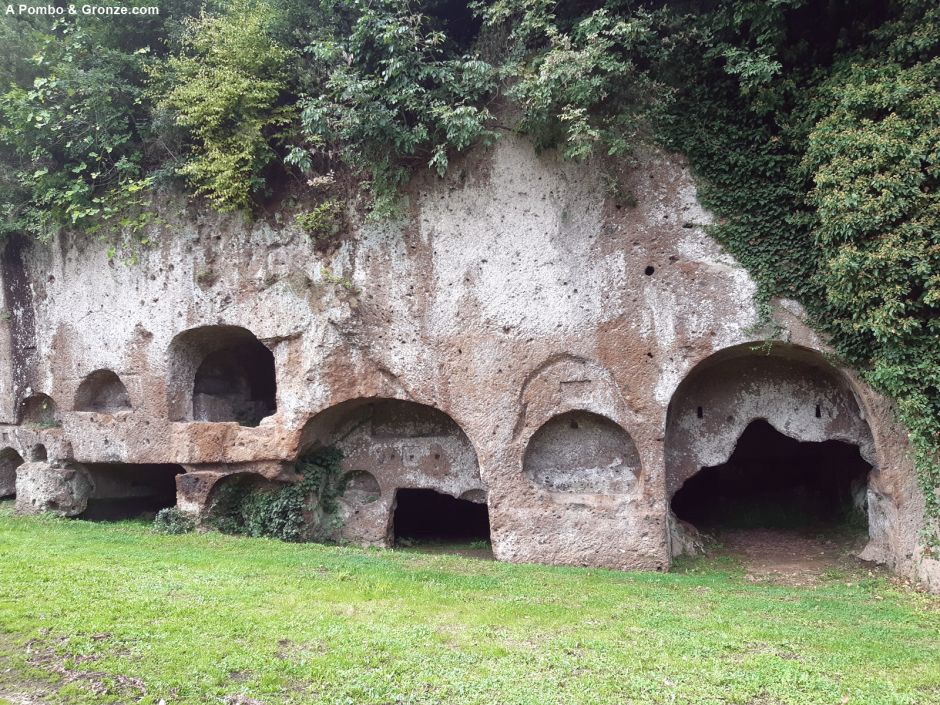
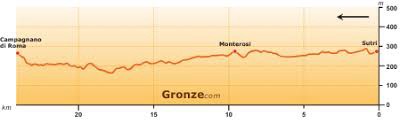
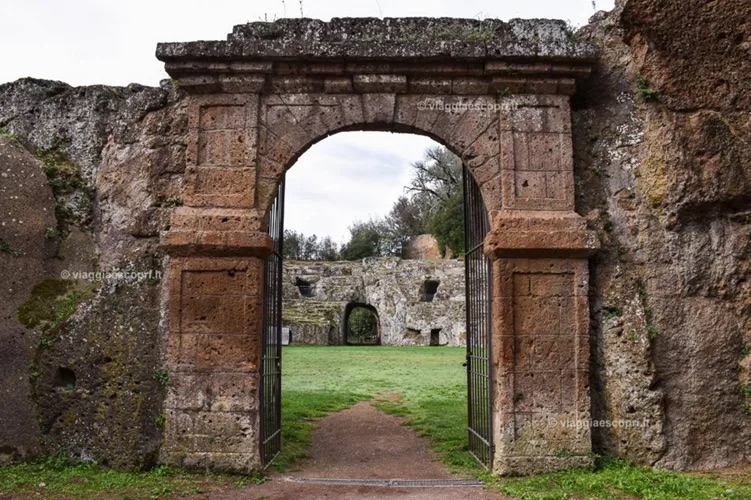
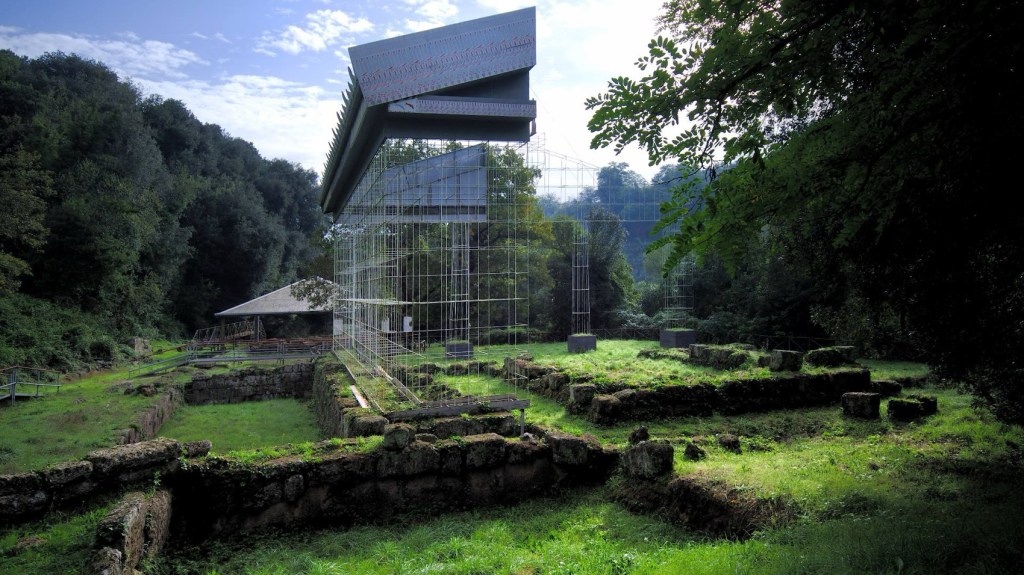
Sutri Necropolis Mostly fields and forests walking with refreshing stops at Monte Gelato and Monterossi. Bearing in mind that it is Sunday,best to take plenty of water/snacks just in case bars are closed.Apparently Campagnano is a small town typical of Lazio,full of life in the evenings,particularly in the more modern piazza just outside the Porta Romano gates.Sutri’s Ampitheatre is the departure point and once again we are presented with the dilemma of a choice of routes. A quieter exit along Via Dei Creti which adds 3.2 KM to what is already a longish day, or to keep to the official route by turning right just after the Ampitheatre towards the SP40.
Shady forest trails.
We pass the National School of Golf,quite a contrast to the surrounding countryside and make our way towards Monterosi,slightly uphill.
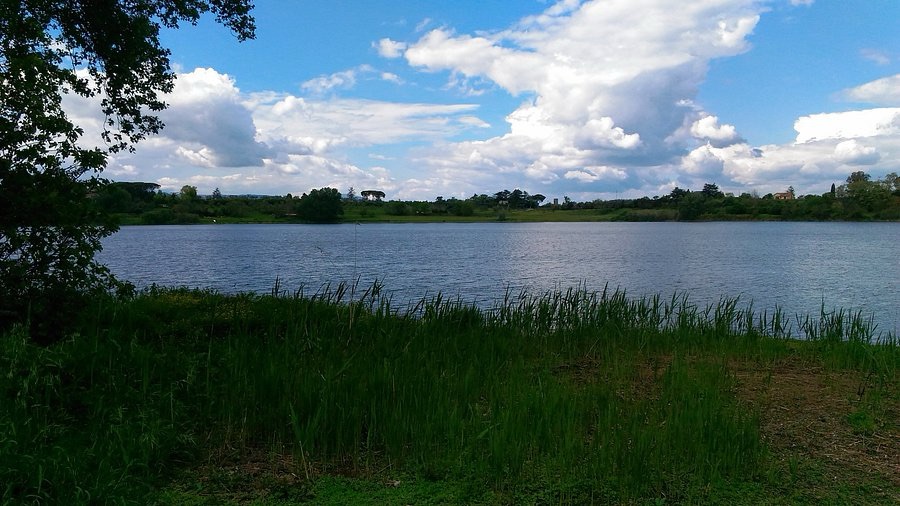
The town has a long and colourful history including invasions, papal interventions and assassinations. There is a small 30-hectare volcanic lake within the city limits.
Lago Monterosi.
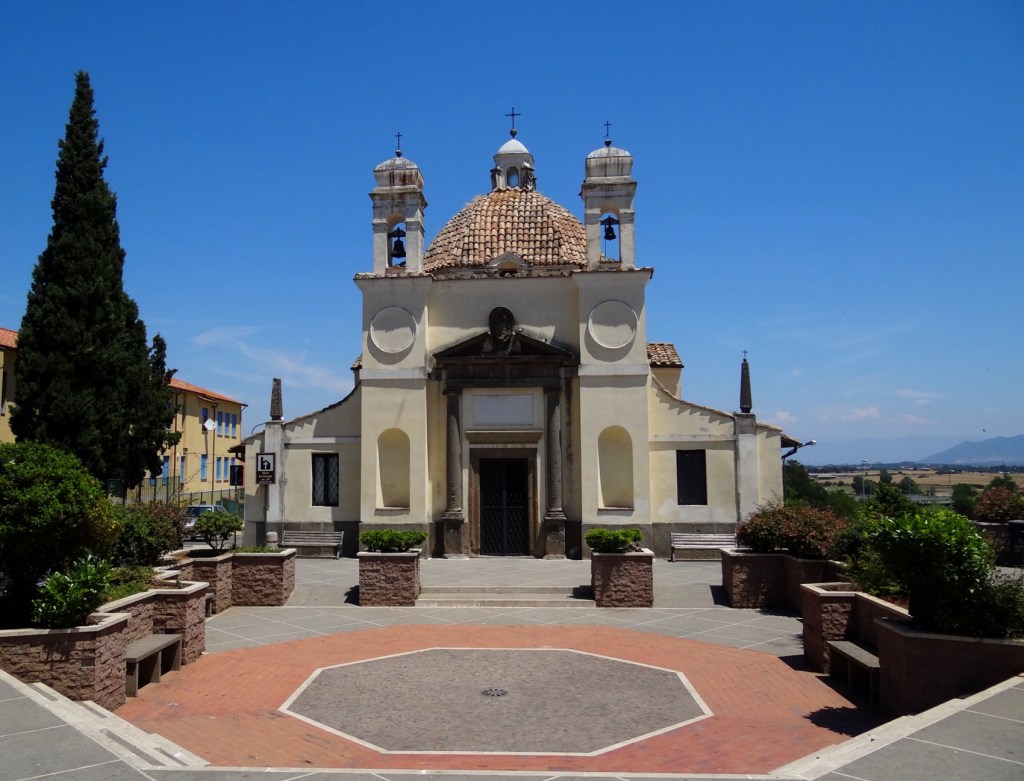
The unusual Renaissance-era Chapel of San GuiseppeHopefully it will be open .
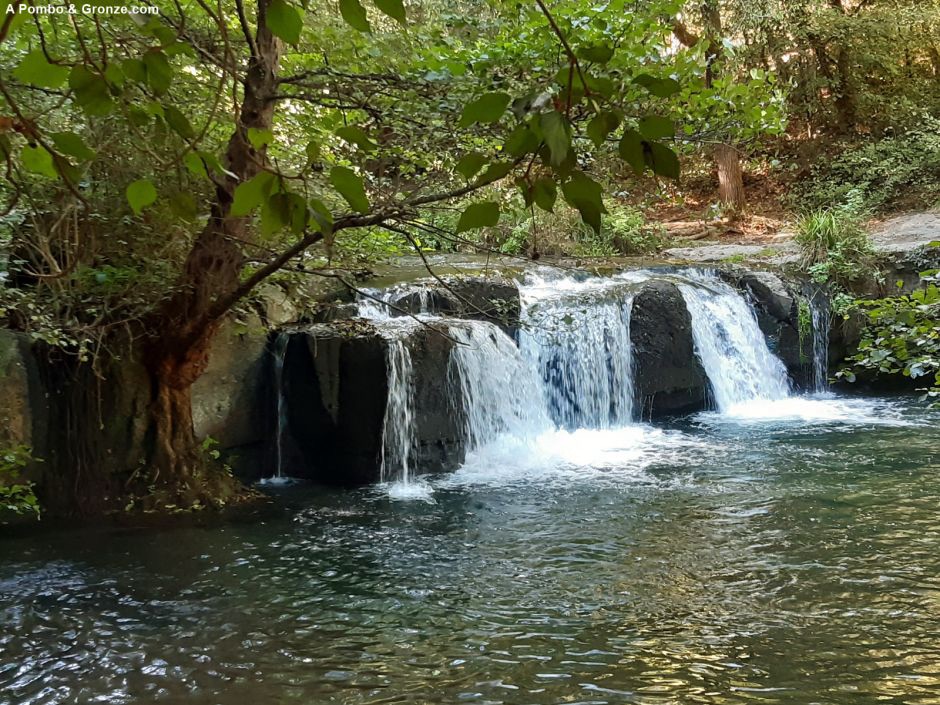
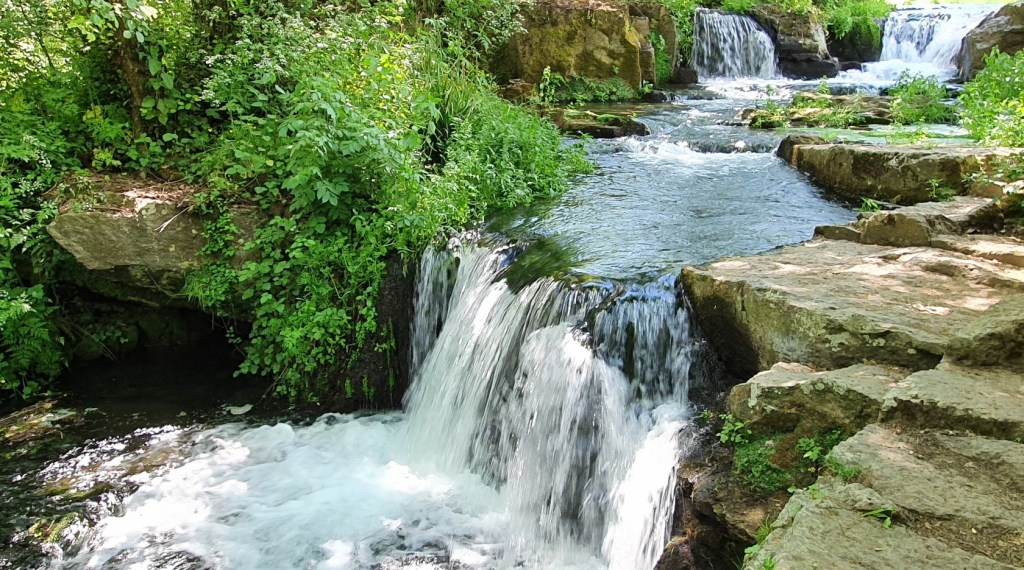
A straightforward route to the next stop of significance, Mont Gelato with its renowned waterfalls.
Monte Gelato Falls are a series of small waterfalls which form part of the Treja River and can be found in the Treji Valley Park. This is a popular picnic area at weekends,especially trippers from Rome.
We fork left after the park and walk upwards along an asphalt road, through hazelnut orchards. We come close by the Vallelunga motor racing track ( No Italian drivers’ jokes please…oh go on then ). We descend to cross the bed of a season stream,running alongside the Parco Regionale Di Veio.
Today’s saunter, not unusually, ends with an uphill climb on switchbacks before sighting Campagnano.
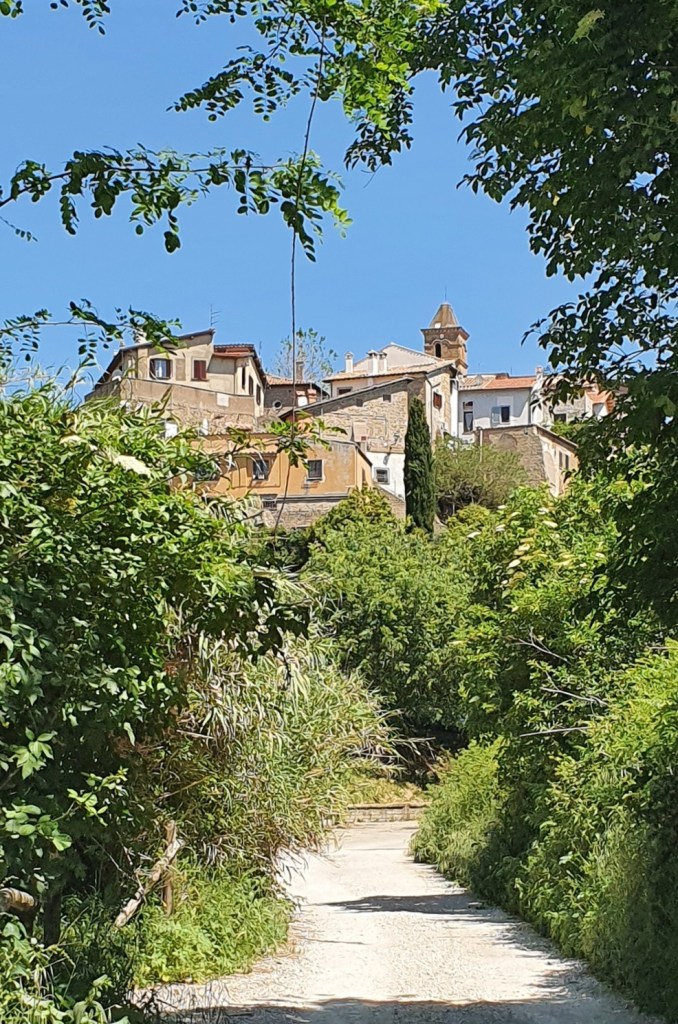
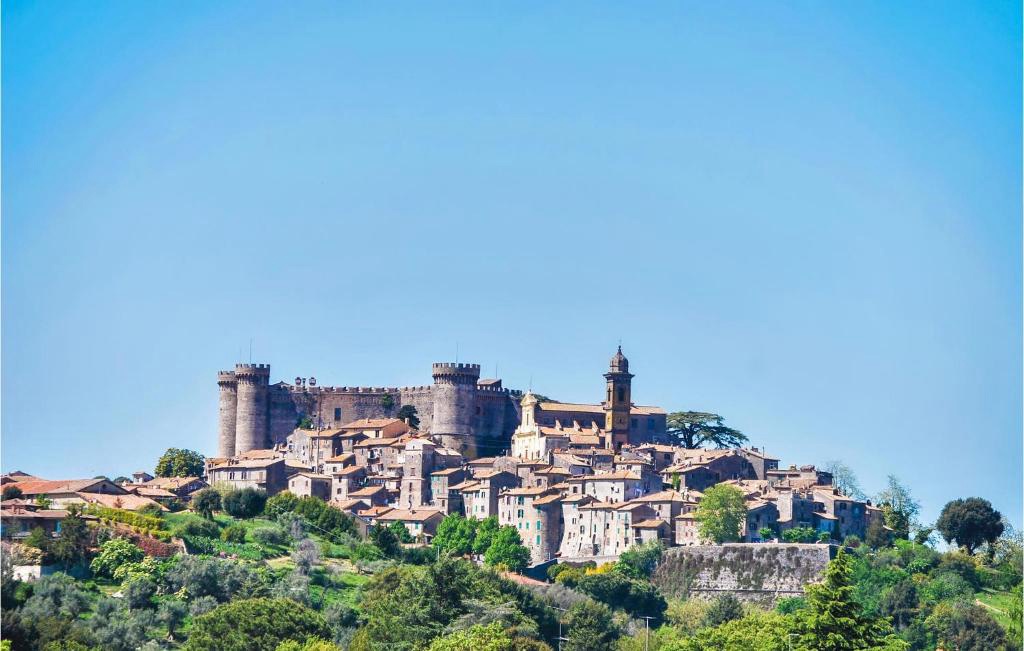
A pretty town in the gentle Lazio hills north of Rome, Campagnano di Roma retains the atmosphere of the Middle Ages. Its “medieval borgo” has towers and sinewy streets to enjoy, and the ancient Porta Roma, gateway into the city, still stands proudly next to the City Hall, and opens onto Corso Emanuele, the main street. It is lined with pastel palazzi, shops, eateries and coffee bars, before spilling out into Piazza Leonelli, with its fancy fountain by Vignoli in the middle guarded by an old clock tower. The Piazza della Fontana Secca, or dry fountain, features antique basins where spring water collected, both washing clothes. The church of San Giovanni Battisti was built in 1515 and features some fine frescoes. The archeological museum shows off artifacts found in the area, which was an Etruscan zone before being taken over by the Romans. The red town hall. In the evenings,people make for the Parco Pubblico, the centre of activity.ALBERGO BENIGNI Via della Vittoria 13, Campagnano di Roma
“An ancient restaurant, born in the early 1900s as a tavern-inn, expanded and renovated over time. Our cuisine is typically Roman, over time it develops and becomes more creative, reinterpreting traditional Roman-regional dishes.” HOTEL WEBSITE
RECENT REVIEW – A stop on the via francigena to room hotel in square in the newer side of town. WiFi excellent good shower comfortable bed etc. I had dinner in hotel very good meat cooked over charcoal Breakfast included all you need ham cheese etc
FLeaving Vetralla, we travel a beautiful stretch in a thick forest, before arriving at the little church of the Madonna di Loreto. From here we cross an immense hazelnut grove and skirt some monumental oaks, before arriving at the Torri d’Orlando, ruins of an ancient monastery. We continue towards the delightful village of Capranica, and then towards Sutri, a little-known pearl along the Francigena, with its Amphitheatre dug into the tuff, the Mithraeum and the beautiful historic centre. Water and refreshment points only in Capranica.
It’s a long stretch to Capranica so we shall need plenty of water and snacks. Capranica is described as a “ delightful “ place .
The first stage of today’s walk will take us through leafy green forests
After the Bosco Monteofogliano Park, via the village of Giardino, there is a lovel trail for the next 4 KM, under trees, interrupted only by only a meadow and a brief walk across a roundabout . We need to look for a right fork that goes downhill that emerges into an orchard. We then cross the Via Cassia and after a further 1.5 KM arrive at the Orlando TowersLegend says that these three towers were built by Orlando ( Italian for Roland ),a favourite general of Charlemagne and subject of the epic 11th C. poem” The Song of Roland”. In fact,historians suggest two of the towers are funeral monuments from the Roman period and the other the remains of a bell tower from the 10th c. Roland’s words before death: “Here must we stand to serve on the King’s side. Men for their lords great hardship must abide, Fierce heat and cold endure in every clime, Lost for his sake, if need be, skin and hide.”.
After a further walk through hazelnut orchards, we cross-cross railway tracks, traverse a modest creek by a bridge until we come to Capranica.
City gatesClock tower – Capranica is situated on the top of a ridge and consists of a long cobbled road with little side streets and the Church of San Pietro in the middle.
After a lunch stop and refreshed we continue towards Sutri, ( if not, then a bus or taxi ride to Sutri )
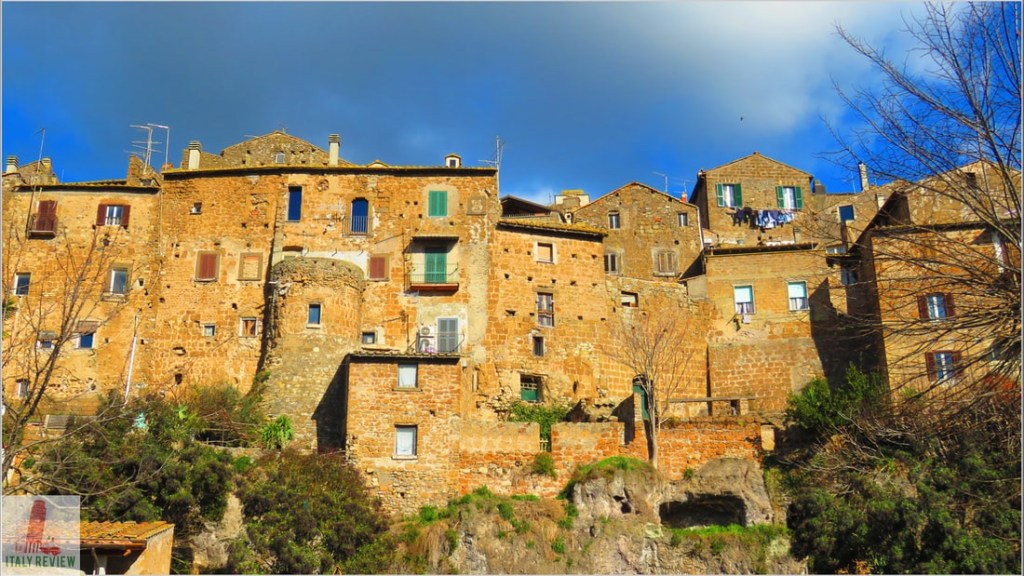
Fosso Mazzano stream alongside a shady path for 2 KMFoot Bath anyone?There is soon a choice to visit the Etruscan Archeological Park , one of the finest Etruscan sites in Italy, or head up the hill to Sutri.SUTRI – as charming a place as any on the Francigena but with a history far older than most . The medieval town is clustered atop the ridge of tufa stone.
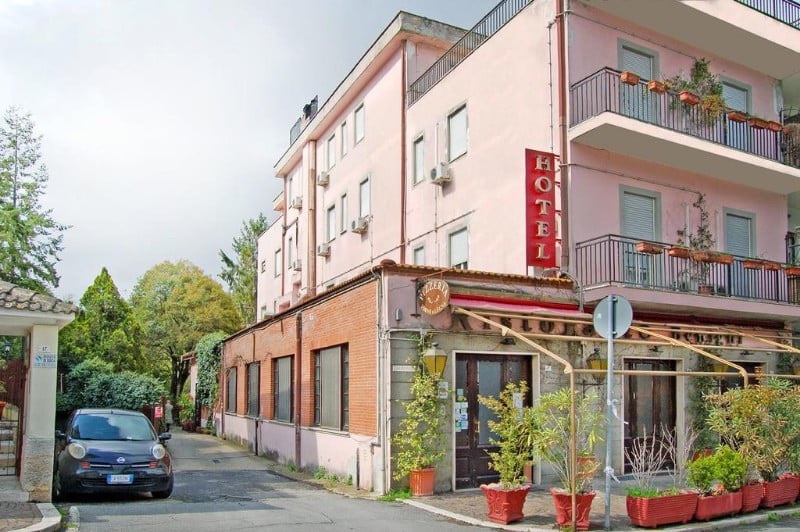
B&B Notti d’Oriente – Our accommodation for this evening on the via garibaldi 51, 01015 Sutri, in the centre of the old town.
“I stayed here for one night whilst walking the Via Francigena, but I would happily have stayed longer. My room was well-equipped with kettle, dining table and a good bathroom, and there was access to a shared kitchen. The lovely lady who greeted me was very kind and helpful, and Sutri is a pretty little town. Recommended.”
Bar Salza, nearby is recommended for APERITIVOS in the Piazza Camilo, nearby. Also, Jin To EnoGintoneri, a minute away.
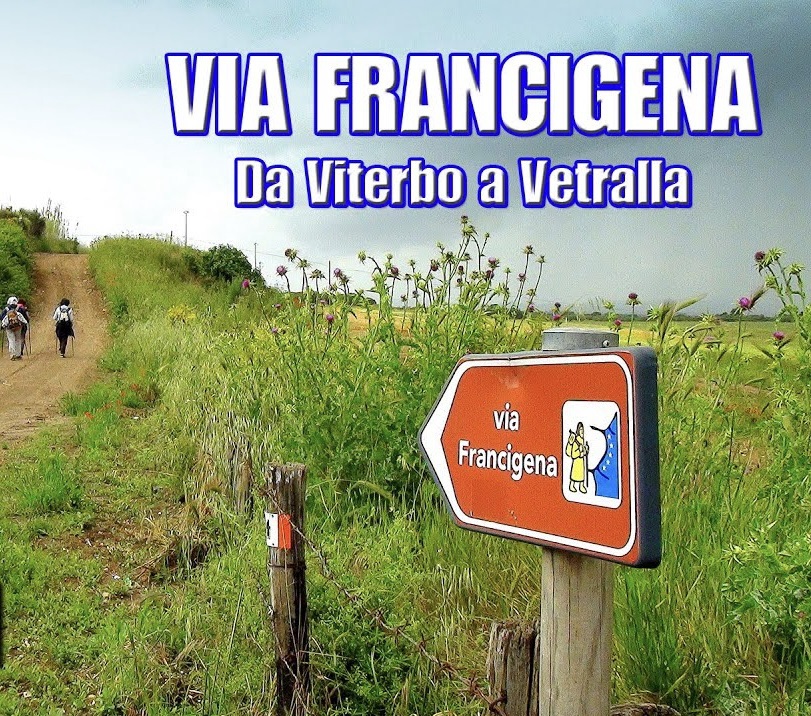
M12.05.2025 Via Francigena Viterbo – Vetralla We were up early, because yesterday we went to bed early. It’s our first day, so we have to prepare well. A sunny day is forecast, so plenty of sunscreen. To avoid blisters, tape your feet. A common mistake is that one tries to take care of blisters once they’re here. Gotta make sure they don’t show up. That’s why all the tape. Then we went to see the sisters for breakfast, but we were there all alone, and decided not to do it anyway. Called the nurses to ask if they could leave our backpack there. We decided, considering my knee issue, to walk light this year. So we let 1 backpack be transported from lodges to lodges, and there we of course put the heaviest pieces in, and what we do not need on the way. I carry a small backpack with the camel bag in it, and Liliane carries a smaller backpack with what she thinks she needs on the way. The nurse informs the person in charge of the rooms to be sure if our story is correct, was ok, and we were allowed to leave our backpack there, and we could go. We walk through the Pizza della Morte, where we had a good dinner yesterday, passing the Vicolo dei Pellegrini, and so on past the Palazzo Farnese, to the Piazza San Lorenzo, with the Cattedrale di San Lorenzo, and further the Palazzo de Papi. Here the VF is not properly specified, but I still knew it from last year. You have to go down a narrow metal staircase through a small gate. For those who come to me, this is the way to follow. Then continue to the Porta di Valle, which is still closed, so you have to go right to the Porta Faul with the Torre della bella Galiana, to then get to the Strada Signorino via the Camno Rosso. Mc Donald’s where we have breakfast. It all sounds a bit complicated, but it’s not, everything proves itself. And so after a nice breakfast with croissant and cappuccino we go back on the road, via the Strada Signorino. In Viterbo you can continue walking on the Via Francigena in several ways. You can take the long, “scenic” route via the Porta Romana, or the short one via the Strada Signorino, or in between via the Strada Freddano. We choose the short one via the Strada Signorino, which is also beautiful, because this road was carved completely out of the rocks, still by the Etrusks. Very impressive and beautiful. A disadvantage is that the road is also used by cars, but they drive slowly and are all friendly and give us space, and wave good day. At the end of the Strada Signorino, we come to a field road, and walk under the provincial road. Last year I went directly to the left, but now we take a little more time, and go to the right to the Chiesa di Santa Maria di Castel d’Asso (on the Strada Ponte del Diavolo -;)! ). I highly recommend it to everyone. It is a beautiful old church. There is also the official road sign of 100 km to Rome. On the way we came across another crab crossing the road. And when we got to the church, there was a volunteer cleaning up, because there had been a party yesterday. He offered us a drink, which we accepted with thanks, and we received a nice stamp on our credential. Then back on our steps to continue following the Via Fancigena. Further, a new resting place has been decorated, very beautiful. We follow the field path parallel to a busy road leading to Vetralla and Rome. Last year there were huge fields here with only coal, but of all kinds (red, white, savoy, spike, etc). Now there’s nothing on the field, and trucks will be hit by with stable manure, probably to work it into the field. There’s a huge pile already. Along the path there are a huge variety of flowers and plants. Time to open my Obsidentify app and see what plants are all on here. We walk further on the path, under the highway, and then a long steep climb begins, in the full sun, almost without shelter, we walk among the hazelers. It’s falling heavy. We meet another pilgrim, Will from Sidney, Australia, who also walks to Vetralla. And a little later 2 pilgrims from Canada, also on the way to Vetralla. We stop on the way under a hazel tree, to rest a bit and eat and drink. And when we leave back, we come across a resting place 100 meters further with a table and benches (I had totally forgotten that it was here). There was a couple, volunteers, riding their bikes down the path to make sure everything was clean and in order. Respect, and a big THANK YOU, to these people. Every now and then they also walk a route, to arrive in Rome at the end of next month. Very friendly people. The bank is at about the highest point of this stage, in any case there is a beautiful view of the valley. Walking is a bit smoother from here. We arrive at another resting place, where there is drinkable water. We’re going to rest a bit and eat and drink something. The 2 Canadians also join to rest and drink, and to chat. How further do we get to a b&b where there is a bench where the pilgrims can rest, and where there is also a stamp for the credential. Last year I also stopped here for a while with Fred, only because it rained. There’s a beautiful birdhouse hanging in a tree now. How much further can we choose for a shortcut, if we follow the Via Roma, or make a detour if we follow the via Francigena. It’s not too late, and we’re going for “the full tour”. We are not complaining, we pass by a place where you can refresh your feet (we don’t, we don’t have a towel), and a little further to a very old church, Chiesa di Santa Maria in Foro Cassio. A very old, but beautiful church. There is an info point that is staffed (by a young lady) by volunteers. You can write your name or a wish on a stone and put it there, and the lady will also make for us a stone with the symbol of the Via Francigena. Respect back, and thank you for these volunteers. Now it’s not far to Vetralla. Upon entering, we meet Will van Sidney sleeping in a hotel just outside Vetralla. We will continue after a short chat, and upon entering Vetralla you will pass by an “open air museum”, where there are all things depicting different old professions, furthermore there is a beautiful mural, and there is a building decorated in a nice way. Crossing the busy road, we’ll stop at the tourist service for another stamp, and then we’ll get to our accommodation. I’m calling the host that we have arrived, and sitting on the terrace of the bar next to the accommodation. A little later he arrives, and shows the accommodation. To the pilgrims who come after us and are looking for good lodging in Vetralla. Address Il Refugio del Pellegrino or Refugio del Cavaliere. Highly recommended. Located on the Via Francigena, next to a bar, where you can drink during the day, which serves breakfast in the morning, and across the street is the restaurant La Lanterna, which I can also recommend. Ate there last year, and this time again, very tasty. And then it’s time to go to sleep again, because we are a bit tired after all from walking in the sun, with a serious height difference, and still almost 18 km. See you tomorrow
Day XI is a”rest’ day in Viterbo – the above article gives a loving impression of the city by an American who stayed for the best part of a year, recently.
Bonmarzo Garden
In 2022 the official route was moved east in order to incorporate footpaths in the vast woods of Monte Fogliano,while the former route on Strada Signorino was preserved as an official variant.
The western route is recommended as both shorter and more interesting since it traverses the mysterious Etruscan “ vie cave” roads. However, The Gronze guide states “Note 2025: The short 16 km route is closed. Take the official route via San Martino al Cimino.” Confusing isn’t it?
Below is an extract from a Blog written as recently as October,2023 – by an an American pilgrim.
“There are two (ehhh…2.5) routes out of Viterbo. The one recommended in the guidebook involves walking to this McDonalds and continuing on, left at the fork, for a few miles — or taking a short detour by heading right at the fork (thus the 0.5). This route is about 9 miles long and relatively flat. The other route is more like 16 miles long and hilly, and though the guidebook doesn’t mention it, the VF app treats this as the “official” route. Anyway, I was going with the guidebook route, so forked left at the Golden Arches.
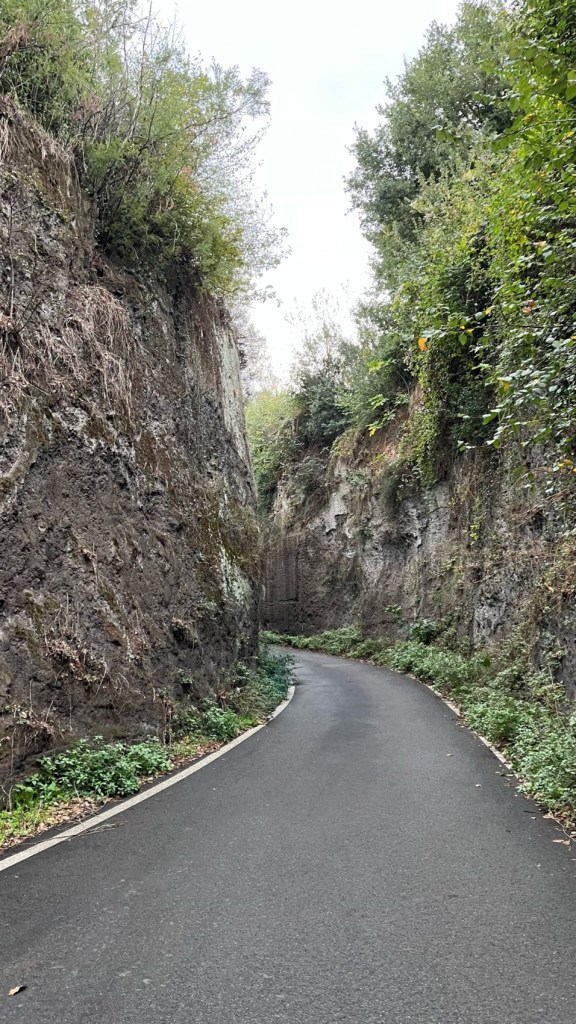
The real reason for taking this route is not because it is short or flat (though that helps…) No, it’s to walk in the fascinating Via Cava that the path traces for the first hour of the day. Here, 2500 years ago the Estruscans carved these roads deep into the soft tufa stone, connecting their cities to burial areas. On a side note, I am very fascinated by the Estruscans, who were a very sophisticated pre-Roman society. This was such a cool way to start the day, with the narrow road curving between soft stone walls that got progressively higher and narrower, with a few protruding ominously at the top.”
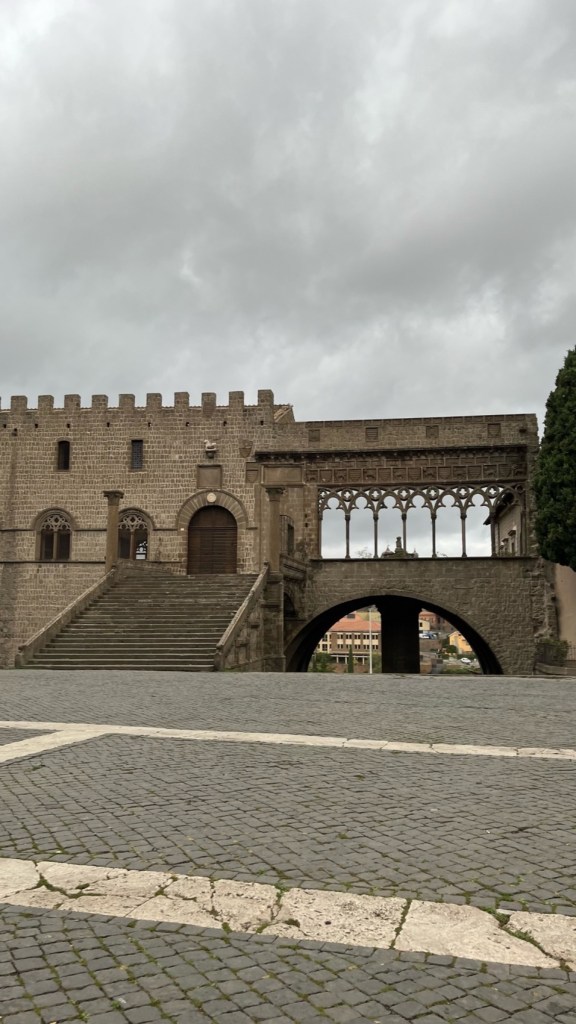
Leaving Viterbo – Palazzo del Papi“ The mysterious Etruscan Vie Cave
Apparently, the origin of these excavated roads has a variety of explanations. They are narrow roadways cut into soft,tufa stone over 2 500 years ago. They usually led from Etruscan settlements to nearby necropoli – depth can vary between 12 – 24 metres.
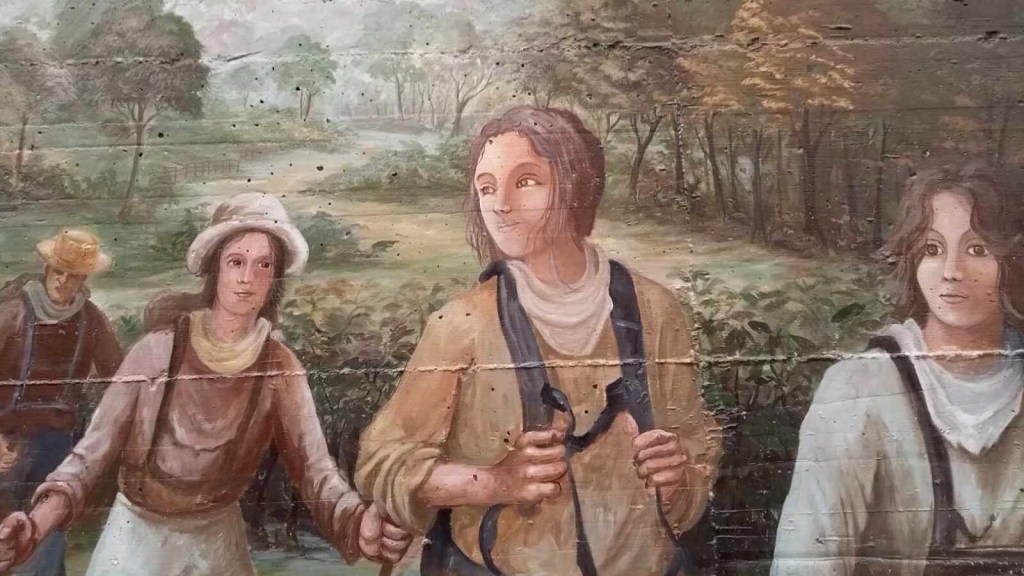
The municipality of Vetralla (province of Viterbo, Lazio) is located along the Via Francigena at 300 metres above sea level. Known for its characteristic medieval village and the woods of the Cimini mountains – the green lung of Tuscia – it is a land of important Etruscan, Roman, and Barbarian settlements and has a rich artistic and archaeological heritage. In this borgo, along Via Francigena stage 42 Vetralla-Sutri, the mural ‘Il Cammino’ (The Way) created by painter Alessandro Ridolfi has just been completed. The artwork was realised on the initiative of a committee of local volunteers to enhance the places crossed by the Via Francigena in Vetralla.Though well preserved, today’s sleepy town is divided between a few businesses scattered along the Via Roma in the upper city and others along the busy Via Cassia highway a few metres below.
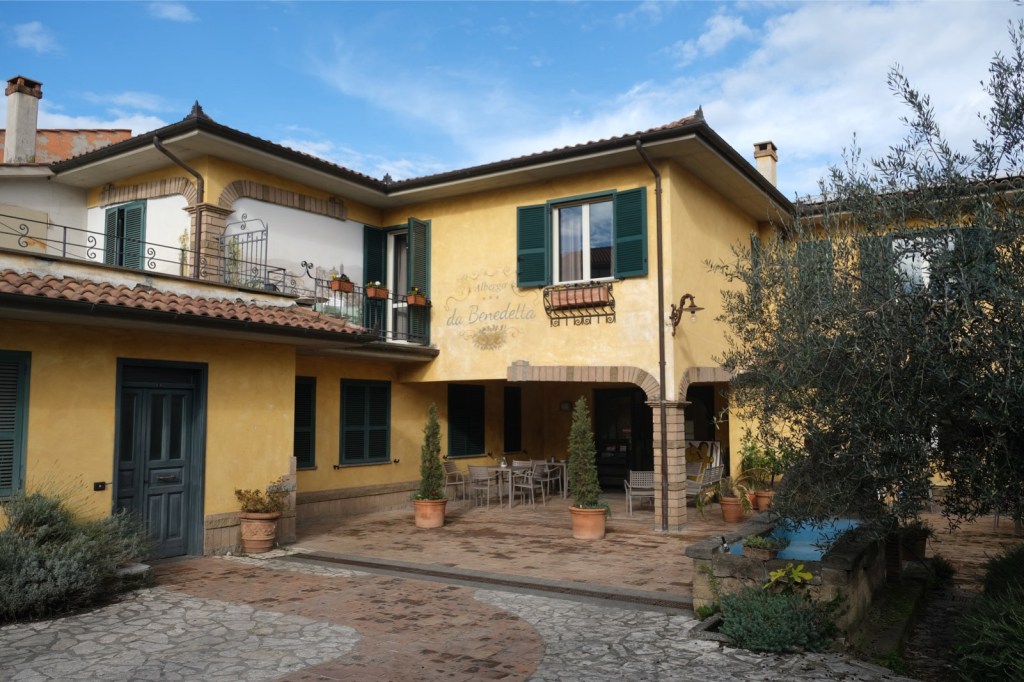
Vetralla’s most important architectural monument The 12th century Church of San FrancescoALBERGO DA BENEDETTA , Via Francesco Petrarca,Vetralla
“Da Benedetta is a hotel in Vetralla, on the ancient Via Francigena, between Viterbo and Rome. It was grandmother Benedetta Rosati who opened, back in 1959, the restaurant from which the hotel developed, at the instigation of the Pasquinelli family (it was the year 2002). In more than sixty years, our family has seen the territory, the pilgrims and its own hotel change, but never the tradition and the identity legacy of grandmother Benedetta. Family-run, recently renovated, pet friendly and with a green soul, the Da Benedetta hotel restores the spirit of this splendid land, Tuscia. A soft land, of passage, in which culture is a legacy of ancestors, of wayfarers.“ FROM THE HOTEL’S WEBSITE
“I stayed at Da Benedetta for one night while walking the Via Francigena. Even though I arrived a little early, the very helpful lady on reception allowed me to check in, and my room was both clean and very comfortable, with a good bathroom. Breakfast next morning set me up for several hours walking. A very pleasant location with welcoming staff. Recommended.” RECENT REVIEW
PS I have not gone into too much detail about the route; I have guidance for both and may be worth waiting for Sloways’ info.












 ensuitepilgrim's Blog