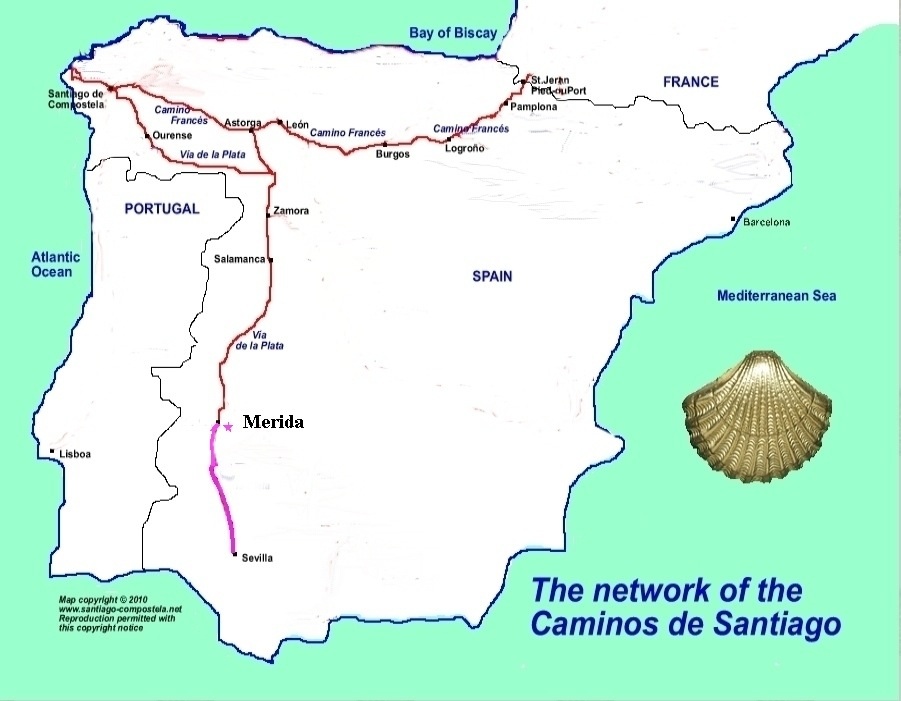


There is only one place for re-filling water bottles and refreshments today, so we need to be prepared.


Almost immediately after leaving the city, a part of the route begins along a dirt road that passes through some crops. We are at a low altitude and from here we shall only see the cultivated fields. There are no sunflower or wheat crops to make everything a little more picturesque, but there is no shortage of tall corn plants. They are very tall .
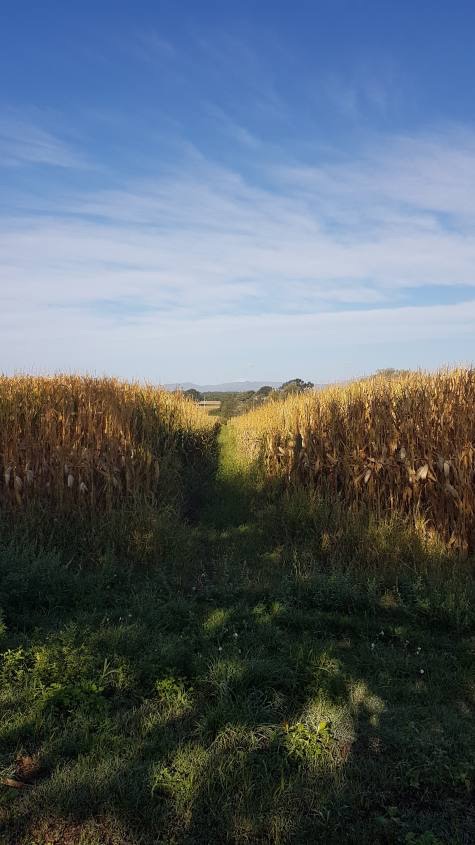
Blue skies though .
The initial stretch is not that remarkable but in less than three hours, precisely halfway along the route, we shall reach the first town of the day and everything begins to have a different aspect . San Lorenzo Nuovo and here to welcome us there is a beautiful octagonal square, called Piazza Europa, which looks pleasantly impressive.

San Lorenzo Nuovo is a village located on the northern side of the Volsini mountains just five kilometers from the shores of Lake Bolsena. This country is located in a particular geographical position that places it on the border of three regions: Umbria, Tuscany and Lazio. San Lorenzo Nuovo, as its name suggests, arose in recent times unlike other villages and cities in this area. The town was founded in 1779 by the inhabitants of San Lorenzo alle Grotte,which had to move due to the presence of malaria-carrying swamps which made the air unhealthy. The historic center of the village is of a neoclassical style dating back to 700. The city has a particular urban structure made up of a series of houses that follow the octagonal shape of piazza Europa the city center where the church of San Lorenzo stands. It might come as surprise to learn that the principal crop hereabouts is the humble potato.


A wooden crucifix (a work from the early 14th century attributed by some to Maitani) and two paintings by Jacopo Zucchi.
Look out onto the road that continues at the end of Piazza Europa to glimpse Lake Bolsena in all its splendor.

Up to Bolsena, the route continues on dirt roads in a pleasant up and down that sees alternating olive groves, meadows and woods. The characteristic that these different landscapes have in common are the fantastic views of the lake that can be glimpsed every now and then. It is a very beautiful section.


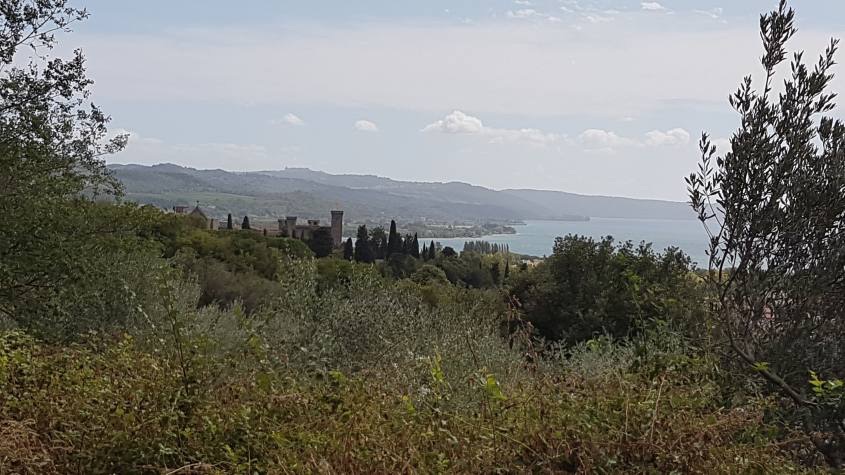


WHAT TO SEE IN BOLSENA.
Take a tour of the delightful historic centre. “Among the places of greatest interest we will find the “Collegiata di Santa Cristina”, built in Romanesque style and later restored with the addition of the beautiful Renaissance style façade. The Collegiata is best known for the Miracle of Corpus Domini.I refer you to the very well-kept blog “Itinerari Laziali” to learn in detail the history of the miracles of Santa Cristina. In the upper part of the town the “Church of San Salvatore” and the “Castello Rocca Monaldeschi” (which we have already encountered as soon as we entered the town) dominate the landscape. The entrance ticket to the Castle costs only €5 and allows you to visit the Territorial Museum of Lake Bolsena, the towers with a view of the lake and the Aquarium. If this is not enough for you, there is an immense lake with its shores that are just waiting for your visit.”


If the lake doesn’t tempt you to swim then possibly the pool at tonight’s Agriturismo will.
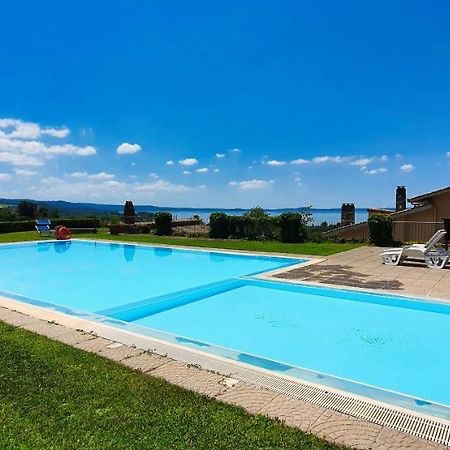

“Nice big room and bathroom ⅊You can use the garden everyone has their place in front of the rooms Good breakfast with lots of choice Very clean Great location you can see on the Bolsena lake Located on Via Francigena” Review from October 2024
 ensuitepilgrim's Blog
Leave a comment