Archive | September, 2024

MANON – Capital City of Menorca

27 Sep
There are plenty of “pathless woods” to be seen from the coach window along the Me 1 road to Mahón and although Byron’s poem is not specifically about Menorca, it evokes the island for me.
“ …the deep sea…” and “ the lonely shore”

Mahón, the capital of Menorca has an astonishing history and reading about it gives the visitor an improved understanding of its place in the island’s history and how it became the Capital city,displacing Ciutadella in the process.

MAHÓN’s TOUGH HISTORY

The Mola Fortress

While nowadays, this city is a bustling centre for tourism and trade, this wasn’t always the case. In fact, this city was once riddled with destruction and suffering and was once one of the most important military ports in the entire Mediterranean. Many historians believe the name Menorca,Mahon comes from the Carthaginian general Mago Barca, who was the brother to Hannibal and who is thought to have taken refuge in the city during the year 205 BC.

Born 243bc, died 203 bc

After the fall of the Western Roman Empire, this city became part of the Eastern Roman Empire and an incredibly important port. Port cities were considered highly valuable at the time and they were being used as the main source of trade and transportation. Unfortunately, as a result, it suffered a tremendous number of raids from both Viking and Arab expeditions. This continued for centuries until the city was finally conquered by the Islamic Caliphate of Cordoba in the year 903.

Islamic Moorish rule lasted in Mahon until the year 1287 when it was eventually reconquered by Alfonso III, the King of Aragon. He made the city a part of the Kingdom of Majorca and also part of the Crown of Aragon.

The Crown of Aragon was a composite monarchy, which is to say a group of separate kingdoms all ruled under one king.

This was a win-win situation for everyone involved as joining this composite monarchy provided the city with enormous protection while the city itself offered a brand new trade port for these kingdoms to take advantage of.


In fact, Mahon Harbour was considered one of the most strategically important in all of the western Mediterranean. Because of this, the Crown of Aragon decided that its refortification was necessary and provided the city with the extra protection it needed to stay safe for centuries more.
 However, in the year 1535, Hayreddin Barbarossa led the Ottomans to attack Mahon in what would become known as the Sack of Mahon. The attack was a tremendous loss for Aragon as the Ottomans took over 6,000 captives back to the Algiers as slaves.
Under British Control.

The War of Spanish Succession lasted between the years 1701 and 1714 as a result of King Charles II dying without leaving behind a male heir. This led to a tremendous amount of unrest throughout Europe, with both the French Royal Family and the Austrian Hapsburgs having a claim to the Spanish throne.


However, England wanted to make sure that neither of these kingdoms had access to the riches and power of Spain and made a Union with the Dutch to conquer the important city of Mahon.
Of course, England quickly took note of the potential and profit that this city and the Island as a whole could offer and sought to gain full control which was granted in the year 1713 as a result of the Treaty of Utrecht.
a-painting-by-semiramis-oner-

It was during this time that the city of Mahon has named as the capital which conveniently served as the residence for the Governor of Menorca.

Contemporary photo of his residence

During the year 1756, the island was lost to French control after what would later be known as the Naval Battle of Menorca.However, after the French lost the 7 Years War, the island was returned to the British in the year 1763, but this ownership wouldn’t last long. In the year 1782, the French and Spanish started a combined five-month invasion which took a massive toll on the island and the British eventually surrendered it.In 1783, control of the island was transferred back to Spain according to the Peace of Paris.

However, the British would eventually recapture the important port island in 1798 during the French Revolutionary Wars.

 Luckily, when the French and British decided it was finally time to end all the hostilities between them, they agreed to withdraw their militaries and claims from certain territories including the island of Menorca, which was finally passed back to Spain, where it has stayed ever since.

RECENT HISTORY OF MENORCA

During the 20th century, Spain itself suffered through a terrible civil war. At this time, the entire island remained loyal to the Republic. However, it was captured by the Nationalists in the year 1939.

 Unfortunately, during the battle to capture the Island, Italian and Spanish Nationalist bomber planes bombed the city of Mahon Menorca Spain and destroyed many important historical sites. Luckily, a number of structures remained undamaged or easily repairable making it possible for tourists to still enjoy the wonders of this incredible city to this day.

Original city walls

The history of Mahon has been riddled with conquests, sieges, and battles. However, throughout all that terror this stunning city has also bloomed under the constant cultural influences and changing powers.

Nearing the Fish Market
Seafood tapas
Not just Delicacies !

The city now serves as the seat of the Island Council of Menorca and quite a bit of effort has been made to promote tourism as a primary source of income for the island’s residents helping it to remain one of the richest port cities in all of Spain.

The Capital City of Mahon where people love walking through the historic areas whilst taking in the stunning Mahon Harbour which happens to be one of the deepest natural harbours in the world.

Mahón’s harbour
Looking up from the harbour
Shopping mall with a difference
Mercat del Claustre is as impressive from the exterior as it is inside. Adjoined to a church, it dates back to the 18th century, with many market stalls on the ground floor tucked away in the old monastic cells. The building has an unusual history with many tales to tell, not least during its time as a court and a prison.
Today though, it’s a buzzing, colourful space. Often used for cultural events, and displaying Menorca’s finest fresh vegetables and handicrafts including Avarcas (Menorcan sandals), woven wicker bags and fragrant flowers.


Many delicate facades in Mahón

Window shopping
So many things catch the eye
The only train on the island

It’s set inside the stunning Sant Francesc de Maó convent, and takes you on a journey through Menorca’s different timelines. With sizeable collections of sculptures, antique maps and even Talayotic jewellery, this place gives you a true insight into the turbulent history and culture of this now tranquil Balearic island.
A walk along the harbour is a must and a good place for refreshments.

. https://www.theguardian.com/travel/2021/oct/10/all-back-to-mahon-a-return-to-menorca – good little article.
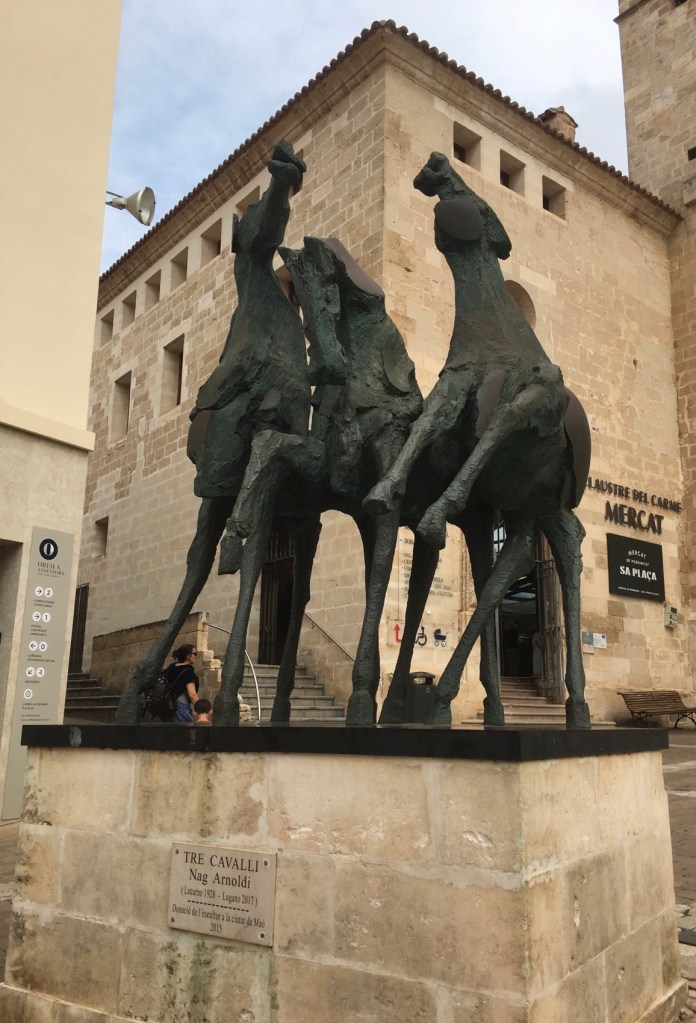
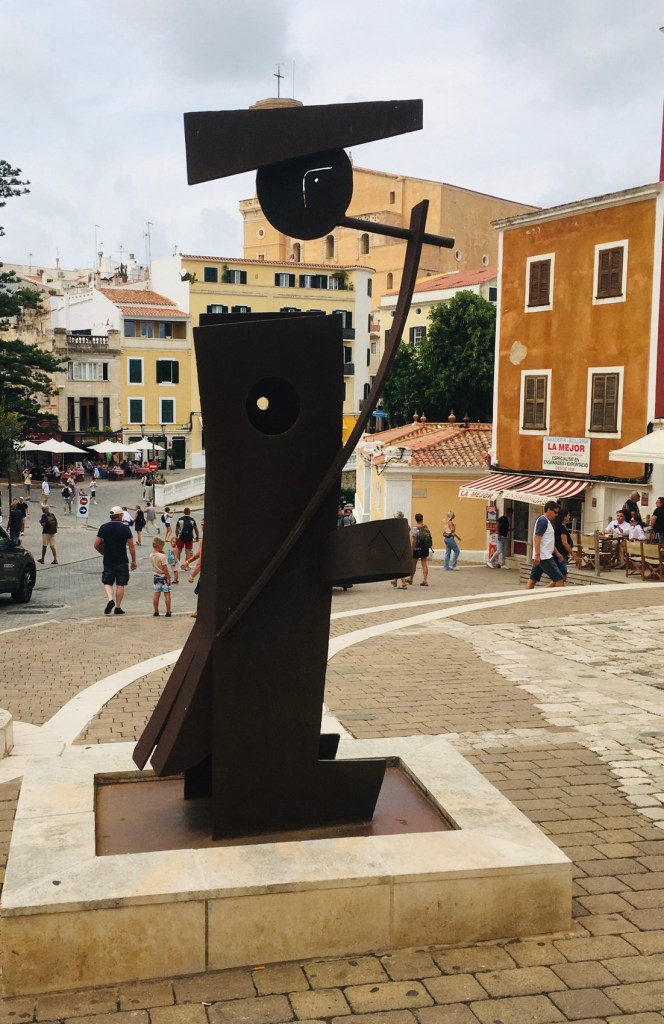
Sculptures too.
Don’t forget to look up.
A very full day and a very pleasant foray into the Menorca capital city.https://youtu.be/tOxXKehG-5c Enjoyable YouTube clip.

CIUTADELLA OVER A COUPLE OF DAYS

25 Sep

Ciutadella was founded by the Carthaginians and was once Menorca’s capital – its centre of commerce and culture, and was known to the Moors as “Medina Minurqa.”

Looking down at the harbour

“The eternal capital behind the scenes. The quiet and beautiful Ciutadella. A place in which every stone, every street and every mooring in its port harbours a history of battles and conquests.  Many people think that Mahón has always been the capital of Menorca, as it is nowadays. Its primacy, however, is relatively recent: for centuries, until the arrival of the British on the isle – early in 1700 – Ciutadella was the great nucleus from which the entirety of Menorca was governed. Relegated to a secondary place with the arrival of the English, the civitavella of Alphonse III lost its influence.”


Ciutadella gets its name from “citadel” or fortified city because that’s what it once was. It’s said that Ciutadella is a 16th century Spanish city frozen in time.  
As the city expanded some of the old walls came down, but not all of them. The old and very pretty harbour is tucked under the walls of the old city and lined with boats, restaurants and bars. It’s where the boats leave for their round-the-island tours or nearby beaches.
The charming old town has arcades and courtyards with shops and cafes and a beautiful 14th century cathedral. The main town square, Plaça des Born, is the city’s beautiful centerpiece. It’s lined with elegant buildings including the city hall that was once a royal palace.
Impressive balcony
My favourite shrub
These murals are dotted around the backstreets
No truer statement exists!

Ciutadella is a city to explore on foot, especially the historic quarter, where an obelisk dominates the main square.


The Palace of Salort, is also in this quarter, likewise the Palace of Vivó, one of the truly emblematic symbols of the city, with a Neoclassic red façade, ornamented with motives based on traditional Menorca imagery.

The cathedral is built on top of the High Mosque that existed under Arab rule. It is truly monumental, with one nave and six chapels.

If you’re a fan of seafood, traditional cuisine from Menorca, which largely based on seafood, is unlikely to disappoint. 


Menorcan Gin is an industry that started when thousands of British sailors stationed on the island in the 18th and 19th centuries wanted the drink that was fashionable back home. 
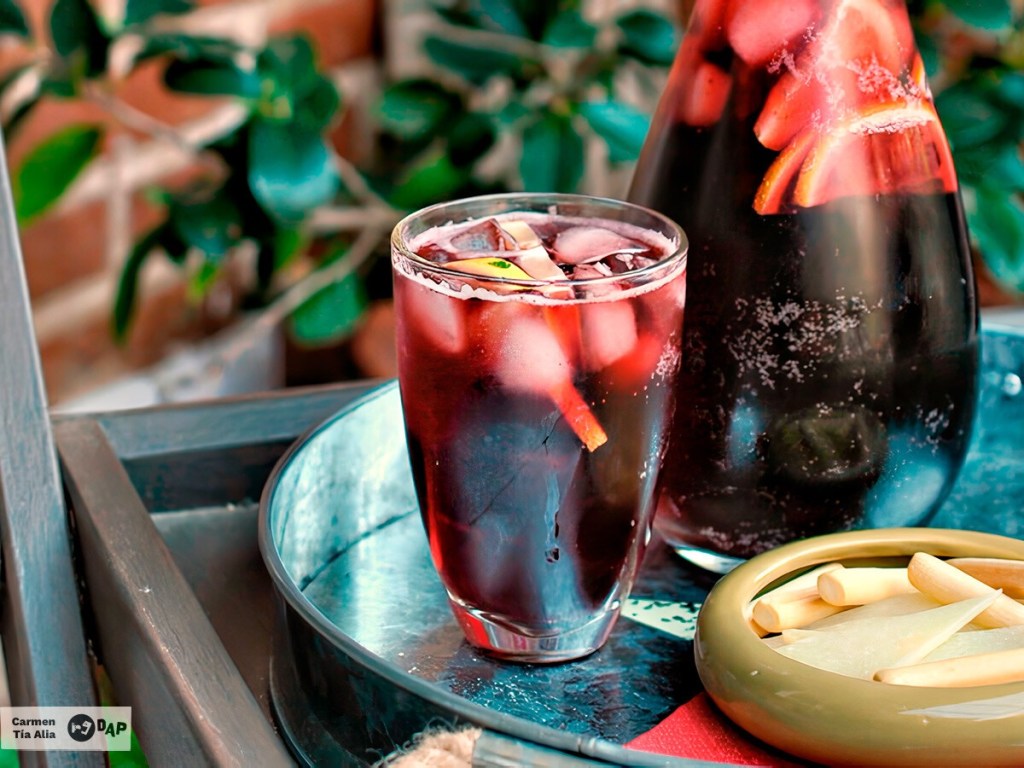
Xoriguer is the key ingredient in Menorca’s most popular cocktail drink, called “pomada.”An authentic pomada is made from Gin Xoriguer, lemonade and ice.
And it’s as refreshing as it looks.
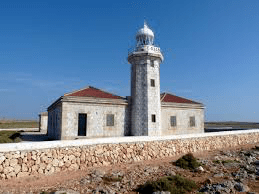
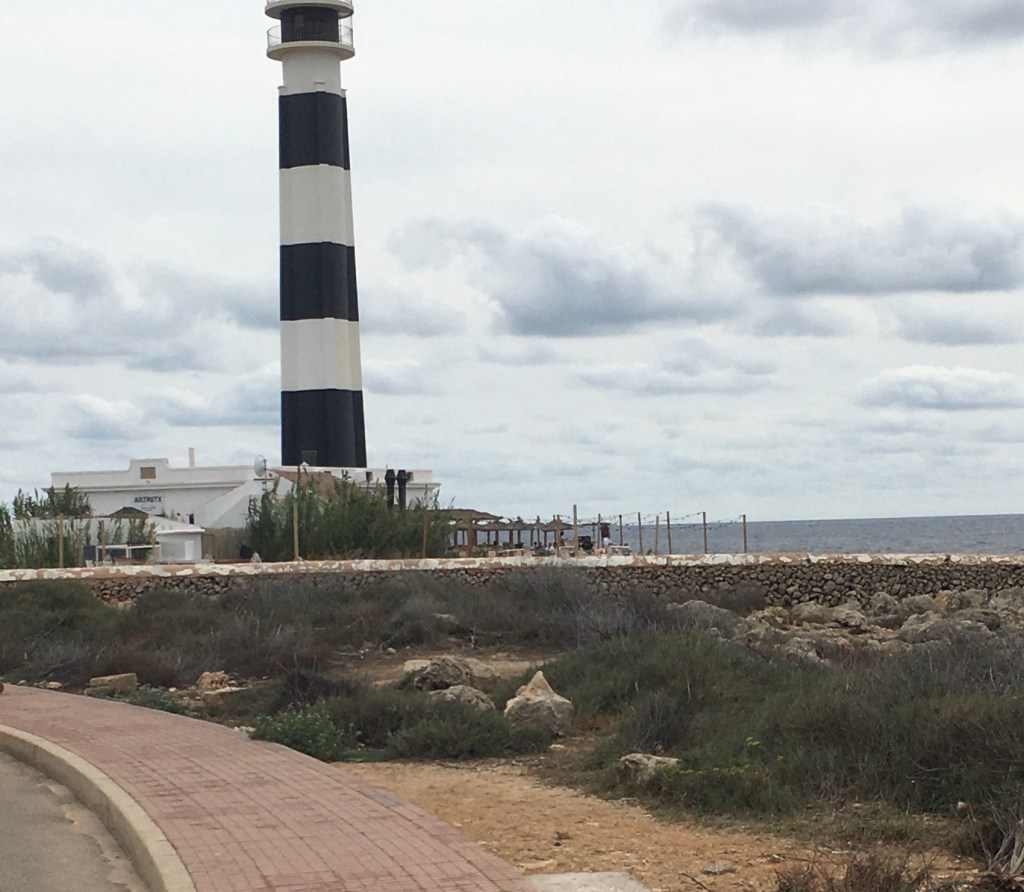
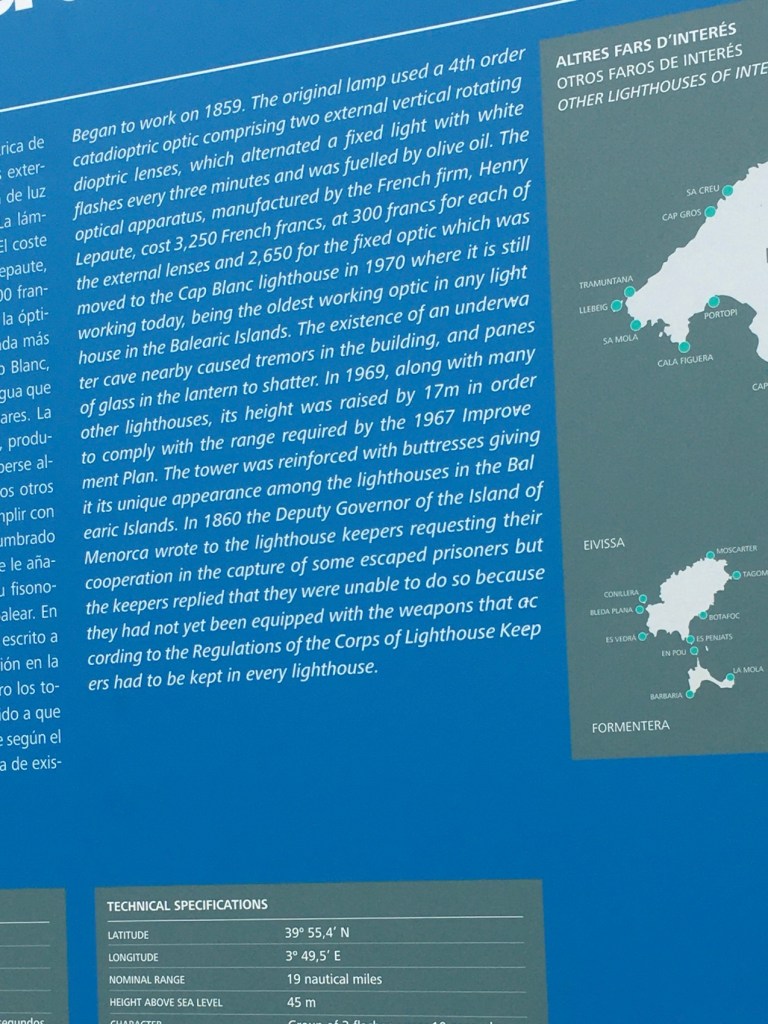
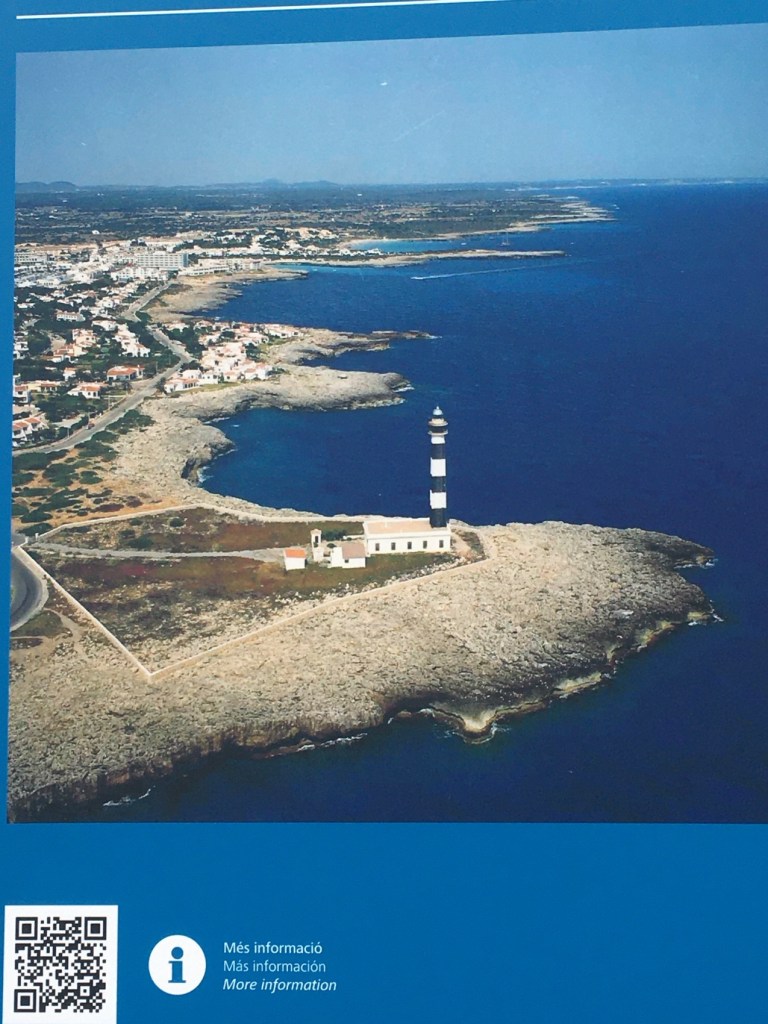
They are very proud of their lighthouses .

One day we walked along a road by the sea and were curious about the distinctive villas, some of which were early a 100 years old.

Egyptian style
A more recent addition.
Cooling off after another enjoyable saunter.

CIUTADELLA – an incomparable city to lose yourself in

CALAS,CAMIS VIA CIUTADELLA

23 Sep

MENORCA ,SEPTEMBER 2024, PATRIMONIO MUNDIAL – 11 DAY HOLIDAY

Over the years, everyone who had visited Menorca that I listened to,had only  praise . 

So it is a little surprising that it took so long for me to actually visit this prize of an island.

And,it is a relatively small island.

The transfer from Mahon airport to our base near Cuitadella,bisected the Island and took less than 50 minutes .

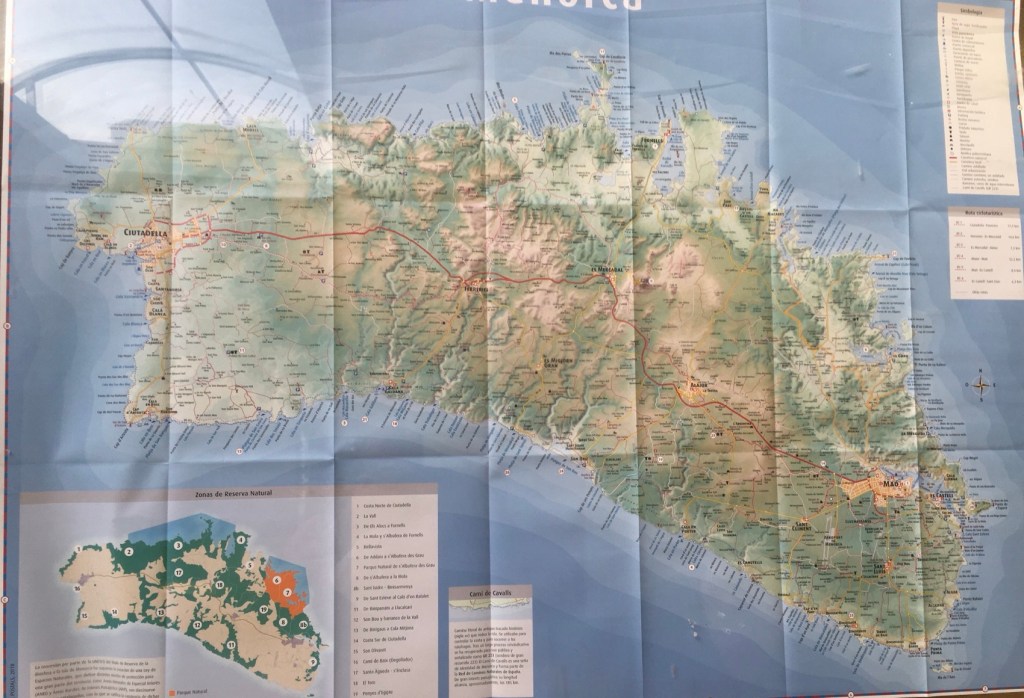
From South East to Midwest

Los Lentiscos apartments was chosen because it was budget level, cheerful and near to the many “ Calas “ which are a feature of Western Menorca.

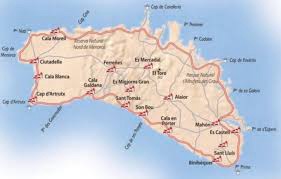
There are no serious rivers in Menorca but there are many coves along the coast of varying size known as “ Calas “

Initial reactions on arrival : Mahon airport is  carefully landscaped,on a  human, welcoming scale ( contrast to Bham ) and competent Jet2 staff were on hand to direct us to the transfer coach. The drive across the island was calm and we were able to notice the changes in landscape from  the Capital, transversing some hillier areas in the  centre of the island, by –  passing interesting towns like Alaior and Ferreries which Barbara and Hannah had visited on an earlier holiday here.

Airport on a human scale

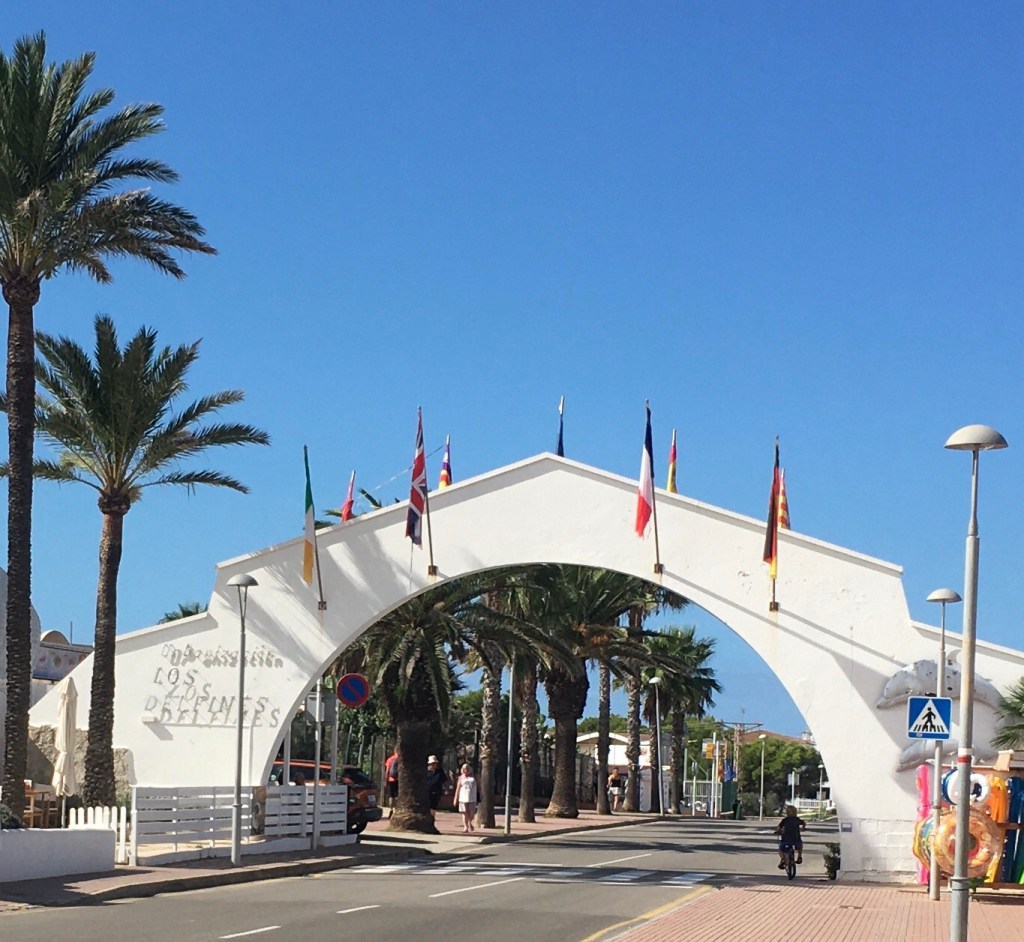
Very quickly, we came to Aveniguda des Delfines , the main road  into the Urbanisation in which our apartments were located – Les Delifines has a particularly naff sculpture placed on an island  en route.

The Main Street

However, happily,  this wasn’t to typify our visit.

Once ensconced  in our two apartments, a walk was needed after being sedentary for so many hours….inevitably this involved finding a supermarket ( easy ) and stocking up the fridge . Apartments suit us as we can choose to eat out  and shop locally and to cook from time to time.

The apartment had a good sized fridge and freezer section,with a two  ring burner and a microwave – just about the minimum for “ home cooking”.

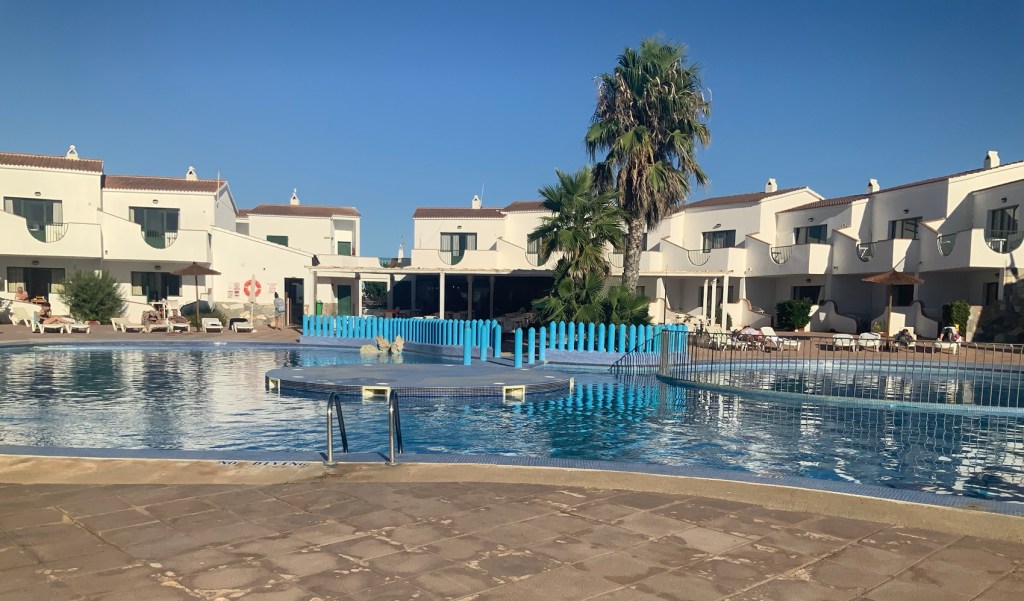
Being on the ground floor turned out to be a bonus as we could walk out from the patio directly to the pool area, bar and reception in no time at all..

Being off season it was relatively uncrowded and very quiet – like a lot of places, not somewhere you would want to be in peak season – affable staff in reception, at the bar and  importantly the  people who make it all work – 

The room cleaners , bar staff , pool maintenance guys and gardeners – ambience.

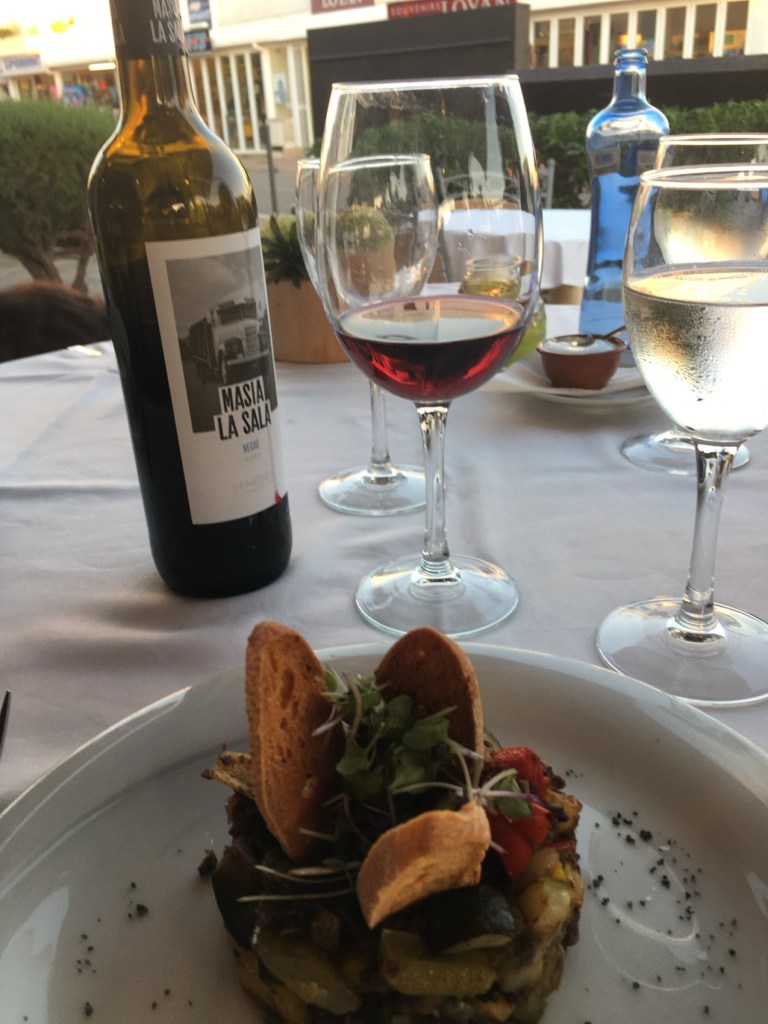
The evening concluded with a short walk to the Yuca restaurant ( recommended but expensive) for dinner – the Gazpacho was very tasty, the wine good and the agglomeration of meat,potatoes and aubergine was artful and very satisfying.

Delicioso

I had already sensed that being on  an island, inevitably, prices would be higher than  mainland Spain, but the food was good even if some of the portions were  rather small….This was not to be the benchmark as some  later dining out was to prove remarkable.

Plentiful “ Supermarkets “ – but no  fresh,green vegetables; only salad items and a reasonable selection of fruit.

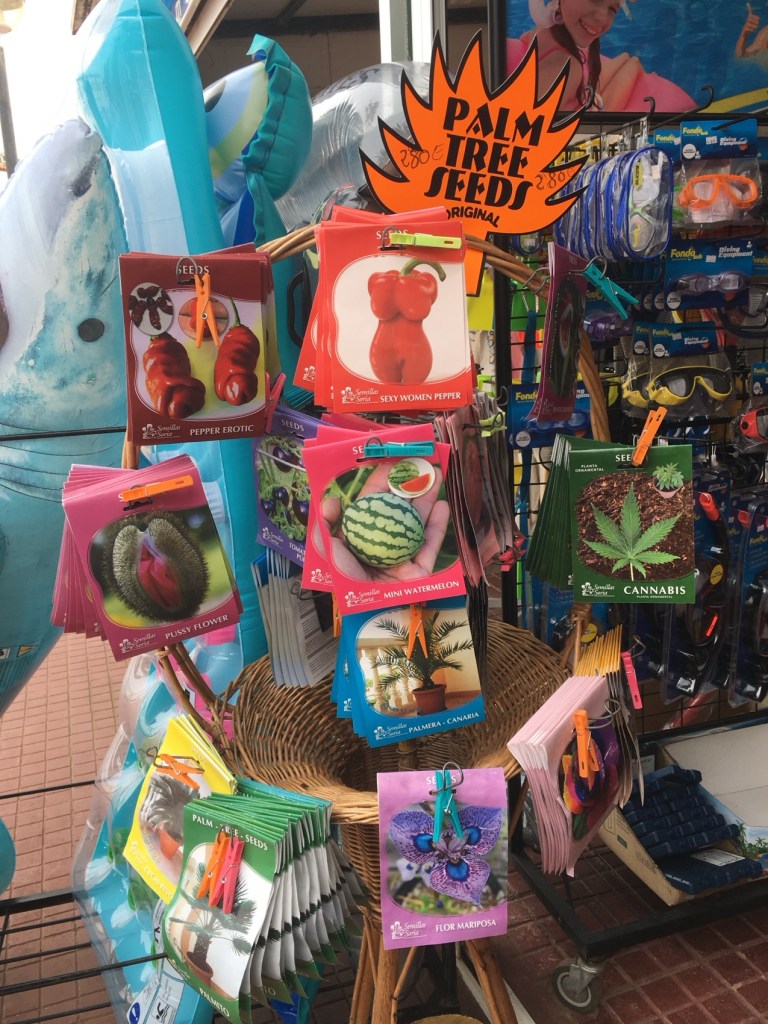
There were some erotic seeds available though….

Not in any of my seed catalogues

Little in the way of natural yogurt, creme fraiche or similar – as I intended to cook on some of the evenings, this was a little frustrating.

Similarly, there was no butchery section as such in any of the various supermarkets visited. – fresh burgers, strips of pork loin and chicken, no fresh fish – it’s enough to make you a vegetarian!

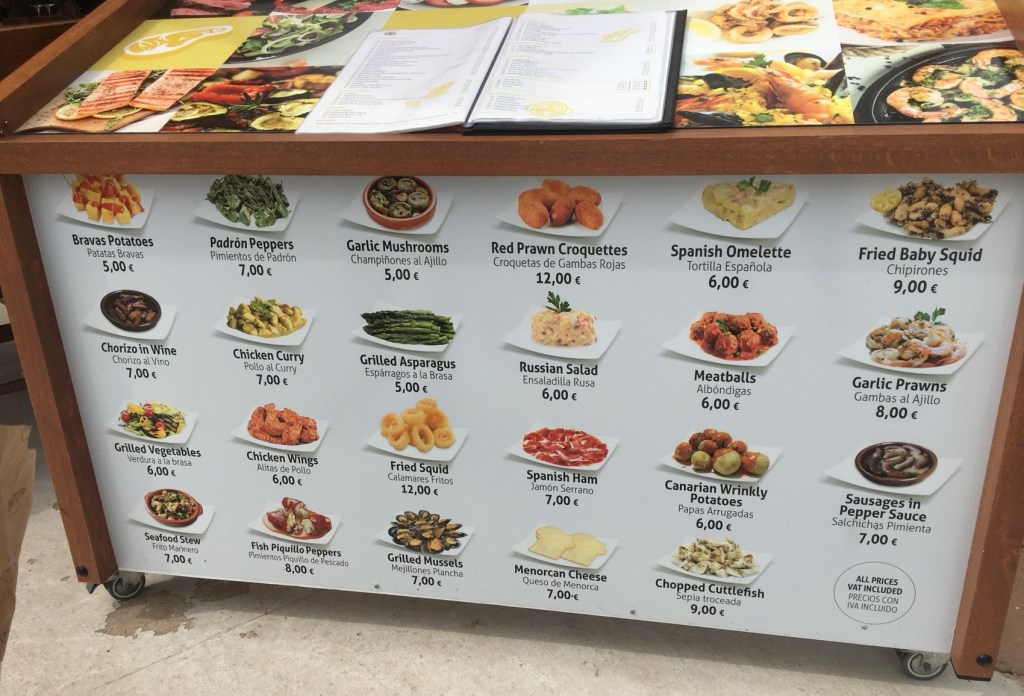
One of the main differences to Spain  was “ Tapas” which we traditionally associate with small portions accompanied by a drink. Here, they are basically a starter to a meal and a good size, too. In one restaurant I ordered “ Patatas Bravas” from the Tapas section and it proved to be more than a big enough portion for three – and very good they were, too.

Even in Cuitadella there was no opportunity to ramble from one bar to another sampling small, delicious items, plentiful as the bars and restaurants are.

CALAS

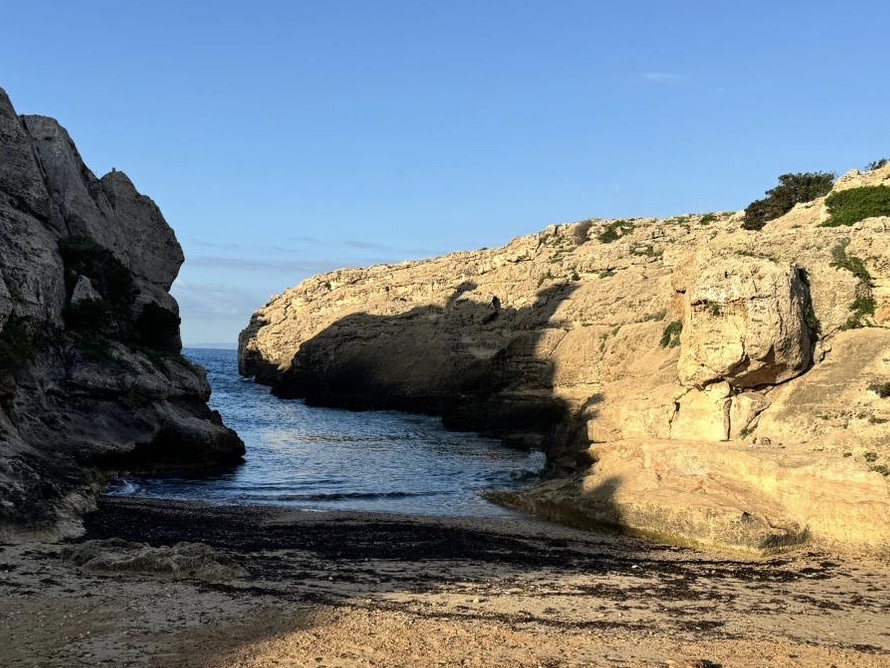
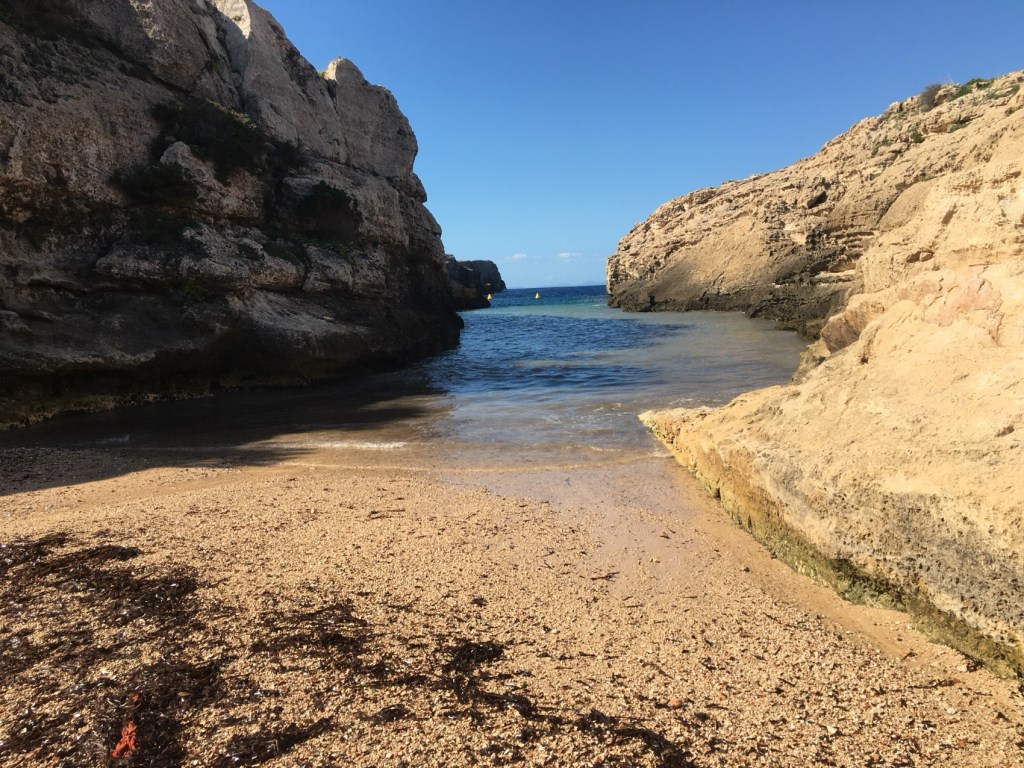
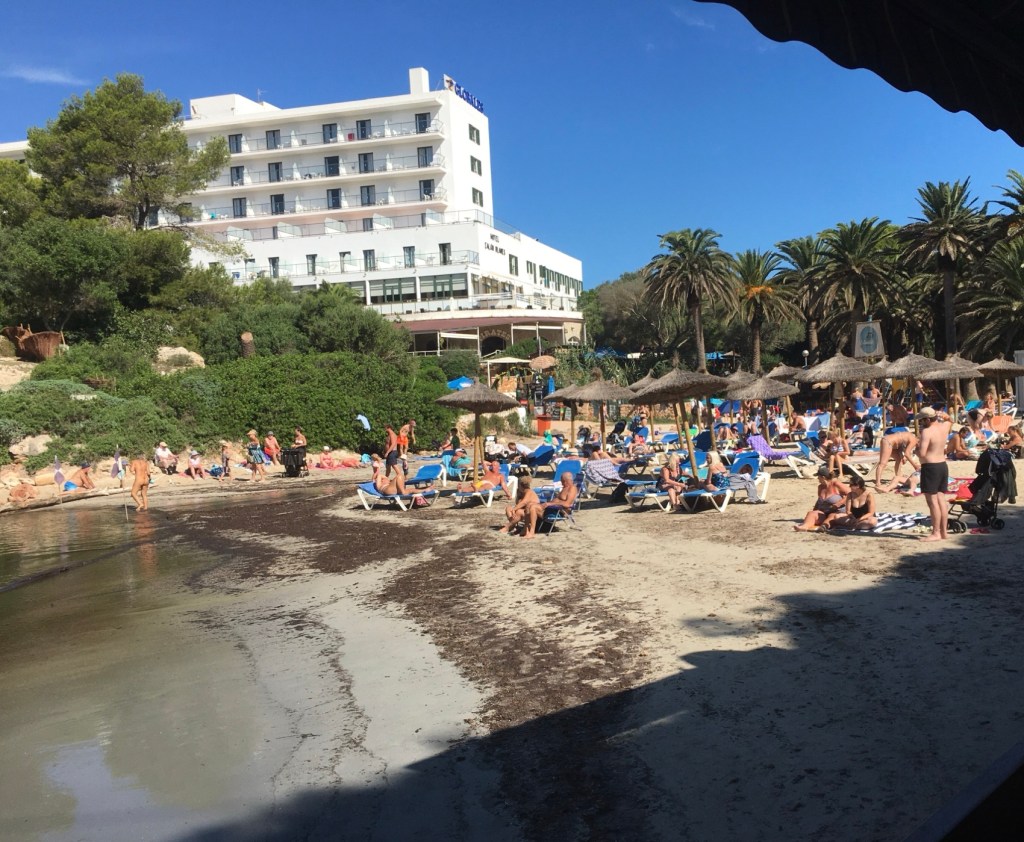
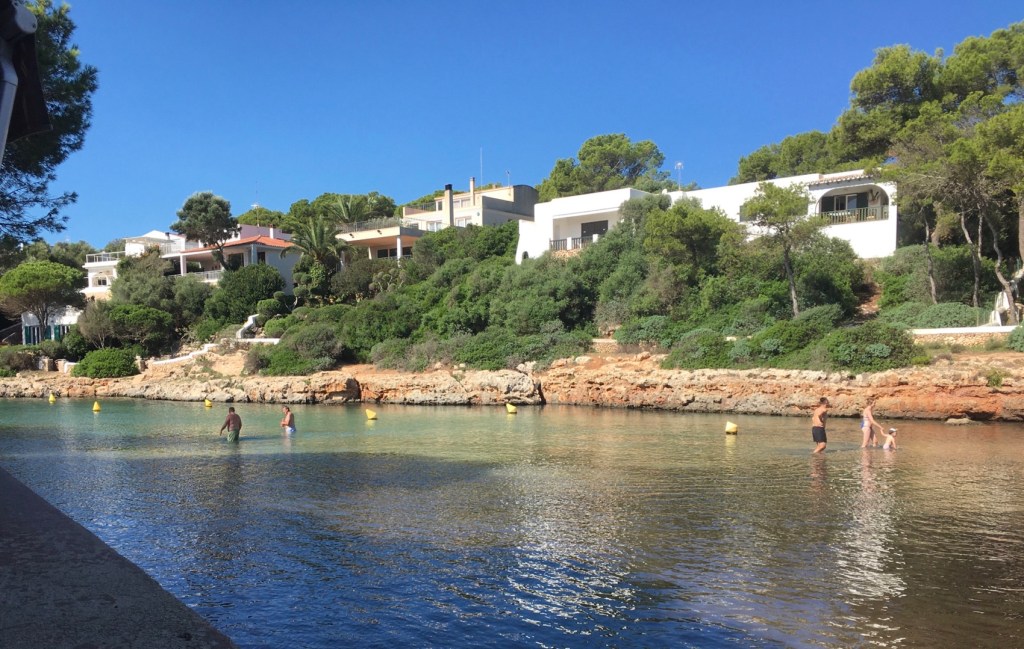
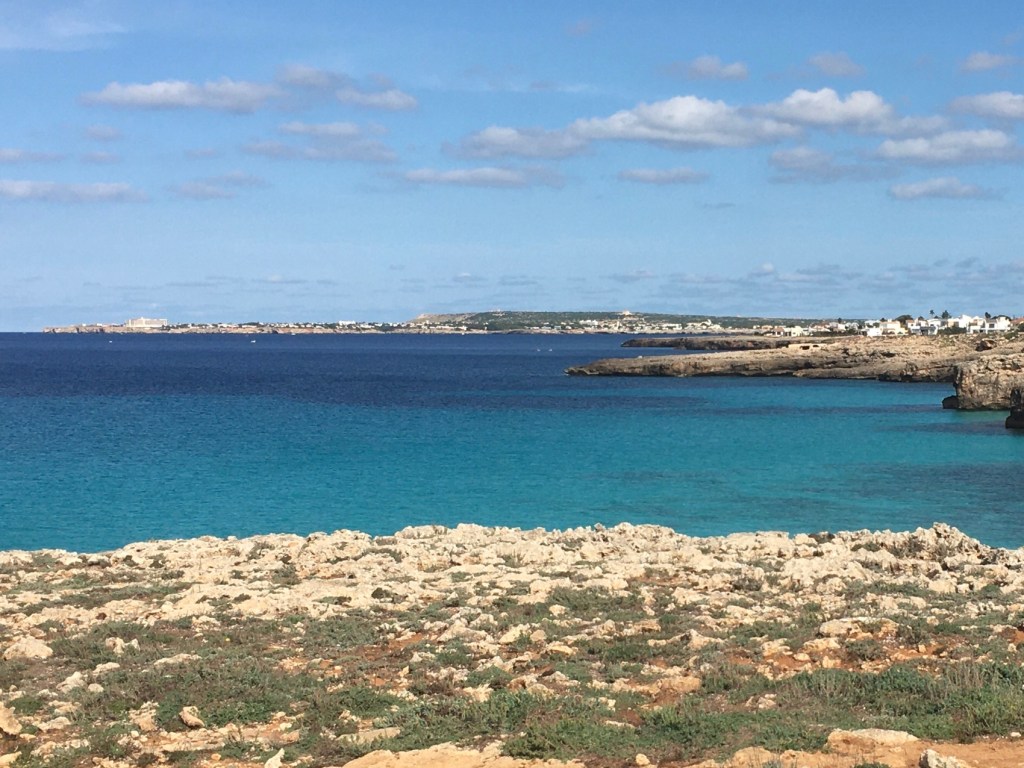
Menorca, besides its reduced size has more than … 100 coves! say “calas” which is the translation in Spanish and everybody talks about calas here . Due to this insane number of calas, they say that “the best one” doesn’t exist.  The waters in the calas are ALL incredible. They can be blue or turquoise, and have more or less fish. – ideal for children,paddlers and snorkelling.

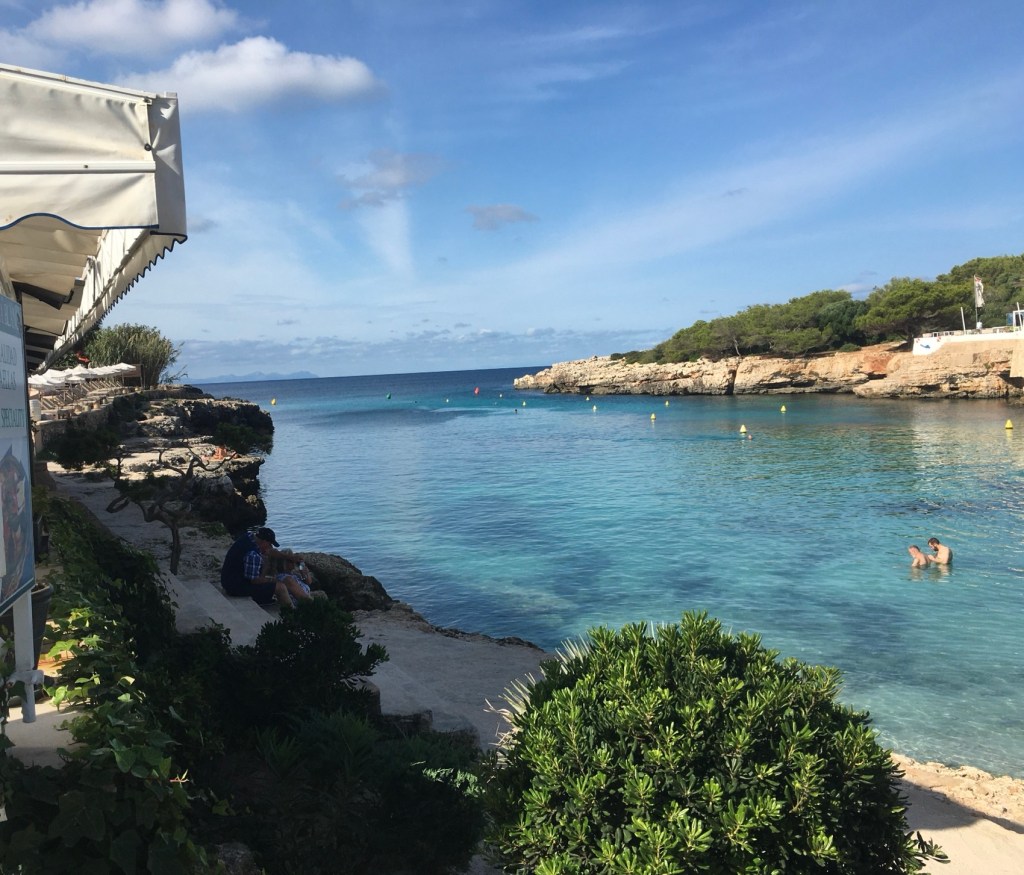
This was very close by and so tranquil
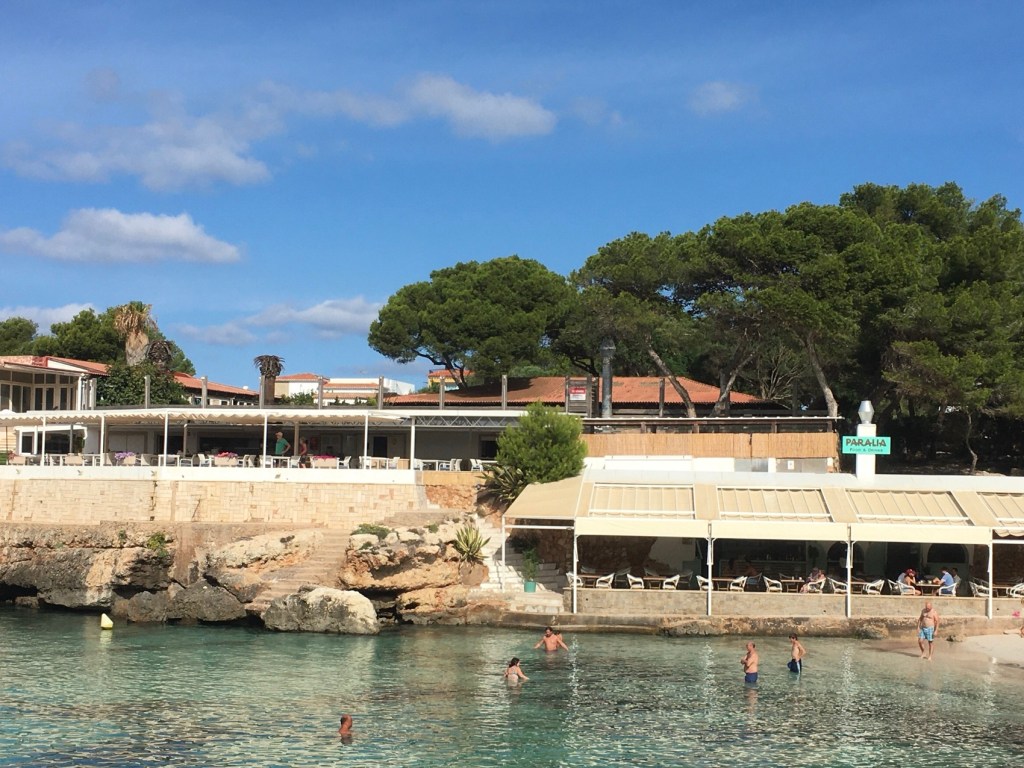
Slightly wider and very quiet until the sunbed man comes, around 10.15

Despite its popularity it was a calm and quiet spot.

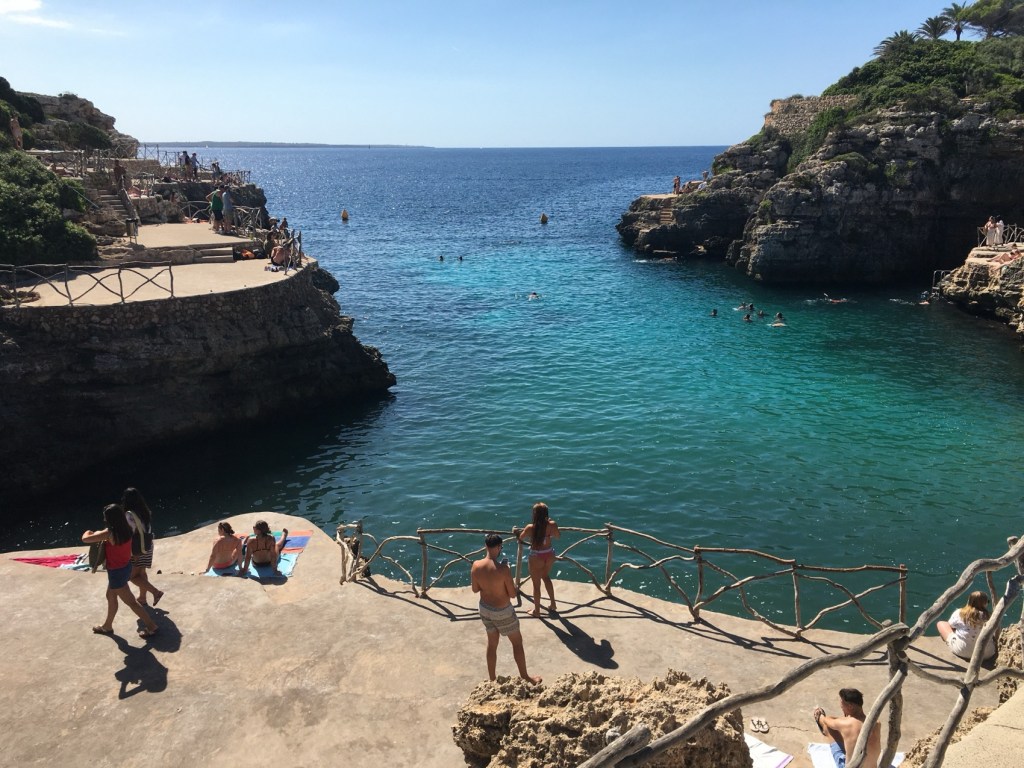
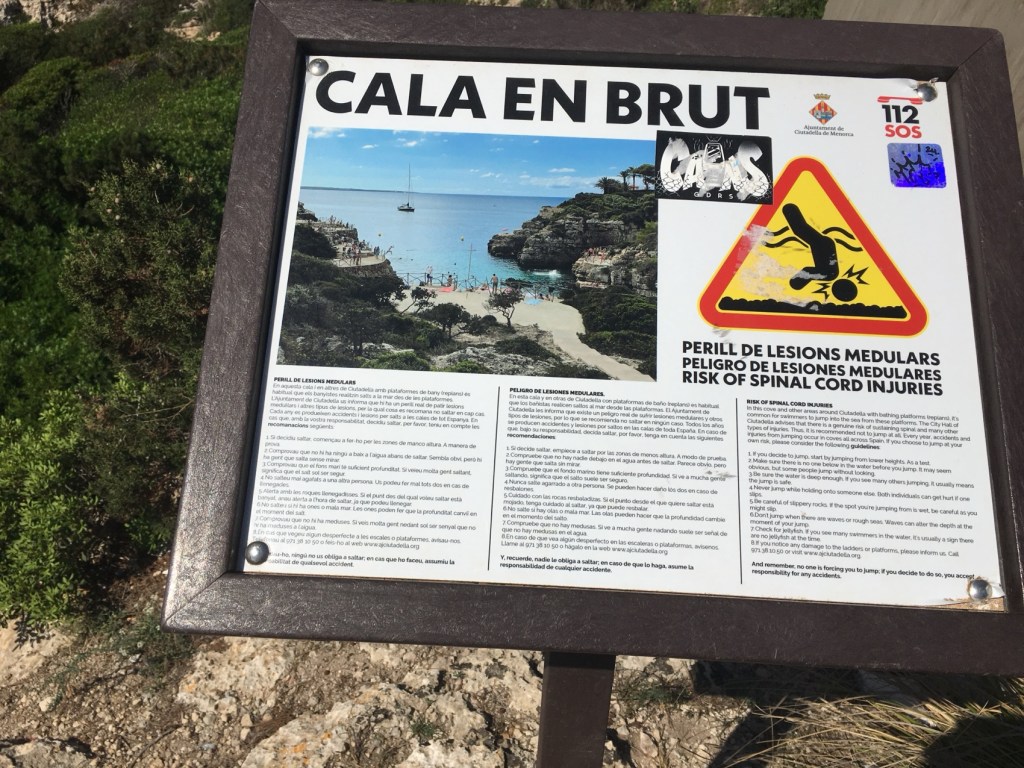
Access to the sea was from purpose built concrete platforms and came with a warning.
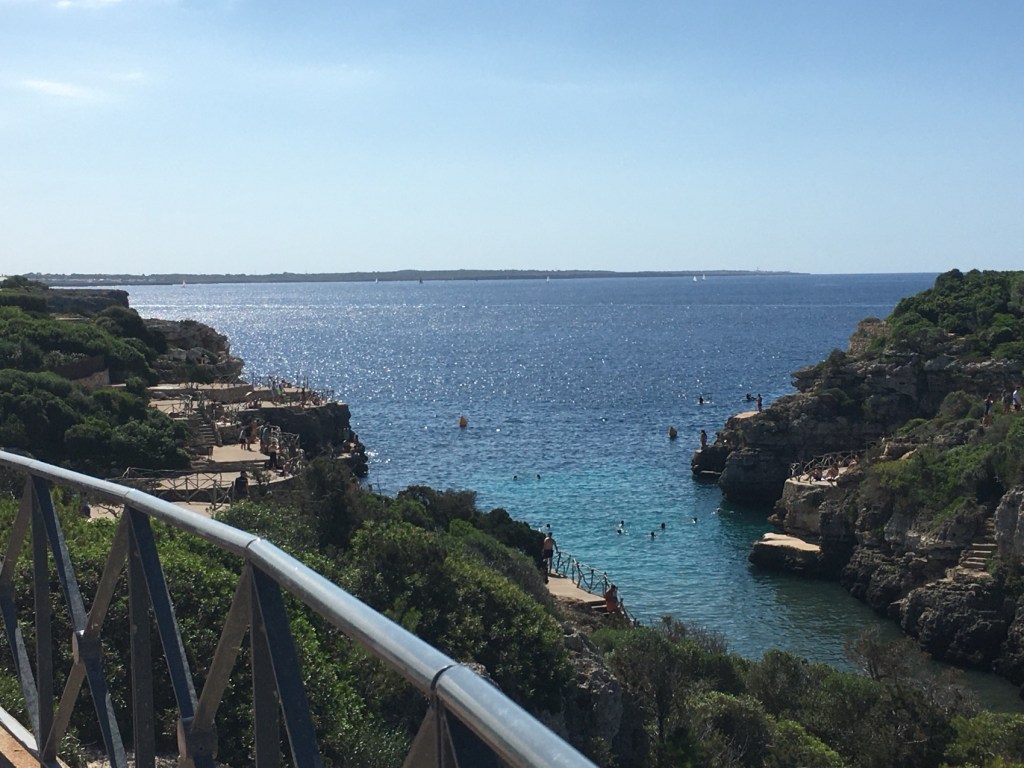
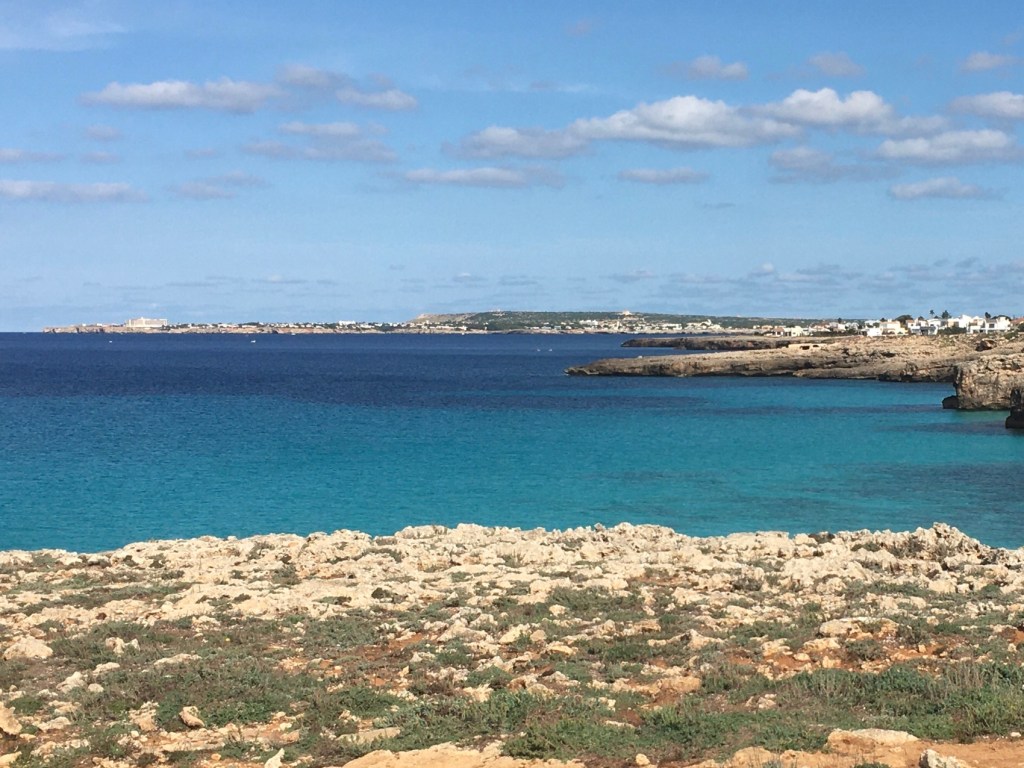
Barbara’s viewpoint. All of these Calas were in walking distance.

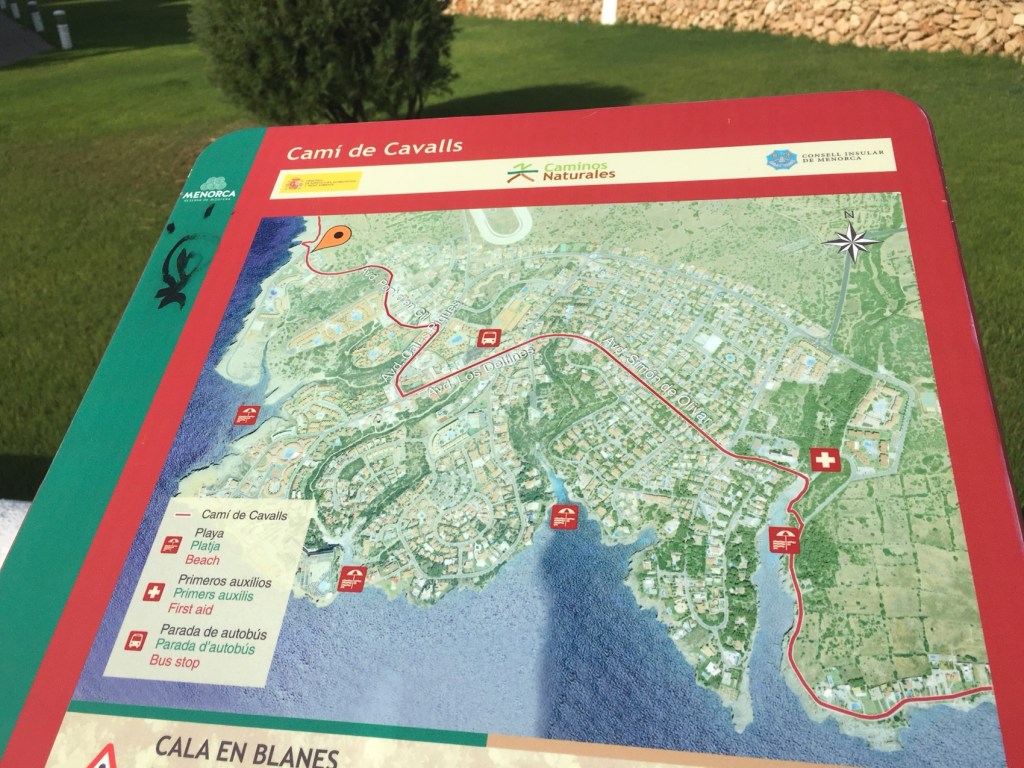
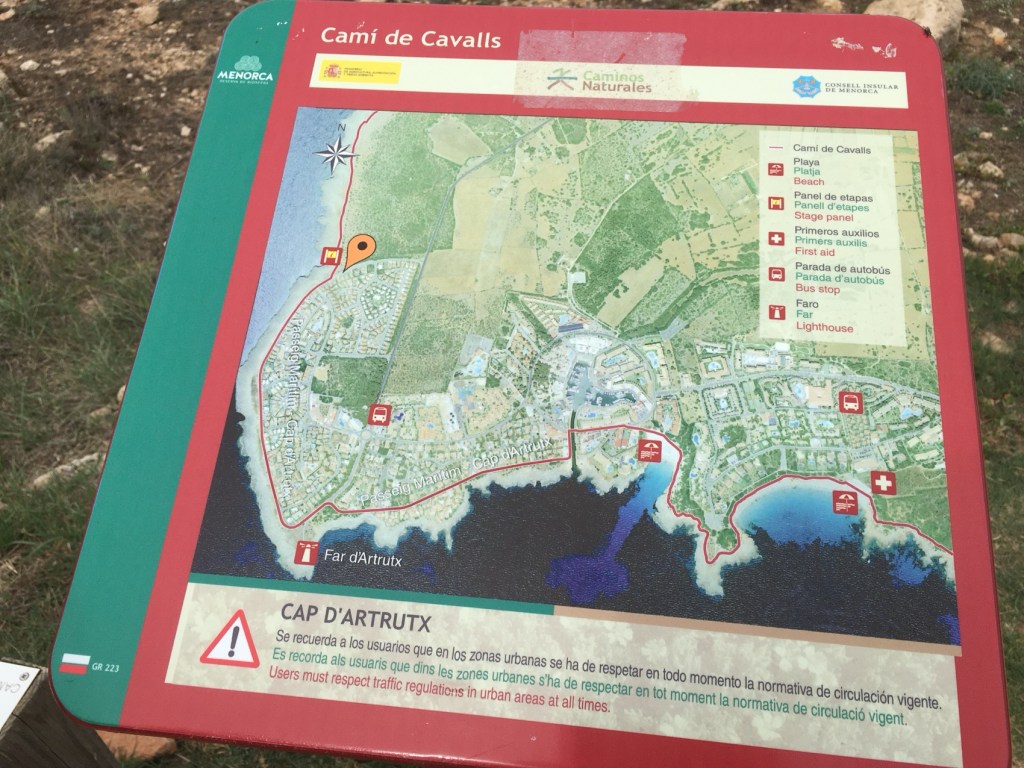
CAMIS not Caminos – “walks” basically – we walked sections of the Cami de Cavalls.

CAMI DE CAVALLS

More than a mere path: the history of the «Camí de Cavalls»

The Camí de Cavalls has a special significance for the local population, and not simply a historical one. The resurgence of the path is the result of hard work on behalf of many people, who believed it should be available as a public right of way, for cultural and social, as well as historical reasons. Years ago Menorca had a beautiful coastal path that went right round the island, crossing remote bays, gullies, woods and fields. It was known as the Camí de Cavalls (Bridle Path), and used by the British soldiers on horseback to guard the coast when they occupied Menorca. This wonderful circuit has been lovingly restored and signposted so that nowadays everyone can enjoy it. It 

It is 185 miles in length and encircles the entire island in 20 stages .

We walked two of the stages. From the apartment to Punta de Nata was the first

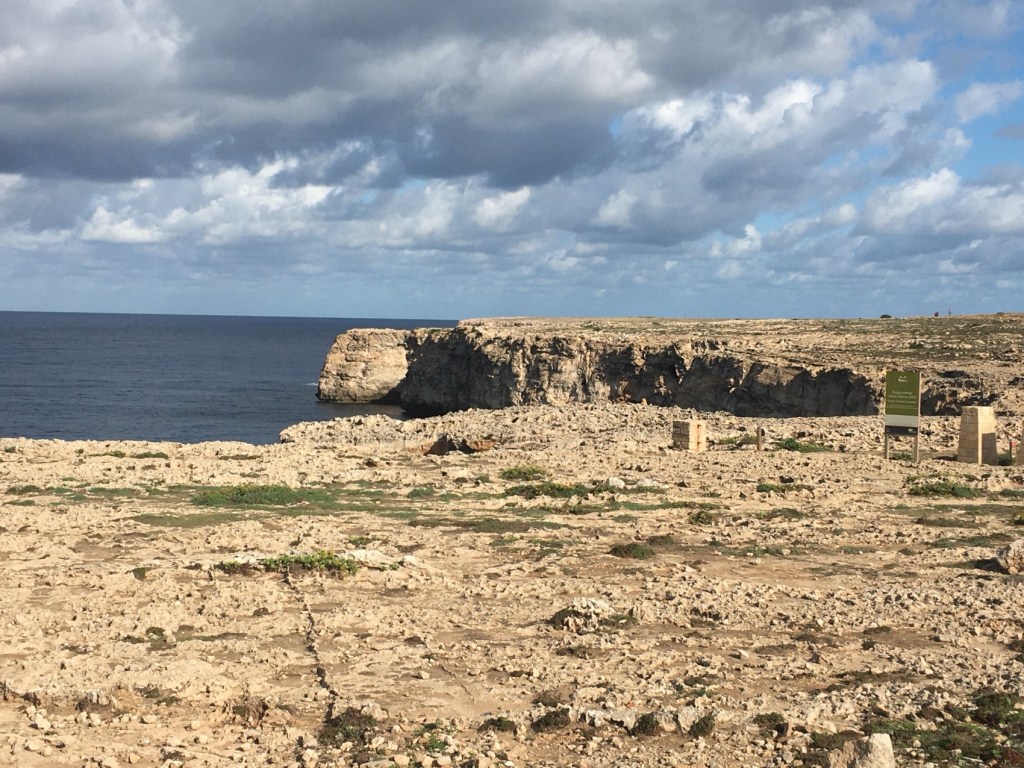
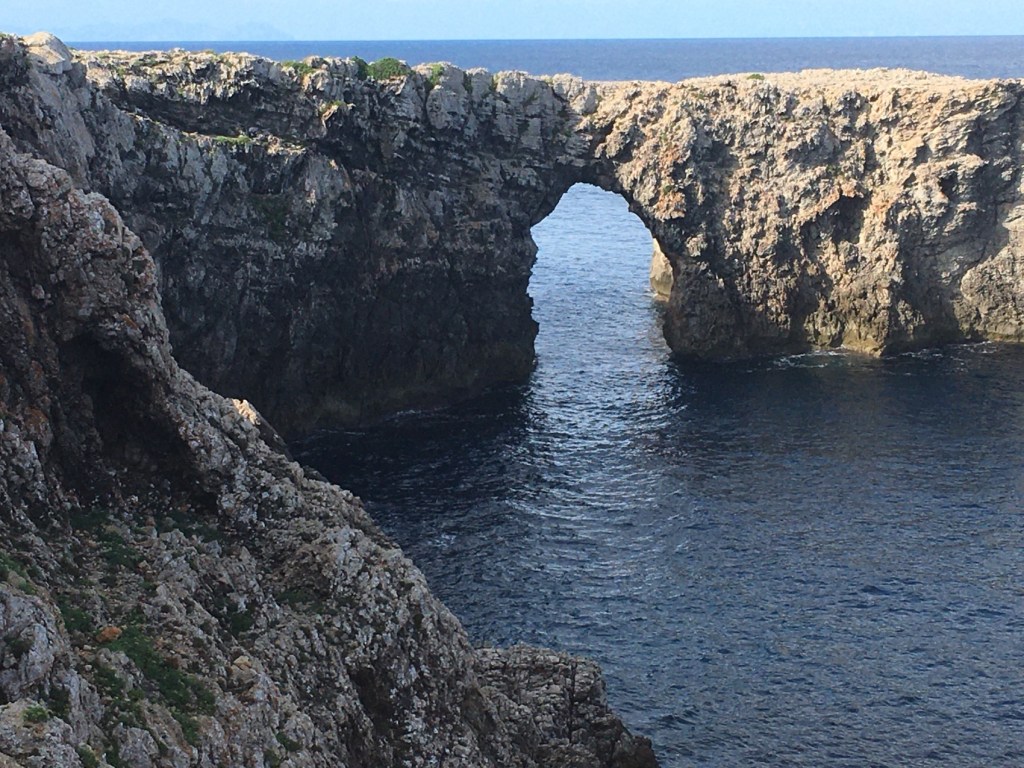
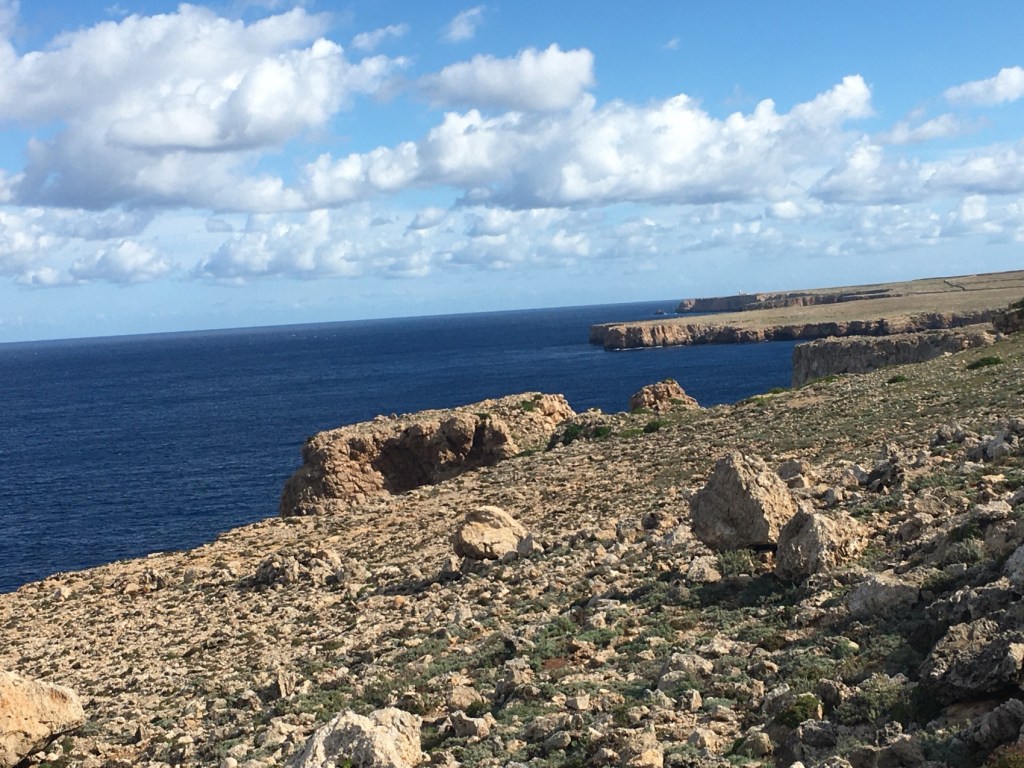
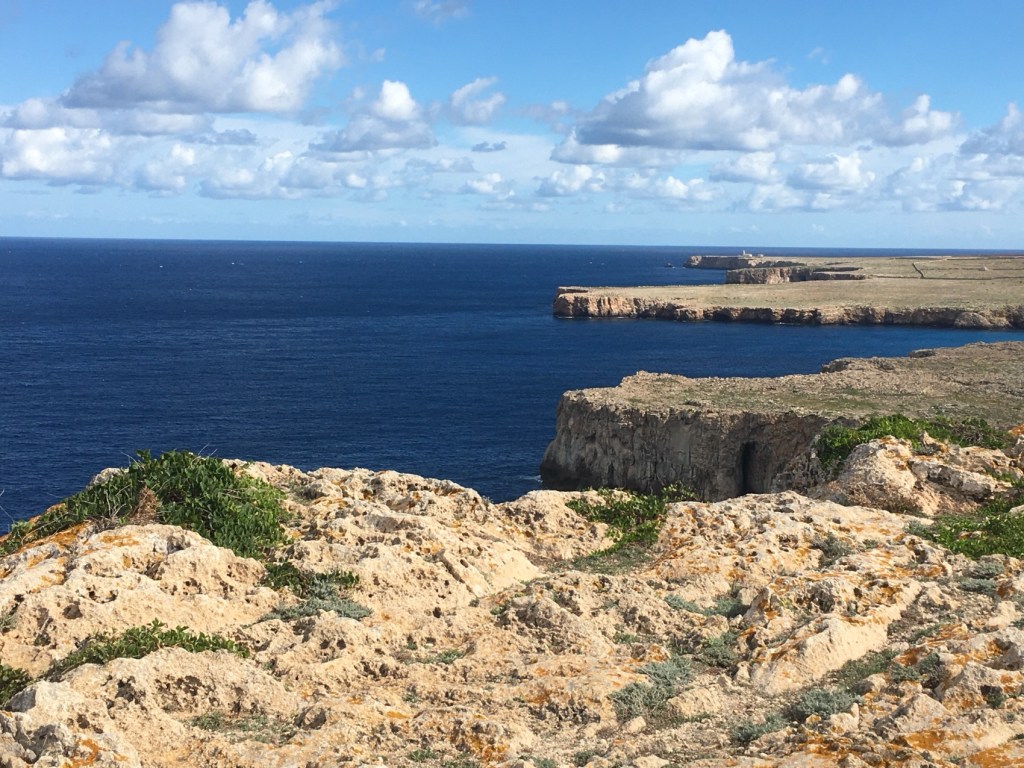
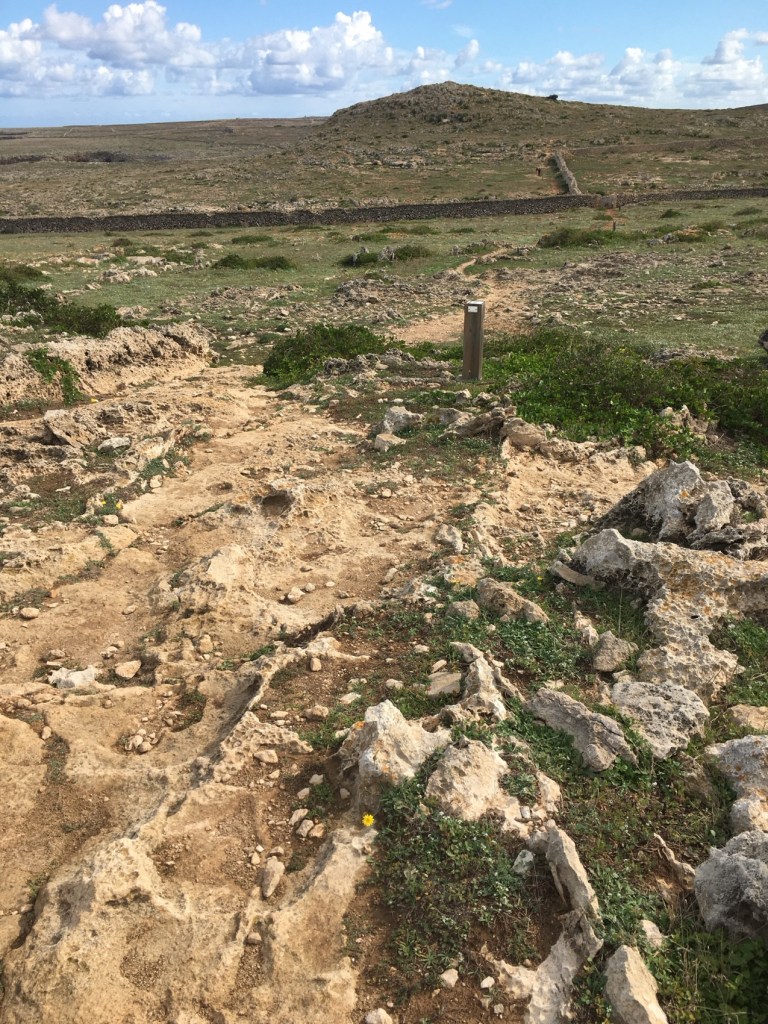
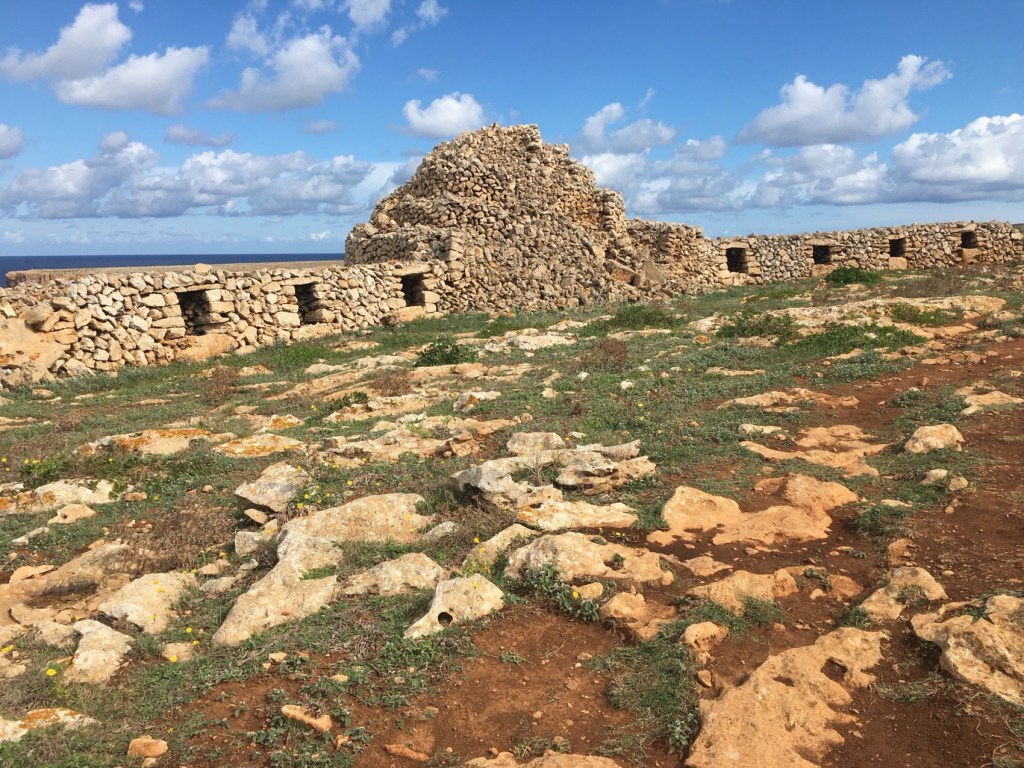
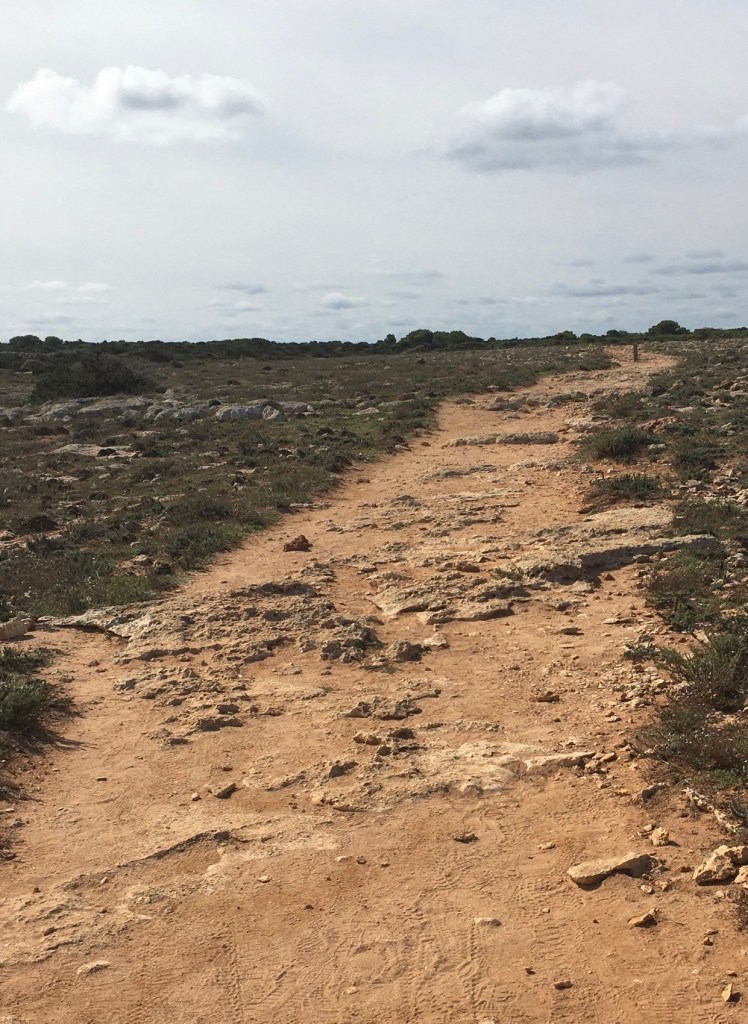
Stone plays a starring role along this section, as the path is particularly rocky. It is relatively easy to cover, however, because the profile is quite flat and only varies when passing small gorges dug into the rocks that lead to the sea.

Marker posts every 100 metres or so.
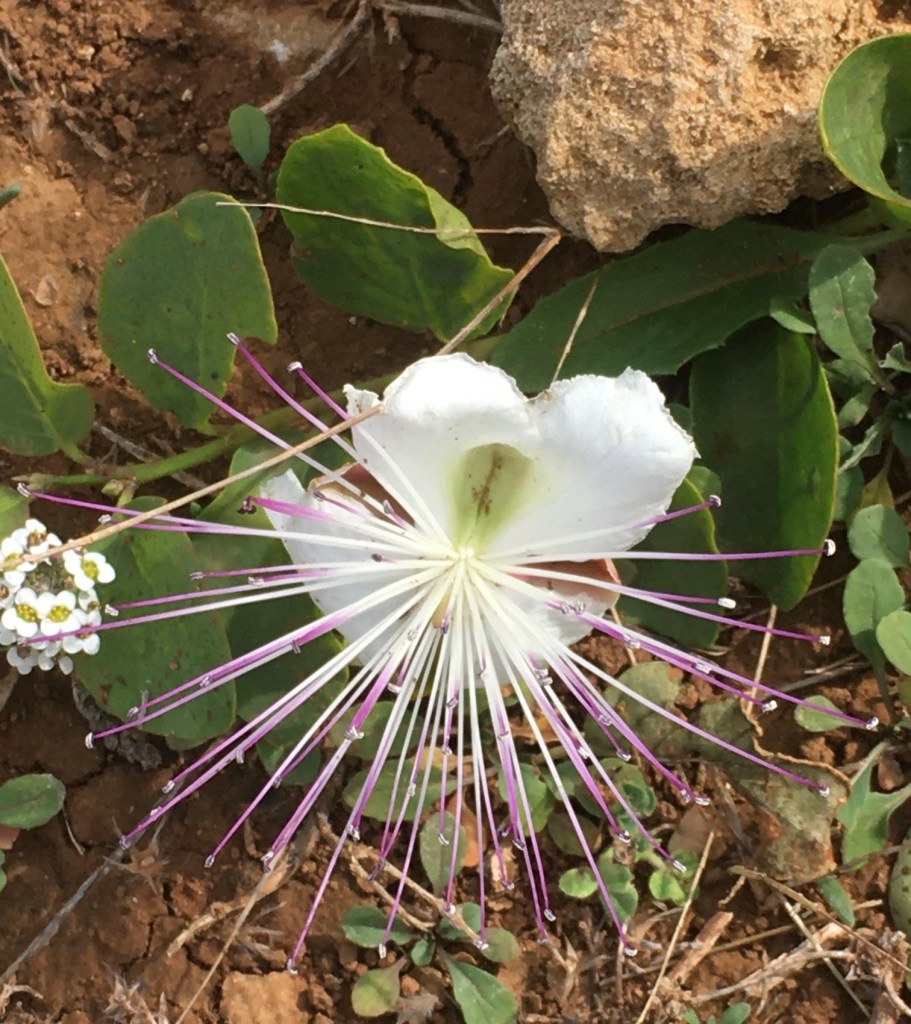
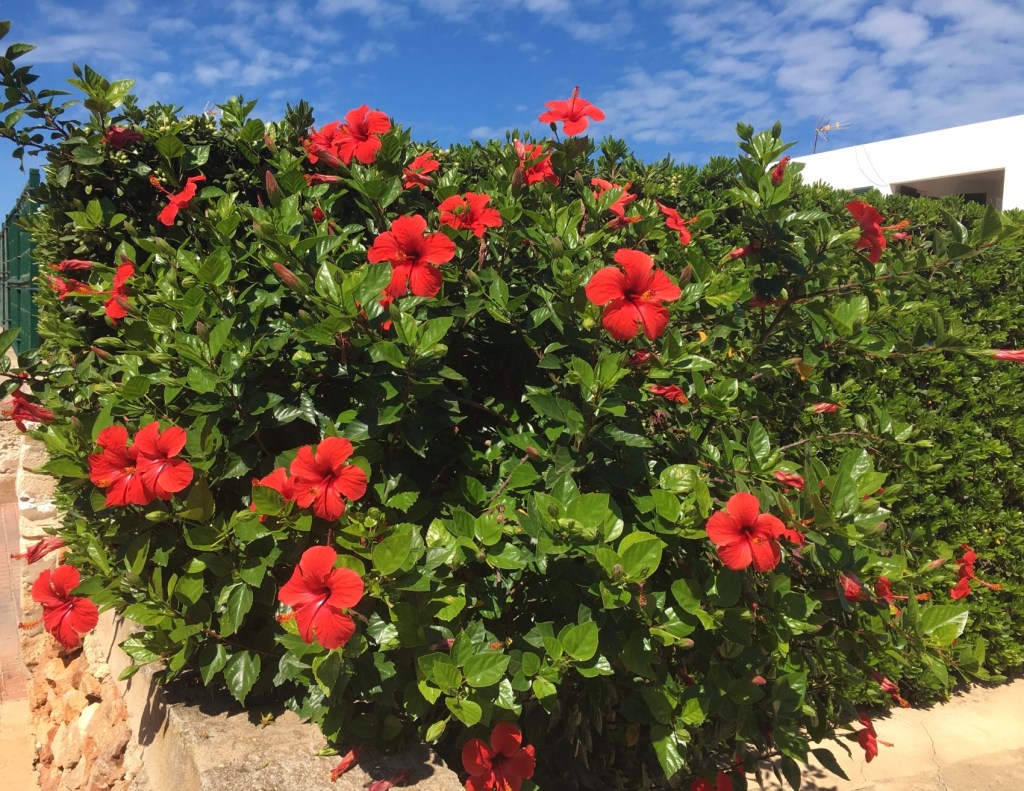
Floral beauty
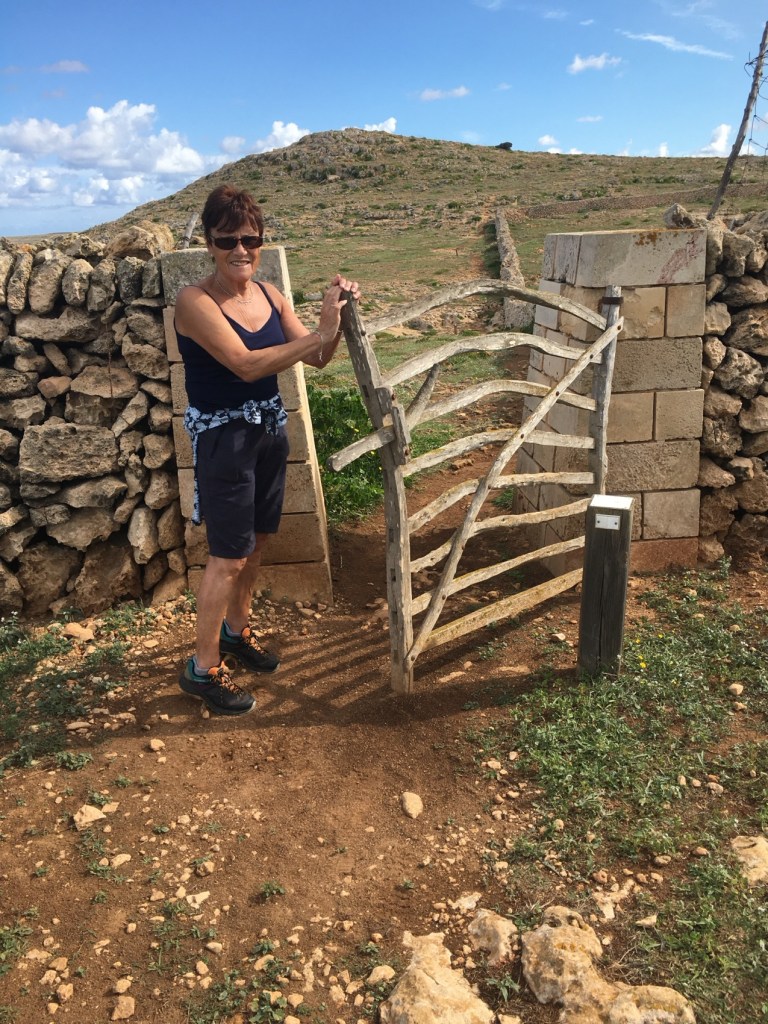
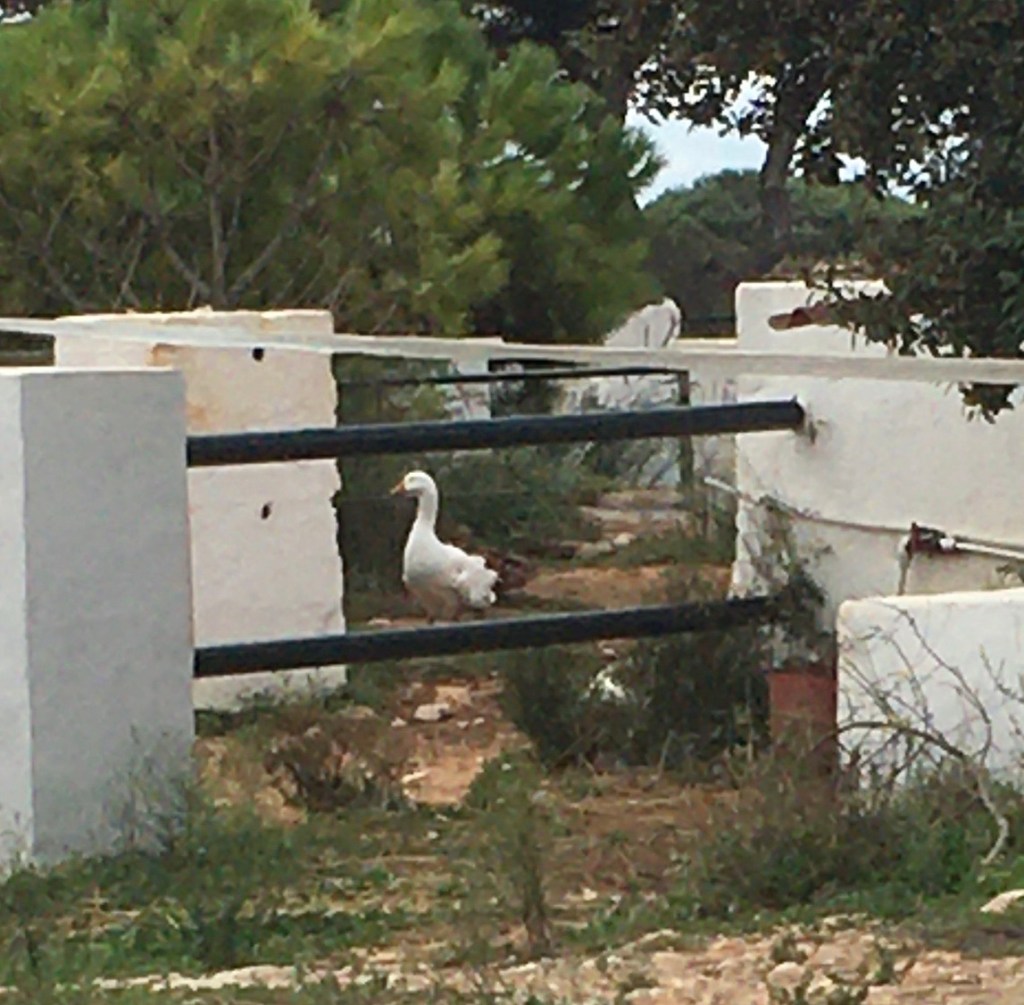
A traditional Menorcan gate and this tradition is seen in fencework everywhere.
The lighthouse at Punta Nati from here we walked 3 km to the ronda ( ring road ) and took the 61 bus back home.
Passing farmyards on the way.

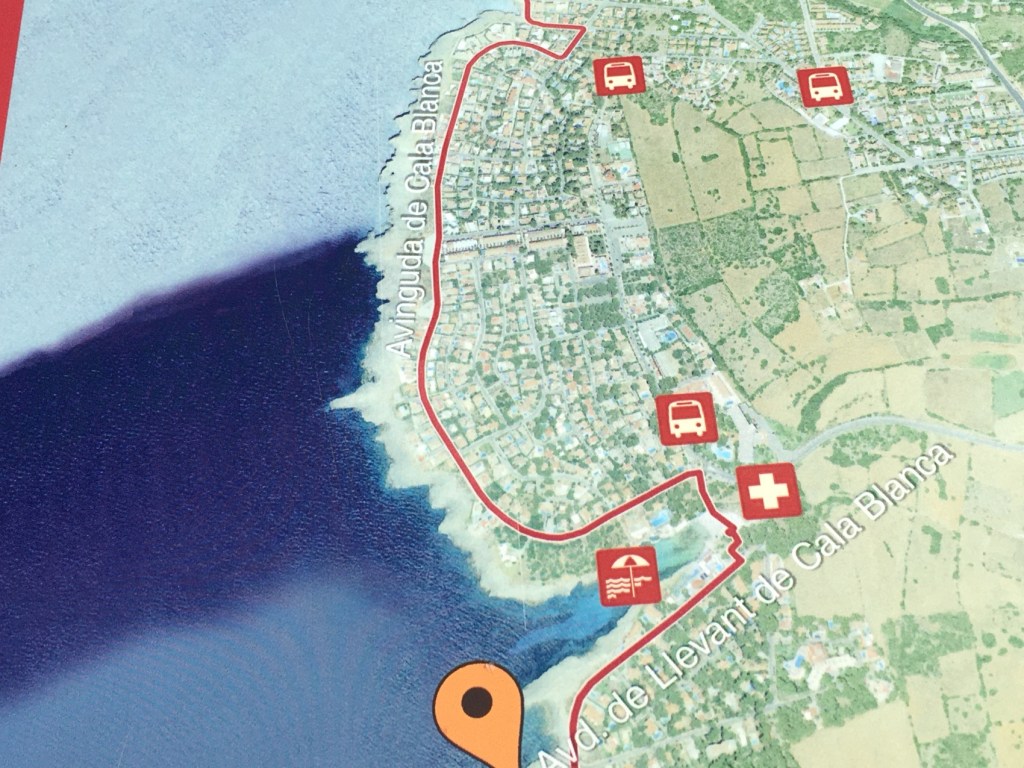
A couple of days later we walked another section of the Cami de Cavalls southwards. Taking the 61 into CIUTADELLA and then the 64 bus to the start of the Cami at Cala Blanca, walking from its attractive beach.

This is a very popular resort . The walk was relatively straightforward.
The walkway
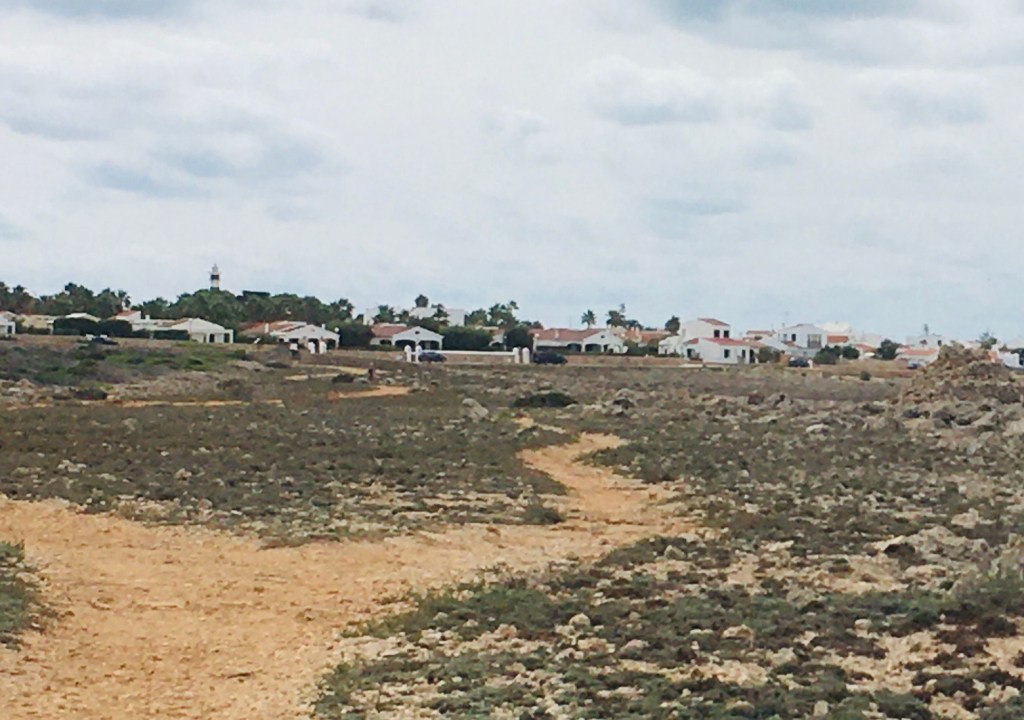
Lighthouse in the distance .
We walked further on
Quite a large development here , plenty of restaurants and the like.
Anyone fancy “ wrinkly” potatoes?

Having completed this section it was bacon and cheese bocadillos for lunch with a Tinto Verano, then the number 65 bus back to CIUTADELLA. Both Camis were about 9 miles .