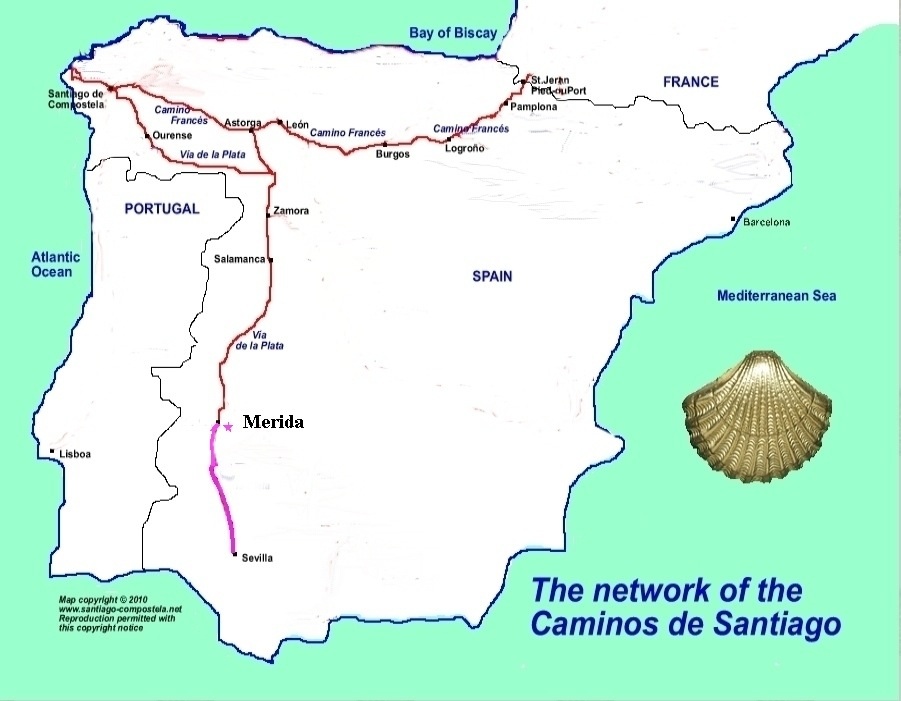
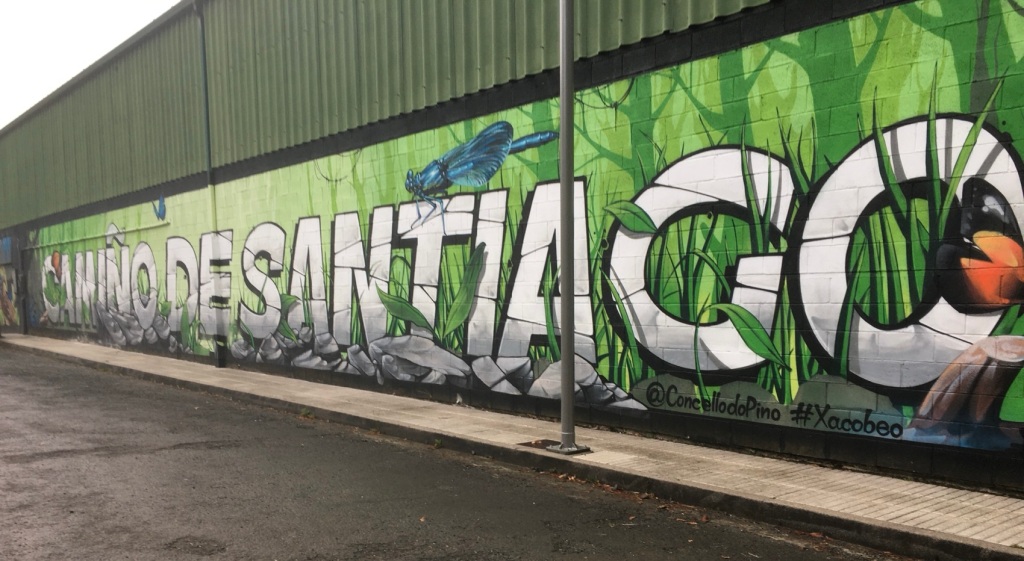
Estimated distance today is 21 km – 12.5 miles – By the time we found the hotel in S de C it was 13.5 miles,walked mainly in drizzle.
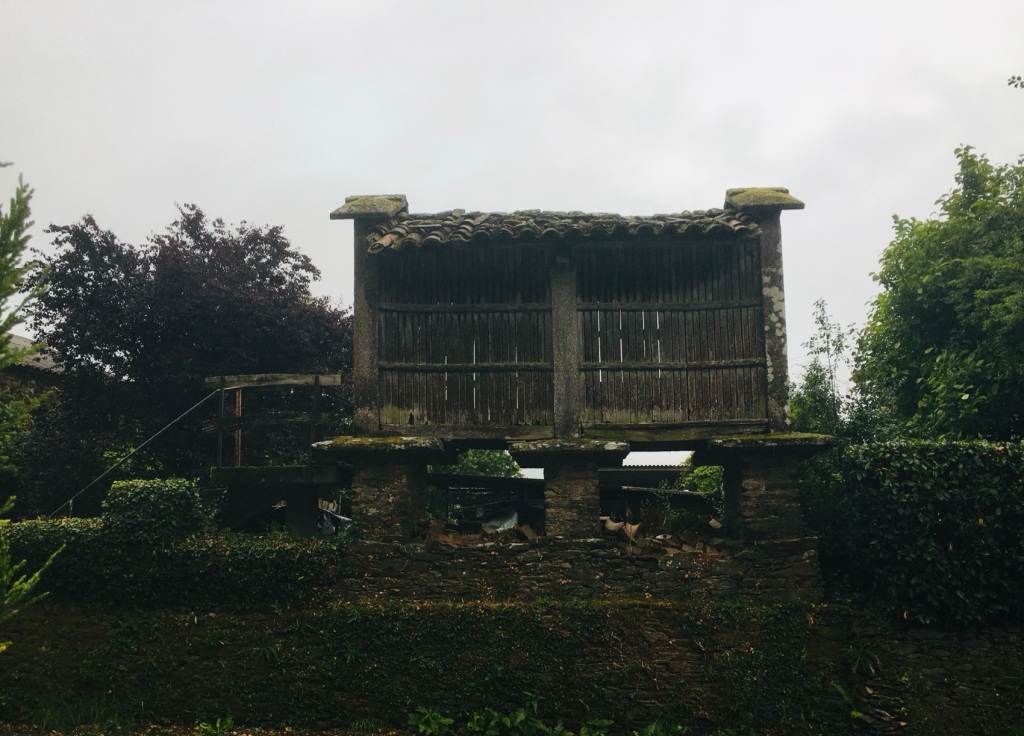
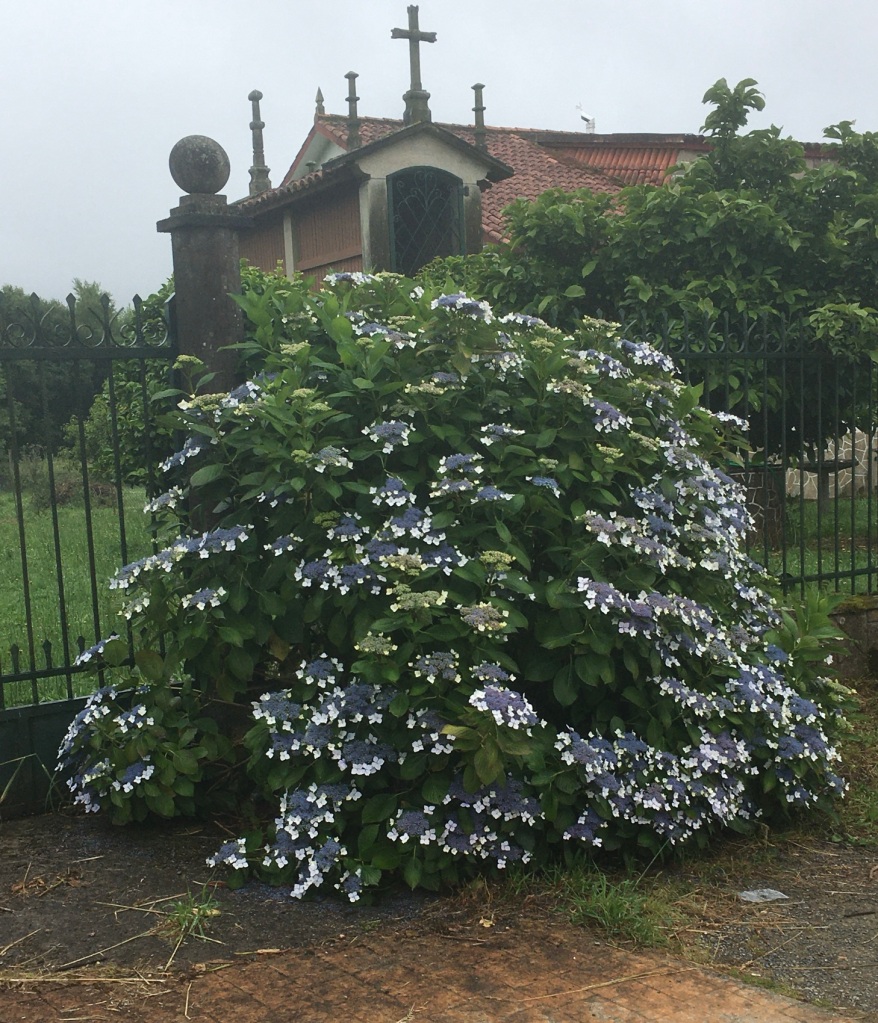
We left A RUA at 08.10, a fine mizzle was falling. Opposite the exit, on the edge of a farmyard was a nicely situated Horreos.
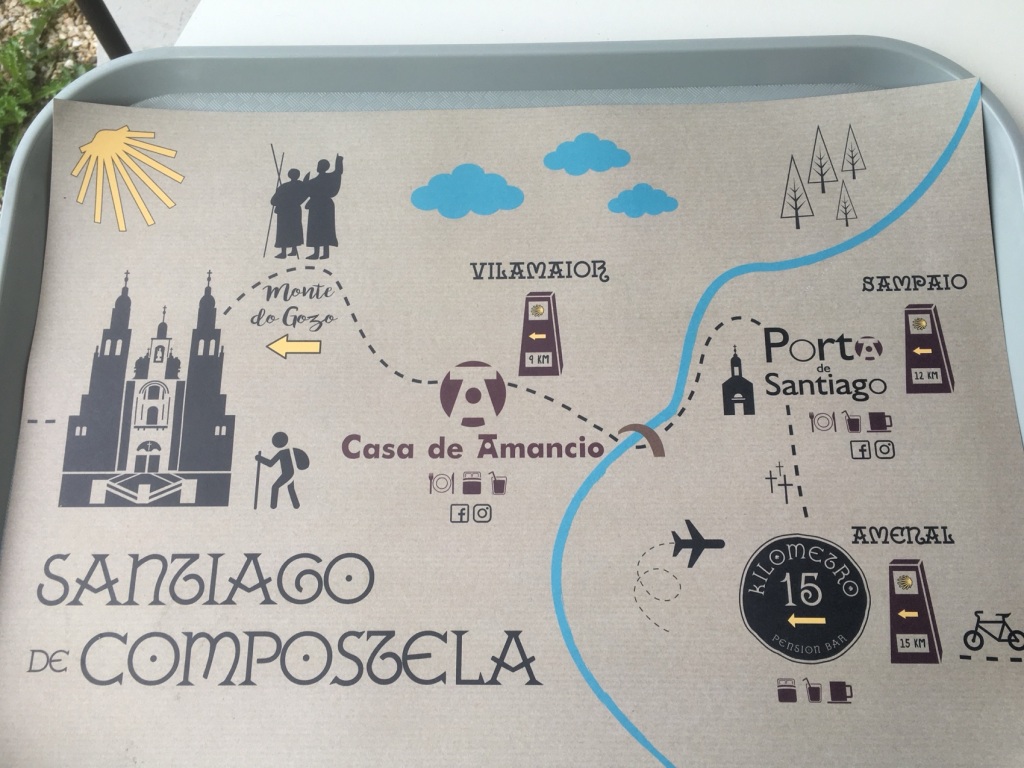
After an hour’s walking we reached a point 15 KM from Santiago. A bar called 15 Km in fact. We obtained a sello / stamp for our pilgrim passports and after doing so we saw a long line of secondary school children trundling along. We decided to get some coffee and give them time to move on.
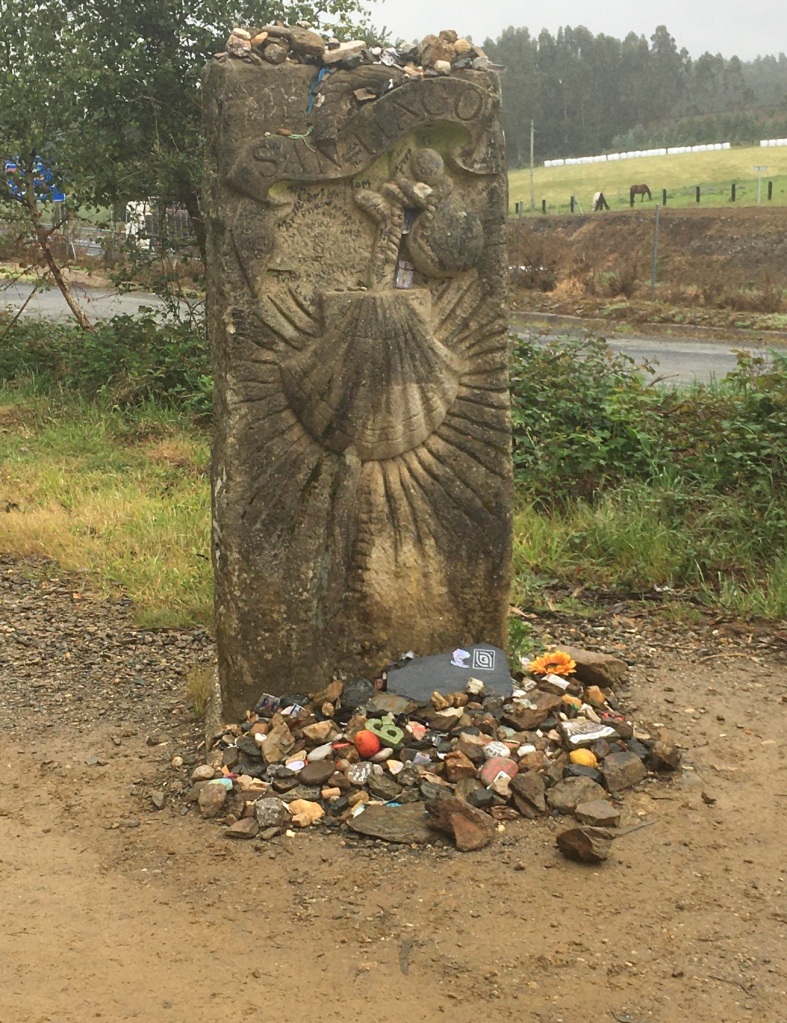
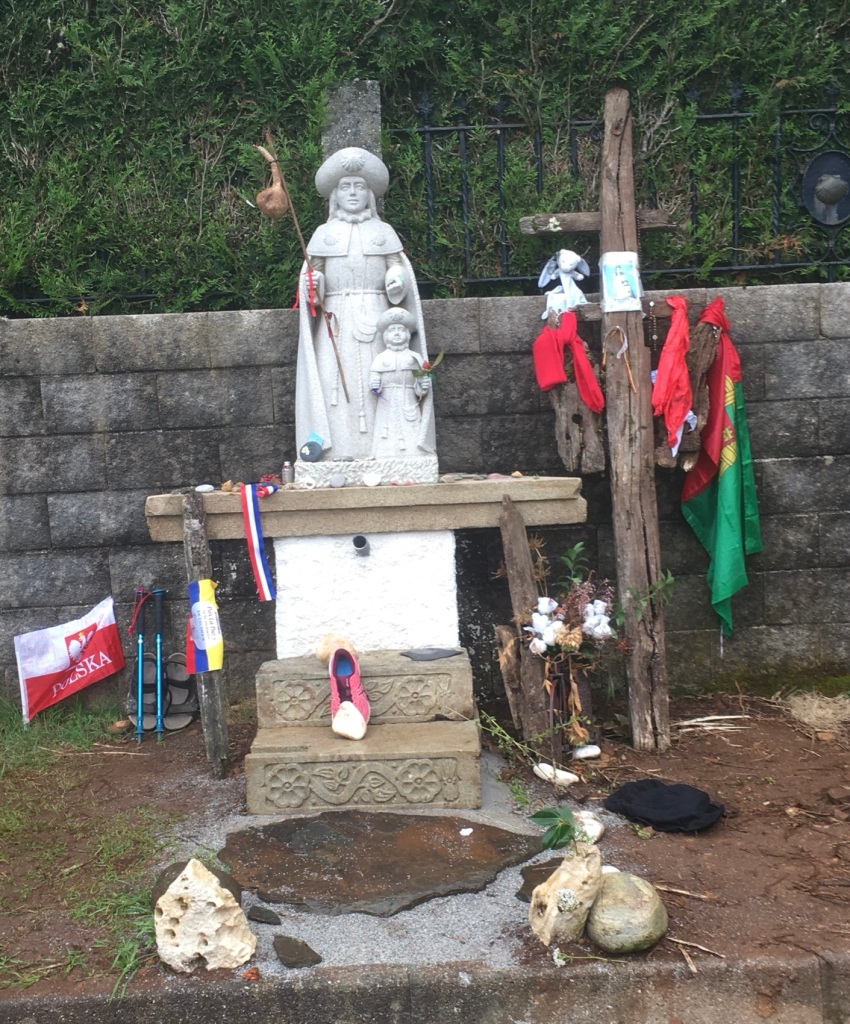
On any Camino you can expect to come upon unusual statues, shrines and even memorials of a pilgrim who died along the way.

Two hours or so further on we came by a campsite, which I remembered passing five years ago and it looked to be very popular – it was closed and only the cafe seemed to be functioning, with a couple of Camino trinket stalls in the reception car park.


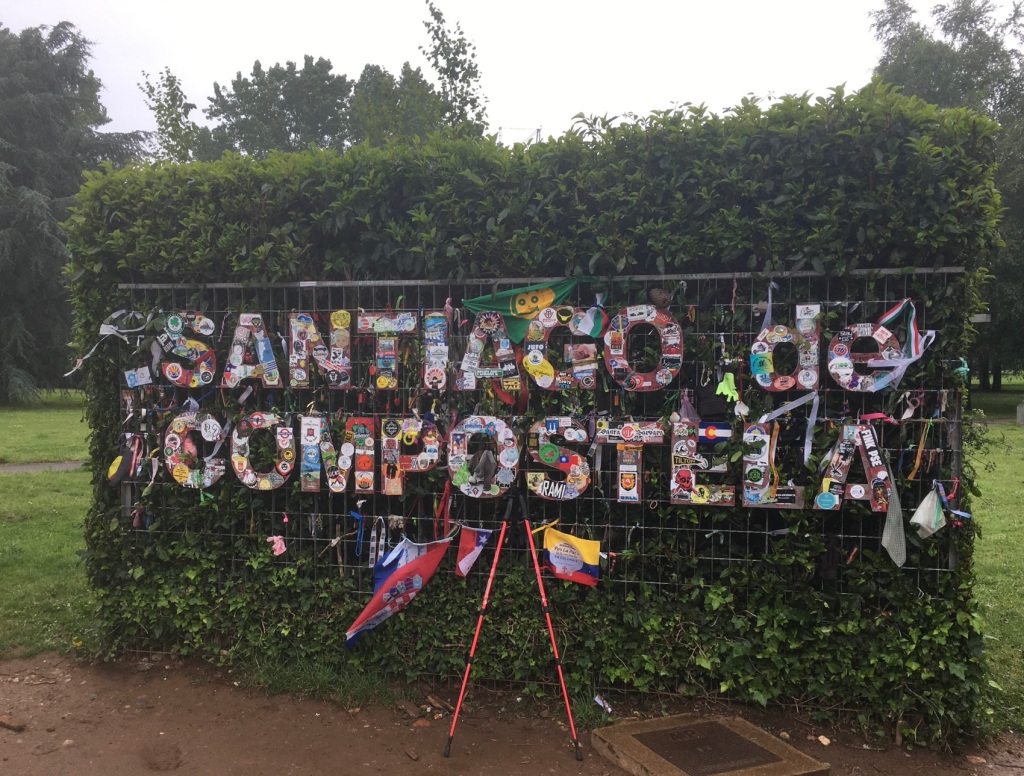
After the descent from Mount Gozo we entered the outskirts of Santiago – I know from past experience that it’s still,a long walk until,you reach the historic centre of the city.
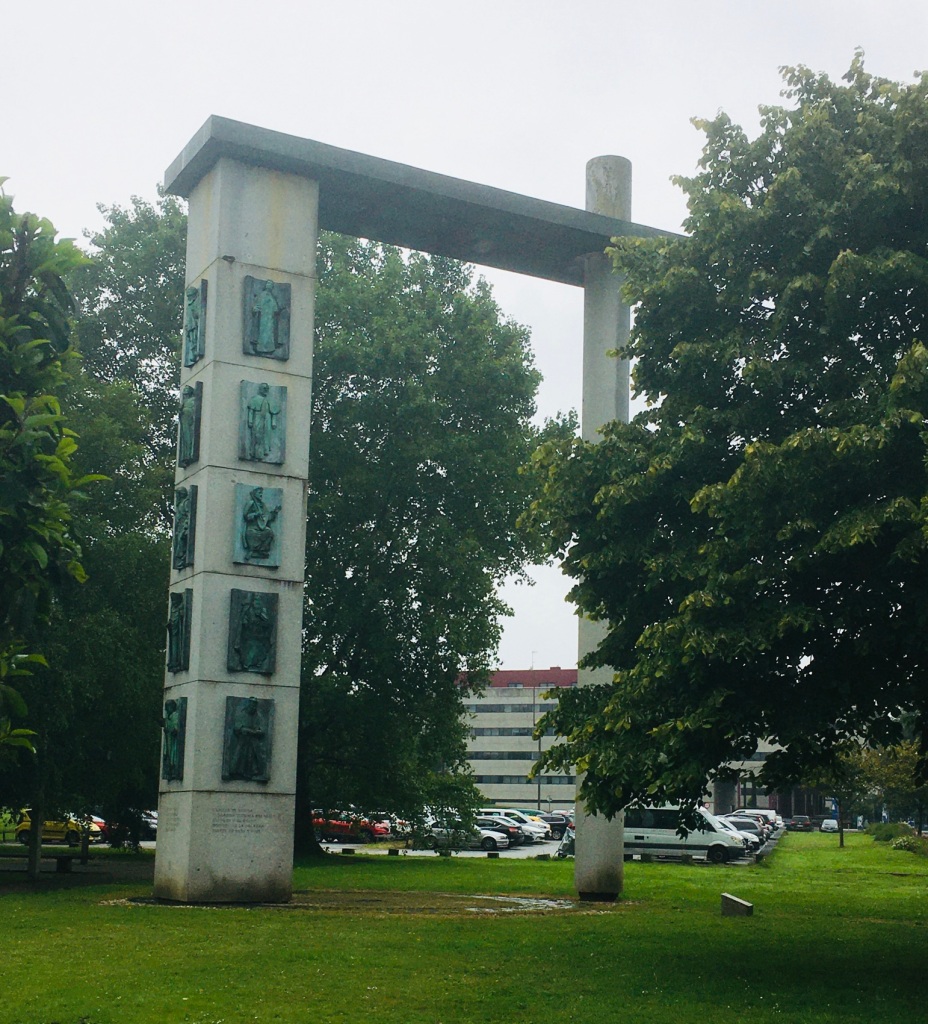
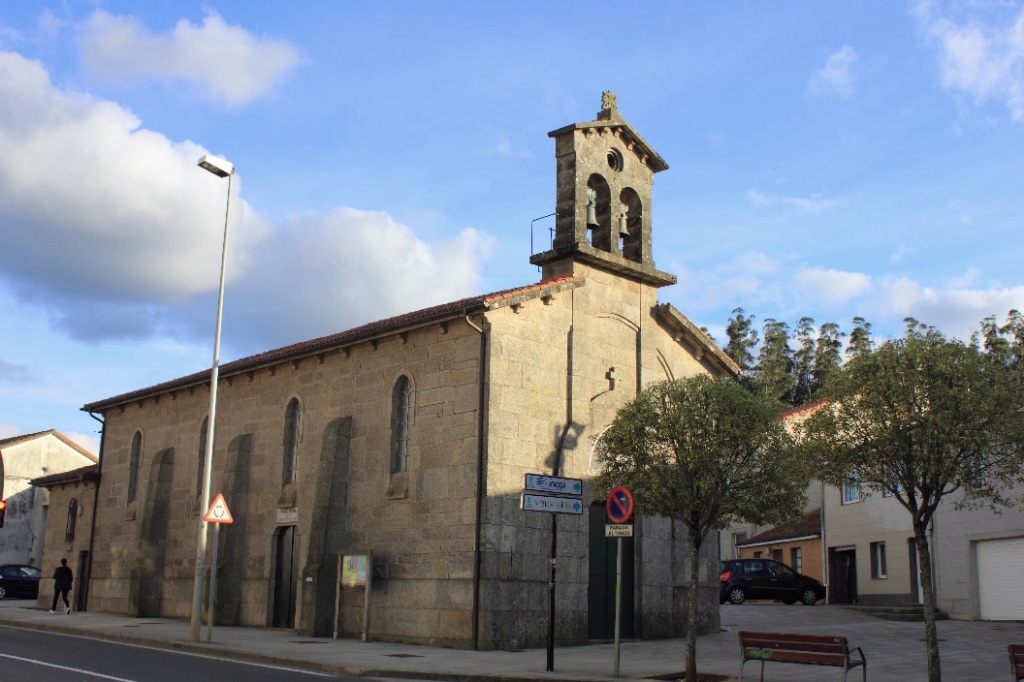
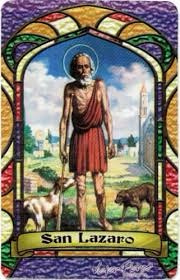
San Lázaro is regarded as a humble saint of health and healing who soothes the sick, especially immigrants and people living in poverty. He is also known as the “god of crossroads” who guides people in making difficult decisions.
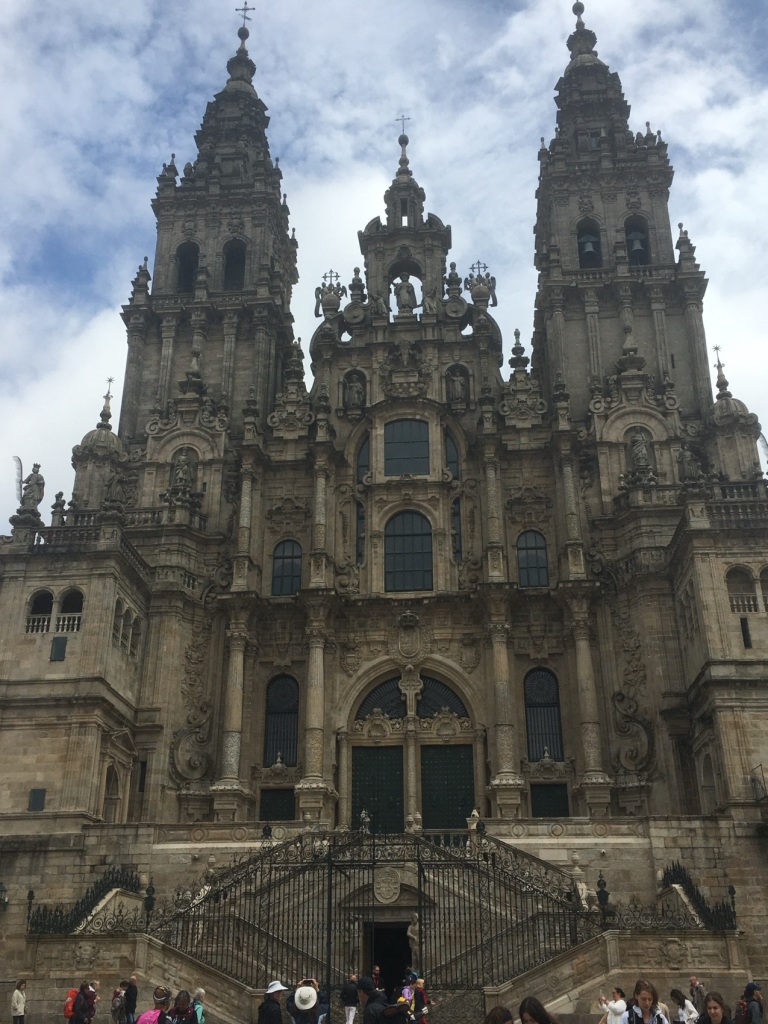
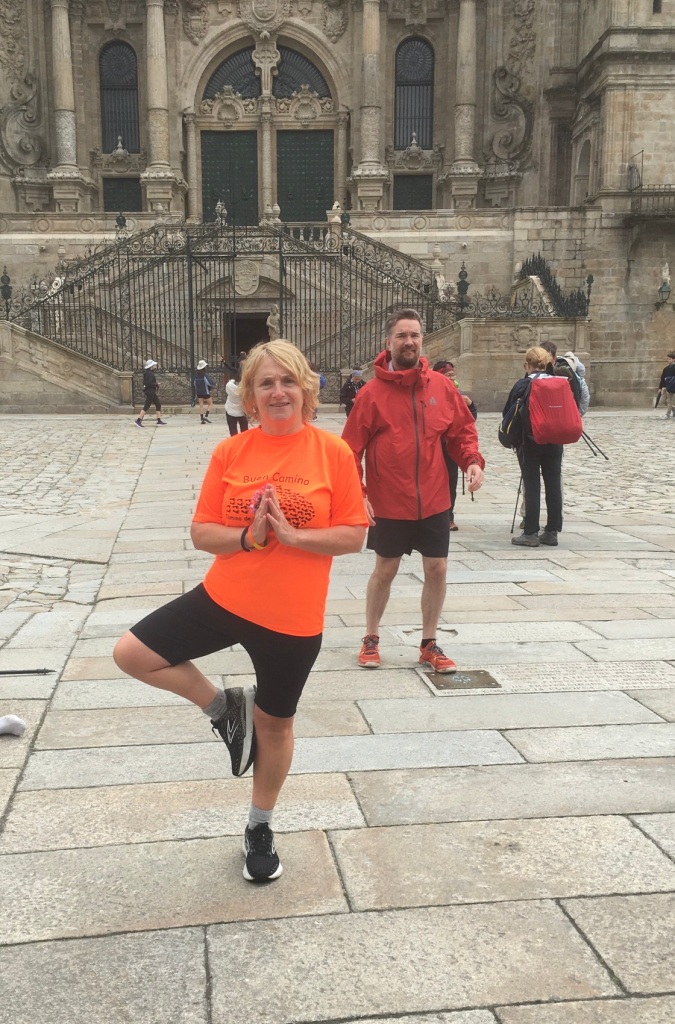
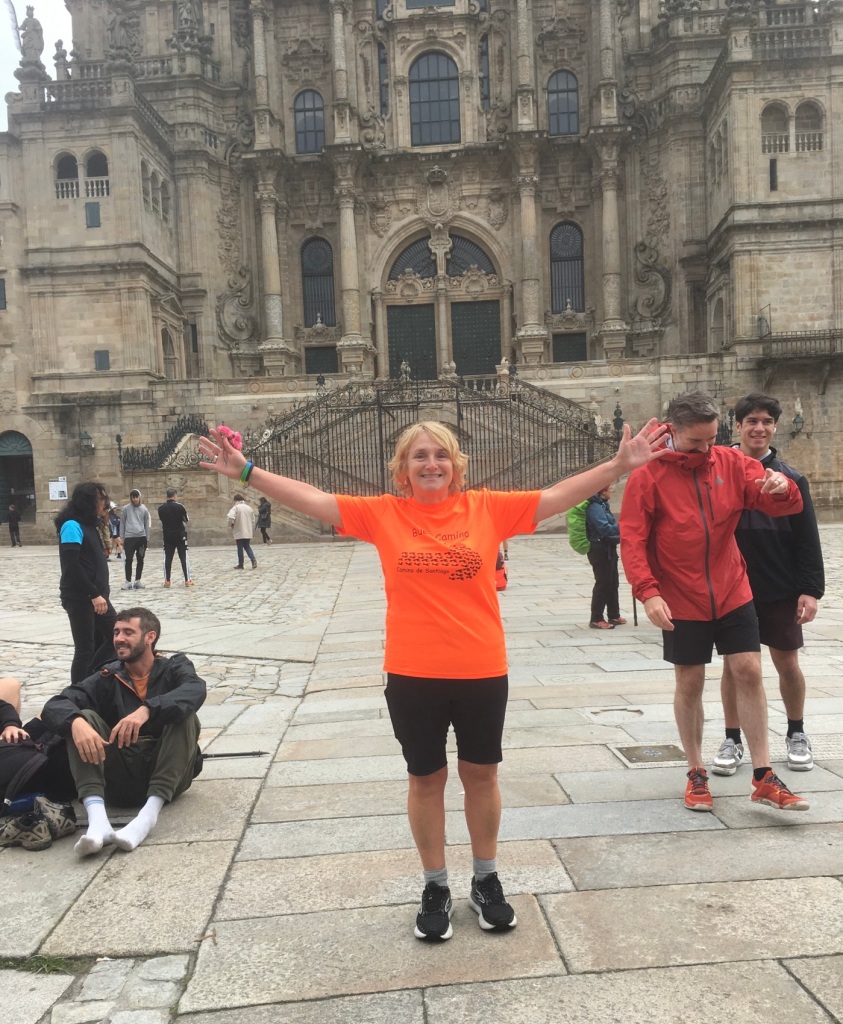
We eventually reached the historic centre of Santiago and its famous square the Pzaza da Obradoiro
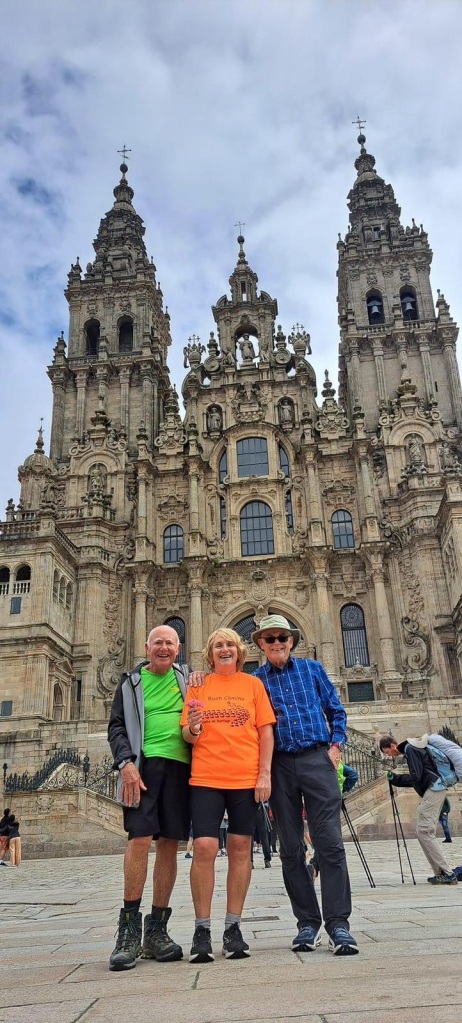

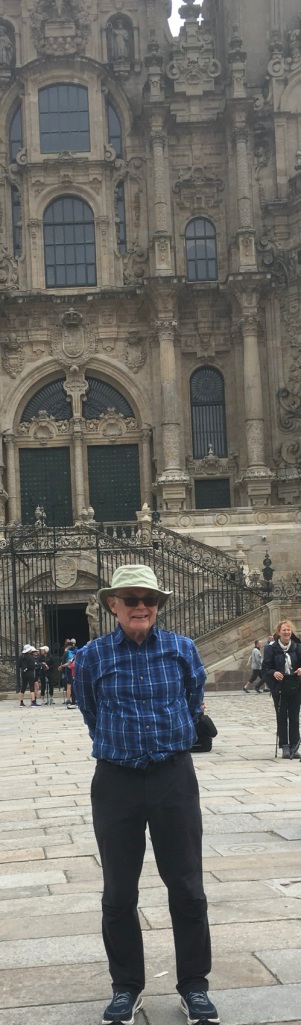
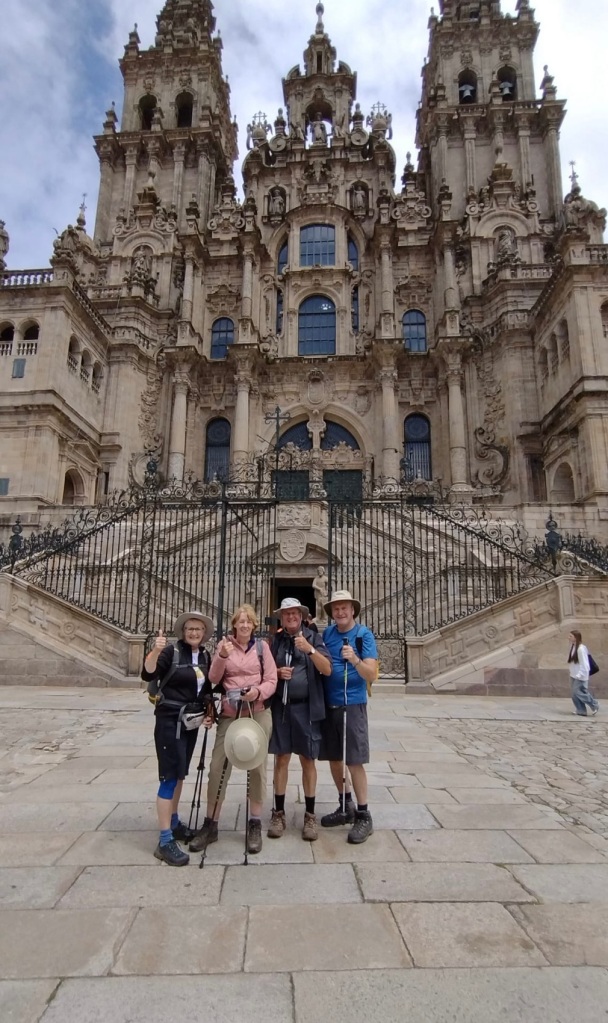
We received a tip off that some Americans had paid for the Botafumeiro to be swung at the 7.30 pm Pilgrim mass( €500 ) and so some of the group went to enjoy the spectacle.

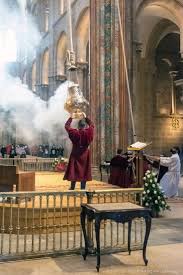
One of the most famous symbols of the cathedral is the Botafumeiro, which may be largest censer in the world. It is used at masses celebrated on key dates at the cathedral. It is also used every Friday (except for Good Friday) at the 7.30 p.m. mass, an homage to the pilgrim by the city of Santiago. It may also be used on other occasions upon request from pilgrim groups. The aroma of the incense has a powerful symbolic connection to prayer and spiritual purification: ‘May my prayer be set before you like incense’ (Psalm 141:2).
The Botafumeiro weighs 53 kilograms and measures 1.5 metres. Using a complex system of pulleys, it is swung from the central cupola of the cathedral, from which it hangs, towards the side aisles. It takes eight men, known as tiraboleiros, to move it. It is suspended from a height of 20 metres and can reach speeds up to 68 km/h.
The first written reference to this enormous censer appears in a 14th-century margin note to the Codex Calixtinus, where it is called Turibulum magnum. There have been several censers throughout history and in the early years, the ceremony did not proceed as seamlessly as it does today. For example, in 1610, the pilgrim Diego de Guzmán wrote in his diary of how the censer ‘hit the upper vaults’ as it swung. And on a few other occasions, the rope has even slipped out of the pulley.
Thanks to Christina,Val and Mike for some of the photos
 ensuitepilgrim's Blog
Congratulations to all of you!
Great job and the Cathedral looks wonderful. When I was there in 2019 it was too clean looking now it looks more like the Cathedral I remember from my many caminos over the years.
Arlena
Well done to you all, a brilliant achievement that you will always remember!