Another revisit on the Algarve, but not as far back as 1976, we spent some time in Lagos two years ago and wanted to explore some more of its history and its walkway over the dunes.
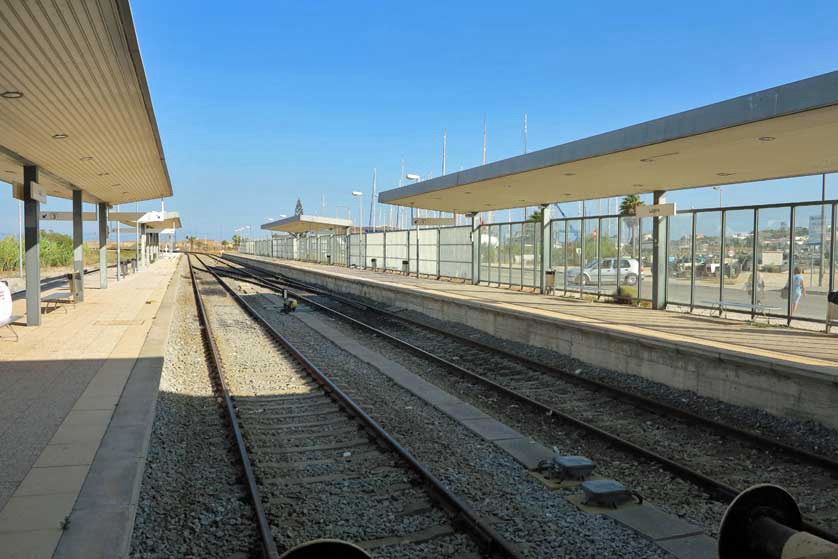
Tiny station but it still employed a ticket office and at €4.00 return , who says nationalised railways don’t work? These do and for the benefit of customers not shareholders.Atop a chimney behind the platform.
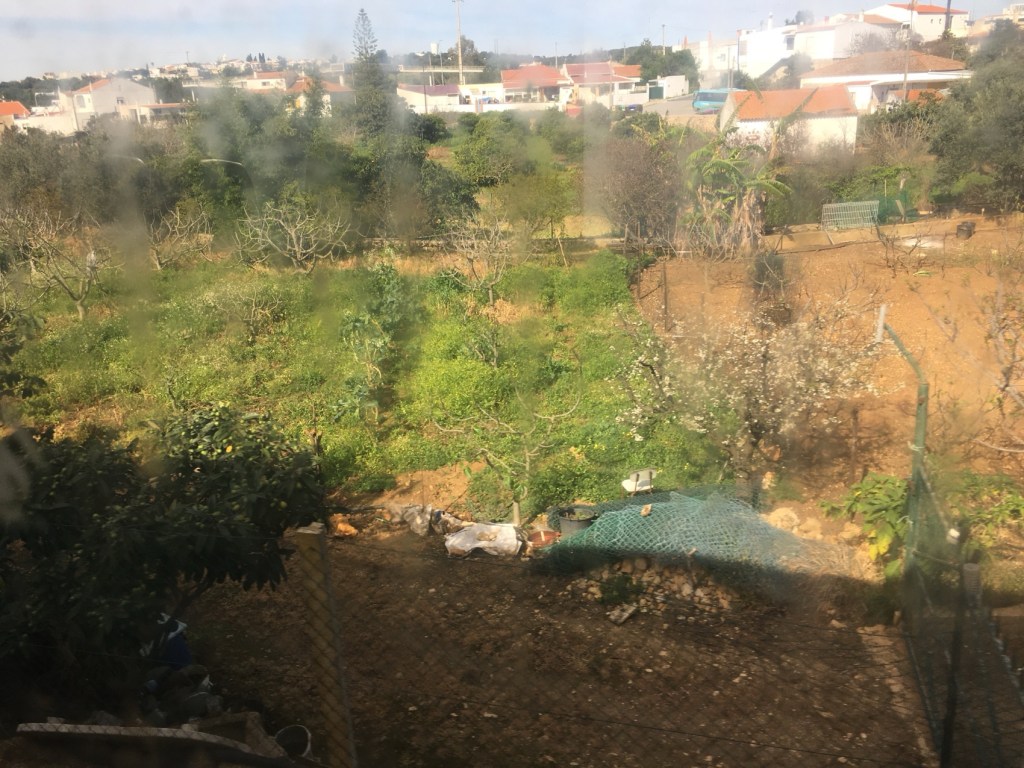
Despite its age,the train picked up some speed as we passed salt pans, allotments and large fields of asparagus.
Cabbages amongst the citrus treesSalt pansLagos station is quite modern and a contrast to Portimao and this little place – sorry about the dirty windows
We were soon crossing the waterway to Lagos Marina , reminding us of the importance of its maritime traditions.
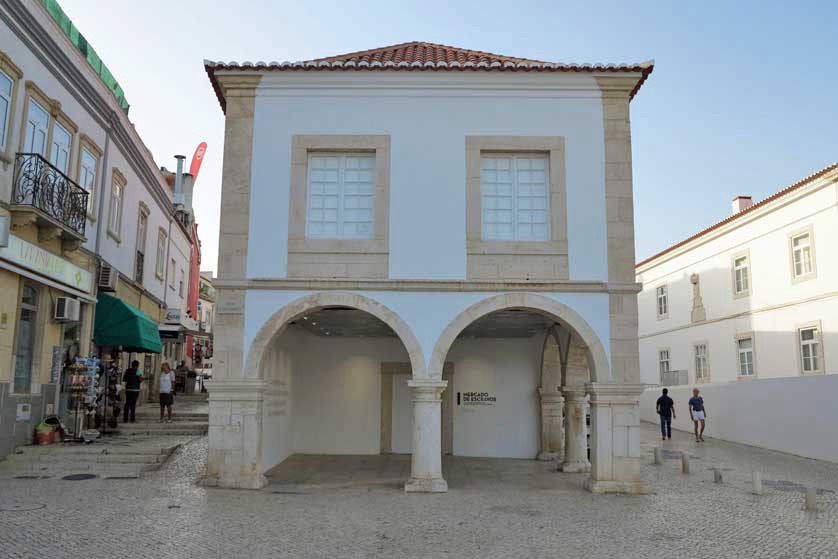
Lagos offers numerous opportunities to take boat rides to caves and so forth.But not on this one which is reminder of a now infamous time in its history when Lagos was the centre of the European slave trade.Mainly responsible.This was the slave market Coffee time in a little Largo in the pedestrianised quarter . I forewent a Pasta de Nata…don’t know how….oh yes I had one for breakfast !But the mellow tones of this saxophonist were a compensation
Famously irresistible and frequently found in the UK now. Lidl make some good ones.
Believe it or not,but these are a souvenir cast in crockery.Lovely cast iron balconyExamples of classic dwellings to be found in Lagos
The Lagos town walls date back as far as the Roman period. They were rebuilt by the Arabs and considerably enlarged during the 16th century between the reigns of D. Manuel and Filipe I, because of the need to protect the growing city centre. These walls have nine towers that were built for artillery and there are seven gates. In the late 16th century, one section of the wall was turned into a residence for the Governors of the Algarve.
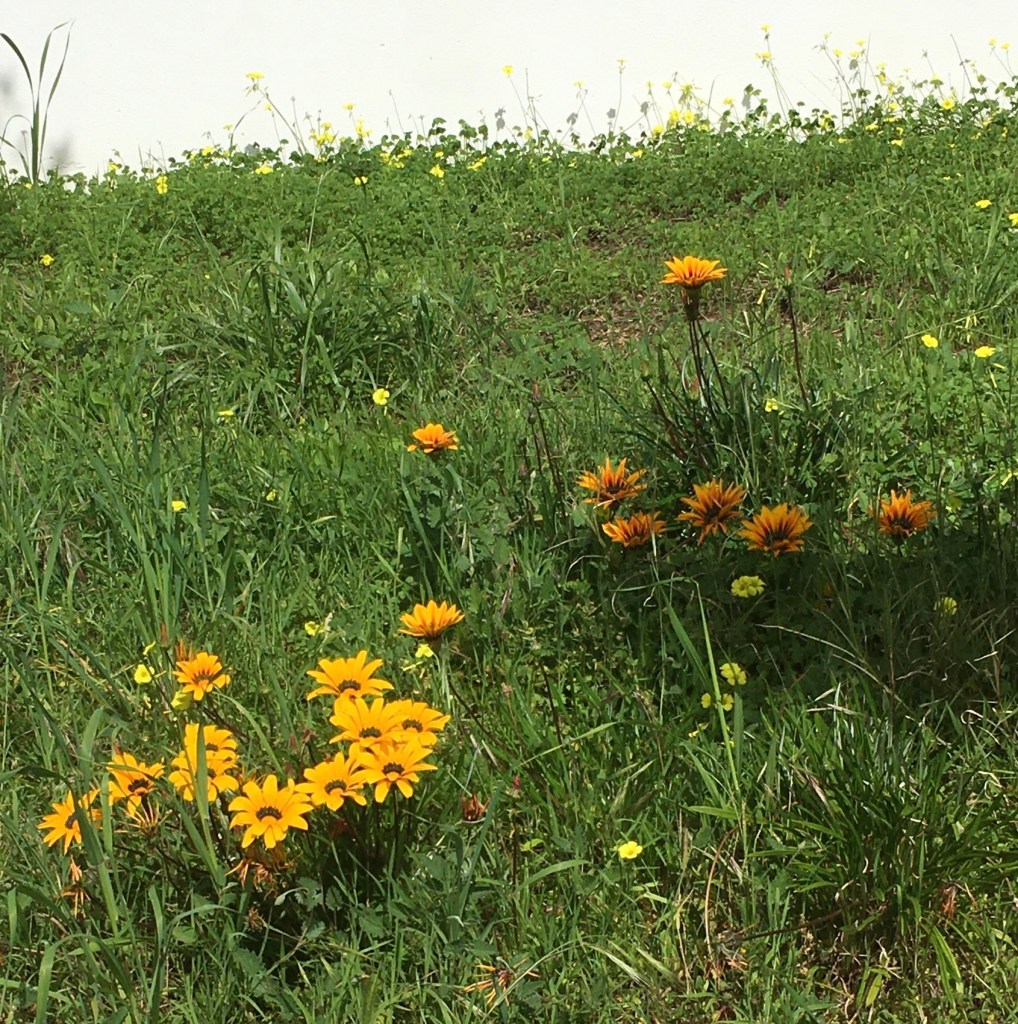
We walked around the walls with some attractive flora en routeEarly blossomAnd a pergola covered in Wisteria Recent excavations just below the wallsVehicle accessAn ancient gateway
We walked up hill to a great viewpoint.
Looking towards the oceanOne of the fortresses guarding the city
For a complete change of scene it was time to walk back to the station, as the access to the walkways over the dunes was just a few metres from there and we had to time it so that we got back in time for the return train to Portimao
5 Kms over the dunes, alongside both the railway and the sea.These wooden walkways allow access to the dunes whilst preserving their precious biodiversity These walkways reminded me of the time I walked the coastal Portuguese Camino ten years or so ago, starting in Porto. A number of information boards along the way and this one tells of the traditional net fishing that still takes place here.That might be our train coming in from FaroMore citrus and asparagus plantations on the way back Sculpture of a lady emptying a basket into a mill in the Largo Dom Joao II,in the pedestrian zone Portimao.
A great day out in the sun 🌞 and 11 miles of walking. If you want or need an antidote to Praia de Rocha this town has it all.










 ensuitepilgrim's Blog
Thanks John!
Great summary of the day. Enjoy.R