The Mosteiro de Alcobaça is an imposing and grand monastery complex, and is one of the finest examples of early Gothic architecture in Portugal. The mighty church was commissioned by King Afonso Henriques in 1153 to demonstrate the power of the new ruling dynasty, after the Christian Crusades drove the Moors from central Portugal.
The monastery was constructed soon after the church, and date from an era when to be a monk was a harsh and difficult calling, and the monastery reflects this austere and severe life. The only true flashes of artistic beauty are the tombs of King Pedro and his wife Inês, a fateful story. As the monastery grew in importance and wealth, the lives of the monks improved greatly – their girths became so round that the door to the refectory was a fitness test – if the monk could not pass through,he had to fast.
The Monastery is positioned on the confluence of two rivers, the Rio Alcoa and the Rio Baça (hence the name of the town Alcobaça).
King Afonso Henriques commanded Saint Bernard to construct the church after the victory at Santarém in 1147, against the Moors. Saint Bernard was the founder of the Order of Cistercians, and the construction of the monastery for the Cistercians brought favour for the fledging Portuguese dynasty from the pope. Bernard was a French abbot (Bernard of Clairvaux), and the Mosteiro de Alcobaça has many similarities to other French Gothic monasteries.
When king Pedro was coronated (1357), he had his murdered wife (Inês) exhumed, placed on the queen’s throne and forced all of his courtiers to kiss her hand. The tomb of Inês de Castro is supported by four gremlin statues, which represent her assassins. The tombs of King Pedro and Inês where badly damaged by French soldiers 1810, who were hoping find jewels and treasures within.

At its peak there were over 900 monks housed in the monastery and the fertile lands owned by the monastery ensured it prospered. The Mosteiro de Alcobaça was originally harsh and silent but by the 18th century had a reputation of overindulgences (especially with food). This is exemplified by the colossal chimney in the kitchen, which was designed to accommodate a whole ox over the fire pit.


The Nave is starkly simple, austere but imposing.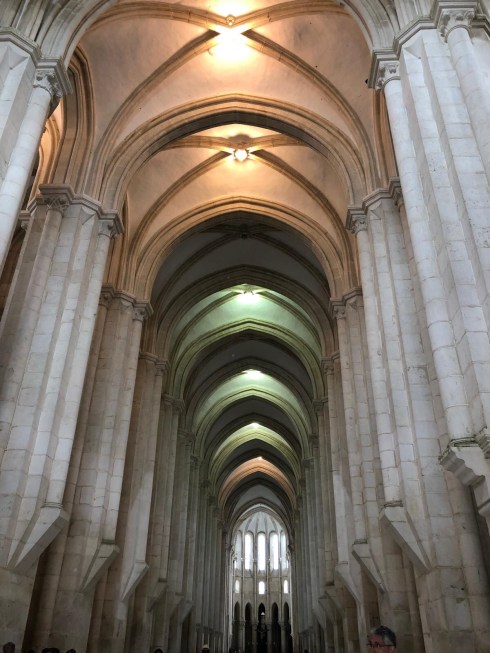
One of the cloisters looked as though it needed the monks to return, or at least the lay brethren who did all the manual work
It is a World Heritage Site and was worth worth our little detour to Alcacem do Sal to visit 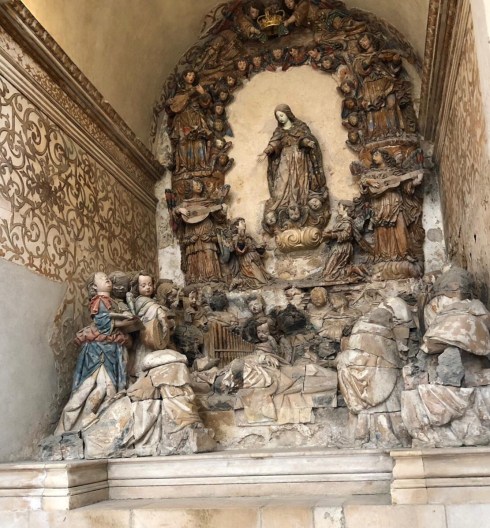
 .
.
Just a little (h)armless fun to finish with.
 ensuitepilgrim's Blog
Leave a comment