https://music.youtube.com/watch?v=ag8XcMG1EX4&si=sN9VvR0mVndG9eYy
EVERY WHERE YOU GO ALWAYS TAKE THE WEATHER WITH YOU


A short walk to the bridge over a small tributary of the Belesar dam. We head west through ancient forests and make a slight climb – easy – so we shall be back on higher pasture land interspersed with Pine forests . We shall pass through a number of small hamlets most of which will house a bar or cafe.
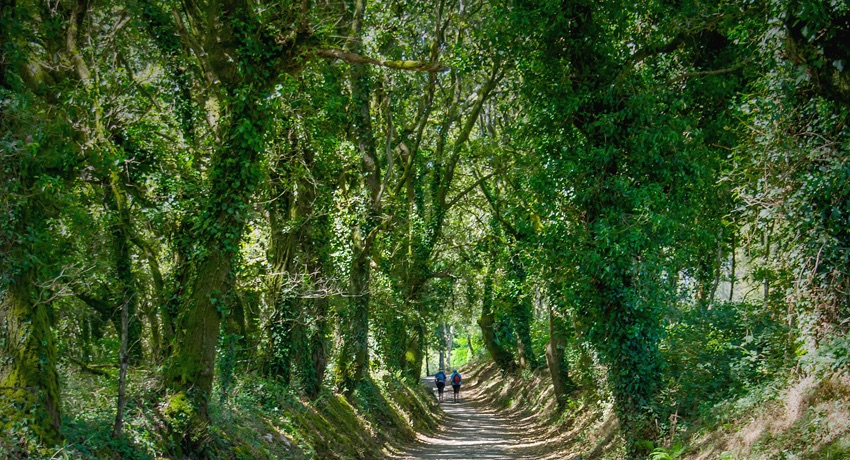
After 7 km or so we reach Gonzar and a welcoming sign.


Very soon we reach Castromayor with its ancient Castro – a 200 metre detour but very worthwhile apparently.

The
Castros are homes built by the ancient Celts from the years 600 BC until the 1st century with the arrival of the Roman Empire in Galicia. They are characterized by their circular plan and later their square or rectangular plan, due to the Roman influence. In many of the forts of Galicia that are still preserved thanks to archaeological rehabilitations, visitors can imagine what life and culture were like in the past.
The Castromaior fort. In this castro, developed in the Iron Age, it was inhabited between the fourth centuries BC and I AD until three different populations, until its abandonment with the first Roman approaches. Of him they emphasize his big dimensions, since it counts on an area of approximately 5 hectares, and his good state of conservation. Between 2006 and 2010 it was the center of archaeological works in order to discover its entire structure, thereby achieving that in 2010 it obtained the title of Cultural Interest. Thanks to this title and being located a few meters from the route that connects the French Way with Santiago de Compostela, it has become one of the most popular locations on the Camino de Santiago. Lovely song to follow by Joni Mitchell.
https://music.youtube.com/watch?v=Pbn6a0AFfnM&si=umeh4X0AKGafIVDe

https://music.youtube.com/watch?v=LCDznEwoY8E&si=_1DiLWgk51TLNjUT
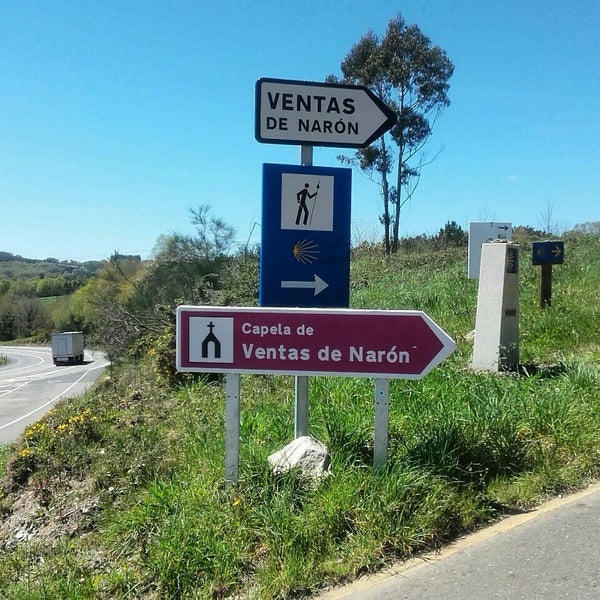
History: VENTAS de NARON
The year 820 was an important one for Ventas de Naron, and for Christian Spain. For Ventas, it was the site of a battle between the Muslim and Christian forces. The Muslim forces aimed to expand their territory to the north and the Christians, led by the Asturian King Alfonso II the chaste, sent them back. For Christian Spain, it was also the year that the bones of our favorite Apostle were rediscovered. Not long after the very same Alfonso would become the first pilgrim (the primitivo), would verify the relics, would build a church to house them, and would set in motion a course of events that would see the remaining Muslim forces defeated.

We climb the Sierra Ligonde to the highest point of the day (720m), before dropping down into the ancient hamlet of Lameiros.
Ligonde was a place full of historical significance during the medieval period and is actually two hamlets. The first is known as Ligonde Ligonde and is at the top of the hill. The first of the sites here that we saw was the ancient cementerio de peregrinos (pilgrim cemetery). It is located on an old farm named Leira da rúa and its presence would seem to indicate that somewhere near was a pilgrim hospital or hospice.

The Casa de Carnero, founded by the powerful Ulloa family and as the sign below says, the place where Carlos V, on March 24 of 1520 stayed while on his way to be crowned Emperor. Felipe II, his son, also stayed here on May 20, 1554 while on his way to La Coruna sail to England to wed Mary Tudor. In the 16th century this house was given the right of asylum. This meant that anyone accused of a crime or fleeing justice was instantly “freed” upon crossing into the house.

Unusually for a wayside cross, the Ligonde Cruceiro has a Pietà carved on the reverse of the top of the cross. Clad only in a loincloth, the dead body of Jesus lies across the thighs of his seated mother. And, continuing the theme of mortality. “ Losing My Religion “ by REM.
https://music.youtube.com/watch?v=Efa6BAWPm9o&si=NpHa7EXM2XAajf2B
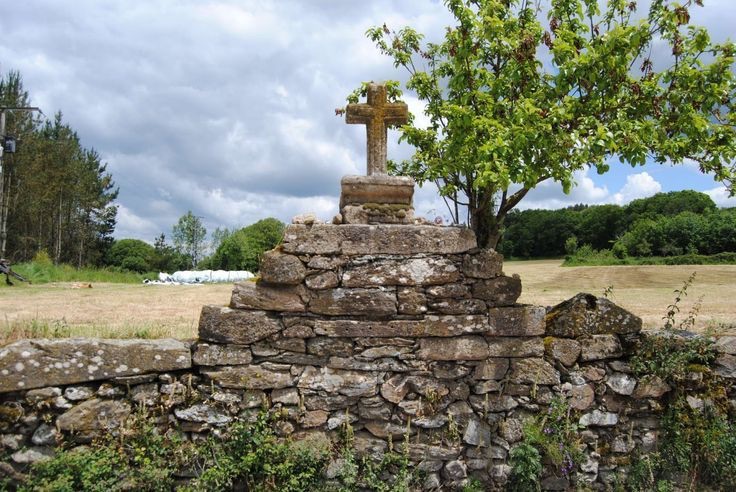
In Ligonde, in addition to its famous cruzeiro, the cross where the hospital supported by the Ulloa family is supposed to have been, there is also an old pilgrim cemetery, which is located on an old farm called Leira da rúa. A plaque helps us stop and contemplate what is today a green meadow, and where hundreds of pilgrims who made the Camino once rested eternally.

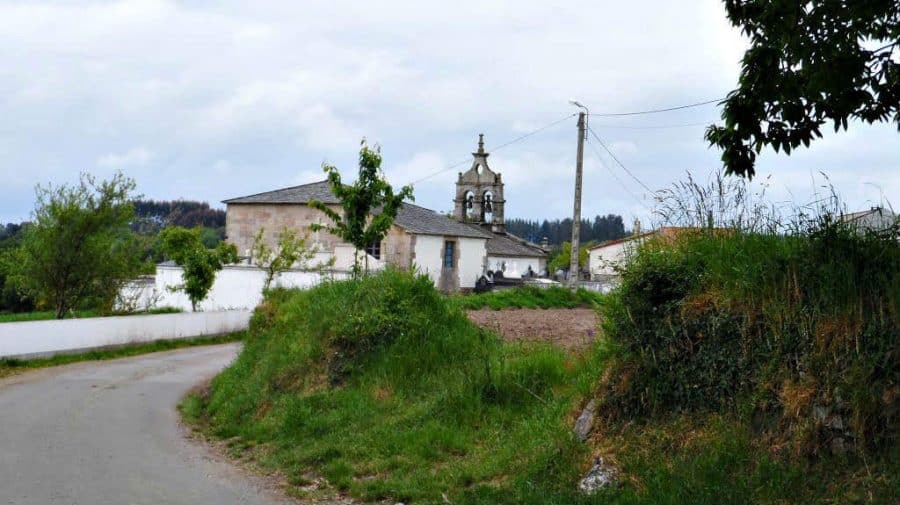
On the outskirts of Palas de Rei, we enter Rosario.
O Rosario is a small town of 25 inhabitants, located at a height from which you can see Monte Sacro, a place loaded with pilgrim legends, partly because of its proximity to Santiago. The name of the locality is because the pilgrims stopped to pray the rosary looking at the sacred summit.
One of the main legends of this magical place is collected in the Codex Calixtino. In its pages it says that in the time of Queen Lupa, a mythical character who ruled the county and that was allied with the Romans, a miracle happened.
The disciples of Santiago the Apostle came to her to ask for a cart and some oxen that allowed them to move the body of the Apostle to the graveyard. They say that Queen Lupa sent them up to the sacred peak in search of oxen. Under this request, the idea was hidden that the dragons and oxen that inhabited that mountain would kill them.
When the disciples reached the peak they were, indeed, attacked by the dragon. So, before the imminent fatal outcome, they made the sign of the cross. The gesture provoked the death of the dragon and the oxen that roamed the surroundings became calm. Such a miracle provoked the Queen’s conversion to Christianity and her vassals.
In addition to this legend, there are countless other legends in the area. The majority related to mythological beings of the Galician tradition that lived in the mysterious caves around Mount Sacro.
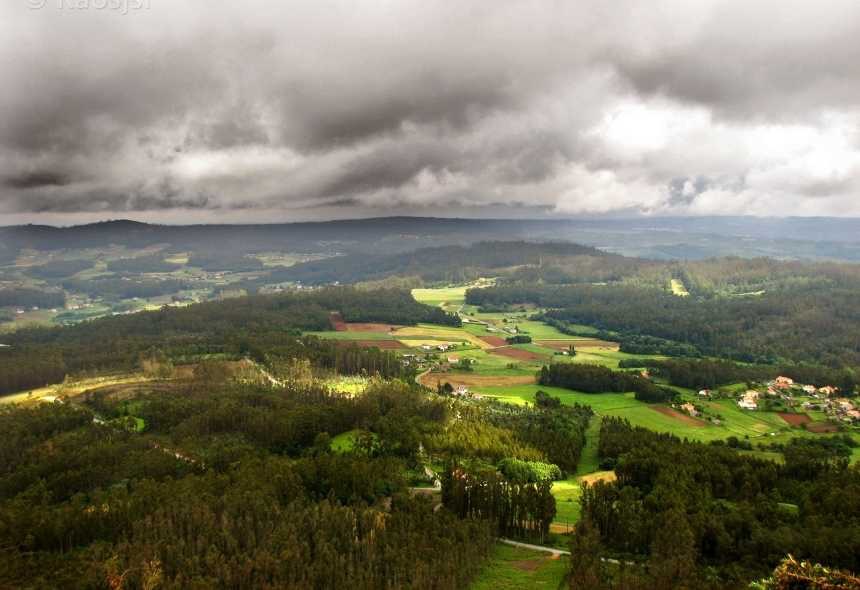
Money Sacro is approximately 12 km from Santiago de Compostela.

We then enter Palas de Rei.
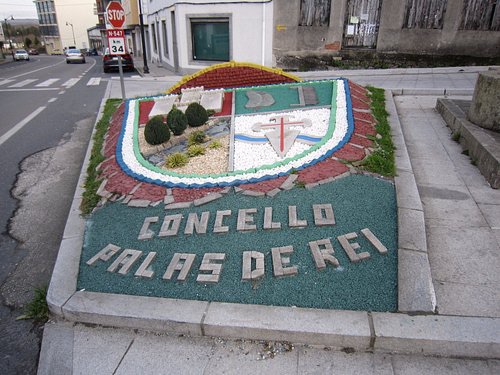
Palas de Rei, “obligatory rest stop” according to the Codex Calixtinus
The name Palas de Rei is supposed to come from Pallatium regis (royal palace) because it was the residence of the Visigothic monarch Witiza at the beginning of the 8th century. The history of this quiet village is undoubtedly closely linked to the French Pilgrim’s Way to Santiago de Compostela. The Codex Calixtinus records that the final stage to the tomb of the apostle starts from this point, 68 kilometres of a journey that Amery Picaud defined as “moderate”.
Thus, with the medieval boom in pilgrimages, the locality underwent a significant expansion. The town of Palas de Rei has an outstanding heritage. It was one of the favourite places of residence of the Galician nobility.
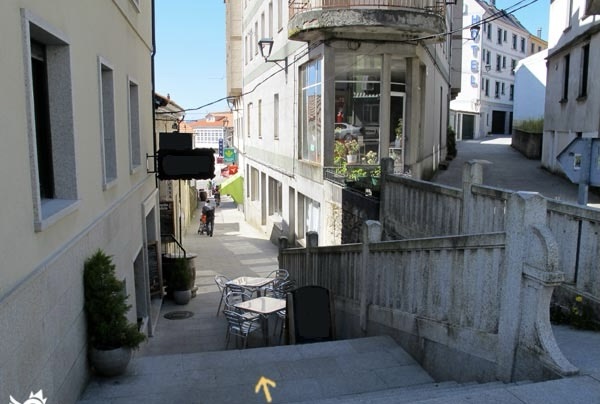
A population of 3600 – it is a working farm town. The Camino winds through the town

https://music.youtube.com/watch?v=KrGi8ODOWR0&si=a8LeERfgGsYSCPvA

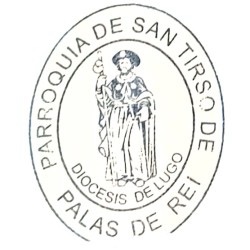
Romanesque in origin, from the last third of the 12th century, only the façade retains its original construction; It was renovated in 1955. The temple has a Latin cross plan with a rectangular nave, and with two side chapels, in addition to the pentagonal presbytery. Next to the door, which has a semicircular arch and two archivolts on decorated capitals, there is an image of the Virgin of Socorro. The altarpiece in the main chapel is neoclassical in style.

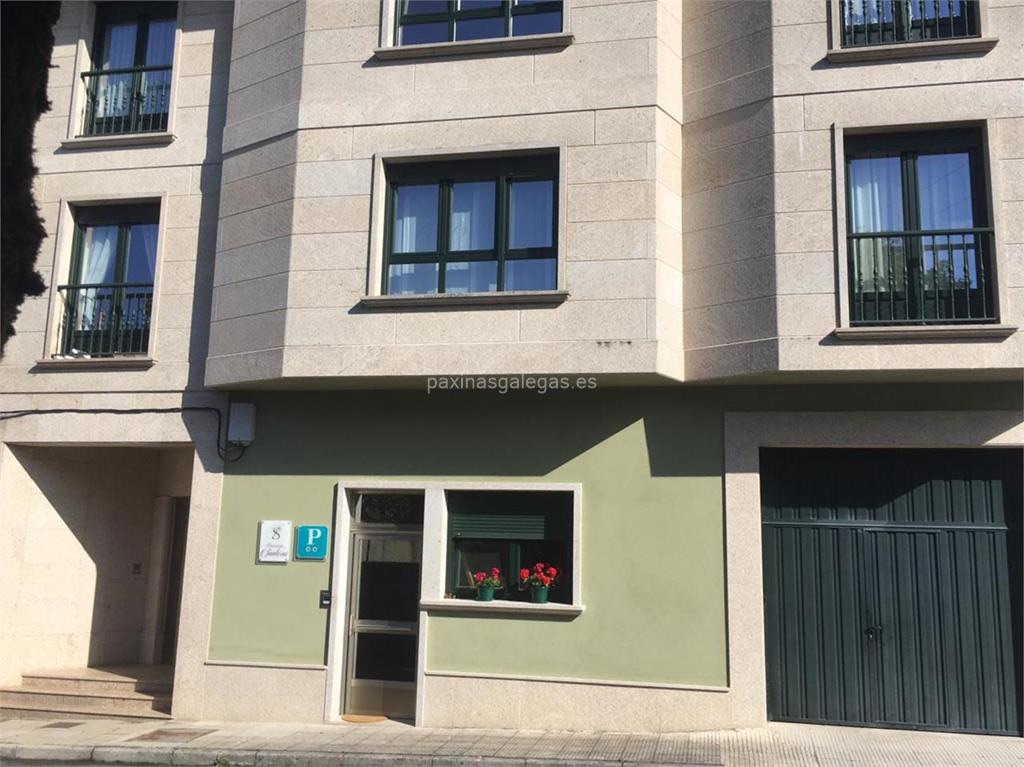
Maravillosa Pensión, y su dueña muy dulce, servicial y encantadora! Hay buena energía y actitud, uno se siente como en casa! Las habitaciones son lindas, modernas, muy cómodas y amplias. Estamos haciendo el camino De Santiago, somos un grupo de 7 personas y estamos contentos y hemos podido descansar! Recomendada para los Peregrinos!
“Wonderful Guesthouse, and its owner very sweet, helpful and charming! There is good energy and attitude, you feel at home! The rooms are nice, modern, very comfortable and spacious. We are doing the Camino De Santiago, we are a group of 7 people and we are happy and we have been able to rest! Recommended for Pilgrims!”

“The most interesting part of the pilgrimage
The Camino de Santiago is indeed a unique and enriching experience, one of the joys of which is interacting with pilgrims from all over the world. The Pilgrimage Route attracts people from different countries, cultures and faith backgrounds, who carry their own stories, beliefs and purposes with them on this historic walking journey.
Connecting with other pilgrims on the pilgrimage is a special experience, creating deep emotional connections through sharing the joys, challenges and insights of the journey. During the long walk, pilgrims can encourage and support each other, share experiences and wisdom, and get through the highs and lows of the journey together.
Interacting with pilgrims from around the world is also an opportunity for cultural exchange and understanding. By talking with pilgrims from different countries, you can learn about their culture, traditions and lifestyles, broaden your horizons, and enhance mutual understanding and respect.
Additionally, interacting with other pilgrims can bring unexpected surprises and inspiration. Sometimes, a simple conversation, a shared laugh or a collaboration can become precious memories during the journey, allowing people to feel the connection and resonance between people.
Therefore, communicating with pilgrims from all over the world is one of the most interesting and rewarding parts of the Spanish Pilgrimage Route. May every communication become a valuable asset in your journey and make you feel the connection and warmth between humans. I wish us a fruitful exchange with many pilgrims on the pilgrimage and a smooth and enjoyable journey.”
 ensuitepilgrim's Blog

Leave a comment